Podcast
Our big rolemodel is the Brain Inspired podcast by Paul Middlebrooks – as one can easily hear in how our intro is set up. If you like neuroscience podcasts that go a bit more in-depth, please definitely check out Brain Inspired.
 Spotify
 Google Podcasts
 Apple Podcasts
 Twitter



Browse previous episodes
…or listen to the podcast on Spotify, Google podcasts or Apple podcasts
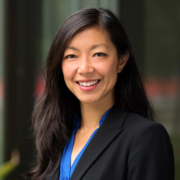
#82: Doris Wang – Adaptive DBS, the Rhythm of Walking, and Restoring Human Movement
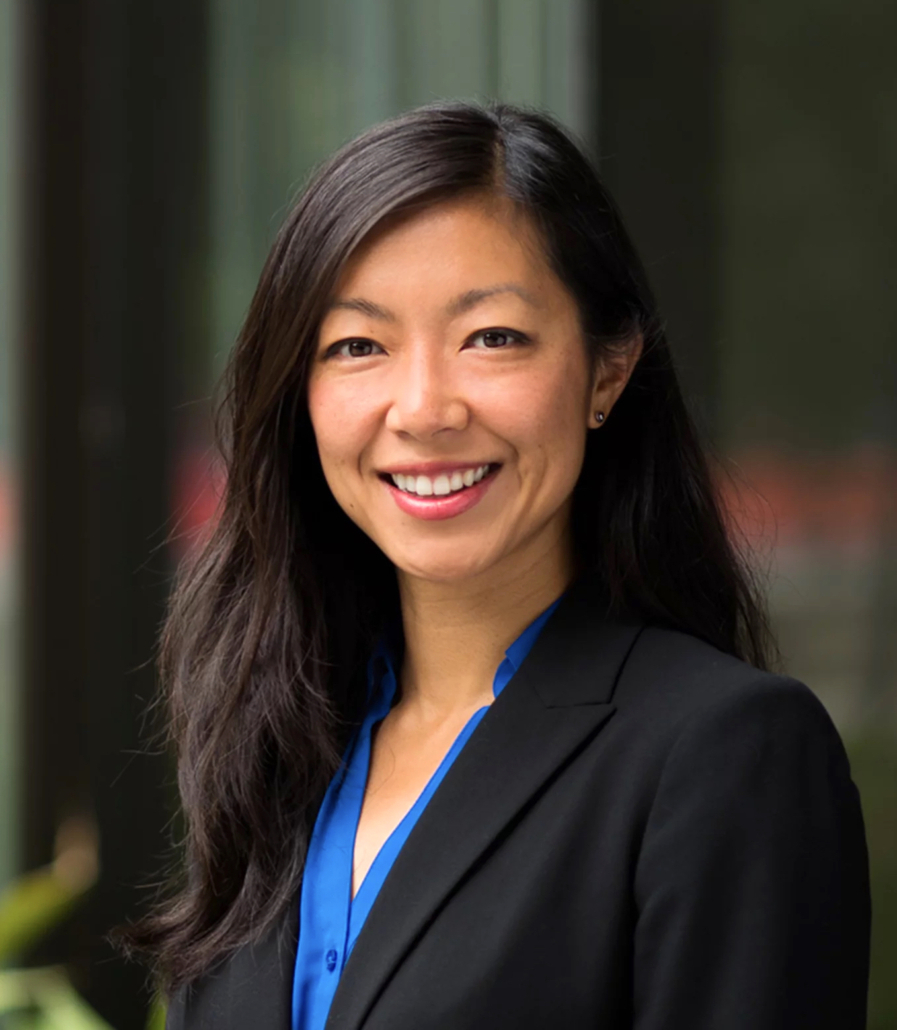
Doris D. Wang is an associate professor of neurological surgery at the University of California, San Francisco, a functional neurosurgeon specializing in movement disorders, and a systems neuroscientist studying how human brain circuits generate and restore movement.
#82: Doris Wang – Adaptive DBS, the Rhythm of Walking, and Restoring Human Movement
Doris D. Wang is an associate professor of neurological surgery at the University of California, San Francisco, a functional neurosurgeon specializing in movement disorders, and a systems neuroscientist studying how human brain circuits generate and restore movement.
In this episode of Stimulating Brains, we focus on her new study in Nature Medicine. In five people with Parkinson’s disease, her team identified personalized brain signals associated with individual phases of walking and used them to adjust deep brain stimulation within fractions of a second. Three participants subsequently tested the fully implantable system at home in a blinded crossover study.
We discuss why gait and balance remain difficult to treat even when DBS successfully controls tremor, rigidity, and bradykinesia; how falls and freezing may reflect different circuit problems; why useful neural signals differ between people and hemispheres; and what it means to synchronize stimulation with the moment-by-moment rhythm of walking.
Doris also describes her path from developmental neuroscience to neurosurgery, the move from brief laboratory recordings to chronic brain sensing during everyday life, and the challenge of combining surgery, patient care, engineering, and human neurophysiology. We explore motor learning, focused ultrasound, patient agency, scientific collaboration, and whether future neuromodulation systems might do more than suppress pathological activity – perhaps restoring physiological dynamics at precisely the right moment.
Doris Wang 00:00They can still have trouble walking and they're still falling. And their quality of life is not good. Even though their tremor may be controlled, they can move better. But they have nowhere to move to, right? Because when they stand up, they fall. Collectively suppress pathological signals at the right moment. But then we can maybe enhance and boost the more physiological signals to the brain circuit. So that would be like the ultimate goal. So like at least in the life of these four patients that, you know, ended up sticking with the study, like we made a difference in
Andreas Horn their lives. Yeah.
Doris Wang Right. And again, this is small scale, but I think it's just a start.
Andreas Horn Welcome to Stimulating Brains. 01:00Hello and welcome to Stimulating Brains. Today, I'm delighted to welcome Doris Wang, who is an associate professor in residence of neurological surgery at the University of California, San Francisco, UCSF, and a functional neurosurgeon specializing in the treatment. of movement disorders. Doris is both a surgeon and a systems neuroscientist. Her lab studies how cortical and basal ganglia circuits generate human movement, how these dynamics are disrupted in movement disorders with a focus on gait, and how neuromodulation might restore them. Over the course of her career, she has studied how neural activity shapes developing circuits, mapped signals across the human cortex, basal ganglia, and spinal cord, and helped build implantable systems that can record brain activity, 02:00and how neural networks can coordinate the activity during everyday life. A recurring theme in her work is that restoring movement may require us to understand not only where activity occurs, but how neural networks coordinate dynamically as people act and learn. The focus of today's conversation is her new paper in Nature Medicine just out. In Five People with Parkinson's Disease, her team identified personalized brain signals associated with individual phases of walking, and used them to adjust stimulation within fractions of seconds. This was probably one of the most rapidly alternating adaptive DBS paradigms ever, really alternating with every step the person took. Three participants then subsequently tested the system at home in a blinded crossover study, and the study raised some fascinating questions. Should stimulation respond not only to a person's general disease state, but to a moment-by-moment structure of behavior, really ADBS at speed or at scale, is there one neural signature of gait, 03:01or does every person require a different solution, as was a bit the case in that study, and can a device do more than suppress symptoms, can it possibly also help restore the dynamics of movement? We will talk about these questions, about the many facets of gait and freezing of gait, and all you have there are symptoms in Parkinson's disease when it comes to gait, and about Doris's own path from neuroscience student to neurosurgeon scientist resident, thank you so much for tuning in, as always, Stimulating Brains, and welcome to Doris Wang. Okay, Doris, thank you so much for joining us on Stimulating Brains, this is a big honor. We've known each other for quite a long time, and I've always admired your work, it's really fantastic what you're doing, really cool to also be here, really cool to also build a lab around gait, at least right now, that's your focus, I think, 04:01probably your focus is a bit bigger too, but it's really fantastic to have you here. As you may know, we always ask one icebreaker question about hobbies, so do you have free time at all as a neurosurgeon, and what do you do?
Doris Wang First of all, yeah, thank you so much, Andy, for inviting me, I've been a big admirer of yours as well, and I've been listening to your podcast, so it's a huge honor. It's a huge honor to be here. In terms of hobby, actually my hobby right now is surfing, I kind of started, I guess, in med school on a trip to Hawaii, tried it, really fell in love with it, it's hard to find time for it, but I just got back from vacation in Hawaii, and had a great time surfing, yes.
Andreas Horn That's fantastic. I think I actually did see on the lab website that you, like surfing with your husband is a thing, so are you always going to do that? Yeah. Are you always going out together, or is that something you discovered together?
Doris Wang 05:00No, he has been surfing long before I did, and he's a really good surfer. Yes, before kids we would go out together, and now it's kind of like in tandem, so one of us has to watch the kids, so we hardly get to go out together.
Andreas Horn Of course, okay, great. Fantastic, well I envy you, I've been to Hawaii once, and was really blown away by the blueness of the water around it, and it's really beautiful, so I'm sure you had a great time there.
Doris Wang Yeah, it was fun.
Andreas Horn You trained both as a neuroscientist, and then as a neurosurgeon, which identity came first to your mind? Was it always the plan to be clinical, or how did that work?
Doris Wang That's a great question. I think what fascinated me and drove me to neurosurgery was actually the science, or the lack thereof. Back in high school, I just remember taking anatomy and physiology, and we kind of have a basic idea of how the heart, kidney, lungs function, but the brain was just like, it controls everything we do, 06:01but we don't know anything about it. To me, that was what drove me. It was like, well, I want to learn about it, and at the time, naively, I just thought being a neurosurgeon is the only way to study the brain, because then I can have access to the human brain. So yeah, that kind of set me on the path of wanting to become actually a neurosurgeon, wanting to become actually a clinician, especially a neurosurgeon, so I can have access to directly study the human brain. How at the time, I have no idea, but I got that idea in my mind, and I just kind of followed that path.
Andreas Horn Fantastic, yeah. It makes a lot of sense, and it was a wise decision, right? That it's really the only way to have true access to the human brain, at least. That's really fantastic. You studied at Yale, and then I think, if I'm informed correctly, you stayed at UCSF through an MD-PhD, but also neurosurgical residency, the functional fellowship, and now faculty life. What kept you there? What's so great about UCSF? 07:01Who were maybe mentors on the path or key turning points in your career?
Doris Wang Yeah, well, you know, UCSF, you know, the acronym stands for You Can Stay Forever, so... Oh, right. I think it's hard to leave, honestly. I came here, you know, when I was applying for MD-PhD programs because of the strength of the neuroscience community, and I think in the back of my mind, also the strength of the neurosurgery clinical training program. It just, you know, I felt immediately at home the first time I set foot on the campus, just talking to the faculty that had the breadth and depth of investigating the nervous system from every aspect, from the basic molecular mechanisms, cellular mechanisms to systems around science. And I think more so than, you know, what's available in terms of research topics, it's just a sense of collaboration and how as an institution, 08:01the community has just, everybody wants to push the science forward. You know, fewer like these big egos and people just really want to collaborate and work together. So that really drove me to, you know, sign up for UCSF for my MD-PhD program. And I think that's really, really important. And then throughout my training, I did my PhD with Dr. Arnold Kriegstein. It's actually, you know, a mouse brain physiology research. And I just, you know, fell in love with this community even more. And I think the proximity of this graduate campus neuroscience community with also the clinicians was really impactful. You know, I was able to shadow neurosurgeons, go to the OR, even as a PhD student. And that was really informative for me in terms of seeing this crosstalk between the clinicians, what they're seeing, you know, from their patient interactions, the clinical problems they encounter, and then bringing it to the basic scientists, or if not, like they're themselves are scientists who can investigate those questions. 09:06And then, you know, once I decided to train here for my neurosurgery residency, it was absolutely clear. I picked the right place, the right decision. Just the amount of, you know, training was phenomenal. And then the mentorship, like you said, that's what really kept me here. You know, we had Phil Starr, who is a mentor, now colleague, who is, you know, a father of kind of human neurophysiology research, basal ganglia research, and doing some really innovative stuff. And just being so welcoming and, you know, encouraged the inquisitiveness and curiosity. And then Eddie Chang, of course, who is amazing in terms of human language research work. So I think I coincided with this growth of human neuroscience research as, you know, this, what's available. And it just makes sense for me to stay because the resources we have, the infrastructure we have to perform these advanced human neurophysiology research is just unparalleled.
Andreas Horn 10:08Yeah. And I mean, it is a one of the few. And I think that's why I think we have the leading centers in the world in these things. So absolutely makes sense to me. Were there, may I ask, are you a West Coast kid or are you, because you were in Yale as well, are you, where's your, like, where did you grow up?
Doris Wang Family and base. Yeah. So I was born in China. I went through also grade school in China near Beijing. And then when I was in sixth grade, so I was 11 years old, my parents and I moved to Colorado. So that's where my parents are. So home is in the other C state. So I covered California, Connecticut and Colorado.
Andreas Horn But that's not too far, right? That's still kind of west coastish. So yeah, or not. Yeah.
Doris Wang Mountain range, but closer to the west coast. Yeah.
Andreas Horn Makes sense. And great. Were there any particular either mentors or maybe even patients or coincidence or whatever or turning points that shape what you wanted to study? 11:09Maybe like focusing on gait now. Why did you think gait is a thing that you should devote your next years on?
Doris Wang Yeah. So interestingly, I think, you know, going into movement and functional was a decision I think I made. I think I made very early in residency. It was when I went to Phil Starr's, you know, DBS case, the first one I saw. Just, you know, somebody with debilitating tremor, bradykinesia, rigidity, like turning on DBS just melted them away and can see a sense of calmness and just amazement. And that was fascinating. And of course, Phil was at the time also doing cortical strip, you know, the electrocortical strip during. And then, you know, that was just so cool. Investigating both basal ganglia. Cortical network function. And yeah, so so, you know, I wanted to kind of use that model to advance my own understanding of basal ganglia, cortical neurophysiology, because until then I was looking at single spikes. 12:11I didn't really study neuroscience and computational. So kind of have to train myself during fellowship with Phil and Cora's mentorship to kind of learn a different field. And then when I was starting as I guess it was in my fellowship. You know, as I was thinking about my own research question, what to investigate. You know, I think what I saw in clinic was that the basic things like, you know, appendicular symptoms like tremor, bradykinesia, we have a fairly good handle on if you get the lead in the right place, stimulate, you know, hair frequency works pretty well. Not ideal, but always be optimized. But, you know, Phil's lab was really focused on, you know, optimizing those with adaptive closed-loop stimulation. But there are many other aspects. It's just when I started seeing my own patients in clinic that, despite optimal programming, they can still have trouble walking and they're still falling. Their quality of life is not good, even though their tremor may be controlled. They can move better, but they have nowhere to move to, right? Because when they stand up, they fall. And it's just really intriguing to me that we haven't really figured out the gait circuit. 13:27I guess, early 2010 ish, we really don't have a system of study how humans walk, because all our technology is tied to either, you know, functional imaging, which you're doing, imagine gait, not an actual gate. Or, you know, we externalize leads, but you know, there's all these artifacts and still in the laboratory setting. And with all the wires, people are walking on treadmills, it's an artificial environment. So I think it coincided perfectly with, you know, this new wave of implantable bi directional devices. At the time, it's only 14:00for research only right with a first generation Medtronic Activa PC+S. And then it just opened my eyes to the possibility like, oh, now we can study like cognitive functions outside the laboratory, we can study, you know, things that are harder to study like gait, and take it in the real world environment, more like physiological ecological. So I think those two things like the technology being just becoming available. And the clinical question kind of drove me to study gait.
Andreas Horn Fantastic. Last question before we actually dive into your work, and how did your scientific interests survive the intensity of neurosurgical residency? And how did clinical training maybe change your interests in research?
Doris Wang Yeah, I mean, I love clinical training, I love operating room going into it, you know, it doesn't matter what cases I'm doing, you know, I'm interested in functional in terms of the impact, but I love, you know, vascular skull base tumor, even spine, everything. 15:05I think, you know, what ultimately, I mean, neurosurgical training is tough. But I actually didn't mind it, you know, I feel like science is harder. After after surveying, surviving a PhD, where you feel a lot of things are beyond your control, like the results, the publication process, grant writing process, they're extremely humbling, right, you just kind of keep going. So I think having that clinical, like immediate gratification, helped me feel like, you know, things are still moving in the right direction. So it's extremely complimentary. But then when clinical training becomes, you know, really tough, or, you know, either emotionally, or it just becomes routine, I think the scientific drive, like, okay, well, ultimately, I'm going to be, you know, chasing my dreamless dream. And I think the human brain and what are the questions I kind of always have that curiosity, like, how can we make 16:02this better? Either is it like through like a surgical technique, or through a different way of approaching things. So that kept it interesting for me. But I thought it was, I mean, yes, the time demands was rough. But also, I like being kept busy. And I think having these two complimentary, like immediate gratification versus kind of long term, type one fun, or type two fun, you know, that that, that really complemented each other.
Andreas Horn Fantastic. All right. So the clinical problem of gait, gait feels effortless when it works, what does the nervous system actually have to coordinate for us to take one normal step? We probably don't know, right? That's probably the honest answer. But maybe there are some things you know, that you could share what even happens in the brain? Or you know, how does it work? What has to happen to make a step?
Doris Wang Yeah, and I guess, you know, we don't really know. But these are kind of my hypotheses. So when we're normally walking, like once you start walking to 17:02maintain the rhythmic, just like while you're going for a stroll in the park, for instance, actually requires very little higher cognitive, probably cortical function. You know, it's just the basal ganglia scaling these, if there's, you know, you have to change your step length, change direction. Most of it is probably in the lower brainstem center, you know, it just becomes automated, the cyclical event that drives your muscle activation between the two legs while maintaining balance. But it's when there are, you know, changes to that just direct rhythmic, continuous walking, then that requires more cognitive higher order function. So things like you know, initiating walking, going from static to movement, that probably requires some type of cortical demand coming from, you know, pre motor, like the intention to move to motor cortex. So you have to initiate that drive. And then also more complex gait, right? Like if you're walking in the forest, 18:01going hiking, or you had to avoid tree roots, step over rocks, that requires a lot more attention. Again, the normal brain, I think a lot of these circuits even involving like the visual, visual circuits, sensory processing, we don't have to devote a lot of like attention to it. But I think that's where it breaks down in Parkinson's, like they can't walk sometimes, because they're not paying enough attention. But then these the automated walking process, gait process that breaks down.
Andreas Horn Interesting. Yeah, that makes sense. And then you did mention, you know, when you started your own lab to essentially there was the technology was right with the percept, sorry, the Activa PC+S and then I think the summit later, that was used in the recent study. And then, but but you know, maybe Phil Starr and others had also built some sort of system with the ECoG strips and you mentioned the, the measuring gait was harder, right? So I assume or I always assumed that when you got your faculty 19:03position, maybe there was a starter package for a gait room or how you had to set up that environment, right to measure gait. And I think, you know, gait dysfunction can mean short steps, asymmetry, instability, falls, freezing. Is that all one thing? Or should we? Yeah, can you talk a bit about that? How you measure gait? How? Which components are we even talking about? So yeah,
Doris Wang yeah, so my start up package is pretty meager. But you know, in terms of gait lab, actually, I was fortunate enough in that admission Bay campus, so that's kind of our newer campus, there is a kind of a human performance core. So it was initiated by the Department of orthopedic surgery and sports medicine, where they kind of have the capability of you know, all these cameras, motion capture camera system in a large space. And, you know, force plate to measure kind of these kind of human kinematic movements. And nobody has really utilized it to 20:01study gait per se, especially not gait in the Parkinson's or neurodegenerative population. So basically, you just kind of have to pay the fee and tell them the projects and then you know, they have a lot of the equipment available. But one thing that I really, you know, invested in, I guess it was the mobile sensors. So instead of being in a static gait lab, I was able to use these cameras. And I was able to use these cameras in the gait room with these cameras. You know, I learned about these wearable sensors. So this called the inertial movement, motion measurement units, IMUs, which are just fancy tri axis accelerometry. So I use this XSense system. So it's pretty easy to use it like small suitcase, it has 17 different sensors, we can put it you know, around major joints, and it's on patients or study subjects. And then we can also use the 21:10gait. And then to your question, you know, what is about Parkinson's gait, that's challenging to treat? And it's all the same thing? I don't think so. The short answer is, it's very different, right? Like, when you think about a Parkinson's gait, everybody's symptoms are different. You know, some people are like the rigid type, some people have really bad tremor, some people are fluctuators, some people are not. So it's not like a homogeneous disease. And same thing with Parkinson's gait. Some people it's like purely, you know, slow, it's kind of like a hypokinetic gait. So like meaning their steps are really short, they're very stiff. And those patients actually do probably quite well with traditional stimulation, because once you release their gait, you can move them, make them move more fluid faster, their gait improves. Some people do have leg dragging that 22:02could be from dystonia. So that's, you know, abnormal muscle contraction, which could also be a part of Parkinson's symptom. So for those, you know, it's more variable is the target, you know, treating the dystonia in that one particular leg. So those patients may have more asymmetry. And now we get into kind of the more complex like freezing of gait. Oh, I think that's a whole nother piece. And we really don't understand what causes that. And I think that's a more like widespread network disorder. Because I think involves a lot of cognitive processing, attentional processing deficits, visual spatial deficit. And as because, you know, many things can cause trigger freezing. It's either you know, standing up from a chair, like the initiation freezing, kind of a learning triggered freezing, or visually, right, if they're approaching doorway, or if they're under stress. So there's 23:01all these things that can trigger freezing. While the output is the final output and result is the same, it's probably kind of some like jamming of the entire system that prevents this automated walking to take place. But the trigger, I think it's much more widespread. And that's why it's really hard to study.
Andreas Horn So you're essentially studying multiple problems at once, or are you focusing on one specific form of gait or a component of gait? I mean,
Doris Wang yeah, so so with this study, you know, initially, I just want to see what happens, right? Like, with gait, what happens when people are walking relatively well, like, you know, when gait is not one of their primary concerns to people who have, you know, stuttering, shuffling, you know, slow hypokinetic gait. Right now, I'm actually focused on freezing of gait. But yeah, just, you know, kind of going back to when I first started, I just kind of want to see, you know, again, I can't 24:02sample the whole brain. So we had to pick specific areas to sample. So for these Parkinson's patients, you know, studying basal ganglia, LFP, local field potential from their DBS leads, either in the subthalamic nucleus or the pallidum, it's opportunistic, because, you know, these are patients who require surgery anyways. But then we did put in extra permanently implanted cortical strips. So for contact ECoG strips. For my study, I focus on the premotor and motor area. So again, we're sampling a very small local region. And it's probably kind of more localized to upper extremity, the homunculus. But through it, we were actually able to decode some gait events. So that was kind of one of the surprising findings.
Andreas Horn Yeah, great. Really cool. We'll get to that in one second. So if we think about you know, adaptive DBS these days, many people will of course think about beta synchrony or like beta power as a, you know, 25:05a steering signal for adaptive Parkinson's, even FDA approved now as E-marked. I think in 2016, you found if I remember correctly, that a familiar, you know, this the subthalamic beta features were also present in dystonia, to some degree. So potentially were also present in dystonia to some degree. So potentially casting doubt about the specificity of these biomarkers. Did that teach you something
Doris Wang about how to even think about these biomarkers? You know, how specific are they? And any thoughts on that earlier study? Yeah, for sure. That's work I did with Phil Starr during residency. pallidum, STN. And then again, they're in the off med state. But yeah, even dystonia patients, we saw this beta peak. And then in terms of the amplitude, it's highly variable. So that to me, 26:05taught me that, you know, beta isn't everything. It's probably not that specific. It just represents kind of motor state, movement state in general. But there are more specifics within beta physiology in terms of, you know, coupling with maybe cortical gamma, um, its coherence with other regions that that's more specific towards either states or medication states or movement states. So that to me, just pointed to, you know, beta isn't everything and everybody's beta peak, right? It's slightly different. Some people may have it, sometimes people have like double peak, single peaks. So yeah, reliance on just a single file marker, blanket, you know, across everybody is less personalized than we can actually make. So that's why I think, you know, when I was translating this into gait, I kind of went through it kind of agnostically, like, what are the actual signatures and brain fluctuations and 27:01signals fluctuations that occurred during walking? Or does it even fluctuate at all? You know, from that point, we don't, we don't even really know that. So that
Andreas Horn makes sense. In 2020, you described Parkinsonian gait as a disorder, gait dysfunction as a disorder of network oscillations. At that point, how much of the present research, program did you already envision or kind of draw in front of you, like, maybe framed differently moving to the recent Nature Medicine paper? How when did that start? And how like, when did the thoughts about that start? And then how long did it take to actually start the study and then get it published?
Doris Wang Yeah, so I think I had this goal in mind when Summit RC+S, came available. And that was, I think, during my fellowship years, I did the first implant, with Phil, you know, for the Summit RC+S and because, you know, the big difference between Activa, the first generation to this one is that we can now stream data. So we're not limited by, 28:03you know, the 12 minutes capacity onboard memory device limitation of the Activa system. Now we can wirelessly stream, which means we can almost stream like 24 hour data right from the human brain. And it's also rechargeable. So we're not worried about battery consumption. So that's one I was like, okay, all the experiments I dreamed about, maybe possible with Summit RC+S s. So I guess that was around 2018 2019. When I was, you know, that's when I was building my lab, and I kind of envisioned a program where, you know, I can implant patients with RC+S, kind of what Phil did, and then, you know, place cortical strips, deep basal ganglia activity, and then being able to measure gait. So, the 2020 paper, I think, was that a review you're referring to? So that's kind of what, you know, my thinking process about, yeah, gait has to be a network disorder. And that's why in Parkinson's 29:03patients, right, they have all these different problems, and how can we solve it? And first one is to understand what happens? And what are the actual signals controlling this process?
Andreas Horn Really cool. So let's focus on the new Nature Medicine paper just came out, I think a few months ago, a month ago. Can you briefly summarize it, and maybe also take us through the system you built, you know, from heel lift to electrical pulse. You did five patients, clinical study, I think three, then also in a randomized, you know, phase later. And the idea was to stimulate while walking, you know, in a gait, like in a walking specific fashion, right? Yeah. And then you did a lot of the work with the 30:06And in the five patients we tested in the laboratory, it restored symmetry. Left and right step length and timing were better, which we usually think of as a more stable gait. Walking speed was highly variable, but variability between left and right step length and timing also improved.
Doris Wang So it's capturing subthalamic activity using the Summit RC+S system. dynamic activity using the RC+S system. Again, these are patients still implanted. So basically, from that study, we did detect in real time walking, dynamic changes in beta or low frequency power, I think included alpha and theta as well, that dynamically change in the left and the right brain, they're off cycle, which makes sense, right? Your brain should be changing as you're generating these rhythmic movements. And using that study, you know, our idea is like, okay, what if we can dynamically mimic what the brain is doing, right, naturally? And again, those are patients without gait problems. What if we can just dynamically change amount of 31:04stimulation? While someone's walking, can we make their walking even better than what traditional DBS can offer? So using the RC+S system, our goal, first of all, scientifically is like, first of all, can we even identify personalized biomarker of left versus right leg swing from either cortex? Or the palate elites? So answer to that is, yeah, most likely we can. And then the idea is, then can we use this novel system using completely embedded algorithms, or not with an external computer, embedded linear discriminant analysis classifier on board the RC+S to rapidly change stimulation amplitude. And again, this distinguishes from what's available, because as beta changes, you know, usually stimulation ramps up and down over minutes. Now, we're talking about sub second, like within a 50 to 100 millisecond window, rapidly change how much stimulation they're getting. And the answer is that they can figure it out, you know, my postdoc, 32:04the first author in the study, so it is possible. And the final question is, you know, if we institute this change, either we're increasing stimulation while they're swinging the contralateral leg or decreasing stimulation, does it actually alter their gait dynamics? Is it beneficial? Is it worsening? And, you know, again, in the five second window, we're talking about sub second, we're talking about a lot of different things. So we're talking about, you know, the ! And also, you know, what happens to their other Parkinson's symptoms, right? Like, since we're, and all in total, they're receiving less stimulation. So can we first of all institute this 33:04in the natural world and what happens? So three patients enrolled in that the three patients with really reliable biomarkers and who can go undergo the testing? And, yeah, and the three patients, you know, two of them really prefer the adaptive, this rapidly changing stimulation compared to their closed loop. And they remained it even when the study finished. And the one person who, you know, liked it, but didn't like it as much compared to her natural setting was mainly because, you know, her gait problem is quite different from the other one. And her main Parkinson's complaint for her was tremor. So she felt she had less tremor control with this adaptive, even though her gait metric was better.
Andreas Horn That's cool. I mean, we should probably highlight this. You mentioned it in passing, right? But, you know, if you're a person who's a person who's a little bit more sensitive to the 34:16! Yeah. Yeah. Yeah. Yeah. Yeah. Yeah. Yeah. Yeah. Yeah. Yeah. Yeah. Yeah. Yeah. Yeah. Yeah. Yeah. Yeah. Yeah. Yeah. Yeah. Yeah. Yeah. Yeah. Yeah. Yeah. Yeah. Yeah. Yeah. Yeah. Yeah. Yeah.
Doris Wang Yeah. Yeah. Yeah. was built to be a research system. So every feature is unlocked. So we can change frequency. We can determine the biomarker 35:01on the Percept device. You're restricted to the beta range right now. So nothing was locked. We can do all the streaming. So it's purely for research system, which is like somebody like us. It's like our dream device. Of course. And yeah, huge props to Medtronic. Their R&D team for supporting this research device and research platform. That allowed us to use this device. Yeah, go ahead.
Andreas Horn Would it in theory be possible to, you know, just use the Percept now, do the same thing? Or is that more limited to what you've done?
Doris Wang In theory, yes. But as you mentioned, alluded to earlier, there's a lot of device on lock. So they don't have, you know, even an ecosystem to do this streaming. They don't have to even build a computer to interact with the device in that way. So there's a lot more limitations. And yeah, that's one of the things, right? Like the findings that I found from my paper, 36:01I can't really translate it to the current commercially available device.
Andreas Horn Got it.
Doris Wang Without asking for a lot of on locks. Not yet.
Andreas Horn Yeah, yeah. I mean, this is still, yeah, yeah. Okay. And then you did record from both the pallidum and cortical areas. And I think in most of the cases, the cortical, the basics was probably the better decoding or control source. Why do you think is that? Yeah.
Doris Wang And yeah, a couple of things. So, you know, again, like using just the computing, the power, yes. As a cortical slightly outperformed the basal ganglia lead. But I think one thing is like what stimulation is turned on because of, you know, artifact stimulation, artifact, and even though there are methods within a device to blank out the stimulation or artifact, you know, the computation in terms of specificity of the palatal electrode is still going to be challenging compared to cortex. It just because it's a more distant site, 37:00less prone to stimulation artifact. And yeah, so that's why, you know, that's my guess. And then did I capture the optimal site to decode? No, I think, you know, ultimately late primary motor area, which is surgically harder to access, you know, probably will give us even better decoding, right? For like muscle activation. But it's just too dangerous to go that route. So again, we just use something that's accessible. Again, these patients didn't even have extra burr holes. I used the same burr hole for their DBS, just with the electrode posteriorly. And it was good enough, I guess, for what we're trying to do.
Andreas Horn Really cool. Right. And so what you also, I think, identified a separate biomarker for each hemisphere. And maybe you can even talk a bit about what the biomarkers even were in the end, right? So what was the I think you did measure electrophysiologically 38:02when the step happened, right? And in that moment, you simulated the contralateral hemisphere and then it took turns. Which which physiomarkers, how did they look like? It wasn't beta alone. You mentioned alpha a little bit, but was it a combination or? Yeah.
Doris Wang Yeah. It varies so much. Yeah. That's a one of the things you know, again, some of most of them were within like the alphabet a range. But in terms of the actual specific frequency band that can distinguish. And again, we're not looking for just even like the sensitivity. We are also looking for specific specificity. Like there's this individual frequency band can distinguish between left and right leg swing. Right. And you know, in terms. of the actual and the biomarker we're using again a lot of them are from the cortex but there are a few from the pallidum they can be as narrow as like 2 Hertz for instance subject one the left GPI biomarker was 43 to 45 Hertz so it 39:05can be super super specific right and then yeah and some people you know like the best band is like m1 like 11 to 13 so it's actually extremely narrow so
Andreas Horn that's what we ended up using so you essentially had a first phase where people just walked around you required data with the gait lab and then you identified the biomarker in the second session then did the stimulation and had to also put in the you know the logic of when to stimulate it onto the device
Doris Wang right yeah yeah so we did many many sessions you know like before patients DBS was activated to see what those biomarkers are and then again just have them walk back and forth in the lab and then doing it both in the lab and the on meds day as their meds is wearing off and then once their stimulation is activated when we had to do a few more of these sessions and then we even took some of these recording sessions at home so we measure their 40:00like walking when they're just walking navigating home and we have the patients actually activate their own device we trained them you know for an hour each day they would just turn on stream their device where the communicators and then walk in a certain path around their house while we stream their data
Andreas Horn yeah so we had multiple ways so could people notice you know the fast switching normally if you ramp up the current pretty quickly in let's say monopolar review you can sometimes sense it was that a thing did they ever complain about oh I feel tingling all the time or you know the rapid alternating switching on and off
Doris Wang yeah surprisingly not I think this is due to a couple things you know again we didn't shut off stimulation altogether we kind of vary between their clinical setting and then half of the clinical setting so like you know four milliamps to two and then also because I think it's pallidum instead of you know in the STN which you might be more sensitive you know there might be like a 41:00longer washout effect and and so yeah they actually didn't feel the
Andreas Horn stimulation change make sense what was the hardest part of making this system work the neuroscience the engineering the surgical configuration probably not so much your routine there yeah or even regulatory path using daily life what was the most challenging part of that that's stressed
Doris Wang study I think that's to implement so I guess it's a combination of the neuroscience and an engineering you know identify like once we have the biomarkers how reliable it is so it's like the biomarker validation that's the most challenging because I think you know this is huge kudos to Ken Louie and the rest of the study team. You know, he to change configure a lot of things like the ramp rates within the device the sensitivity of the lda classifier to optimize you know this is just like watching the tablet stream and then seeing stimulation going up and down as somebody's walking whether you know doing it in real life 42:05and then also post hoc to figure out like what we can change to optimize the actual classifier function to make it reliable and robust did the
Andreas Horn heterogeneity between the participants including also the bio biomarkers did that surprise you or were there other surprises that you didn't think about when you know before starting the
Doris Wang study yeah i think um couple things yes the heterogeneity definitely made the study more challenging as i mentioned alluded to you know uh two of the subjects are more of like the near freezing rigid economic genetic type whereas the others are asymmetry and then someone was like dyskinetic and so they all had some subtle differences um you know ideally i i would recruit the same patients but you know it doesn't always work out and also with the time limit of the 43:00availability of these devices i kind of have to you know implant them in a certain time frame um so that made the analysis uh more challenging you know the biomarker as i mentioned is highly individualized so we couldn't really generalize you know something that worked for patient a may not work at all for patient b so i think individually customizing and pouring over that and then also making sense of analysis like you know why does adaptive stimulation improve speed walking speed in patient a but actually worsen it for patient b and what are the common themes um so teasing through that heterogeneity in a small end that was very challenging so your study came out of this study with this Something that worked for patient A may not work at all for patient B. Adaptive stimulation might improve walking speed in patient A but worsen it for patient B. Teasing through that heterogeneity in a small sample was very challenging.
Andreas Horn i think back to back with in Nature Medicine with another study very similar from geneva or uh is it zurich uh switzerland Eduardo Moraud's lab yeah i'm not 100 sure i saw him in geneva just now at opto dbs speak about the study that's why i said geneva but i 44:01think he's probably in
Doris Wang he's from switzerland yeah with uh yeah can you
Andreas Horn and i i'm planning to also invite him on the show at some point too um but you know this is of course first of all a great success for the field of dbs of having two studies coming out in that um uh really high impact uh highest impact journal um was it a back-to-back thing uh did you know about the other studies or was it more the editors kind of lumping these into the same issue how did that
Doris Wang work yeah so ironically two years ago at the dbs think tank you know i was tasked with organizing the session for the adaptive db or a gait right uh for the think tank and then i invited Eduardo Moraud as one of the speakers so it was during that meeting i learned about his work which i thought was amazing so his work is using the commercially available percept and i think it's only pc in europe they don't have the rechargeable yet but you know again he does they have some unlocks but using kind of the beta power so he was a lot 45:05more restricted using the beta to determine like um turning up stimulation and i think it's a key but it's really awesome work so i learned about it during that and i know at the time he was submitting uh to Nature Medicine so we didn't plan it but um it just happened i think our papers got accepted and came out at the same time so it's very it's very cool to see his work yeah
Andreas Horn yeah as well and and so so i think maybe you can briefly if you if you don't mind summarize also the differences or the um you know uh for just for the listeners to kind of two of these big studies similar topic or same topic even um i think what they did differently was they had kind of two settings right they probably a priori tested what is a good gait setting what is a good other setting right and then adaptively switched to and from the gait setting is that correct
Doris Wang 46:00roughly yeah well i think it's uh maybe the amplitude for the stimulation as stn because against with persep it's a little bit more limited in like in terms of switching like frequency and other parameters but yeah uh to yeah so then they basically again um their study is restricted to only stn dbs leads and then in terms of identification i think they um um you know study and recorded from many more patients uh in terms of what uh STN beta encodes in terms of gait dynamics state like walking versus sound walking walking versus sitting versus standing so that biomarker is pretty robust and then again yes while they patients were walking if they're actually walking then they use this biomarker to change to the optimal i guess stimulation amplitude while patients are walking so pretty different because it's you know not alternating between the two hemispheres which our study is doing so r is very specific to actual movement there's more like a generalized movement state 47:05but i think it's you know phenomenal that they they were able to achieve that with the limitations of the Percept device. think you know what whatever they find could be directly implemented in all the patients
Andreas Horn or you know who have the current device interesting okay cool so um maybe zooming out a little bit more towards these circuits and the idea of you know dbs as a circuit neural modulation thing you i'm not 100 sure now but i know it's a Phil Starr study where they did a lesion in the palliadome and the paludotomy and then also record it and saw that there were changes in the cortex and you know from after performing a lesion was that your study or were
Doris Wang you a co-author on that I was yeah I was co-first author with a Cora on that study like thalamotomy and paludotomy and effects on cortical gamma instrument which is a you know dyskinetic yes
Andreas Horn 48:01right so thinking about that right um I often have the you know when I simplify things at least for the audiences I sometimes say you know DBS mimics a lesion roughly it's not a lesion but it mimics it right probably not completely wrong um and and then if you would uh talk to you know other people in the field they often say well but that's not true because you know DBS fires action potentials and so on and I said well lesions can lead to added activity too right just by loss of inhibition or you know complex effects like and I think your study there with Cora um and yourself as first authors that you just mentioned is is a core example for me right where you have more activity of something in the cortex after performing a lesion right that's um uh contra in intuitive in a way a counterintuitive and so with adaptive DBS on the rise especially your study now with a very rapid and very kind of um uh highly adaptive way of stimulating right very um uh so then you I think 49:05we go away from a lesion or at least it's a it's a scattering lesion right it's a it's one that you can switch on and off all the time um how do you think about that maybe also in the advent of you know focus ultrasound surgery coming around or like um will these very adaptive or very smart ways of DBSing the brain maybe become a new thing that gets ever more complex and goes away from this simplistic kind of virtual lesion idea or how do you think about that whole ballpark
Doris Wang yeah that's a great question um I mean right now I kind of think of DBS as kind of in training circuits so you know you entrain in certain circuits you suppress certain you know signals like right high frequency typically suppresses like the beta range Alpha range uh LFPs but you again entrain them into different rhythms 50:03so that's why stimulation can entrain high frequency stimulation can entrain into gamma can train into gamma. So that's really nice work done by Phil Starr, that can lead to dyskinesia. And that's kind of the limitation of DBS. If you're in a static, constant frequency, then, you know, while you help some symptoms, you may create other problems by making the system more stuck, right, you're actually reducing the flexibility again, by entraining them into a certain rhythm. So I think, you know, to your point of the stuttering lesion, that's kind of exactly the motivation for my study. Like, what if DBS is actually causing eight issues, because it's reducing this network flexibility, by entraining them into this high frequency, and by kind of just varying the amplitude. And, you know, furthermore, like we can vary the 51:01frequency to like all the other difference of parameters. We can vary the frequency and all the other different parameters. So we can selectively suppress pathological signals at the right moment, but then we can maybe enhance and boost the more physiological signals to the brain circuit. So that would be the ultimate goal for any type of precision neuromodulation. Now, compared to focused ultrasound, it's really interesting. procedure for essential tremor and now Parkinson's disease. We are collecting a lot of, you know, resting state functional MRI data and DTI data. So it would be really interesting, you know, again, to look at least initially post hoc at what are the changes after we create this acute lesion to the resting state functional network? Are we, you know, restoring some motor activity, suppressing others? And you can do think about all the different ways to do more sophisticated 52:01analysis, right? With like neurophysiology. So and the question is, like, how long does it last? I think, you know, one of my guess the caveats, I think, with the current therapy of constant DBS or the permanent lesion, it's not dynamically changing. Once you do it, it's there. That's why I think for me as a neuroscientist, I think this idea of being to modulate in dynamically change the circuit by whichever way coordinated reset, you know, different frequency, different contact. It's a lot more attractive.
Andreas Horn Of course, yeah, no, I very much agree, right? With, I mean, we probably both agree that this is a very big discussion. There's a lot of pros and cons towards, you know, lesion, DBS, one set and done and all that. We've all heard these discussions. But of course, there's a huge advantage of this flexibility in the 53:01future, right? With with more sensing and more smart decision making in when to stimulate how to stimulate where to stimulate. Right? Exactly. Fantastic. Yeah. Okay, so so maybe
Doris Wang thinking next
Andreas Horn steps right from this fantastic study now, which is still a feasibility study, I think, you know, powered to essentially show show this is possible. I think you write that very prominently and transparently that it's not, you know, power to show superiority or so. Yeah. Yeah. Yeah. of maybe size, duration, endpoints, to compare it to CDBS, or maybe you're planning something like that, but even if you're not, what would be a good next step in terms of, yeah, a real bigger trial?
Doris Wang Yeah, you know, I think if we can expand it, ideally to, I think, on the order of somewhere between ends of 50 to 100 subjects, and then if we can do it in people who have 54:06existing devices without the need for additional electrodes on the cortex. So, yeah, one of the things, actually, I mentioned is the differences between Summit RC+S versus the Percept, again, limiting to within that five hertz range. The other thing with, I should mention, for Percept, the current adaptive DBS, Their biomarker cannot be two Hertz or fifteen Hertz. It has to stay within that five-Hertz range once you pick a peak. We are about to submit a manuscript in which, with our data, summit data, if we restrict to a five hertz band within allowable range within Percept, like how good is that in terms of determining walking versus non-walking state, which is pretty good, but in terms of leg swing, that's a little more. It's a little more challenging. So, yeah, so it may be possible to replicate this within the Percept, you know, cohort. 55:04And I think, yeah, if we can have, you know, a lot more patients, identify maybe personalized biomarkers of walking, I think that's going to be the biggest challenge. Can we do that reliably? So, I don't know. The short answer is, yeah, I think this is going to be really technically challenging, but we're going to have to see what we're going to be able to achieve with the current system. But we do have a study we're submitting soon as a kind of like a follow up. So using Summit RC+S again, just like Eduardo Moraud’s paper, we picked We picked out biomarkers of walking versus non-walking. At least that biomarker story has been published in Science Advances just this year. And then, you know, we again using the Percept or sorry, Summit device figured out what is optimized gait setting. And we're not restricted to just the amplitude of the stimulation. 56:00We actually change frequency, amplitude, pulse width as well. And then once we identify the best gait optimized setting again, when they're walking switch to that setting. So it's a state dependent adaptive VBS. I think that probably is a lot more achievable in the larger cohort. I think it's easier to determine walking versus non-walking using existing electrodes and then, you know, switching to a different gait optimized setting. Then like this study, that's. In Nature Medicine.
Andreas Horn Do you think your study or studies like this one could, you know, bring companies to, I don't know, extend the hardware that's needed or to even reopen a run with Summit? Is it, I don't know why the Summit was so such a short time window. Probably they didn't have a full clinical approval or something was just for studies or. Yeah. Yeah. Okay. Yea
Doris Wang h.
Andreas Horn So it's unlikely that it comes back, I guess.
Doris Wang Right. I don't think it will come back. 57:00I think it was a huge effort, you know, investment by Medtronic to kind of figure out whether it's achievable and, you know, we learned so much from it and yeah, it's really a shame that we don't have access to it now, but I think, you know, with other companies, right. And even with, you know, with Medtronic percept device, right. Like with the accelerometer, like you might not need a complex, like in internal, you know, neurophysiology biomarker to determine whether someone's walking. Just look at the accelerometer, right. And it's probably going to be very good. So yeah, I think if, if we and other groups like, you know, Eduardo's group that demonstrate like these state dependent and movement state dependent ADVS really works, it may urge these companies to, you know, be more motivated to unlock these features for future studies, larger studies. Yeah.
Andreas Horn And I mean, a lot is going on in China too, right. I think Pins Medical has a device. That's even 3D compatible and has a streaming capability. I hear scene rate, like the, there's a lot of like, maybe the innovation is faster there. 58:05There's really a lot going on. So you know, possibly you know, something like that could also be possible to, to do studies there or collaborate with people there. So yeah, really, really fascinating. You did mention the accelerometer and I realized that was on my list too. So I wanted to ask why did you use the maybe harder way of EFIS decoding? And if you compare that directly to just simply in quote unquote, having accelerometers on the shoes or something. Yeah. Yeah. So for this study, yeah, exactly.
Doris Wang So I think if you have an accelerometer like built on this device, I think, you know, the Circus is a lot easier. Then you don't have to stream to an external device to kind of feedback. Yeah. Yeah. So there's always a lag. So for this study itself, you know, accelerometer just picks up and down, so you won't be able 59:02to distinguish between left and right step. So and plus we can't use the accelerometer output as one of the biomarker to set the LDA classifier. So that in terms of the, yeah.
Andreas Horn You can't right now with the hardware, right? But technically it could be pretty easy in a way if there's a Bluetooth connection between, you know, all of these devices. Yeah. So, so if we, if we had the hardware necessary to do that. True, true. Yeah.
Doris Wang So I think
Andreas Horn your, I think what you mean is for that, like,
Doris Wang you know, if you had an accelerometer on the left ankle versus right ankle, like external accelerometers to feed into the device, right. So we'll need a Bluetooth connection. There's a lag, but yeah, technically it will be feasible. But just like the technology wasn't available and probably won't be available for this study. Yeah. Yeah. Yeah. Yea
Andreas Horn h. So it won't
Doris Wang be available to do that for this study. But the Summit RC+S itself has a built-in accelerometer. 01:00:03So you know, in terms of synchronizing home recording and home streaming, that's how, that's how we synchronize the neural streaming with their activity.
Andreas Horn Oh, interesting.
Doris Wang That's cool. Yeah. So we use a onboard accelerometer. So I think, you know, if they change the circuit, again, that would be a hardware slight change to use accelerometer signal to trigger. Yeah. Yeah. Yeah. Yeah. Yeah. Yeah. Yeah. Yeah.
Andreas Horn Yeah. Yeah. Yeah. Yeah. Yeah. Yeah. Yeah. Yeah. Yeah. Yeah. Yeah. Yeah. Yeah. Yeah. Yeah. Yeah. Yeah. Yeah. Yeah. Yeah. Yeah. Yeah. of the accelerometers or maybe sometimes you want to wear different shoes and then they're there you know so it's cumbersome it's like hearing aids for example that people would complain about always 01:01:03having to maintain them to wear them to charge them and all that right so i think there's this beauty in having it all under the hood all kind of uh implanted and you don't have to worry about it so plus of course there's the neuroscientific insights that you found out how to decode these things and um the study so yeah fantastic okay so um maybe can you talk a little bit about beyond gait right so motor learning and agency is also part of your broader scientific program but i must admit i'm not an expert on you know what you've done there and um maybe just uh about what you what you want to share uh past studies potentially future studies or things that you're interested above and beyond gait yeah
Doris Wang yeah so um you know actually before gait uh yeah one of my interests is uh kind of like impact of dbs and cognition and like other functions right we know from animal literature 01:02:02and some human studies that the basal ganglia striatum pallidum stn is involved with like motor learning and um like sequential motor learning skills and something that becomes internalized and automated and um disruption in that could lead to you know motor learning deficits of course like for patients with parkinson's not their top complaints like oh i can't learn like how to play the piano anymore with my parkinson but i think from a human neuroscience perspective again it's opportunistic because we have these you know lesions and deficits in a circuit um and we can tune it and alter like uh try to causally probe the circuit with stimulation or medication so uh one of the one of the studies kind of like studies i did again with the same patient cohort is like have them now perform a multi-day learning task like just typing on the keyboard learning a motor sequence and then we actually 01:03:00recorded some of their sleep data too you know so what happens offline learning so um yeah that data like unfortunately we didn't you know have a lot of resources once the gait project took off to really analyze it. But Kara Presbrey, who is a graduate student with me, analyzed that data and just looked at, you know, in terms of even before we start the movement, over a span of a multi-day course, does the neural circuit change? over a span of multi-day course? Does the neural circuit change? Does the signal, especially motor cortical signal, kind of tune or predict the accuracy or improvement in motor performance? So again, it's a small study, but it's really interesting. It just kind of gives a glimpse of what this device is capable of. We do have a manuscript about to be submitted in terms of learning, but to do with gait. So it's a gait adaptation task. So it's kind of almost like a Dance Dance Revolution video game. So we have patients walk on the treadmill, and then we put markers on their shoes with an infrared camera. So that shows their shoe 01:04:04and foot position. And so they're walking along this path, and they basically have to alter step length to step on target. So this was developed by my collaborator, Julia Choi from University of Florida. So we developed and implemented this task in the same patients with the device. And again, I'll just give you a preview. But the key finding is interestingly, during the planning phase, so the pre-leg swing, before they lift their leg, the coherence between, so kind of communication between the premotor cortex and the pallidum seems to predict errors or hits versus misses. Whether they're able to step on target. And then during the swing phase, the coherence between M1, so the actuation, right, the M1 and pallidum. And this is again, low frequency predicts hits or 01:05:01misses. So you kind of have these two different processes. And so as somebody who's processing visual information, they're actively planning. So again, this is a highly engaged task, requires attention, and then they're kind of making finer adjustments as they're stepping and altering it, maybe they're stepping. So, yeah, so it's kind of a more complex task than walking. But again, just showing that these circuits are actively engaged in something like gait adaptation.
Andreas Horn Very cool. And I assume, could like the same, you know, behavior contingent principle that you used in the study also extend to speech or upper limb function or other dynamic behaviors? Is there any interest of, you know, using similar setups that you've now set up for gait to look into the, you know, other rapid movements or dynamic movements?
Doris Wang Yeah, I think you can use this system like for anything, honestly. And then especially if you recruit the right patient cohort, 01:06:02especially the ECoG strip or the surface electrode, you know, we can access many different areas of the brain. I think one thing, as I mentioned before, it's like channel count. Like how many? Like, how many? How many electrodes? And also the invasiveness of it, right? So, you know, Phil Starr has now and Simon Little, they have a program where they are implanting electrodes not on the surface of the brain itself, but just overlying the skull. So, again, it's a paddle electrode just over the skull. You can get, again, the signals dampen, but you can still get some signals like EEG, right? But higher resolution. So, yeah, that might be a way of probing some of these harder-to-reach cortical regions and figuring out the network dynamics and how it controls more naturalistic behaviors, like speech and motor learning. Very cool. All right, a few questions on being a surgeon-scientist. You operate, see patients, run a human neurophysiology lab, mentor trainees, and help lead a focused ultrasound program. How do these roles inform one another?
Andreas Horn 01:07:14how do you get it all into one day?
Doris Wang Yeah, you also have kids. Yeah. Yes, young kids. Honestly, health, lots of health. So, you know, like my lab, I'm completely reliant on, you know, again, my lab is actually very small right now, might be looking to hire soon. But yeah, so it just, I pick people who are collaborative, who work well together, who are good with patience, highly smart, motivated, but who are also very independent. So I just, you know, make it a point, I'm always available. But, you know, they're almost like fully independent, they can run these experiments, they just need a higher level input from me in terms of like, what settings to try and what the overall goal is. So my job is to support these young, talented people and let them 01:08:05run and provide funding for them. And then same thing, you know, the clinical programs I set up, you know, obviously, with surgery, I don't offload, I do everything myself. But I've just tried to develop a way to do things more efficiently, and train people and encourage them to take ownership. So that lessens my need to be on top of every aspect. Same thing with home, you know, my husband, even though he's a surgeon, he is so involved. And we, you know, share all the childcare responsibilities, home life responsibilities. So it's just all about sharing. And then, yeah, I mean, it's tough. But I also like through my training, I guess, learn to function on little sleep. So when it's needed, I can still pull all nighters if needed.
Andreas Horn Okay, well, yeah. Got it. Really fantastic. And you did mention very briefly mentorship, 01:09:03and that you let people run and provide funding for them. That's fantastic. Any other things you provide for people that is important for you now as a mentor, to young trainees? And what's the most important for them?
Doris Wang I think opportunity, like advocacy, and sponsorship. That's what one thing I learned from my mentor, like Phil was phenomenal. Like, right, as I was starting up, I didn't have my own patients to influence. So he let me run experiments on patients. And he still do. And we kind of still collaborate that way. You know, if Simon's running a sleep study, he can recruit from my patient cohort. So I think having this collaboration, and I think it's really important to have that collaboration. And then just always like, you know, if there's a good meeting, tell your mentee about it, provide resources, promote them. If I'm invited for a talk, I can't give, but it's a good opportunity, you know, promote the next generation. So that gets them the buy in. And also, it trains them in a different way. Because, you know, doing experiments, 01:10:04analyzing data is very different from communicating about science. And being an effective communicator, really is like 80% of the game. Yeah. And being able to write well, present well. And, and ultimately, what we're doing is serving the public. So I think it's our job as mentors, to promote that in the next generation. And like, you know, when I'm writing grants and stuff, I always involve them. Like, yes, they help me like get my prelim data figures together. But I always share my grants, how I write, how I think my process. And, you know, mentorship, it can come from different ways. And just, yeah, it doesn't, even though I'm not physically in the lab a lot, and my lab is very dispersed, a lot of times, they're doing patient visits in people's homes, right? And the gait lab, which is the Mission Bay, where, where it's like my physical space is in the other campus. Just being available, like, always available by text, by phone call, they can reach me for anything. And, 01:11:04and I'm just open for discussion and being open to share ideas, you know, being told, that I'm wrong, that some, there's other ways, better ways of doing that. I think that just promotes, you know, collaboration and just a healthier environment.
Andreas Horn Great. If I invited you back in 10 years, and you would still say yes to another episode, what would have to be true for you to say that this line of work that you did, has changed maybe clinical care or has led to insights that truly changed how we think about gait or about the brain? Yeah, what, what needs to happen? Or did it already happen? That, yeah, you would say in 10 years, this really changed something?
Doris Wang I think so. Just because, you know, we know so little about, like, human control gait, and just, like, any insight. And just, like, you know, thinking back about even when I was, 01:12:02like, in high school, what I dreamed to do, right? Like, study the human brain. Yeah. And then, like, maybe develop some therapy that can help it. And that was, like, a lofty, goal. And I think even in this small cohort of patients, especially after the study that's going to be submitted soon, like, all but one patients are now in active, like, adaptive control. So, like, at least in the life of these four patients that, you know, ended up sticking with the study, like, we made a difference in
Andreas Horn their lives.
Doris Wang Yeah. Right. And again, this is small scale, but I think it's just a start. And I think in the next five years, we're going to be able to do that. And I think it's going to be a big, big, big, big, big, technological development. As you mentioned, other companies developing better devices, more robust devices. I think it'll become a reality. Like, I really do think that, you know, our work collectively, not just my own, but as a field, will really transform how 01:13:01we approach a disease like Parkinson's disease. And then perhaps extend it to, like, stroke, neuropsychiatric diseases and others, really transforming the way that we're doing it. And making it really precise and more personalized.
Andreas Horn Yeah, fantastic. I mean, there's so much going on with lots of startups, and I think also new hardware coming likely out, not just from the big players, right, but also from smaller companies, so much going on. I think we'll have a raise of possibilities in a while. Talking about that a bit, and we have talked about hardware limitations and hardware opportunities before, what would the ideal neuromodulation? system look like for you, right? If you could dream now? There's lots of lots of channels, lots of sites, more electrodes. What would it need to really become the dream tool? Maybe for research, or also for clinical? Yeah.
Doris Wang I think more computational power, actually, like the channel. I mean, like, for three decades, we 01:14:04dealt with like eight channels, like for brain side, and it works pretty well. I think it's more like, how do we change these channels and being able to communicate with external devices, as you alluded to, or later, you know, we might not need that many channels to figure out like what someone's doing at all times. But if we have access to, you know, their heart rate, that can like denote something like accelerometer, like where they are in space. And, you know, like our Apple Watch, like the things we're wearing, right, almost every day can give that information. So for me, it's actually being able to have a system, I think, number one, the requirement would be ability to stream this data 24 seven. Yeah. And so first, we need amount of data, large amount of data to figure out and decode what's going on. And then having a sophisticated enough system to not just limited to like spectral power. What if 01:15:04we can compute things like network, coherence, physiology, fake face and cranny? You know, like simple thing, again, without an external computer, right, like on board computational power? I think that can really drive innovation.
Andreas Horn Yeah. Interesting. Makes sense. And I mean, thinking about the size of an Apple Watch, right, and the size of a simulator, it's not that unrealistic to have some even simplistic neural networks processed there for a full day, probably, right? Or Yeah. Interesting. So you put your nickel on, we need to walk around with a computer in our head, in our chest. Right? That's the Yeah, okay. Yeah. Interesting. No, no interest in multiple electrodes. What do you think about these? Oh, yeah, your studies are like, with that, I mean, multiple sites in the brain, right? Which you're already doing with ECoG, but possibly also multiple kind of depth electrodes across the brain. Is there any?
Doris Wang 01:16:06Yeah, I mean, the more we can sample the better, but I think as the clinician, part of me is like, you know, even though they're not that invasive, in the grand scheme of things, I think, to the general public, you know, we have this life alternating technology, and still, like 50% of my patients don't want electrodes in their brain, even though it's tried and true. So I think to make it really palatable to the general public, you know, we don't need to, again, like selected electrodes, we do have to put some in there. electrodes. But in terms of the overall coverage, maybe I'm not Yeah, thinking about, you know, putting like 500 electrodes in the brain implant that, but you know, selected, be you to make it less invasive, but just enough information to serve its function. So do what's needed. But yeah, I guess my wouldn't put my money right now into just 01:17:08more channel accounts more coverage, I think we're gonna get coverage from other things like, right, like electrodes underneath the scalp less, less than directly in the brain itself.
Andreas Horn Yes, yes. Very cool. Okay. So I want to be mindful of your time a bit. I always close with a few rapid fire questions. Okay, pretty standardized. If you have, you mentioned you have listened to a few episodes, so maybe you rECoGnize some of them. What was the true eureka moment in your career?
Doris Wang I think it was the ability to capture signals like stream neural activity in somebody just freely moving.
Andreas Horn Fantastic. Okay. What was a maybe disappointment or wrong turn that taught you something important? You know, it's good to talk 01:18:01about the successes. But if young people are listening, also sometimes good to talk about the failures a little bit, at least if you want, that would be
Doris Wang Oh, I have plenty of failures. Yeah, I always when I talk, right, like in terms of grants, like, you know, when I was starting off, I didn't really like know how to write well. So I had many field grants. But I think one of the biggest lessons I learned is, you know, in more than in terms of like personnel and hiring people, especially as a young guy, just, you know, listen to that inner voice, if something doesn't seem right, or seems like not a quite fit. Either is like patient selection for your study, or, you know, hiring somebody, listen to that voice, we try to kind of trudge through things like you can fix things. I think ultimately, it will save you a lot of heartache and time and resources, if you just listen to that inner voice. But I think making sure again, like, don't overlook things, listen to that inner voice when something doesn't feel right, whether it's the idea person, you 01:19:07know,
Andreas Horn yeah, yeah, no, I totally agree. And hiring is such an important thing to do. Yeah, sure. Yeah. Yeah. Yeah. especially in the beginning when setting up a lab but also probably once the lab is already established i think um yeah i've learned that lesson too um yeah yeah very important point um which person has most stimulated your brain oh Phil Starr okay i would have guessed that but could have been also your parents uh or is there anybody else on you know maybe the non-professional side or um i don't know high school teacher husband whatever um kid that influenced you a lot
Doris Wang stimulating yeah my husband honestly because you know we kind of met during residency he um you know taught me a lot about perseverance he's a spine surgeon even though he has a phd um but you know it's just a very different path in terms of navigating all the challenges and you know doing this together so um yeah he's the one 01:20:05who has stimulated my brain the most outside of
Andreas Horn work was there any paper or maybe idea outside our field that has somehow changed how you thought or gave you inspiration or some historical idea or um yeah anything in that direction where you maybe have translated something from you know somewhere else or yeah realize you could maybe adapt that from here to there um any thought
Doris Wang on that in terms of um i wouldn't say there's like a necessarily a single paper that i can point to or like a scientific discovery but i think um i mean i could say something right now again not related to what i'm doing like in terms of neurophysiology but i think something that really excites me right 01:21:03now is um actually just a body of work about you know cell transplantation and i think that's a lot of work that's going on right now and i think that's a lot of work that's going on right now and i think that's a lot of work that's going on right now and i think that's a lot of work that's going on right now stem cell therapy to treat parkinson's i know something like it's not probably what you expected but i think it just gives me hope that you know what if we can now like really directly precisely determine how these connections are made um instead of just general you know really restore function so like instead of just helping um but restoring function yeah so not not not not only from the physiological perspective but from like a cellular perspective
Andreas Horn maybe let me take that segue into something a little bit still controversial but there is a i think growing voice and i think five years from now nobody would have thought about that seriously but i think there's a growing voice of potentially if we did dbs very very early like maybe directly after after um diagnosis it might have and you know for the listeners might 01:22:03have there's no evidence forever but whatsoever but might have potentially disease modifying properties and i think that's a really big question and i think that's a really big question do you have any thoughts on that like do you believe in that could be a possibility that this could potentially slow progression of parkinson's if we did it very early
Doris Wang i think there is some early evidence that it may slow down the progression to motor like fluctuations that's kind of the on off phenomenon right it just but i don't think it ultimately changes the rate of dopamine cell death per se so and and i think you know right now we're playing catch-up right it's because the dopamines degenerate you're not your brain's not producing the same physiologic amount of dopamine in the brain circuit so that's why we need dbs kind of as a rescue but i think yeah if we implant dbs earlier then perhaps place maybe 01:23:00there we place less string on those neurons to produce as much dopamine to function yeah it could work i guess that's what some people are saying i'm not sure i'm not sure i'm not sure i'm not sure
Andreas Horn That's what some people are saying. I had Jens Volkmann on the show, for example, who has some, you know, evidence for that in The Rat. And I think there is. Yeah, but it's just nobody knows, right? I felt just when talking to colleagues that there is a growing interest in that. And that just means potentially we'll study it as a field one day soon and then find out. But I think right now nobody knows. But it's exactly that idea that if you did it very early, it could relieve some of the stress from the already over, you know, working dopaminergic cells that remain. Right. And it could. But we'll see. I mean, it's speculation.
Doris Wang Yeah. But I think it would be cool if we end up doing that just because then we can study, you know, disease progression. And if it's so early, we can study like what we're studying and recording neurophysiologically puts me more of a putative normal state. 01:24:05Yes. So we're closing to discovering like normal brain function before the disease process really takes place. So I'm all for it.
Andreas Horn Totally. Great. Me too.
Doris Wang Yeah.
Andreas Horn So one question I always ask is what advice you would give a young person? And that could be either entering neurosurgery or neuroscience. You can choose or both. Yeah. Any advice?
Doris Wang Yeah. I think it can be a really incredibly rewarding field. It is hard no matter which field. You know, I feel like it's it's challenging mentally, psychologically, and it's always ups and downs. Even when you look at somebody who's senior, who's on paper very successful, we're still struggling with the same thing, like getting grant funding. You know. Things like that. It's a never ending struggle. But if you find the right balance, and I think it requires a lot of insight into what makes you happy. 01:25:01And for me, I like the short term gratification, which I'm getting from surgery, treating patients, helping their daily lives. But I'm also getting a long intellectual gratification. And that's long and far in between. But when it happens, it could be ultimately a lot more transformative. So just knowing. What drives you and makes you happy and try to the best you can to model your career. And it's never too late to pivot. If something doesn't work and it's just not making you happy, your passion is not going to be in it. And you're not going to produce the best work that you can. So being happy and passionate about what you do is really, really important. And you should always constantly self-evaluate. And this may change over time.
Andreas Horn Sounds great. What is a missed opportunity? What is a missed opportunity for our field? So something we should be doing more maybe, but are not doing enough or something we should be doing?
Doris Wang Collaboration. Collaboration. I think like, you know, as a field where, you know, like pockets, right? 01:26:03Like five patients here, even like larger studies, 20 patients there. And I think, you know, as a field, neuromodulation, like there's so many people doing, putting electrodes in all parts of the brain, following outcomes in different ways. So having a consortium where we can, you know, track outcomes in a standard fashion, getting images in a standardized, semi-standardized fashion, and then just being able to share data, you know, share knowledge. I think that's a huge missed opportunity. And I know like many centers and individual pockets of people are collaborating and working towards that.
Andreas Horn Yeah, no, but it's a, I couldn't agree more. It's, it's still hard to collaborate, right? And to even to share data and to, you know, collaborate. Yeah. You know, sample data. So, but it, it, as a, as a sum for the field, it would be massive if we did it more. I very much agree. Yeah. We'd be so much more efficient, right? Not everybody had to acquire all the data themselves. 01:27:03Yeah. That.
Doris Wang Right. And not repeat the same thing. Right. Like not, we don't have to reinvent the wheel. Yeah. And then, but there, I agree. A lot of things seem to happen, like politically, also ego wise. So, yeah, that's, there's a lot of hurdles. But yeah.
Andreas Horn So Doris, this was really fantastic. Thank you so much for being on the show. Is there any topic you would have liked to discuss that I missed that I know I asked a lot, took a lot of your time, but was there something that you really wanted me to ask and I didn't? Are we all done?
Doris Wang Oh, no. I love your questions. And honestly, it's so fun for me to talk about this, like in depth and, you know, that pontificate about the future of our field. So I really enjoyed it. So thank you.
Andreas Horn Thank you so much. Thanks. Again. Thank you. 01:28:08Thank you.
Click any highlighted text passage to jump the Spotify player to that point. The transcript text is present directly in the page HTML for search engines and accessibility.
The Wang Lab at UCSF
The Wang Lab at UCSF.
#80: Michael Okun — The Parkinson’s Plan, prevention, care, and the future of Parkinson’s disease
Michael S. Okun, MD, is Adelaide Lackner Distinguished Professor of Neurology at the University of Florida, Director of the Norman Fixel Institute for Neurological Diseases, and National Medical Advisor of the Parkinson’s Foundation.
#80: Michael Okun — The Parkinson's Plan, prevention, care, and the future of Parkinson's disease
In this episode of Stimulating Brains, I am delighted to welcome back Michael Okun, neurologist, movement-disorders specialist, Adelaide Lackner Distinguished Professor of Neurology at the University of Florida, Director of the Norman Fixel Institute for Neurological Diseases, and National Medical Advisor of the Parkinson's Foundation.
Mike was previously on the podcast in episode 25 together with Kelly Foote. This time, we focus on his new book with Ray Dorsey, The Parkinson's Plan: A New Path to Prevention and Treatment.
The book argues that Parkinson's disease should not only be treated after diagnosis, but also understood as a public-health challenge that demands prevention, better care models, patient advocacy, and policy. We talk about the PLAN framework: Prevent the disease, Learn why it begins, Amplify the voices of people affected, and Navigate the frontiers of treatment.
We discuss environmental risk factors such as pesticides, solvents, dry-cleaning chemicals, air pollution, and paraquat; the idea that "prevention is not a pill, it is policy"; the Parkinson's 25 and the 0-10-100 by 2035 goal.
We also talk about what a real care plan should look like for people living with Parkinson's today, including movement-disorder care, rehabilitation, mental health, caregiver support, exercise, speech and swallow therapy, sensors, and access to multidisciplinary teams.
Since this is Stimulating Brains, we also return to deep brain stimulation and neuromodulation: where DBS fits into the broader Parkinson's Plan, what circuit-based therapies may still teach us, and how future treatments might connect prevention, biology, devices, genetics, and care.
Michael Okun 00:00that it's really not a book. It is a book, but philosophically, it's not really about a book. It's about creating a movement. You're going to have a certain amount of information that science brings to you, and the scientists are going to have to say, enough is enough, we can't do a randomized study. Are we going to take the risk long-term to say we have enough information to bring these things out of the environment, like what Europe's doing, and then just measure and see what happens. But we have all the chess pieces, Andy. We have all the pieces to make a great care model for these people. They just have to be rotated. It's like a good team. They have to be rotated in and out at exactly the right time. Welcome to Stimulating Brains. 01:00Hello and welcome to Stimulating Brains.
Andreas Horn Today I'm very happy to welcome back Michael Okun, neurologist, movement disorder specialist, Adelaide Lackner Distinguished Professor of Neurology at the University of Florida, Director of the Norman Fixel Institute for Neurological Diseases, and National Medical Advisor of the Parkinson's Foundation. Mike has been on the podcast before, in episode number 25, published on July 15, 2022. Together with Kelly Foote, we talked about DBS Think Tank, connectedness in the field, the Tourette DBS Registry, closed-loop stimulation, tic detectors, mentorship, and the unique Gainesville neurology neurosurgery culture. This time the main anchor is his new book with Ray Dorsey, The Parkinson's Plan, A New Path to Prevention and Treatment. 02:00The book argues that Parkinson's is not only a disease to treat after diagnosis, but a public health challenge we should try to prevent, understand, and organize around. The book is structured around the acronym PLAN. Prevent the disease, learn why it begins, amplify the voices of people affected, and navigate the frontiers of treatment. So today I would like to ask Mike what has changed since our last conversation, what this new book adds to ending Parkinson's disease, how strongly we can see the impact of the disease, and how we can improve the health of our patients. Tip Tip Tip Tip Tip Tip Tip Tip Tip Tip Tip Tip Tip Tip Tip Tip Tip Tip Tip Tip Tip Tip Tip Tip Tip Tip Tip Tip this is fantastic. Last time you were here on the show with Kelly Foote in episode 25, 03:05what has changed most in your life and work since that conversation? That was July 2022. Yeah, well, you know, first of all, thanks, Andy, for having me on again. I'm a big fan of the podcast, of the work, and of course, the dialogue is so important in science and that we're all talking to each other. And so I can't believe it's been since 2022. I mean, just the time flies. And I mean, I think, you know, a lot has changed. And, you know, I think for people listening, you know, I think that one of the fundamental exciting, you know, shifts has been that, you know, the Parkinson community has really, you know, amplified their voices,
Michael Okun you know, stepped up, started to, think about, you know, like what we can do to really, you know, move the needle. And, you know, 04:01between 2022 and 2025, you know, I feel like we were all trying really hard and advocating and, and, you know, really trying to get our voices to resonate together. But I feel really good. And I've been in the field a long time. And I feel really good about the fact that that folks are starting to come together. And I think that the key is, is that people are telling their stories. And really, you and I and all the scientists and clinicians, we can talk all we want. We're like little bobbleheads. And, you know, and we can just keep going. But until all the people with, you know, any of these diseases, not just Parkinson, but other neurodegenerative movement, neuropsychiatric disorders, when they tell their stories, it's really powerful. And it's powerful across continents, it's powerful across regions of the world. And I just feel like, you know, I'm not going to be able to do it all at once. But I think we're starting to tell our stories better, and, and come together. And we 05:00saw that in polio and HIV and several cancers. And so I'm excited. I think since 2022, I think people are telling their stories. So I think it's, it's just wonderful.
Andreas Horn Fantastic. And then I usually start with hobbies in the podcast as a first icebreaker question.
Michael Okun I did not do so I think in the first episode. So I asked you before we go into Parkinson's,
Andreas Horn what do you do when not working? Yeah, so I have two kids.
Michael Okun You know, one of my kids is going into public policy. And, and then my daughter, my younger daughter is getting ready to be a senior in high school. And, and I'm a huge baseball fan. So like, for those people that that, that, you know, that know me, I mean, I just absolutely followed the statistics and the cards and memorize the numbers when I was a kid. And, and, and so my latest adventure is, my daughter and I are trying to go to a all the major like baseball stadiums. And, and so we've, we've been to 14 of 30, you know, 06:02together. And, and, you know, we may or may not, there's a rumor with the World Parkinson's Congress coming up in Arizona, there's a rumor she might be with me, and there might be a side trip, you know, going there. And, but we take every opportunity to do that. And we have a, a little ritual where it doesn't count unless we go together. And we have to buy the home team's cap and we have to root for the home team, even if we don't like the home team. So that's our ritual. That's great. I'm sure there is also just the going to on a trip to a different city with your daughter, Joy involved in that, that that sounds lovely. And I see three bats in your background, three baseball bats all signed, it seems from people.
Andreas Horn Yeah, yeah. So I live this great life of, you know, like, I've really gotten to meet some pretty interesting people along in my world.
Michael Okun 07:01The bat on my right was when I was a kid. That's a broken bat from the two-time MVP, Dale Murphy, that we used to follow around. He was an Atlanta Brave. And we trained where the Braves and the Expos trained where I lived. And so we would go there every day. My best friend, Chris Meyer, we would go there every single day and follow the players and everything. And so I have a signed bat from Dale Murphy. He was really, when we were kids, he was afraid that when I was holding the bat, all the kids were around him. He's like, let me sign that kid's bat so nobody gets hit in the head with the bat. I mean, he was just a great person. And then on the wall behind me, there's a couple other bats. Kirk Gibson, who's a friend and has the Kirk Gibson Center in Michigan, has done amazing work and really opened something really quite transformational. for that community. And so that's a back about taking out Parkinson from Kirk, which I appreciate. And the other one is Albert Pugel, who hit a 700th home run and recently retired.
Andreas Horn 08:06So yeah, I love this stuff.
Michael Okun The ball is from a patient. I was standing in the waiting room and a random patient handed me a ball that said, from Joe Torre, who's a very famous manager and player from the Yankees. And, you know, just people are so...
Andreas Horn So kind, you know, to me, I've gotten all sorts of interesting things where people just know I'm interested.
Michael Okun It's a wonderful, it's wonderful. And it just tells you the goodness of people in general. And then there is a tricot of Pele, signed tricot of Pele as well.
Andreas Horn Yeah. So, yeah, there is a signed Pele behind me and a shirt.
Michael Okun And I actually, no disrespect, there's also a Messi behind me as well. But I do think... I think Pele was the most fun player, you know, to watch. He brought a certain joy. Messi brings a lot of joy too. 09:00But there was certain joy in the way that he played the game. And I think that was really, really something special. And above Pele is the miracle on ice signed by all of those kids. Those were college kids that beat the USSR in the 1980 hockey US versus USSR, which was a big thing when I was growing up, you know, between the two. But they're signed by all those kids. And those college kids... Those college kids beat the professional level Russians. It just shows you what a team can do. And yeah, so I think there's a lot of great, great lessons in these moments. It's the first episode where I think we should have the video online too, but we typically don't.
Andreas Horn But yeah, so now people can imagine where you sit.
Michael Okun Thank you. Now let's go back to Parkinson's and your work. I think this episode we wanted to discuss your new book, You and Ray. Dorsey had previously co-authored Ending Parkinson's Disease.
Andreas Horn What made you feel that the new book, The Parkinson's Plan, was needed now? 10:02How are they different? What is the new book about? Yeah.
Michael Okun So way back in 2012, 2013, I had written sort of one of the first patient or person facing books called 10 Secrets to a Happier Life. And in the prologue to that book, I had perhaps irresponsibly used a phrase. You know, sometimes you get, you're in the prologue, you're in the introduction, you maybe give yourself a little bit of latitude. And I had used the term called the Parkinson pandemic. And it actually set off a lot of people like, you know, negative, positive, you know, in different ways. And this is maybe before we had as many counts of where Parkinson was headed in terms of its growth. And it just seemed that.
Andreas Horn Yeah.
Michael Okun You know, from the time that I started several decades ago to now, there were all these cases and even young cases. And, you know, there were a lot of explanations. 11:00People would say, well, maybe they're we're not counting them right. Maybe, you know, it's diagnosis, maybe it's all these things. But the number of total cases globally seem to be going up. And then Bill and Melinda Gates formed this foundation called the Gates Foundation, and they started to put money into measuring these things. And so one of the most important studies of our time is the Global Burden of Disease Study. And it revealed before we wrote the book, Ending Parkinson Disease in 2020, that those rates were going to skyrocket to 12 million by 2035, if you do the math. And so Ray Dorsey, who's a coauthor and of our current book and coauthor of that book as well, he's he's amazing. He actually did some he was a consultant for McKenzie as well before being a neurologist. And so he has a lot of really cool skills. And so so we, you know, bantered and argued and looked at the data.
Andreas Horn Yeah.
Michael Okun at it and turned it upside down. So by 2020, we were pretty convinced that the cases were rising. And so then people went from alarm, you know, you're creating alarms on the pandemic in 2012, 12:022013 to we have some data by 2020. And now by 2025, people, you know, most people are like, okay, there's a problem here, you know, whether we, you know, like whether we argue about what's got us to this point, but there's a growing challenge, let's say, instead of problem. And the challenge is that the new cut of data shows that we're at between 11 and 12 million, where we should be at 2035 already now. And so that growth is really tremendous. And, you know, however you want to explain it, it's time to have the dialogue. And so what drives the plan is, I think that we really need a plan to deal with this. And so that was really the burden. of the second book. And I should say the first book was written by three good friends of mine, Bostrom Bloom in the Netherlands, who's just an awesome force for good in the world and in 13:03Parkinson disease. And Todd Scherer, who at the time was the CEO of Michael J. Fox Foundation, and Ray Dorsey, who at the time was a professor at the University of Rochester in New York, and now he runs a nonprofit. You know, piece of atria health, you know, for a preventative medicine center. And so there's, there's have been really great, great people to work with.
Andreas Horn Fantastic. I heard you say that with the new book, and maybe before that already,
Michael Okun you're trying to create a movement or endorse a movement or, you know, put more effort into a
Andreas Horn movement. What was missing? Maybe in the Parkinson's field that made such a movement
Michael Okun necessary, you talked about raising the voices and talking and being able to do that. And I think that that's a big thing that we are seeing happening in the world that are happening in the world that are happening in the world that are happening in the world that are happening in the world that are happening in the world that are happening in the world that are happening 14:03in the world that are happening in the world that are happening in the world that are happening in the world that are happening in the world that are happening in the world that are happening in the world that are happening in the world that are happening in the world that are happening in You know, where I became convinced, at least between those three books, you know, from 10 Secrets to a Happier Life to Ending Parkinson to The Parkinson's Plan, where I became convinced that our shortcoming is that we haven't created a movement like other diseases. And so we were able to dig into HIV and polio and breast cancer and really study those, you know, diseases and see how they made their advances and really moved. And in the case of polio, moved toward a cure.
Andreas Horn Interesting sidebar was when we put out the 2020 Ending Parkinson Disease book, the book was supposed to be titled The Parkinson Pandemic.
Michael Okun 15:00And this was before COVID, right before COVID. And the publisher, everybody who's published a book knows the publisher wants to change the title 100 million times. And the publisher thought it was, it was a huge, like, back and forth argument. And the publisher thought that the pandemic was too alarmist, you know, and not a good thing. And then it turned out the book came on the market in the same month that COVID, it was like March of, you know, 2019, came right at the same moment. And then the publisher was like, oh, crap, like, that wasn't going to be the perfect. You know, title for the book. But, but, you know, when you dig in and you look, I think the lessons of all of these other diseases we have to follow. And, you know, you and I and others have been in the field a long time and we've been, you know, like pounding and pounding and pounding. But we haven't gotten there. We haven't hit that inflection point where enough people were involved and telling their stories and, and really moving. 16:03And I think that's the, the needle in a way that was going to create change across regions and across the world.
Andreas Horn And I feel like we're beginning, you know, we're at the beginning of, of a movement. And so I always tell people, you know, first of all, all the proceeds from the books that I've written and Ray and others, we give it right back to the cause, you know, into different causes and charities and things. And so it's not about, you know, like that for us, you know, like what it's about for us is, you know, can we create a movement?
Michael Okun And if I sign your book, you will often see I'll put three words in it. And if I get time, I like to write a lot because I'm kind of a verbose guy. But I'll put tell your story in it because I think that's the message. Like we can keep talking over and over, you know, and rolling through all the issues and everything. But I think that's the fundamental. So I think if we create a movement like polio, like HIV, like breast cancer, we can change and create a lot of impact.
Andreas Horn 17:04Fantastic. And then the book is organized around plan, the acronym plan, P-L-A-N, prevent, learn, amplify, and navigate. How did that structure emerge? Yeah. So, you know, one of the interesting things about writing with people, it's, you know, it's fun, right, when you have a group of people.
Michael Okun And so Ray and I in particular over the years, we banter, argue, you know, go back and forth. I mean, he'll like read something that I write. And he'll say, this just doesn't resonate. And then I'll rip it completely up and then talk to him a week later. And he'll be like, oh, my gosh, I didn't mean for you to get rid of the whole thing. And I'm like, well, you know, like if that didn't resonate, then I started over, you know, because I really want this to resonate. I want it to, you know, like folks to, you know, like really think about it.
Andreas Horn And, you know, one of part of our journey has been resonance, right? 18:02And. And understanding the core concepts that changed, you know, other diseases and try to apply them to our disease. And and also as researchers and clinicians, we tend to be poor communicators. And sorry to pick on anybody who's listening, but we tend to not communicate well to the masses. And sometimes we communicate to each other really well. And so that was a challenge. And then thinking about how do we take?
Michael Okun You know, what message we want and package it.
Andreas Horn And so in the book in 2020, the book ending Parkinson's disease, you know, it's it was, you know, as we're writing it, it started more like a chapter book, you know, like a bunch of chapters, you know, and everything. And I said, you know what?
Michael Okun Let's rip this up. This is a chapter book. Like we've all written chapter books before.
Andreas Horn What is the concept? And so then we got into this whole idea of what's the philosophy? 19:00What's the concept?
Michael Okun And it took several years to write. Each of these books. And in that case, the concept that we came up with, the framework was the pact. And of course, I kind of this is kind of like I like to riff on these things probably more than the other guys do. Like, like, just keep keep riffing it over.
Andreas Horn And it was like, what is it that changed these other diseases? So in that case, it was prevent, advocate, care, develop new treatments. But a pact is not a plan. So so then you say, well, why?
Michael Okun You know, we didn't get as much resonance and you could blame it on covid. You could blame it on other things. We got some resonance, but we didn't get the resonance that we really wanted to get. And and it sort of reminded me of this story that I tell over and over. And I'll ask you to forgive me because I'm going to tell it one more time here for your listeners. But I have a son who's headed to college this year. But when he was in second grade, third grade, somewhere around that age, he was very young and he became a very good chess player. 20:00And when we were playing chess one night, he. He beat me before bed and then we played again. And I'm not a bad chess player, by the way. And then he beat me a second time. And I was like, OK, this is it. So we set up. And as he was beating me the third time, he stops. And this is like a six, seven year old kid. He stops and he says, you know, dad, you know what your problem is.
Andreas Horn And I said, no, Jack, what's my problem?
Michael Okun And he said, your problem is you don't have a plan. Every time I sit down, I have a plan. It's from like a six, seven year old kid, you know, and you're thinking this is actually, you know, fairly profound. And, you know, when you think about, you know, like so we wrote this book ending Parkinson's disease. It really wasn't a plan. It was a pact. Right. Like even like that. But, you know, and it was powerful, I think, as a starting block. But we really need to get a plan. And Ray and I aren't saying that our plan that we laid out is the plan. In fact, we got it from talking to dozens of people all over the world.
Andreas Horn 21:02Which was, you know, probably the most fun part about the book was interviewing as many people as we could. But it's more about starting the dialogue and starting the movement. And so people begin to think, what are the fundamental pieces and things that we need to put into place to create a movement that could actually change the disease?
Michael Okun So that people like you and others who are listening to the podcast who are working on such great science can have the hope that we're going to translate this with this short film. And so I think it's really important to create a short of a latent period. I'm going to talk like a scientist. As short of a latent period as possible to create a massive change in a disease we all care about. I love it.
Andreas Horn I mean, it is just so actionable, right?
Michael Okun It has. It's not just about, you know, topics. It's not a classic clinician written Parkinson's book. It is really a plan for action. The book seems hopeful to me, but not soft.
Andreas Horn How did you find the tone between urgency, advocacy and hope? 22:02Yeah.
Michael Okun So, I mean, I do think that it's really important that we're kind. We're empathetic. We reach the level of compassion, which is, you know, one level beyond empathy. And I think that all those things are important. However, I think that we have to be thick skinned. I think we have to be tough. I think we have to ask ourselves tough questions. And even the folks that are, you know, out on the front lines. With these diseases and the family members, you know, we have to have a. There's a certain amount of just plain honesty and truth. And that we have to, you know, recognize. And if we keep, you know, sort of, you know, kind of walking lightly through all of these, you know, things. Oh, we're doing fine. You know, oh, you know, like this is. Oh, don't worry. You know, no. I mean, you know, fundamentally, you know, I want every person that I treat. 23:02I'm a doctor first. Always was a pure clinician, not a researcher. And as a doctor first who then found research later, I always think of it from the compassionate side. I want my folks that I take care of to have hope. But I also think it's important that we recognize this is a neurodegenerative disease. And it's going to be up to us. And that Hippocrates told us, he taught us diseases have causes. We need to understand the root causes.
Andreas Horn Why does it start? Why does it spread? You know, why does it progress?
Michael Okun If we can understand the root cause, then we can get to really meaningful treatments. And maybe in some cases, depending on subtypes, even, you know, and I use this, you know, lightly, you know, like even something very powerful approaching, you know, a cure for some of the subtypes of what we see. So, you know, I think we have to punch hard. You have to be kind, but we got to punch hard.
Andreas Horn 24:01Yeah.
Michael Okun And punching hard. Punching hard means we've got to take a closer look at ourselves. And I think we're in some respects, we're not. And and then the stories, you know, the book is a book of stories, really. And the stories, you know, help us to understand the real people and the real people. They're not like, you know, naive, like they know, you know, like what's going on and they still have hope. And they inspire us, but they're not naive and they don't want us. You know, not punching hard. They want us to punch hard. And so finding that balance, I think, is is really important. The book argues that Parkinson's is one of the fastest growing neurological diseases.
Andreas Horn You mentioned the global burden of diseases study from the Gates Foundation. What do you think most physicians, neuroscientists, policymakers, maybe even patients still underestimate about that rise? Yeah.
Michael Okun So, you know, actually, the first global burden of disease study. 25:02It was the fastest growing neurological disease. I mean, even faster than, you know, strokes, anything that you could think of, epilepsy, any anything in the neuro. And that was, you know, that that's kind of mind blowing, faster growing than Alzheimer's disease. When the second cut of data came out, they included more diseases like Zika virus and things like that and some of those infectious diseases. So it dropped, but it remains the fastest growing neurodegenerative disease. The pattern of growth is faster than Alzheimer's disease.
Andreas Horn And I always say that should just give us some pause here. You know, will it catch up to Alzheimer's disease?
Michael Okun Probably not, because there's you know, there's five to one or more difference in that. But, you know, it should like wake us up to say, whoa, you know, for all the people out there that say Parkinson's is just a disease of aging. I'll just remind them of the expanding number. I call it the drip, drip, drip in the literature of young onset cases. 26:01And also. Remind them that the majority of the young onset cases, only about 20 percent are associated with the gene. And we were taught the gods of Parkinson's disease. Andy taught us that, oh, if you have Parkinson's under 50, it's probably a single gene. It might be multiple genes and probably things we don't understand yet. But but, you know, it's about 15 out of every hundred with a single gene. And it's and when you have young onset Parkinson's below 50, it's about 20, you know, out of 100. So, I mean, you know, there's like huge amounts of data that show. You know, these relationships. And so so I think that we have to be careful when we generalize that this is just a disease of aging. We have to ask ourselves the philosophical question, like a lot of people walk around saying, if you live long enough, you're going to get, you know, Parkinson's. And then the thing that I regret the most about my own career is early in my career, people would come to me and lots of people actually would come and they would say, you know, I have Parkinson's. 27:01I have Parkinson's. I have Parkinson's. I have Parkinson's. I have Parkinson's. And the guy over here has it. And the woman over here has it. And there's a whole bunch of my neighborhood. And this just seems a little too much. And a bunch of these people are young. And I would say, oh, that's just a coincidence. That's how I would like to say it. I would say, you know, 20 years ago. And then one paper comes out and two papers and three papers and 12 papers and 25 papers. And so, you know, I think we have to pay attention to that. I do believe that a lot of the criticism. Criticisms of the growth are legitimate.
Andreas Horn Are we diagnosing more cases? Are we seeing areas of the world where we're declining in numbers?
Michael Okun All of those things are true as well. But we just have to kind of come to terms with, you know, the global changes. And then I will just mention, because I'm in the United States now, you're in Germany, that Germany, the Netherlands, and the U.K. have all come out recently with numbers. 28:01And we're seeing a number of numbers showing leveling of the incidence of Parkinson's. And it's absolutely awesome and very inspiring to us to watch that. You know, it's the first few papers that are coming out showing this. But remember, it's been decades ago that you all, you know, took the courageous step to ban, you know, certain pesticides and chemicals. And in Germany, it's illegal to have a grocery store next to a dry cleaner. You know, like you've thought about all these things. And so. So, you know, and so what we're not saying is, is Ray Dorsey and I want to be right. We care about being right or wrong. What we care about is let's look at the data. Let's let's be courageous. Let's make some decisions and let's see where it brings us.
Andreas Horn And can we get to a better a better world?
Michael Okun Maybe we can start with the letter P prevention. The boldest claim likely arguably is in the book is that many cases of Parkinson's may be preventable. 29:00And you spend a great deal going into that. I think, you know, all of this is very clear to you as an expert.
Andreas Horn But many people listening to this, including even people from the DBS field that are younger, might be shocked to hear about all these, you know, pesticides and so on and have not even made that connection. So could you give us a, you know, high level overview of that feel of the causes that we're suspecting to play a role and maybe the ones? Yeah. Yeah.
Michael Okun So so the P is for prevention, as you mentioned. And and I'll just say, like, off the top, you know, let's not be left behind by heart disease and diabetes and all of these other disorders that, you know, that that we're thinking about primarily preventing a disease from occurring. And it's almost like we gave up. Like we never tried. Like we thought, oh, neurology. 30:00Well, that's a good point. Well, neurology, that's a good point. You know, neurology, that's a good point. And even those of us that went into neurology, you know, the beginnings of our career, there were very few fellowships and things. And then it sort of has blossomed into a specialty where we're understanding a lot more about the different diseases, you know, and so evolutionarily we're changing like internists changed into cardiologists and they changed into nephrologists and they became primary prevention of heart disease. And it's almost like we gave up or we didn't, you know, really give that effort.
Andreas Horn Yeah.
Michael Okun I would say to all the young people is don't give up. I mean, seriously, you know, like,
Andreas Horn like, why should we not think about primary prevention and, and, and preventing a disease for this generation and, and for the next? The second thing I would say is sometimes,
Michael Okun you know, things hit us in the back of the head and not in the front of the head. And I think this story kind of hit everybody in the back of the head. And then when they went
Andreas Horn back and started to look at all the papers, they were like, oh, of course it's obvious, right?
Michael Okun So, you know, for those people that are listening, there are all sorts of statistics, 31:03like odds ratios and things. And if you go to Las Vegas and you, you know, you place a bet and nobody wins, they call it a push. And then if there's a higher chance of something happening, you have a higher, you know, odds of that. Right. And so in our statistical terms, those are usually above one. And then below the number one is, you know, things that are preventative and we're learning on both sides, but, you know, you think about this drip, drip, from different countries, different groups, different ethnicities of data that's coming out. And, and then at some point you just have to look
Andreas Horn at all the data and say, what is it telling us? And some of these numbers are huge. So
Michael Okun chemicals like trichloroethylene, the odds ratios are astronomical, like, you know, for being exposed to that, both for Parkinson's disease and for cancer. Right. And so all these dry cleaning chemicals, all these, you know, in the next military bases, you know, getting into water supplies. Dr. Andy Roark 32:09like Paraquat and others that we suspect, you know, and of course there's very little research, you know, on a lot of the biology, but we suspect that they, you know, they hit really important systems like the muscle systems in each one of your cells called the mitochondria. And, you know, we're just, we're, we just keep accumulating this data. So then we write this book and people are like, oh my gosh, like, like Ray Dorsey and Michael Okun have gone off the edge of the, they finally, you know, like you hit that point in your career where everybody says you're crazy,
Andreas Horn right? Has he hit it? Like, maybe it's time, like, you know, like he, Ray and he, like they've gone
Michael Okun over. And so I think for some scientists that were in the field, the first reaction was that. And then the second reaction was read the book. The third reaction was go look at the data yourself 33:00because that's all we, I don't like, I don't want to make anybody believe anything that they don't believe. Sure. And Ray and I have all these arguments, like, so he had to convince me. And then when we were on NPR, you know, Todd's white, he, he was talking about how important it is to be skeptical in science and how he loved the fact that Ray and I were this like back and forth. And I was very skeptical of all the prevention arguments. And then we kept pulling the data and looking at it. He's like, Ray's like, I have to convince Michael Okun. If I can convince Michael Okun, then maybe this is a, you know, like, so we go back and forth for years, like going through all the data. And, and then people start to, you know, they start to, you know, they start to, you know, they start to, you know,
Andreas Horn they start to look at it and then they say, wait a minute, why didn't I know this? And some people
Michael Okun say, I actually kind of knew this, but wasn't paying attention to it. And, and so, you know, and then the, to get to causation, you know, is really hard, right. You know, for an individual person and you can't randomize half of the room. So when I've done book events, I always say, you know, would this half of the room like to get paraquat and this half of the room not, 34:03and then we'll see what happens. You know, you can't, do that. Right. And, and so it's not ethical. It's not right. And so at some point, and, and I think this is, you know, like one of the things that makes people uncomfortable when they read the book and that's kind of what we want to do. Sorry about that for everybody that's reading. We want to make you feel a little uncomfortable at some point with any disease, you're going to have a certain amount of information that science brings to you. And the scientists are going to have to say, you know, enough is enough. We can't do a random study. Are we going to take the risk long-term to say we have enough information to bring these things out of the environment, like what Europe's doing and then just measure and see what happens. Maybe Ray Dorsey and Michael Okun are wrong. Maybe we're right. Maybe it's somewhere in the middle, but at some point we're going to have to have the courage because you're not going to get that randomized golden study, but you do have the potential to join cardiology and join, you know, 35:02diabetes and join these other diseases and start talking about this generation. The next generation for diseases, because I do think it would be a wonderful moment, you know, decreasing the incidence of Parkinson's. And it's one of the three things that we call for in the book by 2035, we really want to level the incidence of Parkinson's and we think it's
Andreas Horn possible. Fantastic. You did mention Europe a few times and I did see you on social media posting about vineyards in France though, right? That also have problems. Can you summarize that?
Michael Okun Yeah. So, well, first of all, my apologies. All of my friends who are wine drinkers and particularly European wine drinkers from France, but there have been studies of both in vineyards and then also of wine, you know, for people associated with degenerative diseases, they've even lined up the bottles of wine and tested them for, for pesticides. And I think either almost every bottle, you know, had pesticides in it. 36:02And, and so you have to, I think now, begin to appreciate it. And I'm not saying right or wrong, just appreciate the fact that,
Andreas Horn that a pesticide, what is it? Well, the Latin word side means killer, right? And the idea isn't to
Michael Okun like kill you. The idea is to put this, you know, chemical, you know, or toxin, toxicant onto a, you know, a fruit or a vegetable, like a grape and keep the pests off of it. Whether it's an
Andreas Horn insect, insecticide, right? Killer, kill the insect.
Michael Okun Right. Fungicide, kill the fungi. Right. So you, you begin herbicide or you begin to think,
Andreas Horn okay, what are these things designed for? But they can end up in the food chain. You know,
Michael Okun they can end up down that food chain. And so, so you see it in vineyard owners. We tell the story of a vineyard owner that, that actually went to, you know, got arrested and, and into a lot of trouble, but eventually vindicated, became a hero of the movement for refusing to put pesticides. 37:03And the government was saying, you have to put pesticides. There are countries in Europe, like Italy, that, that banned the use of pesticides on their wines. I think that's, you know, a good thing. That's that, you know, for you wine drinkers, that's the, the rectangular label on the top of the Italian wine. And, and so, you know, thinking about these things, I think is important. And we're not saying right or wrong. I'm just saying they're there and, and, and we just don't think about it. And so I think part of the anger that we are seeing are people are saying that, are we, are we, are we, are we, are we, are we, are we, are we, are we, are we, are we, are we, are we, are we, are we, are we, are we, are we, are we, are we, are we, are we, are we, are we, are we, are we, are we, are we, are we, are we, are we, are we, are we, are we, are we, are we, are we, are we, are we, are we, are we, are we, are we, are we, are we, are we, are we, are we, are we, are we, are we, are we, are we, are we, are we, are we, are we, are we, are we, are we, are we, are we, are we, are we, are we, are we, are we, are we, are we, are we, are
Andreas Horn 38:06these things. Yeah, no, totally. I mean, what I find so powerful about the book is that it is,
Michael Okun it does not treat Parkinson's just as a disorder to, you know, once you have the diagnosis,
Andreas Horn what do you do, right? Which is also part of the book, and we'll get to that later. But also what should society do to prevent it, right? And to treat the causes. And there's, as you say,
Michael Okun growing evidence from multiple sources. And again, as you say, it's not experimental evidence,
Andreas Horn right? There's no gold standard and randomized controls and all that. But it's,
Michael Okun it's a growing body of work. If we want to shift the prevention now to an egoistic person that
Andreas Horn doesn't want to get Parkinson's, what would be clear tips? Move away, move away from a golf course, don't drink French wine, but Italian wine. Other tips? Or yeah, can, would that work even?
Michael Okun To think? Yeah, so I think it's important. We provide a, you know, something we call the 39:01Parkinson's 25, whether you have Parkinson's or not. And remember, like, if you're a smoker,
Andreas Horn and you get lung, which I hope you're not a smoker, and I hope you don't get lung cancer. But if you do, the first thing the doctor tells you is stop smoking, right? So if you are exposing yourself
Michael Okun to things that could, you know, you know, cause or worsen disease symptoms, you should probably think about, you know, taking yourself out of that environment. So it applies to people with
Andreas Horn or without disease. Okay. So we have a Parkinson's 25 in the book, and it's 25 things that you can do to kind of be practical. What are my favorites? Like, you know, like, you know, in terms of,
Michael Okun like, if I said to you, Andy, I know you can't hold 25 things in your brain, I can't hold 25 things
Andreas Horn in my brain, what are the what are the, you know, three, four or five things to think about? Number
Michael Okun one, put a carbon water filter on your drinking water at home, particularly if you can't test your drinking water. And if you get well water, and by the way, we've known for decades, decades and decades and decades, very early on, Parkinson's and well water, it's been on every exam that people
Andreas Horn 40:00take, you know, for things. So why is that? What's the well, what's in the well water, right? So,
Michael Okun so, thinking about that is important, a carbon water filter, most refrigerators actually have a carbon water filter, you need to change it every once in a while. And, and you're drinking water on your sink, you know, really important. So, so that would be number one, water. Okay, number two, air, air, not just for Parkinson's, but also, especially for Alzheimer's, Lewy body, other, you know, neurodegeneration, you know, the nose is the gateway to the brain, right through the olfactory lobes. And so, so air is number two, getting an air purifier, particularly if you live in an area where there's, there's a lot of pollution, but also smoke and other things, you know, in the air, like here, the air quality in my house on my air purifier is a zero, you know, with the windows closed and everything, but we do get an occasional wildfire that we have, you know, here along, we don't have a lot of industry, which is, you know,
Andreas Horn another reason why people might start moving out, you know, as they learn this data, people are
Michael Okun 41:00going to choose, we tell some of those stories to live in different places. So, so air, okay, and then food, remember those sides that they're the killers, they're on the food to kill the pests, not to kill you. You don't want to put them into yourself, washing your fruit, you know, copiously with water or getting a vegetable wash from, you know, any of a number of different supermarkets or things is, you know, can be really powerful to, to getting the pests. I eat organic. If you can, it's more expensive. You also don't know the food chain. So sometimes it says it's organic, natural. I don't want to shock anybody. It might not be, but, but certainly, it's definitely safer to go in that direction. Exercise, you know, super important. We know from data, 7,000 steps a day makes a difference. You don't need a statistician, Andy, to tell you that it's Google data. There's so much data. It just says there's something between that sweet
Andreas Horn spot between 7,000 and 10,000 steps. Where does that translate to? It's about four 20 minute walks
Michael Okun a day, you know, if you can. And then if you can't do that, then recumbent biking, you know, 42:03biking with a back on your chair or, or, uh, you know, a cycler that's, that's set in front of you, make sure you don't trip, you know, the equivalent, you know, working on an equivalent with your, with your team, really powerful. Okay. Both for prevention of disease, we think, and also for treatment symptomatically. And then I would say my fifth favorite one is probably sleep.
Andreas Horn And, uh, and when I ask people, you know, how do you sleep? And then I ask them the second question, how do you know you're sleeping? Well, you know, they don't,
Michael Okun really know. And now we have so much power. I mean, I got a, I got a watch that can tell me I got a ring, I got a phone, I got all of these, you know, like items. And so, you know, Parkinson's is going to have fragmented sleep. Right. And so we know that. And so don't, you know, like focus so much on the fact it's going to be fragmented, but the total number of hours of sleep, getting that to six to seven hours is really powerful, both symptomatically. And then also there's this system. It's still a little bit debatable about 43:02how it works in science, but it's a really cool system called the glymphatic system. When you and I were residents, it didn't exist. You know, it tells you how new it is. And it's, it's like, when you have a party in your house, Andy, and like everybody comes over and you're all, you know, it's Oktoberfest and, you know, and they, and then they leave all their stuff all over your house, the beer bottles, the things, and you and your wife are left to clean it up. Okay. At the end of the night, that's what your brain looks like, you know, at the end of each night, whether you have Parkinson's or not, and it's even messier. If you have Parkinson's. And so that sleep, we believe, you know, the, you know, the, the majority of the data is showing us that, that, that sleep is helping those systems called the glymphatic systems to clear out, you know, that mess that's in your brain each night. And we think that's important. It's also important symptomatically. So, so, you know, we think about water, we think about air, we think about food. Okay. As the three exercise and sleep. So if I was going to do five, those would be the five things I would pay attention to. 44:01Is there one, action of the 25 that really rather requires policy change rather than individual behavior
Andreas Horn that comes to mind? Yeah. So there's more than one action in the 25. And, and, and let me just say,
Michael Okun we wrote an editorial recently about this and the title of the editorial was, you know, that, you know, prevention is a policy. It's not a pill. Yeah. Prevention is a policy. It's not a pill. Right. And, and so, we have to begin to think in that way of, of changing what we're doing. And also, you know, this might shock people that are listening, but not just in the United States, but all around the entire world, we spend two to four pennies on every dollar, if it was a US dollar, which is still, I think the standard in most places, but not all, but two to four pennies out of every dollar are spent. So two to 4%, you know, is spent on prevention and prevention 45:00research. Is it any,
Andreas Horn like wonder, should you like think to yourself, Oh, well, why don't we have any prevention? Well,
Michael Okun you're not spending anything or thinking about anything. And we also don't invest in long-term and you can ask any researcher, particularly clinical researchers, anywhere on the globe, does your country, does your, you know, your funding agencies, will they invest in longitudinal
Andreas Horn research? They'll say, no, they can't afford it. You know, like, so, so, you know, it's mostly
Michael Okun cross-sectional. So for people who are, you know, who are, who are, who are, who are, who are, who are, So for people that are listening, those are short term things. So getting past one year and two year outcomes, you get to two years or three years, like, wow, you publish a study and you're like, I have five year outcomes. It's like, oh, five years like this is me because these things aren't funded. Right. Sure. But to get to prevention, we're going to have to have decades of, you know, investment in at least data monitoring and bringing it back to the public to see what happens so we can have that dialogue.
Andreas Horn Makes sense. Yeah. And I love the quote, prevention is not a pill, it's a policy. What would pesticide free schools and playgrounds, for example, look like in practice?
Michael Okun 46:10Yeah. So most of the kids, your kids, my kids, they don't care that there are weeds on the playground, you know, and you'll see like in very expensive neighborhoods all over the world, you know, and there was one in Palm Beach that Ray went to talk to the group of women that were concerned that all the songbirds were disappearing. Right. And you see these well manicured lawns, tons of pesticides, tons of chemicals that are to make these things look amazing. And everybody says, oh, great. Look at the Super Bowl. Look at everything. Everything looks perfect. OK.
Andreas Horn But, you know, think about our kids like I just just pause and think about it for a second. Do you want your kid exposed to these things, you know, like continuously over time on these playgrounds?
Michael Okun You don't, you know, like, you know, you just don't. I mean, nobody does. The answer is always the same. And so, you know, Ray and I both feel very strongly that that part of this should start, you know, there, you know, like because when we talk about exposure and environment, people should understand that this is a long term thing. 47:13Very hard to measure, but it doesn't mean that we should look away because it's a hard, challenging problem. Something called the exposome is this word people keep throwing around. It's like the new like catch word.
Andreas Horn But, you know, essentially for people listening, all that. What it means is what are you exposed to over a lifetime? So why are we putting our kids in harm's way?
Michael Okun And by the way, head trauma to another Parkinson's 25 avoiding head trauma. Right. So head trauma also puts you at risk for degenerative and other diseases and conditions. And so so there is every reason for us to to shift that focus. And we tell the story about a woman in California and and her son being or her child being dropped off, you know, at at school. And being sprayed accidentally with the pesticide and saying, I'm never going to let that happen again. 48:02And that led to policy change in California and led to the banning because, you know, one person said, we're not going to have this. People used to be able to drive around drunk. OK, before, you know, you know, mad and drunk driving and and people got killed. And then the movement happened and people stood up. They told their stories and they said, we're not going to do this. So at least for the kids, like, I think we should agree. Let's create some pesticide free zones for the kids.
Andreas Horn Like, why would we not do that?
Michael Okun You know, and and so, of course, I'm biased and, you know, but I would say let's have the dialogue. One thing that struck me when I when living in the US, we had small kids there, you know, and looked at daycares and some of them prided themselves with extreme hygiene. Right. They even said we wash everything with bleach twice a day, which, of course, in a way may sound great. Right. But I also felt, OK, but my kids would be chewing the bleach all the time. 49:01Right. So and bleach might not be the main problem here.
Andreas Horn But is that something like where there's a balance maybe between things being over tidy for kids and not being exposed to some dirt and, you know, nature and these things?
Michael Okun Or because I would say that was this different here in Europe, we found also different schools in the US. I think it varies a lot, but where you could maybe from an American perspective think it's. A bit messier in Europe, more maybe more natural, but also less, you know, hygiene in a way.
Andreas Horn Right. So do you have any words on that?
Michael Okun Yeah. I mean, we we sometimes deceive ourselves. Right. And I think, you know, like so, hey, like here it is right here on my desk. Right. So you hit that and then and then I'm rushing, you know, at lunchtime and I'm grabbing my burger, you know, hopefully not a burger. But but, you know, like my my healthy sandwich, right. Vegetarian sandwich, of course. Especially if my wife's listening, something very healthy every day for lunch for me. 50:00Right. And and I put that on my hands and then I and then I pick up my sandwich. Right. And, you know, like we're, you know, like and and then we deceive ourselves, I think, sometimes because it feels good, especially during COVID. It felt really good. Like having this bottle here during COVID on my desk, it's still here. Like it felt good. It feels good to like go, you know, you know, if you're going and you're on a ship or you're on whatever and they say, clean your hands. It feels good to us if we go to daycare, you know, put bleach all over the awesome you're putting bleach over.
Andreas Horn But but there's a price for everything. And so I do think that you got to just sort of take that finger and dig one or two layers deeper and ask yourself, you know, like, what is it that you're doing? You know, what is the benefit? What is the risk associated with it?
Michael Okun And and, you know, and and I think certain things, probably the risk is is worth it. But we really haven't had that. We've had as the reactionary, you know, we've seen pandemics of infections, which are horrible. 51:03So let's let's keep clean, you know, everything. But we really need to have the discussion about how we're doing that. Perhaps clean water is better. Perhaps water that's not in a plastic bottle doesn't accumulate in the tissues of our body or even in our brain. But, you know, like, you know, how many fitness nuts would tell you, you know, they have to have, you know, like they're drinking all the time out of all these bottles. And then you think, oh, my gosh, wait a minute. So there's like we are humans. We are interacting with our environment. We are interacting with our planet. We just need to create the education. And I'm not telling anybody. I will not tell anybody ever what to do. I always say I'm like a cabinet adviser. I'm here to give some advice, you know, but but, you know, make up your own mind, read your own studies. But I think when it comes to these things, you make a great point.
Andreas Horn I would say try to go one level deeper and ask yourself, you know, like what you know, what are these things? You know, what are these things? You know, what are these things? You know, what are these things? You know, what are these things?
Michael Okun And you know, when it comes to bleach and other things with your kids in the in a day care, like ask the question when you're going to your dry cleaner. 52:05Like my dry cleaner doesn't use, you know, a you know, a chemical that I'm worried about. A lot of them have become organic and more green. Ask the question. I mean, that's that's that's what we want to do. We just want to get people information so they can live healthier. And then policies, you know, can be enacted to try to, you know, solidify what we know. and to protect the most, you know, people that we can, but we don't want to tell anybody what to do. We just want to make sure we're, we're, we're bringing forward this information. And then what happens is as you get a book like The Parkinson's Plan where everybody goes, they freak out and they get angry. And they're like, you know, that was the first thing when we did our first book event at a, at a well-known bookstore, when we launched The Parkinson's Plan, we hit the New York times list, like a few minutes before we went out to politics and pros. And, and we, we like, we go out and we're like thinking, Oh my gosh, 53:01like people are reading this. People were angry in the audience. Like they were angry and it stayed every time we do a book event or we talk to a group of people, people are like angry. They read the Parkinson, but they're not angry at us. They're just angry that they didn't know about some of these things. I think that's awesome. I'm sorry to make everybody angry, but I think that's like invoking that emotion, you know,
Andreas Horn so that like now you're thinking to yourself, okay, I read the book. What about my kid's daycare?
Michael Okun That's what I want. I want people to just, just think about it. That's all. Just, just think about it. You know, I think it's important. The book uses a zero, 10, a hundred by 2035 frame.
Andreas Horn Could you explain that goal in your own words?
Michael Okun Yeah. So, you know, one of the things that we didn't want to do was, you know, write another book, both with ending Parkinson and The Parkinson's Plan where we, you know, you write the whole thing and you're like, okay, like, what do I, you know, you're like, how do you like,
Andreas Horn what are the couple of things I need to do for prevention? What are the things?
Michael Okun And so we really wanted to say, okay, let's force ourselves into actionable goals, things that we can, 54:02that we believe that we can achieve. So the framework that we came up with driven, you know, mostly by Ray Dorsey and his, and his background with McKenzie and thinking about these things in a different way. So the framework, as we went back and forth that we agreed was we should go for a zero percent rise in Parkinson by 2035. So that was the zero. And at least 10 times, increase in research, funding with a proportionate amount to prevention. So you get past the 2 cents out of every dollar.
Andreas Horn Okay.
Michael Okun We need a proportional investment, but we also knew from studying HIV polio and different cancers. We knew in our, in our last several projects that the amount of funding is 10 or 15 times less than what we need to move other diseases. So we just can't, we can't have our scientists fighting for scraps. Like we've got to have, we've got to have enough out there because it's going to take a lot of failures to get to a lot of successes. Okay. 55:02And so that becomes the 10 and then the 100 is something that's very personal to me. I just can't imagine that we have HIV drugs for everybody, these expensive cocktails all over the world. Yet we have this, you know, pennies on the dollar, you know, a miracle treatment that makes a difference for people for Parkinson. Yet the majority of people don't have access. And that you can be in a country where they say, Oh, well, it's so cheap. Well, for some people around the world, it's a, that would still be the difference, you know, for a generic form of this between their salary going a hundred percent or more to just getting that treatment or to feeding themselves and feeding their family. And so a hundred is we've got to get access for dopamine for people all over the world. So it's your percent rise by 2035 increased funding by at least 10 times. And then the 100 is 100%. So we're going to have to get 100% access to this drug that we know can change 56:00lives.
Andreas Horn Fantastic.
Michael Okun The prevention message is powerful,
Andreas Horn but there are millions of people living with Parkinson's today. What should an individual Parkinson's plan include after diagnosis?
Michael Okun We did have the five already,
Andreas Horn so it's a bit redundant question, but any other thoughts on what an individual patient should do?
Michael Okun That's already diagnosed.
Andreas Horn Yeah.
Michael Okun So, and you know, and I will say the, the plan, you know, has something for everyone. And then, uh, that sounds a little, you know, a little pop star ish, but, but it, and the, a, the amplification of voices is about the fact that we have a care model that doesn't work. I live in the United States. Doesn't work in the United States. The European care model doesn't work. They, you know, like they, it, we, our care model for chronic diseases is not working, but we have all the chess pieces, Andy, like we have all the pieces like, like we, to make a great care model for these people. We just, they just have to be rotated. It's like a good team. They have to be rotated in and out.
Andreas Horn They're not at exactly the right time.
Michael Okun You know, people need to have access to these things. And so we talk a lot about creating a new care model. 57:04And so we call it the Parkinson universe model. And, um, and so, you know, where it's, you know, people that know me, I'm like a broken record. So when we started the, the fix cell and the center for movement disorders at UF in 2002, you know, we, we would always say, and even up to this day, even before this meeting, you know, I always say, start with the person with disease, the patient, the person with disease, is the sun, everything rotates around them. And then, and then the world will, will, will, will follow and everything will follow,
Andreas Horn right?
Michael Okun The healthcare systems need to figure this out for chronic diseases. And so we have a model. Mercury is the closest planet to the sun. Mercury is the caregiver. It gets hot being the closest planet to the sun, but also communication to the other planets, which are all those multidisciplinary teams that need to come in and out. When you need them, you need mental health access to mental health access to, we know exercise, and, and all of the rehabilitation strategies are just as powerful as the 58:00medications, putting those in and in place in the right way and monitored in the right way. Pluto is the almost planet. That's the stigma. That's kind of always out there orbiting 25 to 50% of people are hiding their diagnosis of Parkinson, by the way, Eastern versus Western medicine, culture, you know, ethnicity, everything that, that plays a role in how people view diseases, but we shouldn't be viewing this as a, you know, like, you know, people have Parkinson and they're, and they're different and they're outside. They should be part, completely part of society. And then we have all these satellites, all these sensors, we have stars, we have support groups. We have lots of things that we can do to help folks. And then perhaps most pertinent for your question is that asteroid field. And we tell the story from Star Wars of Chewbacca and Han Solo, who, by the way, Han Solo has a, has a TV show now that's Harrison Ford,
Andreas Horn right?
Michael Okun Shrinking, you know, where he is. Oh, he's a person with Parkinson, but we tell the story in the book is before shrinking came out about this. 59:02Han Solo and Chewbacca are flying this clunky, gigantic ship through an asteroid field. And they're asking themselves the question, what's the chances I'm going to survive this asteroid. It's like one, and it's an astronomical, you know, part of the derivation,
Andreas Horn right?
Michael Okun Of the word is an astronomical chance. You're going to get through. That's what we're putting folks through with Parkinson now. So what, what I would say is we need a, a good, you know, model. We need to take care of all those asteroids, you know, not just parking, not just being able to see one person, being able to move those chess pieces when they need to be moved and making sure the payers, whether they're insurance or, or, you know, the different ways that we garner the resources for people to get a healthcare across the world that has to be taken care of. And a, in a much better way. And then we talk about scale. So we studied a whole bunch of different models. There's Bas Bloem's model. Who's next door to you in the Netherlands. And just the North there. 01:00:00And you look at these models, net PD, look at the fix cell model, the surface and science hub model.
Andreas Horn There's a whole bunch of different things and thinking about what can we learn from these?
Michael Okun And also that there's a shortage of people. We don't train that many people in the U S there's a huge crisis for training people that are neurologists that will work in Parkinson disease and geriatricians, even worse psychiatrists. And we need to put, folks on the ground to be able to do these things.
Andreas Horn And so we actually call for a geographical approach to this because we've solved this problem before Andy, right?
Michael Okun It's a funnel problem,
Andreas Horn right?
Michael Okun So you put centers of excellence, you know, enough of them geographically dispersed that people have access to experts and then also, you know, bolster your local care, move those chess pieces a little differently. And so we call for a doubling of the centers of excellence within the United States, but also, um, in other regions where there are no centers of excellence are going to have to put some up. So we need, we need to create the expert centers, the expertise, but also the downstream with, 01:01:00you know, what we call primary care here. These would be like internal medicine, doctors, geriatricians, family practice doctors, and get that training up. And so I think there's a lot to be hopeful for, but if you are out there and you are suffering with a disease or fighting or battling with Parkinson, the system is not designed for you. Like, it's not like, it's not, it's not like they're like, you know, like you ready to, to work for, you, we've got to have a system that's, that's going to help to work for you.
Andreas Horn Fantastic.
Michael Okun You did mention shrinking the show TV show with, uh, Harrison Ford. And I, I don't, you probably know in season two, there's a cameo or multiple cameos of Michael J. Fox, um, sitting next to him in, in the doctor's office left that scene. I'm sure you did too. Um,
Andreas Horn how important is it to have such champions like Michael J. Fox in the field to raise money and awareness?
Michael Okun Um, maybe also, so G brain with Bayshore, I think funding a lot of the Michael J. Fox foundation, 01:02:00these things, um,
Andreas Horn can you speak a bit about that?
Michael Okun You know how,
Andreas Horn yeah. How do we talk a lot? Yeah.
Michael Okun We talk a lot about secret sauce, you know, like, you know,
Andreas Horn like what's the secret sauce that makes this business work?
Michael Okun What's the secret sauce that makes Andy horns lab, you know, work and you know, what's, what's the secret sauce behind these things. And, um, and so part of that is digging back in history. And so as we, Doug back through other diseases, one powerful example is in polio where Franklin Delano Roosevelt and a very famous, you know, personality on the radio, Eddie Cantor had a radio show. And then that's where the March of dimes came from. And people would mail dimes to the United States White House, which is now illegal because we tried that. And we found out it's now illegal Irving, the guy who was the mail room guy got overwhelmed with all the, you know, people sending in tender, but having Franklin Delano Roosevelt and having famous, um, famous celebrities get, you know, behind this and raise the awareness helps people to start telling the story. 01:03:01So again, it gets back to those three words, tell your story. So we saw that in polio, we've seen that in cancer, we've seen that in HIV and other diseases. And so having champions like Michael J. Fox is, is awesome. A show like shrinking, like where he comes on to shrinking, but also he's done other roles where he just is showing you in, in very, you know, real, in real sense what it's like to have Parkinson. You see his dyskinesia, you see the movements, you can see the struggle, you see the mass face, and he has the courage to get out there and do that. And by the way, there, he was criticized, you know, for those of us have been in the field a while, you know, criticized by personalities, you know, before the podcast era, there was the TV era and he was criticized where people were saying he was faking dyskinesia because people didn't know what Parkinson dyskinesia was. And so he went through that whole, you know, experience, but he came out and showed us with the power of showing us what it's like. 01:04:00Muhammad Ali came out, showed us the power, you know, that. So, so there is power to that. However, the secret sauce is not just Michael J. Fox. The secret sauce is everybody's got to tell their own story. And part of that is the stigma, you know, two that's associated, you know, with it, people's jobs, people's lives, people. And I, I was in Houston recently at the Houston area, you know, support group, one of the, I think greatest, you know, like groups it's been together for decades and decades and decades, you know, providing support for people in that area and community. And a woman in the very back at the very end stood up and said something very profound, you know, about, you know, they're in a Jewish community center and half the people that come there are not Jewish by the way. So it's, it's a really, it's a community that's coming together and she stands up and she says, you know, every time I say I have part, and I'm just paraphrasing,
Andreas Horn this is probably exactly what she said,
Michael Okun but the, the, the spirit of it was every time I share with somebody, I have Parkinson, they say, Oh, 01:05:00you know, like they have that look on their face where they deflate too bad for you. And I look at them and I'm like, you know, you, you want to shake them and say, no, no, no. Like I'm good. I'm here at this exercise class. I am things I want to be part of this. And so people tend to, to drop into the background when they get diseases because of the way that society views them. And then they're afraid to share, afraid, to move it together. But now imagine if everybody in that exercise group with and without Parkinson's disease was like,
Andreas Horn yeah,
Michael Okun let's go look at you. Let's let's do something about this. And so, so instead of fading into the background. And so the discussion we had at the end of that book signing was about leaning in rather than leaning out. And it's really hard when you have a disease, Andy, to like lean in, like, like, you know, somebody looks at you and says, you know, like, Oh, Andy, I'm really sorry. You know, like, then you're going to lean in, you know, and you're going to teach them, you're going to try to bring them in, but telling the story, leaning in, in these other diseases, 01:06:01you know, in addition to, you know, some of these celebrity endorsements, but, but you can get a million celebrity endorsements, but what you need is tens of millions of people to come together and tell their stories. And so, so it's part of, I think the secret sauce, that's going to change things. And that's part of the idea of a movement. And at least from what we understand historically, Andy, from trying to figure out how other diseases, how other diseases have done it, we've trying to understand what it's going to take. And so we're excited. You said, what's changed between 2022 and now that there are more people getting on board, the PD Avengers and others formed around the ending Parkinson group. There's over 10,000 of them. And I tell them, that's awesome. You crested 10,000 now get to a hundred, you know, like they're like, what we just got to 10,000. I'm like, no, go, go, go, go. We need, we need more. I've seen every now and then I think on, on social media over the years that you've also, you know, informed the government or where expert council, 01:07:00I think if I remember correctly for, for the government, which is of course a big honor I'm sure you know, being the expert that, that people rely on in politics, can you share a bit how these things work and you know, maybe how it felt to, I don't even know,
Andreas Horn did you speak in front of Senate or these things? Were there things like that that would be interesting to hear? Yeah.
Michael Okun So, um, what I will say is, you know, like there, you know, like the, you know, there's a calling, you know, like people talk about medicine being a calling, right. And we all do it and we take care of people because we're called to do it. And, and, and, uh, and you have to be willing, if you're going to be part of a calling, you have to be willing to be punched. You have to be willing to, you know, to carry the flag, take the hard questions, you know, face up, down the hard issues, but, and to try not to be, you know, like partisan and get on one side or the other. 01:08:01And so I, I think, you know, so I've had the honor of being at the White House, you know, I've had the honor now of being on the national advisory committee and, um, and helping various people, you know, in my own state and authorities and things in different organizations. And so, you know, it's not that I think any of us relish the idea of, of getting in the middle of policy or politics because fundamentally, like,
Andreas Horn that's not why we went into medicine.
Michael Okun We went into medicine to take care of people, to take care of diseases. And then as we grew up, as we evolved as people, we realized, you know, policy, it's going to take policy to get to prevention,
Andreas Horn right?
Michael Okun It's going to take policy to get to better treatment. It's going to get, and then you said you slowly get moved into that world. As part of the calling. And so I think the challenge is, you know, first of all, you don't want to alienate anybody. 01:09:00Like people are allowed to have points of view on everything. And I think starting to understand that is really important. And so, you know, like when you appear or become part of these things, you can't become so biased that you stopped listening to people. And no matter if you think, you know, like, God,
Andreas Horn how did they get there?
Michael Okun Ask them,
Andreas Horn how'd you get there?
Michael Okun Like,
Andreas Horn why are you like, why, why, why do you, you believe this permanently? Why?
Michael Okun And then I think those things can be really useful. And so I try to remind myself, you know, like that it's up to us to create that dialogue in a way that we can, you know, bring things forward and, and put people together in the United States. We wrote the book ending Parkinson disease, that bill that was passed the ending Parkinson disease bill that was passed by Gus Bilirakis and Jennifer Wexton passed in the house 407 to nine. That's the house of representatives. For those of people, who aren't, you know, like aware of us politics, that's like impossible. There are people, there's like buttons that you vote with Andy, 01:10:01like in the U S and it's like a green button and a red button that, you know, whatever, you know, no, some people never hit the green button,
Andreas Horn right?
Michael Okun You know, like, you know, like, you know, this right. Four or seven to nine is pretty amazing.
Andreas Horn Yeah.
Michael Okun It goes to the Senate unanimous. I don't just remember they signed by the president and enacted, and that's the, the, the group that's going to be a, a, a group of people that from various organizations, you know, both inside the government, outside the government, people like me, that, that are doctors, people that are young onset Parkinson, people that, you know, have Parkinson, you know, people that are in mental health. So, so trying to come up with, you know, ways that we can do something. And I think the real challenge here is not just talking about it. When we get our chances and we get to that level, it's,
Andreas Horn can we actually, can we actually do something that's going to trigger a change in immediate change? Can we do something to train more specialists?
Michael Okun 01:11:00That's going to like be poppable. Can we do something to increase the, the number of that we're putting into prevention that we're putting into research in a responsible way and show people improve to the taxpayers of our nation. And then other people that are doing it in other areas. And it isn't just the U S there's great initiatives going on in Europe and, and Australia.
Andreas Horn Yeah.
Michael Okun I mean, it's been great to be just interacting and I get a chance to interact with a bunch of these people who are always reaching out. It's very inspiring. I spend their whole days like on this and, but just as a practicing doc who does some research and does some writing to be part of it, I think it's, it's, it's an opportunity for us to drive some policy that could make a difference for this generation and for the next.
Andreas Horn And how exciting is it going to be to get those numbers to start to, level, you know, across the world. How exciting is that going to be? How many lives are going to be impacted by that? And so it isn't that any of us kind of desire to be in the middle of it,
Michael Okun 01:12:04but I also remind myself because there are, you know, I don't want to shock you, Andy, but there are a lot of people who have strong opinions, you know, about things. And so I think if we can just dialogue, talk to each other, understand each other, allow people to have strong opinions, you know, whichever way, but also say, I think in the end, we can agree on a lot of things. I think we can agree that leveling the number of cases of Parkinson's is in everybody's best interest and in other diseases, similar diseases. I think we can agree we're going to have to invest more in, but that we should do it deliberately with a plan, like my son Jack says. And I think we can agree that people should get treatments like HIV cocktails. We should be getting treatments we have even easier to get people. So I think there are things we should be able to come together and agree on. And, you know, most of us, the last thing I'll say is most of us are reluctant to get involved with these things. 01:13:05You know, I'm reluctant. I'm just going to admit to you, like here on your podcast publicly, I'm reluctant to get involved with all of this because it's like, I just want to practice medicine. I want to help people. I want to impact and, you know, and do I really want to be in
Andreas Horn something where people are?
Michael Okun Stopping you at restaurants and angry about this or that or, you know, whatever. I don't aspire to run for any office ever. I don't, I don't, I mean, I have a life that I like taking care of people and doing research and writing and things, but I do think that there's a way for all of us, including me who are reluctant to get involved in some positive way to create dialogue, get people talking and agreeing on things and that we can make a choice. Look, I'm telling you, Andy, if the house of representatives can go 407 to nine and unanimous and signed by the president, anything's possible. You know, like that should like, I mean, 01:14:01that should really, you know, like people should pay attention.
Andreas Horn Was that bill more or less a direct consequence of your book? And then you mentioned the PD Avengers. What are they?
Michael Okun Yeah. So the, the bill is not a direct consequence of our book. It shares a name like common words in the name. And we're part of,
Andreas Horn a movement, right? So, and, and let me tell you, like, there's a lot of people who have spent
Michael Okun a lot more hours than Ray Dorsey and I, you know, and Bas Bloem and Todd Scherer and a lot of organizations, Michael J. Fox Foundation, Parkinson foundation, APDA, Brian Grant, Parkinson, Europe, Parkinson, UK, Parkinson, Africa, Parkinson, Australia, Parkinson, Brazil, on and on. So I don't want to, you know, if I didn't name you, please know that I love you. Okay. I just, we just don't have enough time. So, so the, you know, it's, it, it again is a, a buildup to an inflection point. And perhaps in some small way we add to that, you know, like buildup and, and, and help. So, so I think we 01:15:05play a small part in that. I think on the side of the PD Avengers, it's a really interesting story. So, so there's this guy, he's from Ohio named Larry Gifford. He lives in Vancouver. People don't know that. So sorry to out you, Larry, but he was born in the United States. And, and he lives in Vancouver, has Parkinson, recently had DBS. And then there's a, a general practice, um, family practice doc. Who's amazing in Toronto named Sonia Mathur, who, um, has Parkinson and has been an amazing advocate. And then Tim Hague, who, uh, won the amazing race has Parkinson business guy, you know, like, so these three Canadians, it's really two Canadians and one American pretending to be a Canadian, but anyway, that's a different story. So anyway, there are three of them kind of, after we, I write this book, you know, the, the, um, ending Parkinson book in 2020, they get really inspired by this idea of the pact, prevent advocate care and treat and the, a, the a 01:16:04of advocate. And so they, you know, start to bring together one person, two person, eight persons, and they, and they say we should ban Paraquat. And we did this White House campaign, um, during that book. Um, I actually thought we sent 20,000, um, cards to the White House, but I, I was asking Ray and others to verify it actually maybe over 50,000. I can't verify that. I don't know if we'll ever know exact numbers, but we sent these red cards, you know, calling for, you know, like a number of different, you know, like things like three things we want to ban Paraquat. Like it was like, you know,
Andreas Horn like you were asking me, what can we do? Ban Paraquat, right. Telemedicine after COVID
Michael Okun make sure that we have access to telemedicine and, or it's going to disappear because the insurance
Andreas Horn is going to disappear. And that's exactly what we're doing. So we sent these red cards to the
Michael Okun White House, but they didn't say, well, they're going to get the insurance. So they're going to get the insurance. So they're going to get the insurance. So they're going to get the insurance. It's disappearing, right. Cause it gets, you know, like things. So, so, you know, it falls off the radar after, you know, the original issue. And then the third increased funding by 10 times,
Andreas Horn 01:17:01sound familiar, right? So, so the advocacy effort, and they really jumped on the Paraquat. They
Michael Okun really jumped on the pact, prevent, advocate, care, and treat. And then they just started getting members. And then after the Parkinson's plan came out, you know, they, they, we, at our book events and signings, we always say, sign up for the PD Avengers. tell your story, you know, like it's really important part of the message. And that was the grassroots group of people. And, and Ray and I will tell you, boss will tell you the same thing. I think Todd Scherer will tell you the same thing. If you ask him, you know, it's going to be those people, those people that change it. You know, we'll play a small part, you know, maybe we're agitating and citing and everything, but it's going to be those people. So we're incredibly proud of them. I, I challenged them, you know, Hey, yes, you crested 10,000 and they're like, Oh, let's celebrate. Nope. Don't celebrate. Now I want a hundred thousand, you know, like you, you're going to need, you need more. So. Fantastic. And I, I, I think everybody could read between the lines that you're very humble and say you play a very small part. I think it's 01:18:04really amazing what you've done. And I hope you continue with this route. Maybe a brief section on, since this is stimulating brains, many listeners will be from the DBS field, either industry or, you know, academia or medicine.
Andreas Horn Where does DBS fit into the Parkinson's plan? I know it's more about prevention, but yeah,
Michael Okun maybe you could. Yeah, no, I think it's great. And, and I think it's it's great that that it took us an hour to get here on our, on our, on our chat, you know, but, and, and, you know, your podcast stimulating brains, but you know, those, those people that know me, you know, I've been involved in the aeromod field my whole career. And and so I'm biased. So let me just start there and just say, I'm biased, you know, I'm biased. I'm biased. I'm biased. I'm biased. And you know, I think it's incredible Andy to think about, I don't think there's any Nobel laureate that could have predicted that you put, you know, this tiny amount of electricity. It's like, if people could see my fingers, like in between my two fingers, like you put this tiny 01:19:02amount of electricity into a circuit and it drives this whole circuit, you know, and it's really, you know, amazing bordering on miraculous, you know, like, you know, like that we're able to do these things. going from lesions to stimulation and to be able to do this. And, and when I started my career, one of the stories was my, my boss was like, Hey, you're a nice kid. You're a polite kid. You open doors, you write thank you notes for everybody. And, and, you know, this is just who you are, but you're talking about putting these probes in people's brains. So just do me a favor. This is going to come and go, don't embarrass us, you know, but you know, like just, you know, be, be careful with this. So, you know, a lot of these things start as kind of crazy conceptions. And then they, you know, like they, they, you know, marinate and, and then, you know, explode. And now I think even the idea of circuit based understanding of the brain of disease and 01:20:02then circuits for symptoms and understanding symptoms is really driving our thought. And I would just remind people of a couple of things. One CT scans started in the 1970s, MRI scans, like in the 1980s, we're sitting at 2026. I know you think that's a long period of time. I have a degree on my wall in history. That's not a long period of time. Like we've come a long way in a short period of time. So like what is possible with understanding these circuits and what we can do is only going to explode. And sometimes it doesn't seem for those of us that are in the field, it doesn't seem like it's moved that much, but it really has. And, and even when I attend on the wards and teach neurology residents and everything, even like the imaging, you know, it changes, you don't notice it because you're living it, but you know, the changes are really happening. And so, so I think a couple of fundamental things for people to keep an eye on one, the, the mapping and understanding of the brain circuitry and how it derives to symptoms 01:21:06and disease is really important. Even if the final common pathway is not, you know, sticking a straw on the brain and pushing electricity through it, it understanding that
Andreas Horn it, it, again, it's like understanding Parkinson disease. Why does it start? Why does it spread? Why does it progress? Getting to the basic biology is really important and then it drives other things.
Michael Okun And so there have been papers in nature and other great journals and science and things about inspired, you know, blank inspired, you know, DBS optogenetically inspired DBS, you know, as one example. And so, but that's because, you know, Carl Dieselroth and other people are helping us to understand the circuits and be able to, to change the circuits.
Andreas Horn And then they can't get it into humans, but then we can get it into humans with something else. And so you, you kind of meet in the middle and you can inspire the new therapies and new approaches, but understanding like Hippocrates says, what are the underlying causes of disease?
Michael Okun 01:22:01And then also, I think we're so early in our, in our understanding and, you know, evolutionarily, I think it's really important for us to put that in perspective and to separate in our minds that we, we, we, we, we, we, We understand a lot of biology. And what I mean by that is, is you and my friend Mike Fox at Harvard and, you know, Mark Richardson, who's at Harvard and John Wilson, all of your colleagues there and the folks in Phil Starr and Andres Lozano and Aline Benebit. I think we all have this incredible like database between us of all these things that we've seen and done. But we understand a lot more about the biology, like stick something in the brain, put some electricity in. These things happen. These chemicals change. These cells fire in a different way. These cells get blocked. These cells get stimulated. These pipes, you know, go, you know, there's a, you know, a neural stem cell response, 01:23:06you know, locally for some of these things. There's changes upstream in circuitry and in blood vessels. So we understand it. There's an immense amount about biology. But let nobody cast the stone and say they understand the mechanism of how all this is working and how we're controlling these circuits. And so the chasm, the gap between biology and mechanism still exists, no matter what anybody writes or anybody, it'd be hard for me to, but that won't always exist. You know, that chasm is going to get smaller and smaller. So I think people reading the Parkinson's. Plan and we talk about neuromod and we talk about all the different things that are going, whether it's adaptive, being able to see signals and respond to them, being able to sculpt, you know, like a, like a, make a nice sculpture and sculpt out the symptoms that you want with different things. I think all those things are coming, but I think the closing of that chasm between biology 01:24:05and understanding gets you closer to Hippocrates closer to cause, and it's going to drive therapies. And I'm not married. And people might say, oh, Michael, he's like done so much work over his career in neuromod. I listen, I am not married to, uh, to having a neuromod solution for every symptom or every disease. You know, when I am, when I am like excited about is understanding the diseases and then using the tools. And then the last thing I'll say is Ed Boyden was interviewed for the book. We did dozens of interviews with people with disease and also scientists. And, and Ed, I think makes a really, really, really, really, really, really, really, really, really great point. He's at the Massachusetts Institute of Technology or MIT. And his story, by the way, is really fascinating story to read about him personally. But you know, even more than that, I think this idea of we haven't developed the tools 01:25:00necessary to, to move to the next level is re it's a really important concept. And I think people misunderstand that you can just throw money, throw things at it, but it has to be deliberate. And the story of a lot of Nobel laureates has been, uh, um, we tell one in the book has been the idea of down the stream, you know, like where you're standing down the stream and all these animals are dead at the end of the stream. And then you look at the animals and you say, oh my gosh, Andy, all these animals, they hit their heads on these rocks. They're all dead.
Andreas Horn No, you got to walk up the stream, right?
Michael Okun This parable, this thing, this has been told for centuries. So you got to walk up the stream and see what happened, but somehow we get so caught in the minutiae.
Andreas Horn Yeah.
Michael Okun We are today. And then we get frustrated because we look up the stream and we don't have the tools to walk up the stream. So in Parkinson's disease, this is a really important concept that we have to communicate with our colleagues to make sure we're developing the right tools to help us to get up the stream.
Andreas Horn 01:26:02So we can see where does it start? Where does it spread? Where does it progress?
Michael Okun And we probably don't possess the tools yet to do that, but we're starting to take steps in that direction.
Andreas Horn Could we more deliberately? Yeah.
Michael Okun We're going to decide we're going to take a vacation. We're going to go up there and see what's up that stream and start to make more deliberate investments in the tools necessary. So I think in the neuronaut space, these are tools that are helping us to get up the stream. And then also a lot of the things, not just physiology, not just sculpting of currents and things is understanding how we can keep walking up that stream so we can get to the primary causes and get to mechanisms.
Andreas Horn Fantastic.
Michael Okun Last question. Before we maybe wrap up with some questions. I want to wrap up with some rapid fire questions. You're careful with the word cure, but you do talk a bit about treatment horizons of potential things that could alter disease progression.
Andreas Horn Can you give a brief overview and then maybe pick one of your most likely candidates that 01:27:04will change treatment in that direction in the future?
Michael Okun I am very careful with the word cure. And then of course, I'll remind people historically that when we even look at the treatment, we're not going to be able to change the treatment in that direction. And so, you know, even when we talk about cures and cancer, there's often a price that comes with this, the most powerful drugs, the most powerful treatments also usually come with more side effects and more downstream, you know, like when you're living as a human, you know, downstream consequences of things. And by the way, that's going to be a challenge for medicine in general, not just in cancer, but in degenerative diseases is traditionally the therapies that work the best often have a bite, you know, to them, you know, and so one of our challenges for the next generation, one of my hopes for my kids and for my kids, kids and, and, and next generation is, is that as we develop these therapies that we have to begin to think about, can we develop
Andreas Horn things that are going to be very effective with less side effect?
Michael Okun They can still have the punch, but they can be more selective on their punch, you know, 01:28:02and not, you know, trigger something downstream of cancer or a degenerative or an autoimmune disease or things like that. Having said that the way that Ray and I kind of approached that chapter. There is, you know, and it's actually two chapters in the book. It became too much for a singular chapter is what's in the short term.
Andreas Horn What's the short term horizon. What are we going to be looking at in the next five years? What are we going to be looking at kind of in the next six to 10 and where are we going, you know, after that?
Michael Okun And we thought a lot about the, what we call the Rs and we interviewed at the beginning of the chapter, Chuck Adler had just retired his good friend in Arizona at the Mayo clinic. And you know, and Chuck talks about how the gods of Parkinson, when he was training told him, you know, we're going to, we're going to cure Parkinson. We're going to create neuroprotectives. And here he is taking his last lap around the track as we're writing the book and we didn't get there.
Andreas Horn And so really talking to him about why that is, you know, and his story about his grandpa and his high school essay and his like, you know, desire to spend his whole career doing 01:29:02this and why haven't we gotten there?
Michael Okun So looking straight in the eye, and we talked a little bit about this at our failures and embracing our failures is going to be really important. We present a lot of art. Tip Tip Tip Tip Tip Tip Tip Tip Tip Tip Tip Tip Tip Tip Tip Tip Tip Tip Tip Tip Tip Tip Tip Tip Tip Tip Tip Tip Tip you know, therapies, then in the medium term, we're going to have to think about the things that we are having trouble touching, you know, like cognition and thinking and walking and balance. And so we've got, we're getting good and almost getting better and better at the things that are less important now to the people when we listen to when we interview the folks. And then on 01:30:01that longer term horizon, are there things like, you know, inflammasomes and inflammation and those on-offs, which is like the alarm in your brain that tells you about inflammation. Nanomedicine
Andreas Horn is pretty interesting. Where will gene editing fall and will it fall, you know, or will it rise and where? And it might be very specific and it might be helpful to us understanding the mechanism
Michael Okun and the tools, and it might not end up being the final common pathway, but I think it's pretty
Andreas Horn interesting and insightful, you know, to think about that.
Michael Okun And combination therapies. So I think, you know, we've been really good with combination therapies and chemotherapy and cancer and in heart and HART for HIV, not heart disease. And so thinking about that and preventative, you know, how we're managing with general docs as well. So I'm very encouraged with where we're going, but I do think we need deliberate investments. And then I think 01:31:05the investment in preventative therapies is, is too low at this point, but I'm bullish on a lot of things, but I do think we have to rethink how we're going to rethink regeneration. So for example, in the stem cell field, we're getting better and better at the motor circuitry. We're already pretty good at the motor circuitry with meds and with DBS and pumps and things like that. And so there's a, you know, like, I think there's going to be a peak of inflated expectations, you know, like where everybody thinks, oh, this is going to cure, you know, like, you know, because it's been out there. Like if you take any disease historically, Andy, and you think, you know, you're going to get a lot of people who are going to like, what is it going to, you know, like anybody that has a disease, of course, they're going to put something on the pedestal. And so for the last 30 years, stem cells has been on that pedestal, you know, and maybe someone neuroimmunology is starting to come and vaccines are coming, but it's on that pedestal. So finally, you're going to see some things come out with some approvals. There's been an approval in Japan. And then when something new comes out, you know, 01:32:00cause you've been into the DBS think tank, it, you know, the Gartner curve, peak of inflated expectations. Then there's going to be a trough of
Andreas Horn measurement. Oh my gosh, stem cells doesn't cure Parkinson. What does it do? And then it hits the,
Michael Okun the, the, the, the, the plateau of enlightened and enlightenment. It'll find its place. But, you know, we interviewed Roger Barker, who's one of the premier people in stem cells work with Andre, Andres Bjorklund and, and, you know, and just looking at some of their papers, they had a nice viewpoint and brain looking at, you know, there are areas that we could be targeting and rethinking. Could we, could we, could we, could we, could we, could we, could we,
Andreas Horn could we, could we, could we, could we, could we, could we, could we, could we, could we, could we, regenerate cognitive circuits? And there are several places, you know, like in the brain
Michael Okun that that could be done. And so I think we need to think broadly, but also, you know, as we talked about before, be humble, be compassionate to people, but also not, not get too far along in hype versus hope. Super. I want to be mindful of your time. Just a few rapid fire questions. 01:33:00That's typically how we wrap up. What is one thing you changed in your own life after writing
Andreas Horn this book? Is there one thing? Yeah.
Michael Okun So we now have a really expensive air purifier, although I'll tell you, you don't have to have an expensive air purifier and your house and we tested our water. And and so, so we definitely
Andreas Horn changed that, you know, from my own family. What is one Parkinson's myth you would like to retire?
Michael Okun Parkinson isn't just a disease of the brain and the nervous system. And it isn't just a disease of dopamine. It's a whole body disease. Yup. Yup.
Andreas Horn What was a recent eureka moment you may have had? Yeah, I mean, I would say, you know, like the eureka for me was that what we needed in the Parkinson field was for people to actually get a little bit angry. 01:34:00And I didn't fully appreciate how important it is for people to get irritated and say, why didn't I know dry cleaning causes this? Why didn't I know that? And that that that sort of learning where they hit an aha moment.
Michael Okun So my eureka moment was we kept going as scientists and everything. But then I realized, oh, they hadn't hit an aha moment like I should care about this. That was a eureka for me watching the people that we we've interacted with have their own aha moments. Yeah. And then maybe it's also sometimes good to talk about. The negative side a bit for the listeners, because it's not everything's always positive.
Andreas Horn Maybe what was a recent disappointment that taught you something?
Michael Okun Yeah, I think the recently one of the main manufacturers of Paraquat announced they were going to, you know, limit and stop distribution. And I think a lot of people thought in general, I wrote about this on Substack, you know, a lot of people thought in general, this is the you know, like this is the moment. 01:35:06And I think it's an important. Some people say bellwether. I think it's an important moment. But all these generic manufacturers feed right in and it doesn't, you know, nothing necessarily changes. And so it gets back to the policy prevention in a battle. You think you win. And it's also the idea that you can't you can't expect to just show up and lobby for something. And when you show up, you give your point of view. Then the person that another point of view, it's a it's a process. And so it's not so much disappointment as maybe my own enlightenment. To understand that, you know, even when something is big and I think it's big, big manufacturer gets out, you know, that that's not even the beginning of the end. Maybe it is the beginning of the end, but it's the beginning of a larger journey in battle.
Andreas Horn Yeah. What advice would you give for young neurologists, neurosurgeons, neuroscientists or engineers entering the Parkinson's field?
Michael Okun 01:36:00Passion. Just find find passion. Find something, you know, that you're passionate about. And stick with it. And remember, you know, that there is a difference between and I learned this from Tim Tebow. Actually, there's a difference between, you know, caring and calling. Caring is you care about something. But when Tim Tebow says, but when you get punched in the nose, you you kind of walk away and you're and you don't you don't necessarily stick with it. Calling means you're going to stay in the fight. You're going to carry that flag all the way through, even in those times. Where people are are, you know, against you, you know, that you're going to say, no, we're going to do something about this disease. We're going to we can prevent we can do these things and just stay in the fight and realize it's a long journey.
Andreas Horn And that's part of the calling. So you can care. But if you're going to care about Parkinson's, can you make it a calling for your life?
Michael Okun Love it.
Andreas Horn What is one underused therapy every Parkinson's clinic should offer earlier? 01:37:05Yeah.
Michael Okun So, I mean, the. The number one thing that we need to teach folks is is is rehab works earlier in the in the disease. And people think about it, even when we wrote a review article for Gemma a number of years ago and kind of put together the picture and put rehab as an early thing. So I'm talking not just physical therapy. I'm talking about physical occupational speech and swallow therapy and in some cases, psychology and psychiatry. But in particular, physical occupational speech and swallow. For anybody that is not a believer, those things are super powerful and they actually work early and early on in the evolution of the fix. So I was worried that we were over prescribing them early in the disease and actually find out that that you actually get more bang for your buck the earlier you start those. And so physical occupational speech and swallow, all three of those therapies are really powerful. 01:38:03Get people started on them early. Checking in with a therapist once a year. Very powerful.
Andreas Horn Fantastic. And then I know I asked tons of questions already and took much of your time. But is there anything you hoped I would have asked, but I missed?
Michael Okun Well, you know, I, I think that we covered a lot of ground, you know, across. But but I, you know, I would say that, you know, for folks that are listening, I, you know, like I, I just want to make sure that people understand that.
Andreas Horn Yeah.
Michael Okun I think that, you know, the dialogue, us talking to each other and not at each other talking with each other is really an important piece of the path and not telling each other what to think.
Andreas Horn And I'll just maybe end with one story. And that's that a lot of people tell me that I do social media wrong, which is actually I find that actually kind of interesting. Like, why do you think I do social media wrong?
Michael Okun 01:39:01And they're like, well, you're supposed to like, you know, post a. You know, a certain number of characters, a short message, a short blip, you know, because people are, you know, scrolling by and that this is how social media works. I said, well, one, you know, like I'm not posting the social media just, you know, for a blip, you know, like it's not like this. Like my goal isn't to try to get followers or anything. My goal is that this is a very powerful platform for us to be able to exchange information and create dialogue. And so it's very deliberate that my posts are too long. So people say your posts are too long. You know, you've got to shorten that shit up, you know, like you've got to like this is this is too much. Right. So, you know, it's deliberate. You want to tell people here is the the topic. And then you want to give people the primary source. And so I've got a degree in history. 01:40:00The primary source is like what we're talking about. You know, because there's no people. turn on the TV, you know, and who knows, like everybody's talking about all these things and everything. At least when we're like, we've been talking about a topic, let's just narrow it down. I'm talking about this paper. This is the link to that paper. Okay. This is kind of some general thoughts about what the authors thought about this. Here's some key points directly from the paper. And here's what I think. What do you think? And here's the paper, you know, like, like, I don't, you know, like, and think whatever you want, you know, like, I don't like, and I want to know like what you think. And so the one thing that I would say when we talk about podcasting, we talk about social media and everything is I think that it can be a powerful vehicle for good. And, and it's not about your number of followers. It's not about influencers. It's about dialogue. It's about movement and letting people express what they want to express, but also about the value of the information that they're sharing. And so I think that's a really important thing to think about. And I think that's a really important thing to think about. And 01:41:00also, you know, like setting a little bit of deliberate like boundary. I don't want to know what you think about this. And we can have productive discussions, you know, like I think on individual things, even if we disagree. And so many times I'll like, just look through and I like purposely don't respond to a lot. So I don't want to be in like fights, but I'll not respond because I just want to see like what people are saying, what people are talking about, what people think, you know, may or may not be important. And, you know, or that people don't care about this. I'm like, wow, like nobody really like, you know, like, you know, like I thought that was like super important. And people think, you know, that was yesterday's, you know, thing, we should be thinking about this. And so I think we can use our communication and people talk about social media for bad, like in a lot of ways, I think we can create pathways to use these types of tools to create dialogue and to create movements in a positive way where, you know, we're not doing it in a positive way. We're not doing it in a positive way. We're not doing it in a positive way. We're not doing it in a positive way. We're not doing it in a positive way. We're not doing politics. We're not taking sides. We're not, we're just having a dialogue about something. 01:42:05And so that would kind of be the one message I would send back to like the people that are, there is a way we can create dialogue, even with social media, and it's not all bad. And I think we can use it for, for good. And, and I also find it funny that people think I do it wrong. And I'm like, I didn't know there was a right or wrong way to do it, but, uh, I would say you're, you're,
Andreas Horn you're fantastic. I love your social media. Um,
Michael Okun content it's, it's, you know, it's, it's refreshingly a bit more in depth, but it also shows, you know, especially that you put your, your takes on the papers, you know, it's not just posting for effect that you actually thought about it and you have something to say there. Right. So it's, it's really, um, nice. And, uh, I, I agree with you, I guess maybe, you know, your, your, your goal was never to become an influencer and that's not what you were there
Andreas Horn for. And that's why maybe you're not following the influencer cookbook of just effect and, uh,
Michael Okun you know, quick,
Andreas Horn but, um, I love it. It's fantastic. Thank you for doing that.
Michael Okun 01:43:03Thank you for having me on your show. I love your podcast. I think it's great. And, uh, you know, I think that we so much we can do to impact people. So thank you for having me on.
Andreas Horn Thanks. Thanks so much. One more time for taking so much time out of your busy day. Um, yeah, thank you. Yeah, my pleasure.
Michael Okun Bye bye. Thank you.
Click any highlighted text passage to jump the Spotify player to that point. The transcript text is present directly in the page HTML for search engines and accessibility.
#79: Karl Friston — The Origins of SPM and the Making of Modern Human Brain Mapping
Karl John Friston FRS FMedSci FRSB is a neuroscientist and theoretician at University College London.
#79: Karl Friston — The Origins of SPM and the Making of Modern Human Brain Mapping
Karl Friston is one of the most influential neuroscientists of our time and a central figure in the history of human brain mapping. Many listeners will know him for the free energy principle, active inference, dynamic causal modeling, voxel-based morphometry, and many other theoretical contributions.
In this episode, we take a different route and go back to the early history of Statistical Parametric Mapping, or SPM: the software and statistical framework that helped turn functional neuroimaging from a local craft into a shared scientific language.
We discuss how Karl moved from psychiatry into brain imaging, what the first PET activation experiments felt like, how SPM emerged at the MRC Cyclotron Unit and later the Functional Imaging Laboratory, how the software spread through the neuroimaging community, and how key collaborators helped shape modern PET, fMRI, VBM, DCM, EEG, and MEG analysis.
We also talk about mentorship, the culture of the FIL, open software, MNI space, spatial normalization, and what it means for a scientific tool to become infrastructure for an entire field.
Karl Friston 00:00were Excel spreadsheets. So the very first implementation of SPM was actually writing down the statistical equations in an Excel spreadsheet, where each cell in the Excel spreadsheet was corresponding to a voxel.
Andreas Horn Oh, really?
Karl Friston Simulating the data in order to perform. So that was important. It's important from time to time just to forget everything you thought you knew and start again. And just question everything. So at another level, it was a really important experience. Analysis. At the time, it was just everybody helping everybody else. And in a particular instance, it was basically me being sent with my code on a quarter-inch magnetic tape to Leslie Ungerleider and Jim Haxby and Barry Horowitz at NIH. And then copy it all back.
Andreas Horn 01:09Welcome to Stimulating Brains. Hello and welcome to Stimulating Brains. Today, I'm deeply honored to welcome Karl Friston, one of the most influential neuroscientists of our time and a central figure in human brain mapping. It is certainly not Karl's style to boast with numbers, but I would still briefly add that his published work has been cited over 400,000 times and he has an h-index of almost 300, which are both numbers that are typically unheard of. Many of you may be wondering, many listeners will know Karl for the free energy principle, 02:01active inference, dynamic causal modeling, voxel-based morphometry, statistical parametric mapping, and many other theoretical contributions. But in this episode, I would like to take a slightly different route than featured in most episodes on other podcasts with Karl. Rather than beginning with the more modern concepts such as active inference, we will go back to the early history of SPM, or statistical parametric mapping, the software, and statistical framework that helped turn functional imaging from a local craft into a shared scientific language. SPM began in the PET era, while Karl was at the MRC Cyclotron Unit at Hammersmith Hospital. The first SPM software, now often called SPM Classic, was shared with the emerging functional imaging community in 1991. The first major rewrite, SPM94, followed in 1994 and later versions, carried the field through PET, fMRI, structural MRI, EEG, MEG, 03:00DCM, VBM, Bayesian modeling, and much else. So today I invited Karl to tell this story from the inside. How a psychiatrist came into brain imaging, what the first activation experiments felt like, how SPM became shared infrastructure, who the key collaborators were, how the MNI space and spatial normalization shaped the field, and how the functional imaging laboratory became a kind of training ground for modern human neuroimaging. We will even hear that the very early first version of SPM was a set of Excel spreadsheets. That surprised me. As always, thank you so much for tuning in, Stimulating Brains. I hope you enjoy the conversation as much as I did. So thank you so much, Karl, Professor Friston, for joining this interview, the podcast. I know how busy you are. You even just told me that this is the third interview today. 04:01So thank you so much even more so for taking the time to talk to us. As you may have seen or know, I always start with one icebreaker question, which is about hobbies. What do you do when not working or when not engaged in neuroscience?
Karl Friston I watch television.
Andreas Horn Fantastic. Any particular shows?
Karl Friston Yes, I have a little routine. So as it comes to the end of the workday, my wife prepares my meal and we watch the news together. And then we watch some light entertainment or dark entertainment, depending upon the offerings on TV. And then I try and watch either a gardening program or a DIY program and then cap it off before going to bed, usually at about sort of 1 o'clock. Usually at about sort of 1.30 with a political roundup of the day, 05:01what the papers say and the like. So that's what I actually do. The proper answer to your question is once a year, I take August off and I do that to commit to landscape gardening. So I just try to improve my little garden, building temples and pagodas and pathways and the like. And then my wife populates it with pretty plants for the rest of the year. Well, I'd love to see that.
Andreas Horn Are there any pictures of this that you could maybe share for the episode?
Karl Friston Yes, I'll send you a picture that my wife Anne took of having built a Gothic arch at the end of the garden. I will send you a picture of that just to prove I do do things apart from work from time to time.
Andreas Horn Fantastic. Sounds great. Going a bit more into your career, but starting off very early, what kind of childhood or early intellectual environment shaped you? 06:00And then, you know, maybe later, much later, who were key mentors and turning points in your career?
Karl Friston This could be a long answer. You know, obviously...
Andreas Horn Summarize your life.
Karl Friston Summarize my life. You've got all the important people in it. Well, clearly you have to start with your parents. And I don't mean that in a trivial sense. The thing is, they were extremely formative in determining the kind of scientist or person I was going to be and the particular sort of direction of travel in terms of scientific inquiry. So my mother was a nurse. But in those days, you had to give up being a nurse. Once you got married, you weren't allowed to be married as a nurse. So she devoted herself to bringing us up, her children. But she remained passionately interested in the way people worked and the way they behaved, in particular, popular psychology. So I was surrounded by books and conversations about popular psychology as it was in my formative years. 07:04My father was a bridge engineer and had a passion for physics and the like and used to make me read another kind of book. And the one that I remember most acutely is Sir Arthur Eddington's Space, Time and Gravitational... I think that was an eye-opening and wonderful book. So I had this mixture of physics and maths and psychology. So the obvious thing I wanted to be was a mathematical psychologist when I grew up. So I went to my careers advisor and said, I want to be a mathematical psychologist. And the career advisor said, Oh dear, well, you need to be a doctor first. Because he thought I wanted to be a psychiatrist. And I didn't know the difference. And he didn't know the difference. So I spent the first few years of my education studying to become a doctor and then specialising in psychiatry. But at the earliest opportunity, I tried to move into research. 08:00And that's where the list of mentors arises. And the first mentor was a gentleman called Phil Cowan who comes from a stable of very influential clinical academics in the UK that effectively established neuropharmacology. As a discipline. And there's still some of the good and great now. People like Dave Nutt in the UK were part of that group. That was my first exposure, which was fortuitous. Because understanding the importance of neurotransmitters and pharmacology in shaping the way our functional anatomy and our computational architectures has been an enduring theme. Especially in relation to the next set of mentors, which would include people like Peter Liddle. So Peter Liddle was at that time becoming the good and great. 09:00But at that time, a bright young thing in schizophrenia research. And was the only person to give me a job in research. And that job was to be working with the newly formed MRC Cyclotron Unit at the Hammersmith Hospital. They had just established, and where I say they, people like Terry Jones and Richard Frackowiak had established the first European sort of positron emission tomography infrastructure that enabled us for the first time to look at the brain in action. The very first, in Europe at least, or in the UK at least, the first time to have that window open. To have that window on functional anatomy. To have that window on the brain at work. Because I was working for Peter and his special interest was schizophrenia, my job was to collect data from a cohort of people with chronic schizophrenia.
Andreas Horn 10:05Which was an interesting endeavour.
Karl Friston In the sense that it is now possibly unimaginable that you would ask somebody with delusions and delusions, somebody with delusions and chronic schizophrenia to expose themselves to a radioactivity machine and have their brain scanned at the same time. This was in the days when we used to administer the radioactivity, the radio traces required to form images of these tomographic reconstructions of the brain. We had to inject radio traces.
Andreas Horn And not into the veins, into the arteries. Really? Yeah.
Karl Friston Well, actually that's not true. In order to monitor the blood levels of the radio traces, you needed arterial stamps. So this was a sort of heroic kind of early brain imaging. 11:03I'm sure that sounds like it, yeah. It was. We didn't actually do arterial stamps on the patients. One funny little story I remember from those days. A certain proportion of these, who I was also partly responsible for their clinical care, thought that the brain scanning actually cured them to a certain extent, which was very pleasing.
Andreas Horn Very nice.
Karl Friston But I do remember then doing radial stamps on another great mentor, Chris Frith, who was at that time recruited to the MRC. And he was a rising star. Probably a risen star in schizophrenia research. Having worked with sort of structural images and discovered large ventricles and the like with Tim Crow at Northwick Park. But he now moved over and we worked together and tried to make sense of these positron emission tomography data. 12:04That was the genesis under the guidance of Richard Frackowiak and colleagues of the MRC. And then we worked together with some of the colleagues of the statistical parametric mapping software. So written out of need.
Andreas Horn Written out of need to make sense of what was at that time
Karl Friston the biggest data available.
Andreas Horn So this was before the Human Genome Project. Yeah, yeah, yeah. Fantastic. We'll get to that, right?
Karl Friston That's the main focus,
Andreas Horn to hear a bit about the origins of SPM and that history. I did hear you say once, probably jokingly, that you wasted six years of your life with the psychiatry residents. Was that a joke? Is that true? Do you think it was truly a waste given what you did later? Or was it actually really important to make you know more about diseases? How would you see that?
Karl Friston 13:01You clearly want me to answer the second and you'll be absolutely right. No, it was a joke.
Andreas Horn Yeah.
Karl Friston It was incredibly formative as an experience. And as you are intimating, it set the undertone for all subsequent developments and aspirations in subsequent research, even to this day now. You know, the software developments and all the theoretical developments that inherited from that and in terms of just understanding how the brain work were all in the service of trying to, get a mechanistic handle on the kind of psychiatric disorders to which we were exposed as young clinicians, and in particular schizophrenia. So very informative time. And also informative from another perspective, which is probably less anticipated. When you move into this kind of field, 14:03and the field I'm referring to here is working with people with severe mental disorders in a therapeutic community, you undergo a process they call de-skilling, which basically means you've got to forget about everything you thought you knew and then re-skill in this new context. In this instance, you know, a community of about 30 people with chronic schizophrenia and their carers and their doctors and psychiatric nurses and social workers. So that was important. It's important from time to time, just to forget everything you thought you knew and start again. And just question everything. So at another level, it was a really important experience. De-skilling, that's great. I have to remember that. Did you at the time already think about more mechanistic language for maybe psychiatry, such as, you know, inference prediction, brain dynamics, or something else,
Andreas Horn given you wanted to become a mathematical psychiatrist?
Karl Friston 15:01No, absolutely. I mean, there was always that, you know, I realized I was on a journey. I knew I was on a journey for me. I thought, you know, I thought I was going to take that kind of approach. I thought, oh, this is clever. I'll go and see if it's an established thing. And I remember being both horrified and delighted to find that Donald Hebb
Andreas Horn had actually written down exactly this some decades earlier.
Karl Friston And I was just trying to work out if I'd be born in time to actually meet him. And I hadn't. But the horror was that I'd wasted about a year working out something that was already known. 16:03And so this speaks to another, I think, sort of another missive or principle, which I keep referring to, and more so in later life, which are one of the two things written on Feynman's blackboard, supposedly or purportedly, at the time of his death. And the first one, which I'm sure we will return to later in the context of generative models and the free energy principle, is that which I cannot create. I do. I do not understand.
Andreas Horn Yes.
Karl Friston The other one, know how to solve every problem that has been solved. So that puts a lot of pressure on making sure you know what's been solved before you waste years rediscovering the same solutions. But both of those, I think, sort of bits of advice are very pertinent then and are very pertinent now and certainly applied in those days. 17:01So, yes, absolutely. Whilst caring for... and learning one's clinical skills, there was always the deeper question in the back of one's mind,
Andreas Horn you know, what's going on here? How can I get a mechanistic understanding of what's going on? How can I create a model of this?
Karl Friston And clearly subsequent experience in brain imaging realised that in a sort of pragmatic sense in creating forward observational statistical models of the brain in terms of brain imaging.
Andreas Horn Makes sense. When did brain imaging begin to look like a bridge between clinical psychiatry and formal models of brain function for you?
Karl Friston You did mention the Hammersmith cyclotron unit there. Maybe you can even expand a bit how you arrived there, you know, how that looked like at the time software wise, imaging wise, how you maybe made that 18:02connection between you know the clinical work and and brain imaging yes i mean you know i did not make that connection it was made for me so this was one of those lucky accidents in one's career that you were just in the right place at the right time with um outstanding questions outstanding in many senses of the word and and so i was recruited by Peter Liddle to work on an MRC-funded project to look at um patterns of brain activity in people with schizophrenia this had been done before using glucose PET in America but it was the first time in in the uk that we'd used sort of a faster kind of water so the the key issue uh here was that one was able to take a sequence of PET scans um anywhere between six and twelve PET scans now that sounds you know exceedingly limited from from your you know point of view when we're talking about a variety of time series with thousands of observations 19:03but in those days this was the first time you actually had a time series a very very limited time so but it was a time series which meant you were in the game now of being able to compare patterns of brain active activation in real time under different sort of mental or cognitive brain states so it was a really exciting time and my brief was to um use this technology to try and see if there were any characteristic differences between the patterns of brain activation in people with and without schizophrenia but to do so you know your as your question invites um the you know there were lots of things that needed to be solved so the the your data analysis was clearly one of them you know one of the key packages that was available at that time to make sense of these data was something called analyze uh spelled the American way by Rich Robb who i subsequently met in um davos you know years later 20:05uh and so that was from Johns Hopkins University but it didn't um it was just a preparatory move to actually analyze the dynamics of um that you would require to make any inferences about sort of functional anatomy in terms of you know which parts of the brain responded uh to these changes in um perceptual set or cognitive uh um cognitive processing um does that still have it sorry for the uh uh interruption does that have
Andreas Horn something to do with the analyze image format the header and image uh yes yes that was exactly where it came from yeah interesting yeah that was that was you know that was um effectively designed for
Karl Friston region of interest analysis so if you could you know you could summarize your data using a region of interest and then that was the the package of choice but beyond that there was nothing 21:28Excel spreadsheets where each cell in the Excel spreadsheet corresponded to a voxel in order to simulate the data, in order to perform a voxel or a pixel based analysis of an authentic statistical kind. So this is what we spent our first, well, my first year doing. So my job in a team of people who were all addressing really challenging problems from the radiochemistry of keeping these machines alive and working through the, 22:03you know, right through to the physics with Terry Jones to the clinical input of patients and the relationship with the Institute of Neurology by Richard Frackowiak. David Brooks was a key player. Chris Frith, of course, had come in to provide. And lots of other people, everybody's from psychologists to chemists to mathematicians to engineers. They were all trying to solve all of these problems together to just to get some one sort of sensible image out that summarised and enabled one to test hypotheses about how the brain worked. And it was a really important endeavour. I don't want to pre-empt any of your further questions. But, you know, this was a. This was the first opportunity to test some sort of really fundamental hypotheses about structure, function, relationships in the brain. 23:02In the sense up until that time, all we had was effectively neuropsychology. All we had was inferences that this brain could be segregated into functionally specialised areas simply because when I damage that area, I lose this function.
Andreas Horn So this was a neuropsychology. So this was a neuropsychological model. So the idea that you had functional segregation as a principle of brain organisation was purely hypothetical. But for the first time, you could now actually look at the brain responses, the special specialisation in response to your simple paradigms of the kind, you know, engineered by another of my mentors, Sami Ezeke.
Karl Friston What's the difference between looking at sort of black and white images versus colour images? And. You are able now to to measure in every part of the brain the responses and show, yes, the functionally specialised colour centre in the brain visual area four was responsive to colour. 24:08But crucially, only that and that there was no other. So then you had a definitive test, empirical test of this hypothesis of functional segregation, functional specialisations, anatomically segregated. Of course, nowadays, people just take it for granted that functional specialisation is a thing. But it was just an idea in the sort of, you know, some late 80s and early 90s. And if we can.
Andreas Horn Just based on lesional inference. Absolutely.
Karl Friston OK. Yeah, absolutely.
Andreas Horn Yeah. Yeah. So for the younger listeners that, you know, grew up in the fMRI era like myself, how did such a PET experiment look like? Maybe you can even. Describe this one that you just opened up with with V1 or one of yours like you did mention you had multiple scans, five to six scans, if I remember correctly. 25:03But but how did you like which task that people perform or how did it work?
Karl Friston Well, the actual stimuli design and experimental design was almost isomorphic with the principles that you'd use in an fMRI design, in particular block fMRI design. So let's take two examples. So the the study of functional specialisation, the visual system, namely identifying things, so-called colour centres, for example, would simply involve asking people for about, you know, eight to 16 seconds to look at a particular stimulus, black and white image, during which day, the stimuli would be, you know, during which data were acquired and then cached. And then you'd repeat the process, but looking at a coloured image, the equivalent coloured image, with all the right sort of normal controls 26:02to make sure the only difference was in the colour of the, in this instance, the Mondrians used to induce the responses. And then you'd rinse, wash and repeat three times. So you'd have black and white colour, black and white colour. So you'd have six scanners. And then you would organise them and then test the hypothesis that there was a difference, or there was a sort of a lawful trajectory of the six scans up, down, up, down, up, down. And it may have been increasing with time. So you've got an interaction with the order or the time and all the normal things that one would associate with a block design fMRI experiment. So you can look at sort of early PET scans as basically lumping together sequences of blocks in a block design fMRI experiment. Just giving you, you know, sometimes six, but later on 12 bites of the apple. So conceptually not dissimilar from fMRI, but fMRI was two or three years away. 27:04So a lot of the problems that would subsequently be required to be resolved for fMRI were actually addressed in the context of PET, such as spatial normalisation, if you want to leverage the signal-to-noise reduction inherent in averaging, or put another way, if you wanted to demonstrate that this particular aspect of functional anatomy was conserved over subjects, then you had to put them into the same anatomical space. So this induced the notion of spatial normalisation. Not only that, but you also had to register the spatial normalisation. So you had to register the spatial normalisation. And you had to do the PET scans in case the people move. And of course, if you've got chronic schizophrenia, you're likely to not be able to stay still. So the things like spatial registration, spatial normalisation, they were all open problems 28:01that required solutions. Solutions that in spirit still survive today in the software and in the sort of state-of-the-art techniques that people bring to the table. Even if in implementation detail, they have obviously improved. But these things were solved. What were not solved when fMRI came along was the very fact that you can now acquire an image in a matter of seconds, with a TR of two seconds or even less nowadays. Then that introduced something that wasn't in the PET data. In the PET data, the positron emission tomography data, you were taking data samples minutes apart because you had to let the radioactivity wear off before you then started to do the test. So you started to inhale the radioactive oxygen that was then labelling your... playing the role of a radio tracer that could be picked up by the scanner. But when you're acquiring data generated
Andreas Horn 29:03through exactly the same hemodynamic
Karl Friston and neurovascular mechanisms that fMRI, or BOLD fMRI at least, rests upon, you're now acquiring data faster than the natural correlations in the data. So then there was a whole other period of development, not only having to deal with the spatial correlations induced by working with extended images, and then that's another story which underwrites the development of statistical parametric mapping, but also the correlation structures and the introduction of convolution models and deconvolution, implicitly the inversion of convolution models apt for fMRI data. So... And with that, maybe for the listeners, you mean HRF convolve, like convolving a stick model
Andreas Horn with something like HRF, right?
Karl Friston Yeah, absolutely.
Andreas Horn So the hemodynamic response function, 30:00how was that discovered? I mean, we're jumping to fMRI pretty quickly now, but when came that canonical HRF function about? Is that early days?
Karl Friston Well, I mean, yeah, it's a great question
Andreas Horn because it inherited exactly from,
Karl Friston how to separate fMRI signal in fMRI time series from noisy, smooth fluctuations. And this is not a trivial problem. And I remember people like Ed Bulmore spending many years of their life with colleagues at King's looking at this, as did we. So to do this separation in this particularly difficult problem that your random effects, or your random fluctuations, are not identical between the observations. So if they were identical, you could just use standard least squares estimators and standard parametric statistics. But when you've got serially correlated data, that becomes much more problematic 31:02in terms of the effective degrees of freedom in time. You know, how many independent observations do I actually have in a sequence of fMRI data that have been sampled so quickly that the noise or the random fluctuations, at least, are contaminating each successive acquisition slice, for example. And that really rests upon understanding the dynamics of the signal. And understanding the dynamics of the signal can go many different ways. But mathematically, you have to do it. That which I cannot create, I do not understand. So you have to have a mathematical model of the fluctuations that are induced by experimental design, the effects of interest relative to the, the random fluctuations that are not. And therefore, we need to understand neurovascular coupling. So now you need a model, a generative model of the way in which neural activity causes 32:01what you observe, the BOLD signal, which is through a hemodynamic response. That's a dynamical thing. There were, at that time, hemodynamic models that would link blood flow, to BOLD, known as balloon or Windkessel models, pioneered by people like Richard Buxton and Mandel and other colleagues. But there wasn't a full hemodynamic model that ran from neural activity induced experimentally through to the hemodynamic response. So we had to build these models. And when building these state-space models, or differential equations, if you pinged these things, then they have the functional form of a hemodynamic response function. And a first order approximation to these usually nonlinear responses, 33:00because these hemodynamic models have an inherent nonlinearity, say, due to the elasticity of the vascular architecture and the like. But to first order, you could then treat this as a response function. And it would be the hemodynamic response function. And it became the canonical hemodynamic response function, simply because its functional form was so conserved over brain areas and over people in humans. And that in turn, well, how do you put that into a model? And you can go one of two ways there. You can sort of live, remain in the world of differential equations, state-space modeling, and that ultimately became known as dynamic causal modeling.
Andreas Horn Yeah. Or you could say, OK, let's just take a first order approximation and put it into a general linear model.
Karl Friston How do you do that?
Andreas Horn You do exactly what you just said a few minutes ago.
Karl Friston The stick function, yeah.
Andreas Horn Exactly.
Karl Friston So your stick function now stands into the sort of neuronal perturbation, the experimental effect 34:02you've induced by experimental design. And when you convolve with a canonical hemodynamic response function, you are now basically replicating what you would have done if you'd integrated all the dynamics and the neurovascular coupling into a full state-space model or dynamic causal model or the same kind of thing. And that then became known as the classical GLM, but it's actually a convolution. Because you're convolving your stick functions, you're actually creating a good model of the hemodynamic response to a neuronal perturbation or input. But the story doesn't end there, of course, just because you've now got a good model of your signal, you're now able to do the same thing. But you still have to contend with the correlations amongst the noise, the random fluctuations, which now led to the notion of the effective degrees of freedom. And that required a reapplication of the theory 35:03of stochastic processes that have these correlated structures in them that would be used to do the spatial correction, effectively looking at spatial degrees of freedom when making differences in statistical parametric maps. And that's what we applied in the context of the temporal behavior of fMRI time series.
Andreas Horn So there was an interesting sort of repurposing of the maths
Karl Friston that we developed for dealing with spatial correlations, spatial smoothness, to handle temporal or serial smoothness in fMRI time series.
Andreas Horn Interesting.
Karl Friston It got complex pretty quickly. And I guess deconvolving from BOLD signal back to neural space is probably even more complex.
Andreas Horn 36:05Yeah.
Karl Friston you're normally assuming serially uncorrelated errors. However, it's not really a problem in the general spirit of things because when you invert a general linear convolution model, you are doing the deconvolution. So you don't need to actually estimate the neuronal response. All you need to do, again, referring to this notion of the importance of a generative model underneath the data in the spirit of that which I cannot create, I do not understand. You actually have to build something, a model of it, before you understand it. You build it.
Andreas Horn Yeah, makes sense.
Karl Friston I knew the deconvolution from PPIs as well. So I know that in the general task-based fMRI analysis in the GLM sense, 37:03you don't need to deconvolve. You construct based on the neural behavioral or perturbational task data, you do. You essentially build a fake BOLD signal, an estimated BOLD signal, and then you compare that with every voxel in the brain with the real true BOLD signal and get a beta estimate. That's my basic understanding of the idea, which I still find very brilliant. And you did mention when we talked about the PET data before, the control condition. I think the general idea of doing something like this, even STEM,
Andreas Horn and I think that's something that's really interesting, is that you have two different conditions that are almost the same,
Karl Friston but there's one thing that's different, right? And then you subtract them from each other. So I guess that is probably one of the big principles that, 38:00I don't know if you had to invent it or you had to come up with to even make sense of PET and fMRI data.
Andreas Horn Yeah.
Karl Friston Again, that's a really insightful question. Before I answer that, I'm just telling you little stories about how we address that and how we and others address that. I just want to emphasize your important observation that having a forward model, a generative model, a model that maps from causes to observable consequences, if that model is a convolution model, then inverting or fitting that model is a deconvolution operator. So that's what I meant by we're always deconvolving, even in our perceptual senses. EEG reconstruction or fitting fMRI general linear convolution models, these are all deconvolutions, but they're deconvolutions simply because we are inverting or fitting a convolution model. So that's why you don't need to do the deconvolution explicitly. 39:01You just need to invert the right kind of generative model. And in this instance, it was a convolution model. That's such a general principle, which has stuck with me and I think all of my colleagues throughout the decade, I think it's worthwhile saying out loud using your words. But the other fascinating, yes, you're absolutely right. And of course, we were not alone in this. So we're talking about the nascent field of human brain mapping as we know and love it. You're pioneered by work by people like Marcus Raichle and Peter Fox and Steve Petersen and other colleagues at WashU and St. Louis and lots of other people around the world. You know, Alan Emerson, who's the founder of the Neurodegenerative Services Group in Montreal. Well, I won't list because people will be upset if I don't list them. But just to say there was a community that led to the organisation of human brain mapping, because before that, the only place that we could talk to each other 40:02was the Society for Regional Blood Flow and Metabolism. So, honorably called the gerbil stragglers because they were interested in stroke. against ! in the neurovascular architecture and lesions to it. So a lot of these people initially got together to talk about these problems at the Society for Regional Blood Flow and Cerebral Blood Flow and Metabolism. And it was only after a few years that the Organization for Human Brain Mapping 41:02was formed as quite a small society, just to allow people to shout about these issues. And the key issues, of course, at that time were experimental design. And you're absolutely right that the very early subtraction studies did appeal to Donder's notion of cognitive subtraction, which you could think of as the very first brain mapping experiments in the sense that he was looking at the temperature of the skull that was overlying the functionally specialised responses with and without ringing bells, for example. So immediately... And then, ultimately, that started to lead to a more principled approach to experimental design and the ontology of designs that survives today as the basis of a good experimental design. And I should add, sometimes violated by sort of new wave approaches as each generation comes and learns the skills of the trade. 42:04But eventually they will all return to this kind of... ontology of experimental design. And the first important move is to move beyond simple subtraction designs where you've got one activation condition and one baseline. You're just basically doing a careful task analysis in order to identify the one task component or processing component that differentiates between these two conditions. And then you can attribute the difference in activation to this particular task component.
Andreas Horn What becomes more interesting is when you now turn to factorial designs,
Karl Friston when you've got two factors. Because if you are making the assumption of what's called pure insertion, which is where most of the original debates and arguments and advances, largely due to Cathy Price, who then became famous in language 43:00and recovery of stroke research. If you... If you now look at factorial designs, then you have to immediately develop a sort of a mental image of differences and differences and differences, which would be the interactions and the importance of being... making sure that your experimental design is balanced in order to efficiently estimate the interactions to test the assumption of pure insertion. By pure insertion, what I mean is if I add this cognitive process, this task component to this compound task,
Andreas Horn is the extra activity that I see purely explained
Karl Friston by the addition of this component? Or is... Have I changed the context in some way
Andreas Horn and there's an interaction now between the added component
Karl Friston and the task at hand? And the only way to really address that is to have a factorial design. 44:02So that was the rise of factorial designs. And then you ask yourself, well, what happens if one of the factors is not easily binned into categorical things like sort of black and white versus colour or rewarded versus unrewarded? What happens if it's more subtle, like the amount of reward...
Andreas Horn Yes.
Karl Friston ..or the brightness of an image? And then you move into parametric designs. So you've got these sort of two moves you can make. You've got sort of your standard subtractive design that can then be embellished with multiple factors to multifactorial design, and any one of those factors can now be made parametric. And all of this had to go into the general linear convolution model. So, you know, immediately you move, if you're just dealing with PEP, from an analysis of variance kind of models with indicator variables saying that this is condition one, this is condition two, this is condition three, to analysis of covariance, 45:00where you're allowed now for parametric regression, to see the differences in the !
Andreas Horn So I guess Excel was not good enough anymore at that point. What was next there?
Karl Friston Yeah, so at this point we've moved to MATLAB. Yeah, absolutely.
Andreas Horn Why MATLAB? It's interesting now with, you know, all the Python buzz.
Karl Friston I'm a dinosaur already. I still work with MATLAB quite a lot. But, you know, I remember loosely 46:02there used to be an academic solution back in the day from what's called MatrixLab
Andreas Horn and was then bought by MathWorks, I think. Was that a deliberate choice? Why MATLAB? Was it the only powerful enough tool that could handle this? Or, yeah, how did you choose that?
Karl Friston Yeah, I guess that is, I think, a very pressing question in relation to the current celebration of the community of the internet. You can now do SPM in Python, which seems to please a lot of millennials like you. I can't quite get into the joy of that because I still work with MATLAB. But you're absolutely right. At that time, MATLAB was the academic software. And actually, I might argue it remains the academic software for true academics, not in machine learning and not in getting your chatbot to write code for you. You'd have to go to Python for that. But when it comes to sort of high-end academic inquiry, 47:03then MATLAB was seen and still to a certain extent. I think now sort of software engineers, I think about sort of 56% use Python and only about 3% to 4% use MATLAB anymore. But in academia, I think you'd probably find many more people use MATLAB. And certainly at that time, it would have been 100%. Mm-hmm.
Andreas Horn So why MATLAB?
Karl Friston Well, it was a third-generation or third-order kind of language, so it meant you didn't have to learn C or C++. You could actually get straight in there. And crucially, you could write down the expressions that you would find in a statistical text on how to analyze your data. So you could write down literally the expressions you would find in a text. It didn't exist in those days, but your standard text on general linear model, for example. 48:02So it was this very high-order language that allowed you to express code in a way that was readable by somebody else in reference to their understanding of what they were creating as their generative model. So it was pedagogically a really important move. So we certainly did not want to write it. We could have written it in C, which is much, much more faster, much more efficient, and much easier to use. But it would have had absolutely zero educational or... So it would not have been useful in socializing the ideas and expecting what they're actually doing under the hood.
Andreas Horn And it's interesting, I think,
Karl Friston you sort of bring up the pedigree of MATLAB. So before it was commercial, you're absolutely right, it was written by people like you and me in the early days of X-ray crystallography. So I think in New York, I may be wrong. 49:01But so people with our academic aspirations and funding were suddenly confronted with this massive X-ray crystallography data.
Andreas Horn How on earth do you make sense of this?
Karl Friston And what they needed, of course, was some way of doing really fast Fourier transforms, not dissimilar to sort of tomographic image reconstruction in post-traumatic emission tomography, or indeed sort of fMRI image reconstruction. So they actually built this software that was super fast and really accessible for fast Fourier transforms and handling large matrices, which was, of course, perfect for brain imaging that had very large matrices. So there was a natural choice, and it was in the spirit... You know, we were using MATLAB, and I don't know that we even had to pay for it initially. You know, it was academic. It was academic software. I think... I can't remember. This is probably a made memory or a false memory, 50:00but I think the notion of paying for it or paying for a licence only came in a few years later, where people realised that suddenly there was an uptake in this community. And indeed, nowadays, literally this month, MATLAB have started to fund... or look at funding SPM development because it is still used and written. covers the toolbox everybody knows that but who else played a role and then what what how how did i assume it was probably small humble beginnings mainly written for yourself or for the you know internal use or how did that all come about no that well that's that is absolutely right it was 51:03just um small internal user literally small with small excel spreadsheets and small mac in the box computers yeah for one or two other people uh you know long-term friends people like uh david brooks and uh and colleagues in belgium doing do you know trying to analyze that actually this was radio um receptor radio ligand binding studies um looking at parkinson's disease um and then uh when handling larger data of the sort required to analyze the schizophrenia data that we were um um required then to analyze with everything that we were able to do and then we were able to do that with the data that we were able to do and then move to matlab and a more expressive environment um and you're absolutely right it was just a handful of people who were rushing to ensure that there was a pipeline that could make the optimal sense of these data by sticking to first principle accounts and um you know good practice in terms of a generative model and sort of base optimal or 52:03maximum likelihood optimal and the you know it's an original instantiation um solutions um or solutions of these generative models so andrew holmes was a really key player in those days um he subsequently got um seduced into into pharma and industry and it's probably very very rich somewhere in the north of england uh but originally he was he was he was inspirational and in terms of co-writing the code and making sure that the implementation of the general linear models that were under the hood in those early code bases 53:10about a year or so after this sort of Excel level implementation of spatial normalization. So he was another key player. So all of these characters, with the exception of Andrew Holmes, are still on the scene. Some of them sort of pursuing a sort of open science, educational, pedological role. Some still deeply committed to generative modeling and computational anatomy like John Ashburner. And me still sort of carrying the torch. And John, so John Heather was another name I read.
Andreas Horn Yes.
Karl Friston Yes, I forgot to mention John Heather. Yes, absolutely.
Andreas Horn Where did you get that from?
Karl Friston I'm not even sure. I think from, I don't know if it was from the SPM book or from, I have that in my cupboard actually, 54:00the old red one, or from the website. I'm not sure. But I have it in my notes here. Yes, I forgot about John.
Andreas Horn Yes.
Karl Friston So John was, yeah, he was a sort of, what would be called a data scientist nowadays, but a sort of software engineer, systems administrator. No, he was a more sort of paternal figure to all these young 20-year-olds who were actually writing software at that time. I think he ended up in Thailand sort of having a nice time.
Andreas Horn Interesting.
Karl Friston I haven't heard from him in decades. John Ashburner, in my naive view, looking back,
Andreas Horn is always, I associate him mainly with the spatial things, right?
Karl Friston Normalization, co-registration.
Andreas Horn Is that a dart hell in the end or a shoot and before that segment, is that a unified segmentation? I mean, is that accurate or?
Karl Friston Yes, that's what I meant by the computational neuroanatomy. Yes, he was interested in the spatial transformations. 55:03And as you say, that list of subsequent developments, through all refinements of the way that you generate an image of a particular person's brain. So again, under the hood of all of those developments that John has been pursuing over the decades is a commitment to understanding or normalizing, registering, classifying, segmenting a brain that has come from this person by generating that particular person's brain, by starting with a generative model that is a canonical brain and then warping it in the right kind of way, by a physically plausible way, until it matches the observed brain. And then, because again, it's this notion that you can do deconvolution by inverting a convolution model. And this is, you can unwarp a brain by inverting a warping model. So if you start from a standard atlas, for example, as supplied by the work of people like Alan Evans, 56:01the MNI standard atlas, and then warp it in the right kind, in the right kind of way, using things like Dartel and Shoot and further more biologically plausible ways of shaping and warping brains to make it match this person's brain, then you've solved the problem, provided you can do the inversion.
Andreas Horn Yeah, interesting. Makes sense. And we use that every day, of course. In the PET era, you probably did linear registrations, right?
Karl Friston There's not enough contrast. Well, there's not enough contrast. Well, there's not enough contrast. Well, there's not enough contrast. Well, there's not enough contrast. Well, there's not enough contrast. Well, there's not enough contrast. Well, there's not enough contrast. That's certainly true for most applications. However, the early sort of application of this sort of generative modeling approach, you know, sort of taking a template and warping it, did actually use nonlinear basis functions, but they were very low order. The reason that I may falsely remember that 57:01is that when we came to spatially normalize the schizophrenic brain, the schizophrenic data, the data from the people with schizophrenia, there was an enormous variability of a nonlinear sort in terms of different patients, sometimes having particularly large ventricles or cortical thinning. Sure. So it was a very heterogeneous, so we deliberately wanted that. We wanted that within cohort variability to look at sort of parametric effects and correlates within the syndrome of schizophrenia, non-schizophrenic form disorders. And so, we actually did need to use nonlinear, but the degree of nonlinearity is easily tailored by the number of spatial basis functions that we used in order to do the warping. So the warping fields can be very, very smooth. And in those days, a linear mixture of low order spatial basis functions, things like discrete cosine sets, and you can truncate it to control the degree of smoothness. 58:02So, yeah, a lot of the very earliest spatial normalization was literally an affine normalization, a linear 12 parameter based upon landmarks identified on the ACPC line, which is a gift to people like Peter Fox and the St. Louis group. But spatial normalization, proper in the sense we're talking about it, started off gently nonlinear and has become increasingly nonlinear and accurate and more precise as the years have rolled on. and the ACPC registration has, of course, a deep history in stereotactic surgery, right? Which, you know,
Andreas Horn this podcast is often about,
Karl Friston uh, the brain stimulation and the sorts. It was the Talairach atlas originally, I think, created for clinical purposes,
Andreas Horn but that you became a first space,
Karl Friston right? Before the,
Andreas Horn absolutely. Yeah. Yeah.
Karl Friston So that's, I mean, that nods to the heritage, you know, so the, the, the clinical heritage of cerebral blood flow metabolism and its society and all the clinicians, 59:02who were involved. So you had physicians, but you also had surgeons. And so, you know, that was the, and remains, I imagine, uh, the, um, the, the reference brain for, um, human brain mapping. Um, and, um, so I mentioned the MNI space, which was basically the Montreal's version of a TALARAC frame of reference. Um, that, as you say, is, um, uh, and was, um, predicated on the AC anterior commissure posterior commissure, uh, line. Um,
Andreas Horn and I imagine most of functional neurosurgery nowadays uses exactly the same,
Karl Friston um, reference plane, and which becomes particularly acute when it comes to all the subcortical machinations that you love. And that's, yeah, I mean,
Andreas Horn it is interesting to me,
Karl Friston you know, because I, I kind of came in my, you know, comparably young history. I came from the human brain mapping field and then kind of traversed into the more clinical realm and, 01:00:01and, and, and became interested in the ACPC space. So I kind of learned about the MNI space first, and then the functional coordinates, which are simpler, which are really just three landmark points in the brain. And then relative to that, you know, a normal Euclidean, um, coordinate system. And I always thought the nonlinear form of an MNI transform is makes more sense. It would make things more comparable, would make things maybe more precise. And I think as you know, time goes on, there are some targets, for example, Helen Myberg's target in the, for depression in the subgenual, um, cingulate is just too far away from the ACPC or too, um, you know, variable regards to a linear ACPC transform that they use more and more the MNI coordinates. Um, but much of the subcortical, subthalamic, um, the brain simulation often still reports standard ACPC coordinates where, you know, 15 millimeters could sometimes be lateral or sometimes medial to the nucleus, 01:01:01because there's no correction for it. And I think it's, uh, coming more and more also to the clinical field to use these more nonlinear transforms where a coordinate is transferable across brains, right? Where,
Andreas Horn yes.
Karl Friston So, but, but it, it, up till this day, people are not, it's not always being used. Um, and, uh, surgeons sometimes mistrust non-linear, non, non-linear transforms. Oh, I didn't know that. Right. I mean, from my perspective, I imagine the perspective of people like, Alan Evans, um, and, and his colleagues, um, that they attempted basically just to get a group of spatially registered, um, neuro, neurotypical, um, images, structural images into the Talairach space. So that, you know, that whole point, that the whole exercise was to basically provide an image based, a pixel or voxel based, um, Atlas that would go hand in hand with the Talairach atlas, 01:02:01per se, based upon a single individual. Um, but sort of, you know, conceptually, um,
Andreas Horn committing to exactly the same frame of reference and the same origins.
Karl Friston Um, and, you know, from our point of view in terms of spatial normalization using non-linear deformation fields, I think, I think Mike Miller was also working on these lines. I, it's a long time ago now, Fred Bookstein, anyway, these, these are names which, which, um, um, it would be courteous to mention, but I, I may be miss mentioning them. Um, that, um, the, the agenda was basically to get every brain into this Talairach space that was nuanced through the MNI averaging. So there was, there was a linear affine transformation from the MNI space to the, um, to the Talairach space as defined by the Talairach atlas, uh, which, you know, some people worried about, some people didn't. Um, but the whole point was to get this person's brain through a non-linear, 01:03:00inverting the nonlinear wall, warp into this, um, linear space.
Andreas Horn And that's exactly the unwelping that was solved by starting with the Talairach
Karl Friston space as embodied in the Talairach, in the MNI's brains as the generative model for, um, the spatial normalization. So, you know, it's a shame that people are suspicious of the non-linearities because the whole point of spatial normalization is to, um, remove the non-linearities to get, to get you back into a nice ACPC, uh, frame of reference. And I guess it's, it's a matter of training, right? And I mean, surgeon, surgeons might be, you know, um, worried for good reasons because of course these transforms can be misleading and wrong sometimes, you know, and if it's about precision and millimeters, um, but I, my, my,
Andreas Horn my perception is that younger neurosurgeons that have trained with these
Karl Friston techniques and done them themselves are less, uh, worried or more, you know, they, it's, as always, it's a tool,
Andreas Horn right?
Karl Friston You can use it correctly and wrong. 01:04:00Um, but you know,
Andreas Horn back to the history here.
Karl Friston So, so, uh,
Andreas Horn when did the MNI space come in? You mentioned Allen Evans and,
Karl Friston um, MNI 305 space was the first ones that correct or yes,
Andreas Horn yes.
Karl Friston I was a linear average if I remember.
Andreas Horn Yes. Yes. Okay. Yeah.
Karl Friston And then the more famous one, which had 152 nonlinear warps as well. I think there's a linear version and a nonlinear version. How did that, it's, you know,
Andreas Horn also interesting in terms of just that,
Karl Friston that must've been a time when SPM was already a thing probably used worldwide.
Andreas Horn When you started collaborations with Canada, how did that, who, who were the players? How did that come about?
Karl Friston Well, that was the, yeah, the, the spatial, the commitment to those particular spatial, uh, coordinates that was, uh, yeah, it was multilateral.
Andreas Horn Yeah.
Karl Friston There are lots of players.
Andreas Horn Yeah.
Karl Friston This, we mentioned the, um, St. Louis group, the, um, Los Angeles group, John Mazziotti's team, Art Toga and the like. 01:05:01And all the work being done by, um, all, all their colleagues. Um, and, um, Roger Woods, I think was a player, had something called ART. Um, I can't remember what the, um, the acronym stands for. Um, and then you have the NIH people, um, sort of Jim Haxby as a young man, and Leslie Ungerleider, um, and subsequently people like Peter Bandettini, uh, you know, joining them. Um, so, so these were, and many, many others, but not that many, you know, you could fit them all into, into a large room, um, where the players, um, I think there was a joint commitment to this particular space. And we all used the, uh, hard work done by the Montreal group in creating these, um, dissemblable atlases, averages, that's sort of the role as, um, templates, if you like, for this generative modeling or spatial normalization. Um, and I should say that uptake was, was not just in terms of data analysis, 01:06:00but sort of also in establishing the very first examples of, um, open science databases. You, you, you could argue that SPM was the first example of an open science data analysis software, but in terms of databases per se of the kind that were emerging at that time under the auspices of the human genome project, the human brain project, um, no, not the human brain project, um, the Peter Fox's, uh, initiative to try now, collate the accumulating evidence for different kinds of functional specialization in an atlas format required a commitment to a particular standard reference frame. And that was the MNI version of the Talairach space. So he played an enormous role having, uh, remember monthly meet, um, not monthly, yearly meetings in San Antonio where we'd all gather and talk about, so how to standardize things, because these were also questions, 01:07:00um, um, the late app, um, um, cerebral blood flow metabolism meetings and the very, very early, um, organization of human brain mapping meetings. So it was a general consensus among not unnecessary, massive number of people. And this was a small field, you know, you couldn't really afford to do pet and no one really had easy access to FMI at this stage. And if you did, you'd have to pay a lot of money for it. Um, so, you know, it wasn't difficult to reach consensus. It was all about trying to, um, present ourselves as a coherent collegiate community with valid internal standards. Um,
Andreas Horn that was interestingly quite important at that stage.
Karl Friston Um, I think people like Peter Fox recognize this. Um, and I only post hoc really recognized it because there was a lot of, um, competition from other fields. Um,
Andreas Horn and sort of one interesting sort of perspective and story,
Karl Friston um, 01:08:00I remember from that era, you know, when those very early pet studies came out, everybody, it would look like from a retrospective position, um, that you were just picking the low hanging fruit from the, at the time it was pioneering, but the first group of spatial specialization, the brain. Um, so from, from our point of view and from our naive prospective point of view, this, this was, um, cutting edge science. And, And because of that, it was, you know, one had the audacity to submit everything to nature. And of course nature accepted everything. So from the point of view, so it was quite normal for me to have my weekly, well, I was not sure I ever had one nature paper, but, uh, it was quite normal for the community to have their weekly nature or science paper. That was a way the science worked. We were doing cutting edge science. But of course, if you'd spent decades, uh, in a monkey electrophysiology, 01:09:00trying to adjust similar questions, training your students to, um, keep monkeys alive and do invasive electrophysiology and all of that, you were horrified because your experiments would take two to three years to train the monkey, to do the recordings, to analyze the data. You'd have two or three monkeys at most. Two or three laters, you write your nature of science paper, but we were doing it every week. So, because it's so easy to acquire the data. So there was a lot of, um, under the hood angst from non brain imaging community, neuroscience, existing neuroscience community about the, uh, the potential hype of brain mapping at that time. So there was a lot of pressure on us to establish our rigor and, um, I repeat sort of that we're using standardized and, uh, techniques and well validated good practice. And part of that involved a common command, commitment to standard spaces and interoperability and communication. 01:10:02And part of that was all committing to the same, um, canonical space within which to report our results. Of course, the other part was that the really detailed, um, work done with people like Keith Worsley and Andrew Holmes, um, on the, um, the correction for multiple comparisons, because that was a very big thing. You know, if we didn't get that right, then we could be accused of all the, the detractors of brain imaging at the time, which were numerous, you know, ranging from, um, people quietly muttering and then neurophysiology labs to people like Fodor, you know, big people and the philosophy of science, for example, possibly philosophy of mind critiquing brain imaging, um, lots of arguments about false positives and, and, and, you know, the lack of statistical validity. So all of these things had to be counted. Um, and that meant that unlike nowadays, I have to say, there was a lot of pressure on being statistically extremely valid and rigorous in the way that you reported your results. 01:11:04You couldn't say, oh, this looks like the default mode and I've done a bit of representation of similarity analysis. And this looks a bit similar to that. You know, you had to very, very, very precise in terms of, um, protecting yourself against false positives, simply because any excuse that any, a peer reviewer from outside the field had to reject you, they were going to use because they saw you sucking up all their resources. All that space, all that PhD students, you were, you were basically a competitor. So, so it was not, even though there were weekly papers, it was not easy, right? And, uh, it was still hard work. I'm sure. Uh, my, my, my doctoral father, Felix Blankenberg, who trained with you back in the day, I'm sure you remember, remember him. Him. He once said, this was my early days. So I hope it's correct that he said, um, you sometimes dictated papers.
Andreas Horn Is that true?
Karl Friston You, well, but by the time, by the time Felix was, was intimate enough with me to know that was absolutely true.
Andreas Horn 01:12:02Yes. Yes.
Karl Friston That's very impressive.
Andreas Horn Yeah.
Karl Friston To, uh, have the, you know, um, physical or the, the mental capability of dictating it. Um, yeah, he's, oh, well, if you don't do that, I would certainly try it. I find that it, um, you're much more coherent and natural when you're actually just speaking to something or somebody. So if you pretend you're speaking to somebody, try to explain it to your, your mother or to your student, you are the actual narrative that comes out and the structure of the text is actually much more convincing. I, I find I write, if I want a really important paragraph to look good, I could type it on the keyboard in a few seconds, but I don't, I deliberately get up, walk around with a dictaphone. It looks, I have to think about what I'm saying.
Andreas Horn Yeah. Yeah. So it makes sense.
Karl Friston I, I heard it before my first paper. So back then it wouldn't have been an option to try and dictate, but, but now, you know, you're right.
Andreas Horn I should maybe try it. Yeah.
Karl Friston 01:13:01Good point. So one,
Andreas Horn one other question,
Karl Friston you know,
Andreas Horn was there ever an SPM one or is the early sequence better understood as SPM classic,
Karl Friston I think, and then 91, 94, 95, 96, 99 and so on. I think so.
Andreas Horn Yes.
Karl Friston Again, you probably best ask people like John Ashburner who are slightly younger than I am. I can get here to an age where most of the time, most of my memories are probably made memories. But I think that's absolutely right.
Andreas Horn Yeah.
Karl Friston You know, the SPM classic was just the code that we wrote in the MATLAB that we gave to friends. And, you know, if you, I can say, if you remember, because you could remember because you were probably still at school if you were born at that stage. And so this was in the era before email.
Andreas Horn Yeah.
Karl Friston It was certainly before social media, 01:14:00but certainly even before email. So this was in the era when you wrote a paper, you couldn't email your paper PDF format to the editors. You couldn't use PDFs and computer graphics to make your figures. You literally had to, you had to sort of cut out photographs and paste them on. And I still got some early examples of the very first specialization papers that we used. And then they would have to be hand typed.
Andreas Horn Yeah.
Karl Friston And then, you know, assembled and then sent by snail mail to the editors. The same with software. You know, you couldn't electronically communicate software. So that meant physically carrying in those days, it was, um, um, uh, cartridge magnetic tapes. Um, so the, the original, and you know, it sounds like a grand move nowadays. And of course, in retrospect, you know, people will tell a story that, you know, this was, this was the first commitment to open science. And, uh, you know, it sort of subverted the commercialization of data analysis software. 01:15:01And it was the right way to socialize, um, and democratize, um, data analysis at the time. It was just everybody helping everybody else. Uh, and in particular instance, it was, uh, basically me being sent with my code on a quarter inch magnetic tape to Leslie and Jim Haxby, um, Barry Horowitz, NIH, and then they're copying it on their computer and see if they can get it to work too. Uh, so this was, this was in the days before people like Bob Cox and, uh, Adney, uh, you know, it was really, uh, we need some software to analyze these data because we don't know what to do with it. Karl, you know, can you send Richard, can you send Karl across, uh,
Andreas Horn see what is okay.
Karl Friston So you know, and in that time, you were in Richard Frackowiak, like slap when you really like built SPM at the time.
Andreas Horn Yes.
Karl Friston No, Richard Frackowiak, uh, should be, I think sort of, um, acknowledged as the, uh, group leader that was, um, in charge when all of these innovations and developments were first conceived 01:16:03of and, and, uh, and prosecuted.
Andreas Horn Absolutely. Yeah.
Karl Friston And then, um, when was,
Andreas Horn so you mentioned,
Karl Friston you know, the, the first one was just given to friends was the, the first version that was maybe more meant as a real toolbox then, you know, SPM 91. And was that, um, yeah, like,
Andreas Horn what was that the first time people outside your,
Karl Friston any, any immediate, um, list of collaborators could find it somewhere openly or it was, um,
Andreas Horn accessible or when did it become maybe,
Karl Friston yeah, with, with the internet probably only right.
Andreas Horn Or when did it become,
Karl Friston I think, yes, I can't remember, but I, I certainly do remember what, you know, one year living in the basement of Jim Haxby's house for two weeks, teaching them how to do SPM analysis. Um, next year answering questions on the SPM help line.
Andreas Horn Yeah.
Karl Friston And I, I don't know.
Andreas Horn Yeah. Okay.
Karl Friston I can't remember you, but you don't, 01:17:00you have to ask John Ashburner. I think he'd remember better because I say he's, he, he loved at that stage, the computer science. Um, and he'll, he'll know who, who made that happen.
Andreas Horn Yeah. Yeah. Yeah.
Karl Friston There's, there's tons more questions I would have, but in the interest of time, um, I, you know, typically stop with, with rapid fire questions, to just round up the conversation. there's one last question that, you know, um, is more, more individual, um, which is, you know, uh, just this legacy, um, maybe can reflect on that a bit. When I started in the field in Germany, most of my mentors are the level, you know, one generation above me were almost all trained at the field. So everybody with a name, um, was there, um, had been there. Um, I mentioned Felix Blankenburg, but there's so many like Cornelius Weiler was my other doctoral father in Freiburg, 01:18:00and then Stefan Kleppel in Freiburg, Christian Büchel, but there were so many more. I, I'm just listing a few, few random names here. So at the time, really the field was, and I mean, it's still one of the most important centers, but I think at the time it was really the cradle of fMRI analysis with, of course, some other centers like Martino's maybe in, in, in Washington, but, um, I think there were a few,
Andreas Horn and you mentioned a few,
Karl Friston but, but, um,
Andreas Horn how did that maybe feel also when then becoming older and just seeing everybody thrive and kind of these spin offs and having created or co-created such a field? Can you reflect a bit on that?
Karl Friston Well, it is now in retrospect, immense pride, but at the time, um, it was just the natural way of things. I think you're absolutely right that, um, you know, it was, it emerged, perhaps, in context, you know, much of what we were talking about started at the MRC Cyclotron, um, unit in Hammersmith. And then a few years later, 01:19:01during which time I took a sabbatical, um, with Gerry Adelman, the, uh, Neurosciences Institute in America, but then returned, and within months we moved into the FIL, the functional imaging laboratory, um, under the auspices of the Institute of Neurology that subsequently then was taken over by University College London. Um, so the FIL that you're talking about, you know, sort of the, uh, the longer period under, again, the auspices of Richard Frackowiak, um, when he became established as a world centre in, um, brain imaging and, uh, image analysis and modelling of that particular kind. Um, that was absolutely his heyday. Um, and, um, it, you know, it, it started off,
Andreas Horn exactly as you say,
Karl Friston in terms of just, um, training up the next generation of people to use the software, that was currently being developed. Um, and after a few years, that just became a habit. And I do remember saying, our job is this basically is a finishing school. 01:20:00So we used to take the brightest young people, usually from Germany or France. And I remember all the Germans, there weren't the most of the excellent Germans there. Um, and we just took the brightest young, uh, sometimes actually clinically, you know, surprising number of clinical, uh, young theoreticians, um, or psychologists. And they weren't necessarily sort of mathematicians or statisticians. They, they, they, they were sort of, you know, from the sort of human sciences and clinical sciences. Um, and we were a finishing school. Um, so we expected people to come in, uh, do three years, probably at most. Sometimes people hung around for five years and very, very occasionally one of them stayed and then became a senior, but it was quite a small unit in small groups. So there wasn't really, we weren't really trying to sort of, um, build a little empire. Um, you know, we, what we, we, we saw ourselves really as a finishing school. Um, and had great fun doing it because, you know, at the time, all these people, Felix and Christian and, and, and Colleen were coming through every, all of these, 01:21:00um, all the issues that was, you know, confronting these, uh, young, uh, scientists had to be solved. And, and so we were, you know, every day solving one problem or another problem, instantiating that in the software, hence the, you know, from 91, 94, whatever. Um, uh, and at the same time, skilling these people, but also learning from these people through their problem solving and, you know, get, you know, using the questions and the problems they posed as a focus of direction of travel on what should be developed. So you're always, always responding to needs. It's always a game. How would you best enable, um, uh, and you best enable by teaching and disseminating and responding to questions and needs. And that just became a sort of didactic ideological exercise. And that was the fill for decades. We were a paper mill, um, you know, a little sort of, we've been called the paper mill, some other, 01:22:00lots of other sort of, um, neuro Disney, uh, sort of things that people go for a bit of fun for a few years. And then we all grew a little bit older. Um, and, um, you know, but it did go on for a long time. You know, it was a great experience. And I think that's, I think that's the spirit of, uh, you know, just training generation after generation, as you say, these now delightful that you look around and, you know, what you thought were your, um, your young people and, and, and now basically in charge of the world. Yeah,
Andreas Horn absolutely. Really fantastic.
Karl Friston Did you ever regret writing SPM or essentially making an open toolbox because there's sometimes misuse, right? People just pressing buttons, don't understanding the more complicated things, not understanding the more complicated things. Was there, uh,
Andreas Horn was there ever a doubt of I put a tool in the hands of fools or not really?
Karl Friston No. No. Great. Um, I do wonder about that sometimes and with Lead-DBS, um, 01:23:00toolbox and, you know, but, but I also often come to the conclusion, at least on the, you know, a net positive. It is, it is a good thing, but, um, there, yeah, I have seen DCM papers that were maybe not the best ones. Right. And probably if you read them, you think, well, I don't believe of that tool, but, but yeah, that's, I see what you mean.
Andreas Horn Yes.
Karl Friston No, certainly there is, um, a side sense of responsibility when people apply these procedures, uh, without a foundational training of how to best leverage these in terms of answering their questions. But, um, I tend to be quite forgiving. You know, the majority of papers I review, I sort of treat as sort of training or PhD papers. Uh, you know, so you, you, you quite forgiving. And then you just try and provide review comments. So the next time they do it, they'll be slightly closer to the, you know, the, you know, the good practice that, um, is often, and, 01:24:00you know, and some people start to write prep papers about, you know, 10 simple rules for this and that, or good practice in class. So you can step up very energetically trying to get people to use DCM in the right kind of way. Um, but every, everything is a learning experience. And I think you just have to, you just have to be forgiving sometimes when people publish what their learning experiences in the open literature. Just a few rapid fire questions, if I may. Um,
Andreas Horn what, what was a true Eureka moment in your career that you may remember? Yeah.
Karl Friston Um, they're pretty frequent. Um, There are several that come to mind. Um, but I'm going to pick one. Um, which speaks to my later career in terms of theoretical neurobiology. Um, and, um, when I read the early accounts of, um, predictive coding by people like Dana Ballard and Rajesh Rao, um, I suddenly realized it was the same objective function that was underwriting inference and learning. 01:25:01And that to me was very neat mechanistic mathematical psychology. So for me, that was one of many insights, which actually came from reading somebody else's paper. There are lots of others. I'm sure. Leave it at that. I once heard you say that active inference 01:26:02secretly stands for AI.
Andreas Horn Is that true or is it post hoc reasoning?
Karl Friston I don't think it's post hoc, to be quite honest. So there are a number of ways that you could have formulated or sold or pitched the application of the free energy principle to active vision or active sensing. But you could have also called it sort of the free energy principle sentient behavior. You could have also... The trick was to try and... Again, you're very much like that example about sort of the same objective function underwriting inference and learning. The active inference just turns upon the insight.
Andreas Horn It's exactly the same objective function
Karl Friston that underwrites action and perception. And it's an objective function 01:27:00that lends itself to interpretation in terms of inference and Bayesian belief updating. And so we needed to have action and some kind of perceptual inference in the title. So active inference was the obvious one. But I do remember thinking, that's good. That's good. Because it sounds like AI. Okay, love it. But what actually happened was now people don't use that. So they actually write AIF for the active inference framework to disambiguate it from active inference. I never came up with that. I didn't quite know what it meant when I first read it. The AIF.
Andreas Horn But now if you read peer-reviewed material. To distinct it from AI, you mean?
Karl Friston Yeah, absolutely. Okay, yeah. Okay, I once heard a story that somebody gave you a physical Markov blanket.
Andreas Horn Is that true?
Karl Friston It is. And it was in fact my son. And it was a wonderful birthday present. 01:28:02And you've got it printed up with Markov. Actually, a portrait of Markov in the centre of it with keeping your state's warmth since 1670, whatever it was. So it now features pride of place on my settee or my couch in my office at UCL. If you like, if you remind me, I can send you a picture of my son's birthday present along with it. With the Gothic Arch from the landscape garden. Yes, let's do that. Last question.
Andreas Horn Is there any advice you would give to young researchers entering neuroscience or academia in general today?
Karl Friston Yeah, I'm often asked this question and my universal response is keep your options open. And post hoc, I've actually realised
Andreas Horn that's exactly consistent with the free energy principle
Karl Friston 01:29:00in the spirit of Occam's principle and James's maximum entropy principle. But pragmatically, I think that's still the best advice. Take every opportunity you can to have a broad foundational training as possible because at some point it's going to be useful in increasing the latitude of choice and where you end up at later life when you sort of drill down on the particular things that you're interested in. So take every chance you can, whether it's sort of master's, PhD or just evening classes and this and that to keep your foundational training as broad as possible. The actual advice I usually follow though is to keep your foundational training as broad as possible. And I think that's still the best advice. So take every opportunity you can to have a broad foundational training as possible. Just do as you're told. That seems to work as well. Okay, that's a good point. Yeah, I think in the very beginning, I actually do say that too for PhD students. Sometimes people come in and think they already have to have their own agenda, their own ideas and so on. But it's the wiser choice often to just follow the PI for a few years and then develop these, right? Potentially.
Andreas Horn Yeah, yeah.
Karl Friston I mean, life is just a journey of sating curiosity at the end. 01:30:05And the more you can be curious without having a sort of predetermined agenda to be this or that, the better your life will be, the better the lived life will be.
Andreas Horn Any questions I should have asked but did not ask?
Karl Friston You should have asked. No, no, no. You've asked some wonderful questions. I'm now thinking about all the eureka moments I should have told you about, but that's not your problem. That's my problem.
Andreas Horn Let's do one more then.
Karl Friston If you have time, I have time.
Andreas Horn Can you do one more eureka moment to finish off? Or two?
Karl Friston Another eureka moment was very early on when realizing the identity 01:31:00between one's treatment of stochastic processes and the differential geometry that underwrites random field theory. And this was a sort of eureka moment that Keith Worsley held my hand in terms of exposing. So this won't make sense to anybody other than those people who have both a formal
Andreas Horn and intuitive understanding of Gaussian random fields and differential topology and differential topology. But yeah, just the dots suddenly linking. Do you want?
Karl Friston Yeah, it's that there's when you say eureka moment, I'm immediately drawn to moments in my life when I realize, oh, it's as simple as that. This is the same as that. I know they were the same thing. I just didn't see. I just didn't see that before. So those are the kind of moments that come to mind. And in one sense, they motivate this advice to keep your options open, 01:32:00because if you don't spend your knowledge and your inquisitive, inquisitive, your inquiries broadly, there'll never be an opportunity to join the dots because you just haven't discovered the dots that can be joined.
Andreas Horn Yeah, yeah, yeah. Makes sense.
Karl Friston Love it.
Andreas Horn Thank you so much, Karl.
Karl Friston This was really a big honor for me. And I know how busy you are.
Andreas Horn And again, you mentioned it's the third interview today.
Karl Friston So thanks for the marathon. You were as bright and sharp as always, despite the two podcasts before this. So thank you. It's great. I've enjoyed myself. Great. Greatly. And I will send you those photographs. So, you know, just to celebrate our conversation.
Andreas Horn Fantastic. Thank you.
Karl Friston Thank you.
Click any highlighted text passage to jump the Spotify player to that point. The transcript text is present directly in the page HTML for search engines and accessibility.
Additional material supplied by Karl Friston
Prof. Friston also shared photographs connected to the stories in this episode: an image with early mentors, a Markov Blanket gift, and several of his gardening projects.




#78: Keith Mullett — Medtronic, pain, and the prehistory of modern DBS
Keith R. Mullett spent 37 years at Medtronic, including many years at the Bakken Research Center in Maastricht.
This episode looks at the pain-era device work, clinical partnerships, and regulatory experience that helped make modern DBS possible.
#78: Keith Mullett — Medtronic, pain, and the prehistory of modern DBS
In this episode of Stimulating Brains, I am delighted to welcome Keith R. Mullett, who can uniquely tell a part of the DBS history that is often skipped.
We usually begin telling the story of modern DBS in Grenoble around 1987, when Alim-Louis Benabid and colleagues showed that high-frequency VIM stimulation could suppress tremor. But Keith reminds us that Medtronic’s first DBS system had already been implanted in 1969 — not for tremor or Parkinson’s disease, but for severe chronic pain. Keith joined Medtronic in May 1972 and spent 37 years there, first in Minneapolis and later at the Bakken Research Center in Maastricht, where he arrived shortly after Frans Gielen.
So today, we take you into a time-capsule that goes back to before the Benabid era: to the two decades in which Medtronic and its physician collaborators built the devices, surgical know-how, clinical relationships, and regulatory experience that later made DBS for movement disorders possible. We will talk about Yoshio Hosobuchi and the first pain implants, RF systems with belt-worn transmitters, the transition from cardiac pacing to neurostimulation, the FDA call for data, ITREL, the Bakken Research Center, and the 1992 tremor study — the moment Keith summarized as: “The rest is history.”
This episode also connects to our recent conversations with Todd Langevin (episode 46) and Frans Gielen (episode 75). Todd described the internal venturing and business side of DBS after Benabid, while Frans described the engineering, clinical studies, training, imaging, and new indications that followed. Keith, who was Frans’ boss, helps us ask what had to exist inside Medtronic before those later teams could build the modern field.
The conversation moves through early career and framing, pain before movement disorders, early device development, the FDA call for data, ITREL, the Bakken Research Center, and the transition from pain-era DBS to tremor and movement disorders.
Keith Mullett 00:00Some patients said, yeah, the tingling is in the right spot and the pain is gone. And Hasselblit said, then, why are we burning holes in the brain? So if you divide two years by 100, it's a pretty short life. It was not practical to have a fully implantable device. And he called it the Integrated Transmitter Receiver Electrode Lead, or ITREL. Yes, you could see it. It was visual. You turn the stimulator off and the tremor stopped, and you turn it off and it started again. And it was so dramatic for many of us in the field. I mean, the whole concept. The whole concept of stimulation as an alternative to drug therapy was to avoid the overuse of opioids.
Andreas Horn 01:15Welcome to Stimulating Brains. Hello and welcome to Stimulating Brains. Today I am delighted to welcome Keith R. Mullett, who can uniquely tell a part of the DBS history that is often skipped. We usually begin telling the story of modern DBS in Grenoble, France, around 1987, when, as you all know, Alim-Louis Benabid, and colleagues showed that high-frequency VIM stimulation could suppress tremor. 02:00But Keith reminds us that Medtronic's first DBS system has already been implanted in 1969, and not for tremor or Parkinson's disease, but for severe chronic pain. Keith joined Medtronic in May 1972 and spent 37 years there, first in Minneapolis and later at the Bakken Research Center in Maastricht, where he arrived shortly after Frans Gielen. Transition from Cardiac Pacing to Neurostimulation, The FDA Call for Data, ITREL, 03:02The Bakken Research Center, and the 1992 Tremor Study. The moment Keith summarized as, the rest is history. This episode also connects to our recent conversations with Todd Langevin in episode 46 and Frans Gielen in episode 75, who both worked at Medtronic as well. Todd described the internal venturing and business side of DBS after Benabid, while Frans described the engineering, clinical studies, training, imaging, and new indications that followed. Keith, who was Frans's boss, helps us ask what had to exist inside Medtronic before those later teams could build the modern field. I would like to thank you wholeheartedly for tuning in. If you like Stimulating Brains, feel invited to tell your friends about it, or reach out if you'd like to contribute to the project
Keith Mullett in any form, or way. I would also like to thank Niels Pacheco for producing this episode, and Alaa Taha and Ruoyu Ma, who, together with Niels, 04:00have volunteered to split the work of producing the episodes we put out.
Andreas Horn So Keith, thank you so much
Keith Mullett to take your time out of your surely busy day to talk to us here at Stimulating Brains. It's a big honor to meet you
Andreas Horn and really fantastic that you could join us.
Keith Mullett As you may have heard, we often start the question with an icebreaker,
Andreas Horn which is, what do you do when not working?
Keith Mullett In your case, you're retired,
Andreas Horn but do you have any hobbies, things that you like to do?
Keith Mullett Well, yes. About 10 years ago, my daughter gave me a subscription to Ancestry.com. And also to her mother, and her husband's parents, and asked each of us to fill in our genealogy. So I started working on it. 05:00And not just tracing my surname, Mullett, but tracing all four of my grandparents, paternal and maternal, as the tree branched and branched as far as I could get. And I got back to 1330. Wow. And I think the pronunciation is, Morgestal, close to Tilburg in the Netherlands. Herman Schenkels. It was his great-grandson who then immigrated to Switzerland, where many of my other ancestors came from. And this was just about the time of the Protestant Reformation in the first half of the 16th century. Mm-hmm. And a brother, a branch of that Reformation, were called the Anabaptists. Now, we could go into a whole podcast here, 06:00and we won't. But only to say that many of my ancestors joined the Anabaptist movement. This, of course, was heresy to both the Catholic Church as well as the Protestant Reform. And they were persecuted and run out, crossed the border, into the Holy Roman Empire, to the Palatinate, and up to Westphalia.
Andreas Horn Yeah.
Keith Mullett Eventually to Rotterdam, where they boarded boats to William Penn's colony in North America. So I traced all this, and along the way,
Andreas Horn there were many very interesting stories. Yeah.
Keith Mullett Which I gathered then into a... And this is all internet research, by the way.
Andreas Horn Yeah.
Keith Mullett It was not out, in city halls or whatever. It was all on the internet. Wow. And I published about a 300-page book that I call... 07:01No way. Immigrants from Europe. Huh. The Protestant Reformation and the Settling of the American Colonies from the Eyes of My Ancestors. Wow. So this has been about a 10-year project. I relocated here to Fort Collins just before COVID hit. I didn't really know anybody here except my son and family. So this became a 60-hour-a-week project through the COVID era and is still continuing on today.
Andreas Horn Fantastic.
Keith Mullett You know, I love this. This is... First of all, this must be a lot of fun. It's a bit like studying history,
Andreas Horn but with a personal touch, right?
Keith Mullett Because it is kind of your... Like tied to your ancestry.
Andreas Horn Exactly.
Keith Mullett And then it's... Isn't that one of the best gifts to receive something
Andreas Horn that sets you into such a path?
Keith Mullett Right. 08:00Right.
Andreas Horn Fantastic.
Keith Mullett Really cool.
Andreas Horn Okay.
Keith Mullett So, but focusing on your work back in the day, your career at Medtronic,
Andreas Horn who were key mentors for you and or turning points in your career that set you off course?
Keith Mullett Turning points in the career, maybe I'll take it from that perspective. It began in 1961. I was a senior in high school thinking about career. And my father had a pretty good idea of what I should do. I should go to the neighboring Goshen College, which was... Which was a Mennonite College, just 12 miles from home. An excellent liberal arts school. My... I could live with my grandmother who lived just four blocks from campus 09:00in the upstairs apartment, become a teacher. And in those small little Indiana towns, a basketball, baseball coach on the side, that's the way it worked. There was just one problem with that. The problem was swapping swapping swapping with his grandmother and at that age no way yeah so I announced to him I wanted to be an engineer that's how I chose my career now I couldn't go to Goshen College because that was a liberal arts college so the only financially viable solution was the state engineering university Purdue University so that was kind of turning point one yeah the second was uh later that year in 1962 uh JFK announced that we were going to 10:03beat the Soviets to the moon and I wanted to be part of that I mean that was exciting not as an astronaut you understand but as an engineer so as I chose my courses in the electrical engineering school at Purdue they were all oriented toward Aerospace uh Electronics Mechanics Aeronautics and I graduated in 1966 at Purdue the job market was a little different in those days if you had an engineering degree and could count to 10 without making a mistake you had a job you didn't interview to see if you could get the job you interviewed to see which job you wanted and I interviewed with 10 aerospace companies and got 10 offers as did all of my engineering 11:06colleagues and I chose Honeywell Aerospace in Minneapolis yeah um the next turning point came about three years later when I realized that Honeywell was a small cog in this big aerospace machine and I was a damn small cog in Honeywell yeah so I didn't feel like I was making any contribution toward the race for the moon yeah and I started looking around at other possibilities I heard about this little company in Minneapolis where I was living now yeah called Medtronic couldn't call it a medical products company it was a heart pacemaker company cardiac pacemaker company one product company and I interviewed and they told me I wasn't qualified I had no medicine biology physiology 12:02in my background but I was determined this is now you know I'm going to do this I'm going to do this I'm going to do this I'm going to do this I'm going to do this I'm going to do this I'm going to do this I'm going to do this I'm going to do this yeah so I um entered University of Minnesota in a master's program in electrical engineering and um in order to make it into a bioengineering program my old alma mater Purdue had a bioengineering program but I was now entrenched in Minneapolis Minnesota did not have a program okay so I approached the physiology department said can we work something out yeah they said well our advice is um go back and get four years of undergraduate physiology and then come back and talk to the graduate school no you've got the wrong idea here I'm not looking to become a physiologist I'm looking to become a bioengineer and then I heard about the veterinary school and they welcomed me yes we can put some programs together so two years 13:06later I graduated uh with my master's in electrical engineering with a minor in veterinary neuroanatomy
Andreas Horn interesting and then I approached Medtronic and said now I'm a bioengineer yeah and they hired me fantastic and I was with Medtronic for the next 37 years that's persistent that's interesting
Keith Mullett great great what did the company look like then I think this was 1972 right about 1972
Andreas Horn when I joined the company yes what was your first role what did the company look like at the time
Keith Mullett well as I said it was a one product company a cardiac heart pacemaker company and I was hired into the leads and electrodes design and test area but there was a little group of people in a research group that were trying to adapt cardiac pacing technology into other 14:05applications yeah and I kept looking over the wall at them and I think it was about a year maybe a year and a half later when I was invited to join that group I have a picture it shows there were 12 people and that would have been the engineers and secretaries it was secretary day picture there's probably about four or five other technicians that were not in the picture about 20 people and they were trying to develop products in the neurologic area I always date the beginning of neurostimulation to 1965 when this is I was still at Purdue at that time, still thinking about landing on the moon. In 1965, Ron Melzack, the 15:03Canadian, and Pat wall the Englishman published an article called a new theory of pain which later became known as the gate control theory of pain what they proposed of course was that rather than cutting nerve fibers you could stimulate inhibitory fibers in the dorsal columns you're you're familiar with that and that's what I always date is the beginning of at least my activity and our activity in neurostimulation.
Andreas Horn Yeah.
Keith Mullett Two years later, 1967, Norm Shealy implanted the first spinal cord stimulator. It was built by his PhD student, Tom Mortimer. And being a PhD student and looking for guidance, he approached Medtronic. You are making cardiac pacemakers.
Andreas Horn 16:02Can you help me make a device to stimulate the spinal cord, the dorsal columns?
Keith Mullett So Medtronic provided some guidance. I shouldn't say Medtronic. An engineer in Medtronic, Norm Hagfors, provided some guidance. And after about the second patient that Norm Shealy implanted, Medtronic began to build these devices, these spinal cord stimulators, for his research program. 1967. Two years later, 1969, Yoshio Hosobuchi from University of California, San Francisco.
Andreas Horn Yeah.
Keith Mullett In those days, certain types of pain, head, neck, and face pain, pain with extensive part of the body, thalamotomy was an option.
Andreas Horn 17:00Yeah.
Keith Mullett And as I'm sure you will. Well, no. You implant the electrode. You stimulate. The patient reports where the paresthesias are, the tingling sensation. When you get the tingling in the right spot, then you make a lesion.
Andreas Horn Yeah. Some patients said, yeah, the tingling is in the right spot and the pain is gone. And Hosobuchi said, then, why are we burning holes in the brain? Yeah.
Keith Mullett When the patient says stimulation. It helps. So with the patient's approval, Hosobuchi left his lesioning electrode in the brain. Two weeks later, the patient was still reporting pain relief. And he approached Medtronic and said, you are now making these spinal cord stimulators for Norm Shealy.
Andreas Horn Can you adapt one to hook up to this lesioning electrode I have in this guy's brain? Yeah.
Keith Mullett Well, it took about nine months to get the spinal cord.
Andreas Horn Yeah.
Keith Mullett 18:03and qualified and all that. Wow. And I met this patient 20 years later when he visited Medtronic, still pain-free. Wow. Excuse me, I do not remember what pain syndrome he had at this point in time.
Andreas Horn Yeah. And sorry, how did Hosebuchi stimulate for the two weeks without a device? Was it externalized?
Keith Mullett I assume breathing externalized. It was. It was. In fact, for the first nine months, it was externalized while he waited for us to get the complete device.
Andreas Horn So was that a carry-on device, something custom-built probably, academic?
Keith Mullett It certainly was a custom-built device. And in those days, since I lived in Minnesota so long, a pacemaker was about the size of a hockey puck. I know you're Swedish. 19:01I know you're Swedish. And Norwegian listeners know what I'm talking about.
Andreas Horn Yeah. Probably some of the Germans, right?
Keith Mullett We do.
Andreas Horn Yeah, yeah.
Keith Mullett We can picture it.
Andreas Horn Yeah. Okay.
Keith Mullett And a cardiac pacemaker would last about two years. Remember that a cardiac pacemaker beats about one beat per second, roughly. And neurostimulators require something in the neighborhood of 80 to 120 pulses per second.
Andreas Horn Yeah.
Keith Mullett So if you divide two years by 100, it's a pretty short life. It was not practical to have a fully implantable device.
Andreas Horn Makes sense.
Keith Mullett So what we designed for both spinal cord as well as brain stimulation was a radiofrequency device. That is to say that the electrode was hooked up to a passive receiver implanted in the abdomen or the chest.
Andreas Horn Yeah.
Keith Mullett The patient carried an external transmitter, which had... which had the pulse generating circuitry, 20:02the control circuitry and a nine volt battery. And an antenna placed over the receiver, which broadcast the signal at 460 kilohertz just off the lower end of the AM radio dial. And that was the system that was used in those days.
Andreas Horn Did people readily understand this could become a new field?
Keith Mullett I think so.
Andreas Horn Yeah. Yeah. Yeah.
Keith Mullett I think so. I think so. I think so. I think so. I think so. I think so. I think so. I think so. I think so. I think so. I think so. I think so. Well, certainly those of us involved believed it.
Andreas Horn Yeah.
Keith Mullett But that was a pretty small group. Sure. There was a fairly significant group that disbelieved it. And I'll maybe tell one of those stories a little later if you don't mind. Of course. Please.
Andreas Horn Yeah.
Keith Mullett But now I'd like to just, if I may, tell you who it was that was involved in the, in the, in the, in this development process. 21:04In our deep brain stimulation, when I joined the company, we already had a study group. This would have been 1972 of 16 neurosurgeons.
Andreas Horn So was it already called deep brain stimulation at the time? Do you remember?
Keith Mullett I think, yes, it was. Actually, it became, it became deep brain stimulation, DBS, and about a year or two after I joined the company.
Andreas Horn Yes.
Keith Mullett Obviously, we were working in the area of pain. So we were working in the VPM, VPL.
Andreas Horn Yeah.
Keith Mullett Nucleus of the thalamus and the internal capsule. Just like to see how many of these names you recognize.
Andreas Horn Yeah.
Keith Mullett John, Adams at UCSF. 22:02He was working along with Yoshua Hasabuchi at the University of California, San Francisco. Don Becker, University of Virginia, Charles Burton at Temple. Also later at the Sister Kenny in Minneapolis, George Eaney and Houston.
Andreas Horn Any names recognition yet?
Keith Mullett I'm sorry.
Andreas Horn So far now I'm yeah,
Keith Mullett I should know them, but I don't. Yep. I mean, uh, I was, um, I was 25 years old at the time and these were all established neurosurgeons. So, uh, they were from the very beginning. Phil Gildenburg from Cleveland, later at the University of Arizona. Russell Hardy from Cleveland. Yoshua Hasabuchi from UCSF.
Andreas Horn Yes.
Keith Mullett Uli Kreinig from Freiburg.
Andreas Horn What's what, what's the name again?
Keith Mullett Kreinig. Uli Kreinig. K-R-A-I-N-G. I-N-I-C-K. 23:00I studied in Freiburg. I don't know him. No. No.
Andreas Horn Yeah.
Keith Mullett Richard Lewin from Beverly Hills. Mm-hmm. John Lozier, Seattle. Donlon Long, Johns Hopkins. Bjorn Meyerson, you know him of course from the Karolinska. John Miles from Liverpool. Mm-hmm. John Mullen from University of Chicago. Don Richardson, Tulane. And Ian Turnbull from Vancouver.
Andreas Horn Yes.
Keith Mullett That was a good one. That was a good one. That was a good one. That was a good one. That was a good one. That was a good one. That was a good one. That was a good one. That was a good one. That was the, those were the real pioneers of
Andreas Horn Yeah.
Keith Mullett brain stimulation for pain back in the first half of the 1970s.
Andreas Horn Did Dan Richardson and Tulane work with Robert Heath at all?
Keith Mullett Was that, No.
Andreas Horn Is he still around?
Keith Mullett No, okay. No. They were separate, working in separate corners. Got it.
Andreas Horn Yeah. Yeah. Yeah.
Keith Mullett 24:01Since you mentioned Don's name, most of the work in brain stimulation was done in the VPM, VPL internal capsule. But Don's target was the periventricular gray surrounding the third ventricle with the idea that he could enhance the endorphins, hence relieve the pain. So he had a different target and physiologic concept. That seems similar to what Heath was doing there too with the pleasure region of the brain. Right, right.
Andreas Horn Yeah.
Keith Mullett So in 1976, Mm-hmm. we put together a report on the results of this study group. 25:06Mm-hmm. This was before the FDA regulated medical devices. And quite frankly, we were amateurs, really amateurs at this whole thing. So in 1976, we did a retrospective analysis of data from physicians, and we did a retrospective analysis of the results. Mm-hmm. And we qualified the results as plus definite relief off meds used as a stimulator. Mm-hmm. Plus minus some relief, the meds are reduced, and they use the stimulator. Zero, no relief. Mm-hmm. Meds unchanged, does not use the stimulator.
Andreas Horn Yeah.
Keith Mullett And then minus pain worse. Mm-hmm. So that was our... Rating system. Pretty amateur way of doing it, but this is part of the learning process 26:03that leads up to where we are today.
Andreas Horn Yeah.
Keith Mullett Pain syndromes, facial pain, anesthesia, dolorosa, and atypical facial pain, central pain, brain lesions, spinal cord injury pain, post-cordotomy dysesthesia, low back syndrome, peripheral nerve injury. Post-herpetic neuralgia and cancer, quite a mixture. Once again, you would never run a clinical study this way, but retrospectively taking the data. Of course. Targets, internal capsule, sensory thalamus, midbrain, and what I call the medial thalamus, in other words, the PVG, periventricular gray. Mm-hmm. Mm-hmm. Mm-hmm. Mm-hmm. This is in 1976 now. 27:0356 of the 76 were internalized after a temporary trial stimulation of one to two weeks. 20 of them were screened out with no results. 40 were rated plus or plus minus. 36 were rated as zero, no improvement. And that includes the 20 that were screened out. So at the time we took the measurement, we had follow-ups. Follow-ups of up to two years. So anywhere from a couple months to two years, quite a wide range. We had 40 success and 16 failures in this very, and again, I emphasize, 28:01amateurish way of looking at clinical data.
Andreas Horn Which parts of the pacemaker technology were transferred from pacemakers? From hard pacemakers to neurostimulation and which not? Which had to be customly designed?
Keith Mullett At this point in time, the stimulator was custom to the neuroapplications because it was a radio frequency system. We borrowed on the technology for leads. That is the coils, the wires, the insulation. But we had to build unique leads for the unique anatomical application. That is to say spinal cord or brain.
Andreas Horn 29:00So it was pretty much a unique system from cardiac pacing. What was the first electrode called? Was it a 3380 or was that even before?
Keith Mullett Oh, this is long and long before that. I think we called them the something X meaning experimental.
Andreas Horn Okay.
Keith Mullett The 5X 2430 or something.
Andreas Horn Okay. Okay. Okay. Okay. Okay. Okay. Okay. Okay. Okay. Okay. Okay.
Keith Mullett this is long before that. Our DBS electrode now that you triggered my memory was called the Shriver electrode.
Andreas Horn Okay.
Keith Mullett It was first designed and built by an individual by the name of Shriver in California who made lesioning electrodes. It was never made for long term stimulation made from stainless steel, I believe. it had a little loop at the distal end that you could put a probe through and push it into the brain to the right location. The wires came out, hooked up to the lesioning machine. 30:01And that was the electrode that we then adapted to put connectors on so that we could hook it up to a receiver. But we kept that same electrode from 1969 until Benabid forced us. To make a better one.
Andreas Horn Okay, interesting.
Keith Mullett We'll come to that in a little while. Because I did hear that, especially this loop in the bottom,
Andreas Horn that that's why that contact was called zero. Does that ring a bell? No?
Keith Mullett It certainly does. Yes, it does. Because the wires at the proximal end, that is the external wires, had little... numbers on them. 0, 1, 2, 3.
Andreas Horn But will the neurosurgeon remember whether zero is the distal end or the proximal of the four contacts?
Keith Mullett And we linked zero to that little loop down there. 31:03So it's sort of a memory trigger. The zero electrode is the loop. Cool.
Andreas Horn And then there was a time of mercury zinc batteries, right? So they were... Is that right?
Keith Mullett That's right. The hard pacemaker, the hockey puck, had about five mercury zinc batteries for that fully implantable device. But of course, we're still in neuro in the RF era.
Andreas Horn Okay.
Keith Mullett And that means nine volt batteries like you buy over at your local store.
Andreas Horn Okay.
Keith Mullett It was always carried in a waist belt, I think.
Andreas Horn Or was it a backpack? Or how did that work?
Keith Mullett It was a little... a device about the size of a pack of playing cards, which clipped to the belt.
Andreas Horn Okay. Interesting.
Keith Mullett Maybe I could...
Andreas Horn So, yeah, please go ahead. Yeah, please.
Keith Mullett 32:00If you don't mind, I would like to take a diversion here. I described how the gate control theory led to Shealy. Shealy led to Hasabuchi. And now neurosurgeons facing and other surgeons, physicians, mainly surgeons, facing difficult medical problems, begin to think stimulation, stimulation. So in the first half of the 70s, we were inundated with ideas. And if I could just sort of walk through some of those ideas. I'd love that, please. Multiple sclerosis. Stimulating to treat the spasticity. Spinal cord stimulation. And that was Al Cook from New York City. Cerebral palsy. Again, to treat the spasticity 33:02through cerebellar stimulation with Irving Cooper, also in New York City.
Andreas Horn Yeah.
Keith Mullett Peripheral vascular disease. It was observed that blood flow increased in patients with spinal cord stimulation. Maybe we could treat peripheral vascular disease. Don Dooley from Miami. Mario Amelio from Rome. Lars Erik Augustinsen from Gothenburg. Scoliosis. Stimulating the muscles on the convex side of the curve to straighten the scoliosis. The curve. Bobetsko from Toronto. Foot drop to improve gait. Paraneal stimulation. Paraneal nerve stimulation. That was Don McNeil out at Rancho Los Amigos in LA. Spinal cord injury. 34:00Respiration. The phrenic nerve. Glenn from Yale University. Stimulating the diaphragm directly. Musica from Saint-Cloud.
Andreas Horn Or shall I pronounce it in English?
Keith Mullett Saint-Cloud, France. Saint-Cloud.
Andreas Horn Yeah. Yeah.
Keith Mullett Spinal cord stimulation for walking. Of course, people still dream about that. Muscle stimulation or for grasp upper extremity. That was in Cleveland. Bladder stimulation, of course, which is used today for micturition and also retention, sacral nerve stimulation, Talala in San Francisco was one of the leaders there.
Andreas Horn So all of these things. So these all happened or these were ideas?
Keith Mullett All of these happened. Happened in the sense that we implanted 35:00patients and evaluated them in a amateurish clinical, I use that word over and over again, kind of setting. But it's not a trial. It would be sort of phase two clinical studies today. I have to ask this question quickly because it shows how
Andreas Horn maybe less regulation leads to more creativity and more things being explored. In a way. Do you agree with that?
Keith Mullett I agree with that. And in fact, that is one of the reasons that I moved to Europe in 1991. The problem really is we felt that Europe offered less rigorous, less obstructive regulation and more innovation in the universities than the US offered. And 36:01and I found that to be very true. Working from the Bakken Research Center and the second half of my career.
Andreas Horn Yeah. Interesting. As opposed to what was happening in the US.
Keith Mullett So all of these ideas that. And we tried with varying degrees of success. I published in a paper, which I published in 1987 in PACE. I don't know if that journal still exists. Pacing and Clinical Electrophysiology. It was really a journal for heart pacing.
Andreas Horn Interesting.
Keith Mullett But this one issue, Professor Musica from St. Cloud, France, was the editor. And he wanted to bring in other things. So if anybody wants to look it up, they can get a little bit more information on some of these things.
Andreas Horn Fantastic.
Keith Mullett So at the very end, I bravely predicted that... 37:04I'm not going to finish the sentence because I don't want to embarrass myself. Please. Please do it. I don't want to embarrass myself. Now you have said it. No, I bravely predicted that neurostimulation would someday become a very important tool for surgeons.
Andreas Horn Was I right?
Keith Mullett You were right.
Andreas Horn Yeah.
Keith Mullett Not all the ideas, but at least one place. I mean, many, if not all of them, are still floating around. But I think it's just...
Andreas Horn That's why I asked this question.
Keith Mullett I think many people would love to try this, but the hurdles have become high. You did write in your notes, neurodivision Earl, developing a business. Earl Bakken, I think that you referred to him, was the founder of Medtronic.
Andreas Horn What role did he play? What was the next step for you guys? Well, you've taken me exactly in the notes that I'm looking at here in front of me into where I would like to move next.
Keith Mullett 38:05Thank you. Thank you. 1976 was a very important year. It was a pivotal time. Two things happened. First of all, Medtronic said, now you've been playing around with this neurostimulation stuff for about eight years. It's time that you settle in, figure out what can be a good therapy, what can be a good business. You are no longer... You're the neuro research group. You are now the neurodivision. You're no longer measured on the size of your budget. You're measured on the size of the profit and the number of patients that can be helped. So suddenly we were in a new position. 39:04We released the deep brain stimulation system. We released the deep brain stimulation system commercially. This is still the radio frequency version. And put it on the market and begin to discipline ourselves to develop a real business and not just have a lot of fun playing around with all these ideas.
Andreas Horn Yeah.
Keith Mullett And I don't mean to make light of it, but I hope I get the message across. The second major thing that happened. Was that the U.S. Congress mandated the FDA to regulate medical devices. And they included a grandfather clause that anything on the market can stay on the market. Until the FDA calls for data. That was the reason we quickly released DBS to the market. Before this law. 40:01Before the U.S. law passed. Well, it took FDA about three years to promulgate the regulations. So in 1979, the regulations were handed down. And the first call came from the FDA to submit data. And the first product that they asked for was spinal cord stimulation. Well, we were ready. We anticipated this. And our clinical study was well underway. And we submitted the data. And got approval. DBS was still far too small and under the radar that no call was made for data.
Andreas Horn And it remained grandfathered for a few more years. Sorry, was this exactly the same device for the two? Same device or different devices? It was exactly the same device.
Keith Mullett 41:01Yeah. Okay. Right. They were still talking radio frequency devices.
Andreas Horn Yeah.
Keith Mullett And now you mention Earl Bakken. If you don't mind, I'd like to just take a little time. I had three heroes in my life.
Andreas Horn Yeah.
Keith Mullett Nelly Fox, Richard Petty and Earl Bakken. Now, I don't know if you remember Nelly Fox. If you know. He was the second baseman for the Chicago White Sox in the early 50s.
Andreas Horn Okay.
Keith Mullett You don't remember him, I guess. I'm not a baseball fan. I don't know. I don't know. I don't know. I don't know. I don't know. I don't know. I don't know. I don't know. I don't know. I don't know. I don't know. I don't know. I don't know. I don't know. I don't remember him, I guess. I'm not a baseball fan either, being from Europe.
Andreas Horn Yeah, I like the sport, but I don't know it. Yeah.
Keith Mullett He was a childhood hero of mine. Richard Petty from NASCAR fame. Earl Bakken was the founder and at the time I joined the company, president of Medtronic. And he was one of those rare, he was the engineering half of the American team. 42:03He was the founder of the invention of the cardiac pacemaker. And he was one of those rare entrepreneurs, engineers who knew when an entrepreneur engineer could no longer run a growing corporation. And he handed the range of the company over to a president and moved up to chairman of the board where he could focus more on the customer and let a CEO run the business.
Andreas Horn Yeah.
Keith Mullett In 1960, Errol wrote the Medtronic mission statement.
Andreas Horn Yeah.
Keith Mullett Number one, six points. Number one, to contribute to human welfare by the application of biomedical engineering to instruments that alleviate pain, restore health, and extend life. You notice alleviate pain was five years before Melzack and Wohl. 43:03They published their gate control theory.
Andreas Horn Interesting.
Keith Mullett And long before we started. That was number one. Number two, to direct our growth in areas where we display maximum strength, avoid participation where we cannot make unique and worthy contributions. Number three, to strive without reserve for quality. Number four, to make a fair profit on current operations to meet obligations and the needs of the people.
Andreas Horn Yeah.
Keith Mullett And to make sure that we have the right solutions and sustain growth. And that's where I said, I want to be part of this company, a company that puts profit four out of six.
Andreas Horn Yeah.
Keith Mullett Not first out of six. And indeed, in my tenure in the company, for the most part, yes, profit is necessary. Sure. But it's not first.
Andreas Horn Yeah.
Keith Mullett It's fourth.
Andreas Horn 44:00Yeah.
Keith Mullett It's very simple. It's very simple. So continuing to talk about Earl, it wasn't the first CEO following Earl, but the second one, Dale Olseth. He came in, he had formerly been CEO of Tonka Toys in Minnetonka, Minnesota, and he took over this cardiac pacemaker company now trying to branch into neurological devices. And the first quarter that he was there, the company was running somewhat behind sales plan. So at the first board meeting, now, I wasn't at the board meeting, I was far too insignificant for that. But at the first board meeting, Dale Olseth came with a briefcase full of ideas of how to bring in the quarter, how to meet our financial goals.
Andreas Horn Yeah.
Keith Mullett And he never got a chance to present because Earl got up and gave his 100-year vision 45:05for the company.
Andreas Horn Okay.
Keith Mullett And quite frankly, Dale never figured this company out. And he was a short timer as CEO. Mm-hmm . Earl was extremely familiar with cardiac pacing, but didn't know anything about neurology. Mm-hmm . And Earl said, no, we continue to fund Nero. 46:01And he didn't have to say it loud. And he didn't have to say it twice. He was never again raised, at least not in his hearing. He had a message to us engineers. He said, the trouble with our engineering department is they love to talk to the customer about all these great new products we're designing. They can't stop talking. They should stop talking and listen to the customer. Listen to what the customer wants. Here you get into a big debate. Marketing will tell you, give the customer what he wants. Engineers and my colleagues in the science area will say, no, you give the customer what he needs. If I as an engineer, if I as a scientist know that what the customer is asking for is not the best, that technically and scientifically this is better, then that's what we should give him. 47:12And here Earl comes down firmly on the side of marketing. You give the customer what he wants. And I might just say the debate continues today.
Andreas Horn Yes. Interesting.
Keith Mullett Even though I'm an engineer, my career gravitated toward clinical studies. And Earl wasn't the greatest fan of clinical studies. Oh, yes. You've got to do them. You've got to do them right. You've got to analyze the research. Right.
Andreas Horn 48:05Yeah.
Keith Mullett mind, this is where you make your final judgment about whether to bring something to market.
Andreas Horn Yeah. And if I just may, one more Earl story?
Keith Mullett Please. And then I'll move ahead. Um, we had, um, in about 1977 or 78, um, we had had enough success that the company allowed us to hold a dinner for some of our better customers. It was at the AANS, the American Association of Neurologic Surgeons meeting in San Francisco, about 15 people at the table. And, um, at the end of the meal, the. Uh, Dr.
Andreas Horn Professor Hasabuchi's nurse leaned over and said, who's that quiet man down at the end of the table? 49:02Is that your new salesman for Northern California?
Keith Mullett Uh, no, that's Earl Bakken, founder and CEO. He was listening to the customer. Uh huh.
Andreas Horn Yeah.
Keith Mullett So that's my Earl stories. You highlighted the FDA call for data.
Andreas Horn That was next, right? What happened and how, like what did they want and how, how did it change the field when they answered the data? Yes.
Keith Mullett Well, as I said, when the FDA called for data, um, we had anticipated that spinal cord stimulation was well enough accepted that, uh, we were able to produce the data. But DBS, we were now realizing that, uh, some of the patients, too many of the patients who were initial successes were long-term failures. 50:02Mm-hmm.
Andreas Horn Okay.
Keith Mullett Spinal cord stimulation and, and transcutaneous electrical nerve stimulation, TENS were working pretty well. Um, it was only the worst patients that had, that were receiving DBS, worst in terms of the most difficult patients.
Andreas Horn Yeah.
Keith Mullett oh when was it about 1982 that the FDA called for brain stimulation data and we didn't have it. Okay. We filed an investigational device exemption and tried to enroll patients but they came too
Andreas Horn 51:08slow and so it began to falter. Interesting. Maybe I could just take a little diversion and
Keith Mullett come back to this if you don't mind. Of course please. Another individual in the company was Dr. Charles Ray. Charlie Ray was a neurosurgeon and a homemade bioengineer. He had been at, he's an American, he had been at Hoffman LaRoche in Basel for about five years when Earl hired him to come back and take over the research at Medtronic and the research of course was neural. And Charlie came up with an idea. 52:01I talked about all those different applications we had all using basically the same kind of hardware. But slightly different variations on it. So Charlie came up with the idea of a family of transmitters, a family of receivers, a family of electrodes, and a family of leads. Okay. And let the surgeon choose which one he wanted, put them all together to do what he wanted to do. Hmm. Anatomically and biologically. And disorder-wise.
Andreas Horn Yeah.
Keith Mullett And he called it the Integrated Transmitter Receiver Electrode Lead, or ITREL. Ah, that's what it stands for. I've heard ITREL a lot of times.
Andreas Horn Interesting. Yeah. Yeah.
Keith Mullett And we copyrighted that name, of course. Great. But the idea, the FDA came down firmly and said, no. 53:02Well, companies will only sell systems which have been tested and shown to be safe and effective for a specific disorder. You're not allowed to give the doctor a set of tinker toys and let him put together what he wants to.
Andreas Horn Interesting, because that works with ablation, right?
Keith Mullett With ablation, you just buy one device and then doctors can choose where to leave it. And then you can have a lesion and, you know. That's true, yes. Physicians have that ability, that freedom. Companies do not. No, I know. But even from a medical perspective, we often, even today, think this is a big problem that these devices are so specific for where the electrode needs to go and all that. Because it's odd that the ablation devices are not.
Andreas Horn 54:02There you can essentially lesion whichever region, right?
Keith Mullett And the FDA approval goes for the device that's being used by the surgeon. But if you implant the device, it is very specific. And I think that might be detrimental for smaller disorders that don't get enough, you know, clout to even have any commercial interest.
Andreas Horn And yeah, but interesting.
Keith Mullett There's a number of disorders that are so small that we were not able to. Invest enough to bring them forward as a system, just as you're saying.
Andreas Horn Yeah, yeah.
Keith Mullett Okay, please, please.
Andreas Horn Yeah. Yeah.
Keith Mullett So, but anyhow, the FDA said no to that idea. And the idea that we could sell a group of subsystems for physicians put together was not allowed by the FDA. But now in about 1980. 55:02Two new battery technology had come in.
Andreas Horn Yeah.
Keith Mullett And the cardiac pacemaker was no longer the size of a hockey puck. It was more the size of a silver dollar. And the batteries were improved enough that it was plausible to develop a fully implantable neural stimulator.
Andreas Horn Yeah.
Keith Mullett That could stimulate in the neighborhood of up to 120 pulses per second.
Andreas Horn Yeah.
Keith Mullett And still have a nearly two year lifetime.
Andreas Horn Yeah.
Keith Mullett Which was the standard for cardiac pacing for many years, two years.
Andreas Horn Yeah.
Keith Mullett Well, marketing liked the idea of ITREL. Now, engineers love acronyms. A integrated transmitter receiver electrode lead ITREL. Marketing hates acronyms. But they like the name ITREL. 56:00Integrated technology.
Andreas Horn Yeah.
Keith Mullett Integrated reliability.
Andreas Horn Yeah. Okay.
Keith Mullett So they took the name ITREL for our first fully implantable neural stimulator.
Andreas Horn Yeah.
Keith Mullett For both spinal cord as well as brain stimulation. Mm-hmm . However, brain stimulation, as I was saying a few minutes ago, still was in its investigational stage and coming along slowly, very slowly.
Andreas Horn Yeah.
Keith Mullett And in 1992, the FDA said, okay, submit the data.
Andreas Horn Yeah.
Keith Mullett And we didn't have it. So we took spinal cord, we took deep brain stimulation off the market. Mm-hmm . And Medtronic's program for brain stimulation was dead. Completely dead. But like a phoenix.
Andreas Horn Yeah.
Keith Mullett It rose from the ashes.
Andreas Horn This was about the time when you moved to Europe too, right?
Keith Mullett 1990.
Andreas Horn Yeah.
Keith Mullett I moved in 1990.
Andreas Horn 57:00Yeah.
Keith Mullett I moved in 1991.
Andreas Horn Makes exactly right. And that was maybe just as a brief detail, how was that for you?
Keith Mullett It's a different culture.
Andreas Horn Did you have any contact point in Europe that was in the Netherlands, right?
Keith Mullett I lived in Maastricht, yes. Maastricht. I just did, you know, you probably, I did tell you that I interviewed Frans Gielen and I actually went there with the car to his home. And we sat in this beautiful house. Beautiful house. And recorded the episode. So I probably was close to where you lived back then.
Andreas Horn Yeah.
Keith Mullett I live in Cologne so it's close by. Right. Right. Franz and I started there about two months apart. Oh, yeah.
Andreas Horn Yeah.
Keith Mullett It was, the sequence was that Medtronic's headquarters was in Paris.
Andreas Horn Okay.
Keith Mullett Paris was becoming extremely expensive and the European Union was just coming together.
Andreas Horn 58:04Yeah.
Keith Mullett And Brussels seemed like a more neutral, more financially better place to be. So we moved the headquarters to Brussels.
Andreas Horn Yeah.
Keith Mullett And when we did, we lost a number of employees who didn't want to move from Paris to Brussels, as you can imagine.
Andreas Horn Yeah.
Keith Mullett So I was asked to come over in the summer of 91 to, as the VP of Neuro said, sit in the director's chair until we could hire a European business director in Brussels. Got it. And so I spent the summer of 91 there. And it was during that time that I was asked to come over to the Bakken Research Center. Back into my more familiar ground of engineering and science.
Andreas Horn 59:00Yeah.
Keith Mullett And I officially, I guess it was December of 91, but it was January of 92 when I moved in to begin to build a clinical and scientific group at the Bakken Research Center.
Andreas Horn Yeah.
Keith Mullett And Frans preceded me in the, by about two or three months.
Andreas Horn Okay.
Keith Mullett At the Bakken Research Center.
Andreas Horn How was Europe for you? Did you like it?
Keith Mullett Oh, I enjoyed living in Europe very much.
Andreas Horn Okay.
Keith Mullett And I had traveled to Europe very frequently from 1976 until 91. Of course. So I knew a lot of people, Medtronic people.
Andreas Horn Yeah.
Keith Mullett And when I say Medtronic people, I include the neurosurgeons that we interfaced with and other physicians.
Andreas Horn Yeah.
Keith Mullett So. Well, perhaps I can wrap up.
Andreas Horn Yeah, I would love that. 01:00:01I mean, this is also where for me it gets extremely interesting, right? So if you allow to extend a little bit into the Benabid era, that would be fantastic to wrap up.
Keith Mullett But only as far as you want to go.
Andreas Horn Yeah. Okay.
Keith Mullett Well, I'll start by saying that. Three or four years before I moved to Europe, I was still in the US. Professor Benabid approached the Bakken Research Center, our custom lab there, and asked them to design and build a deep brain stimulation electrode for them.
Andreas Horn Yeah.
Keith Mullett Now remember, we were still using that old Schrodinger. We were still using that old Shriver electrode, that wire wound loop electrode from 69 up until this time for our brain stimulation programs.
Andreas Horn 01:01:00Yeah.
Keith Mullett And Benabid said, this is not a quality electrode. You're making by now percutaneous spinal cord electrodes. You can make me an electrode with a center stylet. And. And I think the BRC already had one that they were making for John Siegfried from Zurich for his work in pain. And they modified it for Professor Benabid. It was a monopolar bullet tipped center stylet electrode.
Andreas Horn And. One contact, right?
Keith Mullett Just one contact. I call it monopolar. I guess that's not right. A single contact.
Andreas Horn Yeah. Makes sense. Yeah. Yeah. Yeah.
Keith Mullett I'm not quite sure how to help you with that. You heard that. That was Alexa.
Andreas Horn Yeah.
Keith Mullett That is fine. Hi, Alexa.
Andreas Horn Okay.
Keith Mullett Great. So then you produced the electrode for Benabid. 01:02:00I'm not quite sure how to help you with that.
Andreas Horn How did that work? So did he just ask you, but then of course the company would decide, is that viable? Right?
Keith Mullett So did he.
Andreas Horn Yeah.
Keith Mullett did not have a pain practice. So he was an unknown to us. Yeah. And he came to the Bakken Research Center. Now, at that time, we had a very independent VP of the Bakken Research Center,
Andreas Horn 01:03:03who didn't always go to Minneapolis corporate to say, may I do this? May I do that? He decided
Keith Mullett what he wanted to do. Okay. And I wasn't there and I wasn't involved, but it seems as if Benabee
Andreas Horn came and Yvon Bourgeois said, yeah, we'll do that for you. And just sort of under the radar,
Keith Mullett once again, unknown to most people, it was such a small little thing that nobody really noticed. Yeah. And they produced a few electrodes for him. And he hooked him up, to a company called the Bakken Research Center. And he said, well, I'm going to do this. And he
Andreas Horn a spinal cord stimulator. Yeah. Was he using ITRIL at the time? I don't know. I don't remember.
Keith Mullett Must have been. Yeah. Must have been. And he ran his series. Nobody paid any attention to it. I mean, this was kind of off to the side. And then came 1991 and the Lancet paper. Yeah.
Andreas Horn 01:04:07And that, all of a sudden, the whole world woke up. Yes. Meaning the neurosurgery world, the whole world woke up to what is this? Yeah. And
Keith Mullett if I'm not mistaken, I'm sure you know as well as I do that lesioning the VIM was a very effective procedure for tremor. Yes. But that bilateral lesioning caused some side effects. Yes.
Andreas Horn Excuse me, if I don't know exactly what they were. Speaking specifically, like that's the main one, right? So, dysarthria, so difficulty speaking was
Keith Mullett the main problem. So, Ben's first idea was to use stimulation on the one side and lesioning on the 01:05:04other. Yeah. So, in 1991, he published the paper, which was called the VIM. And he said, well, there's an advantage. The advantage is there's an advantage. The advantage is there's an advantage. The advantage is there's an advantage. The advantage is there's an advantage. The advantage is there's an advantage. The advantage is there's an advantage. The advantage is there's an advantage. The advantage is there's an advantage. The advantage. The advantage. The advantage. The advantage. The advantage. The advantage. The advantage. The advantage. The advantage. The advantage. The advantage. The advantage. The advantage. The advantage. The advantage. The advantage. The advantage. The advantage. The advantage. The advantage. The advantage. The advantage. The advantage. The advantage. The advantage. The advantage. The advantage. The advantage. The advantage. The advantage. The advantage. The advantage. The advantage. The advantage. The advantage. The advantage. The advantage. Ben said, no, the electrode's not right.
Andreas Horn Huh, interesting.
Keith Mullett What we need is a, you're making a spinal cord percutaneous electrode with four contacts. And that's what we need, but with very small contacts and very closely spaced. And Medtronic said, but we can't do that. And Ben said, you are making a spinal cord electrode with four contacts. What we need before we start the study is a four contact electrode with very small contacts and very close spacing. 01:06:18And Medtronic said. He's a little bit like Earl Bakken. Speaks softly. Doesn't have to demand.
Andreas Horn But when Ben says he wants something, he gets it. And so he got it. And that was the 3380? Is that now?
Keith Mullett This was the 3380.
Andreas Horn Yes.
Keith Mullett After the Bakken Research Center built, they probably had a different number for it at that point in time. And. After they had made a few for him and he expressed his satisfaction.
Andreas Horn Yeah.
Keith Mullett We transferred it to the Puerto Rico manufacturing facility of Medtronic. 01:07:02And then it was called the 3380 and it became the first of Medtronic's family of DBS leads.
Andreas Horn Interesting.
Keith Mullett So now that he had the lead that he wanted, we were ready to start the study. And of course. There was some debate about who should be the study leader. Ben wasn't the customer. And. Were we going to. And there were a lot of people would have liked to have been the study leaders. People who were using Medtronic neural products to treat pain and explore other options. And. You know, I had. Country managers from. From most of the European countries saying, but my neurosurgeon is the leader in the field. He should be the leader.
Andreas Horn And Franz and I sat down and talked about it. 01:08:03I said, Franz, who should be the leader?
Keith Mullett He said, Benabid.
Andreas Horn Okay.
Keith Mullett I said, okay, Franz, I'll back you on this one.
Andreas Horn And well, I guess they say the rest is history, right? Yeah. Absolutely. Interesting.
Keith Mullett So. One thing I remember from Todd Langevin's episode is that he said that within Medtronic, it was easy to advertise this because you could essentially gesture a video and the tremor stopped. And that was enough for many people to see that that is a big effect. Right. So they didn't need, he said, you know, huge. Statistics or large trials or. So was that was that something that was relevant that the effect was so apparent to the human eye. Particularly for those of us.
Andreas Horn And I've talked a lot about chronic pain. 01:09:01Which is the exact opposite, right? Yeah.
Keith Mullett I've talked a lot about chronic pain and. After so many years of trying to prove. That stimulation could relieve pain.
Andreas Horn Yeah.
Keith Mullett You, you learn quickly. You can't trust the patient. You can't trust the patient's doctor.
Andreas Horn Who can you trust? How can you measure it?
Keith Mullett And all of a sudden we had a therapy where it was so different. Yes, you could see it. It was visual. You turn the stimulator off and the tremor stopped and you turned it off and it started again.
Andreas Horn Yeah.
Keith Mullett And it was so dramatic for many of us. In the field. I think both the medical people, the surgeons as well as the company that.
Andreas Horn Yeah.
Keith Mullett It was easy to move that one forward compared to the.
Andreas Horn Yeah.
Keith Mullett Pain application. Really cool. All right. I mean, you, you did say that you were. You were. You were. You were. You were. You were. You were. 01:10:00You were. You were. You were. You were. You were. You were. You were.
Andreas Horn Yeah.
Keith Mullett I've got plenty of time, so let's go ahead. I've reached the end of my script, but I'm ready for your questions now. There are more general questions you'll see.
Andreas Horn So did you have any eureka moments in your career?
Keith Mullett I would have to say no. 01:11:00No, because the evolution which I've tried to describe today, and it continued on from 1991 until my retirement, was one small evolution after another. It was no big eureka. It was plodding forward, two steps forward and one back. I know many times they say one step forward and two back. No. We had two steps forward and then one back. And then maybe a different direction. But it was continuing the process of inching things forward, inching things along, and eventually arriving at a point where we could be real proud of where we had arrived.
Andreas Horn Yeah, you really can be very proud.
Keith Mullett That is for sure.
Andreas Horn 01:12:01But it is sometimes also maybe for young listeners or so interesting to also talk
Keith Mullett about the... You know, negative things such as mishaps or things where you felt, this was a waste of my time.
Andreas Horn Did you ever have these moments in your career where something just didn't work out or you regretted doing something that way?
Keith Mullett You're asking a personal question, but I'm going to say more of a company response to that. Hmm.
Andreas Horn Yeah.
Keith Mullett In 1976, when the company said you are now the neuro division, we were deeply entrenched in the pain business.
Andreas Horn Yeah.
Keith Mullett And we had TENS devices, spinal cord stimulators and brain stimulators. And as the division management considered what to do, they decided to focus on TENS. 01:13:06Mm-hmm. Because TENS is an easier product. It's an external product.
Andreas Horn Yeah. Yeah.
Keith Mullett It is... The physiotherapist is an easier sales call than the neurosurgeon.
Andreas Horn Yeah.
Keith Mullett There's higher volumes, although lower prices, higher volumes. Mm-hmm. And after a year, we began to realize that this was playing to Medtronic's weakness. Hmm. As a corporation involved in implantable products, we have a very high cost structure because of the quality and evaluations necessary.
Andreas Horn Yeah.
Keith Mullett A couple of guys in a garage can build a TENS device and sell through distributor for a lot less.
Andreas Horn Makes sense.
Keith Mullett So again, I mentioned our corporate objectives. 01:14:00One is to direct our growth in areas where we display maximum strength and ability.
Andreas Horn Yeah.
Keith Mullett To avoid participation where we cannot make unique and worthy contributions. Boy, did we get it wrong there. TENS.
Andreas Horn Yeah. Okay.
Keith Mullett We were playing to our weakness, not our strength. Mm-hmm. And after a year, we reversed our decision and moved into the area of... went back into the area of implantable devices, meaning spinal cord. Mm-hmm. Stimulation. So I think that's an example of a failure.
Andreas Horn Interesting. Now that DBS for Pain so far did not succeed, right?
Keith Mullett Spinal cord is very successful and still on the market, but DBS for Pain is not.
Andreas Horn Do you think it would work after all your experience and it just was the time wasn't right or the data wasn't there? Or do you think it was kind of correct that that has never taken off so far?
Keith Mullett 01:15:04I think DBS for Pain was. It works in very select patients, but very small group of patients.
Andreas Horn Okay.
Keith Mullett Spinal cord stimulation, TENS, peripheral nerve stimulation can cover the majority of pain patients.
Andreas Horn Yeah.
Keith Mullett And it's only the most difficult who you might try brain stimulation and your TENS rates with the most difficult are often marginal. Mm-hmm. So I would like to see DBS available as a last resort.
Andreas Horn Yeah.
Keith Mullett But to do a clinical study of that sort is prohibitive.
Andreas Horn Yeah.
Keith Mullett 01:16:01When the FDA asked for data and we couldn't... Provided. They did give a provision that any pain doctor, any neurosurgeon who wrote a protocol could buy the equipment from us.
Andreas Horn Yeah.
Keith Mullett And as long as he followed his protocol and submitted reports to the FDA, he could do it.
Andreas Horn Yeah.
Keith Mullett Now that's not a business. Mm-hmm. But it's one physician attempting to treat some very difficult patients.
Andreas Horn Yeah.
Keith Mullett In Europe, Tipu Aziz from Oxford was the one that continued on with DBS for pain.
Andreas Horn Yes.
Keith Mullett After everybody else was diverted into the movement disorders.
Andreas Horn Yeah.
Keith Mullett I think there are multiple investigational, you know, attempts going on worldwide even now as well. 01:17:01Tipu, unfortunately, is not around anymore. I think there are many, many people that do great stuff in the field. So I also think it can work. But you're probably right that the market is small. It's for select patients. So I'm probably right.
Andreas Horn Okay. Any advice for people who would like to work in industry, young people entering the field? Yeah.
Keith Mullett I think it is... I think that the possibilities in the future are... are great. I was fortunate to enter the field when it was new.
Andreas Horn Yeah.
Keith Mullett And so I got a taste of everything. Mm-hmm. I don't think a new person entering the field today is going to have a chance to have a taste of everything.
Andreas Horn Yeah.
Keith Mullett They're going to find themselves channeled into a unique area. 01:18:00Mm-hmm. Um... For me, the most rewarding part was working with the innovators of the field, both in the U.S. and in Europe.
Andreas Horn Okay. And by that, I mean the medical doctors, mainly surgeons. What do you think the future of the field will look like? The future of the field of brain simulation?
Keith Mullett I think that the whole area of movement disorders... No. I've been retired for a few years, and I'm a little out of touch with what's going on. Sure. But the whole field of movement disorders, from tremor to Parkinson's disease to dystonia, that whole field, I think, is a pretty solid area to work in.
Andreas Horn Yeah.
Keith Mullett I was intrigued at the end of my career with the psychiatric applications. 01:19:00Mm-hmm. Um... My... Um...
Andreas Horn The one I thought was most interesting was OCD. Yeah.
Keith Mullett And this is another application that is relatively small.
Andreas Horn Yes.
Keith Mullett And financially, at least the company felt prohibitive to really do much there. Mm-hmm. But I was very interested to work with Bart Luton at...
Andreas Horn Yeah.
Keith Mullett ...Halluvin and the group in Antwerp, Los Gabriels, and...
Andreas Horn What's the psychiatrist's name?
Keith Mullett I don't remember. Uh-huh. To work with that group and to see. Now, OCD, again, is... Each patient is unique.
Andreas Horn Yeah. But I saw some what I thought were pretty interesting results.
Keith Mullett 01:20:02Mm-hmm. And I really feel that that's an area that I would like to see somebody really do some more work on.
Andreas Horn Yeah.
Keith Mullett Meaning to put in the effort to run the clinical study...
Andreas Horn Yes.
Keith Mullett ...and get it available on the market, as it's on the market in Europe, but in the U.S. it is only humanitarian.
Andreas Horn Yeah.
Keith Mullett It's... In fact, I think there, unfortunately, in Europe, it did lose the humanitarian device exemption. So it's not on the market anymore. It's still being done.
Andreas Horn Okay.
Keith Mullett It's still being done.
Andreas Horn Yeah.
Keith Mullett And I think the data looks great, right? It's really the problem of small market size where it may not be as profitable for companies to invest in. But I agree with you that the data looks really great. Any missed opportunities, things we should be doing and are not doing enough, or maybe also missed opportunities in your career where you think,
Andreas Horn 01:21:08ah, I should have done that or so?
Keith Mullett Again, I would say no. I'm happy with my career. Mm-hmm. I am extremely fortunate to have been stumbled into this company called Medtronic...
Andreas Horn Yeah.
Keith Mullett ...and been able to move along with it. I felt that when I retired that I had achieved what I wanted to achieve in my business...
Andreas Horn Yeah.
Keith Mullett ...and my career. And I was happy to step down and step aside and to actually leave it behind and go on into my world of ancestry...
Andreas Horn Yeah.
Keith Mullett ...and book writing and so forth.
Andreas Horn Yeah.
Keith Mullett So I have no regrets there. And... I will say, however, I have a very good feeling about having been part of a group of people who came together that have greatly improved the lives of many patients.
Andreas Horn 01:22:16Yes.
Keith Mullett That's a really, really rewarding feeling. However, I also think about those other patients, the ones that weren't helped... Mm-hmm. ...the ones that were implanted technically correctly...
Andreas Horn Yeah.
Keith Mullett ...and yet did not respond. Mm-hmm. And for the most part, these are patients who... Stimulation is their last chance.
Andreas Horn Yeah.
Keith Mullett Most other... ...techniques have been tried... Mm-hmm. ...and have not been sufficiently successful. And so here's their last chance.
Andreas Horn Yeah.
Keith Mullett And it didn't work. Mm-hmm. And boy, at times, I feel really bad...
Andreas Horn 01:23:04Yes.
Keith Mullett ...that in spite of best efforts, we were just one more expense, one more surgery... Mm-hmm. ...several more hospital stays...
Andreas Horn Yeah.
Keith Mullett ...for no value. Mm-hmm. And I'm sure you feel the same way in your work. I very much can relate.
Andreas Horn Yeah, I totally agree with you.
Keith Mullett It's...
Andreas Horn Yeah, I mean, I would say, you know, to frame it more positively, first of all, you did
Keith Mullett help a lot of people, right, and invent something now that has helped over 250,000 people worldwide with, you know, the successful DBS for Parkinson's disease and movement disorders. And then, I don't know, if there's a last resort... Mm-hmm. ...but I think that's probably the truly the last chance.
Andreas Horn Don't you think sometimes it's even, you know, the attempt that is worth something?
Keith Mullett I don't know if that's true. It's just a thought. But, you know, humanity getting together to try all they have, I don't know.
Andreas Horn 01:24:07Yeah.
Keith Mullett I guess I have a spot deep within me that the attempt is not good enough.
Andreas Horn Yeah.
Keith Mullett I think that's the fact that even though you technically did your best, you were just one more disappointment in their life.
Andreas Horn Yeah, yeah, yeah. Yeah, it makes sense.
Keith Mullett I can relate to that. But let's don't end on that note.
Andreas Horn Yeah. Maybe to conclude, is there any other topic that you would have liked to discuss that I missed?
Keith Mullett I know I asked a lot of questions, we talked a lot, but anything else you wanted to say
Andreas Horn before we conclude? Yeah. Yeah.
Keith Mullett encourage the continued work in this field. 01:25:06From my story about DBS in the early days when it was such a small group of people.
Andreas Horn Yeah.
Keith Mullett And if you had maybe 20 or 30 implants a year, you know, that was a pretty good year. Sure. You know, you made some success. And now I look at it and I say, this is almost standard of care. It is.
Andreas Horn Yeah.
Keith Mullett For some. Maybe it is standard of care and particularly in the area of movement disorders.
Andreas Horn Yes.
Keith Mullett And that I think is, is really a great, great thing. Maybe I'll just say one other thing too. Going back to the work in the pain field, there's so, so much discussion now about the opioid crisis,
Andreas Horn 01:26:02but it was exactly what we were trying to avoid in 1967,
Keith Mullett 1972. I mean, the whole concept of stimulation as an alternative to drug therapy was to avoid the use of the overuse of opioids.
Andreas Horn Yeah.
Keith Mullett And geez, today it's, we're still in it. And,
Andreas Horn and yeah,
Keith Mullett maybe, maybe if I, this is just sort of coming off the top of my head now. If I had a wish, it was that the pain business could be more widely accepted. And that the use of pharmaceuticals be diminished. Hmm.
Andreas Horn Yeah. Yeah. Yeah.
Keith Mullett 01:27:00with this crisis that we face today.
Andreas Horn Yeah. Yeah.
Keith Mullett That's a good ending point. Closing the loop to the beginnings.
Andreas Horn Thank you so much.
Keith Mullett You're welcome. It was an enjoyment. Enjoyment to me.
Andreas Horn Really fantastic to have you on.
Keith Mullett Thank you.
Andreas Horn Okay.
Click any highlighted text passage to jump the Spotify player to that point. The transcript text is present directly in the page HTML for search engines and accessibility.
Historical Medtronic material supplied by Keith Mullett
Keith also shared a set of documents and photographs from the early history of Medtronic neurostimulation. The gallery below collects the web-ready images extracted from that material for this episode draft.
Supplementary document: Download Keith Mullett neuromodulation appendices (PDF, 11 pages).
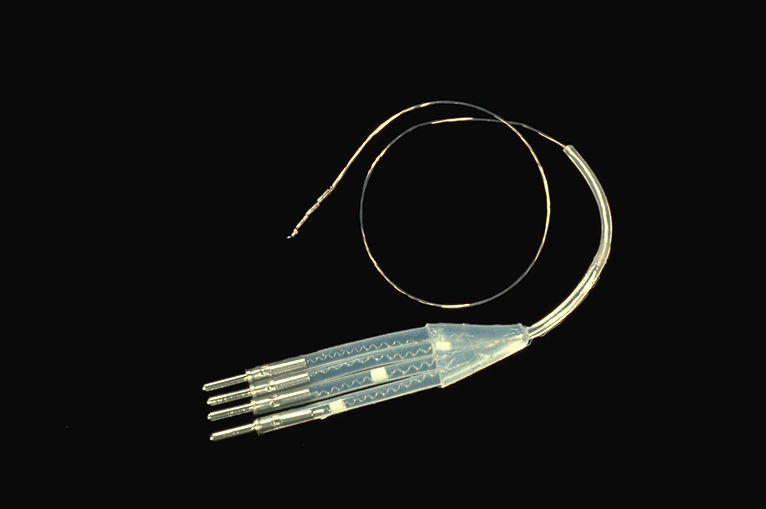
#77: Mary Elizabeth Sutherland — Nature, editorial judgment, and the future of scientific publishing