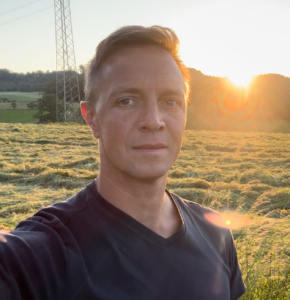
Dr. Downar is a psychiatrist and neuroscientist at the University of Toronto. His research focuses on using neuroimaging to identify better targets rTMS across a wider range of conditions and on finding biomarkers to predict optimal treatment parameters for individual patients.
#67: Jonathan Downar – TMS for Depression: Towards a One-Day protocol
In this episode, we’re joined by Dr. Jonathan Downar, a psychiatrist and neuroscientist based in Toronto, renowned for his pioneering research in transcranial magnetic stimulation (TMS) for depression. You may recognize him from his landmark work on the Three-D Trial, which helped establish intermittent theta-burst stimulation (iTBS) as a rapid and effective alternative to standard repetitive TMS.
Recently, Jonathan has been pushing the boundaries of TMS with accelerated treatment protocols, including the One-D Study, which tested the feasibility of delivering an entire TMS course in a single day.
In our conversation, we explore his scientific journey, the future of brain stimulation, and his bold approach to innovation—what he calls “TMS in SpaceX mode.” We also discuss the vision for achieving a billion depression patient remissions in our lifetime.
Tune in for an inspiring and insightful discussion with one of the leaders in neuromodulation research.
Jonathan Downar 00:00And we noticed just even though it wasn't a randomized trial, that when we laid the two case series against one another in a retrospective case series, that the trajectories of improvement were identical for these two things. And it was at that point that I spoke with Jeff Daskalakis and Dan Bloomberg and Fidel Villarrodriguez over at UBC and said, well, maybe we should do this properly as a formal trial. Because cutting the treatment time down to three minutes means it's only about 100 minutes of chair time, which is a lot better than 22 hours of chair time. And this could just generally make TMS faster and cheaper and better for everybody. Oh, interesting. So that's the other neat thing that these cyclosarians seem to be doing. And this is in the preprint. The 12-week numbers are great. In fact, a lot of people are doing better at 12 weeks than they were at six weeks. If you look at all the individual curves, we had a couple of people relapsing after six weeks and starting a slide again at 12 weeks. But the vast majority of people are doing as well or better by 12 weeks than they were doing at six weeks. I do think it may be reasonable to say that if you do this recipe, that whatever clinic you operate at, whatever remission response rates you're used to seeing in your clinic, they're not going to be worse on the one-day protocol than they were for a conventional treatment.
Andreas Horn 01:14Will they be better? Hopefully. But they're not going to be worse. These numbers were certainly better than the clinics we drew the patients from are used to seeing. Welcome to Stimulating Brains. Hello and welcome back to another episode of Stimulating Brains, the podcast where we explore the latest advancements in brain stimulation. neuro-modulation and the people-driving innovation in this space. Today we have a truly fascinating 02:02guest, Dr. Jonathan Downer. Jonathan is a psychiatrist and neuroscientist based in Toronto, where he leads cutting-edge research on transcranial magnetic stimulation for depression. Many of you know him from his landmark work on the 3D trial, which helped establish theta-birth stimulation, ITBS, as a rapid, effective alternative to standard repetitive TMS. More recently, he has been pioneering accelerated TMS protocols, including the 1D study, which tested whether an entire TMS course could be condensed into a single-day treatment regimen. In today's conversation, we'll talk about his scientific journey, the future of brain simulation, and what it means to approach TMS innovation in SpaceX mode, as Jonathan puts it. We'll also discuss his bold vision of a billion depression patient remissions in our lifetime. So without further ado... Let's dive into the conversation with Dr. Jonathan Downer. Thank you for tuning in Stimulating Brains. 03:10So Jonathan, thank you so much for joining us and making time to do this. Of your busy schedule, by now we'll have introduced you more formally, so we can dive right in. And I always ask an icebreaker question first. So when you get a moment of free time, what do you do? Oh, thanks so much. Andy, it's also great to see you. So thanks for having me on the podcast. It's a pleasure to be here and a pleasure to see you again. All right. So what do I do when I get a moment of free time? I am a new father. I was about a year and a half ago. So I've got a 16-month-old boy. And at the moment, when I do have free time, I try to spend some time with him. He's at that inquisitive, exploratory age. So we sort of wander around the grass in the yard and look at things and pick things up and all that.
Jonathan Downar Beautiful.
Andreas Horn Great. Any hobbies you had before the kid?
Jonathan Downar 04:00So I've always been pretty keen on kiteboarding. And so it seems to be a bit of a thing in the TMS community. So I have a couple of kiteboarding friends. Nolan Williams, for example, would be a guy I've gone kiteboarding with once or twice. I will confess I have not been out on the water for at least two years. But if I ever get out from under all this stuff, it would be nice to get back out there again.
Andreas Horn Yeah.
Jonathan Downar Sounds great. Cool. Okay. So diving into your career and scientific journey,
Andreas Horn what originally drew you to the field of neurostimulation and maybe depression treatment?
Jonathan Downar Okay. That's a great background question. So I guess I originally came to medicine from a neuroimaging background. I did my PhD in functional MRI starting in 1998 when the technology was still fairly new. And so when I trained in medicine and then in psychiatry, I think the idea was to try and use neuroimaging to do something useful for psychiatry.
Andreas Horn 05:00The dilemma was that after four and a half years of residency, I couldn't figure out exactly what
Jonathan Downar to do with it because neuroimaging was really great at delineating the functional neuroanatomy of emotion regulation and social cognition and decision-making. And so we knew where all these
Andreas Horn circuits were thanks to a bunch of neuroimaging. But then the question is, what do you do with that with conventional psychiatry? Because you can't tell Prozac to just go to the right orbital frontal
Jonathan Downar cortex or you can't tell therapy to just work on this. particular network or whatever. So I was struggling to try and figure out what to do with functional neuroimaging and how to integrate that with psychiatry. And at some point, it occurred to me that because functional neuroimaging was neuroanatomically specific in its findings, it needed to be paired with an intervention that was neuroanatomically specific, more so than things like ECT and so on. TMS was the up-and-coming technology, which I guess as of 2009 was sort of underperforming. I think people were a little underwhelmed by TMS. It was at the bottom. It was at the bottom of the hype cycle at that time. But I formed the impression that maybe we weren't putting the coil in quite the right place and maybe we could treat a wider range of things more successfully if we started to integrate some neuroanatomical knowledge into it. And so that's where the shift to TMS came from.
Andreas Horn 06:15And so I had a few conversations with Jeff Daskalakis, who was the local TMS luminary at the University of Toronto. He gave me a few pointers on how to get started and went out and raised some money and bought a device and started a TMS clinic and started treating patients. And so I had a few conversations with Jeff Daskalakis, who was the local TMS luminary at the University of Toronto. He gave me a few pointers on how to get started and went out and raised some money and started a TMS clinic and started a TMS clinic and started a TMS clinic. Super cool. And then who were your mentors and also major influences or turning points in your career?
Jonathan Downar Yeah, so I think, so who were the major mentors then? I think, first of all, my PhD supervisor, Dr. Karen Davis, who was gracious enough to allow me to take this new technology of functional MRI as a young master's student and just try things with it. So she was willing to kind of give me a little bit of freedom to explore things like consciousness and salience. So she was willing to give me a little bit of freedom to explore things like consciousness and salience. 07:29And then the third person I think I should really call out would be Jeff Daskalakis himself, who has always been a great friend and mentor and been there for me at all the good times in the career and the tough points and both as a friend and as a scientific mentor.
Andreas Horn So all three of those people have been definitely deserve a shout out. Super cool. Was there any like pivotal moment or turning point or anything that shaped where you are now?
Jonathan Downar No, I think that was in terms. I think that was in terms of turning the brain imaging into pairing it with neurostimulation. 08:03I think it was after a few conversations with David and with Jeff about what we might be able to do with TMS if we could get the anatomy nailed down. I think that really is what propelled me towards the current direction. Other influences, just in the general background, I think I have been influenced a little bit by the Silicon Valley influence and by the examples of Tesla and SpaceX. I'll say I've never met Elon Musk. I've never met. I've never worked at any of those companies. But what I was attracted to, particularly at SpaceX, was their idea of just trying to generally massively improve the economics and scalability of putting stuff in space. So from 2016, when I think I can remember quite clearly first seeing them land for the first time a rocket ship on a barge. And it really wowed a lot of people. And so I dug into the company a little bit more and tried to figure out what they were doing.
Andreas Horn And it was interesting that they were looking at just radical ways. And so I was able to change the way spaceflight was done and just ask different questions to try and figure out how to reduce the cost of putting stuff into orbit by like 100 times. 09:10And so it ends up being that something like whether you can reuse the rocket or not, which no one really thought was an important question, turned out to be a critical question for being able to put lots of stuff in space.
Jonathan Downar And so by reading them and thinking about them, I think I can definitely say that applying some of that same, it got me thinking about applying some of that same type of philosophy to TMS.
Andreas Horn And were there ways that we could make TMS 10 times faster? Could we make the learning curve 10 times easier? Could we make the cost of TMS the same as medication? And what would that take? And what questions do we need to be working on?
Jonathan Downar And that definitely steered, I guess, steered the whole lab in different directions. We had originally been focused more on neuroimaging and biomarkers and things like that. And now we realize that a lot of these questions are just about scalability, about changing the hardware around and about trying to make the protocols more efficient and requiring less time. And so I think that's a really important thing. Less time in the chair and less complexity.
Andreas Horn 10:03So constantly focusing on simplicity and scalability. And is there a way we can get this down to the ease of use and complexity and convenience of medications and the cost of medications?
Jonathan Downar At which point we could potentially take this great treatment and scale it out to millions, maybe a billion people over time.
Andreas Horn Yeah.
Jonathan Downar And I think that also led to less time spent in the chair, I think, was also or might have been behind your...
Andreas Horn Yeah.
Jonathan Downar ...the three-day trial. And maybe also, you know, feel that lip to tell us a bit more about the history of TMS. I'm not an expert. I'm more a DBS person, as you know.
Andreas Horn But my understanding is that the 3D trial that you last authored in 2017 was published in the Lancet, was a landmark trial for the reason that it essentially put ITBS on the map or showed that ITBS was non-inferior to conventional 10 hertz RTDs.
Jonathan Downar And so I think that's a very important thing. 11:00And I think that's a very important thing.
Andreas Horn Can you maybe, for the naive listeners, first describe what these two options are and what you showed there?
Jonathan Downar Sure. Let me admit this in a little bit of history. So one of the things I love about TMS in general, it's unlike, you know, pharmacology. Once you've discovered a molecule, like, say, S-ketamine, it's still going to be the same S-ketamine 20 years from now. Fluoxetine, Prozac, is still the same fluoxetine it was in the 1980s. But technologies are different. You know, if you bought an electric car in 1995... It was probably pretty terrible. And now here we are 30 years later, and they're quite a lot better. Wind turbines didn't used to be economical ways of generating power, nor did solar panels. But, you know, all of a sudden, with the technology, you can keep chipping away at it and chipping away at it and making it faster, cheaper, and better and faster and cheaper and better.
Andreas Horn And if you look at TMS, that's exactly what happened.
Jonathan Downar So a very, very compressed history of TMS. 1985, Tony Barker first invents and demonstrates the technology published in May 11, 1985. And Lancet was the first report of this device for transcranially, magnetically stimulating the motor cortex. 12:05Fast forward 10 years to 1995, 1996. Mark George in one paper and Alvaro Pasqual Leone in another paper demonstrated in patients that this could actually have antidepressant properties if you place it over the left dorsolateral prefrontal cortex. Fast forward another 10 years, people did lots of various trials. But by 2007, John O'Riordan and colleagues ended up... And then Mark George in 2010. And then Mark George in 2011 did a pair of trials showing that TMS in two large groups did better than sham. One was an industry-sponsored trial. The other was NIH-sponsored. But, you know, so we had FDA approval in the United States for TMS for depression as of 2008. And fast forward another 10 years, and we get to the 3D trial. So at the time of the 3D trial, the standard John O'Riordan or FDA-cleared protocol involved 3,000 pulses of 10-hertz stimulation delivered over a period of 37 years. So at the time of the 3D trial, the standard John O'Riordan or FDA-cleared protocol involved 3,000 pulses of 10-hertz stimulation delivered over a period of 37 years. So at the time of the 3D trial, the standard John O'Riordan or FDA-cleared protocol involved 3,000 pulses of 10-hertz stimulation delivered over a period of 37 years. So at the time of the 3D trial, the standard John O'Riordan or FDA-cleared protocol involved 3,000 pulses of 10-hertz stimulation delivered over a period of 37 years. Now, that's great and all, but, you know, a standard course of TMS in the United States is 36 sessions. 13:06And so if you do a little bit of math, you're looking at about 1,000... You're looking at about 22 hours of chair time to treat a patient. So when we look at 22 hours of chair time, it's just not easy to imagine how 22 hours of use of a specialized room, a specialized technician, specialized equipment is really going to scale to millions and millions of people. We ran into this firsthand in Toronto when we opened our doors. The Toronto clinic that we opened in 2010 was always a free clinic. We always let anybody come in, never charged anybody for it. And the problem with that is eventually people found out, and so lots of people started to show up and come in for TMS. And very quickly, our one machine was overwhelmed because you only get about eight or nine, maybe 10 sessions a day if you work really efficiently. And so you can only treat one new patient every three days. If you start getting a referral a day or two referrals... There's no way to keep up. 14:00So we bought a second machine, and then we kept up for another six months. And then we realized we weren't keeping up, and we just started trying to raise money for a third machine, and that wasn't going very well. And so we started to get in a big lineup. And at that time, we were aware that there was this faster protocol called theta burst, which was supposed to be able to use patterns mimicking the theta rhythms of the brain. The original impetus for that was from work on long-term potentiation and long-term depression. And hippocampal slices, where they noticed that the hippocampus generates these little bursts at theta frequencies, which seemed to be, at least in the dish, were more efficient in inducing plasticity. So out of John Rothwell's lab in 2005, Huang and colleagues did a now very well-cited study in neurons showing that you could sort of mimic the theta burst approach in motor cortex with a TMS coil. And now you were getting significant plasticity in one minute for the inhibitory version called CTBS. And three minutes for the excitatory version called ITBS. 15:03So just as a measure of dealing with our wait list, we started, and we're saying even if it's not better at inducing plasticity, even if it were just about the same, this could potentially help to cut our wait list down and get more people in. So we started treating a whole bunch of people using the three-minute theta burst treatments. And by 2015, we treated about 185 patients, some on 10 hertz and some on three minutes. Using... This was at a doorstep. Doorstep, medial target, which we favored at the time. And we noticed just, even though it wasn't a randomized trial, that when we laid the two case series against one another in a retrospective case series, that the trajectories of improvement were identical for these two things. And it was at that point that I spoke with Jeff Daskalakis and Dan Bloomberger and Fidel Villarrodriguez over at UBC and said, well, maybe we should do this properly as a formal trial, because cutting the treatment time down to three minutes means it's only about 100 minutes of chair time, which is a lot better than 22 hours of chair time. And this could just generally make TMS faster and cheaper and better for everybody. 16:03So the concept was born of let's do three minutes versus the standard 37 minutes in a non-inferiority study. Non-inferiority studies require a lot of patience. So this was... Unfortunately, Dan Bloomberger is a consummate trialist who is phenomenal at designing and executing and quality control and making sure. So he really dove into communicating with the FDA and making sure that the data was going to be collected. And so he was able to do that in a way that was compatible with... And so our three clinics plugged away for between September 2013 and I guess around the spring of 2016. So this plugged on for quite a long time and maybe heading into late 2016. We plugged away until we had about 400 patients. So I think it's still one of the biggest trials done so far in the brain simulation world in general. Not because we were trying to show off, just because you just need a lot of... Statistical power to do a non-inferiority study. 17:01But fortunately, the results were very clear. Just as we'd seen for dorsomedial, the three-minute treatments also work well for dorsolateral. There are two neat things about that study. First of all, the FDA, thanks to Dan's hard work in preparing all of this, the FDA followed through with a 510K clearance just later on that year. And so the theta-brace treatment got very widely adopted even a year later. At the Clinical TMS Society, an informal poll of the audience showed that a majority of people were already integrating three-minute theta-brace treatments into their clinic. So that was exciting. We were hoping that this would reduce the cost of TMS down to a point that the Canadian government and the various health agencies there would decide to adopt it. And the TMS would be rolled out more quickly. Unfortunately, it didn't translate immediately into a Canadian rollout. But certainly in the U.S., I think TMS started to take off. And it's going to take off and expand a little more quickly. 18:00The third thing that was neat to call out about this is we realized that this project had actually managed to create a new FDA indication, or at least a new FDA-indicated treatment, for a cost of under $3 million in a timeline of maybe four or five years. That's really exciting when you compare that to pharma. Because as we know, there are still lots of great pharma molecules being generated. But it seems like they cost more and more every year to find. And it takes more and more time to find them and to prove them. And so it's not uncommon to see, what, $2 billion in 20 years of development time to bring a molecule to market. And so if you imagine that you had some new technology, like deep pharma or something, like some AI that could somehow reduce the pharma discovery timeline to two or three years and reduce the cost from $2 billion down to $2 million, that would be a pretty exciting technological development. Well, if you cross out the word AI and you write in the word TMS, that's sort of what we have.
Andreas Horn Yeah.
Jonathan Downar 19:20. trial. The cost of doing those pivotal trials in TMS world is low enough that even three little labs or three little clinics can get together and plug away at this for a couple of years and do what would normally take a gigantic pharma company a lot of time to do. So I think that's one underappreciated thing about the excitement of TMS world is that it's possible to get completely new indications proven out all the way to FDA on budgets that are tractable even for humble
Andreas Horn researchers rather than gigantic pharma companies. Super interesting thought. Never thought of that.
Jonathan Downar That makes a lot of sense. And you already spoke about how ITBS has since your trial and since the 20:03FDA approval impacted clinical practice. And I think by now we could say it's standard or now maybe replaced by the next thing that happened, which was probably the same. That's exactly right. So I think we were going through the top of the list. I think we were going through the top of the list. Great timeline of great moments in the history of TMS all the way from 1995 invention, 1995 first pilots and depression, 2007, 2008 FDA approval, and then 2018 getting the treatments 10 times faster. So an order of magnitude improvement in the chair time. And then along comes the group out of Stanford, Nolan Williams' group, who again, a dear friend and colleague and a very bright original thinker, a first principles thinker very much along the SpaceX line. And I think that's a very important point. And I think that's a very important point. And I think
Andreas Horn about ways to achieve further 10X improvements and things. And the 10X in this case was why are we doing it just once a day? Why are we waiting 24 hours between sessions? Could we just do 10 sessions 21:02a day? There was a study as early as 2010 where Paul Holzheimer and colleagues had experimented
Jonathan Downar with doing up to 10 sessions a day in a highly accelerated form. And it looked fairly promising. I'll come back to that later on. But Nolan's idea, among other things, was to increase the number of pulses. So doing kind of three theta pulses a day. And then along those two sessions, we had a on every session, but then do that every hour, 10 times a day, and deliver a total of 50 sessions. And then getting the whole thing done in five days by doing 10 times as many sessions per day. And not merely stopping there, but then in addition to that, being a lot more rigorous about where you put the coil by doing neuroimaging to try and pinpoint an area that lies on the network anticorrelated to the subgenual, which as you're well aware, is the DBS target that's often used in depression. So non-invasive, but it's a very, very good idea. stimulating the same network that you would do invasively through DBS and personalizing that to each person. And then coming away with that, showing that, wow, you can indeed get people better with a five-day course of TMS, which is in itself a job, quite a showstopper. 22:05But then on top of that, reporting very high remission rates and attributing those to the personalized targeting, rather than just a generic target. So two big claims there, which either one of which would have been very impressive in its own right. First of all, very high remission rate. And then second of all, a very rapid onset of effects. Either one of those claims all by itself would be great, but getting two of them together in one protocol certainly constituted a breakthrough. And so when SAINT got FDA clearance in 2022, then that was, again, a major breakthrough. Yeah. And we had Nolan on the show as well. We also had Mike Fox on the show who was, I think, instrumental in thinking about this anticorrelations with the subgenual.
Andreas Horn Yeah.
Jonathan Downar 23:20across the entire literature, doing more sessions is always helpful. And then so adding more sessions, certainly going from 30 sessions up to 50 sessions generates benefits for some patients. And some people have tried even longer courses. In fact, Nolan treated a relative of a friend of mine who didn't respond to 36 sessions, but because Nolan was really persistent and was really advocated for this patient, that person was able to get a second course at 36 and ended up going to a very sustained remission and has stayed in remission ever since. So really meaningful impact there. So certainly adding on more sessions is very valuable. 24:00The role of how many pulses constitutes a session, that's the big fuzzy question. We don't think it scales linearly. So there is some minimum number of pulses you need to induce. And we know that from Paul Fitzgerald's work in Australia that whether you do on one hertz, for example, whether you do three, 30,600 pulses or 1,200 pulses, you get the same outcome. And 3,000 versus 5,000 pulses at 10 hertz seems not to make that much difference. In the realm of theta bursts, there's different opinions on whether 600 pulses does the same as 1,800 pulses or whether you need to do the full 1,800. But I would say certainly I think most of us are agreed that more sessions is good and that there is some minimum amount of pulses that counts as a session. And we're still trying to figure out what that minimum is. Obviously, in the 3D study, it looked like 600. Pulses did pretty well. And in the 1D study as well, 600 pulses seems to be doing quite a lot for people. Super cool.
Andreas Horn And so when Nolan told me that he was also a bit inspired by deep brain stimulation, which obviously fires 130 times per second throughout the entire day, right?
Jonathan Downar 25:06So I think that was one idea of like there's just not enough pulses for a great effect.
Andreas Horn Did that same thought ever influence you too? Was that an inspiration or was it not really? Yeah, it's an interesting thing about that.
Jonathan Downar I think there's certainly – it's an empirical question that I think we'll sort out over time. Adding more pulses in the form of more sessions certainly seems to have been very effective in pumping up the remission rates in Sage. And I think even if you just do 50 sessions, even on a one-day schedule, you will definitely get a better remission rate than if you do 30 sessions.
Andreas Horn Yeah.
Jonathan Downar I think an important distinction. And between the time course of DBS and the time course of TMS is that – and we should – we'll have to think about – this is maybe a nice topic to talk between the neurosurgeons and the non-invasive people. I think neurosurgery has been very influential upon TMS in terms of specifying 26:05where we should be putting the coil and what networks we should be thinking about.
Andreas Horn But what's interesting about TMS is that people don't walk around with the TMS coil on their head all day long
Jonathan Downar the way they do with the DBS.
Andreas Horn Yeah.
Jonathan Downar And so the cool thing about TMS is that the neuroplasticity is engaged. So even though you're not doing anywhere near as many pulses as you are with DBS, and then even though you stop after a certain number of days, the effects continue to endure for weeks and weeks and weeks. And so I think it might be interesting for all the invasive modalities like vagus nerve simulation
Andreas Horn and deep brain stimulation.
Jonathan Downar What if we – and I think people are already starting to look at this.
Andreas Horn What if we try to learn from slash copy from – slash adopt some of the more TMS-like protocols into our invasive brain simulation?
Jonathan Downar At the very least, we could save on a bunch of battery life, and maybe we wouldn't have to do quite as much stimulation quite as much of the time. And potentially, we could even get a more rapid onset of effect. 27:01So I think it'll be interesting to see what happens in the deep brain stimulation world when we maybe go down to fewer pulses but pattern them in ways that seem to induce plasticity with the way that TMS does. Maybe you've done some of that work already. I know some people are interested in that question. So – Super cool thought. And I don't – I'm not aware of studies like that. There are multiple, you know, indications such as stroke or so that have started to do a non – like non-hundred above – like non-high frequency DBS but low frequency DBS. But I think these more patterned simulations are not really happening. I think people are thinking about it a lot. And there might be some studies where with an externalized lead or so, people are trying to do things in the lab setting. But I'm not aware of like big scale indications so far. But it's a great thought. So to be inspired from TMS. Well, so let me unpack that a little bit further as well because we know in DBS, 28:01anyone who's been around DBS patients sees that, you know, you can make an implantation and you can even do some – even during the operative procedure itself, you'll often see some dramatic, you know, transient improvements in the symptoms. And then – but then you also have these trials that have failed to show a big – you know, transient improvements in the symptoms. And then – but then you also have these trials that have failed to show a big – a big benefit in the two different groups. And it's not – we've always assumed that that's because the coil is not in the right place or rather that the electrodes aren't maybe quite in the right pathways and so on. But it's important to remember that there's also the question of whether plasticity is being induced and whether you're favoring LTP or LTD or whether you're just stepping on both the accelerator and brake at the same time. So I think when we think about the so-called failed trials where we're not seeing a difference between the active and sham stimulation, we should think about –
Andreas Horn Yeah. Yeah. So location of implantation, the anatomy. But we should also be thinking about is it advisable to just be running continuous tonic stimulation in there all the time? Is that possibly why some people don't respond? And if we were to switch to something more like a saint-like protocol where it reports these much higher emission rates, 29:01could we get some people to respond to DBS not by moving the electrode at all but simply by just patterning the pulses so that they're more likely to induce plasticity rather than just jamming the network?
Jonathan Downar So yeah. So I do think we – it may behoove us to think. I think we should think about that because – and this comes up in TMS as well. Certainly for TMS, when we look at the mechanism of it, part of the mechanism involves neuroanatomy but part of the mechanism involves neuroplasticity. And when we find non-responders, some portion of non-response is due to off-target coil placement but we're also learning through the 3D study, which I guess we'll be talking about shortly, that also some – a fairly large portion potentially of response is due to not enough plasticity.
Andreas Horn Yeah. having to move the simulator around. Yeah, I love the thought. It's very interesting. I mean,
Jonathan Downar we should emphasize that for depression, we are in essentially anti-correlated networks. So in DBS, 30:02I think the idea is still to down-regulate something that's overactive while maybe,
Andreas Horn like in simple terms, right? And so it might also then in that case require a shift of where to put the electrode into the more anti-correlated network in a way. But yeah, I love the thought.
Jonathan Downar So let's talk about your 1D trial, which is, I think, the most exciting thing that has happened to TMS since SAINT. It is currently a preprint. Do you want to briefly summarize it? I think the idea was to even further condense and do a one single day treatment over 10 hours, if I remember
Andreas Horn correctly. Yeah. What did you guys think?
Jonathan Downar So let's talk about the genesis of 1D, very much like the genesis of 3D came from the patients. 3D was a response to the fact that we thought that what we were supposed to be doing was using MRIs to personalize all the treatments. And what I found was none of the patients were complaining 31:01about their remission rate. They were complaining about how long it took to get in. So that's why
Andreas Horn we decided, well, why don't we at least have a project that addresses that? And then the other
Jonathan Downar thing, of course, that patients complain about are that they say, I can't come for TMS, even though it might be good for me because I can't find 36 days in my schedule. Okay, great. Well, now we have these five day protocols. So all you need to do is take five days off. And you still have some patients, a fair number of patients say, look, I live four hours away and I have responsibilities. I could come for one day. I can't come for five days. So do I need all five
Andreas Horn days or could I just come for two days or one day? And we got to thinking about that. And I realized
Jonathan Downar I actually didn't have any numbers that I could give to a patient about what that would do. You know, so if a patient asked me, you know, well,
Andreas Horn come for one day, what are my odds? And the only thing I could draw upon was Paul Holsheimer's
Jonathan Downar paper back from 2010, when he was literally the only person who is back in 2010. He, right, it was one of the very first reports on accelerating, possibly the first report of doing 32:0010 sessions on day one, and then five sessions on day two, and then sending them home. So 15 sessions produce a pretty respectable 29% remission rate and 43% response rate, which is, you know, for those days using those protocols. Pretty similar to what you get with a normal course of TMS in those days. And I remember reading that paper in 2010 and thinking, oh, we should do some of this accelerated stuff. And then bizarrely, the field just didn't do very much with it. Like some people tried three sessions or four sessions or five sessions, you know, times one or two or three days. But nobody ever went back and tried the one day, say, or 1.5 days or one day. So it's never been replicated. So we realized that we probably should at least do some of those things. And so we did. And then we did. And then we did. And like I said, there were plenty of patients who said, I can come for one day. So what does one day
Andreas Horn do for me? So we said, let's actually ask that as an open question. We have these patients who are
Jonathan Downar not willing to come for five days, but they are willing to come for one day. And we don't know what that'll do for them. So if they're willing to come and try this out, let's at least do 33:00everything we can think of to make that one day as impactful as possible. And so the first thing we could do is reduce the interval a little bit. So traditionally, a 60 minute interval has been respected in between like in the same protocol and many other accelerators. And so we did a protocols. For reasons due partly to Charlotte Netkoven's paper in motor cortex, they were seeing that you could do sessions 30 minutes apart and get an additional bump of plasticity. And then Andre Bernoni also recently had a study out in which he was able to do a semi-accelerated three times daily treatment with a 30 minute interval and seeing good effects there. So let's try and squeeze in more sessions. Let's do a 30 minute interval and see what that does. Let's also offer three minute 600 pulse data burst because from the 3D study, we seem to think that's useful. So now we've got 20 sessions in 10 hours. And the only problem is that 20 sessions isn't really enough to get that many people to remission. We know from our trajectories analyses of the 3D data that there are people who are all the 34:02way better after that few sessions, but those fast responders who have lots of plasticity, they're a minority of the sample. They're only about 20% of the sample. On the other hand, there are other groups, which I'll come to in a second. There are slow, medium, and fast responders. So 20% of people are fast responders. And so if we just do 20 sessions, even if the acceleration worked, we should only expect about a 20% remission rate. In fact, what else could we do for them? Well, we happen to have what I think will end up being a seminal paper in the field, or in retrospect, will be a very influential paper in the field. Alex McGeer is going to be a very influential paper in the field. Alex McGeer is going to be a very influential paper in the field. group in the University of Calgary in 2022, published in JAMA Psychiatry, on the effects of adding the NMDA partial agonist d-cycloserine onto a rather stingy 20-session course of TMS. I say stingy because in Canada, sometimes that's sort of what we do for people. But a 20-session course is less than what you would normally do in the US. And a lot of people would 35:04say it's not enough to get most people to response. And in his two-arm study, his placebo DCS group, who got 20 days of three-minute theta burst once daily, they only did just under 20% of the people remitted in that group. But by adding on d-cycloserine doses one hour before
Andreas Horn each day of treatment, interestingly, their remission rate doubled to 40%. And what was
Jonathan Downar exciting about that was they actually only gave... the d-cycloserine for the first 10 out of those 20 days, suggesting that if you did them for all
Andreas Horn 20, could their rate be even higher? So the other problem is that's a lot of d-cycloserine. It's a
Jonathan Downar hard medication to obtain in Canada, and it's fairly expensive in the US. So one advantage to doing all the sessions in a single day is you can just use a single dose of d-cycloserine. So the core of the 1D protocol is really to do three minutes of stimulation 20 times per day. 36:03And what... we'll add on d-cycloserine. And we were hoping that we'd get a remission rate somewhere between 20% and 40%, since that's what Alex saw in his story in studies. And that would
Andreas Horn indicate that, yeah, we could take the 20 sessions. You'll see in a moment that that's
Jonathan Downar not quite what happened. And what happened was substantially better than what we expected. But we were expecting a remission rate somewhere between 20% and 40%. And then we would go back and do a two-day version, and then a three-day version, and then a four-day version. And we'd just figure out what the distribution was. At least that was the plan. One final... One final thing we did, which I'll emphasize, I don't think anymore that we have to do this. So I hope people who in the future try this will drop this from it. We also added on the stimulant by-bands, listexamphetamine, at a low dose of 20 milligrams because of results out of the UCLA group. Andy Luchter's group ended up doing a study where they found that psychostimulants like listexamphetamine or dextramphetamine or even methylphenidate would,
Andreas Horn 37:03would speed up people's response to TMS. And modafinil, interestingly, didn't. So it looked
Jonathan Downar like it had to be a dopaminergic mechanism. So just because we were trying to get the most bang for the buck, we added in by-bands. We've since gone back and done another series, not published yet, where we don't use the by-bands and the outcomes look very similar. So if I... There's one take-home is if you are going to go out and try this at some point, I don't think the by-bands is as necessary as we thought it would. But nonetheless, in the preprint, patients would come in. These were regular TMS, but they were not as effective as they were in the preprint. So we would have to do a two-day version of this. And we would have to do a three-day version of this. So we would have to do a three-day version of this. And we would have to do a three-day version of this. We would have to do a three-day version of this. And we would have to do a three-day version of this. We thought it would. But nonetheless, in the preprint, patients would come in. These were regular TMS patients from regular community clinics. These are very kind of run-of-the-mill TMS patients. The only thing was that their insurance, for some reason, had denied them, or they just said that they couldn't come in for 36 sessions. And so we went through and we gave them these 20 sessions in a single day. One hour beforehand, they got 125 milligrams of d-cycloserine, as well as 20 milligrams of by-bands. And then we, you know, we performed a two-day version of the TMS. And we gave them these 20 sessions in a single day. We performed a baseline Hamilton depression rating scale, Beck depression inventory, 38:01GAD-7, and PHQ-9. And because in previous accelerated studies, it appeared that, including the SAINT study, they would follow people out for four weeks afterwards because some people would respond later than the initial treatment. We decided to follow people out for six weeks after the treatment, just in case some people didn't respond right away. That turned out to be a really good idea because, in fact, almost nobody responded right away. It was not like ketamine. And if we followed people one week after, and so what happened is we then started looking at what people were like one week after treatment. And sure enough, one week after treatment, about 20% of people were in remission. And we're like, all right, well, that's sort of what we were expecting. But then two weeks later, suddenly 40% of them were in remission. Oh, okay, well, this is sort of like, oh, the upper end of the curve. That's great. Then it was three weeks. Three weeks, 60% of them were in remission. And it's all right, well, okay, something
Andreas Horn interesting is happening here. And then at four weeks, it was closer to 70%.
Jonathan Downar And we ended up plateauing out across almost all the measures. You've got about a very consistent 39:0180% improvement in symptoms from baseline. So depending on the scale, most scales were a little above 70% remission across all four scales. And at least 90% of patients showing greater than 50% improvement.
Andreas Horn Pretty fantastic. Bit of a jaw dropper to see. But what's interesting is we then look back at our,
Jonathan Downar so two unexpected findings. First of all, well, three really. First of all, I think the only real take home I want that I think I feel comfortable saying is it looks like doing all the sessions in one day with neuroplasticity agent. If you do that, I'm not claiming that every clinic in the world and every clinic with tough populations and VA and homeless patients and so on is going to get a 90% response rate. I don't think that's reasonable to claim. I do think it may be reasonable to say that if you do this recipe, that whatever clinic you operate at, whatever you do, you're going to get a 90% response rate. So if you do this recipe, if you do this remission response rates you're used to seeing in your clinic, they're not going to be worse on the one day protocol than they were for a conventional
Andreas Horn 40:04treatment. Will they be better? Hopefully, but they're not going to be worse. These numbers were
Jonathan Downar certainly better than the clinics we drew the patients from are used to seeing. The second part is that people don't get, as you said, people don't get better right away. So unlike in SAINT where the personalized targeting potentially is causing this phenomenal outcome where people are often better by the time they do the treatment, the number of patients that do the treatment is going to be better by the third, not even before the end of the week, by the third or fourth day, they're already showing a sudden flip in their mood. You're not seeing that on the one day on the one day protocol, which doesn't use personalized targeting. What you're seeing is
Andreas Horn you put all the sessions in, but then interestingly, it still takes between one to six weeks for the
Jonathan Downar people to actually show the response before response and remission. And sure enough, you have fast responders and medium responders and slow responders, just like you do in the 3D trial. Um, the difference is, that almost all of them go to remission because, uh, I guess with the enhanced plasticity, 41:02what that suggests is that by enhancing the plasticity, what you're doing is you're taking your slow and medium responders and you're turning them into faster responders. And you're also getting them all the way to the remission line. The only people who don't come along for the ride are the non-responders in the 3D study of the four trajectories of response. There is a one true non-response trajectory where they don't show any improvement. Just, they're just, completely flat. Most people show a little bit of improvement, but the not, the true non-responders
Andreas Horn show a completely flat, no improvement whatsoever. Um, what's interesting about them is they're
Jonathan Downar actually only 10 or 12% of the sample, which is the same as what we saw in the 1D study. So it actually suggests that really we could be looking at a very similar thing where we have about 10 to 15% of people who don't respond. And likewise in the same trials as well, there are this sort of hardcore, about 10 or 15% of people who don't respond. And so, you know, you're not going to be able to see the same results. So you're going to have to look at the same trials as well. And so, you know, you're going to have to look at the same trials as well. And so, you know, you're going to 15% of people who don't respond and everybody else does well. Um, and in 3D, there was a hardcore 42:0110% of people who didn't respond at all. And then everybody else responded weekly or moderately or strongly. And then in the 1D study, we have 10% of people who don't respond at all. And then everybody else gets better, whether it takes them one week, two weeks, three weeks, or four weeks, everyone else eventually gradually gets better. What, what, what I like about the, the delayed response is that it's also a bit, you know, it would, it doesn't sound, that doesn't smell like placebo. It all right. Or, or would the typical placebo curve also be as,
Andreas Horn yeah, that's, so that's why we, that's what we think this might, it overturns a lot of our
Jonathan Downar assumptions about how TMS works. Cause you're absolutely right. The timeline of the intervention is completely uncorrelated with the timeline of the improvement. And just to clarify, cause I've had people ask me this, these patients did not get anything after the one day. There was no more, they don't get D-cycloserine or Vyvanse every day, just on the day of treatment. And they only get TMS on the day of treatment. They don't get any follow-up except for remote calls for the 43:00Hamiltons. Then there's an annoying email to send in their HQ nines and other questionnaires. So they're not getting any of the stuff that a regular TMS patient gets. We've always assumed in TMS that a fair amount of the response is the nonspecific factors, the stuff other than the pulses. You know, if you sign up for 36 days of TMS every day, you're going to get up a certain time. You have behavioral activation, you're getting out of the house, you have social interaction. You're sitting in a chair, getting therapeutic contact. You have schedule, you have routine, you have purpose, you have all this stuff. These patients have none of that. They just got one day and then they get sent home and that's it. And bizarrely, without any of those things being present, they still, almost all of them got better and developed over time. So you're right. It's the timeline of improvement does not track the timeline of the nonspecific parts of TMS, which argues against a placebo response.
Andreas Horn Which is why I'm very excited to see what kind of placebo,
Jonathan Downar how this turns out in a placebo-controlled trial. And I do know that quite aside from our group, 44:00other groups in Europe and elsewhere are already spooling up some placebo-controlled
Andreas Horn trials to give this a shot. Yeah, sure. I'm sure. Do you have any inofficial things you can tell about, for example, how long did it last in some? And then also, did you try without the D-cycloserine ever? Yeah. Okay. So now we're getting beyond. So
Jonathan Downar bearing in mind that none of this is peer review yet. So even one, D is just a preprint. It hasn't been peer review yet. And then we have new cohorts who were running since then. We have a cohort that we've run without the Vyvanse, just with the D-cycloserine. It's early days yet. I don't have them followed all the way through, but they look like they're, so far, they look like they're doing fairly comparably. And so I think there's an argument that if you're in a jurisdiction where Vyvanse is complicated or you're concerned about using the stimulant, just don't use the stimulant. It is only one day of stimulant, but still, if it's complicated for you, I don't think it's silly. 45:01Alex McGeer, for example, did not use any stimulant whatsoever. In his studies, he's only used D-cycloserine and is seeing this tremendous boost without any recourse to use.
Andreas Horn I understood that, but did you also try without the D-cycloserine at all, informally? We have not tried it without the D-cycloserine. It's an interesting,
Jonathan Downar actually, someone suggested to me that Saint, in some ways, might be an example, or rather, Saint without the personalized targeting. So if you were to look at outcomes of people doing Saint without the personalized targeting, that might not be a terrible proxy for what happens without the D-cycloserine. There are folks out there who are doing 40 session protocols over five days. And I don't believe that, at least from the published results so far on that, doing 40 sessions over five days, which is twice as many sessions without D-cycloserine. I don't believe we're seeing the same kind of response from emission rates from those kind of 46:00outcomes there. So we haven't personally done it, but there is data out there suggesting that the D-cycloserine may be an important ingredient. Alex McGeer's sham control trial, again, suggests that ECS is an important ingredient, but we will have to wait for a sham control trial to see how important it is. The other thing that I'll indicate is, what's the other thing we're
Andreas Horn doing right now? We're also trying D-serine at the moment rather than D-cycloserine.
Jonathan Downar D-serine is, and this is after a conversation with Josh Brown and Kerry Ressler over at McLean Hospital. So they're quite up on the various molecules that can be used as partial agonists
Andreas Horn of NMDA. D-serine is interesting, and sarcozine is interesting, because they both work on that
Jonathan Downar system, and neither one is even a prescription medication. They're substances that are found in low-quantum naturally in the body, and so they're actually classified as nutritional supplements. They're a lot cheaper, they're a lot easier to get, and they're very scalable. So it would be of high interest to determine whether D-cycloserine is necessary as an expensive, 47:04hard-to-get medication, or whether we can accomplish the same thing with D-serine, which is, again, just falls under the supplement category. We've just started running that this week, and I'm hoping that in about two months from now, we'll have a sense of what the D-serine
Andreas Horn is doing. Okay. And then any gut feeling that there's more relapse after 1D than the normal? Oh, interesting.
Jonathan Downar So that's the other neat thing that D-cycloserine seems to be doing. And this is in the preprint, the 12-week numbers are great. In fact, a lot of people are doing better at 12 weeks than they were at six weeks. If you look at all the individual curves, we had a couple of people relapsing after six weeks and starting a slide again at 12 weeks, but the vast majority of people are doing as well or better by 12 weeks than they're doing at six weeks. We're almost at six months, so certainly I have one patient who came in with a Hamilton of 20, and at six weeks was a two, and at 12 weeks was a one, and we just got the six-month data back, 48:04and that person's now down to a zero. So again, results not typical. I don't know if all 30-odd patients are going to turn out that way, but we certainly are seeing some people who are getting this treatment are still doing well six months later. We've had a couple of others who started to slip and are talking about relapsing. So I think for most people, the durability is going to shake out. The majority will be three-months.
Andreas Horn Okay.
Jonathan Downar Three months, and some people will make it out to six months without requiring retreatment. So if I had to predict, we don't know, but if I had to predict, I suspect that these one-day treatments for depression are going to be a thing that you do twice or three times a year.
Andreas Horn Super cool. And then last question on this is just that 10 hours is long, right? Yeah.
Jonathan Downar It's longer than a workday, and it's for the patient also quite exhausting, I'm sure.
Andreas Horn Any thought that it might also work in eight hours as a normal workday kind of?
Jonathan Downar It's so funny you mentioned. I think I told you I was just chatting with Noah Phillip over at the VA literally just before I 49:02jumped on here like a half an hour ago, and we were talking about this exact issue of how to get it down to a single eight-hour shift. It's relevant for a lot of places in Canada. Same thing. It's just hard to stretch the shifts out to 10 hours. So highly important to know whether you can get it down to 15 or 20 minutes. Anecdotally, I've had one or two people tell me they've tried it and it worked. There is a recent paper in... That you may have seen where they were able to study the mechanisms of space versus mass training, not in neurons, but in human embryonic kidney cells. This is the Hexcel paper I think
Andreas Horn is referred to in the preprint. Hexcells are nice because they're this easy to culture, and you have to induce the LDP-type mechanisms chemically rather than... But instead of looking for AMPA receptors, you look for just luciferase. So 24 hours, how brightly is the culture shining?
Jonathan Downar And you can... So what we found is that if you do four sessions zero minutes apart, that's no better than one session. But if you do four sessions 30 minutes apart, that's much more powerful. And that also 50:04turns out to be true for 40 sessions 20 minutes apart and 40 sessions 10 minutes apart, but not four... Sorry, four sessions 20 minutes apart, four sessions 30 minutes apart, or four sessions 10 minutes apart, but not four sessions zero minutes apart. So that's very preclinical stuff, but it does suggest that once D-cycloserine is in the picture, I think it probably does behoove us to go back and reexamine our assumptions about intervals, because what's true in the absence of D-cycloserine might not be true in the presence of D-cycloserine. And so I don't think it's a complete waste of time for people to try 15-minute or 20-minute intervals, and that's also high priority. I don't know anyone who's done it yet in a study, but I certainly know a couple of people who are gearing up to give that a try. And you're absolutely right. If it can be an eight-hour session, then that really improves the scalability of TMS dramatically. When you visited us at the center, you gave me the recommendation to buy the book, Loon Shots. And I bought it, but I haven't read it yet. And I think in your talk, you said that your loon shot was to treat a billion
Andreas Horn 51:05depression patients in our lifetime. What would need to be done to achieve that? Yeah, so it's interesting that. So I mean, hopefully not me personally doing it, but hopefully our community at large, could we actually... Are there a billion people to be
Jonathan Downar treated for neurological and psychiatric conditions with brain stimulation? I think there are.
Andreas Horn And then, not that TMS has to do all the work, but is there a world where we could make TMS
Jonathan Downar scalable enough to literally reach a billion people? Well, to do that, I think it's going to have to be... I mean, the main... So if we draw a column of comparisons, I mean, compared to conventional antidepressant medications, TMS is certainly more effective now by a good margin. Side effects, certainly superior by several orders of magnitude in terms of the number of people who drop out from a TMS. So I think it's going to have to be a lot of work. And I think it's going to be a lot of work. And I think it's going to be a lot of work. And I think it's going to be a lot of work. So I think it's going to be a lot of work. And I think it's going to be a lot of work. TMS trial versus a medication trial. Where it's losing out is cost and convenience. 52:00So a 36-day course is not very convenient. I think a one-day course is arguably quite convenient. And then the other piece is cost. So if TMS can be reduced to about the same cost as medications, cost per remission, then we have something to work with. If it's not the same cost per remission, then it's going to be hard to imagine how to scale it.
Andreas Horn So the loonshot really boils down to, is there any possible world where TMS hardware and protocols can be optimized in a kind of SpaceX-y fashion to the point where it costs about the same as medication per remission and has comparable convenience? And so there are a couple of
Jonathan Downar things to do there. First of all, again, if we come back to chair time, one of the neat things about the 1D protocol is it's actually, the chair time is now down to just 1D. So it's not just 1D. It's now down to just 1D. So it's now down to just 1D. So it's now down to just 1D. So it's now down to 1 hour overall. It's three minutes times 20. Now, naturally, of course, there's some time to get people in and out of the chair, which I'll come to. But during the 1D series, there were days where 53:06people, where three patients came in in a single day. And one of them would go at 9 o'clock, one would go at 9.07, and the other would go at 9.14, and there'd be a little break. So a skilled technician can definitely get three people through the chair every half hour. And that's phenomenal for wait lists, because it means you...
Andreas Horn A single system can treat 780 people a year, which is pretty fantastic. It also implies a lot
Jonathan Downar for the cost, because even in the world of business, having spoken to some TMS clinics that operate as commercial operators, they're generally pretty happy if their treatment chair can generate revenue of $2,000 to $3,000 a day. And if you've got three patients, and as long as you have enough patients, and believe me, in the world of depression, hopefully we will always...
Andreas Horn Yeah.
Jonathan Downar 54:11!
Andreas Horn Yeah.
Jonathan Downar Yeah! Yeah! the entire course to get them there. Now, they're going to have to do that about twice a year. So, again, $1,000 to $2,000 a year. And the question is, what medications are already approved that
Andreas Horn cost $1,000 to $2,000 a year? Now, the very least expensive antidepressants that are out there are
Jonathan Downar substantially cheaper than that, and maybe they're $1 a day or less. But they also only get about one-third the number of sustained remissions as the 1D protocol. So, on a cost-per-emission basis, if you're a systems planner, you have to get to the point where TMS is conceivably about the same cost of delivery as just putting somebody on a script. And on an individual basis, per patient, 55:03it may be a bit different, but the cost per remission achieved would be, I think, fairly comparable. And at that point, it does become more a question of scaling and execution. So, I think, bizarrely, there is a world where, even for fairly inexpensive drugs like antidepressants, we can probably get TMS down to fairly close to the cost of medication, if not at the cost of medication. And the main way of doing that is just by increasing the throughput. So, what's neat is that treatment share is being used all the time. There's just no gaps. It's being constantly treating, treating, treating, treating.
Andreas Horn Interestingly, those numbers get better with some... There are some simple and dumb-sounding
Jonathan Downar studies that could make those numbers even better. I'll give you an example. So, Thetaverse conventionally is two seconds on and eight seconds off,
Andreas Horn which means it's about three minutes long. But does it have to be eight seconds? Like, did someone specifically check all the intersession intervals and make it, oh, 56:02we tried two, we tried four, we tried 16, we tried 32, and it turned out eight was the best?
Jonathan Downar No, eight was used at the beginning and is still being used. So, one of the very space-sexy things to do is to question all requirements and question all assumptions. So, you're going back to these things and saying, are those parameters there because someone at the beginning literally went and optimized them,
Andreas Horn or is it just this is the first one that worked and so everyone's just done the same thing ever since? And medicine in general is full of something that worked once, and so people just...
Jonathan Downar We don't like to mess with what works for obvious reasons, so we just copy what the last guy did,
Andreas Horn and then we stuck with these sort of unoptimized protocols, like 38 minutes of treatment years later until we go back and optimize further. So, what if you could squish it down to one minute? What if, for example, CTPS, did a comparable job to ITPS? I don't know if it will, or maybe there's a version where it's two
Jonathan Downar seconds on, two seconds off or something, so it's one and a half minutes. But you'll notice that if you do that, you can get even more people into the chair per day, and then the cost comes down 57:03even further. So, bizarre. I don't know how you'd ever get an R01 grant to just try shorter versions of Thetaverse because it sounds like a pretty dumb project, except it massively changes the economics and scalability and cost-effectiveness of TMS. So, seemingly, you can get a lot of people into the chair per day, and then the cost comes down even further. But you'll notice that the dumb, boring questions often yield tremendously large results. And so, it's just a question of, can we find people who are willing to study the dumb questions rather
Andreas Horn than the interesting ones about anatomy or machine learning or functional connectivity and so on? And I'd say that studying these questions gets much easier once you have one day, right? Because you could do, let's say, even eight different protocols in eight groups,
Jonathan Downar or you could do it more rapidly than if you'd have two. That is definitely true. So, that's one of the nice things about the one-day study is assuming you've got enough patients, I mean, you can have 15 patients a week could go through the study. So if you've got enough infrastructure to collect all the results on them, you could do 150 patient study in 10 weeks on, you know, on one machine. And so, you know, 58:02if you had, if you had two other clinics working with you, you could do a 450 patient study in that. No, there's a lot of follow-ups and things that it's not just about getting the treatments, but from a pure treatment and just getting all the sessions done perspective, these, these things can be executed very quickly. Yeah. So other optimizations to be looking at. Yeah. So that's, and the other one is in terms of tolerability and so on. So do you really need to go all the way up to 120% or could you do the treatment at more tolerable levels, like 60 or 70
Andreas Horn or 80% because people do find that. Here's another one. Does it need to be theta burst or could it be something like one Hertz stimulation? There's a lot to love about one Hertz stimulation.
Jonathan Downar We don't know what the minimum number of pulses is for one Hertz stimulation to do things. We do know that, you know, from Paul Fitzgerald's work in 2020, we do know that one Hertz, 1200 pulses of one Hertz seems to be about equivalent to three, 3000 pulses of 10 Hertz, for example. 59:00And Dan Bloomberg and Fidel Vila Rodriguez up in Canada are most of the way through a trial comparing left side of theta burst to right side of one Hertz. So see what that does.
Andreas Horn But what's to love about one Hertz? There's a lot to love about one Hertz. First of all,
Jonathan Downar 58:53it's extremely tolerable. Second of all, it's very safe. 59:14Far from inducing seizures, you can use one Hertz over a seizure focus to reduce the frequency of seizures by about half. And the little known thing about it is also that the power requirements are a lot lower. So a typical big, hefty, chunky TMS machine may have a 2000 watt power supply in there because it's got a, it only has 20 milliseconds between theta burst pulses to top up that capacitor as much as it can. So it's got to be very high. Especially at high intensities. With a one Hertz protocol, you have 1000 milliseconds to fill up the capacitor again between each, to top up the capacitor again between pulses, which means it's 50 times as much. So instead of a 2000 watt power supply, you can use 50 times, you can use a 01:00:0240 watt power supply. A TMS machine that only did one Hertz could almost, almost run off a phone charger in terms of power requirements. Hmm. And it could be a lot smaller and it would be very safe. And if you were ever trying to be in a world where you built a million TMS machines and put them kind of like automatic defibrillators in every airport, every pharmacy, you just put them all over the place. And how would that not cause
Andreas Horn complete chaos? Well, among other things, if there were one Hertz machines, at least, you know, that
Jonathan Downar it would be very hard to hurt yourself with a one Hertz devices. And I'm not proposing that we put them in airports and all over the places. I'm saying this in general. If one Hertz turns out to
Andreas Horn do well, and if one Hertz, so there's some, so that opens up some boring, but really key questions. Does one Hertz accelerate in the same way that 10 Hertz and theta burst accelerates? Does d-cycloserine enhance the plasticity and the effects of one Hertz in the same way that it affects the others? 01:01:02How many pulses of one Hertz do you need to accomplish an induction? Do you need 1800 pulses? You need 1200 to 600 enough, or is it just three minutes? Cause you do 180 pulses
Jonathan Downar if it were on d-cycloserine. So-called boring pedestrian questions that have huge social impact depending on the outcomes. So I'm just listing off a few things on the protocol side alone that if we could find people willing to devote some resources to solving them, then we could
Andreas Horn potentially scale up TMS a lot. And yeah, particularly on the one Hertz question, I would
Jonathan Downar much rather if we are trying to get to a billion remissions from depression or put millions of devices out there. I think it would be much easier and safer if those happened to be one Hertz machines than if they were theta burst devices. I mean, honestly, if I sent a patient home with a bottle of amitriptyline and another patient home with a one Hertz TMS machine, I'd be a lot more worried about the amitriptyline patient safety than the one Hertz machine safety.
Andreas Horn 01:02:02Makes sense. And then Nolan did briefly mention when we talked that they burn more through TMS
Jonathan Downar coils with the same protocol. Is that something you-
Andreas Horn Yeah. Also seem to have like that it just burns the coils down quicker if you do so much?
Jonathan Downar Well, let's say, I mean, so the number of pulses per patient, that's it. So the number of pulses per course in SAINT, it's 1800 pulses, 10 times a day for five days. So 90,000 pulses of stimulation in a SAINT protocol. The 1D protocol is 12,000 pulses. It's just 600 times 20 because the D-cyglycerin is saving you sessions and saving you pulses and saving you work. So I don't, and if you think of a, you know, a, you know, a, you know, a, you know, a, you know, a, you know, a standard course of 36 sessions of, of a original 10 Hertz TMS, which is 3000, that is also 108,000
Andreas Horn pulses. So interestingly, I don't know if SAINT actually burns through more pulses per patient
Jonathan Downar than a standard 36 session, 3000 pulse course that we would have been doing 10 years ago. 01:03:04But I will say that the 1D protocol is using, you know, almost nine times fewer pulses than that. So not very many. So, so maybe not per patient, but like, I was referring more to your remark that, you know, having the chair used all the time, right. And having the coil used all the time being, it could just be, since we talked about cost that like you have to buy more coils over the years.
Andreas Horn Yeah, potentially that's it. So some coils are more, more replaceable than others. I,
Jonathan Downar depending on the manufacturer, some coils are cooled with it and, you know, there's different cooling systems. And so if you want to keep a coil cool, you know, there's different ways to do it. You can blow air over it, which some manufacturers do. You can, you can circulate cooling fluid through it, which a couple of other manufacturers do. Or you can fill it with a phase change material. So it just heats up very, very slowly until it's time. And then when all the phase change material melts, then it's time to go get another coil. And then there are some manufacturers that use that approach. Each one has its advantages and disadvantages, but you know, that the cooling and then in terms of like how long the coils 01:04:04last and how many moving parts they have and how often you have to replace them and that sort of thing. So different approaches there, but certainly for scalability, you, I think you do want your devices to be small, but you can do it. And so, you know, you can do it with a lot of different things. So small and lightweight and safe. You want your coils to be small and lightweight and easy to learn. And so there are advantages to doing things like that. I think in terms of making TMS more scalable, there's a lot of skill involved in hand drawing caps. I've always been
Andreas Horn kind of curious as to why we're still hand drawing TMS caps and maybe if they're first one or two patients, but at some point it probably makes sense to just get them in standardized sizes and
Jonathan Downar just make lots of them and reprint them so that you know, if the technician's having a bad day, day that if they still get done right, you'll still have better quality control that way. All of us who've been in TMS rooms, anyone who's taught a TMS course, it's amazing how many ways you can misuse a tape measure. It's amazing how many ways you can measure up instead of down by accident or put one dot on one side of the tape measure and the other on the other or misplace a 01:05:0110.2 with a 9.8. It's just very easy for whatever reason for people to screw things up when they're doing them manually. I think having standardized caps can help with that as well. Then, of course, having less cumbersome ways to position the coil is also helpful. We really want to have better ways of assuring that the coil is in position and being able to document where it is and so on. There's various apparatus out there for doing that. Maybe we can make that a future discussion. Certainly, on the hardware side, making the caps more standardized and building in quality assurance properties. Measures to make sure the coils are in the right place. Then, ideally, coming up with ways to just make it easier for technicians or medical staff to learn how to do TMS. If we could do stuff on the hardware side where anyone can learn how to do TMS proficiently and verifiably in less than an hour, then TMS scales very well. Otherwise, if it takes weeks to learn how to do TMS proficiently 01:06:01and if you can't check on them, then anyone who tries to build one clinic and then scale it up to five clinics and 20 clinics, you then have to start driving the machine. All over the place, trying to keep an eye on what the technicians are doing, whether they're doing it properly. That's quite challenging to do. I think a real-world example of that would be the BrightMind trial in the UK, which has been recently executed, using neural navigation to make sure the coils were in the right position and so on. It is challenging to scale that out to the community. It's a specialist apparatus. You can't just hand it to an untrained medical personnel and just say, okay, pick this up and start using it. I think that's a really good example of how you can do that. I think that's a really good example of how you can do that. I think that's a really good example of how you can do that. There's a lot of ways to screw them up. There are companies out there that are trying to simplify the navigation process. A number of companies out there are trying to make navigation simpler and easier. I think that general effort is going to be helpful for the scalability of TMS. 01:07:00You mentioned SpaceX before. In your talk, you also said that the best part is no part. Getting rid of things that you don't really need is another strategy to make it work. Things cheaper, I guess. I was also surprised when you said, when you weren't at the Brigham, to say that you don't need a chair, really. A normal chair can also be helpful.
Andreas Horn I really love how you think, what if the status quo is really needed? If you have more examples
Jonathan Downar that you can share on that end, that could be great. Just to clarify what that is, I think I was mentioning, this is one of the references to the TMS. I think it's a really good example of that you'll hear in some circles in engineering. Certainly, at SpaceX, when they're building their giant reusable rockets, the engines used to power the rockets get smaller and simpler and cheaper with each iteration. I think of that presentation, I put up a slide that SpaceX had posted where they had their version one of the Raptor rocket engine for the giant stainless steel Starship 01:08:02rocket. It was just this absolute labyrinth of pipes and sensors and pumps and all kinds of things. Version two was stripped down to a vastly simpler looking, smaller labyrinth of fewer pipes. Version three, there's no labyrinth at all. It's just this very slick, smooth looking thing that looks incredibly sleek and probably much more elegantly designed on the inside. They just learned over time how to eliminate this, how to eliminate that. Unlike with software, where there seem to always be more features added on every year and the OS gets bigger and bigger every year, this is a version where the hardware is actually getting smaller and bigger. Certainly, if we're trying to scale TMS out, then it is a bit of a different mindset. One approach to TMS is, say, let's add complexity and cost and see if we can get higher emission rates. The other approach in medicine would be a little bit like mosquito nets for malaria, which is we could build a laser battle station to try and zap every mosquito that comes within 01:09:02five meters of the patient. Mosquito nets impregnated with insecticide are really cheap, and they do a decent job. Let's just make tons of those. I think if we are going to try to scale TMS, then there needs to be another general design approach of simple is beautiful, where you were trying to figure out, of all the various cooling systems, which one is the simplest and requires the fewest
Andreas Horn parts and the least weight? If we can get the coil down to a lighting off weight, does it really need an arm and does it really need a chair and all this sort of thing? Is there a way to get the whole thing down to a suitcase size? Some manufacturers make very small, compact,
Jonathan Downar lightweight TMS devices that are absolutely suitable to go in a briefcase and be shipped around. There's more than one company that does that. Devices like that, I think, are going to be essential as the platform to take TMS out further into the community and close the last mile. 01:10:01You've heard me probably in the past talk a lot about at-home TMS. I would say five years ago, when I was talking about this, there was a real sense that ultimately TMS had to go into people's homes. If you could also even eliminate the technician, a lot of the cost of TMS is not driven by hardware, it's driven by people. If TMS is costing $200 or $300 a session, the question is, where the heck is all that money
Andreas Horn going? Very little of it's going into the hardware. Almost all of it's going into the people,
Jonathan Downar many of whom are on the administrative side. Probably about half of that cost is going into the back office that's trying to get the pre-authorization. Of course, some of that is then going to the people. There's a lot of cost. There's a lot of cost. There's a lot of cost. The folks through the back office is talking to who are trying to not get the pre-authorization. It's possible that up to 50% of the cost of a TMS session right now is just people arguing over whether to pay the other half. If you can get TMS down to a low enough cost, then you eliminate all of that. That helps. Trying to get technicians out of the picture and have it done by existing 01:11:01personnel would save a lot. On that philosophy, I was talking a lot five years ago about, let's get it into people's homes because then you've deleted the clinic, you've deleted the technician. If we can make it safe enough and foolproof enough, then we've actually eliminated most of the cost of TMS. Then it really is just the cost of renting a cheap machine by the day. That was true in the era of 30-day TMS and 36-day TMS. I think once TMS is down to a single day, things shift quite a lot because people are very,
Andreas Horn very used to coming into hospitals for day procedures. Interestingly, if you set out to
Jonathan Downar build a system to do home TMS, the funny thing is that having built that system, if it turns out that that system can be used in a day, then there's way less pressure to get it all the way the last mile into people's homes. It's probably okay to keep them for the most part in some kind of medical 01:12:01setting, maybe a non-specialized medical setting like a pharmacy or a primary care clinic. Certainly, if it's only a day or if it's only an eight-hour day, to your point, most people can get a day off on the weekend or during the week to come in for a day procedure in a hospital or a clinic, and then that's not the end of the world. I think if the one-day treatments replicate, then it takes some of the pressure off home TMS. It may no longer be as essential. In fact, running TMS in a clinic and having three or four people per day in the clinic could be cheaper than making a house call and treating one person per day in the home. If we're trying to make it simple and scalable, then it's a good idea to have a home TMS. If you're trying to make it simple and scalable, then the one-day actually may eliminate the need for the home TMS, unless the person can't move. My brother, James Downer, is the director of palliative care
Andreas Horn in the University of Ottawa. They have been publishing some interesting work that five-day
Jonathan Downar non-navigated saint-like protocols are very helpful at the end of life for terminally ill 01:13:01patients to eliminate existential despair with really quite emotional, emotionally, tears-jerking results of people who only have a few weeks to live and are in utter despair. Then after a five-day course of TMS, they're now suddenly euthymic again for the remainder of their lives, which is really, I think, one of the greatest gifts you could give somebody at that time. Some of these patients are too sick to move and can't be brought into the clinic. In that setting, you'd still want to have a small portable device that a home care nurse could learn how to use and then take into the person's home and treat them in the home setting. Rather than go to that person's home for five long days, you'd want to have a small portable device that you can bring in the morning and take a look at the patient's face and see if they have any symptoms. In the long days, it would be nice if we could get it done in a single day for these folks. Those are the kinds of things we want to be looking at, I think. Super cool. Let's close up with some rapid-fire questions. Feel free to answer
Andreas Horn short or long as you want. How does the future of neuromodulation look in 10 to 20 years?
Jonathan Downar 01:14:00Oh my goodness. If I had to simplify it, I'd say three things. Number one, far more indications. There are a lot of indications. that have a great evidence base and growing evidence base, I think top of line would be Alzheimer's looks very exciting. Anxiety looks very exciting. And first line depression looks very exciting as well. Potentially stroke recovery, I think could be very exciting. These are all areas where effect sizes that are quite large have been seen and smaller, scalable, faster TMS would really fit very nicely. So more indications. Uh, number two, more modalities. So neuromodulation, you know, TMS is the overwhelming, you know, most common one right now. Um, but you know, magnetic seizure therapy is on its way as a kind of inter interim between ECT and I hope sub convulsive ECT may join it as well. Uh, focus ultrasound is getting a lot of invitation. There's some new entrants that are, I think, nearing FDA approval or at FDA approval now. So that's it. Um, and then photobiomodulation is a, you know, relatively new, but,
Andreas Horn 01:15:02potentially interesting one for its scalability. Uh, also transcranial electrical stimulation or
Jonathan Downar transcranial pulse magnetic fields, weak magnetic fields, or weak electrical fields seem to be doing a lot more than you would expect. And they're tremendously scalable in the sense that, uh, you know, a TDCS or a TES device could be manufactured for, you know, a few, like less than the cost of one model of medications. Uh, so, you know, if we are trying to get to a billion emissions, I think TMS can certainly be part of the journey, but I think some of these other
Andreas Horn modalities are even more scalable and it'll be very interesting to see what, you know, some of
Jonathan Downar them I think have been a little neglected because the effect sizes look weak. And so I'll be interested to see what happens if we use these same modalities on more accelerated schedules with more sessions and with the enhancement of neuroplasticity, because then just as with TMS, potentially some of these so-called underperforming technologies could actually do really cool,
Andreas Horn exciting things if we, if we optimize them a bit. So what do we cover? We cover new indications,
Jonathan Downar 01:16:00new modalities. Uh, and new points of delivery, I think is the last one. So at the moment, neuromodulation is something you get in a specialist center. Uh, democratizing it means making it suitable for use in primary care clinics, in nurses' offices, in, uh, nurse practitioner, uh, settings, and, uh, potentially even in places like pharmacies and so on. So that's, I think what, where we'll see things go over the next little while. Super cool. Any eureka moments of unexpected scientific insights that changed your,
Andreas Horn your thinking?
Jonathan Downar Yeah, I think honestly, the most recent one is, is just the, uh, just being surprised at how much that D cycloserine did for people. Uh, we have been expecting non-response to be mostly explained by off target stimulation. So if we see a non-responder in TMS, Oh, the coil is probably not in the right place. Maybe we'll, maybe we'll personalize it, or maybe it needs to go to orbit a frontal or dorsal medial or some other spot on the head. Um, 01:17:01and what we're seeing here is that that may account for some proportion of non-response, but a lot of non-response is simply insufficient plasticity. And it may be that even without having to move the coil around or this, or the inductor around that, uh, by addressing plasticity, that, that, uh, that may be one of the key points. I think that insight, if it's verified,
Andreas Horn is going to be very applicable to invasive forms of stimulation as well. Like, why are we not also looking at this for DBS? Uh, could we cut down on the number of sessions of ECT that are,
Jonathan Downar you know, that are needed to be able to do that? I think that's a really good question. I think that's a number of sessions of ECT that are needed if D-cycloserine was taken. What would D-cycloserine
Andreas Horn do for magnetic seizure therapy? What would D-cycloserine do for focus, uh, ultrasound? And if you took ECT and then just turned down the dial, so it wasn't quite convulsive, and this was electrical stimulation, would that be enough if the person was on D-cycloserine?
Jonathan Downar So I think for me, the eureka moment is that, uh, is an understanding that, uh, neuro, that neuroplasticity could turn out to be a big, uh, area for improvement in, uh, that could potentially be applied across all the modalities we use for stimulating the brain.
Andreas Horn 01:18:04Super cool. Have you ever pursued a research direction that turned out to be a waste of time?
Jonathan Downar I think about 80% of the things we tried were a waste of time. You have to not, I think this is really important. Um, it is, I think, potentially dangerous to hang your entire lab or your entire
Andreas Horn funding on one hypothesis because hypotheses do get big, too big to fail. Um, and yeah,
Jonathan Downar I think we've seen in certain fields in neuroscience, you know, Alzheimer's being one of the more notorious ones that once hypothesis becomes a little too big to fail for these reasons that, uh, you, you can end up going down the garden path. I think it's important to have a portfolio of different things we're working on. So things that we thought would be really, really useful. Uh, the very first thing we tried was dorsomedial TMS back in 2011. Uh, at the time, voxel-based morphometry was pointing more to the dorsomedial than the dorsolateral prefrontal cortex and depressions. The very first thing we tried was putting a deep, uh, rather one of Meg, ventures DV 80 coils over the dorsomedial prefrontal cortex and depression. Um, and we 01:19:04had high hopes that this would yield an 80% remission rate, you know, Nobel prizes for everybody and it would be great and all that. And none of those things happened. And dorsomedial we now know is no better than dorsolateral, at least on depression, although it may have advantages for certain comorbidities. Uh, so that did nothing whatsoever. Um, we also in the Carpbine study, we, we really tried to come up with a rigorous way of doing twice daily stimulation versus once daily stimulation. Um, and we found that dorsomedial prefrontal cortex and depression stimulation as a proof of concept were accelerated. And the Carpbine study was a big disappointment. It seemed to indicate that, uh, there was no acceleration whatsoever and no difference in the trajectory of outcome for the once daily versus the twice daily group. Um, we can unpack later there. I think we are starting to understand some reasons for why that might be. Uh, but you know, if we, if we had stopped right there and if there hadn't been for other studies like Saint, we might've concluded that acceleration was a waste of time and that we should just stick to once daily stimulation. So, um, you know, so there are, I'd say 80% of the things we've tried and under very good reason have not 01:20:04worked out. And a lot of the things as in, as in much of psychiatry, a lot of the things that worked out really well, we sort of stumbled across. Yeah.
Andreas Horn Super cool. What advice would you give to young researchers interested in TMS and neuromodulation?
Jonathan Downar This is a great one. Um, I would say talk to patients, uh, get in front of patients and talk to them and find out what's bothering them. This applies pretty much anywhere in medicine. Um, the world is full of researchers. Uh, if you're studying basic mechanisms, that's fine, but the world is full of researchers who are putting brilliant, they're brilliant minds and rigorous work into the wrong question, uh, or questions that are not a direct translational relevance. Uh, and the world is also full of brilliant engineers, building things that are the building screwdrivers when it's a world of nails. Um, so I do encourage young engineers say before you go out and build a hammer, make sure you're not a genius. You're not a genius. You're not a genius. That people aren't using screws. You know, go talk to your end users. If you are a researcher, 01:21:04really try and get in front of patients. The patients will tell you what to work on. If you
Andreas Horn listen to them and hear what they're about. Uh, all of the things that I thought were interesting
Jonathan Downar to work on at the beginning of my career, like, you know, using neuroimaging guidance and so on, we didn't get as much mileage out of those as we did. Um, by just talking to patients and finding out they were annoyed about the wait lists or finding out they were annoyed about having to come in for more than one day. Um, so patients have usually steered us toward the right questions. So whether you're, uh, at any point in time, you're going to be able to do that. So I would say, uh, if you're going to do a translational scientist, or whether you're a biomedical engineer, get in front of patients, get in front of end users, talk to them. They will tell you what to work on if you listen. Super cool. I love that advice.
Andreas Horn Is there any topic I should have asked or you would have wanted to talk about, but I didn't?
Jonathan Downar Oh my goodness. There's so... I feel like I've already gone through... I don't know how many words this transcript is going to turn out to be, but we've covered a lot of stuff. We're all set. So then thank you once more so much, 01:22:01Jonathan, for joining. It was a big honor to talk to you and super enlightening as always. A dear colleague here, when you visited us, told me you always make us feel a bit dumb, you know, wasting time because you have such great ideas
Andreas Horn and it's really fantastic what you've been doing
Jonathan Downar and can't wait to see how 1D replicates and the other projects you're pursuing. Thanks, Simon. That's really, really kind. And if I get... Sorry, if I can ask one follow-up question, maybe I'd ask you, is there any project that you're... within the world of invasive brain stimulation, is there any project that you... that comes to mind for you
Andreas Horn at the end of this conversation? Any direction you might be thinking about?
Jonathan Downar Oh, that's a great question.
Andreas Horn So, I mean, I would love to think about what you said with d-cycloserine. Will it have effects on DBS as well and so on? And I have to think that through more because as we said, DBS would be chronic, right?
Jonathan Downar So it's tough to... take it chronically or to even... 01:23:00it would be quite unspecific in a way, but potentially even also the more pulsed
Andreas Horn or pulsed applications could be interesting.
Jonathan Downar I mean, on that end, I think there's a big distinction between disorders such as Parkinson's that are neurodegenerative and depression where you can really essentially bump out of a... for a while, be cured, right, in a way. So where I feel like for one, maybe the continuous part could make sense, but thinking about... these things more, especially maybe in the world of depression,
Andreas Horn DBS for depression would be super interesting.
Jonathan Downar I mean, if you happen to have any patients in that, the ones that come to mind for me would be if you happen to have anyone in your practice where, you know, they've had the implantation, you look like... you feel pretty good about where you've done the implantation. You feel pretty good about the technique. And yet the person's not shown a lot of clinical response. So you've tried programming it two or three times and they're just really not... they're not getting as much of a response as you'd like. 01:24:00I would... if it were me, I'd be zooming in on a couple of those patients and saying, look, let's actually take the stimulator and put it on more of an intermittent pattern, more like SANE or more like 1D. And we're going to give you this medication here and we're going to see if a lack of plasticity is standing in the way and see if we can switch to a phasic rather than a tonic form of stimulation but augmenting the plasticity. So if you have any patients that are stuck like that, those are the ones I'd be interested in working. And by the way, if that goes anywhere, please let me know because I'll be curious to see. Would certainly do, yeah.
Andreas Horn Okay. Okay. Thanks so much.
Jonathan Downar Great. Really great chatting with you, Eddie. And again, it's always a pleasure and I appreciate you inviting me.
Andreas Horn Thanks so much.
Jonathan Downar Thank you.
Click any highlighted text passage to jump the Spotify player to that point. The transcript text is present directly in the page HTML for search engines and accessibility.
Find below a link to the ONE-D study and its associated preprint:
https://www.researchsquare.com/article/rs-5679327/v1