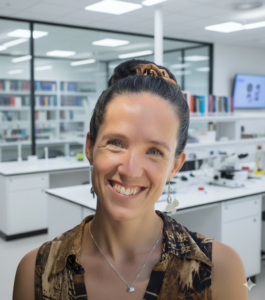
Mary Elizabeth Sutherland is a Deputy Editor at Nature
#77: Mary Elizabeth Sutherland — Nature, editorial judgment, and the future of scientific publishing
In this episode of Stimulating Brains, I’m honored to speak with Mary Elizabeth Sutherland, a Deputy Editor at Nature whose areas of responsibility include cognitive neuroscience and a broad range of the behavioural and social sciences. If you work with clinical or human neuroscientific data in the field of brain stimulation and choose to submit to Nature, chances are high that Mary Elizabeth will handle your work.
Before moving into scientific publishing, she studied at Cornell, completed her PhD at McGill, and did postdoctoral work in Santiago, Chile. Her own research background includes auditory cognitive neuroscience and music cognition. I’m especially looking forward to talking with her about what the job of a Nature editor actually looks like, how editorial decisions are made in a journal with limited space and broad ambition, how human studies are evaluated in that setting, and where scientific publishing may be heading next.
The conversation moves through career paths into editorial work, the day-to-day work of a Nature editor, how scientists become professional editors, and the bar for publishing in Nature, with an emphasis on the choices, constraints, and judgments that shape Mary Elizabeth Sutherland’s work.
Mary Elizabeth Sutherland 00:00because you're basically being paid to read and learn and to think about science. So if you think of, you know, what we usually say is something like, nature tries to... quite get there. You can get some causality with it, but the questions that are being asked are what is being shown to be causal is not sufficient. And I think that there's a lot more that could be done there. it's an area that I'd like to champion. Read. Read a lot. Read a lot and don't just rely on AI. Read a lot and develop critical thinking skills.
Andreas Horn Welcome to Stimulating Brains. Hello and welcome to Stimulating Brains. Today I'm honored to speak with Mary Elizabeth Sutherland, 01:19who is a deputy editor at Nature and whose areas of responsibility include cognitive neuroscience and a broad range of behavioral and social sciences. If you're working with clinical or human neuroscientific data in the field of brain stimulation and choose to submit to nature, chances are high that Maria Elizabeth will handle your work. Before moving into scientific publishing, she studied at Cornell, completed her PhD at McGill, and did postdoctoral work in Santiago, Chile. Her own research background includes auditory cognitive neuroscience and music cognition. I'm especially looking forward to talking with her about what the job of a nature editor actually looks like, how editorial decisions are made in a journal with limited space and 02:02broad ambition, how human studies are evaluated in that setting, and where scientific publishing may be heading next. Thank you so much for tuning in, Stimulating Brains. Mary Elizabeth thank you thank you so much for joining the podcast I'm super excited to be able to talk to you I will have already introduced you by now so we can dive right in with the questions so I know you're very busy but as you may have heard we often start with an icebreaker a question and that is what do you do always the same one what do you do when not working
Mary Elizabeth Sutherland so the the truthful answer is less exciting um i am a mother and so i spend most of the time that i'm not working with my son doing things that he enjoys so he's six now and in kindergarten so what 03:02I usually do is, you know, playdates and riding bikes and doing fun things with him. But if I'm just my own self, I mean, obviously, I'm my own self, and I choose to spend the time with my son. I love to play music. I play the harp. So I play music and go to concerts. And then in the winter time, whenever I get a moment, I ski. Skiing is my favorite. And so I try to make sure that every year we have a ski holiday and do something fun on the mountain wonderful and and i did know you
Andreas Horn are playing the harp i think from your twitter profile back in the day um that the name at least was something with harpist and i knew you would listen harpist me harpist it's the same on blue sky now yeah great um and and and i knew you lived in new york city in manhattan you work in manhattan at least um how is that with a harp in the subway or you know i had these pictures in my head
Mary Elizabeth Sutherland Yeah, right. So the harp doesn't go in the subway. The harp is quite big. It is taller than me and it's quite heavy. So what I would do when I was living in Manhattan is actually get an Uber, like an Uber XL to help with the harp. So you come down and you get a big car and you hope that the seats go down. And if they don't, you pay the cancellation fee. So basically you need a big car where the seats go flat in the back. 04:26and now that I moved to the suburbs you know when you live in a place where you can have a car you you buy a car that can fit a harp and that's always the first consideration in so it does leave the house it's not always the house does leave the house exactly so a harp is like the you know sometimes we call it a naked piano but it has the downside of not everywhere has a harp right when you play piano you usually go and there's a piano there that you can use when you play harp you
Andreas Horn bring your harp to rehearsal and to the concerts what was the and i can relate i i don't get to do any music music since i have kids but but what was the last gig or or a fun thing you played at
Mary Elizabeth Sutherland 05:10good question so i mean i still when i can i still play with amateur orchestras who need a harpist um but i usually don't get to go to all the rehearsals because it's just too much of a time commitment and then I have another mom friend in town who plays cello so I've tried to meet up with her to do some duets and I think that that's kind of my future is more having somebody over and playing with them here and not moving the harp which is much easier.
Andreas Horn All right let's go to your work. How did you move from your own academic training into becoming an editor at Nature, even an editor in general? How did you decide that?
Mary Elizabeth Sutherland I think I was very lucky. So when I was a PhD and a postdoc, I didn't know about an editorial career. I mean, I had published a few papers, never, my work was never remotely close to good enough to getting in Nature. So, you know, I had never even tried for that. And I didn't realize, I think that there were full-time editorial 06:13positions, because at Nature, we've all stepped out of academia, and actually do this as a full-time job. And I got a job actually as a professor. And that first day I walked into the office and sat down at my desk and said, what have I done? I don't want this job, you know, and I'd been sort of following the trajectory, not without thinking, but sort of thinking that was the path. And it was when I got that and I sat down and I said, I really don't want that. and the timing though worked out because it was close to an OHBM so I went to OHBM a couple of weeks later and I mean it literally weeks right this is not I accomplished nothing as a professor besides realizing I shouldn't be one I went there and Jean Zarate was who had been in my PhD lab was a locum editor at Nature Neuroscience and she told me about the job and I said that's the job I want. And it's because it's, 07:13you're basically being paid to read and learn and to think about science. And all of the parts that I didn't like about the research part was the doing of the research. And here was a job that took out the doing part of the research. And so I said, wow, how, how can I get that job? And she said, you're in luck. They just opened a position at nature communications. And I said, okay. And I left the conference and I went home, I mean to the hotel and I applied. And then the rest, as they say, is history, right? About 10 years ago, I started at Nature Communications and then I went through to Nature Human Behavior and then to Nature.
Andreas Horn Wow, okay, fantastic. Maybe a little bit step back, what did you do in your research and were there any key mentors or turning points, maybe first in your academic life, but then also maybe at Nature?
Mary Elizabeth Sutherland 08:01So in my academic life, I was in auditory cognitive neuroscience. So I worked in my PhD with Robert Satori at the MNI in McGill. And that was truly lovely. He had such a great lab because he brought together people. We were just speaking of music. Everybody in his lab played music because we were looking at the brain through the lens of music. So it was a really fun group. Everybody would have gigs. You know, we would have different performances to go to. We would get together and play. Robert himself plays. He plays organ. So it was just really fun to have a lot of music and neuroscience. And it really, it was just a really good, fun time. Yeah. So I don't know. I mean, in that case, yes, because I think that having that training just taught me how fun science can be and what great people scientists are. so it was really lovely um yeah and I think so I 09:02think he played a big role just in my love of science developing that love and that curiosity for science and all all sorts of fun things um and then as an editor I have to say I've been quite lucky the first my first I guess she was called a team manager at that time she was the person who managed the neuroscience team at nature communications, Erica Pastrana. She was really good at having me understand what editors do and the potential of the role. But I think my key mentor was really Stavroula Kusta, the chief editor of Nature Human Behavior. She has such a vision and such drive. And I feel like I got a second PhD as an editor on her team. Because my background is in auditory cognitive neuroscience, right? And at nature communications, I was really handling more cognitive neuroscience. And at nature, human behavior, I broadened a lot. And I feel like I got a second PhD in the behavioral
Andreas Horn 10:00sciences from Stevrula. Wow, wonderful. Okay. Are there any parts of your scientific training that turned out to be useful in the editorial work? Or which ones? Oh, definitely. Yeah.
Mary Elizabeth Sutherland Yeah. I mean, the way of looking at problems is the same. So when you see a question, right how do you answer that question in the best possible way i mean i feel like that was something that i learned in the phd not that i always got it right but right you have a question what makes it a good question how do you know that this question is a good and interesting question because there's lots of questions that we can ask they're not all very good and interesting right it's like something being unknown sometimes there's a reason it's unknown it doesn't really matter. So this idea of how to distill what's a good and important question to answer and to understand the methods, a broad range of methods well enough to understand which are the tools that 11:01I should be using to answer it, right? That critical thinking and the evaluation of how strong is the evidence, you know? I remember Robert always using the term hand wavy, you know? I was too hand wavy. And this, this, is it hand wavy or do you actually have a compelling argument? So I think that those were the skills that I learned in my PhD that then were good for applying to, to being an editor. Cause that's really how we read papers.
Andreas Horn Interesting. Great. It's, it's, it's literally a quote of something my mentor, my main mentor, Mike Fox once said is, is really that for him makes a good scientist to pick the right thing from the many things they could work on. Right. So so I think that's that's really like identifying the one problem you should be working on because time is always limited and, you know, resources are limited. So why work? Yeah. And it's not not not easy to know which one are the 12:01the real like the most impactful problem. So super interesting to hear that from you, too. I had that question reserved for a bit later, but I think you did tell me about this paper test. Maybe it's more a myth than reality. Yeah, exactly. Since we are talking about your application at Nature Communications for the first time, did that involve something like that? And what is that?
Mary Elizabeth Sutherland Oh, yeah, it's a lot of fun. I think it's a great part of the interview process because I feel like it really tells both the hiring, you know, now I've been on both sides. It tells the person who is doing the hiring and the person, the hiree, whether you would make a good fit for the position. So what happens is whichever position you're applying for is going to be broader than what you've been doing in research. And so what usually happens is the editors who are hiring you will pick three different papers that span what you're expected to read. 13:02And you have an hour and a half, so roughly 30 minutes per paper. And you have to read the three papers. you can take notes. So, you know, lots of scribbling in the margin. You don't, well, I don't know, I guess now it's probably being done remotely. When I did it, it was in person. So you're sitting in the room, you know, scribbling in the margins. And then they come in, and you have the equivalent of a very brief PhD defense on the papers that you just read for half an hour. So the editors come in, and they say, okay, summarize, you know, summarize the main points that it's right, like, what did this paper do? What's the question it's asking? What did it do? What did it find? And now tell me, what are its strengths and weaknesses? And would you send it out for review? And they they question you on this, right? It's not just a monologue, they'll say, Why do you think this? Why do you do this? And you have this back and forth. And you get to do that on three papers. And if you enjoy that, if you enjoy reading quickly, for the main content, 14:04right not getting too caught up in the little details of this and that but really that those overall the overall idea and if you enjoy debating that with people I think you'll make a good editor interesting yeah and one of the fun things about that debate is like we're also looking to see that people aren't too rigid in their beliefs because as I'm sure you know we make mistakes too so when I read a paper I always look at the paper I look at the cover letter and you know I do that kind of as a sanity check, like, is the main advance that the authors are claiming the same one that I find? Because if it's not, they might phrase it differently and think it's more or less of an advance than I do, usually more. But if I don't find that same advance, then I've probably made a mistake somewhere in my reading, and I'll go back, right? If I didn't get it. But we make mistakes. And so it's important to be open to having made a mistake and misunderstanding something.
Andreas Horn 15:02Okay, interesting. Do they deliberately pick one bad paper as well? Or is it always good papers?
Mary Elizabeth Sutherland You want to pick a paper. So when you pick these papers, you want to pick papers that you can have good debates about. So it's hard if you take a really bad paper, it's hard to have a good debate about it. Because if you just say, you know, the methods don't answer the question, because they're not getting it the same thing at all, you know, then you can't really have a good conversation. So I would say it's always these, it's always papers that can have a good, stimulate a good discussion, that you can see pros and cons, right?
Andreas Horn Sounds good. When people, you did just say before, that's what we as editors actually do. And I think when people imagine a nature editor, they may picture someone making yes or no decisions on spectacular papers all the time. What does your daily life actually look like? 16:02Maybe even could you summarize a normal day in the office or how does that work?
Mary Elizabeth Sutherland Sure, yeah. It is close to what you said, but there's a lot more involved before you get to the yes or no decision. So there are a lot of emails, as you can imagine, because nature papers especially take a long time to go through. So it means that I have a lot of papers that are active, right? That are in some stages of revision. Either they've just been submitted, they're back with the authors, they're with the reviewers. But you have a bunch of these because it takes a while to go through, right? So there's a lot of pending things. So there's a lot of emails about existing work, right? Ones that are coming up, reviewers, et cetera. So you spend way too much time on email, I would say. But otherwise, besides the emails, which are to me mostly a brain break, right, that you're going and you're sometimes they're difficult ones, but there are a lot of just answering questions. 17:03What you do is you the manuscripts come in and they come into our system. So when you submit online, they come into an awaiting editor assignment folder. So I'm a deputy editor, which means I've got a little team. So I go into that awaiting editor assignment and I go through and I look basically at titles and abstracts to assign to the team members who have the appropriate expertise. Right. Because you want somebody who knows that community and has a background in it. So we go through and we assign. And this isn't always perfect. If somebody's out, somebody else has to get the paper. We also sometimes we try ish to ish balance ish workloads. There's a lot of issue there because it is really by expertise. But, you know, if there's a borderline paper and somebody's got a lot that week, it'll go to the border. You know, we try anyway. So first you assign the papers that have come in and then you have a whole bunch of different folders. 18:03So you have the initial assessment, in which case you read through the paper and make notes. And it's kind of like a brief review. Right. Our notes are like that manuscript test. I always summarize the paper and then a brief rationale for the decision you're making, right? So I usually start my little decision to say, you know, the contribution here is, and then summarize the contribution in a one-ish, two-ish sentences, and then say why that should be sent out for review or not, right? And the reason for doing that is both so that we can communicate it to the authors, and if anybody has any questions you can go into the system and you can see the thought process that went into it of course if it's yeah if it's a manuscript that fall that isn't directly within my expertise i do something called circulate so that means that i discuss it with the editors who have that expertise so in this case we have we get a lot a lot of papers with ai and llms 19:00and so for those papers we have a little you know group of editors who have who handle those papers And so we usually circulate to them just to make sure we're all on the same page about uses of AI and what counts as an advance and what doesn't.
Andreas Horn Okay. So that just means you share your notes, right?
Mary Elizabeth Sutherland And you write them questions, they write back. We do this by writing as opposed to verbal discussion just because we're scattered across time zones. So it's easier. And also for the record, again. So if anyone asks, we have a record of that discussion. And then you make a decision. So I spend a lot of time doing that, right? That's the initial submissions. But then the ones that go out to review, you spend a lot of time on Google, Google Scholar, PubMed, right? Searching for referees because what we try to do to varying degrees of success too is to not always go back to the same people. We want to encourage a variety of voices because referees really shape a paper. So you want to make sure that you're not just going to the same group of people but really expanding your reach. 20:04So we try to find new people with those expertise, right? And then pair a new reviewer with an experienced reviewer so that because after the decision is made, we send the decision to the reviewers so they can see what the other reviewers have said. So you spend a bunch of time searching for people and asking them to review. You spend a lot of time reading reviews, sometimes going back to the reviewers, asking them questions, etc. You know, so there's just work at every level of the paper. And the majority of the day is doing that, right? Jumping between fresh submissions, reviewers, post review decisions, formatting stuff for when you get closer to accept. Yeah. Yeah. And then we get to go to conferences and do outreach as well, but that's less of the day-to-day, right? That's more you go and you say, okay, let's come see your lab and talk to them. Yeah.
Andreas Horn 21:00When you send it out to a reviewer, do they often, like, do the majority click accept because it's nature?
Mary Elizabeth Sutherland I did some editorial work at Human Brain Mapping and it was very hard to convince people to click accept these days. But I assume it's easier. I think that we are lucky because it's nature and a lot of the papers we get are just really good. But there are also just some difficult ones. And I have to say the ones that I have the most trouble with, we get some really great large scale studies where it's like all the people in the field, it seems to me at least, have come together to work together on something. And those ones are really tough because it's like, oh, it's very hard to find. the people who are not part of it have been asked and declined and then they think they have a conflict and i'm like you do but who who else is left yeah yeah makes sense but those ones right so there's a lot of a lot of difficulty finding reviewers for these larger projects um you know 22:01and it's just hard too because we are asking we are asking for a lot of time and you know people
Andreas Horn are busy so yeah makes sense generally like follow-up question to the typical day roughly how much of your work is reading manuscripts or talking to fellow editors do you do that a lot um and authors maybe you can also talk about is it more remote work are you often in the office um you guys have a beautiful office at the tip of the peninsula island yeah exactly um yeah so we're
Mary Elizabeth Sutherland in the office two days a week. We do have, I don't, I would say that the majority of it is still reading papers because that's, that's really what we have to do, right? For you to get any decision or the paper to get published, we need to read a paper and discuss it at some point. So papers never go through to accept without having been discussed. Even, it's just that, that first decision. So the first decision to send out to review, if it's really in my remit and I really 23:03know the field, I can just say, okay, this is a clear, we're going to send it out to review or desk reject. But once it gets to the sort of minor revision stage, then everybody is brought into the loop. Not everybody, I should say people that have the relevant expertise. The chief editor is always brought in, she has an overview of what's going on. And then she can say, oh, you should let this other person know maybe who wasn't in the loop, you know, so that we're all on the same page. so papers don't go through with just one person so we do have but that again is by writing so we have how often is we have all editors meetings we have all on the biology clinical and social science sort of side editors meetings i have meetings with the people on my team so we do have quite a few meetings where we talk about things but still the actual like work that we have to do is is sitting and reading and thinking yeah so so we do both and the thing is our teams 24:03so our teams are spread out because the idea is that we should be able to do outreach and have like be in personal touch with different communities so we have editors kind of across the world the main hubs right now are new york um london berlin and shanghai but they're expanding those hubs to different ones as well. But because of that, you know, our meetings are all remote. So even I have people on my team in New York, of course, but, you know, when we have those meetings, we just go sit in a room and everybody's head is very big on the big screen.
Andreas Horn Okay. Yeah, makes sense.
Mary Elizabeth Sutherland Like, but we're, we are together, but the others are still in their geographic locations. Yeah, makes sense.
Andreas Horn So I think when we met back in Montreal, you did mention something like since you are one of at the time at least two people that handle more the human neuroscience work or um and the other one was more genetics focused if i remember 25:04correctly you kind of said you you it's almost as if you run your kind of mini journal within nature and have this team right that works with you how big is the team and how you know how how many other people are maybe handling similar papers to you and nature that is a very good question the team size I feel is often in flux because people leave and people
Mary Elizabeth Sutherland come so I can't actually tell you how big the team is I would have to go to our website and actually count I yeah my like back of the envelope calculation is that in this sort of biology, clinical, social science side where I sit, there's maybe 25-ish and maybe 15 on the physical science team, but don't take that as hard and fast. So that would mean maybe 40 of us. I'm not really sure though, I would have to go in and check. In terms of who 26:04handles similar work, it's funny because that also changes. So that conversation we had, right, That was the other editor you're mentioning, Michelle Trenkman, does the genetic stuff. So whenever, right, if you're doing work in neurogenetics, it will come to, depending on where the focus is, me or her, probably her if it's more genetics. and then we you know we have overlap there but these days as I mentioned we're getting so much AI stuff so now I would say that my main overlap is with the computer scientist on the physical science team because he actually understands the inner workings of large language models and AI and then we have a new position on our team where for somebody who works in like basically medical and I've got to say like biological AI, right? So it's AI being used for 27:01medicine, for healthcare, for like doing research in biology, right? These sorts of AI applications in biology and in medicine. And so I would say that now actually I overlap most with them because whenever I get AI applications in, you know, for in the brain, it can overlap with his name. Their name is George. So it can overlap with George's remit or with Jan, who is the computer scientist, but especially like foundational models of the brain. If it's trying a foundational model about the brain, that's really trying to tell you more about the human brain, it'll go to me. But if it's more about the advance in the foundational model, it'll go to them. And I would say it's also pretty toss up depending on workload for those, right? I'll take it or they'll take it. So now I would say I actually overlap on the more more with 28:00both of them. And you see right, that's, that's just based on what's going on at the time. Of course, that's the job get easier with experience.
Andreas Horn Does experience mostly teach you how difficult good editorial judgment really is?
Mary Elizabeth Sutherland it gets easier with experience. You, I'm sure I make mistakes. Actually, I know I make mistakes, because every year we do a strategy where we look at what we've published and what other people have published. And when I do the strategy, I see that there are papers that I've rejected that have done very well, and then say, okay, you know, that was a mistake. So I definitely make mistakes. but you also because you do this strategy and you see how your own papers are doing and you see what the community values you do get better at quickly assessing whether it's good or bad and I think you get faster at finding the information you need in a paper right like distilling the 29:01question I'm faster at finding the research question in the introduction right like like reading and saying, right, there it is. That's the main point. And then, you know, looking for the methods and knowing exactly what to look for, for strength of evidence. Yeah. So I think it gets
Andreas Horn easier. You get more efficient. Yeah, I can, I can, I can picture that. I mean, even in, as, as a normal, you know, researcher, you do get much quicker at assessing papers. When you start off, you really start reading the first word, right? And you, you go A to Z as a young, you know, or maybe PhD student or so, and you develop then your strategy to be quicker, but how I picture you as really a kind of a machine, right? I'm sure you're very good at it. That's really- Thank you. I mean, I'm much quicker and more efficient, I would say. Of course, yeah. So since you mentioned the once a year you do the assessment, that's interesting and could be interesting to hear more about how systematic things are and so on 30:01if you want to talk about that. The related question I was wondering about, is there any all hands yearly meeting where all the editors get together or are invited, not maybe just at Nature, but also, let's say, Nature Neuroscience and the other franchise journals? Or is there other crosstalk between the journals, or is it more remote? Yes.
Mary Elizabeth Sutherland So there is crosstalk between the journals, but according to subject area. So within the Nature portfolio, so all the journals that start with nature. Actually, I think it might be broader now. Anyway, we have communities. So it means everybody who's in neuroscience can be part of the neuroscience community. And there's a community leader and they sort of make up an agenda. And the idea is that once a month, the neuroscience editors meet and discuss if what conferences they're going to. Sometimes we just have each journal sort of say what they're looking for. So we know when we recommend transfers, who's looking for what. 31:01and what their bar is or will bring up if there's some big issue in the field that gets brought up it's also a place where we sort of figure out editorial policies for different communities so we do have those um and but again they're community specific so right there's one for neuroscience so that means the neuroscience editors across journals would get together but they wouldn't get together there's an immunology one too the immunology one is separate and unless there's like a talk on neuroimmunology, those two will not come together. So there isn't, you know, all of the editors all at once all together. It's subject specific. So we do have that. And then in terms of our strategy meeting, that is an interesting question. Because we keep discussing this. I mean, you kind of, it's like anything else, you get out what you put in. And the thing is, we have people who really like it and people who don't like it so much. 32:00and we still do it every year, but people do it in a different way because essentially what you have is you have a bunch of publication data, right? And citation counts, altmetric counts, and then you've got to make sense of it in some way. And the main questions are usually, you know, how are we doing in these areas? Are there areas that we're missing, right, that we're not capturing, that are doing really well, that the community is interested in? Are there people we're missing? are there, right? We just want to, it's a bit of a benchmark. Yeah. And I like it. It's an interesting overview. It's interesting to take the time. Yeah. I think that that can be a lot of fun, I imagine. Yeah. And I mean, it would be silly to not do that, right? To not essentially reanalyze how everything has been, like to essentially be able to steer from, you know, past experience.
Andreas Horn you did mention a bit how you like you became an editor and we talked about the manuscript test 33:02if maybe some of the listeners now are pretty curious and interested any tips or advice of people that would be interested in this how would you know would they just look for open jobs or would they approach people at conferences or any any advice you can give if people want to explore that yeah good question so i mean looking for open jobs is is a necessary requirement because you need to have a job available to apply for. But jobs often come up.
Mary Elizabeth Sutherland So if you want to just start preparing, I think there are two key things. Get a broad overview of your fields. So if you can, start looking not just at what... I know that I did this when I was preparing for my interview with Nature Communications. I started looking at, you know, what was Nature Communications publishing overall in the neuroscience field? What was nature neuroscience, nature communications, like neuron, you know, I started looking to see what these journals were doing to try to give myself a bit of a broad overview to see if I could see trends and what was going well. 34:07Because what you want to show is that you're able to be broad. Right. So reading more broadly, I think, is really useful. and then the other thing is just like we were saying you know you said you you had this as well as you progressed in your career just getting efficient at reading for the main questions not reading for all of the little details as long as you know where those details are you can go back to the paper but reading for the main question right the main question what are the methods and what did they find? Yeah, and just practicing doing that fairly quickly is helpful, I think.
Andreas Horn Makes sense. Okay, yeah, good, good point. What is the bar for publishing in nature? You can ask the many versions of this question, but I think you did even formulate that back then. So what papers are you guys looking for? What is needed, especially maybe for the more,
Mary Elizabeth Sutherland 35:06you know brain simulation or potentially even human work because most listeners will be from that area but also more broadly yeah so I mean our main question the first question is this the scope of the question so how how broadly how many people are going to care about your response your paper essentially right so is it just going to be the people who go to this you know to these special conferences that are exactly on this topic? Or is it going to be something that's of broader interest? So if you think of, you know, what we usually say is something like, nature tries to publish the neuroscience that the physicists care about. I don't know if that's really realistic. I think it's more, we try to publish something that if you were at SFN, and you had a poster for it, you would get people stopping by, not just to do human neuroscience or, 36:01you know, stimulation, but who are also working with rodents or primates or different model organisms, because your work can inform what they're doing too. So it's more thinking that it's really reaching a broad version of the community. And now with a lot of the human neuro stuff that we get, it's whether there's some sort of greater practical relevance. So if it has some clinical implications or not. And then if not, there's a lot that has implications for AI and learning right in the decision making sphere. It's not always a must, but there's a lot that has, yeah, basically the breadth of impact. So how broad is the impact going to be? And again, that can be interdisciplinary, it can be practical, and that you have a clinical or preclinical finding or it can just be yeah broad so there's there's the the breadth and then comes the strength of evidence so usually if there's just a single observation it's not enough 37:03if you think about it as a story you don't want just chapter one chapter one is you know this we observe this yeah but why why why right the dreaded word what's the mechanism what's the mechanism that that yielded this result or sometimes go up what are the consequences so you saw this thing in the brain but what does that do does that change behavior in some way does that allow for a new treatment like what what does it do the fact that you saw this thing so really trying to get deep into it so if it's right so we think you need some more chapters so strength of evidence. And that's something that sometimes can come in review. So sometimes we say, sorry, this is a really interesting observation. So we'll send it out to review. And then usually in that case, I'll sometimes write to the authors and say, listen, we've sent 38:00it out to review. In my experience, there's going to be questions about this and that. So you might want to start collecting data on this front because probably to consider it further, this is going to come up. Right. And then sometimes we also just ask for that before sending it to review, say, this is really interesting, but you would need to do this extra step to send it to review. So there's the strength of evidence, right? How much of the story do you tell? And those, those are really the main things that we look for. And it's not, it, it does change in a way, You know, if you think of during COVID times, what we were publishing that had to do with COVID, the, you know, it had to be the best possible evidence for that time. So there were some things that we published that were just needed. Then was it, you know, the strongest and the best that it could be? No, but it was what we needed at that moment. And I feel the same thing is true a bit with LLMs and AI. 39:02There are some things where you just need, it needs to be strong. Yes. but if it's a really important demonstration that is well done, you know, then that it goes through. And then there are some things that are in fields that are, let's say, you know, memory, I think human memory, there's a lot of work in the memory sphere. So that the, it changes right based on what topic you're doing, the bar, what is considered broad, what is considered so much of an advance because it has to do with what the field has already done. And what we generally try to do is represent the different important fields that we cover or subfields, I should say. Right. So just because AI is hot, it doesn't mean we want to just publish AI. Right. You want to publish across everything and just pick those papers that really represent great work in that particular subdiscipline. Makes a lot of sense. Coming or thinking a bit more from also the clinical perspective, 40:01I sometimes picture it and correct me if this is, you know, wrong or true, that if you would publish on, let's say, a rarer disease, it's much harder to get into nature just because the disease
Andreas Horn is rare. But now if you maybe cure it, all of a sudden it could be possible, right? But if you maybe publish more on a very broad disorder, such as, I don't know, Alzheimer's, depression, these things, you know, maybe you don't need a cure. Is that, does that make sense? Like this
Mary Elizabeth Sutherland kind of breadth versus specificity or? Sort of, I think it depends on the question. So if you're asking a broad question that can only be answered by a rare disease, because this rare disease can tell you something that we don't get in a broader disease. Then it's more, yes, right? So it's less, I would say it's less about the, let's say the disease that you're in or the thing that you're in, but more about the question that you're asking of it. So if you're asking a question that is relevant only to the people in that rare disease, yes, it's going to be harder because by 41:04definition, your group is smaller. But I don't think it's because of the disease. I think it's like, what are the questions that you are asking of it? Because if you have, if this can be the the case study to answer, right? This is like the method or the system to answer this question because it has these particular characteristics, then that's great. And that can only be that rare
Andreas Horn disease. Yeah, makes sense. When a paper is rejected without review, what are the most frequent reasons for that in your experience? So usually it's advance. So usually it's advance
Mary Elizabeth Sutherland over the existing work. Not enough advance.
Andreas Horn Okay. Correct. Yeah. Okay. Interesting. I think you did mention, you know, that you, of course, try to look at every single submission, but there are also some candidates 42:01where you've already heard quite often that they submit almost every month a new manuscript. Is there something to that, that you also get sometimes a bit of pseudoscience even, or maybe submissions from people that thought they solved consciousness by meditating or something in that direction?
Mary Elizabeth Sutherland Yes, we get those. We get those. And those are usually, I mentioned, so we really try to look at all of the papers. But for example, I told you how we assign papers, right? So if I am opening a paper and I see, I read through it and I see that it's a very scantily referenced broad theory, I will probably reject it right away. Yeah. Right? Like instead of assigning it and making it like an all official, when I do that, you can tell that it is not a submission that we should be seriously 43:02considering. And so then I can just reject it without having read it in as much detail as other papers. but I should be clear to people that we do really look at all of the submissions. Of course. Yeah, yeah. So it's not coming from nowhere, but it's also very clear that some are not meant for us and those ones. Yeah. Makes sense. Yeah. We can reject faster.
Andreas Horn One interesting topic might be this human work versus animal work or mixed work, right?
Mary Elizabeth Sutherland So animal work, I mean, model organisms, of course, in model organisms, we can do much more ethically. We are often much more mechanistic. We can use optogenetics and the sort. So the insights are by nature, very often, much more mechanistic. I think that's also why, you know, top tier journals such as Nature do publish quite a lot of that type of work. now your own role at nature is more on the human side as if i'm not right right so and and you um
Andreas Horn 44:07so so so do you see any dynamic in that i think we did talk briefly about the brain initiative right where i think back in the day that the nih um tried to come up with more human data but then invasive data from of neurosurgery with um maybe getting a bit closer to the animal work character but in human brains. And if I remember correctly, you mentioned something like you were, there was a little bit of a shift like that going on editorially as well. Any thoughts on that? Also maybe more recent developments on how is this unfolding?
Mary Elizabeth Sutherland Yeah, I mean, they hired, so when they hired me, it was to really expand our coverage of human work. So then that's across cognitive, like human and cognitive neuroscience and the behavioral and social sciences. And that I think has really happened because I now also hired someone to, for the social sciences, who is a real social scientist. He has a background in sociology. So is, you know, like actually, actually knows what he's talking about in the social sciences, which is great. 45:18And yeah, so I mean, I think that we are expanding in that way. What has happened to us and I think is happening at all journals is that submission levels are really increasing, but editors aren't. So we are all just handling more as opposed to expanding editorially. And I guess what I see is the more in this expansion, there's a lot of things that are sort of across that are going to have animals and humans or that have humans in the clinical space. So another push that we've been making is expanding in our clinical realm. So that's my colleague, Victoria, her her remit, right. And expanding in clinical, of course, means a lot of 46:05clinical trials, which are on humans. So we're expanding, you know, in the human world that way, we also got a new editor last year in epidemiology and global and public health so she is also I mean there's more humans so and again right where where the boundary between us lies is is porous I would say at best um because right like is something with mental health right is that does that go is that more epidemiology global public health or is it more me for neuro and psychology well it can kind of go either way so again it goes but because we now have more people covering all aspects of this space I think that it's reflective of our increased commitment to publish more more humans and it's a lot of fun working with everybody doing this but overall I think we're now 47:00set in at least the editors handling it and it's just the way that we deal with all the submissions
Andreas Horn Makes sense. How many papers do you handle that get published in a year, roughly, just for a pack?
Mary Elizabeth Sutherland So I would say that I publish about two a month. So I'm, you know, it comes out to something like 24 a year, you know, give, give or take. So nature is weekly. So that means on average, It should be every other issue.
Andreas Horn Interesting. And then how many roughly do you get assigned in a month or like your team by that? Like how many do you guys screen?
Mary Elizabeth Sutherland A lot. A lot. Yeah. I am not, you know, I get sometimes scared when I look at the overall numbers because it starts to seem too overwhelming. 48:03or over 300 per week for a bit. Let me see what we're at. I'm not sure. I have to actually look at what it is, but it's a lot for, yeah, it often goes up to about 300 or around there.
Andreas Horn Per week or per month?
Mary Elizabeth Sutherland Per week. Oh, wow. That is a lot. Yeah. Wow. Right. Per week, but then it's split. This is just for our team. So sorry, I should say that. Yeah, I'm just looking at our totals per week. So they're all in, some have gone above 300, others are in the high 200s, you know, so it fluctuates around there, you know, 270, 280. And that's just for the biology, social science, clinical sort of science team. That's not including the physics side.
Andreas Horn And that's just nature, right?
Mary Elizabeth Sutherland Wow, it's really odd.
Andreas Horn Do you think many of them, like a lion's share of that could be kind of discarded pretty early? 49:02It's just obviously not a good fit. And then maybe the real good quality research is much less than that? Or is it really much of that is actually good, decent science?
Mary Elizabeth Sutherland So it depends on the field. So what I noticed when I started is in my fields, there was a lot more things that could easily be desk rejected. but the more outreach that I've done and the more that I've let people know what it is that we consider and what our bar is, the more papers I get that are really good, just not quite good enough. Yeah. So I think that it depends, you know, it depends on what field it is. And when the field is known and the journal is known, you're less likely to get just really bad stuff. And it's usually shades of gray. Yeah. Yeah. Right.
Andreas Horn Interesting. So you do do some outreach. We did meet at OHBM. I had the keynote. You actually did contact me. I was a bit surprised by that, right? 50:00Because it is like you would think you have tons of work already, but you just mentioned that you do actually increase the work by doing that.
Mary Elizabeth Sutherland Exactly. So, you know, if you think of what we do every day, I said we sit and we read and learn, but that's passive. So what you're getting are submissions from the people who know about you and think that you're worth submitting to, right? Who want to submit to you. But there's a lot of work that we could be getting that we aren't getting because people don't think that nature's interested or people don't realize that we're willing to fight for it or they don't know what our bar is. So they keep submitting something that doesn't quite work. So that's why we want to do outreach because in an ideal world, we would get, you know, we would get, we would be able to really represent the fields which means you know there's places that i see holes in my own coverage um that i'm trying to fill and so to do that you need to come out and tell people it makes sense that would actually be
Andreas Horn 51:02my next question do you see gaps in the human neuroscience that you think are still undervalued maybe not just by nature but by the broader publishing ecosystem oh by the broader publishing ecosystem that's that's a hard one that one would have to come after strategy um i mean you know just and it could be just gut feelings but but topics where you think actually there's a lot of marriage in this or impact in this but they still publish rather maybe in the lower tier journals mainly something that direction you know yeah i mean as you know one of the one of the things that I'm still trying to work with is the stimulation. We don't publish much neurostimulation because I think there's a lot of it that's either very medical or there's a lot of it that feels like it thinks it's better. It doesn't quite get there. You can get some causality with it, but 52:00the questions that are being asked or what is being shown to be causal is not sufficient. And I think that there's a lot more that could be done there. It's an area that I'd like to champion. And then I think it's, yeah. Only there was a podcast on that topic. I know, right? I know. Stimulating grades. But talking about this, is there clear advice since you brought it up,
Mary Elizabeth Sutherland you know, about what should people think about when even considering nature? What does it have to have for you? So, I mean, it's really, when we're looking, especially stimulation studies, I feel like the main advance is usually the causality that you can get out of it. And so the question is, why do you need to have this causal evidence for this particular thing? And usually that answer is a clinical answer. So usually you need to have it because there's an actual application, right? If you have loads of correlative studies showing just a basic function, 53:02and then you have causal studies in non-human whatevers, right? So any non-human model, and then you show it causally in a human, it doesn't have the same impact because it's nobody thought that it wasn't causal in the human. You've just sort of added that extra thing. But if you, if there's something that one it's not sure that it's causal in human right it's because sometimes treatments work and sometimes they don't and so you don't know is it actually doing it and then you can provide strong causal evidence that is an important that's yeah that type of thing is important and i assume it could also be causal evidence for non-clinical questions such as you know in an seg study you stimulate somewhere you induce psychosis something in that direction, right? And then you can reproduce that over and over again. Something in that direction could be interesting enough, potentially, if it's well done, if it's that, yeah. 54:00Yep, definitely. Agreed. Yep, I think so. I think so. And then the other one that I have trouble with are methods. I think that there's a lot. So I've been making, I've been trying to do more on sort of methods, like how to do the best neuroscience possible. and that that has been my other push I think because a lot of those tend to go to the more specialized journals because they say well this is about you know like no this is about neuroimaging essentially so why should it be of broad interest and I think my point is that thinking about these things yes this particular paper might be about it but the overall questions that are being asked and the methods looking like looking at how do we optimize the data that we're getting out of something um are of potential broad interest and have a lot of spillover because if you see one community doing it in broad right broad terms you can think what does this mean 55:00for my community as well yeah right like how do we maximize what what is the signal that we're looking for and how do we maximize that signal minimize the noise in an affordable way right something or like what are the methods that need because usually those sorts of things are how to get the best data what methods you need sure it might be specific to the community but the problem is not going to be unique to the community the problems exist across various types of data so yeah and i mean journals such as nature methods have very high impact factors right so it just shows if methods have an impact, they will be cited a lot and have a lot of impact by that. Exactly. Yeah. OK. Yeah, but it's often hard because people often say this method is very specific. And I see the point, right? So reviewers, I mean, right? So trying to see what can work and what can be broad enough. Yeah.
Andreas Horn Do you sometimes preempt that a little bit when sending it out for review, even kind of preparing reviewers for, 56:02We know this is maybe specific to X, but we see something in that direction. Yes. So when we talked, I was super surprised. It makes a lot of sense, though, when thinking about it, that that space is so limited, right?
Mary Elizabeth Sutherland Maybe I shouldn't have been surprised, but you have a fixed amount of pages each edition and it's weekly. and I think you even mentioned in the editorial meetings you sometimes fight quote-unquote on space right you essentially say I need more space for for this or maybe I you should say that I well I think that we one of my colleagues said that we're senators for our area right we we go out and we represent our our areas our constituents and what we want to do is we want to show the importance of the area and what it is that we can publish in those areas. So it's, you know, as an 57:01overarching view of the journal, I guess the other way, the other analogy is maybe as a museum, you can't, you can't show all of the great artwork, but we are the sort of general in museums. So let's say in New York, we would be the Met. And that means that you need to have all of the you want to basically be able to showcase different art from different periods you know different styles and so what we want to do is we want to make sure that we have room for all of those different styles so that each person that can come you know that comes can find something for them and there is a limited amount of space as you noted so what we're doing is we're trying to make space for the areas that we want to showcase. And so that, you know, it's not actually driven by citations. If it was, there are, it's very clear what areas cite very highly, you could just have a specialized journal in that, right? We're not trying to do that. We're 58:02trying to show that we are this broad interest journal. So we also are trying to give space to some of those fields, you know, we want to make sure that we show that we cover ecology, right, That we cover the social sciences, that we cover, yeah. And so we go and we say, what is realistic for us to represent those fields, to sort of draw out some key papers to show so that people understand that we are interested and have a place for all of the field, right? For everybody. Or that's what we try for, at least. And yes, if you don't have an editor that comes and says, like, this is important, we need to publish here, it can get overlooked. Because as you say, space is limited. And we all kind of, we all love our fields and want to publish in them. And so it's just making sure that we're able to publish across the range does take somebody coming in and saying, this is what we do. 59:02And it's not, it's not equally distributed, I should say as well, right?
Andreas Horn there are areas that have more and areas that have less um and is it like do you actually have a fixed amount of pages space for your area or is that um is it more like once papers are accepted they might have to wait a bit longer or how does that work so we we have targets so every editor has a target for what they're supposed to publish each year um we do actually have an amount of papers we have to publish so you have to make this number and we have you know if you go over that number basically they get pushed to January they get pushed you know the acceptances get pushed to the next year so there is the case that sometimes we we fill up because it's hard it's hard you know me I mean you get these targets but you you know how it is sometimes revisions go fast sometimes they go slow and that's not actually in anybody's control because you might you know some equipment 01:00:04might just stop working and you have to wait or somebody gets sick or who knows but things change reviewers might get sick or not be able to re-review or not take their time or not i mean there's a lot of variables so it's hard to really control this but yeah there is we do have a number if you should ever need one you know to uh to get to your quote i call me um no problem No, but I guess the, you know, jokes aside, it could happen to you as it seems that you maybe had just a bit more papers than thought in, let's say, this year. And then would that already close the door a bit for new submissions or like make it a bit, you'd be a bit tougher just because you know you're already full or you have to?
Mary Elizabeth Sutherland Yep.
Andreas Horn Okay. Exactly. Makes sense. Exactly.
Mary Elizabeth Sutherland Because you're always trying to calibrate. But again, what we try to do is we try to let, we try, as editors, we're not trying to be publishers. 01:01:03We're trying to be science adjacent. So what we try to do is hold a consistent and fair editorial bar. So what we do see is if the level goes up, right, we also have to go up because we can't publish everything. So yes, it does make it a bit harder, but we try not to be unfair and just do this based on constraints. but rather to say, like when you're setting the editorial bar, say, okay, think of all the great work published in this field. If I need to publish, you know, only 20 papers from this field, right? Yeah. What are the 20 best papers that I'm going, like, that's the bar that you need to set. So you need to know the field, like think about all the work that you know, and say, I need to pick that top percentage. What's the bar for getting that top percentage that's fair? Yeah. Right. That's sort of where how you how you do it and then you you try to do that and if you get to if you publish 01:02:01a little more you say oh that means that my bar was probably a bit wrong because I'm not getting you know those top ones I'm getting more so I need to change it a little bit but we try to be guided more on that than exact number of papers um sure and in the yearly review could it happen that people realize, you know, your papers went particularly well, so you get a few more
Andreas Horn pages or a higher target? Yeah, so we do make that argument, right, that sometimes there are
Mary Elizabeth Sutherland just areas that clearly need more growth, because they're doing very well, that, yes, we do get to make that argument. And it is helpful to have data. So what's helpful is showing that your papers are doing really well and also that the papers you're rejecting are doing really well because when you can show that right you're showing that i'm publishing well but there are many more that i could also be publishing that we want to publish like that sort of right and then 01:03:02you did mention you you try to represent all fields so so i assume there might be some fields um that that are just not doing that well but you have to kind of still like are they there's some fields that drag you down. It reminds me of, you know, I heard talks about this in the medical system in the US, especially that, for example, psychiatry is just not making a lot of money, but hospitals need a psychiatry unit. So is there something like this at Nature 2 where
Andreas Horn just some fields are not as successful, but you want to represent them?
Mary Elizabeth Sutherland Yes, for sure. I mean, you see also in terms of when citations come through. I mean, if you look at things that cite, right, the cancer things, the clinical things, AI cites like crazy, right? If you look at some of the social sciences, social sciences don't cite that high, but we're still publishing them because without the social sciences, if you don't understand people and the 01:04:01people who are doing the science and the people who are implementing the science, then, you know, what what do you have so yes we do have i mean different fields cite differently and we do try to represent all and just pick those that are really broadly important even yeah even if they cite less and also it depends on one of the people on my team does you know paleontology archaeology and those he says right they do really well in terms of altmetrics but the amount of time that that research takes the you know the citations don't grow in the way that we do strategy and the impact factor is calculated they grow slowly because somebody like is going out and digging up a fossil right and then right so it's just the different paces of research also really impact those types of metrics right and so what what time scale do you look at and again you want to 01:05:03look across right we want to publish our fun cool new dinosaurs even if they get the altmetrics well it's not it's not for the altmetric it's because they really do change science but they just change it slowly yes yes yes makes sense and that that could explain that some journals of the nature franchise have even higher impact factor than the the main journal right maybe because of that right because definitely definitely because we we try to cover all fields and if you look I mean, if you look at citations within our different fields, they are very different. Yeah, of course. Of what cites and what doesn't.
Andreas Horn And so it makes sense to me as well. Beyond original research, I think many scientists will mainly think of nature as maybe a place to place normal original articles and studies. But I think there's a much broader ecosystem of formats. We don't have to go into details, but I think it would be great to cover a little bit of, you know, reviews, perspectives. 01:06:06I think you have comments, news and views. I think for news and views, if I remember correctly, you can't even submit them, right? They run differently. Can you talk a bit about these other types? Yeah.
Mary Elizabeth Sutherland So Nature, where I work, is unique. Actually, I'm not sure if it's unique. Nature, we'll just say, has two independent editorial teams. So where I sit, we cover the research submission. So that's all submissions pertaining to research. So articles, regular. We also do registered reports.
Andreas Horn Do you know what registered reports are? Roughly, so that you do pre-register what you plan to do, and then there's already a decision before?
Mary Elizabeth Sutherland Correct. So basically, the work gets reviewed before you've done it. So the idea is that you are reviewing the work based on the importance of the question and the experimental design. And then we say that we will accept it as long as you do what you've done, regardless of what the results are. 01:07:09So the idea is that instead of just publishing the, you know, the publication bias of publishing the fun and cool results that you're looking at the question, and you're making sure that the research design is strong enough to not just have lack of evidence for something, but actually be able to show that there is nothing. And the idea is that if the question is broadly important, a null finding is actually quite important as well, right? Not just a positive, but that means you need to have the research, the design able to provide strong support for the null. So registered reports, and they're very, it's kind of nice because you get the peer review before and you know, if you do what you said you would do, that you will get published. So registered reports, articles, analyses, which I like to define as priority setting evidence syntheses. So they have data, they have analyses, it can be primary or secondary data. And the idea is it's sort of in between a perspective and an article because you are doing it with like the point to make an argument. 01:08:17So one example that we published was looking at misinformation sharing in the U.S. Actually, it wasn't just the U.S. This was a while ago, so I might get it wrong. But anyway, looking at misinformation sharing and basically showing that people who identify as Republican or more conservative tend to share, on average, more misinformation than liberals or Democrats. I think this was originally in the U.S. and the findings were replicated outside. And the point of this analysis was to say any policy that targets misinformation is going to target different political ideologies more. So the priority setting part was if somebody comes and says you are targeting this group unfairly, the answer is no. 01:09:06It's just it is this group that is doing it more. Right. Yeah. So the prior, like the evidence syntheses were the ridiculous amount of data that was analyzed to sort of show this overall picture. And then the priority setting was the argument of why this is important, especially if there are policies on misinformation, that they are not misunderstood to be falsely targeting one group that it's just, these are the data. So if you target this thing, you will end up targeting this group more. Right. So Anyway, that's an analysis. And then the other things that you mentioned, so the comments, the news and views, the world views, that's all handled by an editorially independent team who doesn't officially take unsolicited submissions. Okay. So those are, they work in a totally different way. They don't have a submission system. 01:10:01They do their own thing.
Andreas Horn If you publish there, is it still peer-reviewed though? So I actually, yeah, they work totally different.
Mary Elizabeth Sutherland They get informal feedback often on their work, but I can't even say because we are actually editorially independent. They do them and we do us. So the things that you can submit to them are correspondences. Sounds good.
Andreas Horn Okay. I previously also had on the podcast Charles Jennings, who is the founding editor-in-chief of Nature Neuroscience, not with Nature anymore, but also did work at the main journal before that. And I was kind of surprised to hear that Nature Neuroscience was the first spin-off journal that Nature ever had. Today, the family is enormous and has grown. How do you see that evolution? Is it fun to be able to kind of talk more with other
Mary Elizabeth Sutherland 01:11:02people from other journals where you can also send articles or yeah any thoughts on that evolution uh yes so i think i see both sides so i really appreciate having other colleagues because as as you mentioned before we're a little lonely at nature because you're kind of the chief editor in your own area and you cover your own area for nature because like i said let's say we have 40 editors, but we're covering everything, right? We're going from chemistry, batteries, computers, engineering, robotics, genetics, immunology, social science, neuroscience across the board. I mean, it's a lot that's being covered. So you're a little bit more lonely, right? Then in neuroscience, yes, you know, Henrietta Howells is my main counterpart there. But she's got a lot more neuro people to talk with, because that's the journal. And same thing with nature, human behavior. It's very broad because it spans human behavior. But it's really nice to have other 01:12:02editors to chat with in these communities, right, to make sure that you're not going somewhere crazy in your own head. But you actually have these sounding points to talk about issues in the field. So that part I really like. On the other hand, I also worry a bit that it just dilutes things when it gets too broad right there's there's like a nature everything and you say well then what is it what does it mean anymore um so there's part of me that really likes it and i should say this is my personal opinion this is not me speaking as a representative of the company in any way i understand their motivations this is just me as a person so i i enjoy the colleagues that it brings in the different expertise um but i've also to be honest lost track of all the nature journals at this stage um because there are more ones and when i see them and they overlap with me i know but that if someone says you know is this a nature journal i'm not sure i'm not sure because 01:13:04there's some that are new that i just who knew yeah yeah makes sense interesting i mean i guess they do it it's pretty smart that you know the higher tier journals will have the nature word in in the title below it's more like NPJ or or then even just like scientific reports or so would would just be um you wouldn't know that it's nature unless you you know um so so I think that that's probably the idea of there's the word in the name it's it's already pretty high impact normally and then of course if it's no other word in the name it's the crown jewel yeah right um
Andreas Horn Do you ever call, let's say, Henrietta or others if you're in doubt? Does that happen? Do you say, hey, I have this paper. What do you think about it?
Mary Elizabeth Sutherland So technically, the journals are editorially independent. So we do not talk. When you submit to us, you submit to us. The only time that we talk across about a specific paper is if there's a consult. 01:14:05So if you submit a paper to me that I think is good, but I can't consider, then I'll talk to Eda and say, would you send this out? Because, you know, and we chat about it. What we do, however, talk about our papers without details, if that makes sense. So if there's a paper that brings up an issue, and we go, oh, wow, that's an important issue, right? But you can't talk about that paper per se. And you want to know, is that issue really true? So you say, hey, I've got this paper that brought up this issue. Are you experiencing this issue too? So we can sort of soundboard those sorts of things, but we do try to keep it independent. And that's really to give people a fair shot and not to bias. you know we all know that we're suggestible and biased and the idea is that you're getting somebody else's opinion if it's not something that we let's say we see in a poor light that 01:15:01you don't that we don't make someone else see it that way by suggesting giving those suggestions
Andreas Horn super super interesting i want to be mindful of your time we uh already took a lot of your time and i know you're busy we typically close with some rapid fire questions so you can uh you don't have to answer quickly you can also talk longer but you can also just give a brief answer if you want um what was a true eureka moment in your career when i decided i shouldn't be a professor it's interesting you probably even the first person that i you know that landed a faculty
Mary Elizabeth Sutherland job and then you know weeks later decided to not do it i had i haven't heard that before but um it make sense right but uh yeah yeah because i i just hadn't thought it through and that was really like when i got when i signed that paper and then i said oh no and i mean i guess it's a it's a reverse eureka but it was also the eureka because it was like this is not what i want to do yeah um and 01:16:03then it was very clear what things i did want to do so i think that that was that was it did you ever have a have a personal eureka when handling a paper like when you read something that you always wanted to understand and then there it was in front of you oh I have that I have that all the time okay those ones are all the time there are so many good questions and good research that goes on so yeah that one I would say I have a lot of a lot of the time it's amazing did you ever make a like bad decision or a waste of time you know that taught you something important where you afterwards thought I shouldn't have done that, but still helped. Yes, for sure. There are definitely times where I've really wanted to champion a paper that I know has flaws, but I really want, like, I think that there's something and I want it to go through and I just waste everybody's time with it, right? Reviewers get annoyed. I get annoyed. Authors get 01:17:02annoyed and it doesn't end up going through in the end so this this i that i think learning when to let go is the point right that just because i like something and the authors want it to work it might not work and just let go when that's not going to work stop trying yeah next question would have been is there anything like a most favorite paper that you ever handled but i know you're a professional so you probably don't want to pick one but are there some that you just particularly like some examples so I I'm I'm I'm a mom I love I love all my babies right I like I like all of my papers and I like them for various different reasons like each one of them has something that I find very special and that crosses you know one thing that we didn't speak so much about our reviews and perspectives which we play a much larger role in and there's some of those that I've published that I feel like are just really great and really good for the community. 01:18:02But then same with primary research, there's some things that I feel that I've really been able to help and shape that are very good. And so it's, it's hard for me to pick. I mean, to be honest, just wonder, like every paper I've published, I could tell you why I think it's an important paper. And so then it's hard for me to just say this one, this one, you know, I can say He likes the most recent one or whatever. But there's a reason. And by the way, none of them are perfect either. All of them have flaws. And I can tell you about the flaws too. I just think that they're still great. We didn't get to that.
Andreas Horn But do you ever write like an editorial or so? Do you do that too?
Mary Elizabeth Sutherland We do. So we write editorials with, again, I told you that the magazine half is editorially independent. So we have an editor who is in charge of editorials. And what we often do is pitch him ideas and then either he drafts them or he has someone draft them and then we comment on them or we draft them and then he comments on it. 01:19:06And essentially, editorials are the voice of nature. So they're always whenever you might pitch an idea and work on that editorial a lot. But in the end, it's circulated to everybody, right? people on the magazine team, people on the back, everybody to read and to comment on before it goes out. So the idea is that it's the voice of the journal. But for example, just recently, April 1st, I think, April 1st and April 2nd, I had a special issue on replication and reproducibility in the social and behavioral sciences, which was really fun. It was based on four primary research papers and so the editorial for that is something that i worked very closely on but you know it's the in the end it's the voice of the journal um so you do when you have these special projects when you have a special issue then you get to you get to have a comment so i've done comments 01:20:02but again they're not me per se because i'm just not signed by your name is not in there okay no because it's the voice of the journal because it's a it's it goes to this representing so each of us propose different topics and you can tell what field they represent right of course the main editor in charge of these does a lot as well we also propose and and then we all work together to sort of say this is where we stand on this issue got it and these special issues um are they on top of the weekly like is it really a different no i think i think special issue is really the way that we call it so this special issue on replication basically what it means is that the cover is on replication and reproducibility in the social and behavioral sciences um there that's what we have an editorial on it we have a comment on it in news and views there's a bunch of things we have on online collection where you can see everything but the issue of 01:21:02nature is the same it's just that the one that came out you know in online on the first and imprint on the second or right happens to be that but the rest of the issue is the same so there are everybody's normal papers in there too there just happen to be four on these topics that we sort of pick together and highlight but there's no special issue in that there's a call for papers that there's you know like an actual issue dedicated to it it's just that we pick out those ones being particularly important. Got it. What advice would you give young researchers entering neuroscience
Andreas Horn or academia today? Read. Read a lot. Read a lot and don't just rely on AI. Read a lot and develop critical thinking skills. Okay, love it. What does the future of scientific publishing look like?
Mary Elizabeth Sutherland That's a really good question. I am an optimist at heart, so I think it could be very cool. 01:22:03I'm hoping that we can use AI tools to really improve the reproducibility and robustness of science and that a paper will end up being not just a paper but a resource of all of the information and the paper is kind of the synthesis for, you know, the data and analyses that have have been done and that it's not like this journal, but it's more a repository where the paper is the tip of the iceberg, this nice synthesis, and then it's data and analysis that can be used to further knowledge. But who knows, I'm not in charge of that. Of course, but that's like more like a full package. And I think it's going more in that direction already that people deposit things into repositories
Andreas Horn and all that, right?
Mary Elizabeth Sutherland But I know what you mean, It's more like a bundled publication then maybe. Yeah. Great.
Andreas Horn Yeah. What is a missed opportunity for the field at large?
Mary Elizabeth Sutherland So something we should be doing, but are not doing enough. 01:23:01Oh, that's a hard one. I, that's a very hard question to answer. I don't know. I mean, my, my general feeling to be honest is just be a little bit. I think that people just need to be reminded to be kinder sometimes. Even if you, you know, there's always issues in work. And I think it's very good to critique them because we need to see where mistakes have been made in order to move forward 100%. But I think that we sometimes forget and feel that our intelligence rests on how well we can find flaws in something. and to remember that it's easier to tear something down than to build something up. And so how can you be, and I don't think this is our field in particular, right? I think it's just in general, how can we move away from this sort of, it's kind of fun to find all the holes, right? Wisely said, totally agree.
Andreas Horn 01:24:01Yeah, that makes sense. Is there any topic you would have liked to discuss that I missed?
Mary Elizabeth Sutherland you know I think you did a great job covering everything um I'm just really happy to be here and be able to share things and as always if if anyone has questions they can reach out I do like talking to people and not just being in my head so yeah it's a polite way of saying I
Andreas Horn took a lot of your time but it was really fantastic to have you here one last question because we were not just two people or well we were two people but there was a cat what's the name of the cat? Yes. That cat is Stormy. There is another cat whose name is Sunshine. My son
Mary Elizabeth Sutherland named them. They are brothers, and one is, you can guess, one is darker and one is lighter. Stormy is the darker one, and Sunshine is the lighter one. And indeed, they are here. I had named them after science fiction characters, and my son said, those are really bad names. No one's going to remember them because you're the only one who's read the book. So he chose Stormy and Sunshine,
Andreas Horn 01:25:04and they're much better names. Great. Thank you so much, Mary Elizabeth, for your time. And this
Mary Elizabeth Sutherland was really informative. So thanks again. Thank you. I'm so glad to be here. Thanks for having me. Instrumental outro music plays under the closing seconds.
Click any highlighted text passage to jump the Spotify player to that point. The transcript text is present directly in the page HTML for search engines and accessibility.