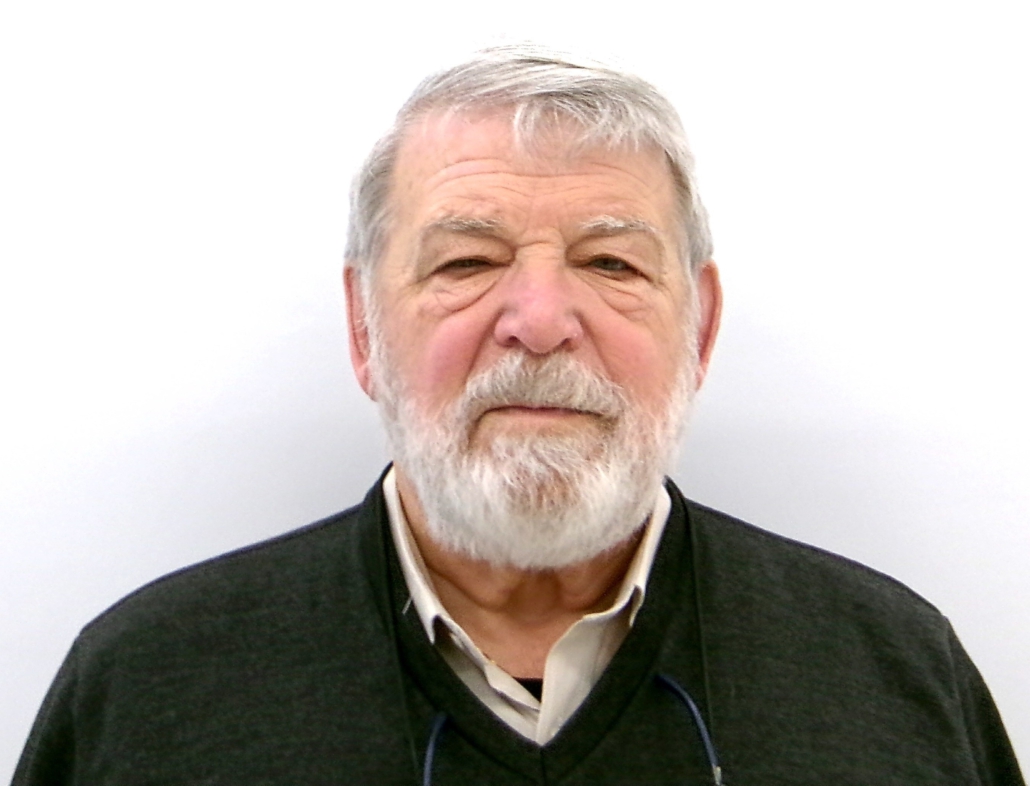
#78: Keith Mullett — Medtronic, pain, and the prehistory of modern DBS
Keith R. Mullett spent 37 years at Medtronic, including many years at the Bakken Research Center in Maastricht.
This episode looks at the pain-era device work, clinical partnerships, and regulatory experience that helped make modern DBS possible.
#78: Keith Mullett — Medtronic, pain, and the prehistory of modern DBS
In this episode of Stimulating Brains, I am delighted to welcome Keith R. Mullett, who can uniquely tell a part of the DBS history that is often skipped.
We usually begin telling the story of modern DBS in Grenoble around 1987, when Alim-Louis Benabid and colleagues showed that high-frequency VIM stimulation could suppress tremor. But Keith reminds us that Medtronic’s first DBS system had already been implanted in 1969 — not for tremor or Parkinson’s disease, but for severe chronic pain. Keith joined Medtronic in May 1972 and spent 37 years there, first in Minneapolis and later at the Bakken Research Center in Maastricht, where he arrived shortly after Frans Gielen.
So today, we take you into a time-capsule that goes back to before the Benabid era: to the two decades in which Medtronic and its physician collaborators built the devices, surgical know-how, clinical relationships, and regulatory experience that later made DBS for movement disorders possible. We will talk about Yoshio Hosobuchi and the first pain implants, RF systems with belt-worn transmitters, the transition from cardiac pacing to neurostimulation, the FDA call for data, ITREL, the Bakken Research Center, and the 1992 tremor study — the moment Keith summarized as: “The rest is history.”
This episode also connects to our recent conversations with Todd Langevin (episode 46) and Frans Gielen (episode 75). Todd described the internal venturing and business side of DBS after Benabid, while Frans described the engineering, clinical studies, training, imaging, and new indications that followed. Keith, who was Frans’ boss, helps us ask what had to exist inside Medtronic before those later teams could build the modern field.
The conversation moves through early career and framing, pain before movement disorders, early device development, the FDA call for data, ITREL, the Bakken Research Center, and the transition from pain-era DBS to tremor and movement disorders.
Keith Mullett 00:00Some patients said, yeah, the tingling is in the right spot and the pain is gone. And Hasselblit said, then, why are we burning holes in the brain? So if you divide two years by 100, it's a pretty short life. It was not practical to have a fully implantable device. And he called it the Integrated Transmitter Receiver Electrode Lead, or ITREL. Yes, you could see it. It was visual. You turn the stimulator off and the tremor stopped, and you turn it off and it started again. And it was so dramatic for many of us in the field. I mean, the whole concept. The whole concept of stimulation as an alternative to drug therapy was to avoid the overuse of opioids.
Andreas Horn 01:15Welcome to Stimulating Brains. Hello and welcome to Stimulating Brains. Today I am delighted to welcome Keith R. Mullett, who can uniquely tell a part of the DBS history that is often skipped. We usually begin telling the story of modern DBS in Grenoble, France, around 1987, when, as you all know, Alim-Louis Benabid, and colleagues showed that high-frequency VIM stimulation could suppress tremor. 02:00But Keith reminds us that Medtronic's first DBS system has already been implanted in 1969, and not for tremor or Parkinson's disease, but for severe chronic pain. Keith joined Medtronic in May 1972 and spent 37 years there, first in Minneapolis and later at the Bakken Research Center in Maastricht, where he arrived shortly after Frans Gielen. Transition from Cardiac Pacing to Neurostimulation, The FDA Call for Data, ITREL, 03:02The Bakken Research Center, and the 1992 Tremor Study. The moment Keith summarized as, the rest is history. This episode also connects to our recent conversations with Todd Langevin in episode 46 and Frans Gielen in episode 75, who both worked at Medtronic as well. Todd described the internal venturing and business side of DBS after Benabid, while Frans described the engineering, clinical studies, training, imaging, and new indications that followed. Keith, who was Frans's boss, helps us ask what had to exist inside Medtronic before those later teams could build the modern field. I would like to thank you wholeheartedly for tuning in. If you like Stimulating Brains, feel invited to tell your friends about it, or reach out if you'd like to contribute to the project
Keith Mullett in any form, or way. I would also like to thank Niels Pacheco for producing this episode, and Alaa Taha and Ruoyu Ma, who, together with Niels, 04:00have volunteered to split the work of producing the episodes we put out.
Andreas Horn So Keith, thank you so much
Keith Mullett to take your time out of your surely busy day to talk to us here at Stimulating Brains. It's a big honor to meet you
Andreas Horn and really fantastic that you could join us.
Keith Mullett As you may have heard, we often start the question with an icebreaker,
Andreas Horn which is, what do you do when not working?
Keith Mullett In your case, you're retired,
Andreas Horn but do you have any hobbies, things that you like to do?
Keith Mullett Well, yes. About 10 years ago, my daughter gave me a subscription to Ancestry.com. And also to her mother, and her husband's parents, and asked each of us to fill in our genealogy. So I started working on it. 05:00And not just tracing my surname, Mullett, but tracing all four of my grandparents, paternal and maternal, as the tree branched and branched as far as I could get. And I got back to 1330. Wow. And I think the pronunciation is, Morgestal, close to Tilburg in the Netherlands. Herman Schenkels. It was his great-grandson who then immigrated to Switzerland, where many of my other ancestors came from. And this was just about the time of the Protestant Reformation in the first half of the 16th century. Mm-hmm. And a brother, a branch of that Reformation, were called the Anabaptists. Now, we could go into a whole podcast here, 06:00and we won't. But only to say that many of my ancestors joined the Anabaptist movement. This, of course, was heresy to both the Catholic Church as well as the Protestant Reform. And they were persecuted and run out, crossed the border, into the Holy Roman Empire, to the Palatinate, and up to Westphalia.
Andreas Horn Yeah.
Keith Mullett Eventually to Rotterdam, where they boarded boats to William Penn's colony in North America. So I traced all this, and along the way,
Andreas Horn there were many very interesting stories. Yeah.
Keith Mullett Which I gathered then into a... And this is all internet research, by the way.
Andreas Horn Yeah.
Keith Mullett It was not out, in city halls or whatever. It was all on the internet. Wow. And I published about a 300-page book that I call... 07:01No way. Immigrants from Europe. Huh. The Protestant Reformation and the Settling of the American Colonies from the Eyes of My Ancestors. Wow. So this has been about a 10-year project. I relocated here to Fort Collins just before COVID hit. I didn't really know anybody here except my son and family. So this became a 60-hour-a-week project through the COVID era and is still continuing on today.
Andreas Horn Fantastic.
Keith Mullett You know, I love this. This is... First of all, this must be a lot of fun. It's a bit like studying history,
Andreas Horn but with a personal touch, right?
Keith Mullett Because it is kind of your... Like tied to your ancestry.
Andreas Horn Exactly.
Keith Mullett And then it's... Isn't that one of the best gifts to receive something
Andreas Horn that sets you into such a path?
Keith Mullett Right. 08:00Right.
Andreas Horn Fantastic.
Keith Mullett Really cool.
Andreas Horn Okay.
Keith Mullett So, but focusing on your work back in the day, your career at Medtronic,
Andreas Horn who were key mentors for you and or turning points in your career that set you off course?
Keith Mullett Turning points in the career, maybe I'll take it from that perspective. It began in 1961. I was a senior in high school thinking about career. And my father had a pretty good idea of what I should do. I should go to the neighboring Goshen College, which was... Which was a Mennonite College, just 12 miles from home. An excellent liberal arts school. My... I could live with my grandmother who lived just four blocks from campus 09:00in the upstairs apartment, become a teacher. And in those small little Indiana towns, a basketball, baseball coach on the side, that's the way it worked. There was just one problem with that. The problem was swapping swapping swapping with his grandmother and at that age no way yeah so I announced to him I wanted to be an engineer that's how I chose my career now I couldn't go to Goshen College because that was a liberal arts college so the only financially viable solution was the state engineering university Purdue University so that was kind of turning point one yeah the second was uh later that year in 1962 uh JFK announced that we were going to 10:03beat the Soviets to the moon and I wanted to be part of that I mean that was exciting not as an astronaut you understand but as an engineer so as I chose my courses in the electrical engineering school at Purdue they were all oriented toward Aerospace uh Electronics Mechanics Aeronautics and I graduated in 1966 at Purdue the job market was a little different in those days if you had an engineering degree and could count to 10 without making a mistake you had a job you didn't interview to see if you could get the job you interviewed to see which job you wanted and I interviewed with 10 aerospace companies and got 10 offers as did all of my engineering 11:06colleagues and I chose Honeywell Aerospace in Minneapolis yeah um the next turning point came about three years later when I realized that Honeywell was a small cog in this big aerospace machine and I was a damn small cog in Honeywell yeah so I didn't feel like I was making any contribution toward the race for the moon yeah and I started looking around at other possibilities I heard about this little company in Minneapolis where I was living now yeah called Medtronic couldn't call it a medical products company it was a heart pacemaker company cardiac pacemaker company one product company and I interviewed and they told me I wasn't qualified I had no medicine biology physiology 12:02in my background but I was determined this is now you know I'm going to do this I'm going to do this I'm going to do this I'm going to do this I'm going to do this I'm going to do this I'm going to do this I'm going to do this I'm going to do this yeah so I um entered University of Minnesota in a master's program in electrical engineering and um in order to make it into a bioengineering program my old alma mater Purdue had a bioengineering program but I was now entrenched in Minneapolis Minnesota did not have a program okay so I approached the physiology department said can we work something out yeah they said well our advice is um go back and get four years of undergraduate physiology and then come back and talk to the graduate school no you've got the wrong idea here I'm not looking to become a physiologist I'm looking to become a bioengineer and then I heard about the veterinary school and they welcomed me yes we can put some programs together so two years 13:06later I graduated uh with my master's in electrical engineering with a minor in veterinary neuroanatomy
Andreas Horn interesting and then I approached Medtronic and said now I'm a bioengineer yeah and they hired me fantastic and I was with Medtronic for the next 37 years that's persistent that's interesting
Keith Mullett great great what did the company look like then I think this was 1972 right about 1972
Andreas Horn when I joined the company yes what was your first role what did the company look like at the time
Keith Mullett well as I said it was a one product company a cardiac heart pacemaker company and I was hired into the leads and electrodes design and test area but there was a little group of people in a research group that were trying to adapt cardiac pacing technology into other 14:05applications yeah and I kept looking over the wall at them and I think it was about a year maybe a year and a half later when I was invited to join that group I have a picture it shows there were 12 people and that would have been the engineers and secretaries it was secretary day picture there's probably about four or five other technicians that were not in the picture about 20 people and they were trying to develop products in the neurologic area I always date the beginning of neurostimulation to 1965 when this is I was still at Purdue at that time, still thinking about landing on the moon. In 1965, Ron Melzack, the 15:03Canadian, and Pat wall the Englishman published an article called a new theory of pain which later became known as the gate control theory of pain what they proposed of course was that rather than cutting nerve fibers you could stimulate inhibitory fibers in the dorsal columns you're you're familiar with that and that's what I always date is the beginning of at least my activity and our activity in neurostimulation.
Andreas Horn Yeah.
Keith Mullett Two years later, 1967, Norm Shealy implanted the first spinal cord stimulator. It was built by his PhD student, Tom Mortimer. And being a PhD student and looking for guidance, he approached Medtronic. You are making cardiac pacemakers.
Andreas Horn 16:02Can you help me make a device to stimulate the spinal cord, the dorsal columns?
Keith Mullett So Medtronic provided some guidance. I shouldn't say Medtronic. An engineer in Medtronic, Norm Hagfors, provided some guidance. And after about the second patient that Norm Shealy implanted, Medtronic began to build these devices, these spinal cord stimulators, for his research program. 1967. Two years later, 1969, Yoshio Hosobuchi from University of California, San Francisco.
Andreas Horn Yeah.
Keith Mullett In those days, certain types of pain, head, neck, and face pain, pain with extensive part of the body, thalamotomy was an option.
Andreas Horn 17:00Yeah.
Keith Mullett And as I'm sure you will. Well, no. You implant the electrode. You stimulate. The patient reports where the paresthesias are, the tingling sensation. When you get the tingling in the right spot, then you make a lesion.
Andreas Horn Yeah. Some patients said, yeah, the tingling is in the right spot and the pain is gone. And Hosobuchi said, then, why are we burning holes in the brain? Yeah.
Keith Mullett When the patient says stimulation. It helps. So with the patient's approval, Hosobuchi left his lesioning electrode in the brain. Two weeks later, the patient was still reporting pain relief. And he approached Medtronic and said, you are now making these spinal cord stimulators for Norm Shealy.
Andreas Horn Can you adapt one to hook up to this lesioning electrode I have in this guy's brain? Yeah.
Keith Mullett Well, it took about nine months to get the spinal cord.
Andreas Horn Yeah.
Keith Mullett 18:03and qualified and all that. Wow. And I met this patient 20 years later when he visited Medtronic, still pain-free. Wow. Excuse me, I do not remember what pain syndrome he had at this point in time.
Andreas Horn Yeah. And sorry, how did Hosebuchi stimulate for the two weeks without a device? Was it externalized?
Keith Mullett I assume breathing externalized. It was. It was. In fact, for the first nine months, it was externalized while he waited for us to get the complete device.
Andreas Horn So was that a carry-on device, something custom-built probably, academic?
Keith Mullett It certainly was a custom-built device. And in those days, since I lived in Minnesota so long, a pacemaker was about the size of a hockey puck. I know you're Swedish. 19:01I know you're Swedish. And Norwegian listeners know what I'm talking about.
Andreas Horn Yeah. Probably some of the Germans, right?
Keith Mullett We do.
Andreas Horn Yeah, yeah.
Keith Mullett We can picture it.
Andreas Horn Yeah. Okay.
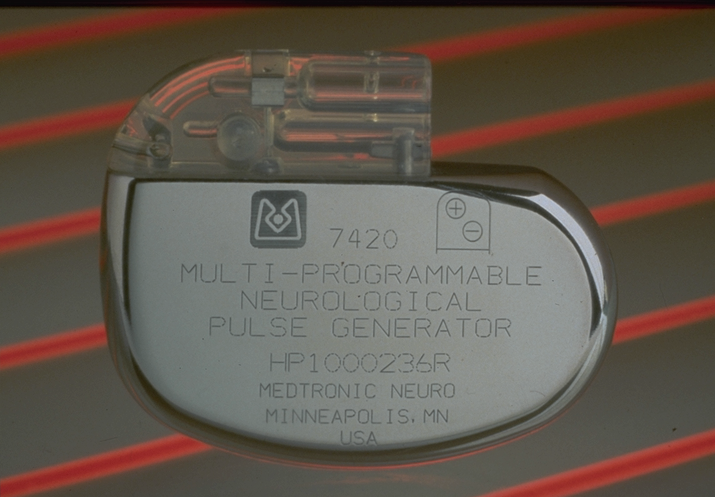
Keith Mullett And a cardiac pacemaker would last about two years. Remember that a cardiac pacemaker beats about one beat per second, roughly. And neurostimulators require something in the neighborhood of 80 to 120 pulses per second.
Andreas Horn Yeah.
Keith Mullett So if you divide two years by 100, it's a pretty short life. It was not practical to have a fully implantable device.
Andreas Horn Makes sense.
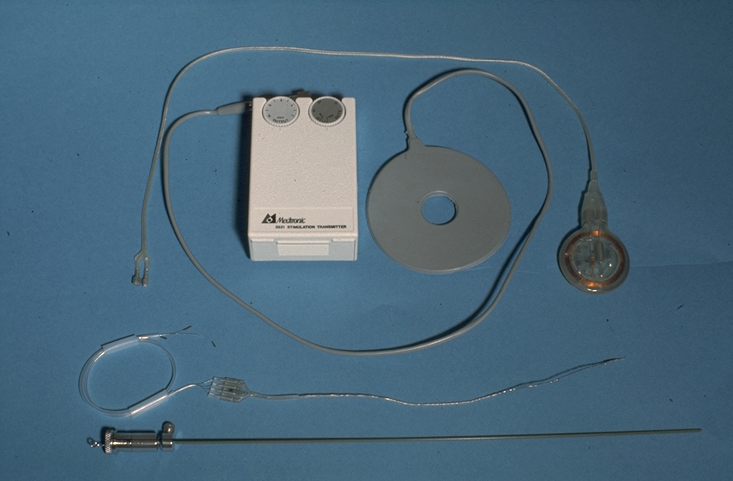
Keith Mullett So what we designed for both spinal cord as well as brain stimulation was a radiofrequency device. That is to say that the electrode was hooked up to a passive receiver implanted in the abdomen or the chest.
Andreas Horn Yeah.
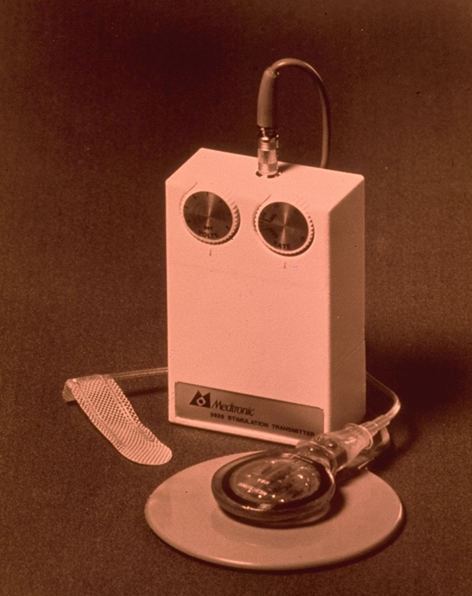
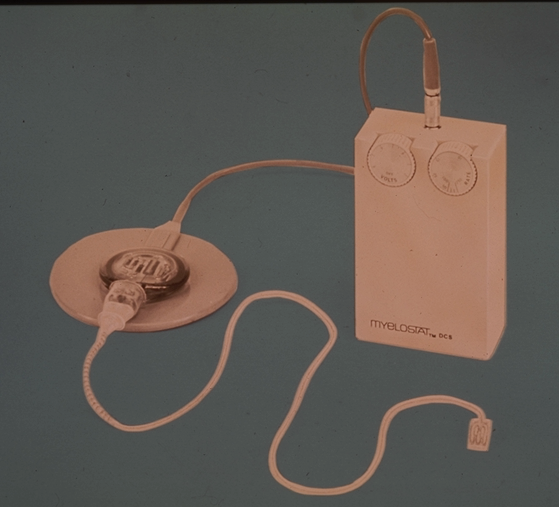
Keith Mullett The patient carried an external transmitter, which had... which had the pulse generating circuitry, 20:02the control circuitry and a nine volt battery. And an antenna placed over the receiver, which broadcast the signal at 460 kilohertz just off the lower end of the AM radio dial. And that was the system that was used in those days.
Andreas Horn Did people readily understand this could become a new field?
Keith Mullett I think so.
Andreas Horn Yeah. Yeah. Yeah.
Keith Mullett I think so. I think so. I think so. I think so. I think so. I think so. I think so. I think so. I think so. I think so. I think so. I think so. Well, certainly those of us involved believed it.
Andreas Horn Yeah.
Keith Mullett But that was a pretty small group. Sure. There was a fairly significant group that disbelieved it. And I'll maybe tell one of those stories a little later if you don't mind. Of course. Please.
Andreas Horn Yeah.
Keith Mullett But now I'd like to just, if I may, tell you who it was that was involved in the, in the, in the, in this development process. 21:04In our deep brain stimulation, when I joined the company, we already had a study group. This would have been 1972 of 16 neurosurgeons.
Andreas Horn So was it already called deep brain stimulation at the time? Do you remember?
Keith Mullett I think, yes, it was. Actually, it became, it became deep brain stimulation, DBS, and about a year or two after I joined the company.
Andreas Horn Yes.
Keith Mullett Obviously, we were working in the area of pain. So we were working in the VPM, VPL.
Andreas Horn Yeah.
Keith Mullett Nucleus of the thalamus and the internal capsule. Just like to see how many of these names you recognize.
Andreas Horn Yeah.
Keith Mullett John, Adams at UCSF. 22:02He was working along with Yoshua Hasabuchi at the University of California, San Francisco. Don Becker, University of Virginia, Charles Burton at Temple. Also later at the Sister Kenny in Minneapolis, George Eaney and Houston.
Andreas Horn Any names recognition yet?
Keith Mullett I'm sorry.
Andreas Horn So far now I'm yeah,
Keith Mullett I should know them, but I don't. Yep. I mean, uh, I was, um, I was 25 years old at the time and these were all established neurosurgeons. So, uh, they were from the very beginning. Phil Gildenburg from Cleveland, later at the University of Arizona. Russell Hardy from Cleveland. Yoshua Hasabuchi from UCSF.
Andreas Horn Yes.
Keith Mullett Uli Kreinig from Freiburg.
Andreas Horn What's what, what's the name again?
Keith Mullett Kreinig. Uli Kreinig. K-R-A-I-N-G. I-N-I-C-K. 23:00I studied in Freiburg. I don't know him. No. No.
Andreas Horn Yeah.
Keith Mullett Richard Lewin from Beverly Hills. Mm-hmm. John Lozier, Seattle. Donlon Long, Johns Hopkins. Bjorn Meyerson, you know him of course from the Karolinska. John Miles from Liverpool. Mm-hmm. John Mullen from University of Chicago. Don Richardson, Tulane. And Ian Turnbull from Vancouver.
Andreas Horn Yes.
Keith Mullett That was a good one. That was a good one. That was a good one. That was a good one. That was a good one. That was a good one. That was a good one. That was a good one. That was a good one. That was the, those were the real pioneers of
Andreas Horn Yeah.
Keith Mullett brain stimulation for pain back in the first half of the 1970s.
Andreas Horn Did Dan Richardson and Tulane work with Robert Heath at all?
Keith Mullett Was that, No.
Andreas Horn Is he still around?
Keith Mullett No, okay. No. They were separate, working in separate corners. Got it.
Andreas Horn Yeah. Yeah. Yeah.
Keith Mullett 24:01Since you mentioned Don's name, most of the work in brain stimulation was done in the VPM, VPL internal capsule. But Don's target was the periventricular gray surrounding the third ventricle with the idea that he could enhance the endorphins, hence relieve the pain. So he had a different target and physiologic concept. That seems similar to what Heath was doing there too with the pleasure region of the brain. Right, right.
Andreas Horn Yeah.
Keith Mullett So in 1976, Mm-hmm. we put together a report on the results of this study group. 25:06Mm-hmm. This was before the FDA regulated medical devices. And quite frankly, we were amateurs, really amateurs at this whole thing. So in 1976, we did a retrospective analysis of data from physicians, and we did a retrospective analysis of the results. Mm-hmm. And we qualified the results as plus definite relief off meds used as a stimulator. Mm-hmm. Plus minus some relief, the meds are reduced, and they use the stimulator. Zero, no relief. Mm-hmm. Meds unchanged, does not use the stimulator.
Andreas Horn Yeah.
Keith Mullett And then minus pain worse. Mm-hmm. So that was our... Rating system. Pretty amateur way of doing it, but this is part of the learning process 26:03that leads up to where we are today.
Andreas Horn Yeah.
Keith Mullett Pain syndromes, facial pain, anesthesia, dolorosa, and atypical facial pain, central pain, brain lesions, spinal cord injury pain, post-cordotomy dysesthesia, low back syndrome, peripheral nerve injury. Post-herpetic neuralgia and cancer, quite a mixture. Once again, you would never run a clinical study this way, but retrospectively taking the data. Of course. Targets, internal capsule, sensory thalamus, midbrain, and what I call the medial thalamus, in other words, the PVG, periventricular gray. Mm-hmm. Mm-hmm. Mm-hmm. Mm-hmm. This is in 1976 now. 27:0356 of the 76 were internalized after a temporary trial stimulation of one to two weeks. 20 of them were screened out with no results. 40 were rated plus or plus minus. 36 were rated as zero, no improvement. And that includes the 20 that were screened out. So at the time we took the measurement, we had follow-ups. Follow-ups of up to two years. So anywhere from a couple months to two years, quite a wide range. We had 40 success and 16 failures in this very, and again, I emphasize, 28:01amateurish way of looking at clinical data.
Andreas Horn Which parts of the pacemaker technology were transferred from pacemakers? From hard pacemakers to neurostimulation and which not? Which had to be customly designed?
Keith Mullett At this point in time, the stimulator was custom to the neuroapplications because it was a radio frequency system. We borrowed on the technology for leads. That is the coils, the wires, the insulation. But we had to build unique leads for the unique anatomical application. That is to say spinal cord or brain.
Andreas Horn 29:00So it was pretty much a unique system from cardiac pacing. What was the first electrode called? Was it a 3380 or was that even before?
Keith Mullett Oh, this is long and long before that. I think we called them the something X meaning experimental.
Andreas Horn Okay.
Keith Mullett The 5X 2430 or something.
Andreas Horn Okay. Okay. Okay. Okay. Okay. Okay. Okay. Okay. Okay. Okay. Okay.
Keith Mullett this is long before that. Our DBS electrode now that you triggered my memory was called the Shriver electrode.
Andreas Horn Okay.
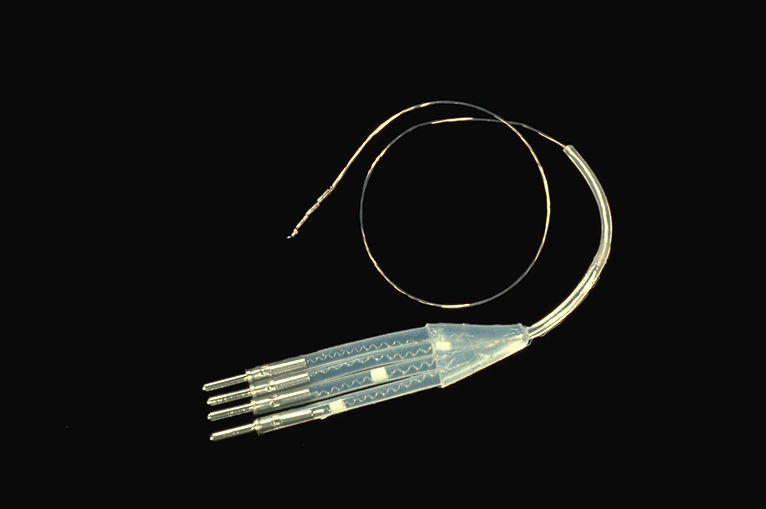
Keith Mullett It was first designed and built by an individual by the name of Shriver in California who made lesioning electrodes. It was never made for long term stimulation made from stainless steel, I believe. it had a little loop at the distal end that you could put a probe through and push it into the brain to the right location. The wires came out, hooked up to the lesioning machine. 30:01And that was the electrode that we then adapted to put connectors on so that we could hook it up to a receiver. But we kept that same electrode from 1969 until Benabid forced us. To make a better one.
Andreas Horn Okay, interesting.
Keith Mullett We'll come to that in a little while. Because I did hear that, especially this loop in the bottom,
Andreas Horn that that's why that contact was called zero. Does that ring a bell? No?
Keith Mullett It certainly does. Yes, it does. Because the wires at the proximal end, that is the external wires, had little... numbers on them. 0, 1, 2, 3.
Andreas Horn But will the neurosurgeon remember whether zero is the distal end or the proximal of the four contacts?
Keith Mullett And we linked zero to that little loop down there. 31:03So it's sort of a memory trigger. The zero electrode is the loop. Cool.
Andreas Horn And then there was a time of mercury zinc batteries, right? So they were... Is that right?
Keith Mullett That's right. The hard pacemaker, the hockey puck, had about five mercury zinc batteries for that fully implantable device. But of course, we're still in neuro in the RF era.
Andreas Horn Okay.
Keith Mullett And that means nine volt batteries like you buy over at your local store.
Andreas Horn Okay.
Keith Mullett It was always carried in a waist belt, I think.
Andreas Horn Or was it a backpack? Or how did that work?
Keith Mullett It was a little... a device about the size of a pack of playing cards, which clipped to the belt.
Andreas Horn Okay. Interesting.
Keith Mullett Maybe I could...
Andreas Horn So, yeah, please go ahead. Yeah, please.
Keith Mullett 32:00If you don't mind, I would like to take a diversion here. I described how the gate control theory led to Shealy. Shealy led to Hasabuchi. And now neurosurgeons facing and other surgeons, physicians, mainly surgeons, facing difficult medical problems, begin to think stimulation, stimulation. So in the first half of the 70s, we were inundated with ideas. And if I could just sort of walk through some of those ideas. I'd love that, please. Multiple sclerosis. Stimulating to treat the spasticity. Spinal cord stimulation. And that was Al Cook from New York City. Cerebral palsy. Again, to treat the spasticity 33:02through cerebellar stimulation with Irving Cooper, also in New York City.
Andreas Horn Yeah.
Keith Mullett Peripheral vascular disease. It was observed that blood flow increased in patients with spinal cord stimulation. Maybe we could treat peripheral vascular disease. Don Dooley from Miami. Mario Amelio from Rome. Lars Erik Augustinsen from Gothenburg. Scoliosis. Stimulating the muscles on the convex side of the curve to straighten the scoliosis. The curve. Bobetsko from Toronto. Foot drop to improve gait. Paraneal stimulation. Paraneal nerve stimulation. That was Don McNeil out at Rancho Los Amigos in LA. Spinal cord injury. 34:00Respiration. The phrenic nerve. Glenn from Yale University. Stimulating the diaphragm directly. Musica from Saint-Cloud.
Andreas Horn Or shall I pronounce it in English?
Keith Mullett Saint-Cloud, France. Saint-Cloud.
Andreas Horn Yeah. Yeah.
Keith Mullett Spinal cord stimulation for walking. Of course, people still dream about that. Muscle stimulation or for grasp upper extremity. That was in Cleveland. Bladder stimulation, of course, which is used today for micturition and also retention, sacral nerve stimulation, Talala in San Francisco was one of the leaders there.
Andreas Horn So all of these things. So these all happened or these were ideas?
Keith Mullett All of these happened. Happened in the sense that we implanted 35:00patients and evaluated them in a amateurish clinical, I use that word over and over again, kind of setting. But it's not a trial. It would be sort of phase two clinical studies today. I have to ask this question quickly because it shows how
Andreas Horn maybe less regulation leads to more creativity and more things being explored. In a way. Do you agree with that?
Keith Mullett I agree with that. And in fact, that is one of the reasons that I moved to Europe in 1991. The problem really is we felt that Europe offered less rigorous, less obstructive regulation and more innovation in the universities than the US offered. And 36:01and I found that to be very true. Working from the Bakken Research Center and the second half of my career.
Andreas Horn Yeah. Interesting. As opposed to what was happening in the US.
Keith Mullett So all of these ideas that. And we tried with varying degrees of success. I published in a paper, which I published in 1987 in PACE. I don't know if that journal still exists. Pacing and Clinical Electrophysiology. It was really a journal for heart pacing.
Andreas Horn Interesting.
Keith Mullett But this one issue, Professor Musica from St. Cloud, France, was the editor. And he wanted to bring in other things. So if anybody wants to look it up, they can get a little bit more information on some of these things.
Andreas Horn Fantastic.
Keith Mullett So at the very end, I bravely predicted that... 37:04I'm not going to finish the sentence because I don't want to embarrass myself. Please. Please do it. I don't want to embarrass myself. Now you have said it. No, I bravely predicted that neurostimulation would someday become a very important tool for surgeons.
Andreas Horn Was I right?
Keith Mullett You were right.
Andreas Horn Yeah.
Keith Mullett Not all the ideas, but at least one place. I mean, many, if not all of them, are still floating around. But I think it's just...
Andreas Horn That's why I asked this question.
Keith Mullett I think many people would love to try this, but the hurdles have become high. You did write in your notes, neurodivision Earl, developing a business. Earl Bakken, I think that you referred to him, was the founder of Medtronic.
Andreas Horn What role did he play? What was the next step for you guys? Well, you've taken me exactly in the notes that I'm looking at here in front of me into where I would like to move next.
Keith Mullett 38:05Thank you. Thank you. 1976 was a very important year. It was a pivotal time. Two things happened. First of all, Medtronic said, now you've been playing around with this neurostimulation stuff for about eight years. It's time that you settle in, figure out what can be a good therapy, what can be a good business. You are no longer... You're the neuro research group. You are now the neurodivision. You're no longer measured on the size of your budget. You're measured on the size of the profit and the number of patients that can be helped. So suddenly we were in a new position. 39:04We released the deep brain stimulation system. We released the deep brain stimulation system commercially. This is still the radio frequency version. And put it on the market and begin to discipline ourselves to develop a real business and not just have a lot of fun playing around with all these ideas.
Andreas Horn Yeah.
Keith Mullett And I don't mean to make light of it, but I hope I get the message across. The second major thing that happened. Was that the U.S. Congress mandated the FDA to regulate medical devices. And they included a grandfather clause that anything on the market can stay on the market. Until the FDA calls for data. That was the reason we quickly released DBS to the market. Before this law. 40:01Before the U.S. law passed. Well, it took FDA about three years to promulgate the regulations. So in 1979, the regulations were handed down. And the first call came from the FDA to submit data. And the first product that they asked for was spinal cord stimulation. Well, we were ready. We anticipated this. And our clinical study was well underway. And we submitted the data. And got approval. DBS was still far too small and under the radar that no call was made for data.
Andreas Horn And it remained grandfathered for a few more years. Sorry, was this exactly the same device for the two? Same device or different devices? It was exactly the same device.
Keith Mullett 41:01Yeah. Okay. Right. They were still talking radio frequency devices.
Andreas Horn Yeah.
Keith Mullett And now you mention Earl Bakken. If you don't mind, I'd like to just take a little time. I had three heroes in my life.
Andreas Horn Yeah.
Keith Mullett Nelly Fox, Richard Petty and Earl Bakken. Now, I don't know if you remember Nelly Fox. If you know. He was the second baseman for the Chicago White Sox in the early 50s.
Andreas Horn Okay.
Keith Mullett You don't remember him, I guess. I'm not a baseball fan. I don't know. I don't know. I don't know. I don't know. I don't know. I don't know. I don't know. I don't know. I don't know. I don't know. I don't know. I don't know. I don't know. I don't know. I don't remember him, I guess. I'm not a baseball fan either, being from Europe.
Andreas Horn Yeah, I like the sport, but I don't know it. Yeah.
Keith Mullett He was a childhood hero of mine. Richard Petty from NASCAR fame. Earl Bakken was the founder and at the time I joined the company, president of Medtronic. And he was one of those rare, he was the engineering half of the American team. 42:03He was the founder of the invention of the cardiac pacemaker. And he was one of those rare entrepreneurs, engineers who knew when an entrepreneur engineer could no longer run a growing corporation. And he handed the range of the company over to a president and moved up to chairman of the board where he could focus more on the customer and let a CEO run the business.
Andreas Horn Yeah.
Keith Mullett In 1960, Errol wrote the Medtronic mission statement.
Andreas Horn Yeah.
Keith Mullett Number one, six points. Number one, to contribute to human welfare by the application of biomedical engineering to instruments that alleviate pain, restore health, and extend life. You notice alleviate pain was five years before Melzack and Wohl. 43:03They published their gate control theory.
Andreas Horn Interesting.
Keith Mullett And long before we started. That was number one. Number two, to direct our growth in areas where we display maximum strength, avoid participation where we cannot make unique and worthy contributions. Number three, to strive without reserve for quality. Number four, to make a fair profit on current operations to meet obligations and the needs of the people.
Andreas Horn Yeah.
Keith Mullett And to make sure that we have the right solutions and sustain growth. And that's where I said, I want to be part of this company, a company that puts profit four out of six.
Andreas Horn Yeah.
Keith Mullett Not first out of six. And indeed, in my tenure in the company, for the most part, yes, profit is necessary. Sure. But it's not first.
Andreas Horn Yeah.
Keith Mullett It's fourth.
Andreas Horn 44:00Yeah.
Keith Mullett It's very simple. It's very simple. So continuing to talk about Earl, it wasn't the first CEO following Earl, but the second one, Dale Olseth. He came in, he had formerly been CEO of Tonka Toys in Minnetonka, Minnesota, and he took over this cardiac pacemaker company now trying to branch into neurological devices. And the first quarter that he was there, the company was running somewhat behind sales plan. So at the first board meeting, now, I wasn't at the board meeting, I was far too insignificant for that. But at the first board meeting, Dale Olseth came with a briefcase full of ideas of how to bring in the quarter, how to meet our financial goals.
Andreas Horn Yeah.
Keith Mullett And he never got a chance to present because Earl got up and gave his 100-year vision 45:05for the company.
Andreas Horn Okay.
Keith Mullett And quite frankly, Dale never figured this company out. And he was a short timer as CEO. Mm-hmm . Earl was extremely familiar with cardiac pacing, but didn't know anything about neurology. Mm-hmm . And Earl said, no, we continue to fund Nero. 46:01And he didn't have to say it loud. And he didn't have to say it twice. He was never again raised, at least not in his hearing. He had a message to us engineers. He said, the trouble with our engineering department is they love to talk to the customer about all these great new products we're designing. They can't stop talking. They should stop talking and listen to the customer. Listen to what the customer wants. Here you get into a big debate. Marketing will tell you, give the customer what he wants. Engineers and my colleagues in the science area will say, no, you give the customer what he needs. If I as an engineer, if I as a scientist know that what the customer is asking for is not the best, that technically and scientifically this is better, then that's what we should give him. 47:12And here Earl comes down firmly on the side of marketing. You give the customer what he wants. And I might just say the debate continues today.
Andreas Horn Yes. Interesting.
Keith Mullett Even though I'm an engineer, my career gravitated toward clinical studies. And Earl wasn't the greatest fan of clinical studies. Oh, yes. You've got to do them. You've got to do them right. You've got to analyze the research. Right.
Andreas Horn 48:05Yeah.
Keith Mullett mind, this is where you make your final judgment about whether to bring something to market.
Andreas Horn Yeah. And if I just may, one more Earl story?
Keith Mullett Please. And then I'll move ahead. Um, we had, um, in about 1977 or 78, um, we had had enough success that the company allowed us to hold a dinner for some of our better customers. It was at the AANS, the American Association of Neurologic Surgeons meeting in San Francisco, about 15 people at the table. And, um, at the end of the meal, the. Uh, Dr.
Andreas Horn Professor Hasabuchi's nurse leaned over and said, who's that quiet man down at the end of the table? 49:02Is that your new salesman for Northern California?
Keith Mullett Uh, no, that's Earl Bakken, founder and CEO. He was listening to the customer. Uh huh.
Andreas Horn Yeah.
Keith Mullett So that's my Earl stories. You highlighted the FDA call for data.
Andreas Horn That was next, right? What happened and how, like what did they want and how, how did it change the field when they answered the data? Yes.
Keith Mullett Well, as I said, when the FDA called for data, um, we had anticipated that spinal cord stimulation was well enough accepted that, uh, we were able to produce the data. But DBS, we were now realizing that, uh, some of the patients, too many of the patients who were initial successes were long-term failures. 50:02Mm-hmm.
Andreas Horn Okay.
Keith Mullett Spinal cord stimulation and, and transcutaneous electrical nerve stimulation, TENS were working pretty well. Um, it was only the worst patients that had, that were receiving DBS, worst in terms of the most difficult patients.
Andreas Horn Yeah.
Keith Mullett oh when was it about 1982 that the FDA called for brain stimulation data and we didn't have it. Okay. We filed an investigational device exemption and tried to enroll patients but they came too
Andreas Horn 51:08slow and so it began to falter. Interesting. Maybe I could just take a little diversion and
Keith Mullett come back to this if you don't mind. Of course please. Another individual in the company was Dr. Charles Ray. Charlie Ray was a neurosurgeon and a homemade bioengineer. He had been at, he's an American, he had been at Hoffman LaRoche in Basel for about five years when Earl hired him to come back and take over the research at Medtronic and the research of course was neural. And Charlie came up with an idea. 52:01I talked about all those different applications we had all using basically the same kind of hardware. But slightly different variations on it. So Charlie came up with the idea of a family of transmitters, a family of receivers, a family of electrodes, and a family of leads. Okay. And let the surgeon choose which one he wanted, put them all together to do what he wanted to do. Hmm. Anatomically and biologically. And disorder-wise.
Andreas Horn Yeah.
Keith Mullett And he called it the Integrated Transmitter Receiver Electrode Lead, or ITREL. Ah, that's what it stands for. I've heard ITREL a lot of times.
Andreas Horn Interesting. Yeah. Yeah.
Keith Mullett And we copyrighted that name, of course. Great. But the idea, the FDA came down firmly and said, no. 53:02Well, companies will only sell systems which have been tested and shown to be safe and effective for a specific disorder. You're not allowed to give the doctor a set of tinker toys and let him put together what he wants to.
Andreas Horn Interesting, because that works with ablation, right?
Keith Mullett With ablation, you just buy one device and then doctors can choose where to leave it. And then you can have a lesion and, you know. That's true, yes. Physicians have that ability, that freedom. Companies do not. No, I know. But even from a medical perspective, we often, even today, think this is a big problem that these devices are so specific for where the electrode needs to go and all that. Because it's odd that the ablation devices are not.
Andreas Horn 54:02There you can essentially lesion whichever region, right?
Keith Mullett And the FDA approval goes for the device that's being used by the surgeon. But if you implant the device, it is very specific. And I think that might be detrimental for smaller disorders that don't get enough, you know, clout to even have any commercial interest.
Andreas Horn And yeah, but interesting.
Keith Mullett There's a number of disorders that are so small that we were not able to. Invest enough to bring them forward as a system, just as you're saying.
Andreas Horn Yeah, yeah.
Keith Mullett Okay, please, please.
Andreas Horn Yeah. Yeah.
Keith Mullett So, but anyhow, the FDA said no to that idea. And the idea that we could sell a group of subsystems for physicians put together was not allowed by the FDA. But now in about 1980. 55:02Two new battery technology had come in.
Andreas Horn Yeah.
Keith Mullett And the cardiac pacemaker was no longer the size of a hockey puck. It was more the size of a silver dollar. And the batteries were improved enough that it was plausible to develop a fully implantable neural stimulator.
Andreas Horn Yeah.
Keith Mullett That could stimulate in the neighborhood of up to 120 pulses per second.
Andreas Horn Yeah.
Keith Mullett And still have a nearly two year lifetime.
Andreas Horn Yeah.
Keith Mullett Which was the standard for cardiac pacing for many years, two years.
Andreas Horn Yeah.
Keith Mullett Well, marketing liked the idea of ITREL. Now, engineers love acronyms. A integrated transmitter receiver electrode lead ITREL. Marketing hates acronyms. But they like the name ITREL. 56:00Integrated technology.
Andreas Horn Yeah.
Keith Mullett Integrated reliability.
Andreas Horn Yeah. Okay.
Keith Mullett So they took the name ITREL for our first fully implantable neural stimulator.
Andreas Horn Yeah.
Keith Mullett For both spinal cord as well as brain stimulation. Mm-hmm . However, brain stimulation, as I was saying a few minutes ago, still was in its investigational stage and coming along slowly, very slowly.
Andreas Horn Yeah.
Keith Mullett And in 1992, the FDA said, okay, submit the data.
Andreas Horn Yeah.
Keith Mullett And we didn't have it. So we took spinal cord, we took deep brain stimulation off the market. Mm-hmm . And Medtronic's program for brain stimulation was dead. Completely dead. But like a phoenix.
Andreas Horn Yeah.
Keith Mullett It rose from the ashes.
Andreas Horn This was about the time when you moved to Europe too, right?
Keith Mullett 1990.
Andreas Horn Yeah.
Keith Mullett I moved in 1990.
Andreas Horn 57:00Yeah.
Keith Mullett I moved in 1991.
Andreas Horn Makes exactly right. And that was maybe just as a brief detail, how was that for you?
Keith Mullett It's a different culture.
Andreas Horn Did you have any contact point in Europe that was in the Netherlands, right?
Keith Mullett I lived in Maastricht, yes. Maastricht. I just did, you know, you probably, I did tell you that I interviewed Frans Gielen and I actually went there with the car to his home. And we sat in this beautiful house. Beautiful house. And recorded the episode. So I probably was close to where you lived back then.
Andreas Horn Yeah.
Keith Mullett I live in Cologne so it's close by. Right. Right. Franz and I started there about two months apart. Oh, yeah.
Andreas Horn Yeah.
Keith Mullett It was, the sequence was that Medtronic's headquarters was in Paris.
Andreas Horn Okay.
Keith Mullett Paris was becoming extremely expensive and the European Union was just coming together.
Andreas Horn 58:04Yeah.
Keith Mullett And Brussels seemed like a more neutral, more financially better place to be. So we moved the headquarters to Brussels.
Andreas Horn Yeah.
Keith Mullett And when we did, we lost a number of employees who didn't want to move from Paris to Brussels, as you can imagine.
Andreas Horn Yeah.
Keith Mullett So I was asked to come over in the summer of 91 to, as the VP of Neuro said, sit in the director's chair until we could hire a European business director in Brussels. Got it. And so I spent the summer of 91 there. And it was during that time that I was asked to come over to the Bakken Research Center. Back into my more familiar ground of engineering and science.
Andreas Horn 59:00Yeah.
Keith Mullett And I officially, I guess it was December of 91, but it was January of 92 when I moved in to begin to build a clinical and scientific group at the Bakken Research Center.
Andreas Horn Yeah.
Keith Mullett And Frans preceded me in the, by about two or three months.
Andreas Horn Okay.
Keith Mullett At the Bakken Research Center.
Andreas Horn How was Europe for you? Did you like it?
Keith Mullett Oh, I enjoyed living in Europe very much.
Andreas Horn Okay.
Keith Mullett And I had traveled to Europe very frequently from 1976 until 91. Of course. So I knew a lot of people, Medtronic people.
Andreas Horn Yeah.
Keith Mullett And when I say Medtronic people, I include the neurosurgeons that we interfaced with and other physicians.
Andreas Horn Yeah.
Keith Mullett So. Well, perhaps I can wrap up.
Andreas Horn Yeah, I would love that. 01:00:01I mean, this is also where for me it gets extremely interesting, right? So if you allow to extend a little bit into the Benabid era, that would be fantastic to wrap up.
Keith Mullett But only as far as you want to go.
Andreas Horn Yeah. Okay.
Keith Mullett Well, I'll start by saying that. Three or four years before I moved to Europe, I was still in the US. Professor Benabid approached the Bakken Research Center, our custom lab there, and asked them to design and build a deep brain stimulation electrode for them.
Andreas Horn Yeah.
Keith Mullett Now remember, we were still using that old Schrodinger. We were still using that old Shriver electrode, that wire wound loop electrode from 69 up until this time for our brain stimulation programs.
Andreas Horn 01:01:00Yeah.
Keith Mullett And Benabid said, this is not a quality electrode. You're making by now percutaneous spinal cord electrodes. You can make me an electrode with a center stylet. And. And I think the BRC already had one that they were making for John Siegfried from Zurich for his work in pain. And they modified it for Professor Benabid. It was a monopolar bullet tipped center stylet electrode.
Andreas Horn And. One contact, right?
Keith Mullett Just one contact. I call it monopolar. I guess that's not right. A single contact.
Andreas Horn Yeah. Makes sense. Yeah. Yeah. Yeah.
Keith Mullett I'm not quite sure how to help you with that. You heard that. That was Alexa.
Andreas Horn Yeah.
Keith Mullett That is fine. Hi, Alexa.
Andreas Horn Okay.
Keith Mullett Great. So then you produced the electrode for Benabid. 01:02:00I'm not quite sure how to help you with that.
Andreas Horn How did that work? So did he just ask you, but then of course the company would decide, is that viable? Right?
Keith Mullett So did he.
Andreas Horn Yeah.
Keith Mullett did not have a pain practice. So he was an unknown to us. Yeah. And he came to the Bakken Research Center. Now, at that time, we had a very independent VP of the Bakken Research Center,
Andreas Horn 01:03:03who didn't always go to Minneapolis corporate to say, may I do this? May I do that? He decided
Keith Mullett what he wanted to do. Okay. And I wasn't there and I wasn't involved, but it seems as if Benabee
Andreas Horn came and Yvon Bourgeois said, yeah, we'll do that for you. And just sort of under the radar,
Keith Mullett once again, unknown to most people, it was such a small little thing that nobody really noticed. Yeah. And they produced a few electrodes for him. And he hooked him up, to a company called the Bakken Research Center. And he said, well, I'm going to do this. And he
Andreas Horn a spinal cord stimulator. Yeah. Was he using ITRIL at the time? I don't know. I don't remember.
Keith Mullett Must have been. Yeah. Must have been. And he ran his series. Nobody paid any attention to it. I mean, this was kind of off to the side. And then came 1991 and the Lancet paper. Yeah.
Andreas Horn 01:04:07And that, all of a sudden, the whole world woke up. Yes. Meaning the neurosurgery world, the whole world woke up to what is this? Yeah. And
Keith Mullett if I'm not mistaken, I'm sure you know as well as I do that lesioning the VIM was a very effective procedure for tremor. Yes. But that bilateral lesioning caused some side effects. Yes.
Andreas Horn Excuse me, if I don't know exactly what they were. Speaking specifically, like that's the main one, right? So, dysarthria, so difficulty speaking was
Keith Mullett the main problem. So, Ben's first idea was to use stimulation on the one side and lesioning on the 01:05:04other. Yeah. So, in 1991, he published the paper, which was called the VIM. And he said, well, there's an advantage. The advantage is there's an advantage. The advantage is there's an advantage. The advantage is there's an advantage. The advantage is there's an advantage. The advantage is there's an advantage. The advantage is there's an advantage. The advantage is there's an advantage. The advantage is there's an advantage. The advantage. The advantage. The advantage. The advantage. The advantage. The advantage. The advantage. The advantage. The advantage. The advantage. The advantage. The advantage. The advantage. The advantage. The advantage. The advantage. The advantage. The advantage. The advantage. The advantage. The advantage. The advantage. The advantage. The advantage. The advantage. The advantage. The advantage. The advantage. The advantage. The advantage. The advantage. The advantage. The advantage. The advantage. The advantage. The advantage. The advantage. Ben said, no, the electrode's not right.
Andreas Horn Huh, interesting.
Keith Mullett What we need is a, you're making a spinal cord percutaneous electrode with four contacts. And that's what we need, but with very small contacts and very closely spaced. And Medtronic said, but we can't do that. And Ben said, you are making a spinal cord electrode with four contacts. What we need before we start the study is a four contact electrode with very small contacts and very close spacing. 01:06:18And Medtronic said. He's a little bit like Earl Bakken. Speaks softly. Doesn't have to demand.
Andreas Horn But when Ben says he wants something, he gets it. And so he got it. And that was the 3380? Is that now?
Keith Mullett This was the 3380.
Andreas Horn Yes.
Keith Mullett After the Bakken Research Center built, they probably had a different number for it at that point in time. And. After they had made a few for him and he expressed his satisfaction.
Andreas Horn Yeah.
Keith Mullett We transferred it to the Puerto Rico manufacturing facility of Medtronic. 01:07:02And then it was called the 3380 and it became the first of Medtronic's family of DBS leads.
Andreas Horn Interesting.
Keith Mullett So now that he had the lead that he wanted, we were ready to start the study. And of course. There was some debate about who should be the study leader. Ben wasn't the customer. And. Were we going to. And there were a lot of people would have liked to have been the study leaders. People who were using Medtronic neural products to treat pain and explore other options. And. You know, I had. Country managers from. From most of the European countries saying, but my neurosurgeon is the leader in the field. He should be the leader.
Andreas Horn And Franz and I sat down and talked about it. 01:08:03I said, Franz, who should be the leader?
Keith Mullett He said, Benabid.
Andreas Horn Okay.
Keith Mullett I said, okay, Franz, I'll back you on this one.
Andreas Horn And well, I guess they say the rest is history, right? Yeah. Absolutely. Interesting.
Keith Mullett So. One thing I remember from Todd Langevin's episode is that he said that within Medtronic, it was easy to advertise this because you could essentially gesture a video and the tremor stopped. And that was enough for many people to see that that is a big effect. Right. So they didn't need, he said, you know, huge. Statistics or large trials or. So was that was that something that was relevant that the effect was so apparent to the human eye. Particularly for those of us.
Andreas Horn And I've talked a lot about chronic pain. 01:09:01Which is the exact opposite, right? Yeah.
Keith Mullett I've talked a lot about chronic pain and. After so many years of trying to prove. That stimulation could relieve pain.
Andreas Horn Yeah.
Keith Mullett You, you learn quickly. You can't trust the patient. You can't trust the patient's doctor.
Andreas Horn Who can you trust? How can you measure it?
Keith Mullett And all of a sudden we had a therapy where it was so different. Yes, you could see it. It was visual. You turn the stimulator off and the tremor stopped and you turned it off and it started again.
Andreas Horn Yeah.
Keith Mullett And it was so dramatic for many of us. In the field. I think both the medical people, the surgeons as well as the company that.
Andreas Horn Yeah.
Keith Mullett It was easy to move that one forward compared to the.
Andreas Horn Yeah.
Keith Mullett Pain application. Really cool. All right. I mean, you, you did say that you were. You were. You were. You were. You were. You were. You were. 01:10:00You were. You were. You were. You were. You were. You were. You were.
Andreas Horn Yeah.
Keith Mullett I've got plenty of time, so let's go ahead. I've reached the end of my script, but I'm ready for your questions now. There are more general questions you'll see.
Andreas Horn So did you have any eureka moments in your career?
Keith Mullett I would have to say no. 01:11:00No, because the evolution which I've tried to describe today, and it continued on from 1991 until my retirement, was one small evolution after another. It was no big eureka. It was plodding forward, two steps forward and one back. I know many times they say one step forward and two back. No. We had two steps forward and then one back. And then maybe a different direction. But it was continuing the process of inching things forward, inching things along, and eventually arriving at a point where we could be real proud of where we had arrived.
Andreas Horn Yeah, you really can be very proud.
Keith Mullett That is for sure.
Andreas Horn 01:12:01But it is sometimes also maybe for young listeners or so interesting to also talk
Keith Mullett about the... You know, negative things such as mishaps or things where you felt, this was a waste of my time.
Andreas Horn Did you ever have these moments in your career where something just didn't work out or you regretted doing something that way?
Keith Mullett You're asking a personal question, but I'm going to say more of a company response to that. Hmm.
Andreas Horn Yeah.
Keith Mullett In 1976, when the company said you are now the neuro division, we were deeply entrenched in the pain business.
Andreas Horn Yeah.
Keith Mullett And we had TENS devices, spinal cord stimulators and brain stimulators. And as the division management considered what to do, they decided to focus on TENS. 01:13:06Mm-hmm. Because TENS is an easier product. It's an external product.
Andreas Horn Yeah. Yeah.
Keith Mullett It is... The physiotherapist is an easier sales call than the neurosurgeon.
Andreas Horn Yeah.
Keith Mullett There's higher volumes, although lower prices, higher volumes. Mm-hmm. And after a year, we began to realize that this was playing to Medtronic's weakness. Hmm. As a corporation involved in implantable products, we have a very high cost structure because of the quality and evaluations necessary.
Andreas Horn Yeah.
Keith Mullett A couple of guys in a garage can build a TENS device and sell through distributor for a lot less.
Andreas Horn Makes sense.
Keith Mullett So again, I mentioned our corporate objectives. 01:14:00One is to direct our growth in areas where we display maximum strength and ability.
Andreas Horn Yeah.
Keith Mullett To avoid participation where we cannot make unique and worthy contributions. Boy, did we get it wrong there. TENS.
Andreas Horn Yeah. Okay.
Keith Mullett We were playing to our weakness, not our strength. Mm-hmm. And after a year, we reversed our decision and moved into the area of... went back into the area of implantable devices, meaning spinal cord. Mm-hmm. Stimulation. So I think that's an example of a failure.
Andreas Horn Interesting. Now that DBS for Pain so far did not succeed, right?
Keith Mullett Spinal cord is very successful and still on the market, but DBS for Pain is not.
Andreas Horn Do you think it would work after all your experience and it just was the time wasn't right or the data wasn't there? Or do you think it was kind of correct that that has never taken off so far?
Keith Mullett 01:15:04I think DBS for Pain was. It works in very select patients, but very small group of patients.
Andreas Horn Okay.
Keith Mullett Spinal cord stimulation, TENS, peripheral nerve stimulation can cover the majority of pain patients.
Andreas Horn Yeah.
Keith Mullett And it's only the most difficult who you might try brain stimulation and your TENS rates with the most difficult are often marginal. Mm-hmm. So I would like to see DBS available as a last resort.
Andreas Horn Yeah.
Keith Mullett But to do a clinical study of that sort is prohibitive.
Andreas Horn Yeah.
Keith Mullett 01:16:01When the FDA asked for data and we couldn't... Provided. They did give a provision that any pain doctor, any neurosurgeon who wrote a protocol could buy the equipment from us.
Andreas Horn Yeah.
Keith Mullett And as long as he followed his protocol and submitted reports to the FDA, he could do it.
Andreas Horn Yeah.
Keith Mullett Now that's not a business. Mm-hmm. But it's one physician attempting to treat some very difficult patients.
Andreas Horn Yeah.
Keith Mullett In Europe, Tipu Aziz from Oxford was the one that continued on with DBS for pain.
Andreas Horn Yes.
Keith Mullett After everybody else was diverted into the movement disorders.
Andreas Horn Yeah.
Keith Mullett I think there are multiple investigational, you know, attempts going on worldwide even now as well. 01:17:01Tipu, unfortunately, is not around anymore. I think there are many, many people that do great stuff in the field. So I also think it can work. But you're probably right that the market is small. It's for select patients. So I'm probably right.
Andreas Horn Okay. Any advice for people who would like to work in industry, young people entering the field? Yeah.
Keith Mullett I think it is... I think that the possibilities in the future are... are great. I was fortunate to enter the field when it was new.
Andreas Horn Yeah.
Keith Mullett And so I got a taste of everything. Mm-hmm. I don't think a new person entering the field today is going to have a chance to have a taste of everything.
Andreas Horn Yeah.
Keith Mullett They're going to find themselves channeled into a unique area. 01:18:00Mm-hmm. Um... For me, the most rewarding part was working with the innovators of the field, both in the U.S. and in Europe.
Andreas Horn Okay. And by that, I mean the medical doctors, mainly surgeons. What do you think the future of the field will look like? The future of the field of brain simulation?
Keith Mullett I think that the whole area of movement disorders... No. I've been retired for a few years, and I'm a little out of touch with what's going on. Sure. But the whole field of movement disorders, from tremor to Parkinson's disease to dystonia, that whole field, I think, is a pretty solid area to work in.
Andreas Horn Yeah.
Keith Mullett I was intrigued at the end of my career with the psychiatric applications. 01:19:00Mm-hmm. Um... My... Um...
Andreas Horn The one I thought was most interesting was OCD. Yeah.
Keith Mullett And this is another application that is relatively small.
Andreas Horn Yes.
Keith Mullett And financially, at least the company felt prohibitive to really do much there. Mm-hmm. But I was very interested to work with Bart Luton at...
Andreas Horn Yeah.
Keith Mullett ...Halluvin and the group in Antwerp, Los Gabriels, and...
Andreas Horn What's the psychiatrist's name?
Keith Mullett I don't remember. Uh-huh. To work with that group and to see. Now, OCD, again, is... Each patient is unique.
Andreas Horn Yeah. But I saw some what I thought were pretty interesting results.
Keith Mullett 01:20:02Mm-hmm. And I really feel that that's an area that I would like to see somebody really do some more work on.
Andreas Horn Yeah.
Keith Mullett Meaning to put in the effort to run the clinical study...
Andreas Horn Yes.
Keith Mullett ...and get it available on the market, as it's on the market in Europe, but in the U.S. it is only humanitarian.
Andreas Horn Yeah.
Keith Mullett It's... In fact, I think there, unfortunately, in Europe, it did lose the humanitarian device exemption. So it's not on the market anymore. It's still being done.
Andreas Horn Okay.
Keith Mullett It's still being done.
Andreas Horn Yeah.
Keith Mullett And I think the data looks great, right? It's really the problem of small market size where it may not be as profitable for companies to invest in. But I agree with you that the data looks really great. Any missed opportunities, things we should be doing and are not doing enough, or maybe also missed opportunities in your career where you think,
Andreas Horn 01:21:08ah, I should have done that or so?
Keith Mullett Again, I would say no. I'm happy with my career. Mm-hmm. I am extremely fortunate to have been stumbled into this company called Medtronic...
Andreas Horn Yeah.
Keith Mullett ...and been able to move along with it. I felt that when I retired that I had achieved what I wanted to achieve in my business...
Andreas Horn Yeah.
Keith Mullett ...and my career. And I was happy to step down and step aside and to actually leave it behind and go on into my world of ancestry...
Andreas Horn Yeah.
Keith Mullett ...and book writing and so forth.
Andreas Horn Yeah.
Keith Mullett So I have no regrets there. And... I will say, however, I have a very good feeling about having been part of a group of people who came together that have greatly improved the lives of many patients.
Andreas Horn 01:22:16Yes.
Keith Mullett That's a really, really rewarding feeling. However, I also think about those other patients, the ones that weren't helped... Mm-hmm. ...the ones that were implanted technically correctly...
Andreas Horn Yeah.
Keith Mullett ...and yet did not respond. Mm-hmm. And for the most part, these are patients who... Stimulation is their last chance.
Andreas Horn Yeah.
Keith Mullett Most other... ...techniques have been tried... Mm-hmm. ...and have not been sufficiently successful. And so here's their last chance.
Andreas Horn Yeah.
Keith Mullett And it didn't work. Mm-hmm. And boy, at times, I feel really bad...
Andreas Horn 01:23:04Yes.
Keith Mullett ...that in spite of best efforts, we were just one more expense, one more surgery... Mm-hmm. ...several more hospital stays...
Andreas Horn Yeah.
Keith Mullett ...for no value. Mm-hmm. And I'm sure you feel the same way in your work. I very much can relate.
Andreas Horn Yeah, I totally agree with you.
Keith Mullett It's...
Andreas Horn Yeah, I mean, I would say, you know, to frame it more positively, first of all, you did
Keith Mullett help a lot of people, right, and invent something now that has helped over 250,000 people worldwide with, you know, the successful DBS for Parkinson's disease and movement disorders. And then, I don't know, if there's a last resort... Mm-hmm. ...but I think that's probably the truly the last chance.
Andreas Horn Don't you think sometimes it's even, you know, the attempt that is worth something?
Keith Mullett I don't know if that's true. It's just a thought. But, you know, humanity getting together to try all they have, I don't know.
Andreas Horn 01:24:07Yeah.
Keith Mullett I guess I have a spot deep within me that the attempt is not good enough.
Andreas Horn Yeah.
Keith Mullett I think that's the fact that even though you technically did your best, you were just one more disappointment in their life.
Andreas Horn Yeah, yeah, yeah. Yeah, it makes sense.
Keith Mullett I can relate to that. But let's don't end on that note.
Andreas Horn Yeah. Maybe to conclude, is there any other topic that you would have liked to discuss that I missed?
Keith Mullett I know I asked a lot of questions, we talked a lot, but anything else you wanted to say
Andreas Horn before we conclude? Yeah. Yeah.
Keith Mullett encourage the continued work in this field. 01:25:06From my story about DBS in the early days when it was such a small group of people.
Andreas Horn Yeah.
Keith Mullett And if you had maybe 20 or 30 implants a year, you know, that was a pretty good year. Sure. You know, you made some success. And now I look at it and I say, this is almost standard of care. It is.
Andreas Horn Yeah.
Keith Mullett For some. Maybe it is standard of care and particularly in the area of movement disorders.
Andreas Horn Yes.
Keith Mullett And that I think is, is really a great, great thing. Maybe I'll just say one other thing too. Going back to the work in the pain field, there's so, so much discussion now about the opioid crisis,
Andreas Horn 01:26:02but it was exactly what we were trying to avoid in 1967,
Keith Mullett 1972. I mean, the whole concept of stimulation as an alternative to drug therapy was to avoid the use of the overuse of opioids.
Andreas Horn Yeah.
Keith Mullett And geez, today it's, we're still in it. And,
Andreas Horn and yeah,
Keith Mullett maybe, maybe if I, this is just sort of coming off the top of my head now. If I had a wish, it was that the pain business could be more widely accepted. And that the use of pharmaceuticals be diminished. Hmm.
Andreas Horn Yeah. Yeah. Yeah.
Keith Mullett 01:27:00with this crisis that we face today.
Andreas Horn Yeah. Yeah.
Keith Mullett That's a good ending point. Closing the loop to the beginnings.
Andreas Horn Thank you so much.
Keith Mullett You're welcome. It was an enjoyment. Enjoyment to me.
Andreas Horn Really fantastic to have you on.
Keith Mullett Thank you.
Andreas Horn Okay.
Click any highlighted text passage to jump the Spotify player to that point. The transcript text is present directly in the page HTML for search engines and accessibility.
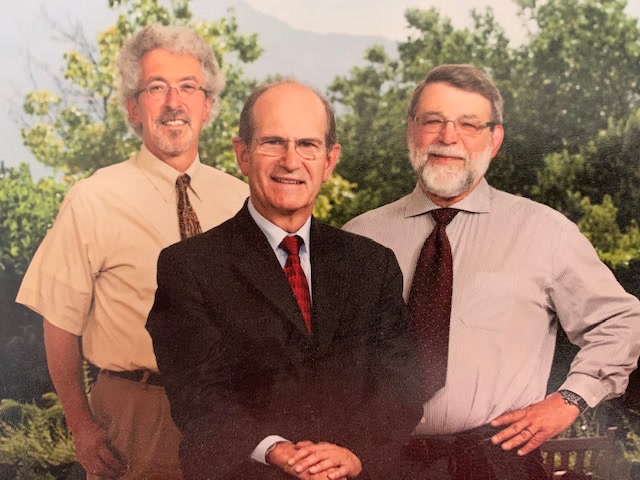
Historical Medtronic material supplied by Keith Mullett
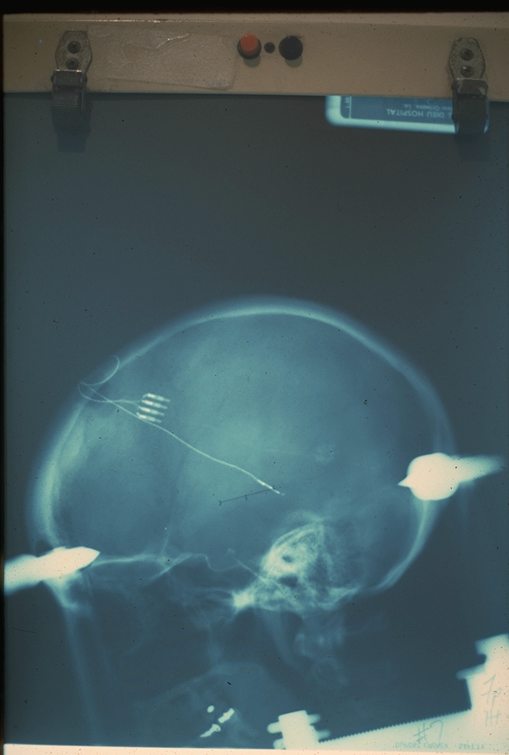
Keith also shared a set of documents and photographs from the early history of Medtronic neurostimulation. The gallery below collects the web-ready images extracted from that material for this episode draft.
Supplementary document: Download Keith Mullett neuromodulation appendices (PDF, 11 pages).