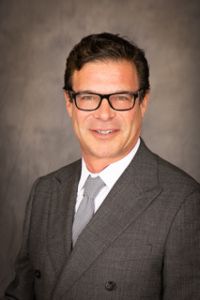
Dr. Sanger is a renowned pediatric neurologist, engineer, and Chief Scientific Officer at Children’s Hospital of Orange County (CHOC).
#69: Terence Sanger – Pushing Boundaries in Pediatric DBS: From Multi-Electrode Stimulation to Closed-Loop Strategies
In this episode we will dive deep into the minds of leading researchers and clinicians in the field of neuromodulation. Today, we are thrilled to have Dr. Terry Sanger with us.
Dr. Sanger is a renowned pediatric neurologist, engineer, and Chief Scientific Officer at CHOC, where he focuses on improving the lives of children with movement disorders—especially dystonia. He’s well known for combining deep computational approaches with cutting-edge neuromodulation techniques.
In this episode, we’ll uncover how his background in engineering, neuroscience, and clinical practice converges to shape new possibilities for treating complex movement disorders in children. From pioneering multi-electrode deep brain stimulation for pediatric dystonia to his latest forays in closed-loop stimulation research, Dr. Sanger is truly expanding the boundaries of what’s possible in pediatric care.
Terence Sanger 00:00Yeah, you know, my equivalent to that is I was like, DBS is like trying to fix a computer using a hairdryer. If you're asking the right questions, you then have to just keep looking around. Like, if you look too narrowly, you won't see it. You have to be able to look broadly, but have the question in mind. But I think DBS is actually a true symptomatic treatment, at least the way I'm using it. So it's not an etiologic treatment, and we're not trying to get the wires into the source of the problem. We're trying to get the wires into the place that has the computational power. You could see it. Got it. Welcome to Cinefix. Stimulating Brains.
Andreas Horn 01:14Hi, welcome to Stimulating Brains. I'm Ruoyuma, one of the producers of the podcast. In this episode, we will dive deep into the minds of leading researchers and clinicians in the field of neuromodulation. Today, we're thrilled to have Dr. Terry Sanger with us. Dr. Sanger is a renowned pediatric neurologist, engineer, and chief scientific officer at CHOC, where he focuses on improving the lives of children with movement disorders, especially dystonia. He's well known for combining deep computational approaches with cutting-edge neuromodulation techniques. In this episode, we'll uncover how his background in engineering, neuroscience, and clinical practice converges to 02:00shape new possibilities for treating complex movement disorders in children. From pioneering multi-electrode deep brain stimulation for pediatric dystonia to his latest forays in closed-loop stimulation research, Dr. Sanger is truly expanding the boundaries of what's possible in pediatric care. He's also been a leading researcher in the field of neurodegenerative medicine, and he's been a leading researcher in the field of neurodegenerative medicine for a long time. Dr. Sanger, thank you for joining us on the podcast. It's a huge honor to talk to you about your fantastic work in DBS. My pleasure. Thanks so much, Andres. Thank you. As you may know, I sometimes start off with icebreaker quests, like with a single icebreaker about hobbies. So in your busy life, what do you do when not involved in research or medicine? Oh, that's a very good question. 03:02I like many different things. One of my favorite is music of all forms. And so I've been learning to play the blues harmonica over the last few years. And it has the advantage of being a very portable instrument, which means you can bring it traveling. And even more importantly, you can practice while driving, which is quite appropriate to Los Angeles. Interesting. So you because it like don't you have to use your hands to hold it? Yes. So one hand on the steering wheel, one hand on the harmonica, and just make sure you don't pass too many police people doing that. But yes, it's it all works. Thanks for drawing that picture. And you should you should bring we just mentioned we will see each other in a few weeks in Arizona. You should bring it and show me. Yeah, you say that now. Wait till after you hear me play before you decide if you really want that. Fantastic.
Terence Sanger So you have had a fascinating. career path so far, maybe just for the listeners to introduce.
Andreas Horn You have been to Harvard undergrad as in mathematics, interestingly,
Terence Sanger 04:05and then went to med school there to did your PhD at MIT. And then I think from residency on went first to the West Coast, USC, and then also were back in Boston for a fellowship. Toronto briefly as well, if I read correctly.
Andreas Horn What were what were the key turning points for you? Who were the key mentors? And maybe what were things that made you excited about your modulation in general? Oh, that's very interesting. Yeah, it was it was a very complex career.
Terence Sanger You're right. I was applied math undergraduate, but that's because at the time, Harvard didn't have a computer science department. Of course, they do now. But there was a time when when they felt like computers were a tool and not a subject worthy of study, even of themselves. So they call it applied mathematics. And I but I loved it. I love the math. I always have. I think a turning point was really it was it was sort of undergraduate. 05:02When I was trying to decide what I wanted to do with this, I knew that I wanted to do things in machine learning. And we didn't call it artificial intelligence back then. I mean, the name existed. It was just it had fallen on hard times because there were big artificial intelligence projects that had collapsed. So we were we were using computational neuroscience and connectionism and other terms like that. But I really liked that. And I was all I my first real research project as an undergraduate was looking at stereo vision using the more filters, which I had learned from one of my mentors, undergraduate John Dogman, and using the more the more filters to model stereo vision. And I was really into vision. A very good friend, friend of the family, Dan Pollan, was doing research on cat striated cortex and monkey striated cortex. And so we had a lot of the sort of the the late Hubel and Wiesel follow on. And there was a wonderful class in undergraduate taught by a professor's name. 06:02But it was it was where they went through the mathematics of retinal processing all the way up to the mathematics of striated cortical processing. And I love the idea that you could take math, you could understand biology using math, that the Fourier transform had a role in understanding retinal processing. And that had never occurred to me. And it was a fascinating class. That just sort of went through a lot of these things went through a lot of dynamic systems. And it was a target for undergraduates and graduate students and and something they were like, it was a seminar. There's like eight or 10 people in that class, all of whom went on to medical school. And so I was working in vision and and created a stereo vision system on a data general MV 10,000 computer, which was a room sized computer back in those days. And in fact, a book was written about it called The Soul of a New Machine.
Andreas Horn And it was a very interesting book.
Terence Sanger And I think it was a very interesting book because it was very innovative. Although one of the innovations was that they got the bit order reversed, which caused no end of problems. 07:01But anyway, so the I built a stereo vision thing on this. And then I was trying to decide what to do with my life. And if you wanted to do robotics and connectionism and these these kind of mathematical models of biology and translate them into sort of robot things, what the robots could be used for at the time was industrial, military or medical. And I really was not that interested in going into either industrial robotics or military robotics. And so I thought, OK, I better go into medical robotics. That's my only choice. And but God knows, I didn't want to go to medical school. You know, it's there's like fluids and things involved. It's, you know, I mean, you don't want to touch that stuff. Right. And so but but I did realize that that I probably needed to at least get some exposure to it. And I said, OK, you could go to medical school, but never actually practice being a doctor. Right. And so I said, OK, let's I won't. I just I'll just do enough so that I know what all those guys are talking about and enough that I can write my own antibiotic prescriptions because it just always annoyed me to have to ask other people for a rhythm. 08:04So so I said, OK, that's that's my my goal here. But then the other thing that happened is I realized that if you're going to go into medical robotics, understanding vision was less useful. Now, that's not completely true. There's a big groups at USC and elsewhere that have worked on on prosthetic vision processing, which which. Did make use of that, but I thought that motor control would really be where it was at. And so I explicitly switched into motor control. And when I started my Ph.D., I originally started with Tommy Poggio doing some things in vision, but then really worked hard and changed my Ph.D. advisor to Emilio Beatsy, who was much more in the motor control area. And I just had to read a lot of papers to learn about that. But I then became fascinated with motor control, which, of course, has very, very close links to robotics. And I did the MD Ph.D. program. And one of the things I was very sure amongst all the areas of medicine that I knew I didn't want to do was pediatrics. 09:03Because, I mean, if adults have fluids that they get on you, I mean, imagine what the children can do. It's just gross. I had nothing, nothing, no wish to deal with children at all. So as a result, the right answer then is to do your pediatrics rotation as early as you possibly can, because I can get it out of the way. Done. Never have to see another child in my life. Thank God. Right. And the first day I go in and I meet this kid, you know, he's assigned to me. His kid's name was Adam. I think it was about three or four years old and he had Alpha-1 antitrypsin deficiency and so needed a liver transplant. He was waiting for a liver transplant as a result. And my job as a medical student and, you know, medical students are basically useless for the first few years. I don't tell anyone I said that, but, you know, it takes us a while to learn anything useful. Right. So my job was to measure his belly. He had ascites his belly. And I had to go in there every day with a tape measure and see how big his belly was. And I felt very important because this was clearly something that, you know, no one else in the hospital could have done at the time. 10:00So, so, so I'm measuring his belly every day. But after about day two or three, he'd see me coming down the hall and he sort of lift his shirt and he'd smile and, you know, sort of ready for me to measure his belly. And I just fell in love with the kid. And after I remember the first weekend I had to go home, you know, it's I'm off. Right. And going home. Right. Right. And I go home to the charge nurse. You know, I'm a medical student. Right. I know nothing. She knows I know nothing. And I go to the charge nurse on Friday afternoon. I say, you better take care of Adam over the weekend or I'm going to be furious when I come back on Monday.
Andreas Horn And she just looked at me like I'm just some crazy kid. Like, what am I saying? But I really felt it. And after that, you sort of know you're a pediatrician. So, you know, you think, who are my early mentors?
Terence Sanger It was sort of, you know, Emilio Bici, you know. John Dogman, Roger Brockett, who taught me everything I know about control theory. He's my undergraduate master's advisor. And Adam, who really taught me what it was to be a pediatrician. 11:01And after that, you know, I had a series of incredible mentors. But the path was really obvious. Then it was about motor control in children, which meant child neurology. It meant a movement disorders fellowship, which I did with Tony Lang up in Toronto. And spectacular. Not just this. I mean.
Andreas Horn Yeah.
Terence Sanger He's not just a mentor. He's a real role model for what a great clinician can be. You know, he's. I'm sure.
Andreas Horn You know, you see on television, you know, you watch people like House walk into a room, right? Yeah. And he sort of knows the answer, right?
Terence Sanger And that's just Hollywood most of the time. So, well, no, Tony is that. Like, he walks in. And, you know, you see him at the neuro bowl at that, you know, ANA. Yes, yes, yes. And it's like this guy is just terrifyingly good at this. And so, I love that. And learning from him. And watching what, you know, what you can just do with your eyes and your hands. We get, you know, as neurologists, we're so dependent on technology and now genomics and all of these things. 12:01But you can make these diagnoses just using your eyes and your hands. And so, understanding that became very important to me. And at the same time, I'm continuing to work. I did a, I did my PhD with Emilio Beatsy. And then I came back and did a postdoc with him. And so, really combining this sort of.
Andreas Horn Yeah. Yeah.
Terence Sanger You know, I was in the AI lab at the time also. So that I was, you know, motor control robotics, artificial intelligence. And pulling all of that together with child neurology and with movement disorders. So, I was very, very lucky just to be able to work with these absolutely spectacular people. So, it's, you know, we all say this mentorship is what does it. But it's absolutely true. I mean, you have to have the people that teach. You and the people you want to emulate. And you're super lucky if those are the same people. If the people you want to emulate are also teaching you. So, long answer to your question. But there's other mentors in my life. Many, many people have helped me over the years. 13:03Bill Mobley was a huge proponent of what I was doing and a very big political supporter. So, there's just lots of people who've helped me. And I really feel so grateful for what they did.
Andreas Horn Yeah.
Terence Sanger Thanks a lot. And I asked three questions. And I think I'm going to ask the first one. So, I'm very happy you gave a really good overview. And in the beginning when you talked about everything, it felt like, oh, wow. Terry might be one of the first people I interviewed that actually had a plan and followed the plan.
Andreas Horn But then I was glad to see there was also some going with the flow when meeting Adam and all that. But you were into neuroscience very early on, right?
Terence Sanger Having worked in the visual system already.
Andreas Horn So, that's fantastic.
Terence Sanger And I think also as an interface.
Andreas Horn Between what you're doing now, electricity with the brain, right? Or like in the broadest sense possible, BCI things in a way. Or like querying the brain. How did that develop then? 14:01So, how did you get into dystonia and maybe into the DBS field? Yeah, it's interesting. I mean, you know, my PhD is electrical engineering computer science. And the brain, like the heart, is an electrical organ with, you know, some padding. So, I don't mean to minimize the chemical and structural effects of these things.
Terence Sanger But I think the point is that is there a role for using these techniques from electrical engineering computer science?
Andreas Horn Is there a role for using control theory, which is quite a sophisticated field, to understand human movement? Is there a role for using dynamic systems to understand brain activity? And, of course, we know there are. But when I was starting this, that wasn't clear, right?
Terence Sanger I mean... And I'm not responsible for changing the world's view on this. A lot of people are working very hard to change these ways of thinking. But I think it's... It was just very exciting to feel that you could take these math... 15:00Just like that class where you suddenly realize that Fourier transforms can tell you about a retina or about, you know, striate visual cortex. You know, it's trying to recognize that these techniques matter. Like, when you reach for something, you're solving the same... You know, a robot has to solve that same problem.
Andreas Horn And so that there will be similarities in the solution because there's only one solution. You either got it or you didn't, right?
Terence Sanger And so I've loved that from the electrical engineering. The reason I got into dystonia was literally something Tony Lang said to me. We were... There was a child with athetotic cerebral palsy that we were seeing in his clinic.
Andreas Horn And I said, you know, what's this movement?
Terence Sanger You know, his hand was all crunched up. He was having a hard time. And Tony said, that's dystonia. I'm like, well... I'm like, well... I'm like, well... I'm like, well... I'm like, well... I'm like, well...
Andreas Horn And I said, you know, what's this movement?
Terence Sanger You know, his hand was all crunched up. He was having a hard time.
Andreas Horn And Tony said, that's dystonia. I'm like, well, how do you know? And I asked him, like, how do you know it's dystonia? Like, what's your definition? How do you know?
Terence Sanger He's like, well, Dave Marsden invented the word. And I studied with Dave Marsden. And I think it's dystonia. Therefore, it's dystonia. 16:01Now, that's a true statement. You know, when Tony Lang says that or Dave Marsden says that, that is an absolutely true statement. However, I felt like we had to do a little bit better. Than that for the rest of the world.
Andreas Horn Yeah.
Terence Sanger And based on that, literally based on that interaction, I went off and founded this, what we ended up calling the Task Force on Motor Disorders. Or Task Force on Childhood Motor Disorders. Which was a group of people we brought together over a period of 10 years to define words. And the first three words were dystonia, spasticity, and rigidity. And we had a day and a half to define those three words. And it had to be consensus. And this was consensus between, like, nerds. Neurosurgeons, orthopedic surgeons, physical therapists, occupational therapists, neurologists, physiatrists. You know, we had to get all of these people to agree.
Andreas Horn And we did it, right?
Terence Sanger And for everyone listening there and wants to know the answer, the answer is good food. The answer to getting people to agree is to feed them really well the night before. 17:00And then the day of, everyone's just happy and they want to agree with each other. So that's the answer. It's always about the food. But the point is, I had a spectacular group. The people I was working with that did this. We had a whole organizing committee. John Mankley on DIRD. Gabler. I mean, it's just amazing people helping to put that group together. But I think my interest in dystonia really came from the sense of, first of all, we didn't have an operational definition of it. You can't. And we still don't, really. It's very hard to define it. You can see it. You can teach people what it is. It's hard to get a machine to objectively say this is dystonia. As opposed to something else.
Andreas Horn Yeah, we're making progress.
Terence Sanger I don't want to, you know, we're better. But these were legitimately difficult problems when you did this. And then when you look at dystonia, it's a fascinating problem from a control theory perspective. Because it really looks a lot closer to the failures of control that happen from computational errors in control.
Andreas Horn 18:01So a control system can fail for a number of reasons, right?
Terence Sanger It can oscillate. It can explode. You know, there's sort of the stupid failure modes, I call those.
Andreas Horn But control systems can fail for clever, interesting failures.
Terence Sanger Like they become inaccurate. Or they generate the wrong thing. Or they confuse modes. Or one mode is unobservable. Or another becomes unstable.
Andreas Horn So these sort of very interesting things that can happen within particularly nonlinear control systems.
Terence Sanger And it struck me that dystonia was very much in that domain.
Andreas Horn And so I thought, this is an interesting application of control theory.
Terence Sanger And that's not to say that there aren't other ones. Sure. You're going to have to do this. You're going to have to do this. You're going to have to do this. You're going to have to do this. You're going to have to do this. But, you know, if you look at something like spasticity, which, of course, by itself is not all that, you know, is not simple either. But it's much more related to reflex mechanisms that we understand. And spasticity, because it takes you, you know, usually to a joint limit. You're either completely flexed or completely extended.
Andreas Horn It's much more like the stupid failure modes, right? It's just like, okay, you know, the thing just exploded, right? 19:02Yeah.
Terence Sanger Whereas dystonia, you know, you can be stuck at a mid-range of joint. You can have your elbow at 90 degrees and you're stuck there.
Andreas Horn And, like, you think that requires incredible precision of abnormal control. And it's like, this I want to study, right?
Terence Sanger How do you – the precision of abnormal control. Because I think this is going to tell me a lot about how the brain normally works. But also, I think it's a problem truly worthy of investigation. And one of my other mentors, Terry Sanofsky, I remember many years ago I was talking to him. And he said, you know, I don't know. I don't know. I don't know. I don't know. I don't know. I don't know. I don't know. I don't know. I don't know. I don't know. I don't know.
Andreas Horn He said, what are you going to spend your life doing? And I said, well, you know, I want to figure out what causes dystonia, and I want to be, you know, one of the people who helps to cure it. And he said, his next question to me was a great question, and it's a question I've used as a mentor to students many times. And he said, is that enough? And I thought that was so perceptive and so important, and I ask myself that question all the time. 20:02Is this enough?
Terence Sanger And so far, I've been able to say, yes, I think this is enough. You know, I think... Enough in terms of a big enough goal. A big enough goal for a lifetime. I think not because dystonia is a worldwide epidemic, but it's, you know, for people who have it, it's obviously incredibly impairing, and I want to treat these children. But I think because it's sort of like the space program. If you can understand that, I think we'll understand so much about basal ganglia function and thalamic function and cerebellar function that we'll really be able to unravel. And if we do, we'll be able to do a lot of other diseases because dystonia shows up. There's a lot of different causes for it. There's a lot of parts of the brain that can make this happen, and there's a lot of different etiologies. And so it's really a computational failure more than a structural failure because it can emerge from so many different structural biochemical failures. But I think you end up with the same kind of computational failure. 21:00So I think by understanding the computational failure, it's enough because it teaches you so much about... It teaches you so much about what else happens, and so many different parts of the brain, when they fail, cause dystonia.
Andreas Horn So that, you know, but I always ask myself that question, and it sits in the back of my head, Terry Samovsky's question. Is it enough?
Terence Sanger I would have...
Andreas Horn My first question would have been, how's that going? Yeah.
Terence Sanger You know, because it's not an easy thing to do, to understand. Like nobody...
Andreas Horn I mean, maybe you do, but not many people seem to really understand much about dystonia to begin with, right?
Terence Sanger At least that's my impression.
Andreas Horn Yeah.
Terence Sanger I'm talking to Mark Hallett and other experts that it's not clear how...
Andreas Horn Maybe can we start by your definition of it?
Terence Sanger Because you said you spent one and a half days in a room.
Andreas Horn Yeah.
Terence Sanger Well, I would say, and since you mentioned Mark Hallett, I do need to mention that he's another one of the people that I consider a mentor of mine. Let me just digress for a moment on my favorite Mark Hallett story, which was that I spent a month or so working in his lab. 22:05And...
Andreas Horn Yeah.
Terence Sanger I was... And he would have these lab meetings every week with... He used to have separate lab meetings with the clinical people and with the research people. And he had a fairly large office, but he had an even larger lab. So people are like literally sitting on desks, chairs, bookcases, you know, packed in there. And someone's presenting their work. And they're presenting basically five years of functional MRI work. And Mark looks at the stuff. He looks at the data. He's like, well, there's a problem in your acquisition.
Andreas Horn And I forget what the problem was. But he identified some problem with it.
Terence Sanger And the guy was like, yeah, I think it is. But I think we can make it through this.
Andreas Horn And Mark's like, you know what?
Terence Sanger You should redo that. And there was a lot of money and time involved in this, including Mark's money and his supervision, of course, the students' time. But I really was struck by that sense that truth is much more important than effort.
Andreas Horn 23:02Yes.
Terence Sanger So that if he... And so I thought... You know, I learned many things from Mark.
Andreas Horn But that really stuck in my head, that willingness to say, you know what?
Terence Sanger I'm not sure. And I can't be not sure.
Andreas Horn Yeah.
Terence Sanger And I think when you're doing medical research, these kind of things become very, very important. Now, I'd love to get back to your question, but I've managed to forget it. So... The definition of this tone, yes. Oh, there you go.
Andreas Horn Yes.
Terence Sanger Oh, I was going to ask you. You know, I was hoping you might know the answer.
Andreas Horn Nobody knows, right?
Terence Sanger The definition that we... Sorry, I meant not the pathomechanism, but more the clinical definition you came up with.
Andreas Horn Yeah.
Terence Sanger How we do this. Right. No. And we did have... So the task force did this for children years ago. And there's been recent revisions due to Albanese and a task force that came up with suitable definitions in adults, trying to come up with classifications. But at the end of the day, it still remains, you know, I know it when I see it. 24:02And, you know, now I get to say I trained with Tony Lang and he trained with Dave Mars. And so now I... So it's eminence-based, not evidence-based. But I think there is a piece to it which can be defined. And the way I teach it now, because I think this allows you to distinguish it, is that dystonia... I call it a distortion of voluntary movement or a perversion of voluntary movement. Because you can use... Except in the most severe cases.
Andreas Horn I say you have control of when dystonia happens, right?
Terence Sanger You can not move. You can lie. You can lie down on the bed. And you have to really relax. You can't be worried about, like, falling off the bed. But, you know, if you're not doing anything, there's usually no dystonia. And that's not always true. There's definitely some people who have dystonia at rest.
Andreas Horn But what does it mean to be at rest?
Terence Sanger But normally you see a distorting movement. And until somebody... And the most striking is you see the people with a DYT1 dystonia. Normally, if you walk into the office, they're there with their siblings.
Andreas Horn They're like, which of you is the patient?
Terence Sanger 25:00And then they get up to walk. And instantly the twisting happens. So it's... It's this sort of distortion. And we see this on the electrophysiology. When you record from the brain, when someone's dystonia is at rest, everything's off. Like, all those neurons turn off. Nobody's firing. And as soon as they try to move, everything comes on at once. So I think there's electrophysiologic support for this. That's not the original definitions. The original definitions were, like, you know, twisting, repetitive movements. You know, and if you... And then we always said things like the definitions were always, like, involuntary. Twisting and repetitive movements. And I point out to people, if you remove the word involuntary, that's just a description of, like, dancing. So it's not obvious that, you know, twisting and repetitive movements are in and of themselves abnormal. And that was the most that anyone could ever do. We thought it was co-contraction. It's not co-contraction. Not reliably. A lot of the co-contraction is just compensatory stuff.
Andreas Horn 26:00But you really have to distinguish, you know, what happens when you have, like, a dystonic tremor? What is that?
Terence Sanger So I think there are... 25:57There's a lot of... There's a lot of... There's a lot of... 26:06There are boundary cases that are hard to define. And I think when you have mixed cases... Again, I'm dealing with children with, for the most part, acquired brain injury and some complex genetic injuries. And when you have acquired brain injury, multiple areas are hit simultaneously and multiple functions are hit simultaneously. So, for instance, it's rare to see a child... child with a secondary generalized dystonia who doesn't also have bradykinesia and dyspraxia. And so now you have to be able to tease those things apart. Some of them have chorea, although chorea tends to be rarer. And chorea is pretty easy to separate from the others, because unlike dystonia, chorea happens at rest. So that's easy. Tics are easy to do. Myoclonus
Andreas Horn is easy. So to some extent, it becomes process of elimination, right? Once you've gotten rid of all
Terence Sanger the others, it must be dystonia. But you want to have that distortion of voluntary movement.
Andreas Horn And I like that because it matches control theory. Like when the machine is off, it's not 27:02malfunctioning, right? It only malfunctions when you try to turn it on. Got it. Very interesting. No, I love the control theory piece that you said earlier. So what drove you into DBS? Or how did you get first into contact with DBS? Well, clinically, you know, as a movement disorder neurologist, you have to be able to offer everything that could be available, right? So
Terence Sanger I've... Always, everywhere I've worked from when I started working at Stanford, everywhere else, we always had DBS available. But, you know, just the way you'd have intrathecal backhoofing pumps available, you'd have botulinum toxin injections available, whatever technology was available, you know, as a clinician, you must be able to provide this to your patients. But I... And I was, of course, doing research on it to some extent, although it was hard to do the research on it. We didn't have externalized leads. So a lot of it was sort of like outcomes research. The... And what I was doing... I was doing a research at the time was I was very interested in transcranial magnetic 28:01stimulation techniques that I learned from Leo Cohen in Mark Hallett's lab, as well as from Alvaro Pesqualeon in Boston. And so I was very interested in mag stim. And later in... I spent some time with John Rothwell in London to learn theta burst and repetitive mag stim. And I tried to bring that back to the children. But at the end of the day, these techniques, the effect size was small, like so small that it was generally like... I was looking at transcranial electrical stimulation, for example. And I don't want to, you know, say bad things about a field that actually has told us a lot about brain activity and is a very exciting field. But when I was trying it in children with cerebral palsy, what would happen is you wouldn't see any clinical benefit. You could detect a change, like... But the change could only be detected using the mag stim itself. And so I'm like, this is not... We're not going anywhere with this. And I thought... Yeah. You know, the only thing with effect size is putting wires into the brain. Like, the skull 29:02really tries to prevent the brain from being messed up by magnetic stimulation. Now, again, that's... I think, you know, we're all working with groups that are very interested in these technologies. And I think the, you know, clever use of these technologies stimulating the right areas of brain can be huge. We know that mag stim has had huge effects on affective disorders, particularly depression. And it does look as if...
Andreas Horn Yeah.
Terence Sanger Electrical stimulation can have effects on learning and memory. So there's definitely a role of this.
Andreas Horn But what I was... When my decision process was really based on, can I relax your arm or improve your dystonia or your spasticity using this? I just couldn't make it happen. It just wasn't
Terence Sanger working. And there have been, you know, Helen and others have shown that following stroke, there is some value of this. But the kids weren't having strokes. I mean, that wasn't the situation. So that's what kind of got me into DBS. And I thought, you know... Of all the interventions we have, including medical interventions, DBS has the single largest 30:03effect size. And it's all about effect size. Now, it's elective brain surgery. And so, you know, I tell my patients that, you know, every time I'm talking to patients about the possibility of DBS, I'm like, you know, think of what it means to do elective brain surgery. I mean, I know that, you know, there are people who are proposing BCI as sort of a lifestyle choice. But, you know, I don't know how popular... I don't know what that's going to become. But I do feel that, you know, for many of these children who really, you know, their lives are significantly impaired and restricted by these disorders. And if we can't get anywhere with the medications and the less invasive surgeries, then I think it is reasonable. And, you know, I've had kids who've walked for the first time at 16. I've had kids who hadn't talked in years and start talking or eating. I've had children who couldn't move anything and now can just move two feet. And I think that's a really good thing. And I think that's a really good thing. And I think that's a really good thing. And I think that's a really good thing.
Andreas Horn But that allows them to use a communication device. You know, you don't have to fix the problem
Terence Sanger 31:03to change somebody's life. And DBS, I think, has... It's far from perfect, right? We just, you know, it just is... It's too crude compared to the scale of precision of the brain. But it's... It can make a huge difference in the right children. And so I just felt as a clinician, I wanted to really understand... I wanted to really understand this. And as a scientist, I really want to understand it. And so the classical approaches in most centers, you know, would be two electrodes, often GPI. You probably started that way too, but I think your lab pioneered also an approach that often implies many more electrodes, a bit maybe inspired from epilepsy or I don't know. I would love to hear on how you, you know, how you pioneered this because it's... Similar approaches are now also becoming more popular in depression and other disorders. And I think, yeah, it's very
Andreas Horn 32:02interesting to hear about that. You know, it was an interesting journey. You're right. We started out just using the standard palatal targets, right? And that works fine if you happen to have DYT1 dystonia. It may work a
Terence Sanger little... It may work pretty well in the panathenic kinase kids as well. And so there's a few categories with known genetic disorders where you can actually make... It's known that you're going to have a significant benefit. And, you know, I've never been interested in easy problems. I like things that are hard and challenging. And so therefore I thought that's not the population you need to study. The population you need to study is the secondary dystonia, is the kids with
Andreas Horn CP, which is much bigger, right? I mean, the cerebral palsy kids with dystonia far outnumber
Terence Sanger the DYT1 kids with dystonia. And they're multiple disorders, of course. But just thinking about what would the role be. And world... I mean, I think that's why there were some people who've done some small clinical trials when I was getting into this. And there was a group over in Paris, I guess, Marie Vidae and others have been 33:06looking at these things. Philippe Kube down in Montpellier. So there were people who had been looking at and had published some case series. And the success rate was about 50%. And I sort of...
Andreas Horn And around the same time, I was doing this study where I was sort of looking at, well, what are the different anatomic locations? And I was able to show that it's pretty likely that there's multiple
Terence Sanger different anatomical areas responsible for dystonia. Like one of the things that had always bothered me is that children with ataxia telangiectasia who have early degeneration only in cerebellum, they do have later degeneration in other areas, but early, it's primarily a cerebellar Purkinje cell degeneration. They present with dystonia that remarkably was often levodopa responsive. And I have been working with Tom Crawford, who had a large ataxia telangiectasia, and he said, well, I'm going to do a lot of work on this. And I'm going to do a lot of work on this. And I'm going to do a lot of work on this. And I'm going to do a lot of work on this. And I'm going to do a lot of work on this. And I had Tom Crawford, who had a large AT clinic in Baltimore. And I had... And I'd gone to one of their annual meetings and had the chance 34:04to examine 25 or 30 children with ataxia telangiectasia all at the same time. And it's a huge mixed disorder. And obviously, it presents differently at different ages. But early on,
Andreas Horn they all have chorea. Many kids had dystonia. I'm like, where's this dystonia coming from? For that matter, where's the chorea coming from? Like we think in the early phases, it's purely cerebellum.
Terence Sanger Then you could also show that certain thalamic lesions could cause this. We knew from Mike Merzenich and Nancy Beal's work that cortical plasticity could do this. And then Rothwell and others had shown that brain-derived neurotrophic factor and other plasticity modulators could also be responsible for some of these things. And with purely cortical plasticity mechanisms, I had spent some time working with Mike Merzenich in his lab to learn about some of the primate models of this. So I knew that. And of course, we knew the basal ganglia could be a 35:00source simply from the DYT1. Like if I put a wire into it and I cure the disease, well, that's
Andreas Horn probably where it's coming from, right? I mean, maybe not, but at least the signals are going
Terence Sanger through there because we're doing something. So then the obvious hypothesis was maybe the reason we're only getting 50% benefit with GPI stimulation is because only 50% of the kids have their dystonia coming from the globus pallidus. Sure. You know, maybe the other way around.
Andreas Horn And so then I was like, okay, well, where else could you stimulate? And we went back and looked
Terence Sanger at the early studies for this. And a lot of the publications were from Erwin Cooper. So we went back to the literature, you know, back in the 60s and 70s, where people were making lesions. And where they were making lesions for the secondary dystonias was all in thalamus. And, you know, they didn't know where. They didn't have MRIs back then. So they were like, we're going to stereotactively target the thalamus. And, you know, sometimes, you know, sometime later we get CT scans. We tried, we were unable to track down any of these people because I was saying, what if we could track them down and figure out where the lesions
Andreas Horn 36:00actually were, right? But there was a lot of work. Interestingly, there was also deep brain
Terence Sanger stimulation in these areas, long preceding the work that Benebit did for essential tremor and later for Parkinson's, where they were using cardiac pacemakers as well as some sort of externally energizable pacemakers in these areas. And cerebellum too. I mean, it's fascinating. There was a lot of work in the 60s on this stuff. I know, I know. Yeah. And it was fascinating because we all like forgot about it. Like, you know, somehow people think that DBS was invented in the 80s. It's like, no, no, poor procedure.
Andreas Horn So I went through Cooper's stuff and we did our best to find out, okay, what were his outcomes?
Terence Sanger And the outcome measures were, you know, again, it was the 1970s that we didn't have the outcome measures we have now. The precision wasn't there, but he was a real pioneer and really willing to do this. And he had some really good work. And he did a lot of work on the, you know, there's some videos that were available. And I said, okay, well, thalamus clearly is a possible
Andreas Horn target for dystonia. We don't know exactly where. And so then I said, well, what would happen if we 37:04put wires in both GPI and thalamus? And so we tried this and we did about four or five cases this way. And the point is, where would you want to be in thalamus? So we had a very interesting
Terence Sanger procedure where we would put the GPI wire in first and turn it on. And then we would drop a microelectrode in the thalamus.
Andreas Horn Interesting.
Terence Sanger So that we could identify the projection areas, because I figured you probably had to be in the same loop. That turned out to be wrong. But that was the guess at the time, sort of based on Cooper's data. And we had a few cases there. They did quite well. We only did about four or five cases that way. And then we were going to do a kid, this girl came in, her name was Jasmine. And Jasmine had very severe dyskinetic cerebral palsy. And so severe, as with many of the kids, she was losing weight very badly. And this happens because the energy consumption far exceeds the ability of the intestines to keep up with energy transfer, 38:06even with continuous feeds. And this is, you know, when parents ask me, you know,
Andreas Horn what do children die of who have dystonia? It's malnutrition or pneumonia, right? And it's one or the other, right? And that's what kills you. And so this child was basically dying of self-inflicted malnutrition. And so we had a very interesting procedure where we would put the microelectrode in
Terence Sanger the thalamus. And then we would drop a microelectrode in the thalamus. And so we would drop a microelectrode in the thalamus. And then we would drop a microelectrode in the thalamus. And so we would drop a microelectrode in the thalamus. And then we would drop a microelectrode in the thalamus. And, you know, obviously not her fault. And so we were getting ready, we're doing the, you know, and of course, the technique for identifying these spots, you have to wake the children up in the operating room so that you can get reasonable recordings, and also so you can look for side effects. And so to do that, we anesthetize kids using, you know, use an oral airway, intravenous anesthesia, you keep it light, and then you reverse it at some point. And so the anesthesiologist was unable to do the induction, she kept closing off her airway, as we, we just could not do induction with an oral airway. So he was like, there's no way we
Andreas Horn 39:01can do this without endotracheal innovation. So we aborted the case, but the girl was dying. And I went to the surgeons and I said, look, you know, what if instead of doing an EOR, can we just do what the epilepsy people do? Just try it. Let's just drop some wires and
Terence Sanger wake her up. And we'll just do it maybe in the operating room, maybe on the floor, we got to do something for this girl. And so we got it together. And we had Alpha Omega sort of essentially lent us a bedside recording system for this. Ad Tech, you know, basically lent us some electrodes. I mean, it was, it was wild. Everyone's sort of on board with this thing. And we put a bunch of electrodes in a bunch of different spots on this girl, including, because we couldn't move them,
Andreas Horn right? I mean, the problem is, you know, normally in the OR you can, okay, let's move it around.
Terence Sanger So we knew we had no, we had one shot. So we have to put electrodes everywhere we could possibly go. And we put the electrodes in under general anesthesia, woke her up, took her up to the floor, started testing. And when we got to the VIM, so, so the cerebellar outflow, and you have to imagine this girl is in, she's having spontaneous dystonic spasms, screaming in pain because she's, 40:04this was like her life at home. She did, she spontaneously dislocated her hip and her elbow. Incredibly painful. The parents, I mean, had been living with this for a year and there's, you know, she's, we couldn't control this. We turn on VIM and she just stopped. It just totally relaxed. And I, you might've seen some of these videos because I've shown them many, many times, but it's bizarre. You show the off and on and the on case, she's writhing around, clearly uncomfortable. The off case, you think it's a still image. She just stops moving,
Andreas Horn right? The only person moving is mom, who is like, look, what happened, right? And literally
Terence Sanger it was within seconds. We could turn it on, turn it off. And, and, you know, I, I showed that to the, to the neurosurgeons and, and to the anesthesiologists. And they're like, you're telling me that we could do this whole procedure without having to wake a child up in the operating room. Like you could get this kind of result. And, and, and we, when we put the permanent leads in there, it had the correct effect. And, and, and she, you know, we, we, 41:02the benefit was predicted. So, yeah. And we said, you know, you're telling us we could do this procedure without waking a child up in the operating room in a head frame. And I was like, yeah. I'm like, well, we're never willing to do that again then. It was, that was it. I mean, once, once they saw that it was possible to do this, they're like, oh my God,
Andreas Horn why would, because, you know, before this, you have to imagine a dystonic teenager in a head
Terence Sanger frame, you know, sterile field, we're waking them up to say, they go into dystonia. The anesthesiologist is sitting there with his finger on the propofol. You know, these kids are wiggling off the table. We've got them tied down. I mean, we, we had some, some scary operating room episodes and again, not really scary. I mean, I had an incredible team. We kept the kids safe, but you know, as a neurologist, I'm like, I don't like this. And clearly they didn't like it either. And once we got to the point where we were like, we can do this this other way. It was like, yeah. It's traumatic for the kids to wake up as well. Right. So I think, I think we, we, we often in 42:01Berlin, at least we often did asleep for kids normally as cases too, for that reason. Right. And there's options. I mean, people have intraoperative MRI, but if you really want to test side effects, right. You want to know where you were in the, what's the location. Cause I remember I'm now coming from the background of like, I don't know which target for which kid. So we already knew that. You want to be able to test multiple targets. You didn't know where you were in thalamus. Remember, you know, before when we were recording the evoked responses, I didn't know that the adult atlases for thalamus would be accurate for the children. And, and, you know, just so you know, yes, they are. But it's, it turns out to be fine, but, but, but the but we didn't know that at the time. And so, so we're trying to figure this out, but that was the first case. She was the first case we did. And I've never done another case with, with intraoperative awakening after that. My surgeons basically at, at CHLA where we did this you know, the, the, the, the surgeons involved for that one was Mark Leiker and Mark Krieger. And, and they were like, you know, we're just not 43:05going to do it the other way. And so he just said the same thing. We're like, we're not going to do it. So just to understand it would be a SEG leads temporary, and then you replace them with
Andreas Horn definite leads. Yeah, exactly. So in the end they just received, two DBS electrodes, right? That's the procedure.
Terence Sanger No, we still use four. So we already knew from the previous series of cases that you, that you do better with four leads, which are almost always two leads in, in pallidum and then two leads somewhere in thalamus, almost always. We've, we've expanded, we have some brainstem targets we do now
Andreas Horn as well. But it's and, and, you know, the simplest argument for four leads is why not? Like as long
Terence Sanger as you're there you know, the, the, there doesn't seem to be any, you know, increased morbidity to doing this.
Andreas Horn Yeah.
Terence Sanger So you might as well, and it gives you more, more, more control. The, the more sophisticated rationale behind it is all the children with four leads on, all four leads almost always remain 44:05active in, in post-operative programming. So that, cause you think if you needed only two leads, okay, we could have turned two of them off, but they always get some additional benefit from all four. So it can make programming very complicated. So there's, it adds a lot of complexity. Is it two, two, devices, devices, And maybe now, certain times you could do the, in theory, you could do the Y, Y cable with a
Andreas Horn 30 channel, 32 channel, stimulator in theory, right? Yeah, you could, it depends on the stimulator. You could certainly build a four channel stimulator, right? I mean, it's,
Terence Sanger you know, it's, it's the, the issue, one of the reasons we want two devices is a different brain areas often need different frequencies, and most of the devices are not capable, at least until recently, of having multiple frequencies. Sure. of having multiple frequencies on the same device. That is changing now, although even then there are some limitations on the spread of frequencies you can have. 45:01But for instance, if I have two wires in thalamus, we'll run both those wires to the same stimulator so that we have those at the same frequency and then two wires in paladin will be at a different frequency. And that's pretty typical that we'll do that. It also makes it a little bit easier for the parents to figure out what's going on because with the home programmers, you know, we'll say, okay, you know, you can imagine the left chest,
Andreas Horn the right side of the brain, right? And so we spend a lot of time educating the parents and the kids about, okay, what are we talking about when we want to make adjustments? Interesting. Very, very fantastic narrative there.
Terence Sanger And then you said you never did a case other than that, like differently.
Andreas Horn How many cases have you done so far? Maybe what are some challenges or benefits or, you know, anecdotes that you could share?
Terence Sanger Well, we have, I think we're now on Tuesday, we're doing, I think our 55th case using the stereo EEG method. I'd done about 75 cases before that using the older method, something like that, between Stanford and CHLI. 46:01But this is our 55th case. So it's not, you know, we're not the world's largest center doing these things, but certainly we're one of very few centers using the stereo EEG. There are, of course, as you know, other centers that are now starting to use these techniques and I've been very open to people coming and watching how we do it and learn this, learn from us. You know, the devil's in the details with all of this stuff. So you have to do that. You know, I think the challenges without, you know, going into protected health information, there are, you know, there's always challenges with this stuff. We haven't, infection hasn't been the issue. There is a risk of bleeding. And we did, you know, as with any stereo EEG procedure and we take that very seriously. There is a, you know, sometimes we put the leads in and we're just not getting good recordings. We're just not getting good recordings from some sites. And that's, you know, the leads are delicate. The sites may be wrong, things like that. Sometimes, you know, the targeting, 47:01the surgeons are really good at targeting, but that still means you could be off by half a millimeter or a millimeter. And when you're dealing with brainstem targets, that can matter a lot. And again, we have a lot of tricks we've done for that. We have limited time. I keep the kids in hospital for a week while we're testing,
Andreas Horn but, you know, could you do it for two or three weeks? Absolutely. And are we doing the testing the best way? The best that it could be done?
Terence Sanger I don't know the answer to that. I mean, well, you know, it's a lot of, you know, you learn while doing, I mean, again, we're using standard electrophysiology techniques, but where each child is different. And so each child, you have to learn as much as you can about that child in a relatively short period of time. And there's a lot of analytics that we're doing and we're learning how to do those analytics. The temporary leads and the permanent leads
Andreas Horn are not exactly the same configuration.
Terence Sanger So they may not be completely predictive of each other. I think that's a good question. I think that's a good question. I think that's a good question. I think that's a good question.
Andreas Horn And the temporary leads are in for a short period of time. So how do we predict the long-term effects of this?
Terence Sanger And the long-term effects in some areas are usually better. 48:01Like if you have a small effect in pallidum short-term, you tend to have a big effect in pallidum long-term.
Andreas Horn But brainstem is extremely hard to predict, right?
Terence Sanger You can have good short-term effects and then long-term effects can be different. You have to reprogram. So there's a lot of plasticity going on. So, you know, we're dealing, the brain is, you know, it's, it's one of the most complicated things on earth. And I have 160 channels in something that has a hundred billion neurons. I mean, I'm under sampling. It's really, you know, you really have, it's under sampling at a scale that as an engineer,
Andreas Horn I should be laughing at, right?
Terence Sanger I mean, how could you possibly not just understand, how do you control something with a hundred billion neurons using, in the end, we end up with 16 channels or,
Andreas Horn or it's, now 32 controllable channels, right? So, and, and so, and the answer is, you know, what else do we have?
Terence Sanger Right. And it's, so I think that the challenge is we have to make this technology better. 49:04It'll never be, we'll never have a hundred billion channels, but we need more controllability. We need to know a lot more about it. I, one of the things that I, has always puzzled me about DBS. And I think once we understand this, we, we will really be able to make, you know, big leaps forward.
Andreas Horn We're putting, these are some of the most delicate areas of the brain, right?
Terence Sanger I mean, we know that very small strokes in these areas of the brain can be completely incapacitated. And we put a wire that's about a millimeter in width into there, and we turn it on at say five volts or, you know, two to three milliamps at, you know, 185 Hertz. And almost always what happens is absolutely nothing. Right.
Andreas Horn And, and how is this possible? Right?
Terence Sanger Dr. Yeah. Dr. Yeah. Dr. Yeah. Dr. Yeah. Dr. Yeah. Dr. Yeah. Dr. Yeah. We should be causing seizures. These kids should be curling up in a ball. You know, they should start speaking a different language. I mean, I don't know. You know, something wild should happen.
Andreas Horn 50:01How does the brain reject that much current, right? Yes.
Terence Sanger And so what I talk about is I feel like the brain is actively protected against stupid signals. And, you know, 185 hertz regular pulse is a stupid signal. That thing clearly has no useful information content, just like a seizure. And I think, you know, this is me as a non-epileptologist. This is, you know, my view of epilepsy. I think of, you know, there's lots of systems in the brain, maybe the GABAergic system, maybe others, maybe membrane systems that are basically seizure police. And their job is to shut down stupid things. Like if the brain starts doing stupid things, it starts having regular activity. It starts having activity that doesn't seem like it's carrying information. We're just going to stop that somehow. And you see that. You can see that in epileptic wave fronts. You know, the more synchronized they are, the closer they are to being terminated. 51:01And I think that to many parts of the brain, DBS looks like a seizure. And the brain just is very good. Now, because remember, these are, for the most part, brains that don't have seizures.
Andreas Horn Yes.
Terence Sanger It's not always true. Sometimes they do. But for the most part. So these are brains that are good at controlling seizures. And we put in something that looks like a seizure. And they're like, we got this. We're going to shut it down. Now, that may be part of its mechanism of efficacy. Because by triggering the police, those police may shut down other things at the same time.
Andreas Horn So that may be sort of how it's happening. Right?
Terence Sanger But I think we have to understand that. Because if I take a squid giant axon and I put this kind of power on it, that squid is going to be all over the place.
Andreas Horn Right?
Terence Sanger Totally right. This is such a very close to the heart topic that you're talking about. My few cents would be, I mean, there's a lot to discuss on this topic. But I think the alternative could be that it is selective of shutting down dysfunctional activity. 52:02Because that dysfunctional activity might not be subject to the police anymore. So potentially, things that get deranged are overactive but are also nonsensical. I think of them as noise feedback on a circuit in a way. To shut those down might be easier than to shut down real activity in a way.
Andreas Horn So that's maybe why it's so forgiving.
Terence Sanger I always tell my students, if we put an electrode into my brain, not much would happen, hopefully. Like maybe some side effects, but not a lot. Like I wouldn't become anti-Parkinsonian, for instance. And I think that's the exact same idea. I didn't think about the analogy to seizures yet.
Andreas Horn Because it does, like a lesion to the same site does have the same effect often, right?
Terence Sanger Very comparable effects, too.
Andreas Horn But yeah, lots to understand there. Very interesting. But I agree with you.
Terence Sanger I mean, I think, you know, thinking about the nature of information that gets through and information that doesn't. 53:01And I think there's an interesting analogy also to cancer.
Andreas Horn Which is that, you know, your immune system spends most of its time getting rid of cells that have mutated. So for cancer to exist, it has to get past. The immune system, right?
Terence Sanger And that's the point. And the most dangerous ones, of course, are the ones that don't have surface markers that can be identified by your immune system or by many of our therapies. So I think it's kind of the same thing for dystonia to exist or for a seizure to exist. It has to get past the police. Right. And, you know, the and so I think that I don't know what it takes to get past the police. But clearly, DBS is not getting past the police. Now, we may not want it to. But I think it'd be interesting. To know what if we did want it to like what what if we wanted to create a DBS pulses somehow some form of stimulation that could get past the police. Maybe we could use much lower voltages and currents. Maybe we would be able to really have a lot more control. 54:01You know, as as as physicians, we want control. I don't want a drug that lowers your blood pressure by by, you know, three points. I want something that has an effect. Let's 20 points, 30 points.
Andreas Horn Yeah, I want to make.
Terence Sanger I want a big difference. Right. I don't want tiny little things.
Andreas Horn Yeah, I want I want that first child.
Terence Sanger I want Jasmine where I could turn her to Stonia on and off with a button. You know, I don't want to say I can make your dystonia 10 percent better with this button. Right. So so I think effect size is going to be trying to figure out the natural experiments.
Andreas Horn Like when things go wrong in the brain, how how did the bad guys get past the police? Yeah, because we need the good guys to get past the police to have the effect we want.
Terence Sanger Good point. And there's even an. Analogy to chemotherapy as well, where you would think that chemotherapy is a dirty concept. It hits all cells, but it hits the ones that are most active most. Right. So that's how it kind of works. Right. And so I sometimes think of DBS maybe like if there's hyperactivity that's unchecked, DBS will hit that activity more than the physiological signals. 55:04So that that might also be an analogy where, you know, tuning down what is the loudest thing in that circuit in a way.
Andreas Horn But yeah, that's well, that's that's an important.
Terence Sanger Insight of how something as as gross as as DBS could have an effect on something as finely controlled as the brain. I think that's a very good insight. Yeah. You know, my my equivalent to that is I was like DBS is like trying to fix a computer using a hairdryer. You know, you can warm it up, you can cool it down, but sometimes that's what it needs.
Andreas Horn Yeah.
Terence Sanger Really.
Andreas Horn So do you going back to your fantastic fifty five cases, do you have by by now maybe some insights of you see the lesions? That caused cerebral palsy and dystonia? You know, do you sometimes have a gut feeling by now that this kid Falamic would work or cerebellum circuit versus basal ganglia circuit? Or is it still kind of cloudy if from the lesion? Can you predict?
Terence Sanger 56:01You know what? It's I think the predictions are better from the clinical picture than from the lesions, because I think many different lesions can cause the same clinical picture. But I think DBS is actually a. A true symptomatic treatment, at least the way I'm using it. So it's not an etiologic treatment and we're not trying to get the wires into the source of the problem. We're trying to get the wires into the place that has the computational error. And those places are based on the nature of the error that happens. So the simplest thing is hyperkinetic components seem to respond to thalamic stimulation and hypertonic components seem to respond to palatal stimulation. That's rough and both respond a little bit better to both. But that does seem to be the case now. When I say thalamic, it's not a single thalamic target. The most common targets are VIM output from cerebellum and VO output from from palatal approximately.
Andreas Horn 57:01And so and this can be different in different kids with very similar symptoms. But I do tend to predict whether that if you have a lot of hyperkinetic symptoms. You know what?
Terence Sanger what we used to call chorioathetosis. I guess some people still do. Um, so, so those are the kids where you, you want to make sure that you get thalamic stimulation on those kids. Um, obviously certain etiologies you can predict, you know, you, you know, uh, with the DYT1s where you're going to go. In fact, we don't do this procedure in DYT1 unless, you know, the only cases we've done have been like reoperations. Um, because, you know, there's much easier if you know the target, like I wouldn't recommend this for, for garden variety Parkinson's either. You've got tremor dominant, you know, levodopa responsive Parkinson's. Okay. Put the wire in STN or GD. Yeah.
Andreas Horn You know where to go, right? You don't need all this. But the point here is that we don't know. Um, we know roughly, but we don't know exactly. Now there have been anatomic situations. Like I
Terence Sanger had a kid, uh, recently who had, uh, um, very significant hyperkinetic dystonia, but also 58:03significant later on top of that ataxia. So, so we had clear cerebellar findings and he had dystonia. So that's making me very confident that there, well, very high, higher probability. So you never want to be very confident in this area. It gives me a higher probability that his, uh, dystonia is coming from cerebellum. So I'm going to bet on VIM. Um, the, now again, VIM isn't the source of the problem. It's just the output of cerebellum. It's an opportunity to modulate, uh, you know, but I, I like to say that whoever designed brain, um, made certain nuclei, particularly amenable to DBS and many of these thalamic nuclei line up in perfect alignment with the skull. Whereas the certain areas that, you know, you didn't want to get, you know, VPL wrong shape, you know, there's, there's areas that would be very hard to get even
Andreas Horn hippocampus is really tough. Right? So, so these things are just the wrong shape, but you know,
Terence Sanger you know, that we were meant to hit VO and VIM because they're just, it's, it's just right there 59:00with that. And it's right where you need it with the ventricles and it is perfect anyway. Um, so, um, the, the, there's other things that we know about. A lot of axial midline symptoms, including, uh, or a motor function, you really need to go into brainstem. So pedunculopontine nucleus seems to be, and that that's been the experience from Parkinson's disease as well. Um, that's a very, very difficult nucleus for programming later on. Um, but it's the only place we've ever found that has significant effects on, on speech and swallowing. Um, and for kids with severe epistatonic posturing, it makes a huge difference.
Andreas Horn Why is it tough on programming? Um, there just seems to be a lot of plasticity. So, uh, you have
Terence Sanger to be very careful with the brainstem. Um, and, and the area just seems, the brainstem just seems to learn really quickly and not in ways that you necessarily want it to. So the early programming, you're seeing these kids every two or three days and lots of changes. The parents are calling you all the time and you're making changes over the phone. And, and I treat it as a finding an equilibrium. You know, we change something, the brain changes, we change something, the brain 01:00:02changes. And you're trying to just get to some equilibrium where, where they're both happy enough. You know, we're happy enough. And the brain, you know, is happy enough. Um, and, and even then, um, you know, I'm, I'm, I think there's real questions about the long-term stability of these things and, and months later, and in some cases, years later, we've had to, we've had to go back and make changes. So, um, it's, you know, plasticity can work for you. Um, and it can work against you for all of these things. Yeah. We, we have some, some, you know, indirect evidence, um, that cervical dystonia seems to be more cerebellar outflow and apoptosis.
Andreas Horn Yeah. So if you were to do some, if you were to do some, if you were to do some, if you were to do some appendicular, especially like fine motor stuff, more basic, would that match with you? And it's
Terence Sanger totally fine if, if, if not, right. Uh, with your experience.
Andreas Horn Uh, yeah, I, I don't think it's, you know, it's all loose. It's not that simple. It's less about where is it coming from and more about where do you have to go to make a difference? Um, it's, I,
Terence Sanger 01:01:00I think it's much more about the nature of it. Like if you have a, a, a fixed appendicular posture,
Andreas Horn yeah, I'd agree that that's coming from, from highly likely to be well, to be treatable with the
Terence Sanger hyperkinetic. I think if you have a lot of hyperkinetic, like you're fine, you start to move and the thing is twisting, then, then I'd say, okay, that's, you know, to me, that feels much more like you'd go into VIM. And the other thing that we've noticed is that the left, right overflow, you know, you do grips on one hand and the other hand starts to get dystonic. That seems to go through VIM. Um,
Andreas Horn and we can see the activity. There's a lot of bilateral and that makes sense because, uh,
Terence Sanger cerebellum has a lot of, a lot of bilateral activity. Um, and so I think that's, but I think that may be the cross-limb overflow. Now, palatum also has something like 20%, you know, well, striatum at least has 20% inputs from the opposite hemisphere. So that's not the only place that could happen. But we've seen that a lot, where that VIM seems to be a predictable target when you just get a lot of
Andreas Horn left-right overflow. Did you ever go into the cerebellum or plan to do so? No, and that's been,
Terence Sanger 01:02:03I would love to, but it's literally a surgical problem. So we're typically doing an anterior approach. We have the children supine on the table in the clamp. And so we would have to roll them over to prone position, would mean resetting the clamps and the robots. And it'd be very hard to do all on the same procedure and maintain sterility. So we've just decided that we're going to stick with what we're doing and look at cerebellar inflow and outflow and not try and get into the cerebellum itself. But as you know, there's people who are going directly for dentation clearance. And I'm, of course, very excited to see the results that are going to come out of that, because...
Andreas Horn Yeah.
Terence Sanger ...again, I'm perfectly willing to have my mind changed by good data coming in. Of course. And then you did mention the brainstem already. And I think that is a more recent, at least on papers, I think I saw 2023 paper where you went into the PPN.
Andreas Horn Yeah. How did that originate? Why did you think we should go deeper or go there?
Terence Sanger Well, we hadn't been having as much success with epistatonic posturing as I wanted. And again, 01:03:04I'm always looking for what are potential other targets. And there's a significant literature from Parkinson's disease in dendrial pontine nucleus. And so I thought, okay, well, and in Parkinson's, it's all the axial. And so I was like, okay, maybe that's a possible target. And then we had this kid who had a very bad epistatonic posturing and spoke to the parents about this. Then we're in the operating room and Geoffrey Olaya and Mark Leiker were the surgeons on this. And I was like, look, we're going to put these leads in Thalamus. Could we get another lead
Andreas Horn in PPN? And they said, no, we're not going to put these leads in Thalamus. We're going to put these
Terence Sanger leads in PPN. And they said, no, we're not going to put these leads in PPN. And they said, no, we're not going to put these leads in PPN. And they said, no, we're not going to put these leads in PPN. And just see if it has an effect on this kid. And they're like, sure, we can hit PPN. And they're doing the planning. And they're like, you know what, we can't get the PPN lead in because it
Andreas Horn would, it will directly hit the VIM lead. Right. And, and, and I was like, what do you mean it'll directly hit the VIM? They're like, well, it would have to go down the same track. I'm like, well, wait, why don't we use the same track for both? And, and again, and the, you know, whoever designed 01:04:03it clearly wanted us to do this because they are perfectly lined up, right? VIM lines, it's, it's like the track, it's like this way, right? And, and the, the, the depth electrodes we're
Terence Sanger using have a large enough span that we could hit both with the same electrode. So now without adding additional electrodes, we will routinely drop into PPN when there are axial symptoms or when there's a remote or symptoms. And I can't say it works for everybody. Maybe, maybe about 50% of the kids we've tried it in, we've had benefits, but when it has benefits, it can be really quite profound. We've had, you know, again, speech swallowing, neck control. We've had, you know, we've had, you know, we've had, you know, we've had, you know, we've had a bunch of things. It's, it's just, I, I warn people who are thinking about it in, in children, like the programming is not for the faint of heart. You, you need a, you need a good team. You need to be willing to bring these kids back a lot. It's not like Parkinson's programming, you know, turn them on and I'll see you in six months. It's like every week or more while you're trying to get them sorted out. But, you know, if you can take a kid who can't eat and get them to 01:05:03eat, or you can take a child who is just completely unable, unable to, you know, so just as such dystonic dysarthria, they can't make any useful sounds and just get them to be able to say yes, no, consistently. I mean, you've changed their life. And, and so it's not, you know, we offer this. One of the things that, that the, the, the stereo EEG procedure allows us to do is that unlike in the operating room, the parents are there at the bedside while we do all the testing. So we ask the parents, you know, it's, they make the decision. I didn't, I never liked the idea that the surgeons and neurologists in the operating room are making the targeting decisions,
Andreas Horn right? We asked the parents, what do you think? Like, do you want this? Right. And sometimes you're
Terence Sanger surprised. Sometimes, you know, one of the parents, we were looking at the dystonia and, you know, it's, we thought we could make the dystonia a little bit better, but we always try the testing overnight to see the effect it has on sleep. And the kid slept well through the night. And mom's like, that's the first time in two years that he slept through the night. We're
Andreas Horn like, yeah, but you know, that lead didn't make a huge difference for his dystonia. She's like,
Terence Sanger 01:06:01I don't care. I want that. Right. And, and we did it and it worked. And, and, you know, when we went to the permanent leads, the kids slept great. And I don't know whether we were just stopping nighttime spasms that were waking him up. We weren't in a sleep center. This, this was, I think it was STN or something. But you know, we, we have subsequently, we have thalamic
Andreas Horn targets that can actually induce sleep. But the, but, but it was just, it's just interesting. I, I mean, the idea of letting the parents make the decision. So the same thing would happen on a PPN target. We'd say, okay, what do you, what do you want? Many of these kids, when they're able to
Terence Sanger walk, we'll get them up and walk. We'll get them up and walk. We'll get them up and walk. We'll get them up and walk. So, I mean, we have 160 wire leads in their head coming off of 10 wires. You know, there's a, a full equipment rack or graduate students, physical therapists, parents, doctors. It's, it's, it's, it's like a parade going down that, down the hospital corridors. Right. But we can actually look at the effect on their gait. And, and when you have a lot of this epistatonic posture, of course, it forces the upper body backward and really messes with 01:07:03balance. And so that, that's been a, a, one of the things that we test, uh, routinely in the kids who are able to, to stand and walk or walk with assistance.
Andreas Horn You did mention briefly the thalamic targets to induce sleep. Can you talk about that? That, that sounded very interesting. So it looks as if, um, they're particularly the, the central lateral,
Terence Sanger uh, so central median, central lateral, probably central lateral nucleus has been studied by anesthesiologists, um, as a potential target for reanimation. So you can awaken people from sleep with that. But it's also known that this, it does seem to have some sleep induction abilities. We're not specifically looking for that. We were, I was testing it in one kid though, and it really was amazing. We, um, I went back and forth on this. We got the whole thing on video. Um, and, uh, um, he would literally, you'd turn
Andreas Horn it on and this was CL, um, turn it on and, and literally exactly 45 seconds later, he would go to sleep. I mean, you're sitting there on the watch, like exactly. He's awake. He's awake.
Terence Sanger 01:08:00And it was like, I don't know what's going on, but the precision of the timing, I mean, it was 45 seconds from, electricity on to sleep. And we had, you know, I, I don't, I forget what he wasn't going into super deep sleep. Like, you know, we, we have external leads on, we can check staging and stuff, but, um, so, uh, but, but he was definitely going to sleep and then you turn it off and it would take
Andreas Horn about a minute for him to wake up after you turn it off. Um, so was it, is it low free? Was it low
Terence Sanger frequency or, Oh, I'd have to look it up. It was probably not super low. It was probably around somewhere between 30 and 60 Hertz would have been in that, in that region, but I'd have to look it up for you and find out what we're testing. We didn't go for that. Like I didn't, I felt like that was too much. Like if you made him sleep, of course, his dystonia would stop, but it felt to me like that would be, you know, the parents might've liked that, but it wasn't what we were looking for in terms of clinical treatments. Yeah. I have two small kids at home and sometimes of course, having a remote control. Well, yes, the lifestyle applications of this are a little terrifying, but I, I'm, I'm, I rest 01:09:00secure that most parents are not going to do brain surgery on their children. So, so no, but very
Andreas Horn interesting. I knew that coma literature, where it's the reverse effect and in macaques and also
Terence Sanger sometimes acunes, but, but I think I never hadn't heard about the other side of the coin. Very
Andreas Horn interesting. So you, of course, this is, you know, done for clinical purposes, but it brings along a
Terence Sanger window into the brain and a lot of opportunity for research as well and understanding the brain. And you, of course, with your lab use, use that method also to study the brain and study dystonia. There's so much.
Andreas Horn Yeah. Yeah.
Terence Sanger I think you guys have published, I just picked, you know, a few things, but more recently you seem to have
Andreas Horn also gotten interesting in predicting evoked potentials using also diffusion tractography. So essentially, you
Terence Sanger know, testing it, like stimulating in one electrode, recording at the other using, I think not just the distance,
Andreas Horn but also the FA, the fractional, and as it took me to predict that, why that interest? Why, you know, are you, 01:10:03can you talk about that a bit? Yeah, I, I obviously can.
Terence Sanger And I'm glad you're familiar with that. I'm sort of assuming that you've been a reviewer on most of those manuscripts we've submitted. So, It was not. It was not.
Andreas Horn You're not? Well, you should be. I'll, I'll, we'll fix that. But anyway, the, you know, it is an opportunity. I feel like, you know, research is, is always at the option of the parents and research in children cannot expose them to risk unless it has potential.
Terence Sanger So, there's, there's real limitations of what you're allowed to do ethically, and we really adhere to that, and I have a lot of oversight, and people looking at these aspects. What I do think, though, is that we are responsible to learn whatever we can from every child. We just don't know enough. It's not perfect, it's far from perfect, and, and when I talk to, and I say this to all the parents, I mean, we have to learn from this, I'm not going to put their child at risk for this, but if there's a way I can learn, while we're doing it, then I can do it. Sure, I'll do it. Sure, I'll do it. Sure, I'll do it. 01:11:00Sure, I'll do it. Sure, I'll do it. Sure, I'll do it. Sure, I'll do it. Sure, I'll do it. we're doing the clinical things we'll do that and so we we record the data and we take all this data and we record it and and we obviously have you know lots of oversight and permissions and all the usual things for this um but we record this data because there's no other way to get it and in fact i sort of am hoping that these data will be um you know this is sort of i say sort of a moment in time because if we and the other people looking at dbs are successful and figure out how to do this you'll never have to do these recordings again and so the data we record now may be the only time for the next 50 or 100 years that we have the ability to see what a child's brain is doing while they're awake and talking to their parents right and so we have these wires in them and so it's no big deal to hook them up to recording equipment and save all this stuff and of course we're recording from the skin and the muscles and recording videos and you know everything we can get at the same time and we have sleep data and we have data from as they go into anesthesia and come out of anesthesia and we're just saving it all 01:12:02i don't do sleep research but i tell the sleep researchers like look i'm saving this data for you the minute any of you wants to do research on it please call me you can have it um you know it's it's so valuable there's no other way to get this i mean we've done a little bit of sleep stuff and you showed me you can do sleep staging from the deep nuclei you know not surprising but no one had ever done this in humans uh we've shown that the deep nuclei parallel what's happening in cortical areas during during anesthesia induction and reanimation uh working with emery brown on it and so we've been able to do a lot of work on that and so we've been able to do a lot of work on that so so there's definitely you know there's a tremendous amount of potential data here um and and the main thing is i i really you know i care about the children and my goal is to use this stuff to make dbs better like how how can we really make a difference where are we going to go how are we going to leverage you know artificial intelligence how are we going to leverage feedback how are we going to leverage you know basically getting past the police to get these signals so that we can use lower voltages and currents to have bigger effects um you know how do we find new brain targets all of that how do we make this safer easier faster how do we how do we get the 01:13:03parents the information i mean we so we we have all of that that we can pull out of this you talked about evoked essentials every time i'm stimulating and the clip for clinical purposes of course we test the stimulation that's just what you've done in the operating room um but while we're doing that you know i have 160 channels so 159 of them are not being stimulated well 158 it's always in paris so 158 channels are not being stimulated so we might as well record on this so that allows us to figure out where does the electricity go and one of the most fascinating things that was completely predictable but we hadn't thought about ahead of time was that uh when you stimulate you know we like to think we put dbs in one area and you've been said it behaves a lot like a lesion of that area but we also know that it sort of doesn't make like a lesion right because the reason we don't make lesions and bilateral well this paladins is because people stop speaking whereas dbs of course you can do that and they do continue to speak so there's there's definite differences that were known from early on so when we stimulate glottis pallidus that electrical signal goes everywhere 01:14:04like it's it's depolarizing neurons and they're transmitting this this crazy signal this boring signal to lots of other areas of the brain so we're not just stimulating one spot we're stimulating a whole network that is based on where these things go and i think that's important and more importantly than that how far it goes depends on the frequency so by changing the frequency you can figure out how far these things are going to go and it'll go to different areas in different areas so again it's still the hair dryer it's still a really rough thing but by tuning frequency we can change the pattern of stimulation over the brain and i think that's going to be very very important understanding the relationship between the pattern that stimulation evokes and then okay what does that do to the underlying brain patterns so we can look at the evoked response you know where where does the stimulation go then we can look at what does the brain do in each of these different areas we can try and match it up because okay i want this area a little down i want this one up i want that um and now you can 01:15:03answer the question what would happen if we had if we stimulated sort of simultaneously at 12 different spots or they were a little bit out of phase with each other what we call sort of phased array stimulation to borrow technology from the radar people um you know it's could we target somewhere that is not at the stimulation site yeah you know could i use two electrodes to target a third spot somewhere else right so i don't know right but i think we it costs us nothing and it induces no risk to gather these data so we're trying to do that the first thing we just did though is is this this question of you know as as you are more an expert than me when you look at diffusion tractography um you know we look at connectivity and there's always been this question of you know does the mri do these signals which are highly derived signals about the movement of water molecules does that actually how predictive is that of the actual connectivity between brain regions and we build these connectomes and we say oh sort of make predictions about where electrical signals go but nobody really knows and in fact 01:16:02surprisingly it hasn't been tested in animals all that much either um so we said look at the very least we can figure this out right if i if i electrically stimulate at point x and i record at point y i know how much current went from one to the other so let me then look at the the dti at the diffusion tractography connectivity between those and see if it correlates and yes thank god it does right yes although there's one of the fascinating things we found is one of the things that doesn't correlate is the is the diff fascinating things we found is one of the things that doesn't correlate is the delay. And so if you look at the length of the fiber tract, the time from point X to point Y seems to be almost independent of the length of the fiber tract. And the reason for that is, of course,
Andreas Horn that the longer fibers tend to be bigger, right? But here's the interesting engineering analogy.
Terence Sanger If I were building a very, very large computer chip, and I needed to send signals around this chip, the farther away, you know, signals only travel so fast. It's not just the speed of light,
Andreas Horn there's capacitive effects and things that slow them down, right? So you want the things going
Terence Sanger 01:17:03farther away to travel faster, because you want those signals to get to all areas of the brain at the same time. So the brain's kind of done that. We've always known that the longer fibers tend
Andreas Horn to be bigger, right? But you can actually show that at least over the areas I can record from,
Terence Sanger it seems to be that it doesn't matter how far away it is, that signal gets to all its targets at the same time. And I don't think this is from an engineering point, I love it. I don't know how universal this is. But those are the kinds of questions you can answer. I mean, for synchronization, it makes a lot of sense. It needs to happen, like at least roughly things need to align. If not, there's not never going to be a, you know, rhythm.
Andreas Horn Yeah, so there is some kind of synchronization. You're right. How do you get rhythms, right? If
Terence Sanger things always arrived, you know,
Andreas Horn lose your wavefront, right? So there's a synchronization, there's probably additional
Terence Sanger synchronization, there's probably soliton phenomena, and there's probably all sorts of wave phenomena that are going on to create synchronization. But this was a very, you know, 01:18:00it's a fascinating thing. What does correlate, of course, is amplitude, like the bigger the fibers,
Andreas Horn the more you've got, the bigger the amplitude, that absolutely showed up. So that makes sense.
Terence Sanger And, and we have to, you know, there's a lot of things that are hard to figure out on tractography, you know, the actual distances, you know, and fibers that cross other fibers that make, you know, U-turns. And stuff. Yes, it's hard to track all of that. So there's a lot of approximations in all of this,
Andreas Horn but at least we're not wildly wrong. That was nice. So I want to be mindful of your time. I want to close with a few rapid fire questions, if you, if you, if you don't mind. How does the future of neuromodulation look like? We talked about more channels and so on. Could be also the future of functional neurosurgery or neurology. Any thoughts?
Terence Sanger The one thing I can tell you is in the future, they are going to think that the future of neuromodulation is going to be a little bit more complicated. But I think that's a good thing. I think that's a good thing. I think that's a good thing. I think that we knew nothing. 50 years from now, they're going to go, how could they not have seen
Andreas Horn this? Because when, when they, when the answer finally comes, it's going to be trivial. It will
Terence Sanger have been staring us all over the face the whole time. And they're going to say, how is it possible, 01:19:03you know, that, that this group of people didn't see it. And, and, and, you know, and now we know that this is the only thing you had to do to cure all these diseases. And that's the outcome I want,
Andreas Horn right? I want what, you know, because we are, we're doing our best. And, and their ability to solve this problem depends on the work we're doing now.
Terence Sanger So we don't have the answers. And in our lifetime, I think we're going to make a big difference.
Andreas Horn Will I ever be able to do what I told Terry Sanofsky I want to do, which is cure dystonia?
Terence Sanger No, of course not. I just want to make enough of a start on it that it's, it's possible,
Andreas Horn right? That we could get there, that we have these foundations, right? And these are, you know,
Terence Sanger the other movement disorders as well, because they're all linked. I mean, these, these things are coming through the same brain areas. So, yeah, I think, you know, what does the future hold? I don't know. You know, we, none of us could have predicted stuff. None of us could have predicted the, the, some of the power of AIs. None of, none of, none of us could have predicted CAR T cells. None of us could have predicted antisense oligonucleotides. You know, 01:20:02these things come out of nowhere. None of us, you know, we couldn't have predicted the
Andreas Horn polymerase chain reaction, right? Something happens and it just changes the whole nature of a field of science, right? And, and I, I feel like in electrophysiology,
Terence Sanger that something hasn't happened yet. I feel like a lot of what we're doing is still, I would say 1950s, but it's, it's earlier than that. Like we're, we're still back with Penfield,
Andreas Horn right? I mean, we still know that you apply electrical, you know, electrical pulses to
Terence Sanger parts of the brain and you can get parts of the body to twitch. But I don't, but we're using very
Andreas Horn similar technologies, right? If you look at the voltages and currents and the pulse trains. So, um, recently I, I, I had need of a, uh, um, uh, a signal generator to test something, right? So, and I just didn't have, have a signal
Terence Sanger generator. Yes. You can order one from Amazon in 24 hours, but I needed one right then. But for decorative, just because I'd inherited from somebody, a, an old grass, 01:21:01a stimulator knobs and dials and tubes in the back, like you gotta let it warm up for a while kind of thing. Right. But I had it there, which I was basically using for decoration in my office. I'm like, I wonder if this works. So I turned it on. Works great. Perfect. I could do the testing, everything I wanted. Absolutely fine. It'd be, and it gave me the pulse sequences I wanted to do, but I didn't know how to do it myself. I didn't know how to do it myself. I didn't know how to do it myself. I didn't know how to do it myself. I didn't know how to do it myself. I didn't know how to do it myself. I didn't know how to do it myself. I didn't know how to do it myself. I didn't know how to do it myself. I didn't know how to do it myself. I didn't know how to do it myself. I didn't know how to do it myself. I didn't know how to do it myself. I didn't know how to do it myself. I didn't know how to do it myself. I didn't know how to do it myself. I didn't know how to do it myself. I didn't know how to do it myself. I didn't know
Andreas Horn It's like these, you know, how much further have we gotten?
Terence Sanger I think we've learned a lot. We know a lot more neuroanatomy. You know, the animal work has really gone far. There's a tremendous amount.
Andreas Horn But where's the breakthrough? Where's the Galileo moment? 01:22:00You know, where is the thing where we suddenly get it?
Terence Sanger It's like, oh, my God, this is what we needed to be doing. I don't think we're there yet. And I'm hoping that happens in our lifetime because I want to see it. I want to see that moment when we're like, oh, yeah. But to get there, you have to slog. You have to do what we're doing. You know, you have to be bit by bit recording from every area of the brain, stimulating everywhere you can, doing the animal studies, doing the petri dish, you know, the tissue slice studies. You know, it all has to happen until, you know, one day somebody figures out, oh, my God, we need to be doing voltage clap. You know, it's true.
Andreas Horn You know, what was it? What was the technology?
Terence Sanger And, you know, sometimes the technology that sometimes the answer isn't the science. It's the technology. And, in fact, you know, if you look at a lot of the sort of Nobel Prize winners, it's often about the technology, not about the thing that the technology,
Andreas Horn not about the answer, right? 01:23:01I mean, as I said, I mentioned voltage clap because, you know, the Hodgkin-Huxley stuff could not have happened without voltage clap, right?
Terence Sanger I mean, that was the technology that happened. You know, the airplane could not have happened without. I mean, it is, you know, there are these, the enabling technology that allows the science to move forward. And I think we need to be looking for that. We need to be looking for the enabling technology, whether it's electrochemical, whether it's ultrasound, whether it's magnetic stimulation recording, whether it's something that we just haven't thought of yet. You know, it's genetic-based or something. I mean, you know, the optogenetics is very, you know, does not yet have clear applications for clinical applications, but maybe soon, you know, nanoparticles, maybe that's going to be it. You know, there are these fascinating technologies waiting in the wings that we haven't quite figured out how to pull into clinical use yet. But, you know, one of them is going to win. 01:24:02One of them is going to be the thing that changes our world.
Andreas Horn Fantastic. Okay.
Terence Sanger Any eureka moments that you could share of moments where you understood something
Andreas Horn or... It was just a big win for the lab or for you as a physician?
Terence Sanger Well, I think, you know, Jasmine, when we turned on the VIM and her dystonia stopped,
Andreas Horn and they're like, oh, my God, you know, it's like the world has just changed for me anyway, right? I mean, I've never seen anything like that. And to be honest, you don't get... It's not like that happens with everybody, right?
Terence Sanger That was her. You know, other people you get at different areas, some people you don't get that. So, but, I mean, that was a eureka moment. There's... I'm trying to think. I mean, there's been a variety of them over my lifetime, but I'm trying to think of ones that were... You know, one of the recent ones was... A lot of these things for me happen in mathematics. There's the basis behind large language models is this algorithm called the transformer algorithm 01:25:01that was a very ad hoc creation. And it has the transformer layer, and there's a particular layer, scale.product attention, which is a very... It's very... It's very... It's very... It's very... It's very... It's very... It's very... It's very... It's very... It's very... It's very... It's very... It's very unique. It doesn't look like other types of networks, and that's probably where a lot of the power of these things comes from.
Andreas Horn But it always bugged me because I couldn't understand why it was working.
Terence Sanger The justification for it came from the world of databases. And I was like, you know, I work in signal processing. So I tried to reduce the thing to signal processing just by mucking with the mathematics. And, you know, I've written a paper on this recently, and I have yet to hear back from the reviewers, so ask me again in a couple weeks. But... There's actually a very clear relationship to signal processing. And it's very clean, and it's very nice, and it makes a lot of sense. And it actually tells you how you can move forward. It tells you how you can generalize these things. And it just is a rephrase of it. And I'm like, oh, my God. It's the same thing as when you notice that, you know, the PPN lines up with the O, with 01:26:01the IM. It's like, oh, you know, that's why. It's like, yes, we were meant to understand this thing. And it is, in fact, a category of... It's not a category of algorithm. But it's a category of algorithm that's solving a problem that we've been looking at for a while in other areas in signal processing. And so... And I think, you know, there's other people who've looked at these technologies. But... So that's just the most recent. But there's definitely been points through my life where there have been these sort of eureka moments. I guess maybe there was another one. It's always computer science, I guess, for me. But, I mean, these things are tied in. Early on in my career, I was working at the AI Lab at MIT. Tommy Poggio was my advisor. And I was looking at unsupervised... And I was fighting... I knew that there had to be a way to get to solve this particular problem where I was trying to do principal components analysis using a neural network. And I knew it had to be possible. But I couldn't figure it out. And I knew the rough form of the equation. But I just... 01:27:00You know, I'd been working on this for months. Couldn't get it. So I sat down at a computer. And in those days, we were using the Lisp machines. You know, I don't know if... You're probably too young to remember Lisp machines. But they were... That was the technology at the time. And I sit down with this Lisp machine. I'm like, I was just frustrated. I'm like, okay, I'm just going to type in different equations and see what works.
Andreas Horn And I just started typing variations on the sort of the equation that I knew had to be close. And one of them worked. I'm like, what? And it was just like, you just see it. It's like, what was that?
Terence Sanger You tried different things. Didn't work.
Andreas Horn And I went back to it. And it kept working. I'm like, why? And then I spent the next month trying to figure out why it worked.
Terence Sanger And then proved it. And that paper became pretty highly cited. And... And... And... And... And... And... And sometimes... And that taught me a couple different things. It's sort of the Eureka moment, you know, which is that, you know, Archimedes, he didn't
Andreas Horn get in the bathtub to do the experiment, right?
Terence Sanger He got into the bathtub and he noticed what happened.
Andreas Horn And that's where it happened.
Terence Sanger 01:28:00And I think that's one of the things I learned about science.
Andreas Horn And was it Fleming who said chance favors the prepared mind or something?
Terence Sanger Which is, if you're asking the right questions, you then have... You have to just keep looking around. Like, if you look too narrowly, you won't see it. You have to be able to look broadly, but have the question in mind. And then things will light up. But I think it's really rare that you decide what you're going to do. You go down a path and you get the answer. Like, we all write our papers as if that's what happened. Here's my hypothesis. I did this test. You know, look, that is significant.
Andreas Horn And therefore, I proved the hypothesis. But we all know that's not how it happened, right?
Terence Sanger What happens is that we were looking. We were seeing. We saw a pattern. We put the thing together. Then we designed the experiment that shows us that we were right. But the inspiration happened from looking and from serendipity and from just trying things. Like, you know, the Wright brothers, I wasn't there. And they didn't write a lot about how they did this. But once they had the wind tunnel, I bet they just sat there with, you know, pieces of wood and cloth and just tried to make different shapes. 01:29:06Now, they had somewhere to start. They knew what bird wings looked like. But in the end, the most... The most successful wings have only limited relationship to how birds... We don't understand how bird wings work, by the way.
Andreas Horn So it's... But, you know, the... The gliding as well? We don't? Yeah, the shape is very unusual.
Terence Sanger It has a... They... Different birds have different shaped wings. But, you know, the wing of an airplane is flat on the bottom and the bird wings are not. They curve up. That tends to be fairly efficient.
Andreas Horn But why feathers?
Terence Sanger And the feathers at the wing tips that are used for control, we don't understand. And what the Wright brothers did... In their original airplanes... I love airplanes. Is that they realized that birds can sort of torque their wings and can change the wing shape. So the flight was based on changing wing shape. We no longer do that. Now we have flaps coming off the edges of wings to do that same thing. Just because it's easier to build.
Andreas Horn But the... But the point was, the answer that came out... 01:30:01You know, airplanes don't look like birds, right?
Terence Sanger Birds flap their wings. The wing shape is very different. They have feathers.
Andreas Horn None of that stuff turned out to be useful, right?
Terence Sanger It's the... They have these feathers at the end they use for control. The tail shape is very, very different. Completely. You know, the way they land is very different. It's a totally different structure. Solving the same biome...
Andreas Horn The same mechanical problem, right? So it's... But they had a place to start, right? They knew wings were somehow important, right?
Terence Sanger Maybe it wasn't a wing. You know, if you...
Andreas Horn At least, you know, you look at Leonardo da Vinci's drawings early on, right? He also thought it was birds, right? But he didn't have a wind tunnel. So he thought that what the analogy was was a flat surface. And it turns out it's the curvature that's important, right? So you had to see that. But he had no way to test it. He built his flying devices and they didn't work, right? But he couldn't build a wind tunnel because he didn't have an internal combustion engine 01:31:00that could drive a propeller that could do this, right? So the Wright brothers' ability to do this depended on the understanding of propellers, which came from shipbuilding, right?
Terence Sanger That's where propellers came. That's where propellers came from. So there was all of these other technologies that had to be in place. And even then, they didn't guess it. Like now, yes, we can use computer models to do this. But they didn't guess it. They just kept trying until one day it worked. And then their original airplane designs were incredibly unstable and dangerous. And of course, you know, one of them died as a result of this. And now you look at airplanes now, it has very little to do with that. But it's this continual evolution of thought. But the original inspiration. I think in a lot of these cases just comes from just look, you know, put yourself, stand on top of a hill where you can see things and just keep looking until you see it. And anyway, it's us. You know, I don't know.
Andreas Horn I mean, is that inspiration? Is that just serendipity?
Terence Sanger I don't know what it is. 01:32:00And I don't know what it is for you. And I'm sure everybody has different mechanisms.
Andreas Horn Yeah, yeah.
Terence Sanger I mean, I heard some people say it's typically not Eureka, but it's more like, oh, that's funny. You know, yeah.
Andreas Horn Yeah. Yeah.
Terence Sanger The rest follows.
Andreas Horn Yeah. Yeah.
Terence Sanger And in hindsight, it might be Eureka.
Andreas Horn Yeah. But yeah, it's also healthy for the young listeners to also talk a bit about failures or negative, you know, things that didn't work out. Do you have any examples that, you know, where you wasted time or where you felt like this was not optimal?
Terence Sanger Oh, thousands.
Andreas Horn Yeah.
Terence Sanger I'm not sure. You know, you try to blank them from memory. But yeah. Of course. You know, things I was hoping would work were. I was hoping retraining. I was thinking that for dystonia.
Andreas Horn So there were two big areas I started out when I first started out in research. One was the idea that you could somehow retrain dystonia, right? Like if you could learn what the muscles were that were wrong, could you learn?
Terence Sanger So I worked on biofeedback devices. One of my other patents is on sort of surface EMG biofeedback device. 01:33:05I built these cute little devices that they pick up the EMG of the muscles. And then they just buzz. And the idea was that this would tell you when your muscle was on or off. Maybe you can learn to relax. It didn't work at all for dystonia. It did. It turns out work for weakness very nicely so that we could use it for that. And we did a clinical trial. And the biggest problem with the clinical trials, we never get the devices back because people like them. And the physical therapists are like, we're not giving it back to you. We need it as a trial. And they're like, no, we like this thing. We're going to hang on to it. And then they just stop answering their emails. So it was. So I considered that a success. But it's not. It's not a commercial success because it's a small market. So I still will solder one of these things together from time to time when I feel like somebody needs it. But we don't do it much. But I had thought that that would be useful. The other thing that I thought is, well, could we just have, you know, could we measure the muscles and say, OK, let me figure out your intent. 01:34:00Your muscles are wrong. You know, you're moving, but you're getting something you didn't want. But maybe I could figure out the intent. And we can at least use that to control a robot or some kind of prosthetic. So we looked at that. That didn't work either. Because it turns out that a lot of dystonia, it's not random, but it's not all that related to what it is you wanted.
Andreas Horn And you can get the same, you know, the dystonic muscle contractions can look very similar for different kinds of things you're trying to do. And so that made it hard to figure out what it was you were trying to do. So could I pursue that more? Yeah.
Terence Sanger We, you know, it's a student leaves the lab, a postdoc leaves the lab and things don't continue. We had a fun one where we're using muscles in the hand to generate speech.
Andreas Horn So you could take surface EMG from the hand and use it to generate the first two forces. And then you could do a performance of basic phonemes. And you can try to see if you can make sound out of that. The idea is by moving, could you generate speech?
Terence Sanger Didn't follow up on that, but that might have been fun. But I feel like the whole, you know, for me, the biofeedback, at least for dystonia, didn't work all that well. It worked a little bit. And, you know, we did have a clinical trial where it was, we did show that this kind of biofeedback stuff was helpful. 01:35:04And that was good. I mean, it was collaborating with several different labs in Italy.
Andreas Horn Yeah.
Terence Sanger Working with Alessandro Pedrochi, who's in Milan on that. And so I wouldn't call that a failure because it did work. But I feel like it worked. It wasn't as universal as I would have hoped. It worked in subsets. It worked in some of the dyskinetic kids. It had a, you know, the effect size was clinically relevant. But I was really hoping for a big win with this. Right. I was really hoping that you could really retrain. I think a lot of it was a lot more about attention and a lot more about, you know, the children learning skills. That's important. But it wasn't the physiologic mechanism that I wanted. You know, the same thing for a sort of mag stim and electrical stimulation just wasn't getting the kind of magnitudes that I liked. But, you know, maybe that needs to be revisited because I think there's now different forms of all of these things. 01:36:06Biofeedback's gotten better. Virtual reality environments have gotten better. There's new forms of transcranial stimulation, which are much more effective than the stuff I was looking at at the time. The ability to use muscles to control not just a robot but an exoskeleton is something that an ex-postdoc of mine, Jonathan Realmuto, is working on. The design criteria were fun. We're using air-controlled muscles that you wear on your arm and that would sort of move your wrist or help you to move in response to this. And I said, you know, if you want to do this, you have to do it. You have to do it. If you want a device that the child's going to wear in a school, the criteria are it has to have an on-off switch and nothing else. You know, it can't be any tuning or controls. It has to be silent and it has to be purple. So the first two he's got, they're not purple. They're still white. But eventually these things will be purple. But the point is you also have to think about if you want impactful products, how they're going to be used in a child's world. 01:37:08And I think that's been something that I've been very focused on. But I think I'm in DBS right now because maybe because a lot of the other things were successful but not enough. You know, I'm a clinician. I want power. I don't want small effect sizes. I want big effect sizes. I really want to be able to, you know, stop dystonia. I really want to be able to, you know, stop tremor and ataxia and block these things. And, you know, it's not a complete disappointment that these other things didn't work. But it wasn't good enough.
Andreas Horn Yeah. Advice for young people entering the field?
Terence Sanger Well, you know, flippantly you say don't. Just wait, wait until the NIH funding stabilizes. But, no, I think there's the advice. 01:38:03The advice I give people is you won't be good at anything you don't love. Right. And you have to love two things. You have to love the purpose that you're doing it and you have to love the methods. So you might love cerebral palsy but if you hate pipetting, you know, random chemicals from one place to another, you're not going to be good at it. Right. You have to love it. You know, I love soldering. I love electrical stuff. I love math. So I love what I do.
Andreas Horn And I love why I'm doing it.
Terence Sanger And I tell them you have to find, it's got to be both of those. Find the thing that you wake up in the morning and you're just excited. You can't wait to get to work. It's not going to be like that every day. But it has to be like that more often than not. Right. Because otherwise if you're just doing something because your grandma told you to or because, you know, it was what you think is the low hanging fruit or it's because what you thought you could get funding for, it's not just that you'll be unhappy. You won't be good at it. You know, it's like because it works both ways. If you love it, you'll be good at it. And the reason you love it is because you're good at it. 01:39:02Right. If you don't love something, it's probably not your thing. It's probably not your special skill.
Andreas Horn And, you know, the advice I tell people when they're writing grants, but it's the same thing for selecting any project, is why this, why me, why now? You know, why this? Why is this the most important thing I could be doing? Why me? Why am I more likely to be successful than anyone else doing this?
Terence Sanger Because if this is so important, probably someone else has tried it.
Andreas Horn And why now? Meaning if it was so good, why hasn't it already been done?
Terence Sanger So there's probably, there has to be some new technology or some new reason behind it.
Andreas Horn Or some new reason why just now you can do it.
Terence Sanger And I think that applies to grant writing. But I think it also applies to just thinking about, we're not very good at teaching students how to select projects. You know, I'll, I tell my students this sort of facetiously, but it really happens.
Andreas Horn You can be in on someone's thesis defense and you ask, why are you working on this project? They say, well, my PI told me to, you know, and I'm like, oh, you know, yeah, that makes sense. 01:40:01And we love that you're doing things that support the lab. But if you're going to be faculty and you're going to go out in the world, you're going to have to choose the problems you work on. And we don't do a good job of teaching that.
Terence Sanger So I think, you know, what are you going to do? I was lucky. I had mentors who really did focus on that.
Andreas Horn And I could watch their thought process about this stuff.
Terence Sanger But I think for the young people, we really need to be teaching them that.
Andreas Horn And they need to think hard about that. What, why, what are you doing? And why are you doing it? And, you know, as Terry said, is that enough?
Terence Sanger Love it.
Andreas Horn Are there missed opportunities?
Terence Sanger That's the last question. As for the field, like things we should be doing, but we're not.
Andreas Horn Oh, I wish I knew, right?
Terence Sanger Yes, of course there are. And if I knew what they were, I'd be doing them. I'm sure there's missed opportunities all over the place. But, you know, I maybe mean more of the type that you sometimes think, oh, somebody should be doing this. 01:41:00We're not doing it. We're not investing enough in X.
Andreas Horn Or, you know, things that you maybe can't change. But as a field, we should, you know, you even mentioned a few, like mentoring people differently or so. But other thoughts that you might have that, you know, we should do differently?
Terence Sanger Oh, I don't know. That's a very good question.
Andreas Horn And I'm sure it comes up to me from time to time. And, you know, I'll gripe about it to my students or colleagues. I guess just in my world, thinking about this sort of stereo EEG thing, right? And that's not going to be for everybody.
Terence Sanger But I think there is a missed opportunity also in a lot of the adult world.
Andreas Horn I mean, not everyone uses electrophysiology for DBS targeting. But if you do, why not do it this way? I mean, instead of you're there in the operating room and you've got 15 minutes to test people and maybe another 10, 15 minutes that your IRB allows you to do to do some recordings. Why not drop some temporary electrophysiology?
Terence Sanger Drop some temporary electrodes and, you know, get this done. 01:42:01At the time I was training with Tony Lang, Peter Ashby was the physiologist up there and he was doing a lot of the work. And they had for a while been doing a procedure where they left the electrodes, the permanent electrodes externalized. And they could record and stimulate and test. And, you know, this was for clinical purposes, but also generated research data. And I say, you know, it's so if we want to know how the brain works, it's not only electrical. Most of the information is probably carried electrically. And you finally have awake behaving human primates with wires in their head for a good reason. Don't squander it. Right. I mean, it's like find safe ways to get at how we're going to figure this out. Right. These electrodes have to be better. We need thinner electrodes. We need thousands of contacts on them. We need to be able to do all sorts of pattern stimulation. Okay, fine. You know, all of that needs to be built. We know how to build this stuff. And there's a lot of companies working on this. But if you go to all the trouble of putting the wire into the head of a human, then for God's sake, use it. 01:43:06You know, we have to. It's our only chance. You know, these are not primates that you have to train for a year to push a button when the yellow light comes on but when the green light doesn't come on. It's like, oh, my God. You know, these are humans. I want you to push the red button. I say, please push the red button. You know, it's like the scale of things you can do is it's just so different.
Andreas Horn And in the end, I'm not interested in curing monkey diseases. You know?
Terence Sanger I want to cure human diseases. And it's not obvious that the animal models, you know, yes, they're critically important. We have to have animal models of things. I completely believe in that. There's always things you can do in animals that will be unethical to do in humans.
Andreas Horn And so that's fine when we do that.
Terence Sanger But I think that, you know, if you're going to cure a disease, you've got to go to where the disease is.
Andreas Horn You know, you've got to, you know, why do you rob the banks? That's where the money is, right?
Terence Sanger You've got to, you know, it's like, you know. It's like if you're going to cure a disease, go to the disease. Find it and stop it where it is. 01:44:00You know, learn to do it safely. Do it ethically, of course. But we have this. We've got these wires in people's heads. And to be fair, a lot of people doing DBS are recording. But I think the missed opportunity is it's pretty safe to do this. It's not, you know, it's not 100% safe. Yes, you can have balloons. You've got to be careful. But some of that is about the electrode design. We could design electrodes that we would electrode. That would allow us to do this stuff much easier in an externalized inpatient setting.
Andreas Horn And now you have a patient with Parkinson's disease walking around. And what if you tried to cure the non-motor components of Parkinson's disease?
Terence Sanger Yes, we can affect the bradykinesia. We can affect the rigidity and all of that.
Andreas Horn But what about, you know, the, you know, what about the cognitive aspects of this? What about the affective emotional aspects? What about the Parkinson's plus syndromes? You know, why? Why can't we do? Why don't we have the same effect in progressive super nuclear palsy? Right? Well, why don't we?
Terence Sanger So it just feels to me like there's that to me, that would be the opportunity. 01:45:04Now I'm focusing narrowly, of course, on areas that I care about, believe in. But this is one of the things that I see. And I think really we're going to need those data. And I'm going to supply them from the children as best I can. But again, it's a subset. It's children, a particular set of diseases. You want to learn about more things. You got to expand this out. And I think the affective people, I think the people working on depression are going to get a lot more information from this because they're doing this. And I think, you know, again, this kind of technique, I think, hopefully is going to expand.
Andreas Horn Fantastic. Thank you so much. Is there any question that I should have asked that you wanted to talk about?
Terence Sanger I know I asked a lot of questions. I don't know. You asked a lot of questions. No, this is good. I'm sure, you know, there's always more things you could ask. But it's fun. It's fun to chat. We should do this the opposite direction. I'm really curious about your career and how you got to where you are. But maybe we'll do that over a beer in Arizona. 01:46:00Let's do that. Happy to do that.
Andreas Horn Absolutely. Thank you so much, Terry, for joining.
Terence Sanger It's a big honor. It was a lot of time from your busy schedule. But I think this will be very interesting to people listening to this. Thank you. Well, thanks very much, Andreas. It's good to see you. And I will see you in a couple of weeks. See you then. Take care. Take care. Take care. Take care. Take care. Take care. Take care. Take care. Take care. Take care. Take care. Take care. Take care. Take care. Take care. Take care. Take care. Take care. Take care. Take care. Take care. Take care. Take care. Take care. Take care. Take care. Take care. Take care. Take care. Take care.
Click any highlighted text passage to jump the Spotify player to that point. The transcript text is present directly in the page HTML for search engines and accessibility.