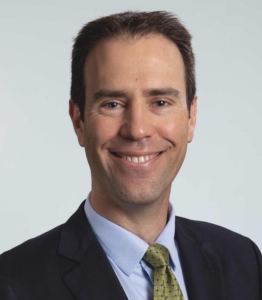
Dr. Todd Herrington is the director of the Deep Brain Stimulation program at Massachusetts General Hospital.
#68: Todd Herrington – The Future of Neuromodulation: Insights from the ADAPT PD Trial and Beyond
In this episode, we have the privilege of speaking with Dr. Todd Herrington, a leading neurologist and director of the Deep Brain Stimulation (DBS) program at Massachusetts General Hospital. Dr. Herrington specializes in movement disorders such as Parkinson’s disease, tremor, and dystonia, and his research focuses on the motor, cognitive, and psychiatric effects of DBS, leveraging intraoperative and noninvasive neurophysiology and neuroimaging to advance neuromodulation therapies.
Today, we’ll explore his key role in the ADAPT PD trial, a groundbreaking multicenter study evaluating the safety and efficacy of adaptive DBS for Parkinson’s disease. This trial, led by Dr. Helen Brontë-Stewart at Stanford, introduced a neurostimulator capable of sensing local field potentials and dynamically adjusting stimulation in real time based on a patient’s brain activity. We’ll discuss how this technology represents a shift toward personalized DBS therapy and what it means for the future of neuromodulation.
In the second part of our conversation, we’ll delve into broader topics, including the mechanism of action of DBS, novel neuromodulation approaches, and the potential role of stem cell therapy in movement disorders. Dr. Herrington shares his expert insights on how these advancements shape both our scientific understanding and the clinical application of DBS. From improving motor and non-motor symptoms in Parkinson’s disease to pioneering adaptive neurostimulation, his work is at the forefront of innovation in the field.
Todd Herrington 00:00And they say, well, you lost dopamine neurons, and this therapy is going to put them back with stem cells, which is a real... This trial looks at two different adaptive algorithms. Specifically, the multi-unit spike rate in the STN, crossing on the population of neurons, was increased before a more conservative... Welcome to Stimulating Brains. Dr. Todd Harrington is a neurologist and the director of the DBS program at Massachusetts General Hospital. 01:00He specializes in treating movement disorders, including Parkinson's disease, tremor, and dystonia, with a particular focus on patients undergoing DBS. Todd's research centers on the effects of DBS on the motor, cognitive, and psychiatric aspects of movement disorders,
Andreas Horn and he has employed intraoperative and non-invasive neurophysiology and neuroimaging to deepen our understanding of the basal ganglia's role in health and disease, aiming to develop innovative neuromodulation approaches for both motor and non-motor symptoms. Todd was recently strongly involved... In the Adaptive DBS algorithm for personalized therapy in Parkinson's disease, so the ADAPT-PD trial, which was led by Dr. Helen Bronte-Stewart at Stanford, this multicenter, prospective, single-blind, randomized crossover study evaluated the safety and effectiveness of adaptive deep brain stimulation in Parkinson's disease. The trial made use of a new neurostimulator, which can sense local field potentials and then react to these signals in real time to adjust simulation based on the patient's brain activity. The trial made use of a new neurostimulator, which can sense local field potentials and then react to these signals in real time to adjust simulation based on the patient's brain activity. 02:00We also briefly cover stem cell therapy, the mechanism of action of DBS, and learn about lots of other really interesting insights from Todd. So I hope you will enjoy this conversation as much as I did. Thanks so much for tuning into Stimulating Brains. So Todd, thank you so much for taking the time of your busy schedule to do this interview. It's a big honor. We've known each other for quite some time and hold you very dear. And I know how busy you are. So it's fantastic that you could take out the time of your busy schedule. Thanks, Andy. We will have a lot of time to talk about this. We will have introduced you more formally by now, so we can dive right in. And as you may know, I always ask an icebreaker question about hobbies. So what do you do when not involved in medicine or science? Yes, thank you for having me. I do know that. 03:01I am a fan of your podcast and of your work in general, anticipating your first question. So I have still young kids. And so a lot of my outside of work time is spent with them. I'm skiing in the winter and hiking and the other seasons. But I do have a couple of hobbies that one I picked up more during COVID was sailing dinghy sailboats, little single person sailboats, which is a bit of a sport, but more for me, a sort of meditative hobby that connects me with the water and the ocean. And yeah, it was something I had done in grad school a bit, but really got into during COVID. When I spent some time in Long Island, my mother-in-law has a place and it's near the water and some beautiful bays there that you can sail in.
Todd Herrington Oh, great. I was about to ask you, it's not on the Charles or on a lake or so, but it's Long Island.
Andreas Horn Okay.
Todd Herrington I learned on the Charles during grad school. 04:01Initially, I had a course through MIT and then subsequently through the community boating there. I also fly dual line stunt kites, which is probably not a hobby that most people have heard about. I do like to do that. I do like to do that. I do like to do that. I do like to do that. I do like to do that. But there are kites that are steerable via a couple of control lines. I know those.
Andreas Horn And it's another... Yeah? Yeah. Yeah.
Todd Herrington That's great.
Andreas Horn I've never done it, but sorry to interrupt, but fantastic. Yeah, it's another hobby.
Todd Herrington Again, it kind of gets you outside and it's... There's a skill element to it and you can kind of make the kite do tricks. But it's mostly a sort of a meditative hobby, I think. Super cool.
Andreas Horn So, could you share a bit about your journey? Yeah. into the field of neuromodulation? What inspired you to pursue the intersection of neuroscience, but of course also neurology and engineering? Was there an aha moment or any turning point that brought you to DBS or so? Yeah. 05:00Yeah, a few.
Todd Herrington It's always funny when you look back on your history and you can draw a straight line and kind of imagine that it was all preordained. But of course, there's these little inflections where you imagine like, if this moment didn't happen,
Andreas Horn would I still be sitting here?
Todd Herrington I was, as an undergrad, I was studying biochemistry. I was doing research in bacterial cell-cell signaling. And then I started getting interested in synapses. And then I got fascinated by the nervous system. I was just reading a ton about that. And I was applying to MD-PhD programs and I was already thinking I wanted to do neurology. But I read, I remember very clearly this paper by Miguel Nicolales at Duke. First author was Chapin. And I was, hadn't been interested in systems neuroscience at all, but this paper they, using recordings in the motor thalamus and motor cortex, multi-unit recordings, they trained a model to predict when a rat pressed a lever to receive a drop of water. 06:00And once they had their predictive model based on the cortical and thalamic activity, they then turned over the delivery of water just to that model. And a subset, sort of copied sort of copied sort of copied sort of copied sort of copied sort of copied sort of copied sort of copied sort of copied sort of copied sort of copied sort of copied sort of copied sort of copied sort of copied sort of copied sort of copied sort of copied sort of copied sort of copied sort of copied sort of copied sort of copied sort of copied sort of copied sort of copied sort of copied sort of copied sort of copied sort of copied sort of copied sort of copied sort of copied sort of copied sort of copied sort of copied sort of copied sort of copied sort of copied sort of copied sort of copied sort of copied sort of copied sort of copied sort of copied sort of copied sort of copied sort of copied directly and it blew my mind and uh so then i started you know reading really deeply about that kind of neuroscience and when i went to my phd uh joined the lab of john asad who was a primate neurophysiologist and i studied visual attention with him but uh he was a real dear mentor of mine still is a dear mentor of mine a very careful scientist but also a great communicator 07:04of uh of science so he's someone that could you know speak to a lay audience or group of medical students or graduate students or professionals very close to his field and always deliver a talk that was just at the right level for for that audience without ever really dumbing it down you know very sophisticated thinker uh you and i was while i was in his lab when i was joining actually didn't the rotation student uh had never done this kind of invasive neurophysiology at all had a ton to learn and the person that was sort of assigned to teach me and i was helping him do some recordings was a young neurosurgeon functional neurosurgeon in the group who was doing a research fellowship and had just started to establish his lab at mgh it was a mod eskandar oh wow and uh he was a young neurosurgeon functional neurosurgeon in the group who was doing a research fellowship and had just started to establish his lab at mgh it was a mod eskandar oh wow and uh he taught me to do in non-human primates single unit recording uh and then similarly invited me 08:04to come with him to see a case in the operating room a dbs case that he was he was doing and several things about that experience blew my mind one was the technique techniques they were using to do dbs microelectrode recording were virtually identical to what we were doing in the research lab yep uh and then i was able to do a lot of research and i was able to do a lot of research And actually in that project, we're recording from the basal ganglia so that you get the translational potential of both my PhD work that I was doing as well as the potential for research applications that interoperative data were just really obvious and fascinating. Plus, I got to see a successful DBS and I think many people who ultimately decided to pursue this career have had that moment when they saw the DBS be turned on and the tremor melt away and the hand start to open freely and the patient have this huge smile. 09:04And so I had that moment and that planted a seed where even though I was just in the very beginning of my PhD at that point, DBS was always front of mind from that on.
Andreas Horn And so here I am. You know?
Todd Herrington A lot of years later.
Andreas Horn Yeah.
Todd Herrington A lot of years later. Leading the DBS program at MGH.
Andreas Horn That's really fantastic.
Todd Herrington I did not know that story.
Andreas Horn And you mentioned John Assad and also Emma at Eskandar as I would say turning points and or mentors. Were there other people that you should mention or you want to mention on your path that helped?
Todd Herrington You know, so many. Those two I think on my scientific journey and journey into DBS specifically were, you know, really critical mentors. I of course had many, many clinical mentors through neurology residency and fellowship. 10:01I think I, the director of the Movement Disorders Fellowship at MGH is Alice Flaherty who, something I know through her writing and she has a real focus on the intersection of neurology and psychiatry.
Andreas Horn Yeah.
Todd Herrington And working.
Andreas Horn Yeah.
Todd Herrington And previously directed the neurology half of the DBS program. She ultimately ceded that to me. But I've learned just immensely from her about, in my mind sort of breaking down the barriers between treating just the movement disorder symptoms versus the broad array of psychiatric symptoms that come along with movement disorders. As well as just thinking openly about the potential psychiatric impacts of DBS, even in the context of the movement disorders patients, which are sometimes quite difficult to nail down, but much more so now than even 10 years ago, well recognized.
Andreas Horn 11:00Yeah. Fantastic.
Todd Herrington And then I remember in your time while Emad was also still at MGH, you did really cool things on decision making and on stimulation and invasive. Sorry, not invasive. Like,
Andreas Horn 10:50Yeah.
Todd Herrington 11:19! Yeah! a card pass kind of like the child's card game war, high card wins, and you had to make a bet as to whether you think you had a winning hand or a losing hand.
Andreas Horn 12:01And what was striking about it is that in the STN, there was encoding of the decision to make
Todd Herrington a higher risk or a lower risk bet. But specifically, that encoding was present in the multi-unit spike rate when the individual had a high conflict scenario. So it didn't encode that decision in all scenarios, but just specifically when the right answer in terms of whether you should in this situation make a high or low bet, when that answer was not clear. And specifically, the multi-unit spike rate in the STN crossing on the population of neurons was increased before more conservative bets.
Andreas Horn And reason that, well, that's interesting. And maybe that is something that could be replicated
Todd Herrington if you could deliver a burst of high frequency DBS during that decision period.
Andreas Horn Yeah.
Todd Herrington So used people then that had Medtronic, it was the only company at the time, implanted DBS systems 13:08and jerry-rigged a system where we could use a computer to quickly turn the DBS on. That system would then turn it on and off just for a defined period of about a second right around that decision period and actually show in a cohort of people that would deliver that little burst of stimulation, particularly during those trials where the correct answer in terms of a high or low bet was not obvious. We biased them towards making a bit more conservative decisions, which was a super cool thing to see.
Andreas Horn Yeah.
Todd Herrington Totally cool. And it reminds…. Like when you mentioned that…. That's right. That's right. That's right. That's right. That's right. That's right. That's right. That's right. remind like when you mentioned the work in primers, it does have this, you know, very scientific component where DBS really was used as a tool to study the brain more than maybe as a clinical treatment. But of course, you do, you know, direct the program. So you also do a lot of clinical 14:02applications of DBS. And we did talk about some of your colleagues, Sean Patel was one, and DBS always brings together very diverse fields. So, you know, collaborations with engineering, neuroscience, and then also clinical practice. How did that typically, like generally influence your thinking of what to do with DBS in terms of science, but also,
Andreas Horn you know, about the clinical work? So in other words, the crosstalk between, you know, science and clinics, how much is that happening? Yeah, that's a fascinating question. I'm
Todd Herrington you know, I have found myself, you know, in terms of how I spend my time with a variety of different kinds of projects, some of which are more sort of exploratory and, and, and there's some branch, some things that have branched off of that, that decision making work, and we're doing some work in the EMU now that's, 15:04that's trying to explore those circuits around decision making more deeply. But I think, you know, I think it's, I think it's, I think it's, I think it's, I think it's, a lot of my time is spent in doing things that are more directly adjacent to clinical care and sort of analyzing DBS related data, be it imaging or neurophysiology, and try to think about how to integrate that into care. And I do feel like we're at this golden era right now, maybe a neuromodulation in general, where there's so many areas outside of DBS that are moving forward very quickly. But specifically within DBS, I think it's, it's extraordinary that we have, these three companies that are approved right now, several more that are approved around the world to deliver this therapy. But if we just look at from a US lens, three companies that are approved to do this, all of whom are quickly innovating and delivering new approaches, you know, so Abbott with telemedicine enabled, remote programming, Boston Scientific, with image guided programming, 16:06really integrating that into the tablet experience and then developing, I know I'm sure near and dear to your heart,
Andreas Horn and in no small part based on your work and work you've enabled, enabling the, an automated, automated suggested DBS program based on imaging locations, right? And then Medtronic with sensing
Todd Herrington enabled DBS and now adaptive DBS. So it has brought me great joy to, to try to quickly adopt each of these new technologies and to experiment with them in clinic. And I feel like there's been one of my roles here, is to try to facilitate that, you know, both my own practice and for the nurse practitioner, practitioners that have worked and helped care for our DBS patients, as well for other people that they come and learn about DBS, to try to lower the bar, the barrier to using those technologies in clinical practice as much as possible.
Andreas Horn 17:08That makes a lot of sense, right?
Todd Herrington Even just staying on top of the game with all the new things that are coming is not a trivial task.
Andreas Horn And you have had, we'll get to that, hands-on experience also very much in the sensing world with Medtronic.
Todd Herrington Before we dive into that, though, in 2016, you wrote a review or a summary paper about the mechanism of deep brain stimulation. And that is always very fascinating because I think there's one end of the spectrum says we just don't know how DBS works. And then there are others that simplify it and say it's a lesion. And then there's a lot in between. And it probably exceeds a podcast format to talk about this exhaustively.
Andreas Horn But if you have a few two cents to give on how does DBS work, that would be super interesting. 18:00Yeah.
Todd Herrington It's amazing to think that paper is almost 10 years old. Now. And easily this could eat up the next hour. You know, it's such a fascinating thing that we still don't have this nailed down. When we wrote that paper, we called it mechanisms, plural, very intentionally because it's clear that while we don't understand all the ways in which DBS is working, that it's not working via a single mechanism. It's not even working. I mean, it could be. Even if you focus down on one target like the STN, it's not working via one structure, even in or around the STN. So I think your recent paper looking at individualized hotspots around the STN for different Parkinson's symptoms highlights that we're modulating, probably different sub circuits, different fiber pathways into and out of the STN or passing by the STN to modulate different symptoms. 19:02I think. No, no thinking about the mechanism of DBS can escape the fact that your first approximation DBS looks a lot like a lesion.
Andreas Horn Yeah.
Todd Herrington Right. And so I still feel like the informational lesion hypothesis, the idea that there is a dysfunctional, probably in many cases related to the loss of dopamine in the sensory motor striatum.
Andreas Horn Yeah.
Todd Herrington So if you're dealing with a dysfunctional circuit apathy that the basal ganglia are important in maintaining or perhaps even generate and that you do better by taking a note of the basal ganglia largely offline than leaving it online and being dysfunctional. But I think also that, you know, as I've thought about this over the years and had experience programming DBS.
Andreas Horn 20:02Yeah.
Todd Herrington 19:56! 20:06of what we're stimulating, let's just take around the STN, a lot of what we're stimulating there
Andreas Horn is not helpful, right? It's disrupting normal functional activity in those regions and
Todd Herrington throughout the network. And so I think when you look at like cervical dystonia and palatal stimulation or other focal dystonias, and you see that there's not insignificant rate of induced Parkinsonism or fine motor control problems that almost certainly, to my thinking, are also happening in Parkinson's disease, but the positive impact of DBS on people with Parkinson's disease is so great that you don't appreciate that you're also interfering with these normal functions. I think speeches like that, a lot of times it can slide in there as a sometimes more subtle and 21:00sometimes quite dramatic side effect of stimulation.
Andreas Horn Yeah.
Todd Herrington That is overwhelmed or just becomes not the focus because the other effects of DBS are so striking. So for me, I'm looking at those literatures and hoping that over time, as we start to deliver this therapy in a more targeted way, we can take away some of those off-target effects. I also think that there's ways that we're using DBS. Now just starting to use it that are going to work in a fundamentally different way. So I'm really eagerly following the dentate nucleus stimulation literature, for example, around stroke rehab, Andre Machado's work.
Andreas Horn That's low frequency, right?
Todd Herrington That is likely very different in the case.
Andreas Horn 30 hertz, right? Totally different, right?
Todd Herrington And I think there's people who don't understand whether that's maybe, does it just kind of
Andreas Horn 22:00stimulate trophic mechanisms?
Todd Herrington Or is it something like a stochastic resonance process where you're just taking a circuit that the gain has fallen on it owing to the lesion, but there's still important time-varying activity in that circuit that could be used, could be functionally helpful. And you could raise it up to a level where it can be heard above the noise. And so I think there's other ways of using it, of using neuromodulation that we just haven't begun to really tap in the real world. And I often go back to the work, I think you've had her on the podcast, Erin Giddes's work in the palatum in the GPE, where again, in rodents, and they're working hard to try to replicate this now in humans, but circuit manipulations of specific subpopulations of neurons in the GPE to produce these dramatic, long-lasting improvements. 23:02And Parkinson's, Parkinsonian symptoms in the rodent, as well as Parkinsonian physiology in the rodent, it sort of harkens back to the coordinated reset neuromodulation results. And we feel like fundamentally they're going to be, they are, and how long it takes us to really implement these in humans, much better ways of manipulating the circuit than just 130 hertz slam on the gas kind of stimulation. So I don't know, that's how I'm thinking about it these days. I'm curious how you think. No, no, I mean, I think I very much agree with what you just said. I think I am probably one of these more simple-minded people that think of a lot of the DBS effects
Andreas Horn really resemble a lesion, but only if applied in that specific way, right?
Todd Herrington 130 hertz. And again, the focus should be on this informational lesion, because of course we do also elicit action potentials, but if they fire along with the 130 hertz pulse, the information 24:02content will still be there. It will be reduced, or the bandwidth of that circuit will be reduced. So I think I totally agree with you on first approximation, at least, with a lot of ifs
Andreas Horn and buts and add-ons, like the chronic stim is really lesion-like. But the cool thing is, and that will follow into exactly what you just said, is that we can turn this lesion on and off all the time, right?
Todd Herrington And we could do so in a very rapid alternating way. We'll get into closed loop.
Andreas Horn And so if you think of this as a brake steering a car down a hill, you couldn't do a lot with just one pedal if you do it in a very elaborate way, right?
Todd Herrington If you maybe can react to things. And with a real lesion, of course, you can't. It's permanent. And so I very much agree with you that there could be this essentially second era of DBS coming with all these pulse and burst-like simulations, but also adaptive simulations. 25:00So very much looking forward to it.
Andreas Horn Yeah.
Todd Herrington Not there yet for most things, but there is a lot of potential there. So yeah. I agree very much with that. The other thing that is easy to overlook is the different time course by which symptoms respond to DBS, even the same symptom. So take something like tremor, which I used to think very much of. Like tremor is an ongoing oscillation in the brain that we interrupt in real time with with DBS. And that looks to be the case in, for example, STN or VIM in most cases, or at least the clinical response is consistent with that. But then you move to the pallidum in Parkinson's
Andreas Horn disease, and tremor response can be very clearly delayed, right? Michael Okun and the UF group have
Todd Herrington a nice series on this, and we certainly see it to the point now where if I don't see good tremor suppression doing initial programming in the GP, I don't even worry that much. You know, you say, 26:02well, let's just, you know, do it based on bradykinesia and rigidity, and then we'll see what emerges. So clearly that's a different mechanism by which tremor is being interrupted in those patients. Some other plastic change in the circuit, which makes it no longer supportive, conducive to this tremor oscillation, but not a direct suppression of it. So much yet to learn.
Andreas Horn Yeah, I totally agree. It could still be lesion-like though, right?
Todd Herrington With a pallidum, pallidotomies potentially, it could still, like a lesion can still produce plasticity as well,
Andreas Horn in a way. Absolutely, yeah. But yeah, much to learn, as you say. So before we go into the ADAPT
Todd Herrington trial, in 2020, you were also co-first author on a New England Journal of Medicine paper that implanted patient-derived dopaminergic progenitor cells, which had been differentiated in vitro in vitro from autologous-induced pluripotent stem cells, so IP, 27:01IPSCs. In a single patient with Parkinson's disease, I think this was really a breakthrough of a feasibility trial, but also did show some really promising results. Could you summarize
Andreas Horn how that trial came to be and then also what you found? Yeah, absolutely. Yeah. I mean, the cell therapy field in Parkinson's disease
Todd Herrington remains really controversial. There are people in the Parkinson's world who feel like this is a tried approach that doesn't address a clinical need, and then people that are extremely bullish about it. And it's really a busy field now. I don't know if it's useful to think back through the history of it a little bit, and that gives both cause for skepticism and cause for hope. The simple idea that you're missing
Andreas Horn dopamine neurons in a part of the brain, and you should just put them back, right? 28:01Sure, exactly.
Todd Herrington including some dramatic long-standing responses and two randomized controlled trials in the early 2000s that both failed to meet their primary endpoints. And that was the sort of end of the field for a while. That was never really going to be a practical approach anyway to treat Parkinson's disease using fetal tissue-derived cells. But in addition to not meeting their primary outcomes in terms of EPDRS improvement, people have these graft-induced dyskinesias, which were involuntary dyskinesias that persisted even when levodopa was dramatically lowered or withdrawn. 29:12And since then, there's been a lot of work trying to understand, model the origin of those. Obviously, the original idea was that, well, graft-induced dyskinesias are just excess dopamine. That you can't... You can't control from these grafts. But there were a number of things that pointed to alternative explanations. The amount that your EPDRS improved did not correlate with developing graft-induced dyskinesia. You might expect that if you had a better response, you kind of overshoot. You have a really good response to bradykinesia and rigidity, but then you have dyskinesia and like an excessive peak dose response. But that didn't seem to pan out in the data. There was not a correlation between the change in PET signal of dopamine integration, the fluorodopa. And the development of graft-induced dyskinesia. So it didn't seem to correlate with just the amount of dopamine synthesis activity. 30:02And then there were serotonin receptor or the reuptake inhibitor or the presynaptic transporter.
Andreas Horn Yeah, serotonin transporter is what I'm going for.
Todd Herrington PET ligands that in very small number of the patients did seem to correlate with graft-induced dyskinesia. So people that... That had the graft-induced dyskinesia had higher concentrations in the serotonin transporter. And then even a serotonin agonist that acts on presynaptic serotonin receptors and sort of sought to decrease serotonin signaling, buspirone, seemed to suppress graft-induced dyskinesia.
Andreas Horn So at the end of this field, it was like, well, we're not exactly sure.
Todd Herrington It doesn't seem to work that well. But maybe these graft-induced dyskinesias were related to... Inadvertently transplanting serotonin neurons. And you still had coming out of that era, this subset of patients who had dramatic, long-standing, durable improvements in their motor symptoms. 31:06So then the big advance that's happened since then is the ability to more efficiently generate induced pluripotent stem cells from human tissue. In the case of this particular study, fibroblasts. And... And... And... And... And... And... And... And... And... And... And... And... And... And... And... And... And... And... And... And... And... And... And... And... And... And... And... And... And... And... And... And... And... And... And... And then he had been collaborating with Jeffrey Schweitzer and Bob Carter in California, both functional neurosurgeon Bob Carter was the head of neurosurgery at UCSD at the time. 32:10And they were well on their way and actually had even done the first hemisphere transplant when they brought this project with Bob Carter coming to Mass General, the chief of neurosurgery at Mass General, recruiting Jeff Schweitzer to come with him. And they brought this project and it finished up here.
Andreas Horn And you're right, it was interesting to see it at that stage.
Todd Herrington I counted myself as somewhat of a skeptic of the cell therapy space at that point. I think we have to be really careful interpreting anything that we see in that first study because this is an open label study of a single patient. But. We observed improvement on the order of 20 or 25% in the both the on state and the off state UPDRS. 33:05There were some issues there. They didn't have great off baseline data, particularly in the off state. So that undercut some of the conclusions there. And there were also trends towards improvement in the fluorodopa PET signaling that suggested these cells had survived. And those increases were more. Were localized to the posterior containment where the transplants had occurred. But what I was struck by is there were a number of domains of just day to day function that the patient. Improved in going from wearing velcro shoes back to wearing laced shoes because he could tie them more easily and resuming swimming again, which had been a favored activity. And so it certainly felt like things had moved in the right direction for him. At least over that period. Of time. But of course, you know, really, you need larger studies.
Andreas Horn And so, yeah, in the meantime.
Todd Herrington You know, we have that effort has gone on. 34:00There's been continued advances in these these technologies. And we actually have a IND from the FDA to start a phase one trial of this, which actually we're intending to start very soon, maybe as soon as next month. But the technology, I think, is a little bit different. I think it's a little bit different than what we're used to. I think it's a little bit different. I think it's a little bit different. I think it's a little bit different. I think it's a little bit different. I still think there are major technology development that will benefit this this approach. For example, we've published all the preclinical data for that individual patient and that led to the approval of the IND.
Andreas Horn And then a number of companies, Blue Rock Therapeutics is well into a clinical trial of allogeneic cell therapy. So this is using a bank, a singular cell line. And then planting it into all patients with the idea of being there that go ahead. 35:00Would that require immunosuppressants then?
Todd Herrington Right.
Andreas Horn Yes. And the logic is you require immunosuppression, whereas the autologous approach, the logic is those cells recognize itself. And so you would not require immunosuppression.
Todd Herrington So in your patient, I remember from the paper, it did not like the patient did not require that, right? Because it was. That's right.
Andreas Horn Okay.
Todd Herrington No immunosuppression. And they. It appeared that the patient didn't develop an immune response to the cells based on a humanized mouse model.
Andreas Horn Yeah.
Todd Herrington We could talk through that experiment, but that was encouraging again. And of one, there's another company, Aspen, that is moving forward with an autologous approach. So similar to what we're doing. But all these groups and other groups that are trying to do this in animal models. They struggle with the variability in terms of the fraction of dopamine neurons that you transplant that actually survive, which even in carefully controlled animal experience varies considerably. 36:07So Kwangsoo Kim had a Nature paper just in 2023, showing that some of that variability is caused by the early immune response to the surgery itself, which leads to a few funny things. One of the things. One is that a lot of the cells you transplant actually turn into glia, which is strange, given that these are dopamine progenitor cells that are in vitro well on their way to becoming dopamine neurons. And then a lot of them die. And so you really to get the number you want to survive, you implant many millions of cells to get 20 or 40,000 surviving at the end dopamine neurons. And so by co transplanting those cells again. Now, this is an animal model with T regulatory cells that were also autologously derived. You could markedly shrink the overall size of the graft, fewer cells turning into glia and double or triple the number of dopamine neurons that were survived there. 37:09So I think that these technologies are going to keep evolving and we will see ultimately if this can be
Andreas Horn Yeah.
Todd Herrington back full enough to merit inclusion in the broader array of clinical treatments that we have. I think this would probably not be a popular take from the companies in terms of what they want, where they want the bar to be set. But from my perspective, if cell therapy works as well as DBS or as well as, say, subcutaneous levodopa,
Andreas Horn Yeah.
Todd Herrington I love, you know, it basically just controls off state symptoms basically acts like a source of you can put a catheter with dopamine and you leak it into the posterior per tainment and get the same result. 38:04I think ultimately, we're going to struggle to justify the complexity of this therapy, given that other kinds of approaches to achieve that are going to continue to advance. But one of my hopes is that if we're truly able to replace the dopamine circuitry.
Andreas Horn Yeah.
Todd Herrington And if we do do that, we're going to do it in a way that's functionally meaningful. And if you look at people that have DBS and you often largely control their off state symptoms and they spend most of their time in something closer to their good on medication state. And if you look out over, if I say five to ten years, Patricia Limousine has a really nice series looking at this either off medication state remains pretty similar. Like DBS is still controlling that really well. But where they give up the most is in their on medication performance.
Andreas Horn Yeah. 39:11And if you could restore that, so restore someone's response to levodopa, restore their response to other neuromodulation, that would be a really meaningful improvement. And that requires demonstrating that you can improve on-state function with these therapies, which I don't think we have any therapies yet that actually do that.
Todd Herrington So that's my hope, but I think it's an open question as to whether that's possible with these therapies.
Andreas Horn That's a great point, because my next thought would have been, so the dopaminergic neurons that die are in the nigra, not in the butamen, right? I mean, mainly. And so we know that a single dopaminergic, like physiologic dopaminergic neuron projects to big portions, a single neuron to big portions of the striatum. 40:00And it seems like a very intricate way, although maybe not as specific, right?
Todd Herrington It's like one neuron will... will go unselectively to big parts of the striatum.
Andreas Horn And if you now put new dopaminergic cells into the butamen, then of course you have more dopamine there, but you don't have the inputs to these neurons, right?
Todd Herrington So it will probably never completely replace the circuitry, because for that you would need the inputs going to the nigra and then the projections to the butamen. But what you're saying is that if you don't have these projections, then the, you know, the receptors and the receiving cells, the neurons, the the neurons, the receptors and the receiving cells, they're not going to be able to do the same thing. So I think that's a really good point. And I think that's a really good point. And I think that's a really good point. And I think that's a really good point. So if you do not do the same thing, then the receiving cells will also die off or will not be... and then levodopa won't work as much anymore. So if you would just try to essentially keep the receiving cells in the striatum receptive to dopamine, that alone would be super helpful. That makes a lot of sense to me.
Andreas Horn Yeah.
Todd Herrington I never thought of that like that way.
Andreas Horn Yeah. But you highlighted what is the huge drawback to this approach, right? 41:02Yeah. And why it is so important also for people that...
Todd Herrington for people with Parkinson's who are thinking about these kind of therapies to understand that you're not truly restoring the original circuitry.
Andreas Horn Yeah.
Todd Herrington You're making something different that we hope could be better.
Andreas Horn Absolutely. Yeah.
Todd Herrington And there's lots of important... I mean, as a whole, dopamine is perhaps the most studied neurotransmitter in the brain. There's so much intricacy into the way dopamine is released and so many important functions that are coded there. And without a doubt, there's no way this therapy could replicate all of those functional aspects of dopamine. Sure. I also see this technology as a platform technology where dopamine, because of what you mentioned, the relative simplicity of the dopamine circuit, that it's not like you're trying to replace 42:01the particular population of neurons in a cortical column.
Andreas Horn Yeah. Yeah.
Todd Herrington It's like a
Andreas Horn Yes.
Todd Herrington It's maybe the lowest hanging fruit for being able to restore some part of a circuit.
Andreas Horn Could we not put in a cell population that could replicate these parvalbumin versus limhomiobox-6 dissociation in the physiology, right?
Todd Herrington Integrate with the circuit and push it to operate in a more functional way. And there's a lot of steps between that idea and actually something that you can put into humans. But I think just the idea of figuring out how to get cells manufactured efficiently in the lab and into people. And whether they survive. 43:01There's a lot of value there that we've just only just begun to try to unlock that. Super helpful conversation for me to get a good overview, a glimpse of an overview here. Last question on this.
Andreas Horn And you might not know, but since it's published in 2020, do you know how the patient is doing? Is there any West Coast or East Coast?
Todd Herrington West Coast.
Andreas Horn Okay.
Todd Herrington So yeah. So, still in close contact. I feel like he's a known individual. Like he'd been public with his experience with this. I want to be a little bit deferential to that and not say too much outside of what we've agreed to publish. Except maybe just to say that I think that the impact was durable. But I think that everybody...
Andreas Horn Would agree that it hasn't stopped the progression of the disease. 44:03Right?
Todd Herrington And so I think that's another...
Andreas Horn I don't know if you know how often patients listen to this podcast, but when I'm talking
Todd Herrington to patient groups about this kind of work, I think it's really important that people understand this is not a cure for Parkinson's. And I think this comes up a lot.
Andreas Horn Yeah. Yeah.
Todd Herrington I think it's very strictly associated loss of dopamine with Parkinson's when of course there's much more going on. And they say, well, you lost dopamine neurons and this therapy is going to put them back with stem cells, which is a real magic word.
Andreas Horn Right?
Todd Herrington That grabs attention and they think that's a cure.
Andreas Horn Right? What could be more of a cure?
Todd Herrington And it's quite clear that our goal for impact is more specifically in motor function, very specific functions. There's a lot more that's happening in Parkinson's. So, yeah.
Andreas Horn Okay.
Todd Herrington Moving back to DBS.
Andreas Horn This was a bit of a detour, but super interesting.
Todd Herrington Thanks for sharing. 45:01And we thought about recording the session mainly with the focus of the ADAPT PD trial, which is probably the most exciting thing that has happened in the entire field of DBS in the last years or year. Yes, probably.
Andreas Horn And is now ready for prime time. And maybe for those new to the field, could you explain the core concept behind the ADAPT PD trial? And maybe also what adaptive DBS is?
Todd Herrington Most people will know, but maybe a brief intro would still help. Sure.
Andreas Horn Yeah. Yeah.
Todd Herrington So adaptive DBS, as opposed to what we call continuous DBS or CDBS, which is the typical way DBS is programmed, is that you set a given stimulation configuration of contacts, anodes and cathodes, and a given pulse width and current and frequency, and then your stimulation just stays at that level continuously. Usually 24-7, trying to make little adjustments to it. 46:00But we recognize that people with Parkinson's in particular are not in the same state at all times. There are times when their medicines are peaking or when their medicines are falling, they're sleeping or waking, they're active or they're resting on the couch and watching a movie. And the need for DBS, like the level of current, let's say, that you require in these different states. Ah. It's likely to be different.
Andreas Horn Yeah.
Todd Herrington And from a programmer perspective, I think we often calibrate the DBS or we push the stimulation up until we have addressed all of the off symptoms or as much of the off symptoms as we can, which are often the most bothersome symptoms that people experience. And we try to keep it below a threshold where it's causing overt side effects. But then there's this general idea that maybe we're causing more side effects each day. And then we sort of 47:00sort of sort how much DBS therapy you're delivering at any given moment in time to be just enough, just the right amount and not more. And in this trial, it was focused on one particular neurophysiologic biomarker, oscillations in the alpha and beta band, which I imagine the listenership is very familiar with the beta band oscillations and the fact that they correlate with bradykinesia and rigidity severity, that the degree of response of beta band oscillations in terms of power reduction correlates with how much you respond to levodopa therapy and to DBS.
Andreas Horn And so the logic was, could you use the power in that beta band in an individual patient's 48:00space? And so that's what we did. And so the logic was, could you use the power in that beta band in an individual patient's space?
Todd Herrington to titrate how much DBS therapy you deliver in real time. And I mean, this idea and developed gradually over really decades, and there's a ton of people that contributed to that. You know, Simon Little and Peter Brown, one of the earliest papers really demonstrating this, with the particular approach that a version of that was included in the trial called single threshold DBS. That was way back in 2013, which I think was the same year that the Medtronic PC plus S device was released and so allowed it to start doing more ambulatory recordings and develop the data set that ultimately led to the design of this trial. But basically, this trial looks at two different adaptive algorithms, two ways of trying to map the beta power onto your DBS therapy. And one, it was called single threshold DBS, because there's only one threshold parameter that you set, 49:03is based on the idea that beta power occurs in bursts. And so there are periods of relatively low beta and then periods where that beta spikes. I think, you know, it's interesting. I mean, that is very clearly true, I think, in human and non-human primate motor cortex in the healthy state. But in the Parkinson's state, maybe it's a little bit more variable. But, certainly beta is highly variable on sub-second time scales. And so the question is,
Andreas Horn could you just, when the beta is at the high end of a range you set, jump up to a higher level of stem quickly? And when the beta is below the threshold you set, could you back off quickly?
Todd Herrington And the idea would be that you could adapt multiple times per second to your high level of stem, your low level of stem, but you don't really arc anywhere in between those, you just have two levels that you are alternating between. And so if you think about on a longer time scale, hour, when the beta is at the high end of a range you set, jump up to a higher level of stim quickly.
Andreas Horn And when the beta is below the threshold you set, could you back off quickly?
Todd Herrington And the idea would be that you could adapt multiple times per second to your high level of stim or your low level of stim. But you don't really arc anywhere in between those. You just have two levels that you are alternating between. And so if you think about on a longer time scale, hours, your high or low stimulation would really be about your duty cycle.
Andreas Horn 50:04How much of the time, what fraction of time do you spend at your higher stim level versus your lower stim level?
Todd Herrington And then the other approach that was called dual threshold, because you set two different thresholds, that define a range of beta power that you have decided is acceptable or optimal.
Andreas Horn Okay.
Todd Herrington And if the beta power is... If the beta power is in that range, then you do nothing. You leave your stimulation where it is.
Andreas Horn Yeah.
Todd Herrington If the beta power climbs above that range, you increase stimulation to try to suppress it back into the acceptable range. If the beta power falls below that range, then you back off on stimulation by decreasing stimulation current until the beta power comes back up in the range that you've set. And each of these methods involve obviously setting an upper and a lower stimulation limit. The algorithm will not drive it beyond those limits. You set based on cynical criteria.
Andreas Horn 51:01And would the second one then essentially have three different stim settings, right? Or would you predetermine the high amplitude, the normal range, and then the low amplitude setting?
Todd Herrington So this particular algorithm, you set two stimulation levels. The lower stimulation limit, which is the lowest stimulation that the system will ever deliver. The upper stimulation limit, which is the highest, that can be delivered. And then depending on how far apart, let's say those are a milliamp apart, in 0.1 milliamp increments, the system will go up or down until it either drives the beta band power, the control signal, into your acceptable range, or it hits one of its limits.
Andreas Horn Great. Okay. Interesting.
Todd Herrington So it really can live anywhere. So there on hour to hour, if you think about how this thing changes over hour to hour, people say as people come on or off in medicine, they're going to be able to do it. And so I think that's a really good example of how this works. 52:00And I think that's a really good example of how this works. And I think that's a really good example of how this works. And I think that's a really good example of how this works. So if you're going between one and two milliamps of stim, maybe when you're on medication and you're at your peak dose and you perhaps need less stimulation, it's hanging out near one milliamp. And then when your medicines start to wear off, you need a little more stimulation, the beta power increases, the stimulation creeps up closer to the two milliamp. Okay. Understood.
Andreas Horn And how was the design of the trial? Did everybody try both versions and also maybe the continuous? How did you select that? Yeah.
Todd Herrington Well, so I had no hand in the trial design. You guys, I said.
Andreas Horn Yeah.
Todd Herrington I got it.
Andreas Horn Yeah, yeah.
Todd Herrington So this was a multi-center trial. There were 10 centers across four countries. Helen Bronte Stewart. And at Stanford is the global PI of the study. 53:02And the design of the study is that we took people that were already programmed and stable on continuous DBS.
Andreas Horn Yeah.
Todd Herrington They came in and they went through a baseline assessment that where you had them do a 72-hour symptom diary and the usual sorts of part-time. And then you were able to sort of sort of sort of sort of sort of sort of If both modes were successful, then they were randomized in a single blind fashion to single then dual or dual then single. 54:06If only one mode was successful, then you just move forward with that mode only. And if no modes were successful, then you dropped out of the study. And then to assess the modes, you had a month on that mode. And then you again, symptom diary outcomes and the usual questionnaires. And then at the end of that, if the patients could choose to either continue on adaptive DBS, or if they had tried both modes, they could choose which one they felt like was more effective for them. And they continued that for an additional 10 or so months of long term follow up. And at the end of that, they can continue into what's called extended access where because these settings, were not available on commercial devices in the US and Europe, or Canada, they had to be in the study to continue on adaptive DBS. 55:00But as Pablo will talk about, most patients remained on it through into that extended access phase. So the benefit of this design is that people really captured a real world population of people that are already being treated with DBS. They can use DBS. It's really a diverse population with about two thirds STN and one third GPI. It involves both the newer Medtronic sort of sensing optimized leads, called Sensight, as well as the older 3387, 3389 electrodes.
Andreas Horn And it's a mix, right? Yeah.
Todd Herrington The main, I think, drawback to this design was that the comparison between CDBS and the ADBS was very, very different. So the ADBS and the ADBS modes was not blinded.
Andreas Horn Yeah.
Todd Herrington So participants knew that they were on an adaptive mode. And so you have to take that into account when you think about all the assessments.
Andreas Horn 56:01Interesting.
Todd Herrington Great.
Andreas Horn And then what did you find? So lots of questions, of course, which mode was maybe better? How many patients stayed on adaptive mode? Yeah. Yeah. Yeah. So at this point, yeah, these results, you were presented with a lot of good results. Yeah.
Todd Herrington enrolled in the study overall. 52 went on to get some ADBS programming. And so people dropped out initially for a variety of reasons, mostly because they don't have the right signals that are 57:00adequate to power ADBS or you have artifacts like ECG artifact that interfere with your ability to use the signal. So I think, you know, one important thing is just you think about is every patient with Parkinson's going to be a candidate for this. There are some requirements in terms of having the right signals, but also making sure that your optimal stimulation contact has sensing
Andreas Horn enabled contacts with the right signals around it, right? So people may not be a candidate for
Todd Herrington this approach because of those constraints. Ultimately, 45 people could be programmed in at least one of the adaptive modes, and 30 could be programmed. So you had head to head comparison for 30 people. Yeah. So there's a total in terms of like who completed evaluation months, there were 40 people that were evaluated in dual threshold mode,
Andreas Horn 35 in single threshold mode. And if you take as your metric of what was more successful
Todd Herrington 58:01in the long run, there's about a 60-40 split in terms of dual threshold being selected by by patients. More frequently than single threshold, but a good number, you know, a good fraction of patients
Andreas Horn chose both, right? So single threshold was a little less popular, but was 40% of the participants.
Todd Herrington The primary outcome measure for the study so that the outcome measure that was set with the regulatory bodies was a bit of a a weird one. It was a performance metric where the goal was that at least 50% of the participants
Andreas Horn would find that should have ADBS performance that was similar or better than their CDBS performance. 59:00Yep. So what does it mean to be similar or better for a single subject? Idea was to use the diary,
Todd Herrington the 72-hour symptom diary, Hauser diary, to record, I think probably all your listeners are aware of, but you basically rate in half-hour increments whether you're on, you have troublesome dyskinesias and on, whether you're off, whether you're asleep. And then you have this problem where what does it mean, you know, given the variability in that metric, if you have an hour more or hour less
Andreas Horn of on time, is that meaningful? And so they applied this criteria where they looked
Todd Herrington at the difference between ADBS and CDBS across the whole study. They just looked at that distribution and they defined as one standard deviation based on that distribution. And then they said, okay, if you're within one standard deviation of your CDBS performance or better, then you're considered, you know, performing well enough. And over 90% of both people that tried both modes performed at 01:00:09that level. And so that's what they were looking at. And so that's what they were looking at. And so they were looking at. And so they were looking at. And so
Andreas Horn the other metric is, well, what about just the raw change in on time, right, in terms of hours? And if you look at that,
Todd Herrington and you look at the mode that people selected to stay in long term, they gained overall about an hour and a half of on time per day on ADBS.
Andreas Horn Yeah.
Todd Herrington So on one hand, it's impressive because there are people that are already optimized on CDBS, and we're doing pretty well at baseline.
Andreas Horn Yeah. On the other hand, we have to be a little bit careful because these are, this is an open label comparison, right?
Todd Herrington And maybe perhaps the most telling thing is that over the long term, 44 of the 45 people that entered the ADBS evaluation period decided to stay on it for the long term.
Andreas Horn 01:01:07Yeah.
Todd Herrington So it's, you know, it,
Andreas Horn so patients embraced it and continued on it for long term follow up, which was positive. That might really mean a lot, right?
Todd Herrington I think there's even voices sometimes where I think there's this one investigator in Munich that told me, that he, asks patient what does,
Andreas Horn what feels best, right?
Todd Herrington Which setting feels best and that that might even be a programming strategy and I think never investigated in a real trial yet. But, you know, That's okay. That's okay. That's okay. their plans for this where um the idea would be you know maybe maybe the interceptive component of a patient is is as good maybe or similarly good as clinical scores does that match your general feeling also in programming dbs in general absolutely absolutely and i think it's really important that to acknowledge how clumsy our metrics are yeah uh and we you know we try to 01:02:08be objective about it and we have you know scales to try to quantify someone's motor function but there's so much we're not capturing there and even the best clinician is missing so much of even the observable function but there's all this you mentioned interceptive they're all the unobservable aspects of this right you you how person feels ultimately the end of the day you want to improve people's quality of life uh and i think there is a lot of the way that these kinds of therapies might be impacting people that are are not going to be measured necessarily in always gate speed or hand opening closing you know velocity there's more to it than that yeah yeah yeah that resonates with me for sure super cool and then the the other thought um that i've you know uh when talking to julian neumann who you know and who also was on the 01:03:02podcast he he essentially said that you know when he when the first um poster was presented or in the meetings as you mentioned you know results maybe weren't huge right it wasn't like a huge improvement but the other thing he said is that with fda approval and this becoming more you know
Andreas Horn now now a thing um there could be so much more additional science to actually figure out exactly
Todd Herrington which parameters to set up and so on because so far as i understand you know it was quite
Andreas Horn exploratory right it wasn't yet clear exactly how to set all these
Todd Herrington um settings and you know which mode is better and so on so it it i'm sure it's going to be a huge success for the field that now we can address these questions going forward right oh yeah yeah and julian's going to have such an impact on that i mean i i'm uh i'm really eager for him to get his hands on this and really start to explore it i mean i think we're going to learn so much 01:04:02i mean is that this this trial when you think back to when it began in 2020 and of course you know the design began before that there there had never been somebody on an adaptive program for dbs that was outside of a immediately observed setting right yeah and they went all the way from only often with externalized leads right it was the only only data they had to go on and they and they went all the way straight to having these things on device and people and sort of sort 01:05:03Much less as you start thinking forward to what are the technical advancements that could make this better in the future.
Andreas Horn Yeah. Can you talk a bit about the complexity of the programming?
Todd Herrington Not so many people have had hands-on experience. I think the sensing capabilities are public and everybody can try those these days.
Andreas Horn But not the closed loop stuff yet. So how complicated is it? And will you offer it in the future to everybody or only to complicated patients? Or any insights on that? Yeah, other great questions.
Todd Herrington So I think a lot of the complexity is derived directly from the complexity of sensing. And so I think if you're a DBS programmer and you've been using sensing, and I think a lot of the early adopters are people that, were already used to using this kind of data from the operating room or externalized leads. 01:06:06And so had a real already an intuition about neurophysiology data, but the neurophysiology data is complex. You know, one of the limitations of the current tablet interface is that it's hard to fully assess the signal just from the tablet. So you can get a nice power spectro density. You can see a nice beta piece. You can see a nice data piece. But you're always looking at an average. It's hard to understand the time varying aspect of it. You're looking at the recording that's obtained, like the device can record in ways that are more resistant or less resistant to external noise. And what it shows you on tablet is always in the recording mode that's more resistant to external noise. So it gives you a better way to see the beta, but does not give you a great view into whether there might also be ECG artifact, or other fluctuations, say, in the noise floor that one of our effort, 01:07:03a synchronous component that you might, because the actual control signal, to be clear, is just a band power, just a band pass power. So anything else that encroaches on that can also influence your control algorithm. So I think the best way to assess that is really on tablet. Once you set your control signal, you can look at, at the power in that band as you adjust stimulation and demonstrate that if you expect that as you ramp up stimulation, you're going to suppress that. That's something you can very much confirm on tablet. But still, a lot of our programming also involve looking at data offline and looking at, you know, for evidence of artifact and really understanding how stimulation affected frequencies outside of the narrow band that was being controlled and those kind of components. But, I think that 01:08:00Our experience in the trial, it's going to be easier in the real world than in the trial, because in the trial, of course, you have a lot of constraints, and there's a lot of things you're supposed to test as part of the trial protocol. Plus, we were trying to set up both modes.
Andreas Horn Yeah,
Todd Herrington We were often balancing back and forth between the two modes and trying to set them, some both, both up because we were sort of exploring these modes. I think in, in the, in real clinical practice, lot of information that you can derive during your initial programming and as you're doing your initial titration of continuous dbs so you'll already ideally know your control signal you'll have seen how it responded as you titrated dbs you'll have a if you have in mind that you're maybe you're going to program adaptive you'll ideally have mapped out a little bit have this sense about what your upper and lower stim limits are in other words your lower stim limit is you know probably defined by the lowest level of stimulation you ever want to deliver so when 01:09:03they're in their peak on state how low do you want it to go or since these signals tend to be low at night and you tend to be relatively low stimulation at night consequently how low do you want stimulation to be at night yeah and your upper stim limit is going to be either you know where you uh hit side effects or the most stimulation where at this point when they're off medicine anything above this doesn't seem to give any additional benefit and so you already have that in mind and you have your control signal when you actually come to set up adaptive you've got a lot of the components already and you know the other piece i think about the trial that's going to be easier in the real world is that i think that medtronic learned a lot from the investigators about the interface yeah so ! there are many things about the interface for example the way you adjusted these thresholds that were clumsy in the initial version yeah and the version that has rolled out now in europe 01:10:04uh and that we'll see here are just much easier to use and more streamlined that's good so like any new approach to programming it uh there's a learning curve yeah with it but i think if you're already using sensing information uh i think it's But I plan to, I'm obviously very interested in it. And, you know, I think it'll be really interesting to explore who this helps and who it doesn't help.
Andreas Horn So I'm eager to try it and any of my patients who are interested in trying it. But I particularly think that it will be more helpful to address, you know, residual motor fluctuations in people that aren't adequately controlled in CDBS or people that are experiencing side effects from CDBS that you can't adequately control with just adjusting the CDBS level. 01:11:04Did you have one or two patient cases where that was very apparent?
Todd Herrington Like just on a non-scientific anecdotical, let's say, level, you would really see, oh, wow, this.
Andreas Horn Yeah, totally.
Todd Herrington I mean, I think a couple that one is actually a group of patients that I actually went into this thinking it was going to be challenging to program them, which are the people that are making frequent adjustments to their DBS settings.
Andreas Horn Now, at one level, you think that's the ideal person, right?
Todd Herrington If it's someone that feels okay. If it's someone that's overstimulated and turns it down and they feel understimulated and they turn it back up and they're doing that multiple times a day.
Andreas Horn That's like the ideal person, right?
Todd Herrington That you'd think should respond to this.
Andreas Horn On the other hand, I really worried that you wonder as a clinician, maybe it goes back to your point, like, is it our judgment or how often is the patient judgment really the thing that trumps? 01:12:08I said, well, how much of it is placebo? How much of it is like they don't feel well in that moment?
Todd Herrington And so making a change feels good. Sure. If that change is not necessarily productive, if you were to do it in a blinded fashion. So I thought, well, they're not going to like going from having control to now their patient programmer just shows this little animated infinity sign and gives them no, doesn't even tell them what their stimulator is at, much less give them a chance to adjust it. And I had two people in the trial that were making those kinds of frequent day-to-day adjustments and both sailed. With a DBS and did well and felt like they didn't need to make adjustments anymore, which for me was really telling. I thought like, okay, you know, that it definitely proved my, my bias wrong.
Andreas Horn Yeah.
Todd Herrington The other, the other case that is maybe another kind of situation that is very familiar to people that program DBS is someone who had.
Andreas Horn 01:13:14Okay.
Todd Herrington A. That. Seemed to at least in part emerge worse in the period after DBS, not immediately acutely, but in the months and years after.
Andreas Horn Okay.
Todd Herrington And where, where CDBS adjustments, if you went up further on stimulation, increase the current, you could worsen the fascination, but also if you backed off too far, you would worsen it.
Andreas Horn Okay.
Todd Herrington So there seemed to be a sweet point there where it wasn't just being caused by. DBS, but, but where there was clearly, this was a major residual problem. So this is someone who didn't do very well on dual threshold or rather dual threshold felt similar to continuous DBS, but single threshold, a DBS, their gate was markedly better.
Andreas Horn 01:14:05Okay.
Todd Herrington And in a way that I still haven't fully wrapped my head around why.
Andreas Horn Yeah.
Todd Herrington And, uh, but enough that, you know, they, they went from being dropped off in front of the clinic always in the valet. So they had the shortest possible distance. Oh no, I'll just go park on the regular lawn and walk over. I mean, really, it made a material difference. And, uh, and that was striking to me. And, you know, maybe appreciate that this sort of STEM level titration approach to figuring out if. If. If. If. If. If. If. If. If. If. If. If. If. If. If. If. If. and uh and also maybe hints that you know one of the challenges with with these side effects of dbs that emerge more gradually and speech problems can be like this sometimes and gates certainly where 01:15:03in the office in the moment you turn up stimulation a little bit their their movements are faster their tremors better things look good right and then it's the next day or the next week that they say you know my gate is is a lot worse that there may be a benefit in for these slowly accumulating side effects if you can jump up stimulation to the higher level it gives you an acute benefit to other bradykinesia rigidity or short-term symptoms but also drop down frequently so that perhaps some of those slowly accumulating side effects don't don't accumulate that's very speculative yeah you know i and as i said
Andreas Horn i haven't seen my satisfaction really understood exactly how this is helping this individual
Todd Herrington patient yet but uh but it was striking enough that it made it made me also i do feel like in the single and dual threshold debate maybe this is gonna become the new stn versus gpi debate 01:16:00that the fact that dual was a you know performed a little better and more people chose it is gonna be like well dual better right but there are people that that in my experience clearly benefited from single threshold in a way that at least i in my hands i couldn't program them to get that benefit out of dual but i'm glad that both are coming out that's great that's great i i just had a reiner beckenbach on the podcast who's you might not know but it's the newly minted ceo of uh brainlab used to be the cto but um since this year and um he he mentioned from the early days we talked about you know when brainlab was still a startup essentially their first customers were surgeons that were also engineers they had you know they were essentially partners in developing stuff now now of course they really try to make it you know in all cameras um you know tools that work where you don't have to be an engineer now i'm drawing the parallel to you of being one of these you know dbs programmers that have a background in even primate physiology and cell recordings ephys 01:17:02you like this stuff now how will it translate to the general neurologist potentially or at least dbs specialists that might not be into dbs specialists that might not be into beta power and doesn't have the background beta power and doesn't have the background of maybe understanding the whole of maybe understanding the whole literature and the bursting and all that literature and the bursting and all that um i guess one answer that many people come um i guess one answer that many people come up with is up with is up with is ai is gonna solve it they will it will all ai is gonna solve it they will it will all ai is gonna solve it they will it will all be automated in the long term be automated in the long term but um might not be that easy and maybe
Andreas Horn but um might not be that easy and maybe but um might not be that easy and maybe you have some thoughts on How will Medtronic need, like, what has to happen now to make, because the push is to make DBS easier, not harder, right?
Todd Herrington Even for the caring clinicians.
Andreas Horn So any thoughts on that end?
Todd Herrington Huge problem. I think on so many different axes, DBS is getting more complicated. So it absolutely needs to get easier. It's hugely underpenetrated. I mean, even I would say that even the image-based programming, 01:18:04it adds complexity in terms of, like, how to interpret the imaging. And if you don't know the pipelines for how to put the imaging on the tablet and validate all these new tools that are potentially so powerful are just adding more complexity to this. And then sensing, you know, compared to, you look back at the introduction of DBS. So if you look at the current steering electrodes, which I think similarly produced a sense of like, oh, my gosh, it's getting even more complicated. How am I going to do a monopolar review of now 16 contacts, as opposed to, it was already bad enough at eight. And, you know, many people like Jens Wolkman kind of developing, like, more efficient search strategies to use those, that number of contacts. And I think this is going to be more challenging than that. 01:19:01The space is bigger, the variety across patients is going to be larger. That being said, I do think that what's going to happen, I predict, is that it's going to be these same centers that are all really, really invested in sensing, that are interested in trying to implement this because they either believe in it or because they're interested in it.
Andreas Horn Yeah.
Todd Herrington Their curiosity drives them.
Andreas Horn Yeah.
Todd Herrington And it will be a manual process. You know, it's closed loop, but it's very much human in the loop. Right. Sure. We're setting all the parameters manually. And I think that it can be efficient enough to be practical in a center that's invested in. And I think increasingly just in general in DBS, it's having to be concentrated in centers that are really focused on it. Because it's. now all the tablet interfaces are more complicated. If you're going to be a center 01:20:01that supports all the different manufacturers, if a patient walks in and has DBS,
Andreas Horn are you going to be open to any DBS system?
Todd Herrington It already requires kind of an investment in really understanding how this technology works. And I see that specialization as happening more over time rather than this goes the other way where this now needs to be taken over by a general neurologist. Any more than you wouldn't ask. A general neurologist now is serving a role like a primary care physician in medicine. Neurology is getting so specialized that you wouldn't ask a primary care physician to program a pacemaker. My view is that in the kind of short and medium term, there's going to need to continue. to be concentrated. But my hope, now this is where it's going to be the hand-wavy AI thing that you led with, 01:21:03but my hope is that ultimately it could be patients that are guiding this. That really will be more overseeing it and setting some parameters on it. But I hope we can reach a point where in between image-based programming to kind of validate, sort of sort of ! sort of sort of sort of sort of sort of sort of are near the subcircuit we know is useful to suppress tremor or useful to suppress bradykinesia uh and then uh algorithms that are just on device that explore a range of stimulation levels and look at these feedback signals is when you come back you're looking at a more digest and incorporate patient wearables i mean it's crazy to me how much data is already out there that we're not yet really incorporating into this process 01:22:03uh that there's a vision of this that really is uh comes to you packaged when you see the patient back you have a whole nice display of all the data and uh and allows you to make kind of higher level decisions about uh about the next steps as opposed to having to tweak every threshold every sim limit those kinds of parameters so i think it can get easier but it's not on a three year timeline that's going to get easier it's going to get harder first yeah sounds sounds sensible yeah um and the uh ecg artifact you mentioned briefly there's i think one report i think you're also on it um where that uh you know the idea would be to implant on the right um chest side for that reason is that happening just to be further away from the heart yeah yeah julian neumann led that that effort and really um you gather data sets we can you know contribute data sets to it that was really his and he's actually developed really nice ecg artifact detection algorithms 01:23:03uh open sourced and um uh we we already were implanting uh on the right the idea had been uh that it would in general the pacemakers go on the other side and so we kind of left that spot free it wasn't driven really with this sensing in mind but did have people on both sides and notice that there's a clear difference in the artifact in the two sides so i i think if uh yeah donald if you're interested in sensing uh
Andreas Horn implanting the the dbs uh on the on the right makes sense yeah sounds good yeah and then you
Todd Herrington also briefly mentioned different thresholds or different beat activity at night or on the day so there's a there seems to be a circuit circadian pattern there which i think has only been discovered in the last maybe one or two years if i am correct um that that seems really important, right, especially when setting thresholds. 01:24:03Can you elaborate a bit on that, like, is that a real pitfall or do people have it in mind, or could you even think of adapting the thresholds over the activity, or how is that currently been dealt with? Yeah. So I think this is a really fascinating, underexplored area. A lot of people are doing research now to understand how DBS impacts sleep. How should DBS be optimized for sleep? But I think you really don't know. the current constraints unless someone were to when they go to bed switch to a different group yeah uh there there is no way of uh the system automatically detecting sleep and switching to a different program yeah right so you you you really are applying one set of parameters to the to the 24-hour day what that means in practice since most patients have significantly less 01:25:05alpha beta power at night compared to during the day is that that's usually going to be a downward driving force on your current so that you will in single threshold mode have a lower duty cycle and the dual threshold be closer to your lower stem limit and so i think that that could be a real problem if you found that people needed some maximal stimulation when they're sleeping yeah uh actually if if anything um people tended to sleep more in my experience with adaptive and i actually think that probably there's room to back off on stimulation at night particularly if when people wake up the system can adapt quickly enough to return to whatever their more optimal waking setting is uh so uh i think you can sort of speaking, need to set your lower stim limit with a consideration of what's the lowest level of stim 01:26:04you ever want to give during the day and night. And you have to choose whichever one is the higher.
Andreas Horn Sounds good. If that makes sense.
Todd Herrington Yeah. We covered lots of technical hurdles already and also lots of the outcomes of the trial. Just to be complete, are there any other points you wanted to make in either
Andreas Horn outcomes from the trial that we haven't covered or other issues like the investigators had?
Todd Herrington Yeah, let's see. We covered a lot. Oh, I think the other one that always comes up, posters and talks and whatnot, is the TEED question. Overall, how did the adaptive approach
Andreas Horn affect the amount of energy usage of the system? And overall,
Todd Herrington both modes had slight reductions in TEED or total electrical energy delivered. 01:27:02But so, you know, in general, people were receiving adaptive and they overall got, on average, a bit less stimulation than what they were getting on CDBS. But the impact on battery life is more complicated because there's obviously a cost to having sensing on all the time compared to not having sensing on. And there's a cost of the adaptive algorithms operating. So that is going to end up being individual. With some patients on adaptive compared to CDBS without sensing, we'll see improved battery life and some people will see worsened, shortened battery life, which are rechargeables, might not matter so much, the primary cells, like most things that's going to require a conversation between the clinician and the patient about whether or not, if they do experience shorter battery life, the potential upside is worth it for them. But I think that's something also we'll learn a lot more
Andreas Horn about in real world practice. Makes sense. Great. And then maybe last question on this. 01:28:05Where do you see the more general adaptive DBS headed also maybe above and beyond Parkinson's
Todd Herrington disease for other disorders? Yeah, that's, I think, there's so much fascinating work. I mean, this is going to, in the same way that ambulatory sensing enables the patient to feel the same way, it's going to be a lot more effective. And I think that's going to be a lot more effective. And I think that's going to be a lot more effective. And I think that's going to be a lot more effective. And I think that's going to be a lot more effective. And I think DBS is already feeling a lot of discoveries. I think having these algorithms out there is going to let people test a lot of new ideas. I'm really excited about the psychiatric space. So I think Samir Sheth and Nicole Provenza and Mark Richardson and Darren Doherty, and they've all, they've kind of converged on some of these somewhat lower frequency signals.
Andreas Horn Yeah, same sort of
Todd Herrington 01:29:04Mayberg sort of broader, like longer term signals, finding healthy versus dysfunctional states in, in major depressive disorder.
Andreas Horn Fascinating by that, again, very different scales, right?
Todd Herrington Of which these are operating. Both of these are biomarkers that were more evident, not as necessarily moment to moment biomarkers where you titrate stimulation to address it in that, you know, the next second, but rather biomarkers or patterns across longer periods of time really reflected response. And I think that's to me a harder to explore part of the, the sensing landscape or potentially hugely important. Like it's easier in the moment to say like, well, what signal correlates with your hand opening and closing speed, but they're potentially much more subtle signals present in the data. 01:30:00They correlate for the questions, longer term trends. So I think exploring those, understanding how we can develop adaptive algorithms that can track those kinds of signals over time and maybe adjust on a totally different time scale. I think that's going to be really exciting. Tourette's as well. Fascinating stuff right out of Florida. I think had, had Isagul Gunduz on the talk series recently, but also on the podcast before, I think that's maybe also another very promising area, but yeah,
Andreas Horn I agree with you. And then yeah,
Todd Herrington as you say, it's like these new, like just the having the device out in the field will, will empower a lot, right. It's always been the case for the field of DBS that new technical possibilities will lead to lots of discoveries. And this is going to be a big one. I'm pretty sure. So yeah. I want to be mindful of your time and maybe conclude with some rapid fire questions. Feel free to answer short or long.
Andreas Horn 01:31:00As you want. How does the future of DBS now look in 10 to 20 years? Yeah.
Todd Herrington I'm glad you said 20. Cause I think things don't change that much on, on a five to 10 year time scale. But I think my hope is that in 20 years, DBS is a lot more complicated than it is now, but a lot simpler for the clinician, right. That we've been able to figure out, we've been able to figure out enough and develop these algorithms and supports enough that the systems are able to interact on to treat all these different symptoms subdomains, you know, can they integrate your tremor responsive network and your bradykinesia responsive network and physiology that corresponds to each of these and, and deliver that to you as a, as a clinician in a, in a well packaged way that incorporates all that information. And hopefully we've unlocked some of these other approaches to stimulation, right. 01:32:00That work fundamentally differently, right. Similar to these optogenetic manipulations that really offer much longer lasting effects, but with less risk of ongoing stimulation related side effects. That'd be my hope anyway. Sounds great.
Andreas Horn Any Eureka moments or also unexpected scientific insights that change your thinking? I, yeah, I know you always ask the Eureka question.
Todd Herrington I don't think I have, I don't have my, kind of, you know, my, my fungus in the dish, mold in the dish, like penicillin moment, right. Many, many Eureka moments with patients,
Andreas Horn not yet exactly,
Todd Herrington but nothing that I would highlight is, is that kind of level of Eureka. Got it. I mean, any, any, any time, like maybe the opposite is also good to cover off like things that were a waste of time or didn't go as well. So,
Andreas Horn yeah,
Todd Herrington of course there are many of those things,
Andreas Horn 01:33:00right?
Todd Herrington Every, every project that you start, every analysis you do that doesn't work. I, I guess I don't, I don't tend to view them as wastes of time. I, I sort of, I view them all as just part of the journey. And, you know, even if you start a big project, you spend a lot of time, it doesn't go anywhere that you learn something along the way. And maybe I'm not quite end product focused enough. So it didn't seem like a failure. It felt like the journey was the, was the success. You know, almost everybody answers that way,
Andreas Horn right?
Todd Herrington That there's no waste of time. And I still kind of keep asking it that way. Maybe I should just change it. But, but I also like,
Andreas Horn I find it interesting to,
Todd Herrington to, to reiterate on that, that most people in academia are used to these things where sometimes you spend time on something, it doesn't lead to direct output, but normally you learn something. And that's, I think, good to hear for also the younger listeners that that's maybe one reason I, but almost everybody says that,
Andreas Horn so yeah,
Todd Herrington that resonates with, 01:34:00with me too. What advice would you give to younger folks that want to enter either, you know, DBS, neuromodulation, science, academia,
Andreas Horn or also neurology at large? Yeah.
Todd Herrington I, I, I do like meeting with, with younger scientists, people that are thinking about these career trajectories and advising them, but I, I'm loath to give general advice. I don't, I don't think I'm in a position where I like, I have a singular piece of device that applies to everybody. I guess I'm more Socratic and I like to ask a lot of questions and sort of try to figure out what their particular needs are. But I guess I would say this is an incredible time.
Andreas Horn If you're listening to this podcast,
Todd Herrington because you're maybe thinking about entering this space, this is an incredible time to enter neuromodulation where it, from an academic perspective, from a clinical perspective, from an industry perspective, there's so much happening right now and it's clearly going to be an explosive, 01:35:00continue to be an explosive growth area.
Andreas Horn Yeah.
Todd Herrington I, I would say if you're, if you want to do this kind of work, full steam ahead, it's a great time to dive on in. Sounds great.
Andreas Horn And then what, what would be biggest missed opportunities in our field? Things we should be doing that are not enough? Yeah. Yeah.
Todd Herrington For me, the one that springs to mind, the one that springs to mind is just the, the amount of data that's being collected that is impossible to leverage right now. You know, all these sensing enabled devices that are recording data that right now just, you know, sits on our servers here and, and, and everywhere else. And all of, you know, I was thinking about like, if we could unlock in some way, all the data that's just flowing around us, like every, every patient that has an iPhone and probably an Android phone, I'm just not as familiar with the, 01:36:00the behind the scenes, but has a, a longitudinal record of their gate speed going back years. And, you know, if you get access to that data and, and look at their DBS settings over time, like there's an amazing study right there, just looking at how, how gate changes over time, people with Parkinson's, how DBS parameters affected that. But, you know, I think that's, that's a really good idea, but then like getting that data and getting the kind of privacy part through the IRB and just by the time you, you, you, you only have so many hours in your day,
Andreas Horn right?
Todd Herrington You get ahold of that. So, you know, some, some way to unlock this potential, start putting it in bigger structures. Now, some of it I think is really a lot of interest. Watch Rune Labs and their Strive Study and Strive PD platform,
Andreas Horn right?
Todd Herrington It's a, a drive towards that,
Andreas Horn right?
Todd Herrington Give us sort of like 01:37:05um we can merge that and i think maybe address some of the privacy concerns by putting it with the patient to let them share their data uh and maybe we could start to really kind of put some of this together but it's also tricky from an analytic standpoint because real world data is noisy yeah and uh so you always have this this debate are you better off collecting carefully controlled data and less of it or a lot of real world data and there's people that are like well the real data is more reflective of real world behavior and so it's more valuable and there's people that are of the garbage in garbage out uh mentality right it's just so noisy that you can't understand it i i tend to be more optimistic that that data is going to be really important and we could capture big trends there it's just so hard to get to get it and and maybe if you really want to change things you have to kind of show it with real world data right there's a danger if it's it's meticulously controlled 01:38:04to control lab data as maybe the first closed loop you know you mentioned simon little and peter brown studies were they were very important but they would probably not automatically generalize to the bigger public domain so um very much agree um and also yeah it's that's a big challenge but um also liked your idea of the runelab idea of like essentially that who owns the the data is really the patients and then uh driving awareness of maybe them sharing data um or making them available for for research would be super helpful so thank you todd so much for all your um you know wisdom and sharing that with us i i as expected it was very enlightening even though we've been you know colleagues for a long time and been following your work it's always great to sit down and really um take the time to talk um i learned a lot is there any topic you wished 01:39:01we had discussed but we didn't i know this is wonderful i really you know appreciate the chance to have this conversation with you and maybe the only thing i'll add is um you know i'm just i so appreciative of your contributions to this field and i'll say that you're you know you taught me dbs anatomy yeah the lead dbs platform which i started you know early on in residency playing with and then uh you know that that is shape and i think i'm i'm not alone there shapes so many people's understanding of how this therapy works i have those models in my head all the time spinning around in my head when i'm thinking about this and i think you have driven that revolution and so thanks for all that and yeah i really tried to make the podcast not about me um so it's so so it's uh i'm of course very honored for you saying that especially somebody like you um that i so much respect as a scientist 01:40:02saying this so so thank you um and maybe as an anecdote to still share is that uh i think you were one of the or maybe the first contributor of code from that was not in berlin to lead dbs so you did uh actually back in the day um contribute code and there's still parts of it in it that were you yourself so uh thank you also for being an early adopter on uh dbs that's really really
Andreas Horn great yeah my great benefit thanks andy thanks so much all right
Todd Herrington great thanks
Click any highlighted text passage to jump the Spotify player to that point. The transcript text is present directly in the page HTML for search engines and accessibility.