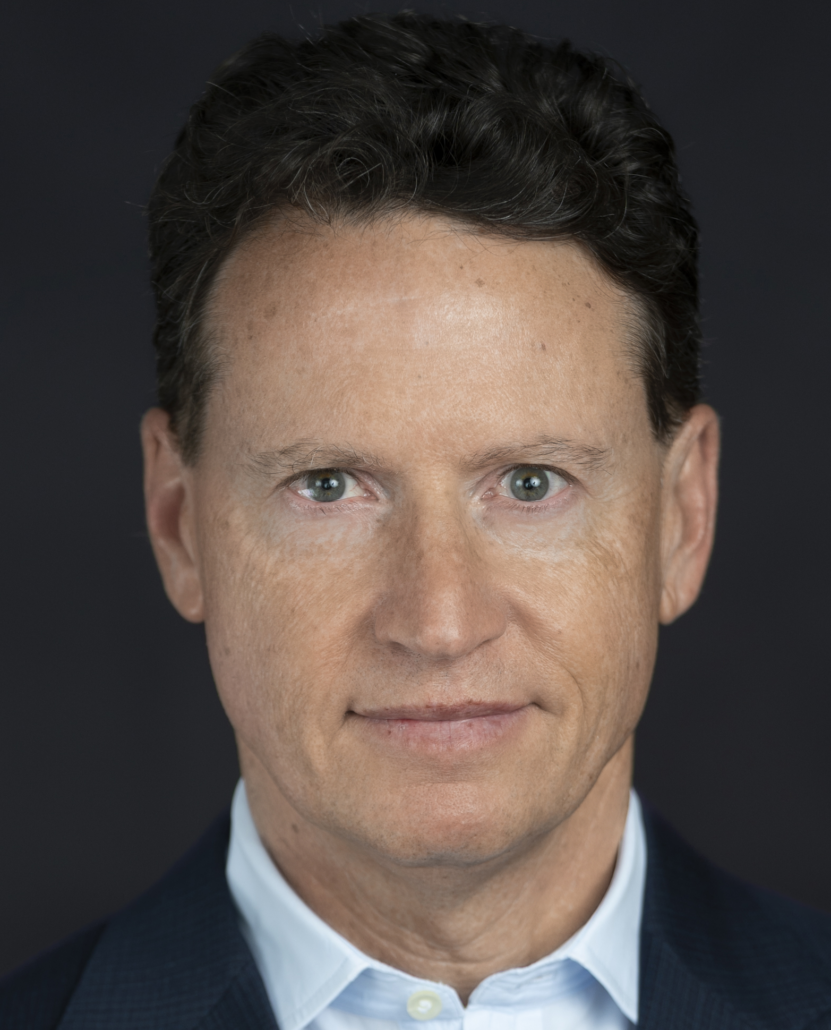
Theodore H. Schwartz, MD, is a neurosurgeon, author, and professor of minimally invasive neurosurgery at Weill Cornell Medicine and NewYork-Presbyterian Hospital.
#81: Theodore Schwartz – Gray Matters: brain surgery from the inside, the history and the future of neurosurgery
Theodore H. Schwartz is a neurosurgeon, author, and the David and Ursel Barnes Endowed Professor of Minimally Invasive Neurosurgery at Weill Cornell Medical Center and New York-Presbyterian Hospital.
In this episode of Stimulating Brains, we talk about his book Gray Matters: A Biography of Brain Surgery, a vivid account of what brain surgery really is – personally, technically, historically, psychologically, and morally.
We discuss what it actually feels like to be a neurosurgeon: the preparation before a difficult case, the pressure of thousands of micro-decisions, the responsibility for movement, language, memory, and personhood, and the question of when to enter the brain further and when to stop.
We also talk about Ted’s path from music and astrophysics toward neurosurgery, the culture of surgical training, trauma and gunshot wounds, the history of pioneers such as Cushing, Penfield, Dandy and others, as well as modern brain surgery, pituitary and skull-base surgery, awake mapping, aneurysms, epilepsy, psychosurgery and deep brain stimulation. We even wander toward consciousness, free will, brain-computer interfaces, and the future of less invasive and more computational neurosurgery.
At the center of these more philosophical questions lies a deceptively simple question: what can brain surgery teach us about the brain, the self, and the stories we use to understand who we are?
Theodore Schwartz 00:00What makes neurosurgery so hard is that psychologically you are responsible for someone else's, not just their life, but their ability to think, to move their arms, their legs, their memory. Thousands of micro decisions. Of course. Thousands of micro decisions. Every move is another decision. How hard do I pull? Where do I cut? Do I dissect this off? And then you get to the really critical decisions. Do I try to remove this last bit of tumor and risk damaging this blood vessel or this nerve? Yeah. I love thinking about the fact that some of my colleagues in neurosurgery, first of all, neurosurgeons have a unique access to the brain that nobody else does, right? Yeah. We can put electrodes into the brain and get single neuron or population neuronal activity and correlate it. with human behavior. 01:07Welcome to Stimulating Brains.
Andreas Horn Welcome to Stimulating Brains. I'm delighted to welcome Theodore H. Schwartz, neurosurgeon, author, and the David and Ursel Barnes Endowed Professor of Minimally Invasive Neurosurgery. at Weill Cornell Medical Center and NewYork-Presbyterian Hospital. Ted is widely known for his work in minimally invasive brain surgery, especially endoscopic approaches to pituitary and skull-base tumors, epilepsy surgery and complex brain tumors. But the reason for this conversation is his recent book, Gray Matters, a biography of brain surgery, which is one of the most accessible and vivid accounts I've read of what brain surgery actually is. 02:08Technically, historically. Psychologically and morally. The book is not simply a memoir and not simply a history. It begins with the mythology of brain surgery, the training pipeline and the violence of trauma. It then moves into the real work of neurosurgical judgment, how to weigh risk, how to choose an entry point, when to stop and what it feels like to be the only person in the room actually who can make the next microscopic decision. In the final part, Ted opens towards psychosurgery. The book is about brain surgery, deep brain stimulation, memory, consciousness, and then more philosophical topics such as free will and the future with brain-computer interfaces. So today I would like to ask Ted what it is really like to be a neurosurgeon, how his own upbringing, musical life and early interest in astrophysics shaped that path, what he learned from some of the great cases and controversies in neurosurgical history and how he thinks about the future as brain surgery becomes less invasive, 03:08more computational and perhaps more entangled with the very things that make us who we are. As always, thank you so much for tuning in. Stimulating brains. So Ted, thank you so much for joining us on the podcast today. I'm a big fan of your book, Gray Matters, the inner life of brain surgery and the future of neurosurgery. And it would be a fantastic journey to talk a bit about. Your motivation about it, what the book is about, and maybe also your general life as a neurosurgeon. The book also covers quite a bit about the history of neurosurgery, which you may know we do cover in the podcast quite a bit. So first off, thank you for joining. And then as you may know, I often start with a first question about hobbies. What do you do when not in the operation room?
Theodore Schwartz 04:06So I have two. I have two. I have two. First of all, thank you for having me on this podcast. I'm a fan, right? So I listen to your podcast. I really enjoy it. There's a need for it. And I think you do a fantastic job. So I just want to start with that. I have at this point in my life, I'm about 61. I have two hobbies that I've fallen back on as take up most of my time outside of work. The first is golf. I picked up golf about 25 years ago. And so I really. I really enjoy getting out on the weekends and being outdoors and hanging out with other people and also just working on the game. It's one of those things like neurosurgery where you could get better and better for the rest of your life, you know, and you're constantly trying to get better because it's so hard to do. And then the other thing is music. You know, I was a bass player, pretty serious bass player when I was younger and went to Eastman School of Music and Berklee College of Music. 05:05So I was a big fan of jazz bass guitar. And I still play and practice and use that to kind of distract myself from time to time.
Andreas Horn Wow, that's fantastic.
Theodore Schwartz You have to tell me a bit more.
Andreas Horn Is it just upright bass or is it electrical or both?
Theodore Schwartz Or it's electric. I started on the upright briefly, but I quickly switched to electric. And then, do I remember correctly, Berklee College, is that in Boston?
Andreas Horn Yeah, it is in Boston.
Theodore Schwartz And that was those were summer programs, Eastman, Berklee, things like that. Okay, really cool.
Andreas Horn So you played in jazz bands or in?
Theodore Schwartz Mostly jazz and then sort of R&B, fusion, soul music, you know, anything, you know, that's the kind of music I like because I think the bass parts are more interesting in there. Great, great.
Andreas Horn So you do mention the bass playing in the book as well. And that's a great segue into the, you know, your work as a neurosurgeon. 06:04Do you feel that the musical discipline as a. As a kid, as a younger person and maybe finger training ever translated or helped with neurosurgery?
Theodore Schwartz I my answer is yes to that, although, you know, I'm an N of one and I don't have a control of another life where I didn't play the bass and became a neurosurgeon to see if I would have a difference. But I do think that I tend to be very tactile and I spent a lot of my youth alone in a room. Practicing, you know, and just trying to become technically better at something where my fingers and my brain have to coordinate in a task. And neurosurgery is very similar to that. Obviously, there's technically great neurosurgeons who are not musicians, and I'm sure there's some musicians who are lousy neurosurgeons. So I'm not sure if there's a real correlation, but in my mind there isn't. I also love listening to music in the operating room, and I think it puts me in a state of mind where I can really. 07:07Focus when I need to and then be distracted when I need to, if you will, because I think both of those qualities are required during different aspects of neurosurgery because it is so psychologically demanding and sometimes you need incredible focus and sometimes being a little distracted is also not bad.
Andreas Horn Interesting. What type of music do you listen to?
Theodore Schwartz You know, I started out trying to bring my music into the operating room and I sometimes would listen to. So. Esoteric jazz music, and I found that the nurses and the residents just did not like that. So I tried to be to find stuff that we're mutually interested in. So sometimes I'll have the nurse put on what they want to listen to or the resident put on what they want to listen to. But then I'll fall back on Stevie Wonder, Chaka Khan or something that I really love that most people love as well. 08:00A big fan of the Red Hot Chili Peppers and Nice. Went in fire. Things like that. Great. I did have Joachim Krause on the show. And he's a he really likes very hard music. He would publicly say so. And apparently can't be hard enough. That's his words. And he did tell me that he even had Marwan Haris join the show with him, like a live concert in one of these festivals that he goes to. And I think he does play that music in the OR sometimes too, which maybe the nurses also may not approve of.
Andreas Horn But yeah, it seems to be a thing. Yeah. Yeah.
Theodore Schwartz You know. You realize like whenever you're leading a team, it can't just be all about you and what you want if you want the people around you to be happy and perform. So if I just put on all the music I wanted all the time, I don't think I'd have a crew working around me that was as happy to be on the team, if you will. So I tend to defer to them a lot of the time. You also describe a certain science fiction or Star Trek strand in the neurosurgical personality.
Andreas Horn 09:05Did you have that as a kid? And can you talk a bit about that?
Theodore Schwartz I did. I did. You know, in the book, I talk about the different personalities that go into neurosurgery, and I try to liken it to a high school cafeteria. You know, you walk into the cafeteria in high school and there's one table with the jocks and there's one table with the nerds, you know, and there's one table maybe with the musicians. And so there are a lot of there are several different personalities, but they're not an infinite number of personalities.
Andreas Horn Yeah.
Theodore Schwartz They go into neurosurgery. So there are athletes, right, who like the competition and the physicality of it, the challenge of it. And it is very physical. But then there's also sort of the Star Trek nerds who are interested in how the brain works, and they would be listening more to the Stimulating Brains podcast. I think that group, and I was one of, I was a little bit of each. I sort of describe myself that way. I mean, I did play some sports in high school and I was a musician, but I also loved Star Trek and I loved, I read science fiction. 10:05And I think that's why I was initially drawn in my career to epilepsy, which, you know, and brain stimulation and questions of consciousness and language organization in the brain in particular, because they overlapped with a lot of the themes that you read about in science fiction books. Really nice.
Andreas Horn What I personally really liked about the book is how you just paint a picture how the life is, right? Yeah.
Theodore Schwartz How it feels like to be a neurosurgeon. And obviously that's that's your picture and it might differ for different people. But I think you also try to make it more general and give the non surgeon reader just a sense of how that is. And I work with surgeons all the time every day and have in multiple institutions and I still never really paused and kind of mentalize their life that way. 11:00So that was really insightful to even for me.
Andreas Horn And I'm sure it's very interesting. Yeah.
Theodore Schwartz And I think that's an filmmakers. And filmmakers. And filmmakers. And filmmakers. And filmmakers. And filmmakers. And filmmakers. filmmakers. filmmakers. filmmakers. filmmakers. filmmakers. filmmakers. filmmakers. filmmakers. filmmakers. filmmakers. filmmakers. filmmakers. filmmakers. filmmakers. filmmakers. filmmakers. filmmakers. filmmakers. filmmakers. filmmakers. filmmakers. filmmakers. filmmakers. filmmakers. filmmakers. filmmakers. filmmakers. filmmakers. filmmakers. filmmakers. filmmakers. filmmakers. filmmakers. filmmakers. filmmakers. filmmakers. filmmakers. filmmakers. filmmakers. filmmakers. filmmakers. filmmakers. filmmakers. filmmakers. difficult, you then compare it also with, you know, not rocket science. And I think there's even some studies about the two things that come later in the book. So maybe can you briefly summarize
Andreas Horn what it really is like to be a neurosurgeon? And I would say for the listeners that you
Theodore Schwartz normally walk away if somebody tells you, no, you don't walk away. But if somebody asks you 12:00that question at a cocktail party, it's very hard to answer it in a few sentences. But maybe you can try here with a few more sentences, if you will. Of course. So I'm going to answer that in a roundabout way and sort of go back to the theme. One of the themes of the book was to deconstruct the myth of the neurosurgeon. And I, in my reading and in my sort of living in the world, narrowed that down to two separate myths that are intertwined. And one is the myth of
Andreas Horn that it's really hard to do, right? So the expression, it's not brain surgery,
Theodore Schwartz implies that it's an incredibly difficult, challenging task that requires sort of a brilliant megalomaniac mind, you know, to be good at it. And the second myth is sort of the mad scientist myth. And we see that in Hollywood more often, with, you know, neurosurgeons depicted in movies who are manipulating people's brains and usually, you know, not for good. 13:00They tend to be for negative reasons. And I tried to trace the origins of those two myths historically. And the myth of the brilliant neurosurgeon really goes back to Harvey Cushing, right, who was the founder of neurosurgery. And he really, you know, it's rare to have a field where it all goes back to one individual. But in neurosurgery, there really is this one individual. And yes, there were neurosurgeons before him who sort of did certain things that were certainly led to him being able to do what he does. But he took the field from a mortality rate of 50% when he started to a mortality rate of 8%, you know, and he made it from something that was just so risky that very few people dared to do it to something that became something that was reasonable to do, where patients left the OR in better shape than they were when they came into the OR. And every neurosurgeon on the planet is sort of a disciple of Harvey Cushing and can trace their lineage to him. And then the other myth of the mad scientist, I traced back to the frontal lobotomy. And we can talk more about that. But there was this period of time, 14:00you know, where neurosurgeons and neurologists were doing this operation.
Andreas Horn And we could talk about why it was done and whether it was successful or not at the time.
Theodore Schwartz But that, you know, really didn't have the scientific foundation at the time adequate enough for us to be doing it as much as we were. And a lot of people were harmed and hurt by that. And so people would, you know, the idea of rolling into an operating room and having an operation and coming out as a zombie or catatonic, or, you know, dumbed down, you know, really came from the frontal lobotomy. And it was a part of our history as a neurosurgeon that we swept under the rug. When I trained in neurosurgery, I never even heard the word frontal lobotomy. No one ever talked about it. And yet it was such a common procedure done in the 50s and 60s. And my father's a Freudian psychoanalyst. And so for me, I felt like I was putting neurosurgery on the couch and sort of trying to understand, you know, what this history was, this skeleton in our closet, and what the truth was. 15:00And I think that's what the truth was about it. So when you ask me what it's really like to be a neurosurgeon, part of it has to do with dispelling those myths that people have in their minds when they think about what it might be like to be a neurosurgeon. And as I go through the book, I talk about the fact that neurosurgery is extremely difficult to do, but not in the way that people think it is. It's not difficult to do and that you have to be brilliant, like you're solving quadratic equations at a desk, like a rocket scientist. What makes neurosurgery so hard is that psychologically, you are responsible for someone else's, not just their life, but their ability to think, to move their arms, their legs, their memory. All the things that make them them are at risk every time you bring someone into the operating room and operate on the brain. And it's an enormous responsibility to have. And we carry that burden. 16:00We carry that burden day in and day out. And most of our patients get better and do very well. And neurosurgery is very safe, but not everybody. And some of the operations we do are very high risk. And sometimes the outcomes are bad because we've done the best, not because we're negligent, because we've done the best we can,
Andreas Horn but we're dealing with such a difficult problem that it's not always solvable. And so we're constantly striving for perfection and we carry this burden on our shoulders of this feeling of, you know, did I do good enough? Was I good enough this time? Was I good enough this time?
Theodore Schwartz And facing that day in and day out year after year after year can be very psychologically traumatizing almost to some extent, because when you have those complications, it's very, very difficult to deal with that, to see those patients afterwards and the disappointment on the family spaces and seeing a patient who, for whatever reason, was altered by your surgery
Andreas Horn and not in a positive way. Does that ever get easier over the years?
Theodore Schwartz 17:02What happens, it's not that it gets easier, no. And in fact, many neurosurgeons over time will shy away from doing the most complicated operations because it doesn't get easier. But you get better at it. And so the frequency of those are much less, the severity of those are much less, your decision making gets better. So you're less likely to necessarily make decisions or take on operations where you know the risks are so high. Just because you've learned over time, just like any discipline where you learn over time. So, but it does not get any easier. And we carry these emotional scars with us in our heart and we think about these patients constantly. And so that's what makes it so hard. And yes, it's a difficult discipline. You have to learn an enormous amount of information and neuroanatomy, as we all know, is very complicated. You spend a lot of time studying that. And technically, to be great, yes, requires an amount of time. Yes, it requires an amount of time. It requires an enormous amount of discipline and talent. 18:01But you can be a very good neurosurgeon and do a lot of good and tackle difficult occasions without being a virtuoso if you do it long enough. So neurosurgery is really, it's a calling. It's one of these things that you don't just do casually. You take it on and it becomes like a marriage. It just becomes an integral part of your life. It's a life that defines who you are and will define who you are for the rest of your life, as many of our careers do. But a lot of neurosurgeons don't retire when they're 50. They keep doing it until they're 60, 70, until someone tells them it's time to retire because it's really so integral to who they are. And I think a lot of us have a very difficult time retiring because we don't know what to do with our lives when we've lost this big part of it.
Andreas Horn Makes sense. Yeah. Yeah.
Theodore Schwartz I've heard that quite a bit. And I had Rhys Cosgrove on the show who said, I think neurosurgery called or chose him, 19:02not he didn't choose it, but it chose him somehow. And it also felt like this calling, working close with him most of the time during the last three years in my career.
Andreas Horn So I very much can understand that, right?
Theodore Schwartz I mean, that must also bring a lot of sacrifice with it. Maybe also for the listeners or the young people that are thinking about this.
Andreas Horn Yeah. Yeah.
Theodore Schwartz I'd like to speak to that.
Andreas Horn Yeah.
Theodore Schwartz I'd love to. You know, and the calling just quickly, by the way, ironically, you know, Rhys Cosgrove, I know very well. And when I was a medical student and I was at Harvard Medical School, Rhys had just come to Mass General and I literally, you know, I latched onto him a bit and I remember helping him unpack his books when he was moving into Mass General.
Andreas Horn Yeah. Yeah. Yeah. Yeah. Yeah. Yeah. Yeah. Yeah. Yeah. Yeah. Yeah. Yeah. Yeah. Yeah. Yeah. Yeah. Yeah. Yeah. Yeah. Yeah. Yeah. Yeah. Yeah. Yeah. Yeah. Yeah. Yeah. 20:00Yeah. Yeah. Yeah. Yeah. Yeah. Yeah. Yeah. Yeah. Yeah. Yeah.
Theodore Schwartz You asked about the sacrifice. And, you know, there's no question that there are sacrifices that have to be made along the way. And when I first was thinking about becoming a neurosurgeon, you know, you hear all these stories about high divorce rates and you live in the hospital. And they're true. They're not apocryphal. They are real. I was very nervous about giving up all these other interests I had. We talked about music and my passion for that. And I'll never forget, I was in a conference where the med students are in a small seminar with a neurosurgeon. Sorry, not a neurosurgeon, excuse me, a transplant surgeon in medical school. And he was talking about his career. And I asked him point blank. I said, you know. I'm worried about the sacrifice. 21:00I'm worried about giving up my life for these things. I'm worried about the toll it's going to take.
Andreas Horn And he said, you know what, Ted?
Theodore Schwartz If you want people to depend on you, you have to be dependable. And I've never forgotten that phrase because what it meant to me is if you want to be someone who people call when they're in trouble.
Andreas Horn Yeah.
Theodore Schwartz And you want someone that they can rely on.
Andreas Horn Yeah. Yeah. Yeah. Yeah.
Theodore Schwartz And you want to be there. Right. You have to make yourself available to be there when you're needed. You can't just do it casually. And so if that's really what you want, if you want to be important to other people's lives, they're not just going to need you from nine to five Monday through Friday.
Andreas Horn Yeah.
Theodore Schwartz You have to make that decision and you have to sacrifice to be available, but it will be worth it. Right. Because you will get that sense of satisfaction and gratitude. And people give in. Right. 22:00And filmmakers. filmmakers. filmmakers. filmmakers. filmmakers. filmmakers. filmmakers. filmmakers. filmmakers. filmmakers. filmmakers. filmmakers. filmmakers. filmmakers. filmmakers. filmmakers. filmmakers. filmmakers. filmmakers. filmmakers. filmmakers. filmmakers. filmmakers. filmmakers. filmmakers. filmmakers. filmmakers. filmmakers. filmmakers. filmmakers. filmmakers. filmmakers. filmmakers. filmmakers. filmmakers. filmmakers. filmmakers. filmmakers. filmmakers. filmmakers. filmmakers. filmmakers. filmmakers. filmmakers. filmmakers. filmmakers. filmmakers. filmmakers. filmmakers. filmmakers. that their loved one was going to either die or be different when they left the operating room. That's what they're worried about. And when you can say to them, no, everything went great. They're going to be fine. It's such a sense of relief. And that human interaction, that connection that you can make with another person and their family that stays with them forever is worth it. It makes the sacrifice worth it. And so that's the beautiful thing about it. But you have to be willing to make the sacrifice to get those kinds of rewards. That's just what it takes. Of course. You grew up in Manhattan in a Jewish family with, as you mentioned, Freudian psychoanalyst 23:00father. So somewhat maybe an opposite there, right, when it comes to the brain. And a mother
Andreas Horn who survived the Holocaust. How did that maybe household shape your sense of mind growing up there in Manhattan about, you know, vulnerability, ambition, and medicine? How did your parents impact your life?
Theodore Schwartz You know, in writing the book, I didn't want to really make it just a memoir, but I realized I had to talk a little bit about myself to try to say, hey, this is what it was like for me. So, you know, to make it an accurate depiction. I will say, you know, about my mother, I'll start there. I grew up in a household with a mother who used to tell me she had a suitcase that was packed underneath ready to move at any moment in time. And I grew up in a loving, stable household in Manhattan. Dr. Yeah. Dr. You know, with not a fear in the world. But yet, my mother had a suitcase packed because she knew that at any moment in time. It may be time to go. 24:03Dr. Wow. Dr. Right. Things may not be safe. And you may not expect it. So. I think that emotionally sent me a message. Don't take anything for granted. Like, you have to work hard every day Dr. Hmm. Dr. to Dr. um. Dr. um. Dr. um. Dr. um. Dr. um. Dr. um. Dr. um. Dr. um. Dr. um. Dr. um. Dr. um. Dr. um. what you have and don't rest on your laurels. And I think that gave me a sense of sort of focus and drive to just keep pushing ahead. My father, as a Freudian psychoanalyst, loved to think about memory in the brain. And it's not really the opposite direction. It's funny you mentioned that. You know, I have a cartoon that I keep in my office and it's a picture of Freud analyzing a patient on a couch and he has a thought bubble above his head. And the thought bubble says, and so the patient is basically blabbing on and on about all this nonsense that's going on in his unconscious. And Freud looks like he's bored out of his mind listening to his patient. And the 25:00thought bubble says, and to think I could have been a neurosurgeon. And so, you know, and Freud really wanted to be more, understand the brain in a more physical way. And he just couldn't. So he used the tools that were available to him and come up with this, you know, his schema of the brain and I think of what I did in neurosurgery was a way of doing what my father does, but a little more aggressively, a little more invasively, you know, my father could get into the brain with his words and I wanted to get into the brain and if you will, one up my father, you know, like Oedipus as a, you know, Oedipal complex to perhaps win the affection of my mother. That's what the psychoanalysts would say. So I got a lot out of my father, just his passion for how the brain works, how memory works, you know, and I think that's what I want to do with my life. And I think I want to be able to do that with my life. And I think I want to be able to do that with my life. And I think I want to be able to do that with my life. And I think I want to be able to do that with my life. And repressed ideas, the unconscious, things like that. And I think that has carried through. And I talk about at the end of the book, my beliefs about free will, and the self, you know, consciousness, 26:00all of those things, and what I've learned from neurosurgery with respect to those things, somewhat tie in to the idea of the unconscious and the idea that so much of what we do and think is really below the level of our conscious behavior and things that we can't control. Your first declared major was astrophysics connected to a childhood dream of becoming an astronaut. What pulled you away from
Andreas Horn outer space toward the inner space of the brain?
Theodore Schwartz Well, probably my myopia was the biggest problem. You know, I was very nearsighted. I'm not sure I would have made it through the astronaut training program. As I mentioned, you know, I was a big Star Trek fan and science fiction fan. So obviously, that type of life appealed to me. I actually, my declared major was astrophysics. And the other thing that limited me was I just didn't have the math. I didn't have the math. I didn't have the math. I didn't have the math. I didn't have the math. I didn't have the math. I didn't have the math. I didn't have the math. I didn't have the brain to do that. I mean, if you want to do astrophysics, I was at Harvard, you have to be, you know, a brilliant mathematician, and I was a good mathematician, but I wasn't brilliant in that realm. And so neurosurgery, to me very much fulfilled my childhood ambition of being an 27:05astronaut because, you know, when I first saw microsurgery, and microsurgery is where a neurosurgeon is going deep into the brain and working under the microscope with very, with very, you know, small, delicate instruments, the tips are tiny, tiny, like insects legs, and we're literally working in an area the size of a postage stamp, you know, trying to remove tumors from delicate blood vessels. And so you sit in a chair, where your arms are supported, because you have to reduce your tremor. And you're sitting in a microscope, that's this 500 pound machine that looks down over the patient. And when I walked into the room, and I saw a neurosurgeon sitting in this contraption, it looked like they were in the cockpit of a spaceship. And it sort of looks like that. You know, if you've ever seen the movie Aliens, you know, the those explorers, they were sort of enmeshed in this seat that would allow them to navigate the universe. And so that's somewhat what microsurgery looks like. And, 28:03you know, we work with computers and heads up displays and navigation, and we're traveling to
Andreas Horn a place that very few people get to go. Yeah, just like, you know, an astronaut would travel to a
Theodore Schwartz planet that very few people would get to go and explore. So we have that experience. Every time we do microsurgery, we're going into a beautiful place that very few people get to go, we're seeing sites that are magnificent. And if you love neuroanatomy, you feel like you're looking, you know, in a crater on the moon, like an astronaut, where you've studied, you know, what it might look like for years and years, and then you go and actually see it, and you live in there and you walk around and you explore. And so neurosurgery sort of gave me that astronaut exploration of space desire that I had in a very tangible and less risky way, at least less risky for me.
Andreas Horn Yeah, makes sense. Fantastic. And I can very much relate to the anatomy piece, right? I've just
Theodore Schwartz 29:02recently, new in Cologne now, just recently went to the students course with anatomy and looked at, you know, cadaver brains, which is just beautiful to look at, right, now that I know more about the brain. And I can imagine, you know, in your case, it's a living brain, and you get to see all these details that you know so
Andreas Horn much about must be really a fantastic journey each time.
Theodore Schwartz And it's moving, by the way, it's, you know, the brain is, it's throbbing, every heartbeat, every respiration, the brain moves. And so it's like operating on a beating heart, you know, you're operating on a beating brain. So that increases the technical challenge of what we're doing.
Andreas Horn And we'll get to that when coming to the aneurysms in a second. But do you remember, maybe the first time you thought, I can imagine doing this for the rest of my life? So what really was maybe the moment that made it clear for you?
Theodore Schwartz So I'll never forget. The first time I saw neurosurgery, I was a medical student, and I walked 30:03into an operating room, it was at Beth Israel Hospital in Boston. And I saw the brain exposed. And I saw a surgeon working under a microscope delicately, you know, manipulating the brain. And to me, it was the most amazing thing I'd ever seen in my life. Like I did not, I couldn't imagine that a human being could do this to someone else, you know, and do it successfully. And that's what they did for a living. And honestly, I went into med school, I thought I declared what I thought I was going to
Andreas Horn do was international public health. Right? How different is that I thought I was going to be
Theodore Schwartz traveling to the third world, dealing with infectious diseases. And here was neurosurgery, where you're like, literally taking care of only one person, and you're consuming enormous resources to do it. It's the opposite of what I went into med school to do. But the minute I saw it, just like Reese Cosgrove said, neurosurgery chose me, I was flabbergasted. And then I thought to myself, I can't believe that all I have to do is choose 31:07that this is what I want to do. And I get the privilege of doing it. Like, I felt so lucky. That I'd found neurosurgery, because I said, I could do that for the rest of my life. That is amazing. And so it was a very easy choice for me. And I remember that moment. And but then you get
Andreas Horn nervous, right? As I said, I get scared about the sacrifice, the commitment, I also got scared about the technical issues, I thought, what if I'm not good at it? You know, what if I have a tremor,
Theodore Schwartz and I would, I would, you know, I remember reading a newspaper, when I was, you know, in medical school, and I looked at the corner of the newspaper, and I was like, I'm not good at it. And I was like, I'm not good at it. And I was like, I'm not good at it. And I was like, I'm not good at it. And I was like, I looked at the corner of the newspaper. So, you know, my hand is holding the newspaper,
Andreas Horn it's a very flimsy piece of paper, and about a foot and a half away is the corner, right? So
Theodore Schwartz it's far away from where you're holding it. And I could see the corner of the paper, flapping in
Andreas Horn the breeze. And I realized it was an amplification of my natural tremor, right? We all have a tremor.
Theodore Schwartz 32:03Sure. And you can imagine a science experiment, if you wanted to amplify your tremor, hold a, you know, flimsy piece of paper up in the air, that's about two feet long.
Andreas Horn Yeah. And it'll amplify it and start moving in the breeze. And I was like, Oh, my God, I have a tremor. Like, can I do this operation? So I started trying to eat Chinese food with chopsticks in my
Theodore Schwartz left hand. This is how this is how crazy I was, to see if I could train my hands to be a better neurosurgeon. So I would eat all my food with chopsticks in my left hand. And I would realize that like how many cups of coffee I could drink to make my tremor better or worse. And then you realize how to control it, you know, and when you're in the operating room, not only do we erase our hands and our fingers in very particular ways, in so that we minimize our tremor, but we also control our breathing, you know, and I very aware of the fact that as I'm making a cut, if it's a very delicate cut, I'll breathe in and I'll hold my breath, you know, until I make the cut, and then 33:01I'll start breathing afterwards, because you know that your breathing affects your tremor, and you figure out how to reduce it at every step. And now these are things that I do without thinking about it. Sure. Because my body just automatically does it. Amazing. Your book is in some ways a very American book, because it also starts or in the early chapters, there's the match and then residency, emergency rooms, gunshot wounds, trauma call and so on, academic competition. I, you know, I spent, as you may recall, the last five years or so in the US, and there was a big difference for me coming from the German system where neurosurgery is still considered a very, very important part of the human body. And I think that's a very important part of the human body. And I think that's a very important part of the human body. And I think that's a very competitive discipline, but it, it is, I would say much easier to get in. On the other hand, though, the pay is much less, right. So there's a big difference in the culture, especially between neurosurgery,
Andreas Horn and maybe not as much between neurology across these two countries. So do you want to talk a
Theodore Schwartz 34:01bit about what maybe makes neurosurgery in America particularly special? I think your question is veryarks. And if you're an international student, if you're an international student, if you're an international student, if you're an international student, if you're an international student, if you're an international student, if you're an international student, if you're an international student. If you're an international student. If you're an international student. If you're an international student. If you're an international student. If you're an international student. If you're an international student. If you're an international student. If you're an international student. If you're an international student. If you're an international student. If you're an international student. If you're an international student. If you're an international student. If you're an international student. If you're an international student. If you're an international student. If you're an international student. If you're an international student. If you're an international felt that Germany prizes its scientists, at least then when I was there, more so than America, you know, and I could be completely incorrect. But that was my feeling at the time. And I was young. And it just was a wonderful academic place to be at, which I love. Neurosurgery in America is
Andreas Horn interesting, because, you know, I would say that America is very much the birthplace because of
Theodore Schwartz 35:03Harvey Cushing of neurosurgery. And our top journals are, you know, in English, for the most
Andreas Horn part, English, of course, is the universal scientific language. But what's interesting
Theodore Schwartz about neurosurgery, and as a business, you know, the American healthcare system, I don't think it's neurosurgery, per se, I think the American healthcare system is unique, because it's, it's, it's a confused system. It's not a socialized system. And it exists in there's so many different versions. And that, by the way, the gamut of salaries, in neurosurgery in America are enormous, because you can practice neurosurgery in a very socialized way in America. And you can also practice it almost like an entrepreneur in a private business in private practice. So we have the whole gamut of neurosurgical practices, and pay scales, some of which are less than you would make, believe it or not, in Germany, and others alternatives are much more. So it's just, it's just, it's not one system. It's like,
Andreas Horn 36:03makes sense, 20 to 30 different systems.
Theodore Schwartz So, but I will say, there's one thing I want to say, there's one thing I want to say, sorry, I paused for a second. But what I wanted to say about American neurosurgery is that my neurosurgical practice has grown the most when I traveled abroad. So although American neurosurgeons like to think that they're sort of the best, or, you know, we're very, we have a great system. And I think that's a great system. And I think that's a great system. And I think that's a great system. And I think that's a great system. And I think that's a great system. And I think that's a great system. And I think that's a great system. And I think that's a great system. So many of the best neurosurgeons, and the ones who do the most innovative things, do not work in America, per se, you know, one of the, technically, the greatest neurosurgeon of the 21st century was
Andreas Horn Ghazi Yasser Gil, right? And he was not an American, he's thought to be he's the one who
Theodore Schwartz introduced the microscope into neurosurgery, that was a huge revolution in neurosurgery that occurred not in America, and all the Americans would travel to watch him operate. 37:01Hmm. I learned how to do endoscopic surgery through the nose by going to Italy, and the Italians were the leaders in that. I learned how to do minimally invasive surgery through the eyelid by traveling to South Korea. And there's, you know, there were people in South Korea, gentlemen, there, who sort of was the best at doing that surgery. And those surgeries then had to come back to America and be pop become popular in America. So we're not always leading the way in everything that we do. Obviously, there's a lot of things, a lot of the equipment, you know, can be developed in America, but a lot of the equipment is also German, like I use Paul Stortz, and we use Olympus. And we, so it really is a very international practice. Yeah. And then speaking a bit more about the American system, especially the match and how, you know, the, I remember just from the sidelines, for example, experiencing the, you know, after, to get into residency, right after med school, how tough the interview process was for the
Andreas Horn 38:03lucky people that were, for example, interviewed at the MGH, at the Mass General, right? That
Theodore Schwartz it's, it's multiple days of interviews, and they're being grilled, I think, is that,
Andreas Horn can you maybe talk a bit about these?
Theodore Schwartz Well, it's gotten much, it's gotten much easier, you know, and there's a lot less you can do now. When I did it, there were no rules, you know, there was no DEI, you know, they could do and say whatever they wanted to say to you. And I write a little bit about that. I mean, I remember one of the interviews they had, they made me throw, you know, I was like, I'm going to do this,
Andreas Horn thread a needle, right? They actually had me pick up a needle and thread to see if I could
Theodore Schwartz put the thread through the needle. You can't do that today. I had one of the interviewers look at me and say, you know what, you went to Harvard College, Harvard Med School, you're probably a
Andreas Horn big wimp. You know, how do we know you can handle it, the hard work? So all of that training that I
Theodore Schwartz had done was used against me, as if, and neurosurgery is very much a blue collar job in many ways. You like to think of it as this profession, you know, you're going to do this, 39:03you're going to do this. And those things are very hard. And those things are very hard. And those things are very hard. And those things are very hard. And those things are very hard. And those things are very hard. And those things are very hard. And those things are very hard. And those things are very hard. And those things are very hard. And those things are very hard. And those things are very hard. And those things are very hard. And those things are very hard. And those things are very hard. And those things are very hard. And those things are very hard. And quick. We're drilling very quickly through the bone. There's bone flying everywhere. There's blood everywhere in those cases. And it's work. It's physical work to do surgery, to get in and out of the skull takes an enormous amount of work. Right. So you did mention multiple times Harvey Cushing as the founder in neurosurgery, and that is probably absolutely correct and deservedly so. I think there were also famous neurosurgeons in London that you talk about, maybe even before his time. How, I think I really learned a lot about the history, you know, not just about Harvey Cushing himself, but also about the other players in that time. Do you want to give a brief overview,
Andreas Horn since you mentioned him, you know, who else played a big role in these very early days?
Theodore Schwartz 40:01So there was a neurosurgeon named Victor Horsley, who practiced in London and did some of the first successful neurosurgery. And he was a neurosurgeon who was a neurosurgeon who was a neurosurgeon who was a neurosurgeon. And he went to visit him. And, you know, there's a history of American neurosurgeons traveling abroad. And Cushing went and worked in physiology laboratories and pathology laboratories to learn what he could. But they never really made the radical transformation that Cushing did by making it just so methodical and careful. And he took a long time in his operations. and there were obviously, you know, neurosurgeons from all around the world who came to visit Cushing, who became enormous neurosurgeons, went back to their countries and also neurosurgeons in other countries. You know, obviously I have a very American centric view of things and I I don't want to be seen as saying that sort of America is the best, etc. 41:01So there were great neurosurgeons. There was one, Hugh Cairns is another one, who was Australian and went back to London and, you know, was a remarkable neurosurgeon, invented the motorcycle helmet. I tell his story as well. You know, Marcotte was a French neurosurgeon who invented the hemicraniectomy. The power drill, here's another fascinating thing, was actually invented in France. The electric drill to open the skull and was never adopted in America for a long time. And so, you know, there were a lot of neurosurgeons who were because Cushing didn't like the power drill because he was worried that you would plunge into the skull. So he would drill holes in the skull with a handheld sort of crank and then put a saw that looked like a wire with teeth on it and pull from the inside out. And that's how Americans
Andreas Horn did craniotomies for many years, whereas abroad they were using electric instruments, which we eventually moved to. So in no way, you know, is America sort of the pinnacle of neurosurgery?
Theodore Schwartz 42:00And I very much want to... I emphasize that, that it really, you know, there's great things happening all around the world. And as I said, I've learned so much from traveling abroad and seeing what's happening abroad. No, I think, and just for the listeners, you give a very non-American centric overview. I think when I mentioned it before, I meant more maybe the match process and the kind of current life of neurosurgery in the U.S. But I think the history piece is really great, and I think it's a very well written and I learned so much. I must even say, you know, I worked at the Brigham. I admired Cushing, still do, you know, was a fan. I'm a fan. But I also learned via your book that he may not have been the most, the easiest character of them all. Right. So there's, which is sounding that there is also, you know, two sides of the story. But I think we can still praise his success. And he, I think he wrote a lot. 43:00Almost every... Even... I think the beginning is what I learned. And he did actually win a Pulitzer Prize, right, by, for his memoirs or his biography of Osler. And so he's in many ways, I think, a very fascinating character and had... So I think it's very deservedly so that you say it was the pinnacle of neurosurgery. I think that... So my questions were not... I was just trying to paint a picture of what happened around him during the same times. And then maybe we can talk a bit about him, but potentially also about people like Walter Dandy, Ben Carson, or the other people that came after him or trained with him. If you, if you want to give some...
Andreas Horn Yeah, well, one of the, one of the goals of the book was that I found that, you know, that most people don't really know who the most famous neurosurgeons were that really created the field of neurosurgery. Yeah.
Theodore Schwartz And the names that I wanted to convey were Cushing, Dandy, Penfield.
Andreas Horn 44:00Yeah.
Theodore Schwartz And then Yashar Gill. You know, in my mind, those are sort of the four names that really founded the field of neurosurgery as we know, and, you know, made seminal contributions along the way without whom we wouldn't really be doing, you know, what we do today. And, you know, Cushing's contribution was really making neurosurgery safe. And as I mentioned before, it went from a 50% mortality to an 8% mortality in his life.
Andreas Horn Yeah.
Theodore Schwartz So... But he was very slow and meticulous because that was the only way to make it safe, was to be able to do it.
Andreas Horn Yeah. And so, you know, the first thing that he did was to be incredibly careful. You know, neurosurgeons before that, they were like barbers, right? Because anesthesia wasn't very good. So the faster you were, the better the surgeon you were. But for brain surgery, that doesn't work. And so he had to figure out how to make it safe. But then Dandy, who was his disciple, his protege, and they had a very confrontational relationship. Yeah. Yeah. Yeah. Yeah. Yeah. Yeah. Yeah. Yeah. Yeah. Yeah. Yeah. Yeah. Yeah. Yeah. Yeah. Yeah. Yeah. Yeah. Yeah. Yeah. Yeah. Yeah. Yeah. Yeah. Yeah. Yeah. Yeah. Yeah. Yeah. Yeah. Yeah. Yeah. Yeah. Yeah. Yeah. Yeah. Yeah. Yeah. Yeah. Yeah. Yeah. Yeah. Yeah. Yeah. Yeah. Yeah. Yeah. Yeah. Yeah. Yeah. Yeah. Yeah. Yeah. 45:00Yeah. Yeah. Yeah. Yeah. Yeah. Yeah. Yeah.
Theodore Schwartz And Cushing said something like, you know, use your right hand to do that. You're clumsy enough with your left hand or something like that. Like, don't use your left hand. Use your right hand. You're clumsy enough. And really, and then when Cushing left and went to the Brigham from Hopkins, he didn't take Dandy with him. And that was really a slap in the face. And Dandy was more, whereas Cushing was sort of a blue blood, you know, from a wealthier family in Boston. Dandy was really from a working class family. So he had a little more of this desire to be successful and to prove himself. And so he made surgery much faster. He would do several cases in a day. And he was also more of a technician. You know, he was probably technically better than Cushing in terms of what he was able to achieve. And so he's sort of the pinnacle of technical neurosurgery. And then Wilder Penfield, you know, was the surgeon who really operated on the brain. 46:00Less as an anatomic organ and more as a functional organ. So he began to realize that we can operate on the function of the brain. And did obviously a lot of his work awake with epilepsy mapping. And taught us about language organization in the brain. And the representation of motor cortex and sensory cortex and memory. And how memory is organized in the brain. And then Yastrogyl was the transition to microsurgery. You know, it was sort of like the next stage after Dandy. Was using microsurgery. And now, you know, a lot of the progress that we've made in neurosurgery is because of technical innovation.
Andreas Horn Yeah.
Theodore Schwartz So we can now use computers. You know, we can now use endoscopes. We can now use focused ultrasound. You know, as all these tools come into view, just like the microscope was a revolution. We're now having a revolution every five years as we have new tools that get introduced into neurosurgery. That allow us to manipulate the brain with different energy sources. In ways that are less and less invasive and more and more effective.
Andreas Horn 47:00Yeah.
Theodore Schwartz And it's great that you, you know, brought this point up that you make that in a way many people know what neurosurgery is and have their myths about it. Right.
Andreas Horn That could be the mad scientist idea or the, you know, yeah, overworking genius.
Theodore Schwartz And you still mention, I think, if you ask the general public name, just one neurosurgeon by name, probably most people can't.
Andreas Horn Yeah.
Theodore Schwartz Say a single name.
Andreas Horn So it is an interesting point that it's probably similar with academics too, right?
Theodore Schwartz Where I feel like this breakthrough prize that they opened up was that idea a bit to kind of roll out the Hollywood carpet for academics and kind of celebrate them. Could maybe think maybe society should do that a bit more, not to be celebrated, but to, you know, cherish these achievements too. So I think it's a great point that you make there.
Andreas Horn 48:00And yeah, there are really, they were unsung heroes and it's good to kind of inform the public that what they did.
Theodore Schwartz You then, I think, move on towards the specialties within neurosurgery and go through the book. And I think there's an order to it. The first clinical part spends a lot of time on trauma.
Andreas Horn So penetrating injury, gunshot wounds, blunt trauma, subdural hematomas, concussions and sports. Why did you begin there? And what did you want to talk about there?
Theodore Schwartz So there was two reasons to start with trauma. One was that I could use trauma to introduce the anatomy of the brain and talk about what the different lobes of the brain did and bullets that go through different parts of the brain and what that might cause. So it was a nice way to introduce brain anatomy. The second reason was I wanted to take the reader through a neurosurgery residency. In a way.
Andreas Horn 49:00Yeah.
Theodore Schwartz And many neurosurgeons, the first thing you learn to do as a junior resident is handle trauma.
Andreas Horn Yeah.
Theodore Schwartz Where you're basically just removing the bone or you're removing a blood clot and you have to open the dura and that's it. You're not really going into the brain and then you start going into the brain. But the first things we do are all trauma. And so after that, we get more and more complicated and start removing tumors and doing aneurysms and then you have functional neurosurgery. So a lot of lay people don't understand. The organization of the book, but it's organized based on surgical specialties and surgical residency training so that they get that experience unconsciously without realizing that they're essentially doing a little mini neurosurgery residency while they read through the book. That's great. And I think in this chapter also on penetrating head trauma, it was a lot of fun to read this really well done because you do move between modern cases and historical cases such as Lincoln. So the. Six. 50:04Six. Six. Six. Six. Six. Six. Six. Six. Six. Six. Six. Six. Six. Six. Six. Six. Six. Six. Six. Six. Six. Six. Six. Six. Six.
Andreas Horn society? You know, how do these things meet each other? Yeah. You mentioned the cases,
Theodore Schwartz and I want to just talk briefly about that. So one of the goals of the book was to make neurosurgery understandable to the lay public. And one of the challenges is how do you get people
Andreas Horn interested in reading a book about brain surgery? Sure. And so my answer to that was, I'm going to
Theodore Schwartz tell the stories of celebrities, politicians, sports figures who they know. And they know, 51:01in some cases, they know they had a brain tumor or had surgery. In some cases, they don't.
Andreas Horn But I'll tell their stories from my perspective, from a neurosurgeon's perspective. What is interesting about this case? You know, a lot of lay people know that Natasha Richardson,
Theodore Schwartz the famous actress, fell over and hit her head on the bunny slope and then died of a hematoma. But they don't really understand why. And so I can use
Andreas Horn those cases to get them interested, but then say, hey, the reason why was because there was a delay
Theodore Schwartz in making the diagnosis and doing her surgery. And if she, and she never had surgery, but if they had made the diagnosis quickly, we easily could have saved her life. And so one of the big problems with head trauma is the delay it takes to get into the hands of a neurosurgeon. The second thing with a lot of the gunshot wounds, you know, we know that Kennedy was shot. We know that Lincoln
Andreas Horn was shot. You know, we know that both Kennedys were shot, RFK and JFK. And Gabby Gibharts and Brady and Malala. But from my perspective, the question is why did some of them survive and others didn't? And when a neurosurgeon looks at a gunshot wound, we're
Theodore Schwartz 52:02thinking about the energy that is transferred from the bullet into the brain. And the second thing is
Andreas Horn what part of the brain is it passing through? And the third thing is what are you going to do to treat it? So when you talk about the energy, it really has to do with the velocity of the bullet.
Theodore Schwartz And the lay people don't really appreciate the fact that a bullet traveling, 2,500 feet per second, like that shot Kennedy is very different than one traveling 400 feet per second, like that shot Kennedy, and that the amount of energy is going to be dramatically different. And the damage done is dramatically different. And then you talk about what part of
Andreas Horn the brain did it go through the left side or the right side? Do they have language? Do they not have language? And then the last part is how do you manage it? How do you reduce the key is to
Theodore Schwartz reduce the pressure quickly. And just removing the skull, doing what's called a hemicraniectomy saves an enormous amount of lives. So you're reducing the pressure very quickly. And if you don't have that operation quickly, after a penetrating head trauma, your chance of survival is much less than if you do. So it's 53:02about simplifying it into what are the most important things and learning a bit about anatomy and how neurosurgeons think in those situations.
Andreas Horn That's super interesting. I also did not appreciate the difference in speed, just based on historical
Theodore Schwartz developments. I think you said Kennedy twice, but the second one was Lincoln was much slower,
Andreas Horn right?
Theodore Schwartz Then the Kennedy bullet.
Andreas Horn So there was two Kennedys, right? It was JFK and then his brother was also shot in the head. So I tell both of those stories. Really fantastic. So what do parents, athletes, coaches, and physicians still misunderstand about concussion?
Theodore Schwartz I spend a lot of time about concussion just because it's another subject that the general public is very interested in. And that overlaps with neurosurgery and what we do. And so I think that. That. You know. I. I have four children. And I grew up in a. A. A. Community. Where. Like. Every. Child. Plays. A. 54:00Team. Somewhere. Everybody. Plays. A. Sport. And. Every. Gets. A. Concussion. At. Some. And. So. The. Number. Of. Call. I. Got. From. Parents. Worried. About. Their. Child. How. Long. Do. will equate Natasha Richardson falling on the bunny slope who died of a epidural hematoma with their child who gets hit in the head playing soccer and football and is worried that their child is going to die and they need a CAT scan. So the first point is that if you look at the incidence of epidural hematomas during sports, it's incredibly rare. And most of the time, most of the cases are actually kids who got hit in the head with a golf club because they were watching someone else play golf and they were standing in the wrong place. They weren't even playing the sport. So the first thing is like, this is not a Natasha Richardson situation that we're dealing with. The second question issue is, okay, there are reports every year and in football 55:04that people are aware of, of children who will go into a football game, get hit in the head and then collapse on the field and die. So that's the second fear that my child is going to die. And that's from a phenomenon called second impact syncope. And again, this is, this is all acute trauma. And second impact syndrome is a real phenomenon, but it's poorly understood because when you look at the cases that happen and there's about two or three cases a year of kids who will die playing football, you know, in either elementary school or high school. And those cases occur because of brain swelling, because of lack of cerebral autoregulation. In the teenage brain. But it doesn't have to be a second trauma. A lot of them, it's the first trauma. It's a very rare occurrence. And the truth is, if you look at deaths from sports in 56:02children, twice as common as getting hit in the head is dying of heat exhaustion. So if you look at the number of children who die playing sports every year, twice as many will die because they're dehydrated and they're running around in the sun as will die from head trauma. And then football isn't even the number one sport. Like women's crew has a higher rate of sudden death from heat exhaustion than football. So it's sort of about redirecting like, okay, yes, there is a bit of an issue here, but there are so many bigger issues that we could be dealing with. If you're worried about your child dying, playing sports, this is not the number one issue. And then the last thing for people to understand is when we think about concussion and the damage from concussions, um, we think about, chronic traumatic encephalopathy or CTE, which is the long-term effect of multiple concussions. And what most people don't understand is that if you get hit and you literally lose consciousness, 57:02you think that, oh my God, my child's brain has been damaged and their risk of chronic traumatic encephalopathy is higher in the long run. But those events are not the ones that contribute to the long-term effects of multiple concussions. It's really the sub concussive injuries. It's all
Andreas Horn the multiple hits that you take, even heading a soccer ball, right? Multiple heading of the soccer
Theodore Schwartz ball is more dangerous than playing rugby once and getting, and passing out because you get hit so hard in the head, you're at more risk for playing soccer where you're, you're, you never lose consciousness, but you're heading the ball constantly. That's worse for your brain than one loss of consciousness. So those types of facts are important to understand because it makes you realize that, well, high school football in and of itself is probably not that dangerous.
Andreas Horn Yeah, yeah, yeah.
Theodore Schwartz what's dangerous is if you go on and play college and professionally, and you're having these hits again and again and again and again, and not the big ones, but the little ones that just build up. So I try to tell all those stories to give a real context and perspective 58:05on sports and head trauma and concussion.
Andreas Horn There's a lot also on NFL, but also are we free to choose our profession?
Theodore Schwartz Even maybe as a soldier, the life would be more dangerous. I think you bring that up. And then I think you do talk about NFL actually leading the field there where FIFA with the soccer might not be yet international. The international rugby and soccer leagues do not accept CTE, chronic traumatic encephalopathy. They do not accept it as a phenomenon. And it exists, and it's reported, but it's not yet accepted worldwide. So that's an area where, yes, I think America is leading. The way a little bit.
Andreas Horn Yeah.
Theodore Schwartz One of my favorite aspects of the book is, again, that you show the internal life of a neurosurgeon. I've briefly mentioned it in the beginning, but also I think you do paint a picture sometimes that you may wake up at 4 a.m. 59:00before a difficult case, kind of reviewing anatomy textbooks again the night before, mentally rehearsing the operation, and then entering the operation room. I guess probably this goes a bit down, with experience that you don't do it as extensively anymore these days,
Andreas Horn but it probably never really stops. And it's part of the drill or part of the discipline you guys have to have. Do you want to talk a bit about that?
Theodore Schwartz So the truth is I still wake up at 4 in the morning before a difficult case and worry about that operation. And I'm constantly... I look at an MRI scan. And I turn it into a 3D representation in my head of what I'm going to see. And I work through each of the steps of the surgery, opening the skull, opening the covering of the brain, what's the anatomy that I'm going to expect to see, 01:00:01where are the important nerves and blood vessels going to be with respect to the tumor I'm taking out. And I rotate that in my head and I think about different approaches and each of the steps and where I can get into trouble. Hmm.
Andreas Horn Yeah. Yeah. Yeah. Yeah. Yeah. Yeah. Yeah. Yeah. Yeah. Yeah. Yeah. Yeah. Yeah. Yeah. Yeah. Yeah. Yeah. Yeah. Yeah. Yeah. Yeah. Yeah. Yeah. Yeah. Yeah.
Theodore Schwartz That's the focus of neurosurgery. It's funny because, you know, I told you one of my hobbies is playing golf.
Andreas Horn And often I'll get up to the tee box and, you know, I'll be playing with someone who's in business and finance. And they'll say, well, you know, what are you thinking about?
Theodore Schwartz I'll say, you know, I'm thinking about all the things I can do wrong. I'm thinking about all the problems I can encounter. And they said, oh, my God, that's the opposite. He goes, when I'm thinking, I'm thinking all the good things that can happen. The people in finance. So whilst they're like, you know, I'm thinking about confidence and that it's going to go great. And they realize that I'm thinking about avoiding all the problems that can happen. So it's just a different, it's a different mindset. But I think even from time to time now, I still will go to a textbook if I'm doing a surgery where I haven't done that particular surgery in a long time. 01:01:07And I just want to review the anatomy and refresh myself. Now we can avail ourselves of, you know, videos online. There's so many videos of surgery that we can look at if we need to. But I do less of that now because now I'm so much more experienced. And I've, you know, seen most things and know what things look like. But it doesn't take away from that four in the morning worry. And that happens days beforehand. When I know I'm doing a tough surgery next week, I'm already thinking about it a week in advance. And I'm worried about what could happen. And I'm reminded of other times I did that operation.
Andreas Horn And you think about, you know, when things went wrong and why they went wrong.
Theodore Schwartz And what you can do to prevent that from ever happening again. It does not sound enjoyable, to be honest.
Andreas Horn But, yeah, we did talk about that before.
Theodore Schwartz So you also described the tension, maybe inner tension, between the doctor who must show empathy and care. Very important, of course, to your patients.
Andreas Horn But then maybe as a surgeon, you sometimes even have to have the quiet heart and focus on flawless execution. 01:02:07How do you manage that switch? Is it kind of with anesthesia on versus off? Or how does that work?
Theodore Schwartz So there's an emotional flexibility that's required where you need to become emotionally cut off at certain times. And emotionally very open and sensitive at other times. And that flexibility takes time to learn. And it's challenging to turn it on and off. Obviously, when you're talking to the family or you're talking to the patient, you need to be very sensitive. And caring and open yourself up. But when you're in the operating room, a lot of that has to be turned off. Because it's all about executing your plan. And trying not to step outside of yourself. Trying not to step outside of the moment. You know, when you're doing neurosurgery, it's the ultimate in mindful meditation. 01:03:03You are completely present in the moment. Nothing else in the world exists. It's like meditating.
Andreas Horn And that's one of the things I love. Because, you know, you lose yourself, right?
Theodore Schwartz And you think about how wonderful it is to not be worried about your past and your future. And all the concerns that we have as a human being. You know, when you're doing neurosurgery, nothing else in the world exists. And when you get into trouble is when you start to think about the meaning of what you're doing. You start to think about the person that you're operating on.
Andreas Horn And what happens if this goes wrong?
Theodore Schwartz And like his wife is friends with my wife. And my wife's going to hear about, you know, if there's a problem. And, you know, because then you can't focus on what you're trying to do. And you start second guessing yourself. And when it becomes difficult, I didn't write about it in this book. I've thought about it is when you're operating on someone you know. 01:04:00And many surgeons say they will never operate on someone they know. They think it's crossing a line. I have operated on people that I know. And that I wouldn't do it early in your career. You know, I think you do that very later in your career when you know what you're doing. And you feel like, you know, you can do a better job even knowing who they are than someone who maybe doesn't know them. But is not as experienced as you are. But when you operate on someone you know and you're doing brain surgery through the top of the skull, you know, everything is draped off. So really all you see is the anatomy you're operating on. You don't see the person. Right. And that can make it easier. But I also do surgery where I operate through the nose.
Andreas Horn Yes.
Theodore Schwartz And on a couple of occasions I've operated on people I know where I've had to do a surgery working through their nose with an endoscope in a minimally invasive way. And so then every time you look down at the operative field, you literally see their face because their face is not draped off. Oh, yeah. And that's yet another level of challenge because you can't just drape everything away. 01:05:02You're literally reminded constantly through the operation that the person you're operating on is someone you know.
Andreas Horn Yeah.
Theodore Schwartz And that can be very challenging. And obviously takes a lot of effort. And a lot of discipline and a lot of emotional, the ability to emotionally detach yourself and just focus on the task at hand and what you're doing.
Andreas Horn Yeah. Yeah.
Theodore Schwartz Must be challenging.
Andreas Horn Yeah. Makes sense. Another point that you bring up I found very interesting is about that, you know, who makes decisions and when.
Theodore Schwartz And obviously we, you know, if we don't think about it, we would think it's always up to the patient what, you know, they consent and all that. Right. They. You'll talk with them beforehand. You will want their opinion maybe in some things.
Andreas Horn But in many points, so first of all, when they're in the operation room under anesthesia, you can just ask them, right?
Theodore Schwartz That's one point.
Andreas Horn But the other point is so if something happens and you have to essentially make a decision on the spot, then the other point you bring up is that you are often the person that just knows best because how can a lay person even weigh all these risks?
Theodore Schwartz 01:06:08But you may not know. You may not know. The person's best. And you have to then kind of simulate what you think they would want in that situation. And it felt like probably 100% true that you're almost always kind of the person that has to decide or at least have to guide them, co-decide. Right. And that's a lot of burden too. Right.
Andreas Horn Can you talk a bit about that process and what it does to you too? Yeah.
Theodore Schwartz That was well said and described the way you did. And it is part of the burden of neurosurgery. Right. Which is that, you know, before neurosurgery, you have a conversation with the patient. You try to run through all the risks of surgery. And even that conversation is a very unique conversation because you want to be open and honest and tell them that there are risks to doing the surgery and lay out what those risks are. On the other hand, you don't want to terrify them. 01:07:00Sure. And make them say, no way I'm having this surgery. It sounds way too risky to me. Because it depends what the surgery is, of course. But there are many situations where they need that surgery. This has to be done. Like if you don't do the surgery, you're going to go blind or you're going to die or, you know, something's going to happen. You're going to be paralyzed. You have to have it. And in fact, those are the surgeries that carry the most risk. So you want to tell them what could happen, but you can't terrify them. So the way you do that has to be done carefully. And everybody's personalities are different. And some people can handle it and some people can't. And so you get feedback from the patient as to how much they want to know and how much they don't want to know. But then ultimately, they're going to have to do it. And the truth is they can never fully appreciate, for example, what a life would be like if they didn't take the tumor out. You know, what their life will be like if they run away from the operation because they're so scared of the complications. And you've seen that. You've seen those patients who don't get treated for a long period of time and how bad things can be. 01:08:00Or if they choose a treatment that sounds less risky to them, which often is a radiation, for example, for a tumor. But they can lead to something called radiation. A process which can be a horrible situation that can be avoided with a safe surgery. It's very hard to let them know how bad that can be in some situations. Ultimately, though, when you're under when they're under anesthesia, you can't ask them any questions.
Andreas Horn And when we do brain surgery, we're literally making thousands of micro decisions, thousands of micro decisions. Every move is another decision. How hard do I pull? Where do I cut? Do I dissect this off? And then you get to the really. Critical decisions. Do I try to remove this last bit of tumor and risk damaging his blood vessel or this nerve? Or do I leave the tumor behind to try to preserve the nerve, knowing that the tumor may grow back? And then you think, well, in what time period will it grow back? How old is the patient? And all those decisions have to be made.
Theodore Schwartz And you can't ask the patient at that moment in time because you didn't know how firm the tumor was going to be. 01:09:00You didn't know how stuck the tumor was going to be.
Andreas Horn So you ultimately have to make that decision on your own, which is an enormous amount of responsibility and a burden. And you have to live with your. Decision and you have to tell the patient afterwards you made this decision and they may question that and say, well, why did you do that?
Theodore Schwartz You know, I thought we were going to do this.
Andreas Horn So you want to try to anticipate all of those moments and try to convey to the patient and what I come down to in the end. And this is not only from the patient side, but from your side. You know, patients often ask, what have I felt? What else should I ask you before surgery? What did I not ask you? The most important question to ask your surgeon and the most important guiding compass North Star that I use during surgery is what? What would I want done if I were the patient or if my sister was the patient or if my child was the patient? What would I want done at that moment in time? So I sometimes step away and I say to myself, if I were on this table right now and another surgeon were operating on my tumor, what would I want that surgeon to do for me?
Theodore Schwartz And then I try to use that to lead me in the right direction.
Andreas Horn 01:10:00Yeah, that's helpful. Okay.
Theodore Schwartz You also did mention at some point, I think that. Maybe the best. Time. Of a neurosurgeon is at least not directly in the beginning, but did you say 10 years, I think, into training or five years or something?
Andreas Horn Yeah, I have to be careful with what I say, you know, because obviously you don't want to eliminate huge numbers of surgeons who could be very good or discriminate against people.
Theodore Schwartz But I will say that when you finish your neurosurgery residency, there's still a lot you're learning.
Andreas Horn Yeah.
Theodore Schwartz But the learning curve continues even after 10 years.
Andreas Horn Yeah.
Theodore Schwartz I actually wrote a paper. Where I tracked my results over a series of 2000 operations. Mm hmm. And I realized that even after I'd done that operation 1000 times or 1500 times, I was still getting better. Well. Right. So now it flattens out like the learning curve flattens out, but it doesn't totally flatten. 01:11:02It still keeps getting better. So as much as but, you know, in the early years, you're getting a lot better. You know. And then you're just getting a little better incrementally after that. So it's true throughout your entire career. But the slope of the learning curve is greatest in the early years. And I don't want to give an actual number, but early.
Andreas Horn Makes sense.
Theodore Schwartz Of course. You have been a pioneer in endoscopic pituitary and skull-base surgery.
Andreas Horn You briefly mentioned that, right?
Theodore Schwartz Operating through the nose, through the eyes.
Andreas Horn What attracted you to that approach?
Theodore Schwartz And then maybe you can also talk about the collaboration you started with. The ENT surgeon with Jay Anand to develop it further. Who, by the way, we had a memorial for him. He passed away and we had his memorial just one week ago. Sorry to hear.
Andreas Horn Yeah.
Theodore Schwartz Sad for me. Of course. You know, they say that necessity is the mother of invention. And they also say, you know, you have to avail yourself to the opportunities that are around you. 01:12:05So I did not go into neurosurgery thinking I was going to operate on. Through the nose and use an endoscope or through the eyelid or the eyebrow. I thought I was going to be an epilepsy surgeon in the beginning.
Andreas Horn And when I started my career, I was working in Manhattan, which is one of the most competitive environments for doing neurosurgery because there's so many great hospitals and there's so many great surgeons in Manhattan at all of those hospitals that when you're starting out, how do you differentiate yourself? Why would a patient come to you when they can literally walk across the street or take a bus for 10 minutes?
Theodore Schwartz You know, I'm not going to be able to walk across the street.
Andreas Horn You know, or a cab for five minutes to go to another hospital and see someone who's been doing exactly what you do for 20 years longer. You know, I've written a thousand more papers than you've written, right? Like why?
Theodore Schwartz So that challenge of building a practice in Manhattan led me to try to just try to figure out how to do something differently and predict the next wave of what's coming in neurosurgery and be an early adopter of that to offer it to my patients. 01:13:08And that next wave happened to be minimally invasive surgery. And the use of the endoscope, particularly if you're interested in tumors, was a revolution that, you know, starting around, you know, between the 2000 to 2005 or so, there were small groups of us scattered around the world. And it wasn't just in America, there were a couple in America, and as I mentioned, other places in Europe and abroad that started using the endoscope to go up through the nose and not make any incisions.
Andreas Horn Yeah. And the difference between the endoscope and the microscope, the reason why it makes a big difference is when you're doing surgery up through the nose, you're working through a long, dark corridor.
Theodore Schwartz And if your microscope is so big that the lens and the light source are outside of the body, and if you have a narrow tube that you're working through, very little light is going to get to the bottom part of the tube, and your field of view is going to be very limited because you're working down a tube. 01:14:06But if you can advance. The tube, your lens and your light source to the bottom of the tube, you can see everything. And so when you go through the nose, you get into this airfield cavity, which are the sinuses, and if you open it up, you get this huge field of view. And suddenly we could see everything we needed to see to take out a lot of tumors that are very difficult to get to because they sit underneath the brain in the back of the nasal sinuses. So there were a couple surgeons who were starting to do this, and I became an early adopter. And because I met Vijay Anand, who was the ENT surgeon who could go up through the nose and open up the sinuses, and he was willing to spend the time. The hard part is getting someone who wants to sit in the operating room for hours with you and say, yes, this is a worthwhile investment. Let's try to do this. He could have made a lot more money doing sinus surgery in his private practice office on the Upper East Side, but he sat in the ER with me for hours doing these long neurosurgery operations. So that collaboration was incredibly important. And I think it also speaks to why innovations and revolutions in what we do requires collaboration from one field to another. 01:15:08Because you'll have someone else who will bring in a completely different perspective than you have. And it's that synergy between two different specialties that can lead to advances because we're so siloed very often in the information that we know. So we just started working together and advancing the field. And it was good that there were other people doing it. It wasn't just us. And we were not the first, but we were early in it because we all grew together as a group. You know, there were groups. And then we would have meetings where we'd all come together and learn from each other. And the whole field grew dramatically. And that's one of the most rewarding things of my career is to start out learning how to do surgery one way in your residency and then figuring out a different way to do it where you're one of just a handful of people. And then 20 years later, everybody in the world is doing it that way. And you know that you played a role in sort of changing the way neurosurgery was practiced. 01:16:01That has been very rewarding for me.
Andreas Horn Fantastic. You want to talk a bit about the case of Mrs. Ickx?
Theodore Schwartz You talk about with the craniofungioma around the third ventricle. I think she had multiple opinions in Manhattan and then had yours. And you were a young doctor.
Andreas Horn Yeah. What was on the line? How did that work?
Theodore Schwartz You know, that was a critical landmark in my career because she had a very big tumor. Craniofungiomas are one of the most difficult tumors that neurosurgeons deal with. Cushing had a very hard time with them. And he called it like the most vexing and challenging. And the mortality was very... Even in his hands at the end of his career, mortality was very high. And many people moved away from even trying to remove them and would just do a biopsy and radiate them. And even to this day, many people just do a biopsy and radiate them. Because they're so hard to get to. They're under the brain. And so a group of us started taking them out through the nose using these endoscopic minimally invasive approaches. 01:17:02And the thing that your audience needs to understand is that when you operate through the nose... nose, the nose is filled with bacteria. You cannot sterilize the nose. And you go into the brain, the brain is completely sterile. And if you introduce bacteria into the brain, the chance of infection and meningitis and dying of a horrible infection is very, very high. And so many people thought you cannot take out a brain tumor in the middle of the brain going through the nose, you're going through an infected field. It's almost like
Andreas Horn doing brain surgery through the skull and not putting betadine on the scalp, right?
Theodore Schwartz We would never do that, ever. It would be malpractice to operate on the brain and not put betadine on the scalp, of course, that's essentially what we're doing, we operate through the nose, we're going through a bacteria laden field into the center of the brain. So most neurosurgeons around the world, around the country thought it was crazy, to do it should not be done. And even after you take out the tumor, it's very hard to close the opening 01:18:02that you made so that the fluid from the brain doesn't leak into the nose and cause meningitis afterwards. When you, When you, When you, When you, When you, When you, When you, When you, 01:17:55to do it should not be done. And even after you take out the tumor, it's very hard to close the 01:18:02opening that you made so that the fluid from the brain doesn't leak into the nose and cause meningitis afterwards. And so those of us who were doing it early, you know, this woman started doing that. And this woman came to my office who was a very wealthy woman. And she was gaining a lot of weight and she was losing her vision. And she had this big craniofringioma in the middle of her brain. And she saw another neurosurgeon who said he wanted to do a craniotomy and open up her head and take out the tumor. And he was the chairman of a program at another institution. So he had gray hair and a lot of experience. She came to see me and I was young and I was a couple years out of my residency. And I said, I can take that tumor out through your nose and not make any incisions. And this was sounded great to her, but she questioned it. So she traveled to another chairman of another program. And she said, I can take that tumor out through your nose and not make any incisions. And he said, no, you shouldn't do it that way. I'm gonna put a radioactive substance into the middle. It's too dangerous to even operate on, like, don't let them operate on it. 01:19:02And then she went back to the first surgeon who said he was gonna do a craniotomy. And he said to her, whatever you do, don't let Dr. Schwartz take this tumor out through your nose. Like,
Andreas Horn it's too dangerous, don't let him do it. And she came back to me, and she said, why are they saying they can't, that it can't be done? And I said, they just haven't had the experience, they haven't
Theodore Schwartz they haven't done it i can do it now i thought i could do it i mean i wasn't 100 sure but i you know had done similar tumors this was the biggest one i've done to date and she came back to me and we did her operation and if you're asking me if i was up at four in the morning worrying about this
Andreas Horn operation i a thousand percent was terrified of what was going to happen um but we got her whole
Theodore Schwartz tumor out we cured her you know she's still alive today 25 years later retired living in florida um and she had no incisions and trusted me but that the point of that story it sounds you know it's great i was successful um if that had gone badly i probably would have stopped right there 01:20:00and i would have said i'm done i'm not doing this operation anymore it's too risky yeah but it went well and that led me to push on and to keep doing it um now obviously you have to be able to push through adversity if you want to change a field and maybe and i'm sure you're going to be able to do it and i'm sure you're going to be able to do it and i'm sure i would have kept going with smaller tumors i don't know that i would have been totally done but it would have slowed me down quite a bit but it didn't and that and now i take out 100 of craniopharyngiomas that way and many neurosurgeons do that as well who are trained to do these techniques. And so it was just a beautiful moment where I was able to, you know, stick to my instincts and treat this woman with our new technique that was a success story you do also talk about failures which i think is pretty important and it's great that you do right um you know, noble and courageous to do that in the book as well, and I think it's important for the readers uh also listeners to this podcast um your aneurysm chapter is called i think in that 01:21:06there won't be a failure maybe you can talk about if you want to about that later too i just wanted to mention for the audience that the book is not just all about heroism but there's really a lot of um very honest stories in there, which I admire too. Your aneurysm chapter is called A Time Bomb in the brain. What did clipping your first aneurysm teach you that maybe no simulation or
Andreas Horn textbook could have taught, or can you talk a bit about that art as well? You know, aneurysms um what's interesting is that in this day and age most aneurysms are not treated with a craniotomy
Theodore Schwartz and your hands surgically clipping them anymore but when i trained they all were and they were thought to be technically one of the most difficult operations to do because if the aneurysm ruptures during the surgery it's extremely dangerous you know an aneurysm is basically like a bubble that forms on the side of a blood vessel and it gets thinner and thinner and 01:22:01if it ruptures like all the blood just pours in around your brain and so if you have an aneurysmal rupture in the brain half the patients will die you know either on the way to the hospital or soon after their treatment but if you survive you know then this thing needs to be clipped and treated so we do a opening of the skull and we dissect through the brain and we find the aneurysm we basically clip it off and it has to be done technically perfectly you know and it's it can be a very challenging operation and during your residency it's one of the last things that you get to do as a as a resident where you get allowed to you know do this procedure that's very risky and i talk about aneurysms the other important thing about neurosurgery is that there are subspecialties and not most neurosurgeons don't do everything so there's some neurosurgeons who do mostly spine there's some neurosurgeons who do mostly tumor and there's some neurosurgeons who do mostly vascular surgery and when i started out you do a little bit of everything and i talk about 01:23:02complications and i talk about some aneurysm patients where i you know the surgery was not done maybe as well as it could have been done if I had more experience, but I was on call that night i was the surgeon who took the aneurysm you know was the only surgeon that was there that was there it was my responsibility to take care of that patient. And I think it's important to understand what your limitations are. And it taught me a valuable lesson that if you wanna be great at something, you can't be great at everything, and you have to choose. Of course. And you have to be willing to say, if an aneurysm comes to me, it really should be done by somebody else who does nothing but that. And hopefully they'll send me the tumor patients because I'm gonna do nothing but tumors. And that's what makes us great is specialization and sub-specialization. And as a reader, a lay person, the important thing to know when you go see a surgeon
Andreas Horn is to figure out, is this really their specialty?
Theodore Schwartz Particularly when it's a complicated operation like neurosurgery. And get second and third opinion 01:24:00to make sure you're finding the person who does that, that most of their practice, that's what they do.
Andreas Horn Yeah.
Theodore Schwartz In the chapter called Too Close for Comfort, you write about stroke imaging and your own family.
Andreas Horn What changed when the patient was not abstract, but your father, mother, or friend? And then, I found it very interesting in the chapter
Theodore Schwartz about your father, if I remember correctly, also just access to care and quick care. I think if you hadn't been a doctor, things would have gone differently there, yeah. My father went into the hospital and he had an operation for a benign tumor in his duodenum. do adenine and I was a neurosurgery resident at the time I was training so I was but I was senior I was maybe a sixth year seventh year resident maybe a chief resident near the end of my training, and he called me up. It was a Saturday morning the day after his surgery and I picked up the phone and I couldn't 01:25:05understand a word he said but it was clearly my father and he was sort of mumbling he couldn't get his words out and having treated so many patients who had broke his aphasias and aphasias and brain injury I knew that something was wrong with my dad's brain that it happened suddenly and his surgery was on
Andreas Horn his stomach you know it was on his do adenine like that why would this happen
Theodore Schwartz so I ran into the hospital and it was not a hospital where I worked I was working at Columbia he was treated at Mount Sinai and I ran in and examined him and sure enough he looked helpless and miserable and he couldn't talk and I ran to the nurse's station I said I think my dad had a stroke and he needs a CAT scan right now
Andreas Horn and the nurse says well you know you need to you're not a doctor here like you have to order it. So I said, who's on call for neurology? And I got on, I
Theodore Schwartz spoke to the neurologist. I said, my dad has Broca's aphasia. He needs a CAT scan 01:26:03I'm a neurosurgery resident can you put the order in so he puts the order in he says sure up you know of course we'll get the order in and so I go back to the nurse and I say okay the orders in for the CAT scan and she said well we have to wait for transport to transport your father to the CAT scanner now you can imagine my frustration right this was an acute emergency where we had to figure out what to do and I also was a neurosurgery resident so when you're a resident in neurosurgery you get the job done whatever needs to get done the IV falls out you put the idea you know the Foley poker that well if there's no transport you transport the patient straight to an fluids.com. yourself, right? You don't wait. And so I went back into my father's room. And I think I left
Andreas Horn the desk and I said, where's, where's the CAT scanner? And she said, fifth floor. I was like,
Theodore Schwartz great. So I put the IVs, you know, bags into his bed. I unlocked the bed and I just started wheeling him down the hallway. And the nurse was like, you can't do that. She was screaming at me 01:27:02to come back. I'm like, I was gone. I got in the elevator. I went to fifth floor. I brought my dad to the CAT scanner. I said, this is, you know, Lester Schwartz. I'm his doctor. And I said, you know, he needs a CAT scan, emergency CAT scan right now. So I helped put him on the CAT scan bed. And then I was sitting in the control room, you know, so when you do a scan, we're used to seeing the films on a computer or whatever, but originally when you, when you start, when you do the scan, the slices come up one at a time on a screen, on the computer screen, as they're doing it, the technician is watching the scans. And so I was used to being in that room and watching the scans come up. Because, you know, I've done so many emergency CAT scans where you're looking for blood or stroke or whatever. So I was watching my father's brain, you know, emerge on the screen one slice at a time. And just, you know, it was surreal seeing my father's brain, you know, this was the man who raised me and who taught me everything I knew and who got me interested in neurosurgery and was my, you know, mentor and loved him dearly. And so I'm looking at his brain and sure enough, 01:28:03when the slice came up right over his left frontal lobe percutum, where it broke his areas is that controls his speech, there was a big black spot. And that black hole is what a stroke looks like, because there's no blood flow there and the gray matter looks different. And so I diagnosed my father's stroke. And it turns out that he had a hypercoagulable state, his blood was coagulating because he had a smoldering lung cancer that no one knew about. And when they did this duodenal surgery, his lung cancer emerged and caused him to be hypercoagulable. And he had a stroke. And so he was anti coagulated, and then he needed chemotherapy. And he I think he died,
Andreas Horn like three weeks later, it was just, you know, a horrible situation. And so, yeah, no, it was a
Theodore Schwartz long time ago. But obviously, trying to tell that story of what it's like when you are a neurosurgeon and your father has a neurosurgical emergency, you know, it was a beautiful chance for me to talk 01:29:01about that. And how hard it is can be to get care in a timely fashion, like if I hadn't been there, he wouldn't have gotten not that it made a difference, but it would have made a difference. But I then tell the story afterwards, where and to show how surgery has progressed, where one of my closest friends mother was in the emergency room at Cornell when I was working there, and she had a stroke in the emergency room. And he called me on the phone on a Sunday. And again, remember, I talked about before being dependable, like emergencies don't happen during the week, they often happen on Saturday and Sunday, this was a Sunday, he said, Teddy, my mom's in the ER. Dr. Dr. And I think she had a stroke. She could not talk, and she couldn't move her right arm. She had a huge stroke. Yeah. So I called up one of my partners, and I was on for interventional neuroradiology. And within 45 minutes, she was wheeled up to a scanner, they put a catheter in her groin, they sucked the clot out of her middle cerebral artery in her brain, and she reversed it. And she walked out of the hospital a couple of days later. 01:30:04And that treatment was not available to my father, it might not have been available to my mother. But it wasn't available to him. You know, when I was training, but now 15 years later, we had the ability to do that, which also shows you how the remarkable progress that's made. And also what an impact you can have on other people's lives. And I was able essentially to save my best friend's
Andreas Horn mother's life. Like, what a great feeling. Yeah, yeah.
Theodore Schwartz Dr. The book's third part begins with psychosurgery. You again use, you know, pretty like cases of celebrities like such. As Rosemary Kennedy, then you talk about Moniz and Freeman, later debates about control, consent,
Andreas Horn maybe even racism and social abuse. So there's really a lot in this history. And probably we can't unpack most of it. But maybe what's your most salient points about these early times in psychosurgery? 01:31:00Yeah, so a couple of points that when I was doing the research that I learned about that I thought
Theodore Schwartz were fascinating. The first one is that, you know, when Moniz started doing frontal lobotomies, you sort of,
Andreas Horn I was curious, like, what led him to do it? So Moniz was at a conference
Theodore Schwartz where a first or who is a very famous neurophysiologist presented two monkeys, primates, where he had done the equivalent of frontal lobotomies on just two. Dr. Hmm. Dr. And they were trained to do a task where they would get frustrated, where one of them got very frustrated doing the task because they weren't, she wasn't good at it. And so that animal, I think was Lucy, was doing the task. And after the frontal lobotomy, she was no longer frustrated by the task. But if you read the paper, and I reread the papers, the original papers, 01:32:01she became much less adept at doing the task. She actually wasn't very good at it. She was just less frustrated by it. Dr. Yeah. Dr. Yeah. Dr. So Moniz used this N of 1 experiment to say, oh, if it worked on one monkey and helped in this one way, let's try it on humans. And he then did it on a hundred humans. And he reports his results. Like, oh, a third were satisfactory. A third were okay. And a third, not so good. Dr. Hmm. Dr. Like those were the way he reported his results. And from there, it spread to be a treatment that was done on 60,000. Dr. Hmm. that was done on 60,000 people, you know, in thousands, you know, in the U.S. And then telling the story of Walter Freeman, who was just such a unique character, who was really a showman who was trying to become famous with this new treatment that he really believed in. I mean, he believed he was helping people, but just started to do it with sort of the irrational exuberance that new technology is adopted. It's not well tested. And also the fact that Rosemary Kennedy, yet another Kennedy, had neurosurgery. 01:33:06Like if you think of the number of Kennedy, there were only so many Kennedy children,
Andreas Horn and many of them had neurosurgery. But the last message I want to send about a talk about the frontal lobotomy was that there were a couple neurosurgeons who studied it. And I asked the question, like, how complicit was neurosurgery in the frontal lobotomy? Were neurosurgeons doing this left and right?
Theodore Schwartz And the answer was, no. The answer was that many of them were very skeptical about the frontal lobotomy and would try it for a little while, didn't like the results. And there were a few who really did it, who were well-respected neurosurgeons, and they studied it. And they actually did randomized studies where they would have psychiatrists evaluate the patients beforehand and try to blind them as to who had the frontal lobotomy and who didn't, and have them examine them afterwards. And what's remarkable is that... you know, some 70 or 80% of patients actually got better. 01:34:03That it really did work in a certain fraction of patients, and in more than 50% improved after the frontal lobotomy. But a lot of them were hurt, and a lot of them had dramatic personality changes, and it was too soon to release this treatment, you know, into the public. And it wasn't refined enough, and they really didn't know what the target was. But also that because the frontal lobotomy did work, and because it was not a perfect operation, it inspired neurosurgeons to develop new techniques. So all the techniques that now are part of neurosurgery, like stereotaxis and stereotactic radiosurgery, a lot of those techniques were developed in order to perform better frontal lobotomies. Now obviously we don't use those to perform frontal lobotomies anymore. We use them to place electrodes in the brain, you know, the whole concept of focused ultrasound, all of these things that developed from the sort of how to improve the frontal lobotomy are the foundations. So we have a lot of variations of modern functional neurosurgery that wouldn't necessarily have occurred 01:35:03if that operation hadn't started. It was also kind of a bench to bedside model, even though it was not done very well.
Andreas Horn I mean, it was based on experimental evidence where they did an experiment, they found a result, and they moved it, you know, to bedside. So there's a lot of good in there, and there's a lot of historical importance in it, and it's important to understand why we were doing the frontal lobotomy and what motivated it, and, you know, in terms of looking forward. And to how technology is adopted in the modern day. Maybe just to comment for the listener that, you know, for people that don't know, Walter Freeman was not a neurosurgeon, right?
Theodore Schwartz I think both you in your book, but also Marwan Haris, he always emphasized that he was even abandoned by his neurosurgeon in the end, in a way. Or so they were, you know.
Andreas Horn Yeah. I mean, so this, you know, he was a neurologist. Back in the day, neurology and psychiatry were the same, right?
Theodore Schwartz So he had done a neurology psychiatry residency. He ended up working at a psychiatry hospital. So he focused on the psychiatry part. 01:36:01Initially, he had a neurosurgeon who helped him, James Watts. And so he would talk James Watts through the operations, and Watts would do the operations. And then he was so frustrated that he relied on a neurosurgeon, and he was such a megalomaniac that he wanted to do it on his own. So he read a report of an Italian psychiatrist named Amaro Fiamberti, who figured out that you could get to the frontal lobe through the roof of the orbit, and that if you lifted up the eyelid, and took a firm instrument like an ice pick, and jammed it through the roof of the orbit, you could sweep it back and forth and do a frontal lobotomy. So Freeman started doing it that way. And then he realized that he didn't need an OR or an anesthesiologist, because he could give the patient's ECT, knock them out, and then just hammer it in. And he would do it like without gloves. It was a totally unsterile procedure. It was really nuts what he was doing.
Andreas Horn Yeah, it was crazy. You do, so this is about, you know, a lot about DBS, this podcast.
Theodore Schwartz So it's great that you're here.
Andreas Horn Yeah. Yeah. Yeah. Yeah. Yeah.
Theodore Schwartz So I think it's really important that we get to that too here. 01:37:02You discussed the Eldritch twins, and I learned through your book about them, who were patients that had OCD, a deep brain stimulation for obsessive compulsive disorder.
Andreas Horn Can you talk a bit about their case, what it could teach us, or what it was about? Yeah.
Theodore Schwartz You know, I preface it to say that many of the guests on your show know a lot more about
Andreas Horn DBS than I do, right?
Theodore Schwartz So I don't want to come across as the world expert in modern DBS, because it's not my specialty. But I think there's some lessons that can be learned historically. So these were twins who had a severe obsessive compulsive disorder. And obviously their personalities, who they were, how they behaved, was controlled by their genetics. So let's start there. They were twins, and they both had OCD. So it tells you something about how our personalities are controlled by things that we have no control over, like what our DNA sequences are, you know, and how it's transcribed. And so it was so severe, like, you know, they would wash their hands and rip it off, 01:38:02and they could, their skin off, and they could never leave the house. And they were terrified of having to use public bathrooms, they couldn't hug their mother. And so they both had this DBS procedure, and got remarkably better, and had remarkable recoveries from it.
Andreas Horn And again, it shows you, if you start to take a step back, of how the circuitry of the brain controls our personalities, right?
Theodore Schwartz Right. Because your personality is your design, what you like, what you don't like, you know, how you interact with the world around you that's unique. There's a case I talked about, you know, someone who had a DBS electrode who, when they turned it on, they used to hate the music of Johnny Cash, this famous case I read about, you know, it's published. And they turn the DBS electrode on, suddenly they like the music of Johnny Cash. And you think, you know, oh my goodness, like, musical preference seems so inherent to who I am.
Andreas Horn Yeah.
Theodore Schwartz And it's really something that can be turned on and off based on altering the circuitry 01:39:01of my brain. It tells you a lot about how this personality that we think is so stable over time is really as flimsy as the circuitry of our brain that obviously can change based on, you know, the concentration of chemicals at that particular moment, and the, you know, the connections of neurons.
Andreas Horn What's interesting about their case also is that they were, they had the DBS electrodes,
Theodore Schwartz it was turned on, they got much better. And then about three years later, they both committed suicide in like a suicide pact.
Andreas Horn And I talk a little bit about, you know, why that might be.
Theodore Schwartz And the most cynical interpretation I had of it was that their batteries had potentially run out of power. And you know, maybe the insurance company wouldn't approve their batteries for being, you know, replaced because it was an experimental surgery. And having experienced this kind of thing in the US. And having to talk on the phone with an insurance company to get approval for a surgery that 01:40:00you know is necessary and arguing with like a pediatrician who knows nothing about what
Andreas Horn you're doing, why it's necessary.
Theodore Schwartz You could imagine that happening where somehow the battery runs out of power, their OCD returns, and they just become so despondent that, or you could imagine that they were better enough. Obviously, we know this, you know, you can treat some of these diseases. So people are better enough. Like, if you're less depressed.
Andreas Horn Your risk of suicide actually goes up, right?
Theodore Schwartz When you treat the depression a little bit, because you now have the will to carry out the suicide that you thought about committing beforehand. But the take home message and that I carry through for the rest of the book really has to do with the concept of the self and the permanence of the self in our behaviors.
Andreas Horn And what motivates us and do we really have free will to make decisions or is the brain really making these decisions for us on an unconscious level? And what can we learn from different neurosurgery operations, not just DBS, but also hemispherectomies 01:41:02and corpus callosotomy? What does that tell us about the self and epilepsy surgery, of course? Yeah, and that these last chapters of the book are maybe even all of them are super interesting, but they are they become more philosophical. They're super interesting in my view.
Theodore Schwartz It's a lot about epilepsy, the patient H.M., about memory and Penfield, Scoville. The space is so much more than just the brain. It's a lot about the brain. It's a lot about the brain. So you've got the split brain studies, the Liebert experiments, Memory Agency and so on. I realize, you know, I have to be mindful, of course, of your time a bit. But and we probably can't go through all of these points in detail. Kind of good, because then it's motivation for people to read the book. I think it really is worth a read.
Andreas Horn But maybe thinking about these later chapters, what is the most salient point that you like most?
Theodore Schwartz about or you wanted to talk about most about? I think then in the end, it even goes into science 01:42:00fiction and BCIs. But before that, like in the more philosophical parts, what is the most
Andreas Horn interesting topic for you that you love writing about? Yeah, I love thinking about the fact that
Theodore Schwartz some of my colleagues in neurosurgeons have a unique access to the brain that nobody else does,
Andreas Horn right? We can put electrodes into the brain and get single neuron or population neuronal activity
Theodore Schwartz and correlate it with human behavior that, you know, if you're a neuroscientist, you tend to work in primates. Obviously, you can collaborate with a neurosurgeon, but we have access. And some of my colleagues have taken the opportunity to put electrodes in the brain and record from neurons in the brain and try to figure out how the brain codes for language and behavior and thought. And the most eerie and exciting finding of all of that, and it goes back to Benjamin Libet, 01:43:00and it carries through to the modern, more sophisticated experiments done during neurosurgery, is that everything that we do and we think before every behavior that we have, before we've made the decision to do that behavior, there are neurons in the brain that are firing to code for that. And so, what it implies is that the brain is, in and of itself, the machinery of the brain is controlling what we're going to do before we have consciously or willingly made the decision to do that behavior. And what does that say about the brain and the mind and the brain connection
Andreas Horn and control?
Theodore Schwartz And causality and the self and agency and free will. And, you know, the ultimate conclusion is that free will is an illusion.
Andreas Horn 01:44:01Yeah. And that the self is an illusion. It's a very Buddhist philosophy that you end up with if you take neuroscience to its limits. And you think about the self in the context of the corpus callosotomy. What does it mean that you can take the brain and divide it in half? And you can show that each brain is controlling different behaviors,
Theodore Schwartz clearly. And processing information separately from the other side of the brain. And yet the individual feels like one unified self. They don't feel like a divided self.
Andreas Horn Yeah.
Theodore Schwartz Now, some would say, oh, it means that the self doesn't exist in the brain and we have an immortal soul. Like one of my colleagues wrote that in a book. I take the opposite conclusion, which it means that the self doesn't exist. It's an illusion. It's a hallucination. Just like free will is a hallucination. We behave in a certain way because the brain makes the decision to behave in that way because it's taking in information. It's weighing all the information. It's taking in information. It's weighing all the information. It's taking in information. It's taking all the possible futures of what we can do. That's what it does. It's a prediction algorithm. It's deciding what the best advantageous behavior is. And we do that.
Andreas Horn And then we make up a story after the fact as to why we did it.
Theodore Schwartz 01:45:03We confabulate. And it's been shown that if you force the brain. For example, if you put an electrode in the brain that makes your head turn to the left. And they've done these experiments. And then you ask the patient.
Andreas Horn Why did you look to the left.
Theodore Schwartz They'll make it up. They'll make it up. They'll say. Oh. I thought. I saw something. Moving. you know, just like when, you know, Gazzaniga, the split-brain experiments would put some ideas into the right side of the brain that the left side has no access to, that are scary, a scary image
Andreas Horn the person will feel scared and you say, well, why are you feeling scared? He says, oh, the coat
Theodore Schwartz you're wearing reminds me of a movie i saw that was scary right so that's just how the brain works is that you feel things and you know our emotions what are our emotions it's introspection of the
Andreas Horn organs of our body as to feelings like that's why feelings are created and then we feel a certain way and then we make up stories as to why we're you know feeling that way so um i try to go into
Theodore Schwartz 01:46:00a lot of depth, and I try to say in specific, because it's a book about neurosurgery, i say what have neurosurgical experiments taught us about how the brain works right i'm not using a functional mri and obviously we've learned a lot from fmri i'm not using other neuroscience experiments in animals that have taught us a lot about how the brain works i'm just saying what is the unique access that neurosurgery provides taught us and i was lucky enough during my career to interact with a guy named George Ojemann, and I talk about him and how, you know, he made it his career to do the majority of his epilepsy surgeries with patients awake and map out their language so i got to see um what it's like to put an electrode in the brain and record those electrodes and i did research with him analyzing you know single unit activity during
Andreas Horn language tasks and that's why i've been
Theodore Schwartz so interested in this topic for so long yeah no it was super interesting to read and i think just for the listeners, you know, some of the things you just said may strike people, some people 01:47:00backwards but i think you could like there's two points first of all maybe free will as an illusion completely agree with what you said, but you could also say, you know, we typically do
Andreas Horn what we want to do, but we maybe don't change what we want to do, right? So
Theodore Schwartz philosophically the brain still does base as a function of the experience and of the memory and everything it still does what is logical and what is you know desirable for the agent to do but we we rarely have a reason to change what we want right so essentially we do what we want but you know, there's no changing the wanting, and so I feel it's less, I don't know, less pessimistic
Andreas Horn set that way yes i agree i don't think it's pessimistic at all yeah exactly um and being
Theodore Schwartz filmmakers means filmmakers means filmmakers means filmmakers means filmmakers means filmmakers means filmmakers means 01:48:00filmmakers means filmmakers means filmmakers means filmmakers means filmmakers means filmmakers means filmmakers means With the consciousness being an illusion, I also very much agree with that.
Andreas Horn And I still think maybe the word illusion might be a bit negative. Maybe it's more, I sometimes think of it as a nice workspace the brain can create as an additional thinking space, right?
Theodore Schwartz And I think for very slow decisions, it does play a role, right? It's probably not where we can just weigh around things in our head and think. But for quicker decisions, it's often not at all. You know, it's more a postdoc reasoning machinery.
Andreas Horn But I would think it's still a nice tool the brain has, but it is probably not exactly
Theodore Schwartz how we experience it. I'll tell you something.
Andreas Horn Even the slow decisions, when I try to sit down and think about why I made the decision
Theodore Schwartz 01:49:06that I did that I think is a slow decision, and you break it down, you end up with a chain of events that occurred beforehand that you realize you had no control over.
Andreas Horn So, for example, why am I sitting here talking to you at the moment, right? And the reason is that, well, actually, I contacted you, right? So, but I happen to be listening to your podcast one day, right?
Theodore Schwartz So, and the reason I listened to your podcast that day, I think maybe you were interviewing Reese. I was going to talk to Reese Cosgrove about something, and I sort of looked him up on the internet, and I saw that Reese Cosgrove had been on your podcast.
Andreas Horn So, I listened to your podcast, right?
Theodore Schwartz So, it wasn't like I was looking for your podcast. I came across it by accident.
Andreas Horn Yeah. So, then you say, okay, well, why was I talking to Reese Cosgrove?
Theodore Schwartz Okay, I was talking to Reese Cosgrove because my college roommate wanted to make a documentary 01:50:00about the book, and I said he should talk to Reese Cosgrove about it.
Andreas Horn Then you can go back and say, like, well, how did I meet Reese Cosgrove?
Theodore Schwartz Well, I met him because I happened to be doing my residency at MGH at the time. I didn't choose. I didn't choose to meet Reese Cosgrove. Sure. I just was at Harvard. I happened to get into Harvard Med School, and because I was at Harvard Med School and I was doing a neurosurgery rotation at MGH, I met Reese Cosgrove. I didn't make that decision consciously. It just happened to me. It fell into my lap. Then you go back and forth.
Andreas Horn It's like, well, why did you choose to go to Harvard? Well, it's like, did I choose to go to Harvard?
Theodore Schwartz Like, no. It's like the best med school.
Andreas Horn So, I applied to it, and I got in. So, I just went, right?
Theodore Schwartz So, if you keep going back, and I love doing this step by step.
Andreas Horn Yeah.
Theodore Schwartz The reason, and I can take it all the way back to like when I was, my father happened to be a psychoanalyst, and so he would talk to me about the brain and the mind, and I got interested in the brain. Like, the reason I'm here talking to you right now is that I happened to be born with a father
Andreas Horn who was a psychoanalyst, right?
Theodore Schwartz Like, and you take a chain of events that occurs for which I had no, I didn't make a 01:51:05single decision along the way. I just stumbled from one moment to the next based on the DNA and the brain I was given to and the environment that I grew up in, and now I'm here talking to you. And I'm very excited. And I'm very excited. And I'm very excited. And I'm very excited. And I'm very excited. And I'm very excited. And I'm very excited. And I'm very excited. And I'm very excited. And I'm very excited. And I'm very excited. And I'm very excited. And I'm very excited. And I'm very excited. And I'm very excited. And I'm very excited. And I'm very excited. And I'm very excited. And I'm very excited. And I'm very excited. And I'm very excited. And I'm very excited. And I'm very excited. And I'm very excited. And I'm very excited. And I'm very excited. And I'm very excited. to even do that if it, you know, things become more complex. So, so it's not all reflexes in a way, right? So, so, so, but I, I think we do agree a hundred percent. It's just, I was trying to rephrase a few things, bit less pessimistically in a way.
Andreas Horn Yeah.
Theodore Schwartz 01:52:00It was all the, yeah. I hear you. Last, last chapter is about BCIs and science fiction and the future. Again, we're running out of time, but just very briefly on the terminal man and you know, what, what can
Andreas Horn science fiction teach us about neurosurgery? Do you want to have a few words about that?
Theodore Schwartz Yeah. This was a fun chapter to write and I love BCIs and I think it's a, just an incredible field. But one of the things that I wanted to convey is that most people come across BCIs because they read about Elon Musk and Neuralink and they think, oh my God, Elon Musk is inventing this device so that human beings can interact with computers. And in reality, the first BCI was, you know,
Andreas Horn invented in the 1960s. And I tell the story and it's interesting, Tracy Putnam sort of who, who was Tracy Putnam and why was he the first neurosurgeon? The first BCI was actually
Theodore Schwartz a visual cortex BCI where four wires were put into the brain. Yeah. And he built a photo receptor that looked like a flashlight and the person could basically move the flashlight 01:53:00around in their hand and phosphenes would light up in the brain. And so BCIs have gone back to the 1960s and then the ability to take information out of the brain and manipulate a computer. Or control a robotic arm. You know, that's something that we've known how to do for many years, for decades, for decades. And this has been done and then even taking language
Andreas Horn out of the brain, right? And the ability and handwriting out of the brain so that you could
Theodore Schwartz just think about what you're going to say has been going on in academic medical centers by neurosurgeons collaborating with neuroscientists, obviously, and electrical engineers, to build these devices. So I liked telling that whole story and also how important neurosurgery is in, in the future of BCIs and the present of BCIs. And then also the whole concept, the other thing is the difference between, there's a couple distinctions I draw. One is the difference between taking information out of the brain and putting information into the brain. Just a simple dichotomy. Because when, when people think about BCIs, they equate the two and 01:54:03they're completely different. It's, it is vastly easier to get information out of the brain than it is to put information into the brain. We have no clue how to write information.
Andreas Horn Yeah. Yeah. Yeah. Yeah. Yeah. Yeah. Yeah. Yeah. Yeah. Yeah. Yeah. Yeah. Yeah. Yeah. Yeah. Yeah. Yeah. Yeah. Yeah. Yeah. Yeah. Yeah. Yeah. Yeah. Yeah. Yeah. Yeah. Yeah. Yeah. Yeah. Yeah. Yeah. Yeah. Yeah. Yeah. Yeah. Yeah. Yeah. Yeah. Yeah. Yeah. Yeah. Yeah. Yeah. Yeah. Yeah. Yeah. Yeah. Yeah. Yeah. Yeah. Yeah.
Theodore Schwartz . prosthesis or the only prosthesis that are really people are developing. And even for those, all you get are little flashes of light. And so we talk about what is a phosphine and what can we actually
Andreas Horn see with phosphines? And there's a whole history of that being done. And, you know, that's Elon's
Theodore Schwartz next task. He's building a visual prosthetic, which was done, you know, again, back in the 1970s, you know, by this guy, William Dobell, who was crazy. And I tell his story is also a crazy story.
Andreas Horn Very interesting. Yes. Yeah, it's nuts. And so that distinction is important to draw. And then
Theodore Schwartz the next distinction that will, to some extent, determine the future of BCI is, should we be
Andreas Horn putting electrodes into the brain and recording single units? Or should we be putting electrodes on the surface of the brain and recording population activity? And that is a completely
Theodore Schwartz 01:55:03different way of developing a BCI. And there are BCIs out there that are taking each of these different types of electrodes and putting them into the brain. And so that's a completely different approaches. We don't know the answer, which will be better. Both are incredibly powerful, and both can probably do a lot. And there may be that for certain tasks, putting electrodes in the brain and getting single units is better. And for other tasks, putting it on the surface of the brain, it's obviously less invasive and safer to put them on the surface of the brain. And you can sort of scale it better to reach more areas. But that distinction is very important. And I talk about that distinction. It's important to understand that. Can you say one thing about the writing
Andreas Horn process, how you decided to write the book, and maybe how long it took and how that worked? Just briefly. Yeah, you know, it's sort of a classic. It says something about the neurosurgery personality. I'm going to first tell the story of why. What was the critical weight that broke the scale that made me 01:56:00decide to write the book? I was interviewing to be, the editorship arose at one of our top journals. And I was in the running to interview for that position. And I didn't get it. Guy who got it, very talented, you know, all good. But I called up a friend of mine who was on the review committee that was reviewing all the candidates. And I said, what was the negative point? You know, what was the weakness in my application? Just so I could learn, like, what could I do better? He said, people thought you were great, blah, blah, blah, terrific.
Theodore Schwartz But they thought you were too busy because you're so busy surgically that you wouldn't have enough time to be the editor of the journal. Mm-hmm.
Andreas Horn And I thought to myself, huh, people don't think I have enough time. And I said, I'm going to show them. I'm going to write a book with all my free time, right? So that was my motivation to prove to
Theodore Schwartz people that who underestimated me that I could rise to the occasion. But I'd also been thinking about that. And I came down to the table, a breakfast table. My wife and my son were sitting
Andreas Horn 01:57:02there. And my first idea, I came and I said, you know what? I thought I'm going to write a book for lay people. I've been thinking about how do you write a book for lay people about neurosurgery?
Theodore Schwartz I'm going to take the stories of famous people, celebrities, politicians, sports figures, like people reading People magazine, these sort of celebrity magazines, that they had brain surgery. I'm going to tell the story from a neurosurgery perspective. And my wife and my son looked at me and they said, that's a horrible idea. So I ignored them. And so I basically started writing in January of 2021. And I finished the book in, I think, November of 2021. So it took me about 11 months.
Andreas Horn Okay.
Theodore Schwartz Wow.
Andreas Horn The original manuscript. Yeah, I was, you know, obsessive. This is the neurosurgery personality.
Theodore Schwartz All of my free time, I was writing. Between operations, I was thinking as I drove to work, I was listening to podcasts and reading books of subjects that I was interested in learning more about. I would take notes constantly and write on the weekends for a couple hours, wake up early and write. And the first manuscript was 700 pages long. And, right. And so I sent it 01:58:09to my wife and my son. And I said, I'm going to take the stories of famous people, celebrities, and other people. And I sent it to some writers that I knew who said, yes, it's, you know, there's something there, but, you know, it needs to be edited. You need some help. And I sent the manuscript out to, you know, because then I had no idea how to write a book. Like, how do you get a book
Andreas Horn published? It turns out you have to get an agent and the agent sells it to a publisher. And so I
Theodore Schwartz had to go through that whole process and learn about it. And I don't want to go into all the details, but I basically, and it was obviously edited down and made shorter. It's a fairly long book, but it was, you know, there's, it's, it's two thirds of the story. And I sent it to a book publisher and I got the size of what I actually wrote is what I kept. And it was a great process
Andreas Horn just to learn about how do you write a book and, you know, how do you publish a book? How do you edit a book? What that whole process is like. Fantastic. Maybe very last question, any advice for young people entering the field of neurosurgery? Yeah, I would say it's an incredible
Theodore Schwartz field. You know, it changes dramatically over time, which is makes it so excited and new 01:59:05technology is constantly being brought into neurosurgery that changes. And so if you go in and just be flexible in what you think you want to do and how you want to do it and be very quick to adopt and try new technology because that's how the field moves forward and always keep an open mind and keep reading the journals and keep going to conferences. And don't forget that neurosurgeons in Europe and in other countries are doing remarkable things and you can learn from them and be open to collaborating with other surgeons in other fields from which you can learn a lot. So if you do it the right way, it can be incredibly exciting. And, you know, you are helping other people and affecting their lives in at the most critical moment in their lives. You will make the biggest difference to them and they will never forget you. And that's a beautiful thing. It's just sort of the human interaction feedback that you get is remarkable at the same time that it's 02:00:01just a challenging career that will constantly if you do it the right way and you're evolving, will challenge you forever.
Andreas Horn So thank you so much, Ted, for taking so much time out of your busy day. We just learned you're not that busy, but I'm sure you're very busy. So thanks again. This was really fantastic.
Theodore Schwartz Thanks for having me, Andreas. I really appreciate it.
Click any highlighted text passage to jump the Spotify player to that point. The transcript text is present directly in the page HTML for search engines and accessibility.