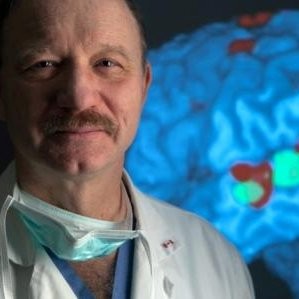
Dr. Rees Cosgrove is Director of Epilepsy and Functional Neurosurgery at Brigham and Women’s Hospital, as well as a Professor of Neurosurgery at Harvard Medical School.
#70: Rees Cosgrove – When Neurosurgery Chooses You: Rediscovering the Lost Art of Lesions and the Future of Brain Stimulation
In this episode, we journey through the remarkable career of Dr. Rees Cosgrove—a trailblazer in functional neurosurgery, Director of Epilepsy and Functional Neurosurgery at Brigham and Women’s Hospital, and Professor of Neurosurgery at Harvard Medical School.
Dr. Cosgrove reflects on his formative years training in the very halls that were roamed by legends such as Wilder Penfield at the Montreal Neurological Institute, and takes us through pivotal chapters of his career leading programs at Massachusetts General Hospital, Brown University, and now the Brigham. With a repertoire that spans from the golden era of ablative neurosurgery to modern deep brain stimulation and MR-guided focused ultrasound—where he has performed over 600 sonications—Dr. Cosgrove provides a unique perspective on how the field has transformed over the past several decades.
Throughout the conversation, we delve into the history and resurgence of surgical lesions for psychiatric and neurological conditions, the nuances of neuromodulation technologies, and the evolution of imaging that now defines precision in brain surgery. Dr. Cosgrove also shares his views on mentorship, the transmission of surgical wisdom, and how we can preserve the disappearing art of lesioning in an age increasingly dominated by stimulation.
Whether you’re a neurosurgeon, neuroscientist, or simply curious about how we interface with the brain to treat disease, this episode is a rare and insightful look into the mind of one of the field’s most experienced and thoughtful pioneers.
Rees Cosgrove 00:00Neurosurgery chose me. I didn't choose neurosurgery. We need to educate neurosurgeons around the world with how to make lesions. And I didn't believe in intraoperative MRI and now I'm a complete convert. Osler was a distant relative of my mother's. Welcome to Stimulating Brains. In this episode of Stimulating Brains, I'm joined by a true pioneer in the field of functional 01:04neurosurgery and a very dear colleague of mine, Dr. Rees Cosgrove.
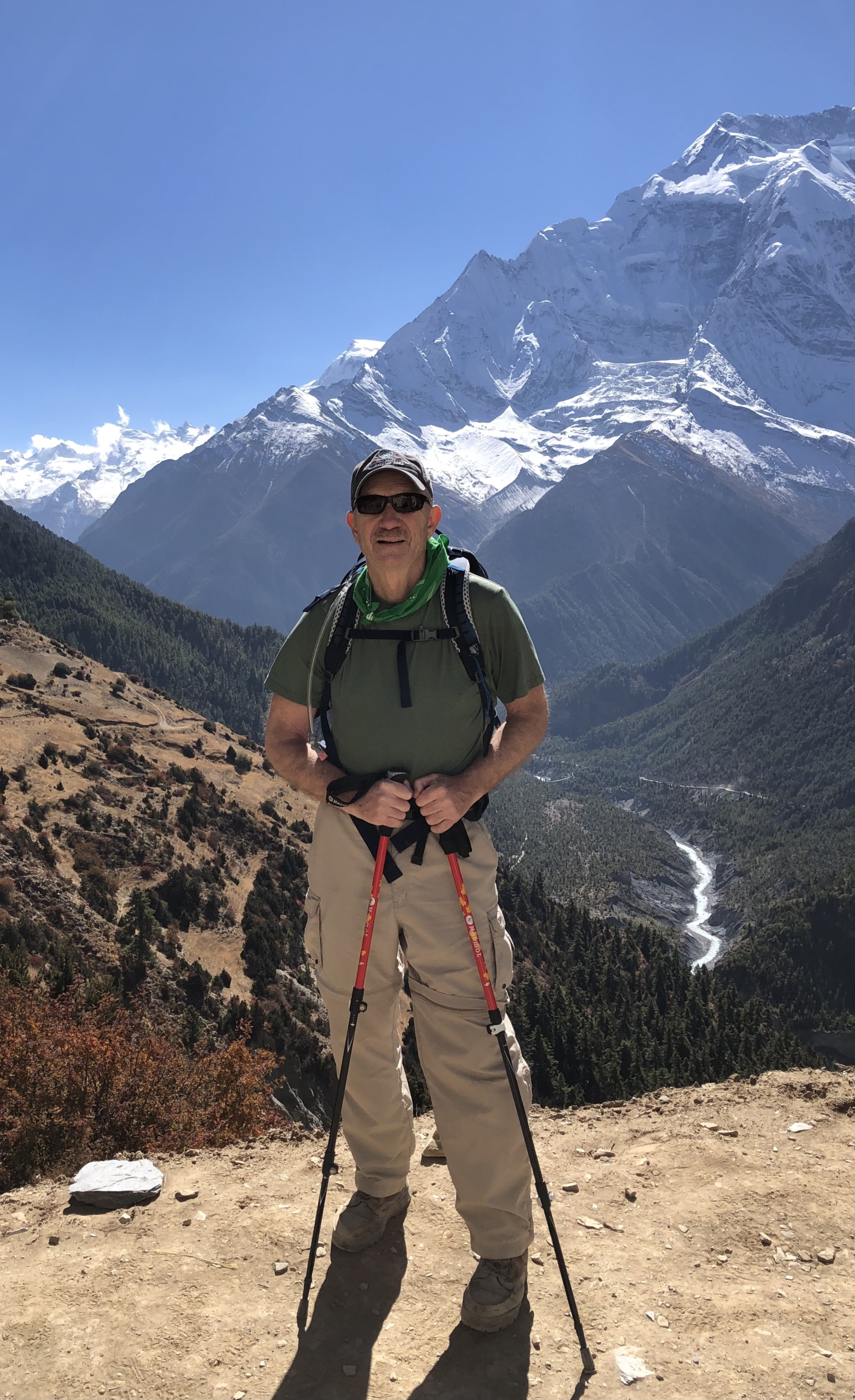
Andreas Horn Currently serving as director of epilepsy and functional neurosurgery at Brigham and Women's Hospital and a professor at Harvard Medical School, Dr. Cosgrove has not only shaped the field over death. He has lived through decades, but also witnessed and driven its most transformative evolutions. From his early surgical training at the MNI in Montreal under the shadow of legends like Wilder Penfield to his years leading programs at Mass General Hospital, Brown University and now the Brigham, Dr. Cosgrove shares a wealth of insight and experience with us. He has performed thousands of procedures across the spectrum from ablative surgeries for psychiatric and movement disorders to modern day deep brain stimulation and MR-guided focused ultrasound, where he has really developed a strong relationship with the brain. He has also risen to a key global figure with over 600 sonications performed. Beyond the OR, Dr. Cosgrove's journey into neurosurgery is anything but typical. He said that he didn't choose neurosurgery, but in a way, neurosurgery chose him. 02:03We'll begin with a story involving his father, a dog with seizures, and an early glimpse of surgical destiny. From there, we talk about pivotal mentors, the legacy of psychosurgery, and the rise of high-precision imaging techniques. You'll hear fascinating anecdotes, including one about a patient who was diagnosed with a stroke in the early 90s. We also include guest questions by John Ralston, Clemens Neudorfer, Melissa Tua, and Mike Fox, who help us dive even deeper into topics like mentorship, ablative surgery, and the future of neuromodulation. Whether you're a neurosurgeon, neuroscientist, or just curious about how the field stimulates the brain, this conversation is packed with history, innovation, and personal insights. Let's dive in. Dr. Cosgrove, Dr. Rosenthal, and Dr. Cosgrove, are the first neurosurgery doctors in the world to have a brain surgery. What are your thoughts on the role of neurosurgery in the field of neurosurgery? Dr. Thank you so much, Rhys, for taking your time out of your busy schedule to meet 03:00and talk about your life in neurosurgery and neuroscience. Before we dive into that journey, I always ask an icebreaker question about hobbies. Anything you do when not working? Dr. Hmm. You know, what I love to do is try to do what I love to do. Dr. Yeah. Dr. Yeah. Dr. I love to travel and sort of take adventurous trips with my family. Dr. Yeah. Dr. Mostly, I like to be outdoors. Dr. Yeah. Dr. Because for me, nature restores me. Dr. That's good. Dr. And I did a 14-day trek in the Himalayas with my middle daughter last November. Dr. Oh, wow. Dr. Nearly killed me. It was so high. Dr. Okay. Dr. And then, you know, I've taken my family rafting down the Grand Canyon. Dr. Oh, you did? Wow. Dr. Yeah.
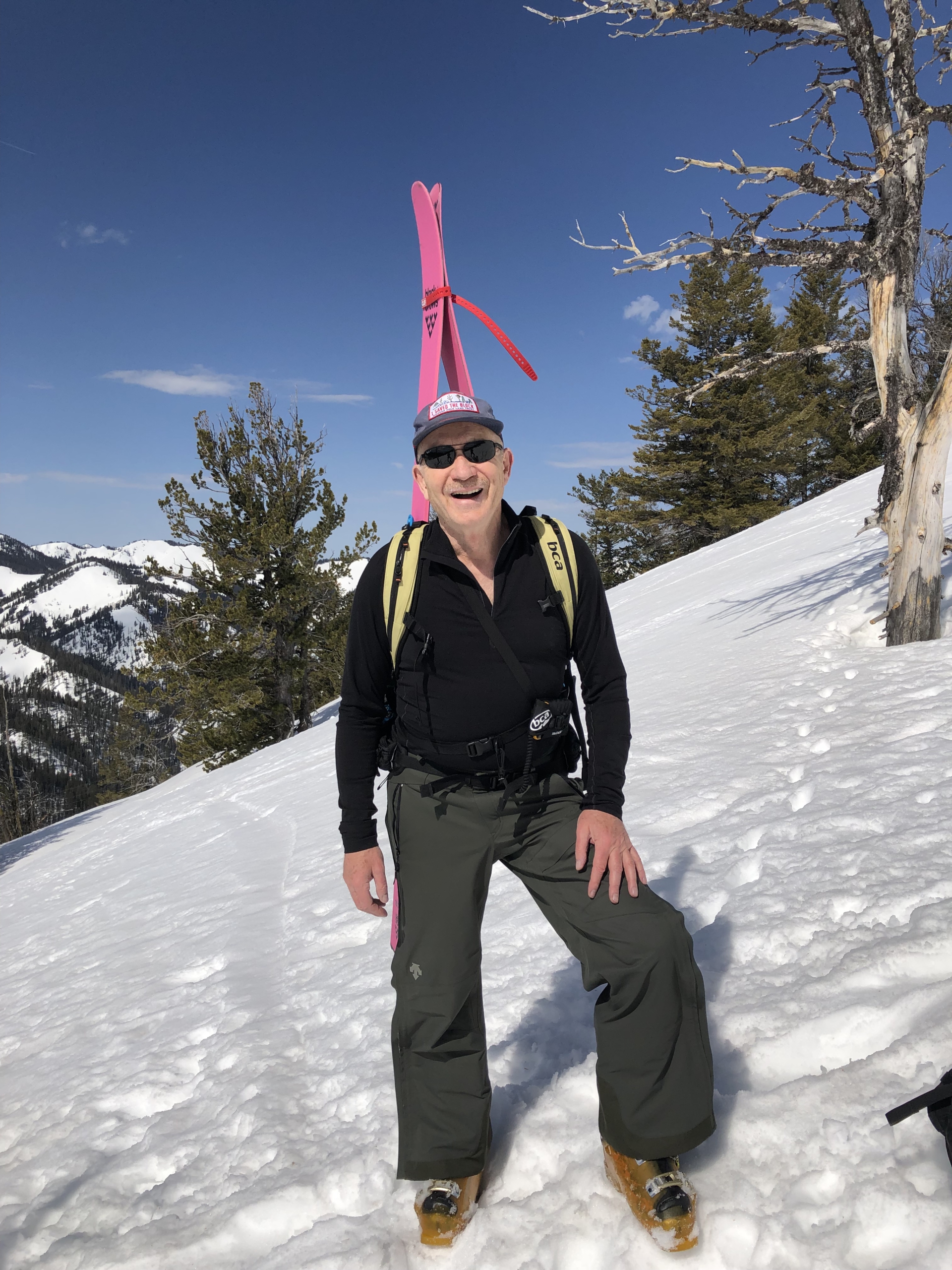
Rees Cosgrove Dr. And I like to be outdoors. Dr. Yeah. Dr. I like to be outdoors. Dr. Yeah. Dr. In nature. Dr. Yeah. Dr. Hiking, skiing, biking, traveling. Dr. Yeah.
Andreas Horn Dr. Fantastic.
Rees Cosgrove Dr. You know, just seeing the world. 04:00Dr. You just came back from skiing. Dr. Yeah.
Andreas Horn Dr. Fantastic.
Rees Cosgrove Dr. Just came back from skiing. Dr. I just spent several skis out west. Dr. Yeah. Dr. I only made it once to ski here in New England. Dr. And it was before my first son was born, the day before, actually. Dr. Oh, dear. Dr. He came early. Dr. He made it. Dr. He made it. Dr. He made it. So I haven't had much of that in the last few years, but I'm sure it's exciting to do that here. Well, skiing the East is not the same as skiing the West. I've skied all through the Alps, Switzerland and Austria, Italy.
Andreas Horn It's fantastic.
Rees Cosgrove It's maybe even better than the West because of the culture, the different cultures.
Andreas Horn Fantastic.
Rees Cosgrove So your journey into neurosurgery, I think, began very early in life in quite an unusual way. You told me a fascinating story about that once when Ludwig Swinzow was visiting Boston.
Andreas Horn Can you tell that story again about the dog?
Rees Cosgrove Sure, sure, sure, sure. 05:01So, you know, my father was a neurologist. He studied multiple sclerosis. And he spent, he was... hired by Penfield to be one of the handful of neurologists at the MNI. So I grew up in Montreal and my father was a neurologist. And so we were sort of, we were always at the MNI for... They would have field days for the families and all the fellows and all those things. But the story is, is that we had had a dog that we got from the pound. You know... This wasn't a purebred or anything. This was a mutt. And the dog, it was my dog. And I was about eight or nine years old. And, you know, and this dog, after about nine months, started having seizures.
Andreas Horn Yeah.
Rees Cosgrove So this was my first introduction to seizures. To seizures, yeah. In a dog.
Andreas Horn Yeah.
Rees Cosgrove 06:00So my dad gave me Dilantin. He says, these are seizures. He says, so we have to give him a pill. It's called Dilantin. And so my job was every morning to give him... A Dilantin pill.
Andreas Horn Yeah.
Rees Cosgrove You know, wrapped in a little piece of hamburger so that they'd eat it.
Andreas Horn Yeah.
Rees Cosgrove And the seizures stopped. That's great. I'm thinking, this is great. But then he started having more seizures. So then I had to double the dose.
Andreas Horn Okay.
Rees Cosgrove You know. But one morning, one Sunday morning, I woke up and went down to get my dog. And the dog was in status epileptic. It was on the kitchen floor.
Andreas Horn Yeah.
Rees Cosgrove So I ran up to get my father. And he comes down and he says, well, this is status epileptic. Because the dog's flipping and frothing at the mouth.
Andreas Horn And he says, you know this, we have to put the dog down. And he was very much an experiential learner. So he said, gets my older brother and sister down. And they said, who wants to come?
Rees Cosgrove And we're going to put the dog down. And my older brother and sister said, no way. And I said, well, it was sort of my dog. So I said, I should go. 07:01So I remember carrying the dog out and having it on my lap. And we drive to the MNI where he worked. And on the seventh floors of the MNI, there were animal labs.
Andreas Horn Okay.
Rees Cosgrove All incorporated in the MNI.
Andreas Horn Yeah.
Rees Cosgrove So we went up on a Sunday morning to the animal lab. And we euthanized the dog with just a KCL in the heart. Just a transthoracic stick with a big needle. And the dog dies. And then my father says, well, this could be either brain tumor or distemper. And distemper is a slow virus. It's seen in dogs. And he said, if it's a brain tumor, you can get another dog. If it's distemper, you can't for nine months or so because it's a slow virus. Oh, okay.
Andreas Horn Yeah.
Rees Cosgrove So he said, the only way of figuring that out is we have to take the brain. So there I was at nine years old helping my father take the brain of my dog. And we somehow got, you know, we had rudimentary tools. 08:00And he was a neurologist. So he wasn't very good at it. And there was nobody there to help us. But we eventually took the brain. And then we put it in formaldehyde. And then two weeks later, we came back and we sliced the brain. So my first case wasn't a good one. But that was sort of my first exposure. I'm not saying it was a fond memory. Of course.
Andreas Horn Yeah, yeah, yeah. But was that the one that kind of put you in that track?
Rees Cosgrove Not really. No.
Andreas Horn I mean, it could have turned you exactly the other way, right? Yeah.
Rees Cosgrove No, but so I don't think I really, I have a feeling, you know, neurosurgery chose me. I didn't choose neurosurgery. Not like some kids we see today. You know, people would say, oh, I'm going to be, you know, something motivates them and way they go. Right. Mine was just sort of because of my situation. When I was 15, when I couldn't really get a job, you know, I didn't want to just be a camp counselor or a lifeguard.
Andreas Horn 09:04Yeah.
Rees Cosgrove Lifeguard.
Andreas Horn Yeah.
Rees Cosgrove He asked, he said, and I was sort of interested in medicine and the hospital. So he got me a job in Dr. Bertrand's lab. Oh, wow. Who was a neurosurgeon who did. And my job was to take all of the ventriculograms and measure them and do the analysis. And because he, for his thalamotomies. So I, and then I could, I could scoot down to round. I was 15. I was just like, I was in the hospital.
Andreas Horn Yeah.
Rees Cosgrove I also, when I, when I was able to, when I was 18 and was employable. Oh, another summer I worked in a gas liquid chromatography lab doing anticonvulsant levels testing and, you know, doing more chemistry and that kind of stuff.
Andreas Horn And then I, I worked as an orderly. 10:00What is that?
Rees Cosgrove An orderly is like a nursing assistant, but you're the muscle. So that was a real pain job. And that was a good job, but in, in the MNI. So, I mean, I saw, I mean, I was an orderly, you washed patients, you clean them up, you know, you change the beds, you held them during lumbar punctures.
Andreas Horn Yeah.
Rees Cosgrove And when I was doing that, I remember one time when I was, I was holding this patient ready for his lumbar puncture and the neurosurgery resident walks in and you know, and he sits down, sticks the needle in the fluid comes out and I'm still holding the patient, but I'm watching.
Andreas Horn Yeah. Yeah.
Rees Cosgrove Watching him, what he's doing.
Andreas Horn Yeah.
Rees Cosgrove And I'm thinking, Ooh, I think I want to be that guy.
Andreas Horn Yeah.
Rees Cosgrove I don't want to be this guy holding the patient.
Andreas Horn Yeah.
Rees Cosgrove I want to be that guy who's in charge.
Andreas Horn Yeah.
Rees Cosgrove And, um, and so, uh, it, it, uh, that was sort of like, I was, I was just, it was my world.
Andreas Horn Yeah.
Rees Cosgrove And I don't think I really chose it. It was just happenstance, you know, but. 11:00You were born into it in a way. Sort of born into it. And you're either, you're either drawn towards an experience like that.
Andreas Horn Yeah.
Rees Cosgrove Or you say you go in the other direction. Right. But it seemed to always interest me.
Andreas Horn Yeah. And even though I would go into rounds sometimes and really not understand exactly what they were talking, it was just fascinating to me.
Rees Cosgrove And, and, and so that's, it seemed real. It seemed important.
Andreas Horn Yeah.
Rees Cosgrove And, uh, if you think about the Freudian basis of this, it's one way of one-upping your father. Right. Say that again. Of being better than your father. You were a competitive male. Right. So, so he was a very intelligent. He, he was the guy who, um, described MS, uh, multiple sclerosis, that it was an inflammatory condition. He, he described T-cells, T-cell rosettes in the spinal fluid, uh, of people and, uh, um, you know, oligoclonal banding in his lab. Wow. So he, he was a, he was a very smart guy, but he was a neurologist and, you know, the only way to be better than a neurologist is to be a nurse. 12:06Of course. But you did tell me a joke about neurologists before. We won't, we won't do that. We might offend somebody.
Andreas Horn So, and the, um, did you, did you meet Penfield? Yes. Yeah, yeah, yeah.
Rees Cosgrove So I met Penfield when I was a boy.
Andreas Horn Okay.
Rees Cosgrove He was, um, uh, I only met him once. Uh, and I was, I remember we were standing in the vestibule of the MNI. It's a beautiful, beautiful vestibule. Very historic. And I remember I was a little kid, but Penfield was a big man. He was like six, two, six, three.
Andreas Horn Yeah.
Rees Cosgrove And he had big hands. And I remember him just leaning down to me and just focusing on me. I remember shaking his hand and I just remember looking up at this man. Look at that. Wow. Um, he was a football coach.
Andreas Horn Yeah. Yeah.
Rees Cosgrove He was a football coach. He was a road scholar. He was a football player, but then he became a coach at Princeton.
Andreas Horn Yeah. Yeah.
Rees Cosgrove So it was, but he, and he had, I just remember these big hands. I'm sure. 13:00Whoa.
Andreas Horn Yeah.
Rees Cosgrove Wow.
Andreas Horn Fantastic.
Rees Cosgrove And, and, um, I also saw Rasmussen's last. Craniotomy for epilepsy.
Andreas Horn Oh, you did?
Rees Cosgrove My dad, when I was, uh, uh, when he, just before he retired, he brought me in to watch. Oh. Ted Rasmussen do his last epilepsy craniotomy. Oh my God. And, uh, you could go into this, uh, theater number one in the MNI. Just been there. It was all glassed in.
Andreas Horn Yes. Did they show that to you?
Rees Cosgrove It, Abbas Sadiko just showed me that and it still exists and it's beautiful. It's beautiful. And it has this glass that leans out. Heavy glass.
Andreas Horn Yeah. Yeah.
Rees Cosgrove So you can walk in in street clothes.
Andreas Horn Yeah.
Rees Cosgrove And you're hermetically sealed from the operating room.
Andreas Horn Yeah.
Rees Cosgrove But you can lean on the glass, which is at 45 degrees out and you can look right down.
Andreas Horn Yes.
Rees Cosgrove Where they're operating.
Andreas Horn It's fantastic.
Rees Cosgrove It was great.
Andreas Horn Yeah.
Rees Cosgrove Wow.
Andreas Horn Okay.
Rees Cosgrove Oh my God. And so, so when, when visiting the MNI just weeks ago, there was even a hallway called, uh, named after Penfield's wife, I think still.
Andreas Horn And Abbas, so Dr. Abbas Sadiko, surgeon there, um, told me that that was because family, 14:05was kind of part of this at the time, right? Where, you know, it resonates with you being there as a boy in the way too, right? Was it? Yeah. So, so family, it was very interesting in the early days, the MNI was like a family.
Rees Cosgrove People were there, they stayed forever. Even to this day, I remember going back sometimes years afterwards and you go back onto a ward.
Andreas Horn Yeah.
Rees Cosgrove And some of the same nurses were still there. They were so loyal to the vision of, of Penfield and the MNI.
Andreas Horn Yeah.
Rees Cosgrove And, um, so it was very much like a family, uh, um, from, from at all levels.
Andreas Horn Fantastic. Yeah.
Rees Cosgrove Such a, uh, historical place.
Andreas Horn Yeah. And so, I mean, did you love the vestibule?
Rees Cosgrove I did.
Andreas Horn With the paintings and the murals?
Rees Cosgrove Oh, I didn't. No, I didn't. So, sorry. I didn't see the vestibule. No, I. Well, that's the entrance to the MNI. Oh, yes. Of course. Of course. No, no. I know that. I do.
Andreas Horn 15:00Yeah.
Rees Cosgrove And the.
Andreas Horn Absolutely.
Rees Cosgrove I love it.
Andreas Horn Yeah. Yeah.
Rees Cosgrove With the, the names. I do.
Andreas Horn Yeah.
Rees Cosgrove Of course.
Andreas Horn Yeah. Yeah.
Rees Cosgrove Beautiful. Really beautiful.
Andreas Horn Yeah. Okay.
Rees Cosgrove So, I mean, you mentioned a few mentors already or like turning points, but if you had to summarize, maybe looking more broadly at your career, who were the key figures, father figures,
Andreas Horn mentors in your neurosurgical career or turning points like the ones you just described?
Rees Cosgrove I mean, obviously my father had influence, right?
Andreas Horn Yeah.
Rees Cosgrove Uh, but, um, and when I was a resident there, he was still in attending.
Andreas Horn Yeah.
Rees Cosgrove You know, so we'd have some. He had some interaction, but he wasn't my neurosurgical. I mean, neurologists don't really want, you know, he was of the school where you had to protect your patient from the neurosurgeons, you know, well, he wasn't like that, but, um, but most were my Jill Bertrand.
Andreas Horn Yeah. Uh, who just a fantastic man still alive at a hundred.
Rees Cosgrove Wow. I think he's 101 now.
Andreas Horn 16:00Yeah.
Rees Cosgrove Um, but he was just the, he was a master surgeon. Mm-hmm. and very thoughtful very elegant in his in his technique could do amazing complex skull based surgeries and uh but he taught me thalamotomy okay so he would be number one he would probably be number one andre olivier who was a master epilepsy surgeon taught me most of my epilepsy stuff and then jangy villemur who uh was um was one of the attendings who really taught me to be a surgeon okay um uh they all taught me but these were uh these were the the surgeons that you know it was all at the mni all at the mni and then later any key people in the career no i think the people that form you are those people and and their standards their excellence is what uh creates your value system and your uh standards um so uh the they they were 17:07the people i mean yeah we were influenced by all sorts of people yeah thereafter uh do you ever interact or overlap with tasker well no tasker was in toronto so so you know um i mean yes we did because subsequently at meetings um and there was a sort of the much in in canada there was the montreal school of neurosurgery and there's the toronto school of neurosurgery and um uh but um uh no the the i guess the other person might have been lightning and uh um who i spent some time with um you know in the early days but sounds good we get to that story too yeah there's stories so maybe this is a random question that didn't fit in elsewhere but you like researching you were you were also named an honorary lichtfield litchfield lecturer at
Andreas Horn 18:03oxford university in 2008 yeah how did that come why like have you spent time in oxford no i spent
Rees Cosgrove when i was a medical student i spent some time in cambridge because my father did his second master's degree in cambridge that's where he did his ms work yeah at the old adenbrookes hospital but when i was a medical student i heard all these stories my parents were married in england and they lived in there after the war so we had all these stories and i was like oh my god i'm going to go to england i'll be like how do you know how do you know how do you know how do you know how do you know over in Cambridge, England. 19:00So I have this, I think I'm an Anglophile.
Andreas Horn Yeah, okay.
Rees Cosgrove You know, it's just I love the English and their way of thinking. And so, no, this was, I was great friends with Tipu Aziz.
Andreas Horn Oh, yeah, yeah.
Rees Cosgrove And Tipu and I were friends because of just the work we did. And so he invited me to be the Litchfield Lecturer, which is an honorary thing. You go for a week and you lecture and visit. But that was Tipu who arranged that for me. Just talk to one of his kind of professional grandchildren, John Arifai, who is a surgeon there now with Alex Green. And he also had a question for you, which we come to later.
Andreas Horn So, yeah, interesting. Okay. And then maybe one guest question. The question for Melissa Chua was why did you then move to the U.S. from Canada?
Rees Cosgrove 20:00Well, I made the mistake of marrying an American.
Andreas Horn No, so it's interesting.
Rees Cosgrove So, you know, in Canada, the health care system is very different. So I finished, I was going to be a cerebrovascular surgeon because that was the most complicated, you know, the hardest surgery. You needed the best skills.
Andreas Horn Yeah.
Rees Cosgrove And I was going to be revert. I was going to be Roberto Heros's first fellow at the MGH.
Andreas Horn Okay.
Rees Cosgrove Roberto Heros was the big guy in cerebrovascular surgery. So I was going to do a two-year fellowship with him. One research, one clinical, because I was going to be a cerebrovascular surgeon because that was the hardest thing to do.
Andreas Horn Okay.
Rees Cosgrove About six months before I was about to sign on, I get a letter. He says the fellowship is no longer available. I'm sorry. We're not having one. So I had to scramble. And because I was a little bit of a... When I started then looking for jobs, I said I wanted to be a cerebrovascular person. 21:01They said, well, you know how to do epilepsy.
Andreas Horn And I thought, yeah, of course, who doesn't? Yeah. But you have to understand where we were, right?
Rees Cosgrove This is the 80s, the mid-80s.
Andreas Horn Yeah.
Rees Cosgrove And we didn't have the internet. You didn't travel all around the world. You thought everybody, you knew your own little world and you thought everybody's world was the same. So, you know, we would do... I would do 100 and 120 epilepsy cases a year. Well. There's what we would... Resections, you know. And you sort of thought, well, that's what neurosurgery is. And we do tumors and everything.
Andreas Horn Yeah.
Rees Cosgrove So then I realized, well, they really want an epilepsy surgeon. And then my first job was here in Boston at Beth Israel.
Andreas Horn Yeah.
Rees Cosgrove And there were two other neurosurgeons who had both been trained at the MNI.
Andreas Horn Okay.
Rees Cosgrove And the head of neurology was trained at the MNI. The neuroengineer was a guy named John Ives. He was brilliant. He was from Montreal. So it was very easy to come in. 22:01And they wanted me because I knew how to do a lot of stereotactic procedures and stereotactic depth electrodes. And so my first job was in Boston. And my wife was from Boston. So it just made perfect sense. And so I arrived and did that. Sounds good.
Andreas Horn Yeah. Okay.
Rees Cosgrove Another guest question from John Rawlston that I think fits in quite well here.
Andreas Horn Yeah. What advice would you give your younger self when you were just getting started in your career? Yeah.
Rees Cosgrove You know, it was a different time. I think if I, and knowing what I know now, one of the great things about neurosurgery back then is that you got to do everything. I clipped aneurysms, did spine, you know, did epilepsy cases, took out tumors. Took out AV. It was wonderfully diverse.
Andreas Horn Yeah.
Rees Cosgrove And I loved that because we get to operate anywhere on the nervous system. 23:03And I continue to like that throughout. I love being all the different kinds of surgeons. I'm a very good, I think I'm a very good surgeon. And I just love the variety.
Andreas Horn Yeah.
Rees Cosgrove Probably if I, looking back, if I really wanted to have a stellar academic career, I would have focused more on one area. Mm-hmm. Mm-hmm. Mm-hmm. Mm-hmm. And I, but I just loved the- You would have missed a lot, right, I guess. Well, I think that's right. And it's a bit like playing multiple sports.
Andreas Horn Yeah, yeah.
Rees Cosgrove You get to know more and more about less and less. And if you're only doing the same thing over and over again, you can become very expert at it, but it's not as much fun. And maybe there's not enough overlap.
Andreas Horn Yeah, yeah, yeah.
Rees Cosgrove So probably would have concentrated a little earlier and defined my research areas and my publications.
Andreas Horn Yeah.
Rees Cosgrove More in one area. But I didn't. I loved it all.
Andreas Horn Yeah.
Rees Cosgrove 24:00Sounds great. If my research is right, and it could well be wrong, but you may have overlapped with Frank Irvin, who's a psychiatrist at McGill, who by the time had-
Andreas Horn Yeah, he was-
Rees Cosgrove To research, I think.
Andreas Horn Yeah, yeah.
Rees Cosgrove He was, I think, at the Allen Memorial. And so was that at McGill or was- At McGill.
Andreas Horn Yeah.
Rees Cosgrove Before, like after, I think he had been at MGH, but then at some point, like roughly overlapping with you, he would have moved to- To animal research only.
Andreas Horn Yeah.
Rees Cosgrove I never knew him and I just knew his book. I did overlap with Vernon Mark.
Andreas Horn Yes.
Rees Cosgrove Not overlap, but he, when I was chairman at Brown, he had retired and he had moved to Little Compton, Rhode Island, but he asked me if he could come to Neurosurgery Grand Rounds when I was chairman at Brown. Oh. And I said, of course.
Andreas Horn Yeah.
Rees Cosgrove And he would come and he was a very dignified and elegant man as well.
Andreas Horn Yeah. Yeah.
Rees Cosgrove He just came to learn, you know, which is great post-retirement, you know. And so, and we had some conversations around some of my work that I'd done previously at the MGH. 25:05Got it.
Andreas Horn But you did not overlap with him at MGH?
Rees Cosgrove No. No.
Andreas Horn Yeah.
Rees Cosgrove Got it.
Andreas Horn So you have been in functional neurosurgery for a long time and have been there in the pre-DBS era, right?
Rees Cosgrove So you are probably among the few- The good old days. Among the few practicing neurosurgeons who have vast experience.
Andreas Horn And brain lesions for both neurologic and psychiatric disorders. Could you talk a bit about the beginnings of this journey for you?
Rees Cosgrove Maybe share even patient anecdote or if there's a remarkable case you mentioned.
Andreas Horn So, yeah, you know, I've been around a long time.
Rees Cosgrove And, you know, I learned how to do thalamotomies with plain x-rays and ventriculograms. That's how we did our thalamotomies.
Andreas Horn Yeah.
Rees Cosgrove That thalamotomy was one of them. Probably the most frequent operation performed by neurosurgeons in the 60s and the 50s and 26:0560s.
Andreas Horn Yes.
Rees Cosgrove So it was a standard operation, but we did it with plain x-rays and ventriculograms. So, I mean, I saw how and it took us all day.
Andreas Horn Yeah.
Rees Cosgrove A wake patient all day. You know, we had we did everything from first principles. Right. You had cut film. you marked it you had you used your rulers on it you measured everything you did your calculations it was it was an all-day thing it was it was really just frame-based already right yeah yeah frame-based devices and yeah okay so we used uh what we called the olivier bertrand tipal frame because most people were making their own frames they weren't the commercial industry uh so we had our own frame in montreal yeah it was a modified lexel frame and that's the one i was trained on yeah uh and um but so that's how i learned how to do uh thalamotomies from dr bertrand he was a 27:01master he could visualize the thalamus in his head and i was just sitting there like how's he doing that you know you know it's the thalamic basal ganglia capsular anatomy and all those things it really hard to visualize right uh especially where we didn't have 3d images and being able to do all those things so it took a lot you have to have a good parietal lobe to figure that out you have to study it carefully but i learned uh uh the basics from him um and then of course uh you know then we started cat scans were introduced in the late 60s early 70s and then mri in the 80s so these event imaging tools now got incorporated into stereotactic frames so so um but you know until the mid 90s dbs went through the process of doing the thalamotomies and then the thalamotomies went through the wasn't around yeah right so everything was done with radiofrequency lesion dr bertrand used a leukotone oh which is not he yeah and which is dangerous because it's a wire it's like a cheat 28:04you put out a little wire and you can spin it and that cuts a little sphere he used it because he understood the anatomy so well that depending on his first pass you could steer it in three in in just you could make a half sphere if you were a little too close to the capsule based upon your stimulation do you see what i mean yeah yeah whereas if you're not you're not you're not if you do radio frequency you just yeah it's concentric it's like a vta right yes and it's dangerous because of vessels yeah yeah you've got tiny little vessels everywhere so you had a you have a much higher risk of hemorrhage so i never used a leukotone yeah um i used a siegfried side exploring electrode sometimes which could go out and you could push it in different directions you know it was fun directional stimulation yeah yeah directional stimulation and um but i always used radiofrequency yeah and um but by the time i started my own practice 29:00people weren't really doing thalamotomies anymore because they had just died out okay there were occasional patients that i would i would do um was that because of libodopa yes yeah and all the different medications yeah okay so it was mainly parkinson's for thalamotomies uh yeah we never did paludotomies in the neuro it was all it was all thalamotomies for parkinson's and then we did thalamotomies for thalamotomies for thalamotomies parkinson's and for trevor yeah uh but uh um it wasn't until lightning um so i left the i left beth israel and to go to uva yeah and john jane uh his story is that he delivered me because he was an intern when i was born and he his story was that he was pretty sure he delivered
Andreas Horn me so that's why we had this connection
Rees Cosgrove john and i we had a long connection but um but he he recruited me to go to uva to set up an epilepsy surgery program yeah and so i went there because i knew how to do epilepsy surgery all of that stuff 30:04um and then after a couple of years uh just two years later we we moved back to boston but um where were we going with that it was only in the it was only in night around 1992 when a reason lightning came out with the
Andreas Horn poster of ventrolateral paludotomy i said oh this looks fantastic yeah and um uh and so when i
Rees Cosgrove went back to the mgh to create to set up their surgical epilepsy program because they never believed that epilepsy surgery was worthwhile okay i said uh and i set that up with andy cole andy and i were residents at the mni at the time so we knew each other we had the same thinking
Andreas Horn we knew exactly what to do so we set that up but then
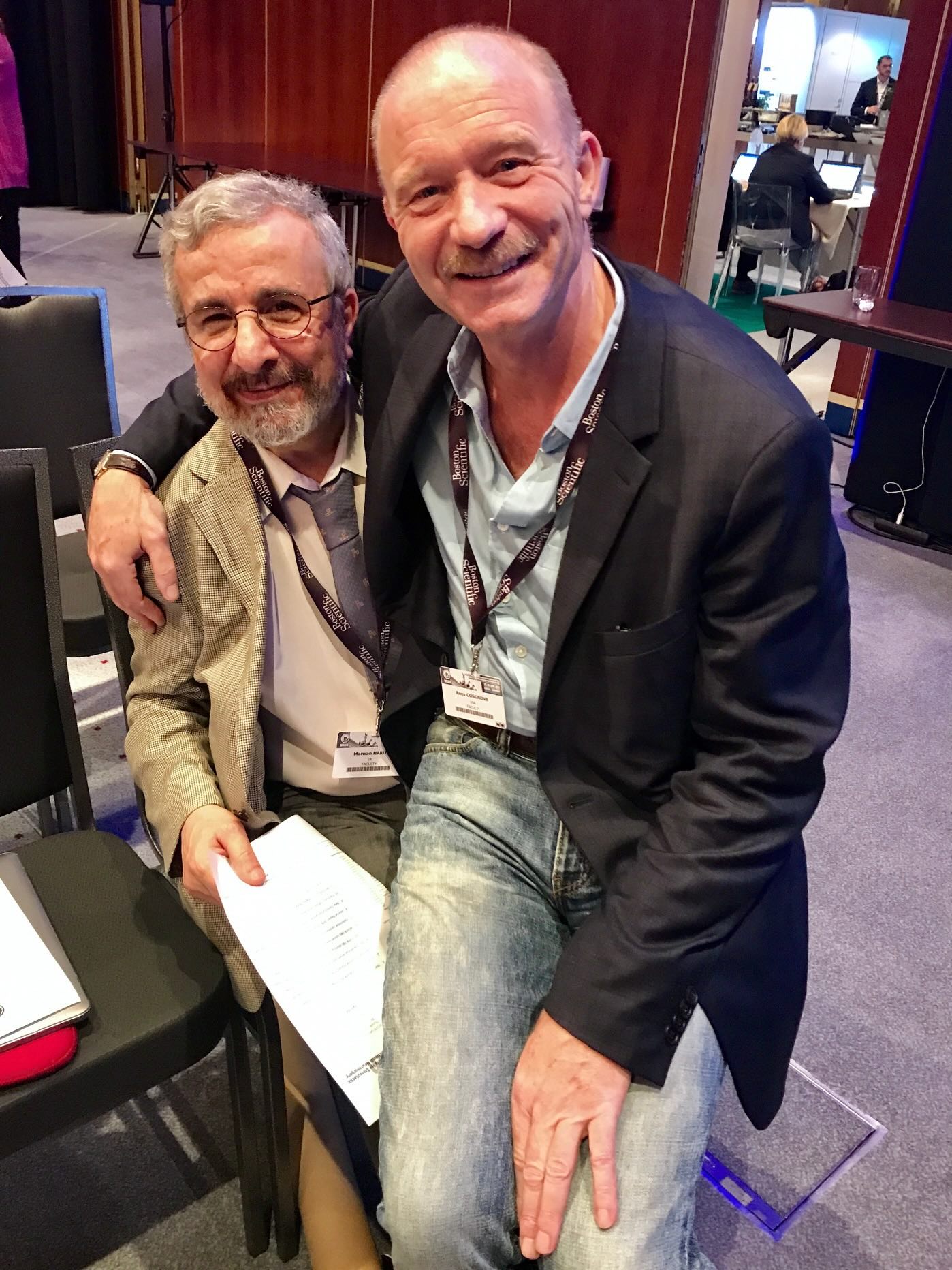
Rees Cosgrove because i was a little bit more of a i was a so-called functional neurosurgeon i thought oh this is something that really is impressive yeah and so i started doing paludotomy see that you mentioned there's no internet so you 31:04saw at a conference you read it remember there's things called journals and articles and you read them yeah okay read them yeah no i get it but that wouldn't with that you wouldn't see let's say a patient video or anything right no no no but if you understand you understand the anatomy of the the patient population and the results were so good yeah okay uh or at least in the paper yeah and these are trustworthy people like a reason enlightenment yeah right and i i never met marwan haris at the time but i was so impressed with the paper oh get this i wrote them a letter oh you did because and i said i just said i was so impressed your paper i i typed out a letter and
Andreas Horn sent it to them fantastic and that's how marwan haris is and you know you have to be a reporter
Rees Cosgrove Juan and I and Laurie Lightnin and I started a relationship, you know.
Andreas Horn And that was the second advent of the paludotomy, right? 32:02So they kind of reopened that field that used to be done before too, right?
Rees Cosgrove In the 50s, 60s.
Andreas Horn Yes.
Rees Cosgrove But then, okay. And Lexell always believed that the paludotomy had a better effect than the thalamotomy. And it was a shift. There was a shift. But understanding some of the anatomical connections and Hassler doing his anatomical stuff, the suggestion that thalamotomy should be better.
Andreas Horn Okay.
Rees Cosgrove But in a conversation with Lightnin, he said, you know, Lexell, he couldn't go against the tide, but he always felt that the paludotomy, his paludotomy was better than the thalamotomy in patients with Parkinson's disease.
Andreas Horn It's so interesting. It's very interesting.
Rees Cosgrove You only get these in conversations.
Andreas Horn Yeah.
Rees Cosgrove You only get this kind of insight in conversations. That's what we're trying to do. No, absolutely. And then I guess you set up your own shop at MGH to build the epilepsy program there. 33:02And you spent 13 years there as head of epilepsy and functional neurosurgery. And then you did tell me once about this remarkable coincidence involving this electrician patient, I think. He was an engineer. Engineer.
Andreas Horn Yeah, an engineer.
Rees Cosgrove Who needed a paludotomy.
Andreas Horn Yeah.
Rees Cosgrove Maybe you can tell. You can't make this stuff up.
Andreas Horn Okay.
Rees Cosgrove You can't make this stuff up.
Andreas Horn So I'm back at the MGH now and doing paludotomies, mostly epilepsy. But now I was interested in a paludotomy. And I teamed up with Jack Penny, who was Ann Young's husband at the time. And I said, you know, are you interested in, I'm interested in doing these things. Would you be interested in it?
Rees Cosgrove And of course, they were a little leery about it. Right. About paludotomy. Sure.
Andreas Horn Well, they were about surgery in general? Yeah, surgery in general.
Rees Cosgrove But their model was a good model.
Andreas Horn Yeah, yeah.
Rees Cosgrove It was the right model.
Andreas Horn Yeah.
Rees Cosgrove But they were a little leery about, I mean, neurologists are always leery about making little holes in people's brains. 34:04Sure. There's some reason. Somewhat appropriately. But so I said, let's start this. And I said, you will admit them to neurology. I'll do the surgery.
Andreas Horn Yeah.
Rees Cosgrove You'll follow them. And you'll rate them.
Andreas Horn Yeah.
Rees Cosgrove And it was a bit risky. But I said, this is how we're going to do it. So I started doing a couple. And again, this was both CT and MR guided.
Andreas Horn Yeah.
Rees Cosgrove It took most of the day because you had to get a CT with the frame on and an MR with the frame on. And then there was a CT adapter because there were some inaccuracies in the frame. We had to figure that out. But I would do direct targeting. No microelectrode recordings.
Andreas Horn Okay.
Rees Cosgrove And I did it all with macro stimulation and really good targeting.
Andreas Horn Yeah. Okay.
Rees Cosgrove Anyway.
Andreas Horn Was that already software based at the time?
Rees Cosgrove No. 35:00No. It was just literally on the screen.
Andreas Horn Yeah.
Rees Cosgrove Making your measurements.
Andreas Horn Yeah.
Rees Cosgrove Making little tiny adjustments.
Andreas Horn Yeah.
Rees Cosgrove No atlases. No. We have atlases, but they weren't good. But you could register in the computer the two images with the frames. No, no, no, no, no. You just did it on the. On the. On the.
Andreas Horn Yeah.
Rees Cosgrove Individual. And you sort of calculate it on one and calculate it on the other. Make some adjustments and then set the frame to the target and away you go. And you would confirm with macro stimulation thresholds, motor thresholds, visual thresholds and various things. And you got. And I mean, that's how I learned how to do it my way at least. Never used microelectrodes.
Andreas Horn Never ever?
Rees Cosgrove Not for thalamus or pallidum because of the risk of bleeding.
Andreas Horn Yeah.
Rees Cosgrove And I had one case where I started to do. I did one. And I had a hemorrhage in the thalamus on the table and you go, you know.
Andreas Horn Yeah.
Rees Cosgrove So there are extra risks. And for the STN, I always used.
Andreas Horn Okay.
Rees Cosgrove Microelectrodes because it was a target you can't see on a T1 weighted image. 36:00You see. And that's all we had.
Andreas Horn Yeah.
Rees Cosgrove We had T1 weighted images.
Andreas Horn Okay.
Rees Cosgrove That's it. There was no T2 at the time. We weren't sure that it was accurate in terms of.
Andreas Horn Yeah. It makes sense.
Rees Cosgrove So we knew that T1 was probably accurate.
Andreas Horn Yeah.
Rees Cosgrove Anyway. So I'm sitting with a. A lovely Raytheon engineer and his lovely wife in my office. And he has young onset Parkinson's. He's in very dyskinetic.
Andreas Horn And we start talking and he's an engineer. And I thought he would be a great candidate. And then his wife leans forward and says, well, how many of these have you done?
Rees Cosgrove These surgeries.
Andreas Horn Yeah.
Rees Cosgrove These surgeries. I said, well, three.
Andreas Horn Yeah.
Rees Cosgrove And she looks. And he looks at me and he says, oh. And I said. And I said, well, if, you know, if I were you, I'd go to see Lori Lightman because he's the world expert on this. And Lori at the time had an international practice where people would fly into Stockholm and go to the Karolinska and he would do this, his procedure. 37:02And so they left my office and I had no, you know, I said, it's up to you. I can happy to do it here, but you could. So it just so happened that the ESSF and the European Society of Stereotactic and Functional Neurosurgery in that year. Year was in Stockholm. And since I'd had a correspondence with Lori Lightman, never met him.
Andreas Horn Yeah.
Rees Cosgrove But I had a correspondence. I wrote him a letter.
Andreas Horn Yeah. And said, would you mind?
Rees Cosgrove I'm going to be in Stockholm.
Andreas Horn Would you mind?
Rees Cosgrove I come a few days earlier.
Andreas Horn Yeah.
Rees Cosgrove And observe you doing a paludotomy.
Andreas Horn Yeah.
Rees Cosgrove And he said, of course. So I go a few days earlier and he's showing me his technique. We meet the, you know, and he says, well, we'll go down to the patient now. And we put. He had a little localizer. He did the imaging the day before.
Andreas Horn And we go down to meet the patient. And who is it?
Rees Cosgrove My patient from Boston. It's so funny.
Andreas Horn Yeah.
Rees Cosgrove You can't make it up. He must have thought this can't be happening. 38:02No.
Andreas Horn Yeah.
Rees Cosgrove Anyway. So then the next day we do the paludotomy. And it was, you know, Lightman was an elegant guy. And very simple instrumentation. Ding, ding, ding, ding, ding. But, you know, I'm learning the whole time from the master. And the patient does really well. It looks great. Leaves the hospital the next day. Has a wonderful, you know, his dyskinesias and the rigidity is gone on that. He was pretty lateralized.
Andreas Horn Yeah.
Rees Cosgrove At the time. And he's just, he's elated. And, you know, I'm thinking like, this is magical.
Andreas Horn Yeah.
Rees Cosgrove And I said, this is great. I'll follow him for you. Anyway, so I follow him up. And seven to ten days later, the dyskinesia. Dyskinesia start coming back. So I see him. I wait a couple of months. And now he's almost back to where he was. I get an MRI scan pretty soon afterwards. 39:00And it looks. And I now I have the films in those big vanilla envelopes.
Andreas Horn Yeah.
Rees Cosgrove And I. There's no Internet.
Andreas Horn Yeah.
Rees Cosgrove So I take pictures of the films.
Andreas Horn Yes.
Rees Cosgrove And I send them to Laurie. And I say, I think your lesion is too anterior.
Andreas Horn Yeah.
Rees Cosgrove And he looks at the films. And he. I think we had a phone call after that. He says, you're right. So then I say to him, well, he needs. He needs to be reoperated on. And I said, well, this is great. I will invite you to come and give grand rounds at the MGH. And after the grand rounds, we'll go do this procedure. And you can watch me doing the procedure. And anyway, so we take. Here's the same patient we're operating on. On. And I put the electrode down onto the target just posterior to where he was. He was too anterior.
Andreas Horn Yeah.
Rees Cosgrove Which was typical for paludotomies that are too anterior. They don't work over the long term.
Andreas Horn Yeah.
Rees Cosgrove You have to be right near the outflow tract. 40:00The palatal fugal fiber outflow tract. And so I put my electrode down and I'm stimulating. I do my way of doing it. And now by then I've done probably a dozen.
Andreas Horn Yeah. Okay. So I'm not exactly expert yet. Yeah.
Rees Cosgrove And we get down to.
Andreas Horn I'm not exactly expert yet. I'm not exactly expert yet. I'm not exactly expert yet.
Rees Cosgrove I stimulated high frequency. And the guy starts going wild on the table. You know, just move. It's all over the place. And I, my eyes open up and I'm thinking, Jesus, if I make a lesion, he's going to be permanently disconnected. And Lori Lightman leans over and he says, oh, this is so good. And because if he hadn't been, because he said, this is good.
Andreas Horn Yeah.
Rees Cosgrove He will do very well.
Andreas Horn Yeah. Okay. Okay.
Rees Cosgrove And, and so because he was standing there, I, I lesion him.
Andreas Horn Yeah.
Rees Cosgrove And literally this guy had for 25 years afterwards had great contralateral control. 41:00And I eventually did a bilateral stage bilateral on him, but you know, you can't talk about serendipity.
Andreas Horn Yes.
Rees Cosgrove Right. And so it's like, it's this, and we discussed about that when you told it first, when Ludwig was here, that, that you, you now use that. Like. People use that as a marker. I see.
Andreas Horn Yeah.
Rees Cosgrove But I didn't know. I know. I know.
Andreas Horn Yeah. Yeah. Yeah.
Rees Cosgrove I know.
Andreas Horn It's an experience, right? Yeah.
Rees Cosgrove If you get that and you see that with high frequency stimulation. And it's high frequency. It's high frequency, not low frequency. When you do motor thresholds and various things, you're, you're losing a two Hertz, you know, low frequency. Um, and for sensory and for visual use higher frequency.
Andreas Horn Uh, but, um, uh, but yeah, this is. So interesting because we, you know, it, it speaks against DBS being the same as a lesion
Rees Cosgrove as we know it is not. Right.
Andreas Horn It's not exactly the same.
Rees Cosgrove Certainly, but it still mimics a lesion, but in these acute phases, it seems different,
Andreas Horn right?
Rees Cosgrove It's the same frequency or like above a hundred or so.
Andreas Horn Yeah.
Rees Cosgrove About 130.
Andreas Horn And then, and then, um, interesting that you have these onset effects that make people
Rees Cosgrove 42:02dyskinetic before making.
Andreas Horn Yeah. Yeah. Yeah.
Rees Cosgrove I think, uh, DBS mimics lesioning in certain targets.
Andreas Horn Okay. Okay.
Rees Cosgrove And maybe in certain circuits.
Andreas Horn Yeah.
Rees Cosgrove But in certain targets, they. The physical result is, is very similar.
Andreas Horn Yeah.
Rees Cosgrove Um, but that's not true in all targets or in all circuits.
Andreas Horn Do you, do you have clear targets where it's not the case?
Rees Cosgrove Oh, white matter. For sure.
Andreas Horn Okay.
Rees Cosgrove So capsulotomy is, you mean, for example, or we don't, we don't know. We, you know, we don't know, but I mean, my best example is for the seal stimulation. If you lesion the foreign disease.
Andreas Horn Yeah.
Rees Cosgrove That's not.
Andreas Horn Yeah.
Rees Cosgrove You, you, that's not going to be the same.
Andreas Horn Yeah.
Rees Cosgrove Right. Um, but yeah. But yeah. So I was elated because I had so much experience with radio frequency and how good they are.
Andreas Horn Yeah.
Rees Cosgrove And you know, simple, right.
Andreas Horn 43:00Yeah.
Rees Cosgrove You have to be a better stereotactic neurosurgeon because you have to be absolutely accurate in your targeting and your technique. Right. It's permanent.
Andreas Horn Yeah.
Rees Cosgrove But, but I mean, to be a good DBS surgeon, you have to be absolutely accurate as well to get the preferred result, you know, clinical outcome. But with lesioning, you have to be bad. You have to even be better.
Andreas Horn Yeah.
Rees Cosgrove And, um, so I was sort of a late adopter to it because, uh, um, you know, I had such experience with lesioning and, um, I didn't. I didn't really do any of the other things. I didn't do any of the other things.
Andreas Horn Okay. Yeah. Yeah.
Rees Cosgrove You know, which is a little late to the table.
Andreas Horn Yeah.
Rees Cosgrove Uh, but the beauty of DBS, of course, is that you can do it bilaterally.
Andreas Horn And you can still adjust things, right? So you can kind of react to the disease progression and, yeah. And it's more forgiving. 44:00That's also a feature, right?
Rees Cosgrove Of course.
Andreas Horn Yeah. Yeah. Okay. So, um, yeah, many, many questions, uh, that, that, that I have.
Rees Cosgrove But the MGH had a long history of functional neurosurgery, also including psychiatric indications. We did briefly mention Vernon Mark, um, who I think retired 1980, 1988 there. Um, and there's like, there's a guest question from Clemens Neudorfer who remembers you once saying that, um, you know, about the rise and fall of psychosurgery at the time that there may even have been protests on the stage.
Andreas Horn Yeah.
Rees Cosgrove I was the functional neurosurgeon.
Andreas Horn Yeah.
Rees Cosgrove And Dr. Tom Ballantyne, who had been doing these procedures for years and years, had retired.
Andreas Horn Yeah.
Rees Cosgrove I think Chris Ogilvie, Bob Martuzzi, even Nino Chiocca here did some of them.
Andreas Horn Yeah.
Rees Cosgrove But nobody wanted to do them. But it was just because there was an evaluation process and this had been going on for 25 years. 45:04Got it. I never believed, I wasn't, I was sort of like everybody else. I didn't believe that you could do this correctly. Psychiatric. Psychiatric surgery. I was a little, I was quite cynical about it. And when I got there, they said, well, you'll take over the singulotomy program. And I'm going, I don't know.
Andreas Horn Yeah.
Rees Cosgrove I really thought I had too promising a career.
Andreas Horn Yeah.
Rees Cosgrove That I didn't want to be, my reputation sullied by this. Sure. So the only thing I did differently, so then I said, well, I will observe how, you know, the process. And I said, if I'm going to be involved in this, we're going to do it the way we do. We're going to do epilepsy surgery and movement disorder surgery. And the only thing I did was I was, I could say, I will, I introduced MR guided stereotactic singulotomy because Ballantyne didn't use stereotaxy.
Andreas Horn Okay.
Rees Cosgrove Wow.
Andreas Horn He had a fabulously interesting technique, but he used plain x-rays. 46:00Okay.
Rees Cosgrove And so I said, at least I know I can make reproducible lesions where they should be.
Andreas Horn Yeah.
Rees Cosgrove At least where we think they should be. We didn't read over. Sure. So then I, then I said, okay.
Andreas Horn And then I got involved and it became one of the most fascinating and interesting portions of my career.
Rees Cosgrove I have to say. I'm sure.
Andreas Horn Yeah.
Rees Cosgrove We would only do 10 to 12 a year, like one a month. But the, the, it was really remarkable. The surgery is the easiest thing about that for a stereotactic surgeon doing singulotomies is easy.
Andreas Horn Yeah.
Rees Cosgrove And. And, you know, I evolved, I didn't know really what I was doing. I just did it the way Dr. Ballantyne did it, but with MR stereotactic.
Andreas Horn Yeah.
Rees Cosgrove And then we, I just followed learned. And that's when we started doing multiple lesions at the same time, because many patients had to come back for second or third lesions. 47:01And then we evolved it into, then I evolved said, well, if, then we started doing limbic leucotomies in the patients that
Andreas Horn Okay. Okay. Okay. Okay. Okay. Okay. Okay. Okay. Okay. Okay. Okay. Okay. Okay. Okay. Okay. Okay. Okay. Okay. Okay. Okay. Okay. Okay. Okay. Okay. Okay. Okay. Okay. Okay. Okay.
Rees Cosgrove to do a limbic leukotomy which is a combined anterior cingulotomy and a subcaudate tractotomy the subcaudate tractotomy that i did was really also took out the ventral capsule anterior limb of the internal capsule but we had a cohort of patients with severe self-injurious behavior and um uh one i mean there are a couple of patients one i remember who was shipped from new york in a padded cell and who basically uh anytime somebody touched her she would bang her 48:04head or bang her arms and so her her back of her dorsal aspects of her hands were just granulation tissue and you could see the tendons because she wouldn't let me go yeah yeah and so we performed a limbic leukotomy on her uh with with major benefit well we had a swallower who had had about 350 operations for swallowing single-handedly trained a whole generation of general surgeons with endoscopic technique okay okay because she'd had about 250 endoscopic retrievals of foreign objects and about 120 open operations to take out objects that she had swallowed this woman was in was institutionalized with two-on-one care for for years and she had a complex psychiatric diagnosis as all these people have uh but this woman after we did the limbic leukotomy slowly gets better 49:03stop swallowing yeah eventually she had been institutionalized since the age of about 15 yeah eventually gets gets out starts living independently gets her ged wow gets a job wow from i mean that's you can't make you know you can say well it doesn't work right no it does yeah yeah yeah uh so so uh and we had multiple patients you know who you don't cure people with psychiatric surgery in my in my experience yeah but you make them you can make them substantially better where these are there's nothing left for these people of course yeah uh so there were many cases yeah of that sort that uh were the i mean really almost unbelievable uh and i had another patient who uh 18 years afterwards calls me she had been institutionalized 50:03for self-cutting burning yes and various things and she calls me and she says i had a seizure and you you remember these people's names yeah right she calls me and had a seizure i said well how did that happen well this woman who had been institutionalized for years and years and years 24-hour one-on-one care was getting her master's in wildlife biology, and she was on a field trip doing some of her research, and she had forgotten her anti-seizure medications. Wow. Oh, my God. That must be very rewarding to hear. I know it's individual cases and also very devastating life stories, but if successful, this changes lives. It changes, yeah. And then you briefly mentioned singulotomies, subcord, detractotomies, and then capsulotomies.
Andreas Horn Yeah. 51:00Is it easy to summarize which you would do in kind of which patient, or is it more like historical evolution?
Rees Cosgrove You know, if you look at the literature, the capsulotomy seems to be better for OCD patients.
Andreas Horn Okay.
Rees Cosgrove I did some capsulotomies with radiofrequency. When I was at Brown, I was involved in the Gamma Knife Capsulotomy Experience time. Those guys have a huge experience.
Andreas Horn Yeah.
Rees Cosgrove The safest of all these procedures is the singulotomy, because it's more cortical. Sure.
Andreas Horn Okay. Yeah.
Rees Cosgrove And it really has an amazing safety profile, and it works probably for depression. I would use singulotomy as the first instance, and then if they failed to respond or recurred, I would convert it to a lymphocytes, or a glucotomy. The singulotomy for OCD is very good as well. And I think the side effect profile is much better than a capsulotomy, 52:05at least the way I did it with radiofrequency.
Andreas Horn Yeah.
Rees Cosgrove I think the issue is the Gamma Knife seemed to be safer, but that was because the lesions were created slowly over time.
Andreas Horn Yeah. Yeah.
Rees Cosgrove And, I think, I think, I think, I think, I think, I think, and I don't know whether, and how much of it is, you know, injury to contiguous structures, you know, expansion of your lesion into the head of the caudate, and anterior putamen, it's, it's, and as you know, you know, where there's a laminar organization to the, in the anterior liminal internal capsule,
Andreas Horn what are the important pathways or circuits that you're trying to affect?
Rees Cosgrove Sure. Sure. Sure. Sure. know circumstantial evidence that some portions are necessary you know this is yeah yeah and I think with focused ultrasound we should be able to work 53:03that out without any instrumentation of the brain because we can test Sonic aid as well or we don't know if life will be able to test Sonic a in white matter like that yeah I think it's probably true in gray matter but I'm not sure it's true another guest question from John Ross and John what what do you like that that fits here what do you see as the ideal patient for a blade of surgery and psychiatry versus newer treatments like DBS and TMS so I think I've always been a proponent of ablative surgery because in in psychiatric disease because there's so many parameters that we don't understand yeah you know with DBS yeah and with with with even with ablative surgery there are no acute effects okay you don't see improvement in their psychiatric makeup or their psychiatric symptoms until you're three six nine months out okay okay yeah because you 54:04have to think and so if you're if you're if you're playing with like you know stimulation parameters and doing all these things there's no immediate effect it's not like tremor oh I got it sort of you know everybody knows this so in the real world you can't have all these people with DBS electrodes in and you're stimulating In the real world, you can't have all these people with DBS electrodes in and you're stimulating it. The work is ridiculous.
Andreas Horn And the overarching positive placebo effect of having a group of experts working on you month by month and all these things, you'd have to feel pretty good about yourself, right?
Rees Cosgrove Sure. This is the problem with the trials.
Andreas Horn Yeah.
Rees Cosgrove The real world is that you have these people in different parts of the country and this is what they would be sent to us at the MGH.
Andreas Horn Yeah.
Rees Cosgrove And you get a chance, you do an intervention and then you send them back to their environment with their psychiatrist. 55:01They were always referred by psychiatrists.
Andreas Horn Yeah.
Rees Cosgrove And if you do an intervention and then you have to wait and then we had patients who were non-responders at two years.
Andreas Horn Yeah.
Rees Cosgrove And then became responders by three years.
Andreas Horn Okay.
Rees Cosgrove Wow. From a procedure that was done three years earlier.
Andreas Horn Now, that means it's not the same way we look at surgery, functional neurosurgery, that you do something, you have an effect and it's done, right? Yeah.
Rees Cosgrove It's very different.
Andreas Horn Yeah. So, that's the real world. I guess a lesion has this one and done, you know, like you don't have, the patient doesn't have to be compliant, right?
Rees Cosgrove Later. Correct. That might be another. Well, they have to be compliant in the other treatments that they're still receiving. Sure.
Andreas Horn Yeah. Yeah.
Rees Cosgrove No, but they don't have to go to the DBS visits as much and these things. Right.
Andreas Horn And all these things changing and the, is this going to work? Is this not going to work? Yeah.
Rees Cosgrove So, I think it's more pragmatic and practical.
Andreas Horn Yeah. Yeah.
Rees Cosgrove So, I've, I think if we had, and I, that's why I still believe that the most, if we understand the exact targeting for the different diseases.
Andreas Horn 56:11Yeah.
Rees Cosgrove Then this would really provide over.
Andreas Horn Yeah.
Rees Cosgrove Overall for societal benefit and patient benefit, it'd be much more practical. Sure. And useful.
Andreas Horn Yeah. Makes sense.
Rees Cosgrove Right. After your time at MGH, you became chair of neurosurgery at Lahey Clinic and then chair at Brown University.
Andreas Horn Yeah.
Rees Cosgrove And at Brown, you reorganized the department, recruited two new faculty, Drs. Wael, Azad and Albert Telfayian, and were instrumental for the establishment of the Norman Prince Neurosciences Institute.
Andreas Horn Can you talk about your time at Brown a bit? Yeah.
Rees Cosgrove So, I probably made a mistake by leaving the MGH to, you know, that was ego saying, you know, when you think you're a powerful person in neurosurgery and we train our residents, so you want to get, you want to get. 57:04To become chair. Chair.
Andreas Horn Yeah.
Rees Cosgrove Right.
Andreas Horn Okay.
Rees Cosgrove I mean, that's the eventual accomplishment. And at the time I had been off, I had been looking at some chair, chairmanship, but my wife didn't want to move from Boston. And I said, I made her move a couple of times before.
Andreas Horn Yeah. Yeah. Yeah.
Rees Cosgrove I said, well, they're the chair at Leahy and I had the somewhat naive thing that I could make Leahy into a proper neurosurgical.
Andreas Horn Yeah.
Rees Cosgrove I mean, Leahy has a great history of neurosurgery.
Andreas Horn Okay.
Rees Cosgrove Frank Leahy, you know, was a great nurse, great neurosurgeon. And, oh, he wasn't a neurosurgeon, but, but they had, they had a good reputation.
Andreas Horn Yeah. Yeah.
Rees Cosgrove And, but I, then that's when I, I became more back, more like a general neurosurgeon because Leahy does general neurosurgery.
Andreas Horn Yeah.
Rees Cosgrove You know, it does everything pretty well, but it's, and I had to be, I did tumors, you know, and spine and all those things. 58:00So, and I realized after five years that we didn't have resident, we had resident, one resident from Tufts and this was not my milieu that I enjoyed.
Andreas Horn Yeah. Yeah.
Rees Cosgrove So, I had to be an, an academic place.
Andreas Horn Yeah.
Rees Cosgrove Good place, but not an academic place.
Andreas Horn Yeah.
Rees Cosgrove Um, and then they offered me, uh, uh, the Brown Chair. I didn't come up with the, uh, part of the attraction was that they had this tranche of money of 25 million from the Prince Family Foundation to create a neuroscience institute. And at the time, and still to this day, Brown Neurosciences is one of the strongest department at university.
Andreas Horn Yeah.
Rees Cosgrove And I was pretty naive about going there as well, thinking, you know, this would be easy. You have Rhode Island Hospital with a neurology and neurosurgery and Brown. The problem was that they didn't like each other. They didn't really talk to each other. It was more of a town and gown kind of thing. I see.
Andreas Horn Okay.
Rees Cosgrove And, but, but I had multiple meetings with John Donahue, who was head of neuroscience department.
Andreas Horn 59:02Yeah.
Rees Cosgrove And just retired, but was doing all the brain machine interface and we got along really well.
Andreas Horn And I thought, this is fantastic.
Rees Cosgrove Mm-hmm. We'll just get these things working together.
Andreas Horn Yeah.
Rees Cosgrove And, and I think we made a lot of progress.
Andreas Horn Yeah.
Rees Cosgrove But that, you know, that job nearly killed me.
Andreas Horn Okay.
Rees Cosgrove You know, I was commuting back and forth and.
Andreas Horn But you lived in Boston or?
Rees Cosgrove My, my family didn't leave Boston. Oh, okay. I had a place down in, in Providence, you know, that I'd stay down there during the week, come back on weekends.
Andreas Horn Yeah.
Rees Cosgrove Sometimes I'd come back, back and forth and, and trying to, and again, I tried to be the neurosurgeon.
Andreas Horn Yeah.
Rees Cosgrove And show everybody how great a neurosurgeon I was. And so I did a lot of surgery and, because if you're trying to run a group of, lead a group of neurosurgeons, you have to be a good, you have to show that you're a good neurosurgeon yourself. Mm-hmm. And there were some issues in the department at the time and, but we did, we made, we made, you know, some real progress.
Andreas Horn 01:00:03Yeah.
Rees Cosgrove And established the foundation for, for further success. And they, they've had a lot more success since I left. So in, in 2015, you moved back to Boston.
Andreas Horn Yeah.
Rees Cosgrove Probably relief on the private side and no, no commuting anymore.
Andreas Horn Yeah.
Rees Cosgrove Right.
Andreas Horn Yeah.
Rees Cosgrove And became director of epilepsy and functional neurosurgery at the Brigham.
Andreas Horn Yeah.
Rees Cosgrove And there is a lot of history in neurosurgery, surgery here at the Brigham. For instance, Harvey Cushing practiced here.
Andreas Horn Yeah.
Rees Cosgrove Who is often considered the founding father of the field. You, I think you once received the painting of yourself from a very gifted patient.
Andreas Horn Yeah.
Rees Cosgrove Who also commissioned a painting of Cushing that can now be seen on, on, on, on the fourth floor of the hay building that we were currently sitting on. I think you once received the painting of yourself from a very gifted patient that you operated on, who also commissioned a painting of Cushing that can now be seen on the fourth floor of the Hay Building that we're currently sitting on. They're also close to this painting. They're memorabilia from Cushing and others.
Andreas Horn Can you talk a bit about these artifacts that we still have here, things that are most precious? 01:01:03Yeah, so Harvey Cushing really was the founder of modern neurosurgery, and he spent all his formative years here. Yeah.
Rees Cosgrove And, you know, like all great persons in history, their presence gets eroded over time with progress. And, you know, here we are, and you can hardly find a portrait of Cushing anywhere.
Andreas Horn Yeah.
Rees Cosgrove Just visited the center in Yale where they have this whole… Well, the Cushing Library.
Andreas Horn So Harvey Cushing left here and, you know, and sort of just… He was retired already, right?
Rees Cosgrove No, no. He was… I don't think he was retired. I don't think it was an amicable parting. And… But so he left and went to Yale and took all of his library and all those things to Yale. 01:02:01But, you know, still, this is where it all happened. This was where modern neurosurgery really happened. He was a master surgeon. Very demanding man.
Andreas Horn Okay. Did he overlap with him?
Rees Cosgrove No, no, no. Way, way, way, way, way long ago.
Andreas Horn I mean, Wilder Penfield was a dresser for him in the First World War. A dresser?
Rees Cosgrove Like a wound dressing. You know, like he went to… And then Wilder Penfield… Well, he was actually… He was on a ship that was torpedoed and was injured. Yes, I remember that. And then he was shipped, picked out of the water, had his legs set. And then he lived with Cirilli Mosler in Oxford for several months. And that's where their connection occurred.
Andreas Horn Yeah.
Rees Cosgrove Anyway. So I had this patient who was a gifted artist who had a central tremor.
Andreas Horn Yeah.
Rees Cosgrove And he couldn't paint anymore.
Andreas Horn Yeah.
Rees Cosgrove And I did a focused ultrasound. 01:03:01I did an ultrasound thalamotomy on him. And he said, well, if this works, I'll paint your portrait.
Andreas Horn Yeah. And I'm going, ooh, Jesus. I didn't know he was a gifted painter, right?
Rees Cosgrove Because you can sort of imagine some sort of scary-looking portrait.
Andreas Horn Yeah.
Rees Cosgrove But he… Several months later, he presents… He ships this portrait to me. And it's fabulous.
Andreas Horn Yeah.
Rees Cosgrove I see it.
Andreas Horn It's fantastic. Yeah. Yeah.
Rees Cosgrove It's in the residence room.
Andreas Horn Okay.
Rees Cosgrove It's because I have to over… I'm the program director, so I have to keep an eye on the residence. So my presence is always there. So they behave.
Andreas Horn Yeah.
Rees Cosgrove But when he had… I was so impressed with his work that I said, then I commissioned him because there's no painting in our department.
Andreas Horn And so I got permission from the Harvard Fogg Museum for this original painting. And I said, can you do a reproduction of this?
Rees Cosgrove And that's the painting that is out there to sort of… And then some of his memorabilia. 01:04:01Some of Cushing's original operative descriptions are there. Some of his tools are there.
Andreas Horn Yeah.
Rees Cosgrove Just to sort of say, you know, this is where we have come from.
Andreas Horn Yeah.
Rees Cosgrove You know, it's very important. It is. It is.
Andreas Horn Yeah.
Rees Cosgrove Cushing wrote a biography about Sir William Osment.
Andreas Horn Yes.
Rees Cosgrove For which he was awarded the Pulitzer Prize.
Andreas Horn Yes. So talk about talent, right? Yeah.
Rees Cosgrove Well, Cushing wrote daily.
Andreas Horn Okay.
Rees Cosgrove Cushing wrote every day he wrote.
Andreas Horn Okay.
Rees Cosgrove So he was… He had amazing energy. And so even when he was operating and doing 25 craniotomies in the First World War, every evening he'd sit and write and document what he had seen and various things. And I remember reading one of his books from that experience. It was amazing. He used huge magnets to try and pull shrapnel out of people's bodies.
Andreas Horn Okay. Okay. Oh, really?
Rees Cosgrove 01:05:00Wow. Which is not such a great idea when you think about what shrapnel looks like and you're trying to pull it out.
Andreas Horn But a bit crazy, but novel. And is there any relationship you have with Osler? Yes. Yeah.
Rees Cosgrove So Osler was a distant relative of my mother's. Wow. And Osler, where my family lived in Westmount in Montreal, Osler had lived his original home, which was modest.
Andreas Horn Yeah.
Rees Cosgrove It was around just up the hill and one street over. So my mother would say, this is where Sir William lived. Wow. So it's all connected in a way.
Andreas Horn Yeah.
Rees Cosgrove It's all…
Andreas Horn Okay.
Rees Cosgrove So the two of us first met when I was a postdoc with Mike Fox. I was still at BADMC and you kindly allowed me to come across the street to see… To watch. To watch. The DBS case. The DBS case. With you in the famous Amigo suite. 01:06:01Amigo suite.
Andreas Horn Yeah.
Rees Cosgrove I remember this. And you were with your wife at the time.
Andreas Horn Yes.
Rees Cosgrove I'm not sure she was your wife at the time. It was your first…
Andreas Horn Absolutely. Yeah. Yeah.
Rees Cosgrove No, you're right. You were just a kid. I was a kid. That's true. And yeah. So that was like, I even went to Germany back. I remember you. So, but it was ages ago. But you mentioned you changed to intraoperative MRI and the Amigo suite was probably the best.
Andreas Horn Yeah.
Rees Cosgrove one of the key reasons to be able to do that yeah um and to sleep surgeries and you were never going back yeah um so this is now a great guest question again for Melissa tour that fits well how did you adapt to modern day techniques from you know thinking about ventriculographies to um to MRI guided and your view of where you think technology and functional neurosurgery is going next yeah
Andreas Horn it's interesting you know a lot of what I do today I was never trained to do sure yeah yeah
Rees Cosgrove 01:07:00you know we and uh but you know again uh circumstances and serendipity and opportunity okay so I come back here to the Brigham um and I'm I don't have a lot of operating time and I had um but there was this really what I the amigo suite which you know is I call it the surgical expensive care unit yeah because it has so much equipment right yeah yeah people uh but uh and I didn't believe in interoperative MRI and and the clear point system because I thought how could that I was so experienced with a rigid metal frame and I thought how could an extruded piece of plastic be accurate enough to do what we're trying to do here this doesn't make no sense to me yeah my mistake was I didn't investigate it properly with an open mind I didn't investigate it properly with an open mind I didn't investigate it with an open mind I made a judgment call and I said I'm not going to do that yeah that's ridiculous so but when I came here I didn't have any operating time because you know or us before 01:08:04ORs or you know nobody's going to give up their operating time to a new guy yeah even if I'm old uh certainly not an old new guy so but then I and I saw this operating and there it wasn't being utilized fully okay and then I thought well if there's anybody who should make a judgment about whether this is a good way of doing it or not because we'd had I'd had interoperative MRI scans at the general we had a little small one I said yeah don't let me ever use this thing again you know it just slows slows you down and I still think that's true in most intracranial stuff it just slows you down and uh it has marginal benefit okay no and it takes a ton more time um but um but I thought if there's anybody who could ascertain whether this is useful or not I don't know I don't know I don't know I don't know I don't know I don't know I don't know if it's useful and good it's probably me because I don't believe in it in the first place yes and um so I did my first case probably a few months after I got here with clear 01:09:07clearpoint yeah uh I did go out and observe Paul Larson in San Francisco do it and saw him do a couple of cases and I said okay well Paul knows what he's doing and and I and I really looked at it more carefully and I said okay I still didn't trust him yeah but then I I did my first case and I thought boom yeah this can work and then I now you know I now I'm a complete convert yeah uh and so it's an example where technology really uh is it makes it more accurate yeah it makes it safer yeah uh and uh and more comfortable for the patient that's not the reason I do it not for patient comfort but you could control the patient's blood pressure perfectly throughout the whole procedure. procedure you tar it now our imaging sequences are so good now you know it's not just a t1 and 01:10:01hope that you get it in the right spot right we have imaging sequences that you can see your target so it's direct anatomical imaging yeah so human stereotagal atlases are your starting point yeah so you need to know what your basic coordinates are and then you refine it for individual anatomy and you can see the target and then you don't make any passes this is the key right yeah you don't make any passes until everything's perfectly lined then you pass pass it with a ceramic stylet so it doesn't interfere with your imaging yeah then you confirm you're on target yeah and right yeah with the mri and then you after load the electrode down the peel away sheath and uh i mean it's it's remarkable i'm very good at this you know i've done hundreds and hundreds the old-fashioned way yeah dbs right you but i've never had to make a second pass oh wow with this yeah you know you can have a bad day you can be an expert and have a bad day now there's still little errors that you can make 01:11:02of course like anything complicated procedure but but uh you know you can't be that precise and accurate on case after case after case uh so uh i mean and you know we do two cases bilaterals done by five o'clock basically it's it's efficient once you have a team that understands working in the operating environment so you mentioned you've never been trained and i think i remember when i was there was 2016. um it was pretty soon on right it was just a shortly after i got a year after i got here yeah and i think i you you even there was an ebook from the star like philip starr was one of the authors yeah yeah paul larson and phil yeah so essentially this free ebook that's still available i i checked when i interviewed phil um and where this is described right and you you can sort of um and where this is described right and you had to kind of learn it like not the surgery of course from scratch but the but but the the technology and i i actually i think that they were brilliant 01:12:02in doing that because it's it's that's the way books should be now yeah they should be ebooks with embedded videos embedded yeah imagery you know this is how this is the new the new knowledgeable yeah right yeah it's not just paper and pictures great one guest question from mike fox oh dear the number of neurosurgeons with classic lesion experience is shrinking at a time when lesions are making a comeback um with focus on how do we preserve this experience and prepare the next generation yeah so so um you've heard of so this is true well especially true in the developed world yeah okay in north america and maybe europe so functional neurosurgeons were never trained to do lesions it was all dbs if you think about it right yeah so from the early 90s to now so that's you know basically let's say mid 90s 30 years yeah that's more than a generation okay so you 01:13:04have a generation of functional neurosurgeons who only know how to do the dbs because that's what they saw yeah uh so 10 over 10 years ago a dozen years ago marijuana pant myself jean old legionnaires you know um but it really is to uh train people again on all the principles of stereotactic and functional neurosurgery but instead of putting an electrode in you know we do tart indications and targeting and all those things but it's really so we have radio frequency 01:14:04lesioning and we show people how to do it in egg white and you know how you stimulate use the stimulators and so we put this on every several years in different places around the world rotating and the next one will be back in marseille in june oh okay i don't know if that's
Andreas Horn fantastic yeah and we do this we've had it in boston we've had it in marseille before we've had it in london uh we've had it in tokyo yeah and what's interesting is that the people that
Rees Cosgrove are coming are usually from africa asia eastern europe yeah um uh where they don't have the money to put in dbs electrodes it's too expensive yeah right the equipment alone is like latin america people still do that yeah yeah yeah we have from latin america too and then the london group like from the more of course developed world they have well that was marwan right and marwan influenced ludwig and and i mean they're just 01:15:01really good they're comfortable with it so it's not a dying art it's it's we're solely resuscitating it yeah but um uh and then of course focused ultrasound comes into play yeah and it's ideal well not ideal but it's it's it's brain surgery with sound yeah and therefore you don't have to instrument at all you know so that is the uh the danger is that there's you still have to put a frame on and various things for haifu but um and you're you have to be an excellent uh functional surgeon in terms of targeting experience and lesioning but but uh um but that e2 is too expensive for the developing world yeah yeah will it be at the wssfn in marseille that's a is it no this is a separate course this is a two-day course and you know it'll be 50 people 50 to 60 people all 01:16:00neurosurgeons okay so you are prominently involved in the focused ultrasound scene that has been taking off over the last years and um you certainly have a lot of experience with the wssfn and you have been a pioneer now with i think over 600 cases yeah 650 i think 650 wow and um i think few would know that you've been a true pioneer even even way beyond that because i think you and also the brigham team here have been involved so here's another so here this is i have nothing to do with this this is another example of god or not god whatever you believe in it was just circumstance and happenstance that i happen to be in the right place at the right time and i'm not going to be in the right place at the right time and i'm not going to be with the right experience so when i arrived here so first of all focused ultrasound was developed here at the brigham yes in 30 years ago can you talk about that a bit yeah so ferencio les yeah was a hungarian neurosurgeon fully trained yeah um graduated from semelice university in budapest yeah okay the famous famous university of medical school yeah one of the famous big ones 01:17:05lots of germans are educated there and in german i know that's for a different reason maybe they couldn't get into the one uh but um but anyway so he graduated there and emigrated to the united states yeah comes here can't he can't be a neurosurgeon he'd have to go back and do seven years of training so but he's a neurosurgeon and he's he's trained and he's operated and i think he was in practice for five or seven years uh and so instead of going back and doing his training he said in in in his training he said he's a neurosurgeon he's a neurosurgeon he's a neurosurgeon he's a neurosurgeon i can i think do two or three years of radiology and become an interventional radiologist but so he did that here yeah and then start got he sort of said there's this mr and can we do mr image guided surgery and he first he developed a big double donut where you actually did neurosurgical 01:18:02procedures standing in these two vertical donuts oh wow and you that patient's back or head was in and you had a space for you to operate physically operate in in the mr in the mr okay well that's called that yeah that's a double donut but then um i mean he was he he had his hands in a lot of things because he was thinking like a surgeon but he had uh and then he met calervo heinenen yeah who's a uh a finn who had been interested in ultrasound since he was a high school or a university and he was a high schooler and he was a high schooler and he was a high schooler and he had done all this work and i think at the time he was in arizona and but he's a real and he recruited calervo yeah and then they started working on you know could we do this in the brain because this had been done before in the 50s by the fry brothers i know right but without you have to take the skull off you have to take the skull off they had proven that you could do this and the 01:19:03whole idea because everybody was doing poking things into the brain to do surgery for movement disorders yeah could you do it non-invasively yeah well taking off half your skull temporarily isn't hardly non-invasive but it was extradural yeah so yeah um but anyway they started could we do this through this through the skull and it was calervo and yalez they started working on this jason white yeah who is uh now a phd physicist yeah graduated from the berkeley school of music i think it was he was he was the first person to do this and he was the first person to do this and he was the first person to do this and he was the first person to do this and he was the first person to do this okay well he's an expert musician couldn't make a living obviously needs money becomes calervo heinen's lab assistant you know basically a worky in the lab and gets so interested in it he's so smart he's so interested in it that he he says oh i'm going 01:20:01to go back and get a phd in physics okay but jason and his now wife yeah were the first people to do this and he was the first person to do this and he was the first person to do this first people to they made the first 64 channel focused ultrasound helmet yeah okay and then they just to say and they had to buy the stuff off the shelf and connect it they got a couple of mit engineers to come over and do all the electronics for them and then they they actually created the first 64 channel and at the time ge's main office was here so they were working the scanners they were working were ge and so that the ge engineers and everything they started working on all that and eventually they sold g got out of that business and they they sold the intellectual property and the development and the knowledge to inside tech and inside tech created the commercial device yeah so so i arrive here
Andreas Horn and nathan mcdonald played a role yeah nathan was also as a physicist yeah exactly uh uh
Rees Cosgrove because they're both around still nathan is still here and jason's still here yeah uh but nathan 01:21:01nathan was also came down and did his he had a phd and was doing his postdoc yeah uh with calervo and then nathan has become this guru of focused ultrasound in all domains yeah uh he's absolutely brilliant yeah um so all of this stuff had happened you know and i just arrive you know without knowing it yeah um and i arrive and they say okay we're we've started this trial you know that original uh randomized uh sham controlled blinded trial of focused ultrasound 01:22:07insight tech people before about what would be the best trial to do and i we i talked to him i said this would be the best trial if if this works you're going to demonstrate that it works yeah yeah you did mention that with all your experience you also tried um paludotomies and then as subthalamic nucleotomies i think i haven't done i haven't really done a sub thalamotomy with focused ultrasound but i have done paludotomies and there i don't like him yeah i don't like it and that's because it's it's technically just beyond our the the the field it's harder to do and the geometry of the lesion we make with a focused ultrasound it's not spherical yeah it's ovoid and elliptical
Andreas Horn and they they long the orientation of it is exactly wrong for the gpi it's not good for the
Rees Cosgrove 01:23:01thalamus either it's the wrong wrong orientation i see okay uh but uh we can adjust for that it's just very hard to get temperature up that far away from the center of the brain yes okay so i i don't like that and and even though the trial met at 10 points i mean having done uh about a 180 or 220 paludotomies with radiofrequency which was that was one of the best operations i've ever done yeah right and long-lasting and endure and durable and whereas the focused on paludotomy it's because you couldn't can't get low enough to the outflow tract uh and uh so what we'll switch to is the paludothalamic tract which is the study that just just came out which is the outflow but in a different target closer to the did you do some of these or not yet we shall yeah we will okay great i had nervo hinninen on the 01:24:01podcast before and he uh he's a very good guy and he's a very good guy and he's a very good guy and he's a very good guy and he's a very good guy and he's a very good guy and he's a very good guy um especially in the end of the um you know conversation also talked about you know the version 2.0 they're developing of like personalized um you know uh uh arrays and yeah he he even in the very end said something like you know in the future 10 years or 20 years from now everybody will have a fast device at home and do things with it with it and it might be scary and i asked him are you joking he said i'm not joking so do you see do you see what are the next steps in this i know there's a lot happening with brain barrier opening and everything what are you most excited about or maybe new indications of us that might come so i i think what you know we're now this is your this is neuromodulation right yeah tms right uh tdcs you know these are all we're stimulating the brain rather than trying to interact with the brain to either enhance function well not enhance function but restore function yeah um so um 01:25:02again i don't i don't have these grand schema or um grand ideas um i tend to be more practical i try and do the thing that's like clearly ahead of me but um for me the the uh the next dimension in the next five years is going to be low intensity focused on sound um because you can explore you can you clearly are modular we don't understand how it's modulating yeah and whether it's uh uh what the mechanism of action is at a cellular level yeah but it's clearly doing something and and you don't create any lesion yes at least that we can see on on really high quality mri scans but you have you can do low intensity focused ultrasound in a specific target and you do it for a few minutes 01:26:01and you have this long sustained effect yeah so how do you explain that right yeah like something's going on right and i think um even with focused ultrasound you know uh we're still creating an irreversible lesion in the brain uh if you could and there are side effects you know yeah with focused ultrasound there are no surgical standard surgical side effects no risk of bleeding no risk of infection no risk of anesthesia they're all neurologic and i can tell you that having done so many there are several subtle neurologic things that you you you know you can say oh they got great tremor control yeah but you know what else little dysmetria those kinds of things um if you could do this you know intermittent non-lesional neuromodulation 01:27:00and that even you know you could test it on tremor yeah but think of all the other targets in the brain that you'd like to do some intermittent stimulation without without instrumenting the brain without leaving something permanently in there i mean the world that that's going to be the world calero's thing is going to be a a specific uh helmet that you'll use and with multiple um transducers and you can target in lots of different places yeah uh and you know if you're feeling a little bit more uh you know if you're feeling a little bit more uh if you're feeling a little bit more uh if you're feeling a little logy in the evening and you want to write that next paper you stimulate the yeah yeah the reticular activating system and you get yeah i guess that was the vision to something and he said it's scary it is scary and futuristic but no i think low intensity focused ultrasound will allow us to knowing what we know about circuitry in the brain and the circuits of different disorders in the brain as we're way ahead of where we were yeah 10 years ago or 20 01:28:00years ago so yeah that's a good point yeah i think that's a good point yeah i think that's a good point yeah i think that's a good point yeah i think that's a good point yeah i think that's a good point yeah so could you explore it with uh low intensity focused doctors and see how you modulate that circuit yeah yeah you briefly maybe just as a quick question you briefly talked about advanced imaging sequences and i know the white methanol sequences is um from menorah sure so nothing who also even installed it himself on on the seven tesla for us um we rarely use it for so true but uh he's um you know been very helpful there um what are these were these kind of of things game changers for thalamic um simulation or or yeah so yeah that you can see the nuclei yeah i mean the you know the first thing was f gator for paladin yeah like you know you do these high high resolutions i mean we had when i did most of my paladotomies it was a t1 weighted yeah scan you can't see the paladin right you can't you know and then it's just like it's like it just makes it so much easier and clearer it wasn't all just sort of voodoo yeah right 01:29:01um so these higher resolution images specific sequences for the target you're looking at has changed everything yeah so it's not it's no longer uh approximate human uh approximate atlas coordinates because everybody's brain's a little bit different and if you're off by more than a millimeter and in functional stereotaxy you you're not going to get the effect you want or you'll have a side effect yeah so it has to be very precise so these new sequences have just have changed my life um where uh you know for both for both dbs radio frequency and focused over all three of those things now you're doing direct personal targeting yeah direct anatomical targeting yeah and you you'd be surprised how often how variable it is yeah um even in the thalamus which is i'm sure yeah yeah you know uh you mean the nuclear within even 01:30:01or or well no like from from standard stereotactic coordinates for for what we think of an adult standard standard for the thalamus yeah uh you it's i mean seventy percent of the time it's pretty much bang on but the other thirty percent of the time it can be off by up to four or five
Andreas Horn millimeters yeah yeah even worse for gpi makes sense much worse the range for the lateral is about
Rees Cosgrove nineteen to twenty seven sometimes depending on the person so this this direct imaging is has really enhanced our accuracy yeah and um so we you know typically use f gator for uh gpi it works really well uh monosha sequences of the white matter null really is specific for the thalamus yeah and now having looked at it long enough and i can sort of almost superimpose my own atlas on top of it i've you can see you can see i can see 01:31:01the vim target it's actually i'm not sure i'm seeing vim i'm thinking of crt coming up into vim
Andreas Horn yeah makes sense you're past president of the assfn the american society of stereotactic and
Rees Cosgrove functional neurosurgery can you talk a little bit about the importance of medical societies and what that brought you uh yeah so so i like these the smaller societies and the stereotactic ones are always small yeah uh uh i think the only reason i got it i got uh the presidency of the assfn was because i missed a meeting and they said cosgrove isn't here we'll make him the secretary but nobody wanted to be the secretary right but then we uh uh so you gradually if you if you do what you're supposed to do you can go up the ladder a bit um but um these these are these are sort of like right and uh i uh i've always learned more from the europeans than the other americans because 01:32:07in the early days the europeans the french the germans the italians the brits they all did things more adventurous adventurous than than than americans right uh um i think this might have changed i feel like i think it's changed and more invention here now i think you're right i think you're right now but but you're i'm talking in the in the late 80s and early 90s yeah there was a you know there's a i mean in germany and france a big stereotactic uh history right less so in england but same to the same degree and of course sweden and so i learned more from these people and so my favorite meeting was always the european society of stereotactic and functional neurosurgery i hardly ever missed it
Andreas Horn because i go there and see in all these interesting different ways of looking at problems
Rees Cosgrove 01:33:02i said i never thought about that you know and and you talk to people so uh these these more focused meetings with people of like minds with like experience these are the ones that are very important you learn a lot yeah yeah and i think visiting other surgeons in their operating room when they're doing a procedure even if you think you know how to do it pretty well it's always um that extremely valuable i did that with a uh when i was whenever i was going someplace and i knew if somebody said can i come and watch you do a procedure you learn a ton and even in the three years i've been here now you've had so many guests that i even i heard about coming right so you must have visited us almost every week or yeah at least once a month in your all right as well yeah we we have a fair number but most i think mostly because of focus on the brain and the brain and the brain is the focus on the brain and the brain is the focus on the brain and the brain is the focus on ultrasound yeah you know uh yeah um that i mean we've we've refined it where we have a an efficient 01:34:00system we have really good outcomes i think and uh oh i wanted to ask about the chocolate thing
Andreas Horn because that's a that's a scientifically proven yes can you double blind randomized trial that's
Rees Cosgrove demonstrated that the what's the procedure for the chocolate covered almond which has the exact shape of the focused ultrasound yeah lesion uh uh it it works it makes sure that the focused ultrasound procedure works for the listeners the the rituals everybody gets one right yeah everybody in the room has to eat one or well generally unless they have an allergy to chocolate or nuts and then only then the lesion will get yeah yeah and we've practiced for all the 600 cases yeah basically yeah we just don't want if it's working don't change it right of course it's sort of honoring the focused ultrasound gods yeah yeah i mean these small things will they they're important i think right for for the team spirit and everything and so so i love it's just to have to have a sense 01:35:03have some sense of humor in what we're doing you know but it's it's it's because we tried it with uh you know m&ms and it didn't you know it didn't work yeah yeah that's good chocolate covered raisins it doesn't work okay good to know good to know okay you mentioned you are um the director of the neurobiology department and you're the director of the neurobiology department and you're the director of the neurobiology department and you're the director of the neurobiology department surgery residency program here at the brigham probably now mgb or that that's all in in flux yeah but how important is mentorship and training for the next generation for you is it something where you also gain yourself from teaching or is it just see like great to see people grow yeah i mean this is uh i i much prefer being a program director than a chair yeah okay i did my chair stuff i did 10 years of that that was enough for me yeah what i really like about this is that i'm not a program director i'm not a chair what i really like about this is that i'm not a program director i'm not a chair like is is watching i mean it's like being given gifted children as a program director right you 01:36:00have the the best of the best there's still children you know they still misbehave they still need guidance they still need but it's pretty hard to mess up right yeah um but so that's what i enjoy the personal interaction watching them develop into mature capable neurosurgeons and then sort of saying oh i wonder how they're gonna where they where how they're gonna do it and i think that's a really good point i think that's a really good point how they're going to take this how they're going to carry this forward um i think we learned from each other yeah uh my my most uh loved quote from osler was we all remain students it's just that some of us are a little more advanced than the others right but we are i mean this i still learn something every day yeah and that's what keeps
Andreas Horn life and and this work interesting i mean you know
Rees Cosgrove You know, you can always learn something more. You can always be a little bit better.
Andreas Horn And you'd be surprised where it comes from, right?
Rees Cosgrove Sometimes my residents are teaching me stuff and other faculty are teaching me.
Andreas Horn 01:37:04Patients tell you things, right?
Rees Cosgrove There's always an opportunity to be a keen observer and listen carefully. And with all of the, for neurosurgeons, you don't just do an operation. You have to see what you've done. You have to follow these people. The way I learned to do thalamotomies and paludotomies is I do a post-op MRI on each of these people. And the first thing I do, I rush into the hospital. This is before internet stuff. And you get on my computer and look at the films and say, oh, I could have been two millimeters deeper on that one. And that's, you know, you keep, that's how you learn on every, every case. It's not just like that. You don't just, can't just read books. You got to keep. You got to keep score. If you're going to play the game, you got to keep score. And every patient is, is, is, is a scorecard for you.
Andreas Horn Yeah. It's interesting. Maybe that also motivated you building this fantastic database in the first program now, right? 01:38:02Yeah.
Rees Cosgrove If you don't keep the score, you could say, oh, they're doing all they're doing. They're doing great.
Andreas Horn Yeah. Yeah.
Rees Cosgrove Doing great.
Andreas Horn Yeah.
Rees Cosgrove No, that's not doing so great.
Andreas Horn Is there any trainee that you look back where that was a fantastic, I don't know, see seeing them grow in your life of people that you've trained or seen?
Rees Cosgrove Oh gosh. I've trained. I've trained so many. So many have gone on to such great things.
Andreas Horn Yeah. You know, it's so interesting.
Rees Cosgrove So many people come, will come up to me at meetings and, and, uh, or they'll reflect on certain things that, you know, uh, that, and I don't recall it at all. You know, I know it's sort of like, uh, uh, you know, that, oh, I remember when I was a medical student and you let me sew up the Dura and they're going.
Andreas Horn Yeah.
Rees Cosgrove I don't know. You know, or you did this and you did that. I said, okay, fine. I, this has been very long already. 01:39:00So maybe just four more very quick questions. Feel free to answer as long or quick as you want.
Andreas Horn Can you recall a Eureka moment or conversely some waste of your time in your career? Yeah.
Rees Cosgrove There's no wasted time.
Andreas Horn Yeah.
Rees Cosgrove You know, I don't think there's any wasted time.
Andreas Horn Yeah.
Rees Cosgrove spine surgery you know or because you're always doing something good for a patient so and I think there's there's I don't you know you recon moments any particular ones maybe the one with lighting and we covered but yeah I mean there was a eureka moment with focused ultrasound yeah when I thought holy cow I mean this is what's the great thing about engineers yeah if they say they can do something they can typically do something and I said if you can do this yeah I mean I couldn't believe it when I'm sitting there and hitting a button and I'm watching the heat in real time I'm going that was a eureka moment and 01:40:03I'm not touching that person's brain right this list yeah yeah yeah so to me you know when you think about the evolution of the operative neurosurgery yeah it actually hasn't changed that much I keep thinking if you look at the developed country it's very simple heads open you got a hand in there you got two hands doing the work yeah I think the gamma knife with stereotactic radio surgery where you're actually you're up you're doing surgery without physically instrumenting their head and for me the eureka moment was holy cow I have that it 01:41:05the first of all that this all works I can't believe it all works it's so complicated yeah but that it can work and that I I press a button and in real time you see the the heat being deposited as you're doing it and thinking wow and then of course the tremor stops on the table and you say well that was pretty easy yeah right you know that's pretty good and the patients are small you know yeah I'm sure that to me probably that my most recent eureka yeah another quick quest guest question by Melissa to what advice would you give young researchers or neurosurgeons entering the field today like hers how do you sort of 01:42:13sort of sort it you could have said that you're not interested in fuss for example or in the yeah yeah yeah yeah you know i think that's i think we don't know where part of uh you always have to know which opportunity because there are multiple opportunities in front of you but you can't be fixed in your direction say i'm only going to do this like i was only going to be a cerebrovascular surgeon and they didn't want me to be a cerebrovascular that opportunity wasn't available so shift yeah alter your your do you regret that ever no i think it's fantastic i'm glad i wasn't jesus
Andreas Horn you know that's so hard and it's so uh uh you know people die all the time exactly function
Rees Cosgrove is much more rewarding well it's much more intellectually stimulating actually technically from a certain i like i'm a very good i i love that i love the technical challenge i love the 01:43:04pressure of that yeah um but it's intellectually i mean stimulating but it's not nearly as
Andreas Horn interesting or stimulating as functional neurosurgery and functional neurosurgery has gotten even more interesting i'm sure over the last two decades are there any missed
Rees Cosgrove opportunities of our field that things we should be doing better or more that we're not oh no no i mean i think it's amazing what we're doing it's just accelerating yeah uh so uh you know i'm just i i wish i was i wish i was younger you know i wish i was younger and i wish i was more more computer literate you know and more imaging i think the thing that changed in my life was was the imaging right and then the computational analysis i mean i can't do that now right it's uh that's not my role
Andreas Horn 01:44:05anymore exactly but if i was a younger person you know i would learn learn this stuff because that's
Rees Cosgrove how we're evolving um but um and the some of the dangers is that we're that that you know neurosurgery is probably the most intimate interaction between two individuals yeah i mean you're that patient is going to allow me to operate on their brain yeah yeah it doesn't get more intimate than that right yeah and what i think uh was being a little lost is that sense of that has to be there so for the young person you have to be really good at what you do yeah right because you have you have to you you have to be you have to be good enough to for that person to have trust in you yes yeah uh and make and and living up to that trust it's remarkable how 01:45:05patients i mean they come with a problem and you're trying to help them but they're still people and i think for all the technology we have to sort of um say what would be the best thing for this patient yeah not what i think is best yeah that i can do no no sure right maybe this person shouldn't have a surgery yeah because this and that the other thing yeah so what if you like you say you have to be very good at what you're doing as a surgeon and like that's true but what if you're not or like let's say how much is maybe talent as well do you think and how much is training and well you um a lot of it is training uh you have to have the basics talent yeah talent is different from skill okay talent means it's inherent in you that's a talent right i have no singing talent no matter how much i trained i could not sing properly okay but skill is learned so but you 01:46:07have to have basic talent um and with work training discipline other things that's how you develop that's you can layer skills on talent yeah and that's when you get to greatness yeah okay if you don't have those skills you probably shouldn't be doing this yeah you should actually figure out what your talent or you don't have the talent you probably shouldn't be doing this uh or if your talent is below
Andreas Horn you should do simpler stuff yeah uh makes sense so is there a particular
Rees Cosgrove topic that you feel strongly about that i should have covered but did not i know i covered a lot but no this is a lot of rambling around the field of functional neurosurgery it's been i mean it's amazing when you think about it right yeah what the things we've covered we didn't really cover epilepsy and much as you know because that's a whole area unless i'm sure i've done probably 01:47:021600 epilepsy operations in my life you know resections and various things it's a bit uh that's another field that you know um i think of as functional neurosurgery of course yeah it truly is but um do you do any dbs for epilepsy as well yeah yeah we do dbs for epilepsy yeah yeah yeah that's changed dramatically yeah uh my my concern is that the best surgical outcomes in epilepsy are receptive surgery sure people but now everybody wants to not resect anything but i can tell you rasmussen and and olivier and findell and you know the the best surgical outcomes i've ever had have been good resections yeah and then you hear somebody yeah yeah yeah you cure people yeah uh so but there are a whole bunch of the cases that resection isn't possible or um and that's where the alternative therapies but um i i hope we don't uh forget the the the historical past of where some great 01:48:08surgical cures have uh you know are are possible yeah because we're so in hand we're so enamored with our fancy technology yeah yeah you know you have to be careful of that i mean it's even potentially a danger with fuss being so easy quote unquote i know it's not not easy but you know that people maybe even radiologists could uh get into it and maybe they could even do a great job if they you know study and learn it don't get me started yeah don't get me started because they you know sort of copied it like how do you sort of copied it like how do you sort of copied it like how do in order to, you know, yes, you could, a radiologist is probably pretty good at targeting if he understood it and developed it.
Andreas Horn Does he really understand the patient population? Does he understand the alternatives?
Rees Cosgrove You know, can he actually offer an alternative like DBS
Andreas Horn or medications, you know, various things?
Rees Cosgrove Probably not. So then if you have a hammer, everything looks like a nail.
Andreas Horn 01:49:01Yeah, that's a good point.
Rees Cosgrove It's something you said quite often, I think, that since you can offer both DBS and FUS,
Andreas Horn you're not biased, right? Yeah, I have no bias. I mean, I really, I can do both and radiofrequency thalamotomy if the skulls are too thick, right?
Rees Cosgrove So I really have no bias in this. It's not, I'm not a one-shot.
Andreas Horn So, Rhys, thank you so much.
Rees Cosgrove This was way too long for a busy schedule.
Andreas Horn No, it's fantastic.
Rees Cosgrove Nobody wants to listen to anything this long. They will. No, they won't. Thank you very much. My pleasure.
Click any highlighted text passage to jump the Spotify player to that point. The transcript text is present directly in the page HTML for search engines and accessibility.