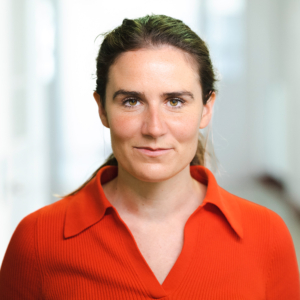
Dr. Lofredi is a neurologist at Charité Berlin, and a prominent researcher investigating movement disorders and deep brain stimulation
#66: Roxanne Lofredi – Striatal recordings and the stopping triangle: How DBS advances our clinical and neuroscientific knowledge
In this episode, we have a privilege to talk with Dr. Roxanne Lofredi, a prominent researcher investigating movement disorders and deep brain stimulation (DBS). Dr. Lofredi is based at Charité – Universitätsmedizin Berlin and is widely recognized for her groundbreaking contributions to understanding how basal ganglia networks drive motor symptoms in conditions such as dystonia and Parkinson’s disease.
Today, we’ll explore two fascinating studies led by Dr. Lofredi. The first focuses on how subthalamic nucleus stimulation impairs stopping of ongoing movements in Parkinson’s disease. This work, published in Brain, was inspired by a foundational basic science study from Aron and Poldrack (2006), which first implicated the subthalamic nucleus as a critical node for motor inhibition within the hyperdirect pathway of the basal ganglia. We’ll discuss how these findings translated to her DBS study and how they may impact DBS therapy.
The second part of our conversation will cover her recent publication in Nature Communications, where Dr. Lofredi and her team demonstrate a clear link between striato-pallidal oscillatory connectivity and symptom severity in dystonia. This work highlights the pathophysiological role of the direct pathway within the basal ganglia and opens up new possibilities for targeted therapeutic approaches.
In conclusion, Dr. Lofredi shares key insights from her research, bridging the gap between basic neuroscience and clinical application. From understanding motor inhibition in Parkinson’s disease to exploring striato-pallidal connectivity in dystonia, her work advances our knowledge and paves the way for more effective DBS therapies.
Roxanne Lofredi 00:00And movement disorders was just always something that I was very, very interested in. I really enjoyed, actually, this study from the point where I thought about something to translate into a task. And I think a lot of times when people in academia start, they feel this pressure and they think about what should I do? How should I behave? And what are the questions that I should ask? And I think at the end, you're really responsible just to live the life that you want to live and work on the things you want to work on. Welcome to Stimulating Brains. Welcome to Stimulating Brains.
Andreas Horn 01:12In this episode, I'm joined by Dr. Roxanne Lofredi, a prominent researcher investigating movement disorders and deep brain stimulation. Dr. Lofredi is based at Charité Universitätsmedizin Berlin and is widely recognized for her groundbreaking contributions to understanding the role of brain stimulation in the development of brain cells. Dr. Lofredi is based at Charité Universitätsmedizin Berlin and is widely recognized for her groundbreaking contributions to understanding how basal ganglia networks drive motor symptoms in conditions such as dystonia and Parkinson's disease. Today, we'll explore two fascinating studies led by Dr. Lofredi. The first focuses on how subthalamic nucleus stimulation impairs stopping of ongoing movements in Parkinson's disease. This work, published in Brain, was inspired by a foundational basic science study from Aaron and Paul Drack, 2003, which first implicated the subthalamic nucleus as a creatinine. The second focus on how subthalamic nucleus is a critical node for motor inhibition within the hyperdirect pathway of the basal ganglia. 02:03We'll discuss how these findings translated to her DBS study and how they may impact DBS therapy. And then the second part of our conversation will cover her recent publication in Nature Communications, where Roxanne and her team demonstrate a clear link between stratopalatal oscillatory connectivity and symptom severity in dystonia. This work highlights the pathophysiological link between the subthalamic nucleus and the basal ganglia. This brings new possibilities for targeted therapeutic approaches. We'll also discuss how subthalamic nucleus copied into anthropological copied into anthropological kids so I I can imagine but maybe there's something to tell here beyond that yeah I think I was um 03:02when I saw yeah I I mean I know you're a podcast writer and I know that you're starting always with this question and um was thinking about then and of course um having had my first child eight months ago my free time is basically covered by him and then I also started full-time clinical work um two months ago now so um even less free time for me um but I guess before that and I think that hopefully at some point I will reach that again um I had never really had some big hobbies or so I think I always had this kind of classical bourgeois bouquet of activities where you do your sports which was swimming in my case your music
Roxanne Lofredi playing the clarinet in my case and reading a lot so um very typical I guess for our bubble 04:02bourgeois bouquet love it and and I think you you also you also know the the um the party scene in Berlin quite well right so there have been has been some some experience there in the night the nightlife scene um yeah and it's uh so you're saying already a lot of things about me like being a! being a! being a! being a! being a! being a! being a! being a! being a! being a! being a! being a! being a! being a! being a! know she's just in vacation and then partying all the time well back in the days when you were young i'm of course to clarify yes when i was young this starts very well and no yeah of course i like um i think i like uh mainstream culture but i also like subculture so um but then that's perfect spot for that and then barbara holunda asked the guest question that i didn't understand really about zendaya who's zendaya what's that referring to the mainstream 05:01yeah then who's then there you were asking oh i i mean i googled her and i you know found out something but um i think that's just translating that i um i i'm very fond of um pop culture and pop stars and uh i like fandom and i have a lot of fandom for um people like zendaya or other just mainstream pop stars i think barbara was highlighting that because sometimes people are a bit surprised about the knowledge that i have so what's your favorite fun fact on her on zendaya yeah that was barbara's question i was i think i just felt very connected to zendaya because then they and i we have
Andreas Horn um the same fetish over beyonce so um that's why i just feel close to her
Roxanne Lofredi 06:03love it okay so moving on uh to more serious matter and your career and your work um could you share with us some of your key mentors and turning points in your career that led to where you are now um turning points so i think um one very important um moment in my life that introduced me to science or to neuroscience um more specifically was when i started my thesis in paris so i um i did a very basic neuroscience thesis on uh patch clamp recovery and i had a lot of experiences with the parahippocampal area um in richard miles and the simon africa's group um at the um institute itself with lamoille epinier icm in paris 07:02and i really appreciated the environment there because we had it was a very new brain center somehow and they wanted to start this new culture where a lot of different neuroscientific groups are working together and i really enjoyed the environment there learned a lot and there were many people from different fields coming there giving talks and and I worked primarily with neuroscientists not so much medical doctors and it's a very different school of thought I think then coming from this clinical perspective and I found this very enlightening somehow and yeah so I think this was definitely a turning point also a point where I thought yeah I think I want to integrate this not only being 08:01a clinical person or neurologist but really aiming towards this goal of being a clinician scientist which yeah yeah yeah very very difficult I think and contradictory in many situations but yeah so this was a turning point for me and then of course meeting you Andy just for the audience this was a joke yeah no it wasn't wasn't a joke we met when I came to Berlin actually and we were in a very weird course and I was just bored at that time and we talked and I think that's a very good point yeah I think that's a very good point yeah I think that's a very good point yeah I think that's a very good point yeah I think that's a very good point yeah I think you you told me about you you you told me about um andrea queen's group and what you were doing um andrea queen's group and what you were doing here in Berlin and um here in Berlin and um yeah I really enjoyed meeting you and I
Andreas Horn yeah I really enjoyed meeting you and I found very interesting what you told found very interesting what you told about the work of this group so you were about the work of this group so you were turning point then for me interesting I
Roxanne Lofredi 09:02turning point then for me interesting I didn't even I I don't even I remembered slightly differently. I think you even asked me about Andrea. So you already had, you know, your eyes set on doing something
Andreas Horn invasive in humans and so on. So. So yeah, I probably wasn't
Roxanne Lofredi the matchmaker for bringing you into the field of DBS. But, but it's funny that I remember that course too. Yeah. Great. And remind me, did you did you study in in France, medicine or in
Andreas Horn Germany?
Roxanne Lofredi I started studying medicine in Germany and Heidelberg. And then I moved to Paris. Because I in parallel to my, my medicine studies, I studied psychology as well in Paris. And so I did then like this year abroad, but continued there and started my thesis then there. So I did, I guess I lived for five years in Paris.
Andreas Horn Oh, fantastic. Yeah, such such a cool place.
Roxanne Lofredi 10:00I didn't even remember that. Okay. And so so so okay, you met me, but I think more importantly, you also met the
Andreas Horn group of Andrea Kuehn. And what happened then? Um, yeah, so I, when I when I moved back from from Paris,
Roxanne Lofredi where I worked, as I said, in the rodent model, I really wanted to kind of shift back to the human because after I went to the animal model, I was like, Oh, I'm going to be a human model. And so I started to study medicine. And I wanted to work with with humans and help humans and be directly in contact with them. Not only in the clinical work, but also in my research
Andreas Horn work. So this is why I wanted to maintain kind of what I learned
Roxanne Lofredi about electrophysiology and neurophysiology from the animal models, and explore how I can translate this to, to humans. And then there are two major fields, right, where you can do 11:00electrophysiology in humans, or at least direct intracranial recordings in humans, which would be epilepsy and movement disorders. And movement disorders was just always something that I was very, very interested in. Clinically, because it's, yeah, I think so. various what you can see there, but also you can, you always also have the possibility of really to help people there, for example, with Parkinson's disease. And that's pretty rare in neurology. So this. And so
Andreas Horn that's why I was more drawn clinically to movement disorders.
Roxanne Lofredi And then I learned about, about the work that Andrea is doing with or did at that time already, with intracranial recordings in movement disorders. And that, of course, then merged two of my 12:00fields of interest.
Andreas Horn Yeah, yeah. How did you get interested in then, you know, maybe the physiology of movement? Was that before that time? Or was it really driven by the clinical interest? Yeah, so in movement per se, I mean, in movement disorders, or
Roxanne Lofredi in Parkinson's disease, I think I was more interested at that time. And I think that's also something that is often seen in the, you know, in the cognitive part and limbic parts and the emotion and thinking and coming from psychology to that was, of course, more or not, of course, but I think oftentimes, that's something where students are easily drawn to not so much movement. And I think movement was something that I then got curious about, in this context of having already had some experience with the movement.
Andreas Horn Yeah. Yeah. 13:00Yeah.
Roxanne Lofredi Yeah, I think it was sort of like because I just felt that movement is a safer readout parameter and less prone to confusion of concept. And so I think this is something that I more enjoyed from a pragmatic point of view also, when thinking about how my future in research could be and what could be the research questions that I want to address. And also knowing that I'm, of course, I mean, that's the case for a lot of scientists. I think that they are questioning their results
Andreas Horn and not sure whether that's really true, what you find.
Roxanne Lofredi And I think with movement, that's just sometimes easier.
Andreas Horn So if it's so easy, how's that going?
Roxanne Lofredi Understanding it. No, I'm joking. I have to add the anecdote I interviewed,
Andreas Horn Günter Deutschler on this podcast,
Roxanne Lofredi 14:00and he told me that he chose tremor as a simple sign and thought that's something he can clarify in his career. And then he retired without having clarified it.
Andreas Horn Yeah, no, of course.
Roxanne Lofredi I mean, it remains challenging. It's not that it's easy. It's just easier, maybe. Or not easier. It's just... If better readouts, absolutely.
Andreas Horn Yeah, you have better readouts.
Roxanne Lofredi You can feel more confident about what you're reporting. It's more graspable in some way. But of course, it remains very difficult. And Günter Deutschler had so many decades and didn't find the final solution
Andreas Horn on how and why and where tremor is generated
Roxanne Lofredi and how we can stop that. So of course, I didn't too for my...
Andreas Horn Yeah, yeah, not yet.
Roxanne Lofredi You have time. 15:00So diving into that,
Andreas Horn you published many really fantastic papers already.
Roxanne Lofredi I kind of picked two, which might be your highlights, but it could also be that you have other favorites. So I'm more than happy to diverge off, of course, too. But the first one is you published that in 2020 in Brain. And it is a study where you tested the effects of DBS on versus off. And it was sort of like And what I personally love about it is that it was really very hypothesis driven, right, which is not always the case in these, you know, DBS group studies that also my lab does and others do. But you had a clear hypothesis and that hypothesis was based on a very different field in a way, right, from the neuroimaging field, Russ Poldrack and Adam Aaron. So I would love to maybe start with that basic science work and you can talk a little bit 16:02about that and then how you came to the idea of trying this in DBS.
Andreas Horn So you mean what the concept is? Yeah, the Aaron study, if you can maybe walk us through.
Roxanne Lofredi I think it was even his thesis in 2003.
Andreas Horn Yeah. What did they find?
Roxanne Lofredi And then, of course, I think he just expanded it more and more over the years. So it's the idea that you have a network that can be associated at the end or what his final conclusion was then globally with inhibitory processes in your brain pretty much independently of what the exact context of this inhibitory request would be. So you're saying stopping a thought or stopping emotions would have the same, 17:02general network and stopping movements.
Andreas Horn Okay. Yeah.
Roxanne Lofredi But he started, so he's also from coming from this more psychological side and he started with this classical stop signal task. So it was pretty much in the cognitive domain. Everything was more related to this cognitive domain and also to the inhibition needed in the presence of conflict. So you have a situation that is not clear from the start. And it comes clear. Maybe over time and you have to hold withhold something and therefore acts or therefore. Inhibits some kind of activity. But it was pretty really in this context of conflict. And I think for me, oftentimes when I'm reading papers or no matter from where which field they're coming. 18:02From. Or what methods they using so he and this in this situation. It was it's really the neuroimaging domain. But of course he expanded to electrophysiology. But still at first studies where no imaging based. Is always to think about how this can translate to what I'm doing or whether that's something that's. Could be used or integrated somehow. That's. That's. That's. That's. That's. That's. That's. That's. That's. That's. That's. That's. how this can translate to what I'm doing or whether that's something that could be used or integrated somehow in what I'm doing. So I'm always trying to expand methods, I'm always trying to see whether concepts that have that arose somewhere else can be translated to the place where I'm at. And in this situation I really read about this cognitive effects of deep brain stimulation because he also looked at the effect of DBS on cognitive inhibition and I think 19:04all of the people working with DBS know these effects of DBS on impulsivity and making patients more impulsive. I think that's a very important thing to look at. I think that's a very important thing to look at. I think that's a very important thing to look at. In some contexts, not always, but This is mainly SDN, DBS and Parkinson's. SDN, DBS and Parkinson's, where you can observe then that you can have side effects that you want to avoid in the clinics, of course, where people can even change their personalities. And this, of course, then being something that was very salient for me when I started with DBS because it is a very impulsive response. And it is a very impulsive response. And it is a very impulsive response. And it is a very impulsive response. And it is a very impulsive response. And it is a very something that touches the concept of the mind and the personality so yeah it's pretty salient i think um and then me being more in this motor domain i just thought of how with this concept 20:01something that is translatable because i didn't ever buy so much into this division of the subthalamic nucleus where you have this cognitive domain the limbic domain the motor domain and something that like little rooms apart and in one house but separate rooms so this was is conceptually pretty difficult for me to grasp that it would be like this so i think that's why i i thought of could this be a phenomenon more globally speaking and not something restricted to the cognitive domain and that's something that you see in parkinson's disease right you can also see disinhibition in movements which would be dyskinesia these involuntary movements that you can have um either with dopaminergic medication but also with subthalamic dbs and then of course also lesions um where you can observe those disinhibited movements yeah so um i was just wondering whether this could be 21:03a similar readout actually of um of this inhibitory network that was more related to the cognitive domain before that um but whether yeah we could link movement disinhibition to this network as well yeah maybe to just before you go into details there to briefly make two points so first of all remind me i i imagine from the original paul drag and and aaron stuff that you in your talks for example there was sometimes the just a drawn image um person driving a car and then there's maybe um uh you know something crossing the road like an erection like a sort of like a sort of like a sort of like a sort of like a sort of like a sort of like a sort of like a sort of like a 22:02sort of like a sort of like a sort of like a sort of like a So the image of the driving car and stopping, I think it's originally it was more this idea of you have to choose between two things or withhold a decision. Okay, so more cognitive conflict.
Andreas Horn Yeah, so this was the original context. And then the, what was the second sorry the, but it's still involved the STN right yeah. Exactly, it's the right hemispheric inhibitory network between the pre SMA the right if G and the right STN.
Roxanne Lofredi And that's always this very nice picture that you see between those three, three nodes so the pre SMA, I have to end this little small STN. 23:04So stopping triangle, because it's. It's rare that fMRI studies like the ones involve something like the STN right these nodes are effectivity of this card or I think you know this noise it's too small, whatever.
Andreas Horn Yeah, but okay.
Roxanne Lofredi Just yeah that's maybe something that you know better than because as I'm always focusing on the basic ganglia my feeling is that there are a lot of fMRI studies involving the STN.
Andreas Horn Yeah, you're probably right there, that certainly exists, but when you think they often for example the cerebellum is another one.
Roxanne Lofredi Oh, if this. Big blob there we don't know what it means let's just maybe not be make a big deal out of it, I think, at least back in the day that was often the case where people were just cortex centric in their views.
Andreas Horn Yeah. Yeah, yeah, possibly.
Roxanne Lofredi That's always been this kind of window that you're looking through right and for me it's the basic ganglia so I'm.
Andreas Horn yeah. 24:01Yeah.
Roxanne Lofredi During and don't see all this other stuff but it's true that, for example, when I went to. first time to neuro control of movement this conference that I really enjoyed actually. In 2018 I was just also very surprised of how little the basic ganglia represented there. Because for me. I always thought of course the basic ganglia center of control of movement.
Andreas Horn Yeah.
Roxanne Lofredi But yeah. There are definitely other brain areas that are very important as well.
Andreas Horn Yeah.
Roxanne Lofredi So, but I interrupted you so you saw that stopping triangle and you thought, can we bring this into the movement domain and analyze it with PBS.
Andreas Horn Yeah, can it be something that that explains.
Roxanne Lofredi A clinical observation. I think that's always this. Situation that you find yourself and right if you're doing clinical work and. Scientific work is that you have this ping pong of observation. 25:04So you read papers that my inspire aspire. You're thinking in the clinical routine, but you also observe things in the clinic that. Back and forth and inspires. Research questions. And I think this was just the situation where I read this paper and saw this triangle and saw what it's that it was. Associated with this inhibition and and observed this phenomenon and in Parkinson's disease patients of this disinhibited movements. And I. Just. I. I. I. I. I. I. I. I. I. I. I. I. I. I. I. I. I. I. I. I. I. I. I. I. I. I. I. I. I. I. I. I. I. I. I. I. I. I. I. I. I. I. I. That's something that we can bring together. And then of course, the brain stimulation is just very, very powerful tool. To probe. Circuits and.
Andreas Horn Yeah.
Roxanne Lofredi I think this was pretty much what I wanted to do. And then I had to think about the task. Right. 26:00Because there wasn't really a task. Addressing this. Because most tasks. investigating inhibition, we're using the stop signal task. And if we're frank in the stop
Andreas Horn signal task, there's just no movement, right? If the patient performs successfully,
Roxanne Lofredi they just do nothing, which is good, but it's just not... It's not an ongoing movement. Yeah. Yeah. It doesn't allow you to investigate the precise effect on movement because there's just
Andreas Horn an absence of movement. Yeah. And that's why I wanted to then design a task where we have movement
Roxanne Lofredi and where we can say it's a continuous movement. It's not something where we have breaks in between movements because often we have tappings or single button presses or something like this. It's difficult then to... Because you have very separate sequencing within the movement that makes it then difficult to assess the effect on a continuous movement.
Andreas Horn 27:02And that's why I then thought of this circular rotating continuous movement where we really have
Roxanne Lofredi this stopping signal and see what does it on this. Yeah. So for the listeners, we should clarify. So I think you came up with a graphical tablet, which I think is genius in itself for tasks, right? And then you said, okay, they have to draw circles, big circles. So I think they had to use proximal... The whole arm essentially to do this.
Andreas Horn And then at some point there's a red light and they have to stop, right? That was the core of the task. Yeah. Yeah, exactly. Pretty simple. Not a very difficult task neither to design or to understand.
Roxanne Lofredi I think it's just, as you said, the person just draws circles and then at some point has to stop following a visual cue. And this allows you then really to see the effect of this stopping 28:01signal on the movement. Yeah. And I think that's a very good point. I think it's a very good point. Yeah. I think it's a very good point. I think it's a very good point. I think it's a very good point. I think it's a very good point. I think it's a very good point. without having to calculate some kind of reaction time delay due on a lack of movement.
Andreas Horn But yeah, I really enjoyed actually this study from the point where I thought about something
Roxanne Lofredi to translate it to a task. And then also just it's such a good feeling when you have an idea and hypothesis and then you design a task and then you test it and then it works out. It's just...
Andreas Horn Yeah, yeah, absolutely.
Roxanne Lofredi I mean, we haven't gotten to this part, but I was blown away that how beautifully you essentially replicated the stopping triangle with this.
Andreas Horn So just to briefly add on to this, you, of course, did the task. You did the task without DBS and then under DBS, right?
Roxanne Lofredi So these were the two conditions. 29:02So essentially you introduced a causal circuit manipulation with DBS and that was onto this exact circuit because the SDN is one node of the three.
Andreas Horn And were you thinking of DBS as a, you know, inhibit like this lesioning of that circuit or like downregulation of that circuit or?
Roxanne Lofredi Yeah, I think a disruption or just a... Disruption. Disruption. Disruption.
Andreas Horn Yeah.
Roxanne Lofredi Or...
Andreas Horn Yeah, or noisy bad signal doing some chaos in the usual activity of this circuit.
Roxanne Lofredi I don't have this very...
Andreas Horn I don't like talking about it as being a stimulation, right?
Roxanne Lofredi Though it's in the title of the study is sub-dynamic stimulation because it's just easier and everyone knows this wording. But I wouldn't assume that DBS... DBS. DBS in this context stimulates the SDN but interferes with this circuit. 30:04And I think also, again, in the study, it was also a moment where it were three different... I think it was this cognitive domain, the clinical observation, and then of course being close to you and seeing what you were doing with lead DBS and how this became more and more precise and could explain clinical effects. And I think this was also something where I wondered, is this a tool that we can also use to investigate very specific features of behavior and not only broad clinical effects, but also see whether it opens the possibility to investigate very specific effects of DBS. And I wanted to learn more about your methodology. So I think I also wanted to introduce that coming from more a neurophysiology-based approach 31:01originally. But I always want to learn how to integrate different methods. So this was also... I think you're giving me way too much credit here. And it's really not about me at this show, but thanks. But what you did find, I think, if I remember correctly, was that the more... The more people had trouble stopping the movement, the more this stopping triangle was disrupted
Andreas Horn in a way, right? So exactly what you... What's that correct? Yeah. So what I... I had two or three readouts, I would say, in this study, right?
Roxanne Lofredi So Parkinson's disease patients were performing a movement and we could see how fast they were in performing it. Right. We could measure how fast they were in initiating the movement.
Andreas Horn So that's two very disease-defining features, right?
Roxanne Lofredi 32:03The difficulty initiating a movement and the difficulty in performing a movement in high speed. And we could show then that STN-DBS improved this in both cases. So Parkinson's disease patients were faster in initiating the movement, were faster in performing it with STN-DBS, but were trying to stop the movement. And to stop it, they had more difficulties doing that with STN-DBS than they had without. So they had difficulties or less difficulties, but at least measurable. They were slower in stopping this movement that they were performing when STN-DBS was switched on. And that was the case for all of them. So it's just a large group effect.
Andreas Horn Yeah.
Roxanne Lofredi But then, of course, this effect varies from patient to patient. So some of them... A bit slower in stopping the movement, but others really have significant delays. 33:00And this variance then was explained by the location of the electrode. And when the electrode was located close to fibers connecting the STN to the right pre-SMA and the right IFG, then you had more of these difficulties. And I guess that's just the information flow that is then interfered by this external neurostimulation applied to this area.
Andreas Horn Yeah.
Roxanne Lofredi It's just, again, even now thinking about it, it just blows my mind how well it replicated
Andreas Horn the basic science work, right?
Roxanne Lofredi And you're totally right. I was always blurring over the other really important... I mean, I think it's just the fact that the 34:08! There was one in eLife to briefly mention it where you looked at gamma activity with movement size and movement speed and so on. So and then I think multiple other fantastic papers, but I think the one that we certainly have to talk about is the most recent one that was published in Nature Communications this year. And if maybe as a backstory... Because I still may remember the origins of this study where... And I might remember it incorrectly, but I think the Boston scientifical long electrodes, 35:05so the ones, the versized, the non-directional ones with eight contacts that are pretty spanning a large portion of the neural tissue with eight contacts, when they were introduced, you probably thought immediately or at some point, Sure, thanks. Sure, thanks. Sure, thanks. Sure, thanks. Sure, thanks. Sure, thanks. Sure, thanks. Sure, thanks. Sure, thanks. Sure, thanks. Sure, thanks. Sure, thanks. could record from the striatum if we are in palatal DBS settings, because we have more electrodes that extend up. And that will give us a window into striatal activity in humans. Do I remember that correctly? Or? I know, I don't think it was that way. It was okay. So again, it was me reading a paper or papers and I read the paper by Singh and at all back then in PNAS. And they were recording
Andreas Horn micro electrode recordings from from the striatum. Yeah, in
Roxanne Lofredi 36:02dystonia patients. And they showed that there was an increase in oil change and firing rate in Parkinson's disease and in dystonia and showed that this in in the striatum with dystonia patients, the firing rate was lying between in this low frequency rate. And giving that what we are recording with the DBS electrodes, the oscillations, we think of them reflecting the input to an area, I thought,
Andreas Horn this makes sense, then that the output activity from the
Roxanne Lofredi striatum, so the firing rates are in this range, of low frequency activity that we then see in the downstream internal pallidum, where we have increased low frequency activity. So maybe this is linked, this is a kind of the upstream 37:01pathological activity that then leads to this oscillatory synchrony at the internal pallidum.
Andreas Horn That makes sense. Sorry for not not at all getting that and
Roxanne Lofredi just to for the listeners to briefly mention, because not everybody might be aware. I think almost everybody will know, elevated beta activity in Parkinson's, that is a good marker for bradykinesia, especially for hypokinetic symptoms, used for closed loop and so on, maybe a bit lesser known, but still quite established by now is this low frequency activity that we can record from in the pallidum in dystonia, that seems to also correlate with, with symptom severity. Not as many studies have shown this, there's this one by Julian Neumann that showed it from the same point of view, that is, the group and I think probably others too were just to briefly as a background so and you were saying now that you read the paper where they did micro electrode recordings probably going down to the pallidum in surgery right 38:00recording on the way down through the striatum and they found. Yeah okay so so and you were making a link between their findings and the hyper activity in the beta range alpha beta range.
Andreas Horn Yeah.
Roxanne Lofredi That's right. That's right. That's right.
Andreas Horn range. Exactly. So in dystonia, as you said, and the internal peladon, which would be the DBS target
Roxanne Lofredi area in dystonia, or STN can be also a target area, but more frequently you implant DBS than in GPI.
Andreas Horn And this is why there were studies recording from the GPI in dystonia patients, of course,
Roxanne Lofredi less than in PD because it's just a rare disease. Still, it was very well replicated across many studies that in dystonia patients compared to PD patients you have an increase of this low frequency activity. And then the studies showing that there is a link with dystonic symptom 39:02severity are then there are less studies showing this, but still in the cohort, for example, that it was a very large increase in the response rate. Dr. Thank you. Dr. Thank you. Dr. Thank you. Dr. Thank you. Dr. Thank you. and Neumann reported on, but also then a work from Stella with chronic recordings showing that there is this correlation between the amount of low frequency activity and the GPI and the dystonic symptom severity. And of course, these were studies from Andrea Kuehn's group, and as I was part of Andrea Kuehn's group, I was pretty close to these findings. And then reading Singh's paper, I read this and I realized that to go to the GPI, I was back then also assisting the DBS surgeries and performing the intraoperative neurophysiology 40:06. And I was actually realizing, okay, if you want to go to the GPI, you cross apparently the striatum because they were recording from the striatum. And I think that was not something that I had so clearly made up in my mind that it was like that. And when I realized that, I thought, okay, but this means then that the DBS electrode that we're planting also lies in the striatum because that's our trajectory. And I think this was just something that was. It was not so clear to me. And then I just thought, okay, but if we have already this electrode, it would be good then to have, or is there a possibility to record from all this different areas that we are apparently crossing with this DBS electrode, the GPI, the GPE, the striatum, all this multi-science where we have the DBS electrode in. 41:01And this is when I realized that, okay, this device that we already implanted. Back then with from Boston, Boston Scientific, where we have those eight DBS contacts that are circular contacts, so they're not segmented. So they lie over each other and they spend 60 millimeters. And then again, using your tool, Andy, I know you don't want to, but I just localized these electrodes to see if this, if this assumption of mine was true. And I think that's a really good point. I think that's a really good point.
Andreas Horn And then, so yeah, they're reaching up to the striatum and then of course, it's being
Roxanne Lofredi a grip, a fan of the whole pathway idea of the basic ganglia and the direct and indirect pathway. Just thought, this is so cool. We have multi-site recordings from the basic ganglia in patients from the direct, in the 42:01indirect, not, I mean, proxies at least.
Andreas Horn Yeah.
Roxanne Lofredi The direct and the indirect pathway.
Andreas Horn And yeah, that's.
Roxanne Lofredi And the rest was history. No.
Andreas Horn So super cool insight. And it's even a bit surprising that there are not more studies like this, right?
Roxanne Lofredi I mean, I guess the precise electrode was introduced and then probably pretty quickly after we had the segmented one. So, you know, many centers switched to that one.
Andreas Horn So, so that's why maybe it's not used that often, but, but I still think I'm not personally
Roxanne Lofredi not aware of a second study that recorded in the striatum using this electrode. So that alone is pretty cool, I think. And then maybe also to briefly mention it, I think the striatopalatophugal bundle, so the main axis of the basal ganglia going more or less radially through Wilson's pencils in the striatum, and then, you know, these palatal, you know, bundles, it's a massive streamlined bundle, I think the electrode would even roughly
Andreas Horn 43:03match that course, right? So you might even think of this as stations.
Roxanne Lofredi Correct.
Andreas Horn Yeah, well, stations on the same, is it? I'm not sure, but probably it would roughly
Roxanne Lofredi follow these fibers. I think so, yeah, at least the axis is similar, yeah. I think that's something that I just really enjoy, I think, in general, when thinking about studies or thinking about projects or research ideas is to use things that are there and to combine them. And to try to make something positive out of restrictions that you have. I think it's, that's something that is very different from my clinical work. I think in clinics, I'm just very annoyed by restrictions or not restrictions in the sense of, 44:03not ethical restrictions, more restrictions of not having the possibilities to give the care that you want to give or not.
Andreas Horn Having, yeah, not being able to help in the way you want to help.
Roxanne Lofredi And that's something that I think a lot of clinicians are suffering off. But in research, although it's, although I can also understand the point of view of, of scientifics that say, I want to, I want to use all crazy stuff and create a lot of crazy stuff. And I want to have these open. Genetics.
Andreas Horn Yeah.
Roxanne Lofredi Everything from, for me, it was something or something that I enjoy actually, when working with patients is being restricted in a way and not being able to put hundreds of electrodes everywhere.
Andreas Horn And yeah, you have to be, you have to be creative in the choices that you make.
Roxanne Lofredi 45:02The questions you ask even sometimes. Because you just have a certain amount of tools and you just have things that are. possible in patients and others aren't and then you have to be creative on how to still answer the questions that you are asking yourself and um and i think that's something that i really enjoy um and yeah see i've i've once heard that true artists uh think like that so you you this this means you're a true artist i once heard that if you are um you know a person that builds sculptures from rocks um let's say you want to build a sculpture of a man standing or whatever right you like you the real artists would already in the stone see oh this could become this sculpture right and they wouldn't make it a puppy or something very different right so so they would they would use the tool and see the stone and i think that's a bit what you did there um 46:00and leads to the next question how do you think is the availability of devices how does that shape what we do in research um probably it does shape it a lot right but new technology like for example the percept device now enabled of course lots of studies so how do you see that interplay um are we you know is the industry or the available devices are they restricting us are they empowering us or how is how's that interplay for you i i think as as in many cases it's just a back and forth or an interaction so um for example i in this study now showing that there is um a link between striatal activity and also the the striatal palatal coupling i would hope that maybe this inspires the new devices right so if you're showing that something has a relevance then of course you hope that the 47:02consequence is that more is developed that helps to undermine this relevance and also use this relevance and this was the case for example for sept now um designed to be able to record and to act onto um neurophysiological activity from the basic anglia which was of course inspired by um all these studies showing that it has indeed yes makes sense meaning so i think this is always a back and forth and and um and of course i love it if new things are developed it's not that i'm that i want to just live in the stone age and say no no no of course yeah yeah um but it's more just my way of thinking that i enjoy to do it that way and i hope that then other people that enjoy developing um new um devices um can build upon that um but 48:00yeah i think people are just different and enjoying different parts of it and i enjoy puzzling around with stuff that is not the same as the old stuff and i think that's a very interesting thing to think about and i think that's a very interesting thing to think about and think about how using it and not letting it go to waste yeah love it yeah and so so it it does mean it does mean we need a strong dialogue back and forth with industry too which i think is is helpful and it also reminds me of the episode with nantia sutana who also had to be become really creative to i think read out um some of the signals from the devices and build the backpack and um you know try to kind of with the tools we have to make creative things as you did and um we we should summarize the paper because probably by now the listeners are super super curious what you even found can you give us the executive summary of that nature comps paper um yeah i think there's one very um 49:00one main result or major result um that is based on this idea of pathways within the basic ganglia so um of course it's something that's discussed and maybe reductionist but there's this idea that within the basic ganglia you have some kind of um pathway that promotes movement that would be direct pathway that is connecting the striatum with the s input um of the basic ganglia directly with the output of the basic ganglia which would be the gpi and then you would have a parallel pathway um that would be the gpi and then you would have a parallel pathway um that is the idea of balancing things out um inhibits movement um which would be the indirect pathway um that has a layover uh in the gpe and the stn before reaching the output nucleus the gpi um and in this um in in the movement disorders we we have the situation where we have patients 50:02that show too much movement and then we have patients that show not enough movements right and those that show too much movements involuntary movements um dystonia patients um that have hyperkinetic movement disorders and those um parkinson's disease patients that are hypokinetic um and in this pathway concept um the there's some kind of emergency i think going i'm sorry let me mute myself i didn't realize it's that loud close to a hospital um yeah so the idea would be then in this pathway hypothesis that you have a balance between those pathways and in disorders that you have an imbalance and in parkinson's disease you have an imbalance what's the indirect pathway um leading to not enough movement and in dystonia you have an imbalance what's the direct pathway leading to too much movement and that's an hypothesis that has been based also on neuroimaging results but there was never really a possibility 51:05to have a functional or neurophysiological readout of this hypothesis primarily also because we don't have or didn't for a long time didn't have um good animal models of dystonia and we didn't have the possibility to report from these deep brain um structures in dystonia patients or were restricted to the gpi so there was not much evidence um yeah um that was able to support this hypothesis and what we now did was being able to record from these different basal ganglia structures i'm having the possibility to weight somehow this indirect pathway to this direct pathway activity by having parallel recordings from the striatum the gpe and 52:00the gpi um we could show that the striatum and the gpi are strongly coupled in this activity that we already mentioned at this low frequency activity um and this low frequency activity is present in all basal ganglia and they are all coupled in this activity but it is the coupling strength between the striatum and the gpi um that correlates with dystonic symptoms so it seems as if this the the this direct pathway possibly between striatum and the gpi um communicates in this low frequency band and that if they're kind of stuck in this communication then there are then there is a an imbalance of this direct pathway when compared to the coupling between the striatum the gpe and the gpi which would reflect the entire pathway um and that's basically it um what we well it sounds simple but i'm yeah this was a massive study and and 53:06it's super cool as you say we've never recorded we don't have my macaque um models that are that are good for
Andreas Horn this no no no no animal models for for dystonia that's why yeah we couldn't just um uh investigate
Roxanne Lofredi this and i think it also um puts again the basic ganglia a bit on the in the in the spotlight because when recording just low frequency activity from the gpi um and you're saying oh there's path a logically increased low frequency activity you don't know where it comes from right so it may be something that is upstream from cortex or cerebellum whatever that is a pathological signal that enters the basic ganglia and as we by whatever um reason have the possibility to report from the gpi it's where we that's where we measure it but it doesn't mean that it stems from 54:02there right yeah um and i think the possibility now to record from the input structure of the basal ganglia the striatum and showing that in the striatum we don't have this pathologically in or at least we don't see a correlation between the striatal low frequency activity and the dystonic symptoms so it doesn't seem to be something that just comes that just pathologically enters the basal ganglia via the striatum coming from the cortins of the cerebellum but rather it's this pathological signal is generated within the basal ganglia in the circuit um between the striatum and the gpi that's where this pathologically um exaggerated frequency activity that's linked to the sonic symptoms is somehow generated um super cool and that also puts the source of this activity more in this basic ganglia network and of course then dystonia is a very complex disorder and i 55:00don't want to say that the sensory cortices or the cerebellum don't play a role in there but at least for this um signature it seems to be something that is um at least amplified within this within the basic yeah and the gpe didn't play a role so so you said there is theater activity there too but the coupling did not correlate it does it does no the gpe no no yeah so that's the indirect indirect within the basic ganglia i guess that the activity spreads more or less everywhere and um and you can detect low frequency activity everywhere you can detect beta activity everywhere but the question is in which area it kind of um influences or or over overweights the rest um and uh low frequency activity and there's also this um the study by the oxford group showing that 56:02mdbs in dystonia for example doesn't seem to act via uh the suppression of low frequency activity so i guess there are different mechanisms of action
Andreas Horn interesting and and then remind me did you in that study have some control subjects with
Roxanne Lofredi parkinson's as well or did you offline do that or any non-public no okay you're shaking your head no no okay no because we don't have this would be something that would have been cool maybe to do with um centers in the us or so you know so i think that's a good question um so i think that's the us also that implant more um uh in the gpi for for pd patients we don't do that so um we have just a handful of pd patients that receive gpi dbs and um these i think in our center all received um yeah electronic electrodes um however but uh but this of course would be something that i would be 57:00very interested in um yeah so for the listeners that there's a there's a good study uh idea here i think um although i think even yeah in most centers unfortunately this electrode has come out of vogue because everybody wants directional leads these
Andreas Horn days yeah i still think it is a pretty interesting electrode even therapeutically not just
Roxanne Lofredi scientifically right i mean even stimulating in the striatum as a trial could make sense to investigate and so yeah absolutely it has yeah lots of potential yeah i'm yeah i'm also um i like this electrode um but then it's not the way that was most promoted in the last couple of years although now the the hx plus or one of them is also pretty long right is it a similar span than new electrodes yeah okay i think i mean you don't have to choose between words right you can have the segmented ends a lot of them yes yeah that's a good point okay so probably also for you 58:01more uh more to be done um in in that direction
Andreas Horn if if you know this stays interesting um super cool do you think this might like could you
Roxanne Lofredi speculate if you were um an investor now or you know what would what would this potentially bring for clinical care would you would there be any hypothetical closed loop application or steering signal or how would you make use of it clinically maybe um so i think um the idea sort of sort 59:00a record there that is that has a relevance for the symptom generation it would be of course cool to inhibit that or to interfere with that before the symptoms generated right so being before hands and not reacting to a pathological signal which would be the idea of the closed loop dbs at the moment is you have a pathological signal for example parkinson's disease beta that increases and you react to that yeah but this means the pathological activity is already there ideally you would have a possibility to have a readout that precedes that pathological activity and if we think of low frequency activity that are correlated with symptoms only in the gpi but not in the striatum it means that if we have a 01:00:01possibility to decode them beforehand then it means that in the gpi they wouldn't be generated possibly and that's this of course could be then i think a good application for it in clinics but of course dystonia is such a complicated disorder and also the effect of the dbs i mean it's um it's not something that is uh that can improve lives tomorrow and only the devices needed to be designed um but i think it's one way to go and um and in dystonia especially the network activity is just very relevant um so i think that's something where we have to um investigate more how the different network nodes are implicated in the generation of symptoms and um um and also in the uh and how they plus which nodes have this effect on the plasticity that is 01:01:05either um detrimental or positive for the patients so we we have to remain open i think for a network hub recordings um in this disorder in order to develop um better treatment options so potentially also with with ecox so so to be even more upstream in a way if if that yeah following that same logic yeah cool and and so so in in pd we we could we could in theory think of something similar too right that would need to be shown of course as well um but maybe there's also some you know coupling of the beta signal uh between striatum and and gpi that could be used one day but um yeah that speculation so yeah no definitely but then yeah absolutely
Andreas Horn that's also yeah the market is bigger so that will make you know more interesting for for the
Roxanne Lofredi 01:02:00companies which is in itself of course a big topic and and also a bit of a sad topic of course but dystonia is just a small disorder small disorder yeah but i think for example this is also one study that i really enjoyed um doing was with because you talked about beta um is showing that beta activity also holds its place in dystonia so um we we might fight may find something um in a very frequent disorder just as that is parkinson's disease for example but um that is also possibly translatable then to rarer disorder which of course bears a lot of time of investigation if you already have the strong hypothesis um and also maybe helps patients with rare rare patients with rarer diseases to profit anyways from results from more frequent ones. So what I'm referring to is just one study where I showed that beta activity in dystonia 01:03:04is linked to slowness of movement in dystonia as well, which can be a side effect of palatal brain stimulation.
Andreas Horn Interesting.
Roxanne Lofredi I wasn't even aware of that.
Andreas Horn Yeah. Fantastic. Yeah.
Roxanne Lofredi And just to show that this concept is most likely not something that is disease specific, but rather can be translated to a lot of conditions where the underlying problem is the same of imbalance between too much and not enough. Great.
Andreas Horn When and where was that published for the listeners that are interested in this?
Roxanne Lofredi Last year in movement disorders. That was also a study. I was in a study where I wanted to work with the restricted possibilities that we had back then during the pandemic. So I used video recordings of dystonia patients from our archival data sets and used markerless 01:04:04pose estimation to extract tapping velocity from those videos and correlated with the intracranial recordings that we had of them. And so that there was a lot of data. And so that there was a link between tapping speed and beta activity in dystonia patients. Super cool. So also computer vision used for quantifying symptoms.
Andreas Horn Yeah.
Roxanne Lofredi Pretty great.
Andreas Horn Okay. So moving on maybe to broader scientific questions. How do you see the field of deep brain stimulation evolving now, particularly of course, with advances in adaptive and closed loop DBS? What are next big steps, next big developments in thinking broad?
Roxanne Lofredi I think broadly, it would be really to have the possibility to have multimodal data sets of patients because we now have this possibility of chronic recordings. 01:05:15So we have good. So we have good. Facial and temporal resolution. And I think really combining these different access of the brain and integrating them is something that I think will allow us really to address this large amount of different symptoms that patients present with in various disorders. I think the disorder then at one point is maybe not irrelevant. But I think there's a lot of. Translational potential if we have this resolution that we have now using electrophysiology and neuroimaging in the same way. 01:06:03Super cool.
Andreas Horn And then what are the next big questions in understanding basal ganglia circuits and their role in motor control?
Roxanne Lofredi That's related, of course, but more neuroscientific. Yeah, I think my next. I think. I'm. Now I'm planning to walk out of it on movement. My next project is would be more related to what.
Andreas Horn Do the basic ganglia. What role do they play in sensory processing?
Roxanne Lofredi Because I think that's that's also something that has been not investigated enough. The. Parallel. Symptoms. That patients. Present with that have movement disorders. In the sensory domain. So they all have a lot of sensory symptoms from multiple domains. And I really want to try to find out how this can be integrated and what we know about movement disorders by using the tools that have been established in the motor domain. 01:07:08And trying to. Lighten up these sensory symptoms and hopefully also find a way to modulate them. So. That's something where I said at the beginning, I like movement disorders because we can help patients.
Andreas Horn Yeah.
Roxanne Lofredi With their motor symptoms. But day and day again, I have to see that we cannot help them with. A lot of their sensory symptoms and their suffering of that a lot. May it be pain or paresthesia or. Visual hallucinations or I mean, a lot of things that. Disabled them. And I kind of want to see if we can. If we can. If we can. If we can. If we can. If we can. If we can. If we can. If we can. If we can. If we can. If we can. If we can. If we can. If we can. If we can. If we can. If we can. If we can. If we can. If we can. If we can. If we can. If we can. If we can. If we can. If we can. If we can. If we can. If we can. If we can. If we can. If we can. 01:08:00If we can. If we can. If we can. If we can. If we can. If we can. If we can. If we can. If we can. If we can. If we can. If we can. If we can. If we can. If we can. If we can. most excited about in your research that so that is probably that or is there anything else yeah okay what's your favorite scientific book or article um oh that's so difficult to say but i think also to because these are kind of the last questions right and we started with the first questions where i mentioned my my beginnings in neuroscience and with patch clamp recordings and i think something someone that i never personally met and i don't want to idealize that i don't want to make a hero cult out of a person that i don't know and of persons in general but um everything and related to fandom 01:09:04that i already mentioned that i like to be a fan so i'm a fan of bujaki okay yeah and his books and i think i was at the beginning of my 20s and i remain at um in the middle which one do you prefer i think there are mainly two of them right rhythms of the brain and the inside out so the first one is your favorite but i mean also because i was young and i was um i loved the world and
Andreas Horn this yeah i love this book and i was very happy cool fantastic and so um you are right we're deep
Roxanne Lofredi in into the rapid fire questions already and why how do you sort of sort of sort of sort of sort of sort of sort of sort of sort of sort of sort of sort of sort of sort of sort of sort of sort of 01:10:00sort of sort of sort of sort of sort of sort of sort of sort of sort of sort of sort of sort of sort of sort of sort of cannot answer this question okay um yeah weird question i i agree so so um maybe a better one is there a piece piece of advice you'd share with young scientists interested in neurostimulation research or if you prefer neurology and or um i think it's a very um always i always have this very general um and and not very um smart um advice that is um that you should that you have one life and you should do what makes you happy and what is fun and i think a lot of times when people in academia start they they feel this pressure and they think about what 01:11:04should i do what is um how should i behave and um what are the questions that i should ask and i think at the end you're really responsible just to live the life that you want to live and work on the things you want to work on um and it doesn't make any sense to do something that you don't enjoy and puts a lot of stress on you um for i don't know what bigger reason there is um so that's as i said i think it's that a very simple advice but i try to um say it a lot because i i feel that it's not very well heard yeah i mean i i would say it's it it sounds simple but it's actually hard to do it right i think we do so so many of our choices sometimes rely on how we would be seen from the outside or even how we see ourselves from the 01:12:01outside rather than really looking out of what are the things in my day i actually enjoy right what do i want to you know um spend time with and so on but rather we often see i want to be this person that does x or so you know and it's that's always there's this outside perspective so i love the advice and i would still say it's not not easy to always follow it as i i want to be very circular so we could talk about pop culture so i want to give side here um taylor swift who said that you should never be ashamed of your excitement so if you're excited about something that's great just be excited about it and don't let someone tell you that it's not cool or whatever yeah it's funny you are you are probably one of the people in my life that i know that have the deepest knowledge of of you know as you say subculture as well and actual you know deep arts and so on but so i so i kind of love it that you bring up taylor swift and beyonce here um running the risk of you know uh potentially 01:13:04being seen a bit superficial but you're certainly not um and you're not you're not you're not you're not you're not you're not you're not you're not you're not you're not you're not you're not you're not you know you're not you're not you're not you're not you're not you're not you're not you're not
Andreas Horn better so yeah and and of course taylor swift is fantastic i agree so okay so um any advice for
Roxanne Lofredi women in the field yeah difficult um for women in the field so yeah i think you just have to be aware that you're um a woman and that people just see you as a woman and even if you yourself don't feel it um it's something where where i think you shouldn't be um i i think a lot of women tend to say ah that's such a basic 01:14:02thing to say ah it's because i'm a woman or they did this because i'm a woman but unfortunately oftentimes it's just true and it's just like that and um i think it just relieves you of some of the burden too to try to explain it by your own personality or no i did this wrong because i acted that way and yeah um more often than not it's not how you reacted or what you did it's just the way people see you from the outside but then just befriend the other women and build up your body system and it's very important to have bodies love it okay yeah any any any idea of how one could challenge that or change that including of course how how men should behave differently but yeah um it's 01:15:02! or behave different i think men um should be just respectful people in general and women should be too and then i think i think everything's fine um and i think it's just important to um to realize the places you're in and if you're in a room full of men then you should just say something and um say it's weird to be in a room full of men because yeah usually in this world we have at least 50 50 um and i think that's something where um just men should be cautious too um absolutely to try to um to avoid being in those rooms and if the room doesn't want to change then just change the room yeah and as a man too yeah sounds good sounds good love it
Andreas Horn 01:16:00how does the room change? how does the field of neuromodulation and or functional neurosurgery of the future look like? what will we do in 10 years? 10 years is not so far away right?
Roxanne Lofredi can also say 20. you're right things are slower than we think but but it's a boring answer just to say it will be the same so let's do 20 years sorry it will be the same so let's do 20 years sorry it will be the same so let's do 20 years so let's do 20 years um how do you think about how neuro scient how do you think about how neuro scient how do you think about how neuro scient how do you think about how neuro scient how do you think about how neuro scient how do you think about how neuro scient how do you think about how neuro scient how do you think about how neuro scient how do you think about how neuro scient how do you think about how neuro scient how do you think about how neuro scient how do you think about how neuro scient how do you think about how neuro scient how do you think about how neuro scient how do you think about how neuro scient how do you think about how neuro scient how do you think about how neuro scient how do you think about how neuro scient how do you think about how neuro scient where the world should move to so um i think it really depends we could be at a very great place with nurse neuroscience and have a lot of creative ideas and and have things discovered that we cannot even think of um which is very exciting right to think that you can cannot even 01:17:06project what could be what would happen in 20 years because there are so many creative minds and so many things that haven't been discovered and they don't even have an idea of that they're existing but of course we need the right context to enable that um and i think that's also our responsibility as not feeling isolated as being a scientist but having the responsibility to create a world where this is actually possible um and this is a respectful world again respectful to women and men and to nature and um yeah that's something we have all to work to in order to have this very creative fantasy world that i cannot even describe yeah i mean there's so many like to me the big big two things are you know ai where it's very hard to make predictions that go 01:18:02over five years and then also the whole global uh climate change issue might also disrupt things so dramatically so you're totally right it has like the the basis of life needs to still be there or like the bay of our functioning society i mean um for things to develop smoothly and positively and maybe also again closing the loop here i love the idea adam aaron who you know came up with the stopping triangle he at some point i think switched entirely um to doing climate research right so he was a neuroscientist and probably still is to some degree but but switched um that was a bold move something that i'm considering too sometimes just think sometimes we should maybe move to very concrete action um and put our minds uh onto work there but yeah so maybe i would follow him yeah certainly the biggest problem we have as humanity i'm sure at the moment and and so 01:19:06um yeah uh you you would be the second stopping triangle researcher to shift gears to climate change um which yeah is certainly a viable option okay any any eureka moments you had um where you felt like oh my god i finally understand x or this was such a great success or you know something like that that you want to share eureka moments some have also said it's a moment of self-discipline and self-discipline and self-discipline um so i would say that you know you have to have a moment normally in science where you you say oh that looks funny and then you know things develop and then and then just then yeah i had a lot of those moments i looked at plots that were like that looks funny but then it was just a coding error okay yeah that's the alternative yeah um yeah i don't know um my i i think i can my my big 01:20:12eureka moment was just um the birth of my child so i cannot think of anything else because it's so salient in my brain yes the moment and all other eureka moments are just i love that but that is uh that is i i even have a very strong sympathy of that currently so um very much agree okay so um but maybe also to you know maybe even more importantly to also sometimes speak about failures your career has been super successful you've published a lot of books and you've been
Andreas Horn published fantastic work have you also sometimes felt like this was a waste of my time or this
Roxanne Lofredi didn't go as well just for the listeners to you know show that it's not always bright and sunny yes of course and i think that's something that actually coexists with the success it's nothing 01:21:04not something where i could say ah this paper or this project went out so great and was published um well so that's just a success story i think in every story i always have this very strong coexistence of excitement and failure and you always have to and i think it's difficult to navigate um that because failure is just something that comes unto you at night and in the dark moments and also all sort of always wants to shed this dark light on things and every success can be put under that light. So it's, it doesn't have to be some, even if you think of, ah,
Andreas Horn everything went so well, why do I still question myself?
Roxanne Lofredi Or why do I think this main, 01:22:02I haven't deserved this or this is not a success. I think it really is in every detail, both of both sides. And then of course there are just failures in the sense of you didn't get that grant or you got rejected by, but I don't think that these were really the toughest ones. The toughest ones are more those that are intertwined with your successes. Yeah. So it's never black and white. And I think you're totally right.
Andreas Horn Putting, putting a paper out also exposes you to some degree, right?
Roxanne Lofredi You could be wrong. It could be challenged. You could be even ridiculed potentially. Right. And it maybe is, I could imagine if you're a, you know, if you're a composer and you, and the symphony plays it the first time, it probably feels the same way. It's a big success, but then they might also laugh or whatever. Right. And there's certainly this,
Andreas Horn yeah, that's a good point. Never, never thought of it that way. So, um, makes sense. And then last question before we, we, we stop,
Roxanne Lofredi 01:23:00um, are there any opportunities we should be like missed opportunities, things we should be doing that we're not as a field.
Andreas Horn So should we invest more in, in X or do more of that and we're not doing it?
Roxanne Lofredi I mean, I think we, it's, it's definitely a field, um, that has, uh, explored too, but I think we should really work onto using everything that we have. So I'm, I, I think it's very valuable. I think it's very valuable to use. I mean, you're doing it anyway, but, um, I think it's very valuable to look at what data do we have? What do we, what do we still have somewhere and can we use it and not always, um, build like start the new thing, start the new studies, start that. I think it's, um, 01:24:00there are so many data and so many stuff that is lying around and, um, is unsexy because it's, I don't know what, how many years old, but, um, I think data doesn't get old. It's really, as long as your gaze is new on that, um, I think this recycling aspect of it is something that is not only useful for the environment, um, but for every situation in your life.
Andreas Horn So, um, yeah, that's something that I appreciate.
Roxanne Lofredi Yeah. It's, it's music in my ears. I'm, I'm even mildly frustrated currently, that in almost every grant,
Andreas Horn they make you collect data, right? And,
Roxanne Lofredi and sometimes you don't need the data to, to, to, to, to answer the question because it's already there and it, it makes the grant less attractive and less fundable. And that is not a sustainable way. And again, as an environmental aspect, data, not only because it's not physical,
Andreas Horn it doesn't mean that it doesn't cost energy, right?
Roxanne Lofredi To always collect new and new data and new and new data, 01:25:02you have to store it somewhere and that's costful. So I think that's also something that we should consider. Acquiring data is something that puts also a burden, um, on our environment.
Andreas Horn Yeah. And yeah, I mean the cost for an MRI and the running costs,
Roxanne Lofredi all these things, you're totally right. And, and then, and then it should, you know, potentially even be rewarded by grant agencies if you can do it with,
Andreas Horn you know, with, with less data acquisition. But, um, yeah, uh,
Roxanne Lofredi we, we won't change that, unfortunately, I think, but it's still good to hear that from you. So before I let you go, back to your beautiful family and to, um, Portugal, uh, deserved, um, vacation, is there any topic you would have liked to discuss or, um, that I, you know, question that I should have asked, but forgot,
Andreas Horn or did I cover everything?
Roxanne Lofredi Uh, no, I think you're, we, we don't have to speak anymore now, Andy, you covered everything. There's nothing left.
Andreas Horn 01:26:02Yeah, no. Okay. No, it makes sense. I took a lot of your time, Roxanne. Thank you so much, um,
Roxanne Lofredi for taking so much time off and, um, talking with me and, uh, we've been touched. So thanks. Thanks again so much for participating.
Andreas Horn Thank you so much to speak here, to speak with me. So nice.
Roxanne Lofredi Every conversation I have with you is very nice. Thank you. Thank you. Thank you.
Click any highlighted text passage to jump the Spotify player to that point. The transcript text is present directly in the page HTML for search engines and accessibility.