
#6: Lone Frank – Robert Heath, the forgotten inventor of Deep Brain Stimulation
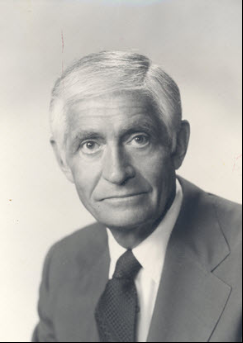
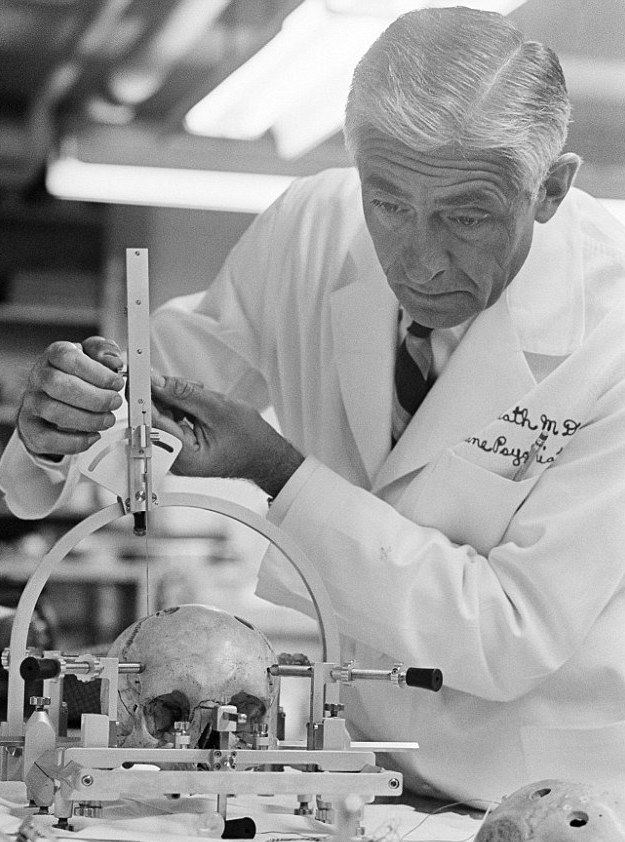
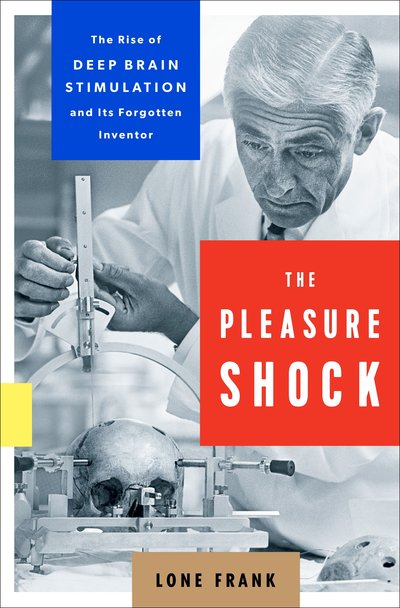
In this episode, Lone Frank shares insight about her book “The Pleasure Shock: The Rise of Deep Brain Stimulation and Its Forgotten Inventor” in which she delved into the academic life of a true pioneer of our field. Robert Heath invented deep brain stimulation in the 1950ies and was a remarkable pioneer of our field. Lone’s book takes us on a trip delving deep into the discoveries – but also controversies around Heath and his contemporaries, such as José Delgado and Frank Ervin.
Lone Frank 00:00You know, according to human nature, we want things to be black or white. We want people to be heroes or monsters. Whatever is in between, what is more complicated, what is more complex, we have difficulties really, you know, attaching to. We have difficulties deciding, and we don't want ambiguity. We really like certainty, so we put people into boxes. But you can't, you often can't, and you can't with Robert Heath, but that is no reason to not be interested in him. He was way in front of the curve. Sometimes he did things he shouldn't have done, and he was not the greatest people person, as you would say today. So he's an ambiguous figure, and he's really, really interesting. Welcome to Stimulating Brains. Hello, and welcome back to Stimulating Brains.
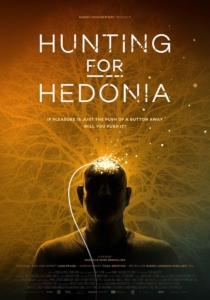
Andreas Horn 01:11Today it's my great honor to be talking to Dr. Lone Frank, who is the author of the book The Pleasure Shock, about the origins of our field of deep brain stimulation, and in particular about Robert Heath. There's also a documentary. I have a link to that book, which is called Hunting for Hedonia. I have a link to both the book and the movie on the website, and I definitely recommend to first read the book, then watch the movie. Maybe our podcast here can serve as a tastemaker for you to buy that book. It's really worth your time. For me, it was a revelation about the origins of deep brain stimulation. So now please join me in welcoming Lone Frank to Stimulating Brains. Thank you. 02:03Dear Lone, thank you so much for taking part in this. In your book, The Pleasure Shock, published in 2018, you write about the forgotten inventor of deep brain stimulation, Robert Heath. Heath implanted deep brain stimulation electrodes and impulse generators in patients suffering from psychiatric diseases as early as the 1950s. The book asks about why our field of DBS, which is the field of DBS, is so important. His research does not honor him today. In fact, the field has somewhat forgotten him entirely. Your book seems to have brought some correction momentum to this, and I see the name of Robert Heath popping up every now and then. Heath had been at Columbia in his early career, but then went on to become head of both psychiatry and neurology in Tulane, New Orleans, which the new dean of the medical school back then, Max Lapham, had wanted to turn into a Harvard of the South. Would you be able to briefly draw a picture about the man Robert Heath for us? The man Robert Heath, and the picture I would draw, of course, 03:01comes from the people that I've met who used to work with him, and also the writings of his that I've read, and so on and so forth. First of all, everybody said to me when I asked them about Robert Heath, they always said, oh, he was so charismatic. You should have met him. He was so charismatic in person. Another thing was that he was incredibly hardworking, it seems. He was the kind of man who would work day and night. His lab was always running, and he was also, of course, expecting other people to work. And he had, it seems from everything I've read by him and about him, that he had a singular obsession almost with schizophrenia,
Lone Frank which he really, really wanted to understand. And preferably wanted to cure. And that was basically the core of his work his whole life. 04:02And even if he was, you know, later in his career, he was spurned by other researchers, he was looked down upon, and he was marginalized, he still kept working on schizophrenia. So in an interview with the Scientific American in 2005, Jose Delgado, who is a retired professor from Yale who died 2011 in San Diego, claimed that he was a man of his word. And he said, well, I'm not a man of my word. I'm a man of my word. And he said, well, I'm not a man of my word. And he said, well, I'm not a man of my word. And he said, well, I'm not a man of my word. And he said, well, I'm not a man of my word. And he claimed that he published the first peer-reviewed paper about deep brain stimulation in 1952.
Andreas Horn And he basically was earlier than Heath by a few months, apparently. So do you think we should credit Heath or Delgado or both with the fame of having invented DBS?
Lone Frank I think we can certainly credit both. I mean, the 1952 paper by Delgado was, it was done on cats. It was not a human implantation. And certainly what Heath was doing, he was working on cats from 1949. 05:02And the first human trials were carried out in 1952 when the Delgado paper came out. But the work had been going on before that. So it's a matter of they are doing the same thing at the same time. Delgado is doing it only in cats, I think. And Heath is doing it in cats and monkeys.
Andreas Horn So it was, yeah, you can say it was a joint credit, definitely.
Lone Frank But I would, again, I would stress that the human trials, definitely the first were Robert Heath's. Okay, great.
Andreas Horn So in the prologue of your book, you write, why had I never heard a word about this pioneer?
Lone Frank You looked up Robert Heath's name. In the history of psychiatry by Edward Shorter, his name wasn't mentioned there. You visited the ESSFN 2014 in Maastricht, where you asked people about Heath. 06:04And the usual answer was never heard of him. And instead of crediting Heath or Delgado, our field seems to think that the Grenoble team invented DBS in 1987. You write about that. The surgeons had their own creation story for deep brain stimulation. This story went that the method was discovered in 1987, by the French neurosurgeon, Alim-Louis Benabid. Everyone could recount the story of how the breakthrough was the result of a happy accident. Benabid was in the OR prepping the patient. There was a small lesion planned to be made in the thalamus. And the operation was routine. But that day, Benabid wanted to experiment a little. He stimulated the patient with different frequencies. When he turned it up to 100 hertz, the man suddenly stopped shaking. So he was able to do it. And then fast forward to the year 2000. And now DBS is really established.
Andreas Horn 07:00So I've recently interviewed Pierre Pollak in this podcast,
Lone Frank who was the neurologist partner with Benabid. And he mentioned that the true invention in Grenoble had been to transform an acute effect observed in the operation room to a long-term effect with implanted impulse generators. But when I read your book, you know, patients also went home with their impulse generators in the Heathburg.
Andreas Horn So I'm curious, what are your thoughts on this? Yeah, I mean, certainly what Heath did was in the first round of patients,
Lone Frank you know, he gathered this group of 22 schizophrenic patients in, you know, in 1951 and operated on them and implanted electrodes that were then, it was only an implantation of electrodes. The electrodes were sort of coming out of the, you know, the skull of the people, and were hidden behind a little skull cap. And then they came into the lab, you know, for an hour of stimulation, 08:02then went back to the hospital ward and came in the next week and so on for a number of weeks and some for months. And so it wasn't a constant stimulation. What happened next was that he developed a stimulator, a self-stimulator, basically, where the patients... could have, you know, the implantation and then wires coming out of their brains, and they could hook themselves up to a little stimulator that they could take home. So, you know, and again, the next development from that was permanent stimulation with an implanted battery and pulse generator. And that happened in the beginning of the 1970s, where he did some experiments or, you know, treatments. Experimental treatments, you could call them, on a number of patients where he put electrodes 09:01in the cerebellum in order to reach areas that the cerebellum would then stimulate in the limbic system. And there, he basically rigged up a pulse generator and a battery and implanted those. So he was first in that too.
Andreas Horn Makes sense. Yeah.
Lone Frank That's what I figured when reading the book. And that's really important for history to acknowledge, I think. I think so too. And I think, in fact, it's not just a matter of getting recognition. It's a matter of... I think it's interesting in itself that science can basically forget things, forget inventions, and then take them up again and not go back and learn from the old experiments and the old experiences. Because there's still a lot to learn from reading about what Heath did. I mean, he has a big monograph of, you know, a fat monograph about this first group of 10:06patients treated in the 1950s. And he has lots and lots of papers that are out there and, you know, can be printed out. And you can see how much was actually accomplished.
Andreas Horn Yeah.
Lone Frank And probably get pointers to, you know, that could be important today. I totally agree with that.
Andreas Horn And that's why I am so interested in this.
Lone Frank I mean, I'm interested in history, but I'm much more interested in the science behind it. And I mean, some people say that science seems to repeat itself every 30 years or so, just because the, you know, the old generation retires and the young people don't know it and can't know it. And they read the newer papers. And I think we'll get to some more examples like that as we move on. But maybe let's hear a bit more about Robert Heath, the person first. 11:04One major source for your book was Frank Ervin, an early student and collaborator of Heath, whom you visited on St. Kitts in the Caribbean Sea, where he went to retire. And he said Bob Heath was one of the first biological psychiatrists already at the end of 1940s. Before anyone else was doing it. He said that schizophrenia was a brain disease with a genetic foundation. Bob wanted to understand the person. And he stood for a holistic approach to the psyche, which can best be described as biopsychosocial. And as Ervin remembered Heath, the words charismatic, elegant and aristocratic came one after the other in quick succession. Heath had been a dazzling teacher who year after year won the prize as best lecturer and who. just a handful of years increased recruiting for Tulane's psychiatry department from zero to 30%. In a video of Heath, he described mental illnesses to be still shrouded by stigma and guilt, 12:06reactions that are always born by ignorance. And he really wanted to show that psychiatric diseases are somatic diseases and originated simply from a malfunctioning brain that could potentially be fixed. You have likely delved into Robert Heath as few have. Could you maybe
Andreas Horn describe Robert Heath, the man, the person in your own words? Yeah, it's of course, first I should say that it's a very interesting way of getting acquainted
Lone Frank with someone, you know, reading about him, reading his own words and talking to people.
Andreas Horn So you come to feel like you have almost met the man, right? So my impression from
Lone Frank all of this is that all that research is that definitely, as Frank Ervin put it, he was, yes, he was charismatic and elegant and aristocratic, all that people always said. Also highly intelligent and a 13:03very intriguing character in a way that he seemed to be, you know, incredibly sure of himself, of his ideas and incredibly stubborn. And one of the reasons I think that is that I find that he was really ahead of the curve on this thing, but he was kind of unable to, as other pioneers, find a group of like-minded people. He was unable to create a real following. And I think that's important if you are a pioneer, if you are way out there in your research. It's not enough to be just a one-man army, and you can't alienate people. You have to create a following that can go on and that can go to other universities and set up the same kind of research and make this new thing into a field. He was unable 14:06to do that because he was with the charisma and with the intelligence and the self-assuredness, I think, came also a kind of... He had a way of also estranging people. If they weren't completely into his thinking or if they weren't subordinate enough, I think he was put off by people. I could hear from the people who worked with him that he had fallings out typically with people that were first his... Like Frank Ervin was his first sort of golden boy. They worked together closely and Frank Ervin was 15:01completely in awe of Heath. Then when he came to have his own thoughts about the research and what he wanted to do and so on, as he said, well, I couldn't work there anymore and he wouldn't. He was always in the same position. He was always in the same position. He went off and did something else. Other people have said the same, that it was great for a while and they were almost in a symbiosis with this man. They were learning from him and they were doing great research, but then some kind of rift would occur, probably when they became too independent, I would imagine.
Andreas Horn Makes sense.
Lone Frank Yeah. He had that element to his character that I think...
Andreas Horn Yeah.
Lone Frank ... was one of the reasons that he didn't really make it and that he didn't leave his mark on history. Yeah. I mean, in that light, I think it's still very important to accurate it that this was a real team effort. I mean, it was all led by Heath, but I wanted to briefly describe 16:04the surgical procedure back then, which was complicated. What you wrote is that Garcia, the surgeon, had to cut through one side of the prefrontal cortex. The brain's tightly fixed. He folded out a layer and create a small opening into the cavity of the lateral ventricle, one of the two fluid-filled cavities almost at the brain center. Using a technique called pneumoencephalography, Garcia and his helpers would then pump air into the hollows of the brain and take an x-ray to verify that the electrode was in place they wanted. The process would give the patient a terrible headache later, but there was no way around it. Then once the electrode was properly placed, Heath took over. [inaudible] [inaudible] This was an era before CT and MRI. The team around Heath built their own electrodes. They built the brain stimulators. And it was really a team effort between a wide array of people. Would you be able to draw a picture for us about the team around Heath and the
Andreas Horn research setting in Tulane?
Lone Frank 17:02Then I should go back to what you said in the beginning that he was recruited by Dean Lapham, who really wanted to create a sort of Harvard of the South out of Tulane University.
Andreas Horn Yeah.
Lone Frank He gave Heath a huge amount of money and let him bring together his own team and let him set it up as he wanted to. He brought with him and recruited Garcia and I think one more neurosurgeon. He also had a few psychologists with him to work with patients, both talk therapy and also evaluate patients in different ways. He even had an anthropologist who was just floating about and studying the whole thing and interacting with the scientists. He had a few electrophysiologists because all this research that was done on humans 18:02was first of course carried out on various animals. They had lots of cats. They had lots of monkeys. All this research was done. [inaudible] [inaudible] His work was also done, a lot of electrophysiology in monkeys. Let's see. He even brought a psychoanalyst because psychoanalysis, he was trained in psychoanalysis, Heath. He was both trained as a neurologist and a psychiatrist at Columbia. He had gone through psychoanalysis and so he brought a psychoanalyst. Which was at the time, they were still teaching psychoanalysis. He was using psychoanalysis as well in his team. It was really a multidisciplinary effort. Then he had a few technicians who were incredibly skilled apparently in building these various 19:07technologies that they used. I actually met one of his longtime colleagues. Charlie Fontana, who unfortunately died a few years after I met him and interviewed him. And he had been there the whole of Heath's career. So he had all these people that really were very, very skilled at their jobs and at their different fields. different fields. Great. And I think the first major scientific event that they then organized
Andreas Horn was the symposium in New Orleans called Studies in Schizophrenia, right? That was, as I understood,
Lone Frank where like the first wrap-up of their work was presented. Yes, the first group of those 22 schizophrenic patients that they operated on. Yes, and two patients became significantly better, 20:01and patient number two was the case they showed and dwelled upon the most, which was a 17-year-old girl who had been catatonic and anorexic, virtually starved. After surgery, according to the family, she became friendly, outgoing, spontaneous, and cheerful more than she ever had been in her life. And a year later, she was still progressing, and she was no longer anorexic. So she was doing really well. She went out with boys and so on. So others of the nine patients did not develop as spectacularly. And as I understood, the reception of that
Andreas Horn scientific event was really doubtful. Yeah, I should first say that the monograph
Lone Frank Studies in Schizophrenia is still available. And if you can get it, you can read, in fact, the whole discussion, both the presentations by Heath and the other scientists in the group, and you can read all the responses of the experts that they had down there in New Orleans. And it's
Andreas Horn really interesting.
Lone Frank 21:01All these guests, I mean, there are a few that are really positive, but all of them begin their
Andreas Horn responses with, well, you must be commended, Dr. Heath, and this is really interesting development.
Lone Frank And then they sort of work towards, you know, some kind of skepticism. And in some of them, you feel that it's mostly because they simply feel that this is, you know, they don't quite understand this. And the rationale for doing this stimulation. And for some, they really doubt whether it's the method itself that has worked, or whether it's simply, you know, suggestion. It's because these patients have a lot of special care and, you know, a lot of talking to and, you know, just much more care than the average schizophrenic patient at the time.
Andreas Horn 22:01So there is basically an atmosphere of, well, this could be interesting, but we're not really sure we're ready for this.
Lone Frank And you have the distinct feeling reading these responses that they simply don't really get the idea. When reading this, I was really, really much reminded of the initial case series published by Helen Mayberg of patients undergoing Cg25 DBS. So when she was talking about the 23:01that the ones that did work well are proof that the procedure could work. And we just need to work hard to make it work for all or most patients. But we showed that it, you know, that it already can work. And this is really in contrast to at least two major modern clinical trials of DBS for depression that failed because across the whole group of subjects, there's no significant effect.
Andreas Horn And I always wonder whether, you know, the classical blinded clinical study in a cohort sort of way is maybe not the best study to show the proof. Any thoughts on that?
Lone Frank Well, I think that when we're dealing with something as complex as, you know, this brain surgery method, and certainly in Heath's time when, you know, you didn't have stereotactic equipment for... for the, you know, for the first many operations that came later, 24:02they had much more limited knowledge of what various brain areas actually do compared to today. And even if you look at the trials today, many people who were involved in those trials have talked to me about it and that that's in the book as well. And some of them will say, well, perhaps this is a technology... that you can't just do multicenter trials because, I mean, if you have a technique, it's developed in, say, Helen Mayberg's lab or in somebody else's lab, this group has made it, you know, work really well for perhaps 60, maybe even 70% of patients. Then you say, okay, we just print out the recipe and your, you know, materials and methods and send it to, you know, multiple centers. And, and surgeons who've never done this exact work before tell them how to do it. 25:03And then, you know, we'll see what happens. And, and, and that ought to be... it's not the same as putting drugs into people. Because it is, it has something to do... there's, you know, something in, you know, we all know that surgeon's hands are not the same. And in some surgeons hands, you will get more infections than with other surgeons. With some, you will get... you know, better results. And, and it's just, it's just not something that lends itself to a quick multicenter trial. So I think that is perhaps behind those results. And again, if you analyze the results from, from those trials, it seems that yes, for some people, it works really well and for some it doesn't. And of course that's the case if you have to be really, really precise in where you put that electrode. And it's not just about, as Helen Mayberg has shown, it's not just about the coordinates in the brain.
Andreas Horn 26:04It's about looking at the individual brain, seeing where exactly three, you know, different pathways are, you know, converging together.
Lone Frank So there is work ahead of us, but now, now returning to Heath with him really definitely being a pioneer and way ahead of his time. I feel... I feel that we cannot make a podcast about him without addressing also some of the points that are considered controversial about him. However, I think to draw a fair picture, it's really imperative to give some background about psychiatrical care of the fifties. And you wrote about that. People were desperate for some way to help mentally ill patients. 14 years earlier, the Portuguese neurosurgeon Antonio Egas Moniz invented the frontal lobotomy to treat schizophrenia. The procedure was a little bit different. [inaudible] [inaudible] It was considered such a resounding success that Moniz received a Nobel Prize for it in 1949. 27:03And within two years of introduction of electroshock therapy in 1940, four out of 10 American hospitals administered the treatment. Some patients received hydrotherapy, where the patient was forced into either very hot or very cold water, sometimes for days, or fever therapy, where patients were infected with the malaria parasite. Others started to get insulin coma therapy, which reportedly...
Andreas Horn And the patients, if they survived, calm and responsive for a while. So you mentioned that he, upon becoming chair of psychiatry and neurology, changed several things to make life better for these poor patients. Could you say some words about that? Yeah.
Lone Frank Several things. He was actually in university in New Orleans. And there, when he came, there was a ward, a psychiatric ward at the adjacent hospital that was called Charity Hospital. He was given, you know, kind of control over that as the head psychiatrist. 28:02And immediately he went to work on improving the conditions. He got a grant to, you know, to rebuild the whole place so patients could... Some patients could have single rooms.
Andreas Horn And when he came, they were all in, you know, big... What would you call them?
Lone Frank They were sleeping in dormitories. Basically, you know, 20, 50 people in a room.
Andreas Horn And here he was asking for, you know, smaller rooms and even some single rooms. And I have read, you know, reports from meetings where some of the other doctors at Tulane are simply aghast. I mean, why would they spend all this money on psychiatric patients?
Lone Frank You know, they just couldn't get it. But he really insisted on this. And he got the money. And the ward was... It was rebuilt. 29:00The care was also different. I mean, these old methods like insulin coma therapy and, you know, even fever therapy. All that stuff was, you know, it went away. And what he also did, and I learned this from Frank Ervin, who went around with Heath to various state hospitals on the outskirts of New Orleans in the state of Louisiana. And they were, as he put it, they were warehouses. And some of them had, you know, basically dungeons where the worst patients were just put and, you know, chained or tied up. And he also did a lot to better the conditions there. And he was, in fact, given control over, at one point, given control over a big ward in one of these hospitals. And this was when... This was when... The first antipsychotic drugs came out. And this became a center for trials of these drugs. 30:04So I would say he did an awful lot. As Frank Ervin put it to me, he was definitely a new broom that came, you know, to sweep out a lot of the old stuff.
Andreas Horn Yeah.
Lone Frank So he did a lot to improve clinical care and psychiatry. But something essentially led to his downfall of his fame and his name. I know there are a lot of... There are a lot of reasons.
Andreas Horn But could you try to give an executive summary about why he ultimately was forgotten or failed? Yeah.
Lone Frank It's difficult to give a short summary. And I would say this is basically what the whole book sort of, you know, converges on and explains. But as I've hinted to, I think, you know, one of the reasons was, of course, he was doing something very new. Way ahead of... Of his time. Ahead of the curve in psychiatry. 31:00And that was, you know, treating these illnesses as biological phenomena. And this was a time when psychoanalysis, Freudianism, was very big. And so he was, of course, antagonizing all the Freudians. And he was also antagonizing, I think, a lot of psychiatrists who may have had an initial... You know, engagement with this and an initial thought that, wow, this, you know, could be a new way, the whole stimulation paradigm. But he wasn't, as I said, good enough to... He wasn't good at creating a following. He was better at antagonizing people. He also... I think he also, in his experiments, you know, putting electrodes... You know, putting electrodes. Putting electrodes into people's brains. And he... 32:00I should say that he filmed all these experiments. They're documented. And the films still exist. And when you see these films, some of them, of course, it's a mixture of... Yes, he's trying to treat some people.
Andreas Horn He's also experimenting on them, right? So... Because he's trying to figure out exactly how these brain circuits work. I mean, this is a time when... There was no clear picture of, you know, where does pleasure and pain reside?
Lone Frank And he was trying to map the pleasure circuits, the pain circuits, all that stuff. And so he had several electrodes implanted into some of these patients' brains. He was, in experiments, stimulating one or the other... The patient was basically sitting there, not knowing when the technician would stimulate one or the other. And he was trying to figure out how to stimulate one or the other electrode. And you can see, for example, that, you know, first they're stimulating, you know, 33:02some place in the reward system. It could be the nucleus accumbens or, you know, one of those spots.
Andreas Horn And the patient is looking happy and is saying, What are you doing to me, Dr. Heath?
Lone Frank This is really, you know, this is really a wonderful feeling. And then they turn it off and they stimulate, you know, somewhere in the hippocampus, for example, that is part of, you know, the pain circuit or, you know, the psychological pain circuit, not physical pain. And suddenly you see them completely collapse in front of you, going from, you know, being really happy and talkative to saying, You know, I want to tear something up. I want to kill someone. You know, I really am feeling so bad. And I can imagine that at that time, people in contact with him, conferences looking at this, have been thinking,
Andreas Horn What is this guy doing?
Lone Frank 34:00This was very new and it must have looked just awful. And I think that was early on, that was, you know, antagonizing some people.
Andreas Horn And he got this reputation for doing crazy stuff, right?
Lone Frank Then later on in his career, in the 70s, there was this, this experiment he did on a homosexual man. That is basically, that experiment has become his, you know, his public legacy today. If you look up the name Robert Heath, this is what will come up. Oh, he did that experiment with the homosexual man. Where he was, again, this was sort of a conditioning experiment. I should say this is at a time when homosexuality is still regarded, as a mental illness. It's a defect. It was in the DSM. 35:00People were trying to treat homosexuality in different strange ways. Some were shocking the testicles of homosexuals, you know, while they were showing them pornographic images. All this stuff went on. So what Heath was trying, he had this one patient who was suicidal, and he was admitted to the hospital. And he was complaining about his sexuality. He was feeling, you know, sick about himself. And so they came up with this experiment to try to convert him to heterosexuality by first, you know, implanting an electrode in the nucleus accumbens, so in the reward areas of the brain, and trying to connect, you know, this physiological feeling of reward with heterosexuality. So first they gave him a self-stimulator. He could, you know, he could self-stimulate in the nucleus accumbens whenever he wanted. 36:01Then they put him in front of heterosexual pornographic movies. And, you know, to see, okay, could he get himself turned on if he was using his self-stimulator and looking at this porn with women. At some point he said, well, I think it's going well. I would like to try. I would like to try to actually have sex with a woman. And they went to the authorities, asked if this would be okay. It was said, yes, fine. You can go out and procure a prostitute. Put her in a room with this guy and see if it works. And what the scientists were doing at the time was they were putting these two people up in a room. And he was, the man was wired up so they could basically sit in the other room and look at the traces, the EEG traces from his brain. 37:02And this is all published and it's in a 1972 paper that is available on the web. I would, you know, I would say, you know, go and read it
Andreas Horn because it's really interesting.
Lone Frank I have read it, of course.
Andreas Horn Yeah.
Lone Frank I would say to every one of you listeners, you know, go and read it. It's published. It's peer-reviewed. And it describes this, you know, odd experiment and how it, you know, how it came about, how the man, you know, reacts. And he actually, he has intercourse with this woman. And he, you know, is very satisfied afterwards. And what it says in the paper is that, you know, for a while he has, you know, he picks up with a woman and has a girlfriend and so on. I talked to Charlie Fontana. He's a technician who was there, you know, when they did this experiment and who knew this patient very well and who told me, you know, 38:01of course he wasn't converted. I mean, it didn't work. It seemed to work for a while. But then he reverted and so on. But as he said, he was extremely troubled. And it was something that he really genuinely wanted to change. But when this paper came out, it was taken up by, you know, there was this gay community in New Orleans that got hold of it and made a big deal out of it. And, you know, wrote about Heath as this monster scientist residing at Tulane and being protected by the Tulane leadership and so on. And so it was in the papers and the whole, the city was talking about it. And Heath was, he was about to speak at a conference about EEG in New Orleans. 39:00And he was picketed outside. So people went there with, you know, posters and shouting, you know, monster scientist and so on. And so this was a very, I think this was a definite turning point. I mean, his career wasn't going to be so and great. But after this, I mean, it really went to hell because of the times and, you know, times were changing.
Andreas Horn Yeah, the counterculture was rising right then and there. Yes.
Lone Frank And, you know, of course, this was just before 1974 when homosexuality was taken out of the DSM. So it was just at the time when the whole attitude towards homosexuality was changing. What I find really striking about this, again, that Heath treated what, you know, thousands of patients probably.
Andreas Horn And this was one experiment. But that seems, as you've said, to be the one we remember, right? 40:00When we look him up, that's what we find. Did your overall intention of the book change while you were doing your research? So did you start off, you know, trying to write a paper about the monster scientist? Or what was your initial intention when you started?
Lone Frank I would say that when I started my research originally, I thought this was going to be a story about, you know, a crazy scientist who was doing, you know, monstrous work. And I thought it would be, oh, it was a, you know, I would unravel this whole scandal. But then I got into the research. I read the papers and I came in contact with the people who had worked with Heath. And my own narrative, you know, what I had thought the story was about, changed. Simply changed. Because I could see it wasn't a scandal. I mean, he was a pioneer. He was also a complicated character. It's not a question of being either a hero or a villain. 41:00It's about, you know, the pioneering effort, which I think is impressive. But then also the story about how you can't just, you can't be a pioneer or a successful pioneer if the time isn't right.
Andreas Horn And if you're not, you know, doing everything exactly right. That makes sense.
Lone Frank That's very well said. So as you mentioned, moving on, some patients of Heath were administered self-stimulating devices. They could press one or several buttons to administer weak electrical currents to different parts of their brains. And I think you also mentioned the case report in 1929. And I think you also mentioned the case report in 1986, which was not a case from Robert Heath. But that case report described a woman that was able to self-stimulate in the nucleus ventralis postural lateralis of the thalamus. And she became addicted to doing so. She spent whole days stimulating her thalamus, neglected her family, personal hygiene, and so on.
Andreas Horn 42:02And when she was admitted to the hospital, she had skin lesions at the finger that pressed the button. So you even mentioned similarities to the case report. So you even mentioned similarities to lab rats in the experiments of Olds and Milner, where animals stopped eating because they self-stimulated their medial forebrain bundles. So at some point in your book, you write, why not leave it up to the patients how they would like their brain to be tuned? How would you now answer that question?
Lone Frank Well, I think that's a question that very much depends on how you view the brain. How you view the brain. How you view autonomy and personal rights and weigh that against, I don't know, some kind of doctor's opinion or other people's opinion on how to do this. I don't think there is one good answer that you could say, oh, according to ethics, it should be this or that. 43:06It depends on your ethics, basically. Sure. I have a hard time with anything where you can't, as the person it's all about, where you can't decide what's happening to you. And I would say, I can certainly see, and I've talked to surgeons explaining how they have patients where they can see that if they turn their stimulator a little bit up, then they'll go and be hypomanic and that's not a good idea for anyone. I can certainly see that. I'm sure you can also explain to patients when they've been hypomanic for a time and have seen that that's not good for their life overall. That maybe that's not where the stimulator should be set. 44:02But in the end, I mean, I think the patients should have a big say in this. It is their brain. It is their life. Definitely.
Andreas Horn Yeah.
Lone Frank Maybe going even one step further in this, and I think I agree with you, this is a really tough and complicated question that we cannot answer here. It also depends on the brain area and on the disease and so on, of course. But to administer self-stimulation, the technicians of Heath were asked to construct a little transistor unit with three buttons. And each was connected to different brain areas. And each time they pressed one button, they would press the other button. [inaudible] So when they pressed, a half second pulse was transmitted. You mentioned that one of the first patients who, as you write, jumped on that was patient B10, who was called Roy. Who had already 17 electrodes in his brain, allowing to stimulate the brain in 51 positions. Together with the team, Roy then tested several spots. Some made him sick all over. Some elicited a wonderful feeling. 45:02And some made him irritated and peeved. As if he was like chasing something but kept losing it. And then he even found a way. that by stimulating the septum and the mesencephalic tegmentum, while he was also pushing the button to the thalamus, he could chase his mirage while curbing his frustration. So after the experiment, he concluded, I might want to buy this little box from you, Dr. Heath, and take it home with me. So later, going further in that, you know, we own our own brain. Later, that patient Roy showed his stimulation cap device to the psychiatrist Daniel Freedman in Chicago. He took off his little white cap, bent forward to show the electrical gadgets in his scalp and offered access to them for a fee of 5,000 US dollars. Needless to say, you know, this is unethical, but it's really a fascinating concept from an ethical point of view. I should say that this patient Roy, 46:03was very well known. He came to the lab and he was, you know, sometimes an inpatient, sometimes an outpatient. He had various psychological or psychiatric problems. And he was very much, according to the people I've talked to, and that was both Frank Ervin and Charlie Fontana told me about him, that he was, he liked being, you know, an experimentalist. He liked being able to do things that were very, very difficult for him. And he had to be a really experimental patient. And this of course, you know, having 17 electrodes with 51 contacts, that wasn't just about treatment. That was about experimentation and trying to map out these various brain circuits. And that's where today you would say you, you, you either treat patients on volunteers, you don't experiment on patients. And that was one of the things he did that you certainly wouldn't be able to do today. 47:05Of course, he wasn't experimenting on people who were unwilling. They were willing to participate, but still, I mean, today you clearly wouldn't do that. And just the story with Roy going to Chicago and offering up himself as a guinea pig, if he would get $5,000, that speaks to the man being a little bit out there.
Andreas Horn He was not exactly normal, and they came to get him back.
Lone Frank And he was a well-known patient who was at some points also driving his doctors crazy because he was doing all these outrageous things. So he's probably one of those patients. Patients that you, you know, if you're a clinical psychiatrist, you will know them when you see them. 48:01You know, they'll do outrageous things. You have a hard time helping them. But you wouldn't today experiment on them. That's what they did then.
Andreas Horn So, yeah, I mean, I would say that's a no-go.
Lone Frank That's definitely true, yeah. And, I mean, going in the same direction, you wrote that when Heath visited Lipton in Miami at the height of the Cuban Missile, when everyone was talking about an imminent nuclear catastrophe, he simply remarked, you can't let that sort of thing stand in the way of your research.
Andreas Horn And you wrote that Heath saw himself first and foremost as a researcher, but others also saw him, of course, as a physician and a psychiatrist. Was that also part of the problem, that he maybe sometimes forgot the treatment, but was really about the experiment?
Lone Frank Sure. He was very stubborn, and he was single-minded. He had his visions, he had his ideas, and I think it was extremely hard for anybody on the outside to convince him that, 49:06you know, maybe you shouldn't do this or you shouldn't do that, or you should try a gentler way. He was so assured that what he wanted and his plans, that was the best way to do it. And he didn't let anyone dissuade him from it. As you mentioned, he meticulously documented everything on film, and that was really new at the time. And unfortunately, Tulane did not allow you to go to their archives and see the films. In my view, that's really outrageous and an absolute no-go, because as you say, we could still learn so much from these experiments today. And you are a trained biologist with a PhD. And after meeting with Robert Heath's son in their summer house, which is called Hedonia, by the way, you received information. You received an email from him offering to send you digitized private copies Heath had made. 50:00So that made you laugh out loud. And five brown envelopes arrived, each with a numbered DVD. And you write, I felt like I was in possession of an unopened treasure. You put number one into the computer and click play. I had really goosebumps reading that section because you then go on and describe what you see.
Andreas Horn How did it feel like and what did you see?
Lone Frank I mean, first of all, I felt sort of, you know, in awe that I was about to see something that, you know, will be hidden.
Andreas Horn And I had thought a lot about how these experiments would look. I mean, who were these patients? And what was the interaction with Heath and the patients?
Lone Frank And it was, first of all,
Andreas Horn it was very interesting and kind of surprising,
Lone Frank I guess, to see that, you know, that rapport that he had with his patients. 51:00He was sitting there, he was interviewing them. You know, they would typically be either sitting in a chair with these electrodes coming out of their, you know, the skull in the back or lying down as, you know, on a Freudian, you know, Freudian bed. And he would sit there and talk to them about, you know, their lives and what their problems were, how they were feeling. And then I could see the little trace at the bottom from their EEG. And I could, you know, there was also another trace from the technician who was sitting in the back and who was then stimulating, you know, one electrode or another electrode. And I could see in real time how the patient was reacting.
Andreas Horn And what was happening on the EEG.
Lone Frank It was absolutely fascinating. Like, 52:00like I told you before, you have a patient who's lying there. He's talking about, you know, this is a very depressed patient. There was this man, he was, I mean, he was, he's so, he's so sad. He's lying there. He's, you know, he's talking about how he's never known, you know, any kind of positive emotions. His, he's talking about his childhood, you know, his, his, his, his, his, his childhood, how awful it was. And he's just very, very depressed. And then suddenly, you know, a slight smile comes onto his face and he's like, he looks confused suddenly. And I can see on the one trace, you know, that the technician is now stimulating his nucleus accumbens. And the patient is like lighting up in a way. And he's, he's looking at Heath and he's saying, that's, that's so strange.
Andreas Horn What is so strange?
Lone Frank I just had this, you know, 53:00feeling of joy. That's the only way I can describe it. It's just, you know, um, I'm thinking about something in my childhood that I really, there was this train I really wanted and, and, and when I got it, it didn't even give me any pleasure, but now I'm like feeling, this pleasure. And he, you know, the expression on his face is really kind of riveting. It's like, wow, he's, he's never had this feeling before. And they're talking some more about his life and, and, you know, and it's, uh, and it's, it's that kind of, it's almost like sitting in on, you know, um, psychiatric treatment where the psychiatrist is, uh, psychiatrist is, is performing some kind of, um,
Andreas Horn what do you call it?
Lone Frank Uh, cognitive therapy. 54:00You know, he's first, he's, you know, presenting his, uh, his patient with these stimulations. And then afterward, he's talking to the patient about, you know,
Andreas Horn what was just going on.
Lone Frank You know, I was stimulating this place in your brain and, you know, it's, it is simply when you're not, when you're not feeling pleasure, it's about circuits in your brain that I, that are not working correctly. It's not because you are a bad person or you don't deserve to feel joy or that your life is, is just bad. It's about this, you know, how your brain functions. It's, it's actually what cognitive behavioral therapy is all about. Uh, or even metacognitive therapy. You know, this is what's going on in your brain. We now have to teach you to, you know, stimulate the right areas by having, you know, right behavior or whatever it is.
Andreas Horn So it was incredibly interesting to see how modern,
Lone Frank uh, he's take on these mental illnesses, 55:01uh, was for the time and also how he and his patients were, were communicating really in a sort of intense and, and, you know, friendly atmosphere.
Andreas Horn Do you think the movies could, could ever be made publicly available?
Lone Frank I think they should. I mean, I think it's such a shame that this university is putting them under lock and key. And the only reason I can think of is that they are, it's, it's an American university. America is a country where everybody can sue everybody if they get the chance. And they are probably just afraid that somebody out there who's maybe next of kin to one of the patients or whatever will sue the, the university. I have no idea, to be something like that. I talked to, you know, five different psychologists and psychiatrists at the,
Andreas Horn department of psychiatry explained to them why you know what I was doing,
Lone Frank 56:03what my project was,
Andreas Horn why I thought this was important.
Lone Frank They all felt that it was it would be great if I saw the films. but then the legal department had to say and the legal department just said no. So. Throughout research on your book, you have interviewed many of the current heroes of our field like Andres Lozano, Helen Mayberg, Rick Schuurman, Thomas Schlaepfer, Volker Coenen, and in your film, there is also a film to your book that we can talk about later you portray among others Michael Okun and Kelly Foote, Marwan Hariz, Alik Widge and Darin Dougherty, some of them you met at conferences, and one particular note you also did not fail to see is that while they are attended these conferences are attended by neurologists and neurosurgeons there is a lack of presence of psychiatrists do you have any
Andreas Horn clue why that is why why do you think psychiatry is now in the current days very shy of going to
Lone Frank 57:03brain stimulation conferences? I think often that people are working within their silos, so they stay in their field. And I think that psychiatry is probably i don't know many psychiatrists i think are nervous about you know
Andreas Horn if you know why would we let brain surgeons get into this and and is this field really uh
Lone Frank are they getting anywhere or is it just a fad or you know is it for just a few patients i think they're simply it's the same kind of almost the same kind of resistance that Heath met [inaudible] from his contemporaries that you know we don't quite know what this field is about it's you know we will just go on doing what we do best because that's where we are experts if you're a psychiatrist who wanted to get into DBS, you would have to read up on some stuff. You would have to really 58:02you know know about uh not just the surgery but you know brain circuitry and and so on and so forth and a lot of psychiatrists are you know mainly experts in the field of brain stimulation in various drug treatments and in various, you know, talk therapies. So I think it's simply a matter of not being interested enough in a field that's not within your expertise. I interviewed Günther Deuschl here on this podcast recently, and he even said he thinks psychiatrists are not doing their jobs because of that, right? They are not reading up on this. They are. So it's, as you say, it's the same resistance and there are countless people who would even right now tell you that all the DBS for depression is placebo, same response as you mentioned as Robert Heath got. So somehow this still is stuck in 59:01in psychiatry so that i think that really is a problem yeah and i think psychiatry is is um kind of a backward field in fact um and it's very protective of what it has and you know the drug therapies and and so on and so forth it it's not really a field that's that's interested in in going
Andreas Horn the way of neurosurgery. Yeah. All right, yeah, I agree. So having mentioned Andres Lozano, I also found it particularly interesting that Heath's team had stimulated the rostral hippocampus
Lone Frank and when you doing so, memories suddenly rushed out of the same patient, actually B10's brain, and those were always memories from the distant past and the currently ongoing advanced trials that you may know have the attempt to stimulate the fornix for treatment of Alzheimer's disease after Lozano also had experienced the same effects like flashbacks of long-term memory in a case treated for obesity 01:00:02in 2008 and we know the fornix is directly connected to the hippocampus and both of these are the same effects of the rostral hippocampus and the rostral hippocampus both play crucial parts of course in the Papez circuit, so when the flashbacks induced by fornix stimulation are currently reported in the literature, nobody seems to remember that Heath's team, in this case it was Don Gallant, reported the same findings back in the day, and we talked about this you know cycle of forgetting um in in science do you do you have any idea of how we could solve this how could we train young people with things that happened 50 years ago yeah i think it's a really important question and i think it's a really important question yeah well that was what i was hoping that my book could you know stimulate uh an interest in in this you know uh in in this history and what has been done before and and is there something in those old trials and experiments that can be useful and i'm sure that there probably is if people would look at it of course it's a problem that everyone is always reading the latest 01:01:07new papers and not you know memory is just not very strong right and you you grow up with reading always the newspapers i think there ought to be some kind of i don't know how you would make a structure where you install a kind of memory uh some kind of memory bank almost you know of areas of research that you can perhaps go to and then relate to your own research um i think that would you would need to sit down and really think about how to do this um you know some way of whenever you search on you know some kind of area of research that you're reminded perhaps in the search engines or whatever or in 01:02:02medline that you know perhaps a related field you know some years back was this, that and the other. I don't know how to do it. It's also about a culture, of course, that get older people in the fields, get them in and lecture to the very young ones. And ask them to come up with, look back over the years, is there something that you know about or have heard about that is being neglected or not read up on, or it's sometimes it's a question of that. Even, you know, for example, I talked to a psychiatrist the other day who always tells me that, you know, young psychiatrists will give these new atypical antipsychotics to their patients. And everybody, as he says, and with 01:03:00everybody, he means everybody who's, you know, over 60, will know that there are all drugs out there that cost you absolutely nothing, and they're in fact almost always better for the patients. You just, you know, need to use them. You just need to also take, you know, a few blood samples now and then to control for, you know, various markers in the blood. But, you know, that kind of knowledge, we really need that the oldest people in the profession talk to the younger ones and, you know, meet them and tell them,
Andreas Horn you know, what was going on and how it compares to what's going on right now. Because it's not
Lone Frank always the fact that the newest is the best, and be it, you know, drugs or technology. Yeah. No, I completely agree. Let's talk about regulations for a second. So you wrote that upon talking to experts in the field, there was a joke to DBS. It was not the patient's disease 01:04:04that determined which area of the brain was stimulated. It was the patient's disease that was stimulated, but the patient's zip code. So in other words, it really depended on into whose arms you may fall or where she or he will operate on you. And you quote Andres Lozano as having said, the field is characterized by a Wild West mentality and no brain cell is safe. And he counted up to 10 areas that we currently use to treat depression and six for OCD. He continued to say, we need to coordinate and find out what actually works best. So this is really about standardization of our brain targets. [inaudible] [inaudible] our brain targets, this is somewhat contrasted by, you know, the Wild West mentality there was back in the day. So people have mentioned that Jose Delgado had really been a way ahead of his time. And he aimed at modulating the brain with implanted wires that served as antenna that could be activated from from outside of the brain. Then I was also really surprised about the 01:05:03hardware that he used, you know, they built their own stimulators, they they had mesh electrodes around the cerebellum, and so on. So they were able to bypass regulations because they didn't exist back then. And maybe they were faster with progress. So I'm definitely, you know, all four regulations, I think they are necessary and important that that's, that's a no brainer. But still, they could also have some detrimental impact of how fast we can advance the field. Probably. But I would still say that, for example, I met up with an American neurosurgeon who works independently in a private practice. And as he said, well, you, you can quickly if you have a rationale as a neurosurgeon, you can apply for, you know, a special license for, you know, a case. And he applied for a case and operated on one patient where he implanted electrodes, and I think it was the orbital frontal, orbital frontal 01:06:05cortex. And he created her, you know, aggressive fits. So you can do things but, but getting into trials, of course, is with, you know, a group of patients is probably more laborious these days. Which I think is, is okay. But what I'm seeing more as a problem is that when you have very, very, very... various groups working with different targets and, you know, figuring out their own way and of course favoring their own way of doing it. It doesn't, it's not It's not so much a question of not getting there fast enough, but it's a question of if you want to make this available to many more patients, to a larger group of patients, you should try to figure out now that everybody has their own target and they have pioneered 01:07:04this target and they have wonderful results, okay, then go back and look where are the best results and do the studies over time. How do the patients do after three, five, 10 years and come up with the best possible protocol for a broader group of patients. So that's really, I think the Wild West mentality refers to the fact that it's not in fact very hard to do the first trials on a new target if you have a rationale. But the field is not very good at checking itself and then coming up with, you know, doing the basic, you could call it the engineering afterwards. You know, now we've done the discovery part, now is the boring engineering part, figuring out how do we do it for the masses. So maybe in a similar notion, there are these two concepts by the main groups that treat 01:08:07depression with the brain simulation these days. Helen Mayberg. Who is treating the cingulate cortex and her idea through that is that instead of adding positive feelings or emotion, she aims at taking away the negative.
Andreas Horn And she told us in this podcast that when she was younger, she was really intrigued by the idea to break something in the brain to fix something, right?
Lone Frank So to take away the pathological negative. And for her, I think depression must have a component of psychological pain.
Andreas Horn Yeah.
Lone Frank [inaudible] [inaudible] [inaudible] [inaudible] [inaudible] [inaudible] [inaudible] [inaudible] [inaudible] [inaudible] [inaudible] [inaudible] [inaudible] [inaudible] [inaudible] [inaudible] [inaudible] [inaudible] [inaudible] [inaudible] [inaudible] [inaudible] [inaudible] [inaudible] [inaudible] [inaudible] [inaudible] [inaudible] [inaudible] [inaudible] [inaudible] [inaudible] [inaudible] [inaudible] [inaudible] [inaudible] [inaudible] [inaudible] [inaudible] [inaudible] [inaudible] [inaudible] [inaudible] [inaudible] [inaudible] Ask your patient whether she or he is looking forward to something.
Andreas Horn 01:09:03What are the things they take pleasure in?
Lone Frank If there's nothing they can name, it is a sign of prevalent depression. So instead of taking away the negative, the aim of that team, and I think the one of Robert Heath, was to add positive, to reconstitute a functioning reward system. That, again, is, you know, so contradictory to each other.
Andreas Horn And still, both things are being used and not so much compared. So what are your thoughts on that?
Lone Frank I think they are kind of, you know, complementary or even, you know, two sides to the same coin. I'm not sure that one or the other can be said to be the right way of looking at it. It probably depends on the patient as well.
Andreas Horn What is the best way to do it?
Lone Frank Because I'm sure that, you know, most psychiatrists by today will agree that depression is not 01:10:01just depression. There are several kinds of depression.
Andreas Horn And what their exact biological source or biological mechanism is, we don't exactly know.
Lone Frank So it's clear that there are patients, you can put them in a scanner, you can see a heightened activity in, you know, in CG25. And if you can bring down that activity, it seems that their depression is alleviated. And that's what Helen Mayberg does. It also seems that, you know, the medial forebrain bundle and the people, you know, Volker Coenen and Schlaepfer are having great results with that target. Maybe they are, you know, slightly different patients or maybe they're not. Maybe it's just two buttons. that you can push that will do the same thing ultimately. We don't really know that. But I think it might help the field a lot if psychiatrists and neurologists knew more about what exactly is going on in various kinds of depression. Yes, I agree. So I've mentioned the case of David Merrick, who was a patient of Heath as a boy, and whom you met during your research 01:11:24in recent times. By the way, this is really excellent journalism. I love that part of your book. So accompanying to your book, there's also a documentary movie you have made with Pernille Rose Grønkjær. And that movie is called Hunting for Hedonia. I have a link on the website for this episode as well. So in that movie, we can even see the patient who is now living in an
Andreas Horn elderly home. And I find that story so fascinating. Would you be so kind to recount it a bit for us? Well, it's a very interesting case. I'm still in contact with David Merrick's sister,
Lone Frank 01:12:05who was the person who was really helpful about, you know, getting to talk to David and getting to know the whole situation with his, you know, in his childhood, how his case developed. So what happened was that he, even as a very small child, he was extremely aggressive and he would, you know, he would hit his sister and brother. He would, you know, go at his mother with a knife. He would, you know, really just be aggressive for apparently no reason, uncontrollable in school as well. So he was admitted to a psychiatric ward very early on. He was admitted to a psychiatric ward very early on. And quickly he became, you know, he became known as the most aggressive patient in the state of Louisiana. And he was at the age of 16 or 17, he was completely 01:13:05drugged out of his mind, you know, completely sedated and also tied to his bed. His sister told me that, you know, they would usually tie him up as well, just in case. Because he was that complicated too and that strong and that aggressive, completely uncontrollable. His parents had heard about Dr. Heath and they went to him and asked, is there anything
Andreas Horn that you could do for a son? And I've seen this. There's one little film where he's talking
Lone Frank to this couple. And I am sure that this is in 1971 or 72. And I am sure he is filming that because, you know, he does not want anyone to say that, you know, it's something that he is doing to this patient without consent 01:14:00and this, that, and the other. So the parents of David Merrick are showing up. They are asking if something can be done. He comes up. After a while, he goes and he visits with David. He finds out or he diagnoses him with prognosis. He's probably, you know, frontal lobe epilepsy. No, you know, you call it psychomotor epilepsy. So kind of epileptic fits that he can't control and that, you know, turns into these aggressive, you know, episodes. And what he comes up with is instead of using his old method of, you know, implanting an electrode into the nucleus accumbens or what he called the septum, he has figured out in the years before, he has been looking into brain anatomy and he's figured 01:15:04out that there are in fact fibers, fiber tracts going from layers of the cerebellum to the limbic system. So he has this idea that maybe it's enough. Maybe you don't have to go into the reward system itself. Maybe you can just, you know, put these electrodes on the vermis of the cerebellum, have them lie there and send, you know, this pulse of electricity into the cerebellum, which will then project to the reward system and the limbic system and fix the problem. That's his idea. So he explains this to the parents. They say, well, you know, go ahead. Let's try this. He is all. Otherwise, he's looking at a life, you know, tied to bed in a mental institution. So, you know, just do it. Let's see what happens. And so he gets David out of this ward and he gets him off the drugs. 01:16:05And that takes a couple of months to get all of the drugs out of his system. And he is really, you know, difficult to handle as he is. And then they put him on the operating table. They put these electrodes on and there is a battery connected to, you know, implanted the way it is today, basically on the chest. And he is, you know, he's sent home after a while in hospital. As soon as he wakes up, it seems that, you know, the aggression is kind of gone. It's not there. He seems, you know, quite normal. I should say that his intelligence.
Andreas Horn Yeah.
Lone Frank His intelligence is probably about 70, 75 IQ. So he's, you know, mildly intellectually disabled. But he goes home. He can live at home. 01:17:00He's not attacking anybody. He can now, you know, he gets work as a gardener. And then, as you were saying before, Helen Mayberg has this perfect placebo control and one of her patients run out of battery and becomes depressed immediately. And goes to the ER. Well, what happens here is that suddenly David's aggressions come back, but like in full force.
Andreas Horn That was now, right?
Lone Frank That was when you met him. No, no. That was way back.
Andreas Horn Okay.
Lone Frank A year or so after the operation.
Andreas Horn Yeah.
Lone Frank He's admitted to the hospital again. He looks at him, figures out, well, his wires are broken. So he's not getting any, you know, any stimulation. They fix his wires. He goes back to normal. Again, it's that placebo control.
Andreas Horn Yeah.
Lone Frank And he lives with this for many, many years. And he's, you know, I meet him. He's affable. He's not aggressive at all. 01:18:01There's no problems. I actually go to see him with his, with the neurosurgeon who implanted this device way back. And we see him for a while. And as we're leaving. He sort of, he, you know, pulls aside the surgeon and tells him, this is Don Richardson, who's still practicing. And he says, well, I feel like, you know, I'm not quite right. Maybe this, you know, there's something strange going on. And he tells him, well, it seems fine. And he tests the device. He takes, you know, a radio and puts it to AM and puts it up to his neck where the device is sitting. And he has these little tick, tick when the pulse is going in. And then it, I think it's, it's a week or two after he completely breaks down and attacks one of his, you know, his companions in the home where he lives.
Andreas Horn 01:19:04And he's brought into hospital. How old is he at that time? Yeah.
Lone Frank I think he's 60 something now. And so he's brought into hospital again. And he needs a battery change.
Andreas Horn Okay.
Lone Frank And he comes back. Wow. And so again, you have the placebo control.
Andreas Horn Yes. Yes.
Lone Frank That is really such a miraculous story.
Andreas Horn And I also, by the way, I found it really interesting to learn that you can use an AM
Lone Frank radio to check the pulse generator.
Andreas Horn Yes. Exactly.
Lone Frank You could still do that.
Andreas Horn That's really interesting.
Lone Frank But I mean, these success stories, by now I read your book twice and remember that in the first time. I was really all over convinced that Heath was a hero and a pioneer and, you know, and he had not been recognized by his fields and so on. The second time I've now read it, things were more balanced as always. And probably the truth is somewhere in the middle. 01:20:01I had this notion book is filled with extremely exciting insights when seen purely from a research perspective. Then there are really also points that are ethically very hard to bear. And Helen Mayberg said something similar about the monograph. the monograph written by Heath himself, which is unfortunately out of print and I didn't obtain it so far. She said, "It changes every time you read it. I can see him both ways, depending on how I look at it and through which prism I view it." So I can totally feel that. She said that, "The conflict arises every time science reaches a new frontier. There are those who see the brain as the source of everything human, and therefore the key to understanding everything human. On the other hand, there are those who believe that there are certain things you just
Andreas Horn should not fiddle around with. So do you have any final conclusion on Robert Heath? Was he a pioneer? Was he, as some even called him, a monster? Was he both? What do you think?
Lone Frank 01:21:00He was definitely a pioneer in what he did. No doubt about that. Was he also a flawed human
Andreas Horn being? Yeah, I would say he was. But I'm sure that if you look into some of the biggest heroes
Lone Frank of science who were also pioneers, they were probably also flawed human beings. But they succeeded because the times were right. And there are a lot of circumstances that go into the final
Andreas Horn sort of conclusion on how should we look at this person?
Lone Frank But I think what happens is that, according to human nature, we want things to be black or white. We want people to be heroes or monsters. Whatever is in between, what is more complicated, what is more complex, we have difficulties really attaching to. We have difficulties deciding, 01:22:00and we don't want ambiguity. We really like certainty. So we put people into boxes. You know, okay, Jonas Salk is a pioneer and a hero. Robert Heath, he might have been a pioneer, but he was a monster. And it's just so nice for us when we can put people into one clear box. But you can't. You often can't. And you can't with Robert Heath. But that is no reason to not be interested in him. He's
Andreas Horn exactly interesting because he was complex. He was doing something that was
Lone Frank pretty great in its ambition and sometimes in its, you know, how he carried it out. And he was way in front of the curve. He was also, you know, sometimes he did things he shouldn't have done. And he was not the greatest people person, as you would say today. So he's an ambiguous figure,
Andreas Horn 01:23:03and he's really, really interesting. In any case, your book has surely helped to restore some of his
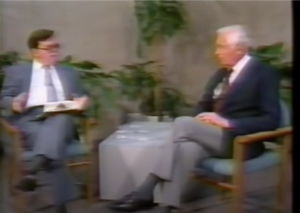
Lone Frank reputation. And you have put his legacy back on our map. I would really like to dearly thank you for that. So to quote Helen one more time, she said, the lesson here is that you are a hero until you're not. That happened to Robert Heath. The best we can do is learn from history in order not to repeat its mistakes. And then the epilogue of your book describes an interview between Wallace Tomlinson, who was a young psychiatrist that had been resident under Heath, and old Robert Heath, The interview can be found on YouTube and I will put a link on the website as well. The book then ends with a quote from that interview where Tomlinson states, history often corrects itself as time goes by and people assume their rightful place in the sun. Do you think he will earn back this place in the sun? No, I don't think so. I think we particularly, I mean, just the fact that the reception 01:24:08of my book, for example, in America where this story happens was silence. We could not get the big papers, the big magazines to review the book. There was one really, really ugly review in the New York Review of Books of some guy who just hated Heath. It's as if he didn't read the book. He just tears through Heath because he's already made up his mind in advance that Heath was a bad person. I think that reaction tells a lot. It tells me that we are living at a time where that whole notion of who is bad and who is good 01:25:01really is not negotiable. You cannot in this day and age. You cannot take a white man who worked in the 50s in a southern state in the US and say that he's now rehabilitated. What he was doing wasn't so bad. You can't. It's a time of identity politics. It's a time of we want justice for everyone who has been unfairly treated and oppressed. It's just not in the cards that someone like Heath could be looked at more favorably today because he is very ambiguous. He isn't just white. You can't whitewash him. Again, I think ambiguity and complexity is really not in our time. It's too bad. It really is too bad because I think he deserves a place in history for his research and also for his 01:26:06scientific history. I agree. Also for the story of what he did and what he did at the time because he can also serve as a warning. Always look at your ethics. Always look at your work from an imaginary
Andreas Horn future. What you're doing today, is that going to be looked upon as unethical? Can you imagine
Lone Frank it would be a good warning to read about Heath and understand his story. It would be great for everyone who's doing research because it will make them look at themselves and perhaps judge their work differently. That and, you know, a lot has been done in these times and we don't need to repeat these things, you know, especially since they might have been or they were ethically doubtful. 01:27:04You know, especially because of that, we shouldn't.
Andreas Horn Yeah, but we should exactly learn from what is ethically doubtful. Yes.
Lone Frank So we shouldn't screen it out. We should read it. We should think about it. We should internalize, you know, what is bad ethics so that we don't go there ourselves. I couldn't agree with you more. So, yeah, I think that is a good ending for our interview.
Andreas Horn Thank you so much, Lone, for this long interview. Yeah.
Lone Frank I'm tired and I'm ready to go and drink wine with my boyfriend now. It's been a long day. Thank you for listening to Stimulating Brains.
Click any highlighted text passage to jump the Spotify player to that point. The transcript text is present directly in the page HTML for search engines and accessibility.

References we talked about in the episode
- For more information about Lone, you can check out her website here.
- Lone’s book, The Pleasure Shock: The Rise of Deep Brain Stimulation and Its Forgotten Inventor can be obtained from Penguin Random House here.
- The accompanying film, Hunting for Hedonia, by Pernille Rose Grønkjær and narrated by Tilda Swinton can be purchased here (also available on other streaming services).
- A tribute to Jose Delgado in Scientific American
- Video of Robert Heath being inteviewed by Wallace Tomlinson
Further reading
Colleagues mentioned in the episode include
- Max Lapham (Dean of the Medical School in Tulane at the time of Heath’s recruitment)
- José Delgado (Neurosurgeon at Yale)
- Alim-Louis Benabid (Neurosurgeon in Grenoble)
- Pierre Pollak (Neurologist in Grenoble / Bern) – see episode #4 with Pierre
- Frank Ervin (Psychiatrist)
- Francisco Garcia (Neurosurgeon at Tulane)
- Helen Mayberg (Neurologist at Mt. Sinai, NYC) – see episode #2 with Helen
- António Egas Moniz (surgical Neurologist in Portugal)
- James Olds (Psychologist at McGill U, Canada)
- Peter Milner (Psychologist at McGill U, Canada)
- Daniel Freedman (Psychiatrist in Chicago)
- Alan Lipton (Psychiatrist in Miami)
- Robert Heath Jr. (Biologist, Heath’s son)
- Andres Lozano (Neurosurgeon in Toronto)
- Rick Schuurman (Neurosurgeon in Amsterdam)
- Thomas Schlaepfer (Psychiatrist in Freiburg)
- Volker Coenen (Neurosurgeon in Freiburg)
- Michael Okun (Neurologist in Gainesville, Florida)
- Kelly Foote (Neurosurgeon in Gainesville, Florida)
- Marwan Hariz (Neurosurgeon in Umeå, Sweden) – see episode #3 with Marwan
- Alik Widge (Psychiatrist in Minneapolis)
- Darin Dougherty (Pychiatrist in Boston)
- Don Gallant (Neuroscientist in Tulane)
- David Merrick (Patient operated by Heath)
- Günther Deuschl (Neurologist in Kiel) – see episode #5 with Günther
- Pernille Rose Grønkjær (Film Directory, see above)
- Wallace Tomlinson (Psychiatrist at Tulane)