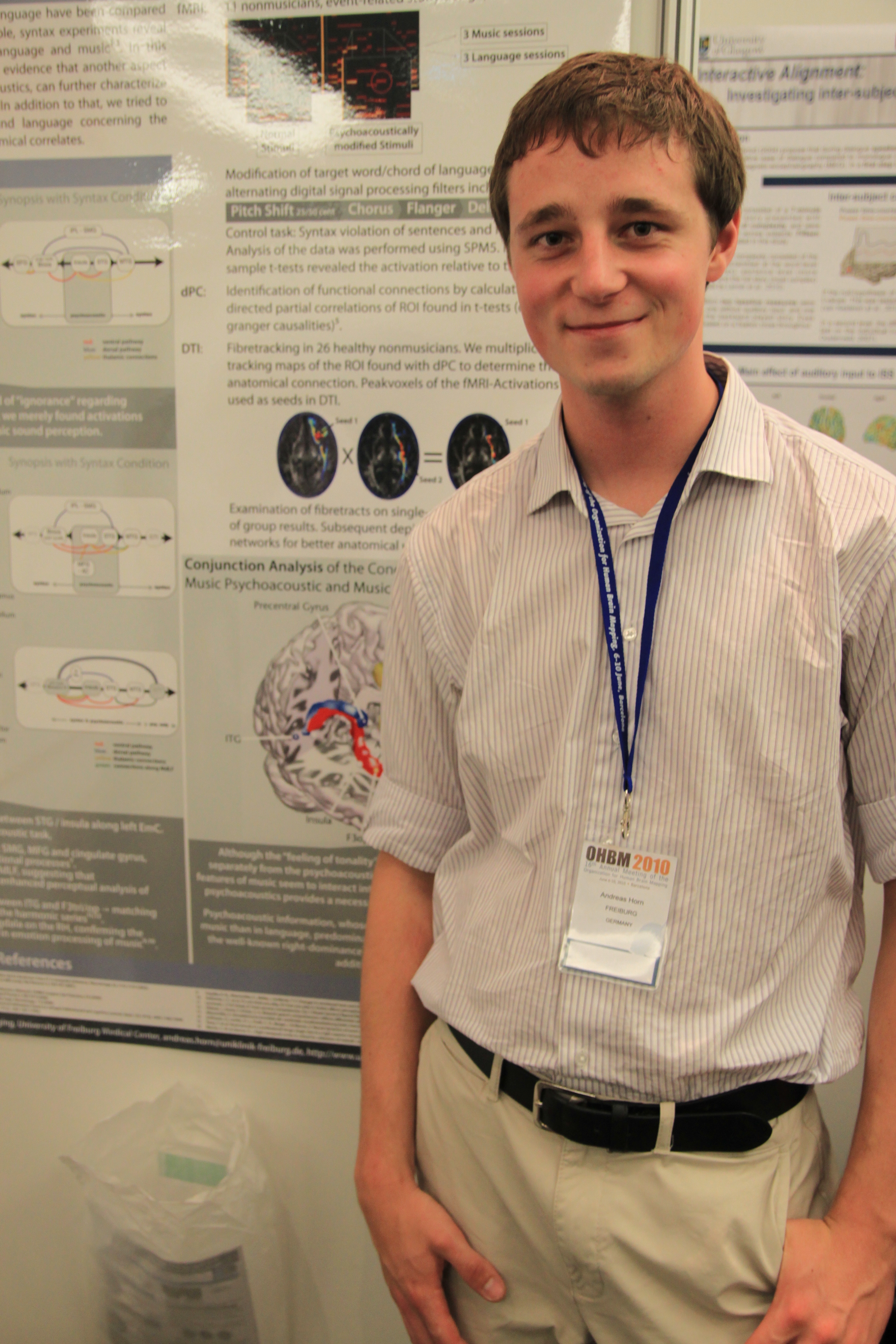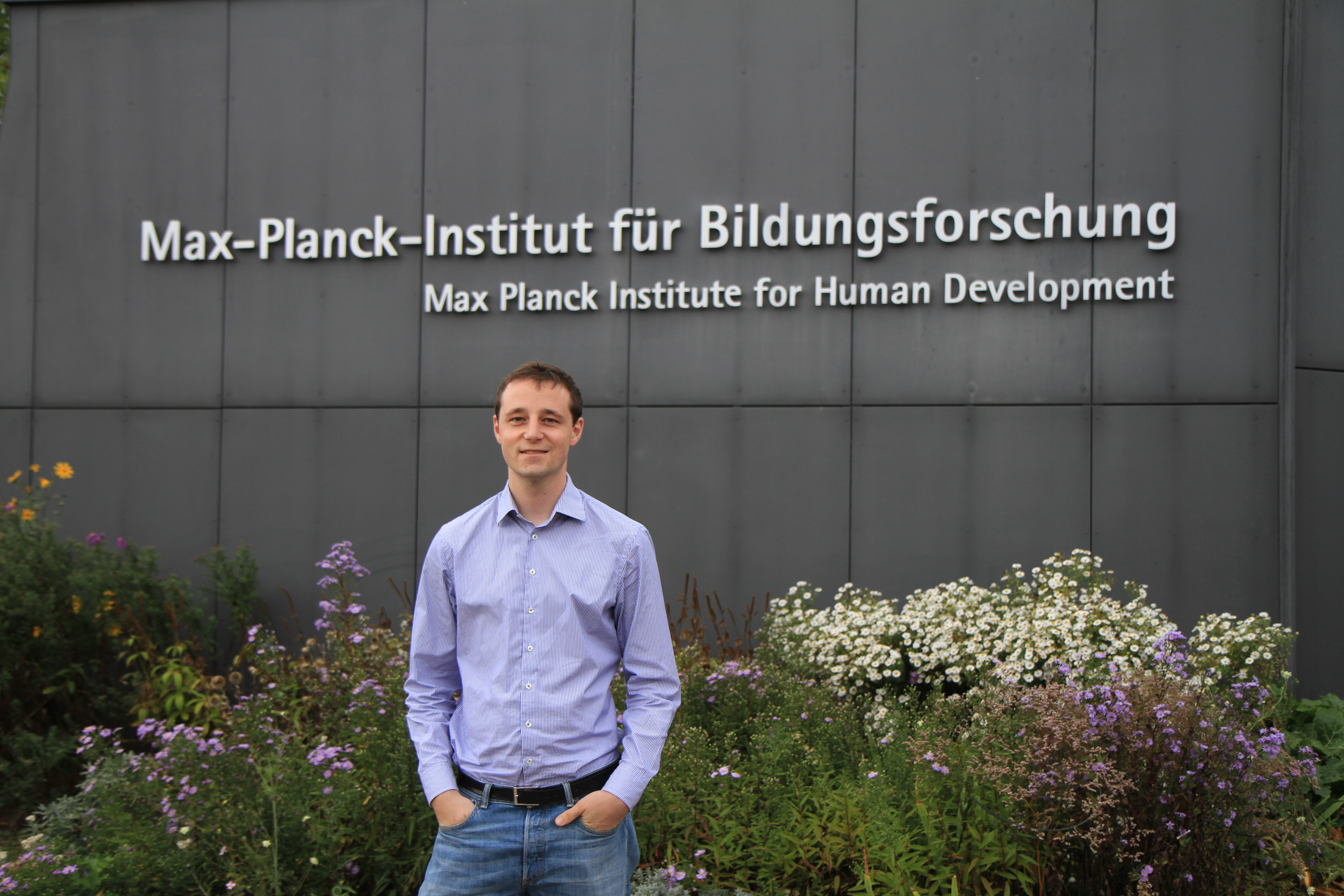
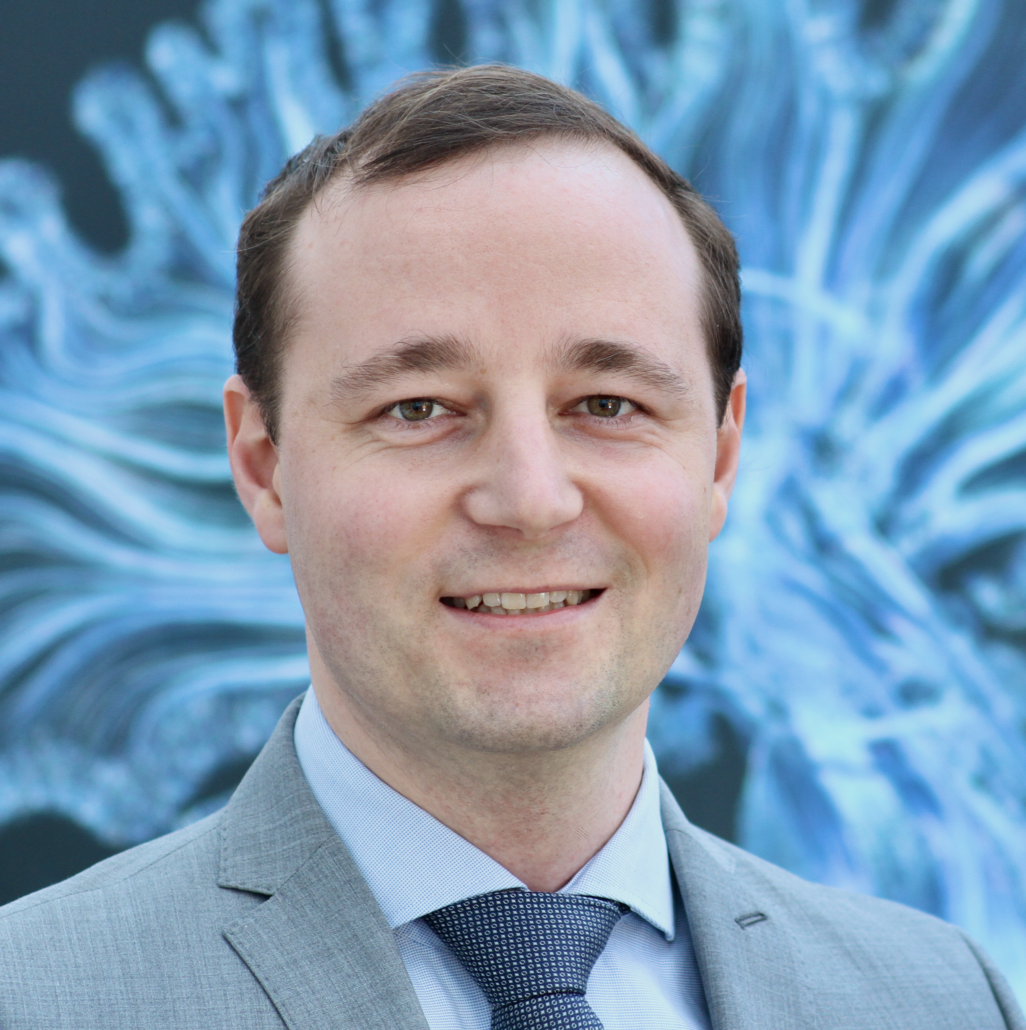
Andreas Horn is an Associate Professor for Neurology at Harvard Medical School and the Director of Deep Brain Stimulation Research within the Center for Brain Circuit Therapeutics at Brigham & Women’s Hospital. He is also appointed as the Director for Connectomic Neuromodulation Research at Massachusetts General Hospital.
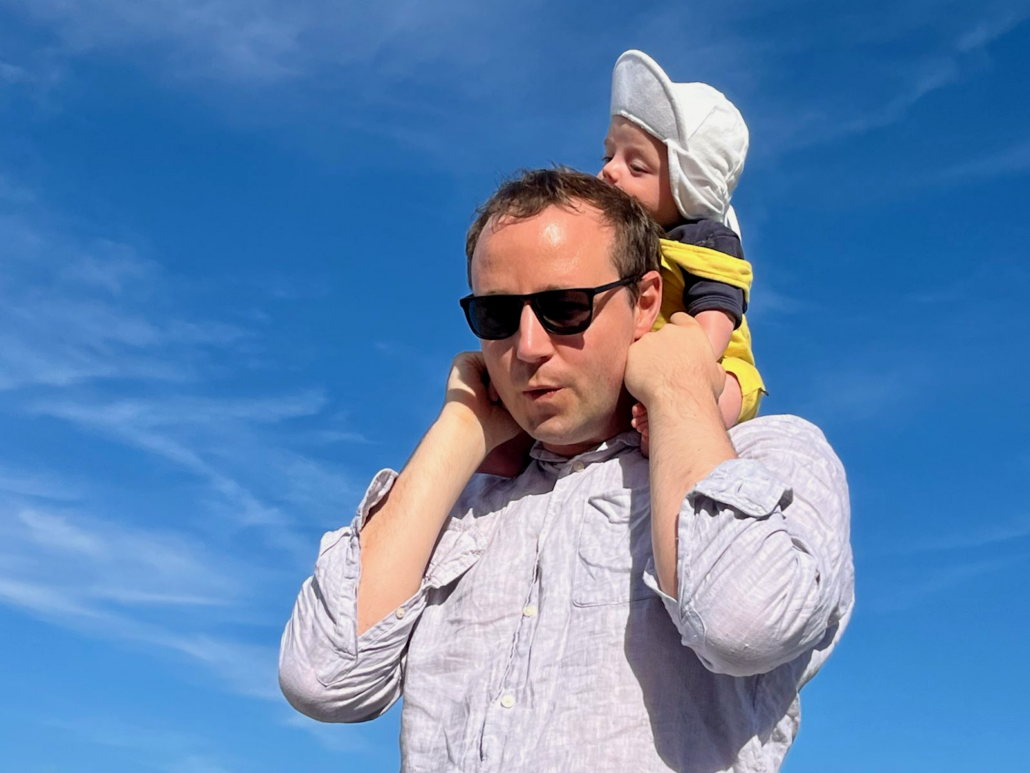
Andreas & his son 2023 on a beach somewhere in New England
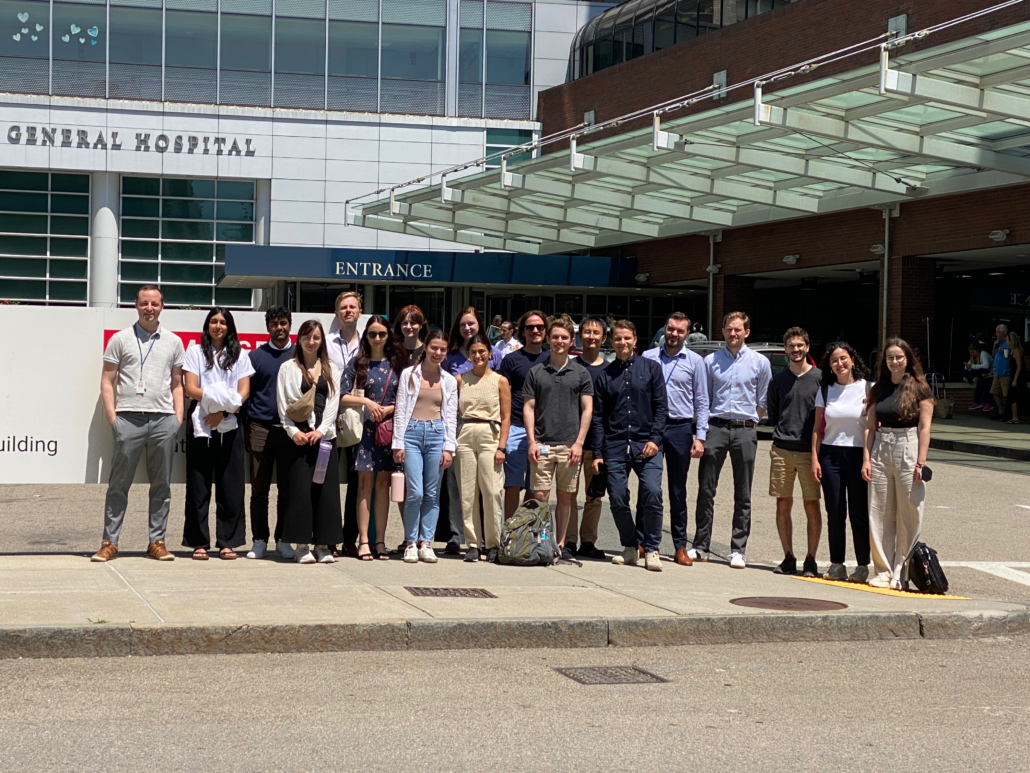
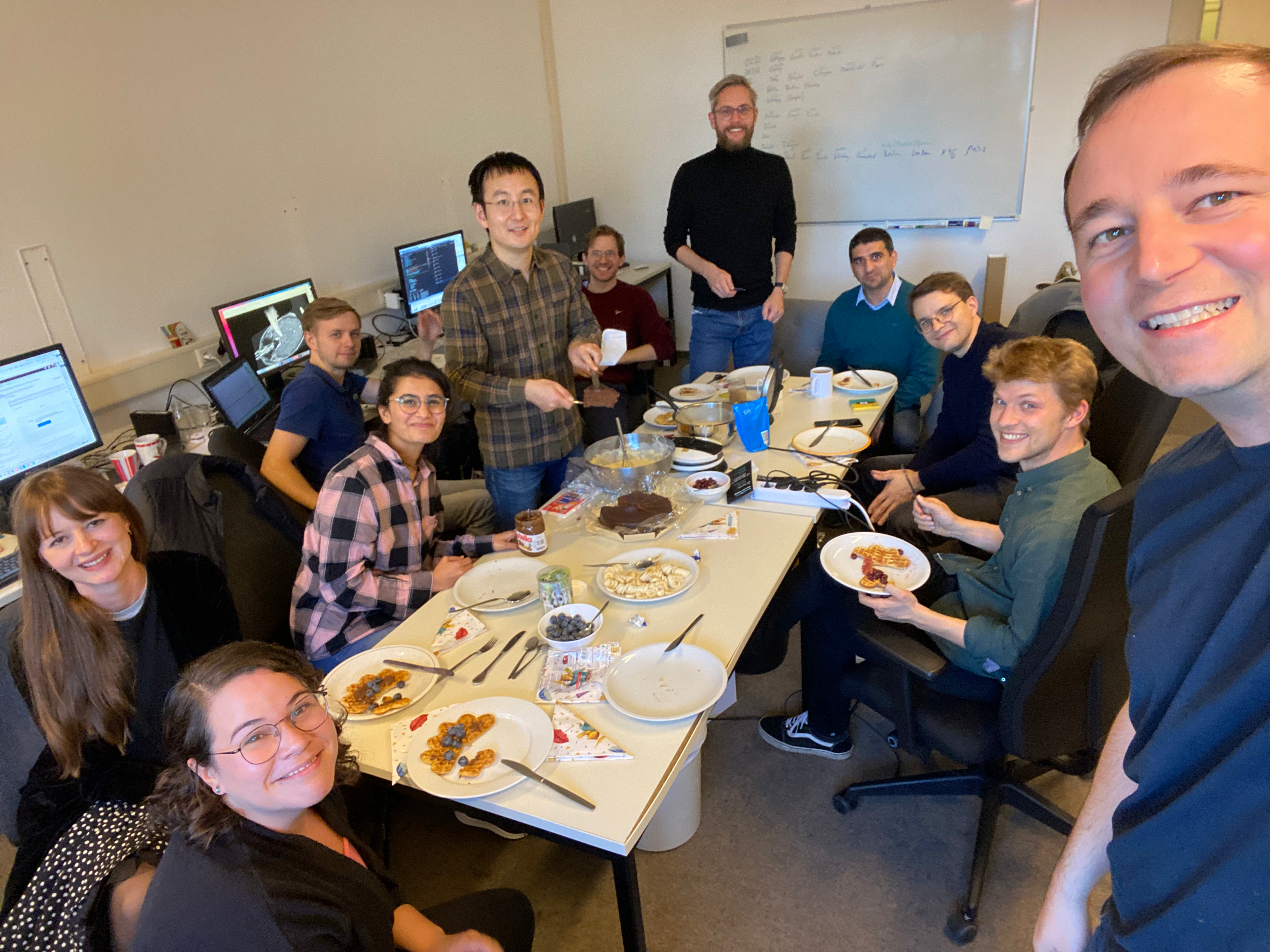
Andreas & his lab
#50: Andreas Horn – Toward Connectomic Deep Brain Stimulation
When I interviewed Marwan Hariz for episode #4, he wrote in an email: “When you finish the series and all interviews, please let me know because then I should interview you as the Grand Finale of this series…”. Throughout the recordings, I heard similar remarks from other guests but also, increasingly, from listeners of the show. After Nico Dosenbach suggested the same in #39, Mike Fox called me and offered to interview me for a round episode of the podcast. With this episode, Stimulating Brains turns #50, and we are indeed flipping the mike so I finally get to experience what I put my guests through on the podcast. Who could have been a better host than Mike for this conversation – as a mentor of tremendous importance, he has been around for (and facilitated) most of the key turning points in my career. Mike and I talk about a lot of things that even covers my youth (thanks to a guest question by Mike Okun), my passion for music, key stages of my career and of course connectomic deep brain stimulation and a thing my lab has begun calling ‘the dysfunctome’. We also reflect on the purpose of the podcast and I get to talk at length about how rewarding an experience it has been for me. We then speculate about its future and the future of the field of neuromodulation. Writing this, I want to take the opportunity to thank you all for the continuous support of Stimulating Brains – and of course for tuning into this episode, as well!
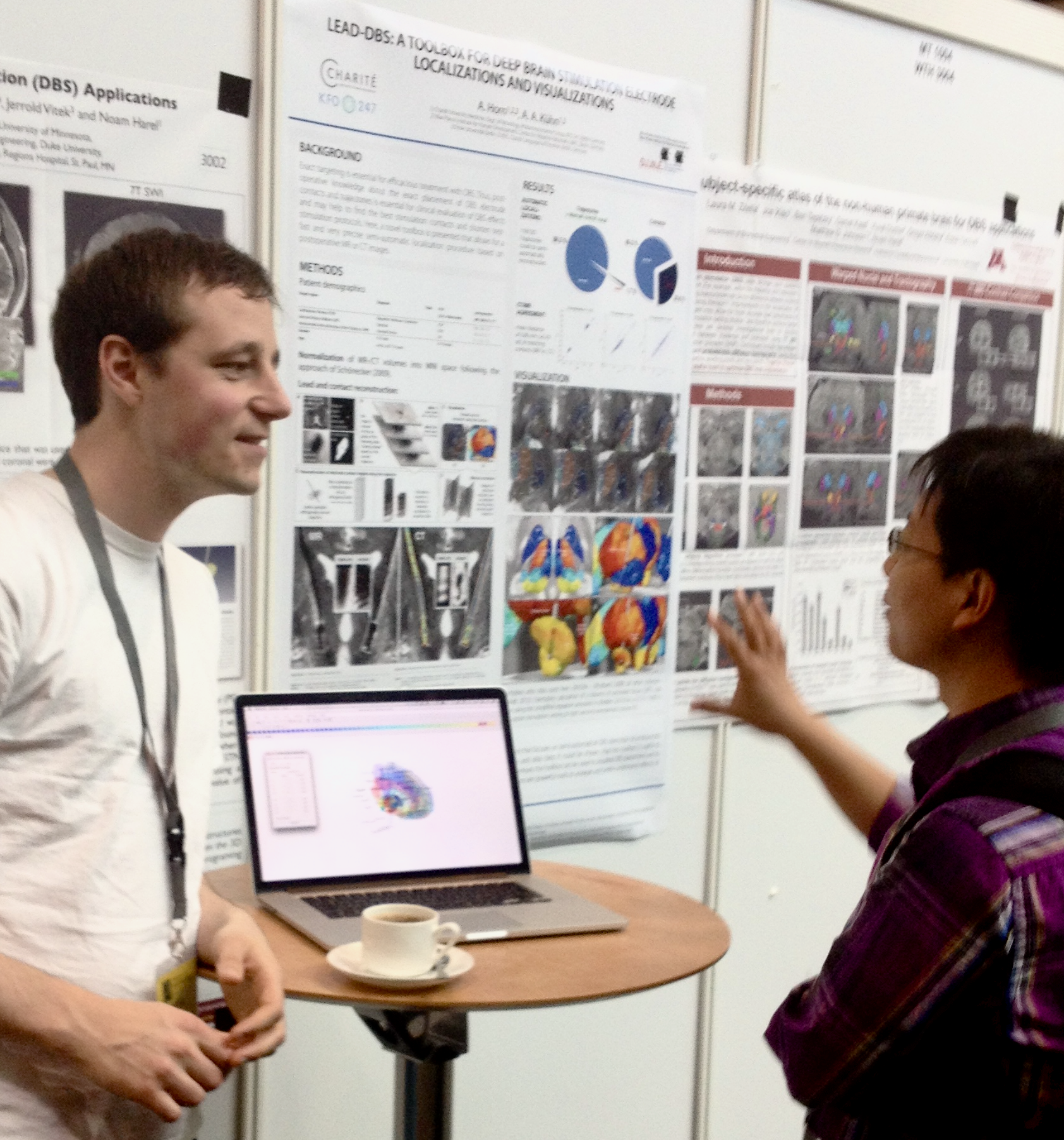
Andreas Horn 00:00You know, that's also so far off from what I'm actually doing that I wouldn't be the person to do it, even if I had the resources, so I would probably rather move to the Caribbean with infinite resources. But, no, I think two things that I find very exciting for the nearer future that are more realistic and maybe more in my ballpark. One is, and she was the one to motivate me and keep me up with it, so we certainly owe it to Andrea as well to keep it alive at the time. Oh my God, that's the same track that, you know, Carlos just published, but it's from a different target, so the OCD story there. You know, we thought, okay, now the reviewer put into our mouth exactly what we already think, now we have the liberty to actually put it in at scale, and we changed a lot of the narrative in the introduction and said, you know, these functional circuits can potentially be identified with... 01:00Welcome to Stimulating Brains. All right, everyone, welcome to episode number 50 of Stimulating Brains. For today's episode, we have a really unique guest, Dr. Andreas Horn, who's an associate professor of neuroscience, neurology at Harvard Medical School. He's the director of conectomic DBS research in the Center for Brain Circuit Therapeutics at Brigham Women's Hospital, and then holds the same title, director of conectomic DBS research at Mass General Hospital in the Department of Neurosurgery. And so it's my honor to be interviewing Dr. Andreas Horn. Well, I am very, very honored to, 02:00to welcome listeners to, I believe it's the 50th episode of the Stimulating Brains podcast. And I've been a big fan of the podcast since its origin and have been extremely impressed with the set of speakers that you've invited, that you've gotten on the podcast, and wanted to flip the microphone. And there's one world expert in brain stimulation that has failed to be interviewed on Stimulating Brains, and that is Andy Horn himself. Thank you, Mike. And so I have this great, great honor of interviewing Andy today about his career, but then also about the Stimulating Brains podcast itself and what you've learned over the last 50 episodes from some of the world's experts. Thank you so much for doing this. I think, yeah, it's a, it's a fantastic idea. Although I, you know, when I started this, I really did not want to make it at all about myself, but there were, I think, several people along the way that have requested this. And then I think we can, 03:00at least try. So thank you so much for taking the time to do this. Yeah, no, very excited. So following your model of how you started all the other Stimulating Brains podcasts, we'll start with non-science and, you know, hobbies. And what do you like to do when you're, when you're not stimulating brains? Yeah, great question. So, so I often remember these days a podcast that you were interviewed in, I think it's called People Behind the Sciences, and you were a bit younger and you had, your kids were three and something around that. And you said something like the kids are a big inspiration to you, how they problem solve and so on. And I really feel that a lot these days too. So my kids are still a bit younger, two years and two months essentially. And it's, but they are a lot of fun and I take a lot of joy, see how they grow and so on. And then I guess since kids are always the standard answer for many people, I want to say one more thing that music has been a big hobby in my life. And I don't think many people know that. Oh, when did you play? 04:01So I've actually went, it was all a bit more 10 years ago, but I did even play on stage and even on TV once and in the radio and so on. So, so I. What instrument? I was frontman and sang and also played guitar in multiple band projects throughout I think at least a decade. And I never formally quit this hobby, but I just, it's on ice in a way because I like the time and I sometimes still play some music, but I, you know, I left the recording part, writing songs and all these things. So yeah. Oh, you're in trouble now. It's not, it's not going to be on ice anymore. I expect a, a guitar and singing event sometime soon. Well, I really probably couldn't anymore, but, but there's stuff on Apple music and Spotify and so on. So old stuff. All right. So, so for listeners stay tuned because the stimulating brains intro song will be changing in the near future. The, the song is written in sang. 05:00I don't want to put the pressure on you. The point there for that intro song, that's from a good friend of mine from that time. So it's not my, my music jingle, but it's from a good friend that I also played in bands with and so on. So. Oh really? I didn't realize that the intro jingle is actually the jingle thing. Yeah. There's a full song towards that. I can maybe also. With vocals? Not vocals that one. But the song is called the machine immense, which means the machine human. And I found that kind of fitting to the podcast also thematically. Oh, I love it. Oh, so we just need to write lyrics for that. So, so, so I have a long list of questions of my own, but, but we also got questions from some of the people that you've interviewed on the podcast. And it was interesting. A lot of the people that, that wrote in actually had questions about, you know, your background or even growing up. And so the, the, the honor of the first question doesn't go to me, but goes to Nico Dovzis. Okay. Um, who, who actually wanted to know how you liked growing up in a small town in a Southwest 06:04Germany on the Rhine river. Yeah, I think we share that with Nico and he got to tell his story, but I think my town wasn't that small. I think his town was really a village and mine 40,000 inhabitants or so. So it's not that small. Um, but it, yeah, it was, it was fun. It's a, it's a lovely place in Germany. You know, it's at the border of France and Switzerland. So they sometimes call it the three countries. It's a big country corner or something. Um, so, you know, French, um, wine is close by, but also Switzerland is not far. So, and then the, it's a black forest region. So I, I love that. I kind of, you know, growing up in a small city, I think I was a bit late to the game of then discovering the world in a way I never felt like I had to go places to be happy and studied in the closest university town, which is Freiburg. It's a, it's a good university. But it's, you know, already shows that I did not really want to leave home much. 07:03Um, but then I, I did, uh, a year in Madrid as an Erasmus during med school. And I think that was the first time in a big city to actually live in the big city. And then my friends all wanted to move to Berlin. And so, so, so then, you know, discovered that I really did not want to move there, but they dragged me there in a way. And, um, so that way I think, and it's funny that for example, my brother, who is an old, doctor now in that same town, um, he was the guy that between two of us that always wanted to go to the world and, you know, he, um, studied in Munich. He did the USMLE even he wanted to go to the US to come practice here. And so now it's a bit reversed that he's back home and I'm here. But, um, yeah. And then before we get into your career, another really cool question that got sent in was Michael Duncan, uh, wants to know, uh, growing up, what's the best story of trouble that you got into in Germany? 08:00Oh my, I was not such a troublemaker. I fear that was, I mean, it wasn't incident accident, but it was, it was actually trouble at the, at the moment. So we were, it was the 1st of May, which in Germany is a, as a holiday. So, you know, people usually go outside and do walks and hikes and so on, but we were nerds and played music. We were. Yeah. And, um, we were in the, the band's room and that was in the, in a big factory of the bassist's father. So we had a room in there that we could use. And then he sometimes went into the industry in the, to the factory hall and, um, uh, drove a forklift around. And um, so this is your, your, your father. So no, it was the father of the bass player of the band. Oh, I see. So your friend's father. Yeah. Friend's father. And so we were alone. Everybody was outside, you know, enjoying the sun. We were inside. We were playing music. And then I drove that forklift into a water pipe in the wall. And all of a sudden of course there was, and you know, these forklifts, they start very 09:03fast, right? They don't, they're electric often. And so they, they have a lot of power and if you're not used to it, you can bump into things much quicker than you think. So I did that and it was water coming out of the wall. And then, um, you know, we didn't know how to turn it off. And so the father came in, he had a cell phone. That was great. It was a little bit of a time and he rushed in. You know, he was, he was hiking and so he was quite mad. And then, um, I think it could have really gone, gone bad because the water could have, you know, damaged some of the materials that are really expensive and so on. And of course there's no insurance for the kids. So, so, so, so I guess, you know, in the end it wasn't, it wasn't that bad. Uh, fortunately. And you know, they were understanding. Um, and that's no big damage, but I really felt bad that day of course. And then also had to tell my parents and all that. But the band stayed together. It did. So, okay. Well, okay. Great question from Michael. And, and, and good reminder not to let you drive any heavy machinery. 10:03Yeah. Yeah. Um, and then, uh, I guess kind of, um, you know, maybe going chronologically a bit. So, um, a question that you oftentimes, um, ask other people and Marwan, Marwan Hariz was particularly interested in asking you. Is. Uh, you know, your, your main mentors and influences growing up, um, you know, who, who motivated you to go into the areas that you did and who had a big impact on, on your interests and why you became a neurologist and neuroscientist. Great question. And one is sitting right here and we'll get to that. So, but I, I, I did, uh, I, I, I always followed the flow. So I, you know, maybe that's also a good thing to say because maybe looking now at my career, it looks like there was a big master plan, but there really wasn't. If I'm honest. Um, I, I, I was quite interested in music that an MD thesis in Germany, that's a small thesis, um, in Freiburg, uh, with FMRI and DTI on language and music. 11:03So it was a, you know, my, my part and co-authored that newer image paper. So it wasn't, I was really young then. So we should, should see that more as a master's thesis kind of, um, small work. Um, but that got me into DTI and then I thought I really wanted to do one year of, um, a master's thesis. And so I did a year of methods that sounded like a long time back then before I went into clinics to go to a real hardcore methods lab. And I went... So this was while you were in medical school... That was, uh, MD was while I was in med school in Freiburg and... Yeah... ...and I kind of enjoyed the work. I, I, I did program a little bit as a kid, basic programming, you know, and, and, and then could also do MATLAB programming and wrote some scripts and, and then I thought, okay, before I go into clinical practice, I, I do one year... And again, that sounded like a... ...nearly... ...nearly... ...nearly... ...nearly... ...nearly... like a long period at the time, to do pure research, to really become a methods person. And then later in residency, I could maybe continue that. 12:00And so I joined a lab in Berlin, which was Felix Blankenburg's lab. He's at the Max Planck Institute there. And it was this type of typical German lab that looked towards London, UCL, with free energy principle, dynamic causal mapping, PPIs, and all these things in fMRI. But I kind of came as the DTI person with global tractography that I learned a bit in Freiburg. And then I think that was a fantastic period where I learned a lot about all these concepts, although I was too junior to ever understand the free energy principle. I was at least immersed in such an environment, and that was really great. And then Felix's wife... My wife at the time was Andrea Kuhn, so I started one day a week to work with her at Charity. Her lab was the EFIS-focused lab, so I was the imaging sidekick there to localize electrodes. 13:01And I think back there, there was a guy before me who did that, Thomas Schoenecker, who was fantastic, but unfortunately left academia. And he manually clicked on the electrodes in Slicer and taught me that. And we localized lots of electrodes manually. And we always... We dreamed of a more automatic solution. This was through a 3D slicer? That was already a 3D slicer. Oh, interesting. Yeah. So this was the days before Lean DBS. Yes, yes, exactly. And so I think I learned a lot then from Andrea with DBS, and that really got me hooked on to DBS. And then I think I always had the fixed idea to one day live in New York. And I think I learned a lot from her. And I think I learned a lot from her. And I think I learned a lot from her. And I think at the time, the cool kids at the HBM were Cameron Craddock and Dan Magulis and Pierre Belek. And they were my, you know, I found them super cool. And they still are super cool, of course, and went to these hackathons and so on. 14:03So I loosely had a plan with Cameron Craddock to go to New York City for half a year or a year and wanted to try to get some funding. But then I think OHBM in Hamburg happened. And I just... I just... I just... I just... I just... I just... I just... I just... I just... I just... I just... And I showed a poster and a guy named Mike Fox came to it. And essentially, we got to talk. And I think it was a... It was the LeadDVS poster. And I... It wasn't the end of a hall. And I pulled... Sneakily pulled a bistro table close to it and could show the LeadDVS toolbox, I think, also. And then I met you. And you were fantastically interested at the time. And, you know, so inspirational and so enthusiastic. And I think we got to talk and met again in San Diego at the Movement Disorders Conference. And then I think you, you know, in a way, you just made it sound much more attractive to go to Harvard than to New York. 15:00And so... Now I realize I owe Cameron Craddock a huge apology at some point. I think he's fine. I think our first kind of collaboration was your PNAS 2014 paper where only in the supplementary or tier review, they made you show DTI tracks as well. And I think I even mentioned in the acknowledgments there, because we had normative connectomes in structural connectivity there. And so I think that then coming to Boston really was, for me, the big deal in my career, 100%, as a postdoc, right? It was the first time I moved over twice. You know, learning from you. We only, I think, wrote two papers together where I'm proper first author and you're proper last author. We have much more, I think, collaborations, of course, but I think I learned so much in these two papers. One was in human brain mapping, one in animals of neurology, and just the way you, you know, you think big picture science, how you write as well, how you frame things, how... 16:02And then I think also I remember that I was, you know, in Boston with you, I think, one and a half years or so, and I always thought, okay, in Germany, we would have already submitted this. So I think that's a really good way to start, you know, to start to think about the future But I learned that if you wait a little bit more and, you know, make a bigger story out of it, it's much more fun. And you, you know, so I feel like that was something where I learned more this, you know, trying to go the extra mile, trying to add another tangent to the story. And so that fundamentally helped. And then when I went back to Germany, founded my own group that I always thought, you know, I also talked to people about Mike said, or Mike would say, and so on. So I really recognized that. I really recognized how much I learned from you. So I think if there's a single person, I really must, must, and I'm not saying this because you're here, but I really think... Here's the money I paid you in advance for this interview. Most of the quotes that you probably attribute to Mike Fox actually came from Mark Rakel 17:02or Alvaro Pascalion or many of my mentors. Could have caused, yeah. Now that I know your life's dream is to actually go work in New York, I think it's only appropriate that the next question comes up. I think it comes from Helen Mayberg. Okay. And Helen, if you're listening, no, Andy does not want to go to New York anymore. But actually, Helen wants to know, in your development, you mentioned Andrea Kuhn as being such an important mentor of yours who taught you so much. Did you ever consider becoming a functional neurosurgeon? And, you know, if not, you know, what dissuaded you from doing functional neurosurgery? Yeah. Yeah. Great point. And I should highlight Andrea more. So I spent most of my, you know, time as a postdoc with her and I learned a lot and she also gave me a lot. A lot of opportunities. So I think I probably moved too fast. Andrea, of course, is the other very big mentor for me and was fantastic to work with her and, you know, had so much opportunity in Berlin also to grow and to develop things. And so it's a good question. 18:00Again, I think I'm, you know, I'm sometimes late in my thoughts in life and I even now only sometimes thought it could have been cool to become a neurosurgeon, but I never even saw the possibility maybe in the beginning. You know, my dad's an eye doctor. I was always, you know, more in the maybe conservative side of medicine growing up and becoming a surgeon just seemed out of my, I don't know, comfort zone probably, but I never even considered it. It wasn't that. And then sometimes in hindsight, I think I should have thought more about these things, right? I'm actually glad I did not become a surgeon. It's a huge challenge, right? It's very hard, especially here in the States, but also in Germany, it's, you know, a lot of work. And so I would say you, it's a lot of time where you cannot do science, right? So I think some people like John Rawlson does a great job, I think, or Mark Richardson to combine things. But that's a unique setup I think they have. And so for most neurosurgeons, I think that it's tough to carve the time out to do proper 19:04research and that's really what fascinates me most. So I love collaborating with surgeons, of course. And also trying to be in the OR. I do now and then and so on. But it's funny, I interviewed Marie Kruger in the podcast and she went to med school with me and she's now a functional neurosurgeon in London together with Ludwig Sinjo and Harith Akram and so on. And when talking to her, you know, she, we do similar things now, but also very different things, right? She's the one putting the electrodes in and then gets to stop the tremor and that must be very rewarding. So, yeah. I sometimes think in a second life, maybe I would consider it, but… Still time? Yeah, yeah. So, I'm going to, well, maybe before I ask, there's one question that was the number one most popular question asked by multiple people. But on that one, before we get to that, tell me a little bit about your time in Berlin 20:02when you moved back and you were first starting your lab and you had to think through, you know, what do I want to focus on? How am I going to differentiate myself? What's going to be, you know, my identity as a PhD? Yeah. And what was your first time in the AI? And take me back to that time period and how did you decide to focus on what you focused on and, you know, you become the connectomic DBS guy. Yeah. Thanks. So, I think I left Boston in 2017, like my first period in Boston, back in Boston now, obviously, but after a really fun first talk with you. And I think I mainly left that early because I really still wanted to finish up residency. So, that was, you know, the main reason that where I felt like I have to go back to, you know, get that done. In the end, I never did. But, and then I started slowly also with clinical practice, but Andrea also lured me into doing 21:01another half a year or so and research. And then I wrote a grant that is, you know, a bit like a K award, I would say. It's probably... It's called K for independence. It's a nice setup once you get it. It gives you six years of full pay and I think one or two postdocs on top. So, it's really great grant to start your lab. It's called the Emanuta program. And I fortunately got that and I got to, yeah, found a lab, a small lab. And so, that grant essentially paved the way. It had these themes of having maybe two targets to treat the same symptom such as STN and GPI for Parkinson's. Are they, you know, connected to the same network, but then also the same target for different symptoms like that's only now published, but we're still back from that time, the STN project of, you know, multiple disorders. Really try to spin this conictomic DBS idea from various angles using structural and functional 22:00conictomes, but also trying to, yeah, see how can it bridge across DBS targets. How can we better understand the networks involved and so on. So, that's what I did. So, I think that was probably really still very much inspired from our work together paving back then the next six years. I only made three years in Germany and came back and stopped essentially that project again, but. Yeah. And so, with those kind of intellectual goals in mind, why did you decide to build your own software program to go after those? And you know, you mentioned that there was software available like 3D slicer. And so, what was the motivation behind Lead DBS? Why didn't you just go after that? Yeah. I mean, I think that's a really good question. Why did you have to build your own thing as opposed to use existing software? Good question. I think, I mean, it was really tedious work that we did in 3D slicer. We clicked on every single contact. So, you know, probably there are much better ways to do that even in slicer than we did. And the first idea was to make it automatic, which you still think we should achieve. 23:03And so, I also thought that and very much so, and even the first name of Lead DBS was called E-Auto, which is in German. E-Auto. E-Auto. In German, it's an electric car, right? Auto is car. So, I don't know. It's a silly name, but it was for electrode auto, automatic electrode, whatever. And that is still a remnant in the code. You see all these E-A scripts there that are still from that very early name. And then before we published it, we switched it together with Andrea, I think, to Lead DBS. And so, the idea was that I think, so first of all, to make it simpler, that process that we did so much. And then. I think once I started building it, the more interesting stuff was actually the visualization. So I realized, you know, the idea was to localize the electrodes automatically, but then there was also no great way of visualizing them. And even the very simple crappy ones where we just had a line with four dots and maybe 24:00a 3D thalamus or something that was already so insightful and helpful for papers and so on. So that grew and it was fun to make it prettier and prettier. And, you know, add shading and all these things. And I remember also just even carving out or plotting the, you know, the segments was, you know, I learned all that the hard way. I wasn't, yeah, I had to Google a lot on how to do these things and also, you know, make many detours as always. But I mean, there was no real alternative at the time. I even remember going up to Chris Budson at one talk once and asking him, you know, is there some way to use his software? And then I also emailed Cameron. Yeah. Cameron McIntyre to use Sitserone, I think, which they had. But, you know, was a small guy back then. I think didn't get a reply. Even told him that recently as well, which of course is very normal, right? If some random person shoots you an email, you don't have the time to reply. But that was the reason. There was really no alternative. 25:00And I think Sitserone was at the time already sold to Boston Scientific as well. So I think that was probably the reason. So what you're saying is that you didn't build LeadDBS just for cover art? Yeah. Well, it took a while, right? And I think then the next thing, right, at some point we needed a VTA model because then, you know, Volker Kuhnen, I think, visited us and he had a simple VTA model and then thought, okay, we need that too. And then, you know, I think Ningfei Li joined the teams early on and he added a lot of normalization. Yeah. you know on on these groups so i you know i kind of built this lead group tool in maybe a weekend 26:03and it's it also feels that way it's not great software um for the users that know that would probably agree but it still kind of works and does a job and then you know i think more and more the team grew and then we came up with these sweet spot explorers and network mapping explorers and so on so um you you know one thing led to another but there wasn't this big master plan i think in beginning yeah it's also a nice story that lead to bs really was um a weekend project it was not my proper project from from andrea at the time and i was looking at networks in estonia i think um never published but that weekend project kind of then became bigger and i think there were even parts um time points where i felt like this is not going anywhere and she was the one to motivate me you know keep me up um with it so we certainly had a lot of time to go to andrea as well to keep it alive at the time um because it was not an easy 27:01thing to yeah especially the the hope to make it automatic so i guess this now brings me to the most popular question um which was asked by nikon dozenbach and marwan haris and multiple other people which is um you know leaving this great setup at charity in berlin you know you're on fire you got lead dbs working you're doing great research and then he came to boston and so comparing and contrasting the differences of of working in berlin and in europe versus in boston what motivated you to leave your great setup and and what's been the biggest differences between those two environments for you that's a that's not an easy question i even thought maybe this could come up um and i i thought maybe i should do it because i love living in both countries i i could do a roast for both probably not not a good idea to do this no i i mean i it was really a great setup in berlin you know a six-year timeline and you know clinical opportunities and i think i had a 28:01future in charity and good support there but um i don't know i think so there were several reasons and it was not an easy decision um but one big reason really is is you as a mentor i i that is not you know again because you're sitting next to me but it's really the case i you remember we organized this radcliffe um symposium and um in in boston so i was like oh my god i'm gonna do this so that was i was already in berlin but i flew in for that we jointly organized a small meeting on on you know connectomic dbs i think and um at the time we had stn and gpi dbs as a project that was later published by leon sabeski in brain and just pitching you the current problems and getting some of the feedback was so helpful right where i thought oh i should you know do this more with you and and that has become you know has been really helpful for me and i think that's a really really helpful we i think we to some degree think very similarly about the same concepts and of 29:01course you influenced me a lot that was one thing then of course it's an adventure so also my wife thought um you know this could be a fantastic adventure she'd never been in the to the us so and we couldn't even visit because of covid so we she actually moved for the first time visiting the us oh wow yeah um so that was courageous and she was even pregnant so you know big kudos to her but it wasn't not that she came for for me or so she really wanted to um and we it was a mutual decision but it was a as you remember i think a long evolving thing of you know we were sometimes leaning to um boston or to berlin we also had a really nice flat in berlin julian neumann now lives there with roxanne so i mean they they took it over and i sometimes see pictures and think ah that was fantastic it was a winter garden that you know beautiful place um so it was a really nice experience and i think it was a really nice experience and i think it was a really good setup but then it's also of course a fantastic opportunity to work at harvard and 30:00harvard professorship or associate professorship is of course a unique thing that i always thought if i don't do this and then turn 50 i would probably always think back of you know what could have done what could have been when doing this joining your center you know the mission of the center is fantastic so maybe for the listeners that don't know mike built a center in between neurology psychiatry and um neurosurgery and neuroreactivity and i think it's a really good opportunity to really bridge things with maybe the connectome as the glue in between things right to even learn from tms for depression to then also apply similar concepts to dbs for parkinson's disease and i think unique in your center is also the aim for translation which also was for me the next step so maybe i should add that at that time i kind of decided against practicing medicine long term and really wanted to focus only on research but that also was a not an easy decision so i um so i you know moving to your center kind of was in between where i 31:02felt like i could do research that was still meaningful and still you know potentially would have impact on patients lives and so on so and i love boston as a city you know it's beautiful in summer the beaches it's at the sea it's you know it's it has so much something fantastic opportunities of talks by noble laureates all the time there's mit there's harvard and there's you know mgp and i think it's a really good opportunity to do that and i think it's a really good opportunity to do that and i think it's a really good opportunity to do that and i think it's a really good opportunity martino center and so on so it was a fantastic opportunity um but yeah it was really not a very clear easy decision because berlin was also great um setup so yeah so i want to ask you a couple questions about the the podcast itself so so take me back to the time where you decided to launch the stimulating brains podcast and what was the motivation behind that great question so i i did go and get into podcasts i think fredericky ilman who also has a paper with me today and i think it's a really good question fredericky ilman who also has a paper with me today and i think it's a really good question together she she um she got me into podcasts and listening to podcasts and and uh you know i just 32:01realized this is fantastic because you can you know listen to podcasts it's it's cool medium you can listen to them while running you know while um commuting while maybe even in the shower or whatever um and so while not using your eyes essentially for knowledge and and so i um then discovered this great podcast called brain inspired um by uh paul middle brooks i think a lot of people would know it and that was the first one that felt like really in depth and more meant for scientists and not so much for lay audience where where you know it's also in depth usually two hours long interviews where it really goes into the matter and you actually learn stuff and i i loved that podcast and um i always thought it would be so cool to have something like that for dbs um or for neuromodulation or brain stimulation and then it was really an experiment because i always felt like i should not have the time to do this you know i should not also i don't want to be the person with the 33:00microphone i want to be a researcher myself right i also even i had serious doubts of how would people perceive me doing this long term because i would you know maybe then i'm not a scientist anymore but a reporter in a way right so i've had these thoughts about that and um but i you know i'm like you i think i i often just try to run experiments and if you listen to the first episode that was with christian moll i even the beginning i really say that this is an experiment and you know we'll see um and then you know it was i think when i had 10 or so episodes in i i once um i think i i at the octodbs conference in geneva and they they have this um steamship and i was talking to julian neumann and aaron ditus and it was about some you know scientific problem and then i i realized i'm quoting people in this discussion you know i'm i might be a little bit more of a scientist but i'm not a scientist now quoting mail on the long that i just talked to or you know haggai backman or so in this maybe 34:00it was about basal ganglia loops and i just realized how much i learned from just talking to people like that right it's it's a whole lifetime for them to integrate information and you kind of get the condensed juice you have to you know you don't get the raw material so you have to essentially take it or leave it so it's a different it's a different form of knowledge i think that that you learn from others but it is a very interesting you know and knowing that for example mail on things it that way is is very helpful information for me you know it doesn't need to be right it could also be wrong he could be wrong but it's still it's very hard to come to a similar understanding by just reading papers especially historical ones so at that point i realized okay this should be worth my time and um i even you know maybe us as scientists should do this more in a way right because i think everybody always says this at the conferences we the discussions are the most interesting and i think that's the most interesting part sometimes not the talks right and and then there's never enough time for discussion and in a way this is a format where you carve out two hours and that's always very 35:06tough for people to carve out two full hours but you really get into talking about something and then um i think for the listeners it's you know they probably do it while commuting or jogging and so on so they don't lose as much time i feel but um i don't know so it's been really rewarding as a as a bottom line and the main reason i do it is because i think it's really important to do it because i learn so i would even do it without posting podcasts online but i think then i wouldn't be able to convince guests yeah and so i guess after uh you know 50 episodes yeah at this point um you know hopefully the result of the experiment was a positive one and uh like any good experiment the answer is and now we'll motivate further experiments yeah and so for the next 50 podcasts uh anything you plan to do differently or are you just going to continue same trends great question i mean i i don't even know if it's a wise thing to disclose this but i've 36:01loosely started because it might never happen but i loosely started writing condensing some of the things i learned into some sort of book format um including the anecdotes but also the scientific insights and i've you know just done that loosely on the side so it might happen might not ever happen can't promise anything um also you know of course quite busy now with kids and everything but i but i um what i what i'm doing is i'm doing a lot of research on the scientific side and i'm doing a lot of research on the scientific side and i'm but what changed there was that at some points like you know when i tried to create a narrative there was a missing link somewhere between maybe two things and then i thought okay for that i should interview this person and then so maybe now the the book sometimes drives who i invite because that might be the the gap to fill the hole in a way right so um that's maybe one thing i try to for myself use this to answer bigger questions and i think that's a really good point and i think that's a really good point and i think that's a really good point and i think that's a really good point questions somehow or not answer them but at least get some glimpse of an insight that that's a 37:01downside right it's not it's not hard science of course if you talk to people right it's not like it's not really and it's not a reliable source of information but yeah again it's it's this high level big picture type of information so yeah and it sounds like a motivation you're trying to weave together these insights and experiences that you've gotten from the different people you've spoken with and by speaking with so many different people you start to identify gaps yeah yeah and i guess as you integrate across these you know 50 luminaries uh you know i continue to be amazed by the people that you've interviewed on the podcast that's why it's one of my favorite podcasts but but as you start to integrate the principles that you've learned you know anything that's emerged as common elements across all these successful people that have worked on on stimulating brains um yeah things that would be you know i always like that you end the podcast by you know lessons for the younger generation um and here's similar advice from different people but i i'd like to hear how are you weaving the story together how do you integrate the 38:02advice and experiences of these 50 people i think um it is very hard right because with everybody everybody has their story and they they might not overlap so there's probably not one or two big themes that always come up um but across at least always a pair of maybe three or four speakers you can you can do a lot of things and i think that's a really good way to often build stories right that that make a bigger pattern one thing that's you know as a big question that interests me a lot that i maybe don't get to investigate myself so much with with the methods we're using in the lab is is this idea and we've talked about this a lot too about deep brain stimulation can sometimes be you know um acting as a lesion but also acting as some sort of um excitatory or up regulating um information and i've started writing a bit about that you know with eloquent parts of cortex and 39:01maybe the um more you know darker parts of cortex that if you stimulate you don't see an apparent thing but probably there's a lesion type effect so i find that very interesting you know if you stimulate motor cortex you see something if you simulate the essentially inputs and the outputs of the brain the brain seems to perceive that or the muscles perceive that so there seems to be a more analog type of um information processing there but then in the higher order cortex cortices and maybe penfield centrancephalic system you know that's more oscillatory and so on there things are different different um you know there maybe dbs more acts like a lesion at least high frequency dbs acts like a lesion so you know then try for example for a bigger question like that of you know where does this translation between maybe these types of the brain or parts of the brain um change or or so i then try to maybe invite 40:01people that could help me answer that a bit better right um or you know then the other big question or big big motive that i'm really fascinated by we often talk of cortical columns um as a unit in the cortex but maybe if you if you see the wiring diagram of a cortical column to also project to the anglia to the cerebellum to the brainstem and then thalamus and back in a way maybe that's that's the unitary circuit or the basic circuit of the brain that's then multiplied a lot across the cortex and across the brain and so that's something that i find really fascinating of you know basic anglia cortical interactions and then also try to use the brilliant minds of the speak of the of the interview partners to gain insight on that so so that helped me to direct the questions i ask sometimes and also the people i invite so these bigger questions um i think there are there are some some really fantastic things to weave things together um 41:05you know from maybe helen myberg who was episode number two thanks for that helen because that was really early on trusting trusting the the concept and my one was number three i think so that that again was you know fantastic so each of these big names um come in that early you know from to then andrews lozano's work you know with with fornix dbs and and and these things and there again we talked a lot about that and then i found it really interesting to talk to both and young and malon de long who were maybe in these um you know in the albin de long model there was these two groups at the time and um here their experiences of what they contributed to this bigger basic anglia circuit model and um yeah i don't know in terms of for example the last question of career advice everybody's a bit different right um we often hear something like follow your passion which i think is great advice but um you know everybody 42:04only seems to get to get one answer and and and they pick different things but it's always really great to hear what they say so and i guess just uh an open-ended question about the podcast right anything that listeners you know don't know but should about the origin of the podcast about what you learned about what's coming up in the future and what's coming up in the future and what's next oh good question i mean i i'm very open to any type of feedback right so that's um please approach me i'm also very open to any type of help so i should maybe at this point also mention two fantastic students that did reach out to me that are not from my lab that's ala taha from canada and nils pacheco who actually works in john ralston's lab they they think both listened to the podcast and kind of emailed me and offered help to produce episodes which is fantastic um and they've been doing a lot of work on that and i think that's a really good question um and i think that's a really good question um you know just interacting with them as well they have sometimes great ideas of maybe who to invite and you know maybe i think um ala has done a lot on the website too where he could integrate you 43:04know i think he's now looking at um ways to also have a transcript that that he could maybe google and make the podcast more accessible to that and so i i'm you know very open to any types of suggestions whom to invite what to talk about what to change what is the best way to do that and i think that's a really good question um and i think that's a really good question um you know these things please do approach me if you want and um uh any type of help is great i i think i i always wanted this to be a platform for others as well that you know if somebody wants to interview somebody you know please reach out we had guest episodes before um where you know for example julian neumann um interviewed icg gundus and and some other examples and i always hope that maybe these similarly you know mid-career researchers might might join in and even make this a bigger thing 44:00because um you know some people could be interviewed better by others they sometimes don't know their work but then so far nobody has really bitten it's a lot of work right you have to be really committed to this but um if there's anybody listening that would like to join the team that would be great um because it really is just a hobby for me and um a great one but yeah um i can say i very enjoyed the experience of being a guest uh host and interviewer true yeah so it's been a lot of fun but um and then i've intentionally avoided any kind of details about your science i think a lot of people are familiar with with your work with the papers you've published um and so i focus more on on you and the story behind you and your ideas but maybe just a a couple questions about your science you know what what has been your uh favorite piece of science that you've done to date and and why is that the the favorite piece of science that you've of science that you've done? Oh, great question. I think three things stick out. One would be also 45:00the paper we did in Annals, just because it was the first bigger project for me, and also the first maybe conictomic DBS in a way, using normative conictomes. It was, to me, I see this as a proof of principle that this could work, and we were, I think, maybe even among the first to cross-estimate outcomes across surgeons and centers, and that I think was really great. And then I think one big success story is Ningfei Li's tracked model for OCD, where that was a serendipitous discovery. We were looking at, so we had published a paper, and maybe that was even the first in there with Carlos Balderman, who looked at ELIC DBS cohorts, and that was a very good one. And then I think one big success story is Ningfei Li's tracked model and we used a novel technique at the time that we call fiber filtering, where we could identify which tracts associate with clinical improvement, and that was ELIC DBS, so anterior limb of the internal capsule for OCD. And a specific tract came out that was 46:01published in BioSync, and then Ningfei was actually in the middle of writing, he was working as first author on what was recently published by Barbara Holunda in Nature Neuroscience, this STN project where we looked at different STN electrodes, and it was already back in, I don't know, 2019, so a long time ago. That was usually, originally Ningfei's project, and we looked at the OCD cohort of that, and out came the exact same tract that Carlos just had published, but it was from the STN. And so we essentially dropped the bigger project and said we have to follow up on that, because it was really a surprise finding, it said it can't be the same thing, and that must be relevant, and then we essentially shifted and pivoted to that story. And so what Ningfei could show then is that individually with subthalamic DBS and also capsular DBS, you could identify the 47:00same tract in a data-driven manner, but independently from one another, and you could even cross-estimate improvements across these DBS targets. And that was then published at some point, and I think, why? I think the way I find it so exciting is that it has then been replicated quite a few times by others, and that, of course, is very rewarding, because you could always be wrong, of course, too, but this one really seems to hold true. We've shown it over and over again recently also with Samir Sheth in a blinded fashion. So that kind of storyline, I think there are maybe four papers now around this tract, in a way, and also some by others. Helen Mybrook's team, the or Martin Figgi's team in New York were the first to replicate it or validate it and Phil Mosley did in Australia. And I think by now we even have started using it in a way clinically at MGH, 48:00at least to co-inform the surgeons and then also in a prospective trial in Brisbane by Phil Mosley and the team there to prospectively target this tract and this network for OCD. So I think that is probably the single most successful or serendipitous discovery that kind of took off and replicated. I'm going to interrupt you there because one piece you didn't emphasize but that story of the OCD tract and how it was able to be replicated and cross-validated across so many different groups internationally. Can you say a little bit about your thoughts on open science and using Lead DBS as a discipline? Yeah, I think that's a really good question. So we have a whole distribution platform that allowed that to be possible. So we had a pre-print of that paper out, I think probably even a year at least before it got accepted at NatureCom. So it was a long, you know, it was even a, you know, reject and rebuttal kind 49:00of situation at the journals. It took ages. I think the editor left in the middle and then, you know, we really waited a long time. So it took a long time to get published. So in that whole time, there were a few groups that were actually interested in the field. So, you know, we had a whole distribution platform that read the pre-print and were interested in it. And then I think once it was published, we made the tract itself openly available within Lead DBS. So everybody can download that. It's called, I think, OCD response tract. You named that by the way, I think. Great naming. So everybody can essentially download it and, you know, in theory, look at their own cases with DBS for OCD for whatever target and measure the overlap of their stimulation and then, for example, correlate that with clinical improvements in their cohort. Right. And I think that's exactly what I think the first was Martin Figuet's group, Smith et al. and brain stimulation did. And they had 10 more cases. They just measured how much is the published tract being stimulated in each and how does that correlate 50:01with the Y-box improvement? And that was significantly positive. I mentioned the pre-print because there were four studies that supported this finding within six months time. And probably that was because the pre-print was already there because probably nobody's that fast usually to get things together from the idea to publication. But I think people started looking at this before the paper was even out. Maybe to answer your question, I really believe they're in open science and making that available because if you just show the picture of the tract, nobody can quantitatively replicate it. But if you make the data set open, then everybody can do that. And I think a lot of people do, you know, put their data on, you know, NeuroVault, or try to provide an open access resource for the maps that they generate. But I think there might be something unique about providing that resource on the same software platform that people are using to process their data anyway. You know, I've often wondered if, you know, if FSL and SPM are directly linked to NeuroVault or more integrated in, yeah. But to me, I've always loved that story as, you know, how do you get your, not just your paper out, 51:12but the result out in a way people can use the result, not just look at a picture of the PDF. It's a great question. I never thought of that. It's a great idea, actually. You could very much envision that people had used whatever Connick Toneworkbench or SPM or what people are using now to do these things that they can, in the software directly, say, compare with NeuroSynth or NeuroVault. I think NeuroSynth has a decoder or so, right? So there are these fantastic resources, but you're right, they are not integrated. I mean, it's more, you know, we didn't think of that. It was just that we had LeadDVS and we could add it as an advert, so it was more not born from a thought like you just had, but just because that's the easiest way for us to distribute the data. But maybe I could also answer there that LeadDVS is an open book for people to add data, of course, and to also add code and, you know, to help us. 52:04This is also meant to be a public resource from scientists for scientists, so everybody can reach out and, you know, we're on GitHub, and you can add data and atlases and see this as your platform to add your own tools or code or add plugins or whatever. So we're always very open for that. And then with the OCD story, are you aware of any negative findings, right? So once the track's available, anybody can localize their electrodes and see intersection. Obviously, anybody that does replicate the finding is going to submit that for publication, and it lowers the barrier for them to be able to do that. Yeah. You know, if you're... Have you ever found out about people that have tried to replicate it and couldn't, and have they still been able to publish that negative finding? That's a really good point, and it might be a real problem, right? Because it's a tough thing to say, hey, we found this track does not work, right? And then you go maybe against these other four papers, 53:00and so it might in part be driven by selection bias, which would, of course, be horrible. I mean, I try to learn from whoever shares their insights, and I try to learn from the clinical teams worldwide. I always want to exactly know the failures, right? We can learn much more from those. So, you know, we did a few cases in MGH where I was even partly involved and, you know, visited when the programming happened with Darren Doherty. And so they would usually seem to check out really well. On the other hand, it's also sometimes, you know, it is not in psychiatric DBS. It's not an exact science in a way, of course, right? Sometimes there's also great response if you stimulate the nucleus accumbens, which in a way our papers show would lead to improvement, but not to as much improvement. Patients are heterogeneous, of course. Everybody has their own very own symptoms. So there was, for example, one case I've seen that had compulsions where they had, 54:03the person had to do mathematical operations all the time in his head. It was, you know, constantly, even while talking to you, apparently, he was, doing maths, right? You could ask, is that a compulsion or is that an obsession? Right? Probably it's a compulsion, but it's not really an action. It's more a thought, right? So it's probably maybe something in between in a way. So that just shows me, or these case examples show me how different people can be. And then, of course, it's not surprising that there will be examples where modulating this track is not the best solution for them, right? It's still an average finding. It's still an average group level. And every brain is wired slightly differently. And so, And then I guess, you know, obviously you get a lot of press recently about a new nature neuroscience paper that just came out where you looked at, you know, different disorders that are all treated with STN DBS. Yeah. And I think you coined a new term, a dysfunctome. 55:01Yeah. As part of that. So maybe walk the listeners a bit through that piece of science and what you think the implications of that paper are. Thanks. So I think that was exactly the paper that Ningfei dropped when we found the OCV track. So that shows how long this has been going on and was also still part of that first grant I had in Germany. So it took ages. And then, you know, big kudos to Barbara Holunder who essentially took it over from Ningfei and did a fantastic job. You know, she's, I think, yeah, she's unique. And Ningfei also, of course, she's shared last author. I think in a way, you know, it was also shared first. She shared first in a way, but did a lot of the analysis. And so the two are a fantastic couple there to work on that power, not couple, but kind of power team duo. And so the idea there is to, you know, it always struck me STN DBS can lead to symptom 56:00improvements in very different disorders. Parkinson's, dystonia, Tourette's and OCD and even, you know, sometimes addiction. There's one case I think published Huntington's disease. We have a case in the United States. Yeah. nucleus that's a centimeter long in the depth of the brain how can that be is it all placebo right you you would you would you would think and um and of course we knew already before that paper that especially for ocd we would target the more anterior parts of more ventral parts of the sdn and for the motor disorders i think the target is more similar um some would also for tourette's even target more anteriorly so there's a slight difference in targeting um but we wanted to show in a more data-driven way um to you know to look at are these different networks of the same kind of cortical basal ganglia tannum cortical system and um it was also a big honor to have malan belong and tagai backman on the paper so after talking to me on the podcast i you know also 57:04sent him this manuscript and then because in a way it ties back to their original alexander paper and that but now shows it a bit um more data-driven maybe and based on these and so the the idea with this this functome if i'm honest came very late in the process so the tracks that we identify that correlate with symptom improvements might be exactly the tracks that are disrupted in given disorder that we then have to lesion or tune down um to improve the symptom for example i think in in parkinson's the story is most well known with alleviated beta power activity there's some sort of overactivity of the sdn loop in that and and that seems to cause problems and then tuning that down either by a lesion seems to improve the circuit so these causal sources of information that also you know you publish a lot on and you know i took that story of course from you and and sean where 58:03the idea is to use causal sources of information to um identify which circuits play a role you know we thought okay now the reviewer put into our mouth exactly what we already think now we have liberty to actually put it in at scale and we you know we change a lot of the the narrative in the introduction and said this functional circuits can potentially be identified with dbs and with network mapping and um then i thought okay we now kind of start doing it at scale with these four disorders and so that's a bit like the you know connectivity versus connectome the difference is that you map it into a sort of library and so we came up with this term i don't know if it's going to be a mistake but um i kind of like the idea that we use you know causal sources of information to map the dysfunctome of the human brain um i guess a related question on that um line of thought comes from ben steckler which is you know if you are able to use dbs or some other type of causal 59:05mapping resource to figure out where a dysfunctional circuit is um and it sounds like it's it's the assumption is the circuit that you need to stimulate to make someone better is also the circuit that's dysfunctioning yeah that might be true might not be true but but ben's question was you know how different are these dysfunctional circuits going to be across two different individuals with the same disease might have slightly different symptoms great question thanks ben and i i think that um is exactly the next step and there's one bigger paper as well in review where we look at just parkinson's now but symptom specific circuits so essentially segregating that loop we it's the same you know part of this antostraddle interactions that that is is in there but we can further segregate it towards symptoms that's still on a group level right but they're um for example this is work by nandita rajamani i think there's posters already been published you know hopefully soon also a paper 01:00:01where where we could show that slightly different parts of that loop are more predominantly associated with improvements of specific symptoms such as tremor, bradykinesia, rigidity or axial symptoms so i think and we actually do the same for ocd2 barbara holunder's taking up that and you know we've tons of fantastic collaborators that shared data with us where we could also further segregate that lee circuit you know the ocd response circuit that's you know that part of that to into obsessions compulsions anxiety and depression so with the hope to maybe use that for personalization of DBS at some point, where maybe, you know, Especially in the ALIC, it's beautiful. It's really along the trajectory line where you could, with different contacts, if this holds true, predominantly stimulate specific symptoms better than others. And again, that's, you know, for Ben, I know how Ben thinks, this is still on a group level, right? This would still be group-level tremor tract or group-level bradykinesia tract, and it's gonna be very hard to map that, I think, on the individual level because we need a group to do statistics, right? We have to essentially 01:01:16So, yeah, it's very hard in a single brain to understand what is the tremor circuit. That might be possible at some point. You can imagine with enough different contacts and directionality in VTAs. That's true. You could turn a single patient into a large enough data set to run statistics on just that one patient. It's a good point. And I think we've, you know, thanks to Till Dembeck who visited us here, he shared a data set with us. And in the NDEFAS paper, we were able to do that to some degree at least, right? So it's a great point, stimulating different contacts. You could then run statistics across the same brain in a way. Yeah, that would be fantastic to do too. Yeah. So you've already alluded to where you're going next, especially, you know, in the near future. 01:02:02So papers that are in preparation or going, making their way through the peer review process. But maybe jump out, you know, five, ten years into the future. And, you know, one of the things that I've been doing is I've been doing a lot of research on the NDEFAS paper. One of Kai Miller's questions that I thought was good was if you were given infinite resources, right, to get where you think the field needs to be in ten years, right, what would you do with those infinite resources? How would you get where you think the field needs to go? Oh, wow, that's a great question. I just tried to answer a similar question for some conference. Infinite resources is such a big ask where I think at that point, if it's really infinite, I would try to probably go towards neuroprosthetics to kind of try to replace these circuits or build them and rebuild them in silico and essentially try to modulate, you know, replace a broken basal ganglia circuit with something, a device, and then patch it in. But that's really, you know, infinite resources. 01:03:01So maybe more realistically. That's not that far off of what Elon Musk is doing. I know. He's the closest person I know to have infinite resources. You're right. Yeah, I think the idea there really to... Because I think one big limitation of DBS is, I think, that it's currently still quite limited in what it does, right? It tunes down something. And then even adaptive DBS would do that on a temporal scale, right, in a bit more nuanced fashion and maybe more adaptive fashion, but it would still not repair the circuit. It would not, I think, it would not inject meaningful information. It would still put the brakes on in the right time, right, in a way, but not more than that. So I think that's great. But, you know, that's... I'm also so far off from what I'm actually doing that I wouldn't be the person to do it, even if I had the resources. So I would probably rather move to the Caribbean with infinite resources. But, no, I think two things that I find very exciting for the nearer future that are more realistic and maybe more in my ballpark. One is an idea that Julian Neumann had with these two big fields now, adaptive DBS and connectomic DBS, 01:04:09kind of emerging as, you know, potentially... the next big thing. But they might be united to something like adaptively switching networks. That I find really interesting. For example, that we detect tremor in a patient and then in that moment stimulate the tremor network. And we need connectomics for that to define that network. But we need adaptive stimulation to know when to simulate. And then, you know, if bradykinesia kicks in, it would simulate that. And, of course, you could spin that to speech and to gait and to, you know, all these side effects as well to avoid, you know, when you detect speech to stop stimulating the speech disturbance network. But maybe sometimes you have to because that helps tremor. So, right? So to adaptively... Because currently adaptive DBS, the idea is really to just have the same contact on versus off. But we could maybe shape the fields in such a way that we simulate networks. 01:05:03The other big thing that I also find very interesting, but that's way more exploratory, and that also is, you know, a joint idea with Julian. And I'm that we kind of developed over the years, but never did. Was this idea that these beta bursts that we know are in the broken loop in Parkinson's, they span a time frame of 200 or 300 milliseconds, right? So a longer time frame and then maybe using very ultra fast fMRI, we could maybe even detect something like that. And the cool thing is with fMRI, you would know exactly where the broken circuit is, right? If it's possible. Because you can go up to even 60 milliseconds with single size fMRI and then even with whole brain fMRI, you know, to faster sequences. So that in my view could be something, and I don't know if that's possible, but it would be such a breakthrough to be able to see these broken circuits in individuals. Because then you would exactly know where to stimulate and where to put the electrode and so on. 01:06:03Right? So, and better understand it, but that's a big ask, right? It could be that the hemodynamic... The function just doesn't allow these fast things to be seen in fMRI, right? But it's at least something where I feel like this could be worthwhile to testing and seeing. And I guess, do you worry at all that visualizing those broken circuits, and it reminds me a little bit of all the stereo EEG work that's going on, right? Where not fMRI, but they're using stereo EEG to try and characterize the broken circuit from an electrophysiological standpoint. Yeah. But one of the things that's at least worried me is whether... Yeah. ...you're using fMRI or the electrophysiology, you're getting a correlate of something that's abnormal. Yeah. And it might correlate with the symptom you're trying to treat. Yeah. But you still don't know if it's causing the symptom, compensating for the symptom, incidentally related or a risk factor for the symptom. And so even if you can characterize an individual, that dysfunctional circuit from a correlational standpoint, you still don't know until you flip on the electrode whether going after that circuit will actually affect the symptom you want to treat. 01:07:09Yeah. our motivation builds upon that to use exactly causal sources of information and not you know imaging results now now you're right i know with this idea go back to fmi um emitting i mean you could you could even say the same for beta power nobody knows that it's causal for the symptoms right i think at the moment and i think julian would julian neumann's usually my hero on on that topic so i usually that's why i refer to him so much but but he's um he would say probably not it's more you know a physio marker so um i i'm i personally disagree but it's just a gut feeling i think it has to do with this noise you know this noisy signature that actually disrupts the circuit and probably just you know the proper information doesn't flow anymore or it or even affects other symptoms um so i i believe the beta power might be causal but it's really just a 01:08:04belief not um but be that as it may i think at least we know that by correlative evidence that stimulating the high betas um contacts seems to work right we we've known that way before percept i think in the kuhn lab and um you know from the oxford group and so on so peter brown's fantastic work and then of course phil star and so on so i think there's good evidence by now and really reproducible evidence as well that beta power correlates with the symptoms severity goes down with dopamine goes down with dbs the contact seems to matter that you switch on and so on so the idea would be to make you know see that you know see that without an electrode before you put the electrode in and then it it might not matter if it's causal or not right because you know the rough circuit already you know it has to be something in the thalamocortical loop but it might be that in some patients it's more m1 and some it's more sma some parkinsonian patients might even start with more cognitive symptoms or so right where 01:09:03maybe more frontal and so you could just slightly shift where it wouldn't be a new target it would still be stn i think but you yeah but i think what you emphasize that we already know it is a useful biomarker of where we want to stimulate yeah and so if it can identify where and which contact or which segment you want to flip on then in theory mapping that biomarker could better inform where you want to stimulate that makes a lot of sense so i'm gonna uh follow your uh your model for for the interviews you did and with some rapid fire questions and so one of the ones that you asked that i always love is eureka moments that time where where you really felt this is big oh yeah great question um one was with with you when it worked that we could cross estimate or cross predict the improvements from i think we had a cohort from berlin and wurtzburg there you know with the model we had trained on the on the berlin data and then i think the other one was really this moment where i realized that i just described before oh my god that's the same tract that 01:10:05you know carlos just published but it's from a different target so the ocd story there um and i you know i have smaller eureka moments quite often that's why i love this job it's you know it's it's it's this um we often start off with a project where maybe it's still uncertain will this be something and you just have to trust you know the the project so far have become a story so we have to kind of follow the but but there are usually young trainees in the line that blindly trust you and you feel like oh you know it could also be the first project that just doesn't work and and so i think there's always this one moment where you kind of made it over the hill but you know oh this is going to be a paper right and so i have those every now and then i that's that's what i love about the job it's you know solving you say solving the puzzle sometimes or solving um yeah 01:11:00finding ways to interpret the data in a good way and then of course you want to replicate it viewing and things from another angle and so on but you you get a gut feeling oh there's a story about our job so yeah and any waste of time where you didn't get to that oh there's a story here you said oh that was a waste oh yeah i think i had several papers that never made it off the ground that were sometimes put in a year of my postdoctoral life and maybe not full-time you know fortunately also had other projects i remember one where i you know tried that was when i came back to berlin and i try i amassed a huge data set with you know different colleagues i think over 500 patients in stn dvs and tried to map sweet spots for different symptoms and it it just didn't work at the time and the data was very noisy poor quality but i you know tried my best to make it work and with so many patients you then go back 01:12:00and back and flip on different you know um modes i even you know added new methods for that thought okay i should should do it this way i should do it this way and i had a really really good I think I had a similar project in my PhD time, which was the idea of whole brain psychophysical interactions, so PPI, very different topic that never got published. And I think probably it wasn't a waste of time, but yeah, so sometimes you can really grind your teeth on a project, and I had my fair share of that too, I think. Any additional advice for kind of young investigators or new people entering this field? So I thought of this one also because I ask everybody, right? You kind of knew it was coming. Well, I didn't know you would ask it, but I thought every time I ask people, I think, what would I say? And I don't, who am I to tell, right? What to do in life, life's complex. Everybody has their own story, and it's very hard to come up with something. 01:13:01But maybe if I had to come up with one thing, I really like the idea to see yourself, but also... I think also others and maybe your trainees, your mentors, and even maybe your enemies, if you have any in the field, as to be fans of them, to put a fan hat on. You know, there's friendship, there's colleagueship, but there's also fandom and might sound silly, but I think it's to me, for me, that's a fantastic way of being and of interacting with others to kind of be excited about whatever they do or whatever you do or what, you know, to kind of have that excitement. And I think I came up, that dawned on me when I heard an interview with Rick Rubin, who is a famous music producer. When they asked him, what's your secret of being so successful in so many different types of music that you produced? He said, I never stopped being a fan of music. He didn't see himself as the producer that comes in with, you know, 01:14:00that's how we're going to do it. But now he goes and sees the band or the DJ or whatever is a fan of them and says, how can we make this bigger and greater? And, you know, that's how we're going to do it. To me, it's a very rewarding state of mind where I feel like this is, it's a joy to be a fan of people and of other people, even including the people you, that might criticize you. It just adds this positivity. And then maybe for trainees, it's even more important, right? To be their fan, to, you know, see them thrive and cheer them on and add positivity. I'm now picturing, you know, rather than going to a Taylor Swift concert, you know, Andreas Lozano or Helen Mayberg walking out on stage. And you're like, and you're cheering. Yeah, there you go. That's exactly the picture. Yeah. Anything that we didn't talk about during this interview that you want to still discuss that we haven't gotten to yet? No, I think this was, this was great. I mean, this was really a big honor. I mean, maybe I can say I now know what I put people through. 01:15:01Well, I can say I've been a big fan of Stimulating Braids and obviously a big fan of you and your work. And so to be able to, you know, express my fandom fanship by honoring you for the 50th anniversary podcast, this was a tremendous honor for me. I'm sure there was a lot of people that would have also loved to be in this chair right now interviewing you. I don't know if that's true. So thank you for putting together this podcast, for getting to episode number 50. Congratulations. Thank you. And thank you for letting me flip the mic. Thanks so much. Thanks so much. Great. Thank you.
Click any highlighted text passage to jump the Spotify player to that point. The transcript text is present directly in the page HTML for search engines and accessibility.
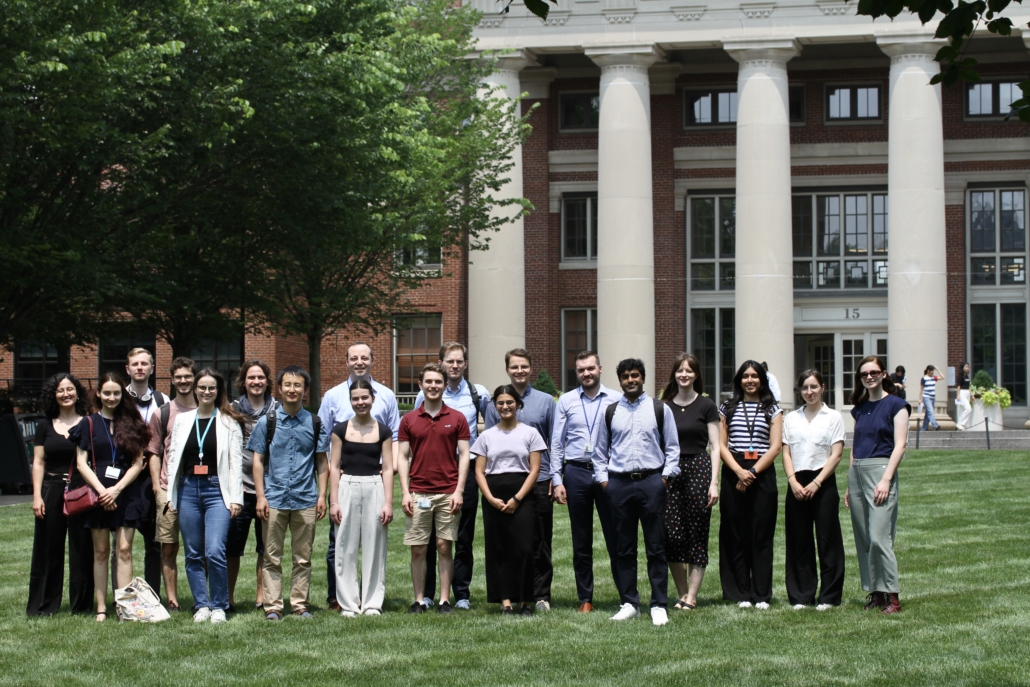
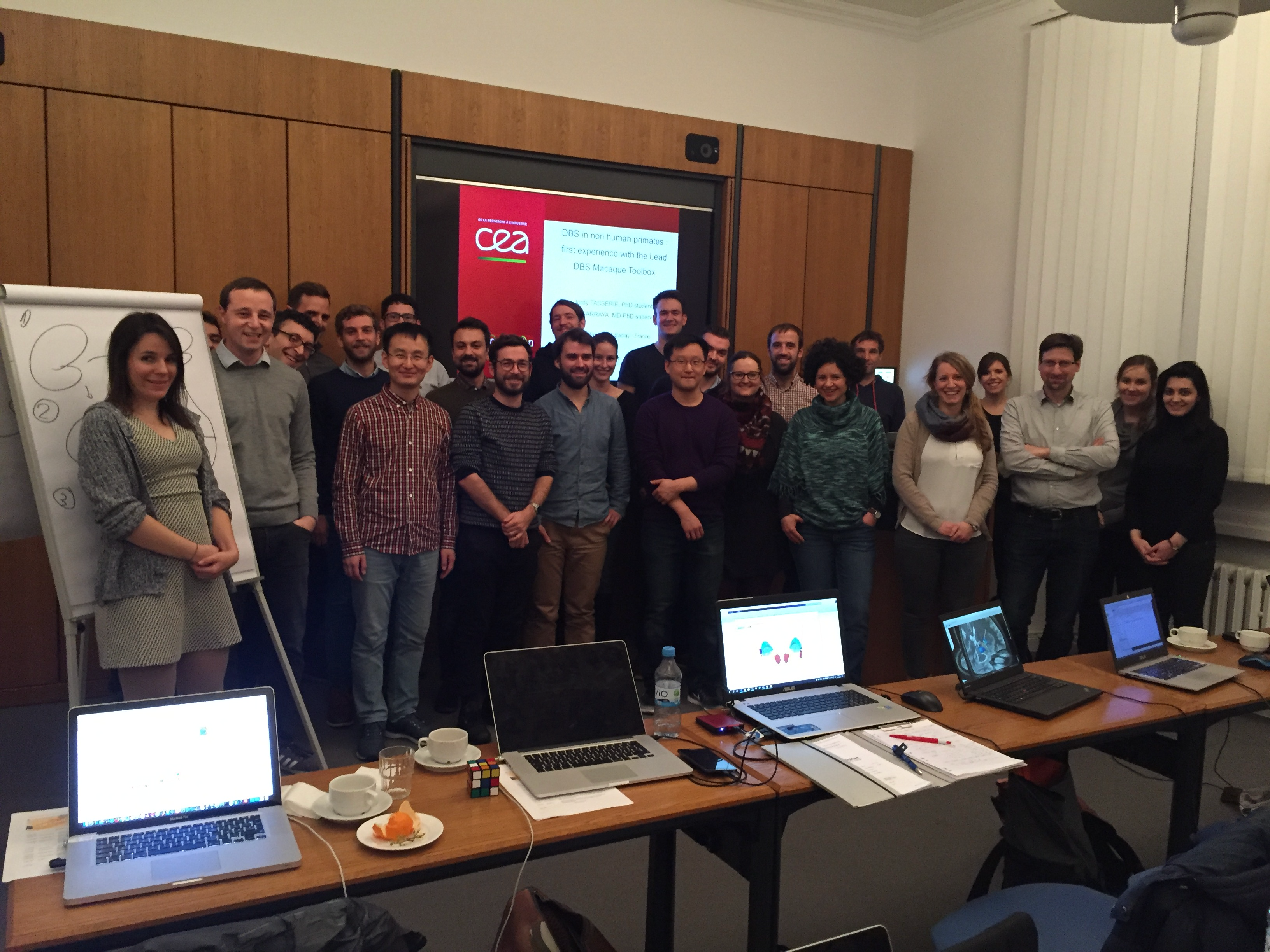
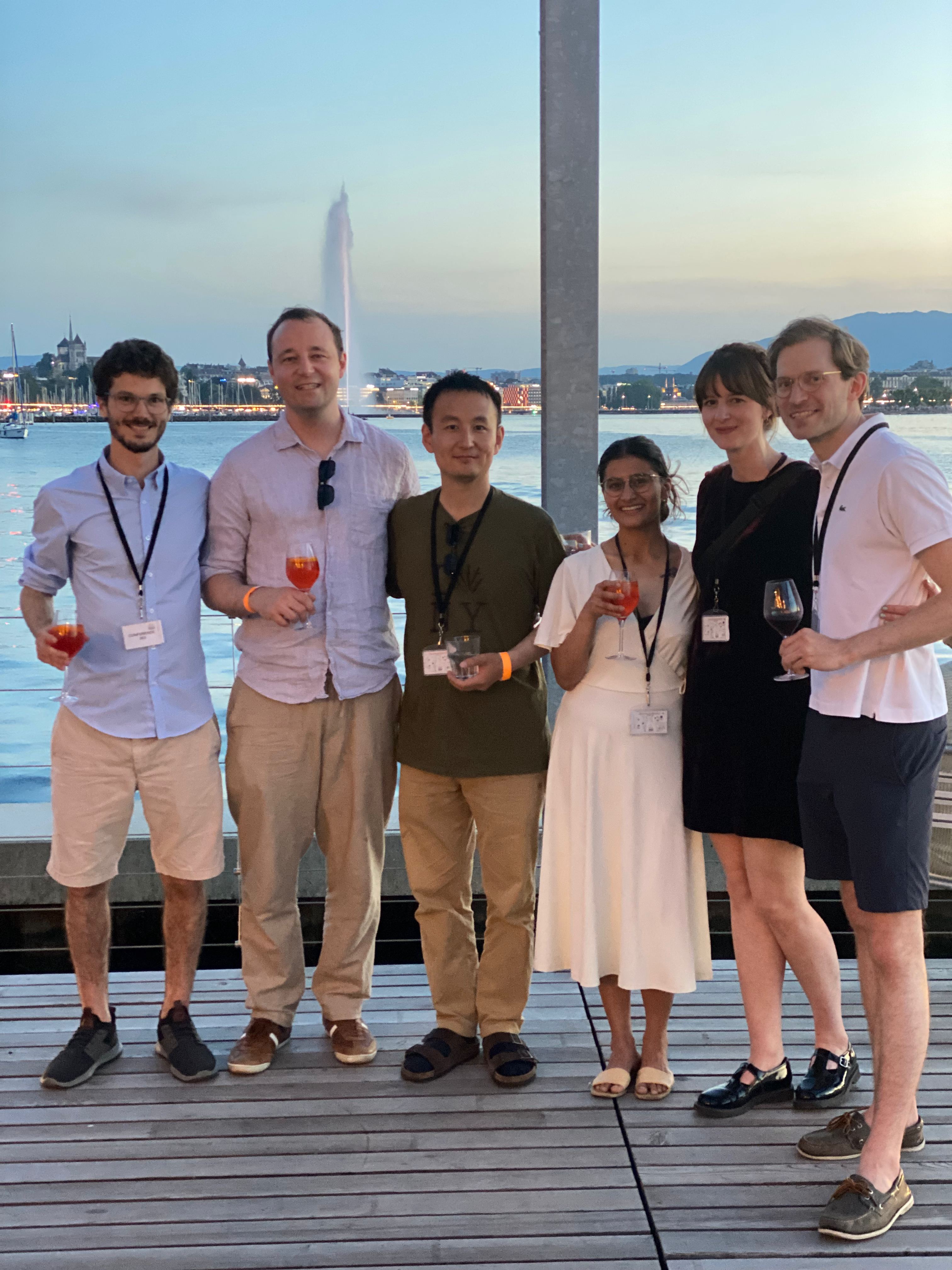
Andreas’ Network Stimulation Laboratory in part sits in Boston and in part in Berlin, but was able to jointly meet during the lab retreat in 2023. Photo: Chiara Maffei