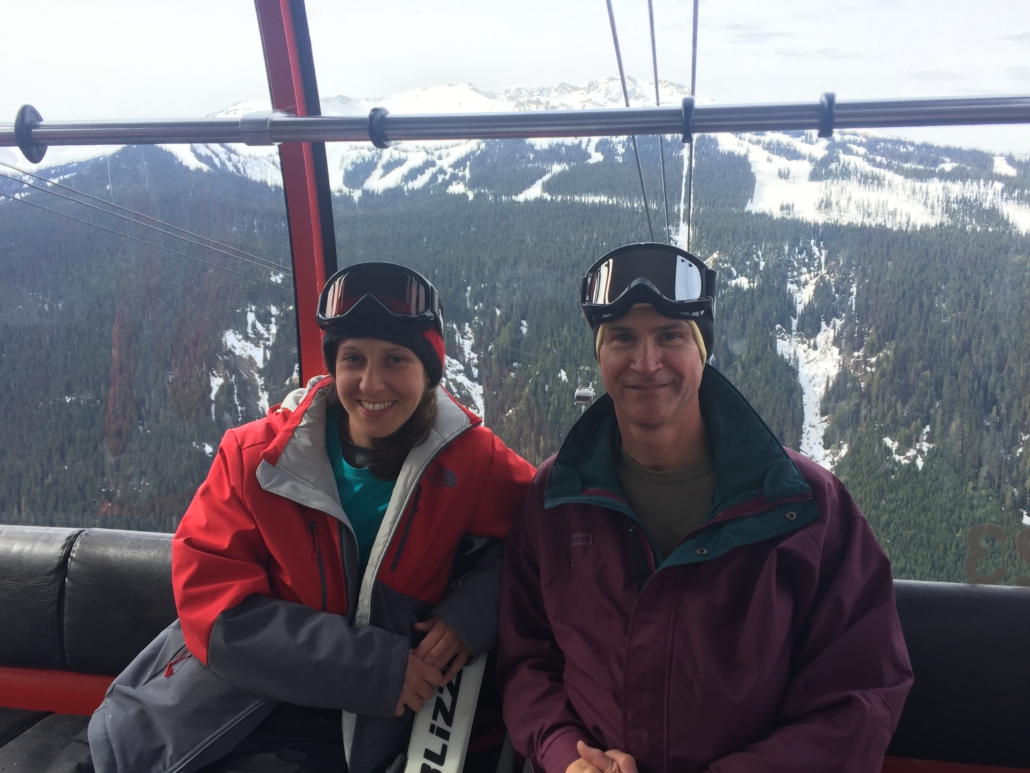
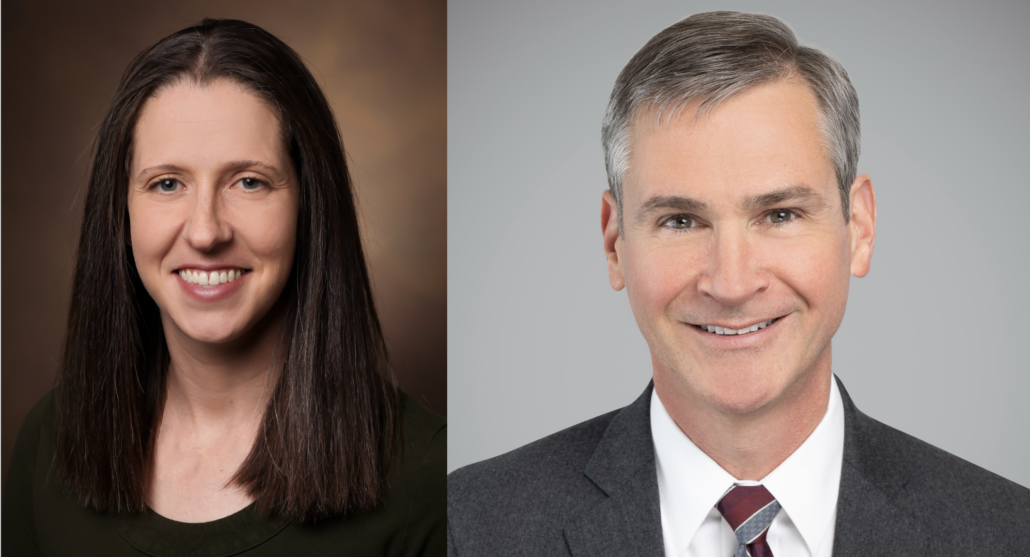
Mallory Hacker is an Assistant Professor for Neurology in the team of David Charles, who is Professor of Neurology, Vice-Chair for Business Development and Strategy, as well as the Medical Director for Telehealth at Vanderbilt University Medical Center in Nashville, Tennessee.
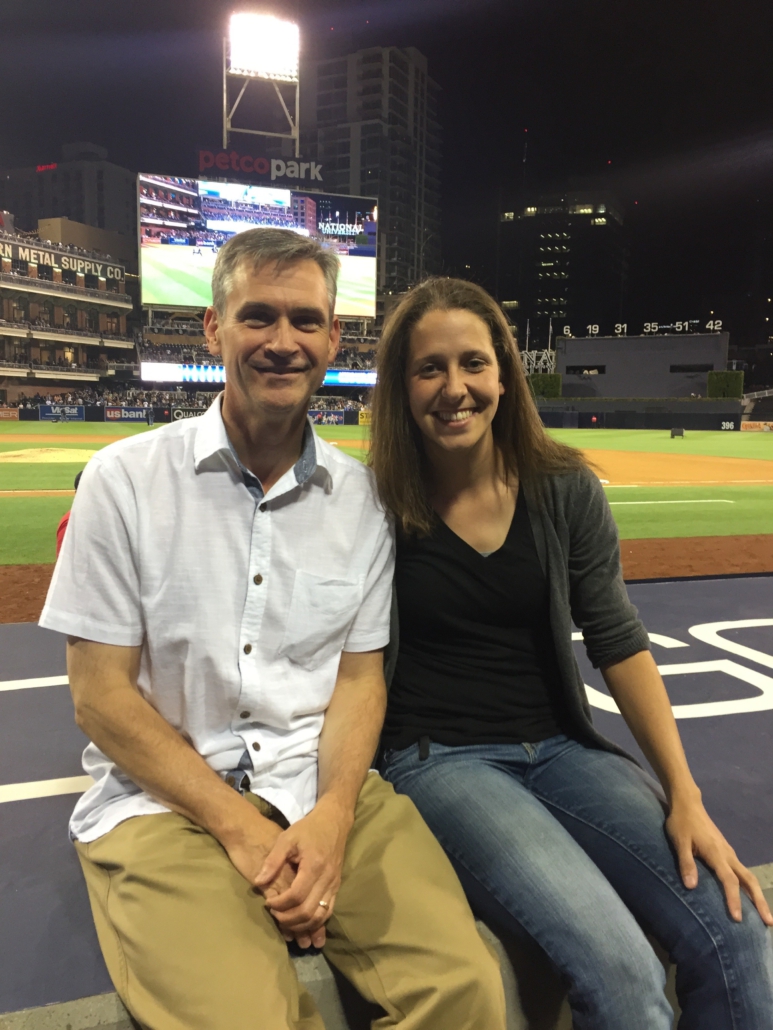
#57: Mallory Hacker & David Charles – Could DBS be slowing motor progression if applied very early?
Mallory Hacker is an Assistant Professor for Neurology in the team of David Charles, who is Professor of Neurology, Vice-Chair for Business Development and Strategy, as well as the Medical Director for Telehealth at Vanderbilt University Medical Center in Nashville, Tennessee.
In 2006, after a stay at Alim Louis Benabids team in Grenoble, France, David started to investigate the question of whether subthalamic DBS could lead to slowing of motor progression in patients with early stages of Parkinson’s Disease. In a one-of-a kind trial, he collected data on the first patients which were published in 2014.
In subsequent follow up trials, many of which were first-authored by Mallory Hacker, Class II evidence that supports this hypothesis could be established.
It was a great joy to host Mallory in my lab in Berlin in 2022 and we have looked at the effects of lead locations on patients enrolled in the pilot trial. This is what convinced me that there might be something: The few patients that did not progress at all in their motor symptoms after two years were all precisely stimulated at the optimal location within the STN, while the ones that did progress, were more off target. Indeed, these same optimally placed patients had lower stimulation amplitudes and received less medication – but still had a clearly better outcome.
Since the original trial, David and Mallory have been hard at work in trying to secure funding for a phase III pivotal trial, and we discuss how difficult this process has been, but also, that there is hope on the horizon, regarding the next steps!
Mallory Hacker & David Charles 00:00You know, as expected for early stage Parkinson's patients treated with medical medications, everybody worsened. And that hyperkinetic output is driving neurodegeneration. We've had FDA approval to lead a large-scale phase 3 trial, a pivotal clinical trial. But I do think your question about where would we be in 10 years, I think that's really interesting. You know, we're going to be like this. You could see it. Welcome to Stimulating Brains. Mallory Hacker is an assistant professor of neurology in the team of David Charles, who is professor of neurology, vice chair for business development and strategy, as well as the medical director for telehealth at Vanderbilt University Medical Center in Nashville, Tennessee. In 2006,
Andreas Horn 01:25After a stay with Alain-Louis Benhabit in Grenoble, France, David started to investigate the question of whether subthalamic DBS could lead to slowing of motor progression in patients with early stages of Parkinson's disease. In a one-of-a-kind trial, he collected data on the first patients, which were published in 2014. In subsequent follow-up trials, many of which were first authored by Mallory Hacker, class 2 evidence that supports this hypothesis could be established. It was a great joy to host Mallory in my lab in Berlin in 2022, 02:01and we have looked at the effects of lead locations on patients enrolled in this pilot trial. This is what convinced me that there might be something. The few patients that did not progress at all in their motor symptoms after two years were all precisely stimulated at the optimal location within the STN, while the ones that did progress were more off-target. Indeed, these same evidence, which I've shown you in this video, are not true. These same optimally placed patients had lower stimulation amplitudes and received less medications but still had a clearly better outcome. Since that original trial, David and Mallory have been hard at work in trying to secure funding for a phase 3 pivotal trial, and we discuss how difficult this process has been, but also that there is hope on the horizon regarding the next steps. The question is, is it possible to stop the spread of the disease? 03:00So, David and Mallory, I'm super honored to do this podcast with you about, I think, a very exciting topic. And we have been collaborating. I will have introduced you more formally by now, or we will have. So we can jump right in. And to break the ice, I always ask about hobbies and free time. So this is a question to each one of you. maybe Mallory can start what do you do when not involved in in research or medicine yeah yeah so first off thank you so much Andy for this invitation it's really an honor to be here so I actually have a two-part answer so I have the answer I would have given if asked the question five years ago my husband and I we like to stay active so we have recreational kayaks that we take around Nashville we have a couple of road bikes we enjoy hiking and travel
Mallory Hacker & David Charles and any opportunity to combine hiking biking with kayaking and travel is really made for some of the more memorable trips that we've had but more 04:03recently we've become parents we have two small boys at home a three-year-old and a one-year-old so we don't have the opportunity to do as many of those activities anymore so our free time now is really spent at playgrounds and pools and going to the zoo but fortunately our boys are getting a bit older we've we've already had a few kids that are going to the zoo and we've already had taken them on a few family bike rides and so we're looking forward to returning to our former hobbies with them as they get older sounds great David well my response is somewhat similar so our our boys are now grown and my wife and I are empty nesters but we have three grandchildren now and they live just about an hour from our home they previously were a long distance away from us but now they're nearby and so spending time with them and then the other kids are going to be in the zoo and they're going to be in the zoo but now they're nearby and so spending time with them and then the other 05:10loosely I don't know where we met but I think you once also took care of one of Mallory's kids for an afternoon or something right so that has happened that impressed me so it's a testament to Mallory that she would trust me with her
Andreas Horn son fantastic and then also a general starting question diving into careers
Mallory Hacker & David Charles who were key mentors in your careers and turning points and maybe we start with David here because I assume that David is one of the key mentors for Mallory but so so so how did you get where you are now David yeah so two names come to mind right away the first is a fellow named Riley Reese a plastic surgeon as an undergraduate at Vanderbilt I was an engineer and had a 06:01work-study job in his laboratory and as a sophomore one day he grabbed me out of the lab and said you know I want to be a plastic surgeon and I said I want to be a plastic surgeon and I said I want to go on rounds with me in the hospital and I had previously had no interest in medicine and and obviously here I am today as a physician so he his mentorship was transformative for me the second person is a long Louis benefit I had the opportunity to serve as a Fulbright senior scholar in Grenoble France with with Professor benefit and also Pierre Pollock and and it was there that Professor benefit said to me sort of an offhanded comment in the changing room in the OR and I said I'm going to be a plastic surgeon and I said I'm going to be a plastic surgeon and I said I'm going to be a plastic surgeon and I said I'm going to that that he felt that if we applied DBS in very early stage Parkinson's that it would slow the progression of the disease and being a typical neurologist I scoffed at that and but while they're studying there I had a chance to review their videos and I could kind of see what he was talking about in some of their patients and so that moment which is still very memorable to me today was 07:00obviously also transformative as I returned to the United States in around 1999 and I was able to get a job in the United States and I was able to get a job in the and began trying to answer the question, if we applied DBS in very early stage Parkinson's, would it slow the progression of the disease? So I am this project, like a project manager. The intellectual original idea is Professor Benabid. I did not know that. That's an interesting fact. And when, how long did you spend time in Grenoble, 1998? You said? Yeah.
Andreas Horn spent time in Grenoble? Yeah, it was in 1998 for six months. So the second half
Mallory Hacker & David Charles of 1998. We loved it so much we literally flew home to the US on the day our visas expired. If our flight had been delayed, we would have been in trouble. It is a great place with the mountains and everything and I'm sure that the signs
Andreas Horn at the time was great in Grenoble, of course. Really, really interesting. I
Mallory Hacker & David Charles 08:00remember he gave a talk much later just recently, maybe two years ago, about also some light therapy. Maybe we can talk about that later if it comes up.
Andreas Horn And then Mallory, for you, how did you end up at Vanderbilt doing what you do now? Yeah, so I've been fortunate to have
Mallory Hacker & David Charles key mentors at really great stages in my career.
Andreas Horn Yeah, so I've been fortunate to have key mentors at really great stages in my career.
Mallory Hacker & David Charles So the first one was how I got into research. So it was actually my undergraduate biochemistry professor, Manuel Santiago, who encouraged me to consider a career in medical research. I grew up in a in a very small town in West Tennessee that did not include biomedical researcher on career day. So it was really great, you know, at that pivotal time in college to have not only that exposure to research but also that encouragement that 09:00it might be a career that I could really thrive in. And then the second one more recently that you've already alluded to, Andy, is of course, David Charles. So he was my postdoc mentor. We started working together 11 years ago. Obviously, we still work very closely today. And he's, you know, throughout my this tenure has been, you know, just a wonderful mentor as I not only entered clinical research, but also the field of neuromodulation for the first time. Fantastic. And I think that's really, really important. I think that's really, really important.
Andreas Horn Fantastic. Okay, so David, in 2014, so 10 years ago, roughly, you published a first report on the DBS in early stage
Mallory Hacker & David Charles Parkinson's disease study. Can you tell us a bit how the study came about at the time and then briefly summarize how it was
Andreas Horn designed, what you found?
Mallory Hacker & David Charles Sure. So upon returning from Grenoble, I set the goal of trying to answer the question that then a bit have and that was, you know, if DBS was applied early,
Andreas Horn 10:00would it slow the progression of the disease? And so from from 2000 until about 2006, it took that long to get FDA approval, more than a year to get FDA approval and required a face to face meeting, and some interesting stories from that, and then to garner the funding to do the study and it was cobbled together from an industry sponsor and from my university and such. And so it, all of this seems to take much longer than it should.
Mallory Hacker & David Charles But we successfully completed the only FDA approved trial of DBS in very early stage Parkinson's disease. And when I say early stage, what I mean by that is of the 30 participants in the study, the average duration of illness was only about two years. And, and they couldn't have had, you know, dyskinesia or the motor fluctuations, they had to be in essence stable responders. The study had a unique design, you know, and if we don't have a biomarker for the study, we don't have a biomarker for the study. 11:00We're tracking the progression of Parkinson's disease. And so our trial in lieu of a biomarker used a washout. And that washout is seven days. So at the beginning, at baseline, patients washed out of medications. And a baseline assessment was made, videotaped so that the outcomes could be at least single blind, the video recordings scored. And then they proceeded into the study randomized to either receive deep brain stimulation and standard medical therapy or medical therapy alone. And they returned every six months for an inpatient stay to wash out of all therapy. So the DBS group, we turned off their devices and stopped their medicine. The medicine group, obviously, we stopped their medicine and they washed out. And so that was completed five times. So at baseline and then every six months for two years. And so that, in lieu of a biomarker, that week-long washout really approximates, you know, the virtually untreated. You'll always be able to find folks 12:06out there that, you know, point to publications that medications can last, you know, two weeks or longer. That's true. But the great majority of the medications have washed out. And we learned during the study that the group that had DBS took way less medicine. And so if there was a lingering medication effect, it would have favored the medicine arm and our findings would have been diluted. So the washout, you know, has proven to be a very robust method in lieu of a biomarker. The main findings of the first trial, you know, the goal was set out to discern if it was safe and tolerable. And so the study met its primary end points. And what we really demonstrated is, you know, there were so many critics at the time, you know, 95 out of 100 movement disorders experts at the time thought we were crazy for doing this study. And some thought it was unethical. 13:00But the ethicists at Vanderbilt thought it was ethical and convinced the FDA of the same. And so we showed that it was, you know, met the primary end point that preliminary safety was there. Subjects tolerated the study procedures. But what we showed more importantly, in my mind, is that we demonstrated that, yes, you can recruit people with very early, stage Parkinson's to enroll in a study where they may have, except significant risk, you know, it's an operative procedure to implant DBS, it carries significant risk, albeit a small chance that something would go wrong, but something could go wrong. We demonstrated not only could we recruit people to enroll in the study, but that they would stay in the study. So over a five-year follow-up period, we only had one participant drop out of the study. That's remarkable. And I really attribute that to the informed consent process that was used. So our 14:01biomedical ethicist, Stuart Fender, developed a three-part informed consent process that was based on a separate project he had led here at Vanderbilt in maternal fetal medicine, where they were operating on fetuses in utero to close spinal cord defects. And he modeled our informed consent process. And he said, well, we're going to do a study that's going to sort of sort of sort of sort of sort of sort of forth with our primary contact at the FDA. And they had, understandably, serious concerns about 15:02this, operating on people with very early stage Parkinson's. We had lots of critics in the field. And so finally, we requested an in-person visit. And we took our whole team up, the surgeon, myself, our biomedical ethicist, other neurologists at Vanderbilt. And the FDA brought their team to the table. And it was the biomedical ethicist that carried the day. The FDA was arguing,
Andreas Horn why don't you study this in mid-stage patients? And the biomedical ethicist shared that if you
Mallory Hacker & David Charles wait until someone's mid-stage, the dopaminergic neurons you're trying to save are largely gone. If a person first presents with Parkinson's disease to their clinician, and let's say it's estimated that 50 to 70% of the patients are going to be diagnosed with Parkinson's, of dopaminergic neurons in the substantia nigra have already degenerated, then operating on people in mid-stage could have a therapeutic effect, symptomatic. But the cells you're trying to save 16:02are no longer there. And so here's what the ethicist argued. And it stopped the room. And it changed the mind of the FDA. And they approved the study. Here's what the ethicist argued. The ethicist argued that if you force the Vanderbilt team to study this in mid-stage, then you're exposing all of the patients who are in the mid-stage. And so here's what the ethicist argued. If you expose those mid-stage patients to the risk of surgery, and you will not answer the question, then you'll have to do the study in the early stage. So at the end of the day, you're forcing the Vanderbilt team to expose more people than is necessary to the risk of surgery. And that argument, and that face-to-face meeting, we received approval soon after.
Andreas Horn Sounds great. Yeah, that's very, very, very interesting.
Mallory Hacker & David Charles And I guess, you know, if it were true, if we knew, then it would even be potentially unethical to not offer the therapy, of course. So there's certainly the flip argument to be made there, too. 17:05Great. So maybe just for the listeners, to clarify one more time, you said it already, but this was very early stage. Because there's the early stage trial that's been published in the New England Journal, and that's very different from your own research, and that's very different from your own research.
Andreas Horn Maybe you can briefly differentiate one more time between the two. Yeah, it is confusing, because that trial's named early STEM, right? And we're studying,
Mallory Hacker & David Charles yes, early stage Parkinson's disease. So the early STEM trial, you know, was, in my mind, an outstanding trial. We were not part of that at Vanderbilt, as it was carried out in Europe. But it's an outstanding trial. We can talk about that later. But, you know, our trial was conducted before the early STEM trial. And so our inclusion criteria were people, and we had to have had, been on Parkinson's medications longer than six months, but less than four years. And they couldn't have levodopa-associated dyskinesia. They had to be stable responders. 18:01And as I said before, after the 30 enrolled, on average, the cohort had had Parkinson's about two years. The early STEM study, you know, what they wanted to do was study people earlier. And at that time, you know, FDA approval in European 2 was for advanced stage Parkinson's.
Andreas Horn Yeah.
Mallory Hacker & David Charles So the early STEM trial was for advanced stage Parkinson's. So the early STEM cohort, they had to have had the illness longer than four years, and they had to have the presence of levodopa-associated dyskinesia. So by definition, that cohort is mid-stage patients. And our cohort is very early stage patients. The findings from early STEM, though, are so compelling. I mean, so in my mind, what an outstanding study.
Andreas Horn Fantastic. And so we should briefly mention that in your trial, two of the subjects
Mallory Hacker & David Charles suffered from early-stage Parkinson's. And they were both in the early-stage. And since you were were were were were were were were briefly talk to that. Yes. We had one participant who postoperatively had weakness in a limb, 19:02and postoperative CT showed a small collection of blood at the tip of the electrode. That weakness a little bit, I think he had a little bit of facial droop and drift in one arm. That resolved over days and weeks, and so didn't have sequelae after. The other one, we had to report as an adverse event. So this gentleman, it's actually a good story, this gentleman responded so well to DBS. And his favorite hobby was working on an old car that he was restoring. He and his son or grandson, I believe, were in the garage working on this car. And somehow or another, the garage door was locked. And so he had to report as an adverse event. And so he had to report as an adverse event. He was lowered onto his head, hit him in the head, and right across where the lead on one side was, and it caused a, you know, a laceration in the scalp. And he ultimately had an infection and required explant of his therapy on that side. And then once, you know, we cleared it all up, 20:04then it was it was re-implanted. You know, part of me wants to take credit for the fact that he was doing so well, he was out there working on his car in his garage, But anyway, that one, you know, that counts against us, you know, I guess, as an adverse event. Certainly, infection of the device is something that's known to be possible to occur, and it did in one of our participants.
Andreas Horn Got it. And how was the study perceived by the field? You mentioned there were a lot of critics before when it came out. What did people think?
Mallory Hacker & David Charles Andy, it's been quite a journey. At the beginning, the criticism, as I said before, it seemed like 95 out of 100 people in the Parkinson's community were against us. And the criticism at times was pretty harsh. In fact, at times it even turned personal. Now, you know, the study published in 2014 really began to turn the tide. And so now, today, as 95 out of 100, you know, feel that this study has to be done. 21:05More than 30 centers across the U.S. have completed. They've completed site qualification questionnaires and expressed their interest in being in a large-scale Phase III study. There are still people who, good minds, you know, can disagree. There are still outstanding people in the field that don't believe that DBS in early stage should be studied. And they're certainly entitled to their opinion. But the tide has certainly turned with the large majority of the field now squarely in the camp that this question needs to be answered. Great. I very much agree. And we'll get into that a bit more as well later. So, Mallory, you must have joined the team a bit later. Although I think you mentioned it was around the same time maybe that the paper came out.
Andreas Horn But how did you come across the work and how, you know, did you become excited about it?
Mallory Hacker & David Charles 22:02Yeah. So it was really serendipity that kind of brought me into this project. I was finishing up my Ph.D. work at Vanderbilt. I was in a basic science laboratory studying neurodegeneration that arose from coenzyme Q deficiency. But I was doing it in C. elegans. And kind of at the end of my graduate school, you know, time, I decided that I wanted to transition into clinical research for a career. You know, that's obviously quite a bit of a leap from C. elegans neuroscience into clinical trials. And so I was really looking for opportunities at Vanderbilt to get exposure.
Andreas Horn Okay.
Mallory Hacker & David Charles And so I was really looking for opportunities at Vanderbilt to get exposure. And so I was really looking for opportunities at Vanderbilt to get exposure. And so I just did a very simple Internet search for Vanderbilt clinical research internship. And out of that search popped up this neurologist at Vanderbilt, David Charles, who at the time was leading an internship program for clinical research for undergraduates. So I just sent him a quick email, you know, briefly explaining kind of my situation and what I was looking for and asked him if he knew of anyone that I could reach out to that might have an opportunity for me to learn a little bit about clinical research. 23:10And out of that search popped up this neurologist at Vanderbilt clinical research internship. From that email, you know, he invited me to come meet with him. And that's where I first learned about what he was studying, what his clinical practice was and his research interests. And it was in that initial meeting where I first learned what DBS even was. Right. I just had not come across my path personally or academically. And, you know, just thinking back, you know, we can all remember the first time we saw videos. Of patients with Parkinson's before and after DBS, you know, it's very striking. So it was clear in that first meeting with David that he was working with a very powerful therapy and he was one of the pioneers at Vanderbilt who brought DBS forward. So he then went on to explain, like I said, you just mentioned the timing. So they had just completed the two year trial when David and I met. 24:02And he explained that they just, you know, led the only FDA approved study testing DBS in patients with very early stage Parkinson's. And he explained that they just, you know, led the only FDA approved study testing DBS in patients with very early stage Parkinson's. With the overarching goal to see if it could slow progression. You know, they were at this really unique transition point where they were looking ahead to lead the next study. So lead a multicenter, double blind, pivotal clinical trial. And that was really kind of where the team was at the time. And David mentioned that he actually had a position open, so a postdoctoral position open on his team. So, you know, it sounded like a really great project that would not only give me the exposure to clinical research, you know, on a really, you know, a practical level. A project ready to launch that I was looking for.
Andreas Horn But scientifically, you know, for this basic scientist with an interest in neurodegeneration, it was a super interesting project.
Mallory Hacker & David Charles So, you know, I took the leap and joined David's group as a postdoc and we've been working together ever since. Fantastic. And the first key paper you published on the trial was, I think, the 2018 neurology article, followed then two years later by the 2020 article in the same journal. 25:06And you were first author in both. And David was last.
Andreas Horn Yeah.
Mallory Hacker & David Charles Last author in both.
Andreas Horn Can you summarize these two papers for us?
Mallory Hacker & David Charles Sure. Yeah. I mean, those two papers were really exciting for us because they started to provide, you know, hints that there might be some disease modifying potential here. For the 2018 neurology paper, it really, you know, arose from me asking the question, you know, thinking back to that one week washout that David mentioned, you know, the intention to treat the patient.
Andreas Horn And then the other part of the analysis looked at the end of that washout, the unified Parkinson's disease rating scale part three, which is a summation of many different motor symptoms of Parkinson's disease. And so I just had the question of whether, you know, were we missing some effective DBS by grouping all of these motor symptoms together? So were there individual motor features for the early stage patient whose progression might be more affected by DBS than others?
Mallory Hacker & David Charles 26:07And so I just broke down all the ideas. I just went through the items of the PDRS, looking at this progression score, and this is where rest tremor popped out.
Andreas Horn So for the control patients just treated with standard medical therapy, we saw, you know, the steady progression from baseline and every six months over two years. And then when we looked at the DBS patients, you know, it was just a flat, flat line, right?
Mallory Hacker & David Charles So there was essentially no progression across the group over two years. And this led to a very, you know, kind of a dramatic difference in slopes that was, you know, really quite exciting to see for the first time. We then took that. That result and brought it to Malin DeLong, who, as you all know, unfortunately recently passed away. But he was a luminary in the field of Parkinson's disease and DBS and was a supporter of David's, you know, this project for many years. And he was the one who recommended that we not only look at the difference in slopes as we had already done, but also to see if there was any effect of early DBS on the spread of tremor. 27:06So as mentioned up until then, we used this. Items for for tremor, which is basically a measure of severity. So it sums all the limbs and the head and gives a measure of severity of tremor. But Dr. DeLong thought it was also very important to see if DBS was slowing the spread of one of these cardinal features, Parkinson's. And so what we mean by spread is essentially, you know, Parkinson's symptoms can arise in a single limb. And then as the disease progresses, it can more and more limbs can be affected by these motor symptoms. And so sure enough, when we look to see. How tremors spread might have differed between the randomization groups. You know, it emerged in a new limb in almost every single control patient, but less than half of DBS patients had new tremor emerge over the course of the trial. So the difference in slopes that we saw and the difference in spread were very pronounced and very exciting for that paper. 28:02You know, one thing we also included there, which I think is really important, is results of a patient satisfaction survey that David and colleagues had done right as the trial concluded.
Andreas Horn So every person in the trial was just asked very basic open-ended questions about what it was like to be a part of the study. And one of the questions there was asked the DBS patients, you know, what's been the greatest benefit of undergoing DBS surgery?
Mallory Hacker & David Charles And again, it was an open-ended response. And we saw looking back after we discovered, you know, this potential effect on restroom or progression that half of the people who were randomized to DBS said that tremor benefit was the greatest part about undergoing DBS surgery. So it was really nice to see the convergence of this blinded one-week washout score pointing to rest tremor. And then the patients themselves were the ones that told us that tremor was the most impactful for them in the early stages of the disease. Super cool.
Andreas Horn Would it be okay if I jump in and just add something to this?
Mallory Hacker & David Charles 29:02So this finding is so exciting to me. I can remember when... When Mallory shared it with me. Because here's what comes to mind. You know, in people with early-stage Parkinson's disease, tremor is not disabling. It is distressing. And when you read about the impact of tremor in people with Parkinson's disease, particularly in early stage, it's remarkable what the patients tell us about how incredibly stressful it is. You know, the attempt to hide the tremor, to not let others see it, to do anything and everything. Because tremor is so visible in it. And people feel that maybe it makes them appear frail or that they're failing. And then, you know, Malin's idea to look at spread was just genius. And when I reflect on it, it's so true for the patient. Because the patient, let's say they develop tremor in the left hand.
Andreas Horn And then it spreads to either the left leg or to the right hand. 30:03And spread in medicine is bad in every case. Right?
Mallory Hacker & David Charles If you think about cancer, the idea of spread.
Andreas Horn Right?
Mallory Hacker & David Charles And so what patients, the distress that people feel with tremor in early stage, and then the added stress of when it begins to spread, it tells them, it shows them, and it shows their family and their colleagues that their disease is progressing. You know, relentless progression. And I have learned from listening to patients, and we've published on this topic, about how incredibly distressing. Tremor is in early stage Parkinson's. I'm sure. I want to pause and step back one more time just for the listeners. This is a podcast. If people are new to the topic, just to reiterate, the study design was, you know, you always took the scores at baseline before surgery. And then you took them after a week of, like, stopping any medication. 31:02That's what we call the washout phase. So after that seven days washout. You took them. You took the score. So we can compare these two time points before surgery and six months after, and then 12 months after, and assume that, you know, in that week there was no medication. So the patient was back to their normal, you know, normal state as they would have been without any medication. Of course, there are caveats. You went into that. Just to mention that one more time, because I think that's so critical about this trial, that no other trial did this that way.
Andreas Horn Right?
Mallory Hacker & David Charles That's why we also, I think, can't use any other DBF. DBS experience to say anything about the topic because we we never have that washout phase. Right. So I think that's very, very important just to reiterate. And so in that 2018 paper, it was probably the first real hint that there might be something to it. And it was mainly focused on tremor. And I can only imagine how what a eureka moment that that must have been for you for like after this long time of since, you know, 20 2006, you said you started. 32:07So 12 years of work and then, you know, there is there's a there's a glimmer of of, you know, this this might be real. And I mean, tremor is is one of the first symptoms. Right.
Andreas Horn So it makes sense that tremor is the most salient feature here as well. Yeah.
Mallory Hacker & David Charles I did also ask you about the 2020 trial in the same question. Maybe we can briefly cover that, too, because that was the five year follow up. Sure.
Andreas Horn Yeah.
Mallory Hacker & David Charles I mean, I think that's also a really important paper. Because, you know, at the time it was the longest published follow up from a randomized clinical trial of DBS at any stage in Parkinson's. Now, while it was a small pilot study, 30 people joined, as David has already mentioned, you know, it had exceptional retention. So we had a really robust data set to look at with 29 out of 30 people completing both the two year trial and five year follow up data. And so what we saw there was really long term benefits with early DBS in reducing the amount of medications required, 33:07both in the levodopa equivalent daily dose, so the amount of medications which we know ST and DBS can reduce. We've seen that in advanced Parkinson's, but also a reduced need for polypharmacy. And so what we mean by that is requiring more than one class or type of Parkinson's medication to manage symptoms. And that polypharmacy result at five years followed up on what we've seen in an analysis that we did at two years where we saw this difference. So that kind of brought that finding out through five years. And then, obviously, based on the 2018 paper, we had a paper we had an interest in looking for, to see what happened long term in the context of Restrimmer. And so we also saw a long term benefit on the symptomatic control of Restrimmer were the early DBS group. And another key finding of that five year paper that I think is important to talk about, is it was really the first time that we started to, that we had a good chance to see how early DBS might influence dyskinesia. 34:06You know, David already mentioned that the pilot study by design excluded people who had dyskinesia. We wanted to study the early stage patient. And, you know, the trial was a two-year study to the primary endpoint. And we already mentioned that they were very early in their course of Parkinson's, just average of two years disease duration. So at the, you know, kind of primary analysis, two years after the trial started, there wasn't really enough emergence of dyskinesia across the cohort to see if there was any difference between the groups. But now that we had a five-year data set, we could start to see, you know, this difference emerge. We saw that control patients were two to three times more likely to have a greater presence and severity of dyskinesia than the early DBS subjects. You know, this missed a significance threshold just barely. But when you consider this result alongside what I mentioned, that we saw this, you know, 35:00notably reduced. And I think that's a really interesting signal to focus on in the next study to see if we can, you know, further elucidate whether applying DBS before dyskinesia is present.
Andreas Horn Does it in fact delay or even prevent it in Parkinson's disease?
Mallory Hacker & David Charles Super cool. David, when you visited us at the Brigham, I think you both together visited us in 2013. I think you both visited us in 2013. And I think you both visited us in 2013. So, thank you. Thank you. you said back then was that for DBS to have this disease modifying effect it would need to be applied early which is you know you alluded to this before and as early as possible so potentially if we had a physio marker even before symptom onset long term you know could be a bit discussed
Andreas Horn do you can you elaborate a bit more on why that is for us like why do we have to go early
Mallory Hacker & David Charles um yeah I guess first I'd like to just add on to what Dr. Hacker said and to point out that the 36:062018 paper and the 2020 paper both had classification of evidence statements that were attached by the editors and they're incredibly powerful you know in the in the five-year study the class two evidence was that DBS implanted an early stage Parkinson's disease decreases the risk of disease progression that is that is a very powerful statement it's important also to note that our team um you know uh does not advocate for that result to change the standard of care people should not be implanting patients with early stage Parkinson's based on that publication but that publication does in our opinion you know demand that we conduct the
Andreas Horn phase three and we can we can get into that more later why would that phase three have to be
Mallory Hacker & David Charles conducted in people as early as possible I mean it ! it's just it's you know I alluded to it earlier it's based on what we know about patients presenting 37:04with Parkinson's disease and it's and it's felt that that when a person presents to their neurologist for the first time maybe a you know a tremor has emerged a spouse is encouraging the person to come to that visit we know that they've already lost half or more of dopaminergic neurons
Andreas Horn upon diagnosis so that's why we feel that that for the next trial that we're going to have to do is
Mallory Hacker & David Charles to try to identify the phase three as certainly as soon as using MDS criteria as soon as we're as confident as possible that the person has in fact typical idiopathic Parkinson's disease in very early stage that's the population that we feel is appropriate for the phase three study waiting until later just means you have further degeneration of the neurons in fact that you're trying to protect so therein lies my rationale for for us going you know as early as possible. I just interviewed Jens Volkmann on the on the podcast who has a I think very interesting you 38:05know results in the animal model that very much support your hypothesis part of it is published part he talked about in the podcast too and he he said you know mechanism of action potentially one one one idea could be to just give these guys a break that there was his words these dopaminergic neurons to give them a break and because we we kind of know these neurons are very complex they have huge branches going through sometimes big portions of the entire striatum for a single neuron I think most complex neurons and brain if I if I remember correctly and they if they become under stress and they they might die right first and so do you think that is one potential mechanism to essentially give them a break by applying DBS and relieving the the ones that are still there to perform or does that make sense but yes potentially so I mean I I haven't yet heard
Andreas Horn 39:06um you know the the podcast or what was said but I but but you know that the idea that um
Mallory Hacker & David Charles that the that the subthalamic nucleus in the condition of Parkinson's disease has a hyperkinetic output to the substantia nigra and if that hyperkinetic output is is you know driving neurodegeneration then could DBS you know modulating the subthalamic nucleus as as maybe he said give those neurons a rest um I think that that um that's a very interesting hypothesis you
Andreas Horn know and and um you know the other one that's interesting and we can talk about that later
Mallory Hacker & David Charles as well as Carol sortwell's work where where she's shown that subthalamic nucleus stimulation promotes the upregulation of brain-derived neurotrophic growth factor and substantia nigra 40:05and also in in key regions of the cortex so but yeah and here's what's so exciting to me just let's step back and take the big picture back in 2006 when and from 2000 to 2006 we were trying to garner the funding to do the original study you know invariably the question would come back to
Andreas Horn mechanism. Why would it slow
Mallory Hacker & David Charles progression yeah you know and and my answer to that is I have no idea and furthermore no one knows
Andreas Horn why DBS is symptomatically improving patients but it clearly does you know you can you can argue
Mallory Hacker & David Charles about you know what is it doing to provide the symptomatic benefit and and still do we clearly understand that today but we obviously see our patients you know get so much better so very interesting so um yeah I I think there's I totally agree you know we we apply DBS without clearly knowing the mechanism so um and I think 41:05um the one key thing summarizing also from what we've discussed so far is I very much agree you know from the evidence we have right now based on your trial at least we should study it more right that's a no-brainer to me right it's certainly you know if it will be or not probably we can't say yet or you know it's a single study it should be replicated but but I think um that is a that should be a no-brainer um I think that's a no-brainer with you know us doing Alzheimer's disease DBS or depression and so on where also we don't have you know clear evidence of of things well here's our I mean here's our thought on what you just said um you know and and while the naysayers are now few out there they're still there and and as I said earlier good minds can disagree um our team
Andreas Horn feels ethically bound to do the study and here's why we filled the literature with class two evidence
Mallory Hacker & David Charles that DBS applied in early stage Parkinson's may slow the progression decrease the risk of disease 42:03progression slow the progression of tremor um and so for us to stop now seems to me as an investigator completely inappropriate right one way or the other we have to do we have to the FDA has approved us to do the trial we have to complete a phase three pivotal trial to answer
Andreas Horn the question fantastic and we go more into you know future plans um but maybe as a as a
Mallory Hacker & David Charles brief uh small detour um Mike Oaken and Kelly Foote who we heard on episode 25 organized the DBS
Andreas Horn think tank in Gainesville each year and as you know it's a fantastic meeting in which handful
Mallory Hacker & David Charles of key experts gather and discuss all things DBS and in 2023 um across the room from me said Hage Bergman who was also on the show episode 17 who started his um lecture with a poll um that as I believe may become historical um and he asked imagine you have a 55 year old patient with REM sleep 43:04behavior disorder would you consider the patient to receive SDN DBS surgery and um you know again 55 year old REM sleep disorder no Parkinson's and then nobody in the room of experts including myself raised their hands um and I I of course you know hug I knew nobody would um this was more rhetorical um but I somehow suspect that if he would repeat this Paul 10 years from now maybe it would be different um and it's it's important to unpack this a little bit for the listener so REM sleep disorder is a condition that is characterized by recurrent dream enactment with excessive motor activity about 97 of people with that condition will go on to have Parkinson's disease or a different um syn um which are typically or a different synucleopathy, which are typically worse options, 44:00and within 14 years of diagnosis. So essentially, if you have RBD, you will get Parkinson's or something worse, you know, a synucleopathy, very likely. And among these three, if we had to pick, Parkinson's would be the one. So with this high rate of conversion, that's what Hager was driving. If we kind of knew that, and there could be a disease-modifying effect of STN-DBS
Andreas Horn on that pathology, you know, wouldn't it potentially make sense to do this?
Mallory Hacker & David Charles And I was just wondering how the two of you would have voted. You probably also wouldn't have raised your hands,
Andreas Horn but do you have thoughts on this at the moment?
Mallory Hacker & David Charles Yes, I can jump in here.
Andreas Horn Yeah, I definitely would not have raised my hand.
Mallory Hacker & David Charles As David's already mentioned, you know, we're the first to assert that there's definitely not enough, you know, evidence to even implant a diagnosed patient very early in the course of Parkinson's. 45:03You know, we think the pilot, as you've mentioned, you know, has generated more than enough data to continue studying this. So starting from that position, you know, I would not have been supporting this for an RBD patient now. But I do think your question about where would we be in 10 years, I think that's really interesting. You know, hopefully by then, we've conducted, you know, the next early DBS trial, a multicenter double-blind study to provide the evidence that the field that we all need to answer this question of whether it is disease modifying. And if so, then, you know, hopefully there are advances in the ability to diagnose the, you know, kind of RBD prodromal Parkinson's. And there's advances there so that we have more confidence that they're going to develop Parkinson's. You know, then I think, you know, extending our hypothesis, you know, even pre-diagnosis would be, you know, reasonable. But I guess I would also hold out hope that by then we found a more eloquent way to deliver this effect that doesn't require invasive brain surgery. 46:06Agreed. And I would add to that, you know, you know, the point that 97% of people with, you know, REM behavior disorder go on to develop Parkinson's or another synucleinopathy. So Lewy body dementia, and multiple system atrophy are also possible outcomes. And as best we understand, DBS does not help those conditions.
Andreas Horn Yeah.
Mallory Hacker & David Charles So we would be subjecting that portion of patients to the unnecessary risk of DBS. So I couldn't, I wouldn't have raised my hand during the poll and still wouldn't today. But to Mallory's point, you know, if we had a biomarker that, you know, is sensitive and specific for Parkinson's disease, you know, uniquely for idiopathic, Parkinson's disease, then that opens up, you know, a new thought in how valuable that will be, obviously to the field of Parkinson's and all therapies that are being explored, 47:02biologics and gene therapy, cell therapy, you know, for disease modification. But, you know, without that, and, and I also agree, you know, that we wouldn't offer it to them now, just like we don't offer it to an early stage Parkinson's patient. We just, the class two evidence is, it's compelling,
Andreas Horn but it just isn't enough. You know? Yeah,
Mallory Hacker & David Charles no, no, I agree. And I think it really, it was a rhetorical question just for the record, Haggai wouldn't offer it to his patients either. But I think he came up with the poll since he's studying the effects of SDN DBS on sleep since a few years. And I think the idea there is that if it helps, helps sleep, this could potentially also lead to neuroprotection. I think there are thoughts about this glymphatic system. You know, clearing out waste products.
Andreas Horn Do you have thoughts on that kind of mechanism, potential mechanism? Yeah. So, 48:00I mean,
Mallory Hacker & David Charles I think it's very interesting,
Andreas Horn right?
Mallory Hacker & David Charles There's obviously a lot of data supporting the importance of sleep and good sleep quality, not just for overall health, but specifically in the brain. So, you know, asking the question of is, is SDN DBS improving sleep quality, which could in turn be enhancing the lymphatic system so that it can, in fact,
Andreas Horn as you said, is it clearing out some of this neurotoxic waste? And is that what's providing this beneficial effect?
Mallory Hacker & David Charles You know, I think at this point it's definitely plausible. Like there's, I think that's a really reasonable hypothesis. And it actually reminds me of another idea that we've heard many times over the years when thinking about the results that we've seen, which is that, you know, perhaps for the people that had slowed progression, maybe they just had, you know, really remarkable motor benefit from DBS, such that they were able to lead this, active lifestyle. In other words, they're able to be just be more active and exercise more. You know, many people hypothesize that exercise itself could be disease modifying for Parkinson's.
Andreas Horn 49:01And we know that exercise has numerous benefits, right?
Mallory Hacker & David Charles It also can increase lymphatic function. It also can increase BDNF, which David's already alluded to. So in the pilot, you know, we don't have any data on sleep or exercise, but I think, you know, both of these ideas on potential like downstream mechanisms of how this could be working will be important to track. So let's, let's track sleep. Let's look at exercise in the next study to see if we can explore, you know, potentially these, these, um, these mechanisms. Love it. And then also in the room at the DBS think tank was Alfonso Fasano, who was on an episode 51. And I think he is a fervent critic of the idea that DBS might be neuroprotective. And he argued that as a clinician, he has seen individual patients that left the hospital in a wheelchair after they had gotten a stroke following DBS. So he would, um, speak against it. Um,
Andreas Horn do you have thoughts on that?
Mallory Hacker & David Charles Like risk ratio benefit or also just the, I think you have been in contact with Alfonso about it too. 50:00Oh yes. And, and, and Tony line to a giant in the field has, has expressed similar concerns. I, I really think that, um, that there are two separate questions, right. Um, you know, and so you can, you can look at the publications and the most recent, you know, connectivity publication from Dr. Hacker and the 2018 and the, the 2020 and, and, and make your own decision about whether that's enough evidence for, you know, a phase three study, the question of, you know, the, the effects are the risk of, of DBS,
Andreas Horn right?
Mallory Hacker & David Charles This is a therapy that was approved in 1997 in the United States. And so like Dr. Fasano, I, I have an experience of a patient having a stroke. So in 1996, um, I was the Vanderbilt PI for the large scale multicenter trial that led to the first FDA approval of DBS. And we, um, had a patient, 51:00we had enrolled patients in that study. One of them suffered a venous infarct perioperatively. Um, and, and, and it was apparent that he was not gonna be able to survive the, the stroke that he had. And I sat with his wife and family brought in pictures of their early days together. And, and I attended, uh, his funeral and had two emotions as, as I approached the graveside service. One was the duty that I had to be there. And the other was the anxiety and fear of how it would be received by the family. I shared that story just so others would know that the risk of implanting DBS is not lost on me. Um, I have a distinct understanding of the risk of the surgery. Um, but that really has nothing to do with answering the question of if you apply DBS in early stage,
Andreas Horn could it be neuroprotective?
Mallory Hacker & David Charles 52:00That's the scientific question. Now here's the overarching point that has to be discussed. The FDA has approved this large scale phase three study. And, and as I said earlier, you know, the tides turned 95 out of a hundred, you know, movement disorders, uh, community, consumer participants not only the risk of joining the study this expanded informed consent process, what it meant to be a participant in a research study, what the implications of their dropping out, you know, understanding that if someone wanted to be 53:03in the study with the passion of being randomized to the DBS arm, if they weren't randomized to the DBS arm and they dropped out, that if that happened enough, it would render the results of the study, you know, undiscernible, useless, and that all the people that accepted the risk of surgery,
Andreas Horn it would have been for nothing, right? And so that informed consent process is key, in my opinion,
Mallory Hacker & David Charles and it's part of the phase three study. We'll repeat that again across a multi-center study. So here's the point that we must, that has to be overarching. Patients must have the autonomy to choose to be able to do what they want to do. And that's what we're talking about here. It is not our place as investigators to say, I've seen a patient have a complication from this therapy. Therefore, we will not offer this study going forward to answer the question of could DBS 54:00and early stage Parkinson's be disease modifying. In my mind, that would be unethical to not even allow people with Parkinson's disease to make the decision for themselves through an informed consent process. That has been tried, proven, and published to work quite well. Yeah. No, no. I totally agree. And I'm, I mean, I, speaking for myself, I think if I were diagnosed,
Andreas Horn I would, I would very much consider it, right? Even if there's just a slight chance of disease
Mallory Hacker & David Charles modification, you know, down the line, it could mean another year, another good year or whatever, right? That is, that is key. So, so I think there's a, there's a, there's a lot of on the, you know, there is a risk side, absolutely. Right. And, the risks are not minimal you've you've said so alfonso has said so but i i'm also sure there's a lot on the potential gain side and it's really up to irb and fda to weigh the balances and i think you've really published everything and went through due process and so on so so i love 55:01also the um you know centering patient autonomy which is the most important factor in everything to give the opportunity so um yeah love it um and i would say uh we move on to the next um phase of what you guys did and um mallory i think you did visit my lab in berlin for a few months in 2022 with the idea to look at um electrode placement in in the original trial um which you know can of course be a key factor in um you know looking at the effects uh differently and this this led to a paper in annals of neurology and a preprint that is currently i think under review um do you want to summarize what you found and maybe we can talk a bit about the more local findings first and then go into fiber tracks um if you want yeah so um you know leading up to that that trip in that paper um kind of the reason we 56:01reached out to you andy is i had done another analysis you know going back to this week-long wash out data where we're trying to look and understand, you know, how DBS might be affecting progression. So I had also wondered if we were missing some really potent effect on certain patients on motor progression because we had grouped everybody together based on randomization, which is of course what we should do in attention to treat analysis of this clinical trial. But in trying to understand as much as we can from the pilot to best plan the next study, you know, were there some features or characteristics of some patients that might have led to an
Andreas Horn optimal response?
Mallory Hacker & David Charles So that led me to do just a very simple motor progression responder analysis where I just tallied up the number of people in each randomization group whose motor symptoms progressed using that one-week washout motor score from baseline to two years, the people that didn't change or the people that might have even gotten better. And when we looked at the control group, you know, as expected for early-stage Parkinson's 57:03patients. That existed with medical, you know, medications. Everybody worsened. It was by, you know, different amounts across the group but Parkinson's was relentlessly
Andreas Horn progressive so this is exactly what we expected to see.
Mallory Hacker & David Charles But then we looked over into the DBS group where we saw that five people so fully one-third of the people who had been randomized to DBS, their scores didn't progress after being off of DBS and medications for a week. In fact, four people had scores that were better at two years than when they started the trial.
Andreas Horn So it was this finding that David and I were trying to really figure out what was unique about the study.
Mallory Hacker & David Charles Unique when they joined the study.
Andreas Horn Were they younger? Did they have a shorter disease duration? Were they the tremor dominant?
Mallory Hacker & David Charles And none of those questions really kind of pointed us to an answer. This is when we reach out to you to see if the location of stimulation for this very targeted therapy might be correlated or associated with this progression outcome. 58:07And so it was very fortunate that you wanted to collaborate with us on this and that you even opened up your lab to me in Berlin for a month a couple years ago, which was a great opportunity for my family as well. I got to travel with my family. My husband and one-year-old came with me, and we brought this early DBS data set. I got to dive into this question of basically doing an electrolocalization study from the pilot trial. And unlike prior studies where we were comparing to a control group, I think this study is really unique because we're only focused on the DBS patients, right? So any concerns about placebo effect here. Patients didn't know where their electrode was, where they were receiving stimulation. Or even where we thought it should be. So when we started to look at the DBS patients, you know, as you mentioned, kind of on a local level, looking at active contacts across the group, we saw your typical distribution in and around the STM. 59:06But then we asked, you know, like I mentioned, we saw those top responders. We saw people whose motor progression scores were actually better two years later. And when we looked at them, we saw that they started to cluster right around the same region of the STM. Like right around the dorsolateral region, which has been, you know, characterized and associated with symptomatic improvement for advanced stages of Parkinson's. And as you know, Andy, that was a figure that didn't make it into the Annals paper. We are working to publish that, and it's out as a preprint now. But in the Annals paper, we went a step further to do a more traditional sweet spot analysis where we wanted to see the location. that was associated with the most amount of slowing, slowest progression rather. And we saw that that location aligned with the Bajani line, which is an established surgical targeting landmark for STN for Parkinson's disease. So we were starting to see that there were similarities between, you know, the location associated with motor benefit, symptomatic motor benefit for advanced patients, but 01:00:20we're seeing these emerge in a cohort of just 14 people with early stage Parkinson's disease,
Andreas Horn where we're focused on the outcome of progression. You know, even more interesting for me was when we started to get into the brain connectivity questions, right? So, start to think about,
Mallory Hacker & David Charles okay, well, they see this region of the nucleus, but how might it actually be
Andreas Horn imparting these disease modifying effects? So, what might be the brain connectivity that could be associated with our slower progressors? And this is where we did the fiber filtering analysis
Mallory Hacker & David Charles that where a connectivity profile emerged, suggesting that stimulating primary motor 01:01:01and supplementary motor areas, so M1 and SMA, was associated with the slowest amount of progression or the least amount of progression. And it also suggested that we might want to avoid stimulating pre-SMA region.
Andreas Horn So, that was a really, you know, cool and interesting finding. It, you know,
Mallory Hacker & David Charles was really a feature of the paper to see that connectivity profile. You know, since then, we don't yet have another cohort of patients to look at progression. We don't have another early DBS cohort or even another Parkinson's group where we have a good way to track progression, to try to see how well this connectivity profile might hold up in an independent sample. But, you know, we were able to see how this, you know, stimulation paradigm could estimate the variance in long-term motor benefit for standard of care patients. So, you know, there's many people 01:02:00that have perceived DBS as standard of care patients. And, you know, collaborating with David Isaacs here at Vanderbilt, he had a really well-characterized group of 29 standard of care patients. So, average disease duration of about 10 years, but he had long-term, follow-up data for them. So, about five and a half years of motor scores that we could evaluate. And this is not yet published, but it's out as a preprint currently. But what we saw there is that not only does this connectivity profile, but also the sweet spot appears to, you know, predict or estimate kind of the variance in scores that we see in standard of care patients when we look at long-term motor benefit with, you know, DBS. So, that's a really good point. So, we're really excited about the work we're doing with DBS. Fantastic. And I think you said a lot of things. Just to unpack it, I was super excited by the first finding already, right, where you see a clustering of the patients that did not progress,
Andreas Horn 01:03:03and they were all, all of them, perfectly placed patients, right? So, and then the other ones that were more outside, it's really like a donut shape if you look at the figure, right? And that also
Mallory Hacker & David Charles showed me that, you know, the data that we're getting from the DBS, the data that we're getting from the DBS, the data that we're getting from the DBS, the data that we're getting from the DBS,
Andreas Horn the data quality is fantastic, right? This is really study-level data, of course, where you
Mallory Hacker & David Charles put a lot of care into actually get the, you know, the clinical scores right and everything. And it did cross-validate. Everything was super robust, even though it was just 15, 14 patients. And so, that was, I think, really remarkable. But if we talk about that, you know, effect, I think one, like, one potential thought could come up that the ones that were placed perfectly, they did not progress as much. But maybe they also had changes in dopaminergic medication. But I think you could show that
Andreas Horn the opposite was the case. Can you talk a bit about that relationship, right? So,
Mallory Hacker & David Charles you know, people that did not progress, they had, I think, less voltage, less medication,
Andreas Horn 01:04:02but optimal placement, right? Yeah, yeah. No, that's something,
Mallory Hacker & David Charles it's one of the early things I've, you know, before we did the electoral localization study,
Andreas Horn we were trying to understand what was unique about these five people. So, I mentioned age and disease
Mallory Hacker & David Charles duration. But one of the things that we had looked at, you know, was, you know, the, you know, the population that was, you know, the most likely to have a low dose of levodopa equivalent daily dose was, well, maybe they're, you know, taking a lot of medications that haven't completely washed out, or maybe they're getting a lot of stimulation, and maybe that is some reason for this. But what we saw was that those kind of, the third of those patients, those top responders, had really low levels, greater reduction in levodopa equivalent daily dose, and very, very low level stimulation. The entire trial was very low levels, but this group was even, you know, I think it was one and a half volts throughout the study, was what all it took to manage their dose. So, I think, that's a very good example of how we can actually see that, you know, the, you know, the, the, the dose is, you know, the dose is, you know, the dose is, you know, the dose is, you know, the dose is
Andreas Horn very, very low. And so, we, we later looked to see, yeah, there was this very clear relationship with
Mallory Hacker & David Charles 01:05:00the people that did really well. They were, they required the least amount of stimulation and the, the lowest levels of, of dopaminergic medications to get this robust effect, where, where it looks as if their, their motor progression has slowed. So, I think, that's, that's really fantastic. David, do you have thoughts on, on the neuroimaging
Andreas Horn studies?
Mallory Hacker & David Charles Well, yes, you know, for me, it is obviously so exciting because having known about, you know, this third of patients that have this remarkable response and,
Andreas Horn and searching for why, what, you know, what's unique? Well, I mean, the credit goes to, to Dr.
Mallory Hacker & David Charles Hacker and, and, and Andy, the, the techniques that you've developed that allow this exploration to finally uncover, you know, and, and, you know, if proven in a, in a future trial, 01:06:05this paradigm, in other words, taking this finding and providing surgeons with a preoperative plan to help them get to the location. That would give the neurologist the best opportunity to stimulate in this way. And then postoperatively, we couldn't see where the lead is, and then provide the neurologist with a plan for programming a directional lead that would capture M1 and, and SMA and avoid pre-SMA to, to get that, potentially get that disease modifying effect. If that proves to be the case, you know, in a large-scale trial,
Andreas Horn then that turns the world of DBS upside down, right? Because avoiding pre-SMA is not
Mallory Hacker & David Charles because it's causing adverse effects. In fact, it may be symptomatically beneficial, but it's this paradigm of capturing key fibers and avoiding others that to me is so incredibly 01:07:05exciting. And we, we have talked about this trial a lot and, you know, from 2014. So, 10 years ago, so it's been a while since that trial. And I know the two of you have been working very hard to get a follow-up trial off the ground. You already mentioned a few times that FDA approved a pilot phase three trial. So why was it so hard to do that and any potential news you can already share about future plans or current plans to follow up?
Andreas Horn Yeah, so we've, you know, based on Dr. Hacker's work, we've had FDA approval to lead a large
Mallory Hacker & David Charles scale phase three trial, a pivotal clinical trial, meaning the results could be used to change the labeling of DBS for people with early stage Parkinson's disease. The FDA has approved us to include 20 centers. They even approved us using centers outside the United States if necessary. 01:08:02We don't believe that's needed. We've had over 30 sites complete pre-site qualification questionnaires and, you know, document their interest in being a participant in the study. We think probably we would need 15 sites in the U.S. to fill enrollment and complete the study.
Andreas Horn So there's far more interest than, you know, is needed. Why has it been so difficult to get this FDA approved study open?
Mallory Hacker & David Charles Well, it's simply the funding necessary for the trial. It is... It's a very expensive trial. You know, it's a phase three pivotal trial. All participants are implanted. This model's been used in other DBS studies. All are implanted and half are activated and half proceed with inactive stimulation for the duration of the, you know, time to the primary endpoint. And so all participants have to be implanted as part of an investigational, you know, study. 01:09:02And therefore, Gag... Gag... Gag... Gag... Gag... Gag... Gag... Gag... Gag... Gag... Gag... Gag... Gag... Gag... Gag... Gag... Gag... Gag... Gag... Gag... Gag... Gag... Gag... Gag... Gag... Gag... Gag... Gag... Gag... Gag... Gag... the DBS device from Abbott, from Boston, and from Medtronic. And the idea of arena therapeutics would be that manufacturers could invest in the study and they could share the financial risk. In other words, if the study's negative, any individual company would have moderated their financial exposure. So that's the idea of arena. And so what sounds like a great idea, 01:10:01just so easy to say it as I shared it with you, getting three manufacturers to work together has proven to be very challenging. And to date, we've not been successful with that. However, we have just recently received an angel investment in arena. We have retained an expert who will assist us in fundraising. We have a second angel investor investment that is expected actually this week. And so after a period of fundraising and the sort of angel round, we'll issue a series A of shares and then hopefully open the study for the first cohort of participants. Wow, fantastic. That's great news. And I think we can mention Todd Langeveen, who's also been with your company from the beginning. He was also recently on the podcast episode 46. 01:11:00So the... I think the aim of the company would be to build a funding vehicle. If successful, is it possible to kind of...
Andreas Horn you know, what would the investors can get back or like, would there be patents involved? How does that work? Can you talk about that a bit?
Mallory Hacker & David Charles Yes. First, I'll share a quick story about how Langeveen... So, in 1995 or since... sick. You know, I said, I mentioned earlier, I was the local PI for the Vanderbilt, for the, for the, you know, Medtronic large-scale phase three study that got the original indication of DBS. Todd Langevin at the time was the general manager for the DBS business at Medtronic. And, and the movement disorders meeting was in Vienna. And I think I could take you back to the, to the steps we were standing on. And I asked him, you know, I, I would like to travel and work,
Andreas Horn you know, with a team in DBS and, you know, where, where's the place you recommend? And he
Mallory Hacker & David Charles 01:12:02said, oh, you have to go to Grenoble, you know, Pierre Pollock and, and, and been a bit of the pioneers in the therapy. And, and it was, it was less than a 10 minute conversation that led to me landing there, you know, as a Fulbright senior scholar, because of Todd Langevin and his recommendation. And he and I have remained in contact. He, he serves as a board member and founder. Now of Arena Therapeutics and has just been, you know, terrifically helpful in guiding us. So to answer your question about what's the value proposition, I must, I must, you know, confess to your listeners that I do not have a degree in business. I don't have an MBA. I don't have experience, but, but, but folks on our team, Todd Langevin, Tim DeLapp, and now Jeff Erb, actually have a lot of experience in the field of deep brain stimulation on the business side. 01:13:00And so here's the value proposition as I understand it. There are really two of them. The first is intellectual property. So Vanderbilt University has filed four patents for this line of research. One of those patents, I don't think is going to issue. Two of the patents have already issued related to DBS and early stage Parkinson's. The third patent that's been filed is based on Dr. Packer's work in your lab and the connectivity profile in the unique way that we may preoperatively target and postoperatively program patients with early stage Parkinson's to get this disease modifying effect. So that patent has been submitted. So there's the IP that has potential value. And then the second piece that's, that would have value is, so you run the study. If it meets the standard, you're going to get a patent. If it meets the standard, you're going to get a patent. So if it meets its primary endpoint, then the data set, the resulting data set of the study 01:14:00could be used by a manufacturer, potentially multiple manufacturers to, to gain a change in the labeling that would include, you know, people with early stage Parkinson's disease. So that data set, the study conducted by Arena would be Arena's data. And then it would be, if it had value, would potentially be purchased by a manufacturer, multiple manufacturers to change the labeling, you know, realizing that in the United States, it's estimated that 90,000 people are diagnosed with Parkinson's each year, thousands more worldwide. Currently in the United States, about, I don't know,
Andreas Horn eight to 10,000 people are implanted with DBS. And that number is relatively flat, right? And we
Mallory Hacker & David Charles have three manufacturers, you know, that are competing in a space where the pie is not really getting larger. So if there was an indication that DBS and early stage Parkinson's disease slowed the progression of the disease, 01:15:02right, that's a game changer. You now have 90,000 people a year who are being diagnosed with the condition. 90,000 people won't rush out and get the surgery, that's for sure. But some portion of people who are early stage will get the surgery. And so how it would impact, you know, the marketplace of DBS potentially is very large. And so those are the two, you know, value propositions. for Arena Therapeutics. And I said earlier, we're not going to quit. One way or the other, our team is going to conduct a phase three trial to answer this question. We feel like we can't stop. Yeah, no, I very much agree with you. And as you know, I'm happy to help. And we've had some grants, potentially together, that were also so far not funded. So it surprised me somehow that it is so hard because of what you just said it would really have a huge
Andreas Horn 01:16:02impact on the field if if true right so also from the industry side interesting
Mallory Hacker & David Charles that there's I know you've been in contact with with all three companies quite a lot but yeah and it's great that you are persistent and the two of you and like the bigger team as well so I'm very much comment that effort I think we you know taken a lot of your time already so maybe we can wrap up with some rapid-fire questions so we can also cover any other points you wanted to talk about in that same process so I think the first of these typical questions I asked in the end is is gonna be quite simple for you but how do you think the field of DBS of the future will look like maybe yeah I could jump in here first I mean stepping out side of our own work I'm very curious to see what the future looks like and what we can learn about the intersection between artificial intelligence and 01:17:02neuromodulation right how can we use this to personalize treatment improve target identification enhance programming is it going to be useful for adaptive stimulation I think there's a lot of potential there but a lot of unanswered questions so I'm that's more of a curiosity for me to see to see what comes with that for me I mean the connectivity profile uncovered by dr. hacker and the potential to understand you know using that technology and those methods and cognition and motor and other disease states I think that's just you know incredible the answer the question in a very concrete way you know I think the field of neuromodulation and what the future looks like is that DBS will be proven to slow or stop the progression of motor stress and ! symptoms and people with Parkinson's disease if applied in very early stage that's the Eureka moments in your career when you thought I can guess 01:18:06some but maybe you can talk about that as well yeah I mean I guess I wouldn't consider any true Eureka moments because this is all preliminary it hasn't been proven yet but you know we've already talked about the trim or finding but for me the biggest one was seeing that relationship between stimulation location and slower progression right is this you know is
Andreas Horn this the reason why you know in that 2014 paper if you look at the the
Mallory Hacker & David Charles intention to treat analysis the difference between the two groups you know there wasn't this huge dramatic you know effect size for the DBS group that we all you know many advocates would it would have hoped to see and so is it because this is that this is a very targeted therapy and you need to precisely apply it in order to get that effect so I think that's you know that's really you know a Eureka to generate a hypothesis right that's given us a very concrete hypothesis to test moving 01:19:01forward which is really exciting maybe to briefly expand on that I think it's such an important topic here because we we we used trial designs from Pharmacotherapy right we have we have we give a medication in one group we don't give it in the other group and then we look at the differences right that's just the established models of a clinical trials with DBS we do the same thing but we sort of same thing. But the difference is that in the DBS arm, so in the active arm, the dosage could be
Andreas Horn very different based on electroplacement, right? And most clinical trials don't look at that. And
Mallory Hacker & David Charles it's not in the design. It's not, you know, and I've been, you know, same applies for, I would say, depression, Alzheimer's disease, all these trials, including some of the failed trials, could have been just because not all patients had necessary dose in the DBS arm, right? So I think it's such an important topic where as a field, we should probably discuss this more, you know,
Andreas Horn is this the right way to do this? Or do we have to, you know, there are concepts where you'd say,
Mallory Hacker & David Charles 01:20:02okay, you localize the electrodes, and only the people that actually have a right placement get enrolled into the DBS arm, or, you know, maybe that's necessary. So I think it's a really good
Andreas Horn point that you raised there. Yeah. David? Yeah, Eureka moment. So yeah. Yeah, for me, you know, I mentioned, you know, being in the dressing room after a DBS case,
Mallory Hacker & David Charles and Professor Benevitz suggesting that he felt that DBS applied early would slow the progression of the disease. The Eureka moment for me would be, you know, getting, looking at the videos, and seeing, at least thinking I was seeing what he was talking about, like, wow, could this be, you know, and going from being the skeptic, as he was sharing the story to like, wow, the other one I'll share is, you know, Valerie Hacker's 2018 publication, you know, the DBS and early stage Parkinson's slows the progression of tremor. I remember when she discovered that and 01:21:03came to share the data with me, we went for a walk on Vanderbilt's Peabody campus, it's a beautiful lawn. And, and I remember the two of us standing there and, and thinking, wow, you know, this is,
Andreas Horn this is it. This is, yeah, first finding.
Mallory Hacker & David Charles And, you know, and, and sure enough, when the publication came out, the editors attached the, you know, the classification of evidence statement to it. That was, was clearly a moment for me.
Andreas Horn Yeah, no, that's, that's, that's really fantastic. And did you, did you, did you, by the way,
Mallory Hacker & David Charles since you mentioned Dr. Benevitz one more time, did you ever go back to him and essentially had a call
Andreas Horn on this or, you know, or emails?
Mallory Hacker & David Charles Oh, oh, yes, yes. No, he's, he's visited Vanderbilt at least twice. He came, we had a big celebration when the pilot study was finally concluded for all the team that participated in all the participants, their spouse, their family. And he was the keynote speaker for that study. 01:22:03And he has written numerous letters of support and grant applications and such. And so. So he knows and he's a fan. Oh, yeah. He's a supporter. Great.
Andreas Horn Yeah.
Mallory Hacker & David Charles Any time where you thought either one of you, this was a big waste of my time. This didn't go as planned. Hopefully, Marie doesn't say the trip to Berlin. No, no, not at all. That was a wonderful way to spend my time. No, I don't have anything notable and worth mentioning here at this time. David, because it's always good to also talk about the more negative things and, you know, just not the success.
Andreas Horn And also for maybe trainees that would listen in. But, yeah, anything you want to share? Yeah.
Mallory Hacker & David Charles I, you know, I guess if I expressed a frustration and, you know, maybe a smarter person could get it done faster than me. 01:23:03It's just the time it's taken. Right. To garner the funds to do the pilot will eventually get, you know, this phase three study approved. You know, but the time that it takes to get there. And so that. And. In some sense, Phil, that that lost time feels wasted to me because there are people with Parkinson's disease that are suffering. And and we need this answer. And if the answer is negative, you know, then that helps us. Because right now I'm aware that people who are wealthy as sort of one offs are paying for DBS to get it early. Right. We may learn from this phase three trial that DBS in early stage is harmful. Not what Dr. Fasano was talking about, that there could be, you know, a brain bleed. Or infection. But that stimulating people in early stage causes some unforeseen consequence in the brain.
Andreas Horn So that's why we're so adamant that the phase three has to be done.
Mallory Hacker & David Charles And to answer the question. And it could be the answer is to protect people from getting DBS in early. 01:24:04But on the other hand, if it's shown, in fact, to be disease modifying, then then what a waste of time we've had over these years. From the time the FDA approved the pivotal study until the time it's going to be completed. And. And the people that have suffered there. Any advice to young investigators is persistence. I remember a mentor once talking about a colleague and he said, you know. He never spins his wheels in one direction long enough to get anywhere. And that advice really stuck with me, maybe pathologically, because, you know, we've been at this a long time and I'm not going to stop. You know, we're going to continue. And. And. And I think sort of like sort of 01:25:17set forth, you know, some of the successes that I've had. You know, it's so important to articulate the importance of your brilliant ideas if you have them. But if you can't do that, it makes it so much harder. So I think, you know, taking opportunities to work on your scientific
Andreas Horn writing is really important to do early and often. Any advice for women in academia? Yeah, so my answer here stems from recent experience. You know, it's obviously important
Mallory Hacker & David Charles to have a supportive environment in your career and at work, but surrounding yourself with great mentors and a good, you know, environment academically. But I think it's, you know, equally important to have a supportive environment at home. You know, like I said, I've recently 01:26:04become a parent, so I, this is very top of mind for me, but, you know, I'm sort of I'm very fortunate that my husband, Henry, who himself is a very successful in what he does, you know, he's a rock star in his career, but he has always been all in on my career and, you know, recognizing the importance of the work that I do. And, you know, we prioritize that. And so while I've always known that he supported me in my career, this has become, you know, very apparent as we became parents the past few years. So he, you know, has really alleviated some of what could have been added stress by, you know, being wonderful at sharing parenting responsibilities as much as biologically possible. Because, you know, adding parenthood and that work-life balance with an academic career can be very challenging. And so having, you know, that equal partnership at home and support for your career, you know, I think really goes a long way in preventing 01:27:01burnout and keeping, you know, keeping you moving forward. Sounds great. Yeah. Um, we have talked about the future of the field already, but, um, and you, uh, David have alluded to missed opportunities. We may be wasting time to help patients. Do you think there are other,
Andreas Horn maybe more globally thinking about DBS missed opportunities, things we should be doing more, but are not as a field? It could be, yeah, in this context or below.
Mallory Hacker & David Charles Yeah. I mean, I, I, um, I was ready to chime in with something very similar to what, to what David said. I mean, obviously we are, we are so laser focused on this. It's, it's hard to think more broadly, but, you know, we need, we need to answer this question. And so for us, this remains, you know, uh, a missed opportunity for, for us as, as, as the research team trying to answer this question. Okay. Any topic you would have liked to discuss or, you know, anecdote to share
Andreas Horn anything that I missed? I know I took a lot of your time, but if there's anything else you wanted to
Mallory Hacker & David Charles 01:28:05briefly mention. Yeah. Yeah. I've got one. Um, we didn't, we didn't get into this at all, but I think, you know, as we think about, you know, this next study and the opportunities that we have really a potential, you know, the, the opportunity to leverage new technologies. And one of the
Andreas Horn things that would be really interesting to look at is whether there's a physiological signal
Mallory Hacker & David Charles that could be used to inform this optimal location for disease modification. Um, you know, obviously we haven't looked at this directly from the, the pilot, which was conducted, you know, almost 20 years ago. Um, but you know, it's, it's plausible that there's, there's overlap with, um, beta power, for instance, um, with, with kind of where we want to be stimulating. Um, and so this is just another example of, you know, the data from the pilot is so exciting for us and the opportunity to apply, you know, new and emerging technologies to try to 01:29:00best answer this question. Um, it is really, you know, exciting for us. That's a great, great point. So, so adaptive DBS or the sensing field of DBS could of course help make this a success.
Andreas Horn Um, David, any thoughts you wanted to bring up?
Mallory Hacker & David Charles I don't think I have things further to add. Um, just a huge thank you. Um, Andy, thank you for including us. It's been just a joy to visit with you. Thanks so much. It's, it's been a big honor. I think this is a very interesting episode for, for many people that are interested in DBS. I think this is a very interesting episode for, for many people that are interested in DBS. I think this is a very interesting episode for, for many people that are interested in DBS.
Andreas Horn And I hope it will, um, raise some awareness of, of the fantastic work you've been doing and are doing.
Mallory Hacker & David Charles So congratulations and thank you for joining the podcast. Thank you, Andy. This has been a great opportunity. Thank you. 01:30:05Thank you.
Click any highlighted text passage to jump the Spotify player to that point. The transcript text is present directly in the page HTML for search engines and accessibility.
Key publications about the DBS for early stage Parkinson’s disease trial:
- Charles D, Konrad PE, Neimat JS, Molinari AL, Tramontana MG, Finder SG, Gill CE, Bliton MJ, Kao C, Phibbs FT, Hedera P, Salomon RM, Cannard KR, Wang L, Song Y, Davis TL. Subthalamic nucleus deep brain stimulation in early stage Parkinson’s disease. Parkinsonism & Related Disorders. 2014;20(7):731-737. doi:10.1016/j.parkreldis.2014.03.019
- Hacker ML, DeLong MR, Turchan M, Heusinkveld LE, Ostrem JL, Molinari AL, Currie AD, Konrad PE, Davis TL, Phibbs FT, Hedera P, Cannard KR, Drye LT, Sternberg AL, Shade DM, Tonascia J, Charles D. Effects of deep brain stimulation on rest tremor progression in early stage Parkinson disease. Neurology. 2018;91(5):e463-e471. doi:10.1212/WNL.0000000000005903
- Hacker ML, Turchan M, Heusinkveld LE, Currie AD, Millan SH, Molinari AL, Konrad PE, Davis TL, Phibbs FT, Hedera P, Cannard KR, Wang L, Charles D. Deep brain stimulation in early-stage Parkinson disease: Five-year outcomes. Neurology. 2020;95(4):e393-e401. doi:10.1212/WNL.0000000000009946
- Hacker ML, Rajamani N, Neudorfer C, Hollunder B, Oxenford S, Li N, Sternberg AL, Davis TL, Konrad PE, Horn A, Charles D. Connectivity Profile for Subthalamic Nucleus Deep Brain Stimulation in Early‐Stage Parkinson’s Disease. Annals of Neurology. Published online May 13, 2023:ana.26674. doi:10.1002/ana.26674