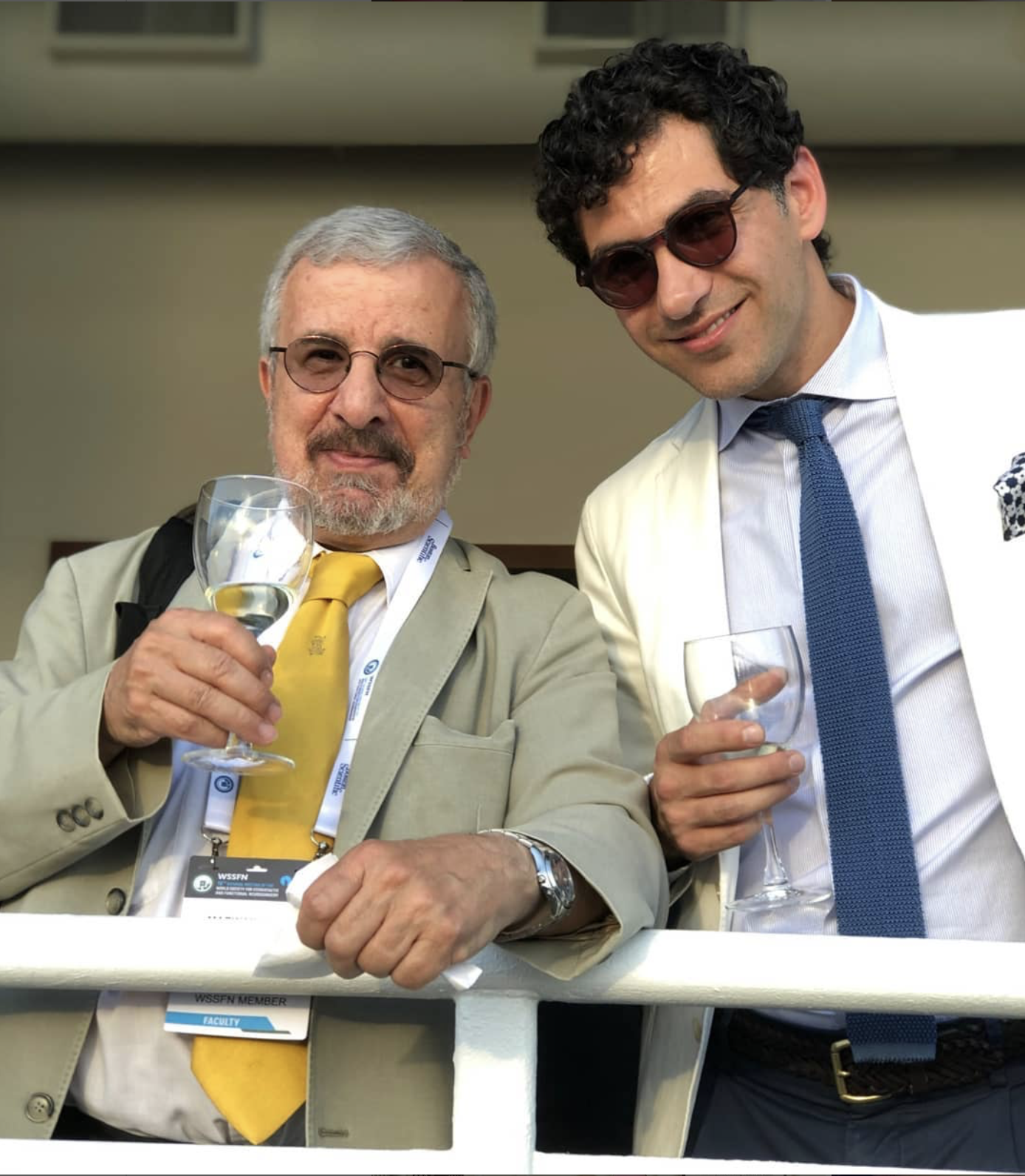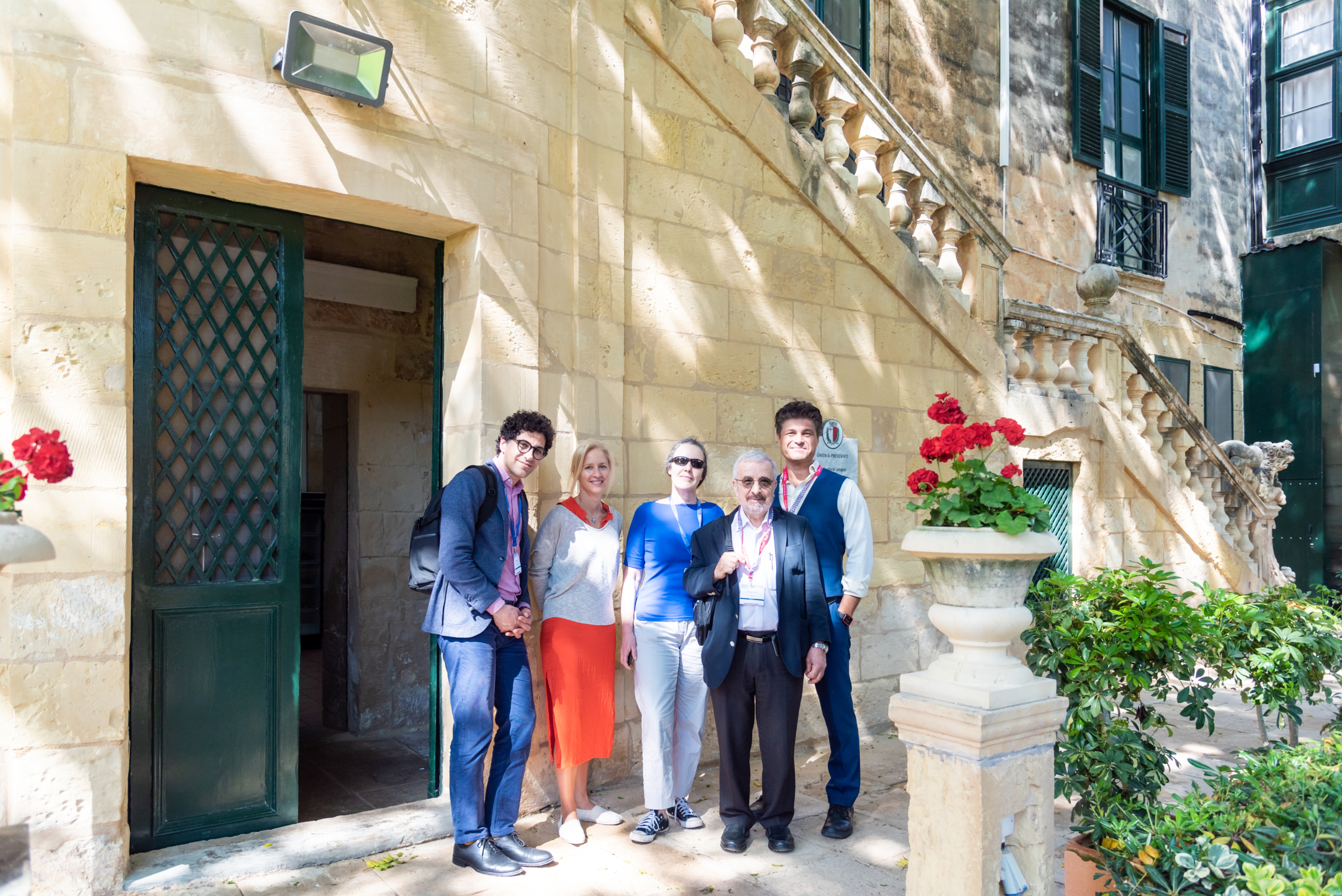
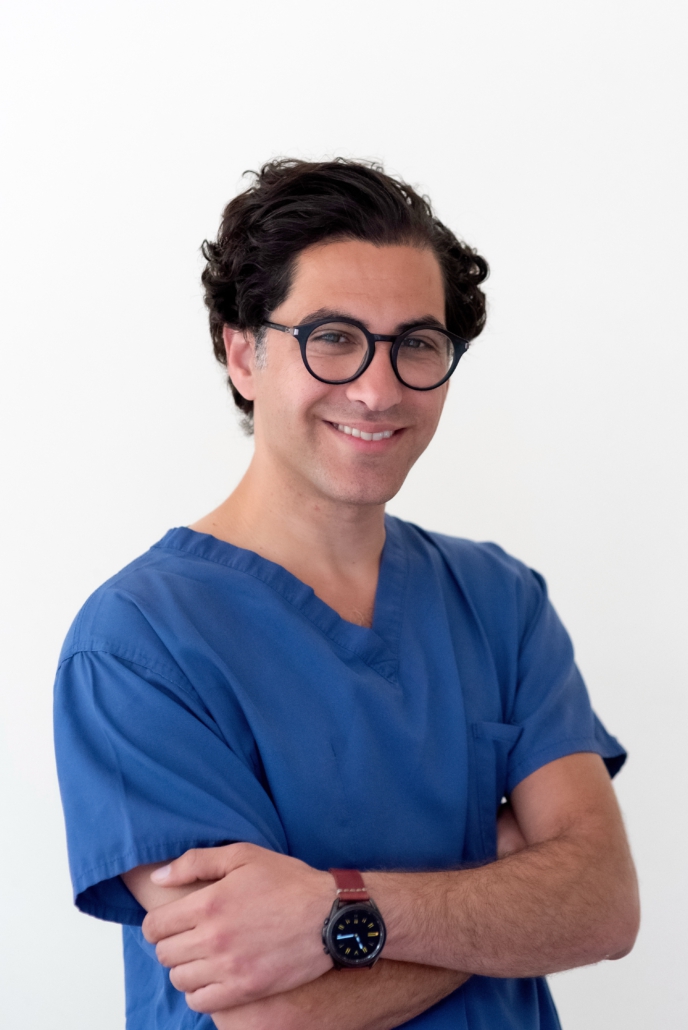
Dr. Harith Akram is Consultant Neurosurgeon at the Unit of Functional Neurosurgery (UCL) in Queen Square.
#56: Harith Akram – Connectomic DBS, Sweetspots and Building a Supercomputer
Harith Akram is the consultant neurosurgeon at the National Hospital for Neurology and Neurosurgery (UCLH) and the Unit of Functional Neurosurgery (UCL) at Queen Square. We discuss Dr. Akram’s hobbies beyond the lab and OR and delve into his fascinating journey which culminated in him training in the UK, with many stops along the way.
Harith shares insights into his illustrious career, highlighting the key mentors who shaped his path, including Drs. Marwan Hariz and Ludvic Zrinzo. With many anecdotes about these influential figures, he reveals the unique lessons each imparted on his training.
We then explore Harith’s research and clinical work, from the creation of the innovative ‘Gilgamesh’ to his highly cited STN symptom-specific sweetspots paper. He discusses the practical impacts of his research on surgical practices and his involvement in pivotal projects like the four-lead OCD trial and thalamic segmentations based on tractography.
The conversation also touches on underutilized therapies, such as DBS for cluster headaches, and the exciting potential of a new MR sequence he designed (i.e., FAT1). Harith provides his perspective on the future of lesion-based therapies, particularly cingulotomies for OCD and pain.
Harith shares his advice for young researchers, reflects on missed opportunities, and engages in rapid-fire questions that reveal his thoughts on the future of neuroscience and academia.
Join us for an inspiring and informative episode that showcases Harith’s remarkable journey and contributions.
Harith Akram 00:00And it was Ludwig's idea. He came to me and said, you like computers? And I said, yes. And he said, you like MRI? And I said, yes. Why don't you do a PhD in brain connectivity and DBS? And I said, I... So I just, on the back of an envelope, just looked up components and looked up cost things. And I went to Ludwig and I said, I want to build a supercomputer. The SCN sweet spots, because I really didn't think it was going to work. And it just came out. I thought, is this true? Is this really working? And sometimes it's very difficult to see whether something is worth doing or not, especially if it's basic science. And when you're trying to look at a technique or some gene switching on and off, but you might be onto something great. I think the best advice I can give people is that... 01:06Dr. Harith Akram is a consultant neurosurgeon
Andreas Horn at the National Hospital for Neurology and Neurosurgery and the Unit of Functional Neurosurgery in University College London. In this episode, Dr. Akram shares his unique journey to neurosurgery and reflects on elements of his training with Dr. Ludwig Zrinzo and Dr. Marwan Hariz. He also shares his thinking behind one of his key papers regarding the STN symptom-specific sweet spots from 2017, now cited over 200 times. We also discuss his involvement in the four-lead OCD project published in Biological Psychiatry, his interest in the 02:12thalamic segmentations based on tractography, the development and design of the FAT1 sequence, which is an MR sequence enabling better surgical targeting and a lot more. I hope that you enjoy this episode as much as I did, and thank you for tuning in to Stimulating Brains. So Harith, thank you so much for joining this episode today. And it's really a big pleasure and honor to talk to you. And I always start with... So Harith, do you have any hobbies or anything you do and not in the operation theater? So I thought about this. Unfortunately, I do have quite a few hobbies, but not a lot of free time. So I have a lot of hobbies that are sometimes dormant for a few weeks and months. 03:07But I found myself attracted to things that really matter. So I do have a lot of hobbies. So I do have a lot of hobbies that require a degree of being slightly obsessive compulsive, as few would understand in our field. So before we started, I just mentioned that there might be some humming sounds because the room upstairs, I'm making some beer. Oh, wow. Yeah. And this is one of my best hobbies, a most productive hobby. Because you actually produce it. Yeah, beer. And why does it hum? Well, it's something called cold crashing. So once you've finished fermenting the beer, you drop the temperature down to three Celsius.
Harith Akram And that then clarifies the beer. So you end up with a lager that is clear and without any big proteins in it.
Andreas Horn 04:06Yeah, so that's what you can hear is my glycolic chiller humming in the background.
Harith Akram I think we can't hear it, by the way.
Andreas Horn But any name for the beer? Does your beer have a name?
Harith Akram Oh, yeah. So this one, we haven't named yet, although someone suggested the name Delirium tremens, which may not be suitable. But I haven't named that one.
Andreas Horn But yeah, I just find it interesting because there's a lot of biochemistry.
Harith Akram And I think. Probably you, like me, when you were at school, you loved the chemistry lab and the physics lab.
Andreas Horn Yeah, of course. And I get to have a small lab at home where, you know, with beakers and make. And how many bottles do you produce in a batch typically? How does that work?
Harith Akram 05:01Typically, so I have about 90 liter capacity each go, which, you know. So yeah.
Andreas Horn Yeah.
Harith Akram a very accommodating wife so I also have a bar in the house and yeah a proper set up bar so when you come around to say us you know you come to the bar and when we have a discussion and then pull you a pint so now I'm very motivated of course to come visit even more than before well yeah of course I mean you have because you know you you have the the German beer experience and 06:03the Bostonian beer experience I guess so you come and try the London craft beer scene here yeah yeah yeah and then you tell me what you and then I also I know you also very much invested in photography and I think you mentioned a few other hobbies so so maybe you can talk about yeah so photography is one of those and other hobbies that require a lot of tinkering and and this is why I'm really interested in I mean I love taking photos I think I'm not and I'm a frustrated artist I guess I because I I tried to sketch and draw but I'm really not that good sadly so with the take photos is much easier and you get to collect it and you get to collect the lenses and and then you play with a lot of parameters and just like when we you know do processing yeah and when you take a scan on a 07:33tried after doing my PhD because I, you know how we, when we take scans and we get multiple
Andreas Horn acquisitions and we get more and more scan time. And the reason why we do this is because we get
Harith Akram to retain the signal. So if your scan doesn't have a high signal to noise ratio, the more scan you
Andreas Horn get, the more signal you get because the signal is consistent, right? It's not going to move
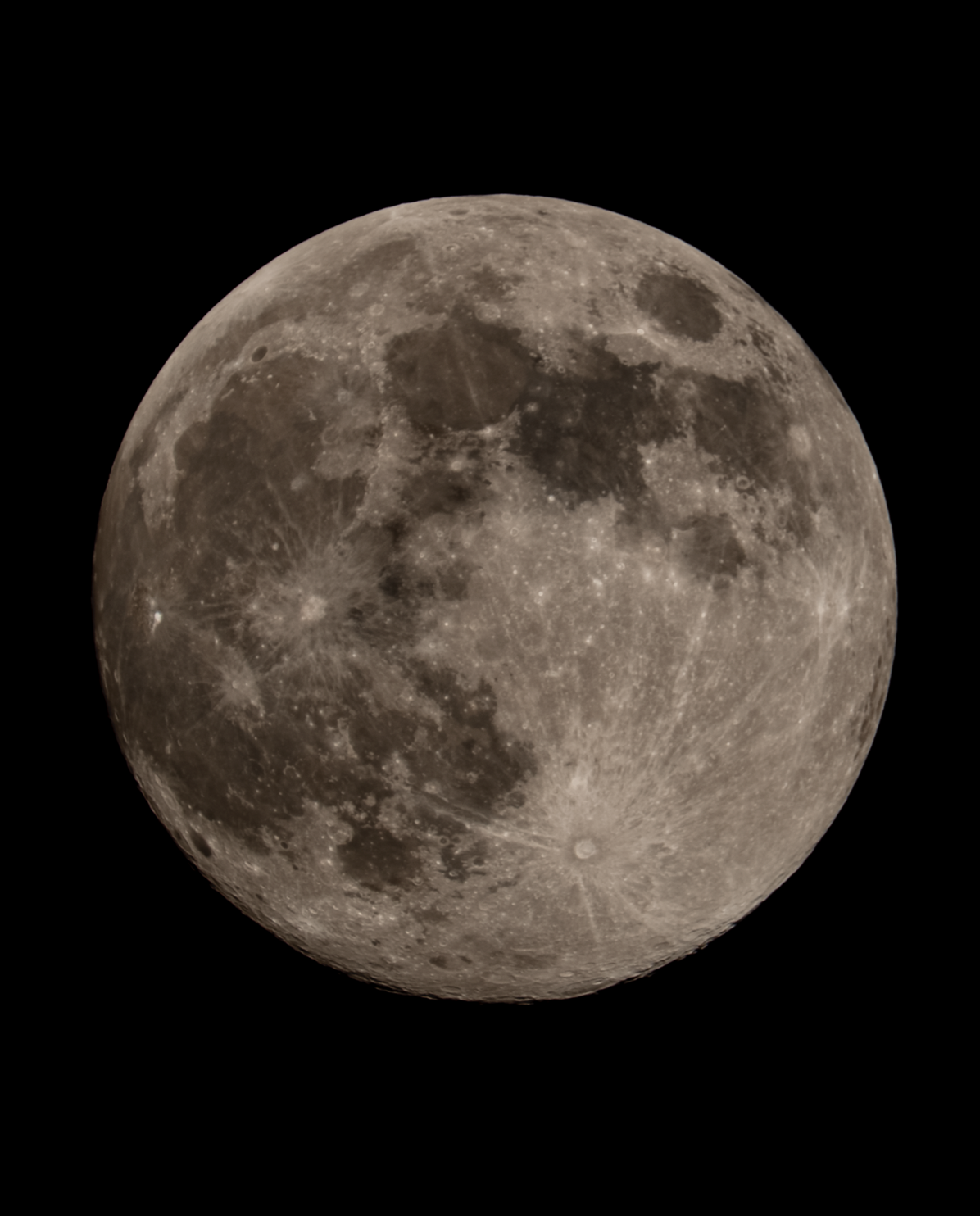
Harith Akram 08:00that much. Whereas noise is random usually. And the noise can then be, you know, subtracted. And what I did, I took 50 photos of the moon using my camera. So it wasn't a telescope. It was a good lens, but just a normal camera. And then averaged, merged, you know, co-registered those pictures. By the way, 2D co-registration, so easy. That's great. If only.
Andreas Horn It was only 2D registration. And then, yeah, you just get a median and all of a sudden you get great
Harith Akram signal, great photo, no noise.
Andreas Horn Yeah. And it was, you had to co-register because the moon moves a lot, right? So if you take 50 pictures, it has moved by then or? Yeah, yeah. So it will have moved. And you can't take the pictures straight away. So you have to put them on
Harith Akram a timer. And you have to give it a couple of seconds for the vibrations to die out. Because every time the shutter opens, this is a, it's not a digital camera. It's an SLR. So every time the shutter opens up, you get, you know what, you get 09:06vibration, you have to wait for it to die out and then take another one.
Andreas Horn And wait, it's really with film, if you say not digital or?
Harith Akram No, no, it's a digital SLR.
Andreas Horn Yeah, I meant it's a, it's a mirrorless, it has a shutter and mechanical parts. Yeah.
Harith Akram I guess now when we say digital, it just means completely.
Andreas Horn Yeah. Yeah.
Harith Akram Nothing moves. Fantastic. Super cool. And you also have two kids and I think love family time too, right? I guess. And any other
Andreas Horn hobbies before we move on to the real work or?
Harith Akram Well, there's a hobby that you just mentioned my kids and, and I'm, that's my only hobby that kind of makes me well scares me a bit because I worry that my kids might take it up when they grow up. 10:02So I ride, I ride motorcycles. Oh, wow. And I really like big motorbikes. And, but my mine is in in the garage. I might take it out this week. And I, I, I always think about what to say to my son when he comes to say, I'd like to get a motorbike.
Andreas Horn Yeah.
Harith Akram Can imagine that. I have a my dead body. I have to say to him. I can do it, but I don't trust you doing it. I know. I'm going to have to be a hypocrite. There. I don't think there is, there's a way around it. Sounds good. Well, that's fun. Okay, great. And I'm sure you you're thinking of, you know, how you how you rule, you probably have a classical one with a lot of style, like some, you know, not are not the most modern type. Or Oh, well, actually, I have a Triumph Speed Triple, which, which is, I guess you can say it's classical now. When I first got it in that, this is the last one I I had. It was 2007. So it was it was very new back then. And to me, it looks still looks very new. But it's, it's the same motorbike that you see in the matrix. The first major
Andreas Horn 11:26interesting. Okay. Yeah. Yeah.
Harith Akram That's great.
Andreas Horn Fantastic.
Harith Akram I wouldn't, I wouldn't recommend it as a as a neurosurgeon. I, I should definitely dissuade people from riding motorbikes. I think it's not a very good hobby to have.
Andreas Horn Yeah, yeah, yeah. No, I feel the dilemma out of your words.
Harith Akram Do as I say, not not as I do. Sounds good. That's good. All right. You are one of the most British people I know. But you're originally from Iraq. And I don't know, many
Andreas Horn British people. So maybe that's, you know, I'm biased, but but you are and but you're originally from Iraq. And so how come you speak without an accent? 12:10Yeah. So I don't know if I speak without an accent, because my kids do sometimes make fun of me. And they say, What, what did you say? Why did you say that? In fact, they the other day, they correct me because I said, Iraq, and then they said, Don't you mean Iraq, Daddy?
Harith Akram Hmm. So it was, but but I, I guess it's to do with my, I went to, I went to a selective school in Iraq, and we had sound labs, very strange. So we, we would go and we did French, which I completely forgot. And we did English where we go into the sound lab. And we spend a couple of hours a day with headphones.
Andreas Horn Yeah.
Harith Akram And a microphone on and listen to a tape, and we just keep repeating, repeating it. And, and we all thought it was, it was a bit weird. Until after the fall of Saddam, they found some secret government documents that suggested that the school might have had a secret program to train agents for the Iraqi government, or something like that. 13:25But whether I believe that, or not, I don't know. But it's on the Wikipedia page of what I found later on.
Andreas Horn Interesting.
Harith Akram Yeah. But it worked well for me, I guess. Of course. Well, for my French, because I've never practiced, but, but my, So you'd say your, your French accent would also be quite good if you, I understood you lost most of it. But, but if you were to learn it again, I think I can do the accent well. I can also do the accent of, of Frenchman speaking in English. No. 14:00Let's hear that. No, no. Come on. No, go on. I don't know, I don't want to alienate people now. Sorry. All right. All right. Understood.
Andreas Horn But that, that's very interesting. And so, so you, how long were you in Iraq before you moved out?
Harith Akram I, I was in Iraq until I was 21. 21. Okay, so long time. And then what happened? I think you spent some time in Jordan.
Andreas Horn Yeah. Can you talk a bit about that? Yeah.
Harith Akram Yeah. Growing up in Iraq was very, I mean, it feels like it's a completely different life to my, you know, my life since, since then, because, well, the culture was very different, but also the levels of freedom and liberty and rights that we had were very, very different to what my kids have and what I have now. Hmm. For the first eight years of my life.
Andreas Horn Yeah.
Harith Akram Iraq was at war with Iran. And we weren't allowed, you know, the borders were shut, so you can't travel. And, and then three years later, Saddam Hussein decided to invade Kuwait and, and got Iraq in, in another war. And, and since then, you know, it was, it just kept getting worse and worse. So when the borders were finally open, my, my parents just decided to leave.
Andreas Horn 15:26Yeah. Yeah.
Harith Akram So they, they moved to Jordan first, and then they moved to the States. And my, my dad is a political refugee in the States. So he, he managed to, to settle there and, and get, you know, the rest of my, my brothers and my family there. But at that time, I, I was kind of, I'm the oldest, and I was, I was a grown up. And I had, you know, I wasn't living with them at the time anyway. Hmm.
Andreas Horn Yeah.
Harith Akram So I just, I wanted to, to train. I wanted to, you know, do, do medicine and train as a neurosurgeon.
Andreas Horn 16:03Yeah.
Harith Akram And I, and I always wanted to, to do that in the UK, because Iraq used to be a British colony, and it, or a protectorate. And it had, the system was very British. But there were also a lot of, you know, the, the University of Baghdad was, the first medical school was, was built in Iraq.
Andreas Horn Yeah.
Harith Akram And it was, and I loved these buildings. They just, you know, the colonial buildings. Hmm. Just so spectacular. And, and as a child growing up, I would, you know, go for walks, you know, for a walk in the evening, you know, and admire all the architecture. And I think, hmm, this must be what England looks like. Hmm. I realize it's, it's nothing like that.
Andreas Horn But, yeah, I always wanted to train in the UK, and then when I, I, I came here, and I was like, how can I do it like that? Yeah, I was like, how can I do it like that? Yeah, I was like, how can I do it like that? Yeah, I was like, how can I do it like that? Yeah, I was like, how can I do it like that? Yeah, I was like, how can I do it like that? Yeah, I was like, how can I do it like that? Yeah, I was like, how can I do it like that? Yeah, I was like, how can I do it like that? Yeah, I was like, how can I do it like that? Yeah, I was like, how can I do it like that? Yeah, I was like, how can I do it like that?
Harith Akram the architecture and I think, this must be what England looks
Andreas Horn like. It's nothing like that. But yeah, I always wanted to
Harith Akram train in the UK. And then when I came here and I settled in, 17:03here we are 23 years later. And only if you want to talk about it, but I remember there was also it wasn't so easy for you to move there were you had some some story to get to Jordan and then to UK. Do you
Andreas Horn want to talk about that? Yeah, yeah. Yeah. So I, my I mentioned my dad was a political
Harith Akram refugees. But when my my dad had actually moved to the Jordan a few years earlier, so he was now I was still in high school, he moved there and then he started working with the Iraqi opposition. But there was a sort of like a government in exile at that time, nothing came out of it. But he was he and this was all this was not allowed, by the way, because, you know, of course, Saddam Hussein's regime was very totalitarian. And, you know, 18:03there was, you know, there's no room for opposition. And, but he was doing all of this in secret until I was getting to the end of the year, my kind of in, I don't remember what year it was, but all of a sudden I get I get arrested, and then interrogated by by the Republican Guard, what kind of the Iraqi, so the Iraqi intelligence agency and, and, and then they, they just asked me a lot of questions about my dad and what he's doing. And, and they, they just asked me a lot of questions about my dad and what he's doing.
Andreas Horn Yeah.
Harith Akram And, and whether I know about his friends, and, and I obviously deny everything. So you knew, but okay, I knew something I didn't know much. And, and then I, and then my dad calls me and he says, Maybe you should go on a trip to 19:04Kurdistan or something. So Kurdistan is the region, north of Iraq. And it's a it's a smugglers route, basically.
Andreas Horn Yeah.
Harith Akram And I, I thought, no, I would I will do is I'll just get a taxi to take me across the borders to Jordan. And I, I get I get some some fake documents to say that I was a teacher. And, and then jump in a cab. And that taxi then it's a 13 hour, I think it's a 13 hour drive. So I'm not sure what the, what the, what the time is. I think it's a 13 hour drive.
Andreas Horn Okay.
Harith Akram And then I'm in a taxi. And I'm in a taxi.
Andreas Horn Okay.
Harith Akram So I negotiate with a taxi. And they were this was the only route out of the country. So the only way because there's no fly zone. The only way to get out of the country is to get to get a taxi to Jordan. And I get to the border between Jordan, Iraq and 20:03Jordan. And I get I just get a really bad feeling. I just feel that the the officer who was in and arrogating me that he was he, he knew that I wasn't who I was saying I was and, and, and I could see that he just made this split decision because if he if he flagged it up, and that my passport was fake, and I think I would never see the light of day again. But he, he just looked at me gave me the passport and he said, Just go away. So I go out and I'm feeling you know, in a tense sense of relief. Of course. Just to find that my taxi driver is being arrested for smuggling cigarettes. Oh, no. Oh, my gosh. I thought, what an idiot.
Andreas Horn Are you kidding me? 21:01That means you had to walk over the border then?
Harith Akram So it was standard procedure. He just had to bribe them with half of his cigarettes, and then we were on our way. Okay, wow. What a story.
Andreas Horn Fantastic.
Harith Akram Oh, wow.
Andreas Horn I mean, fantastic is the wrong word, but yeah.
Harith Akram Very exciting, of course. In hindsight, you can probably laugh about things. I could laugh about it, but at the time, it was terrifying. Of course.
Andreas Horn Yeah, yeah. Okay. And then you managed to get to Jordan with your family for a while, but then you said, okay, I'll go to UK,
Harith Akram and I think your aunt was in the UK?
Andreas Horn Yeah.
Harith Akram So she was my dad's aunt. And she settled in the UK in the 80s. I think her husband was the Iraqi ambassador in Washington.
Andreas Horn So she's very, very glamorous, right?
Harith Akram She's in her 80s. 22:01She's an incredibly glamorous life. And I say ambassador during, because we used to have a monarchy in Iraq, constitutional monarchy, and it was during that time. So she had photos on, on her wall of her as a young lady with the king and with American presidents and all sorts.
Andreas Horn And yeah, so she just said, well, look, you can come and stay with me
Harith Akram until you find, you get a position and find your own place. And I, so I traveled, and she was in Jordan, so we traveled together to London. And, and then she, we go to her, her place. And her place is amazing. And I, and it's in a really nice part of London called Kensington. And, and she has a, she has two butlers. 23:01And I just think, you know, I'm just a young kid. And I think, oh, I can get used to this. I think like London is good, is good for me. Sadly, it didn't last.
Andreas Horn Yeah.
Harith Akram After three months. No butler.
Andreas Horn Yeah.
Harith Akram I was, I was out and on my own. And then, and then the real struggle started. I'm sure.
Andreas Horn And remind me, you had med school done in Iraq and then started residency in the UK or? Yeah. Yeah.
Harith Akram So I did, I went into med school when I was 16 in, in Iraq. So I, I, I skipped, we jumped two years during primary education, secondary education.
Andreas Horn And then, yeah, so started at 16, finished, finished at 16.
Harith Akram And then I went to medical school at 21. Wow. And, but not practiced as a doctor for a day in my life.
Andreas Horn Yeah.
Harith Akram And in fact, even during medical school, I, I used to go to one lecture a week. I used to go to all the labs. But I used to go to just the neurology lecture, which I just absolutely loved. 24:04I'm really a frustrated neurologist, you know. You're frustrated. I just, a neurologist already. You're a happy neurosurgeon, I'm sure. I'm a happy neurosurgeon.
Andreas Horn And so, so how did you get in? How, how did that work? And then, you know, who, how was your career like? Who were your key mentors and, and all that? Yeah.
Harith Akram Do you know, a lot of it was just chance. So chance encounters. And, and I, I, I think, I mean, now looking back, because obviously I have the years behind me and I can look back. I can, I can appreciate that a lot of it is just chance.
Andreas Horn Yeah.
Harith Akram And I think I made the right decisions that at the time I thought I was actively making.
Andreas Horn But really what was happening is that I was just in a, in the right place at the right time with the right people.
Harith Akram And also I just found my way being attracted to the things that I liked that I also happened to be good at. 25:04And then, you know, you, but you have to have the opportunity to do, to do that. Sure. So you have to be really lucky.
Andreas Horn Yeah.
Harith Akram And I went, I, up until my last year of secondary school, I was convinced that I was going to be a mechanical engineer because I loved machines.
Andreas Horn And actually the, the, my, yeah, my other career that I wanted, so I, I didn't know whether I wanted to be an electronic engineer.
Harith Akram So in kind of doing circuits and whatnot. Or a mechanical engineer.
Andreas Horn Yeah.
Harith Akram And then I decided that mechanical engineering is for me. Because I really like fixing machines and building machines. And, and then the time came to, to make a decision. But I, I just really liked, well, I just wanted to be a medical student because I thought, I saw that medical students have the most fun of all the other students. 26:06Right. And, and then I went to see the, I went to see the, I went to see the medical students.
Andreas Horn Yeah.
Harith Akram And I went to see the, I went to see the medical students.
Andreas Horn Yeah.
Harith Akram And then I went to see the, the engineering college. And it was just all men. It was just boys. There was only one female student. And I just thought, I don't know if this is going to be for me because I was, I was also in an all boys secondary school.
Andreas Horn Yeah.
Harith Akram So I, I, I thought if I go into medicine, I can be a surgeon. And it's sort of like an engineer. And then the circuits.
Andreas Horn Yeah. Yeah.
Harith Akram !
Andreas Horn Yeah.
Harith Akram I mean I had since changed my mind about how clever you need to be to be a heart surgeon.
Andreas Horn Hopefully no heart surgeons listen to this podcast.
Harith Akram 27:02It's unlikely.
Andreas Horn Okay.
Harith Akram We're safe. It's really just a bit of plumbing. So I, what happened during med school is that one of the first people I met that got me really excited about neurology was just the neurology lecturer that we had was just very clever and his approach to solving to kind of clinical diagnosis was just really, really exciting that we go through the symptoms.
Andreas Horn And this is at a time when we didn't have that many investigations, right?
Harith Akram I mean, we're talking, this is, you know, still, yeah. So nineties. So no access to MRIs. No CT scans, some CTs. We really needed to be hot on your diagnosis and, um, uh, kind of interpretation of history and symptoms. And I love neurology, but I was torn because I also wanted to be a surgeon. 28:03That was a whole idea of going to med school until someone said, well, look, what, how
Andreas Horn about neurosurgery? But that's sort of like a neurologist who operates on the brain and, um, neurological surgery, right? Yeah. So, so I thought, oh yes, that's, that's exactly it.
Harith Akram Um, again, that was, uh, that was not true, but, but I thought, okay, I'll do neurosurgery and really that was it. I finished med school. I was convinced that, um, I'm going to come to the UK train as a neurosurgeon. Cool.
Andreas Horn Yeah. Did you just apply to that or did you make contact or did research bring you in or how did that work?
Harith Akram Um, yeah. It's. It was at that time and I think it's still, it still is very, very difficult to get a training number. So the UK system is very well or used to be at least very strict on the number of trainees 29:02that are admitted to training programs. That's because really at the end of the day, we're a small island. We don't have, um, we don't have that many qualified neurosurgeons. So something.
Andreas Horn Yeah.
Harith Akram I think it's sort of like sort of like sort of like sort of like sort of like sort of like sort of like sort of like sort of like sort of like sort of like sort of like sort of like sort sort of like sort of like sort of like sort Or they can end up working at a job that is a subspecialist level, which is what happens in Europe. And I think it doesn't work well in most hospitals. What will happen is the subspecialists won't be treated well, maybe, or if they get all the important cases and the good cases, then the trainees won't get to train well. So it's not a good system for everyone. So the numbers are very tight. 30:01And when I applied, the chances were 1 in 200 to get a training number. But again, I just think I was really lucky on the day. And I managed to get that one SD4 training number. So I was very chuffed, very happy about it. Correct. And once you're a trainee, that's it. You're in the system until you finish.
Andreas Horn Yeah. Yeah, that sounds great.
Harith Akram And then so you obviously, I think most people know you're trained with both Marwan Hariz and Ludwig Sunzo in London, one of the DBS centers worldwide, certainly. I'm sure they each taught you a lot.
Andreas Horn And you taught them a thing or two, too, I'm sure. Or still do. But if you had to pick one random or maybe most salient thing. That each one of them taught you, what would it be?
Harith Akram 31:02I mean, one thing. I mean, that's just. I know it's.
Andreas Horn Yeah.
Harith Akram I can keep going on and on until tomorrow.
Andreas Horn I mean, you mentioned, yeah, Ludwig and Marwan had a major influence on my career and my life, really.
Harith Akram I mean, they're not just mentors. But. They're their friends. They're, you know, Ludwig is my brother. I consider him as my older brother. No, I don't. And they taught me everything I know. They've taught me a lot. But I would say that's actually the most important thing they taught me. Both of them was the importance of kindness. Being kind to patients. And caring for the patients. And respect for patients and what we do. 32:03And I never forget what Marwan used to say. Whenever someone says, we have a case or we need to do a case, he would get really upset. He says, we don't have cases. We have patients.
Andreas Horn And at first I just thought, why is he being so anal about this?
Harith Akram It's. No big deal. And then I actually realized it is a big deal. Because the minute, you know, Mr. Smith becomes the SDN DBS case, it's completely dehumanized him.
Andreas Horn Yeah.
Harith Akram We've lost a big sense of.
Andreas Horn Yeah.
Harith Akram And that's something that both Marwan and Ludwig have. Have taught me. Ludwig is the hardest working person I have ever met in my life. 33:03And I always tell him this, but he is one of those people who makes me depressed because he knows everything about everything. And he's always one step ahead. And I always think, oh, well, I have one day now as much as Ludwig does. I don't know.
Andreas Horn Yeah. Yeah.
Harith Akram No, I mean, from the talks and from my conversations with him and also the co-authorships, I can very much agree. It's really he has such a cool, clear cutting insight into things. And I somehow haven't yet managed to get him on the show. And maybe he doesn't have time either, but I haven't asked. But he has been on the lecture, like on the talk series. We also have that the trainees of my lab organized also on stimulatingbrains.org.
Andreas Horn And it was actually the inaugural senior lecture that he gave and was fantastic.
Harith Akram 34:04And we somehow forgot to record it. I really regret that.
Andreas Horn Yeah, I know. I know.
Harith Akram It was such a great talk. But he talks and he has, you know, his.
Andreas Horn And also he has a really interesting back story.
Harith Akram So you need to you need to get absolutely have to. He was a physics student and he then changed into medicine. His father is a neurosurgeon and his mother is a neuroradiologist. And there was one day we went to radios. I remember when I was I was a trainee and he was a consultant. We went to book a systermal puncture. So CSF, but through the the the the skull base. And the radiologist said, we don't do that. We don't really know how to do that.
Andreas Horn Yeah. And Ludwig said, what do you mean?
Harith Akram He don't know how to do that. My mom can do it.
Andreas Horn 35:02Which is true. Well, yeah, I mean, that doesn't mean it's easy, right? His mom is fantastic, I'm sure. So, yeah, but but great. So so have you ever been to Malta with him?
Harith Akram Yes, I've been to Malta with him. He's he's royalty in Malta. So Malta. Is this really tiny island and and the capital Valletta is this. I think it's the smallest capital. It's one of the smallest capitals in Europe. And and everybody knows him and his family. In fact, there was so you get treated like royalty. In fact, when when we have the hands on ESS fan course in Malta, it's it happens in usually in the president's palace. Oh, wow. Because he knows the president and and then we have it in the palace. Oh, wow. Because he knows the president. And and then we have it in the palace. And then we have it in the palace. And then we have it in the palace.
Andreas Horn And so, yeah, I've heard this story.
Harith Akram I'm not sure if it's true or not, but once he was late for the airport and they kept the airplane waiting for him. 36:08Oh, wow. It doesn't happen lightly.
Andreas Horn Yeah. Yeah. So nice.
Harith Akram And I think he does.
Andreas Horn Is it one one week a year or so where he does all the cases there?
Harith Akram Or, you know, I think he has he has these blocks where he does operate in Malta. He does operate in Malta as well.
Andreas Horn You know what?
Harith Akram He and I the truth is like I can't tell you because he's lit figures everywhere and he's doing and the heat. I think he goes and he is the said he is one of the hardest working people. Love.
Andreas Horn Yeah.
Harith Akram And I you know, I've I know he goes you know, he would operate on weekends on his days off and at the same time he'd be giving a lecture on. He'd operate on weekends on his days off. And. And at the same time, he'd be giving a lecture on. online and and then and managing the unit and yeah so I certainly try to 37:02get him on the show on the list for a long long time anyways so so and then ma one has left to umia while back and I think he was there before I came from Sweden to you guys and then first of all do you miss him and then second I think Marie Kruger has recently joined your team and she was also on the show already in episode 28 and my one has to how has the transition from this like three surgeon to a four surgeon team then been and you know how was the change of my one leaving and Marie coming and how is that all working out yeah yeah I mean that's I miss I miss my one all the time and you know the weird thing is I still sometimes find myself wondering into his old office and they just expect to see him there really he was one of those who was always there always and in fact and he would sometimes used to stay in his 38:02office and sleep on the sofa if he was worried about a patient which I don't know another a lot of professors we do that and but I miss them a lot he emails me at least once a week yeah he sends messages all the time and so we're all always we're always in touch and and yeah yeah he he also has a very
Andreas Horn interesting backstory I'm sure you know you've had him on the program but I have
Harith Akram not asked about the backstory actually I missed that he was even three times on the show already but we talked more about science um well you know he used to be a gun he used to be a gynecologist I didn't know that yes yeah so he needs to be a gynecologist and then he changed career for sure when was that how old was he I don't know I can't tell you that but he was uh yeah
Andreas Horn he was a gynecologist interesting can you imagine yeah yeah and now we have yeah so
Harith Akram 39:03he started the unit with Frisian limousine in 2002 and and then the unit grew and grew and then little bit joint and little bit Brady kind of also expanded the unit um very quickly massive massively um and uh and then Johnny hiam joined as a as a surgeon and me and now um the the latest appointment is Marie Kruger who's you know we managed to we managed to steal from Europe and that you say Europe now I guess Frexit has oh yeah yeah but yeah from from the mainland yeah yeah yeah but she was leading the the team in St Gallen already right in a small Swiss yeah yeah so she's my my office wife we share an office and um she's just um the full package brilliant very conscientious very well 40:07read great with patients great with colleagues very smart um it's very hard working I again one of those people who kind of make you reflect and you think I I need to do that well come on if I tidy up the office more uh that's
Andreas Horn that's my hair expectations of me makes sense makes sense makes sense well you know that you
Harith Akram are very much the same type of person that makes you feel small if you talk to you so you know it's always so enlightening to discuss things with you and so um yeah and then I answered you and Marie was like how were you like how were you like how were you like how were you like how were you like how were you like how were you like how were you like how were you like how were you like how were you like how were you like how were you like how were you like how were you like how were you like 41:02how were you like how were you like how were you like how were you like how were you like how were you like how were you like how were you like how were you like how were you like how were you like how were you like how were you like how were you like how were you like how were you like how were you like how were you like how were you like how were you like how were you like how were you like our neurosurgeon, I think she was in Seattle, no, in Canada. In Vancouver.
Andreas Horn Exactly. And so I messaged and said, Are you the same one? And
Harith Akram then she also kind of I think she had heard about lead DBS before. And so she was also surprised that I was that and then we met up at conferences and have been in contact since
Andreas Horn and more again, and, you know, it was always fantastic to
Harith Akram exchange ideas with her. And, again, she was on the other
Andreas Horn podcast too. So yeah, really cool team you have there. And I
Harith Akram think it's also each time I see a talk of yours, it is, you know, I think somehow, you make all the right choices, right? 42:03And, and that wouldn't mean that I would do the same. It's just seeing them, I think, Oh, yeah, that was smart. And that was smart, too. And you know that, with the imaging you set up and all that, and I think that's a really good way to kind of get a sense of how you're doing things in London. I think you followed the tradition of Marwan and then Ludwig, but you also contributed a lot there. So let's move more towards the
Andreas Horn science of things. And my first question is, who is Gilgamesh? And why did you need to build them him?
Harith Akram Okay, Gilgamesh. So Gilgamesh in, in history, this is a, it
Andreas Horn was a Mesopotamian, Mesopotamian demigod, right?
Harith Akram He was sort of 43:04sort of sort
Andreas Horn I started my PhD in 2012 and it was Ludwig's idea. He came to me and said, you like computers? And I said yes. And he said, you like MRI? And I said yes. Why don't you do a PhD in brain connectivity and DBS? And I said, I don't know anything about brain connectivity.
Harith Akram And he said, well, you'll pick it up. You'll learn. And very quickly, we put a team together and it was a very, very good suggestion. And Ludwig had that in foresight that this was going to be important. And so I started playing with data and got acquisitions. And then I 44:02tried to process the data and I realized that it takes two weeks. Two weeks to process one data set. And that was very depressing because there was no way I'm going to manage a PhD with that.
Andreas Horn That was the global tractography from Tim Behrens that took so long, right? Yes. Yeah, yeah. So it was publicist tractography because Tim Behrens was my PhD supervisor. Yeah.
Harith Akram Yeah. So I was very lucky. Tim was my PhD supervisor. John Ashburn was my other PhD supervisor.
Andreas Horn Fantastic.
Harith Akram So the two people who developed FSL and SPM.
Andreas Horn Yeah. Fantastic.
Harith Akram Yeah. So then I thought, okay, well, there is this new thing called CUDA and there's this unknown company called Nvidia who was doing really cool GPUs for gaming, but they 45:03can be used for computers, for computing.
Andreas Horn Yeah.
Harith Akram Yeah. And so I just, on the back of an envelope, just looked up components and looked up cost things. And I went to Ludwig and I said, I want to build this supercomputer. And he said,
Andreas Horn how much is it going to cost? I said, well, it's only the components and they'll cost
Harith Akram 15,000 pounds. And he said, do it. I love it. And that was it. So I then, I went to UC Berkeley.
Andreas Horn Yeah.
Harith Akram Yeah. And I said, I want to build this supercomputer. And he said, well, it's only the components and they'll cost 15,000 pounds. And he said, do it. I love it. And then I went to UCL, you know, my university because everything has to come through UCL. And I said, I want to buy these components. And then straight away, I get the head of procurement for computers and coming to the office and saying, I don't understand any
Andreas Horn of this. Why do you want these components? And I said, I'm going to build this computer. And he said, are you sure it will work? And I said, absolutely not. 46:02Yeah.
Harith Akram Anyway, he was also quite, you know, he saw that this had potential and I ended up, I put the whole thing together in my office, still my office now in Marine. And it worked. It was incredible. The only thing that was actually building the thing wasn't difficult. It was getting the code to work. That was the hardest thing. On GPU. At that time, there were no scripts to write. On GPU.
Andreas Horn Yeah.
Harith Akram So, and then, so Gilgamesh is that supercomputer, and I think it's a GPU cluster. A GPU cluster. And it does heat your office in winter, I heard from Maria. It does, yeah. 47:00So, it has it in winter and summer.
Andreas Horn But it's, yeah, in winter, it's favorable. Yeah, so it has 1,200, 12,000 GPU cores.
Harith Akram And now one of my PhD students, Flavia Massey, has another GPU cluster, which is like 20 times, 20 fold more power than Gilgamesh. But, you know, we'll still be. But as I said at the beginning, see, I loved computers and coding when I was a kid. And I never thought of this as it's going to be my career. And I suspect it's the same. It's a similar thing to you. You grew up with computers and coding. And then you found yourself doing something that you love and something that you do well. Because, you know, you had that skill set to start with. 48:02Totally. I think for me it was very similar that, you know, it was, I spent, I mean, I wasn't a typical nerd. I think I also spent a lot of time outdoors and all that. But I did, you know, at least for three years or so before I maybe discovered girls. I did spend, you know, quite a lot of time on computers.
Andreas Horn And my parents always criticized that and said, yeah, it's too much, you know, go more outside and all that.
Harith Akram I remember that. And then now I would think it was probably the best to spend time in my life as a kid to learn that stuff. And I programmed with BASIC back then. It was nothing fancy. Me too. I love BASIC. I wrote Pac-Man on BASIC. Great.
Andreas Horn Do you remember how class 10? I don't know why you had to, the lines were.
Harith Akram You know, all decimals. So you start 10, 20, 30. Oh, I don't remember. So I didn't have, I already had a Macintosh back then. So there was no QBASIC. Ah, well, see, you were very fancy. 49:00I was not. I think at the time, you know, it was not cool. It still had Motorola chips and all that. It was really not a good time for the Macintosh. And my father had it, and that's why I had it. And so my father realized there's QBASIC free on DOS, and I don't have that, but I need something similar. And he. He ended up buying something called TrueBASIC. And it was very similar, but I don't remember if the lines were lined that way. But it still had the go-to stuff where you had to jump to lines. Well, the go-to is, this is how you learn to do loops. And now when we, you know, when you code, it's the most important thing you have to do.
Andreas Horn Yeah, yeah, yeah. Yeah. Yeah.
Harith Akram Fun times. I build a Tamagotchi, so also similar things.
Andreas Horn Okay. So fantastic.
Harith Akram So then, you know, one of your key papers has been this symptom-specific sweet spots paper. And I think it was also the first one you did with that whole GPU clustering. It was probably your core paper. It was from 2017 and now cited over 200 times.
Andreas Horn 50:03What was it about? What did you find? Has it maybe changed your surgical practice? Yeah, that paper. So we were all. We were all working on similar things, weren't we?
Harith Akram In the same line. And I think all our papers came out more or less at the same time looking at. You certainly was first, so I remember that. Which was nice because I think this is, you know, it's all about reproducing work. So, you know, I was reproducing someone else's work and then my work gets reproduced. And then that way you can. You know, you can validate it and have trust in it, especially if we're going to use this on patients. Right. This is not just an exercise. And we all know how, you know, these statistically based models can sometimes give you the wrong results. You know, even when you have IP values. 51:01And so that paper had. It's probably one of. And. Well, I had had a big. Well, it's very, very dear to me. So. That paper of several reasons. One reason is I worked with the engineers in in Oxford to develop some of the methods back then went went developed, you know, the sweet spot identification and all of all of that. And we so stam and sod in in Oxford.
Andreas Horn Yeah.
Harith Akram And I just love them. I love those guys because they think in a completely different way to neuroscientists. Engineers have just a very problems, very much problem solving approach. And and they look at the problem without any emotions.
Andreas Horn Yeah.
Harith Akram And for us, it's very difficult. 52:01We have so much baggage and hypotheses and, you know, they don't have hypotheses. It's like this is a problem.
Andreas Horn How do we solve it?
Harith Akram And and and also they go to the pub every time. I go to see them. We brainstorm and we work on ways of of solving the sweet spot identification problem. And then we go to the pub and they can drink. And then that is that is the queen's ladder most of the time. No, it's in Oxford. So this is a white horse. I see. And they you know, and a lot of science happens there and you all of a sudden you meet all these, you know, scientists and heads of labs. And. And Barons and and I love that. And I did. So I finished the paper. I was really proud of it. I'm going to tell you this now. I've I've only cried, really cried twice in my life. I. Once one time was when my daughter, who was five at the time, cut her own hair with craft scissors. 53:07And I was devastated. I cried to sleep. And the second time. I I'd submitted this paper to brain. I thought that brain will be a good journal for it. And I remember a few weeks later I was on a beach with my wife somewhere in Spain. It was a it was a friend's wedding. It's beautiful wedding. And they're all there on the beach after the ceremony and sunset. And we had a great party. Drinking. And I I get I check my emails. I shouldn't check my emails then. But I took my email. And it's an email from brain. And I think, oh, my God, this is amazing. It's going to be the best day ever because. You know, I'm having like this. This paradise is really beautiful atmosphere. I've got the email from brain. I can't wait to hear what the reviewers think of my paper. 54:01They must think it's amazing. And I'm like, oh, my God, this is amazing. I'm like, oh, my God, this is amazing. I'm like, oh, my God, this is amazing. I'm like, oh, my God, this is amazing. I'm like, oh, my God. And then I open it and both reviewers say this paper is too technical and difficult to understand. Oh, my.
Andreas Horn Okay.
Harith Akram So I'm in shock. And then I start. I was just angry because I think, well, don't review it. Of course it's difficult to understand. I spent four years working on the method. And then I start crying. And then my wife, Rebecca, says, oh, I know, it's very emotional. She thinks I'm crying because of the wedding. And everyone thinks I'm crying because, you know, I'm just really touched. And then about 15 minutes later, I'm still crying.
Andreas Horn 55:03Okay.
Harith Akram You can stop now. I didn't realize you were so emotional. I said, I'm not crying because of the wedding. I'm not crying because of the wedding. I'm crying because my paper got rejected. What a nerd, she said.
Andreas Horn Yeah. Okay. I mean, I understand. Was it your first paper or was it your? Yeah.
Harith Akram It was the first paper.
Andreas Horn Yeah.
Harith Akram I think I did pass a headache.
Andreas Horn But this was like the first paper. And then, you know what?
Harith Akram I mean, I obviously, I understand now it wasn't suitable for brain. It was very technical. And I submitted it to NeuroImage and it just got accepted. You know, there was some, I had to make some changes and they made the paper better. And that was it. And, you know, now I'm really proud of it. Well, absolutely. You should be. I mean, it really doesn't matter. This paper had a lot of influence and everybody knows it in the field. 56:02But I think it should, you know, it was, it certainly should have gone into brain. And maybe it was written in a, you know, more too technical way or whatever.
Andreas Horn But it's really fantastic work.
Harith Akram And, you know, the. I don't, to be fair. I don't.
Andreas Horn Yeah.
Harith Akram Well, we don't really, it doesn't really matter that much now. I think.
Andreas Horn Yeah.
Harith Akram Because of the way science is disseminated, you know, and because of. Totally. Everything is on Twitter and everything is online, you know, in lectures. And. And all online papers are accessible. We all have access through our labs. And. And I think the only thing you get from the journal is the reviewers. So it all depends on the quality of reviewers. So I submit to good quality journals because I know that the reviewers will be good.
Andreas Horn Yeah.
Harith Akram And that's, that's really it. 57:00I think, I think the. And also the, you know, the readership. So we. In our field, we're restricted to certain journals because, you know, you need the readership to read it. But then again, it's online. Anyone can access it as long as it's.
Andreas Horn Yeah.
Harith Akram It's a good paper. Oh, I don't, I don't really, you know, I don't really mind anymore where it goes.
Andreas Horn Yeah, yeah.
Harith Akram It's nice to have a paper in nature, which, you know, I usually just piggyback with, you know, on your papers. And. I mean, yeah. Nature franchise and never made it into the real nature with anything. Of course. One day. We'll do it one day. We'll do it one day. Sure. Let's, let's, let's try. No, but I mean, this, I think the, you know, the importance of that paper, maybe just to talk a bit more about the content is, you know, first of all, it really was published in 2017. And I think nobody kind of managed to replicate or, you know, do something similar for a long time. 58:03And then I think it, you know, as you said back then, to me, at least when we talked about it, I think it matched histologically or, you know, also the lesioning work also dealt with similar things more recently. And I think even in the Hasler group with the lesions, they had similar findings already, but it was super cool. And, you know, not, not all of it, right. What it was a lot of new stuff too, but it, it, it just showed you can do this with imaging now. Right. So the, and you had, I think you had fantastic diffusion MRI scans that you scanned yourself on 20 or more patients and with, you know, research grade stuff. So it's, it's again, all of these things where you did many of the right choices, I think that led to something really fantastic.
Andreas Horn And maybe the, the last question that I had was, did it, did it ever change your practice? Like, would you, after this target differently for, let's say a patient with a lot of tremor versus bradykinesia in your practice? 59:01Yeah. So very, very interesting question.
Harith Akram If you'd asked me this a year ago, I will say to you, probably not really. Right. But now it's, so we, we, I think we talked about this once. We talked about this when we were in Brazil, I think we were on the beach, you and I, having a lovely walk on the beach. We were hot by the rain.
Andreas Horn Yeah. Yeah. Yeah.
Harith Akram And it's, and, and the, from the cycle of discovery to impact is usually around seven years, which we're kind of getting into now. And I, Jose Obeso, who's, you know, one of the top neurologists in the world, has been running a trial for subthalamotomy for Parkinson's disease. That is kind of with unilateral symptoms, unilateral kind of predominant symptoms. 01:00:05We should say subthalamic nucleotomy if we follow my mind.
Andreas Horn Exactly. I was just about to say, we should say, think exactly, subthalamic nucleotomy, because that's what it is.
Harith Akram But he has managed to target the different areas of the brain. And areas in the different sweet spots in the STN based on the patient's symptoms. And he said the normal target works well for bradykinesia and rigidity, but not for tremor until they targeted that tip of the supramaterial STN, which is what we showed in the paper.
Andreas Horn Yeah.
Harith Akram And that worked. Which, you know, I felt, I felt very, very proud and humbled.
Andreas Horn Yeah. Yeah. Fantastic. Yeah.
Harith Akram 01:01:00But it was, but it seems that, and if we look at the old literature, it's full of gems.
Andreas Horn Yes.
Harith Akram We tend to dismiss old papers because, you know, they didn't have MRI scans. But actually, if I'm, you know, one of my interests is pain, or a surgery for pain. And maybe I'm a bit masochistic, I don't know. I mean, it's very difficult, but I just, I just find, I find it really worthy, and not a lot of people do it. Though I started reading the old literature, and the science that was done in the 60s, 70s, and 80s was incredible. It was. Without access to, you know, they were meticulous, documenting, mapping out, anthrop meticulous, documenting, mapping out, subthalamic mapping, and all sort of stuff like that.
Andreas Horn Yeah.
Harith Akram and all the Haspa stuff. Incredible stuff. So I think a lot of findings of documented 01:02:07and old papers might come in handy in the future, even if they weren't at the time. And the sweet spots in my paper from 2017 really didn't – because even in the paper I say, fair enough, there are three different sweet spots, but they're both covered by one single DBS. Sure. So there is – it doesn't really change your practice, but when you have the ability to target in such high level of precision with focused ultrasound, then it makes a difference, I think.
Andreas Horn Yeah.
Harith Akram This is – nothing has been shown, obviously. There's no – Sure. There's no strong evidence, but I think it's interesting it might have an impact that way. Yeah. Yeah. No, absolutely. And I think there is – there are projects around that, right, with the FAST data that I've heard of from Obeso, maybe others as well, where they look 01:03:02into symptom specificity and all that. And I – yeah. So I think I could not agree more
Andreas Horn with the older literature. The one key difference of – many differences, right? But I also
Harith Akram think what's sometimes super rewarding is sometimes you read a paper from that, for example, Haspa.
Andreas Horn Yeah.
Harith Akram Haspa's cool. For example, this is 60 – a 1960 brain paper from Haspa's first author. And it's about 10 years of their experience all summed up into one paper. So that's so rewarding to read all that knowledge, right, condensed into a single paper. Now we don't do these things anymore. We – I mean, sometimes there are these retrospective
Andreas Horn kind of long experience papers, but typically it's so fast what we do, right? So a single
Harith Akram paper doesn't give you as much condensed knowledge anymore, I feel. And you're totally right.
Andreas Horn They had to, you know, work with anatomists and he was a pathologist and all that, right? So there's – they say, you know, they even say bradykinesia maps to Brodmann's area 6A 01:04:02alpha, you know, which I don't even know exactly what it means anymore, right? We lost
Harith Akram that kind of granularity with MRI somehow. That's true. That's true. And the other thing that you see in – you read in old papers that you don't – well, that you don't see in or the other way around, I guess. And I don't know how you feel about when you're reviewing a paper and then the conclusion says, this is the first time that this has been – and I just think – I don't know if it is the first time because I don't think you have read the entire – you're not Marwan Harries. You don't know all the literature.
Andreas Horn Yeah, yeah, yeah.
Harith Akram And I just find – actually sends the wrong message. That rather than – than saying, this is a good study, it's saying, this is the first study. And I – it's not a race.
Andreas Horn Yeah, it's not. No, I totally agree.
Harith Akram 01:05:01So just coming first, you know, being the first to describe – it's not that important. You know, you can be the first to describe one case and then nothing happens. Or you can be, you know, someone down the line who does 50 and then describes the technique and describes the science and you learn from it.
Andreas Horn Yeah.
Harith Akram and I you know have have fear of being scooped or what that and I always tell them it's really not about being first it's you know doing things first but doing things best and then even if you're not first and you're not even better than the last one I think it there's still value in just replicating things and you know looking at it from a different angle so so I totally agree 01:06:00that maybe maybe this is also something that has changed a bit in the landscape that novelty is not as important anymore I mean it's still of course you have to have some contribution and I get that but but it's not the key thing that it's all novel right it yeah condensing consolidating things makes a lot of sense and you know just to name some examples to make your point you know we have we have stimulated the MFB in the 50s Robert Heath did that and I think even you know his septal area and compas tell in my books target as well right so this and and you know the forniks and flashbacks have been done by Penfield with you know temporal coaxial cortex and all these things right so there's been so much stuff that has happened way before even been a beat and everything and it's it sometimes surprises me how little people know about it but also care about it because this you know that I have a book from Sam Jacobson that that my postdoctoral student gifted me and it's so cool they did stimulate the SDN back then in 01:07:01Norway and you know with with PBS and it worked and you know it's documented it's all there you have the coordinates and all that stuff and you know it's it's says yeah you know it's no yeah it's it's it's not weekly basis for me but maybe bi-monthly basis so so I do have emails with him all the time too and is always very helpful and insightful and yeah he's it's great that he's around and he's you know doing what he's doing for the field so all right but um then you've also moving on you've played a part in the four lead OCD project that was ultimately published by him on shoot Yagi in biopsy and we had 01:08:04Patricia limousine on as well on this show in episode 7 and she mentioned I think that she had two Eureka moments in her in her career one was switching on the first ever STN DBS patient in Parkinson's in Grenoble so that was before the time in London but the other moment she described was had been one of these OCD patients and apparently not STN so you did both STN and a leak but I I you know it wasn't a double hit for the STN in this case she told me was the a leak simulation I was active who was you know all of a sudden when she did rounds in the morning all of a sudden happened you know to just be dressed already and before that it was much more painful to even get her out of bed and all that right so so she was that was a wow a moment and I if I remember correctly was directly after surgery or maybe after switching it on the night before so and um I do also remember I think I once sat in a pub together with Andrea Kuhnen Ludwig 01:09:04Rinsow and you were that was the time when you were doing that trial and he said something like you know stopping tremors is cool but changing OCD that's where you get goose bumps and and so can you talk a bit about that trial what it meant to you how what were your take-homes and maybe new developments
Andreas Horn that line with OCD in London? Yeah, I mean that was an incredible time because
Harith Akram for starters it was very very hard work. So the six OCD patients that we recruited were very refractory. They had on a white box, all in high 30s and institutionalized. So just doing the normal things, consenting a patient before surgery was really difficult and you needed to have a lot of 01:10:03time because you can't rush these things. The other thing and it was just really moving to see how affected they were, how disabled these patients were. I'll give you an example, one of these patients was that MRI before surgery and that takes an hour. We, just to walk in from the door of the MRI scanner, to sit on the MRI scanner, and that took 45 minutes. There was just so many rituals and things that we needed to do and so these patients were very disabled and this particular patient had 01:11:05some recurrent episodes of urinary failure because she just wouldn't drink water. If she drinks, she needs to go to the loo. If she goes to the loo, that's a four-hour ritual. She prefers not to drink and then she has renal failure. It's just devastating. And that same patient after surgery, you switch them on and they're completely a different person. I say this, I actually haven't disqualified the statement because in OCD, you can see that there is the person there, but they're being completely held back by their symptoms and their obsessions and compulsions. But there is a person there 01:12:00who just wants to get better and get rid of all of this. And then all of a sudden,
Andreas Horn the person is free. And it's just, yeah, you have to hold back. Basically, you can't get too emotional after these because, yeah, but difficult, hard work for the patient.
Harith Akram We were, from the imaging perspective, we're very interested because we can map out the network for the ALIC DBS and map out the network for the intermediate OCN DBS. By the way, let me tell you this. I think I'm not sure if I've mentioned this before, of showing you the figure. I also thought, wouldn't it be cool if I map out the connection
Andreas Horn between the two networks? So I did and I generated the figure. And then time came to submit it to BioCity
Harith Akram 01:13:05and then we got the idea from the biological psychiatry. And then Eileen Joyce and I think the editor as well just said, I think there's just too many figures. We need to cut one of them out. And I just thought, okay, well, we'll just cut out the common network between the two networks. I think you mentioned it. Yeah, it totally makes sense.
Andreas Horn Sure, exactly. Sure, exactly. Sure, exactly. Sure, exactly. Sure, exactly. Sure, exactly. Sure, exactly. Sure, exactly. Sure, exactly. Sure, exactly. Sure, exactly. Sure, exactly. Sure, exactly. Sure, exactly. Sure, exactly. Sure, exactly. Sure, exactly. Sure, exactly. Sure, exactly. Sure, exactly. Sure, exactly. Sure, exactly. Sure, exactly. Sure, exactly. Sure, exactly. Sure, exactly. Sure, exactly. 01:14:00Sure, exactly. Sure, exactly. Sure, exactly. Sure, exactly. Sure, exactly. Sure, exactly. Sure, exactly. Sure, exactly.
Harith Akram paper. And actually, I'm on that paper too. So I'm not.
Andreas Horn Yeah, no, no, I know. I know. No, I know. So I mean,
Harith Akram you made the right you made right decisions. When I made wrong decisions. No, that's, that's not that's not true. I mean, I too, I don't want to talk about my stuff as much, but maybe just to briefly mention it. For us, it was really a surprise finding because we had worked on the a leak cases from Cologne. And then, you know, we we saw when we we were working on the STN data for a different project, which was actually the one now published the STN multi thing, you know, it was independent. And then we saw that track that we had just published for the a leak pop out to be correlated with symptoms. So it was really this, it wasn't even the idea to bring them together. And we saw this and say, this is the same thing. And then of course, it
Andreas Horn makes sense that they are connected, right? There is the
Harith Akram you know, frontal projection. So. So it was a surprise, 01:15:02finding for us. And then, you know, we could show the cross cross estimate in that paper that that you're on and also
Andreas Horn helped a lot with and so so yeah, it's yeah, at the end of the day, because you you've asked about
Harith Akram Eureka. And I think I'm not sure I like that Eureka I think I think that the ! I was the most important expression or term in science, I think is that's funny. Hang on a second. That's funny. And then and that's, you know, how it's just, you know, a lot of a lot of coverage and I feel this came from your serendipity.
Andreas Horn Yeah, absolutely.
Harith Akram 01:16:00I want has a great paper on that. Yeah. Yeah. So, so when you look at you looked at that track, and you thought, that's funny. Yeah. Nature paper.
Andreas Horn Yeah. Fantastic. Yeah. So, um, no, but but, you know, maybe can
Harith Akram you talk a bit more about your general take more from a
Andreas Horn clinical perspective? DBS for OCD? Is it worthwhile? Does it work? Does it work for everyone? Which target is best? Or you know, what are you?
Harith Akram It seems to be DBS for OCD seems to be a very good treatment and in the Netherlands, a rich German and his colleagues, they've done, I think the biggest number of patients and, and for them, it seems to, you know, maybe it's just the patient group is is not as demanding as our patient group. And our patients were very unwell. And I, we found it hard work. Because the programming, you know, these patients 01:17:01have a lot of work. Yeah. And they've had other issues as well. And they've had OCD for a long time, but it sometimes hides other social problems or other mental health problems. And, and then they have this control, which is an adjustable DBS. And they are always wanting to get better. They always want to get a little bit better. If they have a iteration, they want to prove it, which is fair enough. But it's actually it's, it's hard work. And sometimes it's best to do.
Andreas Horn Yeah.
Harith Akram And then they're not treated. And treat the OCD. And then the patients can forget about it rather than they keep being reminded that they have DBS. So if you ask me, I think that we can do lesions. And I think we can do DBS. And it has to be patient choice. At the end of the day. If I was a patient, I would go for a lesion. Because I don't want to get rid of my OCD and then have something else to worry about DBS and get affected. But then I have 01:18:02to remove it and the symptoms come back. And all of that. And I think that the evidence is good for both. So it doesn't, you know, from, from the, all the data that we have, and there's a paper that Goodwin published a few years ago, showed that there isn't that much difference between DBS and lesioning for OCD. If anything, the more severe cases respond to DBS. So it's not a very good thing. But it has to be patient choice at the end of the day. And if you're going to do this, it be done in a very thorough, meticulous way with led by neuropsychiatry. And with respect to all kind of local regulations. And in the UK, we have CPC, which protects the patients and protects the clinicians. 01:19:02And it's, it's, this is quite a specialised treatment. But there are a lot of patients who are underserved. I think, and not being referred. And what happens to these patients is that they, everyone forgets about them, because the psychiatrist can't help anymore. Their GP can't help anymore. They don't have jobs, they just stay at home. And that's a tragedy when there is a treatment that works.
Andreas Horn Yeah. Absolutely. All right. So, so I, you know, it's a very interesting
Harith Akram point you bring up with lesions. And, you know, I, I totally agree, especially with patient choice, it could be could make a lot of sense
Andreas Horn of a one and done procedure. And, you know, it Yeah, we, this is a
Harith Akram bigger topic. But I think there's a lot of, you know, pros and cons for both. And I very much agree that that, for some, for some cases, for some patients, it can can make a lot of sense to think 01:20:02about lesions, too. Right. And so so then you also worked on thalamic segmentation, based on tractography, that maybe was your second bigger paper on, you know, using the same Gilgamesh and global tractography method, I think, but you took it slightly different route, I think, to segment the thalamus. And I remember there was, you know, the DRT connection, but also M1 connection. And I think if you you know, you, you, you you said that the optimal target is where they coincide. I also briefly remember that there were some discussions with Eric Middlebrook, who had also published on a similar topic, but last time we met at Mayo in Florida, I think you told me it's kind of resolved now,
Andreas Horn and you have a consensus there. Can you summarize a bit how you think about thalamic DBS and maybe what that discussion was about?
Harith Akram 01:21:02Yeah, so that was a very heated discussion with me and Eric, I think. But Eric is a great guy, and he's done so much in imaging and connectivity.
Andreas Horn And we had very, very interesting discussions online and offline ever since.
Harith Akram So... In a way, that work got us very close together, which is one serendipitous byproduct of the work. So I'm really glad that I got to know him and consider him a friend. So when I started my PhD, there was one of the operations we were doing, Marwan and Lutfik were doing, was thalamic DBS and thalamotomy. 01:22:02And we were doing a lot of different things. As well, radiofrequency thalamotomy for tremor. And even though since the unit was started, we were relying mostly on direct targeting or using imaging, we'd never used microelectro recording. With thalamic surgery, we couldn't because we just can't see the target. So we had to use ACPC coordinates. And I remember just going, and it's such an amazing operation to see. I'm sure you've seen those. But sometimes you don't hit the target. And you have to keep... And the patients get tired. And you have to keep changing. And sometimes you do the surgery, and it doesn't work very well. It works for the first few weeks, and then the tremor comes back. I thought there must be a way of using... And I know that Nader Paraitian used segmentation. Volker Kuhnen used tractography to get the DRT. 01:23:05And Tim Behrens, in fact, was the... He was the first... I just said first. Maybe not. Maybe I shouldn't use that. But he published on connectivity-based segmentation back in 2003, 2004, using tractography.
Andreas Horn I thought, well, why don't we...
Harith Akram If we know that the DRT... We know that the contralateral dentate is a hug.
Andreas Horn Why don't we use that to segment the thalamus as well as the cortical region?
Harith Akram So I added that. And the problem of using deterministic tractography is that you can't get the crossing using deterministic tractography. So I thought, I'll use probabilistic tractography. I'll create exclusion masks. Forget the fibers to get into the right place 01:24:01without constraining the fibers too much. And at the same time, I'll do the cortical segmentation. The other thing that I did differently was I looked at the hard segmentation algorithms. So FSL would use a hard segmentation algorithm to do that. And actually, because the threshold is fixed for all of them, you end up... Sometimes with a very strange looking map. So I decided instead of doing this, what I will do is I will just get the clusters segmented in the thalamus. And then I would apply thresholds to make them look anatomical. Because I know what the anatomy looks like. And what we want to do is, we want to make the VP, VL, VIM to look anatomical in terms of volume, at least. Without doing any hard segmentation. 01:25:03And sometimes there are no hard borders between some structures. So that's what we did. And I found that if you have... Obviously, the VIM will intersect in the VL, which is connected to M1. And that was great. And it used that for targeting. And we used it in surgery. And it worked. Most of the time. But not all the time. And I think at that time, the VIM connection to... Because of a lot of problems with tractography, you'd see that VIM is connected to SMA as well as M1. And to me, that didn't make a lot of sense because we know from tracer studies that doesn't... Not the case. And if... You have hand tremor. 01:26:00So if you have hand tremor, the problem has to be something to do with the hand area. I mean, tremor is not complicated movement. You're not a program. It's a rhythmical oscillation. And I think it will be in the primary motor area rather than in SMA where you have motor planning and patients with Parkinson's disease. SMA is more involved. But I was convinced that it was M1. But as I said, because of problems with tractography, and sometimes I can see that the segmentation in the thalamus is more posterior than what you'd expect it to be. And I suspect it's an artifact rather than a real finding.
Andreas Horn And I don't know why it happens.
Harith Akram But it... It does. But I've since moved on, actually, from using connectivity-based targeting in the thalamus. 01:27:03I think you must have seen our latest paper, and I've shown you... I was very proud to show you the FAT1 imaging that gives us the map for the thalamus without having to run tractography. It's still diffusion, but without running tractography, which cuts out the middle man, I guess.
Andreas Horn Yeah, so that would have been, obviously,
Harith Akram my next question. So you have essentially come up with a new MR sequence or maybe a combination of the T1 and FA. And you have, I think, used some really smart ways of combining the two. And that, you know, FA and T1 became FAT1, which is great. And that's just recently been published. You also showed, I think, with Vanessa Milanese was also on the show, you know, the anatomical... the anatomical dissections compared to it. 01:28:00And so that is a beautiful sequence. So you're totally right. You don't need tractography if you have something like that.
Andreas Horn So is that now routinely used in your clinic for the tremor cases, the FAT1? Yeah, this is...
Harith Akram So thanks very much, by the way. And also, thank you for reviewing the paper. I mean, it was a very good review. It's a great paper. It was a joy to review it. But I shouldn't have told you probably.
Andreas Horn Yeah.
Harith Akram Only told you afterwards.
Andreas Horn Yeah. So yeah, the...
Harith Akram I mean, I did three thalamotomies on Monday. I did one yesterday and I'm doing one tomorrow. So that's five thalamotomies in one week. And it's all based on FAT1. So using this new imaging. Because you can see the target. And it's consistent. 01:29:00Whereas with tractography, it's not consistent, even if you use the best data set. In fact, I had very clever PhD students who looked at the bottlenecks in tractography and found that in the HCP cohort, there are still bottlenecks. And sometimes you get nice tractography and sometimes you get bad tractography. But the data sets are identical. The quality is the same.
Andreas Horn And that's what we found, is that sometimes it just doesn't make sense.
Harith Akram And I think, well, why doesn't it make sense? I mean, we haven't done anything different. But there are anatomical bottlenecks. The superior parabele peduncle, for example, if it's too thin, you don't get the fibers. I think I'm convinced that the size of the brain has something to do with it too. I don't know. But it's... There are... And perhaps just the level of degeneration in the DRT 01:30:02has something to do with it as well. I don't know.
Andreas Horn Yeah, interesting.
Harith Akram With... But there is a signal on diffusion.
Andreas Horn That's why we're generating tractography
Harith Akram that gives us results. So there is no contrast on anatomical or structural MRI. But on diffusion MRI, there is segregation based on diffusion. And if we can just capture that segregation, and rather than try to model the tract, just see it in contrast to the other structures around it, which is what we did, then that's... For surgical targeting, that's all you need. I don't need to see, you know, the whole DRT. I just want to see at one point. And I want to put my radiofrequency probe or my DBS lead or my focus ultrasound cursor on that point. 01:31:01Because that's what I care about. That's what the patient cares about at the end of the day.
Andreas Horn Absolutely.
Harith Akram I totally agree. I think we have, you know, the FGATER, or, you know, there was white methanol as well that had, you know, where you can see somehow the target. But I think in direct comparison, your FAT1 is really, you know, shines through.
Andreas Horn It's fantastic.
Harith Akram So, but the idea of using tractography in the first place, I think, is even a bit dangerous. And I sometimes worry, especially now with the FUS field, everybody just does it, and maybe also people without training of diffusion tractography just apply it. You know, it's so easy now with, let's say, BrainLab and all that.
Andreas Horn And then the, you know, it's a distorted sequence, right?
Harith Akram It's EPI sequence. And resolution is typically around 2 millimeters. So, you know, it's not perfect for stereotactic imaging. And I guess in your FAT1, you have really smart ways of registering it to a T1 01:32:03in, I think, nonlinear ways. I don't know the details, but, you know, that makes a lot of sense to me. Because there you would, you know, you would essentially take the T1 image as your shell, but then you can segment it based on that. But just applying tractography might even be dangerous in a way, I think. So I think you're totally, it's very much the right strategy to use something that's more, comes out of the box, doesn't rely on bottlenecks, on, you know, setting seeds and, you know, post hoc imaging. So, again, another choice made right by Harry Thackram,
Andreas Horn which, you know, fantastic. Yeah, but it's, yeah,
Harith Akram it's strange because I spent the last 10 years doing tractography and then moved to this. And then moved to something, I still do tractography and I, but that's the thing.
Andreas Horn Yeah. For some targets it's different, right?
Harith Akram 01:33:00I assume that, you know, all the, for example, Helen Myberg stuff, you know, there,
Andreas Horn it's maybe the best we have, right?
Harith Akram But I really, I think for me, specifically the critique was more for the DRT, which is a very thin and hard to reconstruct tract and, you know, distortions and all that. And it's really about the millimeters and all that.
Andreas Horn So, so yeah, I don't,
Harith Akram I didn't want to say tractography is bad period, but for that target, it's.
Andreas Horn Yeah.
Harith Akram I completely agree with you. DRT is very difficult to get right. And actually using standard sequences, which is in a way the problem, the problem with that and the problem using tractography, this one is that if it doesn't work, then people will, people will just say, well, tractography doesn't work. Right. And it will just punish the fear, which, which is what happened really in the, in the, in the oncology, 01:34:01your oncology field in, they started, they were using tractography, the corticospinal tract 15 years ago. First, using all these, your navigation platforms and, and then, and then they, they rely on tractography and the patients get a deficit. Well, look, it doesn't work. Oh, oh, I'm not sure. I don't know what the field is.
Andreas Horn And is that now in your oncology?
Harith Akram I don't do your oncology, but I don't think tractography is a big tool because of that. And so I think we're a lot more sensible functional neuroscientists. I think functional neurosurgery, and I think maybe because we are also very risk averse in functional neurosurgery and our patients are not dying. We have to make sure that we don't make them worse,
Andreas Horn which is why we can be obsessive about the tools that we use. 01:35:05Yeah,
Harith Akram makes a lot of sense. So back in 2022, Mike Fox wrote an article entitled the return of the lesion. I should declare I'm a co-author, but, you know, you who you'd size the first author, I was, you know, not central in that article, but the idea was that lesions may celebrate a comeback. And that's both for neuroscientific discovery with the whole lesion network mapping things, but also for therapy with mainly fuss being maybe the new kid on the block that kind of makes them fancy again. But London is one of the few centers where lesions have remained strong throughout. And I think you have, you still do, you still have a lot of these video frequency oblations. And as you know, not, not, not many centers do that. And I think you have good reason to do that. But you also recently bought a fast machine and I think, you know, 01:36:00that's ramping up or has been ramping up.
Andreas Horn So how do you see the future of lesions?
Harith Akram Since you just mentioned you you're going to do five thalammotomy is this week. And maybe, maybe also one question on that is, are these RF ablations or, or a fuss or a mixture or. On Monday I did three FUS, yesterday one RF and tomorrow one RF.
Andreas Horn Okay, interesting. So they're a mixture.
Harith Akram So I think radio frequency is king, right?
Andreas Horn Yeah.
Harith Akram And I think I was saying that's what I used to think at least up until two weeks ago when I was trying to target the central lateral thalamus for pain. And then I realized that the trajectory of the central lateral thalamus is quite vertical. And to try to get that using radio frequency we managed, but it was tricky. I had to do two trajectories on each side. 01:37:02So I think that in terms of targeting, radio frequency is still definitely a lot more versatile because you can get anywhere in the brain with a radio frequency probe usually. And you can tell. And you can test, stimulate, I think, in a better way. And you can test, stimulate. You don't have to shave the head. We don't shave any hair.
Andreas Horn Yeah, it's quick.
Harith Akram It's cheap.
Andreas Horn And it's reliable because you know exactly when you test and you're happy with side effects and efficacy. You know exactly how much you're heating the tip.
Harith Akram You know that it's not going to go somewhere else by mistake. But having said that, focused ultrasound is still, still evolving. It's getting, you know, it's getting better and better. And there's a new model that's come out recently. We haven't upgraded that yet. But we can do more. 01:38:00We can image more during. With focused ultrasound, the nice thing is you can change the target just by, you know, just changing the numbers. And then you're all of a sudden somewhere else. And that's something that we can't do with radiology. And it's really nice to be able to just say, hang on a second. I have a really good result. But I think if we just go slightly more clearer in medial, I might make it better. And then you do that. And it's so easy with RF. That means putting the probe out and putting it in different trajectory. Both tools have, like with everything, they have pros and cons. And patient choice still is very important. Some patients don't want to have a hole in the head. Whereas other patients just think, I don't want to have my head shaved and get stuck in a helmet inside an MRI ball, 01:39:01which I hate. And I just want quick things. So I think both techniques are definitely here to stay. And I'd be very sad to lose either of them. We never stopped doing. I think that we were in an advantageous position when we got the Focus UltraSat machine is that we had a very big experience with radio frequency. So we had the imaging all sorted already. We know the. We also know the testing. So we know what to expect when we test. And we know the side effects. So it wasn't alien to us. It was just learning the technique. It can be dangerous for someone who's never done a lesion in the brain to all of a sudden press buttons and make a lesion, having not dealt with complications when they 01:40:00occur and they do occur. I completely agree with you and Mike Fox. I think the lesion is. It's. There was a good reason it died out. The discovery of the DBS is a lot more forgiving when you do it bilaterally. And when you don't have good imaging, you don't really want to make a lesion blindly in the brain. But we're in a different place now. We have very good imaging, and we know the indications. That's much better. And we can do unilateral basal ganglia lesions. I think lesioning is a very good option if the patient chooses to have one. MICHAEL HATHAWAYSEN Yeah.
Andreas Horn Fantastic.
Harith Akram And so maybe just one brief note on cluster headache. 01:41:01Because I really wanted to briefly ask you as well. You have at least one paper on that, probably more.
Andreas Horn Is DBS for cluster headache?
Harith Akram underutilized therapy should that celebrate a comeback or do you think completely completely I you know we have so we we're now writing a paper with a hundred patients plus the headache had VPA DBS in Queens where and and the results are consistent these are patients who are very very unwell with and plus the headache plus the headache is the worst you know it's described as a worse pain known to man and I mean man and woman obviously and and it's you know these patients commit suicide and they have they stop working they stop socializing and they have social regression physical regression they end 01:42:00up with a lot of medical issues because of that and and if you know if you if you if you if you if you if you if you if you if you if you if you if you if you if you if you if you if you if you if you if you if you if you can treat it actually this is one of the few targets that have been purely discovered by imaging right so the original paper from on May 1998 reads work and sure you know the pet study in patients with cluster headache attacks showed that the VTA lights up and then Franzini stuck a lead in it the patient that's the headache and it worked so it's it's a target and that was identified purely on an imaging I did not realize that yeah yeah I think it's it's underutilized it's not difficult to do and I don't think there is it you know if it there's a lot that can and can be 01:43:01changed with the targeting we try to change the target and at some stage we'll see if it works. but it's a fairly consistent target in the ventral segmental area and and and it's a very debilitating condition of course yeah and then in general pain is as you say one of your interests and I think you also do singulotomies for pain and then sometimes for OCD and you know you you I think you once told me you have a theory that there might be something connecting the two only if you want to talk about that because it's unpublished work, but what are your thoughts on that? I think there is a you know just like we have the default mode network and and salience network I think there is you know a mental agony let's call it network you know that's when you're in pain whether it's physical pain emotional pain and you know and and punishments from you know 01:44:05your reward systems because of obsession you know unfulfilled let's say compulsions or and I think there is there is a scaffolding in the brain and a network that involves a dorsal interior
Andreas Horn single coordinate which is why that target works but different conditions you know for pain cancer
Harith Akram pain it's it's a very well established target now for and obviously you know I think that's for OCD and for the cell ferocity uh Reeves-Costgrove and done hundreds of patients
Andreas Horn um and for depression as well and there is there is a reason why the same target worked for all of
Harith Akram all of those I just I'm I'm not saying that the underlying pathology is the same and there might be different networks involved but this is a hub on this network that I think it's sort of a mental 01:45:05agony uh network that is triggered by pain by mental disorders um yeah and watch this space so we're we're doing yeah yeah we're doing and I think you're involved too actually um some more work on in this area because it is um quite an exciting um part of the brain and uh nice yeah so super super excited too um to um maybe uh collaborate on that I think Flavia um your PhD student is mainly working on
Andreas Horn that these days and we'll see what um what what do you guys find and um certainly a very fantastic
Harith Akram uh Theory and um you know we yeah it could could go a long way I think so I want to be mindful of your time already took a lot of your time I know how busy you are so to wrap up some some rapid fire questions you can if you want to you can answer very short but of course you can also answer 01:46:05um how does the operation theater I should say not room theater in in the UK um how does the operation theater of the future look like oh um well I think I'll be less cluttered hopefully um I think at the moment there's just too too much stuff happening in the operating theater it'll be nice to go into the room and there is nothing there just you maybe a console and and the patient um yeah with with without all those big devices and machines and and it'll be nice to have an actual um you know um observatory or somewhere where you can get the students to watch rather than being shouted out at the core in the corner trying to see what's happening I'll tell you 01:47:00what I really like in in my theater so I use um something called an all-by which is a um an exoscope that's mounted on a robotic arm and it you wear a 3D goggles and you can see everything on a 3D screen and I I find that a great way to do cases and teach as well because
Andreas Horn everyone can see exactly what's happening and that's so cool can we see a picture of that and
Harith Akram maybe put it on the on the website show notes if you have one yeah yeah yeah I'll send it very
Andreas Horn very interesting
Harith Akram send you a picture I I do MVDs for trigeminal neuralgia and I use um the all-by and uh I was doing a complicated one last week but the anesthetist didn't mind that it was taking twice as long because he said well it was fun to watch okay great love it that's cool yeah no I mean for 01:48:01teaching that's amazing and you could even record things probably that's really cool yeah love it um then we talked about Eureka moments and you said they should be called oh that's funny moments so so what were your oh that's funny moments that you can remember oh um well I mean actually the first segmentation map the first dynamic segmentation map was one of them and uh another one was the um another one was the the SCN sweet spots because I really didn't think it was going to work and it just came out I thought this is it's just this is true this is really working and and um I guess I did I did a singulotomy on a patient with um anesthesia the DeRosa 01:49:01it's very very difficult to treat I remember going to see her after surgery and and she was saying oh the the headphones hurt a little bit and she's got a bit of a headache and it's fine and and then I said okay all right but what about the pain and she said pain what pain well the facial thing she said well it's gone we did the operation and I didn't I just didn't expect that it was going I I know this is not a eureka moment but it is it's a one of those um unforgettable no totally this is because I wanted I really you know I started to well up at this stage thinking I can't believe it's actually gone um badly then a few months later the pain
Andreas Horn came back um but you know this is trying to learn how and why this works and how to make it yeah yeah
Harith Akram 01:50:04but at that time it was um it was incredible I'm sure I'm sure no I I think you know it was even surprised that you brought up some of more of the science moments I'm sure you must have lots of anecdotes where you you know just help people and it worked and there must be eureka all over and all the time but um or you know sometimes works yeah yeah yeah did you ever think about something that was a big waste of my time um big waste of my time I didn't really I don't um but no I don't think so I mean I've done a lot of stuff that didn't work um I tried I tried to get into a near infrared spectroscopy um because I thought it's a good way of looking at cortical activity without um having to have an fmri and it 01:51:04was exciting in DBS as you can do it in the clinic and um and we spent six months trying to make it work and then we realized and this is Flavia Massey again doing work and we realized it doesn't work but I I don't regret it I think it's you just have to keep opening you know pushing on these doors Phil because one day something will work and yeah well I don't think there are anything wasted it's
Andreas Horn interesting that that it didn't work because it's a very long time it's a very long time it's a very long time
Harith Akram it's a very long time it's a very long time it's a very long time it's a very long time it's a very long time it didn't work because I always thought the same thing you know that should be the optimal method it's optical right you don't have artifacts from the DBS electrodes and all that but so maybe in brief uh can you say why not you know I think there are even some published papers I'm even a co-author on one from Freiburg where they did make something work but you're saying it's not not
Andreas Horn interesting I just think it's not sensitive enough yet because we yeah so we managed to get the hand
Harith Akram 01:52:02barrier very easy very nice but switching DBS on and off didn't make that much difference to the signal it's got the same signal and then scanning patients with Parkinson's uh on and off fever dopa same thing we didn't get any change in signal I just I think it needs to be it's a it's a really good cool application and it could be how we can program patients in future um but it's not sensitive enough at all I think it's not good enough makes sense we need a better tool
Andreas Horn yeah interesting good to know um maybe you saved me a lot of time don't waste your time
Harith Akram um any advice for young researchers entering either neuroscience or academia but also um neurosurgery so young dogs any advice you can give yeah so I I would say you really have to think about 01:53:03the question um but don't do don't do any don't waste your time doing research if the question you're asking is not um it is not good enough for the I'm a translational neuroscientist right so everything I do I do it because I see a director to my patients and that automatically makes it worth doing and sometimes it's very difficult to see whether something is worth doing or not especially if it's basic stuff like it's basic science and when you're trying to look at a technique or some gene switching on and off, but you might be on to something great. I think the best advice I can give people is that think about the question really hard and also don't worry about your experiment failing because most young scientists worry too much about not getting results or everything 01:54:08failing, nothing working, their experiments failing because even if it's something to do with their culture diet, that's all part of the research. Your role is to do the research well and if you get it right, you're going to get it right. If you get negative results or no results, that's also important.
Andreas Horn Great advice. Makes a lot of sense. What is the future of the field going to look like?
Harith Akram That could be DBS neuromodulation or the entire lesioning versus DBS. Any thoughts on the
Andreas Horn future?
Harith Akram Yeah. Mark Twain once said, it's difficult to make predictions, especially about the future.
Andreas Horn Yeah.
Harith Akram So I don't know, but I think it will be sad if we were doing DBS in 15 years' time. I'm 01:55:08saying this, I love DBS. I think brain computer interface, adaptive DBS, getting all drug delivery, gene delivery is where I see us. I think that's where I see us going in future. Obviously, imaging will be key in any of this and it's always been. Imaging has always evolved with, or our field has evolved with it, to put it this way, to be more realistic. And I'm just really excited to see what's going to happen next with MR. And who knows, there might be a new modality. I mean, if you tell someone in the 60s that you can use magnets, they're going to be like, oh, that's a new thing.
Andreas Horn Yeah.
Harith Akram And if you look inside the body, they'll think that you're nuts. 01:56:00Of course.
Andreas Horn Right? So who knows what's going to happen next? We might have some new technique that
Harith Akram shows us the neurons in a different way. Yeah. And I've talked to Kulervo Hununen on the show, who is one of the inventors or pioneers of MR-guided focused ultrasound, even though FAS has a much longer history. And he really thinks that in 10 years from now, everybody will have FAS.
Andreas Horn Yeah.
Harith Akram enhancement and things and it's 3d printed I think they're they're version 2 that's you know that they're developing is always custom had adjusted these days and there's this functional focus ultrasound so I don't know I think I somehow feel more and more and also with the non-invasive stim you know with single turn to turn its uses I could imagine that there that fuzz may have a lot of future you know that there might be as since you mentioned new modality
Andreas Horn it's not that new but it could be I agree it's very interesting microwaves
Harith Akram 01:57:04I think are interesting too but we'll see we'll see let's see missed opportunities anything we should be doing but are not as a field I that's a tricky one because if I knew I would be doing it yeah so I I'm not sure I'll have to come back to you on this sounds good sounds good you can always add your thoughts on this to the show notes hurry they won't just thank you one more time I took the full two hours is there any last question that I should have asked but didn't that he would have wanted to talk about or did we cover everything no I think I think we covered everything you didn't and we didn't talk about walk on the beach in Brazil but maybe that's not appropriate. 01:58:00No, I'm joking.
Andreas Horn Why would you? We just got wet. Yeah, I was. You mean that? Yeah, it was fun. Yeah. And then we sat in the AC and I was cold and you were probably cold too. It was fun. No, Andy, thank you so much. It's always a pleasure talking to you. As I said,
Harith Akram I really cherish our friendship and
Andreas Horn whenever we meet, we talk about very interesting topics, not just in neuroscience. But please just
Harith Akram carry on with changing the world and include me with you. Thank you. Very big words. I should say the same to you. You're much more really doing everything. 01:59:01You put electrodes in, you're really making a difference for patients. So thank you for all you're doing and thanks again for taking the time. It's not easy as a neurosurgeon to get a two-hour slot blocked on your calendar. So thank you for that and all the best. I'm looking forward already to WSSFN probably is next to see each other. But I'm sure we'll bump into each other. We'll get to each other soon again. So thanks a lot, Harith. Take care. Bye. ! 02:00:05. . . . . . . . .
Click any highlighted text passage to jump the Spotify player to that point. The transcript text is present directly in the page HTML for search engines and accessibility.