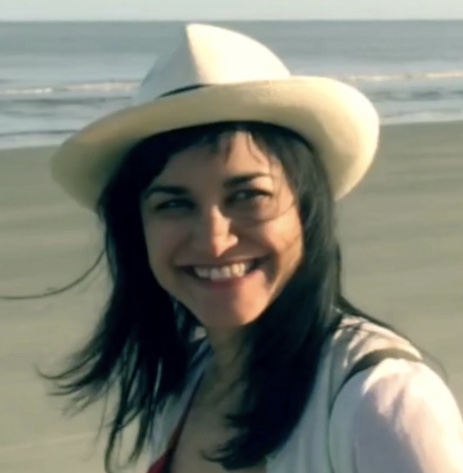
Aysegul Gunduz is an Associate Professor at the Department of Biomedical Engineering at University of Florida.
#21: Aysegul Gunduz – Engineering in DBS, closed loop & brain sensing
In this episode, Aysegul Gunduz & Julian Neumann speak about Ayse’s exciting work on closed-loop DBS in tremor, their tic-detector, and thriving as an engineer in a medical field such as DBS. They also touch upon minority groups in the field. The main focus of their 2020 Science Translational Medicine study, in which Ayse’s team developed and studied a chronically embedded cortico-thalamic closed-loop deep brain stimulation system for treatment of essential tremor – clearly a landmark study in the field that brought together advances in engineering and medical research. Ayse also speaks about industry collaborations and the value of novel devices that enable scientific studies that had not been possible, in the past.
I hope you enjoy the conversation between Ayse and Julian as much as I did and thank you for tuning in!
Aysegul Gunduz 00:00So again, I think the movement disorders have been the lower hanging fruit. And I think for us to make precision psychiatry therapies, we will need that coverage. We will definitely need networks. We will need lots of nodes. A advisor had told me how to approach clinicians when I approached Mike and Kelly. There was a DARPA grant opportunity. I went to them and I said, look, I know how to do this. This is what I can bring to the table. Do you want me in? And they were very excited. And everything we've done after that, they've given me an equal seating at the table. They haven't treated me like a technician that would fix things for them. And I thought, okay, this is going to be okay. I'll present the work at engineering conferences and they can present it at clinical meetings. And every time they've organized clinical meetings, and they organize a lot, they said, Ayse, you're going to be the one presenting. I'm done with this one. Welcome to Stimulating Brains. So welcome to another episode of Stimulating Brains. Today it's my honor as a guest
Andreas Horn 01:28interviewer, and I'm Julian Neumann, assistant professor at University Hospital Charité in Berlin. And I'm going to interview Aysegul Gunduz. She is an associate professor at the University of Florida and recently appointed fellow of the American Institute for Medical and Biological Engineering. Ayse is a visionary and pioneer in the application of deep brain stimulation algorithms and development of neurotechnological solutions for symptom detection and implementation of adaptive closed-loop DBS. 02:10Ayse, thank you so much for joining me today. You have led a landmark study with the implementation of a fully embedded system that can sense voluntary movement and treat tremor, independence, and resistance of demand. So can you tell us a little bit about the main results of the study? Sure, and thank you for having me and thank you for that kind introduction. So this was one of the first BRAIN Initiative projects that we attempted. We basically, I come from an engineering and neuroscientific background and my dissertation work was on patients with epilepsy and we really studied their motor system in hopes to maybe build an electrocorticographic-based BCI or BMI. And once this call came, I went to Kelly 03:03Foote, who was my neurosurgical partner, and I said to Kelly, what do you think the low-hanging fruit here is? Because he knows the disorders better than I do. And I told him, look, I know the motor system really well. I love electrocorticographic signals, like their signal quality is great they will be far away from the stimulation zone with that in mind what do you think is low hanging fruit and, without a second, he basically said intention tremor and essential tremor, that's what we should go for. So I can't say I'm the only brainchild, but through this you know again interaction between multi-disciplinary groups leads to these kinds of ideas so then the idea was that he described what intention or action tremor is to me
Aysegul Gunduz he said these patients and their large population their large sub-population of people with essential 04:04tremor they don't experience tremor at rest but their tremor starts when they start a purposeful movement, the sway of the tremor gets worse at their target, so as if they're trying to pick something up. And that also leads to the idea that the tremor is not a purposeful movement And that obviously decreases the quality of life. I said, great, we can keep the stimulation target the same. What I would like you to do, and obviously we have to get all the approvals together, is to add a cortical strip, hopefully to cover the premotor cortex and all of the primary motor cortex of the hand knob area. And then these electrodes would be connected to the PC+S, which was the device that was available through the BRAIN public-private partnership at the time. And we've had experience with Activa PC+S before, so we already had worked with two different
Andreas Horn 05:01clinical patient populations. And actually that's why I went to Kelly and not Mike, because
Aysegul Gunduz the other two projects were Mike's idea and they were Tourette syndrome, they were freezing of gait with on-medication patients. So those were involved projects. So this one actually was, we really thought this would be the patient model to really show the feasibility and efficacy of a
Andreas Horn closed-loop DBS system. Yeah, so this was the study where patients that were monitored and yeah,
Aysegul Gunduz subjected to deep brain stimulation of the thalamus for essential tremor.
Andreas Horn And you mentioned the cortical strips, so this is an ECoG electrode where you can get cortical brain signals, right? Right. And use them for an algorithm to decode something. Yes. How did that
Aysegul Gunduz 06:03work together with the... So we started our recordings basically during the surgery, because again, these are investigational devices. So if we didn't see what we expected to see, we didn't know whether it was because we didn't place electrodes to the right place, or it was basically just that was too much to expect from this device. So once Kelly was able to implant, and we started unilaterally, so our whole project said, let's do this unilaterally because this is a feasibility study, so let's show that it can be done and not go all the way out. And so once he placed the VIM electrode, and then we also guided him as to where to place the cortical electrode. So he placed it. We did some recordings. We asked the patient to open and close their hands. 07:02Our control condition is always puckering of their lips because the hand is close to the face area, but if placed well, we shouldn't be capturing any activity when they're puckering their lips. So. So the cortical strip looked like it was well placed, and then obviously they closed it up, and then a month later, the device was implanted. As for the biomarkers, again, just because we've known the motor system through electrocorticography in epilepsy populations for many decades, we were basically expecting event-related desynchronizations in the beta band with hand movements, both ipsilateral, and contralateral. We've already known that from epilepsy patients. Only with contralateral hand activity, we were expecting this broadband high gamma activity on the cortical strip. And during the intra-op recordings, 08:01we actually saw that that event-related desynchronization that I explained
Andreas Horn was exactly there in the VIM as well. So my first reaction was like, whoops, did we just put a cortical strip for no reason?
Aysegul Gunduz And then when the activity, we saw that the VIM was not there. So we were expecting this broadband high gamma activity on the cortical strip. And then when the PC+S was connected, we actually couldn't get any of the high gamma. So that basically told us that the device did not have the signal-to-noise ratio to capture high-frequency activity. And we said, that's fine, because we already have low-frequency desynchronization. We can definitely base it on that. Funny enough, once the stimulation engine was turned on, even at zero-volt outputs, the VIM signals were obliterated. So I was like, whew, thankfully we have a cortical strip. So, and then again, because I'm an engineer, we're careful. We did three months of recording straight out to make sure we had enough statistical significance on the feature that we've selected. 09:02And that also kind of, you know, we also wanted to make sure it was stable enough rather than jumping it on month one. So by month three, we were able to achieve cortical-based stimulation on all of our devices. All of our three Activa PC+S subjects. And this is this study that we were able to publish in Science Translational Medicine. But after our third subject, Medtronic actually switched to another device. They stopped producing that PC+S. So now we're working with their second-generation device, which although, you know, at first we complained, because it had a learning curve involved. But now we're like, okay, we're learning something else. And then we have the opportunity of comparing devices. And so forth. And we're still learning a lot from that device. We recently published a multi-site study in Journal of Neural Engineering. So this involves Tim Denison at Oxford, Phil Starr at UCSF, 10:02and as well as Helen Bronte-Stewart at Stanford. That's great. And this first study really showed the potential of your work. You basically showed, to sum up that instead of having to stimulate for the entire period, when like conventionally, like conventionally the stimulation is always turned on, you showed that this is not necessary, that you can stimulate only when it is required. And this reduced the stimulation time by about 50%, if I recall correctly.
Andreas Horn Yes. Yes.
Aysegul Gunduz And with the same clinical effect.
Andreas Horn Yes.
Aysegul Gunduz With the clinical effect as measured, we have a very high rate of stimulation. And we have a very high rate of stimulation. And these are measured by the tremor rating scales. This is a video based rating scale. They do several tasks on this. So we had them do it on each day when we did assessments with DBS off, with open-loop 11:00DBS and closed-loop DBS. And then we give this to a movement disorders fellow, you know, a doctor that has done their fellowship in movement disorders, and we don't let them know which condition is which. So they give us the scores and then we uncover it. So the scores of open loop and closed loop were significantly reduced from the off condition and definitely very significantly reduced from their baseline, you know, their pre-operative rating score. So yeah, obviously we were delighted. Yeah. So that is really great. I think it's also important what you mentioned regarding the utility of the different signals, because you already said that there was an additional electrode that would not conventionally be implanted if not for the use for closed-loop adaptive DBS. And for the patient, it may be, you know, the patients may be hesitant to agree to get 12:05an additional electrode. To be clear, it's not penetrating the brain, this additional strip, it's laid on top of the surface. And it's placed through the burr hole that they make to implant the depth electrode. So there's no other burr hole, there's no other incision to be made.
Andreas Horn Yeah, obviously they stitch its end so that it doesn't move. But they do do a, you know,
Aysegul Gunduz local anesthesia for, you know, any incision to the dura can be felt by the patient. So they definitely do an anesthetic there. But in your study, you show that to really move forward with such responsive algorithms, it can be...
Andreas Horn So it's not a huge benefit to have such an additional electrode?
Aysegul Gunduz 13:01Yes, I think so. And again, if they, we can use the same incision and the same burr hole, that's the added risk becomes much more minimal.
Andreas Horn Yeah.
Aysegul Gunduz And obviously, we do a lot of imaging and so forth, when they know they have to push it if there are any kind of, you know, vessels or anything like that.
Andreas Horn Yeah.
Aysegul Gunduz So, if they have a lot of blood in the blood vessel, they can just do a little bit of an X-ray or anything, they will change the angle that they would, you know, they would change their surgical planning.
Andreas Horn Yeah.
Aysegul Gunduz So another important benchmark that you set was the fact that it all went on in a fully embedded fashion, and you could follow up the patients over months. So this is, there's no other study that I know of that has accomplished this. [unclear] [unclear] [unclear] [unclear] [unclear] [unclear] [unclear] [unclear] [unclear] [unclear] [unclear] [unclear] [unclear] [unclear] [unclear] [unclear] [unclear] [unclear] [unclear] [unclear] [unclear] 14:00[unclear] [unclear] [unclear] [unclear] [unclear] [unclear] [unclear] [unclear] [unclear] [unclear] [unclear] [unclear] [unclear] [unclear] [unclear] [unclear] [unclear] [unclear] [unclear] [unclear] [unclear] [unclear] [unclear] [unclear] [unclear] [unclear] [unclear] [unclear] [unclear] [unclear] [unclear] [unclear] [unclear] So Starr's groups have done this in Parkinson's. So I'm not going to take the whole credit.
Andreas Horn Okay.
Aysegul Gunduz So I wasn't aware that there is long-term DBS. Definitely, or I would say probably not with brain state prediction. So that is what you did. So that's one thing I think that differentiates our studies from the Parkinson's studies. So with Parkinson's, there is a pathological rhythm that has been shown and replicated in many places. Whereas, you know, it's high, then they take their medication, it suppresses, it's there, then they deliver electricity and it again gets suppressed. 15:01And obviously it's... That pathological rhythm always correlates with symptoms, patient symptoms as, you know, detected by wearables or, you know, as observed by a clinician. What we are doing is something different where we are really understanding what this disorder is. It's basically, okay, in this case, they don't rest. They don't tremor at rest. They're only tremoring when they initiate a movement. And it... They initiate a purposeful movement. So here, our goal is to detect their intention to make that movement. And because we want to go a little bit more pre-motor, we want to capture this as soon as we can so that we can ramp up the stimulation. And at not very fast enough rate that... Because fast ramps can cause paresthesias. But then at a slow enough rate that, you know, it's still kept... 16:00Kicks in fast enough. To suppress the tremor before happening. And then they can do that purposeful movements, you know, smoothly.
Andreas Horn Yeah.
Aysegul Gunduz So that is really fascinating. So basically you're decoding an ongoing behavior in the patient. And you're using this classification output from the decoder to inform your stimulation algorithm. Now, the study only had three subjects. That's the limitation. So... And I can fully understand that how much work it was to do this and perform.
Andreas Horn Yeah.
Aysegul Gunduz We were lucky in the sense that we were able to publish with those three subjects because the next generation device was going to take a long time to come. So we did convince the editor that, hey, like, you know, we can add more subjects, but first, 17:01they will receive a different device. So there's going to be this inhomogeneous population. And, you know, we're working on relative prevalence. We're also learning how to program this device because, I mean, it has a lot of flexibility. It's just that you still have to learn to use it. So we said, like, we really can't do our next subject within nine months. So... And we also, you know, listed some papers that they had published with Ns of two or three. So we did convince them to get it out. But according to our public-private partnership with Medtronic, so we had, say, N of 10. So we are receiving seven RC+S devices. We have three of them, four of them implanted. 18:01We will also implant another three. So I'm looking forward to the results of that. Yes, we recently got also approval to do home recordings. So I know people have been very impressed with Phil's work. Phil Starr's group's work with this. It's just that they had received a technology dissemination grant. So they knew the capabilities a bit more than us. And they also have the funding to do all this. Like, we never had funds to do home visits.
Andreas Horn So that's why we're a little behind.
Aysegul Gunduz But now we're definitely interested in seeing what's happening during sleep. And I think that would be the minimal thing that we would ask for from them, because I really think them having them record themselves 24-7 is a bit much to ask. But we, our first thing, we will ask them to put the, you know, the Bluetooth receiver by their nightstand and record during that. 19:06The device has an internal inertia sensor. So we can see how much they're tossing and turning. We could possibly add an Apple Watch too. But the goal is to show that, you know, when we sleep, our brain rhythms slow down.
Andreas Horn So if the beta is slowing down during sleep, is that causing these, you know, stimulations? And is that waking up the patients?
Aysegul Gunduz So that's one thing that we would like to see. But Phil's group had recently published something that shows that there are low rhythms that go up. So our fast rhythms slow down, but our slow rhythms actually increase in amplitude. So if we show that, then we could actually have another classifier that says, oh, they're sleeping now. 20:00So by no means turn the stimulation on. So those are the two steps. That's fascinating. So as a next step, you make use of the advanced technology that you have available now and you want to follow the patients home and see what the algorithm does that you have previously tested in the clinic while the patients are at home and following their normal routines. So this is something that is generally always overlooked, that a lot of the studies are just reporting few minutes of recording time or investigation time only in a clinical setting.
Andreas Horn Yeah, when they come to us, they stay for two to three days of
Aysegul Gunduz study involved along with their clinical assessments. So we do send them to their hotel, which is nearby the campus. And we ask them, we ask them how you slept and so on and so forth. 21:03So we have had some natural, you know, we have sent them out in the world. But I mean, again, the most excited I am about the home recordings is to discover what's happening in sleep.
Andreas Horn That is super interesting.
Aysegul Gunduz The rest will be the cherry on top, but then the rest might be asking a bit much from the subjects, honestly. Whereas having them try to have it record while they're sleeping is just would be they just have to put the receiver by their nightstand and then just sleep. Hopefully. OK, so I think we can already see that there is still an investigation going on. This is not a perfect treatment just yet. What is your translational vision
Andreas Horn for this?
Aysegul Gunduz 22:01We still have issues with stimulation artifacts. So obviously, you know, my first scare saying that, oh, we didn't need this cortical strip was unfounded just because of these artifacts that show up on the same on the depth channel. So if you're trying to record and stimulate from the same electrode lead, the companies still have a way to go on this, even with RC+S, though it has some artifact rejection hardware in there. So it allows for active recharge, which does this. They've sent me the schematics, but I can't disclose too much. But it really actually flips a hardware switch to remove the common mode from leaking into the rest of the circuitry. And we've seen it. And I think that's actually now with the subject where depth based 23:01closed-loop is working, it actually didn't work for one month or two.
Andreas Horn So now we're trying to get to the bottom of that as to why that is happening.
Aysegul Gunduz Our first, obviously, initial thought was placement of the electrodes. But when we went through all of them, we went through it with our surgeons. We've eliminated that that's the case.
Andreas Horn So someone was saying, what about the tracts?
Aysegul Gunduz Maybe they're a chart. But then we also said, OK, let's do maybe volume of tissue activation to see if because I never thought tract activity could change the signal. Like I can understand the tracts being present can change the outcome of the stimulation.
Andreas Horn But I never thought when recording the fact that there are tracts there, like would they really affect our recording?
Aysegul Gunduz So now we're going to do some tissue stimulation and then we're also tracking the impedance. 24:00We are meeting with Medtronic right after you. I just want to better understand how they're doing their impedance measurements. And once we we've been doing both bipolar and monopolar impedance measurements, we just couldn't figure out how the bipolar like two monopolar is converted to their bipolar that they, you know, spit out on their screen. So I just wanted to get a bit more insight into that. Because obviously impedance mismatch between your bipolar channels that you're recording from can, you know, over time change the signal.
Andreas Horn Yeah, sure.
Aysegul Gunduz So this inspires me to another question. Given that you are always aiming to innovate neurotechnology, what do you think are the tools that are missing at this time or are there any things that you would
Andreas Horn wish for in terms of devices or algorithms that you currently not have available?
Aysegul Gunduz 25:04Again, I would definitely would love the devices to be have higher signal to noise ratios, especially for the higher frequencies. If we are to continue using the cortical strips, I would love the artifact, the stimulation artifact removal circuitries to be improved. And with the Activa, we actually had a Nexus-D distributed system. So it would allow us to stream the data on a computer. And it would also allow the computer to tell the stimulator to turn on and off. So they call this a distributed system. For instance, this Percept doesn't have that right now. So I would love to see a distributed system on the Percept. I think they said they're not going to do that until they have a rechargeable Percept. And they said that's coming. That's coming down the line. The active recharge, if it really is there for artifact removal, 26:04that should be put up in all the devices.
Andreas Horn But again, because of that, the devices will need to be rechargeable. What about channel count?
Aysegul Gunduz So now, theoretically, we could have high density strips with hundreds of channels. Do you think that would help or... So, yes, at least now almost every company has their directional leads. That's very exciting to us in the ET domain because then we can definitely turn the stimulation on faster and avoid any kind of side effects of that amplitude going up so quickly. So that's exciting. And then we had an intra-op study where we showed that there's coupling in the VIM and the motor cortex, but there wasn't coupling with the VIM and the primary sensory cortex. So now we would also like to see if with these directional leads, we can actually capture the sensory part of the thumbs. 27:02And then if we could show that and detect the motor part and then have a strip that's covering both the motor cortex and the somatosensory cortex and see if there's coupling that way.
Andreas Horn So yeah, we're excited about the directional leads. But yeah, again, just having...
Aysegul Gunduz Okay, and then you were talking about lots of channels. So I think psychiatric disorders might need this because, you know, again, adaptive DBS has so far been implemented successfully in movement disorders. So we've implemented in Tourette's and we really just focus on the motor tics because those are the easier to detect. We are not tracking whether this is improving obsessive-compulsive behavior, which is a big concern. So morbidity in Tourette's. So again, I think the movement disorders have been the lower hanging fruit. 28:03And I think for us to make precision psychiatry therapies, we will need that coverage. We will definitely need networks. We will need lots of nodes. So I'm not saying each node has to be, you know, a huge channel count. Like the depth electrodes, I think, with the... sensory, the direction leads, I think we already have good enough coverage for those. But if we are to understand, and obviously, psychiatric disorders are complicated, and they will need like prefrontal cortex coverage in that case.
Andreas Horn Yeah, those ECOG grids will have to be a bit large.
Aysegul Gunduz But then again, I think the way we approach to that is, we need to understand some disorders, like their network signs. If it's already improved,
Andreas Horn 29:03then we can justify why we need to put these things in there. Yeah, I completely agree.
Aysegul Gunduz I think people should be interested.
Andreas Horn Yeah, the listener review is definitely needed. Yeah, I agree.
Aysegul Gunduz So I believe that the listeners would be interested to hear about your tic detector and your work that you did on Tourette's syndrome.
Andreas Horn Yeah.
Aysegul Gunduz Yes, with Tourette's syndrome, when we were in the room, so it was me, Mike and Kelly, Mike Okun is our neurologist, Kelly Foote is our neurosurgeon. They turned to me and they said,
Andreas Horn Okay, so where are we going to put these strips? I was like, what?
Aysegul Gunduz I was an assistant professor at the time. And because Mike was saying, well, they have these premonitory urges,
Andreas Horn and maybe the sensory area. And then there's like, you know, so many obsessive-compulsive disorders, maybe prefrontal area. And I said, Whoa, whoa, whoa. So this is a four contact strip. 30:01And you're telling me the prefrontal cortex, which is huge. And I'm like, so like, can you show me something, you know, studies that have been done?
Aysegul Gunduz And they're like, no, no one has done any studies like this. And I'm like, okay, assistant professor here who needs to get tenure. We're putting that strip on the motor cortex. Because if you're not doing it, you're not doing it. So I'm like, okay, I'm not doing it. If anything, we will be able to detect the involuntary movements of their lips. I'm like, there's...
Andreas Horn Yeah, we can't do a moonshot here.
Aysegul Gunduz So and hence we call it the tic detector because the electrodes were placed on places for which we could detect the tics. So the common target for DBS therapy for Tourette syndrome is the centromedian-parafascicular [unclear] complex of the thalamus. And again, Mike is always very ambitious, so they did bilateral 31:02implants of that and all of these all four electrodes were implanted the same day because Tourette patients are a young population, so our first patient was 24, 26, and she was playing a word game so she was okay So the cortical strip, Kelly had never done this before, and I said, hey, I need to do some experiments to make sure they're in the right place so in my postdoc lab we had this algorithm that was dubbed SIGFRIED. It's signal processing for something something, but my postdoc advisor was Austrian, so it had to have a Germanic name. So what we do is real-time functional mapping through capturing of that high gamma activity that I mentioned before, so high gamma activity is very spatially localized, very functionally localized,
Andreas Horn 32:01and that makes sense because you know high frequencies don't travel long distances
Aysegul Gunduz and uh so what we have the patient do is open and close their so we first record like three minutes of baseline data. We create a Gaussian mixture model out of that. Then we ask them to open and close your right hand, rest, open and close your left hand, pucker for us. You know, they just have to blow kisses. uh and what the algorithm does is it finds the distance of now the distribution that we've collected while there's saying doing a hand movement distance of that from that model the farther it is it means that, okay, this doesn't belong to the rest condition, so it must be due to their hand movement. So that distance is calculated for every electrode. So the electrode that has the largest distance away from the baseline is said, that's your hand area. And so that way we knew that the electrodes were definitely placed on 33:18the hand motor area um so that was kind of a functional localization of yeah we call it uh you call it passive real-time functional method super cool so i i think it's really fascinating what's what you say also that you you're using these brain signals that are essentially brain waves so there are waves of activity in different frequencies and for the motor part the these very fast waves they don't travel very far and that means you have a lot of spatial specificity to with regard to your movement and you looked at hand movements and um
Andreas Horn 34:05could decode them very well. But what happened with the tics? Okay, so what happened with the
Aysegul Gunduz tics, so in the CM thalamus with voluntary movement nothing would happen, so it was kind of flat uh but then uh because the patient was in a very secure place and she didn't have violent neck tics, we asked her, can you just let it all out, you know, can you tic for us uh and she did uh and what we saw uh
Andreas Horn was interesting. I did it in her PC+S, and then I didn't want to say anything to everyone then,
Aysegul Gunduz so we took the data back and we analyzed the hell out of it. The involuntary tics looked, on the
Andreas Horn motor cortex, exactly the same as the voluntary, so there was no way that we could differentiate
Aysegul Gunduz 35:02whether something was voluntary or not. But then the CM thalamus, that was completely flat for voluntary movement all of a sudden showed these into a tool spike like activity and we were like okay so definitely people are going to say these are movement artifacts but the subject's head was mounted, so it was in the intra-op condition, and all the cables were back there so there's no way she could have shook any of those cables uh but then later when she moved to her chair [unclear] 36:11left on my right so it would be on my right cm but the activity was on the left cm so that way we were able to ensure people that this was not an artifact and this was a physiological thing that was happening and you could use that to decode the presence of tics. Yes, but because this was the PC+S, we just still couldn't use the thalamic signal. Then again, being engineers what we ended up doing is that um uh again in the motor system there's something called beta rebound. So when you do movements, your beta decreases, but then when you suddenly stop, your beta rebounds, so you capture this short boost of beta. We actually had to track those to say that there was a tic happening, so that meant that it was a little slower, but just 37:07technically we couldn't use the steps, but now that we have RC+S in these patients it's all thalamic based super cool so but previously you did you use the distributed system again distributed uh i mean we always use a distributed system at the beginning just to you understand things uh but our biggest uh impact with a distributed system was to actually have a separate project with at uh because everyone was saying these are movement
Andreas Horn disorders why do you need the brain why don't you just put some wearable sensors on them and we
Aysegul Gunduz always put wearable sensors to track their symptoms anyways and i'm like oh god okay we do
Andreas Horn have this Nexus-D, and then we talked to Medtronic, and they said, oh yeah, that Nexus-D can talk to any
Aysegul Gunduz 38:00Activa device. It can communicate with it with a firmware upgrade, and you know, a computer can tell it to turn on and off. Okay, we needed to get another IDE for this. um but um so that way my students stephanie sarner now dr sander she's a postdoc in phil Starr's lab. She recruited Activa subjects, so she could recruit people with Activa PC, Activa SC, Activa RC, and she actually also had them do some speech tasks because we always say, you know, open-loop causes slurring of words, whereas closed-loop wouldn't. She also did that so she's final hopefully somebody gets it um but yeah i think that was the biggest impact of the distributed system because now based on the wearable sensors, and we decided to use EMG rather than inertia, so our sensors are able to collect both, but we figured the muscle activity was going 39:05to happen before the big inertia happens anyways, 38:57[unclear] 39:07[unclear] and so she based it on the muscle activity and she was also able to develop a closed-loop system that way that basically showed that her closed-loop outcomes were equivalent to open-loop outcomes. So that is a perfect point to ask you: what do you think has more future, brain-signal-based closed-loop
Andreas Horn systems or wearable-based closed-loop systems?
Aysegul Gunduz [unclear] [unclear] 40:07a wand on top of their device that could tell. I can't see this being translated into a natural environment easily. If it is to do so, then the implants have to talk to the wearables directly. That creates a communication channel, which always creates security issues. Or is someone going to
Andreas Horn hack into this network? And the other thing is, it's going to require a lot of energy. So you're
Aysegul Gunduz going to need to have a system that works. It doesn't require for them to make it work. 41:05If you have every additional wearable or device that people need to carry, need to recharge,
Andreas Horn it's a burden for the day-to-day. Oh yeah, then the sensors will have to be recharged too.
Aysegul Gunduz So I think... My wish from Santa would be that device companies resolve this artifact issue and that we could work with them. Hopefully, especially for the movement disorders, we could just have the therapeutic electrode there and we can implement it from all. Obviously for psychiatric disorders, I think we're going to need a nodal analysis. We are going to need to cover a large area of the network. Yes, so I completely agree. That is a great conclusion on this topic. I want to touch on the security issues that you mentioned. So these therapeutic devices become more and more 42:05advanced and of course they could be attacked, but also the data collection itself from researchers and clinicians is more and more advanced and covers more and more data. So what are your opinions on this, for example, with regard to data privacy issues and what is the content or information that
Andreas Horn you can get from these brain signals? Do you think that is... too invasive from a data policy?
Aysegul Gunduz I think the biggest security issue if someone hacks into this and they just turn off the therapy or they mess with the therapy parameters, that's my big largest concern. In terms of data privacy, I think we've been doing this for a long time that we de-identify things in an organized manner. And honestly, looking at a brain signal, you have no idea who it could be. 43:04You have no idea what it means unless you have the labels. Like I said, we moved your leg and tapped your lips. Unless they have access to that label, there's no way they can do any kind of data analysis or interpretation. I think this is a very important point for listeners, that the brain signals that are analyzed are voltages, time series of voltages that do not have a direct accessible content. And, of course, more and more companies are trying to sell devices by saying that they read and write brain activity and things like that.
Andreas Horn But from a research point of view, we are quite far away from understanding exactly what such a brain signature means.
Aysegul Gunduz We can just do statistical analysis on that. 44:00So I agree with Ayse here that there isn't a lot of data privacy risk through brain signal recordings. But, of course, that should be up to the patient to decide in the end. So I would like to say here in general that engineers like you are really needed in this field. And the field of deep brain stimulation is still dominated by medical doctors. But for the advancement of neurotechnology, we really need more brave people like you who are willing to dive deep into this clinical world and do translational work. And you have not only conquered one clinical world, you have also worked in epilepsy before. And you dare specifically the epilepsy monitoring unit, which is quite, you know, intensive care unit kind of. 45:00Environment that can be intimidating.
Andreas Horn So how did you grow into this interdisciplinary challenge that you faced as an engineer? Yes.
Aysegul Gunduz So as an engineer, I was in a machine learning group. And my advisor, Dr. Joseph Principe, is very world renowned. He's an IEEE fellow. He just became a AAAS fellow this year. So people would throw data at him. And that's how I got the data. And I did a lot of research on my dissertation. And it just started bothering me. Like there would be something in the data that looked a little funky and I had no idea what it was. So I was like, okay, I need to, I want to collect my own data. I want to ask my own hypothesis. I need to design my own experiments.
Andreas Horn And hence, that's why I, for my postdoc, I went to join Dr. Gerwin Schalk's lab at the Wadsworth Center.
Aysegul Gunduz And they collaborated with Albany Medical College. So my appointments were with both. 46:00Dr. Schalk taught me how to approach clinicians, how to show your value to the team as an engineer. So I definitely learned a lot from him. From Dr. Peter Brunner, who was actually just a PhD student when I was a postdoc. He was always way smarter than me. And they're both Austrians. And Peter is now a faculty in the neurosurgery department at WashU at St. Louis. And Peter showed me how to approach the nurses as well as patients, I would say. But no, he was like, okay, every time we go, we're going to take the nurses either pastries or fruit. The nurses are the key. They're the gatekeepers to the patients.
Andreas Horn So if we get them on our side, they will allow us to ask the patients, hey, are you up to do some research?
Aysegul Gunduz And then I also, through him, learned how to do some research. And then I also, through him, learned how to do some research. 47:00And then I also, through him, learned how to do some research. So when he was talking about the patients, he was really talking about the patients. So when he was talking about the patients, he was really talking about the patients. And our bread and butter was actually the patients. Family. Like once the family member gets excited about this, they will force the patients. No, you got to do this. So that was the kind of experience that I really needed to gain. So that's a lot of communication and appreciation of the environment. And I think not only. I mean. As you said, the nurses are extremely important for patient care. They know the patients and they do the valuable work, working with the patients all day, all night. So that makes a lot of sense to me. Also, the first student that I had once I became faculty at UF, Amy, went to, you know, we had consented patients.
Andreas Horn So she and I went. And the first question she asked was, are you in pain today? 48:02Okay.
Aysegul Gunduz And then, you know, after I pulled her aside, Amy, the patient had brain surgery. Of course, they're in pain, but you don't have to start our interaction that way.
Andreas Horn You can ask, hey, how are you feeling today? Or are you feeling better today?
Aysegul Gunduz You know, it's just the simplest nuance that makes the difference.
Andreas Horn Which obviously they don't teach us in engineering school. Yeah, awesome. So how were your first encounters with neurosurgeons? Are there any anecdotes about that?
Aysegul Gunduz So in Albany, our epileptologist was the big guy, like the neurosurgeon was way junior than him and the neurosurgeon would do anything he would ask him to do. Though there were some residents that one time were in the room and they came in. And they just, I don't know, they interact with the patient. They took the patient's snacks and they just asked me some, he, they treated me like as if I was a nurse and no, no offense to nurses. 49:07I think nursing is a very honorable job, but you know, I got that treatment because I was a woman. So we would call them assholes in training. You can bleep that part out. Um, uh, funny enough. [unclear] [unclear] [unclear] [unclear] [unclear] [unclear] [unclear] [unclear] [unclear] [unclear] [unclear] [unclear] [unclear] [unclear] [unclear] [unclear] [unclear] [unclear] [unclear] [unclear] [unclear] [unclear] [unclear] [unclear] [unclear] [unclear] [unclear] [unclear] [unclear] [unclear] [unclear] [unclear] [unclear] [unclear] [unclear] [unclear] [unclear] [unclear] [unclear] [unclear] [unclear] [unclear] [unclear] [unclear] [unclear] [unclear] [unclear] [unclear] [unclear] [unclear] [unclear] [unclear] [unclear] [unclear] [unclear] [unclear] [unclear] [unclear] I actually had a very bad bicycle accident in March 2020, and I had to undergo brain surgery. And my brain surgeon was the chair of surgery, neurosurgery at UF. And just because my name is complicated, I guess the paramedics didn't get my name. So I was patient G on his list. I was patient G, and obviously I was all covered and stuff. 50:03So he cared for me in surgery. And after that, when he saw me, he's like, it was so good that I didn't know it was you on that table. And that made me think, okay, maybe these guys who we called assholes were like that because they actually can't, they shouldn't, you know, form a bond with their patients before the surgery because that could actually emotionally affect them. So now, you know, it's just you never think about. These things. So if I could say something, give people a chance. You don't understand their point of view. You don't understand where they're coming from.
Andreas Horn There might be a reason why they're acting the way they're acting, and it might actually be a very good and valid reason. Yeah, that makes a lot of sense. Were there any highs or lows in your role as an engineer next to an MD dominated world? 51:04In the clinic?
Aysegul Gunduz Actually, I have to say, and, you know, just because I think how my postdoc advisor had told me how to approach clinicians when I approached Mike and Kelly, there was a DARPA grant opportunity. I went to them and I said, look, I know how to do this. This is what I can bring to the table.
Andreas Horn You know, do you want me in?
Aysegul Gunduz And they were very excited. And everything we've done after that, they've given me an equal seating at the table.
Andreas Horn Yeah. Yeah.
Aysegul Gunduz They haven't treated me like a technician that would fix things for them. And I thought, okay, this is okay. Like, I'll present the work at engineering conferences and they can present it at clinical meetings. And every time they've organized clinical meetings and they organize a lot, they said, Ayse, you're going to be the one presenting the work. So in that sense, I have been in a great environment. And my mother used to say, I think when I was in college. 52:04She told me, you know what, my dear, I know I never have to worry about you.
Andreas Horn I said, okay, well, what are we talking about?
Aysegul Gunduz She's like, I've seen the way you choose your friends and you always surround yourself with good people. You're going to be fine. So I think in that sense, I've chosen my collaborators as well. So that is a great way to say that basically you were in a good environment. You were successful in this interdisciplinary environment, not only in one place, but in multiple places. So it can't only be the others.
Andreas Horn So, yeah, I have a way of choosing the right people.
Aysegul Gunduz Okay, that's great.
Andreas Horn Are there any other recipes for interdisciplinary success?
Aysegul Gunduz No, again, just try to communicate again. You have to sell yourself at some point. So just describe to the people what you will bring. 53:03And then. We actually started meetings right away. That was also a big part of the success. So they met with my students once a week. And that was good because at the beginning, my engineering students were very shy of asking stupid questions to the attendings. But then they also brought in their fellows and residents and then they weren't shy with them. So they started interacting with them, like trying to learn from them. And that was great. And that was great for the residents and fellows who really didn't have a lot of time for research, but they wanted to do research. So they told my students and we have a huge DBS data bank at UF said, hey, this is a really cool clinical problem that I was interested in. And you seem to have the skills of data mining. Let's take a look at this. And while I was writing all these regulatory protocol applications, my students started doing these things. 54:01And I was like, okay, I'm going to do this. I'm going to do this. And then they said to me, [unclear] schedule anyways so you moved as an engineer into the clinical research world but that wasn't the only adjustment that you made. You also moved from Turkey to the U.S. How did that affect your career, like are there any like is there still any take-home messages for international scholars who are interested in this journey so I just got motivated because all my other friends in college were 55:05applying at the time we didn't have any role models of people going to Germany for graduate school sadly I definitely would have preferred staying in Europe because my sister had already left for the Netherlands but again we just had role models or examples of people going to the States and we also had heard that the States gives you the teaching or graduate fellowships assistantships and we had never heard of that being done in Europe we basically said unless you're a EU citizen you have to pay a lot of money so that was I think a you know reason why I didn't go to Europe and I really wasn't too ambitious about it I just heard of where people had ended up and so I sent those applications in one place my mother is a math teacher so two of her former students had moved to 56:07North Carolina and they were at North Carolina State so I applied there too and that was the one that I heard back from the first and they were going to give me full teaching assistantship so they were going to cover all the tuition and would give me a stipend and my mom said like I would really feel you know like those kids would take care of you So I was like, okay. So I ended up in Raleigh, North Carolina, on August 11th, 2001, which is precisely one month before September 11th, 2001. So coming from a Muslim country, it wasn't the best time. I have to say I grew up in Istanbul, where I was from, and Raleigh is the capital of the state of North Carolina. So people turn political real quickly. People turn pro-war very quickly, even though we had no evidence of there was anything in Iraq. 57:09So I have to say I didn't enjoy my first year there. The second year became a bit better once I made friends. But I just wasn't comfortable in Raleigh. And then I was in a relationship at the time. He finished his PhD and he got a position, a faculty position at the University of Florida.
Andreas Horn And he said, hey, do you want to move down to Florida with me? And I'm like, OK, yes.
Aysegul Gunduz And in fact, Gainesville, Florida is a liberal pocket. So it felt like a breath of fresh air. And I did my PhD in electrical engineering in Gainesville. And then obviously once I graduated in Gainesville, there was nothing else to do. I talked to some departments. The biomedical engineering department was very new. They said, well, if you leave, we would definitely consider you as an outsider.
Andreas Horn 58:02So that's what I did. And actually at some meeting, I ran to some neurologists from UF and they said, oh, what are you doing?
Aysegul Gunduz You should come back. So they also wrote recommendation letters for me to go back. But I have to say, coming from Turkey, where we all live in big cities, I never thought I'd live in a small town in my life. I actually hate. Driving. I love public transportation. You know, we don't have enough of it here. So I do drive every day. And I didn't learn about American football for the first three years until I moved to Gainesville, Florida. And in Florida is a huge football school. But then I started watching. And once you can identify with a team and once they were doing so great. So they won the national championship that year. I was like, oh, that's not that bad. I can watch this. I can watch this. I can watch this. But I haven't watched it recently because we're doing terribly. 59:03And I don't think I've ever watched the Super Bowl from start to finish ever. Anyways. I'm just in for the halftime shows.
Andreas Horn So but yeah, it was an adjustment.
Aysegul Gunduz It's funny because there's also these cultural things. One funny thing, like I was just walking through. I would see faces. And I would think I saw an old friend and I would get excited for a second. And then I would have to remind myself. That person isn't going to be here. And then we were at a party of some Turkish friends. And he had an American roommate whose sister had joined. So then I saw her on campus one day or maybe the next day. And I got so excited that I saw someone that I knew. I hugged her. That. Freaked her out. 01:00:00And that was the day I learned that Americans need their personal space. And I looked like a freak to her. And she was way younger than us. So I was like, oh, my God, this girl's now scarred. I hope you're still hugging people. Well, not during the pandemic, but yes. OK, so I think this is really interesting for so many people and definitely.
Andreas Horn Very interesting for me. But so beyond your accomplishments now as an engineer, as a DBS scientist, you are also an award winning advocate for diversity. Can you tell us a little bit about your work on that and your motivations? Yes.
Aysegul Gunduz So my first PhD lab was run by a Portuguese PI. And I think I said he's very, you know, he's an IEEE fellow and so forth. And he always had a very international lab. 01:01:01We had one Portuguese student when I joined. So he joined at the same time as me. And my advisor never once spoke to him in Portuguese. He said this is an English speaking lab. Although we had groups of people from similar countries. He once said, you know, please speak in English with each other so that everyone understands and everyone can join in the conversation. And he we had this little area where there was a whiteboard. He wanted people to talk and learn from each other. And he always said, you're going to learn from the person that is so different than you, like those backgrounds experiences are so different. So that definitely made an impact. Obviously, being discriminated against during that. You know, Iraq was a big part of that. [unclear] [unclear] [unclear] [unclear] [unclear] World War Parts also wanted me to tell, you know, you shouldn't be judging people so quickly. 01:02:05And then my postdoc lab also was quite international. Again, I had a European boss. And he would also have students from Europe or, you know, students from Asia and so forth. OK. There's a cat fight coming behind my laptop. OK. I have two cats. [unclear] [unclear] [unclear] [unclear] [unclear] [unclear] [unclear] [unclear] people. Thank you. And then when I joined UF as faculty, and I think throughout my lab experience, my undergraduate experience, I've never been discriminated against as a, you know, female. I've never understood this girls can't do math thing. I've never heard of it until I came to the States. My mother is a math teacher. So, and I always thought, hey, if I do my duty, if there's boxes to be carried, if I did my part, 01:03:00you know, people will accept me. And like, you know, I don't need to be a diva. So then my first year, I was invited to the Society for Women Engineers, you know, meet and greet with the faculty thing. So there were three female engineering faculty panelists. And this was the storm of girls of their, [unclear] [unclear] talked about she had studied computer science in Turkey and she talked about how you know guys didn't want to be in groups with her when she was in groups and how much they would you know 01:04:03make fun of her or maybe use her as a secretary. Then the second person she was she's Thai but she raised was you know raised in Americas so she went to Georgia Tech as an undergrad and her major is chemical engineering and she was just talking about how hard it was because her female classmates would just drop out. They couldn't retain them so she was always trying to find herself. I'm like okay I gotta make new friends now because like all my friends left and then I'm just like sweating because I'm like I had no plans. I was just kind of like you know don't run like a girl you'll be fine.
Andreas Horn I just like tried to have these flashbacks of like what what was so different about my experience
Aysegul Gunduz that I just never had to feel this way and one all my guy friends were awesome and that's because 01:05:03you know I was great at keeping friends and then it hit on me. We had undergraduate advisors that was that would be assigned to us based on our you know athletic ordering and stuff and mine was a full professor female faculty and although she and I never talked about women's issues either in engineering or society the fact that she was just there made me feel like yeah I can do this no biggie and she was actually the one that told me that I should apply to schools in America. She was like hey look you know every generation has to do a bit more than their previous generation that's how you know. So I basically just told the students that I think I didn't have these experiences because 01:06:01there's a saying said you can't be what you can't see and I actually saw that and hope and I said that I will in fact join this association for academic women that I had received invites for. I'm going to join this and I'm actually going to do it. So when we come to the bottom of this we need to work on how we retain females at the University of Florida.
Andreas Horn So yeah. Is it time?
Aysegul Gunduz No I just said that's super interesting. I think for and I just wanted to say that now you have become this person. So you are inspiring people too.
Andreas Horn Yeah.
Aysegul Gunduz And reflect allow new generations to reflect themselves in your uh yeah position in in your accomplishments you've been exceptionally successful as a scientist uh award-winning mentor and advocate 01:07:04for a better world and science and a role model probably for many many people i wonder whether this also puts you on a lot of pressure not only in terms of performance but also regarding the load with mentoring and committee work how do you cope with that yeah so again you know the efforts for diversity does take a lot of time but then you get these thank you notes and that's kind of rewarding so in a way the altruistic work is always self uh you know fulfilling as well um but then you also learn how to say no to things if something isn't of interest to you you just say hey i have i have this this and this going so i really can't commit to this like even if i said yes i'm not going to be that i'm not going to do a good job at it i think saying that's kind of like oh yeah yeah i'll find someone that will work better uh so that that kind of helps um in terms of pressure 01:08:06uh i mean being more success and being successful i don't think adds more pressure to you i mean obviously there might be more expectations uh like for you to perform better the next year and stuff but i just you know um i do my best um in terms of pressure actually the biggest pressure i get i feel is when i'm asked to talk about work-life balance okay those kind of talks stress me out because i don't have children all right so i feel like people always want to hear about how you manage your family life with things and i don't have children and because of that i've actually taken on more service because two of my younger females that were hired after me both you know became pregnant and had their kids throughout so 01:09:03every time there was this one thing one other thing that needed to be done i was like you know what probably i can do it um so i added that kind of pressure to me because and then every time i would get an award i would feel badly because you know they're they're struggling with two kids each and i'm i have all this time in the world because i don't have children but then there came a time where i was like okay i guess i should start dating now and dating in your late 30s actually takes a lot of time uh it's not easy it's not pleasant uh what i was looking for enough to find uh the right person for me yeah i i think this is very inspiring also for people like me um to actually um respect the amount of work and energy it takes to uh to be successful 01:10:00as a woman in science and having kids or not having kids in any case it is much more effort that is required to be there even and i feel that now the inequality for women in science is more obvious maybe than ever because the number of successful women on phd and postdoc levels are rising a lot but the bottleneck towards tenure is still much tighter for women yeah when we look at the higher positions of the associates and the full professors we're still behind on those and again those could be related to either familial duties or again women not having the confidence that men do say like, Oh, I'm probably not good enough. Let me work one more year to up these publications or get the next one more grant and stuff. So I think that's why it's important for mid career mentorship as well. That's, you know, 01:11:00people should be told that what they're doing is good enough. And if they're not on the right track, just give them advice on how they can get there.
Andreas Horn Yeah.
Aysegul Gunduz I completely agree. I don't know any other things that we can do, especially maybe us men to fight that inequality.
Andreas Horn Yeah,
Aysegul Gunduz no, I mean, I think you guys have invited a lot of female speakers, so that's important. So basically put the faces out there so that the next generation can see what they can be. So I think that's definitely if there's a panel, but you're invited and there are no females, you can ask, well,
Andreas Horn why can't we add this person to the panel?
Aysegul Gunduz Or, you know, I don't need to be on this panel. This person could probably benefit being on this more. So like the last time I was asked to be on NIH panel, I asked them, cause that was the time when, you know, 01:12:00the fund black scientists movement was going on. I asked how many people on this panel I'd answer as you, or, and she was like, I can't tell that too. And, but then she said, if you have any suggestions, we're happy to take them. And then I gave them some names, but I said, all these names I'm giving you are junior white females. So I don't know whether that is considered URM anymore. And she said,
Andreas Horn yeah,
Aysegul Gunduz actually they're not.
Andreas Horn Okay.
Aysegul Gunduz So now being a white female isn't enough. I mean, this is an effort to try to improve the situation for intersectionally disadvantaged groups, minority backgrounds and who suffer from discrimination because of their gender identity. So these people, of course, even have it much harder.
Andreas Horn Yes. Yes.
Aysegul Gunduz 01:13:00So I'm like, okay, I'll, I'll try to make more friends that I can recommend. But the thing we made, we made, we made, Our marketing and communication specialist, so Black History Month in the U.S. is February and then Women's History Month is March. So she had already done this. We're celebrating this person, this person, this person. We obviously highlighted our three black female faculty and then come March, she's like, I just highlighted them.
Andreas Horn Should I also do them for Women's History Month? And I'm like, yeah,
Aysegul Gunduz because they're getting twice the discrimination. So we should totally celebrate them.
Andreas Horn Yeah.
Aysegul Gunduz So, but I think we shouldn't weight discrimination by its severity or how much impact it has because it's always horrible and bad. But I think one thing we should remember is that women are not a minority. 01:14:01They are 50 percent of the population.
Andreas Horn Yeah, exactly.
Aysegul Gunduz Everywhere in the world. So I think this should be like present all the time. This awareness. And I feel sometimes it's still lacking. So let's hope that this is getting better. Right. And one of the reasons, so we are also student populations, 50-50 in biomedical engineering. And some people attribute this to that because the field is new. There aren't glass ceilings put in place. Right now, there aren't these white gray-haired guys that come to mind when you say biomedical engineer. But then there was another article I read that is like, no, no, that's not the case. It's actually because women care about problems that affect the society. And obviously healthcare, health problems is one of those.
Andreas Horn 01:15:00So she's like, that's why we have more female students
Aysegul Gunduz in biomedical engineering. And maybe I could be sure. But both of them are not.
Andreas Horn Yeah. Yeah.
Aysegul Gunduz That's great. So I'm looking forward to collaborations and intensive interdisciplinary work in the DBS field. I think engineers, specifically biomedical engineers, will become more dominant.
Andreas Horn And yeah. And the future of DBS depends on good collaborations. What do you think? What do you, as a last question. So what is your, what are you looking forward to in this kind of research world?
Aysegul Gunduz I know that there are some newer companies out there that may provide some newer opportunities that the former companies have not. So I've been talking to some folks while we were at Wurzburg. 01:16:00So we're thinking about the next projects and how we might, again, work with these different, you know, companies. So technology, technological advances.
Andreas Horn Yeah.
Aysegul Gunduz So that's one thing I'm looking forward to. And then I'm also looking forward to doing that interoperable sensing side-lead experiment that I was talking about. So we're, we've hired two new graduate students. And one is from Ghana. I'm very excited about that. That will be my first student directly from Africa. So yeah. That's a good one.
Andreas Horn Yeah.
Aysegul Gunduz So yeah. So yeah. So yeah. That's it. Great. All right. Wonderful.
Andreas Horn Thank you so much, Ayse, for this nice interview.
Aysegul Gunduz Thank you, Julian. Always a pleasure. 01:17:07Thank you.
Click any highlighted text passage to jump the Spotify player to that point. The transcript text is present directly in the page HTML for search engines and accessibility.