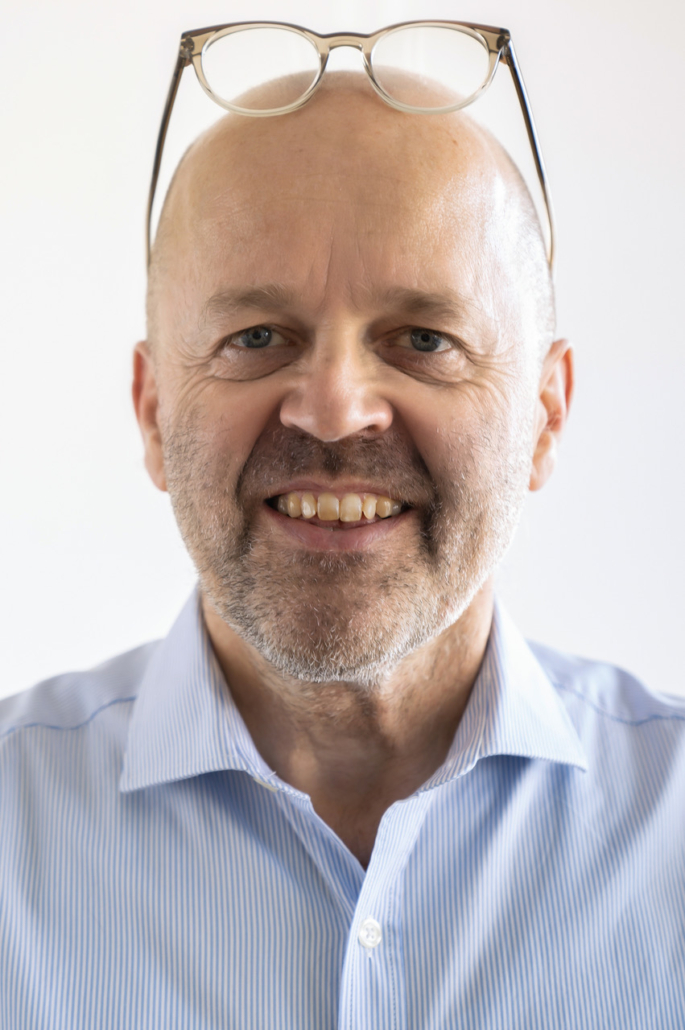
Christian Lüscher is Full Professor at the Department of Basic Neurosciences of the University of Geneva. He is also an attending in neurology at the Geneva University Hospital and on the editorial board of Science.
#20: Christian Lüscher – OptoDBS and how we bring back the neuron into neurology
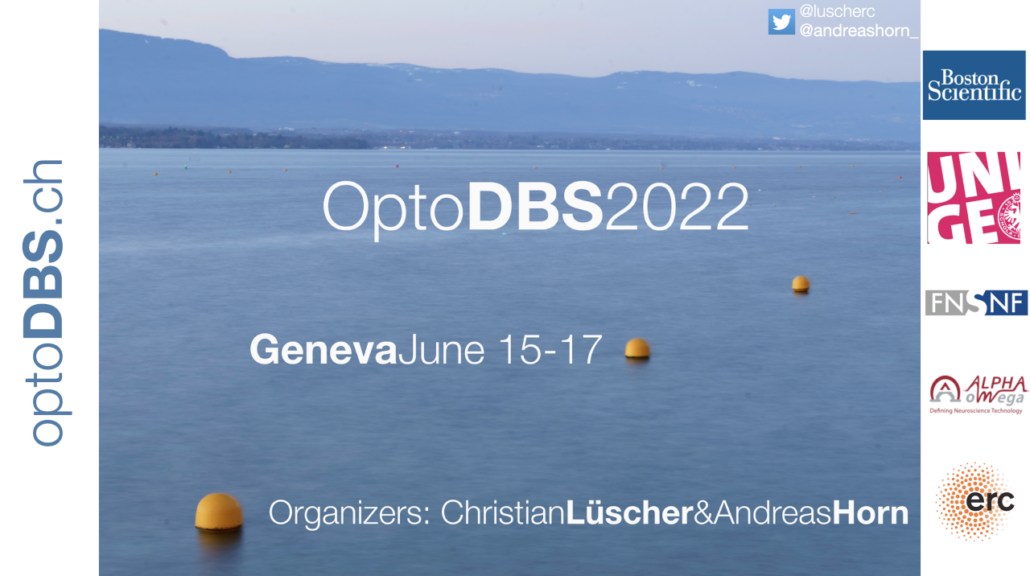
In this episode I had the honor to speak with Christian Lüscher about his exciting work on neuromodulation in addiction as well as the upcoming OptoDBS conference which he has been organizing since 2015 in Geneva. We cover Christian’s milestone works in creating and refining a model of addiction in the brain, ways to counteract addiction using both optogenetics and DBS and why only about twenty percent of mice with unlimited access to drugs will become addicted. We discuss examples of optogenetically informed DBS by the Lüscher lab and recent milestone work by Aryn Gittis. OptoDBS has unique setup of joint sessions with similar topics by speakers from the optogenetics & DBS fields, respectively. The aim is to derive at optogenetically informed concepts for DBS – which could be implemented to change clinical practice. I have the great honor to co-host this years’ conference and we discuss the anticipated highlights of OptoDBS and what we are most excited about.
I hope you enjoy the conversation with Christian as much as I did and we both hope to see you this June in Geneva for OptoDBS 2022!
Christian Lüscher 00:00optogenetically inspired DBS compared to the canonical traditional DBS, which was much less efficient. So I think that's another just proof of principle that this line of thinking, optogenetics can give you blueprints for new DBS. And then you can actually see whether this is feasible. And there may be some which are not feasible, but I think if you're really clever and exploit these mechanisms, this knowledge about these circuits, to just whenever you have access to these cells, and should it only be on surgical instruments that you take back up from the brain, you can wash them. And if you do this carefully, you'll find 2,000 to 5,000 neurons, and you can do transcriptomics on those. So I think that would be something I would advocate, bring back the neuron to neurology. We can now... not only look at the activity of neurons, but we can actually look at the transmitter 01:02that comes out of the neurons. So there are genetically encoded fluorescent reporters that change their intensity as a
Andreas Horn function of how much dopamine they see. Making a hypothesis that this cell projects from A to B, you're actually looking at the entire projectome, and there have already been a number of surprises from that kind of... I think it's an illusion to be true. I believe that we can be... can direct research too much towards potential applications. Welcome to Stimulating Brains. Hello, and welcome back to Stimulating Brains. I'm Andreas Horn, and you're listening to Stimulating Brains. [inaudible] [inaudible] [inaudible] [inaudible] Hello to Stimulating Brains, episode number 20. First of all, [inaudible] 02:04[inaudible] [inaudible] [inaudible] [inaudible] [inaudible] between the drug-evoked synaptic plasticity and adaptive behavior in mice. In his lab, Christian uses optogenetics to study connections and neuromodulation in the brain, while in clinics he also uses deep brain stimulation to treat patients. Since 2015, he organizes a conference called OptoDBS that aims at bringing researchers from the fields of optogenetics and deep brain stimulation together, and also, of course, looping in clinicians with the aim to translate findings from the optogenetics field into the clinical practice of deep brain stimulation, or at least into the research field of deep brain stimulation. In his own work, his lab 03:02has created evidence with optogenetics to reverse some sort of addictive mechanism in the brain that he could also then reproduce with deep brain stimulation in the same mice. So far, the last step to really translate this into clinical practice or test this in humans has not been done. But with OptoDBS, he has been able to do that. He has also been able to do that with the use of optogenetics as a means of teaching patients about [inaudible]. So he really wants to make such translations more frequent in the field. It is my very great honor that Christian has asked me to co host the OptoDBS conference this year in Geneva. So in our conversation, we also talk a bit about the concept behind this year's conference, what we expect as highlights of this year's conference. And we also, of course, want to invite you all to join us this June in Geneva for OptoDBS 2022. So if this conversation and
Christian Lüscher this type of reasoning behind the concept of optogenetics really helps you, I really want to
Andreas Horn bridging optogenetics and DBS is interesting to you, why not consider joining us in Geneva?
Christian Lüscher It's also one of the first in-person conferences that will happen now that the pandemic is a bit 04:04more under control. And we're really looking forward to fruitful exchange in the field at an in-person conference in beautiful Geneva. The OptoDBS conference has a mechanistic focus. So we're really inviting people that are interested in expanding our knowledge and mechanistic insights of deep brain stimulation and optogenetics. And to me as a participant in the last conferences, it was really one of the most insightful conferences I ever participated in the field of deep brain stimulation. So I hope you enjoy this episode number 20 of Stimulating Brains. And I also hope to see you in Geneva in June 2022.
Andreas Horn So Christian, thank you so much for taking time
Christian Lüscher to do this interview. Thank you for having me. I will have more formally introduced you by now. So maybe we can directly start and to break the
Andreas Horn ice. What do you do when not involved in research or medicine?
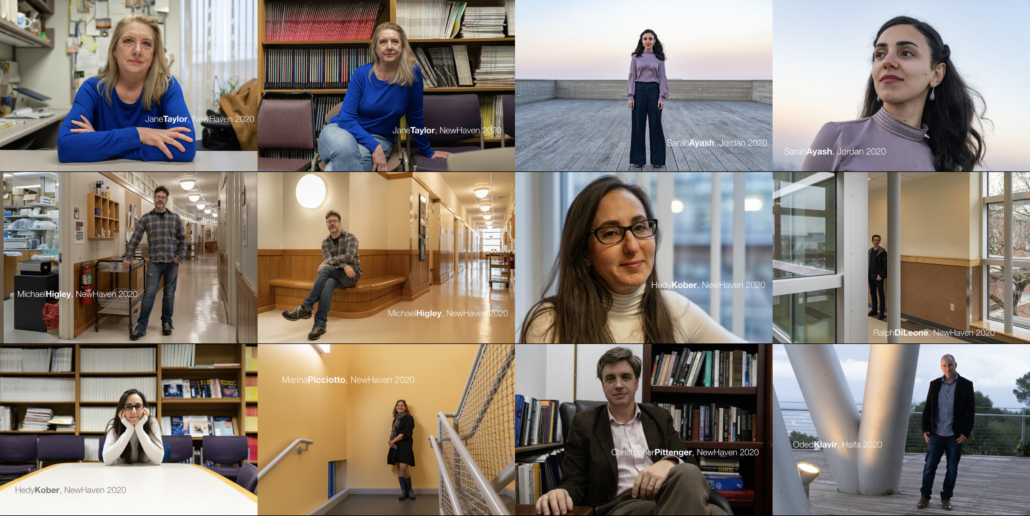
Christian Lüscher 05:04Oh, okay. And so you're asking me what I'm doing when I'm doing nothing. So I have two passions that I really do in my free time. One is cycling. The other is photography. So the road cycling is something I really like to do. And I'm really excited to do that. And I'm really excited to do Obviously, it's a physical exercise that I'm looking for. We don't have enough of that in the profession that we have. But it is also just the experience of geography. I really take great pleasure in exploring landscapes by just cycling through it. And this is really mountain cycling, right? Sure, absolutely. Road cycling. So there was one trip we did from Lake Geneva to the Mediterranean Sea and so obviously from Tonant to Montant and you know I sort of knew that there are mountains in between but now actually I know so and I know how high they are how they steep 06:05they are and it's really just a great exercise to experience your surroundings so this is one of the things I really like to do a lot and the other one is photography and so something I started when I was a teenager already in the dark room develop developing film and printing the prints yourself now it's mostly done digitally but I still I like it a lot and so my passion has always been with the large format so I have already with the in the beginning we we had I have them on my Mia RZ and then and so that gave you gives you these big negatives and you can then blow them up and you you can do a lot of things and I think that's a really good thing to do and I think that's a really good thing to do and I think that's a really good thing to do and I think that's a really have a very crisp image and now I sort of emulate this by taking many pictures that I'm that I stitch together and that gives me a very high resolution so this is one thing I I really like 07:02to do and probably as you know I also take portraits portraits of colleagues this is a series that I started six years ago of the whenever I'm invited or where that I meet someone then in the end of a discussion, I ask permission to take a portrait, and that then made this website and the series of the famous neuroscientists in their natural habitat. Yeah, that's such a cool project. I've just seen a photo of Jens Volkmann that I think you took in Würzburg as well in that series. Is that going to be a book one day, or is there any plan to make that? I don't know. Well, I think the website is the best way of showing it. They're so diverse. There's so many different ones. And so some that come to memory, which I really think are really special are like with Elena Cattaneo, who is a neuroscientist in Italy, and also a senator for life in the Italian parliament. She brought me to the 08:04parliament. So that was a great shot at the entrance, the guards watching over her. So that's the kind of thing that I think, or just very recently last year, Carmen Sandi, who is a very distinguished scientist, gave a plenary lecture in Lisbon. And then at the end, I took her in front of all these empty chairs with the signs of the COVID spaces on it. And so I think, yeah, it's great. I'm looking for trying to see something in people. And yeah, I think I'm going
Andreas Horn to continue this. Great. Yeah, please do. So we can also link to the site on the show notes.
Christian Lüscher Now,
Andreas Horn speaking a bit more about science already, what were the key turning points in your career? Who were your key mentors? Who stuck out? What changed everything?
Christian Lüscher Sure. So I'm an MD by training. And so at the time I did my MD, there were no MD PhD programs 09:07available in Switzerland, but I was always very interested and drawn towards science and actually neuroscience from the beginning. So for me, I was very interested in science and actually for me, it was clear that I wanted to be a neurologist. And so I did an MD thesis and then did some clinical electives and started my residency. But then what really made me the scientist I probably am now is when I started studying synaptic transmission. And that happened during my postdoc at UCSF with Roger Nicoll. He was a great mentor.
Andreas Horn It was an interesting and very stimulating environment in that lab. And so that was
Christian Lüscher something that really stuck out. So that is certainly something where I did learn a lot. And the other person probably, particularly also in the context of what we're discussing today, 10:06that was important to me was in 2010 in Geneva, Pierre Pollak was hired as chief of neurology. And so Pierre, who really has firsthand experience and then participated in inventing subthalamic nucleus DBS, then taught me how to do this in practice. And so I learned it from the master. And so these two people certainly made a big impression on me and helped me trying to bridge basic science with the clinical activities that I always kept. I did not know that. And as you may know, we have one episode with Pierre Pollak as well. I did listen to it.
Andreas Horn So how much clinical and research practice do you do in percent? Is that easy to tell?
Christian Lüscher 11:02Right now, it's basically a day a week that I see outpatient patient in outpatient clinic. And the rest of the time I'm in the lab. So yes, it's 80-20 split.
Andreas Horn And you're still clinically involved?
Christian Lüscher Yes. So we do have an activity of DBS and now in collaboration with the center in Lausanne. But we do see the patients before they then are operated, and we see them after it. And so the whole fine tuning of the stimulation is then done again in Geneva. Yes. Okay, so research wise, your lab is working on investigating addiction, I think mainly using optogenetics. [inaudible] [inaudible] [inaudible] [inaudible] [inaudible] [inaudible] [inaudible] [inaudible] [inaudible] [inaudible] [inaudible] [inaudible] [inaudible] [inaudible] [inaudible] [inaudible] [inaudible] [inaudible] [inaudible] [inaudible] [inaudible] [inaudible] [inaudible] [inaudible] [inaudible] [inaudible] [inaudible] [inaudible] [inaudible] [inaudible] [inaudible] about. Sure. So I guess the overarching hypothesis that we're trying to test is to which extent 12:03changes in synaptic transmission can explain addictive behavior. So this sort of stems again from my postdoc at UCSF, where I studied the synaptic transmission and synaptic plasticity, long-term potentiation and long-term depression. And it became clear to me that this would be an
Andreas Horn interesting phenomenon to study in the context of addiction. And that's for two reasons. First,
Christian Lüscher at the time, it was already clear that one commonality of addictive drugs is that they increase dopamine and dopamine can modulate transmission of glutamatergic, but also GABAergic synapses. So this was a very significant phenomenon. And I think that's why I'm trying to study this. biological argument. And sorry, you mean increased dopamine in the
Andreas Horn nucleus accumbens, correct? For example, yeah. Whenever there is a synapse,
Christian Lüscher a sort of a tripartite synapse, where glutamate afferents make synapse onto a cell, and at the 13:02same time, there is an ascending dopamine projection, then this is the outline of a synapse that can be modulated by dopamine. So that's one of them. Then of course, the place where that happens first is the nucleus accumbens.
Andreas Horn Okay. So that is certainly something. And the other thing, yeah, is that at the time,
Christian Lüscher Wolfram Schultz described his reward prediction error signaling in dopamine neurons of the ventral-degmental area, and put this into context of temporal difference learning. And so that obviously was also a very different but equally convincing argument that we should study the convergence of dopamine, and glutamatergic transmission. And so that was sort of the, from the beginning, we set out to study addictive behavior as a substrate of altered synaptic transmission, 14:01when dopamine modulates glutamate transmission. Yes. So that was the, that was, that's the beginning. And so we then spent some years actually, trying to understand whether this is indeed the case for all addictive drugs, that they actually increase dopamine, because while this was sort of assumed, it's not a trivial question, because each addictive drug has its specific molecular target. And so how they could increase dopamine in the nucleus accumbens differs a lot. So we identified the different cellular mechanisms through which dopamine increases when you take cocaine, heroin, and other drugs. And so we then started to study the first one we actually started with is a sort of a typical drug. It's gamma-hydroxybutyrate, GHB. It's a GABA-B receptor agonist, and we were able to show how that nevertheless can increase the dopamine. So this is one line of a number of projects where we have looked at this. We looked at all of those events at ionotropic receptors. And we actually have now a paper in revision where we look at ketamine in that context. Is ketamine increasing dopamine,
Andreas Horn 15:15and if so, how would it do it? And so that is, so these are, this is still something we really
Christian Lüscher think about all the time. And then the second sort of line of research was, okay, so if dopamine changes glutamate transmission induces this plasticity, which we in 2011 called drug evoked synaptic plasticity, then the question becomes, how does that actually relate
Andreas Horn to behavior? So which synapse is responsible for which behavioral alteration? And that was probably
Christian Lüscher from 2010 to 2020, most of our research, we try to establish links of causality between specific 16:03types of identified synaptic. Transmission changes and adaptive behavior. And the adaptive behavior that we were studying at the time was really some of the very early types of adaptive behavior, such as sensitization. You know, if you give cocaine, the animal runs around, if you give a second dose, then the animal runs around more. So this is called locomotive sensitization. And we sort of try to identify the cell or substrate. And we found that yes, indeed, if mPFC afferents onto accumbal D1 medium spiny neurons is potentiated, then that is actually the neural correlate of locomotive sensitization. Because we designed experiments that allowed us to restore the normal transmission, and then the animal would behave as if it had never seen 17:01cocaine before. So that was for us, that was sort of an important experiment, again, because it was a very complex experiment. And we found that the of the ventral tegmental area. And sure enough, when we did that, the animal had channelrhodopsin in the VTA dopamine neurons and could self-stimulate these VTA dopamine neurons. And all the animals did that and really liked to do so and were highly motivated to do so. If they had to press several times, they would do that. And the fact was that under these circumstances, 50% became compulsive. there are plasticity protocols which can then sort of offline, and that would even have the advantage that you would have an effect that is enduring and outlasts the direct stimulation. So then maybe you would have to stimulate once a week, and then that would already be a great advantage for battery life. I think that's the perfect segue to talking about OptoDBS. So since 2015,
Andreas Horn Exactly. So before, you know, before thinking of behavior, it's just, for me, this is the first time I sort of started to make sense that we did have a sort of, that we're getting at the core of addictive behavior. 18:05And so contrary to many other theories, which said that, you know, people are addicted because they lose neurons, for example, drugs are neurotoxic. And so somehow there are neurons dying. And that is the reason why people are having addiction-like behavior.
Christian Lüscher We could show that without any loss to the simple change of synaptic efficacy between two identified neurons was sufficient.
Andreas Horn And so this causality link for us was really a turning point. And then from there, we sort of took it and then started to investigate probably the much harder question, which is, which individual are truly addicted? Because with addiction, one of the problems is that not everybody...
Christian Lüscher 19:02Very interesting. And I think we should say that... If you give enough, like, access to drugs to both mice and humans, apparently only 20% get addicted. Yes, that's true.
Andreas Horn Right. And so your question would now be, why is that the case? Correct? Well, so there are two questions. So why is this the case, as you said, and how does it occur in the brain? So now that we have looked into this a little bit, we have a fair idea how the brain changes. When? When an animal, when an individual becomes compulsively addicted. We don't fully know now yet why and what are the predisposing factors that would lead in one individual to that and not in others. So that is still something we're really actively working on. But the questions of which circuits code for the compulsion and how and in the transition from this recreationally controlled,
Christian Lüscher 20:05drug consumption and the compulsive use of a drug that we have, we have some ideas. And this is something we started in 2015. And ever since that has really kept us very busy, because it's obviously a difficult question. Because if you have to set up an experiment, there were only 20% of the individuals actually show what you're looking for. And it's a much harder experiment, then it can do study something that happens in an experiment.
Andreas Horn Yeah.
Christian Lüscher Every individual. Yes. And I think you could you could max that to 50% by direct optogenetic stimulation, right? And then then I think half of the animals would show that.
Andreas Horn So exactly, because it is such a difficult, such a low number, it's only 20% with cocaine, we then thought that maybe we could get higher transition, if we had a sort of somewhat pure addiction by directly stimulating the dopamine neurons of the brain.
Christian Lüscher 21:04of the ventral tegmental area. And sure enough, when we did that, the animal had channelrhodopsin in the VTA dopamine neurons and could self-stimulate these VTA dopamine neurons. And all the animals did that and really liked to do so and were highly motivated to do so. If they had to press several times, they would do that. And the fact was that under these circumstances, 50% became compulsive. And then we said, okay, now we have a model where we have sufficient individuals transiting to it. And so we can actually study it. And so that's how we studied it. And we identified a specific circuit, which now is in a more dorsal part of the striatum between the orbitofrontal cortex and the really central part of the dorsal striatum. And if the potentiation happens there, then animals are compulsive.
Andreas Horn 22:04And so this is a good example how you can use leverage optogenetics to do something with a much higher precision. And then, of course, afterwards, we had to go back and validate that this is indeed also the case with cocaine, which it is.
Christian Lüscher So, yes, I mean, so this is using optogenetics as a means to, as a surrogate for an addictive drug.
Andreas Horn And through that, better understand the pathophysiology. Would that experiment more or less directly replicate the Olds-Milner setup? Or is it different? I mean, I know that was electrical stimulation, but was it the same?
Christian Lüscher It's the same mindset. Yes, absolutely. So it's just that we did stimulate similar regions. And then we did prolong the stimulation over two, three weeks. And then we looked for the animals that would not stop that self-stimulation. 23:04Even if they were not, they would not be able to do that.
Andreas Horn So they had to endure aversive stimulus such as a light electric shock. Yeah, so that's how we find the compulsive individuals. Okay. And these would have more activity in the OFC or like sustained activity? Yeah, so they have higher activity in the OFC.
Christian Lüscher And as a result, the connection between the OFC and the dorsal striatum is potentiated. And so we, again, then used optogenetics in a different way to show causality. Because if you have a compulsive individual, you have a higher activity in the OFC.
Andreas Horn And if we took a mouse, an individual, which after all these experiments, this animal would not be compulsive, right?
Christian Lüscher It would stop with the aversive. Then we could artificially potentiate that synapse and it would become compulsive. And conversely, the individuals that were compulsive, we could depotentiate the synapses between the OFC and the dorsal striatum, and they would stop self-stimulating.
Andreas Horn 24:01Okay.
Christian Lüscher And I think if I... If I understood correctly, you don't yet know correctly what differentiates the two populations, but epigenetics seem to play a role as you show in the 2019 neuron article. And then maybe in a second question along the same lines, I think in 2006, you came up with a model of addiction in the brain, but that did not account for this, you know, that some animals would get addicted. It's true. So we then summarized the results in the field. Not only ours, because there are many other people working on these circuits of addiction. First in 2016 and then 2021, and we sort of developed a first circuit model of drug addiction. And the one in 2016 is really version 1.0, which would not take into account this transition to actual addiction. So it was certainly an incomplete version of it. And now in 2021, together with Patricia Janak, 25:02we published one where we now integrate it. This... Newer findings from us and other groups.
Andreas Horn And that is sort of, yeah, now the version maybe 1.5 or something like that.
Christian Lüscher Great.
Andreas Horn Okay.
Christian Lüscher It's really amazing research.
Andreas Horn So how do you think such insights as the ones from your lab could then best inform clinical practice? What are the gaps? Yeah. So, so exactly.
Christian Lüscher So I think, you know, obviously if you have these circuits model, they're a list of things. You could propose as potential therapies.
Andreas Horn So then the question is, how do you do this in a individual, in a human, where access to genes and genetically determined cell population is not possible?
Christian Lüscher I mean, maybe that will become possible one day, but I guess for now it's just not possible. 26:01And it is very difficult because it requires, it's a virus that brings in a gene and it requires typically a Cre-lox system for a cell type specific recombination. So you start with a transgenic animal and then it would require that the expression is stable over the entire duration during which you want to treat, which in most cases is years or tens of years. So, so, so I guess there are possibilities to try. I mean, I don't know if it's a good idea to translate directly optogenetics to humans, but I think they are still at least 10, 15 years old. So with that in mind, we had another idea, which was to say, well, what if we could use the optogenetic protocol that really works well to instruct new creative ways of doing electrical stimulation akin to what we do with DBS. 27:03And so, yeah, I think that's a good question. In other words, the question became, how can we emulate if the electrical stimulation, what we can do so successfully with optogenetic stimulation. And so there, again, there's not one solution to that problem. There are many, many solutions. And just as a proof of principle, we were able to show that what we successfully did in 2011, that is to take away this locomotor sensitization with optogenetics, because, we could emulate this with electrical stimulation, if we added a dopamine receptor D1 antagonist. And the reason for that was that with the electrical stimulation, by contrast of the optogenetic, you would also create a lot of release of dopamine when you put the electrode in the nucleus accumbens. And this dopamine would preclude the normalization of the synaptic transmission. 28:04And so in order to avoid that problem, we simply had to add a dopamine receptor antagonist to refine the stimulation a tiny little bit. And with that, we then have the same result as with the optogenetic one. So this was just a proof of principle, how you can, if you know what you should be doing, there are maybe creative ways of doing this.
Andreas Horn And so this is one of the ideas which we called optogenetics, which is the idea of, how do we make the DBS more optogenetically inspired?
Christian Lüscher And I think there are many others there, including additional new papers now coming out, where people pursue the same line of reasoning in order to make DBS, to refine DBS and make it more efficient. It's amazing. So, so, so, and I did not know that with the antagonist. So, so has that was done in mice in your lab. 29:00So has anybody went, you know, gone to,
Andreas Horn to humans yet? And have you been in contact with that or do you know about it?
Christian Lüscher So, you know, in theory, everything we did, you could do it in humans. You can put electrodes in the accumbens. Sure. You can stimulate with the frequency we did, which was 15 Hertz. And you can use that drug, which is called Ecopipam in humans. It's actually FDA approved for other indications. And so you could combine all of that, but to so far, I think it's, it's a very, it's a very, it's a very, it's a very,
Andreas Horn it's a very interesting [inaudible]
Christian Lüscher 30:03Okay. Any other prime examples, segueing into the conference talk as well, where people have
Andreas Horn used optogenetics that then inspired deep brain stimulation?
Christian Lüscher Well, sure. So I mean, now I guess we're leaving a little bit the addiction field, which is fine. And as you know, the primary indication for DBS is Parkinson's disease. So I think there's a really outstanding paper in Science in 2021 from Teresa Spix from the Aryn Gittis lab, where they did just that. So in essence, what they discovered was that in the GPe, there are two cell types, which can be genetically identified. And if you optogenetically activate one and not the other, you actually, 31:00in an animal model of PD, are very efficient. If you activate both together, you're much less efficient. So now they did an entire electrophysiological investigation of the two
Andreas Horn cell types, and then realized that the sort of special burst firing pattern was doing exactly
Christian Lüscher what the optogenetics was doing. That is, they could activate one type and not the other one. Because of the, you know, [inaudible] and the set of ion channels one had, it adapted to that burstness and did not follow. And so with that in hand, they then went in and actually did, in the mouse, a DBS experiment. And sure enough, they did have a very convincing effect with this burst firing, this optogenetically inspired DBS, compared to the canonical traditional DBS, which was much less efficient. So I think that's another just proof of principle, 32:00that this line of thinking can be really good. And I think it's, again, I think it has all the ingredients that now could be tested in a clinical study.
Andreas Horn Great. Yeah, so simply put, with optogenetics in the mouse, we can do almost anything, and we can be really precise. And now the only question is, how do we mimic that?
Christian Lüscher I sometimes called it, optogenetics can give you blueprints, for new DBS. So and then you can actually see whether this is feasible. And there may be, you know, some which are not feasible. But I think, if you're really clever, and exploit these mechanisms, this knowledge about these circuits, you can do things that you could not do before. And, you know, most of the DBS I know, has never tried to really exploit plasticity mechanisms, it was always about changing activity here and now immediately. And so, you know, I think that's a really good point. And I think, there are plasticity protocols which can then sort of offline, and that would even have the advantage that you would have an effect that is enduring and outlasts the direct stimulation. So then maybe you would have to stimulate once a week, and then that would already be a great advantage for battery life. I think that's the perfect segue to talking about OptoDBS. So since 2015, 33:29you've been organizing this Biennial Conference in Geneva, which will also again take place this June, again in Geneva in Switzerland.
Andreas Horn So can you summarize what were the main aims? How did it come up? And what's the philosophy behind OptoDBS? Yeah, so it's exactly as you said,
Christian Lüscher in 2015, for the first time, we had this idea that maybe it would make sense to organize a meeting where across the aisle, all DBS specialists would talk to optogeneticists
Andreas Horn 34:01exactly with the idea to see how we can learn from each other.
Christian Lüscher And that was certainly in 2015, a totally new concept. And I'm really happy that we're now at the fourth edition that I'm very honored to co-organize with you. And so I'm looking forward to see how each time we do it, the idea becomes clearer and people are getting into that mindset of using the idea of understanding circuits and through that, come up with clever new ways of doing DBS. Great. And the honor was of course mine. And it's really nice of you to look me in. And it was fun to help organize the program on maybe more on the DBS side. But I must say, you do. It's going to be great. I think it's exciting. So the two of us, we sort of represent, both angles that come to it. 35:01And I think, sure, I'm really excited. For the record, I wanted to state that, of course, you still do most of the work and the whole concept. And I'm really honored to be a small part in it.
Andreas Horn So thank you so much at this point.
Christian Lüscher But do you, maybe going into that a bit more, looking back to the original, like the other three editions,
Andreas Horn do you have some key insights or highlights in mind from the last years?
Christian Lüscher Or examples where you really had the feeling, okay, now it clicked or there was this, whatever, great, these two talks that were placed together
Andreas Horn that didn't work out the concept so far?
Christian Lüscher Well, so it certainly was first a lot of getting to know each other. That's for sure. But I do know for a fact that Erin had some of her ideas during these meetings. So I'm certainly proud of having sort of being able to set the stage that we had. Right. That they could go and actually did the work. 36:01So that's certainly. And I think the other thing that comes to mind is that during the meeting, we've always put an emphasis on non-PD indications of DBS, such as OCD and addiction and depression. And I think that is also something where I can see some of the talks of Helen Mayberg, how she relates them to the latest observations that people make. And I think that's something that we can really see in the optogenetics. Yes, certainly. Great. How would you, so, and we could mention that Aryn Gittis is also giving a talk this year. So it's maybe already advertising that. Really looking forward to that. Or another one is, you know, using the optogenetics like Alexandra Nelson's, the stats from UCSF to understand how DBS actually works. Because if you want to study, you want to study, you want to study, you want to study, you want to study, you want to study, you want to study, you want to study, what an electrical stimulation does in the brain, 37:01it's very hard because you have a lot of stimulation artifacts. The sheer fact that you stimulate at 100 hertz makes it hard to see with another electrode what you're actually doing, even in a neighboring structure. So I think what came in there is sort of the observational limb of optogenetics, that is calcium imaging. So here you have a method that allows you to transfect cells, again, cell type specifically with proteins like GCaMP. And that allows you to follow the activity as a calcium signal. And there is just no stimulation artifact. So I think through that, and I know that she has new data that she'll present at the meeting. That's very great. That's also very exciting to see. So you can also use optogenetics to study how DBS, what DBS actually does, because let's face it, we don't ultimately, ultimately, we still don't fully understand how it works. 38:03Then maybe to a bigger picture about the conference for listeners that now might think, oh, I should go to that meeting. Like how would it compare to maybe the DBS Think Tank or the DBS Expert Summit or also iBAGS, which are probably the closest other conferences that I know of.
Andreas Horn Yeah, and definitely then there are also all the GRCs.
Christian Lüscher So GRC on basal ganglion. And so I think it is always a sort of a, I think it's the only conference that really puts them face to face.
Andreas Horn Yeah.
Christian Lüscher I do see that there are many thinking along these lines also in these other conferences that you mentioned, some of which are more on the clinical angle and some of which are really definitely under the basic science angle. But really having them talk to each other face to face. I think that is where 50% of the speakers are specialists in optogenetics and 50% are 39:01doing clinical DBS. That's quite unique. Great. Maybe from the program, we won't go into detail. We thought about like, and not, we won't speak about specific sessions, but what are
Andreas Horn maybe key highlights that you're looking for beyond the two talks already mentioned?
Christian Lüscher Well, so I'm certainly looking forward to, we have a good set of people giving us updates on the latest approaches with optogenetics. I'm also particularly looking forward to looking at very quantitative behavioral observations that now can be done with markerless pose estimation. I think that is also something where we need to do much better in the animal research is to have a more quantitative observation. Of. Behavior and motor behavior, you know, looking at limbs, how they move. That is certainly something we can do now much better. And then, first day, we're going to have a Philip Starr keynote lecture. 40:01So I'm looking forward to that one because it is getting into look, discussing what should you be monitoring in the brain of someone undergoing DBS to make it most efficient. And, and he has very creative way of doing this. And so [inaudible] [inaudible] [inaudible] [inaudible] [inaudible] [inaudible] [inaudible] in Geneva and we do have a number of social events and so for that I mean we do go to conference primarily for the science but we also go to meet other scientists and it's fun to interact with 41:00those. Yeah it's a beautiful setting in Geneva so I've been there once only myself but I really love the setup and it's really close to the lake and everything as well so I'm really looking forward. So before we wrap up let us conclude maybe with some more general rapid fire questions.
Andreas Horn When do you think optogenetics will become a reality in clinical application? We talked about
Christian Lüscher that briefly already but beyond single case reports I think there was one single case where optogenetics was. I just wanted to say that there has been in 2021 the first human transfected with optogenetics and that was in retina and that was certainly that's a landmark that will be a landmark paper but it's still a long way to go. First of course the retina while it is CNS it is much easier to approach and the intervention there is a very specific disease which where we know that what 42:03needs to be corrected. I think for the in the deeper brain structures it will take more time. more time. much more time. You know it's difficult to predict but 15 years at minimum.
Andreas Horn Makes sense. Do you think it would even ever replace deep brain stimulation or will it you know by in 15 years do we have other things that are even better?
Christian Lüscher Well sure I mean you know the electrical stimulation is not the only one. I think one modality and then you can also think of magnetic stimulation so that is certainly also something that may that certainly will make progress and something that people are really excited about is ultrasonic stimulation. There are sets of mechanosensitive channels that you can transfect or that actually are expressed by normal neurons and if you find the sort of a sweet spot of how you can do ultrasonic stimulation in a 43:04specific with a special focus in a specific brain region maybe that could be something and then you no longer need surgery so I think that may be it's it's really new and I think it's just just very fascinating to see how such a modality could be interesting.
Andreas Horn But again it's not something that is easy to use and it's much less specific than electrical stimulation. So yes it needs to be further explored. What are other like basic science breakthrough techniques that can be used to help people with brain damage? What are some of the things that currently come up that maybe your lab already uses or thinks about using for example is RNA barcoding something that's coming up or?
Christian Lüscher Sure so so I think you know modern circuit neuroscience builds on four pillars. One is the behavior we mentioned this we need to have more quantitative behavior we need to be able 44:02to look at the behavior in an unbiased fashion to look at everything if you want with high temporal resolution. The other thing is that we need genetics to have better understanding of the cell types you know I use the term cell type several times now but we frankly we still don't know how many cell types there are in the brain so even a nucleus like the STN which we all sort of learn in medical school that this is very homogeneous glutamatergic neurons the only one in the in the circuits of the basal ganglia. It turns out first there are GABA neurons within the STN and second among the GABA neurons there are different types of GABA. Among the glutamate neurons the different types of glutamate neurons. So I think we need to improve that and understand, and one technique that obviously has really 45:00been transformative is that you can now look at the transcriptome of single neurons so single cell RNA-seq. So that is something that. Many. Of us do you can do this in animals but you can also do this in humans so it's probably a good idea to just whenever you have access to these cells and should it only be on you know surgical instruments that you take back up from the brain you can wash them and if you do this carefully you'll find 2000 to 5000 neurons and you can do transcriptomics on those so I think. That would be something I would advocate. Bring. Back. The neuron. To neurology. I think that would be certainly something I think. And then on the. Third pillar which is observation and manipulation of function. There's a number of new technology that is emerging so. We can now not only look at the activity of neurons. 46:02But we can actually look at the transmitter that comes out of the neurons so there are genetically encoded fluorescent reporters. So there are genetically encoded fluorescent reporters. So there are genetically encoded fluorescent reporters. So there are genetically encoded fluorescent reporters. So there are genetically encoded fluorescent reporters. That change their intensity as a function of how much dopamine they see. And I think that is really a game changer so we can do this for dopamine serotonin adenosine and so forth so there's a whole range of. Sensors that one can now use, and so having at the same time the activity and the transmitter released is a big big advantage. At the level of the. At the level of the. At the level of the. At the level of the effectors. There are also a number of new ones.
Andreas Horn There are particularly interesting ones.
Christian Lüscher Looking at presynaptic function so that has been inherently difficult. To inhibit. Neurons optogenetically at the level of the presynaptic. Transmitter release and there are new technology. 47:00That comes comes in there. And then last but not least and I mean that's where you are certainly much more expert expert than I am. Is when it comes to anatomy. And so I think. Together with the cell types we can much better define the anatomy. And what's more we can actually look in the brain without having to decide where we're going to section. And by that I'm. Meaning that we can do. These clarification techniques is clearing techniques like clarity.
Andreas Horn Yeah.
Christian Lüscher That makes the entire brain transparent. Except where you have your floor for. And then you can use a light sheet microscope for example and basically scan the entire brain so. You're not making a hypothesis that this cell projects from A to B. You're actually looking at the entire projectome. And there have already been a number of surprises from from that kind of. Research so I think anatomy is certainly. 48:02And for all of these techniques I think. What is really what what I think is really amazing is that you can now. In animals. Also use them in combination of observational techniques in particular. That typically are used in patients such as fMRI.
Andreas Horn Yeah.
Christian Lüscher And so by doing this in parallel. I think this has a great potential to really understand. The cellular underpinning. Of altered function in humans. I mean this is one of the biggest in my opinion. This is still a challenge. Is how can you. Make cellular sense. Of an observation you do in human. With a technique. But you do not have cellular resolution. So how can you apply the cellular models. To these results. And that's true for fMRI. That's due for EEG. And so forth. So I think there are really great times ahead. 49:00Where one can combine this. And then with advanced analysis techniques really make very clear predictions. That you can have optogenetic. He. Inspired. FMRI. Then kind of right in the same concept. Where you know what's going on in the mouse with optogenetics. And then you can measure fMRI. And then try to map back in humans potentially.
Andreas Horn Absolutely. Yeah.
Christian Lüscher No, absolutely.
Andreas Horn This is exactly.
Christian Lüscher Great. Maybe very general question. Did you ever and I'm sure you have had like true. Eureka moments in your research. What were the key moments where you thought. Now I understood it. So I mean. What I mentioned in the beginning is this experiment where we were able to show. That by normalizing synaptic transmission. We could restore the initial behavior. That was certainly something like that. But even in situations like that. This does not happen. Within a moment. 50:00Right. This is a process. Where from the idea. And in this particular case. This was an idea we had during a lab retreat. And I think that this is some of the really. Quality time that I, that I like a lot sitting together. We did this for an entire week in a, in a small castle in France.
Andreas Horn And during that we were sitting around and we just brainstorming. And then someone had this idea and then we started thinking of how could we possibly test it?
Christian Lüscher And people say, well, some said you can't do it. You can do it like this. And so, and then until we actually had results. We were convinced. And so it was a, maybe our. Time frame of four or five months. So yes, in hindsight, this was certainly a transformative idea and the transformative experiment. But it's not how you see it in the movies where people. You know, take out something and then they see it immediately and they stand it immediately. That never has happened to me yet. 51:01In hindsight, at least you can pinpoint it to the moment, but you're right.
Andreas Horn Yeah.
Christian Lüscher I can totally relate to that. Maybe also speaking about failures, did you ever think this was a complete waste of my time, or did not go well? Well, I guess I have this basically every day, and what I'm alluding to here is this increase of administration. I mean, I think that is something which I think is getting to a limit where sometimes I feel it's difficult. But on the other hand, the possibility then to discuss with people in the lab, actual science, they show you new results at lab meetings or with colleagues on the floor, I think that just makes up for all of that. So yes, I'm still optimistic about science and the future of it. But it has become true that on many levels, whether it's grant administration, whether it's animal experimentation, the whole administrative overhead has become very, very difficult. Yeah. When we met in 2000, like last year in July in 52:06Berlin, you recommended Karl Deisseroth's book, Projections, which I am still reading, by the way, but have read a bit. And it's amazing. I also really like the audiobook, which he narrates himself. So in the foreword, he says something like, he mentions that the optogenetics research when it began was only possible because of basic research that had taken part in the algae that... Well, then used in proteins and algae like decades before that. And at the time, people that made that kind of research never could have foreseen that it would be used in neuroscience and maybe even medicine later. So he uses that argument to make the point that we should continue investing into these basic research questions that are not so directly goal-directed or even clinically 53:01directed. And then there are other voices that... I couldn't agree more. I think that's really an important point. I know Georg Nagel and Peter Hegemann, and they were the ones that were working on algae. And they were the ones that first cloned channelrhodopsin and then sought to find people who were interested in even trying this in neurons. And that was a lengthy process already right there. But I think, yes, indeed, I mean, we can learn a lot from so-called useless basics. It's a basic science. Absolutely. I think we should still have academic freedom where investigator drive the question. And I think it's an illusion to believe that we can be, can direct research too much towards potential applications. Because there are voices that are, you know, being voiced that we should invest more in this
Andreas Horn 54:02very focused clinical research, right? Yeah. Yeah, it's good to hear that.
Christian Lüscher It's a trade-off. I think if you are in a good situation where you have clear knowledge of how it's... and it becomes a technological issue, then of course, I can understand that you do very focused applied research. But with brain diseases, and that includes Parkinson's, but certainly addiction, depression, and certainly also...
Andreas Horn Yeah.
Christian Lüscher we still don't know how mood is really coming together in the brain. So how anxiety is coming together. 55:01And so, yes, I think the time of basic science is not over. I absolutely agree. And I mean, the point he makes is even going beyond that, I think even studying just the proteins and algae without even thinking about the brain at all in itself was, you know, maybe at the time,
Andreas Horn not as clear why people would even be interested in them. But then later it became apparent, now this is very useful.
Christian Lüscher And I think he tries to make the point that only by doing so
Andreas Horn can we really create disruptive things because everything else is step-by-step, right?
Christian Lüscher It's small things happening, but we need this maybe random investigation of. Sure, but then I think, I mean, the optogenetic is certainly a good example where people have studied algae and in these algae, there's a phototropism. And so they do at their surface have light activatable channels that bring them in the right position 56:00so that the photosynthesis is optimal. But then once you have that, it also needs the prepared mind to understand what we're looking at and what the potential is for that. And I know for a fact, Karl Deisseroth was not the first person. Georg and Peter contacted and they were, they were turned down by a few colleagues
Andreas Horn who probably are not too happy they turned them down. Interesting. So that's, yeah. So any advice for young people entering the field?
Christian Lüscher Well, so I think it's, again, it's exciting times because I think something that the field has started to realize and is making a big effort is to be more inclusive. I think in the past, often scientific careers, we're sort of traced by your origins and by the schools you go to and the social class you belong to. 57:01And I really am happy to see that this is much less the case now. And I think we should continue these efforts. In many countries, this is first and foremost gender equality. I think that is certainly something. So I think people who are just curious, they should now endeavor into it and not think too much whether they are the type of person science is looking for. And again, coming back to my project on the famous neuroscientists in their natural habitat and their portraits,
Andreas Horn this is one of the motivations why I did it
Christian Lüscher because I wanted to show how diverse neuroscientists or scientists in general are and that the image that we have, the stereotypical image of a scientist is significant. And I think that's a very important part of the project. And I think that's simply no longer true. And rightly so. So I think that's exactly what fascinates me. And so for young people, 58:01there are many new opportunities
Andreas Horn and they should just go for it. And the only question, and eventually they have to ask themselves, do I have that curiosity in me to go and check out stuff?
Christian Lüscher And if the answer to that is yes, they should definitely go for it. Great. Super. So,
Andreas Horn yeah, thank you so much, Christian.
Christian Lüscher Have we, we have talked about a lot, but has there been something that you think we should have covered
Andreas Horn that we missed?
Christian Lüscher Well, let me think. I think, no, I think we have done a great job. I mean, you have done a great job in preparing these questions. And yes, I mean, the, for us, now between you and me, one of the big question is
Andreas Horn how do we then bring really these new concepts to clinical fruition? Yes.
Christian Lüscher And that remains really a big challenge because let's face it, it's not easy to change clinical practice. 59:03And certainly rightly so, because there are safety issues and so forth. But we need to find better ways of bringing the basic science from the bed to the bench side. So let's start with the conference this year in Geneva. Really looking forward to seeing you in person again. And also hope that some listeners might now be convinced to come join us there.
Andreas Horn Yes.
Christian Lüscher And we still have slots also for people who want to talk. So there are possibilities to submit an abstract. We did leave open a few slots precisely for those who have sort of cutting edge research that we could have missed. And we're happy to look, we're looking forward to that. Great.
Andreas Horn Thank you so much.
Christian Lüscher Thank you, Christian. Have a nice day. Thank you, Andreas. Thank you. You too. Bye-bye. Take care.
Click any highlighted text passage to jump the Spotify player to that point. The transcript text is present directly in the page HTML for search engines and accessibility.
Additional links