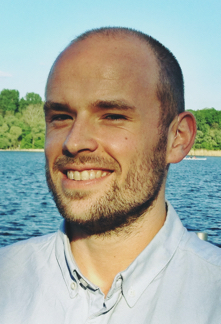
Prof. Wolf-Julian Neumann from Charité – Universitätsmedizin Berlin, where Julian leads the Interventional & Cognitive Neuromodulation Laboratory within the Movement Disorders & Neuromodulation Section.
#16: Julian Neumann – Machine-Learning for adaptive Deep Brain Stimulation
In this episode, Julian Neumann and I talk about his research toward adaptive deep brain stimulation. Julian has recorded local field potentials from DBS electrodes implanted in patients with Parkinson’s Disease, dystonia, essential tremor, obsessive compulsive disorder and depression and is a true expert on the mechanism of action of DBS.
With his laboratory for interventional & cognitive neuromodulation, he has recently ventured into machine-learning based applications to decode brain states from local field potential and electrocorticography recordings in the human brain. We talk about a multitude of conventional and novel physiomarkers that are envisioned for use to guide adaptive (or closed-loop) DBS applications in a tour-de-force across DBS targets, indications and concepts.
Julian Neumann 00:00The foundation for this idea of adaptive DBS was built when Andrea Kuhn published a paper in 2008 showing that similar to levodopa, DBS can suppress beta activity. And this suppression was correlated with the change in the clinical symptom state. So that means we have a physiomarker of the symptoms at the time they occur. And this physiomarker follows the symptom alleviation through therapy, through stimulation. And if you think about this, this gives a really unprecedented temporal precision in the therapy that cannot be reached by medication or other approaches. So ultimately the idea came up in Peter Brown's lab that you could use this activity to trigger the stimulation. So whenever the Parkinsonian symptoms are high, the beta activity is expected to be high. And this could trigger the stimulation leading to a demand-dependent stimulation algorithm. Welcome to Stimulating Brains.
Andreas Horn 01:17Hello and welcome back to Stimulating Brains, episode number 16. I've just moved back to Boston four days ago, struggling with jet lag and adapting to this new lifestyle on a sunny, Sunday afternoon. So what better to do than to edit this podcast episode in which I interviewed a dear friend and colleague from Berlin in my last days in Berlin, Julian Neumann. Julian is one of the smartest but also kindest people I know and has worked on the brain stimulation-related electrophysiology measures for at least the last decade. He has recorded signals from the depth of the brain in patients with a multitude of brain disorders, including Parkinson's disease, dystonia, essential tremor. obsessive-compulsive disorder and depression. 02:00He's a pioneer in developing adaptive deep brain stimulation paradigms and has recently ventured into machine learning-based decoding of brain states from local field potential and ECoG recordings. As a fun fact, Julian and I shared an office for a few years while we were both postdocs within the movement disorders and neuromodulation section led by Andrea Kuhn at the Charité in Berlin, which is, by the way, Europe's largest hospital and is regularly awarded as the best university hospital in Germany, Julian has become one of my main go-to people to ask about how deep brain stimulation actually works. So when I began editing a book on connectomic deep brain stimulation that has now been published with Elsevier, there was no better person to ask to write a chapter on the mechanism of action of DBS than Julian. I can really recommend reading Julian's chapter to get a solid overview about how deep brain stimulation acts in the brain across multiple scales in both time and space. And I think this podcast episode you're going to hear now could be a great primer for people interested in local field potential recordings, 03:05adaptive DBS and the general mechanism of action of deep brain stimulation as well. I hope you enjoy the episode as much as I did my conversation with Julian. So thanks for tuning in to Stimulating Brains, episode number 16. Stimulating Brains, episode number 16. Stimulating Brains, episode number 16. Stimulating Brains, episode number 16. Stimulating Brains, episode number 16. So I think scientifically you've been looking into physio markers of the basal ganglia and Parkinson's disease, dystonia and other diseases for the last decade now, I guess. Could you tell us in that context what a physio marker is or what we talk about as physio markers? Yes, sure. First, thanks for the invitation. It's an honor to also be invited here alongside so many well-known DBS and basal ganglia scientists.
Julian Neumann Regarding your question on the physio marker, I think the most appropriate definition is that a physio marker is a signature of electrophysiological activity of the brain that indicates a pathological state. 04:08And the physio markers that we have investigated are often rhythmic in nature. So often we look at oscillatory fluctuations of brain activity that relate to a certain brain state associated with the disease. So often we look at oscillatory fluctuations of brain activity that relate to a certain brain state associated with the disease. So often we look at oscillatory fluctuations of brain activity that relate to a certain brain state associated with the disease. I think in many of these, people also often talk about power. And maybe we should define that briefly for the listeners. Power often in a specific frequency band.
Andreas Horn Is it correct to say that elevated power, for example, can be seen as a marker for synchronized activity across neurons in a structure? Or how would you define it?
Julian Neumann Yes, so to understand the concept of power, maybe we should briefly introduce what is behind the scenes. Maybe we should briefly introduce what is behind the scenes. Maybe we should briefly introduce what is behind the scenes. And when we talk about power, we talk about the oscillatory signature of electrical activity that we can measure, 05:06for example, as voltage recorded in the brain. And that is often done in the clinical routine with EEG from outside of the skull. But given that we have the opportunity to record from the deep structures with deep brain stimulation electrodes, we have focused on that. So we record voltages of brain activity from the DBS electrodes in the deep structures that are targeted for the therapeutic effect. And this voltage fluctuation that we can record reflects all different kinds of underlying neurophysiological phenomena. Yes, you are right that a certain increase in power can be defined by an increase in rhythmicity or synchronicity of neural firing or neural activity. 06:05But it's more than just the firing rate, and it's definitely not equal to the firing rate. So we are looking at presynaptic fluctuations of voltages, so presynaptic activity, for example, when neurons fire that are efferent or an input to the target structure. And this leads to measurable fluctuations in the activity pattern that we look at. Now, to get a power value, you need to transfer this signal to the frequency domain. And this is a concept that is very prevalent in all kinds of different analysis or processes that we use from day to day. So the classic way to do this is to apply Fourier transform 07:01and decompose the original signal into multiple signals created from or defined by sinusoidal rhythmic activity. So you as an MRI expert, will know that, for example, even for getting images of MRI scans, there is a transition of the original MRI signal in the case space that can be understood as a frequency domain representation of the image. And via the Fourier transform, you are getting this image from the frequency domain to the actual domain of interest. Now, ultimately, power is constrained or defined by the amplitude of a signal 08:00in a certain frequency range. And you can understand this, for example, as the size of a wave in the ocean. So you have normal waves that are most dependent on the wind that is surrounding or activating the signal. And you can see how high these waves are. And that gives you an estimate of the power of the waves and also the force of the waves and the synchronicity. So that is maybe a more easy intuition. Another good one, I think, is the idea of trying to understand how string instruments work. For example, if you play the guitar, there is a rhythmic vibration of the strings. And the louder you pluck the guitar, the higher the power will be in the frequency in which the guitar string in a certain note resonates.
Andreas Horn But it is different to amplitude because it is in the frequency domain. 09:04Is that correct? So it would be the amplitude of, let's say, the beta sine waves in that frequency?
Julian Neumann The important aspect, yes. You are correct. And you refer to the fact that multiple oscillations or activity patterns can be present and can fluctuate in power at the same time. So if we go back to the ocean, you have the waves that come from the wind, but you also have, for example, the tide. And the tide itself has an oscillation. So we know that the tide fluctuates or oscillates and cycles every 24 hours plus 50 minutes. That's a fun fact here.
Andreas Horn Interesting.
Julian Neumann And that's on top of the waves. So you can have, in the ocean, you have two different rhythms that are always present. You have the rhythms of the waves that are coming from the wind. 10:02But you also have the waves or the cycles of rhythmic activity coming from the tides. And that is mainly related to the moon cycles. So you could estimate or evaluate the power of the low frequency oscillation coming from the moon present as the tide. At the same time, you can also evaluate or investigate the power of the waves itself. So you can have multiple activities in different frequency bands, and they can fluctuate in their intensity or amplitude. And when we talk about power, we usually talk about the amplitude or activity strength in a certain defined frequency band. Okay, gotcha. So I think this was really helpful, but I think it will also become clearer with an example.
Andreas Horn And one prominent example in this field 11:02would be the beta power story in Parkinson's disease. Can you tell us a bit about that?
Julian Neumann Yes, I think it's a very interesting story because it has shaped the way rhythmic activity in the brain has been understood and related to pathology or neurological disorders. And there is a first paper, to the best of my knowledge, on beta activity in Parkinson's disease published in 2001 by Peter Brown as first author. And it describes the rhythmic oscillatory activity in the internal pallidum and the subthalamic nucleus of two Parkinson's disease patients after withdrawal and administration of levodopa. And what is described here is really a proof of concept of research 12:01that has been followed for more than 20 years now. And in Parkinson's disease, it was described that oscillatory activity in the beta frequency range, which is defined as roughly 13 to 35 hertz, so these oscillations have cycles that occur with peaks and troughs 13 to 35 times per second. And it was found and described by Peter Brown at this time that levodopa can be found in the brain, and that can suppress this oscillatory activity. And from this moment on, a whole new research avenue went into the description and characterization of Parkinson's disease-related beta oscillations. And a whole new line of research has investigated the relationship of these oscillations with the disease, 13:01but also with therapy. So in 2006, for example, Andrea Kuehn, our mentor, has described for the first time that there is a correlation of bradykinetic and rigidity symptom severity in Parkinson's disease with the amplitude or power of beta activity. So this was the first time that a measurable oscillatory physio marker could be directly related to both a neurological disorder and its treatment and its symptoms. So this has a lot of impact for the way we understand neuro disorders and also a lot of impact on the way we understand and can measure from brain activity the current state of the patient and symptoms. 14:01Now, of course, just to wrap up, to roll back a little bit, of course, these concepts have existed before, but Parkinson's disease and beta activity is a very, very reproducible research topic, and therefore it has allowed a very thorough investigation of these relationships. So again, maybe to summarize, we are talking about local field potential recordings, so from the electrode, for example, in the subthalamic nucleus, in Parkinson's disease patients, and then based on that, if we see increases in beta power, they somehow code or correlate with bradykinetic symptoms and they respond to levodopa. Yes, that's correct. So they get lower in levodopa. So I think what is worth mentioning here 15:00in addition to that is that, brain activity in the basal ganglia in Parkinson's disease has been a topic that has been researched for a long time, and we understand the neurotransmitter dopamine and its relationship with basal ganglia function mainly from early studies about firing rate changes that are induced by, for example, a lesion of dopaminergic neurons in the MPTP monkey model of Parkinson's disease. And there it has been described that certain changes appear in the firing rate.
Andreas Horn And this is not exactly the same.
Julian Neumann It's actually a new dimension of pathological patterns in the basal ganglia that has been investigated with beta power because in Parkinson's disease, before this observation, 16:00it was the idea that there's simply an increase and decrease of firing rates. And we should not misunderstand that beta activity is the predominant or 13 to 35 hertz is the predominant firing rate in the basal ganglia. The firing rates are actually much higher, but it's a pattern of rhythmicity that increases or decreases the likelihood of action potentials and neurons firing. And from this moment on, it was understood that not only the absolute number of spikes per second
Andreas Horn or action potentials per second can be found to be changed or modulated with dopamine and be pathological in Parkinson's disease, but the pattern itself and the rhythmicity is changed. How about the other prominent target, the GPI? Do we see the same thing there as well?
Julian Neumann Yes, so there have been many studies now 17:01on beta activity, but even this first paper that I described from 2001 already investigated and recorded from both targets at the same time. And it actually makes another great point, and that is the question of the relationship of beta oscillations and firing rates and the source of the activity. Because the subthalamic nucleus is an input to the internal pallidum, we have an idea of the flow of information or the direction of communication. And they investigated the directionality of the signal between the subthalamic nucleus and the GPI, and they found that these two structures in Parkinson's disease are excessively coupled in the frequency band. And this has led them also to demonstrate that this fluctuation of voltages that we can measure as the local field potential 18:00is actually spreading through the network. And this also supports the hypothesis that even beyond presynaptic voltage fluctuations, there is an effective change in communication in the entire network.
Andreas Horn Do you have a good guess or even have data where it starts, so where the beta oscillation comes from? Is it from the network or does it have a source?
Julian Neumann Yes, so this is an ongoing debate
Andreas Horn and the main reason why this is so difficult to tackle
Julian Neumann is that it is always required to have a network to generate an oscillation. And it's kind of a hand-in-the-egg problem if you have multiple sources of activity and the activity spreads through the circuit. And so, just shutting down each node of the network will lead to changes in the activity itself. 19:00So, at this time, it has not been possible to really pinpoint a single source of activity. But, of course, from signal processing perspectives, you can use, for example, directionality measures like range causality and there it was always found and reproducibly found that the cortex drives the basic anglia.
Andreas Horn But whether the cortex is the source of this activity is not known. So, with drive you mean it precedes it? Exactly. In time? Yes.
Julian Neumann What we do know is that the amplitude of beta activity strongly relates to the dopaminergic state. And this is likely of subcortical origin first. So, the modulation of dopamine is very strong in the striatum. It's very strong in other dopaminergic nuclei. Of course, it's also relevant in the cortex. But given the relative innervation density 20:02of dopaminergic neurons in the subcortex,
Andreas Horn it makes sense or it suggests that
Julian Neumann the subcortex is a strong influence on beta amplitude in the network. And to just further support this, there have been very nice experiments recently by Ann Graybiel's lab using direct measures of dopamine with fast cyclic voltammetry that could measure the phasic changes in dopamine and could also record beta activity at the same time. And they found that there is a complex but net inverse relationship of dopamine and beta. That means if dopamine signaling goes down, beta activity goes up.
Andreas Horn Where did they record the dopamine?
Julian Neumann In the striatum. In the striatum.
Andreas Horn And the beta as well there?
Julian Neumann 21:00Yes, beta is very strong in the striatum. And we know, or it was described that in the hypodopaminergic Parkinson's state, there is an increase in beta activity. And this is really in line with the measurements of this inverse relationship of dopamine signals. And beta activity. I think you showed together with Andrea Kuhn that beta seems to code or correlate with bradykinesia and rigidity,
Andreas Horn but not with tremor, right?
Julian Neumann So it seems to be somewhat specific to the hypokinetic symptoms. Yes, so I mean ultimately we still need
Andreas Horn to understand better what exactly
Julian Neumann the mechanism of beta generation is. To really understand what the causal relationship of beta activity and symptoms is. And even the correlation with symptom severity that was shown before was still under debate 22:03when I joined the field.
Andreas Horn And that is why I started the study
Julian Neumann together with Andrea and other collaborators from the lab where we looked for the first time at a really large cohort of patients that we recorded in 2016. We published a paper where we showed that across 63 patients there is a direct correlation of beta power with symptom severity. 63 patients, that's really a lot, yeah. Yes, so for invasive recordings at that time that was a lot. Back to your question, after convincing more and more people that this relationship is really not a spurious finding, but a consistent reproducible one, the understanding of the specific relationships of specific symptoms with the activity has become more of a focus. 23:02And we believe that the beta activity is really related to bradykinesia and the negative motor signs of Parkinson's disease. Tremor is a complex issue that is not sufficiently correlated with the beta activity to call it a physio marker for that specific symptom. But patients who exhibit tremor often have tremor frequency activity in the basic anglia. So it's a different marker, again, a different phenomenon or rhythm in the signal that can be related to specific symptoms. Since you mentioned the phasic component of dopamine from Ann Graybiel's results, I think recently it became more hip or more as a next step to also look at the temporal domain of beta power. And I think when I came back from Boston in 2017 or so, 24:05beta bursts were all you talked about, not only you but other people as well in the lab.
Andreas Horn So why not? Why are those important? Or what are they? Yes.
Julian Neumann So again, this was kind of inspired by another great paper by the Graybiel lab that also looked at beta fluctuations in the striatum and identified peaks in time where beta power was really high compared to other time points in the signal where it was relatively low. And I believe that Peter Brown's lab was the first to translate this into human recordings and findings that they described beforehand. And they looked at the temporal dynamics of beta activity, so looking at how the power over time changes. 25:02And they had data from a clinical study where they looked at specific stimulation effects and found evidence that beta activity in the striatum and in the striatum was actually very high. And they also found that specifically long periods of beta synchronization seemed to be detrimental to the clinical state. So now we believe that the longer a certain period or short burst of activity in the beta band, the worse for the current symptom or clinical state for the patient. So there are implications for that, one or maybe also ideas behind that. And one is that, of course, you are increasing the signal-to-noise ratio if you only look at the time points where the synchronization is the highest. So coming back to the Graybiel paper 26:01about the inverse relationship of beta power and dopamine, you could think of these bursts potentially as maximal or the lowest point of dopamine signals in time. So it's a dip, it could be a dip of dopamine that leads to an extended synchronization in the beta frequency range. But it also identifies an opportunity to make the measurements and the relationship of physiomarkers and symptoms more precise by not only looking at the time points in the frequency domain, but also looking in the time domain. And ultimately, this poses a completely new way to look at the relationship of physiological and pathological activity. And one thing I should mention is that it was believed or is believed and has been shown a few times 27:01that shorter bursts of beta activity are healthy, are normal, but this prolonged, pattern with these excessively long bursts of beta may be what is actually pathological in the circuit.
Andreas Horn How long are the long ones, roughly?
Julian Neumann So usually the analysis goes from 200 milliseconds of burst duration up to more than one second. And from 900 milliseconds and longer has been shown to be really, really discriminative between physiological and pathological. So it seems like to simplify it or simply put, both of us have short beta bursts maybe, or that's what we believe currently, but if they get too long, that seems to correlate with bradykinesia and so on. So I think one reason why these physiomarkers,
Andreas Horn 28:03and there are some more that we might briefly cover later, as well, why they are so important or why you and others are so interested in them is also because they could be used to drive adaptive or closed-loop deep brain stimulation, right?
Julian Neumann Could you, and of course there's also just, you know, we learn a lot about how the brain works
Andreas Horn when we look at them, but for adaptive DBS, it has been used even to inform that, right? Yes. What's that?
Julian Neumann Yes, so I think the foundation for this, this idea of adaptive DBS was built when Andrea Kuhn published a paper in 2008 showing that, similar to levodopa, high frequency stimulation, DBS can suppress beta activity, and this suppression was correlated with the change in the clinical symptom state. So that means we have a physiomarker of the symptoms 29:02at the time they occur, and this physiomarker, follows the symptom alleviation through therapy, through stimulation. And if you think about this, this gives a really unprecedented temporal precision in the therapy that cannot be reached by medication or other approaches. So ultimately, the idea came up in Peter Brown's lab that you could use this activity to trigger the stimulation. So whenever the Parkinson's symptoms are high, the beta activity is expected to be high, and this could trigger the stimulation, leading to a demand-dependent stimulation algorithm. So maybe for people that are new to the field or to deep brain stimulation, normally the electrode is always on, or I mean, it's always 130 Hz pulse. 30:01So in this concept, we would say, in this concept, we would sense, we would record, and then if beta goes to a certain threshold only, then it would start to stimulate.
Andreas Horn Exactly.
Julian Neumann So that would reduce the overall amount of current that is applied to the brain. So we are increasing the specificity of the treatment, and it was shown by experimental, first experimental studies, that this can reduce the side effects, the side effects of DBS. Because maybe in the normal case,
Andreas Horn it's always on even if it's not needed, maybe, right?
Julian Neumann So I think that's the idea behind it, right?
Andreas Horn Exactly.
Julian Neumann Yeah. Okay.
Andreas Horn So how was it already done? Did people already do that? How was the status of that closed-loop DBS?
Julian Neumann Yeah. So I think the very original and most impactful paper in this direction came from Hagai Beckmann's group, 31:01and this group is called the ! and it showed a cortex-based sensing with pallidal stimulation in an MPTP model of Parkinson's disease. And it showed that the symptom deviation is comparable to that of continuous stimulation, but it also shows the activity patterns and how they are normalized and made more similar to healthy activity with this demand-dependent pallidal stimulation approach. And then this has inspired or was developed in parallel with the first human study conducted by Peter Brown, sped by Simon Little. And they recruited, again, Parkinson's disease patients undergoing deep brain stimulation. And they developed a method where they could sense the brain activity 32:01with a... and evaluate the power of beta activity with a computer, and this computer could control a stimulation device that turned the stimulation on. And at that time, that was 2013, it was only done for one hemisphere and one hemibody. So that means the beta activity was measured on one side of the brain, and the symptoms were evaluated during the stimulation patterns. On the other side, with standard clinical evaluations and videotaping, it was already a very well-conducted and well-designed study because, of course, there are many difficult questions. If you change the pattern of stimulation,
Andreas Horn is the specific pattern really necessary or may a random pattern also create a similar effect?
Julian Neumann So they controlled with a random pattern, 33:00a simulation, and found that the adaptive beta-triggered stimulation was superior to that. And they also had video ratings from blinded raters. And so the quality of the study for an experimental study was really high, but still it was an experimental setting. It's not a multi-data, multi-center, chronic clinical study. It was a proof of concept. There was a follow-up where they showed that it can be done in both hemispheres at the same time, which is probably necessary to get a good overall symptom control. But still the case numbers are quite low, and some labs have reproduced findings, some have found some problems with the approach. Overall, there are many difficulties, 34:01especially on the technical side, because electrical stimulation changes electrical signals that we are measuring. And overall, we have to consider adaptive DBS a potential new avenue of DBS. But it's not evidence-based that we can say that it's superior or clearly well-studied approach. In these studies,
Andreas Horn the sensing was exactly the same contact
Julian Neumann as they used for stimulation,
Andreas Horn or was it around in the other contacts? Yes.
Julian Neumann So it's impossible to record from the same contact where you also stimulate. So what they did was they used this classic four-contact electrode and stimulated on one of the middle contacts and recorded by protein and DADY, so measuring the voltage 35:00from one against the other of the surrounding contacts.
Andreas Horn Makes sense. Yeah. Okay.
Julian Neumann So one of the problems, as you've said that, maybe to again summarize this, we have beta power that codes somehow for symptoms, but it also responds to levodopa and it also responds to deep brain stimulation. You mentioned that later when you told us about a study by Andrea. So, if we use beta power to detect it and we then fix beta power, that is a bit of a problem as well
Andreas Horn in that algorithm, right?
Julian Neumann So if beta goes down due to stimulation, then we can't measure it.
Andreas Horn Is that a common problem in this field?
Julian Neumann So ultimately, I think we have to acknowledge that the optimal control policy, so the translation of the signal that we record into therapeutic therapy
Andreas Horn is not yet fully established. 36:02So there are many parameters. How fast should the stimulation switch on or go up or down?
Julian Neumann Should the stimulation be always on
Andreas Horn and just increase or decrease? How fast should it increase and decrease?
Julian Neumann These questions are still to be answered. Your particular point that DBS reduces beta activity is actually not a problem but a necessity because we came to this point by showing that the signal follows the therapeutic effect
Andreas Horn and DBS improves clinical symptoms and reduces beta activity. Yeah, of course. Makes sense. But if it wouldn't reduce it, it wouldn't work anymore, right? Exactly.
Julian Neumann Because it wouldn't go down.
Andreas Horn Exactly.
Julian Neumann But a similar or related problem 37:02is the knowledge that beta activity also reduces with movement. And I think now from a mechanistic point of view, this is also understandable from what we said before that there's an inverse relationship between phasic dopamine signals, dopamine signals, dopamine is associated with movement. There's a modulation of the circuit during movement. And this has been kind of a problem in the conceptual design of adaptive DBS. But there have been studies by our group and also by Peter Brown's group where it was investigated whether even during movement beta activity follows the relationship with bradykinesia. And we have performed a study where patients were moving continuously 38:02with rotational hand movements. And in these studies, it was shown that even within the movements, if the patient slowed down, beta activity increased. So, there is a stable relationship of bradykinesia and beta activity. But there may be an offset that is introduced by movement. And there are some problems with that. But ultimately, I think what helps us here again is the burst story. And there is a paper by Roxanne Lofredi which she has worked on in Oxford with Peter Brown showing that there are quite high bursts of beta activity that can be short or very short or very short in the course of a certain period of time. And this is a very important point. It can be short or long. And they signal bradykinesia and they even get to the baseline level of beta activity. So, there is overall 39:01or average reduction of beta during movement. But in the temporal domain, you can see these strong increases as beta bursts. And those reflect also the body kinetic symptoms during movements. Great. So, maybe another point to take home also for the listeners. I remember sometimes from lectures from Peter Brown where there was a cat that was waiting for prey.
Andreas Horn And that cat has a high beta power, right?
Julian Neumann I think that is a... So, movement, physiological movement would reduce beta power. But apparently, even during movements, there are these stable relationships between bradykinesia and beta power. So, recently, I think you have, maybe because of these problems, or also because of... To further the approach, you and your lab, you have diverged more into using machine learning approaches that could be a bit more complex than just measuring beta power 40:00to define something that could go beyond. And I think as first steps, you, in work, also spearheaded by Timon Merk and led by you and Mike Richardson in Boston, together, you used neural networks and, you know, other techniques to reliably detect movement from these recordings.
Andreas Horn Yes. Can you tell us a bit more about that and why did you do that, also in that context?
Julian Neumann So, I was fascinated by the opportunity to do invasive recordings of cortex. It has been a missing link in the circuit for me. We haven't said that yet. So, you're right. It was also recordings from the cortex, not only from the...
Andreas Horn Yes.
Julian Neumann ...subthalamic nucleus.
Andreas Horn Yes.
Julian Neumann Sorry. I like to make up for the jump. So, but I'm saying this because I really wanted to investigate 41:03also the cortical subthalamic communication. And I was fascinated by work by Philip Starr's lab, but also Mark Richardson's work. And we met at a conference and I decided to visit Mark at that time in Pittsburgh. And this was when I learned the technique of ECoG recordings in DBS patients. So, that is an invasive recording of cortical activity similar to EEG. And these recordings have a really high signal-to-noise ratio. So, there's a lot of information in these recordings. And the activity that can be measured there is much less described and more diverse than we observe in the basic anglia. So, this is... From this perspective, the idea came up to use this rich information that we can record from the cortex 42:00and apply machine learning methods to create brain signal decoding algorithms that can aid the therapy, for example, by identifying the presence of symptoms or movement. And, for example, given the previous problem that we described in adaptive DBS, knowing when a patient moves by using brain signal decoding could adjust stimulation parameters to the current situation, could adjust for the fact that the patient is moving. But, ultimately, I see it as a really powerful approach to try and develop a really individualized symptom-specific treatment with a very high temporal precision. So, imagine a patient who has, for example, problems initiating gait, freezing of gait, 43:00but also has tremor and suffers from bradykinesia. I think that is a very common combination. And we know from clinical studies that specific stimulation parameters and even locations could alleviate or improve each of these symptoms. And they don't necessarily occur at the same time. So, this gives an opportunity to shape the stimulation parameters to the symptoms at the time when they occur. So, this is a symptom-specific approach that we are following, and we are just starting to investigate the optimal methodology. And here, movement is a very good starting point because it creates strong signals in the brain. It's altered through disease. And we believe that when we master movement decoding, 44:03we will have the perfect starting ground to look into alterations of movement and motor control disorders. So, did I understand that correctly, that, for example, a longer-term vision could be to record, let's say, in the cortex, maybe even at different sites, and then have multiple stimulation sites for specific symptoms, make it provocative maybe in the PPN for freezing of gait
Andreas Horn and in the STN for bradykinesia and tremor, or even in the thalamus for tremor, and then you would decode it, and depending on the symptom, you would switch either of them on or off? Yes, exactly.
Julian Neumann So, for example, maybe a less futuristic vision could be with subthalamic and substantia nigra stimulation, where it was shown that gait disturbance 45:00can be improved with substantia nigra stimulation. And this is the same trajectory, so you just place the electrode a little bit deeper, and right now, the best bradykinetic effect is not achieved in the substantia nigra, it's achieved in the dorsolateral STN. So, the clinical utility is limited by the fact that there is no opportunity to try and really cater to the specific symptoms at the time they occur. And I believe that when we use brain signal decoding for the measurement, measuring the demand or presence of symptoms, we could really make use of the entire parameter space. Location is one, but also frequency, amplitude, and pulse widths are other parameters that could be adapted dynamically and in real time. Great. Really, really fascinating concept. 46:00So, as we have discussed, adaptive deep brain stimulation requires a sensing signal and then maybe one or even multiple electrodes to stimulate. So, you could sense at several sites, you could stimulate at several sites. I think the early work by Peter Brown and Simon Little and others that you've mentioned use the same electrode, or at least the same lead, I mean, to sense and to stimulate. You have now, together with others, and Phil Starr and Mike Richardson and so on, and Andrea Kuhn, of course, started using ECoG electrodes for sensing. If you just describe that a bit, it is, of course, slightly more invasive, but you have, you're saying the advantage
Andreas Horn is mainly the signal quality that you could record better there?
Julian Neumann There are, I think there are multiple advantages. And one huge advantage is the large coverage of relevant cortical sites. 47:01So, we can record from multiple locations with ECoG strips and we can shape the recording, montage or the design of the electrode completely independently of the therapeutic electrode. So, for example, Mark in Boston now uses high density strips with more than 60 channels of cortical activity, and this allows a whole new precision in sensing. And this is also important because we know that the deep brain stimulation targets are not always gray matter areas. So, they don't necessarily have oscillatory activity that can be used as a feedback or sensing signal. And so, if you target a white matter tract, which probably is reasonable in many cases, 48:01you would not expect a very strong physiological activity there because the activity that we record comes from synapses and they are not so present in the white matter. Sure. The signal to noise ratio is much better in the cortical signals and that is related to the fact that the neural population that we record is larger and also the architecture of the neurons and how the cortical columns are oriented to the electrode is much more standardized. So, ultimately, we get a better view of the specific patterns of activity when compared to subcortical ones. And then, we could also place multiple sensing electrodes on the cortex. We are much less restricted to what we have available. And finally, we do not sacrifice therapeutic contacts 49:00for sensing. And that is a limitation that comes with the current adaptive DBS design where we said that we are stimulating on one of the middle contacts and recording on the surrounding contacts, which means that for a standard four-contact electrode, of course, there are newer ones around, but they have different problems. We would reduce the available contacts for stimulation to only two. Instead of four. Instead of four.
Andreas Horn Yeah, that's a lot.
Julian Neumann So, if the electrode is not well placed and you could usually salvage it by going up or down, you can't do that anymore.
Andreas Horn Exactly.
Julian Neumann Just two last points. And one directly referring to the development of directional electrodes. So, now, new electrodes have become available that allow the steering in a certain direction of stimulation. 50:00And directional electrodes are not well suited for adaptive DBS. That is to do with the stimulation artifact
Andreas Horn and how it spreads. The sensing, right? Yeah.
Julian Neumann So, the sensing is corrupted by the stimulation artifact and this gets worse with directional leads. With cortical sensing electrodes, this is not an issue at all. You can make use of the directional stimulation. And unrelated to that, the sensing electrode is also stimulated and in addition, the physical distance of the sensing electrode to the stimulation electrode also reduces the stimulation artifact.
Andreas Horn Yeah.
Julian Neumann So, sensing in the cortex far away, you don't get much artifact from these deep electrodes. The other point that you now didn't mention, but that we talked before in your work with Timon Merk, you could, I think, if I understood it correctly, also show that you can decode better, 51:00like movement, you can decode better from the cortex
Andreas Horn than from the STN, right?
Julian Neumann You tried both, I think?
Andreas Horn Yes.
Julian Neumann So, that is an important point. We actually compared the decoding performance of various machine learning models using either the ECoG electrode or the subthalamic local field potential as an input. And we even combined both and we found that the decoding performance for the machine learning models was always best for the cortical signals.
Andreas Horn Okay.
Julian Neumann Great. So, other forms of adaptive deep brain stimulation have then relied on not using sensing at all,
Andreas Horn but using, for example, sensors, right?
Julian Neumann And with sensors, I mean, for example, an Apple Watch or more specific, more professional sensors of, let's say, tremor
Andreas Horn or different sorts. 52:00So, that's also an avenue that could be taken, right?
Julian Neumann Where you don't sense brain signals, but body signals.
Andreas Horn Yes.
Julian Neumann So, there are great studies on that showing the feasibility of such an approach. I think that the advantage of these sensors is that they actually record directly what we are trying to treat. So, the measurements reflect the actual tremor amplitude for the brain. For example, if you measure tremor. But ultimately, there are also disadvantages. And that is that the patient requires to always carry an external device, for example. And now, something that we should mention also is that there are first implantables, actually second generation and third generation of implantables that can record beta activity onto the device. 53:00So, the first implantable device is the first implantable device that can record beta activity onto the impulse generator. And the adaptive DBS approach based on beta activity that is now trialed with such a device is fully embedded. So, there is an international multicenter trial now that investigates the feasibility of adaptive DBS with a fully embedded system that is now connected to the impulse generator and the stimulation is adapted without the requirement of any external equipment. And I am hearing impaired. I have to wear my hearing aids every day and it is really annoying. So, having to wear something, is your point, is annoying. I can imagine that. And the Apple watch dies because the battery is empty.
Andreas Horn Exactly.
Julian Neumann Or they have a synchronization problem with the Bluetooth between your brain and your heart. So, I could see these problems as well. 54:02That makes a lot of sense. So, I think ultimately creating a treatment strategy where the patient can live their lives without worrying all the time about their neurotechnological gadgets will be favorable.
Andreas Horn So, technology becoming invisible rather than visible, right? Exactly. Okay.
Julian Neumann So, this new trial that you are talking about, that is the stimulator itself. It looks the same. It has roughly the same size. It would sense from the electrodes again from the same one.
Andreas Horn So, usually most people don't implant ECoG.
Julian Neumann I think it is possible to do that, right? But officially in these trials, it looks the same, but it would do this adaptive sensing.
Andreas Horn Yes.
Julian Neumann Great. So, we have started off with physio markers and you described now very prominently, and I think it is the most important one in this field, 55:00beta power for Parkinson's disease.
Andreas Horn How about other diseases?
Julian Neumann Can we find similar physio markers for, let's say, dystonia
Andreas Horn or Tourette's disease?
Julian Neumann I think you worked in many diseases already.
Andreas Horn Yes.
Julian Neumann So, I had the privilege to be able to look into invasive brain activity from patients suffering from various neuro disorders. And something that was described before was a low frequency activity pattern that is present in dystonia patients. So, patients with dystonia suffer from involuntary muscle contractions often of the neck and the arm. And pallidal brain stimulation can alleviate these symptoms. And dystonia was also quite early on studied from the physio marker perspective 56:01because the target is similar to Parkinson's disease. So, the internal pallidum was a target in Parkinson's disease and dystonia. And this has allowed to not only look at beta activity often on dopaminergic medication, but also in between the dystonic patient cohort and Parkinson's disease cohort. And there was found that the dystonia patients have much lower beta activity but much higher low frequency oscillations. And we have followed up on this and characterized a cohort of 27 patients. The study was published in 2017 and we showed for the first time that similar to beta in Parkinson's disease, the low frequency activity in the 4 to 12 Hz range reflects dystonic symptom severity. So, that was a cohort of cervical dystonia patients 57:01and the amount or level of involuntary muscle contractions in the neck measured with a standardized assessment correlated directly with the amplitude again or the power of these low frequency oscillations. Then following on that... Sorry, maybe to that study,
Andreas Horn didn't it also correlate with EMG activity? Yes.
Julian Neumann The coherence between these signals was...
Andreas Horn Yes.
Julian Neumann So, that is actually was an earlier study
Andreas Horn that was very interesting
Julian Neumann and by Andrew Sherrod, again in Peter Brown's lab, where they investigated the connectivity of the... brain activity in this low frequency band in dystonia patients and the actual electromyography recording, so EMG recordings from the affected muscles. 58:02And it was shown that there is a direct communication between the basal ganglia activity and the EMG activity and even that the, again, from a directionality perspective, the brain activity drives the muscle activity. So, there seems to be a direct connection between this pathological physiomarker and the muscle contractions. We have reproduced this in our study and thereby have also a direct physiological link of the physiomarker and the symptom itself with the EMG activity. Well, I mean, in other domains this would be considered proof
Andreas Horn that this really is causal, right?
Julian Neumann Or, I mean, not proof making, but it seems very direct.
Andreas Horn Yes.
Julian Neumann It is a physiomarker that really has to do something with the symptom.
Andreas Horn Yeah. Yeah.
Julian Neumann I think we can also mention that this is a study where we worked together 59:02and actually also investigated the spatial relationship of this activity and found that there was a correlation or an overlap between the point in space where the... in the positive and the negative and the negative. And in the positive where the low frequency activity was measurable and where the recording... where the stimulation or therapy was most effective. So, again, modulation of this activity similar to Parkinson's disease may be a mechanism underlying the clinical effect of TBS. And this was actually shown in a former study where we also looked at the... effect of TBS directly on the low frequency activity, again, in Andrea Kuhn's lab. And we could show that in patients that have a more imminent symptom reduction, 01:00:06so that was a cohort of patients with phasic dystonia, so mobile dystonia, something that is typically responding better to TBS, had an immediate reduction of the frequency activity. Great.
Andreas Horn What about Tourette's disease, OCD and depression?
Julian Neumann Yes, so I also had the opportunity through a collaboration between Andrea Kuhn and Joachim Kraus in Hannover to take the train early in the morning, go to Hannover and do these LFP recordings in patients with Tourette's syndrome. And...
Andreas Horn Joachim Kraus had an interesting clinical trial
Julian Neumann on the effectiveness of pallidal versus thalamic stimulation. And these patients have agreed to undergo this trial 01:01:00where they had four electrodes implanted, so in each hemisphere, one in the thalamus and one in the internal pallidum.
Andreas Horn And this was a really interesting opportunity
Julian Neumann to also look at oscillatory activity. And what we found was that the activity pattern in the pallidum was actually quite similar to that of dystonia patients. And this has led to a kind of different viewpoint also. I can elaborate later on this, but to first further summarize the findings, we found low frequency activity that correlated with the motor tic severity in patients with Tourette's syndrome. And we found that also, again, this communication was not local to only the pallidum or the thalamus, but was present in both nuclei or both targets and was connected through coherence, 01:02:00so a measure of how well synchronized two different signals are.
Andreas Horn Which truth which? Do you remember? Pallidum or thalamus? Yeah, it's a bidirectional communication. Okay.
Julian Neumann So, it's a clear directionality in only one.
Andreas Horn Okay, interesting.
Julian Neumann So, dystonia and Tourette's seem to have a very similar signature.
Andreas Horn You mentioned you could elaborate on why that could be the case?
Julian Neumann So, at least what this has led to, alongside the fact that we also recorded, we also found beta activity in both dystonia and Tourette's syndrome patients, is that these physiomarkers follow certain rules and they are not disease specific. The physiomarkers indicate the state of the patient and we are a movement disorder, so Tourette's syndrome and dystonia 01:03:00and Parkinson's disease can be kind of characterized by a hyperkinetic versus a hypokinetic state. And we have concluded from all or reflected upon these different studies and believe that these low frequency activity patterns are associated with hyperkinesia. So, they are in a way a correlate of an increased motor activity. But more formally, we have to also admit that these physiomarkers are not pathological. And that each of these physiomarkers that we have described can be present in different disorders and if they are not excessive in amplitude, then they likely reflect a healthy pattern of activity. 01:04:01And we have developed further formal ideas on the nature of these physiomarkers and found, for example, that independent of the disease, the synchrony is present not only in a certain target but found in the circuit. So, we can observe the physiomarkers in the micro, meso and macro scale circuits. So, not only the single neurons are synchronized and not only one target is synchronized, but multiple targets are synchronized and there is a shift in circuit balance. So, the brain communication as a whole is likely the source of these activity patterns and this activity pattern reflects the symptom or motor state rather than a specific disease. It's a very crucial point, I think, and we should emphasize this more. 01:05:00I think you said it twice already, but beta power per se is not pathologic, for example. And you even used, I think, or not you, but maybe you, but maybe the early work often used dystonia patients as controls because, of course, we can't put electrodes into healthy people, right, ethically, but since dystonia patients don't have bradykinesia
Andreas Horn or, yeah, usually not,
Julian Neumann you would still see beta power, but it's not as excessive. And the other way around, in Parkinson's, you wouldn't see that low frequency activity
Andreas Horn as much, right? Exactly.
Julian Neumann But we do see it. You see it, yeah.
Andreas Horn And interestingly also,
Julian Neumann we see it when patients move. So, as I said before, this low frequency activity component likely reflects increased motor activity or the hyperkinetic state. And during physiological movement or healthy movement 01:06:01in the endoparalymnologic state in Parkinson's disease, we see an increase in this low frequency activity. Great. I think you collaborated with Bart Noutin in Leuven in Belgium as well and looked at OCD and depression at some point as well.
Andreas Horn Yes.
Julian Neumann And that is yet a different signature or... Yes, that has also been
Andreas Horn a very interesting study
Julian Neumann and that was actually my doctoral thesis at that time. And it is conceptually very similar. We recorded local field potentials in the DBS targets, but we have to note that the targets are different. So, the data that we have analyzed were recorded from the bed nucleus of stria terminalis, output nucleus of the amygdala in Leuven. And we have also added data 01:07:01from a clinical trial that was conducted here in Berlin where the target for the amygdala in the bed nucleus of stria terminalis and also in the anterior cingulate or CG25 area as it was called at that time. And there we focused a lot on the major depressive disorder patients because the cohort was larger and we found an increased alpha-band activity pattern in these limbic targets. So, both in the bed nucleus of stria terminalis and also in the anterior cingulate. Again, you can see this hints towards a network change that is associated with the depressed state. And we compared, in this case, we used the OCD signals as a control and found compared to OCD patients, the patients with major depressive disorder 01:08:03had much larger or excessive alpha-synchrony in the limbic circuit. With synchrony here,
Andreas Horn you mean power?
Julian Neumann Power, yes. Just to be clear. And that alpha-band, so beta-band was in Parkinson's, alpha-band roughly here, the activity you described in dystonia and Tourette's
Andreas Horn was theta or... Yeah, it's... Not the same as the alpha, right?
Julian Neumann Yeah, I think it's maybe something that we can briefly say. We are... These frequently used frequency band definitions come from classic EEG literature and they are derived from the cortex. And I think we should start to think about a new definition of frequency bands for the basal ganglia and subcortical structures themselves because they don't behave like we would like them to be. So for the low frequency activity,
Andreas Horn that's why I call it that,
Julian Neumann and not theta or alpha, 01:09:00the bandwidth is usually 4 to 12 hertz. So it doesn't fit really into a classic frequency band from the cortex.
Andreas Horn Makes sense.
Julian Neumann While the anterior cingulate is a cortical area, and we did have a very stereotypic alpha-band peak that is in between 8 and or 7 and 13 hertz. Okay, great. So is there some sort of grand unifying theory on why we seem to even observe these
Andreas Horn disease-specific signatures?
Julian Neumann I mean, you already hinted at they are rather symptom- and disease-specific,
Andreas Horn but what do you make of them? Why are they there? Do you have some thoughts on that? Yeah.
Julian Neumann So I think the way we talk about these signatures makes it seem like these activity patterns are 01:10:01a very simple... measurable phenomenon. But ultimately what we measure is the dynamic communication of the brain in its entirety. And we already investigated a lot the dynamic changes, and we talked about this, for example, the temporal domain, but also the modulation with neurotransmitters, so dopamine changes these patterns. And I think these invasive recordings and the signatures that we can make, and we caught from them, can be seen really as a substrate of whole-brain communication in a way. So there are so many factors that are influencing them, that are influencing the synchrony in the network that these balances in the brain will lead to changes in the signature. And the different neuro disorders 01:11:02that we look at are not typically associated with structural changes. So Parkinson's disease, dystonia, Tourette's syndrome, a major depressive disorder, OCD. They don't... You cannot easily diagnose these disorders by looking at an MRI scan. There's no lesion or something.
Andreas Horn Yeah, exactly.
Julian Neumann Macroscopic. So there is... But what is present, is this balance of brain activity. So it's a dynamic change of network state that can be recorded with local field potential recordings. And if you want, you can actually relate it a little bit to your kind of research where you look at whole-brain connectivity patterns. In a way, the power spectrum recorded from a single target 01:12:01reflects a connectomic fingerprint of the entire circuit that leads to the dynamic activity in this network.
Andreas Horn Makes sense. So what is active in that node is driven by the whole network, right? Exactly.
Julian Neumann To some degree. From some other nodes, it receives, of course, more direct input. But what you're saying is you get a snapshot of a specific network node over time.
Andreas Horn Yeah.
Julian Neumann Okay, makes a lot of sense. I think another factor that is worth mentioning is that in all the disorders that we talk about, dopamine is relevant and is a relevant neurotransmitter. And we are quite close to the source of this neurotransmitter with these recordings. And that makes it likely that we actually measure changes in the brain state when there is a change in dopaminergic signaling in the disorder. That's a good point.
Andreas Horn Okay. Why do you think
Julian Neumann deep brain stimulation is so effective 01:13:01in reducing these aberrant synchronizations
Andreas Horn or power, excessive power, in specific frequency bands?
Julian Neumann And it seems like in different frequency bands, also in different targets.
Andreas Horn Yeah.
Julian Neumann So this is, of course,
Andreas Horn a very interesting
Julian Neumann and intriguing question. And I think the same question was posed already for lesions and for the same topic in different disorders. And it's a long, ongoing debate. And I think what is still the best account on that is the so-called noisy signal hypothesis that was first introduced by Marston and Obiso in a brain paper in 1994, where they state that the activity changes or the dynamic brain changes, brain state changes that can be recorded reflect a noise or disruptive signal. 01:14:03And this leads to malfunctioning of the circuit communication. And with deep brain stimulation, we can modulate and reduce this noisy signal. This kind of touches upon the mechanism of deep brain stimulation. And there is great work showing, especially by Luka Milozovic in recent years and with Hutchinson's lab, that has shown that the local activity is suppressed with high frequency stimulation. So basically we are shutting down communication in the circuit. And that is similar in a way, even though more complex, to a lesion. And already in 1994, the idea was that no signal is better than a noisy signal. And to these standards these standards are to be 01:15:04my head i don't have bradykinesia let's say we put it in the stn we switch it on i won't get hyperkinetic so maybe because there needs to be some sort of aberrant signal first or broken
Andreas Horn dysfunction first or what do you think what happens yeah that is a that's an interesting
Julian Neumann question i would not directly agree with your interpretation i would say what we can be sure of is that you don't won't feel better yeah okay that's a good point so we're not improving your brain function because you don't have a noisy signal that does not mean we're not interfering with the healthy communication i think um healthy communication is better than no signal yeah which however is better than a noisy signal yeah yeah okay i mean still maybe to undermine my point a bit is if you would like in dystonia for example you would have a signal that would be better than a noisy signal um we use the same target for GPi in Parkinson's and dystonia, the posterolateral part of it 01:16:08that dystonia patients wouldn't get hyperkinetic right but so they wouldn't get the same so it wouldn't be that that you could extend maybe the hypokinetic bradykinetic state further to hyperkinesia with dbs i mean in some dbs patients we can in parkinson's but yeah i think it's um ultimately the characterization of the underlying physiology is really crucial to try and understand the exact mechanisms and this goes beyond just um the noisy signal hypothesis um something that we should mention here is that indeed dystonia patients with pallidal DBS can become bradykinetic yes so that is a side effect of long-term pallidal stimulation in dystonia so ultimately we are modulating the circuit and we are modulating more than just the noise yeah and this is something 01:17:06also one of the motivations for a more temporary specific and precise individualized approach to dbs with machine learning and adaptive control policy so that you really respond to this symptom and not just yeah have a long-term always on system yeah so it's intriguing so DBS to the subthalamic nucleus has shown to help Parkinson's disease, dystonia, OCD, even Tourette's disease. DBS to the GPi is effective in Parkinson's, dystonia and Tourette's disease as well so to me that goes into that same direction right that that there needs to be first some sort of dysfunction in the network and then we can treat it and sometimes we can use the exact same mechanism actually to treat it but probably the problem was a different one right correct thoughts on that yes so i think it goes a little bit into the previous direction of why we 01:18:08can record these changes in brain signals ultimately i think most of the disorders that we talk about have been considered basal ganglia disorders or at least are related to changes in transmission and um i am really interested in basal ganglia function and the role of dopamine in neural activity so i i think that dopamine plays a huge role in all of these disorders and dopamine influences the balance of the different basal ganglia targets and different basal ganglia pathways and very clearly we modulate these pathways with deep brain stimulation so i think even beyond the disorders that we touched upon dopamine is a very crucial neurotransmitter 01:19:08and it has been shown for example even for back pain patients with lower dopamine levels have increased symptoms and in there are so many disorders related to changes in dopaminergic transmission that ultimately we are at the core of the brain and at the � a very old circuit that is crucial for brain function and human behavior. And I think that can explain why so many different dimensions of behavior and symptoms can be modulated if we are modulating the balance of these pathways. Really good, Julian.
Andreas Horn Thanks so much for this tour de force through the Physiomarkers.
Julian Neumann Maybe to wrap up some more general questions to pick your brain about maybe the future 01:20:03of deep brain stimulation and so on.
Andreas Horn But let's begin with the past. So do you think DBS has improved much since its introduction in the 80s? What has changed? What is largely the same?
Julian Neumann Yeah, I think ultimately deep brain stimulation is really a miracle. It is the identification of this treatment. It has been so impactful for so many people in this world. And at the time it was developed, and you have talked about this with many influential
Andreas Horn people in this podcast, it was not really understood how it works.
Julian Neumann But it worked very well. And something that I would clearly say is that we have a much better understanding today of how it works. Still, we don't know it perfectly well. And we are still... We still need to spend time and effort in trying to get really into the specific mechanisms 01:21:06in different disorders and things like that. But the overall groundwork that was needed to be done has been done now. But also, given that this treatment has been so effective since the early days, it is not easy to improve it. So that is specifically for Parkinson's disease, that is a very difficult task. And also because from the beginning the dose of stimulation was very high. So it was simply turned on the entire time at high amplitudes. I think this is not easy to top in a way. But independent of that, I do think that... I think that there are improvements in understanding the specific locations, the targeting, and 01:22:02maybe connectomic analysis, but also physiological underpinnings have improved the robustness of the treatment itself. So I am not sure whether a patient that was operated in the early days of DBS and had a great effect would have a better effect today.
Andreas Horn But I am sure the likelihood of having not a good response is much lower today than it was before. So the fraction of top responders has improved somehow? Yeah.
Julian Neumann It is more... There is no good evidence for that, we should say, but I am quite certain. But something that I would like to say in this context too is that I do not think that we are even close to the optimal effect that we can reach. And that is because of the slow development. The slow development of the devices themselves. So the devices that are used to treat these patients have almost not changed in the many 01:23:07years. And there are many reasons for that, but if we had the technological opportunities that we have, for example, in a smartphone today, I am sure that we would have much more opportunity to improve the treatment. Through new treatment or stimulation parameters, through new clinical brain-computer interface developments, that can further help the patients who do not have a sufficient response. I think you made the comparison with cochlear implants before, right? Where you say that that technology is much more advanced already than what DBS does in terms of sensing and it is somehow closed-loop neuromodulation, you say. That is your quote, I think.
Andreas Horn Absolutely.
Julian Neumann I think some of the developers even come from this. 01:24:00And for me, sometimes it is puzzling knowing that there are so many... The... The... The... The... The... The... The... The... The... The... The... The... The... The... The... The... The... The... The... The... The... The... The... The... The... The... The... The... The... The... The... The... The... The... The... The... The... The... The... The... The... The... The... The... The... The... The... The... The... implants. So I think the technology is not the problem. There are different problems that lead to the lack of novel technology on the market. But I mean, it is a hen and egg problem that until we have a clear understanding of what we sense or how we interpret the signals, because they are complex, they are more complex than in the cochlear implant. Before we have that, device manufacturers could produce a system that could do all that, but nobody, you know,
Andreas Horn for research essentially, right? But not really for clinical use. So I sometimes heard you talk
Julian Neumann 01:25:01and also Andrea Kuhn say that it would be great to have better systems where you could probe more things. But of course, there's no monetary incentive for the device manufacturers to build
Andreas Horn these systems before they know this can really help, right? Exactly. Yeah, exactly. Exactly. And we should also note that, of course, from a regulations perspective,
Julian Neumann this is very difficult. We're entering a completely new era of communication between computers and brain signals. And we need to be careful in understanding what we are actually doing there and how we are interfering with the patient's neural !
Andreas Horn Yeah.
Julian Neumann As soon as the device makes some sort of decision, even if it's just a decision between switching
Andreas Horn on and off, there is a much bigger ethical debate about does it change behavior, right? 01:26:04Because it decides somehow, right? And that could at some point to lead to some decision
Julian Neumann also of the human in theory. Of course, not in practice in current devices, but yeah.
Andreas Horn Yeah. Really interesting.
Julian Neumann so what are the next steps how do you think this technology will evolve you already said a lot of things that are really fascinating but any other thoughts yeah so i i mean i think for me the next step really is to have an elaborate multi-target sensing combined with machine learning models that can kind of orchestrate advanced stimulation algorithms that are state symptom and situation specific so imagine for example a patient who requires a high stimulation amplitude 01:27:00to tackle the bradykinesia so parkinson's disease patient that those patients sometimes have trouble speaking because of the side effects from direct stimulation of the corticobulbar tract. And such a patient could really benefit from a balanced new way of stimulation where the stimulation amplitude is reduced when the patient is speaking. So a brain signal decoder identifies speech and stimulation amplitude is reduced, or the patient walks and then the walking pattern is started. So these developments, I think, are very promising because, as I said before, it allows a symptom-specific treatment
Andreas Horn exactly at the time point when it is needed.
Julian Neumann So this is really an unprecedented temporal precision 01:28:00of any kind of therapy. Apart from that, and maybe more distant in the future, I think what is very promising is the idea of chemical sensing. So developing closed-loop stimulators that do not rely only on electrical brain signals and these physiomarkers that we discussed, but rather on the concentrations of available neurotransmitters, for example. And I think there are some developments already on the way in this direction. In the very long run, I would be excited to see computational prostheses of the circuits that are disbalanced in the disorders that we treat. So basically, if we understand how modulation changes the circuit dynamics, we could develop models that mimic the original healthy activity 01:29:01and shape the brain signals and brain activity to reflect that of the healthy state. So you somewhat replaced the basal ganglia with a chip to something else.
Andreas Horn Exactly.
Julian Neumann Speaking, of course, provocatively. So I think there are a lot of opportunities for further development. But also, of course, the identification of new indications for such treatment approaches. So I think we are really in the beginning of a new age of clinical brain-computer interfaces. And there will be use for this combination of brain sensing and neural networks. And I think that's a very important part of the future of the brain. of the future of the brain. And I think that's a very important part of the future of the brain. And I think that's a very important part of the brain. Great. You mentioned chemical sensing. And the last episode on the show was about, as I mentioned to you before, about José Delgado, who, when I studied him a bit now to prepare, he had chemitrodes that he invented 01:30:00that would elicit a specific medication at a specific time point. So you could also do that in theory that you would only put dopamine to the brain.
Andreas Horn And that would be a very important thing. And that would be a very important thing to the striatum or SNR when needed, right? Yes.
Julian Neumann That's also quite cool.
Andreas Horn Yeah. Is anybody doing that?
Julian Neumann I think there are.
Andreas Horn Yes.
Julian Neumann I have heard of new companies popping up, looking into such treatments, but I'm not aware that anything like this could be really available on the market anytime soon.
Andreas Horn Yeah.
Julian Neumann Sure.
Andreas Horn Okay.
Julian Neumann Great.
Andreas Horn So will deep brain stimulation still be around in 20 years or in 10 years? Maybe that's easier?
Julian Neumann Yes, definitely. I'm sure that it will be there. Of course, there is the search for a cure 01:31:01for the disorders that we treat. And we should not forget that in most cases, or all cases, basically, DBS is a symptomatic treatment. So it's not that we're going to be able to do it. We're going to be able to do it. So we're going to be able to do it. It's not the optimal therapy, because optimally we would find a therapy that gets rid of the reason or source of the disorder rather than helping with the symptoms. But even though the search for a cure, for example, for Parkinson's disease, is ongoing, there are going to be more and more disorders that are treatable with deep brain stimulation. And therefore, there's still a need for the development of new treatment avenues and with the new technology that we discussed, I think there will be more and more opportunities. So in any case, for example, for dystonia, I don't see a short-term solution 01:32:01that is going to be better than deep brain stimulation.
Andreas Horn And I would say in dystonia, that's the disease where it's near perfect sometimes, right?
Julian Neumann I mean, in dystonia, patients are not going to be able to do it. I mean, dystonia patients used to die because of status dystonicus in the past, and now they get a driver's license and sometimes lead a healthier life. Yes, dystonia patients can respond very well, and especially severely affected patients with generalized dystonia can have a dramatic improvement. But on the other hand, also there are many patients with dystonia that do not respond well yet. So I agree that, especially given that there are patients with dystonia that have so many limbs affected, it's so decentralized, the disorder, that having only one spot that you target with DBS, alleviating all these different symptoms at the same time 01:33:01is a really great opportunity. But unfortunately, also there it's not yet perfect, and there are still many patients that do not improve. Yes, DBS.
Andreas Horn You mentioned new indications. Which is your bet? Which is the next one that gets fully established?
Julian Neumann Well, that's a very hard question. I'm not sure what we would consider fully established. I think you and others have done a lot of research on OCD, and I think we can consider OCD now an established indication. I don't think so. There was even a consensus that it's not yet established.
Andreas Horn Okay.
Julian Neumann So I think given the improvement in targeting that may now become possible, that is probably a very promising next indication where it becomes more established. 01:34:00But also Tourette's syndrome, I think, is a disorder that is more and more, but where it's not yet established, where DBS mechanisms and requirements for stimulation are more and more understood. I think when we look into psychiatric disorders or neuropsychiatric disorders, the opportunity to really shape the stimulation to the individual symptoms may further improve the treatment really because the human mind is so complex, and the symptoms that these patients have are so individual that it's not so easy to approach this with a one solution fits all therapy. But now with the additional opportunities of individualized treatments with brain signal decoding and sensing and closed loop algorithms, 01:35:02the way we look at this, the way we look at that is much more promising and therefore I'm confident that more will come out of that in this direction.
Andreas Horn What do you plan for your personal scientific future with the lab? Next steps or big grand vision? Yeah, so I would like to really get further into this
Julian Neumann precision medicine approach with machine learning based. I think this is a very promising approach and for that, for example, the future research that I want to do really takes the individual patient and their daily life struggles into account. So I want to perform brain signal recordings with ECoG and LFP in naturalistic settings where the patients behave like they would usually 01:36:02where they eat and walk and tell us the problems that they face in their daily lives. And we want to try and use brain signal decoding to identify these individual challenges that these patients have and try to tailor clinical brain-computer interface approach that really caters to the struggles that the patients have. And again, in the future, I don't think this will be a one solution fits all approach. But rather completely optimized individualized ADBS approach. Having that said, we are also very interested in trying to develop pre-trained models for specific symptoms. So we are now looking into the decoding performance 01:37:01across patients from at this time for movements and using different approaches. We actually get some very promising and good results on pre-trained models that can directly decode the presence of movement. And in the future, we want to extend that for specific symptoms. So the implication is that the patient does not have to sit with us for long training sessions, but rather gets a device that has machine learning models installed that can already decode certain symptoms that are common. So when we have this in place, we really have the time and the headroom to take on the individual challenges on top of the classic symptoms like bradykinesia, tremor or gait disturbance. That's really cool. 01:38:01So I guess a bit of a holy grail in the AI world or in the machine learning world, to generalize these networks, show they are applicable directly out of the box to new brains, let's say.
Andreas Horn Yeah.
Julian Neumann That's really cool.
Andreas Horn Do you have recommendations for young people entering the field?
Julian Neumann Any tips about how to succeed,
Andreas Horn how to have fun in academia? Yes.
Julian Neumann So I think this is still a very interesting field and a very promising one. And there are many opportunities to do really great research. I think if I look back and also look at the current development of opportunities in the world for young and curious minds, one thing that should not be underestimated 01:39:03is the freedom that comes if you find the time to do research. And I think if I could give an advice, I think it is important to not stress out and go crazy, but rather try to really make use of the time to develop a passion and an expertise that motivates you to go further than you would in other domains. So I think right now, the PhD students are often very stressed about the requirements to publish and requirements from their formal side or the pressure of certain projects that need to be finished. I would try to counteract this pressure 01:40:01and try to take advantage of the unique freedom that allows us to be creative and allows us to develop something on our own that is maybe at a later time point what you are going to do for your life. That's great advice. I think it would be nice.
Andreas Horn So, sorry, anything else? Yeah.
Julian Neumann Maybe we can cut this later, but I wanted to add to the previous point of where I want to head in the future. There are kind of two avenues, and one is the one that I described in terms of advancing neurotechnology for the treatment, but the other side is that I'm still really driven by the question of the basic, what the basic anglia do. 01:41:01And there is a lot of interaction between the two research questions, how can we improve treatment and what is going into this balance in the basic anglia and these disorders that we study. And I think one treatment that I want to look at or that we are currently looking at is a different approach to adapt with DBS. And that is, I think, also very promising because ultimately, coming from all the background and beta activity and dopamine and all these things that we talked about, we can derive that, okay, when patients with Parkinson's disease want to move, they have a phasic dopamine increase that leads to a phasic decrease of beta activity. Now, ultimately, we can ask the question,
Andreas Horn or I ask the question myself a lot, 01:42:00shouldn't we support this activity?
Julian Neumann So shouldn't we develop a treatment that acts like a servo steering
Andreas Horn as we have it in cars? Or is treatment only necessary when the dopamine level is super low and the beta activity is very high?
Julian Neumann So an additional question that I ask myself is, isn't maybe a movement-dependent stimulation algorithm more supportive of what the patient intends to do than an approach that uses
Andreas Horn a more physiomarker-driven control policy?
Julian Neumann So that is another question that I'm currently looking at
Andreas Horn and that I'm very excited about. Okay, we'll look ahead somehow in time, right? Or you would try to predict what the patient wants to do? Exactly.
Julian Neumann So we are trying to decode intention to move 01:43:01and support this intention with DBS. Cool.
Andreas Horn Very nice.
Julian Neumann What you said before between the physio, just like decoding and the therapeutic part versus understanding the basal ganglia, I think also maps a bit onto predictive
Andreas Horn versus mechanistic models, right?
Julian Neumann Trying to understand a model that works
Andreas Horn in clinical practice can be worth a lot, right?
Julian Neumann But it just needs to somehow predict or be good at figuring out things. But then maybe more mechanistic understanding
Andreas Horn can also be really interesting.
Julian Neumann And sometimes you don't get both, I feel. Optimally, of course, you want both, but it feels like maybe the more mechanistic things sometimes are not so good at predicting or being useful. I think it is harder.
Andreas Horn Yeah, it's harder. Yeah. Yeah. Yeah.
Julian Neumann 01:44:00Good point. So before I let you off the hook, anything we haven't covered that you wanted to talk about, to mention or...
Andreas Horn Did we cover everything?
Julian Neumann I think...
Andreas Horn Okay.
Julian Neumann It was long.
Andreas Horn Thank you so much.
Julian Neumann I think we covered everything. Of course, I want to thank all the people that have made it possible for me to do all this work, the collaborators, particularly Andrea Kuehn as my mentor. And finally, yes, even more importantly, maybe I'm very thankful to all the patients who have contributed their data and continue to participate in research. Without those patients, none of the research that we do would be possible. And I think they dedicate so much time and they undergo so many hours, so many years, so many hours of recordings and Parkinson's disease patients taking... 01:45:00being willing to take off their medication to be able to... for us to be able to characterize activity and their response to Lipo-Dopa. I found it really inspiring how willing these patients are to participate in the research and how selfless and simply motivated to help these patients are. So I'm very thankful for that. That's a really crucial point. It should be said more. So great that you made that point.
Andreas Horn So thank you so much.
Julian Neumann This was a great tour de force across many diseases and I think I learned a lot.
Andreas Horn So thank you so much for taking the time again.
Julian Neumann Thank you for the invitation. And to these people Thank you.
Click any highlighted text passage to jump the Spotify player to that point. The transcript text is present directly in the page HTML for search engines and accessibility.
References relevant to the episode