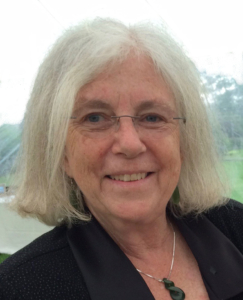
Anne Young is Julieanne Dorn Distinguished Professor of Neurology at Harvard Medical School
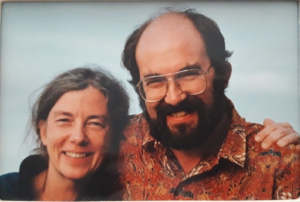
Anne Young & John “Jack” Penney
#23: Anne Young – Basal Ganglia Circuitry, Glutamate & Leadership
In this episode, I had the tremendous honor of speaking with Anne Young about the many highlights of her career, including key evidence that established Glutamate as a neurotransmitter, as well as her work on Huntington’s Disease. Directly building upon the preceding episode with Mahlon DeLong, we now hear about the Ann Arbor Side of the so-called “Albin-Delong” model, which was equally informed by the team of Anne Young & her late husband John Penney alongside Roger Albin.
In 1991, Dr. Young was appointed chief of neurology at Massachusetts General Hospital and with that the first female service chief in the hospital’s 180-year history and the first female chief of neurology at a teaching hospital in the United States. During her career, she was president of both the American Neurological Association and the Society for Neuroscience – which so far nobody else has achieved. We take these unique achievements as examples to talk about success, leadership and career advice, while also covering a bit of the struggles and challenges associated with a clinician-scientist career.
Anne Young 00:00And the dean said, okay. And I said, can I have that in writing? Yeah. And I got it in writing. And then I went to the head of the pharmacology department, and I did the same thing. Will you count the biochemistry course and the physiology course from medical school for your PhD in pharmacology? Yes. Ah, can I have that in writing, please? Great. When I went to actually get my PhD, they called me into an office and said, Ann, it looks like you're getting your PhD in one year. Welcome to Stimulating Brains. 01:00Stimulating Brains
Andreas Horn in Boston. Professor Young had an amazing career with a lot of highlights that we all cover, including discovery of glutamate as a neurotransmitter, the Albin-DeLong basal ganglia model. So in her part, the part that was discovered by Roger Albin herself, and then her late husband, John Penney, and then multiple other things. We also talk about career building advice and so on, because Anne Young was the chief of neurology at Mass General Hospital, 02:03which is sometimes referred to as the best hospital in the world, or one of the best, definitely. Her aim was to build the best neurology service in the world when she was appointed chief there. And she certainly created a very exciting neurology service at MGH. She was also president of both the ANA and the SFN, which nobody else has so far managed to do. So I'm pretty sure you like the... conversation we had. And it also directly builds upon the last episode we had with Mahlon DeLong, because as mentioned, Anne Young also contributed massively to our understanding of the cortex basal ganglia circuit model. So have fun and thanks for tuning in, Stimulating Brains, episode number 23. So Professor Young, it's such a great honor to be able to interview you today. [inaudible] [inaudible] [inaudible] Thanks so much for taking part in this. 03:00Sure. I will have more formally introduced you by now. So we can directly start with the questions. So I always ask to break the ice. What do you do when not involved in science or medicine? I mean, you are retired, so you have probably more time now, but any hobbies or activities that you pursue? Well, yeah, I like to... I live right on a lake up here in New Hampshire. We have all sorts of wildlife. So I've rigged my yard with all sorts of motion activated cameras that record all the wildlife at night and during the day. And it's really fun. That's amazing. Yeah. And then the lake is just delicious for swimming. So right around now is swimming for a
Anne Young few months. And... That's really nice. And then we're up and I take walks every day with the dog. It's lovely. I read. 04:09Great. Super. That sounds really cool. I'd love to see some footage of the wildlife cameras. That must be nice to explore. It's a great hobby. I can totally get that. So as a kid, speaking of animals, according to your Wikipedia page, based on your feisty nature,
Andreas Horn quote unquote, earned you the nickname of Tiger Annie. Do you want to tell us a bit about that? Like, how was life growing up for you?
Anne Young Oh, yeah. Well, my mother wanted me to be a sweet little girl. I was... I had a brother, an older brother. But I was unfortunately a tomboy. And so she had to put up with me tearing around in t-shirts and jeans. And, you know, getting dirty and exploring up in the woods. And so I... 05:03I had a neighborhood. I grew up in a neighborhood where there were a lot of little kids like me. And so there were several little boys and I used to be terrors of the neighborhood. And that was fun. And we just... And my dad... My dad was kind of impressed with my feistiness. I used to get in fights at school.
Andreas Horn Okay.
Anne Young So I would come home with sore knuckles and such. And my dad would... He's the one who called me Tiger Annie. And he would try to teach me how to fight better. But yeah. Okay. So that's great. He supported that. Very nice. So we can get already some picture of you now. But let's speak about your professional 06:04career. That's, of course, what we are here to talk about. Who were mentors that clearly stuck
Andreas Horn out in your career and also maybe turning points? What was important to get where you got?
Anne Young Well, the most important person was Saul Snyder at Hopkins. You know, he accepted me. I was a professor in his lab and really let me do kind of what I wanted. He always had something for you to work on. But he also, if you came to him with a problem and you had a series of experiments, he would often say, sure, go for it. And that was wonderful. And then when I got to the
Andreas Horn University of Michigan, the chair who recruited me, Sid Gilman, he was fantastic. He helped me with
Anne Young 07:12all my grants, helped me interact with the people down at NIH. He was very helpful. And then that was kind of about it. That's great. That's great. So I mean, your research career has been filled with highlights. I think we'll just try to get through them if we have the time. And I think one of the key things is that your research provided some of the first evidence that glutamate was a neurotransmitter of, I think, in your study of cerebellar granule cells. But it also, I think, in general, provided first evidence or important evidence that glutamate was a
Andreas Horn 08:02neurotransmitter. Can you tell us more about how it was back in the time? Yeah, sure. Well, back in the time,
Anne Young acetylcholine, norepinephrine, serotonin, epinephrine. And for some people, GABA, they were all probable neurotransmitters. But acetylcholine, sure, and some of those others for sure. GABA, there was some yes and no. Eccles then sort of came in. And the set of physiologists, it was funny. Back then, the physiologists tended to be the neurologists and or neurophysiologists. And the pharmacologists were the psychiatrists. And the so it was interested. The psychiatrist 09:09couldn't care less with the granule cells used as a neurotransmitter. Or for that matter, the corticospinal tract. So the first thing I did with the cerebellar granule cells was that. No. No. No. No. No. No. No. Lisbon was working in a lab that was using viruses to attack certain dividing cells. And he comes back to me and he says, you know, there's this woman in our lab who can just take away all the granule cells and leave the other cells intact. And I said, whoa, what a perfect model to find out what the transmitter is. So I went to the woman who had been looking at this model, Mary Lou Ostergranat, and I 10:02said, can I get a litter of your hamsters without any granule cells for several weeks
Andreas Horn in a row?
Anne Young And she said, sure. And I could do these experiments. I think it took three different weekend experiments. Sure. Sure. Sure. Sure. Sure. To show, one, there was no change in acetylcholine, serotonin, none of that. Amino acids, the only ones that were changed were glutamate and aspartate. So in the next set of experiments, it turns out that glutamate and aspartate have been found to have both a high affinity uptake system and a low affinity uptake system. And it was the low affinity uptake system that was associated with just cellular metabolism. But many people thought, and in particular saw, thought, well, glutamate, a high affinity 11:09uptake system, well, that could be a neurotransmitter inactivation. So we looked that weekend at aspartate and glutamate. And it was the high affinity uptake that was changed. And then the next weekend, we got an amino acid analyzer to look at some samples. And yes, only glutamate levels were changed, not aspartate. So that was pretty good evidence. And nobody did much else about that. And when we got to the University of Michigan, several years later, we started working on 12:01the corticospinal tract.
Andreas Horn Yeah.
Anne Young And that ended up likely being glutamate as well.
Andreas Horn So yeah, that was pretty cool.
Anne Young Very cool. So it is even, you know, it's so fundamental now that it makes it hard for us younger people to even imagine the world without this particular knowledge. And so, you know, it's obviously learned, obviously, it's cool. And even in high school, probably. And so, so why I think it establishing glutamate as neurotransmitter was, was the slow process, according to the internet over a period of 20 years, dating back from the fifties. I think back then somebody injected glutamate into the ventricular system and showed that there were some cramps following.
Andreas Horn Is that true? Yeah.
Anne Young They were. They were also squirting it on cell bodies and seeing what kind of reaction then. And it was a mix of reactions, some excitatory and some spreading depression. 13:06And again, you know, when you looked at the physiology, it wasn't that helpful about defining a pathway.
Andreas Horn Makes sense. Yeah.
Anne Young !
Andreas Horn And so, yeah, it went along slowly.
Anne Young I wanted to be in that field because I figured it was going to be slow and I wouldn't have to look at a whole lot of competition.
Andreas Horn And then the next thing, you know, boom, everybody and their brother is working on it. So. Interesting. So, so you, you, you saw an uptake of this field taking off once you published these results. Is that? Yeah. Okay. So why did it, why did, why did it take so long?
Anne Young So I read that, you know, since glutamate is essentially everywhere in the body, maybe
Andreas Horn that's why nobody suspected it because as you mentioned before, so at least what I read,
Anne Young 14:02you know, it was decades after the identification of acetylcholine norepinephrine and serotonin also dopamine, I think was, was known. So, so, and, but, but you could argue glutamate is the most important one maybe, right. Or the most ubiquitous one.
Andreas Horn Yeah. And they were high compared to other organs. But were they huge?
Anne Young No, but they were high. And those levels changed when you lesioned areas that you thought were projecting to someone. 15:06But there was a lot of skepticism. I mean, when I was at Hopkins, the head of physiology, Vernon Mountcastle, he didn't really even believe in transmitters. He really only believed in electrical transmission.
Andreas Horn And it was only sort of during the time period I was getting my PhD that he started to, well, okay, maybe there's some transmitters. What time was that, roughly?
Anne Young That was. So 1969 to 1973.
Andreas Horn Yeah. Okay. Yeah.
Anne Young Mountcastle, I think, is still very much known for the cortex and so on. So he did a lot of cool stuff there.
Andreas Horn But it's so interesting to hear that back in the day he was not believing in neurotransmitters. Yeah.
Anne Young Very exciting. 16:00So it's always, you know, it's so hard to, as a young person, to understand these things retrospectively. If you, you know, read the literature, let's say, backwards. But in time, it's very hard to understand that. And I feel only talking to people that lived at the time and did research at the time can really, you know, embed us into this field, this feeling. So that's really, really amazing. So I guess the next and maybe even bigger, or I don't know if it's bigger, but another really big highlight of your career is, of course, the circuitry model of basal ganglia and cortico-thalamocortical interactions.
Andreas Horn Yeah.
Anne Young And I think I told you in the last episode of the podcast, I interviewed Mahlon DeLong. And a key focus there was also the model of the basal ganglia. And I think now, brushing over history, it was often referred to as the Albin DeLong model. And often, again, like two key papers are being cited, one from your team at Ann Arbor and one from Johns Hopkins, where DeLong worked at the time. 17:04So Ann Arbor, Michigan, that paper was authored by Roger Albin. And then yourself and your late husband, John Penney. And everybody called him Jack. Jack.
Andreas Horn Okay.
Anne Young Good to know. Good to know. So when I asked Mahlon what the contributions between the two teams had been, again, very hard to disentangle now from, you know, looking back, he mentioned, he didn't say too much, but he mentioned that your laboratory had focused a bit more on the motor domains of the basal ganglia, while a key contribution of his team. Also together with Alexander and then also Hagai Bergman and so on, had been the parallel loops of the basal ganglia with motor, associative, and limbic domains.
Andreas Horn Is that fair to say? Do you have the same memory? What's your take on this?
Anne Young Yes, actually. Yes and no, what he says. 18:03Kemp and Powell also looked at some of these circuits through associative. And limbic others, cortices. We had, what happened with my husband, Jack and I, was that when we came to the University of Michigan, we took over a movement disorders clinic. And we saw a lot of different kinds of movement disorders. And we were, we had had no formal training. You know, like. I'd gone to Marsden or Fahn or somebody else. We had just obtained our experience, right, seeing the patients.
Andreas Horn And both of us were struck by how the descriptions in the literature were not really that descriptive of what the patients actually look like. 19:05So we made this. You made an example?
Anne Young Well, yes. If you ask a Parkinson's patients to tap their fingers, they may start off slowly, but then it gets faster and faster and faster, almost faster than you can do it.
Andreas Horn And then you ask them to stop. And it takes a little while to stop. Well, that's odd, right? Yeah.
Anne Young So, and there were a bunch of other things. It just didn't make sense with the old. Way of thinking that Parkinson's is slow and, you know, Huntington's is fast and yada, yada, yada.
Andreas Horn So we started saying, okay, what pathways have which transmitters? Because if the corticostriatal pathway is glutamate, then what is the striatum doing?
Anne Young 20:05You know, itself. So we started to make. These lesions to see what happened downstream. And in doing that, we had to measure. In our hands, receptor. Concentrations and affinities, because we had hypothesized that if you remove, say, a GABAergic input, to a neuron, that it would become super sensitive and increase the number of GABA receptors. Right.
Andreas Horn Okay.
Anne Young So this required looking at an anatomy and a drug effect or drug binding. So we really, the two of us invented the tritium-sensitive quantitative autoradiography 21:04that you could do with tritium-sensitive film. Cool, interesting. And so you could be very quantitative about it. And we were able to show that one pathway had to hook with another, with another, with another, if this circuit was going to make any sense. But there were also experiments we did
Andreas Horn where the outcome was not what we predicted. And that, you asked about eureka moments, that's where we go like, what?
Anne Young And then we go, ah, it has to be that there's both a direct and an indirect pathway. 22:01There has to, you can't just say the striatum does something to things and it's all the same. No, it's very different. And now, Mahlon DeLong in his chat with you, he did mention the fact that we worked on rodents. And in fact, we did. And that he worked on primates. Now, unfortunately, he may have worked on primates, but we worked on humans as well, on human brains, post-mortem human brains. And we really published everything that we had discovered in the rodent, in the human brain with Roger Alban and Tony Reiner and a bunch of us. And that made a lot of sense 23:00of how the circuit could be put together and whether you would, you could predict that Parkinson's disease
Andreas Horn would have an overactive subthalamic nucleus and you could lesion them there. Interesting. Or globus pallidus internus. So to ask a few naive questions. So in humans, was it post-mortem?
Anne Young Then you measured concentrations of the,
Andreas Horn or you made lesions as well afterwards?
Anne Young No, no, no.
Andreas Horn That's not possible, right? Okay. And then in the rodents, like what was the general method?
Anne Young So you made lesions, but then you afterwards and before the lesion, you measured the concentration of the transmitters in the receiving part
Andreas Horn or where you made the lesion or both?
Anne Young Both.
Andreas Horn Yeah.
Anne Young You could measure the receptor concentrations throughout the striatum and projection areas. You could get a nice cut through 24:01where you could hit all of them and get the lesion. You could get measurements that weren't just, you know, one concentration, but you could do a whole dose response curve. You could do a whole inhibition curve. Like are there better benzodiazepines for the external globus pallidus
Andreas Horn than for the internal globus pallidus? Yeah, there probably are.
Anne Young You know, that kind of thing that we could do and say.
Andreas Horn Who came up with the direct and indirect pathway terms? Do you remember?
Anne Young It was actually a guy named McKenzie. He was John McKenzie, who worked before either male NRI, I think. And I believe he's from the UK.
Andreas Horn 25:00Okay.
Anne Young And did work. And he, coined it,
Andreas Horn but didn't coin it based on either of our stuff, you know?
Anne Young I see.
Andreas Horn Okay. And were the dopamine receptors already known there at the time? So that you had D1 and D2 receptors, or was that also part of that?
Anne Young Oh, that was a big part of it. So I was, when Jack and I first got to Michigan, there was a guy at, Michigan State University, named Steve Katai. And he had a group of physiologists, including, I don't know whether you know a guy named Charlie Wilson. Anyway, they're great physiologists. And they were taking the place apart with electrophysiology. And Jack and I went over to see them 26:02and we're talking, we're talking to them and we're going like,
Andreas Horn hey, yeah, but the dopamine is inhibitory on the striatum.
Anne Young And they're going, no way. And we're going, well, I mean, if you look at, you know, the pharmacology, the dopamine and acetylcholine are kind of at odds with each other and that's perfect for inhibitory. And they're like, no, no, no, no, no. They said, when we come in there and are recording from the striatum, dopamine is always excitatory.
Andreas Horn So now we're going like, how can that be?
Anne Young And we, I would say it took a year or so, you know, talking with these guys back and forth. 27:01Also, looking at the localization of D1 in substance P cells versus D2 in enkephalin cells, those were all really important things to understand. Absolutely. It's so funny that I think it's always harder to accept that it's both. If you say it's excitatory or inhibitory, that becomes the question and
Andreas Horn You rarely think it's going to be both, right?
Anne Young But I can imagine how tough that is.
Andreas Horn Yeah, but it was so perfect talking to this physiologist who said,
Anne Young no, it has two different effects. Or, no, it has an excitatory effect. If it has an inhibitory one, we don't know what it is.
Andreas Horn Okay.
Anne Young You know, and then it became clear. Great.
Andreas Horn So, yeah, together with your late husband, so Jack,
Anne Young 28:01you mentioned, John Penney, you had started a laboratory at the University of Michigan in Ann Arbor studying the anatomy and pharmacology of basal ganglia. So you already mentioned a bit that you started also clinical work together and you essentially led the movement disorders group. Was that the main motivation to even think about, hey, let's map the basal ganglia, let's create a model,
Andreas Horn or did the model rather emerge with, you know, bits and pieces of evidence?
Anne Young That came in your experiments or was it like,
Andreas Horn when did the idea of creating a basal ganglia model emerge?
Anne Young Oh, pretty much right from the beginning. I mean, which just, my husband was an anatomist. So he always was thinking the anatomy. And I was pretty good on the pharmacology. And he was, my husband was, 29:01[inaudible] I grew up dyslexic. So my husband, though, could read everything. By the time, well, I was in medical school. We met very early. And I realized that he could read all the assignments and tell me. He could summarize really well. And so, and that was true, you know, when we came home in the evening after we had put the kids to bed. Then we, he would read papers and I would read abstracts that he told me to read.
Andreas Horn And yeah, that's how we did that. That's very interesting.
Anne Young It also seemed like, I read that somewhere, probably also on Wikipedia or on a different page that summarized your work. But you also divided, as you said, also then the clinical work. 30:05I think you were, so your husband was more focusing on hypokinetic movement disorders. You more on hyperkinetic. So your disease essentially was Huntington's. His was Parkinson's a bit.
Andreas Horn Yeah, mine were Huntington's and tic disorders.
Anne Young Tic disorders.
Andreas Horn Okay. Okay.
Anne Young And then, and then also, I think, as you mentioned, he did anatomy. And then I think he was also. He did, you know, computationally. Oh yeah. Very big. Yep.
Andreas Horn Okay. Yeah.
Anne Young And then yours was pharmacology that it sounds so lovely that you, you know, apparently you know made a hole together.
Andreas Horn So you mentioned that you grew up dyslexic. How did that impact maybe to briefly intervene your career or your, you know, how, how did that work out? Because you were super successful, right?
Anne Young So it's. Maybe encouraging to talk about this. 31:02Well, I was very lucky. I didn't get any help. I was in the time period when nobody cared if you were dyslexic. And the problem was I was so slow in reading that I couldn't finish tests or anything. And by the time I went to college. I couldn't take. Many of the courses because they required too much reading. So I did have some trouble. Getting past English, for instance.
Andreas Horn Okay.
Anne Young And that kind of thing. But in terms of reading science, everybody reads science kind of slowly. So I wasn't, you know, proportionally that much slower reading science than the others. So I was able to do that. 32:00And I think that's a good point.
Andreas Horn Yeah.
Anne Young But Jack changed the whole thing. And so you buy able to, he could focus in and read this stuff. And tell me. Great.
Andreas Horn Interesting. So, so maybe going back to the, to the model, how, how much of it would you think is still true today?
Anne Young Probably tough questions. But that's a tough question, but I think it is still providing sort of a, a, a, a, a scaffolding on which people hang their hypotheses. And there is sort of a. No. No. No. No. No. No. No. No. No. No. No.
Andreas Horn so much new work that also deserves new hypotheses, you know? Yeah.
Anne Young And I think that's coming out a lot with optogenetics and some of the other approaches, which are really, you know, 33:02if we had them back in our time, it sure would have been exciting. But seeing it now is also wonderful.
Andreas Horn Yeah. Yeah.
Anne Young Super.
Andreas Horn Yeah, I totally agree.
Anne Young It's such a, you know, helpful construct that even if it helps just to, you know, motivate more complicated additions to the concept, it's still helpful, I think. I totally agree. It's still taught today, the direct-indirect pathway, and I think it's a good thing that it is. So it at least gives us a good and fairly simple understanding, maybe, of the basal ganglia, and then we can add on to that.
Andreas Horn So, yeah, maybe speaking about the next disease.
Anne Young So Roger Albin, who was the first author on that main, one of the key papers, now occupies a faculty position still in Michigan, which is named in your honor, the Anne B. Young Collegiate Professor of Neurology. 34:03And I Googled him from his profile. He seems to also study Huntington's disease.
Andreas Horn And that was a big topic for you as well. So 1981, you traveled with Nancy Wexler to Lake Maracaibo in Venezuela. Can you tell us?
Anne Young Maracaibo.
Andreas Horn Maracaibo?
Anne Young Yep.
Andreas Horn Can you tell us something about that? Why did you go there?
Anne Young Well, I would say that I went because I was seeing Huntington's patients in Michigan. I had inherited, actually, quite a large, a huge number of patients with Huntington's. And frankly, this was an opportunity of a lifetime to be able to go with the team to a remote country, try to examine all of them, sample all of them.
Andreas Horn 35:03But why even go there?
Anne Young So apparently we have to tell the listeners there's a population of Huntington's patients.
Andreas Horn Yeah.
Anne Young Huge popular. Well, let me. That's a key information. Okay. Yeah.
Andreas Horn Yeah, I'll back up because in 1972 was the 100 year anniversary of George Huntington writing about hunting, describing Huntington's for the first time.
Anne Young And at that meeting was a guy who showed a film of what appeared to be Huntington's disease down in Venezuela. And it was as if the entire town was part of Huntington's family. So in 1979, Nancy Wexler, they had been looking for a big family because the geneticist said recombinant techniques. 36:01Now allow us to map through the family if we have a big enough family. So that was David Hausman who came up with this. And so when Nancy saw the size of his family down in Venezuela, we she arranges to go down. And I'm the lucky one who gets asked to go down as a neurologist. And there were three others of us. But I'm going down to be part of the group that goes down to the town on stilts down in a lagoon. Well, it was a pretty unbelievable experience. And I did it for 22 years in a row. And I'm back and forth. Well, going down to Venezuela just for maybe three weeks a year. Yeah. And then coming back.
Andreas Horn 37:01But during that time period, we got thousands of blood samples, skin samples and sperm samples on people and brain samples on people. And that's how the gene was isolating. So that was very cool. Can you draw us a picture a bit of how that town worked? Yeah.
Anne Young Well, they live off the fish. They fish out of the lake. And they sell, if they can, some fish so they can buy some vegetables and other things. All very impoverished. You know, living in, when they lived in Maracaibo, they might have a cement house. 38:03But chances are it's tin and cardboard. And you get out to the outer towns and there it's definitely tin, cardboard, a floor that's basically made of packed garbage. And everybody's living in one family, you know. Maybe a family. And then the kids and unaffected members try to take care of them, but that's not easy. Sure. And it's just a very, very moving environment.
Andreas Horn Yeah.
Anne Young Trying to help them as best we could. 39:02Sure. Sure. I want to bring up. I want to bring up the therapy back to them. That'd be great.
Andreas Horn Yeah.
Anne Young Good point. So it led to, as you mentioned, discovery of the gene. I read that Jim Gusella was the probably first author that discovered the location of the gene.
Andreas Horn And can you summarize, you know, how that happened and what it, like, how long it took and how that maybe emerged from your project?
Anne Young Two years. So he started sending up samples in 1981. By 1983, he had the location of the gene. Not the actual gene, but the location on the short arm of chromosome four.
Andreas Horn Yeah.
Anne Young But it took ten years for the final identification of the mutation as an expanded CAG repeat.
Andreas Horn 40:02Yeah.
Anne Young And that then was the key thing.
Andreas Horn Yeah, of course. Yeah.
Anne Young For also for the diagnostic tests and so on.
Andreas Horn But yeah, very interesting. Yeah.
Anne Young Bringing back a cure. I wish that that will happen soon. So I think you continued Huntington's work and you also found it then, I think, soon after that. So at least in 1991, you were.
Andreas Horn Yeah.
Anne Young first female service chief in Mass General's 180-year history,
Andreas Horn 41:03and also the first female chief of neurology at a teaching hospital in the United States. So that is such a great honor. And can you tell us a bit, you know, was there a secret to this or was it, you know, hard work? What led to it?
Anne Young No, I don't think there was a secret any more than I was a very outspoken person.
Andreas Horn Yeah.
Anne Young And so I guess, you know, I kind of expected those things in a way. Going to MGH, that was one of the things that drew me to going to MGH is if I could be a first woman head of a service.
Andreas Horn And I know they asked me what I wanted. 42:00What I wanted to do with the service. And I just told them, I want to make this the best neurology service in the world. And I meant it, you know? Yeah. Yeah.
Anne Young And I tried my best. I don't know whether I succeeded, but did a fairly good job. I'm sure you did.
Andreas Horn Yeah, absolutely. Very nice. So, so that that's so interesting that it seems like some genius people like you may have that.
Anne Young I once heard Bob Dylan say something similar that he said he just, as a kid, he knew he was
Andreas Horn exceptional, you know, and it's, it's kind of, it's kind of tough to say it, you know, or you then wonder if what's the selection bias here, right?
Anne Young How many people think they are exceptional, but are not. But apparently for the two of you, there must be some just inner feeling or knowledge that you'll succeed and get there.
Andreas Horn Yeah, I didn't doubt myself. Yeah.
Anne Young And I mean. 43:00I think that there was a story. I don't know whether you want any stories, but when I got to medical school in Athens, I went to the Dean because there wasn't any MD PhD program designed yet. The Dean said, you design it yourself. So I said, I'd like to take the first two and a half years. I said, I'd like to take the first two and a half required years of medical school courses. And then I want to take the last year and a half elective courses as part of my PhD.
Andreas Horn Okay. And the Dean said, okay. And I said, can I have that in writing? Yeah. And I got it in writing. And then I went to the head of the pharmacology department and I did the same. 44:00Will you count the biochemistry course and the physiology course and from medical school for your PhD in pharmacology? Yes. Ah, can I have that in writing, please?
Anne Young Great. When I went to actually get my PhD, they called me into an office and said, and it looks like you're getting your PhD. In one year. I was going to get the whole thing in five years. And they said, that's too fast. It looks like we're giving out cheap PhDs at Hopkins. And I said, well, I really don't think so. I did get quite a few publications out of it. You approved my thesis. And you put it in writing. 45:00And I said, that's okay. And they kind of looked at me and I said, yes, I still have those letters in writing where you promised I could do this. And let me tell you, I said to them, if you refuse to give me the PhD, I will make sure that every student I hear of that is applying to Hopkins, they know that you guys aren't keeping your word. And I said, okay, I'm going to give you the PhD. And they said, okay, I'm going to give you the PhD. And I said, okay, I'm going to give you the PhD. And then I walked out. And it worked. So you got it in record time. That's amazing.
Andreas Horn Yeah.
Anne Young Very, very cool. Thanks for sharing that.
Andreas Horn So, yeah, it's really so impressive how much you accomplished.
Anne Young We get to other things as well. But then at MGH, you did and, you know, now continuing the work on Huntington's disease, maybe with a cure later. You found that the...
Andreas Horn 46:00Yeah.
Anne Young MGH Institute for Neurodegenerative Disease, so the MIND Institute.
Andreas Horn And apparently we're given an entire building in the nearby Navy yard. Is that close to the Martino Center? Yeah. Yeah. Okay. Yeah. So how was that like to, you know, create a building? I mean, it would be tough for me to create a smaller lab with a few rooms, but a building, that's a big thing, right?
Anne Young Well, no. My husband and I were keen on trying to get a group of investigators together who would all complement each other and who were all good collaborators. And I knew this building was coming up for proposals because I was on a space committee and I'm saying,
Andreas Horn okay. 47:00Okay. Okay. Okay. Okay. Okay. Okay. So who's made a proposal?
Anne Young And at the time, the person said, nobody. So I said, you're getting... So I made a... In a week, I made a proposal for using all the space, you know, who the investigators would be, what their grant status is, how many square feet they should be covering. You know, you name it. All the way. layout and got my husband to put some spreadsheets together for me yeah and then yeah yeah this is the way we'd work and then I put it together and submitted it and uh big meeting I had to go to he was out it was right before he died he was out in Aspen skiing with my daughter I presented this and they gave me the building you know they said this sounds like a really 48:06good use of that space and I had done some space dealing trades and this and that yeah but um yeah that's me it was really fun is that still in use in the same function oh yeah the MIND. Yeah. Okay, super, very nice. you were also uh then speaking about more success you were president of the SFN the Society for Neuroscience from 2003 to 2004 and then of the ANA, so the American Neurological Association from 2003 to 2005 making you apparently the only person in history that had both um both titles in their CV again the same question what led to the success maybe it's the same answer but or how did any tips of how did you do that you know I I don't know I mean I think somebody must 49:06have thought I'd be good at it um sure and um yeah so they voted me in I mean there were small committees I think that do it I don't think it's like it's not like you voted in by some giant number sure so and I mean as chief of the MGH that that probably helps right to um to get there yeah so so maybe to wrap up already um slowly with some rapid fire questions um that are easier to answer so so speaking about success do you have any tips or thoughts about females in neuroscience and medicine so especially any advice to young researchers or clinicians especially female but maybe also young in general um people entering the field yes the thing is that you uh and this is female particularly but either male or female you have to really think hard about what you're worth 50:04and you should not feel shy at all about asking for what you're worth and but you should be able
Andreas Horn to show somebody why you're worth that much yes you know what I mean so you have to have
Anne Young like some kind of proposal or vision return on investment if you give me this much I'll bring back this grant you know that kind of thing but you have to stick up for yourself most women don't say I need a raise yeah and um that's not true the guys all do you know and everybody needs a raise that's the quote of the day certainly yeah yeah so you know uh that's the main thing I think um 51:04I do think you don't want to be, you know, women are often said to be a bitch or something like that um and so you do have to be careful that you don't get to be called you know and uh that sometimes with women it's [inaudible] [inaudible] are trying to stick up maybe a little too much for themselves you know you don't want to you know try to say that you're the greatest thing and i think though i mean can you elaborate a bit more because i would i could you know argue that probably if if if men stick up as much they are not being called a bitch so you know off right so so um isn't that still unjust that you know as a woman if you maybe ask too much often in our culture you you would already seem more greedy 52:03than a male that would do the same yes part of the problem well i agree except that there are
Andreas Horn some women who are just evil and yeah yeah okay well as i it was interesting when i was being
Anne Young interviewed to come to Mass General you the head of psychiatry asked, well, how do you deal with these, you know, men, women, sexual harassment and my answer was well really when it comes right down to it men can be jerks and women can be jerks and you know you don't want either one of them around you want people who are going to try to help you put you in a better place you know you know that's what you want yeah and not people who are trying to prove their value over yours and 53:04you know all that kind of stuff so absolutely so we briefly talked about that dyslexia um and and were there other issues in your career that struggle that you struggled with or other you know fallbacks in in or or you know episodes where you thought this was a waste of my time like a negative thing or something like that. Yeah. No, I mean, sometimes they ask you to be on too many committees and things like that. I think my biggest problem was I have a very bad temper. And after Jack died, I became extremely depressed and saw a psychiatrist who said that you know based on my history I'd been bipolar my whole life and 54:05you know the temper was part of that and thank god I had a husband who kind of tried to damp it down for me and um yeah and I got good treatment and um that's really made a huge difference so okay did the manic phases or the positive phases of it then then help sometimes like give you energy to write grants or you know oh yeah yeah you know there were times when I had an incredible energy level for doing this just this building for instance you know the whatever putting together the proposal and this and that yeah yeah I would have those phases but then I'd have a lot of bad depression um yeah all right maybe speaking about not anymore 55:04about failures but about the opposite I mentioned or you mentioned eureka moments before so and we have talked about some but was there any other moment that we didn't cover yet where you thought wow this now I understood it or this is such a success or things in your career positive no I I well I tell you there was the like huge enthusiasm that I think everybody in the Huntington's field felt when these new antisense oligonucleotides had come forward to be tested by Ionis and Roche together. And that went into a clinical trial that everybody was so hopeful for because it reduced huntingtin in the brain. Then, you know, out of the blue, the data monitoring committee stopped the study and stopped it, saying that the patients 56:25were getting worse, worse than the placebo. And it was as if, well, for me, I felt like I had been stabbed in the heart. You know, for me, it was like, this was, geez, this could be it. This could be one of the first actual effective therapies.
Andreas Horn Yeah.
Anne Young And, you know, another company had a similar approach. It also had to be stopped.
Andreas Horn So now everybody's going like, holy cow, you know, 57:01what do we do next? Yeah.
Anne Young But there are people working on it, thank goodness. Sure, sure, sure, of course.
Andreas Horn Yeah.
Anne Young What do you think about maybe, this is a podcast about deep brain stimulation,
Andreas Horn and obviously your work is very instrumental for that as well. But what do you think about deep brain stimulation for Huntington's disease, maybe?
Anne Young Well, I, I've referred people for it. I, it's hard to know how much better they were. I think in the beginning they were somewhat, but then I also think there was a certain amount of neglect of their other side, of the side that was better.
Andreas Horn Yeah.
Anne Young There was also, to me, some seeming neglect. I don't know why,
Andreas Horn but I didn't do it on many more patients. Have you done any?
Anne Young 58:01So just rarely, rarely done. We had one case,
Andreas Horn interestingly,
Anne Young with subthalamic DBS at Charité that did really well.
Andreas Horn So interestingly,
Anne Young but it might be, so, you know, my specialty is to localize the electrodes precisely, and it might've been even that it was pallidothalamic tracts that, that were, you know, just traversing.
Andreas Horn Yeah.
Anne Young And, and, and, but that patient, I would say, and that was, I think the only real case we had in Berlin and I just started here in Boston. So I haven't had much experience here, but, but in that patient, I think it's fair to say that without the therapy, you know, it was even life prolonging for him. So, so in that case, but it's, it's an equals one.
Andreas Horn So I don't have much experience. Maybe a general question. How did your clinical activities nurture, your scientific understanding and vice versa?
Anne Young Oh, it was, um, 59:01I just feel very strongly that MD, PhD, you know, uh, particularly when I split it the way I did where, you know, what I was doing in the laboratory directly reflected on what I would see in the clinic.
Andreas Horn Yeah.
Anne Young And vice versa. You know, and you could ask certain patients how, what their tasks were. It's always amazing to me that, um, a Parkinson's patient could be, um, slow and tremulous on one side. Right. And totally disconnected on the other side.
Andreas Horn Yeah.
Anne Young And, um, and, and that was amazing to me. And then when you, um, watch the whole sequence going between, you know, bilateral Parkinsonism to then changes across the body.
Andreas Horn 01:00:06Yeah.
Anne Young Uh, those things to me were just fascinating. And so to look at those in the lab was awesome. So it made you a better scientist and a better clinician probably. I hope so.
Andreas Horn Yeah,
Anne Young I do hope so. So you would, and then maybe, um, uh, so you, you would still say apparently that the clinician scientist career is a viable one to pursue today. But do you also see that the density of actions in the clinic or that the speed, maybe the pace has become faster and that, that it might become more, let's say in both science and clinical practice that it might become unsustainable or harder to sustain these days.
Andreas Horn Do you see that?
Anne Young I do think so.
Andreas Horn Yeah.
Anne Young You know, I think it's, um, I think it's just horrible. What medicine has become, you know, with this high turnover and quick, 01:01:02quick, quick, you know, in the last years, uh, um, practicing at mass general, I, um, I, I doubled the time I gave myself for every patient because I just said, I'm in this to help the patient and it's not going to help me. And, and, and, um, but it's actually one of the things I do now, instead of practicing is I fundraise for the department and fundraising does allow for some people to get some support to make their clinic, make them not so dependent on every patient. They see.
Andreas Horn Yeah. So that's great. So what do you think about the future of neurology?
Anne Young What concepts might emerge, um,
Andreas Horn in 10 years or in five years?
Anne Young 01:02:01Oh, man. Well, no, I do really hope. And I think there's possibilities that we'll have a cure for Huntington's, uh, much better cure, I think for Parkinson's and who knows, I mean, so far the Alzheimer's stuff has flunked, even though they approved that drug, which I think was a mega mistake, but, um, you know, they, they may come out with something which would be exciting. Um, but I think in the next 10, 20 years, I think it's very likely that they'll be therapies available and then deep brain stimulation for things. I think the main thing, that has to happen is it has to become available in remote parts of the world if it's ever really going to take off. 01:03:01So I guess, um, focused ultrasound and other kinds of things can have, like, you're going to have your pistol on your belt and bring out. So bringing the cost down or like making it more scalable. Probably.
Andreas Horn Yeah. Okay.
Anne Young Right. Right.
Andreas Horn Are there missed opportunities we should be taking at the moment?
Anne Young Things that you think we should be doing, but we're not in the field, both science and clinical care. Well, I think it's not clear at all. I don't, we're not collecting everybody's blood samples for DNA. And we should be.
Andreas Horn Yeah.
Anne Young And, uh, that at the very least. And, um,
Andreas Horn yeah,
Anne Young I, you know, people should, they should also be offering themselves up for trials. Pre diagnosis. You know, my mother had Alzheimer's.
Andreas Horn 01:04:00Yeah. Can you check me into a study sooner rather than later?
Anne Young That kind of thing. I think it's critical. That's a good idea.
Andreas Horn Yeah. Okay.
Anne Young All right. So, so are there any topics before we wrap up that we did not cover today, but you would have loved to talk about, I know it was a long discussion already, but. Anything you wanted to. No, this is fun. All right. Professor young. So,
Andreas Horn so thank you so much.
Anne Young This was really great. Um, all the best. Um, I envy you in the nature with loons and your dog and, uh, um, hope you have a pleasant day.
Andreas Horn Thank you so much.
Anne Young Really enjoyed it. [inaudible]
Click any highlighted text passage to jump the Spotify player to that point. The transcript text is present directly in the page HTML for search engines and accessibility.