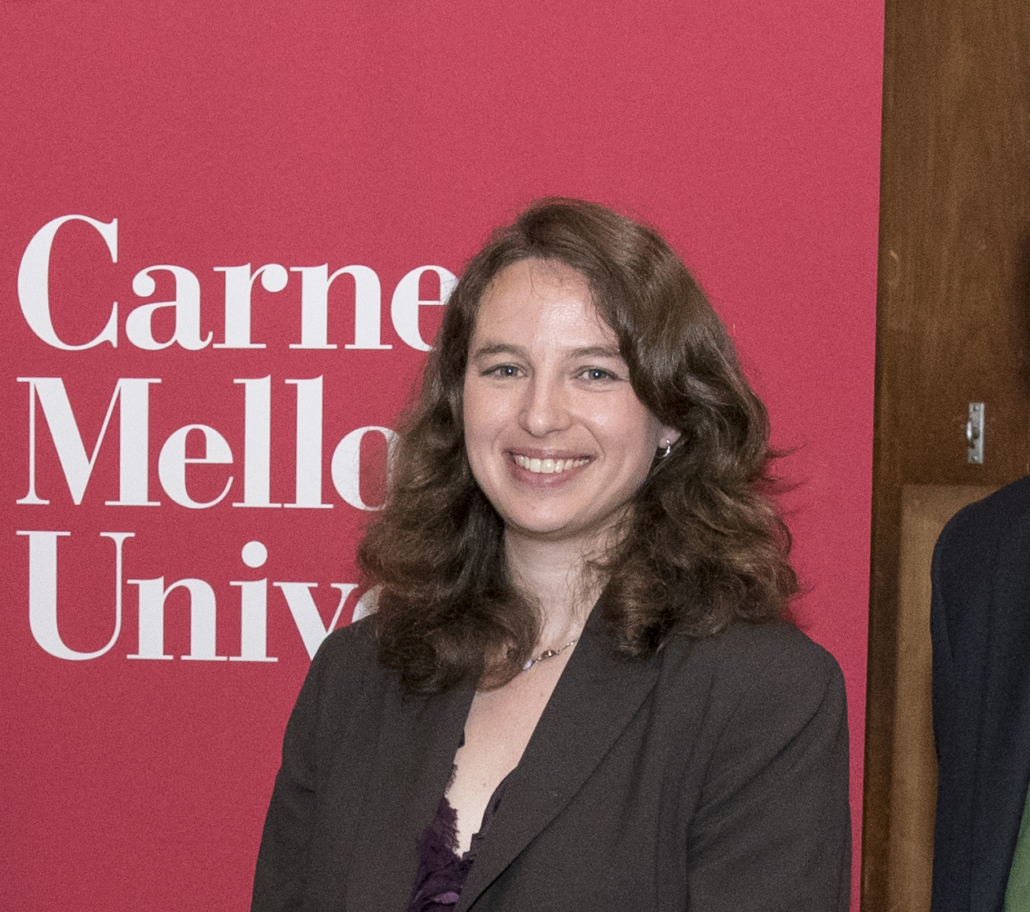
Aryn Gittis is Associate Professor at Carnegie Mellon University
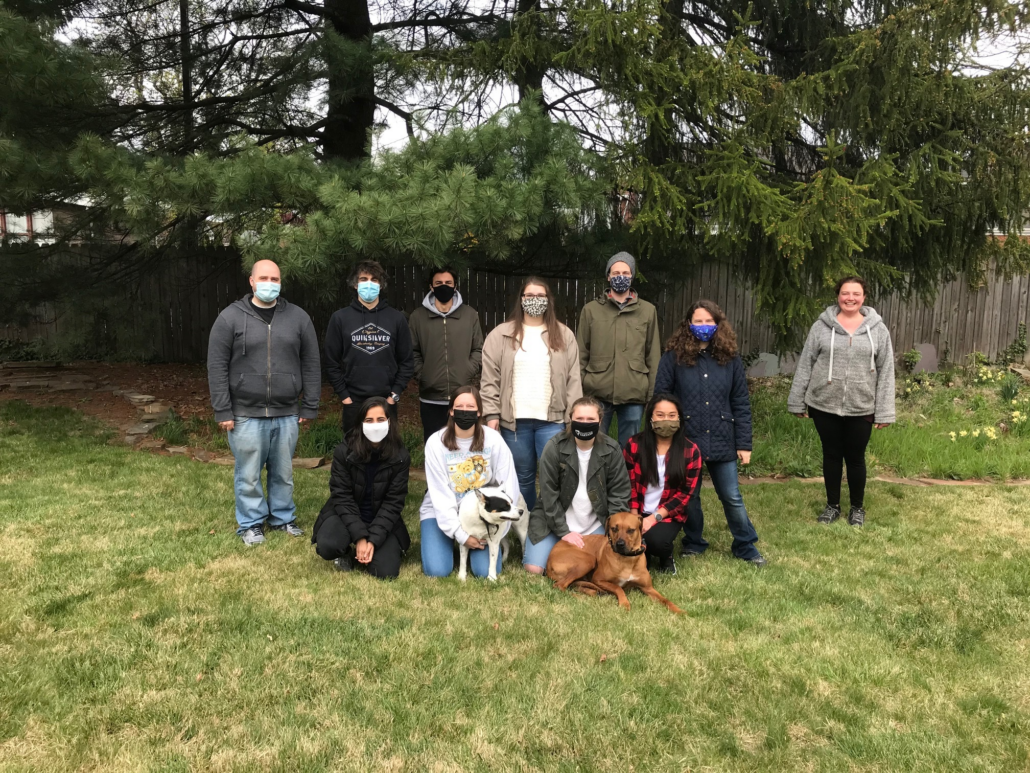
The Gittis Lab
#24: Aryn Gittis – Optogenetically inspired DBS for Parkinson’s Disease
Following a fascinating talk Aryn gave at OptoDBS 2022, we talk about her work on optogenetically inspired deep brain stimulation for Parkinson’s Disease. In a first paper (2017 Nature Neuroscience), Aryn’s lab could establish that a specific lineage of cells in the external pallidum needed to be stimulated (or a second one suppressed) to achieve symptom relief in the 6-OHDA mouse model of Parkinson’s Disease. Crucially, these effects outlasted the stimulation, sometimes by up to eight hours. In a second paper (2021 Science), her team was able to mimick the exact same effect using a very creative form of deep brain stimulation to the entopeduncular nucleus. I am convinced that these results could transform the way we apply DBS in humans and they form a template of successful translation from optogenetics to electical stimulation. In a way, Aryn’s story of discovery very much resemble the ones by Anne Young (previous episode), both were puzzled that differentially modulating specific – not all – cells (for Anne D1 vs. D2 cells in the striatum & Aryn Pv+ vs. Lhx6+ cells in the pallidum) would have an effect on Parkinsonism. I hope you will be as fascinated by the conversation I had with Aryn, as I was!
Aryn Gittis 00:00you know so we had this result from optogenetics and mice and i'm like wow you know this is really cool and it would be great if we could implement this somehow in humans and we know from our stuff like if you use global if you globally affect all of the all of the neural activity together you're not going to get these persistent effects so um so can we somehow deliver electrical stimulation in some pattern or in combination with pharmacology to give us the same pattern of cell activity that we got with optogenetics welcome to stimulating brains hello everyone and welcome back to stimulating brains episode number 24. a few weeks ago i had 01:08the great honor to co-organize the opto dbs conference in geneva together with christian
Andreas Horn Lüscher who's the main organizer since many years and we also if you're more interested in that talked in episode number 20 about the general concept the idea behind the conference might best be articulated by a paper that Christian Lüscher wrote together with megan creed in science and it is briefly summarized in in a way that you would um use optogenetics to understand the key circuits that you have to exactly modulate for example in order to treat a symptom and then once you have understood that find a smart way of doing the same and exact same but by electricity so in other words by deep brain stimulation so first step find out what to modulate 02:01second step do it in a smart way by electricity so for example if you have two populations of neurons and you have to only modulate one of them but not the other one you might maybe find a way to do that using electricity because you could for example find differences in the rheobase or the chronaxie of these two neurons or just the way they fatigue over time if you stimulate in high frequency low frequency and so on so that's the concept and the conference tries to foster collaborations that that lead to these concepts between researchers from optogenetics and um deep brain stimulation if you're interested in that we're going to do another one in 2024 together so um two years so um stay tuned for that but at the conference now in geneva a few weeks back there was one key speaker that actually made this work so um and that is Aryn Gittis jittis who is an associate professor at carnegie mellon university and she essentially did the 03:01first step of what i just said in a nature neuroscience paper in 2017 with her lab and then last year a science paper did the second step so in the mouse Aryn's team found out which exact neuronal populations you need to modulate to alleviate parkinson's disease symptoms in a potentially better way than we currently do with dbs that was done using optogenetics and then in the second step she found a really smart way to replicate the exact same thing using electricity it is quite likely that her findings will have great impact on actual clinical deep brain stimulation quite soon so um so if you haven't already heard about it in the science paper you can now hear about it here and then read her papers um to get more details about the idea so i think this is a truly remarkable and quite unique and very interesting research and i
Aryn Gittis think it's a really unique story that um can also serve as a template of how to do things especially if you have the possibility to study circuits 04:03using optogenetics and if you also have the possibility to modulate networks using dbs so if you've come this far in the podcast i'm pretty convinced you're gonna love this episode the conversation i had with uh Aryn Gittis i really think this one's gonna stick out so um thanks for tuning in please feel free to spread the word about the podcast in general and i'll see you in the next episode bye bye and um thank you for listening
Andreas Horn so Aryn thanks so much for taking part in this um at this point i will have introduced
Aryn Gittis you more formally already so we can jump right into the science um although to break the ice before we get into science i i always ask the first question about hobbies or what do you do when not involved in academia just to get to know you a little bit um
Andreas Horn anything you do except work in the lab yeah well thank you so much
Aryn Gittis 05:00for inviting me to participate in this great podcast that you've started yes i i do have a hobby that i've recently uh restarted so i play the bassoon in an orchestra and uh i played for about uh 10 or 15 years um all through graduate school and then I kind of put it on hold when I was a postdoc and then I had kids and so it kind of stayed in its case for another 10 years. And just this past year, I started playing in a university orchestra again and it was great. I just kind of rediscovered that dimension of my life and so I plan to continue with that.
Andreas Horn Very nice.
Aryn Gittis So that's classical music. That's right.
Andreas Horn Yeah, super.
Aryn Gittis Very cool.
Andreas Horn So yeah, and then going into the science already. So you did receive your PhD from UCSD
Aryn Gittis and then I think did a postdoc with Anatol Kreitzer at UCSF
Andreas Horn and then moved to CMU in 2012 to found your own 06:04and start your own lab. So in your academic career, what were the key turning points that were important to get where you are now? Or maybe who were the mentors that really stuck out?
Aryn Gittis Oh, wow. That's a great question. I mean, I think I've been really fortunate
Andreas Horn to have some really fantastic mentors.
Aryn Gittis I mean, my PhD advisor, Sasha Duloc, was really, I think, a strong advocate for all of the trainees in her lab. And I think, you know, especially empowering women to, you know, sit in the front row of talks, ask questions. You know, she really created an environment where we felt very comfortable.
Andreas Horn And yeah, so I,
Aryn Gittis I credit her with a lot of my sort of early formulation as a scientist. And, you know, she also had, you know, strong, strong writing skills and figure aesthetics that I think also were really, really helpful, which you don't always appreciate at the time 07:01when you're a graduate student. But in looking back, I'm like, oh, that was helpful. All right, fine. And then in Anatol's lab, I mean,
Andreas Horn he was also really a fantastic mentor that, you know,
Aryn Gittis I was always impressed, kind of, I mean, I think I've described him, I felt like he was always one step ahead of everyone in the lab. Like I said, like, oh, you know, I kind of want to do this experiment. He's like, oh, I have those mice already. So it's all ready for you. Or like, here's that equipment that you will need to do that. It was really, you know, he kept it like a really exciting and dynamic place to be science. And, you know, I was also surrounded by some really excellent people. So Lex Kravitz and Alexandra Nelson, who are, you know, really outstanding scientists now running their own labs. We were all there at the same time. It was, it was quite a, you know, an adventure and a fun place to be.
Andreas Horn So that was, yeah,
Aryn Gittis I had great early training as a scientist. That's something I hear quite often that, you know, people come from labs where not only the boss or the mentor was great, but also it seemed to be a cradle 08:03of people that then, you know, went on to pursue a great career, which, you know, might be, could be a key ingredient to success to have also peers
Andreas Horn that are similarly driven than you are, right? Yeah, yeah, exactly.
Aryn Gittis Any like turning points or even, you know, earlier than in university, in life, anything that was important or that you would think led you
Andreas Horn to where you are now?
Aryn Gittis Yeah. You know, maybe I'll share a story about kind of, you know, overcoming adversity in the early years of starting my lab. Because I think, you know, this is a topic that I think is, you know, discussed more openly now that, you know, you have to be able to deal with disappointments and setbacks. And, you know, science is not ever like a linear path. So maybe I'll kind of share my experience there 09:02that I think really ended up making, I emerged a stronger person. And I think our, you know, research program is stronger because of it. So when I started the lab in 2012, I was really interested in studying the external globus pallidus or GPe, as I'll be referring to it throughout our conversation. And, you know, and we had some transgenic mouse lines that allowed us to visualize different populations of neurons there. And so we started doing optogenetic experiments, which I can go into in more detail, but, you know, studying how changes in neural activity shape different aspects of behavior. And, you know, and we almost kind of, you know, we almost kind of started to look at the, you know, the, you know, the, you know, the, you know, the, you know, kind of stumbled upon this, like, really important discovery about the therapeutic potential of some of these different cells, which has really kind of shaped the direction of the lab ever since. But that initial discovery was met with a lot of skepticism by some of the, you know, big people in the field. And, you know, it was hard to get my first grant funded. It took me nine submissions to get the first R01. And it didn't get 10:15accepted really until the paper was already accepted. I mean, it was really, we had a, a huge hill to climb to, um, to get our work, um, uh, accepted by, um, by the field. Um, and it was really frustrating at times. I can now look back and be like, you know, you, you know, you're onto something big when people are really skeptical of it. And, uh, um, you know, cause if, if they're just like, okay, whatever, fine, then, then it's not that important. So, you know, the big discoveries kind of have to have to overcome a lot. Um, but you know, when I was
Andreas Horn in the thick of it, it was like really stressful. It was frustrating. Like, why don't people like,
Aryn Gittis here's the data? Why don't people believe the data? Um, so I think kind of, uh, just, 11:03you know, talking with, with colleagues, both here and former colleagues and, you know, getting a lot of just support by, um, you know, peer networks, um, also, you know, other people that are, that are, that are, that are, that are, that are, that are, that are other people kind of at, at similar stages of their career. Like I have a kind of a network of, uh, you know, female physiologists here in Pittsburgh that we used to meet up at friends houses for drinks. And, um, you know, they really kind of helped me talk through the aims of my grant, the outline of the paper, and then just kind of give moral support. And that was, you know, uh, you know, eventually the work was recognized for what it was. And, um, and so I think that that, even though it wasn't fun at the time, that was very, very informative and it happened at a really critical time of my career as well. Very nice. It's great that you share that because we, I think definitely here, not enough about, um, that, right. You always then see the, your science paper and then it all looks so easy, but, uh, it sure, sure, sure was not. Um, since you mentioned the female colleagues, 12:04um, was that maybe also part of that initial problem that the gender play a role or would you think, um, I'm not sure. Um, you know, sometimes when you're kind of in the middle of it, it's, it's like, oh, it can't be me. So what are the other factors that it could be? Um, and, but I think that that's too easy, uh, a scapegoat. I, I do think that, you know, ageism was involved. I think I was a junior guy and like, if I had been a junior male PI, it might've been, you know, I might've had the same problems. Um, so I think, I think that there is definitely, um, it, it can be hard for new people starting their labs to distinguish themselves. I think independent of gender. Um, and I think that's a bigger problem. Yeah.
Andreas Horn Makes sense. So I usually ask this in the end though, but since we talk about it now, any advice for young, uh, young and or female colleagues entering the field?
Aryn Gittis 13:04Um, I mean, I think like having a, um, a peer network is really important. Um, you know, and ideally they would be local people, because just getting together and, you know, sometimes you just need to vent sometimes, you know, it's always good to turn the venting into productivity. Um, like one of my friends actually bought a whiteboard for her house. So when we went over there, we could like map out ideas. And I mean, that was just the, the, um, just the support all around, you know, the intellectual support and the moral support was, was really helpful. And, you know, now that Zoom has become more of a thing, it's, it's maybe a little easier to have these, these sessions with people, not at your university, but for me, there's nothing that replaces the in-person, um, uh, the in-person aspect. And I think it's just really helpful to have people, even if they're slightly out, like, I mean, people even slightly outside your field, there are, there are commonalities in the journey that everybody 14:04shares and just knowing that you're not alone and being able to talk through both the good and the bad sides is really helpful.
Andreas Horn Interesting. I just, um, I just interviewed Mahlon DeLong two episodes ago, and he said,
Aryn Gittis also he reported from these meetings that he had in person back in the time, at the time with, where the young PIs met and discussed things. And, uh, I, I think, um, it's great that you do that. I think we, we, we have not done that enough here, um, in, in, in my, um, environment. So definitely should look into that more. Um, yeah. So, but then talking, coming to the main subject of today, um, um, we just met at the OptoDBS conference in Geneva, where you gave a splendid lecture on your recent papers. And I think the key ones are the 2017 in nature neuroscience, and then the 2021 paper in science, um, probably there more than that, but these to me seem like the key findings. 15:04And as we discussed your talk and your science was one of the few examples, or maybe the only real one that, um, truly carried out this concept.
Andreas Horn Yeah.
Aryn Gittis Of optogenetically inspired DBS.
Andreas Horn Um, maybe before we dive into it, would you be able to give us an executive summary of that concept?
Aryn Gittis Sure.
Andreas Horn Yeah. Yeah, absolutely.
Aryn Gittis Um, so I, I do want to say before, before I talk about our, our science paper in this Opto inspired DBS, um, you know, I, I do want to kind of give a, um, highlight, uh, the previous study from.
Andreas Horn Yeah, you're right.
Aryn Gittis Let's good point. So, so in fact, I had it written up that way. So, so, so maybe we talk, we start with the optogenetic apart. That's a good point.
Andreas Horn And the 2017 paper, maybe, um, can you summarize that?
Aryn Gittis I totally agree. That's better to start with that.
Andreas Horn Yeah.
Aryn Gittis Oh, no, no. Well, so, so I, I, I mean, in terms of just the idea to do an opto inspired kind of DBS kind of thing, um, there, I think we drew our inspiration from a paper that was published by Meaghan Creed and Christian Lüscher, um, maybe four or five years earlier. 16:12So I feel like. That really kind of set the stage for this emerging field, which, you know, opto inspired DBS. And the idea there is let's take, um, information that we've gained through basic research and, you know, the study of molecules or synaptic changes or synaptic properties and, you know, cell type specificity, like labeled lines within neural circuits. These are all things that get studied a lot in the basic research spectrum. Um, but let's not just kind of leave it there. And have it be knowledge for knowledge's sake, which is super important, but, you know, I would also like to be able to positively impact patients' lives. And so, um, you know, once we had discovered, and I'll go into this in a second, but once we had discovered these, um, therapeutic populations of neurons within the circuit, um, we knew that you had to go in with a very cell type specific approach or, or the, you know, the thing that we had discovered wouldn't work. 17:08Um, but you can't do those kinds of cell type specific approaches in humans, or at least not. Right. It's not, uh, it's not something readily available. Um, so can we, you know, use our knowledge about the basic features of these cells, you know, the basic biology of the nervous system, and then, uh, develop an approach that you can use electrical stimulation, which is widely used in humans to get the cell type specificity. And so that was, so that's kind of what our idea of this, you know, optogenetics inspired DBS is, is about. Great.
Andreas Horn Yeah. So, so yeah, so I can, I can also go into, uh, you know, where, where does the optogenetics or opto inspired part of this come from? Um, so, uh, yeah, so in our 2017 paper, which really kind of set the stage for everything, um, we had, uh, discovered, you know, almost serendipitously that, um, there are two different classes of neurons within the external globus pallidus, which is this, you know, brain area right in the middle.
Aryn Gittis 18:12In the middle of the basal ganglia circuitry. It's been studied as, as being a contributor to some of the pathological oscillations or, you know, brain firing patterns that occur in Parkinson's. But hadn't really been, um, broadly researched as a target for therapeutic interventions. Um, a lot of work was, uh, most of the emphasis continues to be in the structure above the GPE, the striatum. Um, so we, but we were really interested in looking kind of outside of the striatum about these downstream structures that then are important for relaying commands to other parts of the circuit and, and outside to motor areas. Um, so we had found within the GPE that there are these different populations of neurons that we could target in our specialized transgenic lines of mice. 19:06Um, and the, um, and, and we also, you know, when I was starting the lab.
Andreas Horn Yeah.
Aryn Gittis I kind of wanted to do some really easy project to make sure that we could use optogenetics. So the idea of optogenetics is that you, you can, um, uh, uh, kind of trick neurons into expressing ion channels that are sensitive to light. So then you, uh, get these neurons expressed or sorry, you get these ion channels expressed in whatever population of neurons you want. And then you, um, all you have to do is shine a light in the area of tissue. That's. Expressing these molecules and you can turn on and off, uh, cells by, by using this approach. Um, so the, you know, there's, there've been decades of research. You know, um, arguing for this canonical circuit model of Parkinson's where direct pathway neurons and the striatum that express D one receptors are kind of like under active. 20:09Those are the ones that promote movement. And then, um, the D two neurons in the indirect pathway of the striatum are overactive and it's this imbalance between the like go and stop pathways. You know, weighted strongly towards the stop pathway that makes that makes, uh, voluntary movements very difficult in Parkinson's patients. Um, and there've been, I mean, that's the, those are some of the studies that kind of inspired me to get involved in the basal ganglia research in the first place.
Andreas Horn It's like really, really fantastic work.
Aryn Gittis Um, but there was less.
Andreas Horn Less known about then when you get outside of the striatum, what happens?
Aryn Gittis And, um, and so, you know, an obvious, uh, um, test case of this, you know, fundamental, um, uh, circuit model is, uh, the striatal neurons that are thought to be overactive and Parkinson's project. 21:02To the GPE and they inhibit that structure. So, um, and there are neural recordings from, you know, human patients and across a bunch of animals. And, uh, there are neural models that show that the GPE is, is underactive or it's overly inhibited in Parkinson's patients. So we thought, okay, well then let's just restore activity or, you know, renormalized activity in that part of the brain by using optogenetics. So we'll put an excited, you know, channels that will, um, drive neurons to spike more. Um, and then we'll rescue, uh, Parkinsonian motor deficits in our mice. I didn't even know they'd already originated that way.
Andreas Horn That that's, that's interesting.
Aryn Gittis It's a great idea to a simple but great idea. Yeah. To do that. And so we tried that and it didn't, it didn't work because we were targeting all of the neurons globally in that area. And at first we thought, well, that's weird. 22:00And so we did a bunch of control experiments to make sure that we actually knew how to use optogenetics and like all of those checked out. Like we were actually boosting the activity of the neurons and the neurons were, you know, sustaining responses during the stimulation. So there was something about the model that was wrong and that really piqued our interest. And, you know, again, kind of drawing upon work that's been done in the striatum where you have these different molecular populations of cells, one of them causes you to stop moving. The other causes you to start moving. If you were to globally activate all of those cells at the same time, that wouldn't be a very smart way to, to try to restore movement. So, so we thought, so we thought, well, maybe we actually need to target neurons in a cell specific way within the GPE, just like you would need to do in the striatum. And, you know, we didn't have the, the there wasn't as much literature to draw on at the 23:00time of like, you know, which ways should you stimulate the,
Andreas Horn which cells should you excite, which ones should you inhibit?
Aryn Gittis And I would say that's still not in, in terms of like normal movement, I would say that's still kind of an open question. But you know, we, we just started with the canonical cell type in the GPE is, is, you know, enriched for a calcium binding protein called parvalbumin. It's just kind of a handy molecular access point for us to those cells. We don't really know what parvalbumin is doing in those neurons.
Andreas Horn And so we tried, okay, what, what happens if we just excite those parvalbumin expressing neurons?
Aryn Gittis And, you know, to our, surprise and great delight, we found that that more selective optogenetic stimulation actually worked. The cool thing is that the movement persisted for many hours after doing this intervention, which was also really interesting to us because previous kinds of interventions usually are pretty good at giving acute relief of symptoms, but then the symptoms come back very rapidly. We thought, wow, this is maybe something really important 24:12that not only are we restoring movement, we might be changing the circuit in a persistent kind of way, inducing plasticity.
Andreas Horn We're still trying to figure out exactly what we're doing,
Aryn Gittis but whether it be, you know. I'm sorry, you said the parvalbumin ones are the most canonical ones.
Andreas Horn So are there more parvalbumin than of the other type in the GPE or is it, do you know that? Yeah, so the number of parvalbumin neurons
Aryn Gittis just based on immunostaining is probably about, is about 50% in the GPE. And when I say that they're the canonical ones, I mean, they strongly target the subthalamic nucleus, which is, you know, sort of the textbook target of the GPE. They also go to basal ganglia output nuclei, 25:00both the GPI and the SNR. So kind of just in terms of where their projections go, they're like the canonical. And do they, do you know whether they, receive more from the D1 versus D2,
Andreas Horn like input from, can that be differentiated or? Yeah, so those, there's been a couple of results
Aryn Gittis very recently looking at that and they get input more from the D2 population of neurons.
Andreas Horn Okay, makes sense.
Aryn Gittis So that's the sort of canonical indirect pathway.
Andreas Horn Yeah, yeah.
Aryn Gittis Great, but I did not want to interrupt you. So this is really cool. So maybe to summarize currently, what you said that, you know, modulating everything in GPE didn't have an effect, but selectively PBE plus that, like parvalbumin plus would lead to an effect.
Andreas Horn Yeah, exactly. So then, you know, we were like, well, that's cool, but why does it matter?
Aryn Gittis 26:01Like if we stimulated that population before
Andreas Horn and are more general experiments, then why didn't it work? Like, why do we have to target them very, you know, specifically? Yeah.
Aryn Gittis So, so we did some electrophysiology experiments. And one of the beautiful things of using optogenetics to excite neurons is that you don't have these electrical artifacts that you have when you do electrical stimulation. So we were able to record from the GPE and, you know, we just stuck an optical fiber on top of our array
Andreas Horn and then we could illuminate the tissue around where we were recording and ask, okay, when we excite these parvalbumin neurons, what's happening around them?
Aryn Gittis Are they affecting other neurons near them in ways
Andreas Horn that we hadn't anticipated?
Aryn Gittis And we found that sure enough, when we, you know, selectively excite the parvalbumin neurons, they inhibit other neurons around them. And that's an effect that is occluded when we just do the global stimulation. So, so we thought, okay, well maybe this, you know, inhibiting this other subset of cells is also a factor that you need to, 27:03that, that, that needs to be considered when trying to induce this persistent behavioral recovery. So we, you know, kind of drew upon the data in our lab that parvalbumin neurons are, you know, 50% of GPE neurons.
Andreas Horn And then, so who are the other 50%?
Aryn Gittis And we knew that at least some of those were part of this other population of neurons that the LHX6 marker, it's a transcription factor. It's important for development of GPE neurons. We found that if we inhibit it, we can inhibit it. So if we did those neurons, then we also got the persistent rescue. But if we excited those LHX6 neurons, we didn't. So we said, aha. So, so there's this, you know, condition that needs to be met within the GPE to induce this rescue where you need to excite the parvalbumin neurons. And while you're doing that, they're inhibiting the LHX6 neurons. 28:02And kind of those two things combined seem to be important for giving you this persistent rescue.
Andreas Horn But then inhibiting LHX6 alone would also help, right?
Aryn Gittis So, so you could, you could, if I remember correctly, you could essentially ignore the parvalbumin ones
Andreas Horn and just inhibit the other ones. And that would also help, correct?
Aryn Gittis That is, that's partially correct. So it's true that inhibiting the LHX6 neurons also gives you the rescue. But if you globally inhibit everything, then that doesn't work either.
Andreas Horn Yeah. So, so you need to, so like even if, yeah, yeah.
Aryn Gittis So even if you, like if you inhibit the LHX6 neurons, we found that parvalbumin neurons don't get disinhibited. Sorry, like again, thinking about the interactions between these cells, but the PV neurons keep spiking. And so, so we just think that you have to kind of drive this differential in the firing rates. 29:00Like LHX6 neurons need to be inhibited relative to the PV neurons. And there's a couple of different ways that you can get that condition to be inhibited. to be met. I was just picturing maybe more clinically oriented listeners listening to this.
Andreas Horn So probably at this point, we should clarify how much this really matters. So what is the actual effect or behavioral effect that you could see in these mice?
Aryn Gittis Right.
Andreas Horn Yeah. Yeah.
Aryn Gittis So the experiments that we're doing are all in a mouse model of Parkinson's where we deplete dopamine by injecting the toxin 6-hydroxydopamine. This is a rather old model. And the primate equivalent is the NPTP model where you inject something that's kind of killing off dopamine. I would also say for the clinical listeners that the way that we apply 6-hydroxydopamine, we're killing dopamine neurons, but we're also partially killing norepinephrine neurons 30:01because we don't... But you can make the technique a little more... We're selective just for the dopamine neurons, but we don't do that because in Parkinson's disease, you get loss of both populations of neurons. So we do these 6-hydroxydopamine injections into the medial forebrain bundle. This is the bundle of axons going from the substantia nigra compacta. Those are the dopamine neurons that selectively degenerate in Parkinson's. And the bulk of their axons innervate the... The striatum. And so we do our toxin injections kind of right into the thin part of that axon bundle to kind of maximize the number of cells that we kill. And within just a couple of days of doing these injections, the normal intense staining of dopamine axons in the striatum is completely gone. And associated with that... And we do this bilaterally on both sides. 31:01So associated with this loss of dopamine, the mice develop... Very severe. Very severe motor impairments, which are similar to what patients get at very end stages of Parkinson's. So this is like modeling a very extreme end stage of the disease. And some of the symptoms that they have is they don't move very much. They just kind of sit there. They can move. I mean, they're not paralyzed. And in some situations... When you go to grab them in the cage, they run away. And they try to like not, you know, not have you pick them up. So, you know, maybe that's some sort of paradoxical kinesia. That's something we're kind of interested in studying those circuits. But so they have a lot of trouble initiating voluntary movement. They have postural... They're, you know, have a stooped, hunched posture. When they do walk, their gait is abnormal. 32:02And many of these symptoms, like the 6-hydroxydopamine, I mean, model has been used for decades. And many of the symptoms in this model are responsive to L-DOPA. So, you know, there are some limitations of the model for sure. I mean, Parkinson's is not something that appears overnight. It's more of a gradual kind of thing. But there's a lot of predictive validity of this model, specifically for the motor aspects of the disease. And I think we can add that, you know, STN-DBS in these mice would also have a similar effect than in humans.
Andreas Horn So it's a positive effect. What's the symptom?
Aryn Gittis So I do agree it's a really good model. And that was not really what I meant, but rather, you know, making clear that now in your case, if you stimulated the PV neurons and GPe probably for minutes
Andreas Horn and then stopped while you did it, and then afterwards for hours, the symptoms were much better, like less severe, right?
Aryn Gittis So I think the long-lasting thing is key, 33:00but also just the acute effect. And the same applied if you selectively inhibit, the Lhx6 neurons in GPe.
Andreas Horn Yeah, that's right.
Aryn Gittis And I will say one of the things that is striking that, you know, may also be of clinical importance to this, these GPE interventions is the increased movement that we see in the mice in the open field. It doesn't happen right away. So we stimulate, we do 10 stimulus trials. It's a little bit historical how we kind of arrived at this particular stimulation protocol, but, you know, we turn the light on to activate or inhibit one population or the other for 30 seconds. Then we wait three minutes. Then we do it again for 30 seconds, wait three minutes, et cetera, for 10 times in a row, 34:01which is about a 35, 40 minute protocol. And somewhere, around the third or fourth stimulation, you start to see the mice moving around kind of even in between the light pulses. Like a lot of times we'll turn the light on for the first stimulation and the mice maybe start grooming. Like they do something, but there's not like a lot of locomotion and then kind of accumulating between trials, between light stimulus over the course of that 30, 40 minutes, we start to see increasing amounts of movement that don't even
Andreas Horn Yeah.
Aryn Gittis need the light to be on in order to initiate. And that's really kind of this persistent effect. And it's striking because it's a really different therapeutic kinetic than DBS, for example, which kind of works pretty rapidly.
Andreas Horn Yeah.
Aryn Gittis And also with stimulating the direct pathway neurons in the striatum, which is also kind of a very acute thing. 35:02The mice move as soon as the stimulation is turned on and then stop stimulating. And they stop moving. So there's also kind of this different kinetic that accumulates over time,
Andreas Horn which is really interesting.
Aryn Gittis And then,
Andreas Horn yeah,
Aryn Gittis we can, after we do this induction protocol, we kind of stop doing anything to the mice and just let them be in the open field. And they continue to move around and explore. We're working on using a more enriched environment to really say how long it's going to last. How much of these actions that they've recovered are directed versus, are they trying to run away from something like all those kinds of things, but they become very active in the open field, but they will also do a variety of behaviors. They'll stop and they'll groom for a while. They'll sniff the ground, they'll change directions. So it's a really, it's not completely normal patterns of behavior. 36:03Like you could look at the mouse and say, there was something, there was something that was going on. And then you're like, oh, I'm a little off with that mouse. But it's, it's a pretty, it's, it's an impressive array of spontaneous behaviors that get recovered.
Andreas Horn And how long exactly you said multiple hours, but can you, could, can you put a number to it?
Aryn Gittis So, so our, we run our experiments for four hours because, because we don't have any other, we don't have any food or water in the cages. And so we really only supposed to have mice in that environment for a certain amount of time. You know, we have, uh, in, in some cases left them in, in the open field for up to eight hours. And, um, in those couple of mice where we did that, they were still moving around. Um, so, but, but if we, you know, put them back in their home cage and come back the next day and put them in the open field, they're immobile again.
Andreas Horn Yeah.
Aryn Gittis Um, and we can reinduce the behavior, but it doesn't seem like we need fewer stimulations to re like the kinetics of its onset seem to be the same as they were on day one.
Andreas Horn 37:05Okay.
Aryn Gittis So, um, so we think that there is, so,
Andreas Horn yeah,
Aryn Gittis so, so we don't know. And we're actually, we're always brainstorming for the past four years. I think we've been talking about, um, uh, designing an experiment we can run in their home cage so we can actually, you know, see how much they eat and drink and sleep and just do normal mouse things, uh, after we've done this intervention and we haven't gotten there, but, um, that would be the, the idea.
Andreas Horn Yeah.
Aryn Gittis Amazing. So, so, so we, we, we probably it's, it's, it's, it could be up to eight hours,
Andreas Horn but not a day, right?
Aryn Gittis We can probably say that. Um, so, so, and, and that brings us, or is it, you know, obviously ask the question of mechanism. And I think a fair portion of your talk deal about, you know, thinking about the mechanism. I, maybe it's fair to say that you haven't nailed it down yet, but you have theories. Um, and, 38:00um, so, so I, I think, I think, uh, you said something, you maybe you just give us a rundown, but you said something about the bursting activity in the substance and I grow reticulata. That seems to matter.
Andreas Horn Yeah.
Aryn Gittis Um, and that maybe just for the listeners that that is, um, different in the dopaminergic depleted state.
Andreas Horn So then Parkinsonian state, right?
Aryn Gittis You have bursts there that you usually wouldn't see. Um,
Andreas Horn can you tell us about that? Yeah,
Aryn Gittis sure. So, um, you know, I think that there's still a lot of debate in the literature about, about what constitutes Parkinson's pathophysiology and, you know, and this is super relevant for clinical studies as well. And, um, you know, probably the most commonly applied clinical, uh, you know, biomarker of the Parkinsonian state or these beta oscillations. Um, and, you know, unfortunately we haven't found that those beta oscillations are, um, very detectable in mice. 39:00Um, so, uh, so that's not a feature of neuropathology. Um, so that's not a feature of neuropathology or neuropathophysiology that we can use in our studies. Um, but, you know, there's a bunch of other things that change about the firing rates and patterns of, of SNR neurons. And we're particularly focused in SNR. This is probably another thing worth pointing out, um, for, you know, clinical, uh, clinical listeners. Um, so in, in mice, the GPi equivalent is called the entopeduncular nucleus, and it's very, it's very small and see, and, and, and I, and I think there's still, you know, the people interested in addressing this, you know, comparative anatomy sorts of questions. But I think that, you know, the GPI and SNR sort of continuously, the basal ganglia output nuclei. And I think like parts of the GPI have gotten incorporated into the rodent SNR. So I'm going to be talking about the SNR throughout my entire study because it's a, you know, 40:00an accessible nucleus in mice. Whereas the, the tiny, tiny GPI equivalent, which seems to mostly have retained its limbic function in mice, but not so much the motor function. Um, so, so, so I'll be talking about SNR, but, um, I would assume that many of the things I'm talking about will sort of apply to GPI in humans. Um, in priming. Um, so,
Andreas Horn yeah,
Aryn Gittis so in terms of, you know,
Andreas Horn what are the features of neural activity that change in basal ganglia output nuclei?
Aryn Gittis Um, you know, certainly there are changes in, in firing rates, but we found that those are variable across studies. And, um, uh, and what seems to be much more reliable are these like dramatic changes in firing patterns. Um, neurons in the, after dopamine loss, uh, become really irregular. And, uh, and one feature of that irregularity that we, um, found was particularly affected in our study is this kind of burst firing. 41:01And, um, you know, the neurons, they, they just sort of go, we used a, something called the Poisson surprise test where like when neurons, when spikes are more clustered in time than you would expect, um, then that's kind of classified as, as a burst. So, um, so this was the, the feature of, of neural activity that we found was particularly, um, uh, affected by our therapeutic interventions. So in the Parkinsonian state, you've got a lot of these, you know, pathological bursts going on in the epithelium. Um, you know, the, the, the, the theoretical idea that, that has been postulated by others in the field is that when you have these irregular patterns of neural activity, um, that just kind of sends like a noisy signal that confuses other downstream neurons so that they can't appropriately process motor commands. So the basal ganglia is now spitting out this noisy signal that's screwing everything up.
Andreas Horn And that's why for a long time,
Aryn Gittis you know, original therapeutic strategies, 42:01for Parkinson's was to just cut out the output nucleus of the basal ganglia. It's like, you're better off without it, uh, without this noisy signal, it's spitting out. So, um, so we think that these bursts are, are at least, you know, one reliably quantifiable metric to sort of get a handle on this, you know, pathological noise that the basal ganglia is injecting elsewhere. You record them electrically,
Andreas Horn right?
Aryn Gittis That's right.
Andreas Horn Yeah. Okay.
Aryn Gittis That's right. Um, and, uh, and so, so we found that, um, if you just look there, there's some neuron and we're still trying to understand who these neurons are, but there's some neurons in the SNR that get particularly bursty after a dopamine depletion. So these are, we just kind of said, if you just look at the neurons that are kind of like two standard deviations beyond the mean in terms of like how many bursts they have. Um, and those were the ones where during our therapeutic stimulation, you could actually see the burst in those neurons disappearing. And then after, you know, 43:00reducing this therapeutic, you know, going through the whole protocol, if you follow the activity of these cells for, um, you know, up to two hours, these, it's a little harder to follow these cells for very long periods of time. Um, sure. But, uh, for, for at least two hours, I think maybe in some cases we look for three, um, you, you don't see these bursts returning, um, at least not to the same levels as they were in the, you know, before interventions.
Andreas Horn Yeah.
Aryn Gittis So, so our hypothesis is that, you know, somehow these interventions that we're doing are, are, um, preventing, you know, they're, they're minimizing this, these aberrant firing patterns that have emerged in the depleted state. And, and they're helping to restore those patterns at least a bit more towards the healthy condition.
Andreas Horn Yeah.
Aryn Gittis So maybe the basal ganglia is still sick and not working quite right, but it's at least not being as destructive to down, you know, to motor propagation as, as it was in the full depleted state. So we think that might be what we're doing. What we're, one of the things that we're doing.
Andreas Horn 44:01And interestingly,
Aryn Gittis when we looked at what happens to these bursts in the SNR, um, during global GPE stimulation, which was something that didn't work therapeutically, um, we, we don't, these bursts are still present. So, so there's at least like a correlation between, um, you know, the severity of these bursts and the therapeutic efficacy of, of our, of our technique.
Andreas Horn Interesting.
Aryn Gittis But you would say they are, if they could, they be the same thing as, as beta bursts in, in humans, you know, just because frequency or, you know, probably hard to say, but I mean, both are bursts.
Andreas Horn That's why I'm asking.
Aryn Gittis Um, so there, I, I, I just, I, I don't know. I would love that to be the case. I will say though, that there was another, um, study that I had, uh, um, computational student in my lab that, um, was a joint student between me and John Rubin. So John Rubin is mathematician. Who's been, you know, really interested in, in just understanding neural dynamics that can lead to pathological oscillations and bursts.
Andreas Horn 45:04Yeah.
Aryn Gittis Um, and, uh, and what we found is that, you know, probably a lot of these bursts, at least in the super bursting neurons are related to, um, they're, they're in kind of a Delta frequency, like a one to four Hertz thing. And actually, if you go back to the clinical literature, um, some patients have, you know, have Delta oscillations. Mm. But no beta oscillations and, and, and there's like fewer patients have beta, but no Delta. So it seems like these Delta oscillations may actually be, um, really important. And they've kind of somewhere along the line, they just kind of got forgotten about. I think they're a little harder to record than beta just for some technical reasons, but, but those might actually be a biomarker that translates from mice to humans.
Andreas Horn Interesting. Yeah.
Aryn Gittis Might, might, It might make sense to look into what you probably know the literature from Andy Sherrod in London. I think he's recording beta in rodents quite a bit, 46:05but it's probably rats. In rats. Yeah. Yeah. It's so it's, it's weird. I wouldn't have thought there would be many differences between mice and rats, but but I've actually talked to some colleagues that have studied beta oscillations in rats. And then when they tried to do some of the same
Andreas Horn studies in mice, they're like mice just don't have very strong beta oscillations. Interesting. Yeah, didn't know that. Okay. So great. So we had in Geneva at the conference,
Aryn Gittis we had speakers dinner on a boat was really nice. And then Julian Neumann, who is also a co host here and was interviewed in Episode 16. He asked, I think an important question that could be confusing in your line of work for readers. I think he asked whether either of these two populations were arkypallidal or whether both were prototypical. And could you
Andreas Horn maybe define even what that is? And then whether you answer the question? 47:01Yeah, sure. So there's a another subtype of neurons in the GPE that we I don't think that we've been studying very much. Are these arkypallidal neurons that were first described by Nico Mallet? Maybe when was that paper like 2008 or something. So it's been it's been a little while. And, you know, these are kind of non canonical cells, right? So they're kind of non canonical cells, right? And so they're kind of non canonical cells, right? And so they're kind of non canonical cells, right? And so they're kind of non canonical cells, right? And so they're kind of non canonical cells, right? And so they're kind of non canonical cells, right? And so they're kind of non canonical cells, right? And so these are
Aryn Gittis kind of non-canonical cells where instead of going to the STN and like downstream basal ganglion nuclei, they project back to the striatum. I do want to say, cause I, I, I worry that there's, uh, you know, one detail that is getting glossed over. So actually many GPE neurons, including prototypical neurons go back to the striatum, but, um, prototypical GPE neurons that project to the STN, for example, their, their projections are very specific for interneurons in the striatum. Those interneurons are like 5% of all striatal neurons. And so they, those projections don't appear very densely, 48:03but, um, most GPe neurons do make some sort of projection to the striatum, but these arkypallidal neurons are, um, are unique in that they don't go downstream. They only go upstream and they form really dense net like, uh, projections or just where the name arkypallidal comes from. Um, and they, they target kind of, uh, medium spiny, you know, the main class of, of striatal projection cells directly. They inhibit them as well. They, they, they, and they probably inhibit them. The, the physiology is, is, is not as clear. The anatomy is super clear. Yeah. The physiology does not match the anatomy, which I find really interesting. Um, but yes, I, I think that the idea is that they, they can broadly inhibit striatum. Um, and, and these arkypallidal neurons that you bring up, um, you know, they seem to be really functionally distinct from other GPe neurons. And these arkypallidal neurons get input from 49:05the D1 striatal neurons. I think this was a question that you had asked earlier in terms of like, like who the parvalbumin, like who, who in the GPE, who's getting input from where.
Andreas Horn Yeah.
Aryn Gittis And, um, and so the arkypallidal neurons get input from the D1 cells. But we also found that, ah, some of the LHX6 neurons that we need to inhibit. In fact, we think that the way we're able to inhibit LHX6 neurons when we do electrical stimulation is that they're also getting input from these D1 cells. But the Lhx6 neurons are not arkypallidal in that they don't broadly inhibit, you know, send really dense axonal projections throughout the whole striatum. So, yes, I think that there's still a lot of kind of pathway complexity in the GPE that we don't understand yet. But I will say we haven't completely ruled out that the arkypallidal population, you know, maybe it's playing some role in the persistent rescue 50:00that we're inducing. We've tried a couple of times to look at that, and I would say our results are ambiguous. It's certainly never been as robust an effect as when we target the LHX6 in PV. So maybe to- To state clearly, as you said it on that boat, that both of your neuron types are prototypical. So none, like they are not arkypallidal neurons. Because I think many people that, like me, that don't know too much about the GPE would think, oh, two classes, that must be, you know, prototypical versus archetypical, which is not the case. I think that's a key point just to clarify. That was helpful for me to understand this better. So I think it's a great point to briefly summarize. Very simple terms. What you found is with optogenetics, you know, exciting PV parvalbumin neurons is a good thing. 51:01LHX6 should be, you know, like inhibited. So you kind of want to tip the balance in activation towards parvalbumin in the GPE. And that leads to these long lasting effects that take a while to build up. And that could be up to hours. And that's- That's really clinically relevant because it stops Parkinsonian symptoms. We're brushing over many things, but just to get, you know, a summary at this point. And I guess now we can go into, you know, how you put your electrophysiology hat on, as you said in the talk.
Andreas Horn So, and maybe to reiterate in episode 20 of this podcast, I interviewed Christian Lüscher,
Aryn Gittis who is the main organizer of the OptoDBS conference and who, together with Meaghan Creed, as you said, who was also in Geneva, published a 2015 science paper entitled, Refining Deep Brain Stimulation to Emulate Optogenetic Treatment of Synaptic Pathology. And I think you had mentioned that this concept was important. 52:03I'm sure there's your own contributions. So I just want to say, this is such a great example of a concept where, as far as I understand it, you try to understand something as precisely as just outlined with optogenetics in the mouse. So, I think that's a great example. So, I think that's a great example of a concept where, as far as I understand it, you try to understand something as precisely as just outlined with optogenetics in the mouse.
Andreas Horn And then the next step would be now that you know what you have to do is, how can you maybe do it with electricity in the mouse first?
Aryn Gittis Because if that works, you can then also go into humans because there we don't have optogenetics yet.
Andreas Horn So, let's look into your 2021 science paper. You said you put the electrophysiology hat on, but why and how, what did you do? Yeah. Yeah.
Aryn Gittis So, you know, so we had a lot of research. We had a lot of research. We had a lot of research. We had this result from optogenetics in mice. And I'm like, wow, you know, this is really cool. And it would be great if we could implement this somehow in humans so that we could extend, you know, even if it even if you still need to have some sort of intervention every day, instead of leaving the stimulator on, if you could just give 30 minute treatments twice a day or something and then keep the circuits running, that could really be transformative. 53:19for how we deliver DBS. So we wanted to know, is there some way, and we know from our stuff, like if you globally affect all of the neural activity together, you're not going to get these persistent effects. So can we somehow deliver electrical stimulation in some pattern or in combination with pharmacology? I definitely thought we were going to have to use pharmacology to give us the same pattern of activity that we got with optogenetics. And so we started doing, you know, bread and butter slice electrophysiology experiments and just asking when we're doing electrical stimulation,
Andreas Horn 54:03you know, how do the neurons respond? By doing this in acute brain slices, we're able to get
Aryn Gittis really good signal to noise. So we actually were able to kind of get rid of the stimulus artifacts and look at the firing of the neurons during stimulation. And then we could actually go one step further and ask not just, well, how are the neurons spiking, but like, what are the actual
Andreas Horn synaptic currents that these neurons are experiencing that's driving their firing?
Aryn Gittis And when we looked at those, you know, it was really striking that the LHX6 population was getting this huge inhibitory input that wasn't present in the PV cells, but it decays really rapidly. So if you, as soon as you've been stimulating at a hundred Hertz for over a second, this inhibitory current on the LHX6 neurons is gone. And, and, you know, and then there's just this, you know, weak, low-lying, probably slight 55:04excitatory drive. So, so we thought, well, and, and this huge inhibitory current wasn't present in the PV cells or, or at least to a much less, a lot of people. A lesser degree. So we said, well, you know, right here, like even without using pharmacology, which would be great if we don't have to do pharmacology, because that lowers the bar for, for what you can try and translationally, you know, maybe, maybe all we need to do is keep our stimulations brief so that we don't kind of override this intrinsic asymmetry that's, that's naturally present. And so if we just kind of deliver stimulation in line with what the synapses can keep up with. And so we thought, well, we're going to try this. We're going to try this. We're going to try this. We're going to try this. We're going to try this. We can basically take advantage of this, of this natural architecture of the circuit that, you know, we just hadn't appreciated was there before. Cause, cause we hadn't really looked. 56:00And so when we, so when we went ahead and just tried stimulating in short bursts. So, you know, I think the original thing we tried, at least in our slice experiments was one second. And then we would just kind of do this every, you know, 20 seconds or so. We found that the neurons that the Lhx6 neurons were reliably inhibited and the parvalbumin neurons were reliably excited during these brief bursts of stimulation. And so that was kind of the start of, of how we discovered this opto-inspired TBS pattern. Very cool. And you said that, that if you would stimulate longer than a second, the synapses would fatigue in the Lhx6, Lhx6 neurons.
Andreas Horn Exactly.
Aryn Gittis So, so that. And then the idea is to burst them. That's really cool.
Andreas Horn And, and, and is it, it's a hundred Hertz with pulses off. Do you know, is it also 60 microseconds or something? Yeah, it was, it was 60, 60 microseconds.
Aryn Gittis 57:00And in our slice experiments, I think it was around a milliamp that we have amplitude that we were, that we were using.
Andreas Horn Yeah.
Aryn Gittis And then in, in vivo, you also tried that.
Andreas Horn Yeah, exactly.
Aryn Gittis So we, so we tried, did, did a couple of other experiments and actually I, I will say one thing before we jumped in vivo. You know, at the time when we first saw that the Lhx6 neurons were getting this inhibitory input, we're like, well, that's awesome. But we didn't know where it was coming from. And, and that kind of, you know, cause, cause when you start to think about, well, how do you go from a brain, you know, almost like a two-dimensional brain slice to actually stimulating the Lhx6 neurons.
Andreas Horn Yeah.
Aryn Gittis actually stimulating in an intact brain in vivo, you know, where did we want to put our stimulating electrode? And so this is when we did these experiments to find that it seems to be the D1 striatal neurons that are selectively targeting the Lhx6 cells, not the PV cells, and that was where the inhibition was coming from. So even though we're not stimulating in the striatum, and in slice we were stimulating kind of in 58:14between the GPE and the STN, we were kind of antidromically activating these axons of D1 cells that were going through that area on their way to the basal ganglia output neurons.
Andreas Horn So in between STN and GPE or striatum?
Aryn Gittis That's where we were in slice.
Andreas Horn Yeah, yeah.
Aryn Gittis We were, so it wasn't at all clear that, like if the inhibition was coming from striatum, which the striatum is known to inhibit the GPE. Sure. You know, it was, but from the D2 cells mostly
Andreas Horn and their axons like stop at the GPE and don't continue to go downstream. So it was kind of, we were like, well, how would we even be activating striatal inputs?
Aryn Gittis 59:01Because like our stimulating electrode isn't in the right place. And then we kind of rediscovered, I mean, these collaterals from direct pathway neurons that stop in the GPE on their way through to basal ganglia output neurons have been really well described anatomically. And before even before the establishment of this canonical direct indirect pathway model.
Andreas Horn Yeah.
Aryn Gittis But they were just sort of confusing. And so like a pain to think about it's like, let's not even go there. But they're definitely there. And we think are very important for being able to recruit the cell type specificity. So anyway, so that, so that, and if you look at where their axons go, at least in mice, this suggested to us that we might have better luck getting the cell type specific response in vivo if we put our stimulating electrode closer to the, you know, the GPI equivalent, rather than putting it in the STN. 01:00:02And so that's what we, so that's what we went ahead and tried in vivo. And, you know, this is like an example of where there's like an obvious experiment to try that will like make or break your entire hypothesis. And I was so nervous to try these experiments. I was like, oh my God, this is never gonna work. I don't know. It's like, we'll see what happens. And it was, I mean, it was just incredible. Like when we, so we took the same mice, they were dopamine depleted. And on one day we would give them conventional DBS, which is like continuous, a hundred Hertz for 30 minutes. And then on the next day, and we would, you know, kind of reverse the, like some mice got conventional one day and the next day got burst and vice versa. And then on the days where the mice got burst DBS, you know, during the period of stimulation, the movements looked about the same, 01:01:02but after we stopped stimulating these mice that had gotten burst DBS kept moving in the open field, just like what we had seen with optogenetics. It was really, that was a really exciting. I would say- I can only imagine. I was about to ask for her Eureka moments in the end of the podcast.
Andreas Horn So that truly was one, right?
Aryn Gittis So you have a prediction, you've seen it in the slice. It should make sense, but then behavior is a whole different thing. A living mouse is a whole different thing. And I can, like what you said, I'm sure it's not gonna work. I can totally feel that. You know, you always doubt yourself or usually people doubt themselves. Right. And then, but then it did work. That's amazing.
Andreas Horn And one detail you said, sorry, maybe before we go into that, did you celebrate like as the lab or- I mean- What did you do? Did you dance? 01:02:00Yeah. Like, well, you know what?
Aryn Gittis The realization that it was working was too slow. It was too slow. It was too slow. It was too slow. It was too slow to be the perfect eureka moment. Like, cause you see it in one animal and it's like,
Andreas Horn is that reproducible?
Aryn Gittis I don't know.
Andreas Horn Yeah. Yeah.
Aryn Gittis So it was kind of a gradual thing that we, when it became clear that this was going on, it was kind of like, this is really big. So yeah.
Andreas Horn Yeah.
Aryn Gittis One thing that might seem to like a detail to you, but not to me is that you mentioned that the electrodes were actually in the GPI equivalent.
Andreas Horn So what was the difference between the electrodes and the interpeduncular one, a nucleus?
Aryn Gittis So, so I didn't know that. I think, and I think many people don't know that maybe including Julian, that we always talk about, oh, we have to kind of get electrodes into the GPI, but it sounds like we don't.
Andreas Horn Yeah.
Aryn Gittis I think, yeah. In humans.
Andreas Horn Yeah.
Aryn Gittis This is something that, this is an important translational question that kind of needs 01:03:01to get figured out. And so we're, we're looking at the, we're collaborating with Rob Turner who does, uh, who does monkey research with DBS. Um, and you know, it like really trying to figure out where,
Andreas Horn where is the sweet spot in primates? Um, you know, we're, uh,
Aryn Gittis there's this kind of border zone between the GPE and GPI that, um, you know, I think Jerry Vitek's group has kind of identified that, like not with burst stimulation, just generally, but that's like a really good area to stimulate. I think many people have, Phil Starr has a paper on it. Julian has a paper on it. So, so this border in between, maybe Jerry was first, so it can definitely be, but, but I think you're totally right. So these, these, I sometimes even think maybe the border cells play a role, but yeah.
Andreas Horn Any thought about border cells? Did you look into that at all?
Aryn Gittis No, I have not looked into them. Okay. Yeah. Um, but great. So, so that is so exciting. So, so again, 01:04:05maybe to, to recap here, you, you did use a genius way of, you know, you, you, you realize you get an inhibitory effect in, in the LH six neurons that that was one of the possibilities you had,
Andreas Horn right? Either upregulate the PV or downregulate the other ones.
Aryn Gittis And you've got that, but it depletes after one second of, of hundred hertz stim. So, so then you just say, Hey,
Andreas Horn let's just always do one second bursts, right?
Aryn Gittis And then it still is there. And, um, that worked them slice and then worked in, in mice as well. So, so I guess that is, um, a nearly complete story of really using optogenetics to inspired to Dewazz I think that the final piece is really to do it in humans as well. For sure, yeah. So, and I think you, maybe before we go into that translational aspects, 01:05:03I think from your talk, I remember that you were able to map the findings to the one direct pathway neurons, and you already said something about that.
Andreas Horn But you also used inhibitory dreads to confirm that further. And could you, maybe to begin, also define what a dread is? Yeah.
Aryn Gittis How you use it.
Andreas Horn Yeah, so I can never remember the, it's an acronym,
Aryn Gittis and I can never remember the full, you know, like designer receptors, blah, blah, blah. But, and I don't mean blah, blah, blah to be glib. It's like an amazing technology. I just can't ever remember all of the words. But the idea, I mean, similar to optogenetics, the idea is to put a molecule in the cell, that will allow you to control their activity.
Andreas Horn And so, so a dread is a, it's a receptor. You designed the receptor and the drug, right?
Aryn Gittis So I guess that's the idea.
Andreas Horn That's what, yeah, you need, yeah.
Aryn Gittis So you need, so instead of being an ion channel, like optogenetics, 01:06:04it's a, it's a receptor that's usually G coupled. So G proteins can, you know, kind of set the tone of a neuron and make neurons generally more excitable, less excitable. But the, the ligands, the ligand that activates the receptor is, is a, is a drug that's not found in mammals and you just kind of inject it and you can either inject it IP like systemically, or you can infuse it into the little part of the brain that you're studying. And that will activate these receptors that you've put into the cells of interest and allow you to kind of blanket their activity or kind of boost their activity accordingly.
Andreas Horn So, yeah, so the, so the experiment that we, that we ran to, you know,
Aryn Gittis we, we had a lot of correlative evidence that the direct pathway neurons were supplying the inhibition to LHX6, you know, to really test that what we did is in slice, we did our electrical stimulation and showed that we were inhibiting LHX6 01:07:03neurons, exciting PV cells. And then we, you know, in the same slice, we washed on the ligand that activated these, these inhibitory dreads that were expressed in the D1 cells. So basically we washed in a, like we changed the condition, so that now when we electrically stimulated the D1 cells weren't activated and that got rid of the inhibitory response in the LHX6 neurons. So that was kind of the direct causal experiment. Really cool. So, so many, so many ingredients. This is so impressive. And that, that gets you then, I guess, a science paper included. Yeah. The methods alone don't make it.
Andreas Horn You also have to find something cool, I guess. So yeah,
Aryn Gittis as I mentioned that the last step, would be to confirm these findings in humans. And since it's a science paper, I'm sure many people knocked on your door.
Andreas Horn Is there somebody that's going to do this in humans?
Aryn Gittis And you already mentioned the Pittsburgh group doing it in primates and looking 01:08:03into it further, but yeah.
Andreas Horn Yeah. So, yeah, so there's so there's a group in, in Pittsburgh,
Aryn Gittis Nestor Tomycz and Don Whiting are some of the key neurosurgeons there. And you know, I think that that's on, I think that there's still kind of trying to identify patients that that are willing to give this a try. And we also have recently been been collaborating with Nader Pouratian at UT Southwestern, who has tried this in a limited scale in patients as they're still like in the operating, in the operating room. And so not, not a condition where we can really study is it inducing persistent effects,
Andreas Horn but just like, what are the, what are the effects on the nervous system?
Aryn Gittis And you know, it does seem to be promising at least in terms of this is like brand new data. So it's not super far along yet, but you know, I think it's just sort of honestly, 01:09:03one of the main things that the Pittsburgh group is going to start with is just a tolerability study because we're not even sure if you have a stimulator that's going on and off, like our P like, is that going to feel really weird to the patients that are going to induce some weird motor effect. So that's kind of the step one. And it seemed like the burst stimulation was well tolerated in the patients, at least in this super early days of the study. Very cool. So, so if, if let's, let's say we flashback to the future five years from now, everybody does DBS that way.
Andreas Horn How would you feel? Yeah.
Aryn Gittis I mean, I think I think, I think it would be great. Sure. No, I would say that the pie in the sky for where we'd love for this to go is again,
Andreas Horn we still don't know why the effects are long lasting.
Aryn Gittis You know, one of the things we want to look at is, 01:10:01is it inducing some sort of arousal effect that is allowing patients to stay in a state where they can move. And, you know, that could be some sort of neuropeptide or some factor that gets released. You know, another possibility is like, are we actually driving, you know, a therapeutic plasticity that is helping to keep the basal ganglia out of this
Andreas Horn pathological state?
Aryn Gittis And I would say that that's really would be for me would be like the most exciting answer to what we're doing. Cause I think really, you know, to, to really marry where we're at with basic research and clinical application, we want to understand not how to do, you know, palliative care to slap a bandaid on the symptoms. We want to fix the circuits.
Andreas Horn Yeah.
Aryn Gittis And, and so that's, that's really, you know, where I would love, I hope that this is going.
Andreas Horn Yeah.
Aryn Gittis And that's, we've got experiments going on in the lab right now to test that hypothesis. Amazing.
Andreas Horn Yeah. Yeah.
Aryn Gittis No, I totally agree. And I guess you mentioned before, if you could, 01:11:00you know, have the advantage of switching the simulator on twice a day, only that would be cool. I agree. You'd use less battery, but it might be, you know, in the end for the patient, just the same thing as continuous STEM. So, so I totally agree. It would be much cooler if it were, a different effect that might either, you know, suppress symptoms better. You, you, that could be true, right. Without less fluctuations or something like that, especially in the end stage of Parkinson's or of course, disease modifying to, you know, slow progression of, of the disease. So, so either possibilities I think could be in, in, in, on the table that I will be really exciting to, to see. So really cool. Maybe I'll ask one last general question before we, end up with some rapid fire, you know, quick questions to conclude. I've taken a lot of your time already, but it's, it's, it's, it's a silly question maybe,
Andreas Horn but maybe you have some thoughts. What is the role of the GPE to begin with? 01:12:00Yeah. Is it even possible to say something like that? Is there a role for the nucleus?
Aryn Gittis Is it, I would say there's definitely a role for the nucleus. I think that we're, we are still as a field trying to figure out and nail down what that is.
Andreas Horn Yeah.
Aryn Gittis And I also think that the function of the GPE changes in the depleted state. So in a disease state, it's doing something different than what it is in a healthy state.
Andreas Horn So yeah,
Aryn Gittis so we're, we're, that's one area of research in the lab is to try to get at that.
Andreas Horn Yeah. Okay.
Aryn Gittis That's what I'm rather alluding to in the healthy state. You know,
Andreas Horn what, what did the brain come, why did it come up with the GPE?
Aryn Gittis So there are probably many reasons,
Andreas Horn but yeah,
Aryn Gittis and it's probably, it's probably hard to, to, to say it in simple terms and you're right. We don't know it. I guess one, one, one, one model where it sticks out that I really like is Hagai Bergman's, who was also on episode 17 here, three layer model of the basal ganglia where, 01:13:02you know, he essentially put striatum and STN on the top layer and then the output nuclei and then in the middle, that's just the GPe. So it's just the middle layer of the basal ganglia. That's not a function I know, but in, in terms of, you know, just artificial neural networks, I sometimes wonder that there, you could really picture it as a three layered and you know, neural network that does some sort of processing. And obviously I'm sure there are more layers than that. Although, you know, these nuclei are quite homogenous,
Andreas Horn but do you ever think of the basal ganglia as a neural network in terms of the AI neural network at all? Is that, do you see it like that or?
Aryn Gittis So I would say, so my, um, my background is not in a computer science. So I would say never in a meaningful way, have I really thought about it like that, but, you know, I'm inspired by the work of others that, that think about it that way. 01:14:00Certainly being at Carnegie Mellon, it's a school that's known for computer science and engineering. You know, it's, it's at least on a high order kind of theoretical scale. I definitely do think about that. And, you know, and, and how guys redrawing of the, of the basal ganglia circuit, which I still need to just start using in my talks, but you know, like the GPe is up at the top and it's like the STN and striatum are kind of feeding in.
Andreas Horn Yeah.
Aryn Gittis I think in a, in a more concrete way, there's a study that we're, we put on bio archive in the lab, like just, just recently, and we're kind of working through the revision process. That, that suggests that there are these different streams. There's, you know, striatum to GPE and then downstream, but also this, you know, STN input thinking of the STN is like another input structure, the basal ganglia, rather than, you know, like a downstream thing of the GPE and, and, and striatum and STN are probably conveying very different types of signals to the GPE, 01:15:01which is then processing, trying to make sense of that and then deciding what goes on downstream. So I think that I think that there's, there's a lot to discover about the, the GPE.
Andreas Horn Yeah.
Aryn Gittis More than just a line inverter. Like it's been predicted. He said in the, he said in the, in the podcast that, you know, the striatum, so the STN, if you compare it to the, to a piano, the STN might be the pedal and the striatum is the melody. So I, and I really liked that because to some, to some degree, you know, if you really think of the GPE being the converging substrate of that, you know, the pedal could rather do something more qualitative, you know, stop or not, you know, we know the STN kind of acts like a break in many occasions in the past, in the brain, I think, and then, but that the real information content could be more mediated by the striatum, which is obviously much bigger and has, you know, much more complexity and so on. So, yeah. Anyways, we have to find out. So for me, the GPe is just a mystery structure. It would be, you know, somebody had asked me, I would have said, no clue. I know it does, you know, wire to there, and you know, you can put from there, but there's never a single role for a brain structure. 01:16:13It's always much more complex, but maybe this break for the STN is a good example where maybe you could attach a role to a structure that at least captures some of the rich processes that it has. And such a similar role for GPE, we probably both don't know.
Andreas Horn So, yeah, interesting.
Aryn Gittis Wrapping up maybe with some rapid fire questions. So we talked about Eureka moments. If there is another one, please share.
Andreas Horn If not, was there ever the downside, like the opposite, something where you said this was a complete waste of my time or a failed experiment or something where things did not go as planned?
Aryn Gittis We've had plenty of failed experiments, but they've usually been for technical reasons. 01:17:00I would say one of the, like the technological boom that's happening right now in neuroscience is both exciting. It's like equal parts exciting and frustrating. Because there's a bunch of tools that get published that work in a very particular system, but then don't generalize to other parts of the brain. So I would say, so we've definitely invested quite a lot of money in getting the tools, reagents, setting up the experiments. And then it's like, oh, the tool doesn't express here or whatever it is. So certainly there have been many frustrations like that. And I mean. I mean, knock on like every piece of wood around me. Like I've been, I haven't had too many hypotheses get like completely shot down recently, like once we've been testing them. But I will say also, you know, if there's any like young scientists listening, when I was a graduate student, like nothing that I tried worked. 01:18:02Like the techniques worked and I did a lot of really, you know, foundational work as a grad student studying, you know, the.
Andreas Horn The case-making currents that allow that, you know, kind of endowed different firing properties of the stipular nucleus neurons, you know, the able to spike fast or slow and thinking about why that might be important.
Aryn Gittis But none of the really big, exciting stuff that I tried as a grad student worked out. And all of my graduate work was published in the Journal of Neurophysiology. I think I got rejected from JNROSI like four times. And so, so certainly there have been many times in my scientific career where I've like. tried something and it didn't work but uh yeah so can you derive good advice for for young people entering the field from that or you keep persistent but other things that you i think that well i think that the um you know the best piece of it um there's all kinds of different ways to measure success in science and i think the 01:19:05the most important way to be successful is to design experiments that will teach you something and then you know that what journal it gets published in is other people's perception of how important that discovery is but if you're doing rigorous work and not everyone does but there's um you know i've always strived to like you know whatever i put out maybe someone will figure out there's a different interpretation but people will always be able to look at the data and be like ah yeah that was a really clear test of that particular hypothesis yeah and then um and and you know papers that get published in you know journals that are smaller sometimes when they're really rigorous those are actually the more important papers that are going to keep moving the field along and it takes decades of these you know seemingly incremental advances to actually make the 01:20:04big you know discovery that that generates a lot of enthusiasm but it's it's there's many small things along the way um and if you only ever try to hit home runs that's not really like a good way to do science great sounds good so the future of the field um neuromodulation what what do you think is coming what are what are next things or also in the distant future what would we talk about in 10 years yeah so i'm very excited about the potential of neuromodulation moving forward i think especially as we start to link you know how is neuromod there's you know many many decades of experiments in slice electrophysiology studying how electrical patterns drive plasticity in neural circuits um and you know i think that that's essentially neuro neuromodulation's potential is you can go 01:21:04in and you can do a lot of things and you can do a lot of things and you can do a lot of things and you can do a lot of things and you can do a lot of things and you can do a lot of things and you can and apply electrical stimulation and you know somehow we just were never able to kind of link those things like in the clinic we've been really concerned about where to put stimulating electrode um but you know i think now as sensing technology is getting better you can sense you know you can record neural activity or you know derive these other markers of neural function um while you're stimulating you can start to we can start to become more sophisticated about the patterns of stimulation and that can be a big part of the process of stimulating and i think that's a big part of the process of stimulating and i think that's a big part of the process of stimulating and that can be used to try to that can be used to try to re-sculpt neural activity and and really restore the activity of circuits and disease so i'm very excited about that i think also um you know advances either in in tms or um other um like ultrasound i mean like non-invasive interventions uh i don't know how far we are with those technologies for deep structures but i think that you know as 01:22:04if patients don't have to have this choice, like, undergo this really invasive surgery, and it will probably really help, but we can't be totally sure. Like, I think the lower the bar for the patients to have to make this, like, life-changing decision is going to allow us to really start to push the boundaries of, like, just how much can we do with neuromodulation?
Andreas Horn That's a great idea, absolutely. So any experiment or opportunity you think that's missed? So something you don't want to do yourself, but somebody should be doing?
Aryn Gittis I mean, like the translating what we've done in mice into humans, I think is going to take quite a lot of work. And, you know, it needs dedicated collaborators on the human side. And I think that there's a lot to discover. So I don't think it's like one project. 01:23:00I think there's like many, many goals to do there. So yeah, I think that there's...
Andreas Horn And as a field in total, is there something we should be doing more, but, you know, but we aren't, so missing opportunities currently?
Aryn Gittis I mean, I, so not to like, you know, sell the OptoDBS meeting, but I'll do it a little bit. I mean, I think that it's a fantastic meeting because it really tries to bring together basic researchers and clinicians in meaningful ways that I don't think a lot of meetings do. There's basic science meetings and there's clinical meetings. And there's a couple examples where they're integrated, but, you know, not nearly as many examples as I think would be helpful. And it's hard, the clinical language is very different from basic science language and vice versa. So it's a really hard bridge to build, but I think meetings like OptoDBS
Andreas Horn are really a fantastic,
Aryn Gittis 01:24:00more of that needs to happen. And I think that that will really help, you know, basic researchers need to know what's possible in the clinic and what are the real life problems that clinicians are facing. And clinicians need to know, like need to stay on top of the science
Andreas Horn and like, here's, we found the cell. Like, do you know how to target that cell? Yeah, good point.
Aryn Gittis And I'm really glad you mentioned that. So I'm sure Christian Lüscher will also be really happy if you're saying that. So, so, I totally agree with you. At the meeting in Geneva, I still sometimes thought, you know,
Andreas Horn we could still do better in terms of exactly the spark
Aryn Gittis transferring between Opto and DBS fields with, you know, people like me having a hard time sometimes to follow the talks of the optogenetics world where, you know, you talk about, especially the methods talks on optogenetics were quite out of my reach, you know, with differences in the, you know, Optroids or in the, 01:25:00you know, the molecules and so on, which are obviously normal for you guys. But then the other way around, it might have seemed similar to, let's say, a postdoc that only did optogenetics in their work
Andreas Horn and then not even knowing how, what Parkinson really is, or so, you know, and maybe what the limitations of DBS are or what DBS does. So, so I, we're going to do it again together in two years. So I'm already thinking vividly about how, how can we make it a bit better?
Aryn Gittis And maybe you have some thoughts. So, you know, we shouldn't, we shouldn't just say, hey, please, everybody dumb down your talks
Andreas Horn because that's also not so interesting then,
Aryn Gittis but maybe target them a little bit more for a broader audience or for a clinical audience from the optogenetics side,
Andreas Horn or your thoughts on what could improve such meetings further? You were one of the key examples where it worked, right?
Aryn Gittis But-
Andreas Horn Yeah, it's a hard challenge.
Aryn Gittis I mean, I can see something like, 01:26:00you know, if there was some sort of panel discussion or maybe even like a small group discussion where you have some basic researchers and clinicians and they have to come up with like, you know, three or four questions like, you know, here's the problem in the clinic that clinicians wish basic scientists could solve. The basic scientists could say, here's what I wish you guys could do in the clinic. And then at least, you know, even if there's no solutions, at least kind of present those groups. No. No. No. No. No. No. No. No. No. No. No. No. No. No. small very small focused conversations um and you know as from the meeting could emerge you know the grand challenges you know here's the top five things that emerged is like the grand challenge for bridging the the gap or something like that that's great so i also thought about panel panel discussions or at least one or so or maybe each day a small one or something to actually get people to talk about this a bit more informally after the talks or you know inspired 01:27:00by the talks so so that that i agree would be great to do yeah let's see so what i can also say is i attended only twice so far myself and the first year first time was worse right so i even by attending and not understanding too much the first time two years later or three years later i came back and i did understand more right so you get that you have that i mean i also of course
Andreas Horn got a little bit of a sense of what was going on and i was like oh my god i'm not going to do this
Aryn Gittis I also of course got a little older and you know more into the literature but also it it might have you know planted a spark in me to read more think more about optogenetics in the first place which that alone could be an effect right that that is a more long-lasting but um not immediate effect but that could help uh just to you know um you could you could i could you know go through my whole academic career without thinking about the mouse at all right um as a human researcher and uh not knowing the anatomy of the mouse brain and so on, but going to these meetings helps you push yourself a bit to get into it. Somebody like you who speaks both languages is really unique, and that's really cool. And the last question, maybe: anything we did not discuss that you wanted to discuss, and anything you wanted to mention? We've covered a lot, but is there anything else you wanted
Andreas Horn 01:28:24to talk about?
Aryn Gittis No, I think we hit it all. I mean, I'm glad that at the beginning we got to talk a little bit about just the path to, you know, having a success in science often means that there were many obstacles that you had to overcome. And I really think that that's an important message to make sure that everybody hears. But also, you know, I would also just say, again, if there's any young scientists listening, that, you know, 01:29:00I've almost heard too much pushback, especially on Twitter. It's like, oh, academia is so hard.
Andreas Horn And like, why even try?
Aryn Gittis And like, that it really is fun. I mean, it's moments where you have those eureka moments or you know that you're working on a really great project
Andreas Horn that maybe is only really interesting to you
Aryn Gittis and eight other people in the world. But it just, you know, the thrill of it is like, unparalleled, I think. I really love being a scientist and being able to have the freedom, specifically in academia, having the freedom to like, go after these questions that you think are important. It makes everything worth it. And I think it's a great, a great profession. That's a really nice thing to say.
Andreas Horn Absolutely.
Aryn Gittis There's this, in fact, sorry about that. One more question I noted down that I forgot to ask, but really wanted to ask you. And that came up during something you said. You said that in the beginning, you thought in your experiments, so it's the last question I promised, 01:30:00you thought you would have to add some pharmacological agent to the stim to make it work. In a way, for example, you could block the, you know, Lhx6 ones and then only stimulate everything and that would lead to a parvalbumin net increase. So is that, and that's something I just personally recently only heard about as a concept. So do you think that is a big future field where we can, if we understand things better
Andreas Horn and then do DBS, but we have to add a pharma ingredient, could that become a big thing in the future? Do you think?
Aryn Gittis Yeah, I think, I think absolutely. I think that we don't know what pharmacological agent to add. But I think, I think for sure, like combining, you know, modulators to target certain molecular pathways, again, as drugs and knowledge of basic science get more involved, you know, maybe an electrical stimulation by itself won't drive plasticity. 01:31:00But if it's coupled with when you've put neurons in this heightened plastic state because of some drug you've added, then you can get the plasticity. I think, yeah, these are definitely directions that I think we'll, I think we'll be talking about more often over the next few years.
Andreas Horn Yeah.
Aryn Gittis Super bonus question. Sorry about that.
Andreas Horn And thanks so much once more for your time.
Aryn Gittis This was exciting. Very cool. You know, a prototypical story that you have there that could not only change Parkinson's disease, but also shows how great it can be to combine all these methods and come up with a coherent story.
Andreas Horn So thank you so much for taking your time once more
Aryn Gittis to talk to us.
Andreas Horn Yeah, thank you.
Aryn Gittis Thank you for being here. This was really fun. Thank you.
Click any highlighted text passage to jump the Spotify player to that point. The transcript text is present directly in the page HTML for search engines and accessibility.