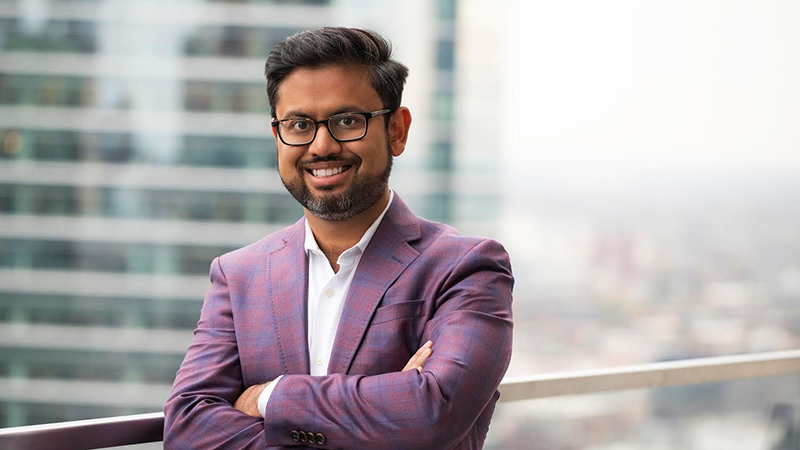
Dr. Shan Siddiqi is an Assistant Professor for Psychiatry at Harvard Medical School
#61: Shan Siddiqi – Bringing Human Brain Connectomics to Clinical Practice in Psychiatry
In this episode, I was able to talk to Dr. Shan Siddiqi, who is an Assistant Professor of Psychiatry at Harvard Medical School and a researcher at the Center for Brain Circuit Therapeutics at Brigham and Women’s Hospital, where he and his lab focuses on brain circuit therapeutics. Shan’s work bridges the gap between neuroimaging and causality, exploring the mechanisms of brain stimulation and lesions in neuropsychiatric disorders such as depression and post-traumatic stress disorder (PTSD). He’s made remarkable strides in understanding the brain circuits involved in these conditions and how we can leverage this knowledge for neuromodulation therapies.
Shan has worked on numerous topics that focus at improving transcranial magnetic stimulation (TMS) for psychiatric indications by using brain connectomics. Using various causal sources of information, he was able to show that the same network is associated with changes of depressive symptoms in patients with brain lesions, major depression, epilepsy or Parkinson’s disease – and this network could be identified using various types of brain lesions, transcranial magnetic or deep brain stimulation sites. More recently, Shan has worked on identifying a novel TMS target for PTSD based on data from penetrating head trauma lesions and TMS sites. He has worked on conceptual papers that revolve around closing the causality gap in neuroimaging, as well as on how to bring connectomics into clinical practice in psychiatry. His recently launched prospective R01 funded trial will aim at prospectively mapping random cortical stimulation sites to various behavioral and clinical outcomes.
Shan Siddiqi 00:00Image-guided psychiatry or biological psychiatry for a long time has been trying to make psychiatry more like internal medicine. The idea was that you have a hypothesis, what do you think is wrong with the patient? You order a test, the test will either confirm it or refute it, and now you've got a diagnosis. What we haven't been putting enough resources into, I think, is a surgical model, which is... Also, increasing the dose of the Nolan Williams stuff, like you mentioned, ever since Nolan developed an accelerated theta burst, we've been able to test these hypotheses a lot more effectively. Sure. Because we just have a larger effect size of sexual modulation. If I pulled 100 psychiatrists, 99 of them would have said it's not going to work. I had to work with a neurologist, probably just a specific neurologist, the one who asked this question. And so if it becomes obvious that you're providing inferior care by not having brain stimulation, then I think it'll catch on pretty quickly. For PTSD? Where they targeted a correlate, and that made people worse. 01:02The TMS treatment was inferior to sham for PTSD in that trial, significantly. Suggesting that they pushed the circuit in the wrong direction.
Andreas Horn Welcome to Stimulating Brains. Hello and welcome to another episode of Stimulating Brains. Today I'm thrilled to welcome Dr. Shan Siddiqui, an assistant professor of psychiatry at Harvard Medical School and a researcher at the Center for Brain Circuit Therapeutics at Brigham and Women's Hospital, where he focuses on brain circuit therapeutics. Shan's work bridges the gap between neuroimaging and causality, exploring the mechanisms of brain stimulation and lesions in neuropsychiatric disorders, 02:03such as depression and PTSD. Shan's made remarkable strides in understanding the brain circuits involved in these conditions and how we can leverage this knowledge for neuromodulation therapies. I'm really excited to dive into some of his latest findings and also the seminal work he's done in the past. I hope you enjoy this conversation as much as I did. Thank you so much for tuning in to Stimulating Brains. Great. So, Shan, thanks so much for doing this. We are here at the Center for Brain Circuit Therapeutics in person in Boston and it's Election Day. I start typically with an icebreaker question, as you may know, before we get into science: any hobbies? What are you doing in your free time? I think currently you're quite busy. Yeah, I listened to your podcast. I'm super excited to be here, by the way. 03:00I can't believe that I'm on the same podcast as Josh Borden and Helen Maber and Mike Fox, I guess. But what do I actually do in my spare time? Well, I just had a baby, so I spend a lot of time taking care of that. But chess is probably my biggest hobby. Right now I've been an active sort of organized chess player since I was like 13. And so if you look at my history right now, I've played 600 online chess games in the last three months. Wow. Oh, I didn't know that. Yeah. But I love playing guitar, piano, things like that. I like doing those things, but I wish I had more time. I used to do it more, and then I found neuroscience, and I started spending a lot of time doing that. Yeah, yeah. Cool.
Shan Siddiqi So it is a widely known fact that you, besides chess, you love burgers.
Andreas Horn Yes. And our dear colleague Joe Taylor has the following guest question for you. 04:02So if you were a burger and you were starving, would you eat yourself?
Shan Siddiqi Only if I was a good one.
Andreas Horn Okay.
Shan Siddiqi That sounds good. I'm thinking if I was a burger and I was starving, in that situation, I imagine my wife and my son are probably also burgers.
Andreas Horn So when I eat myself, what would I eat them first?
Shan Siddiqi That's a tough one.
Andreas Horn Yeah. Yeah.
Shan Siddiqi Have them eat you. To save yourself. That's probably what I would do.
Andreas Horn Yeah. Yeah.
Shan Siddiqi Of course. Of course.
Andreas Horn Yeah. And then circling back to chess, now I'm curious. Do you have a score or something? Is that a thing? Yeah. Yeah.
Shan Siddiqi There are ratings. So I have an international rating and a U.S. rating, and then also an online rating.
Andreas Horn Okay. Can you share? Do you want to share?
Shan Siddiqi They're all roughly 2,000. So my U.S. rating, I think, is like 1950 or something. My international rating is like 2020, and my online rating fluctuates. But roughly 2,000. Wow. I don't know. I used to play chess a little bit when I was, and I think that's a really good number. 05:03But I'm not sure. So right now, they're arbitrary numbers for me. But I'll certainly Google you and look that up. It's in the U.S. system, if you can get above 2,000, you're officially considered an expert. Wow. But I'm 1950, so I'm not there yet.
Andreas Horn Okay.
Shan Siddiqi But I haven't had time to play a chess tournament ever since I got married.
Andreas Horn Makes sense. Okay.
Shan Siddiqi Cool. All right. All right. Another guest question for you from Fred Shaper. So you have helped us solve many statistical problems. This already goes into, well, no, it's still an iceberg.
Andreas Horn So you have already helped us solve many statistical problems in network mapping and are known within our center and beyond as both the permutation king, but also as the speed chess king and the burger king. So please settle this longstanding debate for us. How many permutations? How many permutations does one need to determine whether burger A is significantly better than burger B? 06:00And does adding mayonnaise as a covariate change these results significantly? Yeah.
Shan Siddiqi So first of all, that's the second one for us. Mayonnaise as a covariate definitely changes the results because mayonnaise is not core to the burgers outside influence. You had to address that covariate. Obviously, the burger is going to be better with mayo. All burgers are better with mayo. You have to test it without the mayo. So either regress it out or design an experiment that doesn't include the mayo.
Andreas Horn Okay. Okay. Okay. Okay. Okay. Okay. Okay. Okay. Okay. Okay. Okay. Okay. Okay. Okay. Okay. Okay. Okay. Okay. Okay. Okay. Okay. Okay. Okay. Okay. Okay. Okay.
Shan Siddiqi Let's dive into actual science.
Andreas Horn So you, who were some of your key mentors throughout your career? What were, were there any specific turning points that led to, you know, your focus on brain stimulation and neuromaging? Yeah.
Shan Siddiqi So, yes, absolutely. When I first, unlike many people, many clinician scientists, I call myself a clinician scientist with capital C, not a clinician scientist with a capital S.
Andreas Horn Okay.
Shan Siddiqi And the reason is because I started out as a clinician. I'm not an MD-PhD. 07:00And I decided to go into science because of problems that I noticed in the clinical world that I thought needed to be solved. So when I first came in, coming out of medical school, I didn't really have any research experience. I didn't know what I wanted to do. If you'd asked me at that time, I would have said I wanted to study neuroimaging, but maybe in sleep, maybe in pain. And I thought I was going to be a sleep doctor clinically. But honestly, part of the reason for that is just because I realized that field was lucrative, so that the academic thing didn't work out, that I could be a clinician as a backup plan. But it was my friend Nick Trapp, we might know, who was a co-resident. We were in the trenches together throughout all residency. I didn't know that. Okay, yeah. We were interns together. We were on psych at the same time. We were on medicine at the same time, et cetera. And he was really into brain stimulation. I just talked to him over and over again. It made it really obvious to me that this is really the way to study causality of the brain 08:02and to look at how to actually modulate some of these brain circuits that I'm talking about imaging. And then a second landmark along the way, my second year of residency, I was in Kevin Black's clinic. You might know Kevin Black. For those who don't know, he's a partner. He's a Parkinson's-focused psychiatrist. I was in his clinic, and we were seeing a lot of patients who were glued back to DBS.
Andreas Horn And I asked him, you know, it seems like a lot of these patients report mood changes after DBS. Does that have anything to do with where the DBS electrode is placed?
Shan Siddiqi And he said, well, funny you should ask. I just published a paper on this. And so I looked at his paper, and he had a really cool computational model with permutation testing. And I looked at it, and I was like, the math here is so good. I would love to learn more about it. He said, I love that you appreciate the math here, because most psychiatrists don't think about the math. But Kevin's undergraded degrees in math. And so that I always think of as the moment that I decided to become a computationally-oriented neuroscientist in my second year of residency. 09:06But I think in order to get good at it, I really had to learn how to be good at the clinical side, because I'm a clinician. And so I had all these ideas about how to push. And I pushed an idea to him, focused on TBI, because I said, you know, we have neuro rehab applications of TMS and DBS and everything else. And also depression and TBI is the perfect example. TBI is the perfect combination between neuro rehab and depression. Let's do this. And he said, all right, let's do it. And he ended up becoming a key mentor also. He still remains a mentor, as is Kevin Black.
Andreas Horn 10:01But the fact that he not only thought that I could do it, but also as I made the project progressively more complicated, he supported every step of it. So at one point, I said, well, if we're doing the stimulation, why not just scan the patients also and learn a little bit? And he said, OK, go ahead. And I said, well, if we're scanning them, why not target based on the scan?
Shan Siddiqi He said, OK, go ahead.
Andreas Horn He said, OK, well, if we're targeting based on the scan, why don't we use functional targeting?
Shan Siddiqi He said, OK, go ahead. And every other faculty member that I'd worked with before him was saying, no, you can't do that. It's too much work. But I think him allowing me and pushing me and mentoring me as I did that was really important, because if I didn't have the mentorship and guidance, I would have been kind of wacky. Then, of course, Mike Fox, who's been my... A key mentor for the last, you know, several years, seven years now. The thing that I learned from him that was invaluable is how to control yourself and not do everything.
Andreas Horn 11:02And so I'll go into his office every week and say, I've got this really cool idea about how to study brain dynamics. What if you take the temporal derivative of the signal with respect to time and then model it as a chemical equilibrium?
Shan Siddiqi And he'd say, let's look at clinical outcomes and see what works. And I said, OK, OK, let me do that first.
Andreas Horn And it was really valuable for him to push me to think about the stuff that actually matters rather than just the stuff that's interesting. Yeah.
Shan Siddiqi And so I think those have been the most influential mentors in my career. Super cool. I had a similar Mike Fox moment once where I felt like I was super excited that we can now scan fMRI with DBS electrodes implanted. And I was super pumped that that's the next big thing. And he was excited by it, but not... Too much.
Andreas Horn You know, he said, will it actually matter?
Shan Siddiqi And, you know, he really... And that grounded me of thinking it's not so much about the method sometimes, it's really about what will have clinical impact and so on. So get where you're coming from there. Before you even went to med school, you lived in Sydney. 12:02Sorry, before you went to residency, you lived in Sydney for med school.
Andreas Horn How is Australia like?
Shan Siddiqi Oh, I loved Australia. I would have stayed if it was... It just so happened I was there in a moment when they didn't have enough internship places to go around. For all the medical graduates. And instead of doing a merit-based system, they decided they would prioritize Australians. Understandably, because they realized that Australians are more likely to stay in Australia. And so I said, okay, well, there's a good chance I won't get to stay here. So let me just study for the American exams and I'll go back to the US. But if not for all that, I probably would have stayed. It was a really nice opportunity to live in a really cool, cosmopolitan city.
Andreas Horn Yeah.
Shan Siddiqi Sydney is the only city or one of the only cities I've been to where I never felt like a foreigner, even though I was. Cool. And so I really liked it there. Great.
Andreas Horn And then WashU, St. Louis. How was St. Louis life and how was that?
Shan Siddiqi So I grew up in St. Louis. So it was nice going back to St. Louis. I had a lot of friends there.
Andreas Horn 13:01But also the main reason why I went to WashU was because I wanted to learn neuroimaging and WashU is known for that.
Shan Siddiqi And perhaps it was really just an excuse for me to go back and hang out with my high school friends. And I fabricated the neuroimaging interest because I just wanted to go back to St. Louis.
Andreas Horn Yes.
Shan Siddiqi But whatever. Whatever it was, I think it was that what I loved about WashU was that neuroimaging is just sort of in the air over there.
Andreas Horn Yeah.
Shan Siddiqi It doesn't take a lot to learn it.
Andreas Horn Yeah.
Shan Siddiqi I mean, not everybody learns it, obviously. You have to go out of your way to want to do it. But I would just walk to the neuroimaging building and just talk to people. And by doing that, I just gradually built up this fundamental understanding of how people, how the experts are thinking about this stuff, which I think was really valuable from a research standpoint.
Andreas Horn Yeah.
Shan Siddiqi 14:06for science yeah uh and so and so learning how to see psychiatry from as scientific of a lens as possible was was really valuable i thought super cool any key people that stuck out there beyond you know kevin black yeah in terms of clinical mentors well there were a lot of people who were very influential in my development as a clinician nuri farber is a program director there in psychiatry who uh and then uh eugene rubin who is uh the head of education there uh mike jarvis is the head of the inpatient unit i could go on and on but there were a lot of people who were uh who really helped me learn how to see patients with these complex illnesses in a manner that can be uh considered scientifically and that doesn't mean trying to understand the neuroscience behind so for example a lot of the guys just mentioned mike jarvis he would always say uh you guys have learned this uh receptor dynamic stuff about how different receptors 15:04affect different neurotransmitters none of it works learn the clinical evidence and how you can apply that to your patients uh and uh it was nice learning these different perspectives but at the end of the day applying evidence to patients is science uh and it's something that people often dismiss and say psychiatry is not based on science but like just taking that clinical evidence and figuring out when your patient can uh meet the right criteria that are the same as the clinical trial use for that uh that drug there's an entire framework of thinking around it and that's what the dsm is for yeah uh and so i i think sometimes people unfairly criticize the dsm because it doesn't do everything but it was never designed to do everything what it was designed to do was to learn how to apply a clinical trial result to your patient uh and that's uh uh so i'm one of the last living defenders of the dsm for that reason great and that's something that i learned to watch you that's great okay so fast forward then uh your move to boston must have been in 2017 because i think you arrived 16:06when i had just left and we overlapped for a few days or so when you were visiting yeah um and then you your big first paper from that time came out in 2021 if i if i'm not mistaken and in that you find that brain lesions tms and dbs converge on a common circuit for depression i think it really is a very important thing to do and i think it's a very important thing to do and i think it's a landmark paper because it um not only you know it's really important for depression but also shows this convergence of causal sources of information in onto a similar network so can you maybe give us a um top level overview about the paper what you did what you found what do you yeah yeah yeah so that was actually the second paper that came out but that was my favorite uh it's like even though the other one got more citations so far but it's so right in the american journal right yeah right okay sorry no no it's all right it's all right it's all right it's uh uh there's it is hard to keep track of the order of other people's papers i understand 17:04uh there's uh uh yeah so the basic premise was uh the people and so i should preface it by saying i didn't believe in lesion network mapping when i came here uh i came to boston thinking that i want to work on tms and dbs data uh and uh and line that up with connectivity but i don't believe this whole lesion thing there's too many variables there's no way the lesions can just it can't be that simple yeah uh and and this is the can you briefly introduce the lesion network mapping yeah yeah the idea is that if uh sometimes you have a bunch of different brain lesions like strokes and penetrating head trauma lesions that cause the same symptom but they don't overlap with each other so we used to say that where those lesions overlap is where that symptom must come from if they don't overlap uh you might say well maybe the symptom can't be localized more recent studies have been showing it turns out that even if they don't overlap the same region they don't overlap the same region so it's not a good thing to do that's the point they might overlap the same brain network yeah and the hypothesis has been that if damaging that 18:04network causes the symptom then stimulating the same network might relieve the same symptom with tms or dbs and so uh i uh i thought it was a cool idea but i didn't believe it i i just said there are too many variables in between lesions and stimulation there's uh there's so many ways this could go wrong that i it just can't possibly work uh and so i i i said well i'm not going to do anything because i'm not going to do anything because i'm not going to do anything because i'm i said this is probably some sort of noise it's probably some sort of statistical hack i don't know whatever i'm not even going to look at it but uh the way this paper arose was uh i said well you know let me just uh prove it either right or wrong but i started by look by sorry this paper started by saying let me line up tms and dbs studies in depression and we saw some vague signal and it didn't uh it seemed like it was working in one data set but we uh we said well let's look at this in a way that's not going to work and we're going to do something about it and larger scales have been replicated so essentially what we did was we took all the different sources 19:03of causal information that we could find lesions associated with depression maybe or maybe not uh tms size that may or may not have relieved depression and dbs size that may have relieved depression or even caused depression and the question was is there a common circuit that's connected to all of them and i didn't think that it was going to work uh but uh i essentially dumped it into one analysis to prove mike wrong yeah and it turns out i failed to prove him wrong yeah and then when i couldn't prove him wrong i was getting i said wait a minute is this is actually real uh and i spent a lot of time fighting with this thinking about any possible way that i could break it and i couldn't break it uh essentially lesions to one circuit seemed to cause depression tms to the same circuit seemed to believe depression dbs to the same circuit seemed to modify depression one way or the other uh and uh i think one of the reasons why that paper ended up being so influential is because i spent a lot of time like i said trying to break it because i didn't think that it was going to work uh but uh in short i think that's ended up becoming the paper that 20:03demonstrates that lesions can indeed help us find better stimulation targets and how many remind me roughly how many lesions how many dbs sites how many tms sites i know it's tons of data yeah just to there's a total of 713 patients of those 461 lesions 151 tms sites and 101 dbs sites you still know the numbers yeah i spent a lot of time working on this and these i think we're also um multiple data sets right from different institutions from different you know disorders maybe different disorders different continents uh it's uh so is it really possible that uh a patient from australia who has a an ischemic stroke uh to a certain circuit uh as opposed to a patient from berlin who has dbs to the same circuit could really uh be modulating
Andreas Horn the same symptom there are so many reasons why you'd expect it not to work absolutely yeah but
Shan Siddiqi it worked maybe it was that was straight down and then then maybe also we we did briefly mention it 21:04but it was patients with depression some major depression then parkinson's disease and epilepsy right yeah so in in uh uh in the uh dbs data sets right there was major depression products and epilepsy yeah when the stroke data says we have penetrating head trauma ischemic stroke and hemorrhagic stroke then the tms data says they all had major depression yeah and i think what you're getting at is that we also look at the data and we're looking at the data and we're looking at to see if there was a significant effect of diagnosis so if we looked at just the patients with major depression versus patients who developed depression or development improvement in depression that did not have major depression uh did the changes in depression map to the same circuit and the short answer was yes super cool fred schaefer has another question on that end for this paper what is the optimal way to test whether two brain networks are significantly
Andreas Horn similar or different from another right exactly what you've done you had to show they are
Shan Siddiqi to one another than what could be expected by chance and how does the spin test differ and 22:04compare to your method of permuting the clinical outcome or group label data yeah that's a good question so i've been collaborating actually with adderson winkler and tom nichols on developing a more formal way to do this uh we've uh so we had to develop this method for that paper is to in order to demonstrate what i just showed you they had to have a method for showing that these maps are more similar to each other than chance yeah uh you can't just do that you have to have a method using a spatial correlation or any sort of metric of just similarity because uh all of these uh uh you know anybody who has taken a basis to stats class will remember that uh in order to do parametric stats you have to assume that different measurements are independent of each other and different fossils in the brain are not independent of each other not only can we not make the assumption that they are but we know for a fact that they're not so uh any sort of uh metric spatial similarity is a very important part of the problem so i've been working on that similarity uh are flawed inherently that's also a limitation to the spin test which if your 23:05readers don't or you're listening don't know uh it's a it's a tool where you uh you look at the similarity between two different brain maps uh and uh you accept that this is a flawed metric and so then you uh project that brain onto a sphere you spin that sphere in random directions uh you recompute it and by doing that you uh estimate a permuted distribution of what you think the brain is going to be and you can then use that to estimate the similarity of what you would be expected by chance because the spin sphere was spun in random directions uh the problem with that which the people who designed the spin test recognize this problem this isn't me criticizing them uh it's just that some people have been misusing it the problem with that is it still uh does not completely break the uh uh the fact that the voxels on the sphere are interdependent yeah and uh the only way to break that is by permuting the input data in other words randomly reassigning each patient's clinical outcome with the different patients neuroimaging 24:02and recomputing the spatial correlation and so we uh that's what we did and it seems to give us roughly the same statistical values and p values that you get from trying to actually predict a clinical outcome so uh for example if you take uh how much your lesion is or your stimulation site is connected to the circuit uh and try to predict how well that actually worked clinically you get about the same p values you get about the same p values and you get about the same p values so you can predict how well that actually worked clinically you get about the same p values you get from the permutation tests I just described, which is a measure of face validity, I think.
Andreas Horn So given that, am I saying you should never use a spin test? Well, no, not necessarily.
Shan Siddiqi There might be situations where you cannot permute the input data. And if you can't permute the input data, because let's say you don't have it, then a spin test might be a proxy. Now, I'm being generous here. If you talk to some of the hardcore statisticians, they might say that this is invalid. Invalid is invalid regardless of the situation. I shouldn't speak on their behalf,
Andreas Horn 25:01but this is what they told me before. We worked on this paper together, and I said, well, can we just say the spin test is useful in some situations? And they said, it's invalid.
Shan Siddiqi But that doesn't mean that, I think that's a hard line to take. I think it might be useful in some circumstances, but it is, but if you can permute the input data, I think you
Andreas Horn should. Yeah, sounds great. Okay, super cool. We did talk about, you know, your circuit that
Shan Siddiqi you described there, you know, being associated with depression, no matter what diagnosis you
Andreas Horn seem to have, right? Major depression, Parkinson's disease, epilepsy. How do you think about this general concept of symptom-specific networks rather than disease-specific networks these days? And are there other examples you can bring up where, yeah. Yeah, so we've used the term
Shan Siddiqi symptom-specific. Because that's what we had, what we could support with data. There are certain networks that when 26:01you stimulate them, essentially relieve some symptoms over others. That was, but we say it that way, let me clarify what I just meant by that. I don't think that there is really an anxiety network and a depression network in the brain, you know, whether you believe God put it there or evolution put it there, it didn't go there for the purpose of causing depression or anxiety. It's there for some other reason. Maybe it's an emotional conflict resolution network. Maybe it's a fear extinction network, reward motivation or things like that. But what we have data on is symptoms. And so we can say that the outcome is that you get different symptom changes. But what we showed in the 2020 AJP, what you were mentioning, is that it seems like stimulating one circuit has more, leads to more improvement or what we call anxious systematic symptoms. And stimulating a different circuit led to more improvement. And so we can say that the outcome is that you get different symptoms.
Andreas Horn Yeah.
Shan Siddiqi And so we can say that the outcome is that you get different symptoms. And so we can say that the outcome is that you get different symptoms. And so we can say that the outcome is that you get different what we call dysphoric symptoms or depression. That dysphoric circuit lined up with the depression circuit you were just talking about 27:00where we derive the same sort of thing with lesions and DBS signs. The anxiosomatic circuit is also lined up with the same sort of analysis and anxiety that was not published yet. So I'm pretty convinced now that modulating different circuits does have effects on different symptoms. The one that we derive, like I said,
Andreas Horn was depression versus anxiety. Why that one?
Shan Siddiqi Is because those two things happen to co-occur very often, but match seemingly opposite circuits. And that could make sense that maybe it's really the same circuit moving in opposite directions causing the same symptoms. Or sorry, causing different symptoms. But that's what we've discovered so far because out of convenience, it's easy to discover something where the same patient has both symptoms but they're in opposite circuits. So now we've done a randomized trial where we randomized people to one circuit simulation of the other. And it seems like the anxiety circuit did do better for anxiety compared to the depression target.
Andreas Horn 28:01That is one thing that deserves some room, right? That was the American Journal paper, right?
Shan Siddiqi You showed these two circuits that you just described, anxiosomatic and dysphoric circuits. You then went ahead, and that means like TMS to these different sites would, like based on retrospective data, associate with symptom improvements
Andreas Horn and these two things. And now you went to the next step and did a prospective clinical trial,
Shan Siddiqi which I think is huge.
Andreas Horn And so what's the, like, yeah, can you talk a bit more about that? And then also, where do you see this going clinically? Is it already being used potentially? Yeah, so we brought in people
Shan Siddiqi who had both depression and anxiety, and we randomized them to one target or the other. This was a good platform for testing. This hypothesis, we, overall, our center, our group, between my lab, your lab, Mike's lab, we derived so many different circuits for so many different things. 29:00The question is,
Andreas Horn which is the right one to test first in a clinical trial?
Shan Siddiqi We chose this one because, like I said, it's a patient population that, sorry, it's a couple symptoms that often occur in the same patient at the same time. And the circuits were very different from each other. So it was very easy to modulate one circuit or the other in the same patient. And so we did it, and it was a small trial so far. It was only 40 patients. But essentially, like I said, people had both depression and anxiety. We randomized them to one target or the other. And it turns out that both targets were equally good for depression, but the anxiety target was significantly better for anxiety. And that's unique because, as far as I know, there are no head-to-head trials of TMS showing that one target is better than the other for anything.
Andreas Horn Yeah, maybe even not in neurostimulation, overall, right? Yeah, or I don't think there's a,
Shan Siddiqi I can only think of a couple across all psychiatry where one drug outperformed another drug or something like that. 30:00Or one effective drug outperformed another effective drug. And I think there's, of course, all these people had both symptoms, so you would expect that improving one symptom would lead to secondary improvement of the other symptom. So the fact that there was a dissociable difference
Andreas Horn was what was exciting.
Shan Siddiqi Now, what are,
Andreas Horn what does this mean clinically, to answer your other question?
Shan Siddiqi Some people have already started switching people to the anxious somatic target for anxiety. It's done quite commonly. I go to the clinical TMS society meetings every year. A lot of people have been doing this. We do it in our clinic here at the Brigham. I also work in the clinic at McLean, where we also do it often. Seems to be working so far, but obviously that's anecdotal. The clinical trial means a lot more than the anecdotal results. Sure.
Andreas Horn But where do I see this going in the future?
Shan Siddiqi Right now, we're talking about two examples of circuit targets. I think this is going to grow. I think we're going to have a lot of different examples of different circuit-based targets for different symptoms and disorders. But now that we have a sort of a well-thought-out platform 31:02and pipeline for identifying the targets, hopefully that'll greatly accelerate the development of these targets. So for example, Yuho Yotsa had his paper in Nature Medicine a couple of years ago on addiction. The addiction target that he identified lined up very nicely with the one that has previously been shown to work for nicotine and alcoholism. So he's going to be able to use that to help people with alcohol addiction. Suggesting that if they had used this approach, they would have been able to come to that target a lot faster.
Andreas Horn Yeah.
Shan Siddiqi So I'm hoping what that means is it accelerates the development of these new targets and sooner or later, we'll have a menu of targets to choose from.
Andreas Horn Yeah.
Shan Siddiqi So you could even think of it as a landscape of symptom networks and then you could even blend between them or personalize treatment for any given patient where to stimulate. Right. And so you take several factors into account. Right now, we're talking about symptoms because that's like, you know, because of what we measured. But it might be that there are psychometric tests that are a better way of looking at it or it might be that there are personality traits or comorbidities or genetic factors 32:01or things like that that all respond to different circuits. So those could all be mapped. And then as a clinician, you could say, okay, I have this patient who has PTSD, suicidal ideation, alcohol use disorder, and depression. I have four circuit targets for those four things.
Andreas Horn Which one do I choose?
Shan Siddiqi You could choose based on which symptom is most severe. You could choose based on which one you think is driving you. So for example, maybe the suicidality is the most important one for you because obviously, number one, you want to keep your patient alive. Or maybe you say, you know what, I think all four of these problems are secondary to the PTSD. And I want to treat the PTSD. Or you might say, you know, this patient just got a drunk driving ticket last week and he's going to end up having something bad happen to them because of that. So I'm going to focus on the alcoholism. Or you could say, you know, the evidence is really strong as for depression. Right. And so I'm going to choose to target the depression. And that's a decision that a doctor makes with the patient.
Andreas Horn Yeah.
Shan Siddiqi It could even be in some things
Andreas Horn just what's most burdensome for the patient, right? 33:00Yeah.
Shan Siddiqi Patient preference of which symptom they want to get rid of.
Andreas Horn Yeah.
Shan Siddiqi After all that, the patient might say, you know what, the thing that's really hurting my life right now, my wife is about to leave me because of this alcohol problem.
Andreas Horn Can you help me with that? Yeah.
Shan Siddiqi And then you'd say, okay, yes, we can, but note that the evidence isn't as strong as it is for depression.
Andreas Horn Yeah.
Shan Siddiqi And if the patient says, sure, that's fine.
Andreas Horn Yeah.
Shan Siddiqi There's a decision that can be made. Super cool. I think it's also like, since we talk about these things, it's always so fascinating to me
Andreas Horn how well connected you are in the whole TMS landscape here in the US, right?
Shan Siddiqi This is very different from where I come from, Germany, where I think there's really not a lot of TMS for depression in general. But here it seems like there are also these big clinics, private clinics that offer it as a service.
Andreas Horn And they, you know, what would you estimate how many patients are being treated? How many patients are being treated each day with TMS here in the US? Oh, there are a lot, right? Yeah.
Shan Siddiqi There are at least 2,000 clinics right now that have a TMS device in the US. I just looked this number up yesterday. 34:01And each of these clinics is probably treating anywhere from one to 30 patients a day. So I'm guessing there are probably at least 10 to 20,000 patients a day that are going to treat it. Just in Boston, I know within the Harvard system, Mass General treats 20, McLean treats 25.
Andreas Horn Yeah. Yeah.
Shan Siddiqi 30. Brigham treats maybe 15. That's per day. Per day. And Beth Israel treats maybe 10 or 15. So at least 60 or 70 just within the Harvard system.
Andreas Horn Yeah.
Shan Siddiqi Wow.
Andreas Horn Big demand and also great successes, right? So yeah, we had Nolan Williams here.
Shan Siddiqi And then, of course, Mike Fox and so on. It's really, really cool as an invasive guy to watch this by talking to you guys.
Andreas Horn Yeah. It's been interesting.
Shan Siddiqi And like I said, I got into this field initially from DBS. I was most excited about that at first. So I don't consider myself a non-invasive guy. I consider myself a brain stimulation guy. But it's just as a psychiatrist, it's easier. I could do TMS myself. 35:01DBS, I had to get a surgeon involved.
Andreas Horn That's why I've naturally fallen to that side more.
Shan Siddiqi Makes so much sense. And Nolan had, as you know, well, had a very similar story too. So we were also talking about these sites, TMS sites, DBS sites, and these being causal sources of inflammation. And then in 2022,
Andreas Horn so next year you had a fantastic paper in Nature,
Shan Siddiqi Reviews Neuroscience,
Andreas Horn where you teamed up with Conrad Cording,
Shan Siddiqi who is, I think, the causality expert worldwide.
Andreas Horn And then Joseph Fabisi, who does a lot of invasive STEM. And then, of course, Mike Fox to review and write about the causality gap in brain mapping. Can you summarize what this is, what the causality gap is, and how your work has helped?
Shan Siddiqi And then, of course, what you're working to close it.
Andreas Horn Yeah, so this is what led me into brain stimulation
Shan Siddiqi at the end of the day, was that we have a lot of correlative findings in neuroimaging and neuroscience in general, 36:02especially in psychiatric neuroscience. Of course, everybody, when they're doing their scientific training, learns the old adage,
Andreas Horn correlation is not causation, right?
Shan Siddiqi But I find that when you talk to individual scientists, they often tend to say, well, correlation is not causation, but this correlate that I'm looking at is really cool, and it might be called more causal. And I've talked to a lot of neuroscientists who think that if they make that correlative model progressively more sophisticated, it gets a little bit closer to causality. And I think that's dangerous for the field because as we're fighting treatment targets, you need to know the direction of causality.
Andreas Horn Why is that important?
Shan Siddiqi The analogy I often make is if you, for example, have a patient with pneumonia, and you measure every single thing, you'll find a ton of correlates. For example, they'll have an elevated C-reactive protein. If you try to lower that, it'll have no effect because it's just a correlate. 37:00They'll have elevated white blood cell count. And if you try to lower that, you will kill them because that is a compensation. And there are way more compensations than there are causes. There's only one cause, or at least one causal chain. There's a ton of things that are compensating for it. If you also see the epi-fever, you try to lower the fever by making the patient feel better transiently, but it won't happen. It won't solve the problem. Whereas they also have a bacterial infection, and if you treat that, they'll get better. But for most of the causes, most of the correlates, even if they're highly reproducible, even if they're highly consistent, the most reproducible finding in patients with pneumonia is probably high white blood cell count. That doesn't mean you should lower that. That'll make it worse. The bacterial abnormality is very irreproducible. It's different bacteria in different patients. So just because it's a low effect size, just because it's not reproducible, doesn't change how causal it is. I think this is a point of confusion that's happened in the field. People have said that just because something's reproducible, that might make it more causal, and that we should be stimulating that. 38:01And so I think if something is a not reproducible cause, that means maybe we need to think more carefully about what maybe there are multiple causes for the same thing or something else. So that was the basic premise of the paper, is just set out a set of criteria for how to distinguish what is causal versus what's just a really good correlate. And we created sort of a continuum, a causality, a set of criteria that you could appraise any method or any paper to say how causal is it. And not to say that correlates aren't important. They are, but they're not treatment targets. Causes have to be treatment targets.
Andreas Horn So they can be good physiomarkers or biomarkers, right?
Shan Siddiqi They could be biomarkers. Again, C-reactive protein is a useful biomarker for a lot of diseases. They might be good for monitoring outcomes, et cetera. but we can't assume that just because something is correlated with a disease that you want to bring it down, treat that disease. And that's dangerous. You could make people worse. You could hurt people. And this happened actually, 39:01there was a multi-center clinical trial for PTSD where they targeted a correlate and they made people worse. The TMS treatment was inferior to sham for PTSD in that trial, significantly. Suggesting that they pushed the circuit in the wrong direction. So that was... That was the basic premise of that work is to identify a framework for how to think about causality in a manner that's clinically relevant, hopefully. Super cool.
Andreas Horn So how do you or we close this gap?
Shan Siddiqi Like with we, I mean the center, not me.
Andreas Horn Yeah. Yeah, well, first of all,
Shan Siddiqi we don't need to reinvent the wheel. There's something that we really focused on in that paper is that people have been thinking about how to define causality ever since Aristotle. And there's... We don't need to start over. We can learn lessons from what's already been done. And so we summarize sort of the history of causal inference in general and came to the conclusion that the criteria for appraising causality have actually already been defined. We just need to readapt them to this field. 40:01So we adapted it with something called the Bradford-Hill criteria, which a lot of people have learned before. It's a set of criteria for deciding when causality can be inferred from observational data. One critique that I sometimes get from reviewers and elsewhere is that the study is observational.
Andreas Horn How can it be causal?
Shan Siddiqi The answer is...
Andreas Horn There's the same reason why we know
Shan Siddiqi that cigarettes cause lung cancer. There are no clinical trials proving that. There are no systematic... It was not based on systematic experiments. It was based on observational data. But it was based on an application of these Bradford-Hill criteria. So I think people are welcome to look at the paper to think of the individual criteria. But the short answer to your question, I think, is actually look at criteria, actually systematically appraise whether you can make causality or not. Super cool. And then... So the paper also emphasizes the importance of translating causal mapping
Andreas Horn into therapies, right?
Shan Siddiqi So we work with the idea 41:03to look at what are brain circuit targets to treat symptoms. What challenges do you foresee in moving from understanding these brain circuits
Andreas Horn to actually developing treatments for conditions?
Shan Siddiqi And we can already... DJ into PTSD,
Andreas Horn but also, you know, in depression. So what's the recipe?
Shan Siddiqi Maybe just summarizing again what we talked before. What's the recipe going to be to define a circuit that actually causally...
Andreas Horn Or is going to be a good treatment target? Yeah.
Shan Siddiqi I think the recipe that we've been using so far might be different from what's going to be the recipe.
Andreas Horn Okay.
Shan Siddiqi But the current recipe is take whatever causal source of information you can find, which are most commonly lesions,
Andreas Horn and the reason why lesions...
Shan Siddiqi Like I said, I didn't believe in lesions. I worked by having a first, and I proved myself wrong. Didn't.
Andreas Horn The reason why lesions
Shan Siddiqi is because they're just very common. Anybody who... If you walk into any hospital right now, 42:00you'll have 25 patients admitted with a brain lesion.
Andreas Horn Yeah.
Shan Siddiqi At any big hospital. So they're easy to find. And so take lesions, map the connectivity of the lesions that modify a particular symptom or a particular behavior as we can get deeper and deeper phenotyping. We can get into psychometrics and things like that. And...
Andreas Horn Yeah.
Shan Siddiqi And that gives you a potential target to say, I think the stimulant in this target might relieve the symptom.
Andreas Horn Yeah.
Shan Siddiqi If possible, ideally, then try to find a data set in which that circuit may have been stimulated in some patients but not others, incidentally, and a relevant outcome was measured and see if incidentally simulating your circuit does indeed lead to better outcomes. If that's available, great. If not, the data doesn't exist yet. And you have to generate it yourself. Either way, the next step after that is to hopefully do a clinical trial where you randomize people to be stimulated at that circuit or a different circuit. So it's different from most current trials 43:00where they just randomize people to search stimulation or sham.
Andreas Horn Yeah.
Shan Siddiqi If that happens, it's really hard to disentangle whether it really had to do with stimulating the right circuit or just holding a stimulator anywhere near that patient's head might have been better.
Andreas Horn Yeah.
Shan Siddiqi And that might not seem all that easy.
Andreas Horn Yeah. And that's why it's so important
Shan Siddiqi because it doesn't really matter
Andreas Horn why you made the patient better
Shan Siddiqi if you made them better. That's how it might seem, but it ends up mattering in the long run because as we try to optimize the stimulation in the future, we really want to know what aspects of it are therapeutic and which ones aren't.
Andreas Horn Yeah.
Shan Siddiqi So that we can figure out how to make it better in the future. So that's the recipe that we've been following so far and it's been working so far. I think in the future, there are going to be other factors that come into play also.
Andreas Horn How do you best personalize these targets? Is it based on imaging? Is it based on clinical factors? Is it based, is it based on other biomarkers that maybe genes have something to do with it? And other important factors, how do you personalize the stimulation parameters?
Shan Siddiqi We use the same stimulation parameters 44:00in every patient, either 130 hertz DBS or intermittent theta versus TMS.
Andreas Horn Yeah.
Shan Siddiqi It can't possibly be the right thing for every patient.
Andreas Horn Do we use pharmacological augmentation?
Shan Siddiqi So for example, recent TMS studies have shown that NMDA agonists, like Josh Brown and Alex McGurk, have shown this very convincingly. That NMDA agonists seem to increase the responsiveness of TMS,
Andreas Horn which makes sense
Shan Siddiqi given that TMS is believed to be involving NMDA-mediated plasticity. So what can we do to maximize that effect size to really be able to know
Andreas Horn that we think we're looking at?
Shan Siddiqi Also, increasing the dose of the Nolan-Williams stuff, like you mentioned, ever since Nolan developed an accelerated theta burst, we've been able to test these hypotheses a lot more effectively now. Sure. Because we just have a larger effect rate. Size of subplotulation.
Andreas Horn Yeah. Yeah. Yeah, of course. That makes sense.
Shan Siddiqi So it's been very hard when preparing to find the right studies to pick of what to talk to you about. But one that stood out to me, 45:01at least, was this year's and very recent publication in Nature Neuroscience on PTSD, where you used data from veterans that suffered from focal brain injury and then essentially to find a new potential target for TMS.
Andreas Horn Do you want to summarize? What you did there? Yeah. You know, it's interesting.
Shan Siddiqi This wasn't, I didn't think this was one of my best papers. I thought I'd be lucky if it gets into biological psychiatry. But the editors and reviewers really liked it. And I think you'll see why. The basic premise is that certain lesion patterns can actually protect against PTSD. So we looked at 193 Vietnam veterans who all had shrapnel to the head. They all had a very traumatic event. The unique thing about this lesion database, we've used this database for a lot of times, a lot of other studies. But the unique thing for PTSD is that they had the brain lesion and the emotional trauma at the same moment. And so, if they, it turns out that certain lesion patterns 46:01prevent the person from developing PTSD as a result of that emotional pattern. This has been published before in Nature Neuroscience 2009, that it was actually just the amygdala.
Andreas Horn So that kind of makes sense, right?
Shan Siddiqi If you don't have an amygdala, you can't get PTSD. But the amygdala is too deep to modulate with TMS, so we wanted to find a circuit-based target. So we looked at the connectivity of lesions that are protecting as PTSD, whereas the ones that don't. We still found a circuit that includes the amygdala, but it also had a broader circuit that includes the epicapus and the medial prefrontal cortex. At first, you might look at that and say, well,
Andreas Horn so what?
Shan Siddiqi That's just the connectivity of the amygdala. We already knew that. But it turns out, even if you drop all the amygdala lesions, you still get the same circuit. So, if, and it's still significant. So we, we found that lesions connected to the amygdala protecting as PTSD, even if they don't actually touch the amygdala. So, based on that, we said, okay, now they've got a circuit-based target that we think is involved in PTSD. But of course, 47:00in the real world, most PTSD patients don't have a lesion. So we tested the same circuit in 180 patients, also military veterans, of whom 62 had PTSD and 180 didn't. And that circuit seemed to be hypo-connected on average in patients with PTSD. And then we looked to see if changes in that circuit correlated with changes in PTSD in a small clinical trial from Noah Phillip of TMS, in which they did resuscitate connectivity before and after TMS for PTSD. And again, changes in the circuit seemed to correlate with changes in PTSD with active stimulation but not with sham. We don't actually know what happens when you actively target the circuit, but we found a bunch of incidental studies where they may or may not have targeted the circuit. And in this, this, there were about, I think, eight studies of fear extinction and six studies of PTSD. And then 13 out of those 14 studies, in all but one of those studies, the outcome was what we would have predicted based on the lesion-based circuit. 48:02And the one study, it wasn't the opposite direction. It was unequivocal. Sorry, it was equivocal. So, in other words, stimulating that circuit seems to modify fear extinction and healthy controls as it seems to modify PTSD. But the direction in which you stimulate it also seems to matter. So there was a state dependence. If you stimulate the circuit while the patient is in a fear state, you seem to entrain the fear and make it worse. You stimulate the circuit when the patient's in a relaxed state, you seem to make the fear better. If you inhibit the circuit when the patient is in a fear state, you also seem to make fear better. And that turned out to be the case in, like I said, all but one of those studies. Wow.
Andreas Horn Super interesting.
Shan Siddiqi And so, so I think there has not been, of course, no FDA approval and so on, but TMS, like,
Andreas Horn is TMS for PTSD already a big thing?
Shan Siddiqi Or do you think this paper will add
Andreas Horn to it becoming one? Yeah,
Shan Siddiqi so the circuit target that we proposed was different from what's been proposed, what's been used for the most part. 49:00It was a medial prefrontal cortex. There have been, there have been two large TMS clinical trials, one specifically for PTSD and one for major depression in veterans where a lot of people outside PTSD. And both those trials, TMS was inferior to sham for PTSD. Mm-hmm. And one of them was significant. The other one, it was like a PF.09 or something like that.
Andreas Horn Okay.
Shan Siddiqi But in both those cases, it lined up with our predicted model. They were stimulating the wrong circuit or stimulating it in the wrong direction.
Andreas Horn Okay.
Shan Siddiqi Now, if you look at observational studies, they seem to suggest that patients with PTSD seem to improve when they're treated for depression in large observational data sets. Mm-hmm. So it suggests it is possible to improve PTSD with TMS, but in observational data it says there's a lot of heterogeneity out of the targeting that was done.
Andreas Horn Okay.
Shan Siddiqi So I think it is really just a function of target. So I do think that this will improve our ability to use TMS for PTSD, but I get nervous about treating PTSD patients with TMS because I know 50:00that it's possible to make them worse based on these studies. So I do think we need more clinical trials. I don't think we're ready to just start doing this clinically all the time without a very, very thorough informed consent process. Anything on the horizon for, like, your own work or you're collaborating with somebody or do you know somebody
Andreas Horn who's going after this? Yeah.
Shan Siddiqi So there are a lot of people looking at it in different ways. We're collaborating, my postdoc, Ryan Webler, has launched a great collaboration with Charlene Lam at Hong Kong University.
Andreas Horn Yeah.
Shan Siddiqi And they're going to be testing different iterations of different states on this circuit and also with a pension tour at National University of Singapore where they're going to be doing the same sort of thing. So we're, we're, we're, my dream has always been to be able to generate the circuits and targets and find collaborators to, to test the hypothesis because there are other clinical trials on my strength. So we're, 51:00we're finally getting there I think where, where other people are trying to test it for us.
Andreas Horn Yeah.
Shan Siddiqi I would love to actually test the PTSD circuit ourselves too but we saturated in terms of how many clinical trials that can be.
Andreas Horn Yeah,
Shan Siddiqi you can't do everything yourself.
Andreas Horn Yeah, that makes sense. Yeah,
Shan Siddiqi great. But, but you do, you are involved just to mention it in prospective trials. It's here at the center too,
Andreas Horn right? Yeah. Yeah. Yeah,
Shan Siddiqi we just launched or we're just launching another one right now where we're actually purely randomized in the stimulation site to see what happens. That's super cool.
Andreas Horn Do you want to talk about that briefly?
Shan Siddiqi That was R01 funded,
Andreas Horn right? Yeah. Yeah.
Shan Siddiqi So, so this was my first R01. Basically we're bringing people in to do the stuff that we've been doing retrospectively by doing it prospectively. In other words, rather than capitalize on incidental variability in stimulation sites, we're actually randomizing them.
Andreas Horn Yeah.
Shan Siddiqi And we'll map the circuitry connected to stimulation sites that then selectively modify about 250 different behaviors that we're going to measure. That would depend. So hopefully that'll be the definitive test of whether all this stuff 52:00really works or not. Super cool.
Andreas Horn What is BRAS? Yeah.
Shan Siddiqi So BRAS is short for the Brain Stimulation Subspecialty Summit or maybe subspecialty, so initially it was subspecialty summit. Now it's going to be maybe subspecialty society. And the idea is that all the stuff that we're talking about is growing so fast that it's impossible for a general clinician to keep track of all of it. And so we need dedicated training and in order to have dedicated training you need dedicated training standards and accreditation system and things like that. So BRAS is our initiative which we launched here last year at the Brigham to develop those standards. Last year we had a meeting where we
Andreas Horn it was interesting.
Shan Siddiqi I invited something like 80 people to come to the Brigham from around the world and 55 of them actually showed up on their own dime. I couldn't believe how many people were so excited to come and talk about this. 53:00So we had a two-day conference and then this year we did the same thing at Stanford. And last year we came to the conclusion that yes, we're going to do this. Brain stimulation clearly needs a set of accreditation standards. This year we put together a curriculum and we're getting ready to launch a society that will be sort of the steering organization for this subspecialty to make sure that it stays in line with its intellectual intent.
Andreas Horn Yeah.
Shan Siddiqi And we'll hopefully at some point this year put together a formal application for recognition. So the goal is within a couple of years we'll have accredited training programs in brain stimulation. Super cool. Love it. I want to be mindful of your time especially with the small kid at home but I want to finish up with some rapid fire questions and the first one is from Mike Fox I guess question. What's the best and worst part of working with non-psychiatrists
Andreas Horn on psychiatric problems?
Shan Siddiqi The best part 54:00I'll start with that one because it's definitely a good thing overall. The best part is getting different ideas different perspectives. It's as a psychiatrist of course you're trained to think in a certain mindset. I love talking to neurologists and neurosurgeons because obviously they understand the brain better than we do and they're able to they come up with ideas that we wouldn't have thought of. And that's that's been a lot of fun for me so far. For example I told you I didn't think the lesion thing was going to work and if I talked to a bunch of if I pulled a hundred psychiatrists 99 of them would have said it's not going to work. I had to work with a neurologist probably just a specific neurologist the one who asked this question in order to to really be able to convince myself that it was worth chasing.
Andreas Horn Yeah.
Shan Siddiqi Same thing with the symptom specificity thing. That idea was inspired by symptom specific targeting and DBS for Parkinson's. We clinicians for those who don't know clinicians commonly will choose different targets 55:00depending on whether you want to focus on tremor or you want to focus on rigidity or bradykinesia or if you want to focus on medication reduction in patients with Parkinson's. So that's where Mike had been convinced that there's got to be something like that in TMS for depression. And I just said I believed him so I sat there and worked on the methods for a long time until we figured it out. We had to develop the right methods to find it but then we found it. And so that's been the great part about working with people who don't come from a psychiatric background because a psychiatrist wouldn't have thought of that. The hardest part I think about working with people who aren't psychiatrists is that obviously they don't understand psychiatry. And so no matter how much and I learned this about myself too no matter how much secondary training I do in neurology or neurosurgery I'll never fundamentally understand it the same way as somebody who spent two months working in a neuro ICU and also every other thing. So I find all the time that when non-psychiatrists are studying psychiatric problems 56:00they'll have an idea that sounds really smart but they're missing a fundamental thing that I know just because I spent two years working in an emergency when I'm taking care of patients with suicidality. Something like
Andreas Horn well what about psychosis?
Shan Siddiqi And they'll oh I didn't even think about psychosis. But to me psychosis is an obvious thing. In that setting. So that's been a challenge but fortunately I think most of the people I work with have recognized that you know psychiatrists know psychiatry better than people who aren't psychiatrists. So that's helped. I have occasionally been to a conference and asked a question of a non-psychiatrist who dismisses the psychiatrist's perspective on psychiatry which can be frustrating but I'm fortunate to say I don't think I directly work with any of those people.
Andreas Horn Makes sense.
Shan Siddiqi How would that the office of a future psychiatrist
Andreas Horn look like? Do you still have a bench?
Shan Siddiqi You don't have a bench. Like a Freudian. Yeah you know I I think all psychiatrists should have a sofa. At least. 57:00If not the Freudian bench. It's I think it will I think in the near future not too far away from today every psychiatrist will need to have a brain stimulation system suite in their office.
Andreas Horn Why do I say
Shan Siddiqi every psychiatrist and I don't really mean every psychiatrist is going to be just like every neurologist needs to have an exam room where they can do a lumbar puncture or something. If you don't
Andreas Horn then why would a patient
Shan Siddiqi come to you
Andreas Horn when they can go to a person who does have it?
Shan Siddiqi It's right now we have we have the convention I think a lot of people go into psychiatry or come out of psychiatry residency loving the fact that you could just start a practice in anywhere. You don't even need an office you can do it all virtually if you want to. But I think very quickly 58:00that's going to become not the standard of care anymore. It's going to become very obvious that you can give better care if you have brain stimulation. And so if it becomes obvious that you're providing inferior care by not having brain stimulation then I think it'll catch on pretty quickly.
Andreas Horn Makes sense.
Shan Siddiqi So interventional psychiatry is going to happen at scale.
Andreas Horn Yeah.
Shan Siddiqi I think psychiatrists should also know how to do ketamine and at some point they'll have to know how to do psychedelics and things like that. Right now it's become it's been seen as a fringe thing where you send patients to a separate clinic to do that sort of thing. But the patient population that needs these treatments that could benefit from them is so large that it can't possibly stay a fringe thing. And I think the analogy is the same thing is going to happen this is not the question that you asked me the same thing is going to happen with biopsy biologic treatments for Alzheimer's. Right now it's used by a small group of neurologists but Alzheimer's is so common that primary care doctors are going to have to learn how to use it.
Andreas Horn Makes sense. Okay. Yeah.
Shan Siddiqi I mean I'm you know coming when I moved here 59:00from Germany I was surprised that for example our OBGYN who is you know when my wife had a baby here
Andreas Horn he's fantastic
Shan Siddiqi but he doesn't do ultrasounds right. He sends to the ultrasound clinic and they have the fancy equipment. And all that right. So I think here there's a lot of specialization.
Andreas Horn Yeah.
Shan Siddiqi Well that's especially true in Boston.
Andreas Horn Okay.
Shan Siddiqi In Boston is a place where you can really get away with being super specialized.
Andreas Horn Yeah.
Shan Siddiqi In St. Louis for example where I trained every OBGYN would have been doing ultrasounds.
Andreas Horn Yeah. Makes sense.
Shan Siddiqi In turn.
Andreas Horn Okay.
Shan Siddiqi Cool. So what's been a eureka moment
Andreas Horn in your research? Yeah. Yeah.
Shan Siddiqi I think you've already asked me about some of them. And you know I think one of the famous quotes who that's often been misattributed to various people is that science is not so much made of eureka it's made of more that's funny. And I think the biggest that's funny 01:00:00moments have been first of all when I was throwing all those data sets together like you were asking me about earlier and I couldn't convince myself that lesion network mapping is not real. I was trying to disprove it and I failed to disprove it. And I was like this is working and this is working too well. How could it possibly be
Andreas Horn okay?
Shan Siddiqi I guess I was wrong. Another one was when we were doing the symptom specific analysis and I started sorry let me take a step back what we were looking to see is does stimulating different circuits modulate different
Andreas Horn symptoms?
Shan Siddiqi And I started looking through the maps so what I did was and this is by the way advice that I have for any young person getting into neuroimaging look at your brain maps don't just look at the data that come out of them actually look at as many maps as you can and when I I was looking at the connectivity of simulation sites that modify symptom one versus symptom two versus symptom three and I scrolled through all the different symptoms that I had and just like looked at patterns and it was very obvious that it was either A or B. 01:01:00It was never something in between and I was like there's something here there's no in between it's always one or the other. It could just be this mapping that has positive it has negative networks so I did some tests to convince myself that wasn't it but it was but I think that might have been one of the earliest moments where I said whoa this is something cool. Have you ever thought that's been a waste
Andreas Horn of my time?
Shan Siddiqi No. I take that back. I take that back. I have often thought that something was a waste of my time but in retrospect it usually wasn't because you always learn something as long as you're learning something from it you're not wasting your time.
Andreas Horn Yeah.
Shan Siddiqi And even if you spent six hours sometimes I'll spend hours, days, weeks working on an analysis and then later I'll realize that the data were just like ordered incorrectly or something like that. So obviously everything that I got from that analysis was wrong because it was just like a frame shift 01:02:00or something that anybody could tell is an error. And even then I learned something from that maybe not about the data or maybe not about how the world works because all the analyses were wrong but about how my brain works because I was convinced that that analysis was giving me a correct result until I realized the input data were wrong. And so it forces some humility on you. So I think even when I've done some things that seem like a waste of time there's always something you can learn from it. Love it. Where do you see the field of neuromodulation
Andreas Horn going in the next 10 years?
Shan Siddiqi We talked about the psychiatrist
Andreas Horn but yeah how would it look like? Yeah, so one thing
Shan Siddiqi that I didn't mention about BRASS or the specialty initiative is that it's not about psychiatry it includes neurologists neurosurgeons and we had a good group of both of all of that. So I think the direction the field of neuromodulation is going is more cross-talk more psychiatrists neurologists and neurosurgeons talking to each other learning from each other and I realized 01:03:00the more I talk to again TBS neurologists the more I learn about how TMS should work for depression because these are fundamental principles of nature how brains are modulated and how you do it and which patients you do it for might have practical differences but they're fundamentally doing similar things so I think as we talk to each other more we're going to start learning faster I think where the field is going of course we're going to get more sophisticated I think we'll start using TMS to find better DBS candidates for example I think both TMS and DBS will probably get replaced by better technologies at some point because they're both fundamentally limited like maybe RNS is just better for everybody maybe focus ultrasound is just better for everybody yeah you know you recently in a different conversation mentioned that you know for example focus ultrasound or could be temporal interference and so on all these things might just be entries in our arsenal and might really depend on which patient would profit from which right so right now 01:04:00it felt that you wouldn't bet on one horse but you will think all of them will kind of
Andreas Horn is that true?
Shan Siddiqi yeah I think I think it's possible that one will just be better than another but it's also possible they all have different applications and that seems more like it's it'll just be a tool's new tool belt and I think when a surgeon goes in they might have 25 different instruments they can choose from and they'll choose based on a lot of factors but the reason why the surgeon has the ability to make that choice is because they fundamentally understand what's happening in that patient's abdomen whatever they're operating on they know that if the gallbladder drains out through the bile duct and that goes into the pancreas or the duodenum they know how that stuff works and so then they can say well this is the right instrument for me to modify that specific thing and so I think we're going to get to a point where we don't need clinical trials to test every single question because we understand the principles enough so we can make the decisions without having to do a clinical trial for every little thing yeah since you mentioned surgeons 01:05:00I wanted to diverge one more time we wrote a review together a small letter I think and there you had this medical versus surgical approach and I really liked that too do you want to briefly talk about that yeah you know it's funny I just re-read that article a couple of days ago so every once in a while I like to go back and re-read stuff that I wrote to make sure that I'm not contradicting myself yeah so the idea was I think image guided psychiatry or biological psychiatry for a long time has been trying to make psychiatry more like internal medicine the idea was that oh you have this this proposed you have a hypothesis what you think is wrong with the patient you order a test the test will either confirm it or refute it and now you've got a diagnosis yeah and then you might choose treatment based on that I think that's been that hasn't gotten that hasn't worked right we've been trying to do that for a long time not that it's not going to work maybe it will but I think there are a few reasons
Andreas Horn why it hasn't worked
Shan Siddiqi one is that I think we're asking for too much from one set of tests like no other test 01:06:01in medicine so right now I'm talking about functional connectivity for example no other place in medicine do we expect one test to diagnose every single thing in the field yeah but in psychiatry we expect functional connectivity to tell us everything about the brain mm-hmm is because that's the hammer that we have and everything looks like a nail mm-hmm so I think that's one reason
Andreas Horn why it's not working
Shan Siddiqi and a second reason is because most of the tests that we have just aren't reliable enough and we try to sidestep that problem mm-hmm we try to just sort of pretend like it's not an issue but it's a fundamental issue yeah something can never be medically useful if it's not reliable you have to know that you measure somebody twice to get the same answer otherwise it can't it might still be real but it's not clinically useful mm-hmm and again that's been sort of an elephant in the room people say yeah yeah it's not reliable yet but we can work that out later let me guess so I think for those reasons we're still a long way from being able to realize that internal medicine model we might get there yeah I hope we do but we're a long way away despite decades of a lot of people trying 01:07:01and billions of dollars being spent on it mm-hmm what we haven't been putting enough resources into I think is a surgical model which is image guided psychiatry will make psychiatrists more like surgeons where you say rather than trying to the example that we used in the article was an MRI scan can't tell you what type of brain tumor a patient has but it tells you where the tumor is yeah and so you can take it out and then as the field has developed we've gotten better at molecular diagnostics and figuring out
Andreas Horn exactly what type of tumor it was
Shan Siddiqi but it doesn't change the fact that you need to know where the tumor is so you can take it out yeah and that's what the imaging tells you the imaging tells you where the tumor is and you can do other fancy stuff to figure out what kind of tumor it was and that'll tell you about the prognosis and the chemotherapy regimen and all that and all those things are complementary right we need all those things we don't have to choose one or the other we don't have to say should I use TMS or should I use SRIs well maybe you can target the circuit and also modulate the serotonin or the neurotransmitters and hopefully we'll have a day 01:08:00when we know which approach like which neurotransmitters should be modulated for that patient and which circuit should be modulated for that patient but they're parallel and complementary approaches so the medical approach would be can we diagnose depression using imaging and the surgical one would be where to target TMS right or DBS right and I think the surgical approach despite the fact that it's relatively young has already yielded many victories in psychiatry and the medical approach has been the predominant way that people have been looking at this for the last several decades and we haven't really gotten anywhere so again I'm not saying that we won't I think we will I think we should still study it but I think we should focus a little bit more on the thing that's been working you briefly gave advice already to young researchers but if you had to give more global advice to new people entering the field either psychiatry
Andreas Horn or neuroscience what would you give?
Shan Siddiqi I think learn the stuff that you don't know let me say that differently learn the stuff that is not in your 01:09:00mentor's area of expertise read and think broadly about the field I think one of the most common mistakes that I see people making when they're going into neuroscience is they don't know anything about psychiatry or neurology people who are going to psychiatry don't know anything about neuroscience and there's if you're stuck inside one world view of thinking you'll you will miss stuff and it's like I've seen some really smart neuroscientists spend years and countless amounts of resources asking questions that just don't matter like we were talking about earlier the question of does it actually matter for clinical outcomes yeah sure and maybe some of those questions will end up mattering but you should at least know that recognize what which questions people care more about so for a neuroscientist I'll say talk to a lot of psychiatrists and neurologists about your work and neurosurgeons for a clinician I'll say talk to a lot of neuroscientists about your work 01:10:00assuming you're doing research and make sure that they're sort of complimenting each other it's one of the things that I love about our center is that we can have these conversations every day yeah I love that too very much so is there any missed opportunity in your career or in the field that you regret things we should be doing you should be doing we should be doing but we're not yeah yeah I mean of course there are always many missed opportunities do I regret it I mean I think every time you miss an opportunity is because you're seeking out a different opportunity yeah so I wouldn't say that I regret any of it because I'm happy with the opportunities that I did seek out but I think I'll say again what I said a minute ago is that the biggest missed opportunity in our field in general is that we've been focusing a lot on trying to be more like the internists and not on defining a whole new way of how psychiatric neuroscience should look clinically maybe it's based on surgeons maybe it's based on something else 01:11:00but but I think we'll one of the reasons
Andreas Horn why that's been
Shan Siddiqi a problem is that again we are expecting too much of a test that might not be able to deliver it so a more concrete thing is that we keep trying to strain functional connectivity to see how much we can get out of it when really we might be barking up the wrong tree and it's time to shift to something else in certain settings yeah okay Shan this has been
Andreas Horn fantastic
Shan Siddiqi is there any question I should have asked but did not as asked no I you asked me a lot of questions that I think I hadn't explicitly thought about before so that was fun cool
Andreas Horn this is why I like
Shan Siddiqi listening to your podcast
Andreas Horn thanks so much
Shan Siddiqi one more time for taking all that time especially now in your current life situation to do this thank you yeah thanks for having me it was fun 01:12:12thanks for sharing thanks for sharing thanks for sharing
Click any highlighted text passage to jump the Spotify player to that point. The transcript text is present directly in the page HTML for search engines and accessibility.