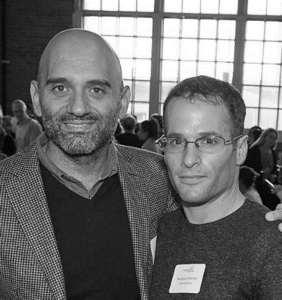
Dr. Alfonso Fasano and Benjamin Stecher
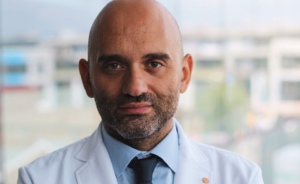
Dr. Alfonso Fasano holds the Chair in Neuromodulation and Multi-Disciplinary Care at the University of Toronto and University Health Network.
#51: Alfonso Fasano & Benjamin Stecher – A Unique Collaboration Between
In this very special episode, we are thrilled to welcome back Ben Stecher, marking his remarkable third appearance on StimBrains (you can find him previously featured on episodes #12 and #14). Today’s discussion takes a profound turn as we delve into the unique collaboration between Ben and his neurologist Dr. Alfanso Fasano, who is a Professor in the Department of Medicine (Division of Neurology) at the University of Toronto.
Together, they’ve co-authored ‘Reprogramming The Brain‘, a book that offers a new vision for the future of brain science and neuromodulation. We are very excited to delve into this voyage as seen through the eyes of both a patient navigating the complexities of Parkinson’s disease and his doctor.
Alfonso Fasano & Benjamin Stecher 00:00The idea of writing a book with Ben started when we, it's actually a funny story, because we realized that our initials mean something else in lay language, because my initials are AF, Ben's initial is BS. And so at some point we were thinking of writing a... In the middle of all of this, then Ben got surgery, and then he became a guide for patients considering DBS. And then the more we were writing the book, the more we realized that it was really the... There's a lot of questions that were just answered as I was going through the journey. So we tried to write all those answers down in a format that might be a little more entertaining as well than just getting a pamphlet from your doctor or something like that. But then we also realized along the way that we were answering a lot of questions about the brain and care and all of that. And we also learned a lot about human biology and what it means to be a scientist and a doctor and a patient along the way. So we tried to blend all those things together into one narrative. 01:03I think we did a pretty job of it, but time will tell. I guess from the feedback that we get from the book, whether or not we succeeded in our...
Andreas Horn Welcome to Stimulating Brains. Hello and welcome back to Stimulating Brains. In this very special episode, we are thrilled to welcome back Ben Stecher, marking his remarkable third appearance on this podcast. You can find him previously featured on episodes 12 and 14. Today's discussion takes a profound turn as we dive into the unique collaboration between Ben and his neurologist, Dr. Alfonso Fasano, who is a professor in the Department of Medicine, Division of Neurology, at the University of Toronto. Together, they co-authored Reprogramming the Brain, a book that offers a new vision into the future of brain science and neuromodulation. We are very excited to dive into this journey 02:24as seen through the eyes of both, a patient navigating the complexities of Parkinson's disease and his neurologist. I hope that you enjoy this episode as much as I did, and thank you for tuning to Stimulating Brains. All right, so thanks guys for joining. This is a fantastic opportunity to hear about the new book. And Alfonso, since Ben has been here twice before, the first two questions go to you, since we usually ask a first icebreaker question about what you guys do in your free time. 03:03So, any hobbies you like? Yeah, I've been always passionate about music, and I used to play music at almost professional level while I was a student. And I kept the passion over the years. Now I have limited time to practice, so my skills are declining, unfortunately. Day by day. But in the recent past, I tried also to combine my passion for music with my work. And I just participated in the recording of a song done by professional musicians, Canadian musicians with Parkinson's, professionals well known. The song will be released on Parkinson's Awareness Day on April 11th. So I can't say much right now, but it's a great song. I had the pleasure to
Alfonso Fasano & Benjamin Stecher participate in. And actually, I had the idea to put them together and ask them to do something together. 04:05Because I wanted to give a message to people out there that having a disease is not necessarily a limitation. It can actually be seen as a challenge, but also an opportunity to do better. And in particular, this one that is called Slow Emotion, Slow Emotions, is inspired by the story I told them. But in the past, I had the chance to follow several neurologists with Parkinson's. And one of them once told me that with the disease, he found that his ability to work as a neurologist had improved. Because he didn't have to finally rush from nine to five or longer day by day. But because he knew that it would take longer for him to do things, he decided to do it. He had time to pause, relax, focus, and he noticed that a slower pace was indeed better. 05:01And that's again an opportunity that a disease can give you. The song is not cheesy at all, but this is the philosophy behind the song.
Andreas Horn Fantastic, that's so cool. And you play the keys mainly, right?
Alfonso Fasano & Benjamin Stecher Yes, yes. I play a bit of other... I always like to play as many instruments as possible. But yes, technically I'm a keyboard player. Cool. And I think when we met last, I was in Florida, I think I saw you perform on the piano.
Andreas Horn So I can attest that it is great skills there. So really fantastic.
Alfonso Fasano & Benjamin Stecher I do share the passion, by the way, for music, but I never was really good at a single instrument.
Andreas Horn But I spent a lot of time playing in bands as well when I was younger. And yeah. What instrument?
Alfonso Fasano & Benjamin Stecher Also different ones. But I think I'm a keyboard player. I'm a keyboard player. I'm a keyboard player. I'm a keyboard player. I'm a keyboard player. I'm a keyboard player. I'm a keyboard player. But I also sung. Now my voice today is not great. Maybe it was never great, but at least I had a lot of time and fun in that. 06:01So yeah. Cool. So who have been key mentors in your career or turning points and or turning points to bring
Andreas Horn you to Toronto where you're now in your career? Yeah, actually, that's something that is discussed in one of the chapters of the book,
Alfonso Fasano & Benjamin Stecher because the book, as you'll hear soon, is about our journeys and then how we got to know each other and what happened next. So when it comes to my journey, I was lucky enough to be surrounded by different mentors, actually. And I was always jumping and not everybody was happy about it from one institution to another, from one collaboration to another. But that gave me the opportunity to build the relationship with incredible people, over the years, that are still very close to. I can quote a few. In my first years in the residency, it was Professor Annetta Bentivoglie 07:00in Rome, who was a moving disorder neurologist without interest in deep brain stimulation.
Andreas Horn And that's why at some point I moved to other mentors. One of them was Albanese,
Alfonso Fasano & Benjamin Stecher Alberto Albanese, who actually happened to be in Rome before my time. And then he moved to Milan, but he's the neurologist who brought deep brain stimulation to Italy. And then also in Rome, I had the pleasure to work and collaborate with the competitor university, University Sapienza, and particularly with Professor Alfredo Berardelli, who happened to be also the chair of the European section of the MDS. And his interests are mainly in neurophysiology, so I happened to learn more about neurophysiology. And through him, I met a lot of other very smart people. And then Professor Gunther Deutschel in Kiel. This has been probably the most instrumental with respect to my phases after education. And I went to Kiel because I wanted to
Andreas Horn 08:07understand why people with DBS have a worsening of locomotion.
Alfonso Fasano & Benjamin Stecher Back then, this will have been 2006, 2007, the narrative was always that this was just, this is progression. And then, you know, we had the ! Sure, but I didn't know how to translate it, but I didn't know how to translate it, Francesca and Alberto were previous fellows of his and through them I had the chance to meet him. 09:04He wasn't my mentor obviously, but he has heard about me and my publications and then eventually when there was a position open to be in charge of the DBS program at Toronto Western, he called me one day and asked me if I was interested. In reality I wasn't really interested or at least ready to change and go from Italy to Canada, but eventually it was a very good opportunity
Andreas Horn I had to take it. Do you miss Rome? Not at all, because I'm not from Rome and Rome is a difficult
Alfonso Fasano & Benjamin Stecher city. It's good to be there as a tourist, but it's not an easy one. I always joke that it's good to work in Canada and go on vacation in Italy than the other way around.
Andreas Horn That makes sense.
Alfonso Fasano & Benjamin Stecher That makes a lot of sense. Okay, so Ben, we first talked in episode 12 in June 2021, 10:01which was a mere nine days after your DBS surgery. Nine days. We then talked again in episode 14 in October 2021 in a joint episode together with Alberto Espe, who is a famous movement disorders neurologist in Cincinnati. You had co-written the book Brain Fables with Alberto at the time. Now you're back. I'm back and have written another book with another famous movement disorder neurologist out of Toronto, who we just talked to, Alfonso Fasano. Before we go into the book, how has life
Andreas Horn been treating you since 2021? So since your DBS surgery, any turning points? How do you look back on your decision to undergo DBS now, three years later? Yeah, thank you for having us first of all. And yeah, so it's been three years since I got the
Alfonso Fasano & Benjamin Stecher surgery done. I would say that for the most part, my life still continues to be very good. I'm still traveling. I'm actually calling in from San Diego at the moment. So I'm still able to live my life. I'm still able 11:01to do the things I want to do. However, I do find that there's more and more impairments that have come up across time. One is my voice. I don't know how well you can compare the sound quality of my voice with the earlier episodes. I don't think I'm quite as vocal as I used to be, which might be a good thing for some people. But also my voice is not as good as it used to be. I'm not as good as I used to be. I'm not as good as I used to be. I'm not as good as I used to be. I'm not as good as I used to be. I'm not as good as I used to be. But also my, I do have some weird like gait impairments now as well that do creep up over time. And I have to see Alfonso more often now because of that as well. However, each time I go and see him, I feel as though my symptoms do improve for about two months, three months afterwards. I feel great when I leave the clinic, but then there's like a slow decline to my next visit usually. And then I go, I see him, he tweaks my settings and I feel better afterwards.
Andreas Horn But yeah, so that's my life.
Alfonso Fasano & Benjamin Stecher It's that constant like back and forth of like slow decline. And then I go and see him and I feel better. And then I wait for the next two, three month period. But in between, I live my life. I do 12:00the things I want to do with my life. However, it is a bit of a burden being tied to the clinic, I must say. However, I would trade how I feel today for how I felt before my surgery for anything in the world. I feel so much better today than I did three years ago that it's still like night
Andreas Horn and day for me. So just just so we got this right, so you would still do it, right? So I understood this correctly that you would. Yeah, okay. Okay. Okay. That's good to hear. And still sorry to hear, of course, that. Yeah, it feels like being tied to Alfonso. I mean, you could be could be tied to worse people,
Alfonso Fasano & Benjamin Stecher I think. But yeah, that makes sense. All right. So Alfonso, you are a world renowned neuroscientist and movement disorder specialist and a professor of neurology. In Toronto, where you lead the DBS program, as you just mentioned, there are many impressive facts about you. But I think the most impressive one to me is that you seem to be everywhere,
Andreas Horn wherever I am at a conference, you're always there. So do you have clones of yourself? Or 13:05how do you manage to travel since we talked about traveling just right now? Yeah, that's not necessarily a good thing, I guess. But thanks for your nice words. I see
Alfonso Fasano & Benjamin Stecher myself as a physician, first of all, and I'm at the end of my career. So I'm not necessarily a
Andreas Horn physician. I'm a doctor, right? So I unfortunately don't have the luxury of spending days and days in
Alfonso Fasano & Benjamin Stecher a lab. And most of the time, actually, the work on projects or papers while I'm traveling. And that's one of the reasons I travel because it's my protected time. It's a way to be protected from, you know, other type of commitments. And being a physician... You're patient like me.
Andreas Horn Yeah, that too. But yeah.
Alfonso Fasano & Benjamin Stecher No, but jokes aside, being a physician is an incredible opportunity,
Andreas Horn first of all, to find the motivation to find answers, which is exactly what I was saying 14:00earlier when I said, let me understand why people have a gate worsening after DBS. So being exposed
Alfonso Fasano & Benjamin Stecher to the challenge and the problems that people have on a daily basis really motivates me and gives me that drive to continue what I'm doing. It's challenging, it's for sure more difficult, than being a basic scientist. And probably a lot of people will disagree with me, but it's more challenging because you are also dealing with humans and their expectations, their families, their anger, sometimes their disappointment. But back to your question, I travel for a number of reasons. First of all, because it's always an opportunity for me to connect with people. And
Andreas Horn Yeah. That's probably why I get invited and it becomes sort of a vicious circle because I had
Alfonso Fasano & Benjamin Stecher the opportunity to learn so much and to meet so many outstanding researchers over the years. That gave me a privileged position also because I started doing DBS
Andreas Horn 15:06when I was a resident. Actually, the reason why I went into neurology was DBS. I was a student,
Alfonso Fasano & Benjamin Stecher medical student, second year of medicine when I saw the first SDN DBS patient, which was one of first ever treated in Italy and that blew me blew me away and and so that like I said I have this opportunity over the years to see how the field has evolved and to meet the right people and this is what drives then the invitations the other reason I travel is because I can I'm in an environment in Toronto where I have of course clinical duties but also freedom as long as there
Andreas Horn are outcomes you there are results and that that's why yeah but it's an opportunity that
Alfonso Fasano & Benjamin Stecher really academic medicine gives you and unfortunately a lot of residents don't 16:03recognize it yet or they don't recognize it anymore I don't know how's the situation in the states but in Canada a lot of residents they just want to learn the job so they can go to the community and do a nine to five clinic which is of course important and rewarding and generates income but they miss a lot of other opportunities that academic medicine has but academia is seen as the real dark side nowadays lastly I just want to expand what I said about basic science there was a time when I had a a lot of respect for basic scientists and I still do don't get me wrong but I was always thinking oh my god this is way more dangerous than I thought it was and I was always thinking about what I do and then I started to attend basic science meetings and and learn what they think about diseases so of course when they talk about basic science they are the best but then it's 17:01not everybody obviously but there is a sort of an idea that since clinical work is easy then start jumping into clinical comments or you know more practical aspects of the DC of being a doctor also because some basic scientists are very good at that and I think that's a good thing because I'm also a physician and when they start commenting on diseases and patients then I realized that a lot of them don't really know what they're talking about and and and that's a bit of a problem that we're discussing in the book this the this connection between science and clinical practice and I can go on and on with some examples but I'll stop here so so I I can echo that a lot of rodent researchers will put in their grants this will at some point in time be a good thing for the consumer but I think it's also sort of like 18:16Again, it's hard to generalize here. Of course. But we need... Absolutely. Just to say, I guess we all agree that we need everybody. So the process is built on basic sciences and clinical sciences. What I think has to change is this idea of one being better than the other. And even if so, we've been talking about a cure for Parkinson's for so long now that if these people were very smart as they say they are, they should have found a cure. And part of the reason is also, again, the perception of the community out there. Foundations like granting agencies and foundations, they are always looking for a cure. 19:03They're always going after a cure. Meanwhile, forgetting that there are real people suffering from the disease that unfortunately have missed the chance. They have a cure and they need better treatment. But this has now changed and that's good to see. I want to already apologize that I'm talking too much to Alfonso.
Andreas Horn The only reason I'm doing this is because Ben has been here twice before, right? And people can listen to your episodes. But one more question before we jump into the book. Alfonso, can you maybe summarize in brief your activities in Toronto? What's your role clinically and what's your scientific focus?
Alfonso Fasano & Benjamin Stecher And then maybe how you met Ben to get into that.
Andreas Horn Yeah, that was...
Alfonso Fasano & Benjamin Stecher That was a difficult day for me. And Ben can tell you. But so my clinical role is co-directing the DBS program. But initially it was a DBS program in movement disorders. But over the years, I happened to learn other ways to help people with technology. 20:02Just to mention a few examples, pump-based treatments for Parkinson's, Libidopa pumps or other type of pumps. Also MPH. MPH. It's become one of my interests lately because of the involvement of GATE. And also because the model is very similar to the brain stimulation. Because you have something implanted. I program VPS. So ventricular peripatetic particularly epilepsy. Which is something that has become more and more an interest of mine. So I'm now moving away or trying to move away this concept. I'm now moving away from the idea of a DBS program. I think that now we need to have a neuromodulation specialist.
Andreas Horn Exactly like you have a functional neurosurgeon.
Alfonso Fasano & Benjamin Stecher You need to have a functional neurologist. Or some people call them interventional neurologists. But it doesn't really... Yeah, there's not a perfect name, I think. So this is what I do in a clinical... 21:00From a clinical standpoint. I also had the privilege to train the new generations of physicians that do this type of job.
Andreas Horn And that's why I'm also trying to implement this vision in the training that these neurologists receive.
Alfonso Fasano & Benjamin Stecher So I'm the supervisor of a fellowship program at the University of Toronto for advanced treatments of movement disorders. And every year I have four international neurologists coming to Toronto to learn. And that's one of the most rewarding parts of my job. Ben has met many of them already. And he can tell you how dedicated and motivated these people are. And from a research standpoint, really my goal is to address the unmet needs clinically that these people have. Particularly axial motor function is what interests me.
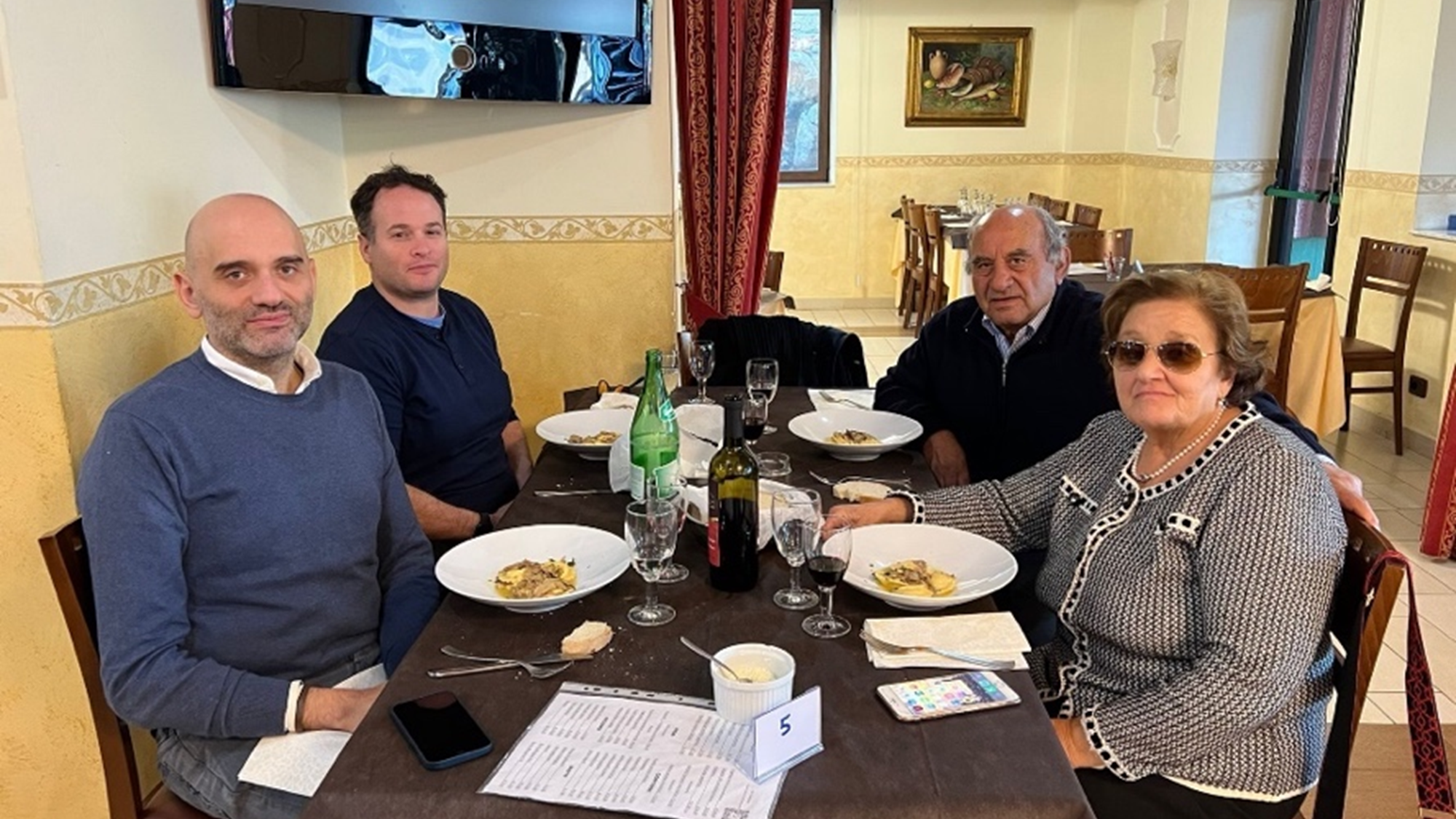
Andreas Horn Particularly gait and balance is the most interesting part of what I do.
Alfonso Fasano & Benjamin Stecher 22:00But over the years I also recognized other challenges that we deal on a daily basis. Just to mention two. In tremor, one of the things that... I'm working on right now is the phenomenal habituation. People that lose benefit over time. And again, the disease was blamed. This is progression. And maybe that's the case. Essential tremor shares a lot of things with normal pressure hydrocephalus. Particularly the fact that it's not a disease. And there's a lot of debate.
Andreas Horn That's why it's interesting to me to focus on these conditions.
Alfonso Fasano & Benjamin Stecher And other examples are dyskinesias. In people receiving prolonged infusion of... Again, animal studies have told us that continuous stimulation of the dopaminergic receptors is needed to improve and even reverse the problem of dyskinesias. Clinical experience and evidence coming from people receiving infusions of Lipidopa tells us that this is not the case. Actually, people have more dyskinesias over time. 23:00And that's, again, one thing that I'm working on right now. But the philosophy is always the same. I start from clinical needs. I use research to try to answer the questions originating in this respect.
Andreas Horn And then I go back to patients with the answers, if I have some. Great. Fantastic. Ben, how did you meet Alfonso?
Alfonso Fasano & Benjamin Stecher Well, it was about seven, eight years ago. I came back from China. I was living and working there beforehand. And I started to send emails to all the specialists in Toronto. Because I was living in Toronto, so I thought I would start there. However, I only really got one. Like, good response back. And that was from Alfonso. So he invited me to his office. I then came and I started to bombard him with questions. And I saw that he was very responsive to all the questions I asked. He had a lot of patience for me. And I've been indebted to him ever since in a lot of different ways. But I really credit him with getting me to where I am today and making sure that I'm as healthy as I possibly can be. 24:03Because without him, I mean, I wouldn't be where I am. And I really credit him also with taking the time out of his day. To make sure that I was well educated. I mean, he knew from the beginning that I had a curiosity about this disease and about the brain and about neuroscience in general. And I remember the first time I went to his office, he actually drew, together we drew a neuron. And we started to label all the parts. I wish I still had that picture somewhere. I don't know where that went. But, yeah. What a nightmare. Because it was supposed to be a five, ten minutes conversation. And it took, I don't know, long in the end. There were probably a dozen of patients mad at me that day waiting for me to go see them. But actually, I want to take this opportunity to emphasize one lesson I got from one of my first mentors, Dr. Bentivoglio, that I mentioned earlier. Once she told me, we know so little in neurology. And we rarely help people with these neurological diseases. 25:02The very least thing we can do is being kind to them. And that really resonated. And I'm not always kind to patients. And they can tell you. Because sometimes, I mean, my philosophy is that they're part of the team. And therefore, they have responsibilities. And if they don't do their part, I can get mad at them.
Andreas Horn Exactly like they get mad at me if I don't do my part.
Alfonso Fasano & Benjamin Stecher But in reality, the principle is always the same. You know, trying to help them at least being human. And this is what happened that day with Bent. Then I didn't realize that it was going to be such a complicated morning for me. But that's history. That's actually what's in the book. A complicated morning that's then changed into a complicated relationship. That's been over these past eight years.
Andreas Horn Yeah, I'm very grateful to his friendship and to his mentorship along the way.
Alfonso Fasano & Benjamin Stecher And I can say the same. Oh, I can say the same. Just that. From various tweets, I think I can also infer that you've become friends, right? 26:02Can you, Alfonso, maybe talk a bit about this relationship you sometimes have, you know, if a professional relationship. May also become in part a private one. I think you are unique in, you know, you've co-authored with patients, you have played on stage with patients and you've written books with patients.
Andreas Horn How is that for you? Can you maybe talk a bit about that point? Yeah, that's a great question.
Alfonso Fasano & Benjamin Stecher And it's a difficult one to answer because I don't think the doctor needs to be the patient's friend. And it is complicated. I mean, it's complicated. It's complicated. I remember once I had an argument with Ben. I don't remember what the argument was about. It was all around clinical care. It was doing something that I didn't agree with. I don't remember now the details. And probably even if I knew, I would not share now because of Ben's privacy. 27:04But I remember that he emailed me at some point and he said, Alfonso, I think I can find another DBS neurologist. It's probably better if we if we stop our relationship as a doctor, patient and we are just friends. And and I replied back to him. One of the most difficult replies I've ever written to someone. And and basically the answer was, look, Ben, there are not many DBS neurologists out there. That's actually a well-known problem in Canada. And I think you need me more in that capacity. Thank you. for you my role in that capacity than as a friend. Then things changed. I think eventually we continue to do what we're doing and it's working and it's working 28:03in general. But it's difficult to be a friend because you don't want to be invested emotionally because when emotions are on the way, you don't have the best answers and the best decisions and of course, in patients' interest. But also because I need to be free to detach myself and also be mad at them, as I said. And that doesn't have to be on the personal level. And it is difficult. I don't know how so far I managed. I guess it went well, not just with Ben, but with other people that I had the chance to meet, including colleagues that happen to follow us, patients. But it's not always easy. Please, Ben.
Andreas Horn Yeah.
Alfonso Fasano & Benjamin Stecher There's one question, actually, that I have. I have for you, Alfonso. And that complicates our relationship, I think, a lot. And that is, I think that one day, I think I will be going forward with the MAID program in Toronto. Now, whether that's 20, 30 years in the future, who knows when. 29:01But I would like you to be there for me in those last moments as well. I'm wondering, one, if you can introduce what the MAID program is and how much have you
Andreas Horn thought about me eventually going through with that program?
Alfonso Fasano & Benjamin Stecher Andy, this is typical Ben.
Andreas Horn See?
Alfonso Fasano & Benjamin Stecher Now he's the host of the podcast. He's asking questions himself.
Andreas Horn Yeah, he actually interviewed me about this topic.
Alfonso Fasano & Benjamin Stecher MAID is Medical Assistance in Dying. And it's something that is legal in Canada. I know that in the States, it's not always, it depends on the state. And it's very different. Canada is a very progressive country, as you probably know. And they have this law. And that was actually something that interested me quite a bit. And it was approved because coming from Italy, from a Catholic country where this is not even possible to be discussed at the parliament level. And probably to some extent, Germany is similar.
Andreas Horn This was an interesting topic, also from a philosophical standpoint.
Alfonso Fasano & Benjamin Stecher 30:04And that made me realize that the right to end your life is a fundamental right of the individual. And unfortunately, religion comes in the way. And as usual. The law biases the assessment. It's an opportunity that everybody should be aware of. And rarely, I talk about it with people. I don't think it's something we need to consider all the time. And actually, very rarely, it's to be considered, thankfully, for the diseases I deal with. And this is to answer your question, Ben. I might be wrong, but I don't think MAID is in your future.
Andreas Horn That's why I never thought about it.
Alfonso Fasano & Benjamin Stecher And that's because, at least in my experience, when Parkinson's patients have looked into MAID, very few eventually have gone ahead and had it. Because thankfully, Parkinson's is not ALS. 31:00It's not cancer. It's not something with necessarily a bad prognosis. So it depends. It's down to the value of the individual. If the person wants to function always 100%, then yes, Parkinson's can come on the way and limit that ability to function 100%. But if you are content with what you have, if you find a way to fulfill your life, even when there are disabilities, you don't really look into MAID and you find purpose anyways. Thanks. Great answer. So Ben, let's go into the book a bit. On your website. Which is tomorrowedition.com. You have interviewed a very large number of neuroscientists. And you blog a lot about new developments in the field of Parkinson's disease and neuroscience. We should probably also mention, and I mentioned that in the introduction, that you are a patient ambassador. In your new book now with Alfonso, you wrote, when you returned from China, you went on a mission to seek out the best minds the world had to offer me. 32:09And... You are now a patient advocate and chair of the patient advisory board at RuneLabs. And over the years, I think you've met a lot of people in the field. You've become a patient investigator to some degree as well, if I can call it that way. In a way, you have become a scientist yourself by interviewing people, by talking to people, by trying to find out as much as you can about your disorder, about the brain, but above and beyond.
Andreas Horn Is it somehow possible to summarize?
Alfonso Fasano & Benjamin Stecher These activities in a nutshell, if you're trying to uncover most, you can. I would say that it's one way to kind of characterize everything. It's really, for me, it's been a study in language more than anything else. I think we're all fundamentally just language kind of beings in some sense. 33:02And what I've done by uncovering the field is I've really just tried to figure out what are the words that people are using to describe these different conditions. And what's the context in which they use those words. That's been kind of like the summary of my investigation. Neuroscience is like any other discipline. It's really just about language. You have to know the language if you want to talk about it. If you want to talk to scientists as well, if you want to talk to researchers, you have to be able to talk about it on their level. So I go into labs and I get invited now to give talks all around the world.
Andreas Horn That's why I'm here in San Diego as well.
Alfonso Fasano & Benjamin Stecher I was invited by a company to investigate, to talk to them about my experience. And that's been the real thing that I think has been eye opening for me. How few companies and academic labs even invite patients like myself into their labs and give them, give me and people like me the chance to talk to them about our experiences. Because really they're trying to help us at the end of the day. But there's a sort of wide disconnect between patients' lives and our experiences and what these people are studying in these clinical labs. 34:06Often they're far removed even from the clinic. Let alone from the real world experiences that patients like me are going through. That's something that I think I've tried to infuse in them. It's a better understanding of what the real world experience is like for us and how to actually help bridge as many of those gaps as I possibly can along the way.
Andreas Horn Yeah. And I mean, you are an expert on Parkinson's disease like none other in many ways, right?
Alfonso Fasano & Benjamin Stecher So I very much applaud this effort and I think the same applies to any patient with any disorder. And yeah.
Andreas Horn Yeah.
Alfonso Fasano & Benjamin Stecher But. I think we also get, sorry, go ahead.
Andreas Horn Yeah.
Alfonso Fasano & Benjamin Stecher But I've also realized I'm really just an expert on myself and my own condition. Parkinson's disease has so many different symptoms that are associated with it. So many that I still have not experienced myself that I can't really call myself an expert in Parkinson's. I'm really an expert in what I have and what my specific type of generative condition, which I think is kind of unique.
Andreas Horn 35:01That's exactly what I had wanted to add that I know, you know, you have emphasized again and again, and we talked about it also.
Alfonso Fasano & Benjamin Stecher In the conversation with Alberto Spee that there are, you know, various types and, you know, as many, I think you sometimes say that there are many, as many types of Parkinson's disease as there are patients diagnosed with Parkinson's disease. And I very much agree in that. I think that is, that is, you know, part of the same truth that you know yourself much better than any doctor would. Right. Who probably has rules about general rules. And so bringing that together. And as you said.
Andreas Horn Yeah.
Alfonso Fasano & Benjamin Stecher I think it's sort of like, sort of like
Andreas Horn 36:09do you still think it makes sense for us to call it one single disease
Alfonso Fasano & Benjamin Stecher Parkinson's disease of utility in the real clinical world and then looking forward into the future do you see anything coming online that might one day render things like DBS a relic of the past at least for Parkinson's disease well thank you Ben for having me in hand in your podcast today I can answer this question, you know the answer already there is no Parkinson's disease there is no essential tremor, there is no survival dystonia these are all syndromes to indicate a combination of signs and symptoms that we aggregate, we put together in clusters and we give them a name obviously most of these names come from an era when medicine was way simpler and now we have a better understanding 37:02molecularly of what's going on not all the times but in many cases and if anything that has given us the opportunity to realize that there are diseases for example Parkinson's caused by imitation of Parkinson's gene or LART2 and they tend to cluster to some extent because they're also variable you probably know that in LART2 related Parkinson's patients not everybody has Lewy body some others have a pathology without Lewy body they were seen as the hallmark of Parkinson's disease and now we have Parkinson's patients without the whole body without the whole body without the whole body without the pathological hallmark of the disease in the brain and Parkinson's is an even better example in that regard so this is just to and these are rare forms of Parkinson's disease but this is just to say that we are dealing with thousands of rare diseases each time we are seeing patients from a clinical standpoint and unfortunately we don't have the granularity to look for signs 38:00clinical signs that can tear them apart and them apart and and that's at the end of the day the problem of neurology
Andreas Horn and that's why everybody that goes on google and types few things
Alfonso Fasano & Benjamin Stecher and always end up with ALS multiple sclerosis because at the end of the day we have very few signs and symptoms and thousands and thousands of pathological mechanisms behind those symptoms so we need biomarkers we need better genetic understanding we need better environment environmental understanding which is probably the biggest challenge we have at this point so finding a way to scientifically work on the science and the environment and the way to do that is to find a way to scientifically work on the science and the environment and the way to do that is to find a way to scientifically work on the science and the environment something called exposome so how to characterize and quantify what we're exp what we've been exposed to in our life because a lot of the answers are there and they're more difficult to test than genes so you know there's this is the short answer we're just using labels because otherwise people get confused 39:01not every person with Parkinson's will understand what I'm telling you right now you you get it but if I were to tell someone else this type of maybe simply even in a simpler way answer they will just go home confused and thinking oh my God they have no idea what I have which is true and not true at the same time and another aspect is rules and laws in the states this is particularly relevant you might have someone with dystonic tremor but you still call that essential tremor otherwise the insurance might not the insurance might not cover the treatment.
Andreas Horn So some of the labels are also functional in that sense for coverage or simply classifying the patient's outcome in a hospital-based system which cannot capture the complexity of neurology. And again, this is a short answer, so can you imagine if I were to give you a long one?
Alfonso Fasano & Benjamin Stecher 40:00At the same time, we have all these therapies at work for so many people that have these clinical labels.
Andreas Horn How do you make sense of that fact that L-DOPA and DBS work for so many different patients with these clinical labels?
Alfonso Fasano & Benjamin Stecher It seems like it is almost one disease in that from the therapeutic sense.
Andreas Horn Yeah, that bias the assessment because we look at that and we say, oh yeah, this must be the same disease.
Alfonso Fasano & Benjamin Stecher But actually, you can diagnose someone with Parkinson's even without knowing if they have a response to levodopa.
Andreas Horn Exactly like you can diagnose someone with normal pressure hydrocephalus even without having the response to a tap test.
Alfonso Fasano & Benjamin Stecher So the effect of treatment biases what we do and it becomes a circular argument if you think about it. So we don't want to talk about treatments when we define a condition.
Andreas Horn But yeah, this is what we do in the end because we do what we do to help people.
Alfonso Fasano & Benjamin Stecher And so treatment is an important part of our job. Much better answer than I could have given by far.
Andreas Horn 41:00Maybe one thing more philosophically, you could also say this is a question. Maybe one thing more philosophically, you could also say this is a question. Maybe one thing more philosophically, you could also say this is a question. But lumping and splitting, right? How much is the splitting helpful? How much is the lumping helpful?
Alfonso Fasano & Benjamin Stecher And if we lump too much, then at some point it's not true anymore at all. And then it's not helpful. But if we split too much, maybe it gets too complicated. Right. So in a way, I think the lumping may make sense, as you say, with treatments. Right. That there seems to be at least in many of the people diagnosed with Parkinson's, I think not in all levodopa is helpful. DBS might be helpful.
Andreas Horn Right. So there is there's utility in the label to some degree, right?
Alfonso Fasano & Benjamin Stecher To just simplify the lives, not just of the patients, but also of the doctors that they can talk about. People and so on. Right. So we need language. You're an expert on that to some degree. But I very much agree. Maybe we lump too much or that's at least to be determined of how much we should lump or split.
Andreas Horn Yeah.
Alfonso Fasano & Benjamin Stecher One final question on this.
Andreas Horn 42:02Alfonso, would you say that I have Parkinson's or is it more? Accurate for me to actually describe myself as having something like nigrostriatal degeneration? Which label?
Alfonso Fasano & Benjamin Stecher Still Parkinson's, because otherwise you go home and you tell your family have a student, a nagra, a nagra, straddle degeneration. They will say, OK, this is something insane. So, again, we got to be practical. Your medicine is a very practical process.
Andreas Horn But the reason why we start talking about nigrostriatal degeneration with you is because you have an
Alfonso Fasano & Benjamin Stecher incredible, good response to levodopa. So when we see that, we know that most of the deficit in your brain has to do with nigrostriatal system, so the system that produces dopamine that is missing. In Parkinson's, unfortunately, it's not always the only problem, and there are other circuits and other parts of the brain that are degenerating, and we cannot replace those functions. So when I see a good response like your case, then I say, OK, this is mainly nigrostriatal 43:04of degeneration as opposed to a purely straight of degeneration which means that there is no receptor for dopamine and therefore even if you give the medication there is no improvement which is for example what happens in multiple system atrophy and that's the at the end of the day the
Andreas Horn reason why we still do liquid opa challenges people think that we need to do a challenge for
Alfonso Fasano & Benjamin Stecher determining criteria of selection in dbs surgery for example but it's actually not the real reason we do that to have a sense of what type of disease we're dealing with so you're you still have parkinson's disease but in the back of my mind there is a purely niagara straddle problem
Andreas Horn which is good for you and reason why you respond well to treatments and that goes back to the
Alfonso Fasano & Benjamin Stecher that andy was talking about there are many layers where we can lump one thing that uh andy has worked a lot on is uh lumping with respect to circuits uh so regardless of the mechanism the the part of 44:01the etiology the cause of the problem you can also find another common ground more from a physiological standpoint to lamp uh diseases and that has to do with the connectomic or the problem with the connectoma related to a specific symptoms but that's a has to do more with going away from the label that is an umbrella term and going more into the specific problem uh bradykinesia for example tremor and then you will find different ways to lamp a lamp according to the circuits involved let's talk about the book you wrote both co-wrote a book which is called reprogramming the brain and it will be available at the time we release this podcast at springer so what is the idea behind it how did it develop what is the book about yeah so as alfonso mentioned before it talks a lot about our our histories and how we both got to where we are in time and space at the moment and we're going to 45:01talk a lot about the history of Parkinson's disease and how we got to where we are in time and space at the moment of writing that book um it talks a lot about our evolving relationship and then we talk a lot quite a bit about Parkinson's disease as well we go through my story and how I got this deep brain simulator implanted in me it's a new adaptive kind of deep brain simulator as well as uh talking about a few other patients as well and their journeys along the way um but and then we ask some very like prudent questions as well I think anyways like what is Parkinson's a question that we just covered in detail there um which maybe makes more sense to even call it something like an oscillopathy which is a very important question I think it's a very important question I think it's another question we ask in the book rather than actually calling it Parkinson's um and that's I can if I can Andreas I'd love to ask you do you think it might be more helpful for us to call these diseases oscillopathies rather than giving them the clinical label of Parkinson's great question again I don't know what's going to be more helpful to me these these are not exclusive terms even right you you you really as Alfonso said it would address things at a very 46:00different layer right I think the um stratonic generation for example is a very pathological or pathomechanistic term oscillopathy would more speak about maybe the function in the brain right there there's some sort of uh you know dysfunctional circuits some maybe oscillation that shouldn't be there in the brain right but none of and then Parkinson's disease is more the typical label you'll find in the you know in the in the Oxford dictionary so so um neither of these labels grab the task everything I think and so to me they are not mutually exclusive and I would love to ask you because you know you're you're called that way right you're labeled that way in a way and that that is you know so you should essentially tell us what is the most comfortable label but then beyond that I think there's also practicalities again right we have to come up with some terms to be able to talk about it and then I think the fun thing is any thing we give a 47:01name let's say a tree that will always lump things to some degree right because there will be things that are maybe in between bushes and trees and and they're not really trees but we still call them trees right or a lake in the pond I think we once tried to find out what what is the real difference and it's not so well defined right what the actual difference is so yeah I think language has that to it um but maybe the problem is I think biology operates on Spectrums there's no like one thing that is just one thing and yeah humans we love to classify things into different buckets so we know what so that we can exchange information with each other really um so that's kind of the philosophical reason behind all of that yeah yeah and then but I think it would be it would be a little bit more helpful if we talk about how we actually treat these things a little bit better that's I think maybe Niagara shire generation or another word that kind of indicates that term might be more helpful for somebody like me and Parkinson's because like for example we have treat we have better treatments for Niagara shire generation 48:01than we have for Parkinson's disease per se so I fit the treatments much I fit the treatments more more clearly than I do that label called Parkinson's another treatment is DBS which we can talk about more dip in more depth and we should talk a lot a lot about in the book especially this new kind of adaptive deep brain stimulation which I have in me so I think you know sometimes these re-labelings do happen right in in in medicine and and sometimes they come with better understanding of things so um I could live with that um personally but uh no strong opinion to be honest yeah by the way Alfonso's clinic more hectic to run yeah yeah so if I might say my my take on the book is because you were asking us about the book um uh the probably the the idea of writing a book with Ben started when we um it's actually a funny story we realized that our initials are um they mean something else in uh you know lay language because uh 49:01initials AF is is uh Ben's initials BS and so at some point we're thinking of writing a a a sort of a a guide to patients to make sure that they're they're aware of the BS that is on the internet when it comes to Parkinson's because unfortunately well all of us are exposed to placebo but Parkinson's more than others have a lot of effect of placebo so the idea was to expose uh all this BS on on the internet so that people could choose wisely but in the middle of all of this then Ben got surgery um and and then it became a guide uh for patients considering DBS and then what the more we were writing the book the more we realized it was really the journey it was the story of a journey my journey at physician and a human Ben's journey as a professional human patient and then how we got together what happened next and yes in the 50:01end there are also practical aspects that people need to be aware of and how to select the right treatments because we are not saying DBS is for everybody we also discuss stem cells we discuss uh focus ultrasound um but then it becomes more and more of a as Ben said the journey of a cohort of people that are surrounding us our colleagues other uh researchers that Ben has uh has met in his life and also the many stories of patients that Ben who share with me that I was surprised to hear for most part because of his role as patient advocate he has met a lot of people and every person has their unique story from which we have something to learn so the book really evolves in a very convoluted way if I may say which you can actually even see from this interview today because we go from one topic to another yeah the book in a way has this sort of a spiral of comments or ranging from Ben's story to 51:01his and how we find a cure and and and so I had a lot of fun writing the book um and uh and that's at the end of the day what what I really uh want to convey here it was also uh fun to do it in Italy uh Ben came with me uh to drive it with uh in my own town and then also here in Canada and I still remember uh one post that Ben wrote uh at some point on LinkedIn when he wrote I'm supposed to say that we finally done with the book and we haven't killed each other because it's true so in the book there was also a lot of disagreement can you talk about that process I think as you said you meant met in Italy I think I even saw a picture with your parents is that correct yeah so how did that go did you block some weeks and then had typewriter set up probably laptops or yes yeah how how was that 52:00yeah yeah It was in my hometown. I come from a small town. It's a medieval town of 2,000 people on a mountain in the south of Italy. And the place is called Nusco. And it's the ideal environment to relax and focus. And actually, this is where I write many of the things I do. And my family was taking care of the logistics, like food and the rest. So we really had to just focus on writing. But I think what's more interesting here is to hear Ben's perspective. Because Ben used to North America. He's traveled a lot, of course. But he used to Toronto, big city. But all of a sudden, he wrote into a very different environment in a small community. So Ben can have more stories than me, for sure. I would have asked who made coffee.
Andreas Horn But I realized that it's Italy. So Ben wasn't allowed to make coffee. But did you get to enjoy some good coffee there, Ben?
Alfonso Fasano & Benjamin Stecher Can't be far away from the coffee machine and the pizza makers that were there.
Andreas Horn 53:03Yeah. Yeah.
Alfonso Fasano & Benjamin Stecher I mean, at the end of the day, the book is a lot about our relationship and how it evolved over time. And I learned a lot about Alfonso himself. Just going to his hometown, meeting his parents, obviously. Meeting all of his childhood friends that were there, that were still there in Nusco. One kind of funny thing is that a lot of them don't seem to really understand what Alfonso even does in his day-to-day life. They think he's like a doctor, maybe. But they don't know what he does. They don't really understand the depth at which he understands the human brain and his role as a neurologist and his role in Toronto as the co-head of neuromodulation therapies there in Toronto. It was really funny just getting the chance to talk to them and how they treat him as a normal person as well. I think that's what Alfonso loves about going back to Italy as well. He's not really this big world-renowned expert there that gets invited all over the world. He's just another guy. He happens. He's sort of like a sort of sort 54:28was joking and that's actually one of the problems of dbs that to many people this is seen as futuristic uh not real experimental and yeah but but deep down that was a process that helped me a
Andreas Horn lot understand why has been said why i like going back because there are not what i do there i'm who
Alfonso Fasano & Benjamin Stecher i am and this is where i think uh north american society should uh learn sounds great i'll read out the beginning sentences of the book in june 2021 we decided that time had come to surgically 55:00implant two six inch long metal alloy electrode tip spikes all the way through ben's brain we did so because we felt the medications ben was taking to control his parkinson's disease had become unmanageable call that a beginning um can you can you talk a bit who the book is for what's the target audience patients professionals everybody we wrote it for first as alfonso was saying before it started as a book for patients and to answer all the questions that i had along the way because i realized even after i had my surgery that a lot of things happened to me after the surgery and during the surgery itself and as we began the programming sessions that i wasn't completely prepared for i thought i was as well prepared as i could be going into it but there's a lot of questions that were just answered as i was going through the journey so we tried to like write all those answers down and you know format might be a little more entertaining as well than just getting a pamphlet from your doctor or something like that um but then we also realized along the way that we were answering a lot of 56:03questions about the brain and human biology and what it means to be a scientist and a doctor and a patient along the way so we tried to like blend all those things together into one narrative i think we did a pretty job but time will tell i guess from the feedback that we get from the book whether or not we succeeded in our goal one of the chapters that is more representative i think of the All of this is reversible because a lot of people are probably not concerned about personality change. 57:01But see, this is a blend of informing, narrating a story and educating at the same time.
Andreas Horn Yeah. Yeah.
Alfonso Fasano & Benjamin Stecher Just to talk a little bit more about that specific chapter. So what happened on that day was that it was right after we had we turned on the adaptive settings in my brain. And I remember I felt euphoric. I felt like a superhero in some sense because I felt as if nothing could hurt me anymore. Again, I'm done. I've gone through this. I feel amazing right now. And so at some point, I convinced myself along the way that I should be the next prime minister of Canada, which told me, I think, looking back on that now, my brain was not working exactly as it normally works. So I usually don't have those kind of even though I might harbor some lingering thoughts about having those dreams. That's not something I would ask.
Andreas Horn Exactly.
Alfonso Fasano & Benjamin Stecher Let alone running. I was running down the harbor front in Toronto, screaming at people that I'm going to be the next prime minister of Canada, which is what I did on that day.
Andreas Horn 58:01But yeah, it also very much shows the effects of this kind of simulation can have on a human being and on the personality of that individual as well. Yeah, no, this is very great and courageous also to share that.
Alfonso Fasano & Benjamin Stecher I must really applaud the effort. Just. In this in the small podcast here, I've mainly interviewed experts like, you know, physicians and scientists, but but rarely have I interviewed patients as you've been.
Andreas Horn But I often hear from colleagues or from the professionals that listen to it that the patient episodes are the most exciting and most interesting ones.
Alfonso Fasano & Benjamin Stecher Right. So it's it's surprising that even people maybe like my phone. So that see patients all day long. They see them for, you know, sometimes a short period of time, but really taking the time to investigate. And a full story. And, you know, the this this course over, you know, what led to DBS and then afterwards and so on is is very informative, I think, even for health professionals. 59:04So I'm you know, I have at least read parts of the book by now. So thanks for the advance copy and can really recommend it to everybody listening, not just to patients. So this really cool, cool book. So maybe for each one of you, one question. Thank you. The main. Take homes from the book.
Andreas Horn What did you both learn? Which insights does it provide the readers? Maybe what do you see even differently after writing it than before?
Alfonso Fasano & Benjamin Stecher One thing that kind of stands out for me just thinking about the book right now is the last chapter where Alfonso really talks about the future of neuromodulation. Because this is I'm very much aware and it's kind of like a paradox of when I chose to get this surgery done, that it's a continual process. I sort of copied it like a 01:00:19And from my understanding anyways, once we get to that stage where we're able to actually not only make the surgery much easier by shrinking battery down so it's all in the cap, hopefully one day, but then also having the algorithms run in such a way that it's much more precise, it's able to do more things. I just feel like we'll have better outcomes at the end of the day, even for patients like myself. And yet they still have to choose at that time and place that I did that I want to get this now because my life had become too burdensome at that point or prior to that point. And so it's like you said, it's very much like balancing out the human aspects of the story, the science and the research and trying to cover as many bases as we possibly can. Well, to add on what Ben says, that's the near future of deep brain stimulation because to be completely honest with you, I think that the future, future of deep brain stimulation will be almost, it won't be anything close to what we see now. 01:01:15And most likely. We won't be using DBS anymore. It will be seen as something cruel, if you think about it. I still believe that we'll be dealing with neuroprosthesis in general. Diseases like Parkinson's, especially some forms of the disease will have a pharmacological treatment, a molecular treatment, and therefore DBS won't be used anymore. But still we'll be dealing with trauma, with spinal cord injury, with Parkinson's without an underlying biology understood. And for these people, neuroprosthesis will still be. There. But it will for sure be very different than what we have. And brain computer interface is just the beginning of this. And actually the last chapter of the book, as Ben knows well, is an open letter to Elon Musk. 01:02:00And we can talk more about it if you want. But as for my take home message, what I learned in the process, I can tell that this has become really the documentation of something that I've been learning. I've been learning a lot. I've been learning a lot. I've been learning a lot. I've been learning a lot. I've been learning a lot. I've been believing and doing throughout my career, which is focusing not too much on the medical history of a patient. Because we all do that, you know, past medical history, remote medical history. That's part of what we are taught at university. But the focus, I think, is on what I call the biographical history of a patient.
Andreas Horn So what do they do? What do they want to do? How do they spend their free time? What their ambitions are?
Alfonso Fasano & Benjamin Stecher And because at the end of the day, we decide whether to do something or not based on these aspects. Ben knows well that if you were to come and say, I want to have DBS because this way I can run the marathon the next day or I can become the prime minister of Canada because I will have a super memory after surgery. 01:03:06I would have said no. Ben came to me with dystonia, painful dystonia, wanting to walk and go in a spencer. Spent time with his nephew, niece. I don't remember their sexes anymore. But there were really practical aspects that you want to hear from the patient and their expectations, their values. And then you say you contrast that with what you can offer.
Andreas Horn And you see whether that really makes sense to what they want to achieve.
Alfonso Fasano & Benjamin Stecher And if the answer is yes, then you go ahead without waiting. That's the time to do it.
Andreas Horn So this is at the end of the day. What?
Alfonso Fasano & Benjamin Stecher I think the book taught me in the process that really I could finally put in writing what I've been doing throughout my career.
Andreas Horn Makes sense.
Alfonso Fasano & Benjamin Stecher The book also provides hands on instructions on what to do in case a person considers undergoing DBS. For instance, I think there is a set of questions that patients could ask their doctors, such as why am I a good candidate for this procedure?
Andreas Horn 01:04:06How many procedures does your center perform every year and so on? Can you both maybe talk about how critical it is?
Alfonso Fasano & Benjamin Stecher To help patients navigate this landscape of treatments that are available for PDE when you have a long history there yourself as well.
Andreas Horn Yeah.
Alfonso Fasano & Benjamin Stecher And like I said, the impetus for writing this book came out of the need that I saw that not every question I had about the surgery was answered before I had the surgery itself. So I'm trying to, and this is what I've been doing all along, even through my website, tomorrowedition.com. I'm trying to think what kind of information would I need, would have better prepared me to help me along in my journey. I try to just distill that into my writing and into this book as well. So that's what it started as, just this need to try to help more patients along the way in their journeys and to help them have a better outcome at the end of the day. Because I think that's what we're all trying to do, make sure that patients are as well cared for as possible. 01:05:03And information at the end of the day, it's a crucial part of that. So in educating them as well, it's crucial to make that they're as educated as they possibly can be. If they're going to make the best decisions for them. But at the same time, there's a hesitancy that I had in writing it. Because I feel like, and Alfonso, maybe you can talk to this a little bit. But it might lead to more patients doing more doctor shopping at the end of the day. Because I think a lot of patients are kind of envious of me and my position. And they want the kind of therapy and the care that I have. But they also want the relationship that I have with my neurological team, with Alfonso in particular. I wish that I could give that to more patients as well. But that's something that I'm trying to do. That's something that might be a bit tricky for us to actually impart to other people. Alfonso. We have to clone Alfonso. But I think there are... No, no, no. Not really. Because you met them at the meetings. No, actually, Ben, I see what you're saying.
Andreas Horn And yeah, it's an important point.
Alfonso Fasano & Benjamin Stecher 01:06:03Doctor shopping doesn't help. And I think we need to also clarify that our relationship is not perfect. Because I'm not perfect. You are not perfect. Don't worry. I know you think you are. So I don't want people to believe that you need to have a doctor with whom you write a book to have good care. That's actually not the case. And there are great doctors out there. And doctors go through a lot. And yet they have the courage, I would say, to continue doing what they're doing. And the system is far from perfect. And we've seen what COVID has caused to healthcare in general. And so we're all struggling. Maybe to this point, what we should say is that... It's a journey, really. It's a partnership that doesn't start on day one. It grows over time. And doctor shopping is actually the opposite to this. Because you never give a chance to the other person to really be there for you and to learn from you. 01:07:00And find that kind of common language that makes the team effort work. Nobody is perfect. And importantly, medicine is not perfect. And we're all fighting for the same thing. We all want... The person that is in need for medical care does better. And paradoxically, sometimes I need to tell patients I meet, Look, my only goal is that you do better. I want you to realize that. Because sometimes, actually, I met people who were kind of second-guessing my recommendations.
Andreas Horn And I have no reason to do otherwise. Otherwise, why are we doing this?
Alfonso Fasano & Benjamin Stecher And believe it or not, sometimes we need to make clear that this is indeed the goal of this relationship. And so I think there are a lot of great people out there and you don't have to write a book, actually. It's something that came on the way as sort of a fun thing to do, 01:08:02but hasn't necessarily changed how we interact patient-doctor kind of thing.
Andreas Horn Yeah, but also more practically, I've benefited from the system that I happen to live in,
Alfonso Fasano & Benjamin Stecher which is Canada and the kind of health care that we have access to there. And I've also benefited from the fact that Alfonso surrounded himself with great people. I mean, his fellows have helped me as much as he has himself. There's two fellows in particular I want to mention, Dr. Kay Sadi and Dr. Alexandra Bojers. They've both been instrumental in making sure that I've had the kind of care that I've always wanted in my life. And of course, UEN as well. The Nurse Hospital. I've had a great time with the nurse practitioner Alfonso works with every day. Those three individuals, I credit them almost more than Alfonso on some days anyway, with helping me, making sure that because they're the ones that are there for you at the end of the day. You spend the most time with them in the clinical settings.
Andreas Horn So, yeah, those three individuals deserve a lot of credit for getting me to where I am today as well. 01:09:00Yeah, and I'm sure it is a broad topic there.
Alfonso Fasano & Benjamin Stecher You have been treated at one of the best hospitals worldwide to do this. And we would hope this to be more available to everybody. But I think, yeah, that's something neither of us can really change. You're also beyond going towards DBS. You also cover pros and cons about various treatment options and also briefly cover cell replacement therapy.
Andreas Horn Maybe Alfonso, can you sum up the latest and greatest in that end?
Alfonso Fasano & Benjamin Stecher Great question, Andy, because I've been invited to one of the meeting organized by the Cleveland Clinic and the Parkinson's.
Andreas Horn Yeah.
Alfonso Fasano & Benjamin Stecher So study group will be in Florida in a month or so to debate with a colleague of mine who's in support of self self therapy, self replacement therapy. And I'll be in favor of the that is not a good. It doesn't have a bright future. This type of treatment. So there are, however, new things. 01:10:00And that's important to discuss about them. In general, as you can tell, I'm not really a fan of the approach because it not because in theory it doesn't work. But because we don't know enough about the biology of these cells and also because there are limitations related to the transplant itself. People don't realize that there is rejection that people need to take immunosuppressants. But there are there are new ways to do self replacement therapies. And really, the biggest advantage has been IPC and engineering these cells. So inducing cells to become pluripotent. And there are basically two simply put two approaches that we are now using. One is having a banked kind of type of cell that is can be really, really taken off the shelf shelf of almost so they can be used on a larger scale without the involvement of fetuses and embryos. 01:11:03And this is one route. The other route is to take the cells from the skin. Or the patient and retrain those cells to become dopaminergic. And this is the biggest advantage of being compatible. So there won't be any graft rejection and there will be no need for immunosuppression. That is also carrying risks. The downside of this approach, though, is that in theory you're using the same cells that technically have a problem.
Andreas Horn That's why those cells that are generated.
Alfonso Fasano & Benjamin Stecher And so there are. Time will tell. Which one is the right approach. But I got to be critical because people have the idea that this is the answer. And I met in my life people that rejected the brain stimulation because they thought that cell therapies were available and soon to be used on a large scale. And unfortunately, they were wrong.
Andreas Horn 01:12:00So that's why it's important to set the expectation right here.
Alfonso Fasano & Benjamin Stecher And when I talk to this about this with patients, I always. Say, just imagine your computer is broken and you think you can fix it just opening the case and throwing in there a bunch of wires. That's not the way it works. You need to make sure that the connections are working. And also, as you know, there is evidence that the cells itself, the cells themselves that are injected in the brain later on my display the pathology because they are immersed in a toxic environment, probably.
Andreas Horn And that's why they also might degenerate.
Alfonso Fasano & Benjamin Stecher So there are a lot of unknowns. But at the same time, I should say there is. A lot of stuff going on that we didn't see before. And in this regard, there are two things. First, networks. So most stem cells researchers now are in networks and trying to have a common product and learn and learn from each other. And second, just new to me, at least this industry interest. There are companies now that are investing in this. And that's something that we didn't have before. 01:13:00And usually when there's industry, there is money. And when there's money, there is for sure more that can be done. So I don't know if this is going to be successful. But the promises are good. That's good. And then in episode 42, I talked to Kolevo Hynunen, who I think was the inventor of MR guided focused ultrasound, even though focused ultrasound surgery has been around much longer before.
Andreas Horn What do you what do you guys think of that as an alternative or supplement to DBS? Ben, why don't we start with you?
Alfonso Fasano & Benjamin Stecher So I've I constantly am on message boards, actually, with other patients. So I've gone through not only DBS, but also some have gone through cell replacement therapies, gone through focused ultrasound. And if you have Parkinson's disease, I can't speak for like essential tremor. It does seem to work a little bit better for those patients. They said the focused ultrasound anyways. But if you have Parkinson's disease, I've noticed that they come back from the clinic and they're all excited because they feel so much better suddenly. 01:14:00And that benefit fades over time.
Andreas Horn And the real beauty about DBS, why it's so different from focused ultrasound is that you have the ability to adjust.
Alfonso Fasano & Benjamin Stecher The parameters every time I think every time I start to feel a little bit worse, I'm kind of eased by the fact that I know that I have another programming session coming up in a month or two, and then I'm going to feel a lot better. Because the ability to tweak DBS is the real beauty of this therapy. Every tweak, I leave feeling a little better than I did before. I feel better adjusted. I feel like a better, a more able human being.
Andreas Horn So, yeah, I would say that focused ultrasound.
Alfonso Fasano & Benjamin Stecher For my. For my cursory examination of patients anyway, it has an initial spike of make me feel better. But then that benefit fades over time. And it's another thing we talk about in books. We talk about a journey that a patient went on to get focused ultrasound and how their expectations might not continue to be met over time. 01:15:01That's what DBS allows, gives me anyway. Let me be a bit more. Be more careful in the answer, because I don't think that we can to say focused ultrasound is worse or DBS is better because you can adjust it. And in fact, I will argue, Ben, that this this experience you have that you come to the clinic, we do an adjustment and you feel better is also problematic for a number of reasons. First, because it looks like you're still depending on us. Which is paradoxically considering that you have an adaptive DBS. In theory, your DBS device should be able to adjust automatically over time. But the other thing is that introduces something I've seen other people, a ritual whereby people need to be seen to be better because each time you'll be better after the adjustments. And unfortunately, that's not always the case. So some people come over and over and over and we simply don't find the setting at all for a variety of reasons. 01:16:04So there are caveats there, too. But I agree, obviously, with the fact that that DBS is adjustable. Focusing ultrasound, in my opinion, has two big merits. The first one is that it has increased the interest in functional neurosurgery. We published a paper where we found that after ultrasound was approved, the number of referrals for surgery, especially in this case was tremor, went from six, seven a year to more than 70. So more than 100 percent. And most of the people. They came to see us for focus ultrasound. I hadn't heard about the brain stimulation and a good proportion of them had DBS as a result. So paradoxically, focus ultrasound is also helping the DBS field. The other advantage of focus ultrasound is that we can finally have something that can be used to test new targets. So work like the one that Handy has done, focusing on your imaging and looking at circuits is actually paving the way to understanding the 01:17:07potential new places in the brain that are involved. And also the work by Mike Fox in Boston that Handy knows very well with lesion network mapping. That's another way to look at areas of the brain that could potentially be treated with DBS. But you don't go there and you place an electrode. You use Fox ultrasound because even if the effect is transient, you can test what happens when you are deep in the brain. And if you see something that is promising, then you use that to.
Andreas Horn Yeah.
Alfonso Fasano & Benjamin Stecher Do a lesion if your thing is safe or simply insert an electrode, a DBS electrode. Indeed. Great. And then you, of course, focus a lot about DBS in the book. So you cover targets, electrotypes, pulses and sensing. Sensing is the new kid on the block in a way, which can be seen, I think, as a precursor to closed loop DBS or adaptive DBS, which Ben already has. 01:18:02But Ben has it in terms of a study. So this is not we should probably mention this is not, you know, yet. Completely established.
Andreas Horn So can you talk about sensing and then closed loop a bit? Who starts? Ben or you want me to start?
Alfonso Fasano & Benjamin Stecher OK. Sensing is an exciting opportunity for us to understand the brain. I always say that there was a time in history where when only few centers had the knowledge. To do sensing in the brain. And Andy, you know that very well. You know, there was San Francisco. There was Stanford. There was Toronto. There was Berlin. Obviously, there was Oxford. There was some extent Milan. But really, few centers worldwide were able to record from the brain using a standardized electrodes. And because of that, few patients were studied. 01:19:01And if you think about it, most patients were only Parkinson's patients with electrodes in the STD. That's it. Now with sensing, we can we can record in a non-invasive fashion from any target. And it's not just that every center nowadays can contribute to this wealth of knowledge when it comes to brain physiology. And in fact, we've seen we've seen a lot of publications now coming from any corner of the world where they use sensing to understand a particular thing. You know, the stone in Parkinson's will biomarker you see.
Andreas Horn Or what about Bayesian?
Alfonso Fasano & Benjamin Stecher Or what about the. You know, the data in GPI for the longest time, we had the feeling that maybe it wasn't that simple to record beta in the GPI. And actually, now we know that it's even easier in the GPI to record the good beta probably because it's a bigger nucleus with more neurons. So this is just a few examples. So that's an incredible opportunity. But it's also seen with skepticism in many clinics where obviously they're on a tight schedule. 01:20:03And sensing. introduces a delay in the process because it's something else that you have to do when patients are in the clinic. And some clinics say, well, this is just for research, I don't need this. They may be right, but I suspect that this is the wrong approach because, as you indicated, closed-loop stimulation is around the corner. And I always say, one thing is for a clinic to learn sensing and closed-loop stimulation all at once, one thing is for a clinic to make sense of sensing. So then when closed-loop stimulation comes, they are ready to go. And I don't have any doubt the adaptive deep brain stimulation or closed-loop stimulation will become standard practice. Maybe not for every patient, but it will become something we will be doing on a regular basis in every clinic. In Japan, the type of device that Ben asked that is experimental is already commercialized and approved. So there's already a geography in the world where adaptive stimulation is used on a regular basis without being part of a study. 01:21:04And little by little, this will become more and more approved in other countries. Part of the reason I'm saying that is because the studies, the results of the studies that Ben is involved with, it's called ADAPT trial, have been released and they have been shown as a poster in Copenhagen last year, and they're positive. So they are showing that adaptive stimulation is safe and it works. So that's all FDA needs for the approval and all other geographies will come afterwards. Great. But at the same time, the reason why I got it and I think the question that a lot of patients would have is,
Andreas Horn is it better than the continuous DBS? And that's something that, from my understanding anyways,
Alfonso Fasano & Benjamin Stecher we can't really answer definitively yet. But I'm wondering, Alfonso, if you might be able to give us some indications whether or not you think I should have gotten adaptive DBS for one. And two,
Andreas Horn what kind of patients would you recommend this for? Yeah, absolutely. You're spot on.
Alfonso Fasano & Benjamin Stecher 01:22:04There is no study at the moment showing that chronically closed-loop stimulation is superior to standard stimulation. There are acute studies, though, that have shown that these conditions are better managed with adaptive stimulation because you don't always have the same amount of stimulation, but the stimulation goes down when levodopa kicks in. In the case of Parkinson's speech, that's something very important to you. And that's probably why in the back of our mind, adaptive stimulation was always an option. Speech is being shown again in acute studies to be better managed and more intelligible with adaptive stimulation as opposed to continuous stimulation, which typically causes speech problems. And freezing of gait, there are studies by Halle-Brod Stewart in Stanford where freezing of gait seems to be better responsive to adaptive stimulation. And part of the reason is because, and that's something I had a chance to talk about in the past with Andy, DBS doesn't always help and actually sometimes also makes things worse. 01:23:10Speech is what everybody knows, but there are many other things, including freezing of gait, caused by stimulation. And this is where adaptive stimulation might be superior. But yes, we don't have the evidence in the long run with chronic studies. And there are at the moment, I'm aware of at least eight, nine studies. There are many to show that adaptive stimulation is better than chronic stimulation in the long run. We are going to do one of them. Actually, we already started recruiting. It's called Canada Trial. We got Health Canada approval to use adaptive stimulation.
Andreas Horn And guess what?
Alfonso Fasano & Benjamin Stecher Our endpoint won't be UPDRS. It will be speech intelligibility, freezing of gait, dyskinesias. So we're trying to prove now chronically what's been seen in acute studies.
Andreas Horn Fantastic. Yeah.
Alfonso Fasano & Benjamin Stecher So I think that's a really good point.
Andreas Horn I mean, it makes so much sense, right?
Alfonso Fasano & Benjamin Stecher 01:24:00We have this beautiful Fusio marker. We can react to it in a way, you know, if the Fusio marker would go up over time, it
Andreas Horn would anneal towards chronic DBS, right? It would become more like the chronic kind of always on or could, you know, but yeah,
Alfonso Fasano & Benjamin Stecher it makes a lot of sense. So I'm also very bullish towards this as a concept. And I think what we can say maybe also looking towards the future is that it's currently very simple.
Andreas Horn It's a very simple way, right?
Alfonso Fasano & Benjamin Stecher It could potentially become much more intelligent to decode things or to even switch contacts depending on the situation or so. And then there are also other forms of sensing. We can sense the brain as with the percept device, but also with, you know, typically recording beta power. But we can also use sensors, for example, wrist sensors, motion sensors, and so on. And there's been, you know, pioneering work also from the Oxford group. Haria Kanyan had once, I think, shown beautiful work with sensors and tremor. 01:25:03And I think a big push towards at least that idea comes also with, you know, for example, the Apple Watch or similar devices becoming available that bring this, you know, in a stylish fashion.
Andreas Horn And Ben, since you work also with RuneLabs and the Strive PD app, do you want to talk a bit about that? And maybe the idea of collecting motion data? Using motion data? Using them? How useful are they to you as a patient?
Alfonso Fasano & Benjamin Stecher Sure. So, at the moment, we have about 6,000 patients that have been, that use Strive PD regularly. And we've learned a lot just from that collected data as well. But on the individual basis, I'm able to actually open up my phone, open up my iPhone, and just by wearing the watch all day, I don't have to do anything else. I just need to make sure that the app is downloaded. That's the real beauty of it. It's all passive. There's not a lot of burden on the patient. All I have to do is wear the watch. And then all that tremor and dyskinesia data, which is FDA approved as well, for being markers 01:26:01of tremor and dyskinesia. We get all that information brought back to us. And then what that does is for patients that often have trouble, one of the biggest barriers is that patients have a lot of trouble communicating with their doctors about everything that was wrong with them over the course from the last clinical visit to this clinical visit. So what this does is it gives both doctors and patients the ability to look at their profile and see the full video of what happened to them over the course of the last clinical visit, sort of like a sort of like a sort of like a sort of like off. And then over time, we have all that data now that's been accumulated in one spot. It's put together by the team over at RuneLabs in San Francisco. And we're hoping soon to actually be able to, so we're hoping that more patients will be able to do what I do. That's bring all that information into the clinic and then use that information to better tune whatever therapy 01:27:00they might be on. It doesn't have to be DBS, it can be just titrating their levodopa as well, or titrating their other Parkinson's medications as well. So all that information is helping us better make clinical decisions. Hoping soon that that will be rolled out on a wider basis as well. It's more trials, more studies. Sounds great. In chapter 23, entitled Future of Neuromodulation, you show an ideal outcome, which would be more time to be a doctor,
Andreas Horn not a technician. Showing a picture of both of you, which I find fantastic. Can you walk us through that? Yeah, sure. So, I'm going to start with the first one. So, I'm going to start with
Alfonso Fasano & Benjamin Stecher the first one. So, I'm going to start with the first one. So, I'm going to start with the first one. So, I'm going to start with the optimal future of DBS, maybe Alfonso.
Andreas Horn Yeah, that's taken from a presentation I gave a while ago, where I was exploring along the journey of a DBS candidate to then surgery and programming. What was new? And I found that the
Alfonso Fasano & Benjamin Stecher common feature shared by all these steps was really automated. 01:28:04Automating the process. So, from selection of patients, I worked also myself in using biomarkers of success that go beyond the classic clinical ones. For example, genetics. In a paper that we called Surgical Genomics, we looked at variants expressed in the brain and how they can
Andreas Horn predict somehow the outcome of surgery. And interestingly, we found five genes involved
Alfonso Fasano & Benjamin Stecher in neuroinflammations that are associated with a worsening of gait and balance over time. So, that will be just an example for candidacy. A lot has been done for streaming the surgery with a sleep surgery, interventional MRIs. Some centers in the world do two or three procedures a day, which is a big step forward considering the awake surgery lasting 12 hours initially, which is traumatic to patients. I've been to see a lot of functional disorders after DBS. 01:29:03Functional disorders. The new term given to what we used to call psychogenic disorders. And I came to the realization that to many people, awake surgery and extensive programming even can be traumatic. So, surgery itself can be streamlined, also in terms of targeting accuracy. And also programming, importantly, needs to be streamlined. And neuroimaging-based programming, sensing-based programming, adaptive stimulation. They are all attempts that we have to streamline the process. And so, I think that's a big step forward. Another important one is remote programming. There are many patients at the moment that don't get surgery because they live too far from a DBS center. And we know it can be risky. Remote programming has created a more democratic approach to DBS, whereby a lot of people that were initially denied surgery can be considered because even when they're home, we can program them using the internet. So, this is just to help, 01:30:04to help the process. We even designed, at some point, a clinical trial funded by the Michael J. Fox Foundation to try to find out which ones are the best treatments pharmacologically after DBS. Because we always say that after DBS, the medications are reduced. But there was no guidelines on which one to reduce. And with this study, we found a sort of an algorithm on how to reduce and which one to reduce, so that even that part of the process is streamlined. So, and at the end of the day, we were, we were searching ideas that you spend less time really with your head in the tablet that we use for programming and more time talking to the person in front of you. And again, we're back to a more human patient-doctor relationship and not just as an electrician with a tablet in your hands.
Andreas Horn And since we're talking about the future, your epilogue is devoted to Elon Musk, as you've alluded to. Why is that? Do you want to talk about that point?
Alfonso Fasano & Benjamin Stecher 01:31:00Well, there was a time when Ben and I were talking about the future of the internet. And I was thinking, well, Ben and I were still in the AFBS mode, as I mentioned earlier. And Elon Musk has created a problem, but also offered an opportunity. The problem he's created is that it has inflated the expectations. And you can tell when he's interviewed, that he doesn't really know what he's talking about. Especially when he talks about DBS, you can tell that he hasn't even seen, hasn't even seen a procedure. But he has made things very simple, too simple. And he's trying to attract funds. He's trying to attract interest. And that's good. But it's also inflating expectations, like I said. And it's making it look too simple. I can tell that at least so far, two patients of mine have denied surgery because they heard that the Elon Musk treatment is coming. What they heard was the FDA had granted 01:32:04approval for the first in human study, which doesn't mean anything, as we know. But the way
Andreas Horn he talks about it makes it look like, oh, yeah, we're ready to go. And this will become used in
Alfonso Fasano & Benjamin Stecher any corner in the world. And that's not the case. We know that well. So on the one hand, it's increasing the interest in BCI and neuromodulation, which is good. But there are a lot of people that have been working on this well before he started talking about it. And on the other hand, it's creating false expectation, in my opinion. So we need to find
Andreas Horn more balanced messages. That's why we decided to write this chapter. Ben, please.
Alfonso Fasano & Benjamin Stecher And to put it simply, to quote what we wrote in the book, we desperately need people like Elon
Andreas Horn Musk to be scientists, not salesmen. Yeah, that's a good point. I mean,
Alfonso Fasano & Benjamin Stecher sometimes if you compare him to other businessmen, he does know a few things about this or that, 01:33:04right. But I also think it's created a really distortion in the whole field, also in investment, I think even for DBS companies at large and so on. So yeah, interesting. And then to wrap up,
Andreas Horn what do you think are the greatest missed opportunities of our field? What should we be doing but are not? Maybe Ben can start. I know you think of a lot of stuff there.
Alfonso Fasano & Benjamin Stecher Well, I'm glad to see that there's more deep focus on DBS nowadays. I think that it's good to see that there's more activity in the space, more companies investing heavily in it. I wish, obviously, that there's more investment happening in the space because then we may be further along today than we otherwise are. For example, I wish that there were more companies that were thinking about how to actually shrink the battery down so we can get it onto the cap. So then patients don't have to go through the second part of the surgery, which is far more painful. And from what 01:34:02I gather, that's where most of the infections come from. As well, also the battery replacements are something that has become more cumbersome for me in particular as well. So I'm glad to see that there are some companies in this space that are thinking about how to actually get this shrink everything down. I wish that there was more. Also for patients, I would say it's very much a continuation from brain fables, the same kind of message is that I wish more patients had the capacity and were able to. And I think that more patients can if they just had more of the impetus to do so. Dr. 01:35:04joy in. So take pride in the work that you're doing.
Andreas Horn So yeah, that'd be my basic message
Alfonso Fasano & Benjamin Stecher to the world about the book. Alfonso, thanks. Alfonso, any
Andreas Horn thoughts?
Alfonso Fasano & Benjamin Stecher No, of course I agree entirely with what Ben said. There are many missed opportunities in addition to what he said. Just to add one, is the opportunity to collect data. We are living now in the era of the big data and we could do more. This is probably also when patients' participation is key. A lot of people still see research as being a guinea pig, which is not the case. Most of the time it's something that will eventually help the same person part of research. Even if not, I think it's your way to give back. Once a patient told me that he wanted to be part of our research and I told them, or her, I don't remember 01:36:00how I said, I said, well, look, I just need you to know that you don't have to say yes necessarily. If you don't want to do it, don't do it. It's okay. Also, I need to tell you that this might not translate into something beneficial to you. This was a DBS patient. They said, yes, I get that, Dr. Fasano, but I realize that what I have right now is standard clinical practice, but it started from a group of people who were brave enough to agree to have it for research. If anything, I need to give back to them. That was really a great statement that has resonated since. This is just one of the many opportunities. We have written in the book, this is actually coming from Ben's writing in his blog for the most part, a letter to the future researchers. One of them, we said, one of the points is study patients, don't study 01:37:00cells in vitro. That's something else that we probably should be doing more to building large databases with a more agnostic approach to the disease, looking for biomarkers at large. Everybody talks about biomarkers these days, but really it starts with collection of large samples of people, which is something that our friend Alberto Spee is doing in Cincinnati right now. This is just yet another missed opportunity that thankfully now people are starting to work. Great. Before we wrap up, is there any topic
Andreas Horn you would have liked to discuss that I missed? Any question, any thought?
Alfonso Fasano & Benjamin Stecher Well, I'm always prone to philosophy, I guess. I would have loved to talk a little bit more about, or I would ask the question I guess to both of you about how has DBS changed your understanding of what we are as human
Andreas Horn beings? Because for me, getting
Alfonso Fasano & Benjamin Stecher this procedure done, it changed my understanding 01:38:00from kind of like a chemical factory going on in my brain to more of an electrical storm that takes place. I mean, yes, it's driven by chemistry, but at the end of the day, it produces electricity, and it's the electricity that matters more. It seems to matter more than the chemistry does. I'm wondering if you would agree, and what other takeaways you might have about how DBS impacts your understanding of human beings. That is a great question. Okay, so I mean, you know, it is sometimes, I think growing up and beginning to study medicine at some point, there were at that age often these, you know, discussions with friends or so about, you know, do we
Andreas Horn have a soul? You know, is the brain all we have
Alfonso Fasano & Benjamin Stecher and so on. And I, you know, I grew up in a quite scientific household, so I, you know, for me it was always quite clear that there is no soul or at least no hint for it, and if there is one, we can study it the same way as, you know, as the brain. And I think the most 01:39:00striking examples for me, to make that point, have always been
Andreas Horn for example, stroke lesions, right?
Alfonso Fasano & Benjamin Stecher Or even earlier points where you lose part of your brain and then you have a drastic change on it. And I think DBS added to that same understanding that you can impact the brain with a focal, small thing like an electrode, weak electrical pulses, but have dramatic effects that
Andreas Horn suddenly are there, right?
Alfonso Fasano & Benjamin Stecher So with that, there's no denying that the brain does something fundamental, or, you know, is very fundamental to what you are. I think, for me, the distinction between electricity and biochemistry is not that key, probably just because we know the details from medicine, you know, from how this, you know, translation works. But I think it's funny, historically there has been once, before we knew all this, there has been a war between the soups and the sparks, I think it was called,
Andreas Horn 01:40:00right? Where people were still not
Alfonso Fasano & Benjamin Stecher sure whether it's really electricity, sparks, or, you know, or chemistry. And in fact, we now know it's kind of both, and they really work hand in hand. So I can very much understand that coming maybe to this more as an outsider, not an MD, that this is a very exciting question. Yeah. No, but it helped me, it helped me learn a lot and think a lot about how the brain might function. You know, I think there's even a lot translatable from the motor system, to the more associative or limbic systems, as we call them. And so to me,
Andreas Horn it's a fantastic way to
Alfonso Fasano & Benjamin Stecher think about how the brain might work and so on. Although I'm by now sure we'll never get to the answer of how the brain works. There's no
Andreas Horn simple answer to that. Yeah. Afonso?
Alfonso Fasano & Benjamin Stecher Yeah. First, I agree with what you said when it comes to chemistry and electricity. And actually, we also have the term for 01:41:00that, chemoelectrical cap, coupling or electrical chemical coupling, which is the way the brain works. You couple the two ways of transmitting the signal. And that's fascinating on its own. So that's an easy part of the answer. The most difficult one is what DBS can teach us, what it taught me. And I have a couple of examples, touching upon what Andy
Andreas Horn just said. It's interesting how for
Alfonso Fasano & Benjamin Stecher the brain, it doesn't really matter if you're moving or you're motivating to move. I've seen a lot of people with movement disorders and mania induced by DBS who are moving better because of the mania. And that taps into the associative or cognitive or limbic part of the brain. But at the end of the day, it's really one function which speaks also to motivation and what really motivates the body and the brain and how motion is created in the brain. 01:42:00Other examples come from change of phenotype. I've seen so many patients changing phenotype because of DBS. You may have a Parkinson's patient with an STN DBS that little by little starts to resemble more like a PSP patient. They fall backwards, they're highly doing apraxia, they develop freezing. Or you have an anti-indulgence patient, you do GPIDBS and they become Parkinsonian. I've seen, and also in dystonia, we see that. And I still remember the first anti-indulgence patients I treated with DBS, I eventually had to give him levodopa. And we published that. Which is something that if you think about it, is mind-blowing. As well as in using tremor or ataxia. So DBS can also help us create model. It's a great tool for research because you have a reversible model of ataxia. If you increase the stimulation in someone with essential tremor, you have an ataxia patient right there and you can study 01:43:00and then the patient can be reversed. And then you can be reverted back to just what they had before, just tremor. And along the same lines, one thing that important message that I got learning how DBS works, is that faster is not always better. I think we wrote this in the book also. This is an experiment that I ran in Rome with colleagues of Berardelli's group, where we were studying the way people with eyelid the eyelid movement of people with Parkinson's. And
Andreas Horn eyelid is a very interesting part of the body.
Alfonso Fasano & Benjamin Stecher Because you can assess automatic behavior, reflex behavior, voluntary behavior in one location. Which is typically not affected by the disease. And DBS, is a social dynamic DBS, was found to increase by far the velocity of closing and opening of the eyes, well beyond normal values. So basically DBS, the creates ballistic movements of the eyelid which might sound great. But this comes with a problem. 01:44:00Which is the switching between closing and opening. So even in people without eyelid opening apraxia, we notice that DBS on prolong the pulse. Because the eyes close too fast, and the switching from closing to opening takes longer. But then levodopa shortens that. So it creates really a nice example of how synergistic things can be. But like I said already, the biggest lesson here is that faster is not better. Other example would be speech. Speech, the loudness of speech, Parkinson's patients with DBS, is actually greater. So people talk, the volume of their voice is higher, but the intelligibility is poor. Because the articulation is again lost. And that perhaps goes back in a circular way to my earlier answer when I was telling you about slow emotions. And you know, one of the lessons is that being fast is not always a good thing. I think that's a great statement to end this conversation. So I want to thank 01:45:00you one more time for taking the time and congratulate
Andreas Horn you on your fantastic book again.
Alfonso Fasano & Benjamin Stecher And can really recommend it to listeners. So thanks for being here. Thank you, Ander. Thank you.
Click any highlighted text passage to jump the Spotify player to that point. The transcript text is present directly in the page HTML for search engines and accessibility.