#14: Benjamin Stecher & Alberto Espay – Challenging “brain fables” about neurodegenerative diseases
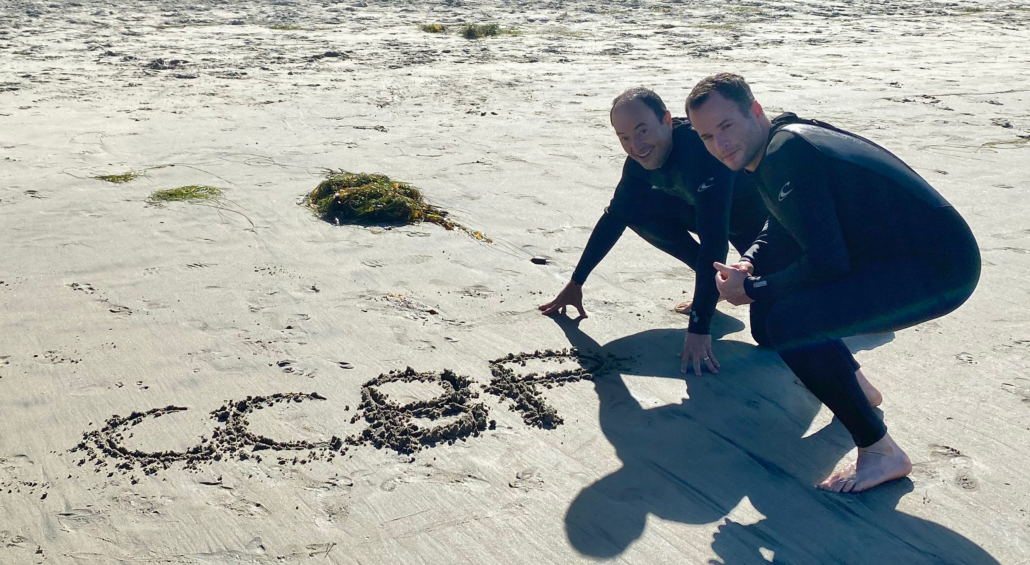
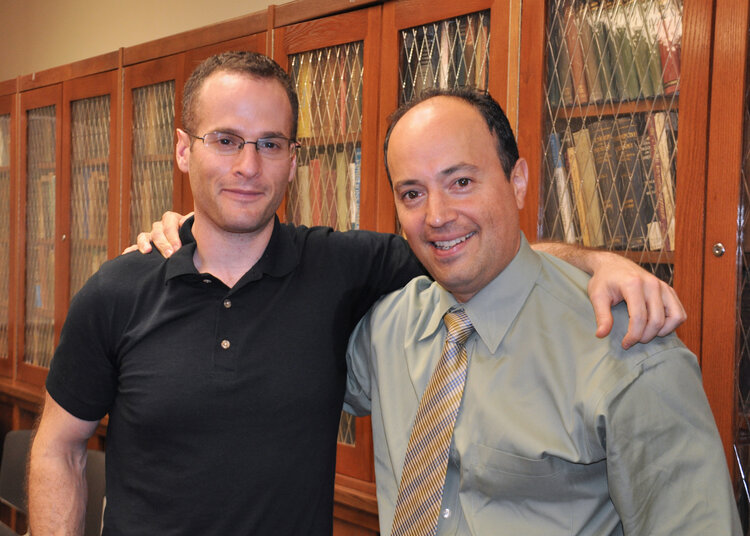
You have met Ben Stecher in episode #12 already – today we follow up on his very own account of deep brain stimulation after Ben has now lived with DBS to his subthalamic nucleus for 3 month. Ben is joined by Alberto Espay, who is a world-renowned expert on Parkinson’s Disease from UC health in Cincinnati, Ohio.
Together, Alberto and Ben wrote “Brain Fables”, a book with the aim to debunk some of the common (mis)conceptions in the field of neurodegenerative diseases. The book recently won the prose award by the Association of American Publishers in the category Neuroscience and is truly unique in its way to combine both the views of patient and health professional on the matter.
We also touch upon a recent debate at the 2021 International Movement Disorders Congress (MDS) between Alberto Espay and Patrick Brundin, about the question whether clearing α-synuclein enough to treat Parkinson’s disease.
Alberto and Ben take us on a fascinating journey to think outside of the box, to question and challenge currently accepted views about the etiology of Parkinson’s Disease and about their vision of how to conquer neurodegenerative diseases.
Benjamin Stecher & Alberto Espay 00:00where the analysis has nothing to do with the labels. So the labels are no longer the independent variable, but in fact, the dependent variable. We still deep phenotype these individuals. But what we're really interested are in those who have bioassay range abnormalities that would serve to select them as candidates for therapies that we already have and might already be available for repurposing. So in all this subtyping discussion, trying to understand how many subtypes, it's really not relevant how many subtypes there may be of Parkinson's or Alzheimer's because at the end of the day, that may not be actionable. What we really are looking for is the proverbial needles in the large haystack of neurodegeneration, the individuals for whom, in fact, if we knew what disease they have biologically by virtue of bioassays that we've never deployed before, we would have determined that they are, in fact, already susceptible for therapies that could stop or reverse their condition altogether. Welcome to Stimulating Brains.
Andreas Horn 01:20Hello and welcome back to Stimulating Brains, episode number 14. Today I was really excited to be talking. to two experts in Parkinson's disease, and namely that was Ben Stecher as well as Alberto Espay. Together they have written a book called Brain Fables, which is an amazing endeavor between patient and physician to unravel and challenge misconceptions that we currently seem to be having in the field of Parkinson's disease. Ben was born in Nairobi, Kenya, as an Israeli to Jewish parents from Poland, but grew up just outside Turkey. He was born in Toronto, Canada. 02:01He studied history and philosophy at the University of Guelph, but as soon as he got his BA, he took off and went to live and work as a teacher in South Korea for nearly three years while traveling the world. He moved to Shanghai, China at 26, spending one year at Jiao Tong University in a Chinese language program before being hired by Chinese education company Sunli. He rose quickly to become a managing partner, where his duties included working in the field of medicine, and also in the field of medicine. He was also a member of the Chinese Academy of Sciences, where he was a member of the Chinese Academy of Sciences, research advocacy. He is the founder of his website Tomorrow Edition, co-founder of the 03:05Parkinson's Research Advocacy Group and patient advisor to the World Parkinson's Congress. On his website Tomorrow Edition, he has interviewed a multitude of international experts in the field of neuroscience, neurology, movement disorders, and of course Parkinson's disease. Professor Alberto Espay, on the other hand, is a world-renowned expert in Parkinson's disease, prolific researcher and author. He has published more than 200 peer-reviewed research articles, 25 book chapters, and five books. His research efforts focus on the measurement of motor and behavioral phenomena in and clinical trials for Parkinson's disease, as well as the understanding and management of functional movement disorders. Dr. Espay served
Benjamin Stecher & Alberto Espay as chair of the movement disorder section of the American Academy of Neurology, associate editor of movement disorders, the official journal of the International Parkinson and Movement Disorder 04:00Society, MDS. He currently serves as chair of the MDS technology task force and a secretary-elect on the Pan-American section of the MDS. At UC Health in Cincinnati, Alberto Espay is professor of neurology and director of the James J. and Joan A. Gardner Family Center, as well as research chair for Parkinson's disease and movement disorders. I think in our conversation, we try to change the way we think about the world. We try to change the way we think about the world. Some of the conceptual views we currently have of especially the neurodegenerative view of Parkinson's disease. And I think the conversation between, I'd say, patient and physician expert that are also friends and somehow colleagues in writing a book was truly exciting for me. And I hope it is exciting for you as well. In the beginning of our conversation, we also briefly touch upon the DBS surgery that Ben underwent himself. Last time we talked in episode 12, that was only days after his surgery. Now it's three months after surgery. So Ben can tell us a bit 05:02more about how he felt about the challenges of DBS, maybe also about the changes and sometimes unwanted changes that have come with the surgery. Have fun with Alberto Espay and Ben Stecher in Stimulating Brains. Thank you for tuning in. So Alberto and Benjamin, it's an honor to meet you. I'm so happy to be here. I'm so happy to be here. I'm so happy to be here. I'm so happy to be here. Thank you. I will have, again, formally introduced you by now more properly, so we can dive right in. And Ben, you've been a guest on this show before. And last time, that was in June, we talked just nine days after your DBS surgery. Now it's been over three months
Andreas Horn living with deep brain stimulation. Can you tell us a bit more about that?
Benjamin Stecher & Alberto Espay Yes, yes, I can. I'm tired to know where to begin, though, because there's so much that I could say there's so much that I think needs to be said as well. There's so much I think that patients and 06:00physicians need to be aware of going forward if we're going to continue to have success and make sure that people live better lives. Because at the end of the day, it really is about making sure that each person that goes through DBS is best selected for, not only so that we can ensure that they can actually have a good outcome at the end of the day, but also just to make sure that the system itself stays in place, not as it is, but that we continue to make incremental improvements on it as well. Because frankly, if the way patients are treated today is the same as it is a year from now, two years from now, five years from now, or 10 years from now, then I think we're not doing our jobs properly. The level of care for each individual patient that walks into their physician's office does not improve starting from this day until the next day, until the next year, blah, blah, blah. We're all, I think, in some ways failing everybody involved and everybody that's going to be coming down the pipeline as well. Now on that topic, though, before I kick to Alberto, because there's one very specific question that I'd love to ask him as well. But the one point that I want to stress about DBS, there's three points really, but there's three pillars that I feel that every 07:05single patient who goes through this process must have. If you don't have all three of these things in place, I don't think you should be eligible for DBS. And I think in fact, you should be immediately excluded if you don't have one of these three things. The first one is you have to have a good surgeon. I think it's a very obvious thing to say in some ways, but if you really don't have to have somebody that one, you're not going to be eligible for DBS. And the second point is, if you're not comfortable with what they're doing and where they're putting that thing, and then if you don't grant them the autonomy to make decisions on your behalf, and you're not comfortable with making those decisions, letting them make those decisions for you, then I'm not sure you should be going through DBS. If you're hesitant in the days before, or more importantly, if you're changing your mind constantly in the weeks before about whether you want to do it or not, or where you want to do it, or how many leads that you want in your brain, I don't think you should be going through it at that moment. You should wait a little bit until you're a bit more clear about it. And so you've had more time to understand it. And I understand that it's a very difficult thing to ask somebody to do, because one, 08:02some people are paying for it out of their own pockets. And a lot of these physicians are very, very busy people, especially the surgeons. And some people wait four years until they can actually get in the door and make sure that, and then to make a split decision at the end of the day and say, oh, no, I only want one instead of two, or I want it in my VTA and not in my SCN anymore. That is a practice, I think, as a culture, as a society, blah, blah, blah. We need to stop. We need to make sure that each individual patient is properly prepared.
Andreas Horn And for those that do have four years to prepare, I really want to ask not the patient themselves, but the whole infrastructure around them, what the hell were you doing for those four years?
Benjamin Stecher & Alberto Espay I mean, everything should be spent on, not everything, but like the patients need to be very well educated and prepared going forward about what they are getting themselves into. If they don't know what they're getting themselves into, if there's hesitancy in the days or weeks beforehand, it's OK to be anxious. It's OK to be nervous. Everybody should be on some levels. But if you're very hesitant going in, then something I think is wrong. Now, the second pillar that I want to get is you have to have a programmer and a physician that really knows you and they can really get who you are as an individual and knows your personality very, very well. 09:10You need somebody who you trust implicitly to make decisions on your behalf. I'm very, very lucky that I have that here with Alfonso Pizzano, but I know so many patients that just don't have that person. And I've seen terrible things that can happen as a result. I think you have to have that second pillar in place. Otherwise, again, you should be excluded if you don't have that second thing or the third thing as well, which is you need to have a great family environment or some kind of very welcoming environment that you can come home to at the end of the day. If you don't have that either, you should also be excluded because you need somebody that can back, lack of better term, you need someone who can dole on you. There's many times when you aren't able to do anything for yourself, really. You have to be expecting the worst and yet being prepared for the fact. And I think that's the key.
Andreas Horn Yeah.
Benjamin Stecher & Alberto Espay that you might need somebody to do literally everything in your daily life for you, especially if you're a little bit older or if you're a little bit more feeble than I was. 10:02I've seen patients that had a bad outcome or like they started doing some really crazy things as a result of this surgery and then the programming afterwards because they didn't have that third pillar in place.
Andreas Horn So yeah, that'd be my recommendation after a long rant for the three things
Benjamin Stecher & Alberto Espay that every single patient needs to have. Now, my question for Alberto actually is going to be this. So after the programming begins, for me, it started, I think it was the beginning of July or the end of June. I got the surgery June 1st. So I think the programming was either at the end of June or the beginning of July. And ever since I've noticed that not only have I kind of changed in some ways as an individual and my personality changed as my mood has changed and as my symptoms have improved, but I've had some like weird behavioral issues that I've noticed along the way. And I'm just wondering from Alberto's point of view, because I think Alberto knows me fairly well. He knows kind of, he knows who I am as an individual as well. And also more importantly, he's known me before and after this DBS surgery. 11:02I mean, not long ago, we spent the whole weekend together. Two or three weeks, two weeks ago, I think.
Andreas Horn Yeah, two weeks ago, we spent the whole weekend together down in San Diego. So I guess I'm just quickly wondering to Alberto, how would you describe to another physician or to me or to anyone how my personality might have changed over these before and after the surgery and before and after the programming began? Yeah.
Benjamin Stecher & Alberto Espay If you care to do something like that as well. Well, I'm not sure I could comment fully on things because I may have a view of you that's perhaps glossified by the knowledge of knowing who you are. And so I would say the personality is the same shining personality you had before. But I wonder if what may have changed is, how deliberate you may be in certain things. So I wonder if you have fewer breaks. 12:04And I wonder if then that makes it seem as if you are more impulsive or different, maybe disinhibited. I think it's not quite that level. I think that there is more Ben out there. And that's good. The issue is how to channel that Ben's stature in such a way that it remains a force for good. Yes, I agree completely. If I were to characterize myself, I would say that one, I'm a little bit more childlike, I think, than I was before because all of my senses feel a little bit heightened. So even like food and the things I drink, everything tastes better. Everything feels better. I feel a little bit more confident as well. But I also feel slightly more... I think the best word is really arrogant in some ways, 13:01or maybe overconfident because... I think... I think I've learned a lot through this experience. I think I've learned quite a bit about myself and DBS and the brain in particular and how it works. And... I'm trying to kind of bat that part of me down. Yet at the same time, I realized that... I think... I am... I think there is something, there's some kind of like knowledge that I've tapped into as a result of DBS and especially the adaptive DBS part of this that gives me, and the surgery as well. I mean, I was awake for the whole thing. So that collective experience of like having an intimate knowledge of how my brain is working right now, I don't know, it's given me something that I can't really describe properly. But like, I think I do have some kind of intuitive sense of how it's working and how I'm working. And then as a result, how other people's brains work as well. Because I mean, I don't think fundamentally we're that different from one to another. 14:01So I think that that, but I see how it comes across sometimes. And I hear this a lot from people around me that it does come across sometimes as just pure arrogance or a sense of like, I know better.
Andreas Horn And while, well, yeah, I guess I said what I wanted to say there.
Benjamin Stecher & Alberto Espay So one thing maybe to follow up, because I think, if I were a patient right now, wondering whether I should get DBS or not, I think your comments were really helpful, but they would also be intimidating.
Andreas Horn Because how would you know whether your surgeon is a good one or whether your programmer is someone you can trust, right?
Benjamin Stecher & Alberto Espay So I think it would intimidate me more than encourage me to do it.
Andreas Horn Do you have something to counter that or like some positive things to say as well? Like, is it worth it in the end, if it works?
Benjamin Stecher & Alberto Espay I have two things to say.
Andreas Horn Yes.
Benjamin Stecher & Alberto Espay One, I think you should. I think you should be intimidated going in. I don't think this is something that anybody should be taking lightly or anybody should be trying to marginalize. But I mean, the biggest positive is how I feel right now. 15:02I feel so much. I feel like the amount of improvement that I've seen is really stark. It's hard to describe, but I do feel as if there are definitely times in my day now where I don't think about Parkinson's anymore. I don't feel Parkinsonian. Now I do feel some of the slight tremor. And you can't see it. But when you're in a hospital, you can't see it. My feet have tremor as well. But there are definitely times in my day where I just can forget about it completely because I don't feel it anymore. I don't feel any of the symptoms sometimes. But I do notice that my speech is sped up and there's some weird tics and blah, blah, blah. But it was the best decision I've ever made in my life. So that would be, I guess, one very good message to put out there. But it's very important that people understand what they're getting themselves into. And I think that it's very, very important for me to stress that I'm not your typical patient because of my age. And more importantly, the outcome that I've had. 16:02Most patients, they don't have this good of an outcome. I'm sure Alberto can speak to this even more than I can. But I'm sure you've seen patients that have gone through hell because of DBS. And maybe it would be very good, Alberto. I can do this as well if you want. But if you could tell us some of those stories as well, because I think we need that balance in this field. There's a lot of people in the field that like to just talk about. All the success stories that they've had. I think it's also very important that we counter every single success story with the story of complete failure on the part of either the system or the physician or whatever else it might be. So, yeah. Yeah, I think you're absolutely right. And perhaps one way to answer Andy's question about how to end up with a more positive framework is to think that, while it is not possible for patients to do a full search on their surgeons as to what kind of surgeon they have, 17:00they could ask what kind of evaluation is there in their centers, how many people are involved in the program. In the program, meaning as a whole, the evaluation before surgery, during surgery, after surgery, etc. Because that means that there is... There is... A complete framework around this in a manner that really ensures that only the best candidates for surgery move forward. That is, I think, the reason why some centers can have such wonderful outcomes is because in part, people like you, Ben, are selected for therapy, knowing that the outcome will be very positive. Whereas if those checks and balances that are provided by...
Andreas Horn Yeah.
Benjamin Stecher & Alberto Espay This multidisciplinary care team aren't there, then you can conceive that there will be people going through DBS that should have never been, 18:05and they would have poor outcomes.
Andreas Horn So, it's more the center and the people involved, not only the surgeon, everyone involved, rather than just any particular individual in isolation.
Benjamin Stecher & Alberto Espay That's one part.
Andreas Horn Yeah.
Benjamin Stecher & Alberto Espay I have one final thing to say on that last point, though. When it comes to statistics and knowing who your surgeon is or how we're ever going to find out who is doing their jobs properly or which centers they should go to, which centers they should maybe avoid, I have a very direct question for both of you.
Andreas Horn How can we get those numbers properly?
Benjamin Stecher & Alberto Espay I think as a patient going in, we should have access to the following things.
Andreas Horn What is the success rate? What is the success rate? What is the success rate in my country, province, or state, city, center, and surgeon?
Benjamin Stecher & Alberto Espay I think each patient is owed those kinds of numbers going in. 19:02And I think that would alleviate some concerns for some people in some places and maybe heighten it in others. And I think it's all justified as well. But it's complicated because, as I'm sure you know, it also depends on which device they're getting and which lead they're getting and where the placement is and all of those things.
Andreas Horn But I don't see why we don't have some kind of like open, well, I see why and I understand it, but I would wonder what you guys think about having some kind of open, accessible database where we can actually sift through these things and then quickly, within a short period of time, have those kinds of numbers.
Benjamin Stecher & Alberto Espay And to Alberto as well, this shouldn't just be for DBS either. We should be able to extend this to almost every therapy that we have, especially the more invasive ones.
Andreas Horn Like Alberto knows a lot about the, what's it called?
Benjamin Stecher & Alberto Espay L-double pumps as well. We should have the same numbers, same kind of statistics for those things as well.
Andreas Horn So yeah, what are your thoughts on how we might actually get there one day? Like what are the barriers in place now and then how we might be able to start pushing the boundaries of those barriers and making sure that they're accessible, as accessible as possible?
Benjamin Stecher & Alberto Espay 20:08I think it'd be important to know what numbers you're really trying to get at. So number of surgeries is a different number. So if you have, you know, 50 surgeries per month, just to give you an obscene number, but don't know anything about the outcome, yet you have a center that has 10 surgeries per month and you know the outcome very well, you might choose the low output center because you know that the quality is great. And the reason I'm pointing this out is that there is an incentive, at least in the US. For DBS surgeries to be done because they are more profitable than just about any other treatment approach that we do.
Andreas Horn 21:02So there was a time here at my institution where, in fact, we had to report how many surgeries were being done. And that was a metric that we were judged against. So at the end of the year, we say, well, these were the number of surgeries, the DBS surgeries that were done. And. How can we make it this level the next year? And how can we keep on going up?
Benjamin Stecher & Alberto Espay Right. It was about the number of surgeries. And it struck me as being the wrong incentive, because if it's all about how many people you get through a program, you start lowering your, uh, your, your quality control. You say, well, you might not be a great candidate, but it'd be great to have you in the program because it's going to count toward the numbers that I need to provide my institution that I'm really doing due diligence. In bringing enough people into the program. So, so I was, um, an advocate for eliminating the metric. And so we no longer have the metric to, to judge what we do. 22:02Now, I think though, that still is important to know what is it that the life of individuals who've gone through DBS has turned out to be. That's very important. Regardless of how many I would actually argue that if we're successful in. The research of disease, modifying strategies in Parkinson's disease, a true measure of future success would be that there will be fewer deep brain stimulation surgeries. Good point.
Andreas Horn And yeah, I can just say, Ben, that there are plans to do DBS registries, where, you know, a bit like for cancer, the metrics are better.
Benjamin Stecher & Alberto Espay Um, but.
Andreas Horn Yeah. Yeah. Yeah.
Benjamin Stecher & Alberto Espay 23:18right so so it's it has it has non-linear effects as well um i'm not saying it's wrong what you said it's just that the story is quite complicated if you look at the whole system i think it is you're right and then on top of it how would anybody ever get trained if that was true like how would anything like that first surgery that somebody does so it's a very complicated issue but i don't
Andreas Horn know i guess that's why we're here so we can think about these things and talk about them then one
Benjamin Stecher & Alberto Espay last question ben more from maybe let's say uh just how you felt with dbs um before we move on i think a day after your surgery you tweeted so a day after you tweeted um that you experienced your first day in five years on which you did not experience an off phase um so maybe you can 24:04briefly tell us what that means and then the question would be do you still have similarly good days now or did that wane off um so what it means for me in particular is that before the surgery i was riding those like kind of crazy waves where i was very bradykinetic and very disconnected and it's all throughout the day there's really nothing i can do because of these magical little pills here that i have um so there's basically just Sinemet and some pramipexole that I take right now um i don't take a lot of either right now i mean they're vastly reduced but i still take enough that i feel um ! good throughout the day but prior to the surgery and prior to the programming in particular what happened is i would take a pill in the morning and then i become dyskinetic which is you go on the upswing of that wave and then you come down after about an hour and a half to two hours and then you become bradykinetic until the next one picks up and then that's your whole day 25:03basically is riding that entire wave what it really meant though at the end of the day for me in particular was that i had maybe like two or three hours towards the end where i had any kind of uh control over myself and then i was like oh my god i'm gonna die i'm gonna die i'm gonna die i'm gonna die to self and more importantly i think i was done like an hour of really productive time in my day an hour where i felt like i could actually do the things that i wanted to do an hour where i could like write or read or do whatever i needed to in that day to get any work done that i needed to
Andreas Horn do as well so that's why i did dbs to try to make sure that i leveled that out a bit now so far i
Benjamin Stecher & Alberto Espay must say i've had good days and bad days so far since the program began as well and yes every Every single time so far, until recently, that we've brought up the simulation just a little bit, the effect wanes over time. And I've noticed it very acutely as well, because I'm trying very carefully to keep track of myself and my symptoms and my mood and my behavior and all those things. 26:00But I do notice it every single time that we try to bring up the simulation a bit. It has an immediate effect, and I feel great for a couple days afterwards. Sometimes, as my parents might tell you, I might feel a little bit too good. But then it wanes over time, and I kind of come back down to earth. Now, I think, though, the good news is that I think we finally found the right settings for me.
Andreas Horn Although, again, maybe I shouldn't, yeah, I'm not going to discuss everything there, because there's some things I just can't talk about right now. But, yeah, that's what I found so far.
Benjamin Stecher & Alberto Espay So, at the moment. I do still experience some off periods, but my off is not nearly as off as it was before. And my on is not, I almost never get really dyskinetic anymore either. So I'm very grateful for that and very lucky to be where and when I am for that particular reason above all else. And even if it lasts for another couple of months or a year or two years and I go back to that, it would still be worth it from my perspective. 27:02I'd still do it again if I had the choice. Amazing.
Andreas Horn Okay. So, so, Ben. So, Alberto, you had a debate at the 2021 Movement Disorders Congress where you discussed whether clearing of alpha-synuclein aggregates is an adequate therapeutic strategy in Parkinson's disease. So clearing up these plaques, is that what we need to do?
Benjamin Stecher & Alberto Espay And I think Patrick Brundin from Michigan took the counter perspective. You said it's not a good strategy and Patrick said the opposite. I think you mentioned it's a consequence.
Andreas Horn And the two of you, Ben and Alberto, you have written a book about that topic as well. So I want to pivot into that concept. Can you maybe enlighten us why it's not a good idea to try that?
Benjamin Stecher & Alberto Espay Well, sure. Let's start with the highest of all pictures. The highest of all pictures is that degeneration is about loss.
Andreas Horn 28:07What is degeneration?
Benjamin Stecher & Alberto Espay Degeneration is about loss. We're losing brain. And so there was a time, though, that we had little to go by to try to provide an understanding of this. And it turned out that we began to make sense of neurodegenerative diseases, people with different conditions of brain aging, by looking at the autopsy. So we were born out of forensic research. We figured that what we were seeing abnormal in the brain autopsies were not only providing order to different conditions we were evaluating clinically, but those were also giving us a sense of causality. 29:08So we violated two rules. The first is the rule of correlation does not equal causation.
Andreas Horn And then the second rule is that on a losing brain, we overlaid a theory of gain, of gain of function toxicity. So these two things have become dogma. Why do I say they have become dogma?
Benjamin Stecher & Alberto Espay Because if they would have been scientific ideas, we would have falsified them by now. We have enough evidence to falsify that the brain is undergoing degeneration and loss of all proteins, not gain of any. And that those proteins we see on autopsy are the end result of many biological processes, the beginning of none. 30:04And yet we refuse to change this framework. Which is now century old, over a century, in fact, and continue to do research, not to question our ideas, but to validate them. When our ideas aren't validated by research, then we change the research methodology, we search the paradigm, but we do not change our ideas. So Brain Fables was born with Ben Stecher because we were both saying kind of the same things. He from his patient perspective, me from my clinician's perspective, he exemplified someone that was at such a different level than anyone. And in fact, being the living proof that there isn't a Parkinson's, but many Parkinson's diseases, perhaps as many as people living with it. And who knows what disease Ben has, yet we are comfortable calling Ben Parkinson's disease. Can I ask one quick, it won't be quick,
Andreas Horn 31:05but I have a question for both Alberto and maybe Andreas as well, if you'd like to chime in, feel free. Why? It's something that I always try to ask myself. Why might me and you be wrong? Why do you think, is there anything that could come along that might convince you
Benjamin Stecher & Alberto Espay that, oh, maybe we were wrong all along, me and you were wrong, and that these aggregates really
Andreas Horn are as toxic as everyone's been saying all along? So maybe before we go into that, we should talk
Benjamin Stecher & Alberto Espay about just briefly, you know, what these aggregates really are, I think, just for the listeners. So I think this, what you just said, Alberto, and what the book is also about is, for example,
Andreas Horn going against the Braak hypothesis, right? Stating that you have aggregates of proteins that misfold, aggregate, and then they could spread around the brain, right? And maybe, can you briefly just mention alpha-synuclein, Lewy bodies, and Braak hypothesis? What are they in very, 32:02very simple terms? And then we can go into Ben's question.
Benjamin Stecher & Alberto Espay Yes, absolutely. So alpha-synuclein is a very important protein. There's probably many, many functions to it. The ones that we think most of is related to synaptic function and actually axonal health, et cetera. Probably we don't know much about what that is. But what happens, though, is that in many circumstances, that there is an injury to the brain of a biologically infectious, toxic, et cetera. These proteins undergo a transformation. Their normal state is soluble. And when they are exposed to whatever may be a pathogen for an individual, and of course, it'll be different in different individuals, the soluble protein becomes transformed into an insoluble protein. The insoluble protein has a configuration called 33:03cross-beta. Which means that it is stacked in this fashion, one against another, and it no longer is soluble, and it no longer is functioning. That's the certainty. The protein that is normal has ceased to be normal and therefore can no longer yield its function because it has transformed into something that it can no longer allow its function. But we've embraced the uncertainty, the idea that somehow the minute the protein is in this state, it acquires toxicity. We use the terms replication, propagation, spread from cell to cell, prion-like spread. And all of these suggest a gain, not a loss,
Andreas Horn suggest that we somehow gain something. And that's why the brain is losing, which makes no sense. By gaining a toxin, and that toxin destroys the brain, right? But the toxin is first,
Benjamin Stecher & Alberto Espay 34:05and then the protein is destroyed. And that's what we believe you say, but that's what's wrong. The highest level of evidence to test the hypothesis that the toxin that we have created in the form of aggregated proteins is a clinical trial. And we already had one clinical trial in Parkinson's, and there are many others of anti-synuclein strategies. We don't like the answer the trials are giving us, just the way we don't like the answers the anti-amyloid trials have given us. And we don't like the answer the anti-amyloid trials have given us. And we don't like the answer the anti-amyloid trials have given us, just the way we don't like the answers the anti-Tau trials for progressive supranuclear palsy, and more recently, Alzheimer's disease, are giving us. So we don't like the fact that the trials are telling us nothing about the certainty that we've embraced about the toxicity of the proteins, and we're insisting that one day will be proven right. And so I think for the listener, it's important to recognize that 35:00this is called the gain-of-function framework, of diseases of brain aging, the accumulation of the proteins in their abnormal state. We think of them as Lewy bodies in the case of Parkinson's, as amyloid plaques in the case of Alzheimer's, of Tau in the case of progressive supranuclear palsy, as being the main culprit, the main cause of the problem. And as I've mentioned, that is already not a concept that we can validate with any science, and in fact, it's been countered in such an overwhelming fashion, that it is remarkable that in our field, we can be so insistent in our ideas and so neglectful of the evidence against them. You're saying the stages didn't correlate,
Andreas Horn for example, Braak stages don't correlate with Hoehn and Yahr stages, right? And so essentially,
Benjamin Stecher & Alberto Espay 36:01the way I understood it is you said, you know, Braak, for example, Heiko Braak is a pathologist in Germany, I think, who started one of these hypotheses of the spread of these proteins. So spread again, involving something like a virus, as you say, but you're saying that, you know, makes no sense. And I think you mentioned he had 60 brains or so, and you had some sort of different stages that he, based on these 60 brains, came up with. And I think if I understand you correctly, you're saying, there's no good evidence that these really map to disease. And I think that's a good evidence that these really map to disease,
Andreas Horn and to symptoms at all, right?
Benjamin Stecher & Alberto Espay Right. Correct. There is just no evidence. So he's in these, these proteins, for the tissue of the brain of these individuals, with alpha-synuclein staining, and then sort of realized that there were several brains with little with more with more, even more, and then he drew a line. And I 37:00think it's a it's an incredibly elegant way of explaining the diversity of what he saw. But he's trying to put into a pattern that which doesn't doesn't quite exist. In nature, I think he attributed this unrelated brains, somehow, he just figures that from here, the pathology is spread over to here. So he talked about moving an actual dynamic process from one level to another, when in fact he just had unrelated brains. And all we can say is that there are different distributions of pathology. But that idea was so powerful. And it remains so almost magical, that we cannot get rid of it.
Andreas Horn I mean, it does exist in Creutzfeldt-Jakob disease, right? So we have these types of diseases that do that, right? 38:02Yeah. So, right. So why do proteins change?
Benjamin Stecher & Alberto Espay Proteins change because something comes to the brain and that's called a pathogen, outside pathogen.
Andreas Horn That's probably the most common reason why all of us aggregate proteins, right?
Benjamin Stecher & Alberto Espay The second reason is that the proteins are inherently unstable.
Andreas Horn And that would be why somebody with an SNCA gene duplication would have Parkinson's.
Benjamin Stecher & Alberto Espay There is just an excess of proteins that are inherently unstable. And so they also will aggregate. By the way, there is still loss of the normal protein in that situation. And then the third mechanism is because... Proteins are ultimately aggregated to an extent that they don't need an external surface by a virus, for instance, 39:01or an inherently genetically unstable infrastructure to them. They are just going to, by concentration, create its own nidus of nucleation. These are all nucleation, not replication mechanisms. So prion disorders are rapidly decreasing. And so the problem is the depleted pool of proteins, because they are turning immediately into their aggregates, into the amyloid forms. And amyloid is just a state of the protein. So in all of them, the loss of function mechanism can much more easily explain the illness. The gain of function is just an artifact of how we learn about phenomena because it does make a lot of sense to us. And also, much more importantly, I think, is because in humans,
Andreas Horn as we all are, we love a narrative where there is a central villain, right?
Benjamin Stecher & Alberto Espay So we can galvanize against. And these stories have all the villain is the protein.
Andreas Horn 40:03And that's why the anti-protein approach is one that we are almost married to.
Benjamin Stecher & Alberto Espay It's very, very hard to dissociate ourselves from it.
Andreas Horn So the two of you wrote the book and now we can maybe come back to Ben's question. So how could you be? Have been wrong, right?
Benjamin Stecher & Alberto Espay So maybe I think it's a great question.
Andreas Horn Or the other would be what would be the arguments of your opponent at MBS to counter that? Yeah, well, yeah. So, well, Ben, you probably can answer this one because you've interviewed so many people over the years. So why is it that just most of us really have been in love with the idea that proteins are the central villain in the drama of neurodegeneration?
Benjamin Stecher & Alberto Espay My opinion is lots of science. So. So I think the first thing is that the brain itself works at the moment and how our brains work as well. I think we love a good story for the same reason that a child loves a good story as well. 41:02And we come to see the world through those stories that we tell each other. And up till now, the predominant story, the one that everyone's been telling, the one everyone's been seeing really, has been that same story about how aggregates form and it's toxic and then the brain cells die. And that it sounds like it makes a lot of sense when you first hear it, especially. I remember. I remember it was first explained to me, I think, by Jeffrey Kordower, who really walked me through it, and Patrick Brundin as well. Both spent the time to really walk me through it and it made a lot of sense to me at the beginning. But then the question started to seep in. The question was first posed to me, I think, by Dr. Simon Stott, who said something to the effect of like, if it was really that simple, we wouldn't, or something like, if the problem is really that simple, then we would be too simple to solve. Or something to that effect. Or something too simple maybe to even ask the question to begin with. I really come to believe what he told me. And of course, everything that Alberto just said. I think those stories in many ways, they're just leading us astray right now. 42:04And that we need to get back to something that's much more powerful. I think there's a more, so, so far, there's two ways that we can tell a story. I think there's one through the language that we use. And there's another through the pictures that we can describe or that we can draw. Not only the pictures that we draw on paper, but the pictures that we can draw on our own. And this brings me to a question that I'd love to ask both of you as well. Although I don't know, Alberto, if you want to say anything before I get to this next question. Okay, this next question is about both of you as well. I don't know, Alberto, how much you've had a chance to see any of Andrea's work. But he has the most beautiful diagrams I've ever seen in my life about the brain and DBS and everything that is encompassing those two things. Now, what I've noticed is that in my encounters with some of these scientists, and the researchers that I know, almost all of the best thinkers, or for my money anyways, it's all subjective. So I can't say anything objective, but I think all of the best thinkers in this field and in any field, really, 43:05they have a very strong sense of what they're looking at. In their mind's eye, they really know what they're looking at. In their mind's eye, they can see the problem for themselves. They can see the problem.
Andreas Horn And the reason why that's so important is because there's so much that you can see visually that you just can't depict through language.
Benjamin Stecher & Alberto Espay There's so much information that comes to any human being through an image that you just can't see. I mean, look at this painting. So this is a painting that was drawn for me by Dr. Megan Duffy. It's over at the NIH. I think it's a very beautiful painting of neurons and some cells. And so this is a neuron obviously in the middle, a dopamine-producing neuron. I think this is an activated microglia cell. Sorry, Megan, if I'm wrong on these. Here's an oligodendrocyte up here and an astrocyte here. I often just stare at this thing and I wonder, wow. I try to picture in my own mind all that's going on in my own brain. And I've tried before to try to capture this through words. And it's just impossible for me to capture any of this. 44:01As soon as you start doing it, you quickly realize how, I don't know, I think the best word is impotent, really. How impotent we are in our ability to actually communicate this to each other through language. You have to be able to see it and you have to be able to see it with yourself, with your own mind's eye there.
Andreas Horn And if you really don't have that visual perception, if you don't have that ability, yeah.
Benjamin Stecher & Alberto Espay If it were up to me, I think the test of any great scientist and I think one test of anybody in this field should be how good of an artist are you?
Andreas Horn How well can you see what's going on in your own head? Or how well can you see whatever it is that you're trying to study?
Benjamin Stecher & Alberto Espay I think if you can't really see it, if in some way you can't depict it, I would question how well you really know what you're talking about at that point. And from what I've seen so far, the best thinkers that I know in any field really are the ones that can actually see the problem for themselves. Right.
Andreas Horn My question to both of you is how much have you seen in that regard? Would you say that that's true or would you say that I'm just kind of ranting into nothing right now? 45:00Andy, would you want to answer?
Benjamin Stecher & Alberto Espay Sure. I mean, it's not about me, though.
Andreas Horn That's the rule of this podcast.
Benjamin Stecher & Alberto Espay But anyways, I think I told you this before, Ben, that at least for me personally, I'm really a visual thinker.
Andreas Horn So that might be the reason why I sometimes really spend hours.
Benjamin Stecher & Alberto Espay And I think that's the reason why I'm really interested in creating visualizations. It's not only for communication. It's also for understanding myself. You know, getting rid of noise sometimes, which can, of course, be dangerous. Something sometimes beautiful things are also simplified things. So that, of course, is always a danger. But it can also help to convey a specific message and so on. And then the second thing I think I told you also before is that I think a big part of science is communication. And I know that again is dangerous because you can create a fable and a good story, like, as you say, the Braak hypothesis and so on.
Andreas Horn But without communication, science doesn't really happen, right?
Benjamin Stecher & Alberto Espay 46:03If you would find out something great but tell nobody, it's like as if it never happened. So via communication, saving the reader time, saving is key to me as well.
Andreas Horn Yeah. Yeah, no, I agree entirely, Andy.
Benjamin Stecher & Alberto Espay I agree. That issue that Ben pointed. But it's so interesting because I think what Ben is ultimately forcing us to think is that we all of us have data.
Andreas Horn And there is this thing called big data, right? And so we imagine that because it's big, must be good. Anything if you get upon a large body of data, you say, gosh, I'm going to have so many answers to it, right?
Benjamin Stecher & Alberto Espay And as you begin to put it together, depending on how you put it together, you're going to come up with different answers. So you're going to think that those answers are true answers because our data driven. And in fact, our narrative is a data driven narrative. Right. 47:00It's not that Braak came out with this idea out of the blue. He had some data. It's just the interpretation of the data. It was such a beautiful interpretation. But now we know it's biologically fictional. And so the challenge for us is to try to figure out how do we detach our data from the data ourselves from the most amazing, most compelling story that all of us grew up under. The Braak idea in 2003 revolutionized our understanding. And everything is about trying to make sure that we validate it. It's not about trying to figure out how to question it. So let me give you an example of what I mean about the power of that idea. In our Twitter exchanges, someone that was one of the first to criticize the Braak's work was Bill Dauer when working with Bob Burke at Columbia. To me, their paper that was a review of Braak's own data and then additional data was 48:08the most beautiful argument against the conclusions of it. And I think it's one of the best papers written. Well, when I mentioned one of the central ideas of that paper in Twitter, Bill Dauer said,
Andreas Horn well, who was crazy enough to have said that? Certainly, you know, it was a strong argument.
Benjamin Stecher & Alberto Espay Certainly, Braak himself wouldn't have said that. And I said, no, you did it. And I actually copied a section of what he said in that paper. Well, he said, well, but that was in 2008. We now know that the paper is a good idea. And I said, well, you did it. And I actually copied a section of what he said in that paper. Well, you did it. And I actually copied a section more. So he was saying, oh, well, my criticism is not because now we really are into something and
Andreas Horn maybe Braak was into something. He forgot about his own criticisms of the Braak's data and almost 49:04saying, well, it's too far out, right? So it just goes to telling you, it's just, why would you mess with that idea? It's a beautiful idea, even if it's not really being validated by
Benjamin Stecher & Alberto Espay somebody else. subsequent evidence subsequent evidence yes uh there's one point i want to make though on the Braak hypothesis as well. One thing, if I ever had a chance to meet Heiko Braak, there's only really one question i want to ask him in 2020 i think it was the summer of 2020 um he came out with the paper and in the paper there's one sentence that really confused me. He said himself that the Braak hypothesis is a heuristic that that was the essence of what he said um now i should probably go and read it again just so i make sure i understand it properly myself but if we can i'd love to find i'm going to hunt for that afterwards and i'll send it to you and then we can maybe highlight it or whatever yeah but he said i think you're right it's a heuristic and it shouldn't be 50:02ascribed to everybody and it shouldn't be something that we take too literally in essence again i need to go back and read it so we can get the wording correct but he himself told was telling the world basically that yes this is a helpful tool for scientists to continue doing their science but it's not necessarily applies to any individual patient out there and that by itself i think was the most damning statement i've ever heard about the hypothesis himself and since it's coming from
Andreas Horn him himself i can't think of any better evidence for why we should kind of abandon it and why we
Benjamin Stecher & Alberto Espay should try to be as alberto was trying to like hammer home think of 10 million people with parkinson's is 10 million individuals that all of they might all at the end of the day be the same and they have something slightly different as well and at some point we might need to be able to figure out a way that we can deal with all that complexity if we're ever going to actually help any one individual live a better life with any of the therapies involved so maybe a follow-up 51:02question to you ben i think i've heard that multiple times from you that you say parkinson's disease doesn't exist what do you mean by that i mean that um so i think that as i've said there are 10 million people with parkinson's clinically diagnosed although even that number i question because apparently there's a million people in america alone so if we extrapolate that to the rest of the world there should be at least 20 22 million people that have parkinson's i have a clinical diagnosis of parkinson's but regardless whatever the number is no one can tell me right now what these people actually have no one can say with any real confidence what's actually happening in each person's brain other than the fact that yes there's some patterns of degeneration that happen to the brain and that's why i think it's important to think about that this seemed to happen in some people but not in others and maybe if you have this kind of symptom that might correlate with something that's some pattern of degeneration in one person's brain however i try again to visualize this problem i try as often as i can to think about okay what 52:05are all these people really talking about what is what are they trying to picture in their minds really when they say these things and for one i've come to realize that most of them don't even bother to try and picture anything which i think is a problem i think everybody should be trying to picture anything which i think is a problem i think everybody should be trying to picture anything which i think everybody should be trying to picture for themselves what's really happening for themselves and two more importantly i picture for myself when i try and think about this disease and this problem we call parkinson's and i and also the problems that we call alzheimer's als ftd whatever and i quickly realize i think that what everyone's talking about here is as a bird just said it's just patterns of degeneration and they're almost kind of sporadic in each person's brain like you think about all of the complexity that goes on in one human and you come to realize to realize i think at some point that the pattern of degeneration is happening in my brain and it's responsible for the symptoms that i feel it's very by rule i think by mathematics alone it has to be different from somebody else who has the same clinical label i mean just think about the stn 53:03for one and all the different neurons that enervate it and all the different like uh glial cells as well to go through that region of my brain to think that any two people one have the same pattern of degeneration and then more importantly i think to think that any two people have the same so i think of a disease and one disease as being four things essentially the same etiology so they have the same root cause of their disease the same his same basic history so they have to have more or less the same gender more or less the same age more or less same place the third thing would be more or less same pathology so after they die or whenever that might be we can open up their brains and say okay this person has the same blah blah and then whatever the infectious agent is or whatever the infectious thing that sparked the whole thing whatever the same i guess a root trigger as well at some point as well i think that was four not maybe mistaken or whatever so so i'll bear to you you oh sorry yeah did you want to say more 54:03yeah just last point on that so if you don't have each one of those things you can't do anything about it so i think that's a good point so i've asked many times and i put this out on twitter and on linkedin once and i put it out recently in a video as well that i think is going to be coming in the future can anybody in the
Andreas Horn world find me two patients that have exactly the same of those four things are any two patients
Benjamin Stecher & Alberto Espay identical in that sense and the only the only things i've ever heard were the mptp stories or the stories of agent orange and yeah maybe in those cases i would say that they have the same disease and the same treatment might one day work for them oh that was the last thing that i forgot to mention if there's responding to the same treatment as well so that's the fourth category of the disease of what i would call a single disease now i still have yet to hear maybe alberto can enlighten me to two two documented cases of two people with that have each of those four things that might be slightly different and yet their underlying disease we can classify as the same underlying 55:00thing um i haven't seen it yet but i'm open to the evidence and maybe it is out there and i just haven't seen it but i'd love to be enlightened and let's just hear i guess what alberto has to say about all of that as well no i think what you just said is we know a lot about parkinson's disease but we know next to nothing about people living with it if i have a person in front of me at the clinic i have no idea what he has yeah i call parkinson's disease and i can go into a lecture about what parkinson's is based on how we've defined it that doesn't mean that i know exactly what that individual has and that gap is remarkable and i think that's a really good example of how we can be able to live with that dissonance for so long of recognizing that we've created this multi-piece puzzle of parkinson's and that we in fact believe that we are a few pieces away from creating the full puzzle uh such that somehow it will then eventually give us the clarity about the individuals affected that sorry i'll play devil's advocate a bit so so isn't that 56:04the same for any brain disease stroke you know very different symptoms right or ms or so absolutely it is the same the entire field of neurology is based on constructs that we have created in an era where it made perfect sense to have created them but no longer we are the only field of medicine we and psychiatry that we've created our concepts in the 1900s and uh yeah mostly in the 1900s we really are using the same ideas and with all the technologies that we now have at our disposals to probe into living biology i recognize that brain biopsies are not going to be done but there are so many ways there is a liquid biopsy with exosomes with all these technologies that we now have at our disposal they are being used not to question our concepts none of them is to validate them so we still think that there is such a thing as bipolar disorder such a thing as schizophrenia such a 57:04thing as alzheimer's such a thing as parkinson's such a thing as the disease that we have now is such a thing as stroke as being one disease you mentioned it there is actually no single disease you know what essential tremor is the worst essential tremor is a condition that's defined by anything any any tremor that you cannot explain it with any other form of tremor it is not that it's not a tremor it's not cerebellar it's not a dystonic blood must be essential and we're so comfortable with it and the latest criteria added a component of plus oh well it's kind of the tremor has a few other things hey let's call it essential tremor plus et plus it is just uh our hubris is our hubris we are incredibly wedded to an era where we think all the truths were uncovered and now the technologies are here to validate them not to ever question them so makes a lot of sense still i'll play a devil's advocate more um going back to parkinson's disease if we can at least say and that number might be wrong but 90 percent respond 58:05to libido or even more and um most to dbs or many to dbs would it still be you know a good idea to lump them to some degree i mean you know they a label like a disease label doesn't need to explain the whole thing all the variants there is but it could explain one crucial point of a group of people yes so here's i'm so glad you asked that question because here's usually where when i say well we've failed so many things and then people say well but you know levodopa failed at the beginning and it was a problem to get it through and finally we discovered it was good but if you had if we had given up on it so soon we wouldn't have it right so that's explanation very similar to what you're alluding to the deep brain stimulation that gosh it worked for so many people well lumping is perfectly fine as an approach for that which can provide symptomatic benefits by improving common
Andreas Horn 59:03denominators. So that's why dopamine deficiency, a very prominent common denominator, can serve as the basis on which to improve upon because we have ways to improve the dopamine concentration in the brain.
Benjamin Stecher & Alberto Espay But disease modification is a completely different animal. And our discussion today is really pertinent, most discussion on this topic, not the whole discussion, is pertinent to the idea that not two people are alike and therefore the diseases are going to be different, different people. Now, we use the term Parkinson's disease as an umbrella term for all of them. So lumping, perfectly fine. For symptomatic therapies, splitting is mandatory for anything that relates to slowing the progression of someone's disease. Again. Challenging that with, let's say, syphilis.
Andreas Horn You have a clear agent that does it, right?
Benjamin Stecher & Alberto Espay 01:00:00And you can treat it very well by now with penicillin. But it can create in some patients that have neurosyphilis, neurological and psychiatric symptoms, and in some others, symptoms on the skin, as you, of course, know. Very good.
Andreas Horn And actually, that's why I wasn't just based on that example.
Benjamin Stecher & Alberto Espay Many others. Ben's four criteria, I think, should really be two. The middle ones may not be because you can. The most important. I think is for a disease to have the same etiology, right? The same cause. And that the treatment that targets that etiology slows the disease in everyone. It doesn't matter how that disease presents. Now, we are doing subtyping. We think that, well, yes, of course, Parkinson's is a heterogeneous disease and we need to subtype. We are often doing it on the clinical features. We're subtyping based on either people progress fast or slow or whether people have tremor or no tremor, whether people have early onset versus late onset. We're subtyping based on either people progress fast or slow or no tremor or no tremor. We're subtyping based on either people progress fast or slow or no tremor or no tremor. We're subtyping based on either people progress fast or slow or no tremor or no tremor. Which are all clinical measures. They're not going to track with any specific biology. But I think that the key elements of a disease are the etiology is the same and the treatment addressing that etiology will be able to prove that by correcting it, you then make the disease better.
Andreas Horn 01:01:11Now, as with the example of syphilis, syphilis can appear in so many different ways, right?
Benjamin Stecher & Alberto Espay It's a great imitator, as we used to think of it. And so it doesn't matter how it presents. Important thing is you have identified the etiology.
Andreas Horn And that the treatment that we now have that we've used for so long addresses that etiology that defines a disease, regardless of how it is presented. The two of you have lost faith that we will find something like that for Parkinson's, right?
Benjamin Stecher & Alberto Espay Well, we've never found. So the kinds of things we've been finding are common denominators. So the way we're finding biomarkers is by starting from the truth that we assigned as such. We say this group of people have Parkinson's disease. This group of people have nothing we can recognize. We're going to call them controls. And we're going to measure as much as we can from the whole cohort and defined as biomarker that which statistically correlates with the group of Parkinson's that doesn't with the group of controls. 01:02:06That's how we're doing this. Well, of course, there is always going to be statistically significant results.
Andreas Horn But how would they apply to an individual and how can they translate into success for individuals affected?
Benjamin Stecher & Alberto Espay I have no idea. So I think that to get to the success, we need to complete. We change the model and recognize that patients can only be treated for their disease if we know what their biology is.
Andreas Horn And so if we can answer the question of what is Parkinson's, what is the cause of Ben's Parkinson's?
Benjamin Stecher & Alberto Espay The answer will be incredibly helpful to them because there might be a treatment already for Ben's disease. But that approach might not work for just about anybody else. I have one point. Something that keeps me up at night as well. Something that I think one thing that I think we might be wrong about is that this distinction between symptoms and disease.
Andreas Horn 01:03:00Why does it matter at all?
Benjamin Stecher & Alberto Espay I mean, for patients, for me, my symptoms are my disease. They're what I deal with day in and day out.
Andreas Horn So why do I care about the ideology? Why do I care about the path?
Benjamin Stecher & Alberto Espay But what I can do about any of those things, if all I have to deal with is making sure that my tremor is not as bad as it was yesterday. And honestly, I'm not so sure we have any good answers right now. Because. For the vast majority of patients who have Parkinson's or whatever, they're diagnosed past 60 years old, at least past 60. Right. And I think the goal of medicine for the most part is to alleviate as much suffering as we can in a reasonable amount of time.
Andreas Horn So if we can give patients another 10 or 20 years past that point where they can live a comfortable life. Isn't that the goal? Shouldn't that be one? Isn't it more realistic for us to think that we might get there? And then two, shouldn't that be what we're actually trying to do here?
Benjamin Stecher & Alberto Espay I guess hopefully both. Right. I mean, I'm only doing that. DBS will never cure anything. Right. I'm just working on trying to, you know. 01:04:01That's my point. For me right now. So, you know. You get. So I, Ben, that's why I, at this point earlier, I think it reminds me that we always have to be clear that there are two levels of discussion. One is symptom. And one is disease. And they are different. Different diseases. Different discussions.
Andreas Horn That's why every so often we talk about disease and somebody says, oh, but hold on a second.
Benjamin Stecher & Alberto Espay DBS is so good.
Andreas Horn Why should we change our framework?
Benjamin Stecher & Alberto Espay Right. So the discussions that we have to do about moving the field forward so that DBS eventually is no longer needed because we're going to have disease modifying treatments requires a discussion that can no longer be lumpy. It has to be about individuals. So, yes, your disease is your symptoms. I get it.
Andreas Horn 01:05:22or more disability, well beyond motor features, right?
Benjamin Stecher & Alberto Espay Cognitive, depression, et cetera. So we need, the urgency here is that we cannot continue thinking in the manner that we used to think or we have always thought for so long.
Andreas Horn So the subtitle of your book is also a blueprint to conquer them. So what is the blueprint? Can you, both of you define that a bit?
Benjamin Stecher & Alberto Espay So the blueprint to conquer them is to start with the low-hanging fruits first. That's the initial level. Among all the subtypes we know of, the genetic subtypes make the most sense 01:06:01for us to concentrate on, and there are already organizations that are concentrated on this.
Andreas Horn These subtypes, of course, themselves are different diseases, right?
Benjamin Stecher & Alberto Espay So for instance, GBA, associated Parkinson's disease, is a variety of different diseases, so is LRRK2. But I think that if we now concentrate on those as a proof of principle that there could be therapies whose mechanisms are going to be responsive to the biological abnormalities that are mediated by the gene mutation, that could really be good. So that implies a change of the framework where any discoveries on LRRK2 PD or GBA PD will not be discoveries applicable to everyone, but people with those mutations and perhaps subsets of those mutations, that's the first low-hanging fruit. The second one is that future biomarker programs, and in fact the current one we have here in Cincinnati, would no longer try to determine what is it about Parkinson's that's different from Alzheimer's or what is it about tremor-dominant Parkinson's 01:07:02that's different from tremor-less Parkinson's, but rather to study aging, to have a biomarker cohort that is made of people with Parkinson's and a variety of other Parkinsonisms as well as Alzheimer's and other dementia, and even other neurodegenerative conditions, so that we can have a large cohort of individuals aging in funny ways, for which of course we have names, Parkinson's, Alzheimer's, etc., but where the analysis has nothing to do with the labels, so the labels are no longer the independent variable, but in fact a dependent variable. We still deep phenotype these individuals, but what we're really interested in are those who are in the early stages of the disease, who have bioassay range abnormalities that would serve to select them as candidates for therapies that we already have and might already be available for repurposing. 01:08:00So in all this subtyping discussion, trying to understand how many subtypes, it's really not relevant how many subtypes there may be of Parkinson's or Alzheimer's, because at the end of the day, that may not be actionable. What we really are looking for is the proverbial needles, the individuals in the large haystack of neurodegeneration, the individuals for whom, in fact, if we knew what disease they have biologically by virtue of bioassays that we've never deployed before, we would have determined that they are, in fact, already susceptible for therapies that could stop or reverse their condition altogether. That, I think, is the way forward. Well, Ben and I think is the way forward. Ben has been instrumental in already the successes that we've had in the Cincinnati cohort, in the Cincinnati cohort biomarker program, and we think that this is something that will eventually get us there. But I think the idea that a disease category, such as Parkinson's, as we define it, 01:09:00will ever be cured should be replaced with the idea that, well, we're going to cure individuals with a biologically defined disease one at a time. That's a more scientifically reasonable source of hope, and that curing Parkinson's or having a biomarker progression of Parkinson's, is a very good idea. So I think that's the way forward.
Andreas Horn well right exactly curing all cancer is not realistic but specific types might be right exactly exactly so the progress that has to be made in oncology is tremendous because
Benjamin Stecher & Alberto Espay they learn eventually they actually didn't have as many trials as we've had before they change we have too many trials and we should have changed much earlier it's never too late to change but the field of oncology needed only one negative trial in the comparison between breast preserving surgery versus radical mastectomy at the time thought that it was the only possible treatment 01:10:00for breast cancer that trial yielded few no changes between the groups and so they stopped from continuing addition studies trying to do another study with breast cancer at a prodromal stage or you know more radical mastectomy or changing the variables they just said well we stand corrected maybe breast cancer is not one disease and let's work on it four decades later 75 of all breast cancers fall into 20 different classes each of which are treated differently and many of which are curable only 25 of breast cancers we have no idea what they are they are negative with everything that's known but the progress is remarkable and it's been because they've really gone through the work of recognizing that not two breast cancer patients are alike but maybe i agree with you but to challenge it you use you have these success stories like the case of penicillin, right, which can kill so many bacteria that have so many different diseases 01:11:01coming out of them um so there are sometimes these remarkable discoveries and um let's assume you find the one common denominator of most, surely not all, cancers out there and then find a way to influence that do you think that's completely unrealistic for cancer or for pd to find some sort of unifying and with that i don't know if you have any other questions I don't mean 100, but let's say 70 percent of those heterogeneous diseases
Andreas Horn I actually think it's realistic, but here's how it's realistic, right? By going for what we know
Benjamin Stecher & Alberto Espay to really be true which is is the only truism that we cannot contest that proteins only function when they are in the normal soluble state and that in Parkinson's the levels of all proteins, alpha-synuclein, total tau, phosphorylated tau, amyloid beta 42, all of them are low, and that if we could in fact move away from anti-protein, so 01:12:03trying to get rid of all the proteins in the aggregated state and in fact replace the levels of proteins in their depleted state above the threshold for compensation yes we could have disease modification i wouldn't refer to it as precision medicine because it is not dependent on what the variables are for each individual affected that trigger the protein aggregation, but it's rescue. It's a rescue approach that is going to likely translate into disease modification. There's just two quick things I'd like to say, if I could. One is in regards, so what is the message to, not necessarily to any of us, but to everyone who might be listening, to anybody who might be able to affect change on a more global or international level out there. And that is simply about the systems that we have in place that govern everything that we do in medical science right now. I had a long discussion just yesterday with a good friend of mine who's a doctor here. 01:13:00And we had a good and healthy discourse about the nature of our systems that we live in. And she was trying to convince me basically that it's wise approach would be to work within the system and to make sure to use whatever tools that we have currently available. And then to make sure that we accomplish change through those mechanisms or through those means of actions. But I keep thinking about something that Alberto wrote in the book called the Framingham Study, which was started like 50 years ago about heart disease. And I realized how long it took for them to actually get to their goals. And while they've gotten to some of their goals, and while heart disease is not as bad as it was back then because of that study, and please correct me if I'm wrong, but I quickly realized that every single patient with any kind of neurodegenerative disease alive today would not benefit from the study. from any of those studies that are currently going on. I mean, I think the CCVP is really the only one that's actually trying to take an unbiased look 01:14:00and do something similar to what the Framingham study did for brain diseases now. If we have to wait 50 years until we get a result that actually helps us any patient down the road, then I'll be long gone before then. And so every single patient that anybody knows of is actually listening to this right now. So working within the system, or I don't know how to do this right now. I don't know how we're ever going to be able to accomplish this, but I hope that somebody out there either has the resources or is smarter than I am and has a good idea for how we might actually get there and how we can actually, either within or without the system, do something that can actually accelerate this and make sure that we get there much sooner than that. Now, my other story, though, I think we'll tie everything in together. I don't know if you can cut this out and put it at the end maybe, but it's about both DBS and about disease modification. Because it happened to me while I was in the surgery, and it happened. And so throughout the surgery that I went through, I had a long discussion with Dr. Kalia, who was my neurosurgeon. And in it, there was one other distinct moment that I remember now, 01:15:01where we were just asking very bluntly about Parkinson's disease and how long he plans to be in this field and when a cure is going to come. And he told me that he thinks, oh, you know, within the next 20 or 30 years, we'll have a cure and then I won't have a job anymore. And I think, although I'm not sure if this is real or not, I don't know if this is just a fable that I made up in my own head, but I believe it to be true, or I'm going to tell people anyways, as if it is true going forward. I believe it was during my microelectro recording as well, because I remember that something happened in that recording when he said that answer. And to me, it sounded like laughter, because I think he was just kind of, he was either lying just to appease me, or what he was saying was actually that, or what I thought, or I think I might have even just laughed out loud when he said that, because I know that in my heart, anyways, it's not true. And in my brain, I think it's also not true. We're never going to try to cure Parkinson's, this thing called Parkinson's disease, because Parkinson's disease does not exist. 01:16:00We're only ever going to get to a good solution once we have much better answers for all, for each and every single patient that's out there. And we're only ever going to get there once we actually start treating each person like an individual, and not like some box that needs to be ticked, or some person under some umbrella.
Andreas Horn So yeah, that's the end of my rant there.
Benjamin Stecher & Alberto Espay And I'm fortunate to have to go in like a minute now, but- I think both of you need to go.
Andreas Horn And I'm so happy you had that much time already.
Benjamin Stecher & Alberto Espay So I think it was a great ending.
Andreas Horn Any last word, Alberto, from you or not? No, Andy, thank you so much.
Benjamin Stecher & Alberto Espay This is wonderful to have had the time to discuss. I wanted to just also congratulate you on the work you've been doing. It's just quite remarkable. And I know that there is a lot that we need to learn from what you do too. And so I hope that your future work will continue, and that it will continue to enrich us and inform the future directions we all need to have. So thank you for inviting us to this session. 01:17:00Thank you both. Amazing. Adam O' Adam O' Adam O' Adam O' Adam O' Adam O' Adam O' Adam O' Adam O' Adam O' Adam O' Adam O' Adam O' Adam O' Adam O' Adam O' Adam O' Adam O' Adam O' Adam O' Adam O' Adam O' Adam O' Adam O' Adam O' Adam O' Adam O' Adam O' Adam O' Adam O' Adam O' Adam O' Adam O' Adam O' Adam O' Adam O' Adam O' Adam O' Adam O' Adam O' Adam O' Adam O' Adam O' Adam O' Adam O' Adam O' Adam O' Adam O' Adam O' Adam O' Adam O' Adam O' Adam O' Adam O' Adam O' Adam O' Adam O' Adam O' Adam O' Adam O' Adam O'
Click any highlighted text passage to jump the Spotify player to that point. The transcript text is present directly in the page HTML for search engines and accessibility.
References relevant to the episode
- Episode #12, recorded just nine days after Ben’s DBS surgery
- A link to the book Brain Fables, authored by Alberto Espay and Benjamin Stecher
- The website of the Cincinnati Cohort Biomarker Program (coordinated by Alberto and including patient advocacy by Ben), which contains quite a wealth of information and links, including a methods paper for the study running in Cincinnati (hopefully to extend to other cities in the future).
- Ben’s blog, Tomorrow Edition
- Pre- and post-operative video interviews of Ben on his youtube channel
- Ben on twitter | Alberto on twitter