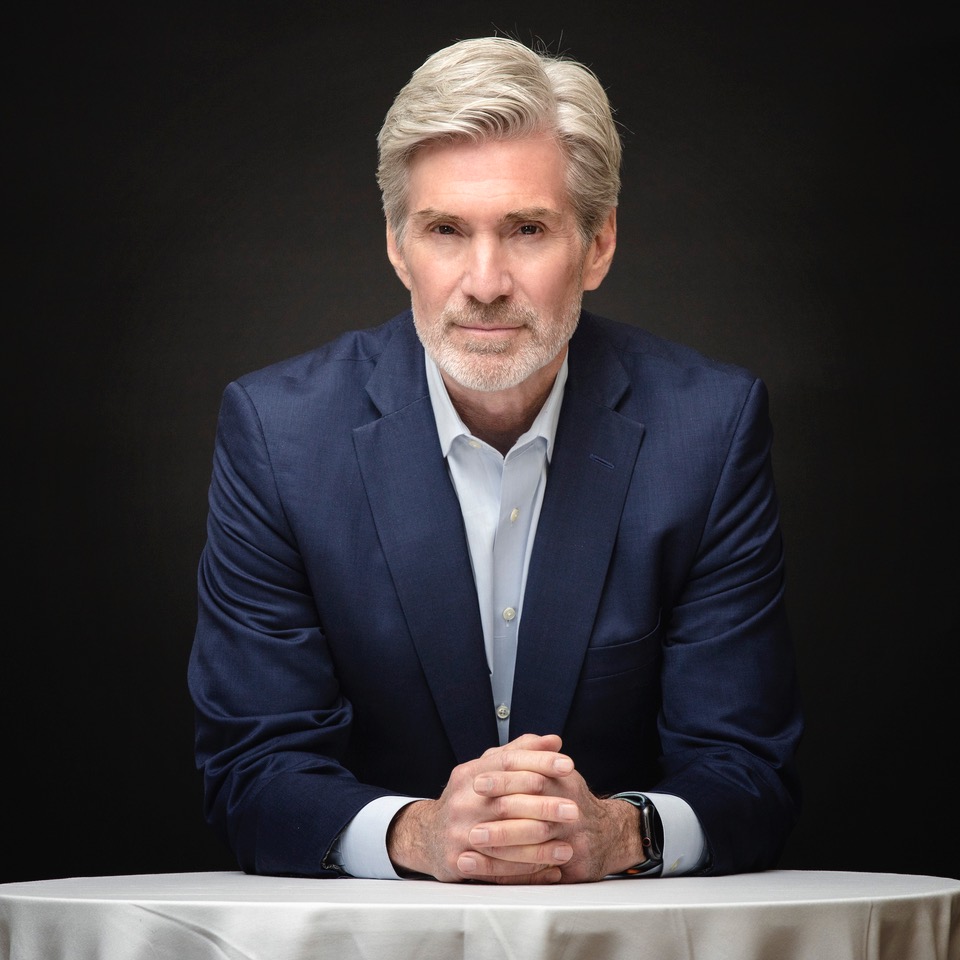
Todd Langevin led the internal venturing team inside Medtronic that pitched, developed and launched DBS, which is now an $800M business worldwide
#46: Todd Langevin – Establishing Deep Brain Stimulation – the industry perspective
So far, in the podcast, I have been interviewing key opinion leaders from academia and clinical practice, and sometimes individual patients that graciously shared their insights after undergoing DBS. However, beyond patients and clinicians, there is a third component necessary for DBS to be successful, which are our partners in the industry. Without great industry leadership, it is hard if impossible to translate scientific findings into clinical practice. For instance, when the Grenoble team developed deep brain stimulation back in the 80ies and 90ies, they needed a strong industry partner to bring their breakthrough therapy into clinical practice. In some of the upcoming episodes including the present one, I will interview executives from the device industry.
Who better to start this journey with than Todd Langevin, who has been a key figure in the field of DBS and neuromodulation on the industry side. Following the success of Benabid’s team in Grenoble, inside Medtronic, Todd led the internal venturing team that pitched, developed and launched DBS, which is now an $800M business worldwide. So – in a sense – we may owe it to Todd’s team similarly as much as to the scientific and clinical team of investigators in Grenoble that DBS has become a therapy that is being applied, world-wide. During his 20 years at Medtronic, Todd grew the DBS business to a $350 million unit revenue. After a brief hiatus in the cardiac world, he moved back into the field of DBS to lead the startup Functional Neuromodulation as CEO, which aims at establishing DBS to the fornix as a treatment for Alzheimer’s Disease. Indeed, under Todd’s leadership, the company achieved a CE mark for the treatment in Europe. Finally, in 2021, Todd moved to Biotronik, where he currently is the President of the Neuromodulation Business.
Todd Langevin 00:00And then the question was how as a company do we take this forward? How do we establish this as a potential opportunity for the company? And so we had to convince the company that this was an important opportunity. So obviously we met with Ben, met with the research team in Europe, and we had to pitch internally to the executive committee of Medtronic that we wanted to spend time and resources on this project. And what made it very easy, though, was just the visual nature of the outcome. You could show a picture and then say this is what's possible. Welcome to StudioBot. Stimulating Brains. 01:05Hello and welcome to Stimulating Brains. So far in the podcast I have been interviewing key opinion leaders from academia and clinical practice,
Andreas Horn and sometimes individual patients that graciously share their experiences. And I have heard some key opinions that I have heard their insights after undergoing DBS surgery. However, beyond patients and clinicians, there is a third component necessary for success of DBS, which are, of course, our partners in the industry. Without great industry leadership, it is hard, if impossible, to translate scientific findings into clinical practice. For instance, when the Grenoble team developed deep brain stimulation back in the 80s and 90s, they needed a strong industry partner to bring their breakthrough therapy into clinical practice. So in some of the other projects, I have heard some key opinions that I have heard in the past. upcoming episodes, including the present one, I will interview executives from the device industry. Who better to start this journey with than Todd Langevin, who has been a key figure in the field of DBS and neuromodulation on the industry side for decades. Following the success of 02:02Benebit's team in Grenoble inside Medtronic, Todd led the internal venturing team that pitched, developed and launched DBS, which is now an 800 million business worldwide. So in a sense, we may owe it to Todd's team similarly as much as to the scientific team in Grenoble, that DBS has become a therapy that is being applied worldwide. During his 20 years at Medtronic, he grew the DBS business to a 350 million unit revenue. After a brief hiatus in the cardiac world, he moved back to DBS to lead the startup Functional Neuromodulation as CEO, which aims at establishing DBS to the Fornix as a treatment for Alzheimer's disease. Following the breakthrough success of DBS, he was able to start a new business called Medtronic, which is a business made by the Lozano team in Toronto. Indeed, under Todd's leadership, the company achieved the CE mark for the treatment in Europe. Finally, in 2021, Todd moved to Biotronic, where he currently is the president of the neuromodulation business. I very much hope you enjoy this conversation as 03:04much as I had, and also that you will enjoy the decision to talk to industry folks a bit more on this podcast. Obviously, I will continue talking to scientists and clinical researchers, as well as hopefully patients as well. Thank you so much for tuning in, Stimulating Brains. Yeah, so thank you so much, Todd, for agreeing to do this interview with me. I'm super excited. It's one in a, let's say, new angle of also talking to more folks in industry and in the DBS field, just like you. So thank you so much, Todd. I talked to Binnish Chiran the other day from Abbott, and there are some more plans also
Todd Langevin planned from other industry leaders. And I will have already introduced you a bit formally by now, so we can jump into the content directly. And as you know, I heard you have listened to the podcast 04:05before. To break the ice, I always ask about free time and hobbies. I know you're a busy person,
Andreas Horn but anything you do beyond working? Yeah, yeah. I've always liked to stay in shape and be active. So in the summers,
Todd Langevin I do a lot of mountain biking. And in Minnesota, there aren't any mountains, so I pretty much stay on the flats. But I do try to train for a bike race that's done in Wisconsin called the Shequamagon 40-mile bike race. And some years, I do the 40. Some years, I do the short one, depending on how much time I get on the bike. And I also, while I'm biking, I listen to podcasts. I listen to podcasts. I listen to podcasts. I listen to podcasts. I listen to podcasts. Oh, great. And I really got into your podcast last summer. And it's a great way to spend the time while you're pedaling around the lakes in Minneapolis listening to your podcast. I think you do a great 05:00job. And I love listening to the people you interview and hearing their perspective. And then skiing. Skiing in the winter as much as I can. I like to ski. And I like to read. I do a lot of, as much reading as I can. I'm a sucker for good book reviews. So if I see a good book review, I quickly order the book. And then I've got a pile of books on my desk or my bedside that I need to get to at some point. And I've got two grandkids. So I'm back into changing diapers. And we spend a lot of time with them, two years and four years. And they're just great little kids, Ella and Tally. That's great. We just have our, grandparents of our kids over and they are also back into changing diapers now. So I can relate to that. Fantastic. And since you mentioned mountain biking, I loosely remembered seeing an old article one day about Lothar Krinke when he was still at Medtronic, also doing a lot of biking. Did you ever get to bike with him at the time? seeing an old article one day about Lothar Krinke when he was still at Medtronic, 06:02also doing a lot of biking.
Andreas Horn Did you ever get to bike with him at the time?
Todd Langevin No, never biked with Lothar. I knew he did that, but I haven't right now. Got it.
Andreas Horn Okay, so in your career, a very interesting career you had. Who were key mentors or turning points that brought you to where you are now?
Todd Langevin I think probably the biggest event for me really, as you may hear in the conversation, my career hasn't really been planned out. I think I've taken advantage of opportunities and been in the right place at the right time and been lucky, frankly.
Andreas Horn And I was doing a biology degree at Minnesota, and I took an interesting class,
Todd Langevin which I thought would be fun to do. It was a chronobiology class there. And so I had to do a project for that chronobiology class. So I went over to Franz Hallberg's lab, who happened to be, 07:04he's known as the father of chronobiology, actually. He coined the word circadian. And just walked in there, and they let me see him.
Andreas Horn And he said, yeah, you can do a little project here for us.
Todd Langevin So it involved collecting rat urine for 24 hours with these rats and doing some urinary analysis on the circadian rhythmicity of some leucobacteria. And I was like, oh, my God, this is a lot of work. And I was like, oh, my God, this is a lot of work.
Andreas Horn And he said, yeah, you can do a little project here for us.
Todd Langevin And I was like, oh, my God, this is a lot of work.
Andreas Horn And he said, yeah, you can do a little project here for us.
Todd Langevin And I was like, oh, my God, this is a lot of work. And I really loved it. I loved being in the lab. I loved working there.
Andreas Horn He was an interesting guy.
Todd Langevin And he had people coming through his lab all the time from all over the world. And I asked him if I could continue to work there and just do animal experiments, taking care of the animals, learn how to do data analysis. And I met a guy named Bill Rushevsky, who was an oncologist there who had showed up at Hallberg's lab. And he was really interested in chronobiology and the applications of biological rhythms to cancer chemotherapy. 08:02So when I graduated, Bill, he got an NIH grant to study this in ovarian and bladder cancer and cysteamine, dichloroplatinum, and doxorubicin for treating those conditions. And he asked me if I would come and work at his lab when he got the grant. So I did that. And I was exposed to a tremendous amount of, I don't know, things there, animal experiments, study design, writing paper, abstracts, staying up 24 hours at a time doing these experiments in the lab. And it was a great experience. So he gave me a lot of opportunity and responsibility there. And I'd say that was a pretty important turning point for me because we were using, eventually we started using Medtronic Sacramed pumps for the study. Huh. And, and we, I got to know Medtronic people. I got to go in the OR to support the pump implants. 09:01And that's how I got into Medtronic through that experience. So, so it's just all from taking a biology class, going to Hallberg's lab, meeting Rushevsky, getting into Medtronic. It's all, it just happened.
Andreas Horn Yeah. Yeah. Yeah. Interesting. Was Medtronic a very different company at the time compared to now? Was it smaller?
Todd Langevin I mean, sure, it was probably a bit smaller,
Andreas Horn but you know, what do you say?
Todd Langevin So at that time it was, it was purely a cardiovascular company and they started this venture using technology that they had, you know, in-house to apply to, to this pump. So they wanted to develop the pump for an artificial pancreas. That didn't work out so well. It was too difficult at the time. And they expanded the application to, to, to cancer chemotherapy, intra-arterial infusion of a drug called FUDR at the time. And, um, it was sort of, it was sort of a venture within the company they were funding. So, uh, that's, that's, that's how the pump was used. 10:01That's, that was the first approval for the SyncreMed pump actually. And so the company then was like $800 million in revenue, uh, since the acquisition of Covidian, it's, uh, you know, probably 30 plus billion now. Wow. So it was a pretty small, pretty small company when I first joined there.
Andreas Horn Fantastic.
Todd Langevin And,
Andreas Horn and so you spent most of your career in industry and we'll get to that.
Todd Langevin But looking back now, at the time in academia,
Andreas Horn how do you, how do you see it now? Was it the wild west? Was it fun?
Todd Langevin Was it, I dunno, um,
Andreas Horn how would you rate it now?
Todd Langevin In,
Andreas Horn in academia or industry at that time?
Todd Langevin No, no academia at the time your, your time went in the lab. So, um, as, as I said, it was a tremendous experience for me because I got exposed to, so, you know, top notch scientists and clinicians at the university of Minnesota, you know, names, you know, John deGeneres, around that time he was doing the first transplants. Um, just people like that who you run, you, you, 11:00you come across and cross paths with, and I got, you know, we, we had an NIH grant, so that was, so some significant funding was, was, was, um,
Andreas Horn available to us to do quite a few interesting things.
Todd Langevin And a lot of students would come through the lab as well and, and, and visiting, you know, professors from other parts of the world. So I really got exposed to the, sort of the international nature of things, what it's like to write papers and publish, the demands associated with that. And also the demands of keeping a lab going. And, you know, I didn't have those personally, but I, you know, I knew that the pressure was there to keep the funding coming in, pay people what's on the horizon, keep writing grants. So it's, uh, you know, it was, it was a great learning experience for me to get, to get exposed to just the process of what goes on in academia. And also the translational science of taking things from the lab, you know, to the clinic and ultimately, ultimately to, uh, to a commercial application, 12:00which was, uh, you know, couldn't have been a better training ground.
Andreas Horn Fantastic.
Todd Langevin So Alim Louie Benabit, as we know, published the first modern day case series of thalamic DBS for Parkinson's in 1987.
Andreas Horn And that's the exact same year that you moved to Medtronic. Is that a coincidence or probably still a coincidence at that time?
Todd Langevin At that time, it was a total coincidence. Uh, just so happened.
Andreas Horn Yeah,
Todd Langevin it was the same year, but, but at that time I didn't know anything about what Ben was doing when I, when I joined Medtronic, but I learned very quickly once, once I got there. But so,
Andreas Horn so exactly that,
Todd Langevin that period then how, because you led the internal, um, venturing team that pitched and developed and then launched DBS, um, at Medtronic, um, which is now at least an 80, 800 million, um, dollar business still quoting from your CV. Maybe it's even more by now. Um, so, so you were at, as you said, the right time at the right place,
Andreas Horn but how did it emerge?
Todd Langevin Like how did, uh, 13:00Ben approach Medtronic or you guys approach him or how,
Andreas Horn how did it come together and how, how then did you get involved into DBS? Yeah.
Todd Langevin So, uh, it's fun to reminisce about, about those days. And, you know, we had met, we had a, a European headquarters, uh, in, uh, in, in Paris and Brussels, but we had a research group in Maastricht in the Netherlands that was set, set up there. And, and Keith Mullet led that group and Franz Gehlen worked for, for, for Keith. And then we had a country, uh, organization, um, and the rep there, Daniel Pignot was really brought the, brought the opportunity through the European organization. And, um, Ben was interested in applying our technology to, uh, to, you know, to, to, to brain stimulation, uh, to, to brain stimulation. And, and he had done some groundbreaking, groundbreaking work, of course. 14:00And, and, um,
Andreas Horn and then the question was, how as a company, do we take this forward? How do we establish this as a potential opportunity for the company?
Todd Langevin And, um, so, so we, uh, we had to convince the company that this was an important opportunity. So obviously we met with Ben, met with the research team in, in Europe. And, um, we had a pitch internally, uh, to the executive committee of Medtronic that we wanted to, you know, to, to spend time and, and resources on this project. And, um, what made it very easy though was the, the, just the visual nature of the outcome. Sure.
Andreas Horn Right?
Todd Langevin You could show, you, you didn't have to, you didn't, you, you could show a picture and, and then say, this is, this is what's possible. And, um, and so one thing led to another and we were able to sort of develop that relationship and then support Ben's, Ben's work, um, uh, you know, to, to, to further develop the VIM application. And so that's how we got the attention of the company, but then we had to figure out how to transition his, 15:02his observations into a bigger study. And then ultimately, uh, he moved on also to STN and, you know, STN after that and then GPI and so on. So that's, that's kind of how it started. I got to give props to, uh, to the European group, uh, Keith, Keith and Franz for Galen for originally saying, Hey, this is something we should pay attention to. Great.
Andreas Horn Yeah.
Todd Langevin I met Franz Galen, um, a few times actually when it was, uh, when he was still around in, in Medtronic. He, he, and, um, he,
Andreas Horn he was a very interesting guy to talk to too.
Todd Langevin Um, so, so remind me at the time, I think Medtronic had a pain device,
Andreas Horn right?
Todd Langevin And that was for spinal cord stimulation and the max frequency was 130 Hertz,
Andreas Horn which is why we still use that to the state,
Todd Langevin I think. Um, and, and, and how, how big was the pain market or, or the, you know,
Andreas Horn how, how established had that been? How long had that been on the market? Do you remember?
Todd Langevin So the, 16:00so the, so the spinal cord stimulator was that Medtronic was selling at the time. Uh, so it was a spinal cord stimulator for chronic intractable pain. And, um, this was it. So Medtronic had been selling that for probably 10, 15 years by then. And it's still a pretty small market. It's grown tremendously to this day, but we had to, we had to modify the, the device. It was called ITREL2 to, uh, to be suitable for, for the pain application, which wasn't a huge, huge transformation of that technology. We had to develop a DBS lead because the only other lead that we had was a lead for pain, which was a fairly brutal way to, to, to, to, it had a, it had a, um, a ring at the end that was literally pushed down with a cannula to the PVG or PAG to treat pain. But that wasn't suitable for the pain. So we had to, we had to, we had to, we had to, we had to, we had to, we had to, we had to, we had to, we had to, we had to, we had to, we had to, we had to, we had to, we had to, we had to, we had to, we had to, we had to, we had to, we had to, 17:00we had to, we had to, we had to, we had to, we had to, we had to, we had to, we had to, we had to, we had to, we had to, we had to, we had to, we had to, we had to, we had to, we had to, we had to, I heard that somewhere. Oh, that could very well be. It was a 3380 for sure.
Andreas Horn And when I first learned how that was actually put in place, it was kind of a brutal way to approach it. But I guess that's how it was done in the early days, right? Yeah. Okay, got it. And so how closely did you interact with the Grenoble team at the time? Were you in France a lot? Yeah, very closely. So
Todd Langevin visited Ben quite a few times during that time. I was still based in the US. And so we got to working on that project. And I led the DBS, we call the DBS Venture Team then. 18:02And so we assembled a few people from different functional areas to work on this. And the biggest
Andreas Horn task at hand right then was to get the clinical work done. So yeah, I spent a lot of time with
Todd Langevin Ben. We'd visit.
Andreas Horn Yeah.
Todd Langevin And then we'd go to the Grenoble quite often. I know he had a favorite restaurant that he'd always go to called the Aubert Napoléon, I believe. And sometimes I think they'd even open it up for him on Mondays when they were supposed to be closed. So we got the restaurant all to ourselves. And so it was a very interesting time. And I think that Abdel Benazus would be coming through there. And I think Patricia Limousin was working there at the time. Pierre Polak. Yeah. And Pierre Polak. Yeah. And Pierre Polak. And Pierre Polak. Yeah. And Pierre Polak. Yeah. And Pierre Polak. Yeah. Of course, Pierre Polak was part of that whole team. And it was an exciting time. We didn't really know where it was going to end up, of course. We just wanted to prove this out. And I think that the big... Ben, have you been in Ben's operating room? 19:06No, I have not. So he had an operating room set up, so... Because he used ventriculography, right, for targeting. targeting. And so he had an AP x-ray and a lateral x-ray that he would use and it was right above the operating tables to adjust for parallax. So he used this sort of, I guess, an older technique at that time to do coordinate planning and he did careful work in the OR. It took a very long time. He was collecting, you know, collecting microelectrode information a millimeter at a time from five electrodes. And he was doing that for, you know, a purpose because he knew he was going to have to go back and explain to everybody who was listening
Andreas Horn why the fundamentals of why this should work and the targeting around it. He did the same
Todd Langevin for SDN. And so that was really important because one of the questions we had as a company,
Andreas Horn 20:01is this going to translate to other neurosurgeons or is Ben the only one in the world that can do this?
Todd Langevin Sure. As it turns out, I mean, you know, it was translatable but it wasn't. VIM is one thing but STN and GPI may have been another thing.
Andreas Horn Yeah, that's exactly the thing that the question came to mind. I would say that, you know,
Todd Langevin to some degree maybe depression is currently at a similar stage where some people say it works in the hands of Helen Mayburg but will it scale to others. So how did you guys approach that or was there a, you know, at the time most people were I think ACPC based targeting, then the frames might have been different. So what were the next steps once let's say you had, and I think we're jumping a bit forward here,
Andreas Horn but you had FDA, like you see EMARC or FDA approval and others could test it or even before the approval in multi-site trials. How did you guys approach that? Did the company 21:05play a part in educating other surgeons or how did that pan out? Yeah.
Todd Langevin Well, I wish we could say we had a systematic approach. We did have an approach. And when we were starting the clinical work, we both, we had European sites and US sites and I'll expand on that if you want. But remember, you always have to write instructions for your technology when you do a clinical trial.
Andreas Horn Yeah.
Todd Langevin And we were in a meeting one time with our group and we had one of our executives say, no, no. We're not in the position to tell neurosurgeons how to do their job. They're neurosurgeons, they're trained, they're functional neurosurgeons, they know stereotaxy. The first line in our manual should say, you have now located the ventral intermediate nucleus. Got it. So leave all that part up front to the neurosurgeons. But there's a lot of variability 22:02from surgeon to surgeon. So luckily, you know, we had Ben in front of the, he would visit, he would visit sites and we do training.
Andreas Horn Yeah.
Todd Langevin lot from that experience and we wouldn't we wouldn't do that approach today got it yeah make so make sure yeah I think it was also yeah as you said a cardiac company at the time mainly right so so this was certainly a bold and risky move from you guys to venture that way and very fascinating. I heard via 23:06somebody I work closely with with Ben at the time that after the VIM there might have been also attempts to do pallidum but then that was not as convincing at the time and then they they moved back to this STN and then you know once the Bergman paper came out and I didn't been as whose work in humans and then I think only later recovered the GP took up the GPI again is that the same collection you had that they tried to do and then they moved back to the GPI first and after the VIM I don't know that they tried it first but I know Ben for sure was an STN advocate and then from from the pallidotomy work that had been done from you know Leighton and others that had resurrected sort of pallidotomy z' and then the extension of stimulation to this was so I guess also in part driven by DeLong's you know model of how how the circuitry should be 24:02working in a function you know you know functional state and in pathological state. So, and in fact, when we moved on from tremor to STN-GPI, we had a global meeting in Minneapolis and we brought in, I'm probably missing some of these names here, but Tony Lang, Andres Lozano, Warren Olanow, Jose Obeso, Mahlon was there, and we had some pretty serious people at that meeting. We talked about the study of doing STN versus GPI or combining them in the same study. And then comparing the two. That was still an open debate question. for the company at the time. We talked about the study of doing STN versus GPI or combining them in the same study and then comparing the two. So that was still an open debate question for the company at the time. As it turned out, I believe the study did do both at the same time.
Andreas Horn And we were able to evaluate, not perfectly, but the relative merits of the two in that setting. So it wasn't nailed down right at the beginning. 25:03So we did have to do some work on that.
Todd Langevin And so I think a big milestone was the New England Journal paper that was then published.
Andreas Horn And did that lead to FDA approval and CE mark? Is that correct? So I want to, yeah, I want to, can I just go back to one thing, though, about the IMVP?
Todd Langevin And so we were still working on the VM project. And I think Ben's paper was, he had an early paper and maybe Lance's, I think. That's it.
Andreas Horn And we were still trying to figure out how to move this therapy forward. So we had a USID, you know, for VIM and we got that approved. And it wasn't all that easy because FDA didn't get this at the time. And we had so many conversations with them. And then one time, after not the first one, the second or third one, one of the reviewers then asked, hey, is this whole thing implantable?
Todd Langevin 26:00So it just goes to show you their sense of knowledge of the DBS space. It wasn't very well established either. And then we had our first case in Florida, University of Tampa, University of Florida, Tampa. And Warren Alano was a neurologist. He wanted to be the first one to do a case. And it just so happened that the case was scheduled around a World Society of Stereotactic and Functional Surgery meeting in Ixtapa. So I was there. And then back. Ben was there. And Ben was presenting. And I asked him if he would leave the meeting and go support this case in Florida, which didn't seem far away from Mexico to Florida. But he said yes. And we left the meeting, got on a plane. And Don Smith was the neurosurgeon there. And Mr. Schaefer, George Schaefer, was the patient, a Parkinsonian tremor. And he had had it for quite some time, 10 years. 27:00And it was really an awesome experience. Because he went to dinner the night before. We talked about the case. Of course, Smith doesn't have ventriculography. So Ben's in a foreign environment, different operating room. And we're not really sure how this is going to go. Excuse me. And we're in the operating room. And you could see people from the outside looking in the round windows of operating rooms, peering in to see. Because this French surgeon was there doing a procedure. For the first patient in the U.S. trial.
Andreas Horn Yeah.
Todd Langevin And I don't know. Ben probably about fainted when Don Smith got out his millimeter ruler when he was advancing the lead ever so gently, pushing it, measuring, pushing it. Today we have microcontrollers that will advance it. But then he got to the spot that he thought was the right spot. We turned on the stimulator. 28:00And the tremor, as you know, you've seen it disappeared. It disappeared. And I'm not exaggerating, but there were tears in the operating room. I'm sure. From these nurses.
Andreas Horn And, you know, their operating room nurses are tough people, right?
Todd Langevin They've seen a lot. And then Mr. Schaefer asked for a pen. He had to wait. He asked for a pen.
Andreas Horn And somebody asked, why do you want a pen?
Todd Langevin And he said, because I want to sign my name. Wow. Wow. And it was his first time in like 10 years or something like that. So it was just a really compelling experience and outcome. And he had Parkinson's and tremors. So tremors is his worst symptom. And then it was a huge, huge success. And we didn't know because Ben was working with the newest. He had met the guy just the night before. And Don Smith did a great job and got the great outcome. And he, I think he was featured on the cover of the Andrew Porter somewhere in the Andrew Porter. 29:01He liked to make model airplanes. where he liked to make wooden model airplanes. He couldn't do that for years and years and years before the surgery. Just a truly gratifying experience. Oh, I'm sure. Thank you so much for sharing that. Yeah, so it is a miracle. It stays a miracle, right? Even veteran surgeons always tell me that it never grows old, right? So fantastic. and how was he as a person, how was the interaction like, and feel free to share more about the hands-on experience there. He's just a – I spent that experience, I spent a lot of time with him over the years as well on this project, and he's just a very gentle man, very – in every sense of the word, very careful scientist, 30:00really brilliant person too to talk to, full of ideas, well thought out positions, and I got to know his wife Yvette a little bit too during those experiences as well. And boy, he devoted his life to this, the hard work that he put in the OR, and I don't think he's – he would always say he hardly slept maybe two or three hours a night, and sometimes you could tell by talking to Ben because he would like almost fall asleep while you're having a conversation because maybe he slept two hours the night before. I don't know, but he's really, really very, very nice man,
Andreas Horn and just honored to get to spend time, a very easy person to talk to on a variety of topics as well. And the Ben Gunn, so his five electrodes, 31:00microelectrode system, that existed already at the time as you mentioned, right? So that was an innovation from before?
Todd Langevin You know, I think that when he was doing his microelectrode recording, I mean, he was doing that by, I'm pretty sure, pulling out one lead and reinserting it and then doing it over and over several times.
Andreas Horn Okay.
Todd Langevin Then to facilitate that, that's when the Ben – somebody – maybe it was Ventron. I think, manufactured the Ben Gunn. I'm not sure who named it. It was kindly named after, you know, an old 1800s Gatling gun, which kind of rotated and shot a lot of bullets all at once. So it reminded somebody of the Gatling gun, so I think somebody called it the Ben Gunn after that.
Andreas Horn Interesting. Okay.
Todd Langevin Great.
Andreas Horn And then how fast did things take off, and maybe what were the obstacles in bringing this to market?
Todd Langevin Well –
Andreas Horn How long did it take? 32:00How long did it take as well? You know, what was the time frame for these things? Yeah, we were able to assemble European and U.S. data support, the IDE application,
Todd Langevin and we went to the panel. We had to go to a panel meeting, so there had to be an FDA review panel that reviewed the data. Safety, of course, was really important, and as well as the efficacy. And, of course, a big question came up. Well, you can't blind these patients. True.
Andreas Horn Right? Because they – how do you blind somebody when their tremor goes away when you turn it off?
Todd Langevin So they kind of know.
Andreas Horn Yeah. And so that kind of – that question came up, and somebody at the panel, right, you know, said, look, you know, if something's so efficacious as to break the blind, what are you going to do?
Todd Langevin So we got over that hump, and then that ultimately got approval. We got first approval in Europe, so we launched that in Europe first, and then we got approval in the U.S.
Andreas Horn 33:03But I can tell you not everybody was even convinced at that point. I had neurologists say, why would I do that?
Todd Langevin Sure. I'm not really sure it's appropriate. It's brain surgery. It's deep brain surgery. So maybe we shouldn't have called it deep brain stimulation. It should have been something else, but that's not going to go away. And neurologists are careful physicians, and they make – they make sure that they're doing the right thing. They manage medications well. So not everybody's on board with that. So we really had to – and to this day, I think some of those issues still exist to convince people.
Andreas Horn Yeah.
Todd Langevin When is the right time and whether it's the right time to treat these patients. So – It's still very underutilized. It totally is. I totally agree.
Andreas Horn Yeah. Okay. Yeah, it is.
Todd Langevin It is. And I think that, you know, tremor is huge. Five. Five million people with just essential tremor in the U.S. maybe more. 34:02And Parkinsonian tremor wasn't – it wasn't in and of itself just that single symptom. It wasn't a huge market opportunity. So that has its place and certainly was important. I think the bigger opportunity then was just straight treating the PD. So we quickly transitioned based on Ben's work again. It took one of Ben's videos to the executive committee and said, here's the extension of this. Of this therapy in a Parkinsonian patient who was, you know, couldn't move basically until you turned the device on and he was doing all the things. And again, it's an easy – it's easy to convince an executive team if you got the videos. Sure.
Andreas Horn Yeah.
Todd Langevin That worked out well. You mentioned the naming and I seem to recall that that was naming from Medtronic. It was not from the Grenoble team.
Andreas Horn So do you remember who gave – did you remember who gave the brain stimulation its name? 35:00Was it you or somebody in the team?
Todd Langevin No. No. It wasn't. It was always – I think it's a legacy from – so most of the brain stimulation was done for pain, right? Earlier before that. That's what most of the experience was. And it probably came from the neurosurgical community actually at the time. So we were sort of stuck with it. And we didn't think too much about it until we got some – you know, some of the marketing people got involved. And, you know, they realized, you know, that maybe deep brain –
Andreas Horn Yeah.
Todd Langevin That deep brain is going to scare some patients off. So I think we even tried to call it a brain pacemaker.
Andreas Horn Okay.
Todd Langevin Which really didn't stick because the field just knew it as DBS. It's always going to be DBS and it's not going to change. Got it. It's interesting because in – I think in the last think tank, Mike Oken always has the DBS think tank every year. And I think they even discussed this, that rebranding it to what you just said, pacemaker, might be better. for the same reasons. 36:01I mean, I don't even think, you know, to me, deep is a nice thing, but you're probably right in terms of surgery can be scary. And then I do recall, so I think, you know, in electrical simulation before the modern times, they, I think, often called it ESB,
Andreas Horn so electrical simulation of the brain. And then I, at least I seem to recall that Mahwan Harris, who's, you know, very much into the history of these things, he dug up some sort of, when was it used the first time?
Todd Langevin And I think he attributed it to some Medtronic marketing, but maybe that's wrong. I don't know. So your recollection is that it was already in the surgical community and then you start with it.
Andreas Horn Yeah, yeah, I just, yeah.
Todd Langevin Got it, got it.
Andreas Horn Okay.
Todd Langevin And so obstacles and challenges, were there any setbacks that you,
Andreas Horn you could recall or investment problems or whatever?
Todd Langevin 37:01Well, I think that, I think that I don't recall any particular, I'm sure we had challenges with enrollment. Enrollment in any clinical trials always, is always slower than you had hoped. And sites are ambitious about what they think they can do, what they can't do. But I don't, I'm sure it was slower than we'd hoped. I'm certain of that. The other thing, which is, which I think is instructive from this experience, and I talked a couple of times about the videos. I was convinced that show anybody the video,
Andreas Horn how can you argue with it?
Todd Langevin Even not just internally, but out the outside world. Sure. You can show, you can show a spiral diagram, before and after. And it's, it's, it's obvious. Obviously.
Andreas Horn 38:00Yeah. But we were not, and, and, and, you know, we're trying to grow a business, right?
Todd Langevin You know, the medical device business, we have to work with clinicians and scientists to, to move these things forward, but it's a commercial enterprise. In the end, you have to bring it to patients. Otherwise it's not even worth, you know, almost not worth doing. I wouldn't say it's not worth, but, but it's, it's not worth it. I mean, we're not, we just weren't sitting there and taking, taking calls from neurosurgeons around the world.
Andreas Horn Can I get a device?
Todd Langevin It takes a lot of work now. Once the, once the therapy is approved, there's a core people that know a lot about it who participate in the clinical trial, but, but the run of the mill neurologist, neurosurgeon in private practice, maybe they read the literature, maybe they don't, but they don't know. They don't know about this probably.
Andreas Horn Yeah.
Todd Langevin So you do have to get the word out. That's a, that's a big, that's a big lift from a, from a company to educate, train the neurosurgeons, 39:03educate on the right patients, getting reimbursement codes for all of this, all that takes a lot of time. And that's, it wasn't from day one that, that we had a successful commercial therapy. It took several years of building it and the capabilities to support the implants in the OR using the technology, all that stuff.
Andreas Horn Yeah. Yeah.
Todd Langevin had to be developed over time. And so, hey, that was a big, big challenge, and it's the same challenge for any new therapy. It could be the most effective therapy in the world. It does not mean there's not still a lot more work to do after that. There is still a lot more work after that. It doesn't mean the work is done. there's still a lot more work to do after that.
Andreas Horn Makes sense. Yeah. PR, getting the word out, educating, I can imagine. Yeah.
Todd Langevin So, so the army of sales reps that, that Medtronic had that were probably usually talking to the cardiologists all of a sudden also had to talk to neurosurgeons and neurologists and so on.
Andreas Horn 40:01That makes sense. And, and it was like, you grew that business, right?
Todd Langevin So I never worked in industry. I picture that a bit as kind of a startup within Medtronic.
Andreas Horn Is that a good description of that?
Todd Langevin That entity of neuromodulation. Okay.
Andreas Horn Yeah, it was a brand new. So, so the business, the neuro business,
Todd Langevin neuromodulation business at Medtronic consisted of spinal cord stimulation at the time. So that, that was a, that was a homegrown new indication. And that's a very effective treatment. And it's evolved over the years, but Medtronic was the, was the originator of that therapy. And then we took that same technology and extended, you know, in an opportunistic way, serendipity, you know, without Ben, we wouldn't probably have, you know, done that. And then we, then we created a new business out of that work that he did along with the, you know, the other clinicians who were involved and, and patients, by the way, who, you know, Mr. Schaefer was the first guy in the U S that's agreed to sign. You got to give the patient, 41:01the patients a huge amount of credit for their courage to be willing to, to put their trust in the clinicians and the company that this is the right, right thing for them to do. We can't lose, you know, we can't lose sight of that. But, but along, along the line, then we were able to the, the business that I had also was an implantable pump for spasticity, intrathecal baclofen. So that was part of the, part of the business that I managed, which is also, you know, homegrown, which is a very, very successful business as well within the company. So Medtronic was really good at that in those days. And year over year, we grew, we're able to treat more patients. In turn, we're able to hire more salespeople, hire more technologists who could go in and support the OR. So, so that's, that's how you grow that, that kind of business year over year, but it all has to go back to the safety and efficacy of the technology. Number one. Sure. And then you can extend that over time. 42:00So I'm wondering, I know you've been working on this for a long time,
Andreas Horn but I'm wondering if you have any clinical partners, maybe in the US or Europe that stuck out that we were really instrumental of making it a success or being good partners in developing this?
Todd Langevin Yeah, yeah, absolutely. You know, I'll go back and, and I think that, you know, when we were, we're launching and getting these things clinically validated in the marketplace, you know, I'll go back again, Warren Alano was really instrumental. Hmm. I think Joe Jankovic, the Emory group, Jerry Vitek, the surgeons there in Maryland, DeLong, the Gainesville group, the Gainesville group. Yeah, Mahlon DeLong was really helpful, and then Kelly Foote, I think, Kelly even went and trained in Grenoble. Quite a few neurosurgeons did go through there, so he trained with both Ben and Mahlon, I think. And, yeah, Mahlon mentioned that he would love for them to get the Nobel Prize. Yeah, that'd be so great. Yeah, yeah. And then of course Andres Lozano was on this in Toronto, and Tony Lang Mahlon, I think, and yeah, mentioned that he would love for them to get the Nobel Prize. 43:04And that was awesome. That was so great. Yeah, yeah. And then of course, Andres Lozano was on this in Toronto and Tony Lang were really very, very helpful with the company, helping us plan ahead and get things right for the clinicians. And Jose Obeso was involved early on. He was really instrumental. He had done a lot of great basic research and clinical research to support the mechanism of action. So yeah, we had a really awesome set of advisors and collaborators, and I just want to emphasize that companies don't do these things on their own it's a really collaborative effort between clinician scientists the company can bring resources to bear we couldn't it's only one part one small part of it yeah not small part I think but yeah certainly yeah yeah yeah ! and then you you you did also launch the kinetra at Medtronic which was the 44:05first dual channel DBS system can you maybe in brief walk us through the I'm sure a long winding process of getting such a new medical device to market yeah I think the so so we before that they're already in planning two devices right one on each side yeah and it was it was acceptable but of course let's let's have let's make this an easier process for a patient. So we were able to, we had a parallel initiative in the spinal cord stimulation business with a device called Synergy, which is the same thing as Connetra, except that Connetra was modified specifically for DBS slightly. And to get the next generation device approved is much easier than the first generation. Sure. So for the single channel devices, again, we had to go through the whole FDA process. 45:02The review of the data was difficult, by FDA, was a difficult process.
Andreas Horn And we had to go to panel once again to explain to the panel why this is a safe and effective treatment,
Todd Langevin acceptable risk benefit profile. We knew which patients it was going to be used for. The first labing was only... We knew for advanced, you know, Parkinson's patients, but FDA was very specific and deliberate about that. So that part of it was the heavy lift there. Getting Connetra approved was more straightforward because the path had already been, you know, had been laid.
Andreas Horn And I don't know if you ever, have you ever seen the Connetra device, though?
Todd Langevin It's been a while. I don't even know. I'm not sure. It's a pretty big device.
Andreas Horn Yeah.
Todd Langevin And the concerns were, oh, this is a good device. It's too big. We can't, nobody's going to want to implant this.
Andreas Horn 46:01But it's the only thing we could do at the time. And we had the analogy would be, you know, a secret pump was pretty big, too, and people implanted that. So that was the experience there. And, of course, getting smaller devices was always on the development plan for all of our technology.
Todd Langevin And I remember back then, so I think that's not being done much anymore, that some of the devices,
Andreas Horn we're also implanted in the abdomen with an extension down, right?
Todd Langevin So not to be in the chest as usual, but I guess with the big form factor, that was probably more tolerable. Maybe some people did that. I don't know. I don't recall anybody actually doing that as a standard approach. Pumps were normally in the abdomen, too, of course. Although some synchromed pumps for intravenous infusion were implanted in subclavicular region as well.
Andreas Horn Yeah. Yeah.
Todd Langevin That wasn't uncommon out of that size of device in that space. 47:01No, it was certainly not the standard approach. But I do remember individual patients at Charity where we did that. And I think that was post-Kinetra already. Oh, okay.
Andreas Horn Okay. Interesting.
Todd Langevin And then in 2004, you became vice president and general manager of the global movement disorder business at Medtronic and grew the business, according to your CV, from 230 to 350 million in three years. You also led the acquisition and integration of Image Guided Neurologics, who developed the NextFrame and I think the Stealth Station.
Andreas Horn Can you share some insights about the importance of maybe this acquisition also in general, you know, about startup acquisitions and how valuable that can be? Yeah.
Todd Langevin So companies like Medtronic would make acquisitions when it's fast. And so we're going to be able to make acquisitions faster to make that acquisition, then develop it internally faster and more cost effective to do that. 48:04Or when we don't have the technology ourselves or the wherewithal to even do that. And so NextFrame fit into the latter in that we were wrestling with STN procedures took a long time. And so time is money in the OR. And neurosurgeons only have so much OR. And so we were trying to think of ways to streamline the procedure to make it more commercially viable for hospitals and neurosurgeons in terms of time. And we thought NextFrame might be a good way to do that. You didn't have to do the stereotactic frame. Frames were thought to be uncomfortable for patients. And I think they are. And we thought NextFrame would be a great way to sort of advance what we call procedure solutions. Put everything in a package so we can make the procedure streamlined. 49:00Well, changing the practice of medicine is very, very difficult. It takes a long time. People do what they're trained to do in fellowship programs, and that's how they do it.
Andreas Horn Yeah.
Todd Langevin And so the acquisition was not really successful in advancing the field from a procedure standpoint. I have to say that. Although we did, with that acquisition, get the StimLock. Because they had a really nice burr, hole, ring, and cap situation. Which was, that's really what we got out of that, to be honest with you. We didn't get the other part of what we thought we were going to get. So, oops. And StelStation was, I wasn't part of that, but we did have a sister acquisition in Colorado that we bought that ultimately was going to be great for bringing to bear on the procedure itself and planning and improving accuracy, improving timing. So our goal was to try to combine all those things into one package. And with the people who are experts, like people like Franz Kehlen. 50:03We wanted to clone people like Franz Kehlen who were neurophysiologists who could go in the OR and provide value to the neurosurgeons instead of just opening up packets and handing it to them. So people and technology was part of that process. And I think, by and large, that's proven out to be successful. I know Boston has Brain Lab, and they've got great technology, great people. They've got a lot of people, too, doing similar things. So we're trying to make the business of applying DBS just more straightforward and more efficient. Sounds good. Cool.
Andreas Horn Fantastic.
Todd Langevin So maybe to wrap up that part of your career, you said it was a small part being on the company side, but I think it was also a really big part to bring this into market. Right.
Andreas Horn So you really led that effort. So when you see a patient now these days with STN DBS or even maybe in friends and family, you know somebody that had the surgery and see the dramatic effects it has. 51:09How is that feeling?
Todd Langevin I asked the same question to Pierre Polak and Tagay Bergman who were in the podcast, but you really made that happen together with others, of course.
Andreas Horn I'm sure it's a great feeling, but can you share that? Yeah.
Todd Langevin It's a great feeling. It's a great feeling.
Andreas Horn Yeah.
Todd Langevin It's really gratifying.
Andreas Horn And at the time, you're not really sure what's going to happen with these things. And in a career, maybe you get an opportunity like this maybe once, maybe never, right?
Todd Langevin A lot of things, I was just fortunate to be given the responsibility to take this on. And I didn't know where I was going to go necessarily. I didn't. Some days I didn't know what I was doing, honestly. Sure. 52:00We'd have setbacks. But we had a really good team to do this. And I just think one thing about being with Medtronic, they did give me a lot of opportunity to succeed or fail. And I thank the company for doing that. Scott Ward was my boss at the time. He assigned me to this project and he was a great mentor there.
Andreas Horn Yeah. Yeah. And one saying that I... Success has many fathers, right?
Todd Langevin A lot of people have to work together and to make contributions to make this happen.
Andreas Horn And so, yeah, I'm not the only one.
Todd Langevin I had a ringside seat though, which was great.
Andreas Horn Fantastic. Yeah.
Todd Langevin And then after Medtronic in 2007, you went into cardiology at CVRX. I won't go too much into detail unless you want to share from that.
Andreas Horn Yeah.
Todd Langevin 53:20upon functional neuromodulation as sort of maybe a recreation of that potentially. And Andres Lozano had some great, some very compelling data from foreign stimulation. And I had known Andres, of course, for a long time. And he and Dan O'Connell started a company to advance this and which is really these days, probably the most efficient way to do that to raise
Andreas Horn money to do the next stage of clinical development. And so I said, Yeah, okay, I'd love to be
Todd Langevin a part of that. And, and we built upon his five or six patient pilot study, and generated some funding. Medtronic was an investor at the time and venture capital Genesis Capital in Toronto invested in that. And so we, we got FDA to approve a feasibility study of 54:0740 plus patients. And we chose we went to sort of the same sites we had worked with in the past or devious experience. And it was for late, it was for all sorts of reasons. Alzheimer's disease, you know, basically mild AD. And again, patients, mild ad. And again, patients, you know, signed up for the study of put their their faith and trust in the company and the technology and we were able to complete a 42 patients study and showed a sign that we could we could we could slow the progression of the disease.
Andreas Horn If you're looking at disease progression, how do you design a study to demonstrate that?
Todd Langevin You have to have a pretty long control period, which we set as 12 months. So everybody got implanted and half the patients were turned on, half the patients were kept off for 12 months. 55:05And we didn't know if anybody would sign up for that. But lo and behold, again, patients do, you know, when people sign up for clinical studies, they're doing it for a reason as well, to advance the science as well as hopefully benefit. And that's pretty amazing. And so we did get an effect. We had to go down to a subgroup to find the effect, but we were able to generate an effect on the standard tools to measure cognition that are used in Alzheimer's disease. We had great results in the PET scans that correlated with the clinical outcomes. And we were able to translate that into CMARC, actually, for Boston Scientific's device eventually, even though we used Medtronic early on. And then, so that was a great study that we did. And I think that the next phase, we were able then to raise additional funds through Boston and the venture firm to expand that into a pivotal trial, which the company is in the middle of that pivotal trial right now. 56:06I think there's 70 or 80. There's 70 or 80 patients in. And it just, it takes a long time to advance these things, though.
Andreas Horn You know, when I left, I turned around and, yeah, it had been nine or 10 years to get this done.
Todd Langevin And there was an interlude between the first study and the second study that I had a time there. But it's not for the faint of heart, these startups. I can imagine, yeah. And I think it's even, in a way, a little known fact that there is CE-MARC for pharmaceuticals.
Andreas Horn And there's a lot of research going on about it. And there's a lot of research going on about it. And there's a lot of research going on about it. What does that mean? Do you know? Like, could people, you know, if people could actually go to their DBS surgeons and get it and even get reimbursed? Or can you talk about that even?
Todd Langevin Only answer if this is easy to talk about. But I always wondered that. 57:01So we, the medical device regulations were just about. We're in the process of changing a little bit, a lot, in Europe. And so we went back and forth with the notified body who gives the approvals. It was a German notified body. And we got the approval. And then it was for a specific device at the time. We were working with Boston Scientific. But the data we had was on Medtronic technology. And so we actually were able to convince the TUV that Boston. The same as Medtronic. So they said, OK. We wouldn't have done that without Boston support. So because they're the commercial entity, of course, selling this. I think what Boston, even though they have the C mark and it is in the labeling, at least maybe they removed it lately. But it was actually an indicated use for the technology. I think what Boston felt was its approval is one thing. 58:05Coverage. Reimbursement. Acceptance and adoption is another. So even though the data was compelling enough to get approval, I think Boston felt that we needed more. And so we need that randomized control trial to go out and broaden the application. I think that was their decision making process, which makes total sense.
Andreas Horn Yeah. Yeah.
Todd Langevin Got it.
Andreas Horn And then you left to buy a Biotronic in 2021. Was it because you were recruited away? Or did you? Did you want to leave? Or was there a good reason to leave the startup world again?
Todd Langevin No, I didn't want to leave. I loved working with Andres and the team there, Vince Owens and the clinical sites. They're all great. But you mentioned I looked back and I realized it had been 10 years.
Andreas Horn Yeah.
Todd Langevin So I got a call from the Biotronic people. 59:03And they were launching. You know, a new spinal cord stimulator into the marketplace for pain, chronic intractable pain. And just just for reference, that's about a $2 billion business in the US. So it's quite a lot bigger than the spinal cord than the DBS business.
Andreas Horn Yeah.
Todd Langevin However, the competition is fierce. It's Medtronic, Abbott, Boston Scientific. Navarro was a new player in the marketplace with a high frequency stimulation.
Andreas Horn So my first question to them is, does the world really need another spinal cord stimulator?
Todd Langevin Hmm. So I was a little bit more of a fan of the Biotronic. I was a little bit more of a fan of the Biotronic. I was a little bit more of a fan of the Biotronic. I was a little bit more of a fan of the Biotronic. But they had a very compelling proposition to bring some value to the marketplace. And I studied it and convinced myself that this was a very competitive product they were trying to bring forward.
Andreas Horn 01:00:00And I said, yeah, this would be great to be a part of this, even though we've got a huge...
Todd Langevin We're competing against a lot of companies. We're competing against a lot of companies.
Andreas Horn Fantastic companies and fantastic technology. So I decided to take the leap. And so just for your benefit as well, Biotronic is a cardio... You're German, so you may have heard of Biotronic, right? So they're based in Berlin. Do you know them?
Todd Langevin No, I don't. I had not, in fact.
Andreas Horn Yeah.
Todd Langevin Well, let me tell you about Biotronic. So they're a German-based, privately held company. So one, they're owned by an individual. The founder is Max Schalke. Max Schalke, who developed the company at the same time Earl Bakken was developing a U.S. pacemaker for the U.S. marketplace with Medtronic. So they were contemporaries. And he worked, very similar story to Earl's, he worked to develop a pacemaker for the German market in the early 60s. And they've grown tremendously over the years. They're a cardiovascular-based company worldwide. And the current owner, Max Jr., is a brilliant technologist. 01:01:06And really excited about neuromodulation. And using, just as Medtronic did, expanding the base technology to a new indication. So they worked for several years, made a commitment to the spinal stimulation space, and developed this SCS device. And so that's where we're competing. I'll tell you about the technology. Max went to a neuromodulation meeting in Barcelona, summer before last night. Showed him around, introduced him to different people.
Andreas Horn And at the end of the first day, I go, Max, what do you think?
Todd Langevin This is great.
Andreas Horn Isn't neuromodulation fantastic?
Todd Langevin We're really excited. He goes, yes, Todd. And now you must deliver. So now that's what I'm trying to do. I'm trying to deliver on the promises.
Andreas Horn 01:02:01Fantastic.
Todd Langevin And it is. So one question that. I should know more about, but don't. In Germany, my feeling always was that SCS was not such a big thing. Unfortunately, I think. Because it's great technology. But somehow, you know, I worked a bit in neurology. I rarely crossed paths with it.
Andreas Horn And then, you know, my grandfather had pain. And I really even didn't know who would even do that in Germany. Like, is that true? Or did I just not know my own country? So is it underutilized in comparison to the U.S. in Germany? Would you know?
Todd Langevin I would say so. So the $2 billion market in the U.S., that's 80% of the worldwide revenue.
Andreas Horn Interesting.
Todd Langevin Is in the U.S. Germany is a big market relative to the other countries in Europe. And Australia is also big. And I'm not sure these days. But in the U.S., the pain management subspecialty has really grown tremendously. 01:03:02So you have anesthesiologists doing pain management, physical medicine. Rehabilitation people and neurosurgeons all doing pain management. So they have a whole armamentarium of technologies and treatments and all they can provide specifically for pain relief. So it's really been great for patients with chronic intractable pain. And STS is one component of their armamentarium. And it's used for patients with pain of the trunk and limbs. And used in Europe a little bit for angina and PVD. Germany was a big PVD. Market for STS. But that's how it's typically utilized.
Andreas Horn Yeah. Makes sense.
Todd Langevin And just for the record, I think we do have good pain management in general in Germany. But just the STS component, I think not many surgeons do it. And then even not many centers offer it. It was my impression.
Andreas Horn And so that's a great opportunity to expand, especially working for a Berlin-based company. 01:04:02But you are in Minnesota, right? Yeah.
Todd Langevin You work remotely, I assume.
Andreas Horn Yeah.
Todd Langevin So the company's U.S. headquarters is based in Lake Oswego. So they also do manufacturing there as well as in Berlin. And so I go back and forth to Lake Oswego. And they have other subcomponents of the Biotronic family. So they do manufacturing for other kinds of businesses, even in the neuromodulation space. They do contract manufacturing.
Andreas Horn So they're an impressive company. And your current job description is president of the neuromodulation business at Biotronic. So how does your typical day look like? A lot of Zoom calls or a lot of travels? Or what do you typically do?
Todd Langevin It's probably hard to say. So we just launched in the U.S. marketplace in April. 01:05:04We got approval. March 31st.
Andreas Horn And so now we're trying to compete, as I mentioned, against these big companies as a sixth player in the marketplace. So every year we establish annual objectives. What do we want to accomplish this year? How do we advance our business?
Todd Langevin And so I use those objectives. And we also have a five-year strategy plan. But if we nail down what we want to get done this year, we've got a list of... 10 to 12 top things we want to accomplish as a business. So my goal is focusing on those every day to make sure we're executing on achieving those goals. As you can imagine, resources are not infinite. So even though we're a growing business, I say I always want more resources available. So I'm managing Upward within the organization. Try to convince Berlin that we're an outpost in the U.S. 01:06:03So you need an organization. I understand we need more resources. So I'm doing a lot of managing Upward. And then just day-to-day, we're solving problems. As we launch our technology, there are things that we're learning once we get in the marketplace that need to be addressed very quickly. And so we need to address those. Motivating team members and the entire organization. Because we're a... a new player within the Biotronic family. And frankly, the company's made commitments, sacrifices even, to support the neural business to get to where we are today. And so I just want to... you know, make sure the company who have made those sacrifices are aware that we're doing something important for the marketplace.
Andreas Horn Yeah.
Todd Langevin Since we mainly talk about DBS in the podcast,
Andreas Horn some of the listeners might not even know exactly know what SCS is.
Todd Langevin 01:07:03Could you maybe give a... quick summary and then also if you can talk or want to talk about it,
Andreas Horn what the benefits of the Biotronic product are compared to others? Yeah, I'd be happy to.
Todd Langevin So spinal cord stimulation is... is... is a way to treat patients who have failed pretty much most other interventions. And typically, the typical indication would be chronic back and limb pain often as a result of failed surgery in the back. Right. So you implant electrodes very similar to what we put in the brain, but they're placed epidurally, you know, between T7, T9 typically. Two of those and they get... they get attached again to a stimulator, much like a brain stimulator, DBS stimulator, with a battery electronics. And so it's all implanted and it sends electrical current to the... to the spinal cord 01:08:01from the epidural space. And it takes the pain essentially. And so that's... that's... that's what it is. And it's... it's a very effective treatment. Lots of clinical data support in this. It's been around since the, you know, since the 70s. And what... what Biotronic has done, which I think is really, really unique and could be extended to other areas of neuromodulation and DBS is that the device that we implant is a digital device in addition to being a device with a battery and sending electrical current to the body. It's... it's capable of collecting all sorts of information about how the patient's interacting with the device.
Andreas Horn Is the device on or off? How often has it been recharged? Are there any impedance issues with the electrode?
Todd Langevin So that information it's sent to the page via Bluetooth to the patient programmer and that data goes up to the cloud. So we were able to monitor interaction, 01:09:02how the device is performing, how the patient's interacting with the device. Daily. Whereas other Peer 2.4, the device has been implanted and then patients go away. They come back for follow-up, but they could go away and then go home and then not realize they've turned their device off. Or they, because they're not neuromodulation experts. And by the time they figure that out, they have to call the rep, the rep has to call the physician, it could be days, weeks, or even longer before they get a a... a visit schedule with a physician to address it and it could be a matter of just turning it back oh your device is off believe me that happens simple yeah we are able to also program the device from any via cellular from anywhere in the world well don't need wi-fi you can just program and these programming visits or are you are you don't have to do those um whereas before just to turn it back on you have to schedule a visit with a physician takes time clinic time all that stuff 01:10:03is a problem and so um and and once we so we can do that and we can also figure out if the device needs attention so sometimes the device does need attention you need to bring the patient back so we think we can help improve the outcomes by focusing on what's happened after the implant and this is built on a legacy of biotronic doing this for 20 years so cyber security technology capable of doing this is not trivial and so we're leveraging our experience in cardiac cardiac rhythm management we'll bring this what i think is a unique innovation to this to the
Andreas Horn neuromodulation um yield fantastic okay very very exciting thanks for that um and then any any key
Todd Langevin roadmaps on that that the company plans that you can already share of new things or um i i think you cannot even if you had plans to go into dbs you probably wouldn't be able to talk about it but 01:11:00anything in the scs market that you're excited about that's upcoming potentially so um so i'm i'm president of biotronics neuro business right now yeah we talked a lot about scs i'm not president of the scs business that's all that's our beachhead So we need to be successful there, but we definitely have plans to branch out and use our technology capabilities german quality engineering design and innovation to other areas of neuromodulation so we're scanning the horizon to see what we're the best at and we're going to best opportunities exist for Biotronik to invest in. And we're very bullish on neuro, as I am personally, so I'm trying to on a neuro as you i am personally so i'm trying to you know and i think our leader uh our owner max max is also we're just trying to figure out the right ways to allocate our resources
Andreas Horn fantastic and then on the podcast i mainly speak with scientists and clinicians and
Todd Langevin sometimes patients but we haven't heard many representatives from industry um as i mentioned but 01:12:03we both know that academics continuously wonder or may wonder whether a life in industry could be more rewarding for them could you steel man the case um to work for industry and compared compared to academia and of course also feel free to talk about downsides as well sure so let's see so when i when i worked at at the university of minnesota i was just a you know in you know 20s in my 20s yeah and i got i was in awe of the different you know the physicians there the scientists and i thought my my word all the smart people in the world are here in in this university on university settings and um and then i get you know sort of those industry people what do they really know and then i got exposed to the people in the tronic and well you know i guess i guess i'm wrong here because there's a lot of really smart people in the tronic to php scientists and i really changed i really changed my my 01:13:01thinking um and then and then i'll just extend that a little bit um then i thought the people everybody in the tronic are the smartest people and nobody else in the world and that boy was iran there you know so so um i you know i apologize to everybody who you know who i was thinking like about like that um but i think you know i think sometimes scientists probably maybe i'm wrong here but they're just a bunch of business people in the company they don't really know much about their their accountants and trying to make revenue um there are there are there are business people there for sure sure but they're you know they're they're they're very smart marketing people commercial people communication clinical people scientists engineers who are world class and so if you're if you're a scientist thinking you don't want to get into industry because it
Andreas Horn won't be that interesting maybe just a bunch of business people telling
Todd Langevin 01:14:03scientists what to do it's really not it's really not the case and and companies can bring well big companies like a mitronic or boston habit and others can bring large amounts of resources to bear on a project if they're committed to it and in the academic world you know um it's it's it's it's fighting all the time you know and people are really good at getting funding in academia and i and i you've been successful in in others but you know it's it's it's it's tough to do that i'm not saying it's easy to be a company but the resources if you if you're on a cool project committed by the company there's there's a lot there's a lot of opportunity and you have access then to world-class scientists technologists both within and outside the company that you continue to foster those relationships with so if you let if you left academia to go to industry you're not severing ties you're still got to work with all those colleagues 01:15:02of course to advance to advance you know because it's a collaborative effort so i would say that's that's the positive side and also for big companies if you if you choose to go to a startup um you're working on they get funded because they're working on groundbreaking things right of course any startup who raises money the the investment comes but it's it's unique it's groundbreaking could be a game changer for whatever field it's in There's large potential there. So that's a chance to be in a place where lightning might strike. And who knows, you could end up working on a DBS project that eventually goes out 01:16:00to the marketplace and treats thousands of patients. Yeah. Downside? Well, big companies, it's frustrating, but big companies need bureaucracy. Sometimes decisions are slow. I'm not saying they're always fast in academia, but if you're working in smaller groups, you may be able to make things happen quicker. Sometimes that's frustrating. Shifting priorities maybe can be frustrating. You know, we're making a big play here this year, but all of a sudden something happens and we've got to make shift priorities. And then for startups, funding can run out. You don't hit your milestones. If you realize you thought it was a great opportunity, it doesn't turn out to be a great one, you may end up running out of money.
Andreas Horn And then what do you do?
Todd Langevin I mean, it's nerve wracking for, it's not for the faint of heart. It's nerve wracking for the people trying to raise the money, who are managing people, people who want to get paid next month. And I've been there. We have enough money for the next few months, everybody. So especially COVID was difficult. 01:17:00So that's not. Highs are high, valleys are peaks and valleys. So that's not for the faint of heart, but you could be working on something groundbreaking if you do take that job.
Andreas Horn Yeah.
Todd Langevin Thanks a lot. That's very insightful. And just for the record, I really have deep respect towards people in the industry. I even think, you know, I could probably not do that because it, you know, academia feels a bit more like a safe harbor where it's more about, you know, the
Andreas Horn arts for the arts to some degree, right?
Todd Langevin You guys really have to, you know, the stuff you develop has to actually work.
Andreas Horn And of course, we try that in academia, too. But it's not that so much depends on it, right?
Todd Langevin It's more like a paper versus no. So I have deep respect. And I think developing, you know, a business like you did for Medtronic, but also now, you know, it's so fantastic. And I'm sure you have to be very smart to do that well. So, yeah. 01:18:00But. But. I get the general sense that maybe sometimes academia sits a bit on the high horse and thinks they're the smartest or so. I really don't think that's true. They have.
Andreas Horn Yeah.
Todd Langevin But but it was a great summary just to hear the pros and cons. Thank you for that.
Andreas Horn And then maybe to move on and also slowly wrap up already. What's your feeling toward the general state of investments in the field of DBS and neuromodulation? Do you think we live in bullish or bearish times?
Todd Langevin You already mentioned that you feel bullish.
Andreas Horn But. Maybe worldwide. Is there a lot of investment currently going on or is it scarce? What do you think?
Todd Langevin Yeah, I think I'm really I'm very bullish on it. And I go to a lot of the conferences, the neuromodulation conferences and even the pre-conference meetings to see what's new and in the marketplace, what's what's being invested in. And I think there's always investment available for great ideas. Although in 23, I think in 22 or 20, you might be down a little bit. 01:19:02But overall, venture investing in in medical technology in general. But I think in neuro, I read a report from one of the banks on this. Investing in the neuro and medical devices for neuro is is is pretty high. There's one point three billion dollars invested last year and 43 different deals. And that's just for perspective. That's higher than that's the highest versus imaging surgical opportunities. Cardiovascular ortho. So there's a lot of activity going on in the neuro space. It's not all DBS. Sure. Neuromodulation, peripheral nerve, vagus nerve stimulation. But I think it's a good time. I think it's a really good time to be in the neurosciences field because. There are just so many people sort of working on these on these problems and challenges, and the technology is sort of keeping up with the demands of the of the scientists.
Andreas Horn 01:20:01And clinicians like closed loop, closed loops, things are happening. So I'm very yeah, I'm very bullish, as you can you can tell. What do you think the next big breakthrough will be or is it around the corner? What could it be? These are always these these next breakthroughs take a long time to develop, right?
Todd Langevin And then there are suddenly a breakthrough. But I'm really excited about a few things. I've been paying attention to Mayberg's work and depression for a long time. And I think. that is really going to reach a point where it's going to benefit a lot of patients. If you think about the initial studies when they were designed, heterogeneous problem, long-standing disease illness, and then they expect people to get better in three months. That's a pretty tough act, right? But I think they've learned a lot from the experience. Definitely people in those studies got better over time. So I think that's going to be great. I'm really excited about 01:21:01Nico Schiff's work in traumatic brain injury published in Nature and Neuroscience.
Andreas Horn Yeah.
Todd Langevin Holy cow, if that could work, that could be hugely beneficial to patients with TBI. A lot of great work with psychiatric disorders and addiction disorders. Alperin's work and Alec Wedge's work.
Andreas Horn Yeah.
Todd Langevin I think is really promising. And then I think early DBS. Hacker, Mallory Hacker and David Charles work. I wish that could get some funding. Early intervention for Parkinson's disease could be really cool. I think their clinical data is very compelling. Just moving that off the blocks, I think, is really important.
Andreas Horn Fantastic. And you've been wildly successful in life. If I forced you to leave Biotronic tomorrow, where would you go?
Todd Langevin Next step. 01:22:01Any. Any of the indications that I just mentioned, if those.
Andreas Horn Yeah.
Todd Langevin Those would be exciting. Those would really be exciting work to work on. Biotronic's a great company. But you since you posed since you posed the question, I'm giving you the answer. We got a lot of work to accomplish in Biotronic. But I think if they have to answer your question, that's how I would put it.
Andreas Horn Fantastic. And then what were some general eureka moments that you had in your career?
Todd Langevin We talked about the one case, you know, in Tampa and Florida. Obviously, I'm sure that was a eureka moment. But other similar experiences you may have had. I think I think I mentioned this already, but you one would think that if you have an effect like that, the rest of it should be easy.
Andreas Horn It should be obvious that everybody should if you can see that, why not utilize that for everybody?
Todd Langevin But changing the practice of medicine is really, really difficult. 01:23:01And so people do what they do in fellowships. They learn how to they learn what they learn and it works for them. So I think I think maybe what people don't really understand is even with the most dramatically effective treatment or therapy out there. It still can be underutilized if if if people don't know about it, they don't educate it properly about it. So that I think that's a that's a learning that that's it. That's a learning thing. That's a learning experience for anybody who's trying to develop a new indication of therapy.
Andreas Horn Do you regret anything in your professional life?
Todd Langevin Well, one thing comes to mind when I was working back in the lab in the in the University of Minnesota days, Raczewski would, you know, I was fortunate to be on a few publications there. And then one day for some whatever reason. 01:24:00I told Raczewski that, you know, I don't really need to be on these publications.
Andreas Horn Now, why would I say that? I don't know why I said that, but I missed out on being on some really cool publications.
Todd Langevin It's two science papers. Wow. You know, that that were published out of that lab and lots of other things. So I don't know that it hurt me necessarily professionally at all. But but boy, is that a dumb thing to say. Because you already thought you would go into industry and then, you know. I guess I guess I wasn't going to make. My my my huge my career in academia.
Andreas Horn And of course, if I was going to do that, that's probably what was my thinking there.
Todd Langevin Yeah. I'm not going to be a Ph.D.
Andreas Horn and work here forever. So I don't really. Makes sense. Makes sense. OK. Any advice for young researchers entering neuroscience, academia or maybe more importantly, industry above and beyond not getting on science papers? Yeah, I would say if you're interested in.
Todd Langevin 01:25:00Industry. Try it's not easy because of travel and cost sometimes, but go to these professional society meetings and there because like like North American Neuromodulation Society, the International Neuromodulation Society or local meetings, because. There are a lot of industry people there who are scientists and engineers who go to those meetings and I think just go up to them and say, hey, I'm so and so. Thinking about industry. Right. I like to learn.
Andreas Horn Can you can you point me to the right person here?
Todd Langevin I can talk to you. I guarantee you anybody in one of those booths, they look intimidating. Lots of people in suits are standing around, you know. Yeah. But go go up to one of those people. I'll guarantee you they'll they may be a scientist themselves. They may be an engineer themselves or they can put you in touch with somebody there who could explain to you what it's like to be in industry, who who's who is also, you know, in academia for a while. 01:26:00I actually got there. I was a PhD then went to the industry eventually.
Andreas Horn So that's a way to build a relationship or network with with those people. And you can get some inside info that way. And that'd be a really good, good way to do that. Fantastic. And then, yeah, the future of the field. How how will neuromodulation in ten years look like?
Todd Langevin You covered some of the new indications already, so maybe it's redundant.
Andreas Horn But any any other insights on that?
Todd Langevin I think companies are focused on. On on score size and those kinds of things, but. I think they're also looking at ways to close the loop and being a little bit more elegant rather than just pound the nervous system 24 hours a day with current its works, but it could probably be improved upon. And the signal that you're basing that stimulation on probably comes from somewhere else within the brain. So so so so sensing one place. 01:27:00Stimulating another place.
Andreas Horn Yeah, maybe not continuously either.
Todd Langevin Could be. I think those will be some future advancements and then using the technology that's already implanted to provide the clinician some information about what's going on in the brain or the outcome itself that can then be utilized to advance the outcome. So to me, those are those are those are important things. And of course, there's brain computer interface that we're always in the news.
Andreas Horn And the onward company who's doing work on paraplegic people really fantastic and beautiful.
Todd Langevin I should have mentioned that early on. Those those things are. Are really extremely promising and exciting.
Andreas Horn So you mean in general? Did you mention a specific company or so onward?
Todd Langevin There's a company in Switzerland onward, which is using spinal cord stimulation for.
Andreas Horn Yes. Okay. So yeah, yeah.
Todd Langevin Just in block and. Cortines work, I think. 01:28:00Right.
Andreas Horn Yeah. Yeah.
Todd Langevin Really cool, really cool work and very exciting. I've been trying to get them on the podcast too, and they even said yes once, but I didn't follow up enough.
Andreas Horn So I should should I should should try again? So, yeah, fantastic.
Todd Langevin Last question missed opportunities as a field.
Andreas Horn So do you think there's something we should do but are not doing well enough?
Todd Langevin Boy, I I don't think I really have a good answer to that. I think maybe that if academia could do, and maybe even industry here, is just try to get more young people in the field. Because I think the more people thinking about the problems and the challenges that we have, and if we can get more funding in these areas, the future depends on the people. 01:29:03It really depends on the people thinking about this stuff.
Andreas Horn So every chance we get, we should try to entice bright people to enter this field. That's a fantastic closing statement. I love that. Anything I should have asked that we did not cover?
Todd Langevin I know I covered a lot of ground. I think you're very thorough. It's a nice way of saying that I took a lot of your time,
Andreas Horn and I thank you again for taking so much time for this talk. Fantastic.
Todd Langevin It's been great, Andreas. You do great work. And I look forward to listening to your podcast this summer while I'm riding around the Minneapolis lakes. Thank you.
Click any highlighted text passage to jump the Spotify player to that point. The transcript text is present directly in the page HTML for search engines and accessibility.