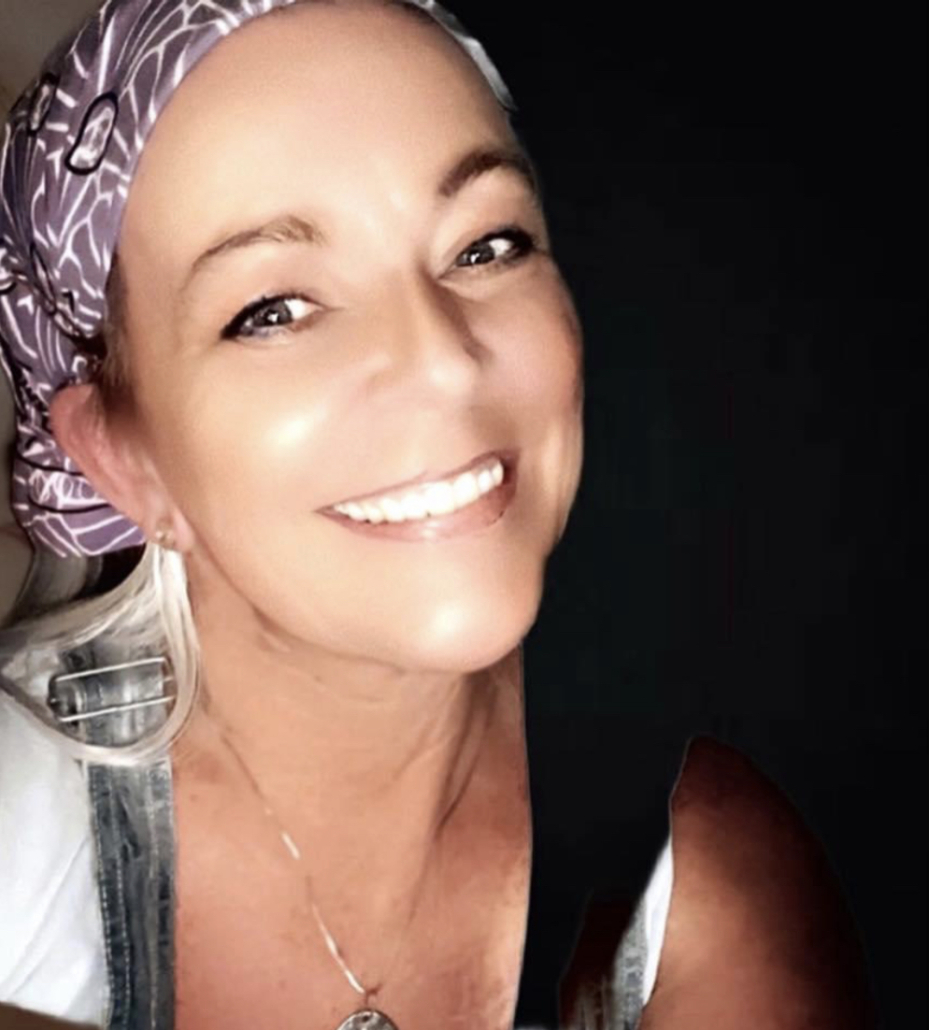
Niffy Thomas became an artist after she underwent DBS for treatment of early onset Parkinson’s Disease

Michael Stanley, MD is a Behavioral Neurology Fellow at the Brigham & Women’s Hospital in Boston
#44 Jennifer Thomas & Michael Stanley – The creative spark: Switching on the inner artist in the face of Parkinson’s Disease
In this conversation with Jennifer (‘Niffy’) Thomas and Dr. Michael Stanley, we talk about how Niffy became an artist after undergoing DBS surgery to treat her early onset Parkinson’s Disease. Dr. Michael Stanley is a cognitive neurologist at the Brigham & Women’s Hospital and has special interest in art and the brain: He studies how lesions or other neurological conditions can lead to cessation of artistic behavior or how they can change the artistic style of artists. When he read about Niffy’s case, he reached out to her and the two had multiple conversations about it. In preparation to this conversation, we were in contact with Dr. Paul Krack (Bern) who has studied and published upon similar cases in which DBS surgery changed or initiated artistic behavior. There is so much we can learn from Niffy and I am very grateful for her taking the time to share her story: Indeed, in her youth, Niffy did not enjoy art class at school and never had a particular interest in painting. She expressed herself differently: Via athletic competition or by playing the piano. But after coming home from DBS surgery in 2019, all of a sudden, there was this imminent urge – to paint…
Jennifer Thomas & Michael Stanley 00:00We had just moved. We'd just bought this house before the surgery. Just moved in. And I'm sitting there stressing, like picking at my fingernails. The anxiety was overwhelming. And I look up, and we had a beautiful white kitchen. White kitchen cabinets. And they just looked like canvases sitting up there. So I started painting. I didn't even have paintbrushes. I was using my fingers. I was sticking my fingers in the little, you know, like the little paint things with the plastic. Yeah, I'm like sticking my fingers in the cabinets. The next thing I know, I stop, and I'm like, that feels better. It's a love-hate. I love the relief I get. 01:06But it still feels very compulsive.
Andreas Horn So it's just like anything else, I guess. If you were a compulsive gambler, yeah, you'd hate it. You love this. I mean, we're all just amazing. Welcome to Stimulating Brain. Stimulating Brain. Hello, everyone, and welcome back to Stimulating Brains. I think this episode has a high likelihood of becoming one of my favorite ever, where we talk to a pair of patient and doctor. And the patient is Niffy, who was diagnosed with, early onset, Parkinson's disease, and underwent deep brain stimulation. 02:01And the doctor is my dear colleague here at the Brigham, Dr. Michael Stanley, who is a cognitive neurologist. And Michael was the matchmaker that connected us all together. He heard about Niffy's case in the literature, and then had contacted her, had intensively studied her case, and had had many meetings and conversations with her already. And had told me about her story, which is, a really unique one. Essentially, suddenly after Niffy underwent deep brain stimulation, she felt the urge to paint. And she painted sometimes for hours, and at some point had a second operation where the other electrode had been implanted, and then had more control over the painting. But the painting stayed, and she has really now become an artist. You can find her on social media. If you Google for the Parky artist, we also look for her on the website. And she's a really unique one. And she's a really unique one. And she's a really unique one. We also link to her profiles on the website and the show notes. 03:00And we even are able to showcase some of her artworks, which she graciously shared with us for the purpose of this podcast episode. Niffy is very intelligent, very empowered, and is capable of talking to us in a way that is super informative about what might be going on, and what DBS might have done in her very particular case. So, I think it's really important for us to know that Niffy is a very intelligent, So I think both Mike and I learned a lot in that conversation and will hopefully continue to learn more from her case. And we really have to be very, very thankful for her being so open about her and for sharing this with the world and teaching us another lesson in essentially how the brain works, neurology, and deep brain stimulation. So when Michael wrote up her
Jennifer Thomas & Michael Stanley case in a way only he can. That piece is not published yet. He came up with a beautiful 04:02framework and a name for the case, which he called the Electrical Muse, with the idea that, as you will hear from Niffy as well, the urge to paint a stair, and then Niffy creates a painting, but it sometimes feels like it is not even her own work, as if somebody else would have put this work into her doing. And to me, the concept of a muse that would give you the inspiration from the outside resonates a lot. And of course, in her case, it is really an electrical muse with the DBS system loosening the brakes for her to create art. So with that, I will stop spoiling more of the fun, and I will just leave you to it. And I hope you enjoy the conversation I had with Michael and Niffy as much as I did with Niffy. And here we go, Stimulating Brains.
Andreas Horn 05:05All right, so thank you so much, Niffy and Michael, for joining this podcast. I'm so excited about
Jennifer Thomas & Michael Stanley this episode. And I think we'll all learn a lot, at least I will learn a lot. And the listeners will, I think, also hear of a very interesting case example. And
Andreas Horn thank you so much for joining us. Thank you so much for taking the time, especially on a Black Friday, to join me. And I'll start with Niffy. And usually to break the ice in this podcast, we start with hobbies. So what do people
Jennifer Thomas & Michael Stanley in their free time, can you maybe tell us a bit about yourself, but maybe talk about the time
Andreas Horn before your deep brain stimulation surgery, so not about the new hobby yet?
Jennifer Thomas & Michael Stanley Right, right. You know, my life, before deep brain stimulation, my life before Parkinson's, it was like, it seemed like it 06:02belonged to somebody else. And honestly, I'm so wrapped up in raising my daughter and, you know, working and trying to pay the bills that at that point in my life, I had really lost all my hobbies. Everything was so, you know, crisis driven from one moment to the next. And then I was blessed with Parkinson's. So it's kind of, you know, I look back on a pre-Parkinson's me, as though it's like watching a Lifetime movie. Yeah. Interesting. And so growing up, I think we should mention this right now. As I've heard, you could not stand art class at school. Oh, no. I hated art.
Andreas Horn Can you talk about that? Yeah, about that relationship back then.
Jennifer Thomas & Michael Stanley Yeah. You know, growing up, I was, I was a performance artist. You know, I was an athlete 07:05that was constantly moving. I didn't know how to sit still. My mom painted a little bit. You know, I think she went through her Bob Ross phase. We all went through her Bob Ross phase, I think. And I, I just didn't have the patience, the inclination, the time. Even coloring has always been a bane in my existence. Because I just don't, I didn't care enough about keeping it in between the lines. I had no use for her. I would join. I joined the symphony and picked up playing the cello. So that I can avoid. And I was like, what fourth grade art. That's, I really had it. It was a complete lack of understanding or interest whatsoever. 08:07Got it. And then much later in life, you have been diagnosed with Parkinson's disease.
Andreas Horn Can you tell us a bit about how that started? How the first symptoms may have started? How, how you maybe noticed first and how it developed? Yeah.
Jennifer Thomas & Michael Stanley It's, It's, I think a lot of us have the same origin story. Where somebody notices a little twitch or for me, that's how it happened was it started back maybe eight years before diagnosis. I remember the first person telling me, you know, you shake a lot when you're just sitting. Like if I'm just sitting, watching TV, I'm not shaking. I'm not shaking. I'm not shaking. I'm not shaking. or just sitting, I had a real bad postural tremor. And I don't know, there was always something happening that could cause anxiety, or a death in the family, or a daughter applying for college. I chalked everything up to anxiety. And then I was going to get married after being widowed, and 09:25I was blessed again to get remarried. And my new husband said about three days before the wedding, just talk to the hospital because I worked at the hospital. And I went and saw my family doctor and he was like, you know, I worked with him in the ER and he said, I don't want to be the one to give you this diagnosis.
Andreas Horn You know, I was like, what diagnosis?
Jennifer Thomas & Michael Stanley I'm stressed.
Andreas Horn And yeah,
Jennifer Thomas & Michael Stanley that's how I got my Parkinson's diagnosis was people just tell me you shake 10:02a lot. I still do.
Andreas Horn How did that feel? And then how did things progress?
Jennifer Thomas & Michael Stanley I assume at some point you started with dopaminergic medication. I did. You know, it's such an unusual presentation. I think when it's, when you're in your early forties, you're just not expecting that the doctors aren't expecting it. They, they had me on medication for essential tremor for a couple of years. I had no response to it. And then my husband moved us from Colorado back to Alabama where he's from. And I got a movement disorder specialist. And I had no idea what a difference there is in somebody who is a 11:00neurologist and focused on movement disorders. It made a world of difference seeing my first movement disorder specialist. He came in and said, well,
Andreas Horn I'll tell you why your meds aren't working because you don't have a central
Jennifer Thomas & Michael Stanley tremor. And he put me on the curve to believe Dopa. And it worked immediately. It was like, I had this monkey off my back. It was great, but it did not last long. I mean, it worked really great for a year and a half. And then I had more and more off time. And I was really fortunate that I had a doctor who was aware of studies that were going on. And there was, I can't tell you, the name of the study I was in. All I knew was I wanted to be in. If I'm all about, let's try something new. 12:00Let's make us function as long as we can while we're young enough to appreciate it. And I signed right up when I started having off times. And when I get sidetracked, don't forget, don't hesitate to give me a hard stop and say, you got, I'll try it there. And we also have Dr. Michael Stanley here with us, who has been more involved from a medical point of view in your case, not, not your primary, I think doctor, but, but it's familiar with your case. So maybe Michael, can you for a more general audience summarize, was there anything unusual maybe in Niffy's case that you might be aware of about,
Andreas Horn or what, how was the presentation? Yeah.
Jennifer Thomas & Michael Stanley So I first actually learned, of Niffy's case through the medical literature, actually, it was a friend of mine who's a movement specialist who had seen the write up 13:01about her. And, and I, I initially read the write up and the, the discussion was of somebody who had early or sort of earlier onset Parkinson's and primarily movement, not a lot in terms of non-motor activities or, or symptoms. I think in discussing with Niffy, some of the, other features, which I don't think are directly related to her Parkinson's, but at least in that substrate are, you know, what we might call aphantasia or the ability to really hold a vivid visual imagery in mind. And that should, or that will sort of come up later. But, but other than that she had had in preparation for her deep brain stimulation, you know, rigorous examination, both of her, of her motor skills, which were consistent, consistent with typical Parkinson's as well as neuropsychological evaluation, because before and after we do DBS, we want to make sure that the person in question is both up for it cognitively and up for it emotionally. 14:04And Niffy was on both counts by her, by her examination. So in many ways there was nothing, her abnormal was the normally abnormal of Parkinsonism. Got it.
Andreas Horn Can, can Niffy, can you relate to what, what Michael talked about with the aphantasia?
Jennifer Thomas & Michael Stanley Well,
Andreas Horn yeah,
Jennifer Thomas & Michael Stanley I'll have to ask him again, because he, he has taught me so much more about myself than I ever knew.
Andreas Horn What does aphant, own ability to see?
Jennifer Thomas & Michael Stanley So to, to, to mental imagery.
Andreas Horn Yeah.
Jennifer Thomas & Michael Stanley So I, so could you, that. So you, you were not, not really great at imagining vividly. Nothing. Not, not,
Andreas Horn yeah,
Jennifer Thomas & Michael Stanley I couldn't, it, if I was looking at the front of my house and trying to put plants, 15:01you know, trying to figure out, I can't, I couldn't see, I couldn't see, I've never been able to read a blueprint. I mean, I can read them, but I can't see it type of thing. And I think that's why I was never really in dark was because I, I felt like I didn't see, I didn't see it.
Andreas Horn And was that something you were aware of yourself? Okay.
Jennifer Thomas & Michael Stanley So you, you, you knew that as a, maybe lack of something you were just not great off. So, so it was just, it was something I, whenever a good coming up in conversation or somebody talk about some visual, something I would just bow out because I, I so lack that quality. I, I can't even even drum up interest in it because I didn't know what it was like to see something in your head. 16:02And that was point. And if he's point about this, just to drive it home is really is the crux of the matter for a lot of our artists. I mean, there's the famous line by Michelangelo,
Andreas Horn right?
Jennifer Thomas & Michael Stanley I saw the angel in the marble and I carved it away until he was free. It means you, you have to see where it's at. Right. And you have to see what this block could be. You know, the visual. What it might be and how you're going to sculpt or shape that. And so there's a range of. The ability to pull in the mind of vivid image. Some it's, it's more of a sense of space. You know, as assigned and empty, you know, massing and not, you know, void and, and, and the weight of the thing. Others it's, it's quite, And it's like your own internal monologue. You don't realize how many different ways there are to do it until you start asking people. 17:02And you realize, wow, you don't imagine the world in your head like I do. And you might not imagine it at all. So yeah, this
Andreas Horn Does chocolate even taste like chocolate to you? Yeah, you're asking for that nth degree, which is sort of this interesting in-between space where there's abstractions, there's perceptions, and then there's these in-between zones. How yellow is yellow, right?
Jennifer Thomas & Michael Stanley I have to be honest. I still feel very much in the I can't see it game.
Andreas Horn Yeah.
Jennifer Thomas & Michael Stanley Even though I created it. We can talk about that, how things change,
Andreas Horn but just to clarify this stage of maybe not being able to mentalize and imagine that, that had been with you all your life, even as a kid? Yeah, okay.
Jennifer Thomas & Michael Stanley All right. So then at some point, as in most patients, unfortunately, 18:03as you said, dopaminergic, the medication was not enough anymore. You had apparently many off phases. You then heard about the brain stimulation, apparently via a study.
Andreas Horn How was that like for you, the decision to say, okay, let's try brain surgery? How did your family react maybe? Were you scared at all?
Jennifer Thomas & Michael Stanley You seem like a let's go for it kind of person.
Andreas Horn Yeah, that's pretty, that's kind of a characteristic.
Jennifer Thomas & Michael Stanley I mean, once, I mean, it kind of went really, really quick.
Andreas Horn I mean, once I told my neurologist, yeah, I'll think about it.
Jennifer Thomas & Michael Stanley It was from that moment to the day they did the surgery, it was like 90 days.
Andreas Horn Okay.
Jennifer Thomas & Michael Stanley I did. I mean, it was like, I said, yes, I'd be interested. 19:00And then they called me in for a day of testing, which was kind of fun. They put me in. These little sticker things all over me. I felt like a transformer. And then they sent me for the psychopala, you know,
Andreas Horn and those are always interesting
Jennifer Thomas & Michael Stanley because you don't know how you did. And the next thing I mean, to be honest, I'm not convinced I had accepted my Parkinson's diagnosis at all until they screwed the halo on my head.
Andreas Horn That's really interesting.
Jennifer Thomas & Michael Stanley I think that that was part of it for me was that even walking into the hospital that morning, I was thinking, I'm not doing this. I'm not going to do this. It was 90-10. I would not go through with it. 20:00And when they got the halo on my head, I guess I just reached a point where I said, wow, I guess I'm going to have my brain operated on. I have to admit why. And so that whole morning was a very big morning for me because I was, I, up until that point, I don't think I had even really accepted that.
Andreas Horn And can I ask, was it an awake surgery? Yes. Okay.
Jennifer Thomas & Michael Stanley It was an awake surgery. And I am the most, for someone who can't envision things, I'm the most squeamish person I'll find. I mean, I can't, if there's a movie that plays a heartbeat, you got to turn the volume down.
Andreas Horn Okay. Okay.
Jennifer Thomas & Michael Stanley I can't. 21:00Lay my head on my husband's chest, my near heart, because it just freaks me out. So it wasn't a wake brain surgery. And I guess maybe that was it was I figured if I'm going in, I'm going to do this. I guess I have to admit it's real.
Andreas Horn Yeah. When if he talks about is such an important feature of sort of this procedure, this modality, right?
Jennifer Thomas & Michael Stanley I mean, that neuropsychological assessment is not, it's not just looking at what's your visual spatial skills, what's your language skills. It's also an assessment of a person's sort of psychiatric wherewithal,
Andreas Horn you know, their ability to kind of say, wow, what is going to happen? What does it mean? What are the ramifications of this?
Jennifer Thomas & Michael Stanley Because it is a, it's a, it's a big step, but it's, it's a well, it's a lot bigger than I had considered. I mean, to me it was just, yeah. And it says, 22:00Mike, you would say, you would say this was, this could be a, a, a case of the aphantasia as well. That essentially not imagining enough or not imagining what would happen or
Andreas Horn okay.
Jennifer Thomas & Michael Stanley Just mean, I just mean from a more general standpoint of things are easy to intellectualize. You can say, oh, there's a procedure and we put this, you know, these little electrodes and we go, oh, an electrode. I have a sense of what an electrode is. Oh, I have a head. I have a sense of what an head is. It's very. It's very different. Sort of as Niffy mentioned, not until the actual halo is on that you're like, wow, this is real me. That again, that's why, although again, very safe procedure, very well, trot path.
Andreas Horn You only do it once, maybe twice, right?
Jennifer Thomas & Michael Stanley The person. Now, so it is a big step for them. It drives home a point. I think that's a fairly universal in medicine, which is, although this may be the 23:00first time you hear a diagnosis, or this is the first time you try medicine, or the first time you undergo that surgery for the physician, it is not. Right. And so that all, both of those have to be kept in mind, um, or at least kept in brain. Uh, yeah.
Andreas Horn I don't think I ever really considered what was actually happening because if I
Jennifer Thomas & Michael Stanley had, I wouldn't have done it.
Andreas Horn Which is the fear. Standpoint, right?
Jennifer Thomas & Michael Stanley You go, oh my God, it's such a big thing. I mean, that's the, that's the heroism of any of these as you just go, wow, what a thing the human organism is that it can.
Andreas Horn Yes.
Jennifer Thomas & Michael Stanley We're committed.
Andreas Horn Yeah.
Jennifer Thomas & Michael Stanley Right. It's amazing. It's amazing. And so, so we can, we can get into, you know, uh, was it a good decision or not later, but maybe just briefly to clarify the, um, the procedure was, I think one
Andreas Horn side first, right? Yes. Yeah.
Jennifer Thomas & Michael Stanley That was the left or the right electrode.
Andreas Horn Do you remember?
Jennifer Thomas & Michael Stanley It's to fix my left. So. So the right side, right side, right side placement. 24:02It was subthalamic, uh, uh, placement with the sundials, uh, study. It was, um, okay. I lost me. That happens. So, so, so, I mean, I think now we can probably reveal what happened to you to some degree. And Dr.
Andreas Horn Stanley has told me the story a few times, which I always find very interesting.
Jennifer Thomas & Michael Stanley And I think that's, that's a very, very important thing. I think that's a very important thing. I think that's a very important thing.
Andreas Horn Yeah.
Jennifer Thomas & Michael Stanley Which I always find, you know, he, he tells it very. Well. Um, I still think since you're here, maybe you want to. Tell us what happened. Lucky came home after the first. Sighted surgery. Right.
Andreas Horn What happened?
Jennifer Thomas & Michael Stanley Right. Um, why. I came home. Didn't have. Can't do. You're not supposed to drive. Do that kind of thing. And my husband had to work. No. No. So I'm sitting around the house, I'm anxious. 25:03I'm just anxiety. I feel like I'm pent up because one, the surgery itself made my Parkinson's symptoms feel better. But I was cooped up and I was so anxious. I just felt like I needed to purge. It was overwhelming. I had to paint. It still makes me laugh. Me saying I have to paint. I'm no. It was specific to paint. It was not. It was. I was like, no, I've got to paint. And I'm looking through the house and I have some old paints of my daughter's from when she was in high school that I didn't have any paper, nothing. And we had just moved. 26:01We just bought this house before the surgery, just moved in. And I'm sitting there stressing, like picking at my fingernails. Just the anxiety was overwhelming. And I look up and we had beautiful white kitchen, white kitchen cabinets. They just looked like canvases sitting up there. And I started painting. I didn't even have paint brushes. I was using my fingers. I've stick my fingers in the little, you know, like the little paint things, the plastic.
Andreas Horn Yeah.
Jennifer Thomas & Michael Stanley I'm like sticking my fingers in the cabinets. The next thing I know I saw up and I'm like, that feels better. And I look up and there is not a white part of that kitchen. I've got a black and hot pink out printed cabinet. 27:01I've got a cabinet with a moon and a waterfall scene.
Andreas Horn Oh, I, yeah, it was, I had gone for about six and a half hours.
Jennifer Thomas & Michael Stanley You painted all of the cabinets. I painted the entire kitchen. Every cabinet had some design. Design. Design. And I felt so much better. Like I can sleep. And my husband, my husband came home from work. I didn't say anything. I just sat there and he walks in and he walks through the kitchen and he puts all his stuff down. 20 minutes go by and he finally comes and sits in his chair and he says, I like what you did. You too. And he said to me, I like what you've done with the place. Amazing. I said, good husband. I'm like, kitchen, like straight. That's like, oh God, I'm sorry, I had a white pillow. And now that kitchen is still painted that way. Yeah, but that anxiety, that 28:26build up of it it was like I felt like a racehorse and somebody was stomping on me not letting me run and as soon as I put something on my fingers or a paintbrush I was like I could just let it all out and it never stopped amazing and I so Michael when you tell the story you often quote Umberto Eco about oh yes creativity there's a couple phrases that Niffy uses that I think are 29:04they're part of the art history and the psychology of the art history you know that this need to purge right or this sense of the racehorse being pent up that there's a feeling of like release you know and I think that's a really good point and I think that's a really good point afterwards right I mean Aristotle called that catharsis right I mean that's what a cathartic episode it literally means to purge you know it's actually what he had learned now what Umberto Eco a great semiologist and a great author was asked once he was asked what does the creative impulse feel you know Umberto what do you what does it feel like to have this creativity and he goes oh he says it feels like the need to piss that's the and yeah and you gotta go now right it's like I gotta do this there's a there's something and
Andreas Horn 30:06it's gotta it's I'm at the brink right and if we think about that uh uh yeah uh that's exactly what
Jennifer Thomas & Michael Stanley you know Niffy's talking about and I think it's it's a fairly fairly universal feeling among many people that are creative of this at some point something just hits and you're like oh I've got to do this now you know uh it's a it's a an urge incontinence of the aesthetic sort you know yeah I I say it's it's um I've I've got to now like whatever I have to say it's gotta be said now that's how it feels right I've got to do this now it's got a it's a to me it's got a foreign aspect to it um it still doesn't feel like 31:02it's coming from me so like if he like early on you were talking I remember you telling me about so this is like day one six hours and then the next day comes and then what happens on the next day well and then I went and way I never spent because I I was shocked at the cost of paint I thought how people do this as a hobby I mean I went to the hobby store I'd never been in one um and I'm like that's I can I can't afford this I can't afford my new compulsion uh gambling was cheaper hey my husband just peaked in on me yeah gambling was cheaper he'll verify that um no I I ended up at the store and 32:04I because I don't know art I've never done it I don't know what I need so you know I go I'm a big fan of bin stores where you're digging through the bin stores and you're selling your stuff but that's where I get most of my supplies because I'll pick something out and be like that would be cool to for me through I don't know what it is it's probably a car part but for me all of a sudden everything I see is all of a sudden everything I see is visual every time I look down I'm like what would something look like toward through that I mean these are questions that it'll make you feel insane because you're not used to seeing the world 33:01the other thing that I remember you mentioning with while you still had the right side only placed was about the kind of the drive to paint but not necessarily knowing what it was gonna be oh no yeah and that that was kind of that that kind of goes back to that That kind of goes back to that. I still have aphantasia. I do think I just like that word because a lot of the times are, well, 90%, like I said, I never sit down to paint something. I sit down feeling like my colors, you know, and could you explain that to Andy, the different colors? I think that's so fascinating.
Andreas Horn For me, it kind of, yeah, it kind of just evolved this way where, you know, for me, it's not about deciding when I'm going to paint.
Jennifer Thomas & Michael Stanley 34:04It's I sit down and I see my days in color. Like Dr. Schuss wrote a book, My Many Colored Days. It's a kid's board book, favorite book ever. And in it, he talks about the different colored days, like on a gray day. Everything is gray. I watch, but nothing moves today. Okay, that's what a great.
Andreas Horn So that's how I envision me as an artist is. But how do I feel today?
Jennifer Thomas & Michael Stanley Today, I feel yellow. I'm happy. We're probably going to get flowers. We made it. We evoked swag.
Andreas Horn And I'm feeling sunflowers. Who knows?
Jennifer Thomas & Michael Stanley But at the end, I am always just as surprised as if somebody had, like, knocked on my door and set the canvas outside. 35:05Oh, it's an eagle.
Andreas Horn So many things to unpack.
Jennifer Thomas & Michael Stanley I think one thing that the listeners might not have heard yet, you have become an artist since then, right? We. Because we're in the storyline. We're still in the, like, first days. Right. Great. Thank you. Good job. Because as we could conclude now, you really, this has become a major hobby of yours or even, you know, more than a hobby.
Andreas Horn And then what you just said, I found very interesting that even, you know, only after you're done with the painting, you kind of realize what you painted. Is that? Yes.
Jennifer Thomas & Michael Stanley Describe it correctly. And you also said it did not feel, it does not feel like you're. Yours. No. No. No. Michael. Sorry. So I, when I came home from brain surgery, it was before the GPS was active. 36:02When I got this. So it was the actual. Just the placement.
Andreas Horn Yeah.
Jennifer Thomas & Michael Stanley The placement that woke me up. And, and when they activated it.
Andreas Horn Yeah.
Jennifer Thomas & Michael Stanley I want to say. It, it, it, it felt when my DBS got activated. Then it felt like it kicked into overdrive. The need. To constantly be. I, I would miss doctor's appointments. I would miss birthday parties. I mean, sorry. I'm making. Um.
Andreas Horn Interestingly, when I.
Jennifer Thomas & Michael Stanley that it feels more on purpose. Okay. If that makes sense. Yeah. Could you explain to Andy, like you've got Symbolism 101, or symbolic? Yeah, it's one of my favorite pieces. And explain how that one feels different, how that one came to be. 37:18Right. The one, like Symbolism 101, it's one of my favorites because all of my favorite pieces are what I call my insomnia pieces. It's the things that keep me up at night. A painting you painted in the early days and it's called that way, Symbolism 101.
Andreas Horn Yeah, well, yeah. And it was, I guess it's been about a year and a half, two years since I did it. And I was just, I couldn't sleep insomnia. And I have a five by seven.
Jennifer Thomas & Michael Stanley One of those, when your kid does, you scratch it, it reveals the silver underneath scratch card, the wood stick. 38:06And I was like, I wonder how many. I was like, I wonder how many symbols I could draw on this five by seven. And I said, I wonder how many I know. And I spent the evening going through my childhood, you know, a lot of Southwestern Native American symbolism in my childhood.
Andreas Horn And as I'm drawing this, then I ended up squeezing 101 symbols that I pulled out of my head. I guess that's why I'm proud of it.
Jennifer Thomas & Michael Stanley Because I know that came from me. And I squeezed 101 symbols on this little tiny art. It's personal because each one of the symbols has a memory attached to it. Or lots of memories. 39:02It is such an important point. So if we just step back and we think about the art piece, that's mine. It's made. So we have a small piece of art. It's blank, black, a negative space. Could be filled with anything. You know, like, well, if he talks about having a black day, I remember when she mentioned that it's not that it's sad or forlorn or dark. It's that it's filled with possibility. It's an empty space. So now she's putting symbols and she realizes that on this small space, she's able to cram 101 symbols. Now, there's a theory. Ernst Gombrich, who was a phenomenal artist. Phenomenal art historian, very interested in the psychology of art and style. He brought up the fact that there had been a prevailing theory called the horror vacui, the fear of the empty space. Oh, and I have that. I have this space has to be filled. And that and he was basing this in part and others wasn't alone in this. 40:01But there were others of the sort of the Viennese art history school, the Germanic sort of art history school. And there were other sort of art historians. Actually, the Prince Horn at Heidelberg had a whole collection of people from the Institute there.
Andreas Horn And they tried to parse out whether people filled spaces out of a horror vacui, a fear of the intolerability of the empty space. Or as we see in the Alhambra in Spain or as we see in the Gothic cathedrals. You know, is it an amor infiniti? Is it a love for the culture? Is it a love for the complexity that gets more and more and more and more?
Jennifer Thomas & Michael Stanley Right.
Andreas Horn And there was an argument about whether compulsive behaviors tended to fill spaces versus did they tend to create intricacies?
Jennifer Thomas & Michael Stanley You know, as opposed to what had been some prevailing theories in the 19th century around schizophrenia being more of a. It's always this back and forth. 41:02It feels schizophrenic. You know. So it's just an intriguing thing that she had. But she had control. I guess what I found so amazing about Niffy's Symbolism 101 was she felt like she was the one behind it. It was although there was a motivation, it wasn't as left on her front door as the other ones feel.
Andreas Horn Yeah.
Jennifer Thomas & Michael Stanley It was more of a I wonder how much I have in me to pour. The other.
Andreas Horn How much is in there to pour? Yeah.
Jennifer Thomas & Michael Stanley To pour out. To explore another kind of emotion and emotion related thing. What I found in Niffy's chalk drawings. So if he works in a number of medium painting is one of them. But she also does these these beautiful dream like chalk drawings. They're very soft and and delicate.
Andreas Horn And I asked her about what's it like? 42:01How do you know that's the day?
Jennifer Thomas & Michael Stanley And I would wonder if you could explain what that is. I would wonder if you could explain what a chalk drawing feels like.
Andreas Horn How do you do it? What's it different?
Jennifer Thomas & Michael Stanley I like I like dark days because chalk days are acceptance days. They're okay. I can't draw a straight line today. So but chalk is forgiving. So I can make a huge mess out of chalk. And find a way to say what I want to say without needing to be precise. And it's chalk is chalk is generous. Those are my chalk drawings. I always fill me with a good feeling. You know, like a. They're they're. Dental. They're soft. And you've got certain feelings. 43:01Even before you pick up the paintbrush or the chalk.
Andreas Horn Yeah.
Jennifer Thomas & Michael Stanley That. Is going to be. That's that's all color.
Andreas Horn You know what?
Jennifer Thomas & Michael Stanley I ever since I was. Little. I've been a color day. You know, what's my day. Today's a blue day or.
Andreas Horn Just how am I feeling a muscle? And where am I at in the world with. Who I am, where I am. How's that?
Jennifer Thomas & Michael Stanley That was the case when you were a kid too. So that's. That's. That's the case. When you were a kid too. So that has nothing to do with DBS. Right.
Andreas Horn Yeah, no, I was always a.
Jennifer Thomas & Michael Stanley It's a, well, I mean, I've always been like, it's a sunshine.
Andreas Horn Okay.
Jennifer Thomas & Michael Stanley But now, now in the, in the, in the current. You know, well, you, you, you get up and you feel. What kind of day it is. And then you. That with art.
Andreas Horn Yeah.
Jennifer Thomas & Michael Stanley I go to grab my. Supplies. And I just don't put much thought into it because if I think about it. 44:03I'll ruin it. I just, whatever my hands grab for will tell me. You know, if I'm going for. Black and white. I know I'm really in the mood to focus. I'm really in the mood to be. Nailed down into really minute detail. If I grab yellow, it's a. I'm. My brain is saying. We need to scream cartoons or giraffes or. Folks or hippies. I like yellow days, but I like all my days. I mean, even that. A gray day. And when you just. Talk was more forgiving. And then you could still say what you want to say. Is that. The moment where you actually want to say something, or is it still this, you know, I'm not sure. I'm not sure. I'm not sure. I'm not sure. I'm not sure. I'm not sure. I'm not sure. Is it actually wanting to say something, or is it still this, you know, 45:04urge in you that will say something, and only later you would realize? I'm 99% this time, you know, I know I have something to say because I can feel it. But when you mean, you know, I gotta get it out, I can't get this out, is it a concrete thing you want to say, or is it more no idea? No, I have no idea what. It's like talking to me in this. I have no idea what I want to say, but I'll get to it.
Andreas Horn Yeah, sometimes it may, I may finish a piece and two days later go back and go, I still don't know what that is.
Jennifer Thomas & Michael Stanley I do. And sometimes it's those people, those pieces that people are like, there's so much in this. I'm like, I see nothing. I don't know what this. So I know it's me speaking through my arm. 46:00I feel the anxiety and the compulsion to do it. I don't know if that's art. Sure it is.
Andreas Horn Yeah. Yeah.
Jennifer Thomas & Michael Stanley I'm a big fan of Rick Rubin, who is one of the most famous music producers. Right. Has done. Has done many different things like from hip hop to, you know, you name it, everything around. And he has recently written a book. It's called The Creative Act. I can really recommend it. It's great. But he also speaks of, you know, the creative actors sometimes receiving ideas. So that's his. I think it's just a model. It's, you know, he's not superstitious or so, but he, he would, he would express the way of. Creative flow of rather, you know, it doesn't really seem to come from inside for him either.
Andreas Horn Does that resonate with you?
Jennifer Thomas & Michael Stanley Very much.
Andreas Horn Yeah. There's yeah, I did a piece called by it's just an eagle head.
Jennifer Thomas & Michael Stanley 47:06And I didn't, I started in pen with the ballpoint pen and ended up, I didn't know where it was going. Three quarters of the way. I went, oh, it's a bird.
Andreas Horn Okay.
Jennifer Thomas & Michael Stanley But. If you don't, I knew I needed highlighter. I didn't have any. So my, I grabbed the whiteout. I made that eagle with whiteout, a highlighter and a ballpoint pen. And. So clearly. I knew what I want. It's like, there's a conversation in my brain. That I'm not a part of. And. I, as long as I let myself just go with it, whatever I'm grabbing and doing. It'll show up. 48:00Eventually. I don't. I can't. If I sit down with intent to draw something specific. I can't. And I want to. Want to circle back one more time. I can't. I can't. I can't. I can't. I can't. I can't. I can't. I can't. I can't. I can't. I can't. I can't. I can't. I can't. I can't. I can't. I can't. I can't. I can't. I can't. I can't. I can't. I can't. I can't. I can't. I can't. I can't. I can't. I can't. I can't. I can't. I can't. I can't. I can't. I can't. I can't. I can't. I can't. I can't. I can't. the first side when they did my right brain for my left side turn rush the urge to create it was very much 49:01compulsive it was like an external source and everything I produced was very external for me I didn't feel I can look at those pieces and go wow cool I did a really good eagle but I don't have any attachment to it because I still don't feel like it was me who made it after the other side the left side it feels more less compulsive a little calmer not so anxiety driven you know it's not trying to get something out but I have an opinion on this 50:02I think that the second surgery caused a psychological depression but a dark to I came with a depressive phase that I just clawed myself back out of. But even though my art during that time feels more personal, because it is, because I'm depressed
Andreas Horn and I'm putting personal things on paper, but it feels more like me, but it's not as enjoyable. How long was the time in between? And then also, when was surgery from now? Like how long ago?
Jennifer Thomas & Michael Stanley My first surgery is August of 19. 51:04And the second surgery was in October, two years later. Two years later. Yes, two years in between.
Andreas Horn And so my last one, it's been two years from my other one. Do you know why they waited so long for the second surgery?
Jennifer Thomas & Michael Stanley It was my choice.
Andreas Horn Okay.
Jennifer Thomas & Michael Stanley And I will say, given I would not have done the second site, when I first had done, I was like, no, I'll never do, I'll never put myself through that again.
Andreas Horn Makes sense.
Jennifer Thomas & Michael Stanley And then the tremor started on the right.
Andreas Horn Yeah. And I'm like, oh, my God. And I'm right-handed. And I thought, well, that was stupid. Why would you, why did you fix this idea of need?
Jennifer Thomas & Michael Stanley And so it took me two years to get to where I was willing to do it again.
Andreas Horn 52:02The second surgery is why you may not be able to hear it,
Jennifer Thomas & Michael Stanley but to me, it's extremely difficult to speak. I have to put so much energy into getting my mouth to form the right word. And that's directly tied to that second side. I wouldn't, I would take the mania over the speech and the depression in each other.
Andreas Horn So, Michael, you, it is, you're a cognitive neurologist here at the Brigham and you are also particularly interested. And scientifically and, you know, personally in, in art and the brain and art and neurology. So can you talk a little bit about Niffy's case from a more neurologic perspective, how you see things? 53:00Yeah.
Jennifer Thomas & Michael Stanley Sure.
Andreas Horn Absolutely.
Jennifer Thomas & Michael Stanley So, you know, the first is that what we know about the brain's role to play in art, first and foremost, comes from the artists themselves. I mean, artists are art technicians in many ways. Looking at others' work and their own work, making adjustments. So the neuroscientists are trailing behind the artists on that one. That being said, there are a couple of models of thinking about how art may arise after lesions of various kinds.
Andreas Horn So, and I'll present some of the more common ones to then explain why Niffy's case actually advances the literature
Jennifer Thomas & Michael Stanley and teaches us something about art. So, let's talk a little bit about the role that the basal ganglia and its functions may have in art. So the first is Bruce Miller had done a lot of work out of UCSF with patients who had frontal temporal lobe dementia 54:02and their heralding symptom was actually, in hindsight, this random beginnings with art. Somebody who never was artistic and all of a sudden they start to do art and they fall into either hyper-realistic forms of art or very hyper-realistic forms of art. Right. have damage and I have loss of abilities in one area, like language, let's say, and everything that that language is helping to govern, then the push and pull between other domains may allow, if this one's deficient, may allow the other one to push all the harder. And that may be in more 55:01visual, spatial, more symbolic visual rather than symbolic language. And therefore you see this kind of output. So that's one prevailing theory that the frontal temporal lobe dementias give us. That's
Andreas Horn only one part of the puzzle, right? And if you think about what parts are involved, frontal lobes
Jennifer Thomas & Michael Stanley are involved in engagement and disengagement, let go, you know, or hang on. And temporal lobes for language, for behaviors, some elements of religiosity. So those are what they give us. Then you have, what we learn from patients who have Alzheimer's disease. In those cases, those patients rarely spontaneously develop ART, like the frontal temporal lobe cases or the Parkinson's cases who receive DBS or other treatment. In the case of Alzheimer's, what we learn is how people adjust 56:02their ART to their disease, their deficits. So I had written about Louise actually in a piece on the book, and I said, well, I'm going to give you a little bit of information about what's So the back of her brain, just involved in visual-spatial, started to have damage, which changed her art, and she had to adjust. And so what we see in the Alzheimer's cases, the ones particularly posterior cortical, you see how the visual-spatial inputs and outputs change and how an artist deals with those change in other words um the brain is its own medium no different than working in oils and then switching over into watercolors right how do you adjust it and then there's the cases like like niffy and where here is somebody who had uh artistic trends they were 57:00performance artists you know irish step dancing you know that's sort of a piano player you know that was one form of output but not really visual spatial and then after um modulation in the subthalamic nucleus and sort of more broadly in the basal ganglia what we see are changes in initiative uh changes in will or won't uh uh not just the will but the won't and these lead to certain kinds of compulsive behaviors now if he made a point i'd much rather have had the gambling right or and that's one of these uh sort of icds or one of these compulsive uh problems there's gambling there's hypersexuality there's uh other other uh elements of that buying buying sprees but then the question
Andreas Horn is to say but why aren't for niffy right because why painting even i know very specifically painting why the urge was tied to this idea and that to me is so intriguing and that's actually
Jennifer Thomas & Michael Stanley 58:02the um sort of the bleeding edge of the the knife it's the wet edge
Andreas Horn of the paintbrush why is it in these disease these uh diseases and their treatments whether
Jennifer Thomas & Michael Stanley it's parkinson's uh and and it's compulsive behaviors whether it's ticks or Tourette's
Andreas Horn where there's a physical feeling but an idea or an action why an obsessive compulsive disorder
Jennifer Thomas & Michael Stanley um there is this again all of these have a emotion and emotion component a physical and an experiential or ideational quality that are
Andreas Horn linked that makes sense from what we've learned by some of our neurological ancestors like uh
Jennifer Thomas & Michael Stanley mess along talking about which parts of the brain communicate to each other who's doing the the handoff right between the outer world and the inner world or the inner world and the outer world
Andreas Horn now what's particularly interesting and i'll pause because i'm starting to prattle and i know it um is um why are the sense of agency comes in right that that it's i know that i'm doing i'm
Jennifer Thomas & Michael Stanley 59:06doing it but i also don't feel like it's mine that ownership question is that's the thorny problem that's what's so cool because you you don't have to be somebody who gets dbs or somebody who gets a dope uh you know uh ripenerol uh uh to develop that feeling you ask many artists many musicians many painters many writers and it's the same thing they go uh i don't know where it came from or there's that line from bob dylan they asked bob dylan about one of his early songs and he said i don't know the man who wrote that song because yes i don't know who painted that so these are not um uh niffy is in this position where uh she's experienced the natural experiment you know
Andreas Horn she's a sailor that got shipwrecked somewhere very interesting a completely different world
Jennifer Thomas & Michael Stanley you know uh but it's also a world that we have access to we do visit there's a ferry for everybody 01:00:05else that goes back and forth but for her she's she's shipwrecked there and that's just so amazing to get to see these travelers i think niffy's kind of like a traveler you know in that respect and we're trying to learn
Andreas Horn what what she sees i mean again it's an interesting reason why why painting you know
Jennifer Thomas & Michael Stanley can you talk about the aphantasia part has that changed in your from your neurological perspective now or is that still the same thing um so so so so so so so so so so so so so so so so so so so so so just to put a finer point on this because these are so these terms shift on us and niffy you leave us a few examples you know what andy is specifically talking about is the ability to hold in your head what it could look like or what it might be the the the imagination as if it were film or imagination as if it were photographed not necessarily um coming up with how to do a thing 01:01:06Like if you imagine your mother's face, or you imagine, you know, your second dog you ever owned, can you see him in a way now with a clarity that you couldn't before? No. You know, so that did not change. Yeah. My mind has got no clearer. So when you change, you don't, it's not like you see something already in front of you, right? So now, okay, I just sit down and start making a mess. And I know that at some point it's going to tell me what it is. And it can be quite painful. There are times back to the need to fill space versus you know, there's some pieces 01:02:00I have that have like weird, you know, they just kind of stop mid-page. And it's because I was like, okay, I'm done, I guess. And it's painful for me to walk away from it and not fill in that space. But once it's done, it's done. And then another comment you made, which I think is related to this, these things we were just discussing, is when you say tell us more about what you mean when you say, I can look at the world and I see how I could make art with it. Or you were making some descriptions about how there is something else now you can see you couldn't before. That's, I guess, what Andy and I are trying to scratch. Between the left and the right sides. Now I have okay, there's a lot of people 01:03:02do acrylic pours where you just pour paint and see what happens. I'm a big fan of that because it's unplanned. But now I've started doing, I call it an intentional or purposeful pour where I'll mix my colors. I sent one of the pictures I sent him is the last piece I did. I called it Tidepools. And I've started doing it. I started to pour, but I have in my mind, it's going to be an ocean, something, because I picked those colors, you know, so so I have more intent now than I used to. But I still am always surprised. So I want I want to clarify a little more about what you have in your mind. So when you say now, like now I have the it's going to be an 01:04:02ocean.
Andreas Horn What? I said that with words, right?
Jennifer Thomas & Michael Stanley It's going to be an old language and language was in theory in my head.
Andreas Horn Right. What's in your head? Is it what we just said? Is it what you see? Is it what you feel? What is in your head when that?
Jennifer Thomas & Michael Stanley Just my day color. It's just the color of the day is and I associate colors with feeling.
Andreas Horn And when you say it's in your head, that color, is it a color that you have a physical sense of? Yes.
Jennifer Thomas & Michael Stanley Like it's a part of you or is it a color you can see in your head in the same way that I would say like, oh, no, I'm living room. No, I feel like a yellow day. I feel yellow. I feel like I feel brave. I feel, you know, on a yellow day. 01:05:01Everything's yellow. Everything's possible.
Andreas Horn So anything I paint could be I mean, you could have flying pigs. Who knows?
Jennifer Thomas & Michael Stanley I mean, it's imagination. A red day is a. Those are the days that I actually don't prefer red days or like. You're working through stuff in your head. You can feel, you know, when you really have something is trying to process, you really have something important. You got to take care of it and jump on to it. That's a red day. So I, I see, you know, if I close my eyes right now, today is today's cream. It's it's a warm, fuzzy. Cool fall day cream. Maybe some oranges go in there. It's Black Friday.
Andreas Horn 01:06:00Remember?
Jennifer Thomas & Michael Stanley I'm just talking about the color.
Andreas Horn Yeah.
Jennifer Thomas & Michael Stanley It's definitely fit.
Andreas Horn Can I ask if he not just to paint the picture a bit more, how you're these are just come. How often do you paint these days? How you know, how much can you maybe control it? Is it every day? Is it five times a day or is it? Yeah, it's not nearly when this all started, it was, you know, it could be twice a day. Yeah.
Jennifer Thomas & Michael Stanley It's not nearly 24, 36 hours straight. Wow. And tell him down. Now, it's definitely a choice. You know, I'm getting hit today. It may hit me at 11 o'clock at night where I get up and go, oh, I guess we're painting. So so so very compulsive, but not as exhausting. I'm not. I'm not. 01:07:00I don't feel the frantic need to do it. And now I'm like, okay, I know I can get, I know I can paint. Okay, I know I can paint. I know I can paint. We'll paint later.
Andreas Horn And then how much would you say is it burdensome to have this in your life? And how much does it also help you? Or is it even a nice hobby that you enjoy?
Jennifer Thomas & Michael Stanley It's a love-hate. I love the relief I get. But it still feels very compulsive. So it's just like anything else, I guess.
Andreas Horn If you were a compulsive gambler, yeah, you're going to hate it.
Jennifer Thomas & Michael Stanley You love this. I mean, we're all dopamine chasing. You know, that's all we're doing.
Andreas Horn To ask you if you could, like, wish it away and it were gone, right?
Jennifer Thomas & Michael Stanley 01:08:00You wouldn't paint anymore.
Andreas Horn That would not be great, right?
Jennifer Thomas & Michael Stanley No. I was heartbroken. When Parkinson's took my piano from me. And that was a love-hate relationship. My parents made me learn. It wasn't until later that I realized how much joy I got from it. I can't dance anymore. And I thought, I didn't know there was another way to find that outlet. Right. That's something that came to my mind when you talked about the red days where you said these are the days where you have to work on something, work something out. 01:09:06You feel you have something inside of you. And that there it seemed like it could even be therapeutic and help you understand yourself. Oh, yeah. I've got I've learned that I have so much. I said, or I think as humans, we need to be hurt. But I think even more so we need to say as humans, and it doesn't matter how you say it. I never realized that I said that through running, through dance, through competition, through racing. You know, I mean, I was very much that competitively driven person. And this has just taught me that that's. I still have a lot to say, even when I don't know what language I'm speaking. 01:10:04I just don't know my new language.
Andreas Horn Yeah.
Jennifer Thomas & Michael Stanley And we should we should at this point, certainly. And also on the website, we will link to it and mention that you have a profile. People can find you with the Parkey artist on social media and you sell you sell your art. I do. You know, I've sold several pieces. I donate more than anything to local Parkinson's organizations or people are having some auctions for to raise money for Parkinson's. I've had a couple of pieces where people, you know, contacted me, want to commission something. Those are hard. I mean, to me, it's like you got to just be open to whatever it is. Okay, got it.
Andreas Horn Yeah. Yeah. Makes sense. Yeah.
Jennifer Thomas & Michael Stanley I am. I am all over social media as the Parkey artist or just Niffy, Niffy Thomas. 01:11:07We have a great Parkinson's community out there through social media. I, I train how people find a way to have a voice there, too.
Andreas Horn So great.
Jennifer Thomas & Michael Stanley So I think one question that a lot of people are listening to this podcast will have had on their mind since a long time ago.
Andreas Horn So one of the things that I've been hearing from people for a long time, we were talking is, you know. Did people switch it up?
Jennifer Thomas & Michael Stanley Right. If you like, especially in the beginning, I mean, even started before they turned TBS on, which we call the stun effect. So that just the electrode in itself already has an effect. But that usually wanes within one or two months because the edema resolves. And so these effects usually would not be permanent in most symptoms at least. And then they come back. When you switch it on. Right. And in your case, they switched it on. I, and I think you mentioned this made it kind of unbearable to stop. 01:12:05Right.
Andreas Horn You, in that point when they, so it's the logical logic question to most of us here would be why not switch it off again?
Jennifer Thomas & Michael Stanley Right. If, if you had these compulsions of painting 24 hours, I'm sure you talked about this with your doctors as well. Like where the discussions or attempts to switch the simulation setting or these things. Well, we, you know, I, I actually, we, once you have TBS, you never turn it off.
Andreas Horn Who are we kidding?
Jennifer Thomas & Michael Stanley I'm not kidding. I, I turn it off at like the airport and stuff. I think that we should be forced to turn it off once a year to keep things real. I, as compulsive as it feels. It's also very. It's like a hug at the same time because I, I don't have my piano or my dancing or a way to express myself that way, but it gave me a pump paintbrush. 01:13:11So I'm just, I don't, I guess I don't turn off progress. If it's uncomfortable.
Andreas Horn Yeah.
Jennifer Thomas & Michael Stanley So, but you had discussions with, with, with. You just learned how to. But, but I still. But I assume you had discussions with the doctors. They asked you, you know, is this burdensome? Do you want us to switch it, or? No, they never asked. They never asked me if I wanted to stop it. There was a curiosity when I had the second side done if I would still be able to do art, you know, like once I do it, I didn't know. I'm grateful that it's okay. although I don't think it would matter now because once people are enlightened to a possibility of 01:14:04something it changes everything yeah so once I realized I can do this and I can call it art even if I don't think it is and I can still say things I'm yeah I've seen the paintings it is art trust me thank you thank you all right but so so but if he makes a really good point though actually and I think this is a line from from Gombrich there is no art but there but there are artists in other words that's what makes art art making this comment about saying well look what I got out of this was an extraordinary compulsion which was like the best coach you could imagine right I mean practice no man's belief if you shut it off so long as I physically had you know I was able to do it I was able to do it I was able to do it I was able to do it the ability to perform the act she knows how good she can now I know and that's a that's um 01:15:03now it's a much bigger world yeah yeah it's if you have proof you can do it yeah yeah showed you the door in a way right and it made you as as I think Michael you said it made you do it right it taught you that you had to practice in a way yeah just like my parents made me take piano my compulsion made me do this and yes I wouldn't she's right on the line of this old classical theory from um and Plato has a dialogue uh that's called Ion and he's talking with the poet Ion a bard about how where does the music come from and he goes look you've got the divine which is like a big magnet charge and then there's a then there's an iron ring and the charge goes through that right like a magnet to an iron ring and then there's a then there's an iron ring and then there's a then there's a thing and then you know that's then the poet holds on to that well then the what's the artist 01:16:01to the poet you go well that's another ring so the charge is there but it gets smaller and smaller the further you are away but this is two things one that there's a drawing right that there's a is that that kind of energy or what Niffy's talking about in the the the drive the the frantic nature the ecstasy if you will the bliss outside of yourself right um and even the ideas to some extent niffy's talking about like i don't know what it is until i until i i i recognize it but what i would then say is i'd say it is that power of recognition that is niffy's like she's painting along and sure something's something there there's a uh there's a conversation she's not privy to uh almost no different than how someone with a split brain phenomenon might have a conversation one lobes not privy to the other but what makes niffy an artist is not the compulsive behavior but the recognition of what you do with it i think 01:17:04that's the magic oh this is going to be an eagle oh now how do i how do i make it an eagle i think that's really where the art and the neuroscience come together beautifully in niffy's story is the the neurologists aren't explaining art and the the art the art curators aren't uh defining social principles we're coming to it right on the the liminal area the limbic area uh actually uh of this um and then you have to remember i remember practically the origin of the word thalamus as it was starting to be used you have the pineal gland which descartes thought was the soul and the thalamus was that little thalamus shares that word so uh historically so we're we're playing with beautiful metaphors here that actually do have some kind of circuit base i love the fact that you point out that 01:18:05that people thought about this after which only time so people actually think about this i mean we we do we do a lot i i totally agree i would love to talk about mechanistics let's do that in one second i just have this one more practical question so there's there's the ability to switch off the device as well right we talked about that you can do that yourself and so on but there's also the possibility to switch contacts right you have multiple contacts of the electrode and then there's just a general heuristic that if you go more to the top to the dorsal contacts these more associative emotional things are less impacted right so i'm sure the doctors probably tried this or they at least wanted to see what happens if we switch on a different contact do you remember did these things do these programming things alter your 01:19:00i can i've never actually tried to play it to my art but i know that like i have four settings in my remote and i can change them and adjust them great my tremors are controlled well right now but my speech isn't very good i could lower it or change the direction of it and i will get better speech and less tremor control so i adjust it um based on what i'm doing for the day you know today i should have made it so i could speak clearer um but i don't i don't mess with the art i so and and neither of these settings has a different impact on these um compulsions there may be a one where if i've got on that setting i do more chalk i haven't paid attention 01:20:02to see if if there's a correlation between it
Andreas Horn interesting but so so maybe i i would love to hear michael's opinion on on mechanics
Jennifer Thomas & Michael Stanley of what might have happened what what one of my like one the penny i have about this is that these brain structures are these brain structures are these brain structures are these brain structures
Andreas Horn structures a simple function, right? Usually they're involved in many, many things. But for
Jennifer Thomas & Michael Stanley the cytothalamic nucleus, there is one metaphor that I think gets 80% of the story right, at least,
Andreas Horn which is kind of acting like a brake. And DBS loosens that brake, right? So activity of the STN
Jennifer Thomas & Michael Stanley in this, you know, it's clear evidence overactivity of the STN of that region where you put, where the electrodes were in the motor system would really be a brake and lead to rigidity and, you know, the inability to move. And then with DBS or a lesion to that same structure, 01:21:00we can loosen the brake. And so another metaphor that Haggai Bergman used for the same thing was
Andreas Horn that it would be the pedal on the piano, right? Pushing that pedal and loosening the sound while
Jennifer Thomas & Michael Stanley he says that the melody is in the striatum, which is another structure. So, and then of course we can see this brake metaphor, not just in the motor system, but also if we go more in the front, more interiorly, it could also be loosening of thoughts or loosening of, you know, emotions and so on and so forth. So this is a metaphor, of course, a simple model, simplifying a lot. Brain is complex, but maybe along these lines or opposed to these lines,
Andreas Horn Michael, how do you see things? Do you have any concept in your head?
Jennifer Thomas & Michael Stanley I mean, the model seems to fit very well on the notion of what happens if I take the brakes off,
Andreas Horn right? I mean, that is that sort of the descriptions that Niffy has given us are,
Jennifer Thomas & Michael Stanley you know, early on when, when it was released, it was released for hours or days. And it was at, 01:22:06at a point in which other salient factors, other possible rewards, like going to the doctor, going to a birthday party, getting something to eat for dinner, were just gone. They, right. So, so the release is, is one option. Now you could say, but it was not released
Andreas Horn across all elements of life, right? Not everything became compulsive and every action and every
Jennifer Thomas & Michael Stanley thought. So there's a, also there must be some part that either was stimulated or inhibited that led to this more visual, spatial, or constructive feature. And that's where I, I would love to be able to get the settings and the MRI and work with, you know, you Andy on actually being able to say, what are the fields that were affected and what, how they might line
Andreas Horn up? Because that's sort of the, the next step for, for, for, for Niffy to help teach us is 01:23:05where is the electric news? You know, that's where I want to know here is the electric news.
Jennifer Thomas & Michael Stanley Because for all we know, it's a two chain, two, you know, two iron rings down. It's not the subthalamic nucleus itself. It's something it's affecting. It's affecting via the visual it's affecting the visual as opposed to her just being a gambler or just being a, you know, right. She could have had a desire to just squish bugs in the garden all day and just have been, you know, the, the tri-state champion of that, but she wasn't right. So that's one element that
Andreas Horn we don't have yet explained by the model that you describe of, if it's just a break, why not?
Jennifer Thomas & Michael Stanley Everything went off the rails. The second is a model that's put forward, um, by, uh, Paul, Paul crack. Uh, Paul actually has had done several exhibitions and I'll send you Niffy, the PDF. He sent me recently of a number of patients over his time working with 01:24:02them who have had DBS and either were artists and their art changed or became artists for his cohort of patients. What he found was the, the artistic sweet spot was DBS on or lesion made and still at the same amount of, uh, carbidopa levodopa. So I haven't changed my, and that's what's different. So, so he found that it was almost like too much of this. Uh, and then as the sentiment decreased over time, you then saw a Wayne and these artistic behaviors are changed. So it's almost like a surfeit or, you know, uh, if we think of DBS as having a certain amount of, uh, uh, uh, leave a dope equivalents,
Andreas Horn you could say, is it that I was overdoing it? And then eventually as I wean a person off,
Jennifer Thomas & Michael Stanley that's just going down. So that would be another mechanistic model that would help explain this phenomenon of the compulsion and the release, uh, but not the art for somebody 01:25:05without an artistic predisposition, unless you go with the color days as a, as an artistic phenomenon, but everybody lives their life with metaphors like that. So right. I all become artists.
Andreas Horn It's a very intriguing thing. So yeah, those would be the two mechanisms. Um, um, Alice
Jennifer Thomas & Michael Stanley Flaherty's book, um, the midnight disease, Alice is a movement doctor, um, at the mass general, um, who, uh, has written about her own experiences with hypergraphia and, um, a number, uh, she's a doctor. So she talks about that in Parkinson's disease, the disease itself really isn't one that's going to give you artistic phenomenon because of the low dopamine and the, you know, the lack of too much of a break. So it tends to be the treatments that we get, but she would, she would be another person with a lot of wonderful insights in this. I, it's amazing to me that, that, that any of this is possible. I mean, I, uh, and, and 01:26:10I'm grateful that I live in a time where I can participate in because it's really cool. What is right.
Andreas Horn Yeah.
Jennifer Thomas & Michael Stanley No, I mean, there are astronauts and then there are aesthetic knots, right. And you're in that category. We send you, we tweaked something and we sent you off and you've come back and telling us about this experience. And then guys like me or Andy and others, uh, John chatter, G uh, uh, Gabby star, you know, Margaret Livingston, the list goes on of these people who are trying to get the messages back from you and say, well, how does this relate to what we know about the
Andreas Horn brains here on earth? You know?
Jennifer Thomas & Michael Stanley Right. And it's in my responses. So I'm not sure if you're so fluid because it's a fluid situation. So that's another thing, Andy, I would drive home. And for listeners is if we are very lucky in that the particular, uh, model organism 01:27:06we're dealing with park at somebody with Parkinson's disease, who has a discreet entity with a discreet treatment, other faculties are intact. She can tell us what the experience is like. In a way that there are so many other examples of, uh, where art and neurodiversity, um, intersect.
Andreas Horn And because of that person's particular deficits, they can't articulate why they see the world
Jennifer Thomas & Michael Stanley the way they do or create the world that they do, but if he can, and so that's really, we're trying to talk to you.
Andreas Horn Absolutely.
Jennifer Thomas & Michael Stanley Well, you made that comment to me. I'll never forget it. I thought it was one of the most powerful things I've ever heard. That the frantic nature of what happens when you are painting sometimes is like, I've gotta get it all out before I keep on.
Andreas Horn 01:28:16interesting yeah which is true of all of us but she's just feeling it in a way that we don't you
Jennifer Thomas & Michael Stanley know i mean it's a absolutely right we we brief you briefly touched upon gambling niffy um did you gamble do you gamble anything in that direction can i ask if this is too private of course oh no no i can they when i first got my movement disorder specialist he put me on i it was an r named intended a dopamine and reticotine or repeneral baby no regatine is what i'm on now that's a neutral repeneral i went crazy i mean i went i was if amazon was not parked outside my door 01:29:09then furniture delivery companies for removal i mean okay it's unbelievable um i will say it's very similar feeling that is very similar to the whole start of the art thing where you just you know you're shopping or gambling or whatever chasing that dopamine and you as you're doing it you're like i shouldn't be doing this it doesn't i bet you're doing it anyways that's kind of how my art felt um but without the negative repercussions yeah yeah yeah so so in that line michael would you call like do you think one can even classify niffy's art as an impulse control 01:30:01disorder would you do so or you know there's ah well so i can answer i can answer that specific question very easily which is it's not an impulse uh it's not an impulse control disorder because it's not a disorder there's no burden right yeah it has not disordered her life it's reordered it it's reorganized it it's an impulse control reorganizing reorder but not a disorder but uh just a that's my own nosological uh uh uh officiousness but um uh but i would say what you're dealing with and what niffy's experience shows us is that there are certain load-bearing walls of how our psychology works how you know how how how this organ how this beam this three pound you know uh meatloaf interacts with other three pound meatloafs and gives us a thing called culture right and so 01:31:00we've got these very specific genetic determinants or you've got these very specific biological determinants those are the load-bearing walls but think of the architectural differences you can make with just some very simple physical features and so what i think here what i would say is the load-bearing walls of how we're dealing with the physical features of the physical features of that got strengthened was was compulsive behaviors right was uh uh was uh uh engage and disengage you know and it was set on you could say either disengage was disengaged would be the way to put it maybe to keep keep the subthalamic metaphor good disengage was disengaged and this is what her brain looks like on full tilt um you know which is compulsion it gives us the opportunity to ask questions like what's it feel like to finally fill that space on the piece of paper and really that our our um predecessors like um as i mentioned yonah yonas 01:32:01gudera turned me on to the prince horn collection and heidelberg you know those guys like prince
Andreas Horn horn were trying to ask this question why do they fear the empty space do they fear the empty space
Jennifer Thomas & Michael Stanley or do they enjoy filling the space and now i'm going to go back to the book and i'm going to go we can ask we can ask niffy that question is that you hate the empty space or you like to fill this you know those are actually what we do after we decide this is on the lever of compulsion and now i want to know what does changing the lever of compulsion do for the moving the entire uh the entire vehicle if you will right what happens in the feet between that for me i i would look at that i i see it when i see it like a house when you've got a water problem like a dam in your gutters you know the water will find a way you know a water will find a way to keep going and and whatever the whatever's 01:33:01behind the compulsion the creativity um it's like it's just found another way you know it was i think it was probably always in me i probably always had these things to say i just expressed it in a different language and i was i woke up one day with a new language that i didn't know you know like i just woke up fluent in russian yeah yeah well i but i didn't understand what i was saying yeah let's drive this home um think about uh this water analogy uh least resistance path to least resistance and how much activation energy requires to kind of fail and fail again fail again and you know kind of the 10 000 hours argument right for for expertise and you know in niffy's case like so many of us myself included you know we had a mom or a dad which said you 01:34:02will learn piano and you know you the reason you keep doing the lessons is because it's your mom doing it and there'll be hell or high water but eventually you realize you get to a degree of sufficiency in it that you go oh i can play with this and i can have an emotional release right really yeah really but niffy didn't have that with art because either she didn't have that kind of coach or surveillance or didn't have that kind of inspiration in other words there wasn't somebody in her life where you went oh my god this is who i want to be and so i'll suffer through it so for her the the phenomenon more generally which one could consider icd you know um just by the nature of it but i think it's a very important How I look at this in terms of the operations, how the kind of box-and-arrow plot would be that led her to what she's got, is this compulsion allowed her to say no to so many other salient features. In other words, those became distractors: doctor's office, going out to eat, birthday parties, gotta pay the bills, and just do this one thing. To the point that, and you actually see that with her art 01:35:16on her kitchen the first panels okay you know yeah and then you get the hang of like what's it like to paint with your fingers and then very quickly you see she gets really good because she's got practice in a way that nobody else but for many uh practice can be achieved with compulsion where otherwise it couldn't be and so to kind of flip this back on to the rest of us as you go
Andreas Horn you know why do uh some people just chase that car right and you go well because they have to
Jennifer Thomas & Michael Stanley that's nifty because they had to but once they had to they learned all these skills and they got all these extra things as a result right you know right yeah so they love the pre-order 01:36:01not compulsive disorder left the analog legacy brought up and maybe maybe one other would be to see it as a dam that broke right or or um a knot that was maybe right and all of a sudden things could flow water could flow and that led to of course you becoming better at it but but also maybe of you not being compulsive in other domains is right so for example it's certainly i spent a lot of time on art that would otherwise be idle but not a compulsive chef not a compulsive cricket player not a compulsive you know i mean this there's and so that may tell us some things which is so i mean until uh publications start
Andreas Horn producing more case reports which is its own tragedy why we don't allow more case reports
Jennifer Thomas & Michael Stanley 01:37:00in our literature but what we've inherited and what you mentioned about just even mentioning the icd andy is there are certain things we are looking for as compulsive behaviors for either our uh dopaminergic agents or our dbs but we don't actually know what the full complement is of behaviors that may be relevant art comes uh uh to the fore only because we as a society put such a uh uh a social cachet on art as opposed to like i said pruning she didn't become a compulsive pruner necessarily but we wouldn't think to ask that so part of this is knowing well if in fact there are only so many kinds of behaviors that can lead to compulsion that's useful because there's just as many steps in making a work of art as there are in making a souffle but she but her brain steered her towards one or another and so well when you throw 01:38:05when you throw in i'll go through a reach in that on top of that you've got a brain that's not going to be able to do anything about it you've got a brain that is in that moment accepting a diagnosis so you're having a your world your universe is altered the way you feel the way you see yourself in it is altered and then you scar you know or put a lesion on that alters i mean it's kind of like this this perfect storm of you know everything happens for a reason well and and yes and when you think of complexities onto complexity so if we go back to which may be a nice place to kind of put a pin in things is um you know umberto echo gives us a paradigm where you can have the same urge send kind of urge whether it's a basic function of biology or an advanced function of culture 01:39:05and the fact that there is a feeling and an idea that are linked in both of those And then we know, I guess I'd put it this way: is there a feeling automatically for the release of the brain, or the dam having broken? What is the experience? And what parts of the brain are involved in that experience of it letting loose, as opposed to just being the release function? And it would be absolutely fascinating to know all the ways in which my DBS changed who I am that I'm not aware of. Or another way to look at it, it would be, I was talking to somebody about changing gears while driving, and I said, well, you know, you do it by feel. You know, when you change a gear, he goes, no, you do it by sound. 01:40:03Oh, yeah. I was like, well, but the vibration that I feel in the car is what makes the sound that you're operating on. Right. But our experience of what we're dealing with, one is a sense by feel, once is a sense by sound. And for me, I think it's almost like what we're talking about here. How is the experience of the urge in a basic biologic function, a micturation, different than the urge in an advanced cultural function,
Andreas Horn like producing a piece of art? Is it the vibration? Is it the vibration we should be trying to track down? Or is it the sound we should be trying to track down?
Jennifer Thomas & Michael Stanley In the gear shift analogy.
Andreas Horn Yeah, because what I would argue is that the same feeling of that core automatic reaction
Jennifer Thomas & Michael Stanley that you have to something on a very base level, 01:41:03you know, we're talking genetic level,
Andreas Horn I would say it's exactly the same thing.
Jennifer Thomas & Michael Stanley It's the purge of art. And it's just as necessary. We just don't know why.
Andreas Horn Yeah.
Jennifer Thomas & Michael Stanley We just don't know why. Well, and that human behavior spreads the beam on what otherwise are very limited repertoire of activity. Well, yeah. And that goes back to the, you know, it's got one thing leads to another. And who knows where this, I guess I would love to know where this came from. Like where, let's narrow this down.
Andreas Horn I want you to tell me exactly what car caused this to happen.
Jennifer Thomas & Michael Stanley Not because I want to take it away, but because I'm curious.
Andreas Horn 01:42:00Yeah. Yeah. It's so interesting. I mean, we can, we can, yeah, we can talk offline.
Jennifer Thomas & Michael Stanley What Michael said, we could localize the elements.
Andreas Horn Yeah. Yeah. Yeah.
Jennifer Thomas & Michael Stanley And maybe that could give us some, some hint. One small question.
Andreas Horn Do you also sculpt ever, or is it all painting?
Jennifer Thomas & Michael Stanley I know, but I have this like mouth, my mouth waters. I think about pottery. Yet when I think about doing something with clay, I have a physical response. It's like, it's the same response. When your mother and your home, your newborn, when you like snuff their feet or something, you want nipple on them. It's that same feeling. It's like, I want to stick my hands in it and get dirty.
Andreas Horn Yeah. And then one, probably not easy to ask a question because it's so multifactorial, 01:43:00but, um, would you undergo surgery again?
Jennifer Thomas & Michael Stanley If you had good go back. Not for, not for this. It would have to be a significant improvement. Uh, I mean, I never say never. I'm an always go. So. But I mean, did you, so we didn't even talk about this at all. And I think it's critical. Did DBS. I apparently did control your tremors. Right. It did.
Andreas Horn Did help you. So, so did it improve your quality of life overall? What do you think?
Jennifer Thomas & Michael Stanley Oh yeah.
Andreas Horn Okay. Yeah.
Jennifer Thomas & Michael Stanley I mean, yeah.
Andreas Horn Yeah.
Jennifer Thomas & Michael Stanley So you're saying still, you're saying if you could go back, you would not do it again. I would not do the second side. Not the second side.
Andreas Horn And was that because of the depression or what was the. It, it, and, and so I don't know why it, my speech really limited how much I can get it,
Jennifer Thomas & Michael Stanley 01:44:01how much I go, how much I put myself out there because nobody there are days where I'm very difficult.
Andreas Horn So interesting. And yeah, I don't know.
Jennifer Thomas & Michael Stanley It was an environmental. It's the DBS. It's such a.
Andreas Horn Is it just post COVID. Did you ever try to switch off only the, the right electrode?
Jennifer Thomas & Michael Stanley I have not. And. Sorry. The left. I mean, so, so. So. I know there's a way. I haven't gotten in there and does that. I try not to play with. I have not. I have not. I have not. I have not. I have not. I have not. I have not. I have not. I have not. I have not. I have not. I have not. I have not. I have not. I have not. I have not. I have not. I have not. I have not. you um switching it off i think usually you you wouldn't even be able to micro control it as much right oh i can yeah we can but i can but with all the way like the amount of electricity is i can adjust that yeah but i mean it could be done together with the medical team that they 01:45:06attempt this right for a few days to switch off the second electrode and uh right and i think dr walker would be um interested in that because he he wrote the paper that was in contact though but um he's very curious about how this all went yeah well and i i think that's another sort of sub story is um doctors and patients are in it together right i mean that paper is a collaboration um right great uh uh and if he hadn't worked to have it published i never would have looked at these paintings and saw the so the way the styles were uh done start to ask some questions about why
Andreas Horn these styles why these art choices why these you know uh why uh why canvas or why this why the
Jennifer Thomas & Michael Stanley 01:46:06other i never would have seen it so it's super important for clinicians to be curious about their experience, you know, and to share them with others. And again, we're so lucky that Niffy is somebody who is curious and novelty-seeking. That's another paradigm that I think Paul brought up, is to say it may not also be just the effect of too much dopamine, let's say, with the DBS. What do you do? That the act of novelty seeking kind of does give a little bit of a boost, and that might in many ways And that might be in many ways like a paradoxical. Right, because I'm always looking for a new experience because that's a close thing to dopamine. I'm too late for it.
Andreas Horn Yeah.
Jennifer Thomas & Michael Stanley You know, this little curiosity can have some microdosing effects. 01:47:01No different than how we see in my other sort of prayerful patients increasing their prayer to help them reduce the dopamine. So that's another model of looking at it is to what extent her art actually helps her symptoms out. Well, and there's a huge part of that because it's very meditative. Well, actually, this is a good point. Niffy, can you talk about, because I remember asking you about sort of speed and how your movements work. And you mentioned the slowing. There was something you said about. You physically slow down.
Andreas Horn Yeah, the more focused I am, the more difficult whatever I'm doing, like my line art where I just do lines.
Jennifer Thomas & Michael Stanley I become so hyper-focused that I stop shaking. 01:48:03It's like the only, when I'm doing art, it's like the only time I don't feel. Like I have Parkinson's.
Andreas Horn Interesting.
Jennifer Thomas & Michael Stanley Even with the DBS, because for me, the DBS is very much an external thing. And I know that's a whole different topic. I feel like it's separate for me.
Andreas Horn But yeah, I don't.
Jennifer Thomas & Michael Stanley It is very common that if people with Parkinson's disease listen to March music, for example, rhythmic music. They can move better. Right. So, but your state might be more of a creative state that you're in, in a creative space. Right. It's if I can tune everything out. I mean, because I'm after DBS, I'm hypersensitive to input. Whether it be visual, audio, if you mix them together, I'm like watching TV. 01:49:05I can listen to TV. Hmm. I can't watch it unless it's too much. It's too much noise. So the focus on a really difficult piece is it's just all the noise goes away. The noise of the DBS is DBS has noise to it. If you ask me, it's, it's like constant hum. Holding. Oh. Keeping you from doing what you want to do. Your body wants to shake and go crazy. And the DBS is kind of holding your neck saying, no, we're not going to let you do that. So, so it's got a sound to it. I can get away from all of that. And everything just, it's just me. And what it's me in that thought in that moment. 01:50:05And it's. But that's what I saw in her art. I mean, that word pristine that she used is like, there's a particular piece where it's like, how did you make that? And she was describing this incredible focusing down and calmness, and that the calmness in the head and the calmness in the hand sort of unite, give you these very simple, perfect, pristine strokes. And you as the beholder kind of go, wow, I feel it. And that leads to its own thing of sort of like David Friedman. And when I'm doing those, I mean, I don't even breathe. You know, because if I breathe, it's too much noise for me to keep that moment pristine, quiet, I guess.
Andreas Horn 01:51:07Interesting. And so you described the humming and the noise. Do you feel like it's actual sound that you listen, like that you can perceive the device?
Jennifer Thomas & Michael Stanley I feel like I can hear my GPS.
Andreas Horn And would it go away if you actually switch it off? Have you ever tried that? Like if you're in the airport or so? Yeah.
Jennifer Thomas & Michael Stanley It's like standing under a power. Station you where you can feel the hum.
Andreas Horn Okay.
Jennifer Thomas & Michael Stanley From the electric, you can feel it.
Andreas Horn Interesting.
Jennifer Thomas & Michael Stanley To me, it's like that when I'm underwater, when my ears are underwater. Now, I don't, even without DBS, without carbid, but without anything, if I'm floating, I have no tumor. 01:52:03Well, so I like to float in the bathtub because your weight. And I have no symptoms. But after the DBS, I underwater, I can hear it. I can hear the electrical from my chest into my brain. I'll say.
Andreas Horn Yeah.
Jennifer Thomas & Michael Stanley And then Michael has come up with when I think when he first heard about your story has come up with the beautiful term of the electrical muse. Where DBS would be your muse.
Andreas Horn Yeah.
Jennifer Thomas & Michael Stanley You know, with bringing you to art, essentially, which I think is, you know, a masterstroke of a, you know, term. And you also said that it is you feel it's not part of you. Right. It is a separate entity. So that would fit a muse. Right. And many artists have had muses. Right. Right. This might be the DBS system.
Andreas Horn How do you think about that? 01:53:00Would that resonate with how it feels like that? Yeah, that resonates.
Jennifer Thomas & Michael Stanley It's very muse. Muse, muse, like, I guess. Sometimes I wonder what my muse was thinking.
Andreas Horn But, but, yeah, it's definite.
Jennifer Thomas & Michael Stanley External for me. It's, it's like my DBS is like I'm wearing a stethoscope. You know, it's a my DBS is just a tool I've been given. Do. Whatever it is I'm given to.
Andreas Horn Yeah. And you mentioned, if I, if I may ask, you mentioned you work in the ER. So are you in the, are you work?
Jennifer Thomas & Michael Stanley I don't any longer. I was, I was the director of victim services for the search department and I worked at the hospital. And I had the stress of being a victim advocate and helping people through what.
Andreas Horn 01:54:05Yeah.
Jennifer Thomas & Michael Stanley Is the most traumatic time of their lives. Um, I just came to learn that they deserved more than me at most traumatic time in my life. So I am, I gave that up because of the, how much it amplified my symptoms, but, um, I miss, I miss my hospital work.
Andreas Horn Yeah.
Jennifer Thomas & Michael Stanley Imagine. I wasn't talking a lot. I want to be mindful of your time, but, but any other.
Andreas Horn Yeah. Yeah. Any other thoughts you may have that, that we did not cover both, both Michael and Niffy?
Jennifer Thomas & Michael Stanley I don't know. I, you know, the more you learn Michael, the more I love it. So. Well, that road goes both ways, you know, I mean, uh, especially because a lot of the literature on, um, sort of neuro aesthetics, uh, is dominated by the more frontal temporal lobe diseases or, or, or more, uh, or Alzheimer's. 01:55:04Um, but as we are starting to learn more about diseases of the basal ganglia, uh, and we're, as we're starting to explore more treatments, I think we're getting insight into, you know, wills and waltz, uh, compulsions and impulsions and, uh, where the word inspiration fits in that framework. Like you talked about, uh, uh, impulsions. Well, impulse control disorders, you know, this could also be an inspiration control disorder as well. How do you manage this thing that artists call inspiration, but to others if it's something untoward like gambling, okay, that's. And for me, so I'm learning from her about how do I carefully and as rigorously as I can take a bifocal approach to questions that are neurological, but also are aesthetic. 01:56:04Also our aesthetic and making sure that both sides would traditionally have eyed each other warily are at least equally dissatisfied with what I have to say. Or are equally pleased, you know, but I think that's the that's the approach. And Niffy's been a really big partner in that. So I'm hoping to keep working with her and and see what happens from there. But it's been a pleasure to meet her. I'm glad I reached out and I'm glad she reached out back. You know, that's my contact points in the lead. I think the best contact points between she and she and me, you know.
Andreas Horn Absolutely.
Jennifer Thomas & Michael Stanley And I agree.
Andreas Horn This is this is fantastic opportunity to learn together.
Jennifer Thomas & Michael Stanley And it seems like you are curious in things too, Niffy.
Andreas Horn So it's not just about Michael's curiosity, but this seems interesting.
Jennifer Thomas & Michael Stanley 01:57:02And, you know, figuring out who I am. It's hard to keep up with her. You know, she's a she's a pretty speedy neuronaut. She's really going someplace, you know. I am, boy. So I want to I want to thank you guys again. I also want to emphasize one more time. We will have some of your art that you shared to display on the website. But we also want to highlight that you sell part of your art.
Andreas Horn If this is interesting, the Paki artist.
Jennifer Thomas & Michael Stanley And then also maybe to just take. Niffy. To work out because I really think it's phenomenal.
Andreas Horn And it's it's so such, of course, it's such an interesting backstory for neuro nerds as such as us.
Jennifer Thomas & Michael Stanley And so so then also thank you both one more time for this. Like two hours. I think we've been talking.
Andreas Horn This was really interesting.
Jennifer Thomas & Michael Stanley I would love to keep in touch and learn more along the way.
Andreas Horn Thank you so much for having me.
Jennifer Thomas & Michael Stanley I have so enjoyed it. 01:58:02Thank you both so much. Thank you. It's been a treat. This is a good, good post Thanksgiving treat. You know, it's a good start off to the year. Blows off some of the tryptophan. Now I'm not sleeping anymore. Thank you.
Click any highlighted text passage to jump the Spotify player to that point. The transcript text is present directly in the page HTML for search engines and accessibility.
References and Links:
- Niffy’s facebook page “theparkieartist”
- Case report by the team of Prof. Walker from the Department of Neurology, University of Alabama at Birmingham:
Black SD, Del Bene VA, Celka AS, Guthrie B, Martin RC, Olson J, Shumake J, Walker HC. Nascent visual artistic expression following right hemisphere subthalamic nucleus deep brain stimulation for Parkinson’s disease. Parkinsonism & Related Disorders. 2022;99:47-50. doi:10.1016/j.parkreldis.2022.04.020
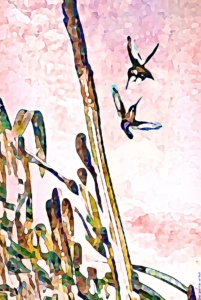


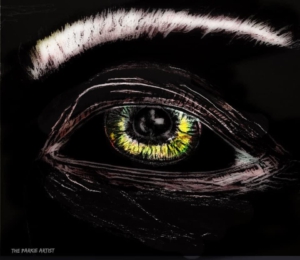

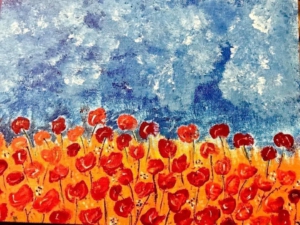
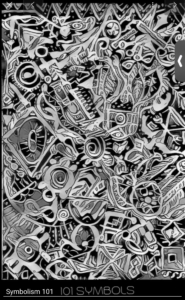

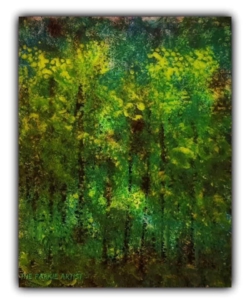
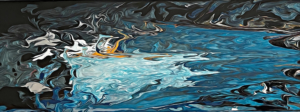
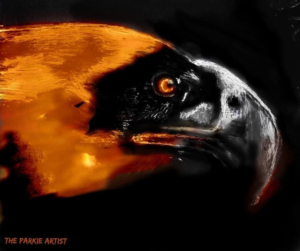
Some of Niffy’s paintings that she shared with us