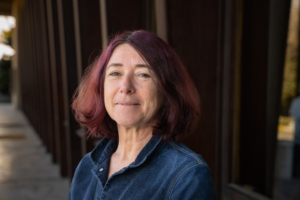
Dr. Christelle Baunez is a neurobiologist at Aix-Marseille University.
#41: Christelle Baunez – The role of the subthalamic nucleus in brain stimulation
In this intriguing dialogue with Dr. Christelle Baunez, a neurobiologist at Aix-Marseille University, we discuss a mysterious and small structure, the subthalamic nucleus. Christelle is known as the STN woman in France, due to her dedication to study this structure over the years. Christelle is a pioneer in the side effects related to STN stimulation in Parkinson Disease patients. Now, she is working towards understanding how STN stimulation can help people with addiction. We cover, with an historical perspective how STN became an interesting brain stimulation target, their advantages and disadvantages of its stimulation, side effects related, its connectivity and current and future applications. In addition, we discuss some of her recent fully unpublish experiments, like STN stimulation in cocaine addicted macaques and beyond. We also cover Christelle’s advocacy for animal research and its important role to push the boundaries of neuroscience. Finally, Christelle shares her passion for photography and how STN should be included in the reward circuit. This conversation was an incredible learning experience for me, and I believe it will be for you too. Thank you so much for tuning in – for this round episode number 41 of stimulating brains!
Christelle Baunez 00:00But with the pieces of evidence we have nowadays, we can see that there are critical inputs coming from the pain circuit, for example, entering the STN before it even reached the cortex. Then the positive thing is that I kind of rang a bell. Be careful. I can tell you that we confirm definitely on three macaques that we decreased their motivation for cocaine on the three of them. So the impulsivity is not one big thing, the control of inhibition, and STN is able to discriminate these subtypes of impulsivity. And. And surprisingly, indeed, the 130 hertz did not correct this behavior, but it's a 30 hertz stimulation that was able to correct an eight hertz.
Andreas Horn 01:16Welcome to Stimulating Brains. Hello, everyone. My name is Nils Pacheco. I recently joined the producer team of Stimulating Brains. I am so excited to work with them and keep learning. In this episode, we have a great conversation with Dr. Christelle Balnez. Who is she? Sure. Sure. Sure. Sure. She is a neurobiologist at Aix-Marseille Université. Christelle is known as the SDM woman in France 02:03because of her expertise with this small structure. Christelle is going to guide us through this mysterious structure, the anatomy, connectivity, applications, and more. They are going to touch topics as the reward system, chronic pain, Parkinson's disease, addiction, and VJAM. Thank you everyone for listening, and I hope you enjoy the episode. Okay, so Christelle, thank you so much for taking the time to do this interview with me. And I will have formally introduced you by now, so we can dive right in. I'll do that in the introduction. So we can dive right into the science. Or let's say we start not with the science, but usually I ask as first question to break the ice about your free time and hobbies. 03:04Anything you like to do when not involved in science? Yes, I have. Actually, I need a second life. And that's why I'm really hoping to get retirement in our French system that is changing because I'm a photographer. Oh, wow. And I like to travel a lot. So I take the opportunity at each travel, but also while walking in the streets in Marseille, I like street photography. So and I organize exhibitions as much as I can. So it takes a bit of time. And I also I'm also interested into solidarity actions. And at the moment, I don't have much time to be involved.
Christelle Baunez I've been a political activist for some years.
Andreas Horn Yes.
Christelle Baunez But my one said you were a comrade. Yes, I was actually. Maybe I don't know if we should say that. 04:01But some people in the US won't even understand how strong it is because I was in the extreme left party, the League Communiste Révolutionnaire, where Marianne used to be when he was a young student in Paris. My one. OK. Wow. But now I've stopped that. And I will wait. I will wait for retirement to have more time to dedicate to the others. Great.
Andreas Horn And you have an exhibition coming up, you just said, right?
Christelle Baunez For tomorrow. Starting tomorrow. Every year I take part to this amazing festival in Perpignan. It's a photojournalism festival. So the official festival is called VISA and it's for professional photojournalists. And there's an off version that is organized by the Chamber of Business. And so we exhibit in different shops all over the city during the whole festival. 05:01So it's really exciting. Great.
Andreas Horn Where can we see your art? Is anything online? Do you have a website or something?
Christelle Baunez Sometimes I post a little bit on Instagram. I had a week's web page, but I haven't worked on it. So again, as I said, I need another life. Or someone volunteering to help me.
Andreas Horn Makes sense.
Christelle Baunez OK. Thank you. Bye. Bye. Bye. Bye. Bye. Bye. Bye. Bye. Bye. Bye. Bye. Bye. Bye. Bye. Bye. It was a black and white picture of him, not really a mural. That was on a material on the wall. But I live actually in the most ancient part of Marseille called Le Pannier. 06:00And this area is actually the area for street art. So it's really nice because every other day there is a new thing.
Andreas Horn Yeah.
Christelle Baunez You ring on the wall and then if you don't take the picture the first day, then it may be different the second day because some people will come and write on it or change things. So it's a constant living art. That's cool. That's cool.
Andreas Horn So essentially, yeah, the canvas is the city and there's a lot of painting going on.
Christelle Baunez Sounds great.
Andreas Horn So any other things you do in your free time? Do you have kids, if I may ask?
Christelle Baunez No. No. No. No kids. Free time. I also like sports. And I like to hike in Montaigne or on the seaside. I mean, in Marseille, we have the Calanque. So it's an amazing place to go and hike because you have the impression to walk in Montaigne, but you're just above a cliff with the water of the sea at your feet. 07:04So it's really impressive.
Andreas Horn Very nice.
Christelle Baunez Great.
Andreas Horn So. Diving into the professional life, who were key mentors in your career and turning points along the way?
Christelle Baunez So one of my first mentor was André Nulon. And he was a professor in neurochemistry. And actually, I discovered really neurochemistry thanks to him. And I wasn't passionate at all by that because my goal was to become an ethologist specialized in primates. And my. Mentors since I'm a kid were actually Jane Goodall and Diane Fossey. I haven't met them, of course, but I was reading them and dreaming that one day I will be in the field watching the monkeys. So when I arrived in Marseille for my studies, I met this professor, André Nulon. And he was a specialist on dopamine, dendritic release of dopamine he had shown with Glowinski during his studies. 08:07And. And he convinced me that was really the game of asking question in research. That was the most fascinating thing to focus on and on whatever I would work, I would enjoy it. And actually, I have to say it was true. And also thanks to people working in his lab that I really realized that. So I should mention Lydia Kerkarian-Legoff. She has been a very much inspiring person around me and my PhD supervisor, of course. And I also have a PhD in biology. And then she introduced me to Mariana Malrick has been an amazing supervisor because she was really like a colleague and not like a superior person who had to teach me everything. She was really treating us as equal. And I gained lots of confidence and she did a lot for me in my career. 09:05And then she introduced me to Trevor Robbins, who, of course. Was a major character who played a critical role in my career because having worked with him just to you write this on your CV and you're like, wow.
Andreas Horn Yeah.
Christelle Baunez So that probably helped me a lot to get my position back in France after my short postdoc in his lab, actually. OK, there I think there are these websites that have statistics about, you know, citations and so on. And. He's often one of the number one cited person. He had a secret secret. He had a secret goal that was to publish as many papers as the highest score, the best cricketer had scored or something like that. At some point, it was related with cricket record and he wanted to have the same number of papers or things like that.
Andreas Horn 10:04Interesting.
Christelle Baunez OK, because it's funny. I recently met him in L.A. And. I was in a cab with him and asked him that, you know, say, you know, I've seen this.
Andreas Horn Is this true? Are you the number one cited person in the world?
Christelle Baunez And he said, there are people that say this might be true or something like that. He had a very British answer.
Andreas Horn So, yeah, as if he never checks, probably doesn't at this point anymore. But, yeah, that's that's great. So, OK, what does dopamine do in the brain then if you have worked with an expert?
Christelle Baunez Oops. It's complicated because. But it's time. It's a really cool equation, actually, because there is a huge thing at the moment where that annoys me so much. I just posted on Twitter X my annoyance regarding this attitude that some people who have focused all their life on the role of dopamine in the reward system now suddenly discover dopamine as a key role in movement.
Andreas Horn 11:02And you're like, bloody hell. But I mean, what Parkinsonian patients are going to think about?
Christelle Baunez That's we know that for such a long time. So I think, yeah, maybe sounds a bit like an old person to complain about how the young people are ignorant of the literature. But please reconcile those people who have focused all their life on the VTA accumbent system, totally ignoring the basal ganglia and the nigrostriatal system. And all the others who are working on the motor system. Ignoring sometimes the frontal functions and the reward circuit as well. And keep an open mind. But everything is already in the literature.
Andreas Horn It's not because now we have fantastic tools to be more selective than the main questions haven't been already asked.
Christelle Baunez And if you want my point of view, nowadays, science is just fashion. 12:02And it keeps coming back with the same type of questions. And except now we have technology. And technology is not everything, sadly. I totally hear you. And I think I totally agree. I think there's this 30 year circle. I've just talked to Nico Dosenbach yesterday about the same thing happening over and over again. Same questions being asked with new methods. Although what soothes me is so Haggai Backman has a really good book about the basal ganglia. I like it's a great primer. And I think he even really confronts the movement basal ganglia diagrams with the reinforcement ones. And tries to marry that. And somehow and kind of succeeds also with good jokes. And in there, as you can imagine. And he himself also. But Wolfram did in a way. Wolfram Schulz, when he published his first papers on dopamine and the reward prediction error, there was no dissociation between VTA and substantia nigra compacta. 13:00His dopamine neurons were from every dopamine nucleus. So with no distinction. I totally agree. And no, I wanted to what I wanted to actually say. So in his book, he he discovered that, you know, things he discovered were known since 30 years. And he didn't know that. Right. So even people like him suffer this problem that. 30 years ago, there was somebody already. Right. So so, you know, it's always easy to look at the young people and say they don't know what they're doing. They haven't been around. And of course they haven't. Right. It's very hard for us. And I'm not that young anymore. But, you know, I used to be. And. It's very hard to know the old literature. It's so easy. Right. You need a good mentor for that. Now, if you don't, you essentially think, oh, this might be new.
Andreas Horn Right. And very, very not even so easy, even with PubMed, to go back and find exactly the paper that did this really well.
Christelle Baunez And, you know, 30 years ago or 20 years ago. So I I'm just suspecting the same might have happened to you guys when you were young, too. 14:01So, you know, because they were so for example, it was so. I had the excellent mentors.
Andreas Horn Okay. Okay.
Christelle Baunez So.
Andreas Horn Okay.
Christelle Baunez So. And I think that's the one I cited from my time. Every original paper was had to be mentioned in my PhD thesis. I couldn't just rely on reviews that would make the summary of everything and just quote reviews. It was forbidden. I had to go and find the historical papers and give credit to those who were initially at the origin. So. And I think. it stuck with me, but that's why it's a really sensitive point to me. No, it makes sense. And you're probably very right that, you know, at the time science was also a bit slower. There was less literature. It was easier to follow and go back. But now if you type dopamine, reward and movements as now they rediscover that if you type this, you're going to have a thousand of pages on PubMed. 15:08Young don't start with the first page. They usually start from the last publication. So for 23, you're going to have 300 papers. And they can't. It's our responsibility because we let the system go this way. But too many publications kill the knowledge. You're totally right. It's a problem. I really see that too. It's hard to keep up these days, even with the new stuff. And then, yeah. Yeah. Anyways, let's go back to science and your expertise. I think, so first of all, I want to acknowledge my postdoc student, Garance Meyer from France. She knows you. She helped me a lot with preparation of these questions. So I want to give her credit here. And she kind of said informally, you're known as the SDN woman in France and internationally. 16:00So I think you really like that structure, the hypothalamic nucleus.
Andreas Horn What does it do in the brain?
Christelle Baunez Ah. That's a tricky question. First of all, yes, I want to say I really identify myself as a SDN obsessed person. And to such a point that when I hear someone mentioning SDN, I have the impression they're talking about me. So it's a disease of psychiatrists listening to us. Be in touch with me. I'm your subject.
Andreas Horn Yeah. So what does it do?
Christelle Baunez It's complicated because for many years, when I was introduced to this little nucleus, it was considered as a simple relay on the indirect pathway of the basal ganglia, playing mostly a motor role. Since all we knew about it was that when there was an infarct, a spontaneous infarct within the SDN, 17:01it would induce these ballistic movements in patients. So that was obviously a motor-related structure. And then progressively, when it started to be in the game of Parkinson's disease treatment, we suddenly looked at the consequences of manipulating this nucleus. And that's when I entered the game. In 93, 94, I started to make my first lesions in the rat. And I could see they did not only have motor problems. There was something else. And then I read the anatomy and looking at the connectivity of it. Of course, it made sense that we were always talked to the students of the basal ganglia. We were told about the parallel loops, but we were focusing on the motor loop and totally neglecting the other ones. And then actually the STN was not even drawn on the parallel loops. Yeah. 18:05It's totally connected directly with the prefrontal cortex, with the ventral pallidum. So it had to play a role in frontal functions. And that's when I decided to investigate that. And then I discovered that as small as it is, it is involved in many, many functions. Of course, you may say, I mean, most people are cortical driven.
Andreas Horn So they will always put the origin starting point at the cortex level. And then all the subcortical structure are only simply relaying information. But with the pieces of evidence we have nowadays, we can see that there are critical inputs coming from the pain circuit, for example, entering the STN before it even reached the cortex. 19:00From below?
Christelle Baunez Oh, I didn't know that. Yes, from below.
Andreas Horn So from the cerebellum, from the parabrachial nucleus. So there is a nociceptive network that has been highlighted by Veronique Coise in Grenoble, who is actually dissecting. And I contribute as much as I can to understand how. The question initially was why Parkinsonian patients suffer from chronic pain?
Christelle Baunez Not all of them, but many of them. And it's been.
Andreas Horn Ignored for many, many years because we didn't have a clue of what was going on.
Christelle Baunez And in fact, we discovered she discovered actually with Peter Redgrave and Paul Overton that there was actually a pathway involving the STN. So that may be a way to enter the basal ganglia with nociceptive inputs. And then, of course, there are connections with the amygdala. So giving emotional information. 20:01And then there are. Some recordings showing such a short latency that it cannot possibly just go through the cortex all the time. It has to be really direct inputs coming to STN and where he can filter. So I think. I never I'm never really good at addressing the question.
Andreas Horn What does it do?
Christelle Baunez It does a lot because it's an it's in a position of a nexus in the brain receiving so many. Information and also controlling many things. But it has possibly because we noticed in in recent papers where where we did some recording of STN neurons that they these neurons are the only one in the monkey we could find. We compared different subpopulations in the striatum.
Andreas Horn Could they put them in STN globus pallidus?
Christelle Baunez 21:02Only. In the STN. Could we find neurons that could both integrate information regarding the value. And the cost. So this integration was found at the level of neurons in the STN. So it's it's kind of an integrator and it can possibly be. Serve as a facilitator. So like. Get control. I would say. I think it's sort of like sort 22:02and it's not so big. So, you know, now you tell me about all these other things with pain and social things.
Andreas Horn It's really, it's too much for this small structure, right? So what does it even do with all that information?
Christelle Baunez And you said something like integrating Nexus and the facilitator, which goes in line with what I've heard from other experts. So Haggai Bergman once said something that I really liked and maybe you agree or disagree that he said, you know, if you think of a piano, the STN is the pedal to, you know, facilitate, but the striatum is the melody. I don't know if you like that or,
Andreas Horn because it would be similar to essentially loosening the break, right?
Christelle Baunez I remember listening to one of Haggai's talk and he was using this image. I kind of like it, except the only reserve I would have with this analogy is that some people play piano without using the pedals. And I think that, 23:00if you want to live with no STN, you're a kind of person, highly disinhibited probably,
Andreas Horn and with many possible problems. That makes sense. So, you know, I mean, you need it, right?
Christelle Baunez I mean, well, anyways. So I think going into that, after the PhD with Marianne-Anne-Rick in Marseille, you did a postdoc with Trevor Robbins in Cambridge, as we said. And then I think in that time, you found out that while lesion, meaning the STN reduced reaction times, it also played a role in response inhibition and reward processing, as you've just said. So I think you really put the non-motor STN on the map for many people at that time. But I think it was, and also lesions caused attention deficits, impulsivity, perseverance, as you've just alluded to. And this was, I think, around the same time that STN DBS was started in Grenoble.
Andreas Horn Exactly.
Christelle Baunez For Parkinson's.
Andreas Horn Were you worried?
Christelle Baunez Actually, yeah.
Andreas Horn Were you worried about that at the time?
Christelle Baunez 24:00I was not worried. I was concerned by the fact, first of all, my first paper on STN came out in 95,
Andreas Horn exactly the same year Patricia Limousin published the Lancet paper
Christelle Baunez with the DBS applied in PD patients. And we had a huge community in France of the basal ganglia research. So I knew already about that. And they knew my results in the rats. And I have to say that Alim Louie Benhabit didn't like my results at all because I was saying, okay, inactivating STN is good for Parkinsonian echinacea because our rat model was a reaction time measure. So that was really good in alleviating the echinetic problems. But then we induced something else. And so they are not normal. And I suspected it would have something, 25:00you know, to do with cognition.
Andreas Horn And that's why I wanted to go and work with Trevor
Christelle Baunez to really develop cognitive tasks to assess the role of STN in these functions. And Benhabit wanted me to be outside the STN because he didn't want me to find out there could be possible side effects we didn't want to see in the PD patients. So that was, I was not worried, but I was, I was concerned that they didn't really want to see side effects. Maybe, maybe you should cut that. Well, no, but they won't like that. That's part of history. But anyway, then the positive thing is that I, I kind of rang a bell, be careful because in the patients, you may recover some of the dysfunctions of Parkinsonian had, but you may induce something, 26:00you may induce something different or at least check. Oh, maybe they can be improved on some other aspects, but STN is not only the motor structure you think it is. And then progressively more and more neurologists were telling me when I was in meetings, Oh, by the way, I have a patient is doing this and this, and they were all these stories of incredible side effects they could see after manipulating the STN of patients. So that was really, uh, ! Kind of satisfying to see that even though my work was on rats, some clinicians were paying attention to what I was saying. It's not the case for the majority, I should say, but some were really interested because I was really digging into what do we do when we inactivate STN. And I had always sat in the back of my mind. It was always to better understand what could be the possible consequences.
Andreas Horn 27:00Yeah.
Christelle Baunez In the patients if we manipulate their STN. So you predicted it, it came true. Did Paul crack play a role in that because he's now quite, you know, that's his field. It has become his fear too. Is. I never liked, uh, he never liked to attribute, uh, the side effects to the STN. So for even for the motivation and the apathy effect, he has, he doesn't want to accept the fact that STN has something to play in it. He says, Oh, it's just because we reduce, uh, dopamine, uh, medication. And then, uh, now they are apathetic, but it's a, it's a Grenoble, uh, school.
Andreas Horn So interesting.
Christelle Baunez I, I really always thought him to be more, you know, that's what he focuses on on, you know, the, the non-motor effects of STN DBS and so on. But I, I'm, I'm, you know, might've also changed over, over time, but, uh, no, he, he, of course he's interested in that. And we, we, we change a lot and he's a good friend. I really like Paul a lot. 28:00Uh, but, uh, on the discussion of the apathetic, uh, effects described in some patients, uh, I was always telling him no, but it's normal because I mean, STN is involved in reward related processes in motivation. So it's not a surprise that the patient should change their level of motivation into which direction is a big issue because it might be dependent on what they were before the surgery. So, you alluded to it before in the classical reward circuit that we know, um, as published, uh, for instance, by Wolf 2002, um, a Morganson 1980, you had that in your slides when you, when, when I saw you talking Grenoble, the STN doesn't play a role. No.
Andreas Horn Do you agree?
Christelle Baunez It's been ignored all the time. And even in the recent review by Christian, you share, you mentioned that email we had, uh, and, uh, uh, uh, uh, uh, uh, uh, uh, uh, uh, 29:00uh, uh, uh, uh, uh, uh, uh, uh, uh, uh, uh, uh, uh, uh, uh, uh, uh, uh, uh, uh, uh, uh, uh, uh, uh, uh, uh, uh, At the Mogenson time, but also reshaped by Marina Wolf in 2002, there is still a box with motor outputs and the accumbens positioned as the interface from motivation to action. But if you look at the connectivity, we now know, because we look more carefully at the STN, we can almost make the parallel between accumbens and STN. 30:01And I also always play the game on my slides to add the STN in this diagram and to show, look, there is input from the prefrontal cortex. There are inputs from the dopaminergic neurons. There are now inputs from BLA. So the only ones that are not described are from the hippocampus. So learning memory is still something that is not that much affected. Right. But otherwise, everything else is when we touch STN. So it should be. It should be. And I think, you know, learning from the motor system, we know how dramatic the effect is. Right. So that's for neuromodulation. It's a small structure, but for neuromodulation, the STN is an amazing target because it's small, because our electrodes are small and so on. So it's a critical thing. And it's really the facilitator for lots of things.
Andreas Horn That's exactly what we want in all of these systems in a way.
Christelle Baunez We want to be able. We want to up and down regulate that, I guess.
Andreas Horn So maybe speaking about that, why do you think the small structure has such a dramatic effect? 31:03Does it have to do with the funneling effect of compressing the information and then there you reach a large network? Or is it more just the way the STN is wired?
Christelle Baunez Because I think if we would put an electrode into the striatum, we'd also see effects, but it's likely more specific, less global, maybe. Right.
Andreas Horn What do you think? Yeah.
Christelle Baunez There are different aspects in the answer. The direct connectivity surely plays a role. This description of functional territories has been done. I'm not an advocate of the contrary. I think dominance in terms of functional territories exists, but at least in the rats. the way the neurons are so compact, so massive dendritic arborization covering the entire structure. So you lose this little bit of specificity. That may be why wherever your electrode is going to be, you will recruit neurons involved in a network you wouldn't want to touch. So that's the difficulty. In humans, apparently, 32:25the target is different for Parkinsonism than for OCD and manages to minimize a little bit side effects you wouldn't want to see in PD patients or the other way around in OCD patients. So it's possible that there is a selectivity, however, but it's small, then compact, and therefore synthesizes many, many functions. Now the other thing I wanted to say was the fiber, 33:04the passing fibers going through the STM. And I'm not an anatomist, but I'm a big fan of Susan Haber's work. And she's described for many years, be careful because depending on where your electrode is going to be, you may stimulate fibers, going to places you would have no idea they could be related to STM manipulation. So this is really critical and it's really surrounded by fibers. So it's not only the direct connectivity of it, but it's also the location of it in the brain that makes it really susceptible to affect many, many behaviors. Great. I mean, I sometimes think, if you have that, you could conclude from that,
Andreas Horn that it is a bit of a dirty structure, right?
Christelle Baunez Because within like for neuromodulation, 34:01because there's kind of everything there.
Andreas Horn So, and we have the side effects, but they are not that common anymore, at least, or like, it depends on how subtle they are and so on. I sometimes think, why is that, right? Why is STM DBS so forgiving and why does it work so often? Because the surgeons don't always target exactly the same millimeters.
Christelle Baunez I sort of copied myself into sort of like sort of like sort of like sort of like sort of like sort of like sort of like sort of like sort of like
Andreas Horn and that's the symptom. Because maybe to add one more data point, if we put an STN electrode into OCD patients, they don't get hyperkinetic usually, right? No, no, it's true. But hyperkinesia
Christelle Baunez 35:03anyway is always transient. So when you induce it, that's the way we use the checking of our location of electrodes in the rut, because you know, in the rut is really a tiny structure. So after 25 years working on this structure, we still struggle and sometimes we get only 60% correct surgery in most of our experiments. So one way to check it is to induce hyperkinetic movement, because we work on intact animals most of the time. And that's a big dissociation between
Andreas Horn when we're talking about PD patients, and my data because I work mostly on intact animals. And then I don't repair a broken circuits. So do you induce hyperkinetic?
Christelle Baunez We have 130 years as I said, the the history goal work published in the 4049 by 36:04Mettler was describing an hemorrhage in the STN inducing hyperkinetic movement. So when you induce a selective inhibition in the STN, you see the rut making nipper ballistic movement of the contralateral pole. This is well known and it's a good way to say okay, our electrode is well located, perfect, which if you go in any other structure,
Andreas Horn you don't have such a fantastic control. So it's really good. But it doesn't last. So you're totally right about ballism that matches my experience, but like these hyperkinesia, dyskinesia in Parkinsonian patients, right? That if you have too much
Christelle Baunez levodopa and STN stimulation, people are dyskinetic and that lasts usually. Now, if you switch down, tune down the voltage a little bit or reduce the levodopa, it gets better. But I 37:02think we never see that in OCD, at least, I mean, I'm no expert there, but right. So
Andreas Horn where It's more sensitive to levodopa, isn't it? I would have thought so that GPI, Yeah.
Christelle Baunez Yeah. Yeah.
Andreas Horn Yeah.
Christelle Baunez intervention that is not that specific, we could possibly repair without affecting further, it's a big issue we are not able to address nowadays. And I think as many Parkinsonian subject types there are, as many effects and side effects you can see with STMDBS, 38:02that's a difficulty because they all have their own history of treatment, they all have their specific type of response to Levodopa and they have other treatments. They experience many different things in terms of social life, etc. And now we see in our rats that playing with STMDBS can also affect the way you see others. So you see, there were so many consequences you could observe in some patients but not in some others,
Andreas Horn and we were not able yet to really assess and understand why it could be different.
Christelle Baunez A guest question from Marwan Hariz, given your several NICE papers describing the role of the STN in various emotions, where would you place the STN in the grand circuitry of emotions, 39:02by Papes in 1937, who does not mention the STN in his Emotion Circuitry. Similar question to before, but it's a different literature. But it's the same.
Andreas Horn Yes.
Christelle Baunez Although, while I'm really strongly advocating to introduce STN to the reward circuit, because it really deserves to be there, because we have shown really, and others now replicate some of our findings, it's really critical for these functions. On the side of the Papes circuit and emotion, it's more discrete, I should say. And I was referring to the BLA projection to STN. It's been described in one or two human brain imaginations. And I think it was 40:19and in the reward circuit. So it should definitely be in the Papes circuit as a structure in interaction with the BLA and the central amygdala as well. So amygdala in general. As I said, hippocampus, not much as far as I'm aware. And Papes circuit, I think,
Andreas Horn was originally coined as an emotional circuit, but we think of it more as a memory one right now, right? Is that still correct?
Christelle Baunez So I think it's probably not so 100% black and white,
Andreas Horn but yeah, okay. So that makes sense. So now second guest question by Marwan is, 41:02do you know who said that the Baselganger are the site of motion and emotion?
Christelle Baunez And then he adds in brackets, motion and emotion has been adopted by the car maker Peugeot to advertise their cars.
Andreas Horn Yeah, I don't know.
Christelle Baunez I mean, if Mogenson was considering the accumbens as part of the Baselganger, he was certainly the one talking about an interface between motivation to action. So that could be my answer. If it has to be more recent in the fashion, as I was saying earlier on, people are rediscovering.
Andreas Horn Yeah, no, it's not that recent.
Christelle Baunez I mean, I have the answer.
Andreas Horn Now, yeah, it's apparently Eva Ajit.
Christelle Baunez Ah, Eva Ajit, okay, yeah. And maybe Hage Backman, he said. I was tempted to say Hage, I could have said that.
Andreas Horn 42:00But yeah, Eva, yes. Okay.
Christelle Baunez So I don't know if all your, if the people who are going to listen to this know who Eva Ajit is, but he's one of the most critical neurologists in France in, in the 80s, 90s, who contributed so much to the interface because he was a neurologist at the Salpêtrière in Paris and he trained so many neuroscientists as well. So he was really one of the key medical doctor being at the interface with fundamental research, very interested in research and bringing the clinics to us, neuroscientists.
Andreas Horn Yeah.
Christelle Baunez So he's been a prominent figure.
Andreas Horn Yeah, he's a legend.
Christelle Baunez So yeah, I think totally people should know him. I even tried a lot to get him on the show, but, and try to reach him. 43:00It was my one suggestion, but so far I haven't reached him. I think I have the email address, but didn't get a reply.
Andreas Horn So yeah, he's, yeah, again, as you said,
Christelle Baunez very important figure, very knowledgeable. His written books has been really important at creating this, this huge Institute in Paris, Salpêtrière, l'Institut du Cerveau et de la Moelle. And they were actually pioneer at bringing Mécène into science in France. So their first sponsor were Jean Todt and Michael Schumacher before his accident, actually. Oh, wow. Sarcastically. And so they were the major sponsor. And Yves has played an immense role in the creation of the Salpêtrière. And Yves has played an enormous role in the creation of this Institute. Speaking about frontal cortex in the Lardo-Bowness 2011 paper, you wrote that the STN has frontal cortex-like functions. Again, same, same topic, 44:01but we kind of often see this, this, this inhibition, not often, fortunately, but we sometimes see it with STN-DBS.
Andreas Horn Yeah. It's very interesting because when you inhibit STN
Christelle Baunez into whatever you use, a lesion, electric DBS or optogenetics inhibition, we find a lack of inhibition in terms of impulsivity of action. So the animals or subjects have difficulties at holding a response. They can't wait. They have to move. But the contrast is if you give them a choice and then you measure, you know, you measure the ! Impulsivity of choice, then you get the opposite. They become suddenly more conservative in task. So now maybe I should be more precise. 45:00Typically, when we talk about impulsivity of choice, we refer to tasks like gambling. So the Iowa gambling task where you have to choose options and, and optimally you try to get, uh, the larger reward with the best probability and, uh, or delay discounting in the delay discounting. It's a task. Uh, you may have seen the video of the little kids with the marshmallow. If you wait, if you want to eat now, you have one marshmallow, but if you manage to wait, you will get a second one and you see how they have to cope with the time lapsing. So when we do that and we inactivate STN, actually they can wait better than controls.
Andreas Horn Interesting.
Christelle Baunez So because they're so highly motivated for the rewards, I think that may also play a role in that. 46:01So, uh, the impulsivity is not one big thing. The control of inhibition and STN is able to discriminate these subtypes of impulsivity. So you really move a break on impulsivity of action. And they can never wait. Stop task is a nightmare. They can't stop if you remove the STN. And actually in a functional imaging studies, it's been shown that the STN lights up when you perform a successful stop. And we have recent data that we're going to submit in the next weeks on functional imaging in drug addicts, uh, doing a stop task. And we focused on the STN and it's really brilliant because it really works. So it's really involved in that type of control. So you remove it, you lose it. But when there's a choice involving rewards at the end or avoiding a punishment, 47:01which is a kind of reward in a way, then they will be able suddenly to control their movement and weights. So that's, uh,
Andreas Horn very interesting.
Christelle Baunez So one is discrimination. They're different timescales as well,
Andreas Horn right?
Christelle Baunez One is more about,
Andreas Horn yeah,
Christelle Baunez direct action. The other one is more about delay discounting. And you say the important thing is to have a choice.
Andreas Horn Yeah. Yeah.
Christelle Baunez Introducing a choice makes a difference because then you have different outcomes and the STN is, is involved in the valuation of cost benefits.
Andreas Horn And then yeah,
Christelle Baunez you are, it's worth waiting a little bit to get a larger reward. So they do.
Andreas Horn Interesting.
Christelle Baunez That's very, very, very insightful. So, so I always remember Peter Brown from Oxford. You, you, you probably know, know him. Um, he always said in his, there was one introduction sentence. He said that if a cat lures for prey, 48:02right, they have to be very stiff. They have to be, you know, essentially the engines already running, but the break is full on. Apparently beat up. How is very high in that state in the STN, um, the stiff Parkinsonian, but physiological state. Um, and, and then if, you know, if they, if they, if they run for the prey, then the beta beta drops.
Andreas Horn Yeah. Yeah.
Christelle Baunez It's in this case,
Andreas Horn it's interesting because it's exactly,
Christelle Baunez I was thinking while I was getting excited to tell you all about this, uh, control of inhibition and choice, that in, in activating the STN, then if the STN is valuing, then it should be disturbing and the choice shouldn't be optimal if you destroy the STN. But I think that's where all the work by Peter is really critical because it's not always a matter of total inhibition or, uh, activation of something it's modulating sub abnormal activities that can be found in STN. 49:04And, uh, when we were talking, uh, earlier on of repairing a system, actually in PD cases, you have these abnormal beta oscillatory activity in STN and a place, uh, uh, applying DBS. We've shown that in our rats in the context of addiction, but it's the same. Uh, Peter has shown that as well, that you reduce this abnormal activity when you apply DBS.
Andreas Horn And that's one explanation why it works. Yeah.
Christelle Baunez It's you diminish an abnormal activity.
Andreas Horn Can we simplify it even further and say this high beta powers over activation?
Christelle Baunez Probably not,
Andreas Horn right?
Christelle Baunez We shouldn't simplify that much.
Andreas Horn Yeah.
Christelle Baunez Not necessarily.
Andreas Horn Yeah. Okay.
Christelle Baunez I'm a lumper. sometimes I like to be and try to make things as simple as possible, but, um, sometimes of course,
Andreas Horn yeah,
Christelle Baunez 50:00that's not great. All right. So, so, um, for a long while, I think your, your main contribution. And we talked about this has been that to show that the SDNS non-motor functions and should be considered part of the reward system now. Think a bit later, or maybe around the same time, time you also thought about addiction and you've alluded to it before I interviewed Christian
Andreas Horn Lucha in episode 20 of this podcast and he's the author of what is often called the standard model
Christelle Baunez of addiction in the brain again in his wiring diagram the STN is not in there not even in the revised version of 2021 I ask again do you agree and we already know you don't but what is your
Andreas Horn what is your work about addiction I really don't understand why Christian didn't add it
Christelle Baunez especially in the revision of it because I mean he knows perfectly well and he's working on it nowadays so he should really he's treating STN DBS patients in in Parkinson's himself he's in 51:00you know that right he's a neurologist yes yeah I mean in PD patients yes but also in the context of addiction he's done some work recently on the STN so it's a bit weird to continue to ignore it if you suddenly are interested on in working on it so but I have no doubt in the next edition he will introduce it maybe there okay or he could be at least they could mention it as a provocative thing saying things don't stay always like that and now we suggest that it could be in implemented with STN on the diagram but yeah it's it's actually while I was when I started to observe my rats and I noticed they had some strange behavior towards their food reward when I was feeding them every every night in Cambridge after my experiment I thought they have something strange with the reward and they 52:01were always checking in the magazine in the task they were doing the attentional task if I choice these were lesioned STN rats they were always checking if they had a reward while they knew they hadn't performed well but they were keep focusing on the magazine to go and check so I thought there's something going on with motivation and I need to investigate that and I was particularly again concerned thinking always at the Parkinsonian patients and then I thought if we modulate the reward system in this patient I would be able to do something about it I would be able to do something about it I would be able to do something about it I would be able to do something about it I would be able to do something about it while they're taking dopamine medication we may induce dramatic effects because what I was seeing was an increased motivation for food so I thought and again I was referring to my textbooks the reward system is unique it's all about dopamine VTA accumbens blah blah blah and it works the 53:07same way whatever the reward on board so if I'm taking a dopamine medication I'm taking a the field of addiction with my own research because I thought I really need the help of someone doing self-administration in rats to check if my lesion is going to affect the drug intake in rats. And that's when I started to collaborate with Martin Cador in Bordeaux and that I published 54:00this really puzzling result because actually I expected the total opposite. Right. And so I told Martin, be careful because I'm coming to do the lesion in your lab, but I won't stay for all the experiments. So if when I leave, be careful every day because the rats may overdose. They may go crazy for the cocaine. So we have to be careful that they don't kill themselves. She said, OK, fine. And then I was receiving messages from the students. There's no difference. They don't show. Any increase in their drug consumption. I said, OK, fine. Perfect.
Andreas Horn It's really good because whatever would have been the result, it was interesting anyway. Yeah. So interesting for the clinic if it had no effect. Interesting for our knowledge if it was increasing.
Christelle Baunez And after. 55:00So I was telling her, we have to wait for the histology because your results show a big variability between. All individuals. So let's see after histology. So she sent me the slides. So I had no clue who was taking a drug or not. And I checked the slides and I said, this one is not well lesion. This one has a good lesion. This one has a good lesion, etc. And then at the end, she reanalyses the results and she sends me a message to say, by the way, your hypothesis was wrong. We have the opposite now. They decrease their motivation. They decrease their motivation. They decrease their motivation. For cocaine. When they have a nasty and correct lesion. And I was like, wow, that's fascinating because nowhere, nowhere else in the brain, you can induce this opposite effect, increasing motivation for drugs, for food, decreasing motivation for drugs.
Andreas Horn And I was like, wow, how am I going to explain that?
Christelle Baunez 56:03It's a perfect, perfect time for, for guest question by Haga. Backman. He says, hi, Christelle, Christelle, I look forward to your stimulating talk on the stimulating brain series. I'm sure you will touch on the issue that SDN DBS can ameliorate the desire for substance of abuse, but not for natural rewards like, like food and sex, which you just said, you understand the neuron neuronal mechanism of this dichotomy. Are there different neuronal circuits for the substance of abuse and natural rewards, or
Andreas Horn is it the same?
Christelle Baunez I think it's a different circuit, but with a different intensity of coding. And I think that was your nature neuroscience paper. 20 2005.
Andreas Horn Yeah. That's exactly this paper.
Christelle Baunez And thanks a guy for asking this question. It's a tricky one. I have to confess that it's been occupying my, my mind since all these years.
Andreas Horn 57:00And, and we have partly some answers. So what?
Christelle Baunez I should say is that SDN increases lesions or inhibition of SDN increases motivation for what is beneficial in terms of calories. And we've noticed that they make the difference when they work for sucrose, that is caloric and with a sweet taste. But then we, we did experiments with saccharin. Where you have the calorie, but not the taste and glucose. No, sorry. Saccharin. You have the taste, not the calorie and glucose where you have the calories, but not the taste. Rats love the sweet tastes immediately. Spontaneously. But when they get to understand that this sweet thing doesn't provide any calorie, they can shift their interests, but you need to make them understand. 58:06And when you give them the choice between saccharin and glucose, we actually showed that STN lesion rats shift more quickly than controls to the glucose solution because they understand the caloric intake. And as soon as they understand it, they shift more quickly. So they don't stick to the sweet taste of saccharin. They don't have the same. Maybe they don't have the same pleasure at licking saccharin. Then controls. But anyway, we thought we found that maybe the explanation of this increased motivation for sweet food was that because we were using sucrose and it is caloric and it's been shown by a neurologist in Clermont-Ferrand, Frank Dury first team that Parkinsonian patients with STN DBS have a change in their metabolism. 59:01So the interest for calorie might be something that. We tackle when we manipulate STN. So that could explain some of the difference. However, we have also shown naively when I first had these opposite effects on motivation, I thought, oh, maybe there are different types of neurons in STN specialized at encoding a specific type of reward and another type. And then they don't activate any beats the same way. And that.
Andreas Horn Could explain why we have motivation in one direction, motivation in the other.
Christelle Baunez So we did experiments. A type of Wolfram Schultz type experiment in rats where the rats were trained to press a lever, get signal indicating you're going to get sucrose, you're going to get cocaine. And then even before the reward was delivered, we could see activation in STN. 01:00:02That was changed depending on what reward was. Announced. And it turned out that nearly 50% of the neurons we recorded were responsive only to the cue predicting cocaine and the other 50 were responding to the cue predicting sucrose. And no overlap. Were they always selective or. Most of them were selective.
Andreas Horn Okay. Interesting.
Christelle Baunez Only. So I said 50 50. It was 45 45 and that it was approximately. 10% of neurons that were responding to both cues.
Andreas Horn Okay.
Christelle Baunez And. So thing is in STN, nothing is simple. So the specialized for cocaine, we are not going in one direction and the sweet neurons in the other direction. They were all responding with inhibition activation at the cue presentation. 01:01:01So it's not as clear cut as. As the dopamine responses or any other neurons in other structures.
Andreas Horn Yes.
Christelle Baunez And you always find all types of responses. So he couldn't really address the question whether or not there was a sub circuit that could eat the drug related reward and another circuit for the sucrose and the natural reward type circuit. Which. Was. Also something. I think. Trisha Janak may have worked on for some time. And. No, there was another work. Anyway. Describing in the accumbens different population and coding different types of reward. But I mean, I'm not really sure it does have to go through different circuits. Simply maybe. 01:02:02And. And. And. And copied in a different way, as we know now that even depending on the type of drug, you may have different behavior if it's opiates or psycho stimulants, and it's not only a matter of specificity of neuro chemistry, it's I mean, the reward circuits modulates differently. So but on a on a behavioral level, I think, in your 2010 paper penis paper, you double copied it. I copied it. I copied it. I copied it. doubled down on this idea that like lesioning or stndbs in rats i think at that point decreased the motivation for cocaine but increased the motivation for food yeah it was replicated in monkeys 2016 and um i think that ties into you or no the replication in monkeys is not published oh i i'm sorry about that so um i was given we are actually writing up the paper information 01:03:01yeah but no we we we have had uh abstracts on that experiment uh in the past but yeah okay no one no one else as far as i know has looked at that uh in monkeys and we we are i can tell you that we confirm definitely on on three macaques that we decrease their motivation for cocaine on the three of them the increased motivation for apple sauce was more difficult because they were not at equivalent level of motivation initially uh for this reward but uh the trend is actually quite uh encouraging and we we can say we sort of replicate and it it it ties into what you also did with um ocbo i don't know if you were part of it but you have it in your talks always that um that weight gain of stndbs in in parkinsonian so maybe you can do is there a way to summarize that together how you think about increased appetite 01:04:01increased and then decreased um cocaine or cocaine abuse
Andreas Horn definitely uh yes i mean it's been observed in some patients gain weight that's why we think it
Christelle Baunez may have to do with the change in the way in a metabolic change that makes people seek for highly caloric food supply and like and they go for chocolate a lot and sweets uh those patients with this obsession with food um so yeah there is this this effect that has been found in the clinic and uh on the drug issue uh the we have a few observation of parkinsonian patients suffering from the dopamine dysregulation syndrome so taking i mean they are diagnosed equivalent as addicts 01:05:31! the pathology is changing, people are more careful about all these DDS.
Andreas Horn And he said, yeah, in fact, we don't have that many patients now because...
Christelle Baunez People know it's posterior.
Andreas Horn Yeah, the clinicians are more aware, so they pay attention.
Christelle Baunez And then so there are only a few patients still with DDS issues, but less and less. So we won't have, we can't rely now on this Parkinsonian patient to have observation on the addiction-like behavior. 01:06:07But it's about time to try on real addicts.
Andreas Horn Yeah.
Christelle Baunez The difficulty is to recruit them.
Andreas Horn Yeah, we'll get into that in a second.
Christelle Baunez So maybe one last thing. I recently had lunch with Paul Cisek in Montreal, who is currently writing a book. I think you know him. He also runs a monkey lab in Montreal. A cog lab in Montreal. And he mentioned that one chapter of his book will be about the orbitofrontal cortex. And he's always looking back in time with his phylogenetic refinement approach, evolutionary time. And he said that the OFC, we often attribute the function of encoding value to it. But looking back through evolution, it was more originally had the function of encoding food. And so it's not just food. It's also, I think, just next to gustatory cortex and contains secondary taste and olfactory cortices.
Andreas Horn 01:07:08So maybe during evolution, this function that was originally just food encoding, like food value encoding, was extended to more abstract encodings of situations, valence. And, you know, is this a good thing? Is that, you know, or is it a good situation? Bad situation? So, and we know that there's a hypothermic pathway from OFC and ventromedial PFC projecting directly to the STN. So speaking about the circuits that Haggai asked, could there be a slight distinction of specifically the input of the STN?
Christelle Baunez One more encoding for calories, the original, let's say, OFC function, according to CSEC. And one bit more, whatever, dorsal, that might be encoding for other types of valence. Do you see a... Yeah, I remember Léon Tremblay with Wolfram Schulz had published a nice work on how OFC neurons were encoding 01:08:08the relative preference of different juices for macaques. And yes, of course, I was thinking at all this work when I did my recording in STN neurons, trying to see whether there was a preference and all these valuation possibilities. When we implemented the task for the monkey with the force to apply and see the modulation of all this. And the timing of our responses to me is so short that, as I said earlier on, I'm not sure it needs to go through the OFC. But the connection, although it's really little in the RAT OFC STN, it's in the primates, it's well represented in the human brain as well.
Andreas Horn 01:09:07And interestingly enough, they really have a lot in common, OFC and STN.
Christelle Baunez And in a review we had written in 2010 with Donnie Gould, we had reviewed all the work carried out with lesion pharmacology using the same tasks in RATS. So that was... That was a RAT review on control of inhibition. Five choice serial reaction time tasks. So with premature responses as impulsivity of action, perseveration, delay discounting, stop task. All the tasks reflecting impulsivity of action and the one impulsivity of choice.
Andreas Horn And what makes each lesion, what are the results?
Christelle Baunez And we compared. And of course, we were in Trevor's lab at the time. 01:10:00So he was obsessed with accumbens in the control of inhibition. And we could not find the evidence in the literature, even in his lab, of consistent lesioning of the accumbens disturbing this behavior. In contrast, OFC, dorsal medial striatum, and STN, were the three...
Andreas Horn The three structures constantly mimicking exactly the same deficit in the same task. Regarding these aspects of behavior and not exactly the same deficits as a whole task,
Christelle Baunez but specifically on the premature responses, any measure that are typical of control of inhibition. So the OFC, dorsal medial striatum, and STN is a network that is really critical in most of the behavior we are interested in. So the OFC, dorsal medial striatum, and STN, is a network that is really critical in most of the behavior we are interested in. So the OFC, dorsal medial striatum, and STN, is a network that is really critical in most of the behavior we are interested in. Control of inhibition, decision-making, by extension, and... Control of inhibition, decision-making, by extension, and... Control of inhibition, decision-making, by extension, and... 01:11:01Control of inhibition, decision-making, by extension, and... Control of inhibition, decision-making, by extension, and... extension and valuation of reward.
Andreas Horn Why not? Because that's exactly what they're doing. Interesting.
Christelle Baunez Torsum media stratum.
Andreas Horn Okay. Yeah, it matches.
Christelle Baunez So from our results, we, you know, we have a, I looked at just where we need to stimulate for, let's say, OCD responses in humans and STN works great. Sweet spot there, you know, perfect site. But then the NAC does not. So the accumbens is not a good target. And I think, you know, the electrodes often, you know, with the tips and the nucleus accumbens or sometimes even more posterior and the ventral pallidum, but the actual, you know, contacts that people look at are more in the anterior limb of the internal capsule, which projects
Andreas Horn through the STN, right?
Christelle Baunez So it's more like, seems like many of the, you know, ventral stratum targets there seem to be in that same circuit you just described. 01:12:00But rather. Stimulated the white matter in the capsule that would project to the STN from the site.
Andreas Horn So, so it, yeah, it was just a, I have to dig up that literature. That's really, really interesting.
Christelle Baunez I think for what we do too.
Andreas Horn But yeah, I, we, we said right from the beginning, I'm obsessed with STN, but of course I don't
Christelle Baunez naively think that he does it all by himself. Of course. And its connection with the prefrontal cortex is really critical.
Andreas Horn So that's why now with the fancy tools everyone uses, and I had pressure from editors to,
Christelle Baunez to, to stop the lesions and move to optogenetics and fiber photometry. So we have now these tools in my lab and we're looking at the specific contribution of the particular subtypes of hyperdirect pathway and what is their specific contribution to the different behaviors. 01:13:00We're studying. So anterior cingulate cortex, STN, pre limbic STN, infralimbic STN, et cetera. So great. I wanted to ask that more generally.
Andreas Horn Do you, do you work mainly with, with rodents now or also primates?
Christelle Baunez I do primate a little bit. I mean, in my team, Paul Apicella is still working there on his TANS neurons. So he's, we still, we still have some macaque activity and I have project to use marmosets.
Andreas Horn Okay.
Christelle Baunez But it will be for more social context approaches on the, on the addiction field. It's, I mean, everyone is aware that there is a big difficulty at keep working on primates nowadays, and especially at buying, acquiring macaques. So it's a big issue. 01:14:02So, and it's also, as I told you earlier on, my passion is monkeys, but in the wild, and I wanted to be an ethologist. So in the lab, I have to confess that it's been really difficult for me when I did myself experiments with macaques. These deep brain stimulation experiments, and they had also self-administration of cocaine. So it was a heavy experiment. Hmm. Uh, it was difficult. So as long as we can do really funny things and I, I have fun really doing my experiments with rats, uh, and we, we have a translational value in our work and I still want to believe that. So if I can minimize my impact on, uh, primate research, personally, I do, I, I, of course will always, uh, support, uh, the people who are doing it.
Andreas Horn Yeah.
Christelle Baunez 01:15:19We still need to do research on animals. And it's really important. And it's also very important to support research on non-human primates because there is no way to replace at the moment. And especially for brain research, what we like. So, but if I can avoid to do it myself, it's better. But I really support totally what Agai is doing, for example. Totally agree. No, no. I mean, it of course has to be as minimal as possible, but I think you can't replace it. I totally agree with you. So, and for the optogenetic stuff, I think you would use mice though, right?
Andreas Horn 01:16:02Not rats?
Christelle Baunez No, no, no. We do everything with rats. So, I have to say that I'm a rodent person, but a rat person. I don't like mice. Because they're really difficult to train in behavioral tasks. They are thick. So, you have to change all. The parameters.
Andreas Horn Yeah, yeah.
Christelle Baunez So, an attentional task to me is no longer attentional when you have to increase too much the stimulus duration for the mice to be able to, a mouse to be able to perform, et cetera. So, and they stink and they're small. And no, I don't like that. They stink. Love it.
Andreas Horn Okay.
Christelle Baunez That's like circling back to addiction for a second.
Andreas Horn Does stimulation frequency play a role?
Christelle Baunez I think you investigated 130, 80. No, 30. 8 hertz.
Andreas Horn What are the effects of each of those in STN? Okay.
Christelle Baunez So, yes, it's very important point because it was kind of a surprise to me that 130 hertz used to work for many aspects of what we looked at. 01:17:10First of all, when we started to use it in the context of Parkinson's disease, of course, when we developed the first. The behaving rats subjected to DBS, we applied, of course, 130 hertz. And then we tried low frequency. We didn't have a beneficial effect, but we didn't really see detrimental effects. It was not an opposite clear cut effect, at least on the task we were using after other people have published, studied, really assessing the parameters, modified, et cetera. So, that was a common sense to consider. That low frequency would stimulate the neurons. High frequency was inhibiting the neurons while stimulating all the network of fibers passing through.
Andreas Horn 01:18:00Okay.
Christelle Baunez I'm fine with that. Still, some people want to debate on that mechanism. To me, it's boring. So, I accept this general concept as functionally speaking in terms of behavior. That's what I see.
Andreas Horn Okay.
Christelle Baunez So, I think that the outcome really looks like an inhibition of the structure in many behaviors, not all of them. Anyway, so I thought when we are going to do our treatment for drug addiction, 130 hertz should be efficient for all aspects.
Andreas Horn And it's not actually what we see exactly.
Christelle Baunez So, to give you a really brief summary. 130 hertz works perfectly fine. On the measure of the drug addiction.
Andreas Horn Okay.
Christelle Baunez So, I think that's it. On the measure of increased motivation. We were talking, referring to before with the monkey data and the rat data. It also works at preventing the loss of control over the drug intake in a model of escalation of cocaine intake. 01:19:07It works with cocaine, heroin, alcohol. On this measure of escalation that is prevented.
Andreas Horn Okay.
Christelle Baunez So, that's it. That's it. That's it. That's it. That's it. That's it. That's it. That's it. That's it. That's it. That's it. That's it. Once the animals have escalated, we can correct by decreasing their level of drug intake, again, stimulating at 130 hertz. So, so far, so good. But then when we move to the study of compulsion, that's where we didn't find the 130 hertz as being efficient. And in that study, it's a P&I paper published in 2021.
Andreas Horn Okay. Okay. Okay. Okay. Okay. Okay. Okay. Okay. Okay. Okay. Okay. Okay.
Christelle Baunez by Michael de Goulet. What Michael did, he was training rats to first escalate their drug intake. They had their DBS electrodes implanted during the process of escalation so that he could record 01:20:03their local field potential through the stimulating electrodes during all the steps of the escalation. And while the animal were losing the control, he trained them in another procedure in which if they want to press a liver to get access to a liver delivering cocaine, they take the risk to have 50 percent chance to get access to the drug indeed or to receive an electric food shock. And most of the time they don't like the electric food shock so they stop seeking for the drug. But we have rats that are resistant to this punishment. So we consider that they are the real addicted rats because they have first escalated their drug intake. So they've lost the control over their consumption and they really seek for the drug whatever the risk to receive an electric food shock. And these animals, there are no way so far to discriminate them from the others, 01:21:05not given on the level of drugs they take during the escalation. We have no way to predict. But we thought, ah, we have recorded their STN activity. During the escalation of drug intake. So maybe they have a different kind of activity in their STN during the loss of control. And that's what actually we found. And it was not a beta activity for a change, but it was a very low frequency band. Around eight hertz. So that was a theta. I don't know. Some people depending on where you set the threshold, you can call it. We considered it was a theta band. So then we thought, oh, okay, that can be a predictor of vulnerability for addiction. And eight hertz. 01:22:01So if you have an abnormal activity, not at 30 or 20 to 20, 30, like we have in Parkinsonism, 130 hertz reduces the abnormal beta.
Andreas Horn Can we correct also an abnormal theta with 130 hertz?
Christelle Baunez So first we had to prove that the eight hertz was actually the marker of vulnerability. So we took animals that were not resistant to the punishment. We stimulated them with eight hertz to mimic a fake abnormal theta activity in their STN during a re-escalation process. And then we retested them. And while before they were extinguishing their behavior, they didn't want to take electricity in their pool. Now they became all resistant to punishment.
Andreas Horn Really?
Christelle Baunez So that's how we published its frequency dependent because 8 Hertz in STN can induce some compulsivity. 01:23:05And surprisingly, indeed, the 130 Hertz did not correct this behavior, but it's a 30 Hertz stimulation that was able to correct an 8 Hertz. So maybe there is a shift. So you can correct an abnormal beta by 130 Hertz. But if it's an abnormal lower frequency, maybe you don't need to go to 130 Hertz to have a beneficial effect. But an intermediate frequency.
Andreas Horn So then it's very interesting consideration because if you think that OCD patients have actually abnormal beta, but also abnormal theta, maybe it's not only 130 Hertz they should receive to have a total recovery or an optimal recovery because it seems to be quite beneficial, the STN target for OCD.
Christelle Baunez 01:24:04But yeah. In addition, 30, you could do both actually with the new devices. They can, they allow dual frequency. Or maybe we need to have a closed loop system. When you detect some theta, you would apply your 30 Hertz. And when you detect some beta, you start an 130 Hertz stimulation. That might be the most optimal way to do that. And that's what I was actually suggesting in the conclusion of our paper on compulsivity. That if we want to use STN DBS as a treatment for addiction. Maybe it's not a simple picture as applying an 130 Hertz stimulation. But we should be aware that maybe depending on what phase they are, if they are craving for the drug or if they are in a moment where they have another type of problem. We should record the activity of their STN before. 01:25:04That's okay. That's okay. That's okay. That's okay. That's okay. sending the stimulation to know what would be best appropriate.
Andreas Horn Interesting.
Christelle Baunez Love that train of thought. Amazing. So, okay.
Andreas Horn So, yeah, lots to think about here.
Christelle Baunez Great perspective on closed loop. I think summarizing, again, very broadly the findings on addiction, you concluded, I think, 10 years ago, that STN-DBS should be favored for treatment of addiction. You still think so, I think, in your talks. Even more, yeah. Even more. I have now even more evidence than 13 years ago. STN for everything. But it was 10 years ago already. Not for everything. No, no, no. No, no, no. Sorry. No, no. Don't get me wrong. No, I love the STN. And we just have a preprint out where it's effective for Parkinson's, Tourette's, dystonia, and OCD. Different circuits. 01:26:01But it is an amazing structure. So, that was not meant as criticism. That was actually in favor of it.
Andreas Horn It's an interesting target because it's rational.
Christelle Baunez Because now we have clear evidence. It's data-based evidence that the decision to choose a target for addiction at the moment should be STN.
Andreas Horn And I really, every time I attend functional surgery meetings and I hear these surgeons and they say, oh, we go to accumbens for addiction. Why would you want to go to accumbens?
Christelle Baunez Because it's the center of motivation. It's not a good reason enough. Somehow accumbens, yeah. In the contrary. I don't know. You're right. Because if you know your textbooks, you should know that if you go at the core of the motivation system, that is not known. If you're not known to discriminate different forms of motivation, you're going to reduce 01:27:03motivation for the drug, but motivation for everything. So, it's totally irrational. And we have data and people just keep ignoring them and they want to stick their electrodes in accumbens of patients.
Andreas Horn Yeah.
Christelle Baunez Go for it. But it's a total mistake. I hear you. I hear you, Christelle. I do.
Andreas Horn So, when I wrote up the questions, the first thing I wanted to type was, why did it take so long? Why did it take so long to translate this into humans? Or why didn't it translate into humans yet?
Christelle Baunez Very good question. Now, Véron told me that there was just right now out a case report of a first patient with mixed results.
Andreas Horn Do you want to talk about that?
Christelle Baunez I think, first of all, why was it so complicated to get to that point? It was really, really difficult. So, honestly, I have to give credit to Luc Mallet, who is a psychiatrist from Paris, Salpêtrière, worked with Evagide again. You see, we always go back. We go back to the classics. 01:28:01And he actually read my rat paper. And immediately after the Nature Neuroscience 2005, he already wanted to do it in patients, in addicts. So, he was all excited. So, I said, ooh, hold on a second. Don't jump too fast. Even myself, I was not really convinced that we should go that fast. So, I said, it's a lesion study. You're not going to die. You're not going to die. You're not going to die. You're not going to die. You're not going to die. You're not going to do lesion in addicts. So, let's wait for me to do it with DBS first in rats. Then we published in 2010 the PNAS paper with the DBS in rats for the same measures, motivation for food versus cocaine. And then he was still excited. And he said, oh, now I write a PHRC. So, that's a procedure you have in France to be allowed to do a clinical trial. So, he actually obtained it quite quickly, maybe relatively. 01:29:06I don't know. I don't remember when he obtained it. But in the meanwhile, it was impossible. It was difficult to find first people who would accept to recruit patients for this syndication because it was not based on the... Strong data. Only my experiments in rats. So, you have to believe in only one or two studies. Really difficult. So, and then so he found a colleague of us, an addictologist, Florence Vorspon. So, she accepted in Paris to recruit, to try to recruit patients. The problem is addiction is a really difficult disease.
Andreas Horn Yeah.
Christelle Baunez By the way, it is a disease. Some people are still ignoring that. And then so if you want to recruit volunteers for PD, OCD, it's easy because now you have 01:30:07nice videos you can show to the patients and they all want to have the same thing. Yes, yes, it works. I want that. I want that.
Andreas Horn Yeah.
Christelle Baunez Addiction, there's nothing. There was a poor video from Damien Denis group in Amsterdam for opiate syndication and they had the information.
Andreas Horn Yeah.
Christelle Baunez And then they had a video of a patient who had been implanted not in the accumbens, but in the anterior arm of the capsule. But it's not apparently convincing enough for the patients to volunteer to be subjected to that heavy surgery. So it's a major point. Some people think it's only a matter of will and then you can treat addiction just helping them to...
Andreas Horn Yeah.
Christelle Baunez To be more, to be stronger and have more will and then they will get out of it. 01:31:01So no need to stick electrodes in their brains. And sadly, there are too many people still thinking like that. So it's a really difficult issue. So we had first the difficulty at finding even the people involved in the project and then after to recruit patients. And this case is actually not an optimal case. So to cut the story short, it's really easy. Now the guy is perfectly fine. He has no stimulation anymore. He takes no drugs. He's perfectly fine. But we can't say whether or not the surgery did anything to him because the guy had too many problems initially. So he was really, really coming from a background. He was left on his own. Leaving all his work. He was living on his own. He was living almost in the street. He had an agoraphobia that Florence treated while he was in the service. 01:32:02For two years he's been nursed by a whole team. He had a flat for himself.
Andreas Horn He had all fantastic conditions. So it's so much all intermingled. What can you draw as a conclusion?
Christelle Baunez You can't say much. So the guy is perfectly fine. But maybe he would have been perfectly fine. If we did a project. If we did a placebo surgery and just giving all the care he received for once in his life. I shouldn't speak like this because it's not my hypothesis.
Andreas Horn Yeah, no, but it shows that you take it seriously. So it's a success story, right?
Christelle Baunez You could also say, wow, he's perfectly fine now. But we didn't write the papers this way.
Andreas Horn Exactly.
Christelle Baunez I remember it very differently. So I think it was screening over it. It read that it really didn't work so well. No, no, no. She was really on a pessimistic aspect. 01:33:04She wrote the paper. So saying they couldn't see any change in the craving. But one thing that is not written in the manuscript. And I told her many times that I wanted her to refer to it. But maybe she thought it was too much anecdotal to be true. I didn't know how to But when they started to set the parameters of the stimulation, while they were increasing progressively the intensity of the current, at some point, the guy said, I feel so well. I've never felt that well for so many years. They didn't stop at that stage because the procedures they had validated, you know, with the law, with the thing, you have to apply what you've said you would do. So Luke had written the procedure as to apply a similar stimulation he applies to OCD patients.
Andreas Horn 01:34:05Okay.
Christelle Baunez So he went further to reach the parameters for the OCD patients. Maybe this guy didn't need that much and it would have been much more optimal if we were where he said he was feeling so well. And that's one of my regrets. I would have liked it to be. He said he was stimulated at the parameters. He said he enjoyed it. Because in our rats, we showed, I mean, it's a publication in preparation. They can self-administer the deep brain stimulation of STN. So it is rewarding by itself. And we can replicate that with optogenetic inhibition of STN neurons. They can press for it. So it's, it had an effect on him.
Andreas Horn Yeah.
Christelle Baunez Transient.
Andreas Horn And then I would have liked it to be pursued better, 01:35:03but it's really difficult. So I really hope someone is going to try again. Are there more patients planned?
Christelle Baunez Sorry. Are there more patients planned
Andreas Horn and just not been written up in this trial or was it a single shot trial?
Christelle Baunez No, no. They were three or four planned. They haven't been included yet.
Andreas Horn Okay.
Christelle Baunez And there may be in the future, but I'm not sure. And I really wish they would be. I know that Vomina Sun Service in Shanghai was planning to do it. Because they were planning to implant 60 accumbens. And then after listening to my talks, they said, Oh, maybe we should try STN for 30 accumbens and 30 STN. Then I went there and I got a bit scared. And I was like, Oh, but you know, of course there might be side effects. 01:36:01And especially with all what we're discovering at the moment regarding emotions, that's maybe, I mean, it's important to monitor well these patients. But I mean, the side effect may not be that terrible and maybe not less terrible than accumbens, stimulation. I don't know what they're going to see with accumbens stimulation, but we'll see. One thing I remember when talking to Valerie Boone is that it's a criminal offense to be addicted in China,
Andreas Horn right?
Christelle Baunez So that makes the whole situation quite difficult to recruit. And I don't even know how they do that because they need ethical votes. Anyway,
Andreas Horn yeah,
Christelle Baunez they had a difficult discussion with the authorities. So the first time they are cooked, they are not. They are registered, but not imprisoned or anything. 01:37:00But if they are cooked a second time, then they risk to be put in a psychiatric hospital where you don't want to go. And then, so that's what they were trying to deal with. The authorities in Shanghai to be allowed to do that study mean that they have to be a bit more flexible with the patients. So we'll see how it goes. Okay, got it.
Andreas Horn Interesting.
Christelle Baunez So, so your comrade, Ma Wan has a really great paper on serendipity and discovery, discovery of, you know, human serendipity discovery. So we find, for example, that that lesion here leads to cessation of tremor. Then we can essentially mimic it. Like if there's a stroke, think James Parkinson's, one of his patients had a stroke that got rid of tremor. After that, people could get rid of it. So, so, so, so, so, so, so, so, so, so, so, so, so, so, so, so, so, so, so, so, so, so, so, so, 01:38:05! ! 01:37:45! 01:38:05analyzes the field of and looks at how many wins do we have, like how many treatments really came from serendipity and how many really came from animal research. You could even play the devil's advocate and say that the, you know, monkey model, MPTP monkey model, where then Haggai had the STN lesion and that led to STN-DBS, came from
Andreas Horn frozen addicts and humans, right? So the idea, again, in a way, came from serendipity in humans, and then we went back to the animal. So I'm playing devil's advocate here, but where do you see the role in animal research in DBS?
Christelle Baunez And then also, given the difficulties you had, you know, it makes perfect sense in the rat, now translating it to humans so far, at least, is mixed.
Andreas Horn What's your take on this as an animal researcher?
Christelle Baunez Because the story... 01:39:00of the DBS is actually really coming from animal work that was highlighting the abnormal activity of STN and all this. It was the fashion, it was the beginning of my PhD, so I recall well that there was this passion in the basal ganglia community to consider this imbalance between a functional antagonism between dopamine and glutamate. So it comes... from the late 80s... No.
Andreas Horn But we had palaeodotomies before that, right? And they were great.
Christelle Baunez And then I think Benhabit even wanted to go to palatal DBS first, right? So I think we have to be careful here.
Andreas Horn No, but the reason why STN was a target of interest is because it was the only glutamatergic
Christelle Baunez system within the basal ganglia, and that was shown to be hyperactive in case of a 01:40:00dopamine depletion, because there was this antagonism. So they tried the antagonist of NMDA receptor as a treatment for Parkinsonism with so many side effects. And then it was all this big fashion on that. And so, I mean, I really think that the animal work has been critical in that. And not only Agai works was lesion of STN.
Andreas Horn But it is also the fact that the target is interesting.
Christelle Baunez The technique of DBS was found by Benhabit in the Vim of the Thalamus. But then application of DBS in STN was first done in the monkey in Bordeaux. Everyone always skips this step. And it really annoys me. That's a good point. Because it was...
Andreas Horn Yeah.
Christelle Baunez 01:41:00It was applied there. And it's not my group.
Andreas Horn Yeah.
Christelle Baunez So I really always advertise for them. I have no problem with that. And I'm happy to do it because it's unfair that they are not recognized. So the application of DBS in ST and in monkey is the first word. Amit Benazouz, 93.
Andreas Horn And then he moved to Benabide and they tried in the patient. So the animal validated the target before it was done in human. And STN was not a target for PD before. So I mean, not deliberately, right?
Christelle Baunez If you look at the lesions Hasler made back in the day, they always try to avoid the STN for risk of hemibalism, of course. So they did not lesion it, but they did. If you look at the images, they had often subthalamic lesions that had great success.
Andreas Horn Yeah, but they would have never interpreted their result at the time.
Christelle Baunez You're right. 01:42:00They were ashamed. Shit, we touched the corpus. Yes, yes, yes.
Andreas Horn And they would hide it. So you don't dare sometimes. I mean, if you work properly and you think rational, what do we know about this structure?
Christelle Baunez You don't destroy M1 to help a Parkinsonian patient. So if one has an infarct and suddenly recovers the function, you're not going to lesion everyone in such a critical place in the body. You're going to lose the brain. So I mean, they did in the time, but that was not a good idea. I totally agree.
Andreas Horn So exactly.
Christelle Baunez So it was not a good idea because science needs to be based on facts and facts that are replicated, studied with tools that you cannot always apply to human brain. So I think I mean, I see 100% no doubt a lot of value in animal research. 01:43:00I told you the same with the primate research. I think M1 probably does too.
Andreas Horn It's more like it's still an interesting way because in a way you said we kind of shape history towards the more human side. But you could also argue that our whole publishing and funding machinery really favors animal research. All the Nature papers are mainly animal research, right?
Christelle Baunez And the grants, bigger grants are given to animal labs and so on.
Andreas Horn Yeah.
Christelle Baunez But Nature papers are not. Nature papers sometimes don't get cited because they are not that great. Sure, but people would want to publish them. You have a much higher impact factor in the clinical journals. There are many, many clinical journals that have such a high impact factor.
Andreas Horn And I don't know. It's prestigious, right? So everybody wants to, like people want to publish Nature, right?
Christelle Baunez And then it's very... 01:44:00It's very hard to get in with clinical work. We should stop that anyway. We should. I know. That's a whole different discussion. I'm just saying that. It's an old debate.
Andreas Horn Yeah.
Christelle Baunez I guess the whole theater is kind of, we put a lot of focus on animal research and I think it's good, right? I'm not even challenging that.
Andreas Horn I just think it's an interesting point to see, okay, but if a lot of wins come from human observations that we could then refine in animals, right?
Christelle Baunez That could be the other model where we say, hey, a lot of animal researchers study things in animals. Right. or lesions work and so on. Anyways, I think there's no, certainly no, you know, animals bad or good. It's all useful. And I'm a very big fan of basic science.
Andreas Horn I just thought it's an interesting discussion
Christelle Baunez 01:45:01to be had with you. It's just that I think the specificity we gained with these new technologies allowing to target selectively a specific pathway, a specific subpopulation of neurons, we certainly can't have that in the clinical research now. So whether or not it has a direct translational impact, maybe not immediately. So it may take some time before we realize. And of course, also, because as I said earlier on, I'm not impressed by the type of question people ask with these new tools. So now they have specific tools which are not available and we are sure that they are recording dopamine neurons. While before you had to be called Wolfram Schultz or Tony Grace so that people would believe you were recording dopamine neurons. If you were a nobody, everyone was always giving you hard time. 01:46:01Are you really sure the neurons
Andreas Horn you record are dopaminergic?
Christelle Baunez Oh, yes, they have the waveform, blah, blah, blah.
Andreas Horn But so now they have the specificity. But do they show something so much different and do they ask different questions?
Christelle Baunez Oh, yes, they rediscovered their movement in dopamine.
Andreas Horn Fantastic.
Christelle Baunez But so the thing is, we have with animals
Andreas Horn fantastic tools nowadays.
Christelle Baunez Whether we are using them properly is another debate. But I think they may have translational impact, but it may take some time. So because we still can't do some of the things we do in animals in our patients. And that's good like that, I think.
Andreas Horn Makes sense.
Christelle Baunez I want to be mindful of your time. I've been taking a lot of your time. So I want to wrap up with some like rapid fire quick questions.
Andreas Horn Did you ever have a eureka moment in your scientific career?
Christelle Baunez 01:47:00They said, wow, now I understand it. I wish I would. No, but I get excited by difficult results. I cannot explain. It's more exciting. To me, if you have an hypothesis, you make an experiment and you find the results you thought it would be, it's boring. Then if it doesn't fit with any of the diagram you've studied and all of the textbooks you've read, then it's challenging. And that's what I like. So no huge eureka moment. Speaking about more the opposite failures to also communicate, that did you ever think
Andreas Horn this was a big waste of my time? This didn't go well?
Christelle Baunez No, I never think we waste time. What we waste is the fact that we don't share 01:48:01the negative results enough. And we could save some time of other people somewhere else in the world. So that's really something we need to work on. But again, it goes with what we were saying about the big journal, people want to publish, and it's so annoying. So I hope the archive system is going to save our system and that we are going to get rid of these big editors and rely on our expertise to judge whether or not we should cite this paper because we read it on bioRxiv. It's really cool. They've done the job properly. Spend some time doing this. Instead of, oh, because it's published in Science or Nature, it's good. No, no. Some work has not been replicated at all. And we all know that. So we should be really more invested in alternative systems. 01:49:03And so negative results is important to communicate. And no, you don't waste time if you have negative results because you know something. That's your hypothesis was wrong. Or there's something wrong in the system. Advice for young researchers entering neuroscience and academia.
Andreas Horn Sorry?
Christelle Baunez Do you have any advice for young researchers
Andreas Horn entering the field?
Christelle Baunez My advices have changed over time. When I was young in my career, I was a witness a witness. Of the fact that it was difficult, of course, but not impossible. And every person. So that's what I was telling the younger student coming to discuss with me. I was always telling them, if you're motivated enough, 01:50:01you'll find a job in academia or in private industry, whatever. But if you really want it, you can stay in research. Nowadays, I can say, and I see so many bright students who have to change career. It's, it's heartbreaking. It's terrible. We've invested so much with them and they are really good. And at some point, they just feel lack of recognition. It's too difficult
Andreas Horn and too much pressure. And then they quit. Is that because we're training too many or because it's harder to get grants these days than it was?
Christelle Baunez There is little money invested in research in most countries nowadays. That's a problem. So they want us to be, to perform with little. So we are heroes. 01:51:01Daily heroes. And that's what I keep telling all the people around me. We shouldn't feel ashamed because we are not competitive with some other countries. We do with what we have. So, France is cutting the budget for research all the time. They have no respect for our work. And so, doing what we do is already really good. It's a performance. And I see that in many countries. Actually, only a few countries currently are really investing in development of research. China. I don't know.
Andreas Horn Where else?
Christelle Baunez I mean, the US increases by, I think, quite drastically. I think, quite drastically.
Andreas Horn In the US?
Christelle Baunez Mm-hmm. Mm-hmm. Okay, good.
Andreas Horn But, yeah,
Christelle Baunez it's not, it's not the case in most countries. So it's a big problem. Then I think we still should train 01:52:07as many people as possible. Because even if they go and do something else, which is heartbreaking, as I said, the training, the working with integrity, developing your curiosity, all things we were not able at my time to realize the richness of such a training and how it brings abilities you can use for any other type of job. At my time, we were trained like there's nothing else but academia.
Andreas Horn So if you don't do that, what are you going to do with your life?
Christelle Baunez Now, it is the young are not trained like that at all. So they think of alternatives, which is good. It's sad for us because some of them should stay with us. But at least now they know how to value the training they received. So which is good. 01:53:00So I think, no, we should not limit the training, but we should push our politics to invest more on us. That's good.
Andreas Horn Advice for women in the field?
Christelle Baunez Ah, there's a long way to go. It's still tough. I agree. It's still really, really difficult for women in science in general. There are initiatives for diversity, equity. But there are still so many stereotypes, unconscious stereotypes, and that's a problem. So the first work we have to do is to make people realize that we are not alone. Even though they would like not to be biased, they are. And we all are. And sometimes women are even tougher with other women. It's a really difficult thing. And when you sit in a committee, 01:54:01for example, and very quickly, we ask you to give names of people to give a talk on a topic. Spontaneously, it's always men's names that come out first. Always. And then you have to correct to say, oh, it's a bit biased. And then suddenly, aha.
Andreas Horn So who could we think of inviting?
Christelle Baunez It's shocking. But even me, I have the same bias. And I have to force to say, oh, okay, I should be careful because I know there is a bias. So since I know, I try to anticipate but it takes more time. And so there's a lot to do. But, I hope that the next generation will benefit from all these initiatives. ALBA and EBPS, we have launched a group to work on diversity, equity, 01:55:00and things like that. So I see it's progressing.
Andreas Horn Yeah. Also for this podcast,
Christelle Baunez I started with the strong aim to have at least 50-50. But so far, I've failed, unfortunately. And it's really because, maybe it's also, as you say, biased.
Andreas Horn Absolutely.
Christelle Baunez It's harder to think of like women sometimes. And I also feel like since neurosurgeons are still very male-dominated, it's really a bit, especially under them, a bit harder to find people. So the other thing is that I realized, which again goes into the same direction, but I have really gotten, more rejections from women that I ask. Probably just because men like to talk about themselves more, you know, same kind of bias that they don't mind about, you know, being on the stage.
Andreas Horn That is interesting too,
Christelle Baunez that I feel like. I think it's, 01:56:01as always, I mean, even when I was in politics, it was the same thing. Or giving responsibilities to a woman is always difficult because, immediately, the first question they will ask,
Andreas Horn am I qualified? Yes. Yeah.
Christelle Baunez To do that.
Andreas Horn Yeah.
Christelle Baunez Men never ask that question.
Andreas Horn Yeah.
Christelle Baunez They consider that if you ask them, you consider they are qualified. So they never question it. A woman systematically will start like that.
Andreas Horn Yeah.
Christelle Baunez Do I think I am qualified
Andreas Horn enough to do that?
Christelle Baunez And then they have the imposter syndrome.
Andreas Horn Yeah.
Christelle Baunez It's a constant.
Andreas Horn And then after, can I afford to take some time to do that? Yeah. Yeah.
Christelle Baunez True.
Andreas Horn Yeah.
Christelle Baunez So in that vein, last few questions.
Andreas Horn What do you think the future of the field will be?
Christelle Baunez Of deep brain stimulation,
Andreas Horn neuromodulation? 01:57:01Is optogenetics coming for the humans? What are we changing? What are the next steps? What do you think?
Christelle Baunez Oh, I think it still has a nice, a nice future because there are still some groups are still working on indications, new indications. So refinement of the current applications, the quality of the electrodes, the way you can shape the current, et cetera. It's all a field that is still under development. At the moment. So I think it's still as I don't, I don't think I will see the end of DBS while I will be still active in research yet in photography. And and I hope for new indications, of course, what optogenetic to human being 01:58:01could bring different will be based on the DBS effect anyway. So they will still need DBS to develop opto further. And and we are not there yet. Because when we see the difficulty to transfer the technology from rodents to primates, to have a specificity, a good expression of the virus in the human brain, make sure that it's all safe.
Andreas Horn Yeah.
Christelle Baunez Get all the official authorization. And I'll be retired. It won't have started.
Andreas Horn Yeah, I agree.
Christelle Baunez Any missed opportunities of the field, things we should be doing but are not. We heard more funding, but other things we should be doing. Put STN in the reward circuit.
Andreas Horn 01:59:00Yes.
Christelle Baunez Part of that boycott the big journals and put your stuff in open. Give me a be for psychopharmacology oh wow great all right so so yeah thanks for that any topic we we you would have wanted to discuss i know we covered a lot of ground but anything that i missed before we stop uh no i think we we talked a lot i know yeah thank you so much this was a long long 02:00:05conversation so thank you crystal one more time it was a great pleasure thanks a lot and thanks
Andreas Horn to all my friends for their very interesting question marwan hi guy great great and garance she needs to be highlighted absolutely thank you so much thanks a lot
Christelle Baunez you you you you you you you you you you 02:01:00you you you you you
Click any highlighted text passage to jump the Spotify player to that point. The transcript text is present directly in the page HTML for search engines and accessibility.
References and Links:
- Terenzi, Damiano, Nicolas Simon, Michael Joe Munyua Gachomba, Jeanne Laure de Peretti, Bruno Nazarian, Julien Sein, Jean-Luc Anton, Didier Grandjean, Christelle Baunez, and Thierry Chaminade. 2023. “Social Context and Drug Cues Modulate Inhibitory Control in Cocaine Addiction: Involvement of the STN Evidenced through Functional Magnetic Resonance Imaging.” bioRxiv. https://doi.org/10.1101/2023.09.06.556336.
- Voon, Valerie, Pierre-Olivier Fernagut, Jeff Wickens, Christelle Baunez, Manuel Rodriguez, Nancy Pavon, Jorge L. Juncos, José A. Obeso, and Erwan Bezard. 2009. “Chronic Dopaminergic Stimulation in Parkinson’s Disease: From Dyskinesias to Impulse Control Disorders.” Lancet Neurology 8 (12): 1140–49. Chronic dopaminergic stimulation in Parkinson’s disease: from dyskinesias to impulse control disorders – The Lancet Neurology
- Baunez, Christelle, and Sylvie Lardeux. 2011. “Frontal Cortex-like Functions of the Subthalamic Nucleus.” Frontiers in Systems Neuroscience 5 (October): 83. Frontal Cortex-Like Functions of the Subthalamic Nucleus – PMC (nih.gov)
- Rouaud, Tiphaine, Sylvie Lardeux, Nicolas Panayotis, Dany Paleressompoulle, Martine Cador, and Christelle Baunez. 2010. “Reducing the Desire for Cocaine with Subthalamic Nucleus Deep Brain Stimulation.” Proceedings of the National Academy of Sciences of the United States of America 107 (3): 1196–1200. Reducing the desire for cocaine with subthalamic nucleus deep brain stimulation | PNAS
- Book – The Hidden Life of the Basal Ganglia: At the Base of Brain and Mind by Hagai Berman Amazon.com: The Hidden Life of the Basal Ganglia: At the Base of Brain and Mind eBook : Bergman, Hagai: Tienda Kindle
- Book Subconsciousness: Automatic Behavior and the Brain Amazon.com: Subconsciousness: Automatic Behavior and the Brain eBook : Agid, Yves: Tienda Kindle


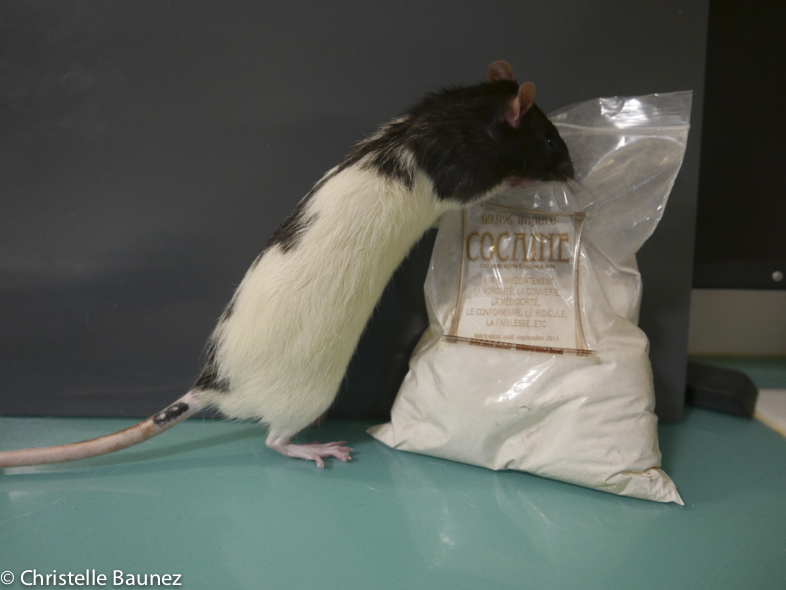
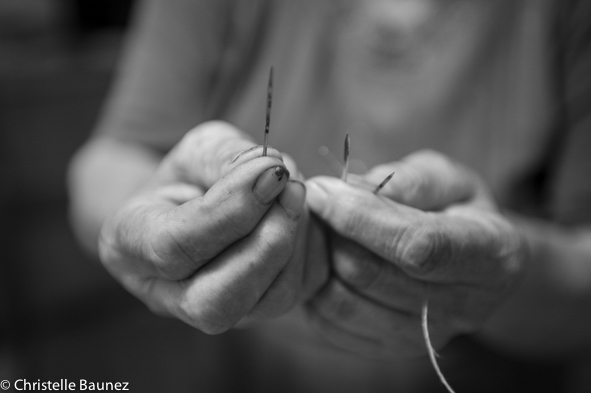
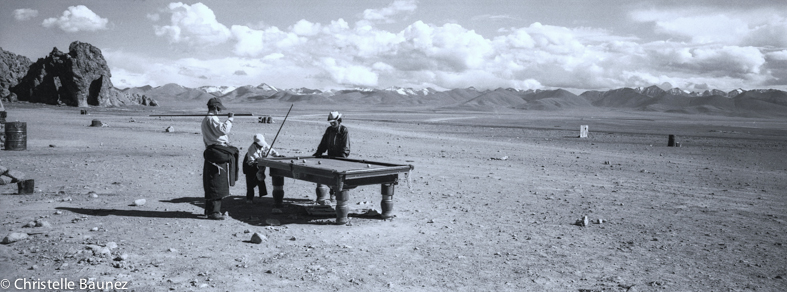
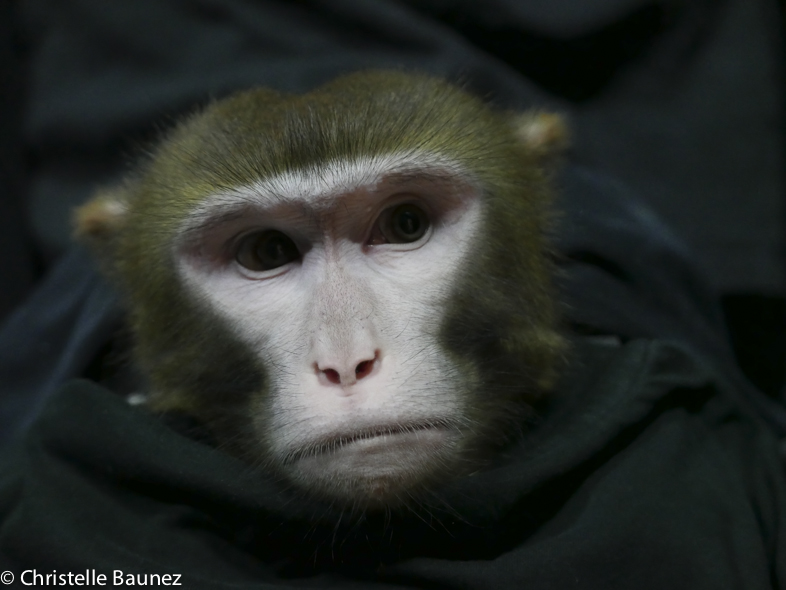
Some pictures that Dr. Christelle Baunez shared with us after the meeting!