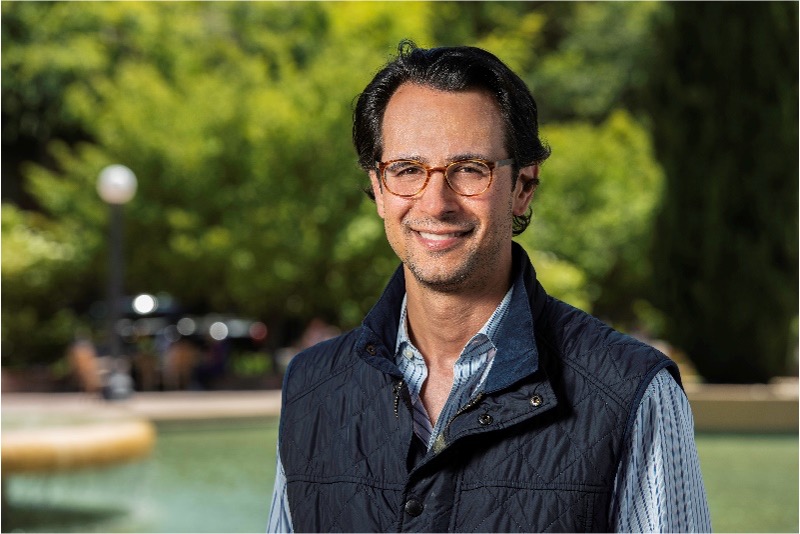
Dr. Casey Halpern the Division Head of Functional and Stereotactic Neurosurgery and an Associate Professor of Neurosurgery at Penn.
#40: Casey Halpern – Novel indications and approaches to invasive neuromodulation and neuroscience
In this engaging conversation with Casey Halpern, a functional neurosurgeon at Penn Medicine. Casey is a pioneer in both deep brain stimulation and focused ultrasound and with his lab has recently had some fantastic breakthroughs, especially, but not exclusively in the field of loss-of-control eating in severe obesity. We cover a lot of ground from optogenetics at Stanford, basic science research about the nucleus accumbens and translation of findings into patients, serendipitous discoveries in humans, to stereo-EEG procedures in patients with epilepsy. We discuss what made his recent Nature paper about an appetite mediating circuit in the human hippocampus so special, how he took his findings from 2013 in rodent work – across several stages – into a human clinical trial for eating disorders. We also cover Casey’s ongoing trial in DBS for OCD, where he adopts an approach to probe the brain with multiple electrodes to then identify optimal target areas for each individual patient – in line with other current advances of psychiatric neurosurgery. We also talk about MR guided focused ultrasound and the potential future of this treatment option in a tight relationship with DBS. As always, I learned a lot in this conversation and I hope you find it as enjoyable as I did. Thank you so much for tuning in – for this round episode number 40 of stimulating brains!
Casey Halpern 00:00And when I got to Stanford, we asked the obvious question, well, how are you going to translate that to a human? Because in those circumstances, we only stimulated when the food was present, sort of during the vulnerable moments, as I like to call it. Because she said to me, you know, I always stop at McDonald's to get a milkshake when I'm in my car, always. And she's like, I got to McDonald's, I got into the drive-thru. And I got out of the drive-thru. I just didn't want it. She's like, I kind of want it, but then I realized I didn't want it. And she's like, I can't remember the last time that ever happened. In fact, I don't think it ever happened. So one of the pathologists at Stanford, that he had a human brain, and it was donated to science, and wanted to know if there was something that we wanted to do with it. And by the way, he said, so many labs at Stanford have already said yes. 01:00The only part of this brain that you can access is the hippocampus. And so Daniel Barbosa at the time had the brilliant idea of saying, well, okay, why
Andreas Horn don't we just take this human structure? And he somehow took an image of it and then merged it to a larger imaging data set. And what he found was that it... So this dorsolateral region really seemed to have strong function around the process of the human brain. So that's the problem. That's the problem. That's the problem. That's the problem. That's the problem. That's the problem. That's the problem. That's the problem. That's the problem. That's the problem. That's the problem. That's the problem. Welcome to Stimulating Brains. Dr. Casey Halpern is the division head of functional and stereotactic neurosurgery and anatomy at the University of New York. He's an associate professor of neurosurgery at Penn Medicine. 02:03He's a pioneer in both deep brain stimulation and focused ultrasound and with his lab has recently had some fantastic breakthroughs, especially, but not exclusively in the field of loss of control eating and severe obesity. We cover a lot of ground ranging from optogenetics at Stanford, basic science research about the nucleus accumbens and translation of findings into patients over serendipitous discoveries in humans to stereoegie. We talk about the role of the brain in the development of brain-based neurodegenerative processes and patients with epilepsy. We talk about Casey's ongoing trial in DBS for OCD, where he adopts an approach to probe the brain with multiple electrodes to then identify optimal target areas for each individual patient. We also talk about MR-guided focused ultrasound and the potential future of this treatment option in a tight relationship with DBS. As always, I have learned a lot in this conversation and I hope you find it as enjoyable as I did. So thank you so much for tuning in for this round episode number four. I hope you enjoyed it. I hope you enjoyed it. I hope you enjoyed it. I hope you enjoyed it. I hope you enjoyed it. I hope you enjoyed it. I hope you enjoyed it. I hope you enjoyed it. I hope you enjoyed it. And to finish this episode number 40 of Stimulating Brains. 03:12So thank you, Casey, one more time for agreeing to do this and taking the time. I know how busy you are. By now, I will have introduced you already more formally. So to break the ice before we get into science. I always ask about your free time, any hobbies, things you do apart from being a busy neurosurgeon and scientist. Yeah. Thanks for having me on your podcast. I'm a huge fan of your work and, you know, I really value our active collaborations as well. I am a neurosurgeon. I run a
Casey Halpern neuroscience mental health focused research laboratory as well. And that those two things keep me very busy, but I would say my sort of personal life and my hobbies are largely just 04:02spending time with my, my lovely wife and two daughters. If there's any hobby that I have, it's going to, I'm a bit of a foodie, so I like to go to good restaurants. And finally, my two daughters are of the age that they are starting to appreciate good food. And I enjoy when they sometimes take me on my dime to their favorite restaurants as well, which is, which is always fun. And my, my wife's mother is a chef and I partly married my wife because of her mother, because I love good food. So, you know, it all works. I also run a feeding lab, so it's kind of appropriate.
Andreas Horn Sounds good. So the food is even, and we'll get to that part of your science too. So, so, and that
Casey Halpern your wife's mother has a restaurant. In the same city or. 05:00Yes, she, she's to my knowledge, she's never been a restaurant owner, but she has been a chef at a number of restaurants in New York and New Jersey. She, or perhaps her, her most impressive career was when she was the patient chef for the executive kitchen at Sony headquarters in New York city. Oh, wow. So I knew I got to try a lot of her food. Pastries, but a lot of celebrities asked to meet the chefs that made the pastries she made there. So there's always, there's always fun stories. That's great. Yeah. She's an amazing, amazing cook. Our, our holidays together are full of amazing food. Those are my favorite meals. I can imagine. Yeah. Great. All right. So speaking about the science,
Andreas Horn who were key mentors in your career or also turning points along the way to get where you are now?
Casey Halpern Yeah. You know, my, my career mentor is, is a neurologist named Murray Grossman. He happened 06:05to also be my soccer coach growing up. And I bumped into him when I was an undergrad at Penn. And he asked me if I was interested in the brain. He was a neurologist. And I, of course I told him I was, and that I was pre-med and I joined his lab as a freshman in college. And I actually did an independent study with him every semester in college. It may have been trimesters, but you know, I worked with him throughout college, medical school. I stayed on at Penn and even in residency. And in fact, he's an author in one of our recent publications. He was an expert in voctal based morphometry, which is a technique that allows us to measure gray matter. And my lab, as you know, does some work with tractography to guide how we plan our surgeries. And so we were looking at the interactions or the relationship between, you know, the brain and the body. And so I was a doctor in the brain and I was a doctor in the voctal based morphometry and tractography. And so Murray was a wonderful mentor, but also a 07:02collaborator of mine. He actually recently passed away. And I got to help him in his last days, which meant a lot to me. And it's not always that a mentee can do something for his or her mentor. So that was very special. But, you know, thanks to Murray, I've had fabulous mentorship. But he was such a wonderful mentor that I learned to seek out mentorship from him. And I think that's
Andreas Horn a really interesting process to seek out mentorship from other mentors. And so certainly a lot of other individuals as well, but kind of crossed the gamut between neurology, neurosurgery, obesity research, addiction research, Tom Wadden here at Penn, people like that. Sounds great. And sorry to hear about Murray passing. And we heard you also played soccer when you were young. Do you still do that? Only occasionally with my daughters, but truthfully,
Casey Halpern My wife is actually a much better soccer player. 08:00She didn't play in college, but she probably should have. She was very, very skilled. So I see kind of where she's been their soccer coach. She plays with them on the weekends and I usually watch the dog. Sorry for getting back to the hobbies, but, you know, soccer, I'm a German, so that needs to be clarified. That's great. So, okay, you currently are a busy neurosurgeon. I think if I remember correctly, you recently told me when we met at CNS that you carry out around three DBS surgeries a week and those are usually on one day.
Andreas Horn Is that correct?
Casey Halpern Yes, I do three deep brain stimulation surgeries on my main OR day. And then I also run a focus ultrasound surgical program on a different day. So we usually do about three focus ultrasounds on that day. I was doing four. There's not much need. But your MRI time is what's hard to get. Sometimes. And on that day, I usually also do some battery procedures and things like that. 09:00Got it.
Andreas Horn And so for the main surgery days, do you do that in the MRI as well? Not really, right?
Casey Halpern That's just for us. I have done deep brain stimulation surgery in the MRI scanner using an MRI compatible solution, both the hardware and the software. It's actually a great technology. I generally prefer mostly for... ease of workflow, sticking with the operative technology, the more standard operative technology that we use for a variety of reasons. Part of it is just because at Penn I do have more OR time to do these procedures, less MRI time.
Andreas Horn And I overall find the accuracy and precision to be fairly comparable no matter which technique you use. Which indications are you most excited about?
Casey Halpern To me, you always are one of the...
Andreas Horn I'm interested in the rarer indications too, right?
Casey Halpern Beyond maybe bread and butter, Parkinson's, and we'll get to some of your specialties.
Andreas Horn 10:04But what's currently exciting you most or which cases, which disorders?
Casey Halpern You know, when I was in college, I saw my first deep brain stimulation surgery done by Gordon Daltuck, who was one of my mentors as well. Murray Grossman introduced us, actually both Canadians. And, you know, he did a standard. He did a standard subthalamic deep brain stimulation for tremor in Parkinson's. And when I saw that, you know, and I saw the tremor just dissolve, I never really wanted to do anything else. I'm very excited about growing my practice and making deep brain stimulation more available and accessible to patients with Parkinson's disease. We do some deep brain stimulation for essential tremor, but most of those patients are getting focused ultrasound now. Some patients with Parkinson's are getting focused ultrasound. I'm very excited about that. I'm very excited about that. Because a lot of patients with Parkinson's can benefit from this non-invasive technology. 11:02But outside of my standard clinical practice, I really enjoy opportunities to help Parkinson's patients in an off-label fashion. For example, I have a patient who suffered from Parkinson's disease as well as OCD. We were able to help that patient by using the deep brain stimulation surgery off-label to help both of them. And we were able to help both problems in parallel. That was really wonderful. A different patient with Parkinson's who had benign auditory hallucinations. And we actually intervened in the part of the brain to try to ameliorate his hallucinations. That was surprisingly an amazing result, one that I'm still working on writing on. But these are off-label opportunities, and it's hard to scale that. So I really aim to do my more novel surgical procedures as a part of clinical practice. And I think that's what we're trying to do. And I think that's what we're trying to do. So we do have trials that are ongoing. One is for loss of control eating in the context of severe obesity. 12:04It's a bit like binge eating disorder, which loss of control eating is a pervasive feature in binge eating. That's going very well. It's a small study, but it's a first in human studies. So it moves very slowly. We try to optimize safety first and then try to see where there's promise. So we have an ongoing study of deep brain stimulation for OCD, and we are working on getting trials set up to tackle addiction and Tourette syndrome as well. Very fascinating. And I wanted to dive in more into the, I think, that you're currently most famous in with the loss of control eating that you just mentioned. So I tried to summarize. In 2022, you published a paper in Nature Medicine in which you applied responsive DBS to the nucleus accumbens in this indication. I think this is the main paper so far of that strand of research, but the targeting strategy, 13:04if I'm correct, was based on a model involving core and shell parts of the nucleus accumbens, which you showed with your lab in 2022, so same year in a molecular psychiatry paper. And apparently there was aberrant impulse control circuitry in obesity. And I think that's a good thing. I think that's a good thing. And I think that's a good thing. And I think that's a good thing. I think, but I'm not sure there, that this was also inspired by animal results published in Nature Communications, which you published in 2021 together with Rob Malenka.
Andreas Horn But again, not sure if that's even a good link there. Can you break this story down for us, like how you came up into doing it and then also what happened in the trial so far? Well, yeah, your interpretation of those three papers is correct, and I really intended it
Casey Halpern to be a step-by-step. process from mouse to human. Of course, sometimes some results come in faster than others. So sometimes something temporally happened before the other. But looking back over the past 10 years or so, we've published a battery of articles summarizing our experience in trying to translate the findings that I had back in 2013, that if you deliver deep brain stimulation to the shell subregion of the nucleus 14:23a commons in a mouse, that that could curb binge eating. And then also doing it continuously seemed to induce weight loss in an obese model, a model of diet-induced obesity, also mouse.
Andreas Horn And when I got to Stanford, we asked the obvious question, well, how are you going to translate that to a human?
Casey Halpern Because in those circumstances, we only stimulated when the food was present, sort of during the vulnerable moments, as I like to call it, because often patients with obesity and eating disorders, they're not necessarily thinking about food and bothered by those 15:02aspects of their condition. But when there's a cue or a trigger or a stressor, all of a sudden they fall into that trap and they're vulnerable. And so we wanted to conceive a procedure that would, or an intervention, I should say, that would be automated during and deliver treatment during those. Vulnerable moments, but only during those vulnerable moments. There was a device that became available for epilepsy patients that had a similar vision that would only stimulate when seizures were developing in the brain. And so we actually retrofitted that same technology. We started actually in mice and found that there was a signal. We used a off-the-shelf rig to confirm that there was the signal that seemed to peak. And so we had a signal that was coming right before a binge. And this electrical signal was coming again from this nucleus accumbens region, and the 16:00very region we wanted to stimulate. So we actually programmed the stimulator to detect that signal and stimulate when it was detected. We also confirmed in parallel that this epilepsy device was capable of doing this in a model, in a mouse, because we then wanted to go to a human. So we did a study. And indeed, that's what we did. And as that study was getting set up, because to do a study in humans took us about three or four years to get the NIH funding, to get the FDA approval, to put the team together. So in that sort of downtime, we worked on fine-tuning the targeting strategy. First, we did a study. We did a study. by working with Rob Malenka at Stanford, who I had worked with at the time, to better understand the circuits underlying the effect of deep brain stimulation so that I could at least explain to patients how we believe deep brain stimulation was doing or making its effect and what this mechanism was. And of course there's so much more to do to better understand it. But when we activated the cortical control center of the brain, we only activated 17:20within the nucleus accumbens because they're connected in a mouse, we were able to mimic the effect of deep brain stimulation. And targeting that circuit in a human became sort of the plan. One of my colleagues who you know, Daniel Barbosa, also founded that molecular psychiatry paper, that this circuit was not only one that could be targeted in a human, but when we looked at its features in patients with obesity versus patients that weren't obese, there are differences. And the methods to do that are not necessarily ideal, 18:00but we thought given we had this strong hypothesis that the obese condition actually does have an association with altered circuits in the brain, we thought that was an important finding. So that's the molecular psychiatry paper. And what it suggests at least is that, this inhibitory control circuit is a bit perturbed in the obese state. And so it led us to simply ask the hypothesis that if we delivered electrical stimulation to that area, focally that perhaps it could restore some of that self-control.
Andreas Horn And that's exactly what we're trying to test now in that human study that was
Casey Halpern initially published in NatureMirror. And talk fascinating story, by the way. So talking about this study, so the clinical trial was two patients that were published, and they were on a 19:14! The first one was a patient who was on a ! Deep brain stimulation techniques, head frame, things of that nature to deliver the neuro pace electrodes into the nucleus accumbens just as if it were a standard deep brain stimulation device. In that study, we've had some great successes. 20:05I would say some of the weaknesses are that the study is ongoing and we're trying to make this a long-term solution for these patients, but our NIH funding, funding or our funding for the study is running out and so um we are suffering from the same weaknesses of these device trials uh in terms of trying to find a long-term solution for our patients but luckily thanks to philanthropy and things of that nature we've been okay and our patients are continuing to do well um briefly uh we we've been able to measure um i should say provoke a signal in the nucleus accumbens that shares a lot of characteristics of the signal that we found in mouse um that might not be entirely surprising because you know of course the circuits and the human disease and the mouse model there's differences uh in no way are these 21:02the same there are some similarities though um the nucleus accumbens um is arguably as suzanne actually the one that told me this a really well-known anatomist a neuroanatomist i'm sure you i know you know well i interviewed her on the podcast actually as well well she i don't know if she said this on your podcast but she told me once that the nucleus accumbens is probably one of if not the only human structure that shares homology with the mouse and so when she told me
Andreas Horn that i'm like oh gosh i mean at least there is a uh neurobiological uh explanation as to why the
Casey Halpern signal from mouse to human seem to be somewhat similar yeah i think they're also similar because we ask very specific questions about the signal during very similar time windows so in the mouse we studied the recordings in the in the mouse nucleus accumbens right before it starts eating 22:00and we do the same thing in the human um so we we created a uh a buffet designed by stewart another mentor and as you know i really believe in mentorship uh he's a eating disorder psychiatrist uh at stanford he's now emeritus but still our own funded he's an amazing individual um and the buffet was of foods that the patients had indicated that they liked so it was personalized and they ate their breakfast and their lunch and we did a standard mood provocation and videoed a binge all during recordings from the brain using this implanted device and um that's very similar to what we did with the mouse and the mouse accumbens And that's very similar to how we induce a binge in a mouse. And either surprisingly or not surprisingly, but in line with our hypotheses, we found a similar signal from the nucleus accumbens that we could then use to trigger stimulation as needed in the human study, much like we did in a mouse study. And simply put, this is 23:02what responsive nucleus accumbens deep brain stimulation is, is using a signal from this important reward structure. You could call it a craving signal to trigger deep brain stimulation during moments of weakness, during moments of vulnerabilities when somebody might binge to prevent the actual binge from happening. Great. Really fascinating. And long-term or short-term results. So people that you said it was two patients so far, you probably can't tell more about more patients,
Andreas Horn maybe just how many you've enrolled so far. What, what's the like bottom line? Does it work? How well does it work? You know, do people really lose weight or have less craving quality of life improved?
Casey Halpern So, yeah. So, so overall the effects are quite promising, you know, and what I can say, the first patient developed a clear improvement in inhibitory control, 24:01and a decrease in the frequency of loss of control eating, as well as the severity of the sense of loss of control also improved. It took about three months for her to see that improvement. It also seemed to require stimulation on both sides of the brain. There's a variety of reasons for that, I think. And she had a sustained benefit throughout the trial. The second patient had a more immediate improvement within a few days. In fact, she was able to, in fact, I share my cell phone with all my study subjects. She texted me on the way home and she said, you know, it can't be a coincidence. And by the way, both of our patients were blinded, so they didn't know, for example, when the device was turned on, but, but in both patients, and this was published in our, in our paper, when the device was turned on, they, they did notice these benefits. There were no benefits noted when the device was off. But anyway, this text message was profound and I've included it in a lot of 25:01my talks. She, she said to me, you know, I always stop at McDonald's to get a milkshake when I'm in my car always. And she's like, I got to the McDonald's, I got into the drive through and I got out of the drive through. I just want it. She's like, I, she's like, I kind of want it, but then I realized I didn't want it. And she's like that. I can't remember the last time that ever happened. In fact, I don't think it ever happened. So it was such a profound finding. And I have to say, she's had this long, the last, last, last, last, last, last, last, last, last, last, last, last, last, last, last, last, last, self control, better decisions around choices of meals. And what type of food to eat. Both patients have lost weight. Neither patients meet criteria for binge eating disorder anymore. And we surpassed our primary input to the study, which allowed us to get more funding to enroll more patients. At Penn now. So that study was started at Stanford university, but I moved to Philadelphia when I practiced. 26:01now at Penn. I'm from Philadelphia, so I returned home. We've implanted our first patient very recently. We have not activated her stimulation device. But what is profound about this patient I can share with you sort of preliminarily is that just putting the electrodes into this craving center, into this nucleus accumbens region, seems to have resulted in a fairly profound honeymoon effect or implant effect. She's having a similar result as there are other patients who are being stimulated currently, but we haven't even turned her device on. And it's been going on for now about two months. It is not unheard of, however, that patients have these effects. You know, as you know, patients that have tremor, when you implant patients with Parkinson's disease, they often have this honeymoon effect. And patients with epilepsy do as well. In fact, patients with epilepsy do have this honeymoon effect. And patients with epilepsy do as well. They tend to have a long-lasting implant effect more so than our movement disorder patients. So 27:04I believe this is an implant effect. I can't say how the stimulation is going to affect her. I suspect it will be similar, but we'll have to see. But at the very least, she is safe and sound and very happy with her result. But we have a lot of scientific work to do in her that
Andreas Horn is kind of stalled until she starts having her behavioral outbursts again. Makes sense. Very interesting. And yeah, I totally agree. Some stun effects in Parkinson's, even make patients so happy that they get sad again if it wanes off after two months, right? And
Casey Halpern then you switch it back on and then it's back there again. So usually, as I'm sure you know, you know, from the experience with movement disorders patients, this is a good thing,
Andreas Horn right? To have a stun effect because then you already think you're on the right target. The
Casey Halpern electrode is well placed. Yes, we believe it will predict that this stimulation will recreate this lifelong. Yeah. Yeah. So you just mentioned that you moved to Penn around, I think 2021-ish. Do you miss
Andreas Horn 28:07the sun at Stanford? I mean, you returned home so probably that's great.
Casey Halpern Yeah. You know, we miss to a lot. It was a wonderful place. And whenever you make transitions to a career or to a family, it's natural to compare to one to the other. And Certainly, there were a lot of amazing things at Stanford. There's a lot of amazing things at Penn. Admittedly, they're somewhat different, actually. These institutions are very different, and I did not realize how different they were going to be, even though I trained at Penn. I mean, I was at Penn for 15 years before I returned as faculty. But your role and your experience at an institution as a trainee is very different than your role as a faculty member, as you know, as well. But these are both amazing places with differences. I certainly miss our life in California. It was a great life, but I also feel very privileged to have been able to live there for the time that we had. 29:05And now we're sort of in a new phase, which is also great in different ways. I think for the most part, we mostly miss our friends. And we have wonderful friends in California that we moved during the peak of the COVID pandemic. There's a lot of downsides to the pandemic, obviously. My wife's grandmother. My grandmother died during the pandemic, for example. But at the same time, you know, while we missed holidays with our immediate family, we celebrated holidays with a new family, which was our friends in California. So that was very special in a lot of ways. You know, we hosted school together. My wife and their parents were our standing teachers for our children. We kind of potted together, so to speak. So in some ways, it was kind of amazing. 30:02And we probably, for some of those reasons, we miss our friends even more than we would have because they really became family. But luckily, we get to visit them occasionally. And that's also special. That's great.
Andreas Horn You mentioned that the institutions are quite different. Is that easy to summarize? What makes Penn great? What makes Stanford great?
Casey Halpern Oh, not easy to summarize. But I think it's great. A clear, amazing thing about Stanford is the institution's innovative philosophy. And it truly embraces innovation. And it is a pervasive thing. So, like, for example, you know, in medicine, sometimes innovations aren't necessarily, like, completely transformative. But maybe you want to start using MRI-based technology. There was an MRI-based technology. I did a lot of MRI-based technology for deep brain stimulation that I wanted to use when I was at Stanford. 31:00It was FDA-approved, available. Competing institutions were using it regularly. And so I went to my chair and I said, I'd really like to use this technology. Two weeks later, I did my first surgery using this technology. It was that simple. And I would say that that represents not just the institution's vision of being innovative, but also the MRI super-property. believed in being innovative and adopting new technology. The nursing staff had no problem bringing this new technology and using it for the first time on patients. Of course, we had trainings, we had the company come in and make sure everybody was trained and certified. It was certified at the institution and state level, but it all happened very quickly. At Penn, I'm trying to get that technology at Penn. But it'll probably take me about a year. So Penn itself is enormously dutiful around safety and patient care. 32:07And I think that is a huge strength. But that does get in the way of these big visions and rapid adoption of technology. And I think Penn would say, perhaps Stanford let you adopt it too quickly. It didn't do its due diligence. And there might be some truth to that. I don't know. All I can say is that these two institutions are very different. And I think they both do a great job at patient care. But their strategies are different. And you kind of have to learn to live within their strategies. And one thing I can say about Penn that stands it apart from Stanford, because I love this institution, is the collaboration. And in some ways, the collaboration across labs, the true interest in working together is the collaboration that is so important. And I think that's the key to the success that we have here. Of course, I had that to a certain extent at Stanford with many of my psychiatry colleagues, 33:01Ron Malenko. But at Penn, it is so obvious and wonderful how collaborative the institution is. In some ways, that makes up for the more bureaucratic approach to innovation that we kind of have to deal with sometimes.
Andreas Horn Very interesting.
Casey Halpern Thanks for saying that. Back in Stanford, if I remember correctly, when I met you the first time, you were running, at the time, a joint lab. Together with Rob Malenko, whom we mentioned a few times already,
Andreas Horn and who is a famous optogenetics researcher, so basic scientist. But he's in psychiatry, too, right? Now, first of all, is that true? And then how was it like to run a joint lab as two PIs? Which were the roles? How was the interaction? You know, all harmony or also quarrels? Did you yourself supervise animal optogenetics experiments, too? How was it? What was the vision of labor and how did that work for you?
Casey Halpern Yes, structurally, I told Rob and I probably had a website. 34:01I think I know I had a website where I marketed the lab as the Halpert-Malenka Laboratory. You know, he had full approval. I had full approval for that from Rob. He's a wonderful mentor, colleague, and friend. But the truth is, I mean, it was Rob's lab. I just worked in it. And I was okay with that because I was not... I was not an optogenetic expert. I had done mouse research before, somewhat successfully. I had a great mouse mentor at Penn, Tracy Bale, who's now in Colorado. But Rob's dynasty or empire of a research laboratory, I think he had 20 postdocs, all of whom were independent scientists. Dan Christofo, who's the first author in that Nature Communications paper. His wife, Jessica Walsh. They were great colleagues to me. Boris Hayfitz. So many individuals. I won't remember all their names, 35:00but they were independent scientists in ways that I probably wasn't able to perform and mentor appropriately. So we put a team together to ensure that the research was done rigorously. It was reproducible. And it also leveraged the most cutting-edge circuit-based manipulations that you could do in a mouse that, had I tried to do it by myself, it just would not have ever gotten to that same level of scrutiny. Certainly not that same level of impact. So it was a true collaboration. And I do believe that clinicians need to collaborate with scientists in this way in order to make a difference. And I also believe it works in both directions. Of course, it really benefited me and science to have Rob. I like to think that my presence in the lab helped him and his team. I'm not sure how yet, but they would probably laugh at me. I'm not sure how yet, but they would probably laugh at me. I'm not sure how yet, but they would probably laugh at me. And say it did, but they were wonderful collaborators of mine. And in some ways that's something I really do miss. 36:00I don't have that actively at Penn, but it's probably because I've stopped doing mouse research because I'm finally in the human. And that's kind of where as a neurosurgeon, I really need to be. And I let the mouse researchers do the mouse research more, more themselves. And now I'm focusing on the human work. But as you know, I collaborate with imaging experts like yourself all the time to ensure that what we're doing is, is also rigorous because I'm not a PhD. I'm, I'm an MD and I don't necessarily have all of those skills, but certainly like you have a big, a big vision to make, to make a change. Sounds great. Let's talk about the latest hits. So this line of work about appetite, appetite, and loss of control eating, since you're also a foodie, you know, this is very much empowered by your personal interests too. It recently culminated in a paper you guys published in nature, just, just a while back. The title of the paper reads an orexigenic sub network within the human 37:00hippocampus. First of all,
Andreas Horn what does orexigenic mean? Yeah.
Casey Halpern So the way to think about it, I, the way I think about it as somebody who's done eating disorder research for a long time, I have a tremendous interest in anorexia. It relates to binge eating disorder, by the way, of course, because many people with anorexia do binge. But it's, it's obviously more considered a restrictive condition. That's anorexia nervosa, by the way, just to clarify, you can have anorexia related to cancer, chronic pain, depression, Parkinson's disease, where you are also just underweight and you have low appetite. But anorexia nervosa is the psychiatric condition. So anorexia is sort of the, the lack of appetite. And, and by the way, I'm a researcher and a neurosurgeon, I'm not an eating disorder clinician. So my perspective on this condition is that, I'm a little bit different. Of course, I'm a bit of an outsider looking in, in that way. 38:01So anorexic means a peddler's driving appetite. And historically it has been demonstrated that patients with obesity, obviously patients with obesity to a certain extent, have a dysregulated appetite. It has also been demonstrated that they exhibit some, some loss of episodic memory. And how I interpret that is in some ways when they're eating, they're not always paying attention and they might not be storing those memories importantly to impact their appetite so that they actually stop their meal appropriately.
Andreas Horn And so one hypothesis around why we have such an epidemic of obesity is that,
Casey Halpern um, the memories around their real time eating are impaired. Now that's been published and demonstrated pretty consistently over the past 20 years. 39:02The reason this paper was published in nature is because for the first time we've demonstrated in the human, and by the way,
Andreas Horn it's actually never been demonstrated in any species where exactly these connections are.
Casey Halpern Um, of course there's probably some involvement between the appetite center of the brain, the hypothalamus and the hippocampus, and that that has been demonstrated. But what we found, is that there is a specific location within the hippocampus that across humans, across the sample of patients that we studied exhibits what I would, what I would call connectivity or, um, strong association, uh, with the hypothalamus. And that, and that region of the hippocampus is small and it's located in the dorsolateral sub region of the hippocampus. We came to that discovery by accident. Um, this is probably one of the most, if not the proudest academic achievement I've ever had. And it's partly because while I certainly had other achievements that I'm proud of, 40:04um, those achievements were funded by the NIH, uh, well funded, um, approved by the FDA. They were novel studies. I can eat your medicine paper. Um, but they paid for that team to do that work. The, the funding did in, in this nature of paper, we came to a discovery by accident and had no, had no funding to study it further. So we really had to work hard beyond what our funding mechanisms allowed us to, uh, after hours, weekends to really pull together the data, the analysis, and then write this incredible story. Um, and the story is that, uh, well, actually we, um, we were called by one of the pathologists at Stanford that he had a, uh, a human brain. And, and he said, you know, we're going to have to do this. We're going to have to do this. We're going to have to do this. We're going to have to do this. 41:00And, and by the way, he said so many labs at Stanford have already said, yes, the only part of this brain that you can access is the hippocampus. And our response was, well, you know, we don't really have any active studies of the hippocampus at the moment. We're very interested in it. Uh, but we'll take it. And perhaps what we'll do is we'll initiate some of our, uh, sort of method development using the hippocampus. And at the time I was collaborating with, uh, Jennifer McNabb, uh, who was also working with Robin at the time to clear the brain so that we could see pathways directly, uh, because, uh, the fat within the brain had been demonstrated by other collaborators in Stanford to be dissolvable so that you could actually see through structures, but still maintain site architecture and proteins. So you can still see circuit connections, for example. So we, we did that and we cleared the brain. It took some time. That is the clarity approach,
Andreas Horn right?
Casey Halpern Uh, similar to the, uh, uh, similar.
Andreas Horn Okay. Yeah.
Casey Halpern Carl based off the clarity approach. He's famous for a few discoveries, 42:00clarity as well as optogenetics. Um, he was, uh, Robin like this postdoc. So this is quite a family. Uh, that's tantric hurt. And, uh, but this is, I disco, which is, I would say similar. And there's probably some subtle differences that I as a neurosurgeon don't fully understand. Um, but they, but there are important differences is what is my understanding, but nevertheless, uh, brain clearing is a common, uh, result. Um, these two methods. And, uh, so we implemented this, but I think one of the first times it was done in here. And, um, my team said, you know, that went so well, maybe there's something we can do, um, in this pivot campus. Um,
Andreas Horn is there anything that you would hypothesize to be uniquely unique to, to study here?
Casey Halpern And I said, well,
Andreas Horn what about pairing this clearing technique with his, with some sort of measure of neurochemistry?
Casey Halpern And they said, well,
Andreas Horn what kind of neurochemistry would you use?
Casey Halpern And I said, well, is there any specific hormone that we could detect in the hippocampus, 43:01um,
Andreas Horn perhaps in relation to eating?
Casey Halpern And it turns out MCH is a hormone that we had, uh, a stain for and an antibody for, and is known to only be made in the hypothalamus. So, uh, when they said to me that would be of interest, I said, well, certainly it's known that in obesity, patients exhibit these impairments in memory that relate to their appetite. So, well,
Andreas Horn that's interesting. Why don't we see if that antibody can be measured?
Casey Halpern And if it can, at the very least methodologically, we'll be prepared for studying other parts of the brain that we're interested in, but sure enough, uh, indeed we could see MCH, but we could only see it in a tiny little region within the hippocampus. And so Daniel Barbosa at the time had the brilliant idea of saying, well, okay,
Andreas Horn why don't we just take this human structure?
Casey Halpern And he somehow took an image of it and then merged it to a larger imaging 44:00dataset. And what he found was that it was limited to this dorsolateral sub region of the hippocampus and using a circuit based approach, tractography. Um, he then actually was able to demonstrate that this very small region of the hippocampus and only this small region of the hippocampus exhibited strong connectivity to the hypothalamus. And then perhaps, uh, the neurochemistry finding could be explained by that connection. Uh, we, at the same time, we're running experiments in the epilepsy monitor unit, and we were running feeding experiments, um, where, uh, Kara Bowen, uh, who was a great collaborator of mine at Stanford had a computer test that she developed with Eric Stice, who's also now at Stanford, again, a real Stanford family. And, uh, it was a milkshake task. Uh, I call this the bat test to be a bit more technical. And what it did was it allowed us to study whether sweet fat versus water could activate parts of the brain in a different way. 45:03And it was typically used with imaging, but I was using it, uh, in epilepsy patients who had brain recordings being done simultaneously. And what we found was that the hippocampus definitely was activated, uh, when the patients were anticipating this sweet fat solution, it, it was also being activated when they were receiving water. But it was being activated in a different way. The signal was different, uh, but also the region of the hippocampus that was being activated was different. So there was this double dissociation, which statistically is very powerful. And so we have all of these different manipulations sort of multimodal approach to, uh, isolate this small region within the hippocampus, this dorsolateral sub region, which exhibited different electrophysiology, different neurochemistry and different structural connectivity patterns than other, uh, other regions of the hippocampus. And it even seems specific to food because we also looked at Brian Knudsen's 46:00financial reward test, which was designed in very similar ways, milkshake task, but instead of milkshake, it was money that the patients would earn during the test. And that also activated the hippocampus, but it activated a different region of the hippocampus. Uh, so this dorsolateral region really seemed to have strong function around processing around appetite and food. And so, that's why I think it got highlighted by such a steam journal and is also
Andreas Horn why we're now developing strategies to try to modulate this structure,
Casey Halpern uh, invasively, not invasively, uh, in the lab, uh, going forward. Super cool. There's so, so many things here to say, um, first of all, congratulations. And then, you know, um, there is, uh, maybe you've seen it and I've talked about this a lot on this show with Mike Fox and, and so on about, um, a paper by Marwan and, um, uh, uh, uh, uh, uh, uh, uh, uh, uh, and so on about, um, a paper by Marwan Hariz, uh, about serendipity, um, and, and discoveries. It's a fabulous paper and has influenced our thinking here a lot. 47:00And, um, that. There is this thing that serendipity has to, you know, does occur, but has to, um, uh, fall onto the prepared, prepared mind. So you had to still see the value in this and then follow up and, um, put the strands together from very different fields of your research. So, um, amazing. Uh, I'm sure it was, was probably at least two years of work of, you know, getting things together, um, tight and, uh, um, you know, running all the analysis and so on. So really, really cool. Um, so again, another idea of using serendipity, um, you know, to, to create new treatments potentially in the future. Um, on the flip side, we have talked about animal models and your other, you know, highlight with, um, uh, is really based on the more classical approach where, where you've started in the mouse and then, you know, um, went on to, and that's more, I think what, what our typical society, 48:02um, and, and, and science funding structure, publication structure is, is, is thinking of as, as the main model, a default model going from animals to humans. But then I think my one made the point in this article that if you look back into history, there are a lot of wins that come from, from humans,
Andreas Horn right?
Casey Halpern So more or less from serendipity, and even not so many wins from, um, from the animal literature in the brain,
Andreas Horn right?
Casey Halpern There's a lot, you know, a lot of wins in cancer, a lot of wins in other fields, but since the brains are complex, there are not so many, um, wins in the history of functional neurosurgery that actually come from animal models. In fact, your example is a really good one where it worked right where you found the same thing in, in mice and then, and then humans. But, um, I think to, to talk a bit about that point, high highest impact journals, such as nature, sometimes seem almost obsessed with animal work,
Andreas Horn right?
Casey Halpern Uh, where we have, you know, cured Alzheimer's disease quite often in the mouse already in these things. Um, 49:00when we read your paper in our center, we even noted that the background framing and introduction of this, you know, human work was not so much about the clinical problem, but really about the science from rodents with the problem, um, being that it hadn't been shown in humans yet. You've also said that, that it hasn't been shown, um, in any, um, uh, animals.
Andreas Horn So some parts of it, but do you have thoughts on that? Or do you concur that you may be deliberately had to frame it towards the rodent research to get it into nature? Or was that mere coincidence with your background? Any thoughts on that? Yeah,
Casey Halpern no, it's a good question. I, um, I'm trying to think when we were actually writing this up, what,
Andreas Horn what was in our minds and,
Casey Halpern and just so you know, that, that discovery that Daniel made, uh, the first author, uh, it was probably about five years ago.
Andreas Horn Okay.
Casey Halpern It took about four years to finalize the first draft of the paper, which we submitted to nature. It took about a year and more than a year to get it published. 50:00So, um, so I think that my background of going mouse to human impacted how we, um, wrote that paper a lot. I really do believe in preclinical work and I always worry that human researchers don't pay as much attention as they do. They don't pay as much attention as they should to that work. At the same time. I certainly see the weaknesses and sometimes it leads you the wrong direction. Um, and so it probably is on a case by case basis when it's necessary to start with the Madison. Sometimes it is. And sometimes it's not. And I suspect it's related. Something we spoke about briefly is it probably relates to the specific questions that are being asked. Um, and if they're appropriate to start the mouse. Great. And, and perhaps. Some of the work. I've done. It's appropriate. Because. We're studying a homologous brain region, but once you get into cortical structures and other brain regions, it's probably less clear. Um, whether that was the reason or not, 51:00I'm not certain. The other reason was simply just wanting to give credit to the great work that has been done. To. Identify and try to understand the role of memory dysfunction in obesity, which there has been great literature. Uh, in preclinical models in mice, but it also hasn't studied in humans. So I think we also wanted to make that clear. We weren't trying to say for the first time that we, we found that there was memory dysfunction in humans, but rather that we found the, uh, the circuit that we leave underlied some of that dysfunctional processing, um, because then you can start treating it until then you really can't. Um, so I think that it was probably for multiple reasons. Um, it, but certainly both things were on my mind and still are that, you know, we obviously want to recognize that it's been well established that memory has, uh, been found to be a dysfunctional in patients with obesity, 52:00but, but now we can actually tackle it from a circuit based strategy and with something like deep brain stimulation, that, that understanding that circuit seems to really be important to, to lead to the reference.
Andreas Horn Yeah. Yeah.
Casey Halpern And just for the record, to be clear, I'm also very much, uh, you know, believer in the importance of preclinical models. So, um, you know, just, just for the record here and one, one other strategy. So I, I love what you say that it really depends on the question. Strategies can of course also be to have the serendipitous finding in humans and then go back to the clinical, um, to the preclinical model to study it and better understand it. Right. And I think that should be done either way. Right. So we, we often know it worked in one patient. So we, we still have to understand it better. Um, but maybe that could also be something that, you know, you said, you said human research might not, you know, read enough of the animal literature. Maybe it's also the other way around that there's rarely interest in, 53:00or not as much interest as maybe there could be to in the animal models, study the stuff where we already know it works in humans to better understand it. Cause maybe it's not as exciting, you know, we, I dunno, maybe there, there's a lot of research out there too, where, um, it's rare that people, for example, study STN DBS in, in, um, you know, Parkinsonian mice models, but Aaron did just, for example, showed that there can be a lot of value in doing that, right. To, to, to better than understand, um, uh, mechanisms. It was TPI actually in, in her work,
Andreas Horn but yeah,
Casey Halpern there, there should be, as you say, probably this, I couldn't agree more. One reason I wanted to return to Penn is that I had these long-lasting or long-term interests and active conversations with a great colleague of mine here named Josh Gold. And when I was a resident here, he came to me and wanted to do human research. And I kind of said to him, well, what about doing primate research? I'm a neurosurgeon. What you're studying in your models is more alike to 54:14the human than the mouse work I'm doing. And what Josh said was, you know, Casey, what probably would be great is if you have a finding in the human brain, you know, there's limited ways, you know, during deep brain stimulation, we probe with purpose. That's a quote from Andy Huberman. We probe with purpose to find our therapy. And while we're doing that, we can do some research, but we can't probe outside of that. In the primate, we also, of course, probe with purpose, but under a research context, we can safely probe circuits a bit more broadly. And so I think Josh and you are kind of saying the same thing that, you know, gosh, we really could take these novel human findings that are serendipitous, 55:00and then really study them in a more robust way in our animal models. And I love that idea. It's something that I try to do. I can't say we have an active study off the ground at the moment, but it's something that we're brainstorming. But I, I, I love that idea. I love that idea. I love that idea. I love that idea. I love that idea. I love the serendipity strategy. And you have to make your own luck in life at the same time. So yes, you kind of have to be a little lucky. And then then you have to know when to, you know, tackle that challenge. But I have to say we could have done it without this fabulous team that we had to do it. Now I'm trying to recreate that team. That's another challenge. That's great. Part of the success of this work has was based on your ability to access regions such as the human hippocampus in with depth. electrodes. This leads us to your work in epilepsy and maybe surprisingly also to OCD. I think you told me before that there was a specific case with epilepsy and concomitant OCD that you operated on. That was very helpful for the lab, but I forgot why. And 56:02maybe that's another nice story to share of that patient case example. Sure. Yeah. We, you know, there's actually probably, I, when I talked to that, I don't recall which patient it was, but there's two patients actually now, both with epilepsy and OCD. And I would liken that to how we learned about OCD in patients with Parkinson's. And, you know, in part, how we informed how we do deep brain stimulation for patients with OCD, in part because of some of the improvement in OCD related symptoms that we have learned in Parkinson's patients. I'm trying to implement that same strategy in patients with epilepsy that also have OCD. And great colleagues of ours like Eddie Channing and Kathleen Skangos are actively doing that for patients with epilepsy and the common comorbidity of depression. So that's a great way to do translational research, human brain work, but studying the disease while you're doing a treatment for the primary disease, in this case, it's epilepsy.
Andreas Horn 57:09So the reason why that is a great idea.
Casey Halpern We all think is because of potentially overlapping circuits between epilepsy and OCD, you know, seizures and epilepsy tend to involve the limbic emotional circuits that have gone awry. And so when we try to study seizures, we place electrodes into those areas minimally invasively to better learn where the seizures coming from, how they propagate in the brain so that we can stop them with a subsequent later surgical procedure. Often. Those electrodes that we place are implanted into locations that are relevant for OCD. So we are interested, as you know, funded by a phenomenal foundation led by Rob Malenka, actually, to actually use these epilepsy techniques in OCD patients properly. 58:07Before we actually initiated our study, however, we had two patients. That we sort of serendipitously had access to the first was a patient who had to get stereo encephalography, which is many little wire films placed in the brain minimally invasively well tolerated, very safe to try to figure out where the seizures were coming from. The patient also had tremendous OCD. So because of that, and because the FDA has allowed us to use deep brain stimulation for OCD. I got approval. From our epilepsy colleagues to place a few additional electrodes, which we thought would be involved in both epilepsy and OCD. And it just so happened to be electrodes that we use in terms of their brain regions for, for deep brain stimulation, OCD. The patient also articulated to us that when his OCD is really bad, he tends to have a lower threshold to have a seizure. 59:05So we also believe that there was a sort of an overlap in circuit there. So the epileptologist said, we need Bob Fisher was taking care of. And then Stanford at the time felt that there was definitely some importance in trying to study both of these conditions at the same time. In any case, while we were doing that, our psychiatry team came in and actually helped evaluate his OCD during seizure monitor. And what we were able to do is demonstrate one that we could figure out where the seizures were coming from. They did indeed overlap with his circuits involved in OCD. Now the, um, how they interacted with necessary directly. I would say they were directly connected, but they weren't the exact same electrodes. But these were overlapping circuits as you know, overall frontal circuits. And. Noose comes and veteran straight on the actual capsule circuits. And, uh, what we found and what we were able to do is deliver him a treatment for his OCD, which in this case was de-brain stimulation. 01:00:08Uh, but do it in such a way. We're. We were confident that when we stimulated. we wouldn't actually worsen his epilepsy and what we actually decided was that his OCD which was also very prominent would be well treated with deep brain stimulation and his epilepsy was very diffuse and while it definitely traversed where his OCD was going to be treated and it didn't seem that we would worsen his epilepsy by treating his OCD we would continue to treat his epilepsy with medication what's not surprising he's now being treated by a colleague at Baylor what's not surprising is actually he's seen improvements in both conditions by primarily treating his OCD so it was a great opportunity for us because now we're running a study in patients who just have OCD no epilepsy but our team was able to sort of develop the protocol of how to monitor OCD how to stimulate in this setting and try to improve the symptoms 01:01:06related to OCD something we do for epilepsy all the time but really never for OCD before so this was a great opportunity for that meanwhile we also had an opportunity to take care of a patient who was implanted with a device for epilepsy as well as OCD I actually did not do that surgery it was done by a wonderful colleague Ahmed Raslan at OHSU and he asked us to get involved to help take care of the patient's OCD and the epilepsy was well treated already by the device but she had a specific electrode that we believe would be helpful for her OCD and we took over her care and she's been treated both at Stanford and Penn now and we actually realized that her OCD was just as bad as her epilepsy if not worse but stable so treating her epilepsy in this case did not impact her OCD at all 01:02:00when she finally came to our care we realized that in order to activate the device we needed a biomarker this device was a biomarker based device this is the same device the neuro based device that we're using in our obesity study so we had to figure out a way to actually tell the device when her OCD was acting up so we carried out some provocations we did some exposures which is a standard procedure in OCD we ran computer tasks and we were able to identify a signal that seemed to correlate and predict compulsions the urge to compulse and so we programmed the device to stimulate only or for the most part when that signal was present and what we found was indeed that we could significantly improve her obsessions and compulsions that that study has actually very
Andreas Horn recently been provisionally accepted for publication in a fantastic journal but it's not
Casey Halpern fully out there yet so I I suppose I can't completely disclose everything that it's that 01:03:02we found but what we were able to do in both of these two circumstances is ready the team for treating OCD very similar way and that's now an active trial at Penn which is going very well super cool can you briefly talk about the target regions because like was it just one pair of electrodes in in that patient in the second one or yeah so so like in our epilepsy patients this procedure is called stereo EEG I also see things call it a deep brain stimulation trial where their temporary electrodes being placed and you know as you know like spinal cord stimulators bladder stimulators all the time we always start with the trial and in some ways we should probably do that for a novel deep brain stimulation indication like OCD so that's kind of the framework for this is the temporary procedure it's intended to be diagnostic but also predict the effect of a permanent implant um in this study we have gotten FDA approval to implant up to 16 electrodes eight on each side of 01:04:04the brain so so sorry you you're now talking about the OCD trial but I was talking about the the the patient you were referring with epilepsy and OCD where you could tune you know the the stimulator was that was just one brain region like yeah sorry I I got overzealous I'm very excited about our OCD trial but that patient um uh that single patient so her uh neuropace device that neurostimulator uh has two electrodes one was implanted into the epilepsy region and then Dr Roslyn implanted the electrode into uh the ventral striatum but what I can say is that I think we need to do a better job of defining the ventral striatum because that region although it's FDA approved for targeting OCD is highly heterogeneous yes and so what we found was that it was actually implanted in the nucleus accumbens most distally and then a bit proximally to that the ventral palatum and while 01:05:04the uh it might be hard to know if the effect was due to stigmoid one or the other at the very least we were modulating both of those structures okay great so so let's talk about the the OCD trial I think um I I'm not even sure if this is correct but my reading of the background of this is that or maybe it's at least related to some degree in June 2016 Samir chef who I interviewed in episode 19 and others organized a satellite workshop to the ASSFN meeting in Chicago and in that they discussed how the path for neuromodulation in psychiatric indications should move forward because I think we kind of stalled as a field um and I think it maybe not at least based on this workshop a recent trend emerged to implant as you've said these DBS trials where you would temporarily implant multiple electrodes in a similar fashion as we do in epilepsy with stereo EG and um in in epilepsy we do so to probe the brain and identify a seizure 01:06:07focus now in psychiatric disorders the aim is to identify the optimal stimulation targets for that individual patient and I think prominent examples have been in depression by Eddie Chang's and Andrew Crystal's team at UCSF and then Samir chef's team at Baylor I think in 2021 both teams published on these multi-electrode approaches for patients with depression um now your trial adopts the same strategy or similar strategy for OCD is that even linked to these other trials or like um were you inspired by that meeting or can you maybe reshape what I've just underlined here I think a lot of what you said is very accurate I I can tell you that um I've heard about that meeting uh I I was not present I actually didn't know about it I think at the time I was I was thought of by my colleagues as an obesity researcher and not as a psychiatric 01:07:03researcher or psychiatry researcher um my interest in obesity have always been in trying to curb compulsion and and really looking at sort of that moment of vulnerability which is pervasive across many psychiatric disorders obesity is not a psychiatric disorder it's a phenotype but of course has some psychiatric underpinnings so I think that was probably one reason I wasn't invited to that meeting um although I would have loved to have been there um I did hear actually uh from two neurosurgeons at that meeting and Kelly foot that they both sort of take credit for making that statement that we need to use stereotactic methodology to advance the field of psychiatry. They both take credit for it, but they both stood up and made very similar comments and both should be credited with that statement. It's an obvious, in a way it's an obvious thing because we do it for epilepsy all the time, and he understands, at least surgeons often do both, right? So yeah, it's a common thing, a thought. It's somewhat obvious, but nobody had done it yet. 01:08:10I kind of came to our ideas around OCD sort of in parallel. Of course, you know, our community is small and we talk. And I actually was looking at a job opportunity at Columbia at the time. I remember meeting with Dr. Liebman, who was the chairman of psychiatry, telling him about my ideas around OCD and trying to probe different parts of the brain to guide deep brain stimulation. And he said, well, I believe Samir is trying to do something just like that for depression. I said, he is. And Samir at the time was at Columbia. He was moving on to Baylor. So it's funny how these two worlds kind of existed. And then they kind of came together because our OCD study is a highly collaborative study with Eddie Chang and the UCSF team. In fact, Catherine Skangos, who used to be at UCSF studying depression with Eddie, is now at Penn. She still works at her company as well. 01:09:03And she's been a pivotal team member in helping us get our studies. So the link is strong in there and enormously collaborative. The OCD study is a bit different compared to the UCSF depression study, but there is obviously some similarities. One of the differences with OCD is that we are using a standard deep brain stimulation device. However, meaning it just stimulates all the time. The reason for that is because there is a device available. That actually allows us to stimulate four brain regions at a time. And we believe at our core that one reason deep brain stimulation for OCD historically does not typically lead to, let's say, remission. Have these transformative effects. It obviously helps for the most part to a certain extent. And what I usually say is it takes the edge off, but it doesn't necessarily have this kind of transformative effect that we believe it should have, like it does for tremor, for example. 01:10:05And so one thing. We believe is that it doesn't do that because it doesn't necessarily control the OCD circuits enough. And perhaps oversimplify it. The circuit underlying obsessions and the circuit underlying compulsions are different. And we need to control them independently, but collaboratively with a device that's a bit more comprehensive. So, so we really believe in this system that allows us to target four areas. Of course, we're personalizing them and it's obviously much more complicated than I just laid out. But that's kind of. Sort of the premise. Work. For what we're doing. So, so general idea would be to implant as easy electrodes, test, simulated different sites, I guess, think of, you know, what, what works. And then I assume it's a Boston art 32 device, which with lots of channels where we can have these white cables. Right.
Andreas Horn And then you would have four leads chronically implanted. Is that the idea? 01:11:00Yes. Yes.
Casey Halpern So we, you know, earlier I was talking about how much we value our animal work. As a sort of precursor to the human work. And if you ask the right question, that probably is a valuable thing to do in OCD. However, while there are mouse models of OCD behavior, OCD related behavior, I've always been a little bit concerned that we can't study the human condition of OCD in a mouse. So the interest in going right to the human is necessary. And since we already do deep brain stimulation for OCD. From a regular. Stamford. That doesn't seem like a big hurdle. And that's probably one reason we were able to get the FDA to approve this study since we already do deep brain stimulation and it actually is safe and effective, but we are trying to make it more effective. And so in the end, these patients can all just get standard deep brain stimulation, but we believe we can make it better and be personal. So to speak. Some of the brain regions that we are using informed a bit by Suzanne Haber, actually, she's an active collaborator are informed by. 01:12:06Animal studies. Some of her work in primates. There is working in rodents as well that has implicated the overall frontal cortex and the singular in OCD. And so we are targeting these areas. We are targeting areas that have been modulated with deep brain stimulation as well. And overall, it's about 16 electrodes that were targeted. Also informed, of course, by human imaging studies and things like that. A lot of your work, by the way. In fact, I think the horn targeting.
Andreas Horn Yeah.
Casey Halpern Is comprehensively engaged in both of our patients today. Oh, well, that's nice to hear.
Andreas Horn Yeah.
Casey Halpern Thanks. Thanks for saying that. And so, so probably ongoing study, probably not much else. We can and should share about that. Hopefully hear some more in L.A. when we meet in a few weeks. So I think we're really all very much excited on seeing the results on that once published. 01:13:05And. So. So thanks for running such a, you know, labor intensive trial. I'm sure it was a lot of work to get, you know, through the FDA and funding and everything. So it was it took multiple years to get all of this through. And then, of course, I transferred to Penn and that slowed things down a little bit. Our team is strong and we've I can say that we've done the surgery now in two patients and it certainly seems safe and seems feasible. What I have to say is so incredible. About this study is the amount of time the team is at the bedside and the team has so many skills. You know, there's a psychiatrist, a psychologist, an electric physiologist, a neuro stimulation expert, myself, an epilepsy expert. Because we have to make sure there's no seizures. So at the bedside, almost at all times, there's five or six people and they are there for about 12 hours a day. 01:14:00There are days when they're their locker. I remember when Dr. Spangos. Um. Who joined our team said to me, she said, you know, when I did this for the first time, we just slept in the hospital. And so my team was like, OK, we are going to get ready for this. And these know how to take calls. They're used to that.
Andreas Horn Yeah. It is very labor intensive and they're doing a fantastic job.
Casey Halpern And I truly believe they're going to make a major difference for us. You do as well. I hope you don't end up like people. Like, I mean, people like briefly. I interviewed him as well on the podcast. He was the neurologist with Benabid in in Grenoble. You know, running the SDN DBS and also the VIM DBS trials first. And I think they at the time, since it was so novel, it's fascinating how much time they spent with the patients. He talks about it beautifully. They use an external simulator, which that for animal use only at the time in Grenoble and they would test every frequency, you know, at the time DBS was new. Right. And so what I meant with I hope you don't end up like him. 01:15:01I think he's very happy at the moment. But he stopped. He stopped entirely to engage in research and now plays a lot of piano and cycles a lot. And I think really after his retirement said, I work too much in my life and I want to. So, yeah. So anyway, I even hope you end up like him because he said he's healthier now than he ever was. So, yeah.
Andreas Horn So but interesting.
Casey Halpern So sleeping at the hospital. Very labor intensive study.
Andreas Horn Yeah. Yeah.
Casey Halpern So I think that's a very interesting question. One obvious question is, of course, that this won't scale. Right. And I think you know that everybody knows that. So this would be probably seen historically as a stepping stone to make it better and make it simpler later on. Right. Probably.
Andreas Horn Yes.
Casey Halpern I am very aware of the difficulty in scaling this. And I think about that in two ways. The first is that. 01:16:01I believe that it is. Easier. To scale than it might seem. For example, we do this for epilepsy all the time. At the same time. If we don't have to scale it. My gosh, we can scale this therapy much more easily. So what I can say is I brainstorm strategies for both. And the reason for that is that I believe that we will have to scale it a bit.
Andreas Horn Yeah.
Casey Halpern Or we can. Not need it.
Andreas Horn Yeah.
Casey Halpern Um. And what I mean by that is, for example, right now we are running a study in ten patients. Um. I am not sure if that study is going to be sufficient for us to feel confident that this intermediary procedure is not needed. Hmm. However, I believe and this is a little bit of, you know. I believe there's like an entrepreneur in me. I mean, like, kind of have to be a little delusional in order to be successful.
Andreas Horn Yeah.
Casey Halpern Learn. 01:17:00I apply that delusion. Probably. In a similar way. As I hope for serendipity.
Andreas Horn Yeah.
Casey Halpern So my delusion here is that we can probably run a large clinical trial. Let's say in a hundred patients that all undergo this multi procedural experience. Um. The stereo EEG trial surgery. And then the implant surgery. I believe the result from that study could be that many of those patients, but maybe not all. Did not need that. Stereo EEG procedure. But I think we are going to need that amount of data to make that decision. So that's why I say I think we can scale a bit. I agree. We can't scale as much as we, you know. Would in some ways love to, but this is so labor intensive. It doesn't really make sense to try to scale.
Andreas Horn Yeah.
Casey Halpern The good news is I suspect for the majority of patients long term, let's say in about ten years. I think for the majority, it won't be necessary.
Andreas Horn Makes sense.
Casey Halpern And I mean, it is not totally absurd to try to scale.
Andreas Horn 01:18:00Yeah.
Casey Halpern Because we do it in epilepsy since. Years, right. Or decades. So, so, so you're probably right. If it's really needed, we'll like scale it, but maybe it could still. Be made easier.
Andreas Horn Yeah.
Casey Halpern Let's switch gears here. I also want to be mindful of your time, but you mentioned, um, our guided focused ultrasound. That's your second operation day. Um, uh, where you apparently do, um, three to four. Um, per week, um, or on that day. Um, First of all, um, what.
Andreas Horn Where do you see the future of both DBS or FUS? Where do you see the pros and cons?
Casey Halpern And, um, then if you want even to touch upon FUS for OCD, because I think there's also some. Um, potential here.
Andreas Horn Yeah. Yeah.
Casey Halpern We often joke, you know, what's all the fuss about FUS, you know, it's, um, it's, uh, it's an amazing procedure focused ultrasound or high intensity focused ultrasound. You know, we sometimes call it high food. Um, my boss calls it ultrasonic surgery. Um, you know, it's, um, it's, it's a non-invasive procedure in a way because there's no incision. 01:19:02Um, patients it's outpatient. But we do have to identify and destroy with an ablation. The tremor cells in the brain. And, um, we have to identify and destroy. It's not. It's not. It's not. It's not. And I liken it to AFib or AFib ablation, which if it fails medication, you treat with either a pacemaker, which is kind of like a deep brain stimulator, or with an ablation where you destroy the fibrillation tissue. And historically, ablations in the brain have fallen out of favor because of the discovery, thanks to Benabid, of deep brain stimulation because it's tunable, it's reversible, you can shut it off if there's a problem. But it still requires brain surgery, it requires an incision, You have to open the skull, throw out a wire into the brain. And so you'll never get past the small but real risks of that procedure. 01:20:01By the way, I mean, if you have a complication, it really could be theoretically a problem. And so that can be scary for patients. It can be scary for neurologists to refer their patients for that procedure. And I think historically as well, neurologists were sort of trained to figure out if there's a medication regimen that would make it possible such that surgery would not be necessary. It just so happens that so often surgery is necessary. And since the stimulator seems to be safer than the way we used to do ablations, well, a lot of patients get referred. But now that we've focused ultrasound, we can do ablations in the brain. And they're very small. We're talking a couple of millimeters, really. But it can be done without an incision. And it can be done in an MRI scanner. And you can monitor the brain with a heat map to confirm precisely. So it's not a decision of the sonication. And so because of that, I think the safety profile is really high. And that's been demonstrated in early clinical trials. You know, when I was at Stanford, Jamie Henderson, my partner there, asked me if I really wanted 01:21:03to take on the Focus Ultrasound program. And quite honestly, I was like, I'm not really into ablations. I really think the stimulator is safer. But it was my early days as faculty. And, you know, of course, I wanted to be helpful.
Andreas Horn So I said, well, yeah, I'll give it a try.
Casey Halpern And, you know, that was during. And I think the very beginning of the pivotal trial, Focus Ultrasound for tremor. And we got that published in the journal. We got it approved by the FDA. It was an amazing team effort. And it was an international trial, randomized control. So I got to meet some famous neurosurgeons all over the world as being part of that team. It was very cool. And I have to admit that I now my first line procedure for essential tremor is Focus Ultrasound. Deep brain. Stimulation in a way is the backup. For Parkinson's disease, it's now FDA approved. We developed a very similar protocol for tremor in Parkinson's. 01:22:00It seems to work very well. That's FDA approved.
Andreas Horn And also now we target a different part of the brain for dyskinesias and fluctuations in Parkinson's disease. The paladin, right?
Casey Halpern It was also successful. GPI, yes.
Andreas Horn In fact, that trial, what was so profound in that trial was the side effect profile was enormously favorable.
Casey Halpern Even more favorable than the first trial with tremor. And I think it speaks to the different brain regions that we targeted. We are still working on trying to get insurance to consistently approve this treatment for Parkinson's. That's a bit of a hurdle right now because it's early days. But I do believe Focus Ultrasound for Parkinson's and tremor is a wonderful procedure. I do it all the time. And the experience is very favorable for our patients. The limitation is obviously that we really only treat. One side of the brain, at least at a time. And some patients really do need relief on both sides. And that's where deep brain stimulation will always have presence in our patients. 01:23:02These types of ablations. You know, when I first saw tremor dissolve with deep brain stimulation. You know, I really never wanted to do anything else, as I mentioned. But I did want to apply it to a new indication. And I always believed. If I could find another indication like obesity that exhibited sort of an aberrant circuit. And maybe in one small region of the brain, the nucleus accumbensis. You know, we could put a wire in that area and deliver a disruptive electrical impulse to make the craving go away. Let me do make tremor go away. So I suppose with Focus Ultrasound, you could have that same hypothesis. Well, now we have this technique to destroy very, very small regions.
Andreas Horn And it's not just a small region of the brain. And could that have a dramatic effect for other conditions?
Casey Halpern And I believe the answer to that is yes. That hypothesis, that belief has panned out very well, for example, for Parkinson's tremor, Parkinson's disease. 01:24:06I would say that I think there's also evidence that it's panning out well for brain tumors using this technology in a similar but different way. There's evidence that it could have place for other indications, even like Alzheimer's. We're very interested in using it for epilepsy. Patients with hypothalamic hematoma, for example, have a need to destroy a structure deep in the brain that's causing really frustrating seizures. It makes patients laugh and constantly cause elastic seizures. And it's very hard to get to that part of the brain safely. It's not very accessible. You mean from the outside with an electrode or with, yeah. Correct. So with Ultrasound, it could be. We've actually now treated our first patient here. It was a protocol that we sort of was informed by our colleagues at the University of Miami, John Rogoff, who has an open trial now. I think he's treating now six or seven patients with this technology. 01:25:01We're about to treat our second. The first patient has done transformatively well, like Rogoff's experience.
Andreas Horn And so it really speaks to the fact that, yeah, now we have this disruptive technology that can safely target a small area of the brain and have really strong effects.
Casey Halpern But you have to choose. You have to choose that indication carefully. Obviously, a lot of neurological and psychiatric conditions are sort of broadly diffuse problems in the brain. So you really have to identify problems that are very focal. But those problems exist. And I think we're still learning how to best use this technology. And OCD is obviously a strong interest of ours targeting, you know, the region within the anterior of the internal capsule, Dr. Horn, that you identified, I think would be fabulous. And I think would be a fabulous future for OCD because it doesn't require an incision and the evaluation is real time. You know, you can do that type of procedure with radiosurgery, but the effect is delayed by at least 36 months. So there's a great future for focused ultrasound for psychiatric conditions as well. And in your case, for those who need to identify sort of a hotspot, the question is are there indications where that hotspot is? So we have lots of work to do. Yeah, sounds great. Quick follow-up question on the pallidotomy, because I have 01:26:18two voices in my head now popping up. One is Marwan Hariz, who has been a big fan of palaeodotomy and sees it as a lost art. Going back also to the earlier times at Emory where Malin DeLong and team also did, I think, tremendous work with palaeodotomy, had great results. And then I think Rhys Cosgrove here, our surgeon at the Brigham, he's quite experienced with FAST-2 and
Andreas Horn was also part of the palaeodotomy trial and at least informally so far wasn't that excited, but that's just his hands-on experience on that. So you spoke a bit much more positively than
Casey Halpern Rhys, I think, would. So you think it has a future to go there? Or I think in Madrid,
Andreas Horn 01:27:06they also did STN FAST trials, right? So... Yeah. Based on his work. And yeah. So any more insights you can share, want to share?
Casey Halpern Yeah. I appreciate you sharing that with me. I know Dr. Rhys pretty well. Obviously, he's a transformative figure in our field and I want him to be more optimistic about it. And the reason I think he probably isn't is because the overall outcome of the paper, while important and clinically meaningful, statistically, and significant, was not necessarily transformative. And there's probably a very good reason for that, that I'm aware of. And in my opinion, I think the surgeons in that study agreed across the trial that we needed to be safe, effective, but conservative, or I should say safe and 01:28:04conservative. And what that probably led to was under-treating the patients. Smaller lesions. Smaller lesions. We didn't want to have any complications. That's one reason the side effect profile was so positive. We believe that if we could achieve a certain threshold of success, that would be enough to get FDA approval. And then post-approval, we would figure out how to optimize it. And by the way, that's kind of happened for essential tremor. If you look at that original clinical trial, I think the amount of tremor was decreased by a little, about 60% of the time. And that was a lot. And that was a lot. And that was a lot. And that was a lot. And that was a lot. And that was a lot. And that was a lot. And that was a lot. And that was a lot. And quite honestly, now when I tell patients how I think they're going to do, I tell them to expect about 85% reduction in tremor. And the reason for that was that since that trial, I've done about 300 cases. And that is on average what my patients are seeing. Because I'm learning where I can be more aggressive. I have strategies, thanks to you, on how to better target this area. And our outcomes 01:29:06are better. They're safer and more effective. And I believe the same is going to happen for palliative. I will admit, I'm probably one of the few surgeons in America that since that trial have done over a dozen of these procedures. A dozen is not many. But I can tell you that I was more aggressive in all of those cases. And with the exception of one, the effect was significantly better than what we saw in that clinical trial. Very much similar to what we did with essential tremor after that trial. And so I think over time, Dr. Fries will see that change. At least I hope he does, because I want it to be a meaningful change for the patients. So I think our experience, too, here with over 300 cases now in tremor, also 80% average tremor improvement. So you're totally right. This is a transformative. And he's a big fan of FAS in 01:30:00general. You know that. So it was just specifically to palliative otomies where I heard him a bit more reserved. Yeah. So that is super exciting. And I think in 2021, the FAS overtook DBS for essential tremor
Andreas Horn worldwide by numbers. So where do you see the future there? You also said it's your default now.
Casey Halpern Which field will grow more? Then also, I think I heard two people, at least, including Andres Lozano, say that FAS led to an increase of tremor. And I think that's a good point.
Andreas Horn Yeah.
Casey Halpern I just want to offer the patient the best option for him or her, you know. I certainly try to make a recommendation to a patient. 01:31:01You know, for example, if you have severe tremor in your dominant hand and you're not bothered by the tremor in your other hand, so you only need a one-sided procedure, I always recommend focused ultrasound. Occasionally, a patient will say to me, I really want a tunable therapy, something that is reversible and you can shut it off. I'm a little scared of the ablation.
Andreas Horn Would you do deep brain stimulation?
Casey Halpern Of course I will. It's a great option. It's overall still very safe and highly effective. That doesn't happen. The opposite also happens where patients come to me wanting focused ultrasound because it's not invasive. And I explain to them that it is a little bit invasive, actually. But I think they're a better deep brain stimulation candidate. And that's often a patient who has really bad tremor on both sides. And I feel like I can tune the therapy a little bit. Perhaps they also have vocal tremor. I have a lot of interest in midline vocal tremor as well. And I've found that being able to tune can be helpful to avoid side effects. And it might be a little bit better than doing focused ultrasound for those patients. 01:32:01So I sometimes try to convince patients to get deep brain stimulation. They often push back and get focused ultrasound. They don't want to commit to the procedure of deep brain stimulation as well as a medical device. The other thing to keep in mind is that if focused ultrasound is not, satisfying to that patient, they could still get deep brain stimulation. And I actually have done deep brain stimulation now for patients who have had focused ultrasound. And I have to say each one has been as effective as it would have been had the focused ultrasound never been done. So I think that in some ways it could also be a staged approach and some patients really like that concept. You asked me also about focused ultrasound. And to me, focused ultrasound improving or increasing deep brain stimulation, about whether these are competitive technologies. And certainly I don't find them to be competitive. I find them collaborative. Where they get competitive, unfortunately, is that some institutions don't offer focused ultrasound. And so what I find is this robust competition between doing deep brain stimulation at one site or having to leave that institution to go to another site for focused ultrasound. Yeah. When I read notes from hospitals that don't offer focused 01:33:19ultrasound, often they really focus on the side effects of focus ultrasound, which are overall fairly mild, but they don't necessarily mention the risks of deep brain stimulation. And while I don't think that's intentional, it's just the bias of that institution. So, you know, like your institution with, with Reese and John there and Mark and me here at Penn, we offer both technologies. I really think it's important that comprehensive movement disorder centers offer both technologies, and that's how it would be collaborative, not competitive. Without a doubt, if you offer focus ultrasound, your deep brain stimulation volume will increase. So, and that's important because unfortunately focus ultrasound is a capital equipment purchase of around $2 million. And
Andreas Horn 01:34:05that's why a lot of hospitals don't have it. I can't fault them. It's very expensive to get. I mean, I fault them, but I don't, I understand why they would make the investment of course.
Casey Halpern Um, because it's so expensive, some patients or some institutions are a little hesitant to, to sort of invest in it. One way to get these institutions a bit more open to it is to remind them that deep brain stimulation volumes will also grow, not go down. Um, and for institutions that do a lot of deep brain stimulation, they, they find that deep brain stimulation is something they can rely on. They don't want it to go away for something like focus ultrasound, but they don't realize that actually they're going to triple their deep brain stimulation volume. The reason for that is very much the same thing as what we have seen when radio surgery or gamma knife, radio surgery and cyber knife radio surgery became available for brain tumors. Patients wanted to come for these non-invasive treatments. And what they found 01:35:01was that these non-invasive treatments were great for some patients, but not all of them. And so when it wasn't good for certain patients, those patients ended up getting a craniotomy or brain surgery or some other form of radiation, uh, and chemotherapy. And it just brought patients to the clinic. Focus ultrasound is bringing patients to the clinic in numbers that most deep brain stimulation programs have never seen. And if focus ultrasound is a device that those programs purchased, those teams are really going to have to get ready to manage a new volume that they've never seen in patients. It's a problem to have by the way, um, but requires a little bit of planning. Uh, when I was, uh, in DC at our annual meeting, actually, I spoke, uh,
Andreas Horn for insight tech with a few other fantastic surgeons, um, uh, that have newer programs.
Casey Halpern And they were saying how they really had to put a team behind managing the phone calls of patients calling in. And these patients are not calling in for deep brain stimulation. They're calling 01:36:01me for focus ultrasound. Yeah. The thing is when they show up, you might realize, you know, you're actually not a candidate for focus ultrasound. You have to get deep brain stimulation. And some of those patients would be totally willing to get it. They just didn't know they were a candidate for it.
Andreas Horn Yeah. So, yeah,
Casey Halpern it's a door opener in that way. And Andre says on it was a hundred percent correct. That's been our experience as well, both at Stanford and now. Sounds great. Do you think it's better marketing
Andreas Horn or why do patients know more about it? Are there more, I don't know, this placed articles about the
Casey Halpern non-invasiveness and or incision listeners or it's probably a combination of better marketing, um, social media, which, you know, up until relatively recently was not available as a tool. For deep brain stimulation, but focus ultrasound has kind of become available in the days of social media. So I think their marketing strategies are a bit more modern day. Sure. Um, but also it is marketed at least to a certain extent as non-invasive or incision lists, you know, a lot 01:37:04easier and lower risk. And there is some truth to that. We have to be careful how we market these tools and certainly how we educate our patients. And I think we do a good job of that, but because of the sort of perception of focus ultrasound safety profile, which is largely correct. Um, the interest is so high that patients are showing up. Some of them have never even heard of deep brain stimulation. They just heard of focus ultrasound and realize that, you know,
Andreas Horn there's all these patients out there we're not getting to, and that's why the deep brain
Casey Halpern stimulation companies, and there's three of them really need to start working harder to, to drum up their marketing strategies, just like the focus ultrasound, uh, strategy. Sounds great. And, and I think that's, that's a really good point. So thanks for sharing your wisdom there. And I want to briefly mention that I'm interviewing Kulervo Hinenen next week, uh, who is, I think credited as one of the key inventors of, of making, um, FAS, you know, a real, real thing. Um, so we'll 01:38:01hear more about FAS next week. So I want to wrap up, but a few rapid fire questions, if, if I may, um, you know, just feel free short answers if you want. So how does the functional neurosurgery OR in
Andreas Horn the future look like? The OR? Yeah.
Casey Halpern Um, you know, I, uh, I think we've made a lot of progress in the field of functional neurosurgery in terms of designing sort of the, the suite in the operating room. Um, but, but certainly, uh, I, I see technology improving from, in terms of the quality of intraoperative imaging. So we can get a picture really quick. That's high quality. Uh, I think the contractings and devices that we use to, uh, deliver our, uh, therapies are going to get more
Andreas Horn efficient, safer, more precise, um, slicker. So we can do more of these surgeries. And why that, why is that important? Because eventually I'm a, I'm a delusion. I have delusions. As you know,
Casey Halpern I believe our field is growing rapidly. I think we're going to have new indications the next five 01:39:03years. And I believe that neurosurgeons like we are going to have to learn how to treat a larger volume of patients. And so our procedures are going to have to get more efficient, safer as we get into new populations. Things of that nature. So yeah. So yeah. So yeah. So yeah. So yeah. So yeah.
Andreas Horn Sounds good. Did you ever have true Eureka moments or like great wins that you want to share? We've, we've covered a few, but any, any, anything that comes to mind?
Casey Halpern You know, I still go back to, I'll mention two things. Um, Parkinson's patients with tremor, they have such disabled quality of life. And if you do an awake deep brain stimulation, so that patients awake in the operating room so that they can feel the effect of the stimulation, for the first time in a decade, a patient who has severe tremor and is highly rigid can feel relief. And I still find that amazing moment that the patient's experience that they share with us to be so rewarding. Um, and I've seen it get so, yeah. Um, so it was a Eureka 01:40:04moment for me a long time ago. Now it's just kind of this sort of recurring reward that I get to have. Um, and I do deep brain stimulation in the very room that I first saw it about 20 years ago. Um, which is, which is also kind of amazing. Um, and then the other, I think is what happened very recently in our OCD trial. And I, I can't share too many details because it's unpublished, but what I can say is that I certainly believe that deep brain stimulation can have a transformative effect on a patient with severe OCD. And one of our patients articulated to me, even just in the very moment that we were stimulating and we stimulate by the way, during moments when patients OCD is at its worst. So you uh, the way that we use OCD is at its worst. So we, we, we induce distress. We make them feel, uh, the distress that they feel every day. Of course they've consented to this. Um, uh, the patient said to me, you know, I, I didn't know that I could feel unburdened by my OCD. I, I have 01:41:01none of those intrusions that I normally have right now. I've never felt that way. And so for me, that that's another moment for me, that is just kind of life-changing. I'll remember that one forever. And also it gives me a lot of wind in my sails to keep doing this for more patients.
Andreas Horn Yeah, I've got goosebumps just by listening.
Casey Halpern And maybe to also show a bit of the negative side, any failures or thoughts where you said this was a waste of my time, this didn't go well, to also cover this side of research
Andreas Horn and academia?
Casey Halpern Yeah, you know, I think that when it comes to thinking of negative thoughts, you know, I'm so, I'm very lucky to be able to do what I do as a neurosurgeon. You know, so many neurosurgical procedures carry risks that my procedures don't carry. And so when I have a bad outcome, for example, it's usually not a complication that a lot 01:42:00of my colleagues have to live with. You know, when you clip aneurysms and take out brain tumors, unfortunately, the risks of those procedures, the procedures are necessary, but the risks are higher and the steps are better. For me, a bad day, for example, is if I decide I need to revise an electrode, sometimes I can accidentally tear that electrode as I'm trying to fix it. And I can fix that problem. So the problems I deal with while frustrating are largely fixable. So those can be frustrating days, but what's rewarding to me is that I can fix them often in real time. I think that where I sometimes struggle as a neurosurgeon is I don't like that. Patients, if they get deep brain stimulation with me, they sort of have to be willing to get an invasive procedure. And in a way, they don't have it. They don't have a choice. Of course, they have a choice. They can forego that decision. 01:43:00They can say, well, listen, I'm just going to live with my Parkinson's for the rest of my life. But truthfully, the ones that decide to get the procedure, I do believe that they kind of feel like they're going to have to live with it. They're going to have to live with it. They're going to have to live with it. They're going to have to live with it. They're going to have to live with it. They have to. And that gets down into my soul. I feel very bothered by that. I empathize with my patients because I wish they didn't have to. They make the right decision because their quality of life is so much better and the risk profile is very favorable. And some patients are too scared to do it. So I feel bad for those patients, of course, but I do understand where those patients are coming from at the same time. I wish we didn't have to make our patients decide that they have to get an invasive procedure. Because, you know, there's got to be a way to do this with less risk. And focus on the sound, in my opinion, it is not necessarily where we need to be, but it's definitely getting a little bit closer. I believe there's something out there that's non-invasive that is much more scalable. 01:44:02I just hope I can get there in my career.
Andreas Horn Yeah, that's great. Interesting.
Casey Halpern I've heard that of dentists before that, you know, nobody wants to go to the dentist. And usually, of course. You have to, and it's very helpful afterwards. You feel much better once you were there.
Andreas Horn But yeah, it's still not fun to go there. So maybe that's a bit of the sentiment. Any advice for young researchers entering neuroscience, neurosurgery, medicine, or academia?
Casey Halpern I love that question. I thank you for giving me the answer or the opportunity to answer it. I, you really have to do research. in an area that you are super passionate. I worry that too many researchers, and it's not necessarily their fault, they're told to be this way, their institution, you know, kind of requires them to be this way, the NIH can require them to be this way. I think the questions that we ask and the research that we do can sometimes be too incremental. 01:45:03We're a little scared to take risks and make transformative, potentially transformative findings. We kind of just go one little step at a time. And that's necessary in science. In order to come to an answer, you can't skip steps. I'm not saying that that's not the case, but I think we also need to take more risks. And some of those risky questions are part of the passions that we need to have and bring to science and really create a vision for the work that we do. And I say that at least as a clinician scientist, I think that's particularly important because I could be a full-time neurosurgeon. In fact, I am a full-time neurosurgeon, but I also do full-time research. I have two full-time jobs. And the thing is that I don't need to stretch myself so thin. I could just be a full-time neurosurgeon. I would make more money if I was a full-time neurosurgeon, truly a full-time neurosurgeon. But I choose to spend time on my research. And the reason I do that is that I'm so passionate about the work that I do. 01:46:03My patients, I'm very comfortable. I'm very confident about how I take care of patients. That never keeps me awake at night. My research keeps me awake at night. Not because I'm nervous about it, but because I can't stop thinking about it. Or it wakes me up in the middle of the night. I have a great sort of eureka moment. Oh, I need to do that. You know, that happens to me all the time. I don't get a good night's sleep, but I get excited about it. And I think if you have that kind of passion, the work you'll do will be more, well, higher impact, more transformative, and also just keeping more engaged because there is a lot of burnout in the scientific field. And I'm worried that part of that is because we're not that enthusiastic about what we're doing.
Andreas Horn Yeah.
Casey Halpern Great point. So, including us is a significant part of that. So, I think that's a suggestion. Do something you're really passionate about. Sounds great.
Andreas Horn We have talked about the future of the OR, but what do you think about the future of the entire field of neuromodulation? Maybe in 10 years, how we've talked about FUS too, but any other things that we will do differently, closed loop, connectomics or other things?
Casey Halpern 01:47:00I think it's all happening. I think the future of neuromodulation is a lot of it is mental health. You know, John Adler, who started Cyberdyne, is a good friend and colleague of mine at our recent meeting. DC said, you know, I'm not going to do anything. said that some of the biggest problems in our world are related to psychiatric disorders, epidemics, even the opiate crisis, alcoholism, obesity. These are some of those common problems in our world, not just our country. And so how can we address this? And neuromodulation, obviously, it's not going to address all of it, but I think it has the potential to address a lot of it if we can come up with scalable strategies. And that's why your point earlier about scalability is so
Andreas Horn critical. And that's also why I do a lot of non-invasive research, because I want my invasive
Casey Halpern strategies to help inform non-invasive strategies, perhaps using the invasive strategy as sort of the gold standard. And then the non-invasive strategy perhaps could leverage that circuit-based 01:48:01understanding to be a more effective solution that can then be more scalable. Any missed
Andreas Horn opportunities to field things we should be doing, but are not enough doing, or not focusing on?
Casey Halpern Well, neurosurgery specifically, I think it's a missed opportunity to do more neuromodulation work. You know, people like me, people like Dr. Richardson, Dr. Ralston, Dr. Cosgrove, you know, we've talked about Eddie Chan and Samir. We are the sort of the rare neurosurgeon. Most neurosurgeons, I think it's more than 90% are spine surgeons. And the outcomes of spine surgery, and I say this publicly, the outcomes of spine surgery, pale in comparison to the outcomes of deep brain stimulation. But the majority of our practitioners and the majority of our trainees want to be spine surgeons. Not that we don't want to have spine disease, but we got to keep this a little bit more even. And so I believe 01:49:00the miss is that somehow we keep promoting this, and we're not actively trying to change that. If we actively try to change that, we will have more brilliant people, not that I'm one of the brilliant people. But a lot of smart people who want to do this type of work. And that will really help the field move forward. I worry that some of the smartest MD PhDs that come out of training end up becoming spine surgeons. And they do that for a lot of reasons. Sometimes I can't question their decision. But I do worry that it's such a majority of these very smart individuals. If some of them actually came over to the neuromodulation space, I really think we would make more progress. And that's, that's probably a mistake on our neurosurgery chairman, probably a mistake on our institutions. It's a mistake that our insurance companies are allowing to happen. What I mean by that is that reimbursement for spine surgery is much higher than reimbursement for 01:50:03deep brain stimulation surgery. And so that in some ways incentivizes institutions to promote spine programs more than these neuromodulation programs. So it's kind of frustrating on all fronts. Not that there's anybody to blame, but we do need to fix it. And if we're not actively trying to fix that and create more jobs in the neuromodulation space, then that is the missed opportunity. And I think there's a little bit of that going on.
Andreas Horn Thank you. Any last question, anything we you would have loved to cover that I did not ask? I know we've been running almost two hours. So thanks so much for your time. But any, any topic? You would have loved to talk about or did we cover everything?
Casey Halpern You know, I, I did a podcast with Andrew human Huberman about a year ago, and it was about two and a half hours. And it was the most fun two and a half hours up until today that I've ever had. And now I get to do it again with you. And it just means a lot. It's so much fun for me. I, you know, 01:51:05I mentioned earlier, we, before we started, but it's nice to be able to carve out this time, you know, to just talk about something that we'd like to talk about. I realized I've been doing a lot of the talking. I'm a bit of a chatty Cathy, but but so thank you for this opportunity. I will say that the one thing that I think is really important to remind the audience is that, you know, like epilepsy and Parkinson's disease and Alzheimer's disease, of course they are different, but like these conditions, psychiatric disorders, as well as obesity are conditions that affect the human brain. And they are conditions that need to be medically So thank you for this opportunity. I will say that the one thing that I think is really important to remind the audience is that, you know, like epilepsy and Parkinson's disease and Alzheimer's disease, of course, they are different. But like these conditions, psychiatric disorders, as well as obesity, are conditions that affect the human brain. And they are conditions that need to be medically treated, not necessarily with medicines, but these are medical conditions. These are not necessarily problems of self-control and need to be sort of skirted under the rug. These problems are epidemic proportions that if we continue to think of them that way. 01:52:02I worry that's not going to change. Rather, if we start thinking about them as brain conditions, and we were just at a meeting together where we're really trying to bring these fields together. If these are sort of brain medical conditions, perhaps there will be more generalized sort of empathy for these problems. You know, the first surgery I did for a patient with severe obesity, we were getting a quick little picture.
Andreas Horn And I was in the operating room with a CAT scan device. So I stepped out of the operating room. And a colleague of mine came up to me and said, Hey, I hear you doing a novel surgery. What are you doing?
Casey Halpern I said, I'm doing deep brain stimulation for obesity.
Andreas Horn And he said to me, you know, why can't people just stop eating? I don't understand why they would ever get brain surgery.
Casey Halpern They could also just eat it. And, you know, it did upset me that he said that. I mean, this was a faculty member at my institution. 01:53:02And a very good one, by the way. But so many people have this mindset that, oh, it's just so easy to stop overeating or to stop shooting up or to stop using cocaine or to stop smoking or stop drinking alcohol. It's not that easy. And the reason it's not that easy is that this is a condition of the brain just like Parkinson's. You can't tell somebody to stop shaking. So I really think it's important to get the word out there with educational opportunities like this, that these disorders of the brain are not just a condition of the brain. They're a condition of the brain. They're a condition of the brain. They are conditions just like all the other brain conditions that we treat. And we have to think about them in that way in order to improve the public perception. That's a very good point.
Andreas Horn And yeah, I should have touched on that more.
Casey Halpern So social stigma, but also, you know, the general somatic nature of all these conditions we talked about, including depression, obsessive compulsive disorder and, of course, obesity and addiction. So I think we have a lot to do as a society to move forward there. 01:54:01So if you meet with people that have these problems, I'm sure you have. Part of the problem is that they certainly do feel bad about themselves.
Andreas Horn Yes.
Casey Halpern And some people, when they feel bad about themselves, certainly can figure out a way to kind of get out of the rut. But a lot of people can't do that. And that's not their fault. But if the social stigma is there, that it is their fault, it only makes it worse. So if we can fix that, it really helps the vulnerability of these diseases. And I think we'll see a lot of improvement. I just really hope it happens sooner rather than later. That's great. Thank you again, Casey, for your time. This was amazing. So insightful. I learned a lot. I hope you had fun.
Andreas Horn Yeah, absolutely.
Casey Halpern Please say hi to all of our mutual friends up in Boston. Will do. Thank you. Have a great day. Thanks again for your time. Likewise. See you soon. 01:55:00Bye. Thank you.
Click any highlighted text passage to jump the Spotify player to that point. The transcript text is present directly in the page HTML for search engines and accessibility.
References and Links:
- Three papers dicussed during this episode:
- Barbosa, D.A.N., Gattas, S., Salgado, J.S. et al. An orexigenic subnetwork within the human hippocampus. Nature 621, 381–388 (2023).
- Barbosa, D.A.N., Kuijper, F.M., Duda, J. et al. Aberrant impulse control circuitry in obesity. Mol Psychiatry 27, 3374–3384 (2022).
- Shivacharan, R.S., Rolle, C.E., Barbosa, D.A.N. et al. Pilot study of responsive nucleus accumbens deep brain stimulation for loss-of-control eating. Nat Med 28, 1791–1796 (2022).
- Christoffel, D.J., Walsh, J.J., Heifets, B.D. et al. Input-specific modulation of murine nucleus accumbens differentially regulates hedonic feeding. Nat Commun 12, 2135 (2021).
- Media Interviews:
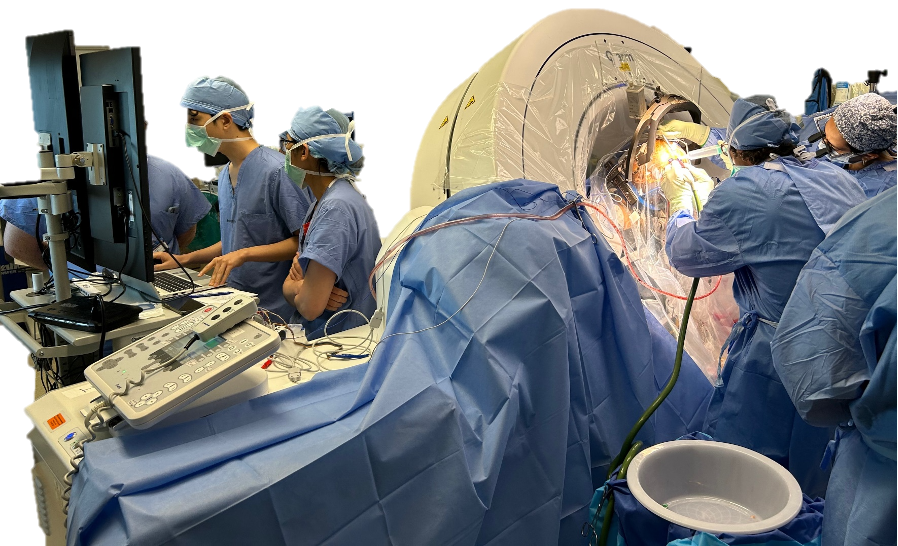
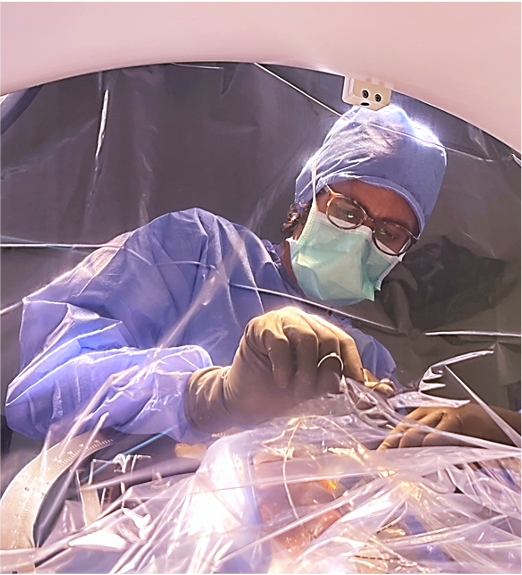
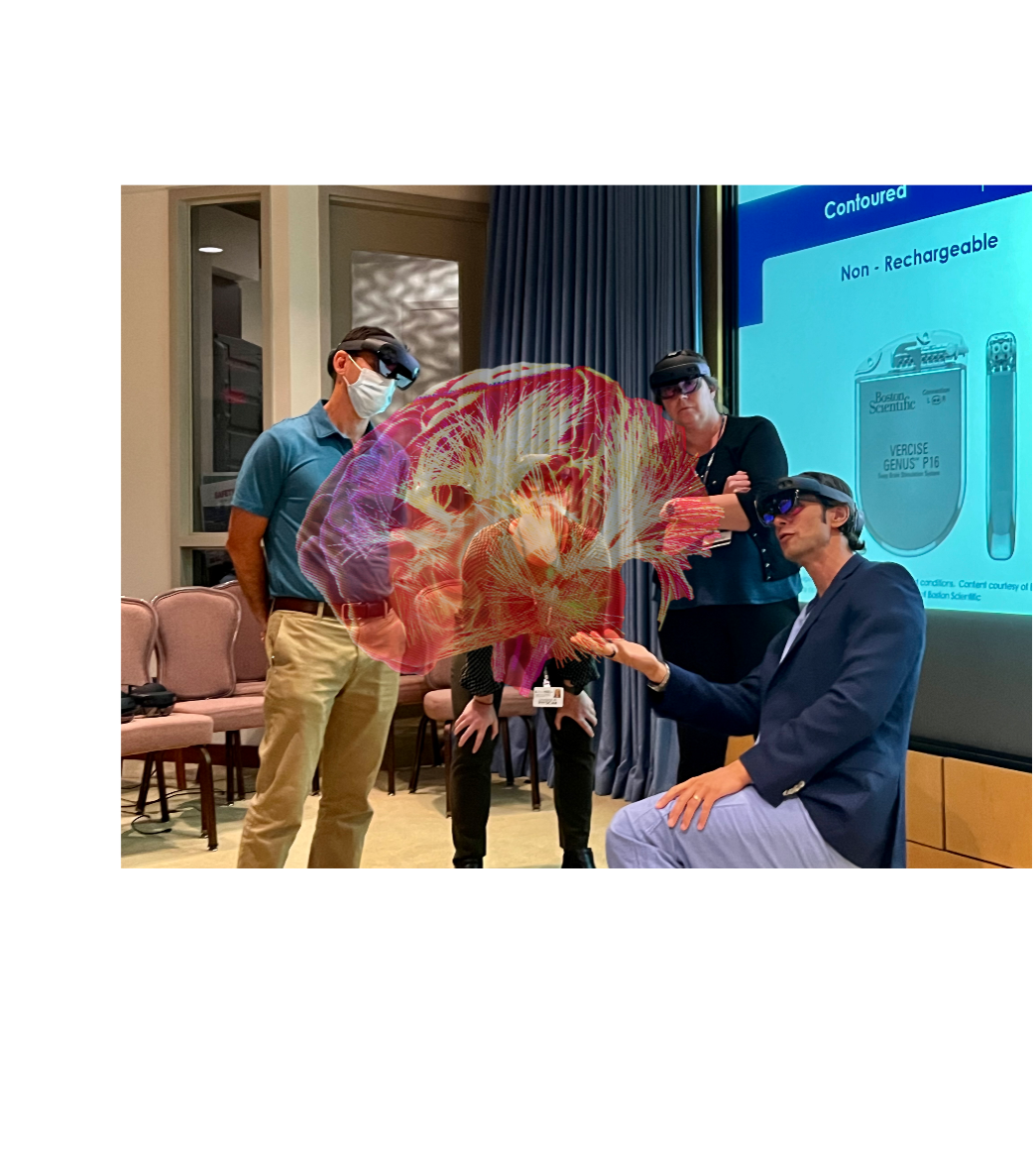
Some pictures showing Dr. Halpern at work and in private life.