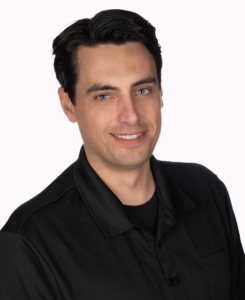
Dr. Nico Dosenbach is a pediatric neurologist and neuroscientist at Washington University, specializing in the study of brain network plasticity and cortical networks associated with cognition.
#39: Nico Dosenbach – A BOLD Challenge to Penfield’s Homunculus based on resting-state fMRI
In this engaging conversation with Dr. Nico Dosenbach, a clinician-scientist at Washington University, we dive into his personal journey from the Black Forest in Germany to his adventures in the US. Nico generously shared insights into his educational and career path, recounting his experiences studying biochemistry in New York City, making the decision to pursue an MD/PhD, and eventually specializing in pediatric neurology.
The conversation delved into his early days as a researcher at Washington University in St. Louis, during the pioneering early days of resting-state fMRI.
Nico also discussed the significance of data collected as part of the Midnight Scan Club. This work collected hours worth of data from ten individuals using comparably long and repeated fMRI scans and led to most of the seminal work of the Dosenbach lab. As Nico lays out, the reason is intriguing: If one sees an unexpected finding on high quality data, one would not as easily attribute it to noise. More likely, one would follow up and try to understand the finding better – as was done in numerous of Nico’s papers.
Nico tells us how practical it is to wear a pink cast around ones dominant arm for a while – and why one would want to do such a thing as an fMRI researcher. Finally, we talk to Nico about two of his recent groundbreaking papers which were both published in Nature and how it came about that he challenged a long-standing “truth” in neuroscience: The model of the motor homunculus established by Wilder Penfield.
Nico Dosenbach 00:00This was like happening, I think it was Mike and Avi were working on the signal processing of it, but you know, they'd present stuff, you'd hear things, you know, you'd maybe see something. I think I was sort of ignoring it, because, I mean, it's all signal sounded a little wild to me then, but then when they finally got the maps to look good by doing global signal regression, it was like, wow. I guess, yeah. What is this? Like, how did you do this? Well, the pull drum, as we called it, Russ Pulldruck's brain, that's just N of 1. That was a little extreme. So we were like, let's scale up to one of our magnets, let's do 10 of them. Steve Nelson, who's not Minnesota, he's a postdoc at the time, we're sitting there like, I'm like, just like, I want to do this, but I don't have the money. And he goes, you know, Nico, there's a 90% discount scanning for midnight to 5am. And in my memory, I slapped him on the back, like really hard, and like let out a yell and was like, and he goes, Nico. Like, you know that's when we put the DVS lead. I was like, what do you mean? Like, where? Like, right there? He's like, well, I'm just, you know, I don't know. What's the coordinate? But like, pretty much, I think that's the VIM, and I think this is where you would put a glow's pallidus. 01:05And I was like, get out. Like, are you serious? I got really excited because we had a meeting with the legendary Avi Snyder, who's completely night active.
Andreas Horn Like, you can't find him for 4pm. So we're having a 10pm meeting, and I was treating some kids with a 10-year-old stroke with CMT, constraint-induced movement therapy. And Avi was like, Nico, that's really mean. You're doing that to kids. You should do that to yourself. And we should study it. And then everybody laughed, and I was like, yeah, let's do that. Yeah, but I had to meet with the IRB like two, three times about doing this to myself. I couldn't stop laughing because I like signed my own consent form, and I had something about it, how I would not force myself to continue in my study if I didn't want to. It's like very tough for me. Yeah. That's good. Are you sure? You just want me to do this because it's kind of silly? And they're like, yeah, legal said do that. You sign yourself up in your own consent form, and then you don't coerce yourself. 02:02You have to be a little insane to be, Pencil's wrong, right? I mean, the first time I was like, like, Evan and I were admitting to it. We're probably whispering. Pencil's wrong. It's not that anybody hear us just yet, you know? You could see it. Welcome to Stimulating Brains. Hello, and welcome to episode 39 of Stimulating Brains. In this episode, we had the pleasure of chatting with Dr. Nico Dosenbach, 03:01who's a clinician scientist at Washington University. We first dove into Dr. Dosenbach's engaging path to medicine and ultimately pediatric neurology, drawing from his journey some really meaningful lessons for young and upcoming clinicians and scientists. I particularly found... Dr. Dosenbach's research philosophy engaging and inspiring because of his innovative approach, which sometimes uniquely employs self-experimentation. Perhaps a good reference to bring in now to support this is his nerdy version of a club or a gang called the Midnight Scan Club, where him and colleagues would take turns scanning themselves in an MRI scanner after hours
Nico Dosenbach to offset the risk of cancer. To offset some of the costs with scanning during the day in a busy MRI facility. Now, this sort of was very ripe ground for the PINK-CAST study, 04:02which was stemming from an interest in appreciating plasticity in the human brain. And I think a unique take on this was Dr. Dosenbach's experience as he generously shared with us, from the perspective of putting together the ethics application for which he will be a participant, but also his perspective in having to adopt to wearing a cast on his dominant arm for two weeks. Dr. Dosenbach's recent achievements include two Nature papers in consecutive years. This is a rarity in the world of fMRI research, and we try and pick his brain about what were some of the factors, and how he was able to do that. Now, there's quite a number of other studies that I don't have enough time to list here, but notably, we go through some of his recent findings 05:03and refining the Penfield homunculus, which I found is quite intriguing. And uniquely, he takes us through the process of looking at these results and interpreting them and presenting them in a way, in an impactful Nature paper. So, thank you all for listening. Thank you for tuning in, and I hope that you enjoy this episode as much as I did.
Andreas Horn So, Nico, thank you so much for doing this.
Nico Dosenbach I will have already introduced you by now, so we can directly dive into it. And as you may know, to break the ice, I usually ask, about your free time.
Andreas Horn So, what do you most passionately do when not involved in science or medicine? Any hobbies these days?
Nico Dosenbach 06:01Oh, boy. I know. I got that thing where my hobbies rotate.
Andreas Horn Currently? Yes.
Nico Dosenbach It's like becoming girl, and then they come back again. Trying to think. Lately, I've just been mostly working,
Andreas Horn which is very boring. Kids? Yeah.
Nico Dosenbach Kids. Right.
Andreas Horn Yeah.
Nico Dosenbach They, you know, they play new sports. Um, I tried to get my son into soccer, which, you know, I'm German, when he was younger, and he didn't want to, and now he's seven, and all of a sudden he wants to, and he's like, we have to play soccer, and I was like,
Andreas Horn yeah, I'm very excited about that for this weekend,
Nico Dosenbach but remember I tried to drag you when you were like three and a half, and you screamed that you hated it. Anyway.
Andreas Horn Do you play soccer?
Nico Dosenbach Not well, you know, not more than the usual German kid. Um, just for fun, you know, not in a club team. Got it. I like it, but that wasn't any good. Let's talk about the German stuff a little bit. 07:00So, so we're both from a small area in Germany, I think called the Black Forest. So, but I must disclose that even though my town is called La in the Black Forest, it's actually not in the Black Forest. So not, I'm not the real deal. I'm in the Rhine Valley at the border of the mountains we call Black Forest. But you, I think, are really from up there, from a small town.
Andreas Horn Yeah.
Nico Dosenbach That's right on the edge. So it's Black Forest, but there's some people who are like high up in the mountains. So I think we're just pretenders called Gutlingen, population 1000. So the sign says, I don't think it's 1000. I think it's less. you know, there's like farmers and cows and hills and trees and not much to do. I was just back there this last summer. I think people go to bed at 9 p.m. Wow. Reliably. why not there's nothing to do but i think you mentioned when you were in germany your kids thought the german cars are no good is that right yeah i tried to play this game to get them engaged 08:01of you know what's better in america what's better in europe or germany and the results were kind of wild because i would like to think that you know german cars are renowned for you know being fun and quality and they when i started playing the game the first thing that was like american cars are better and what i realized it's about the size so they started an audi a4 hatchback i think my daughter called it a clown car because it's so small and she claimed she didn't have space for her knees and i was like i used to ride you know it's my current size in the peugeot 105 with four other people my size and nobody thought they didn't fit you know so i guess it's all relative but what car do you have in the states i have like a vw t1 which okay it's much bigger than like you know it's an suv but it's not giant um but yeah they they were like dad we don't want to go in a small car and i was like oh my god you have no idea um great so when you were 15 years old living in that 09:03small um good thing in town in the black forest you kind of decided to move across the atlantic why to the u.s that's a great question where's the 90s you know um you know michael jordan the clinton yes partly i think wanted to get away from the little village um it just seemed like exciting you know like an adventure to you know learn english go to like american university which seemed you know like i feel like you know even then they would have those brochures with the beautiful pictures and i feel like german universities they didn't have any brochures and often have like a beautiful campus with the trees and the fancy grass you know just be like buildings in the city kind of so that seems very exciting and appealing and um yeah just so to get away see the world world right away but so sorry did you say the german 10:00ones are more pretty or the u.s ones are more pretty the brochures fancy american ones you
Andreas Horn know they have your nice quadrangle campus you know yeah yeah that makes sense although you might i don't know that much i don't know that much about german universities but like why do
Nico Dosenbach you always often see a building just in the town it'll have a sign you know like university building that's just a building i i recently read though that the first map in the world that was created where the word america was on it was made by a scholar at freiburg university where i studied so you know it's it's old stuff it's also pretty there i think they have nice campuses too but you're probably yeah the marketing is is off and yeah that was the marketing because yeah recently like this summer i was in tubing in and they have their like historical stuff in the past and of course freiburg's beautiful yeah so i think i just was focused on the brochures and i mean you were 15 that means you didn't have the high school diploma the abitur yet i assume 11:00right so you but you still could go to college directly no actually so i i went to learning with for summer i was 15 and then i graduated at 16 and then i just went so i did abitur um that's early oh yeah um i did have a recurring night at one point when i was like in residency that i got a call from germany that my abitur paperwork was wrong and i had to go back to high school in germany oh you know like when you have this dream like you forgot about the final exam mine was like i have to go back to gymnasium good you think your first impression of america at that age of 15 was in la jolla san diego and then i must disclose i just heard mike mike oaken interview you greatly at the ds think tank so that's where i have all this information and i think it's a really good thing to do and i think it's a really good thing to do and i think it's a really good thing to do and i think it's a really good thing to do and i think
Andreas Horn um what was that experience from uh like like in san diego there yeah i mean it was the i never
Nico Dosenbach been to us um i haven't been many places at all and you know i i landed at san diego airport i 12:04remember like it was yesterday i picked up driven to la jolla which i didn't know was like a special place i went to this house that was like one of the nice houses in la jolla on the hill and it was like spanish sienna style with a courtyard and a fountain and looking over la jolla cove and an endless pool back in the movie and i was like oh america is like in the movie i need to move to america like this is what i need to do later i was like yeah that was like a sampling error kind of yeah it's like it's completely unrepresented but it was like you know impressive and i had my mind blown i think somebody asked me if i want a fresh squeezed orange juice and i didn't even know what it was and i was like oh my god i need to move to america like this is what i need to do i was like and i was an employee right that was yeah yeah and i was like then somebody was like you can answer and i was like okay i'll take it by the way did you see the arnie documentary on 13:02netflix that was trending recently by any chance i don't know maybe like some clips i don't think i watched the whole thing because it kind of made me think of your story because he also i think you know comes from this very rural austrian village and really wanted to go to the states and um i think uh you know similar story made it there of course obviously and uh as you did um so that that's really cool so what happened next once um you were in san diego i think new york city was was the next stop right yeah i just i did like some language thing at ucst um learned english um and then went back for 13th grade in germany they still had 13 and and then uh the next year went to columbia university new york city which i'd never been new york city i mean i'd only been to san diego and not even all of it the summer before and that was quite the that was the shock i mean i i didn't i had no clue what i was getting into but it was quite fun i i showed up with a 14:05suitcase i remember i didn't have bedding or a pillow anything because i thought it was like a
Andreas Horn hotel i don't know why i thought that because i saw the brochures and i was like oh yeah i stopped
Nico Dosenbach there you know i got it yeah i got into the room and it looked more like a jail cell you know like not fancy with a little mattress and i think the first night i sat just like on the mattress and then and then i think i called my mom and she was like i think you're gonna have to go buy a pillow and so i went you know bought a four dollar pillow at woolworths on broadway this long gone right i remember trying to cross the street at 116th and broadway and there being so many lanes and just sort of thinking like well in germany doesn't have as many lanes at all and the yellow cabs are flying and i was literally like so afraid to cross the street like i made a mistake but the i mean in my in my head it feels like a few weeks later it i was acting like i'd always lived in new york city so i guess i still had some plasticity 15:03in my brain because it was like whatever isn't that fascinating right how how fast we can adapt so so yeah um and new york city of all places that's amazing but i think you did not study at columbia after all right they sent you a bill of oh i did i did for undergrad okay okay well i didn't oh yeah for undergrad i went to columbia and then you know i wasn't sure what to do after so i thought maybe md phd you should keep your options open um maybe just medical school you just grad school and then i got into columbia and um and uh at the time i was on an f1 student visa md phd programs you had to have a green card or be a citizen to get the scholarship um and so columbia was like you come you can do the md phd you won't get paid during the phd and by the way 16:00you have to have full four years of med school tuition plus interest in an escrow account before the first day of classes which i mean it yeah it was an exorbitant amount i was like close to two hundred thousand dollars then i called my dad and i said dad do you have two hundred thousand dollars i don't think he said anything he was just laughing so i i didn't do that and then fortunately for me that one of the few schools and the only one i knew about that gave scholarships even to f1 students was wash u so uh in st louis and i'm going doing the md phd there um couldn't have afforded medical school i mean maybe i don't know i didn't even try maybe i could take out a loan become a plastic surgeon or something but it would have been a very different life what what made you go into med school in the first place that's a great question um yeah i came more from the science and then like from biology 17:01microbiology and then well you know i was young but i started to realize you know like a lot of the sort of cool important questions are driven by medicine and and that's sort of
Andreas Horn like that's why there's funding that's why people are doing this
Nico Dosenbach um you know like it was sort of the beginning of you know like sequencing you know like quick vent and stuff but that stuff was super cool um and you know uh i mean i was a child essentially still but seemed like the the people who also had an md he seemed to have nicer stuff and more confident and happy if you could afford cigarettes yeah it's that yeah it's on the postdocs i worked with this i was like oh my god i'm gonna have to go to med school i'm gonna have to like in the lab as an undergrad this was before that nih forbids splitting postdoc salaries they would be from poorer countries and um living in manhattan with kids on on like essentially have a postdoc salary and even though i wasn't materialistic at all it looked like i was like 18:05oh boy i don't want to just eat rice all the time and then i talked to some folks they were like you can do any phd you know met doctors to research and i was like i'm gonna look into that seems like a good idea right so you ended up in st louis and i think you mentioned that there are many dozen bus in st louis is that is that right yeah i mean that's yeah i've run into a bunch never run into any dozen bucks where i'm from there's not that many and um
Andreas Horn it's interesting because it's like i mean we're kind of where we're from baden
Nico Dosenbach there's sort of a lot of people settled from that region in the st louis area around like 1840s forward and you can tell i mean it was fun it was like frontier country then and also what i was told was that people thought that because you know we got the mississippi going down 19:00you got the missouri going uh west uh oh wait coming from the west um it reminded them of the lower rhine so where you're from like the climate they were growing like easeling and stuff and um i think land was cheap and um you know there had just been the year failed uprising 1848 against the monocles so i think a bunch of people were like run away or go to jail kind of so uh yeah you just see it like like um the names and stuff you know even some of the foods they're like people like the smaller villages um kind of fun that's good so so you landed in st louis and that was mdphd um you studied medicine but you also did a phd there um and i think you shared the time with many of the greats in our field and in you know um imaging community because it was the time when resting state was kind of um identified invented whatever you want to call it i think in episode 29 of this 20:06podcast i interviewed mike fox who's also my mentor in boston and um you and mike were lab mates back in the day um could you talk a bit like broadly about these these days in the lab or in the broader st louis area um i think when we met last time you mentioned an episode where when mike um told you it was all signal and was really excited about the the resting state stuff that would be super interesting to hear from that time yeah that was an amazing time i mean i think everybody who was there at the time essentially got lucky i would say the main person was mark rakel who's still around who just i you know he's a special genius amongst all the geniuses and he had vision and there were other geniuses like mike fox um uh you know who they're sort of a perfect perfect storm yeah i mean i remember all sorts of stuff the it's all signal you know i feel like 21:01that story has been told so many times because mike's a legend you know there's probably some embellishments and like it the way i remember it was sort of like there was something going on that was you know after hours shenanigans and you know somebody's like you know mike's had too much to drink he's not you know i mean that all bull the signal and there's no noise and you know gotta keep him away from the prospective students because they'll think he's crazy and he was talking about resting state correlations right which i don't what year that must have been but it was sort of like i don't even know that then was probably the 2003 paper out that's about it um and uh yeah the other thing i remember was you know first time i heard about i was like okay that's crazy like whatever that can't be right and then um and then uh at some point jamie fair was also there at the time was like i'm just gonna go ask mark for the code and he got up and mark was like down the hall which was pretty bold because you know we were like taking 30 grad students 22:02and he was gone for an hour and he came back i was like i got the code mark mark mark says we should be forced multipliers we should get into this so then we just you know started messing with the like these kinds of analyses and the results are like they're supposed to speak for themselves like if you've done task after my studies which that's what everybody was doing you've got to recognize these patterns and sort of i think mike and mark converted everybody like in like a few weeks and then you know nobody looked back again onto sort of it was like before and after it was like a state change um which is super lucky you know i mean so i fell into it super super cool lots to unpack here so so you were in the neighboring lab to my grikel right at the time but yeah same center that's like an open floor plan and you know it still exists it's so-called the neuroimaging laboratories you kind of started it and like it grew into multiple laboratories but it was always kind of a sort of you know 23:05everybody was still close together kind of it was incensed off and so damien and i was steve peterson who had worked with mark in the very beginning with pet and then it was just like you just walked down the hall kind of thing and check into mark's office seat is there ask him if you can have his code and as i know from from randy buckner uh once told me that i think um mike and so so apparently it was not easy to get a good signal like you you you used a seed somewhere let's say motor cortex seeing the other motor cortex like i can the early reports wasn't even that trivial um and then uh mike and abby snyder apparently spent um nights and nights on on trying to get the code to show something meaningful and i think the big breakthrough was actually the at the time the global signal regression right and then all of a sudden i've even tried it myself if you do that or you know don't do it it's such a big difference all of a 24:02sudden you see the light and see the networks is that is that what the code was about or what yeah absolutely i mean i you know i this was like happening i think it was mike and abby were working on the on the signal processing of it but you know you did present the signal processing stuff you'd hear things you know you maybe see something um yeah and then you know i i think i was sort of ignoring it because i mean it's all signal sounded a little wild to me then not gonna lie but then when they finally got the maps to look good by doing global signal regression there it's like wow i guess yeah what is this like how did you do this because it you know it looks i mean you know if you like imaging if you like neuroanatomy there's stuff you know about well that's how it's supposed to look how'd you do that um so and i i mean i feel like it caught on like wildfire at least i watched you right away um and you know i would say mark and his group 25:00they're just so generous there was never like that's our stuff the only thing it was like you should try this it's really cool would you like the code would you like some sample data amazing yeah so that's great and if you look at the at the google scholar pages of of almost everything
Andreas Horn everybody that what was at was you at the time you know it's crazy how many citations you guys
Nico Dosenbach have on these earlier papers and how you know impactful that that was i think um so really cool time right place to be um so maybe it was good that you had an f1 visa yeah absolutely you never know how it's gonna pan out that's so yeah i not to get too upset if something doesn't work out because you i was like well maybe this was actually the better thing that happened so yeah i was definitely super lucky speaking about how 26:17study biochemistry like every night other than like a night or two before the exam you know like so i didn't actually do well my freshman year i was a builder and i met these two guys uh i wouldn't sing and mario sent here with like my friends and they were both like and they were like academically minded and ruined wanted to go to medical school and it was like nico you you're doing this wrong like you've got to like study you got to go to class you gotta take notes you have to do homework assignments and i'm like i did i didn't used to do that i was like this is different this is like a serious university like you're wasting your life you're like think about how much money is being paid so you'll be here it kind of worked and then um the yeah they just sort 27:00of showed me the ropes that that was like i don't know what i would have done that hadn't happened
Andreas Horn because i i was just floating i didn't know what was going on around me and then you know after
Nico Dosenbach that and i'd say that was probably most important and then i would say after that it would probably be the people at washu who sort of gave me a chance because i was a little unusual candidate i was like very young and i don't even know i mean my luck is unbelievable because i twice missed my flight to fly to st louis to do my interview okay wow it like five minutes i was like i remember sprinting i didn't it was flying out of new york and wherever i was connecting in like midtown i missed the train by like you know 30 seconds i like sprinted on the platform it was gone and then i missed my flight and the third time i called at washu med school admissions room 100 i never got her name but there's a person that she was like son i'm not supposed to reschedule you they told me that if you twice miss your med school interview and have to reschedule 28:00this character flaw but you just sound very young and you seem like a nice person so i'm gonna do this one more time for you but don't miss it i didn't and i sometimes think about that one because before i just turned that point yeah yeah i was like oh but i think i was like 19 maybe so it's just a knucklehead um of course so you know people like that steve peterson of course you know he he has my phd mentor mark so it's like a super mentor and that wasn't in his lab it's like everybody was sort of in his orbit um you know yeah and peer mentoring you know i mean i feel like yeah um and it's a big difference from german high school U.S. University undergrad biochemistry. So that must have been, you know, an important wake-up call. It's probably easy to miss the train. I got like a 49 on my first test, which was an F. I didn't really know that was an F right away. 29:01And I thought, since there's something going on, because I tried to buy the textbook, but it was like $220. And I didn't have that much money. I was like, I'm not going to buy that book. I mean, I feel like in high school, you never really needed the book. I would just borrow one for like an evening. And then I would see the other kids in the class study biochemistry like every night, like weeks in advance.
Andreas Horn And I would just sort of be like, I don't know why they're doing that.
Nico Dosenbach That seems silly. And then I signed up for biochemistry, which is a junior level class as a first semester freshman, because I didn't know you had to take other classes. And I was doing the test. I just completely failed it. And then I remember the professor was like, can you talk to me? And she was like, she was so nice.
Andreas Horn She's like, why are you in this class?
Nico Dosenbach I was like, well, I want to be a biochemistry major.
Andreas Horn I was like, are you a freshman?
Nico Dosenbach I'm like, yeah. She's like, you know you have to take chemistry and biology first.
Andreas Horn I was like, I do?
Nico Dosenbach They let me register. It was just like some phone system. It was no check, but I just didn't know.
Andreas Horn 30:01And then she's like, do you have an academic advisor?
Nico Dosenbach I was like, I think so, but I haven't met with them. And she's like, you should meet with them, and they will help you pick out your classes. And then I dropped it. I didn't get the F on my record. And then I went back to chemistry, which was hard enough.
Andreas Horn Yeah, I can imagine.
Nico Dosenbach But because in Germany, I don't know how it works.
Andreas Horn It's like, yeah, I thought, you know, I didn't know anybody who'd done this before,
Nico Dosenbach like an adult, like I need to sign up for biochemistry. I'm going to be a biochemistry major. I thought that's how it worked.
Andreas Horn Yeah. Yeah.
Nico Dosenbach Lots of help. Lots of luck.
Andreas Horn Absolutely. Yeah.
Nico Dosenbach Great. But also lots of courage involved. So, you know, amazing to move over. At that age.
Andreas Horn And so that's an achievement. Why child neurology? Like for your clinical career? Yeah.
Nico Dosenbach I mean, that one seems more obvious. I mean, I feel like you probably agree with me. You like are interested in the brain. 31:00There's nothing else. Like you can't.
Andreas Horn Yeah.
Nico Dosenbach I mean, I'm a little jealous of what, you know, cardiologists can do. But, you know, it's a pump that wheezes blood.
Andreas Horn You know, the brain is the most interesting thing to me.
Nico Dosenbach And so, like, it was like, you know, essentially like neurology is psychiatry or neurosurgery or maybe neuroradiology. I settled on neurology pretty quickly. You know, neurosurgery is too intense. Psychiatry is too slow and too much talking. And neuroradiology, I started to consider it until I realized I would have to spend like years looking at chest films. And I was like, I can't do that. Like, I really don't care. I like both.
Andreas Horn Yeah.
Nico Dosenbach I like both. I like both. I like both. I like both. I like both. I like both. I like both. I like both. I like both. I like both. I like both. I like both. I like both. I like both.
Andreas Horn Yeah.
Nico Dosenbach But if it had started straight up with neuroradiology, like maybe. But the years of general.
Andreas Horn Yeah.
Nico Dosenbach So then that neurology. And then I just did the rotations and PEDs. You know, you're an adult neurologist. But like, I just like PEDs. The patients are cute and you can pick them up. 32:01And, you know, it's just like a different vibe. It's like a. It was a litmus test. I was told it was like, when people tell you that your entire team has to dress up on Halloween
Andreas Horn to go to work, do you think that's awesome or do you think that's terrible?
Nico Dosenbach If you think it's awesome, you should do PEDs. I was like, I think that's awesome. Like going around the Scooby-Doo or whatever.
Andreas Horn How fun is that?
Nico Dosenbach You know, so. Totally agree. And I think you mentioned it's never their fault when we're going to ask you that question.
Andreas Horn Yeah. Yeah.
Nico Dosenbach That's.
Andreas Horn Yeah.
Nico Dosenbach You know, it's like kids are. Kids are kids.
Andreas Horn Yeah. 33:00You don't, like, if you have to tackle a patient that's running away from the floor in the hallway, it's not that big a deal, right?
Nico Dosenbach If you do it with a grown person, you know, because, anyway, I don't know, it seems like easy. More handy.
Andreas Horn Yeah, absolutely.
Nico Dosenbach Right, let's fast forward to more present times. One, I think, as an outsider, one key prerequisite that fueled many of your recent hits is based on data from the Midnight Scan Club.
Andreas Horn Can you talk about that? So what it is and maybe also why it was so important for all your papers going forward?
Nico Dosenbach Oh, yeah. I love talking about it. So the story, as I remember, which may not be the truth, is that, you know, Jonathan Power had had this paper and a bunch of others. The Status Rate and the Harvard Group about head motion, which was very depressing to me. So I was almost, and I was just finishing my training, like, Pete's Neurofellowship. 34:01I was like, I might have to do something totally different because I do love MRI. And I was like, maybe get the e-fizz, like, you know. And then, sorry, the paper claimed that all was just motion artifacts.
Andreas Horn Well, yeah, I mean, the motion artifacts have sort of fueled false discoveries, especially in development.
Nico Dosenbach Mental research, which much of that's true. But at the time, it was, like, very upsetting. Like, I was having, like, bad sleep about it.
Andreas Horn Like, what am I going to do?
Nico Dosenbach Not just me. People were talking about it. And so I said, like, there needs to be a way out. And then the moment was when Steve Peterson and Tim Lauman at WashU had gotten Russ Poldrack's micro-nectum data, where he'd scanned himself, like, 100 times over a year when he was the chair of nursing. I'm going to die. I'm going to die. I'm going to die. I'm going to die. I'm going to die. I'm going to die. I'm going to die. I'm going to die. I'm going to die. I'm going to die. I'm going to die. and there's just so much data, hours and hours and hours and hours of high-quality data, low-motion subject, where you, you know, 35:01for one, you don't have to worry about motion, plus you don't even have to worry about across-people comparisons. You can, like, study one brain. It seemed really appealing, and so I started tying along, sort of looking over Tim Laumann's shoulder, was doing the analyses, and when he was showing the first results, especially the fact that, you know, the group average brain, it's not a thing. It's a reification of sort of, like, an analysis stream. It's not really how brains exist in the world, which you ever go to, like, neuropathology rounds, you know. No. It's like one at a time, it's a physical structure. But it's just math, the group average brain. So that was, like, super appealing, and I was like, I want to do that.
Andreas Horn And I had some interesting patients
Nico Dosenbach that I wanted to study, like, low-end. And then essentially the idea was, like, well, the Poldrom, as we call it, the Russ Poldrack's brain, that's just N of 1. That was a little extreme. So we were like, let's scale up to one N of magnitude. Let's do 10 of them. But I didn't have any money. I had some, like, tiny amounts of funding. 36:00I got, like, $10,000 in free scan time because as an instructor, I just... I was finishing my fellowship, I think. And then Steve Nelson, who's not Minnesota, he was a postdoc at the time, was sitting there, like, seeing Tim present Laumann, and then I'm, like, just, like, I want to do this, but I don't have time. I don't have the money. And he goes, you know, Nico, there's a 90% discount scanning for midnight to 5 a.m. And in my memory, I slapped him on the back, like, really hard, and, like, let out a yell and was like, that's it, that's what we're doing. He was, like, got worried because he knew we were going to do that. And him and I, and then we signed up some other folks. You know, we're just... I think we spent $12,000 on scan charges, but we scanned 10 people, 15-plus hours a day. So, you know, it's just... It was each, always after midnight. We got a really nice data set, but it was, like, you know, it was like a shoestring budget. And then just started doing, you know, simple functional productivity and other task stuff 37:03without group averaging, and that, you know, that took... I mean, it's a really cool approach. It wasn't super hypothesis-driven. It was more like, if we do that, we'll see cool stuff. And we did. Not great for grants. You need a better story for a grant.
Andreas Horn Makes sense.
Nico Dosenbach Is there a thing to be said that... I feel like there's a... There used to be a big push for big N.
Andreas Horn We'll get to your nature paper on the BWAS as well, right?
Nico Dosenbach But there's also, I think, some push for low N,
Andreas Horn but high quality, right? So I've heard somebody call them human primate studies, where you essentially take individuals, but deep phenotype them and then analyze it. Is that, like, is that the current trend where we have these two extremes that people like in the field, do you think?
Nico Dosenbach I think so. I mean, those are the extremes I like. I think, yeah, like, as a joke, we would refer to some of the Midnight Scan Club participants 38:01as monkeys, because it's like, oh, monkey at seven coming tonight to get scanned kind of stuff.
Andreas Horn Yeah.
Nico Dosenbach They were all friends, so it was okay. Good. But I would refer to myself as a monkey. I was one of the data sets. I was monkey too. So,
Andreas Horn yeah, I mean, because it's, right,
Nico Dosenbach there's like a whole established way of doing small N, but getting lots of data per participant or animal. And there's sort of understanding that there's certain things you can figure out that way that are mechanistic, that are maybe variable across people, but not so wildly that once you have three subjects or participants, the principle that you've identified lines up, you know, I mean, there's papers on this. It's power. Like, you just figured this out, but you can't, you can't do epidemiology like that. You can't do a cross person comparisons. Like each animal or person is one experiment and there's actually replication.
Andreas Horn Yeah.
Nico Dosenbach I think that's very appealing because it's like cost effective. You can do the experiments with people, you know, 39:00there's not much overhead for recruitment. You usually end up scanning people who can hold still. So you have to worry about that. Not representative of the population, but there's never any claim.
Andreas Horn Cause we did three people or three monkeys, right?
Nico Dosenbach Like nobody goes that's representative of all macaques,
Andreas Horn but it doesn't really matter the kind of studies people do. Um, or tracers or something, right?
Nico Dosenbach You're not going to do a thousand just too expensive.
Andreas Horn Yeah.
Nico Dosenbach Um, yeah. And then on the flip side, I think the, the giant studies like it could be HCP, NBCD, and so on. Um, they're super helpful.
Andreas Horn They're just totally different, right? To me, it's almost like I started thinking of it as like epidemiology was MRIs, right? Like questions like, what does lead really do to a child's brain? Okay. Let's yeah, good cause you can't do an experiment, give kids lead, right?
Nico Dosenbach So it's like you get 12,000.
Andreas Horn Yeah. scans and you're like, oh yeah, there's a tiny effect, but it's real, so that's not good. That's an important question, right? Because it's an environment that affects every kid.
Nico Dosenbach Even if it's actually a tiny effect, let's not do that. You can learn a lot. It's just fundamentally different. I think the stuff I 40:02don't love anymore is the sort of intermediate, like 125 people, but you're looking across people for just something purely correlational. That just gets very dangerous.
Andreas Horn Yeah, absolutely. We'll get into that too. So 15 hours
Nico Dosenbach per subject worth of data, everybody in the world would have access to five HCP subjects, but you had access to much more replications of that same brain. And I think that fueled a lot of really great science, lots of neuron publications, I think, came first. Glad you think so. One key paper relevant to this audience of the podcast is I think the neuron paper. First authored by Deanne Green. In that one, you identify motor integration zones and map them to different DBS targets, I think qualitatively, right? But the
Andreas Horn paludum and the vimalamus, could you summarize that, what you found there? 41:00And maybe again, why it was so important to have such long datasets per
Nico Dosenbach subject. Yeah, I mean, I think one of the weird things, I'm still trying to wrap my head around it, is like, in the end, we've been finding a lot of things in the individual's brain.
Andreas Horn Sure, exactly. Sure, exactly. Sure, exactly. Sure, exactly. Sure, exactly. Sure, exactly. Sure, exactly. Sure, exactly. Sure, exactly. Sure, exactly. Sure, exactly. Sure, exactly. Sure, exactly. Sure, exactly. Sure, exactly. Sure, exactly. Sure, exactly.
Nico Dosenbach weren't quite ready to write a paper about it because it seemed like you know you're gonna embarrass yourself because it turns out to be artifact or something so um yeah for that study
Andreas Horn like why the snr is so much worse deep in the brain since from the coil elements so we kind
Nico Dosenbach of stayed away from you know the standard gbs target response data because it's just much harder 42:05and so then we had better data and we thought okay maybe we can take a look there that's obviously you know maybe the most important part of the brain also ignored by functional productivity studies because mainly because the data is so much worse a lot of the reasons um yeah so we the cortex yeah and this yeah what i think scott merrick was cool first also on that one he's called the cortical chauvinism and like neuroimaging like like his entire papers are about the whole brain it's just cortex and the analogy i've tried using it's like you're looking at a car and you don't know it's got wheels yeah that's like yeah yeah if you leave off everything that's not cortex you have a really high chance of not totally understanding how the whole brain actually does stuff because be sure that stuff's important because if you don't have it you're dead anyway but it's hard to study so um yeah so we finally dared i i would say and then um you know we noticed that um you know like we're trying to do 43:04winner-take-all so it's like parceling it out but it's difficult right and it looked like there were certain nodes that this is always hard but we we got even higher resolution data because it could be an it could be just a long averaging thing where there were really zones where those networks that in the cortex are separate really overlap a lot more we thought maybe that's meaningful and then really what happened was we had identified two and um i showed him to collaborators including scott norris who's the head of movement disorders at washoe and he goes nico you know that's when we put the dbs leads i was like what do you mean like where like right there it's like well i'm just you know i don't know i'll look the coordinate but like pretty much i think that's the bim and i think this is where you would put it in those pallets and i was like get out like are you serious i got really excited because i i mean you know i'm not a movement sort of specialist in pete it's not that big a deal they don't have parkinson's or essential tremor off usually um don't get much dbs so it wasn't really thinking 44:03about it and then it was like i bothered him and i was like no no we got to chase this down you know We started investigating it more and got some neurosurgeons to weigh in to make sure they agree, which I did learn that thalamic anatomy is very contentious.
Andreas Horn Yeah.
Nico Dosenbach The small spot, but very difficult. I was reading about it last night. I mean, I know you have a book out about that kind of stuff. Anyway, anybody want to teach me thalamic anatomy, I'm all ears. I'm fascinated. It's very difficult. I don't have a book on the thalamus out, no, no, no.
Andreas Horn But I totally agree that, yeah, there has been a lot of even historical fights
Nico Dosenbach also, you know, between Hasler in Germany and Erion Jones in the States and, you know, to facilitate things, call them differently and so on. Lots of different nomenclatures.
Andreas Horn Yeah, yeah.
Nico Dosenbach The nomenclatures are all different. There's this and atlases.
Andreas Horn You have to like, which is your favorite atlas?
Nico Dosenbach You know, you've got an atlas, the distal atlas. 45:00You go to the West Coast, you're supposed to use the Thomas atlas.
Andreas Horn Yeah, Stanford. I learned, which atlas would you like to see overlaid on our data?
Nico Dosenbach We have them all kind of thing.
Andreas Horn So, yeah, that was, I mean, that was sort of amazing
Nico Dosenbach because that whole project was just almost like sort of boring thoroughness. Like, oh, we did this for cortex. Let's do it for the deep gray as well as we possibly can. We had also done the cerebellum. I'm not expecting to find anything cool that's like clinically relevant. And then, you know, I think this is why it's so important to work on a team that's as cross-disciplinary as possible because, like, we really missed. And it's not even like I didn't know that you do VIM, GMS, but it's like not at the forefront of my mind. So, like, you look at a map, you're like, okay, sounds good. Let's put it in the paper. And you'd be missing the main thing about it.
Andreas Horn Yeah.
Nico Dosenbach So, I think it's so, you know, so important to, like, show your stuff to people who think differently, have different background. And I think that probably started, say, oh, Scott Norris and John Willey 46:02and other folks and Jared Rowland, you know, sort of like getting us into this because, of course, then you're like, I read this. I'm still a neurologist. You want to help people. And then, of course, it becomes much more exciting to other people if you happen to have found a node that's actually a DBS target.
Andreas Horn Makes it, like, a thousand times more interesting, right? And these would integrate different networks that on the cortex are quite separate, right? So, both of them or one?
Nico Dosenbach I think I remember one was more integrative than the other.
Andreas Horn Is that correct? Yeah.
Nico Dosenbach So, the one, I mean, the one I think we feel the best about, and I think we have a slightly different take on it. It's not different, but it's essentially that depending on how you parcelate the cortex when you're doing a winner take all, it looks like you're getting all sorts of different motor regions. It's also starting to look like this new thing we postulated,
Andreas Horn the somatic cognitive action network, right?
Nico Dosenbach 47:00We hadn't parceled that one out then. Once you do that, it's like, oh, it's actually a lot about the connectivity
Andreas Horn to that, which is interesting.
Nico Dosenbach Nice. Because it is this sort of cross effector network. So, it's sort of, it's still an integration zone, but the interpretation is slightly different in a sense. Like, it's actually because there's like a whole integration network that shows up strongly in the central thalamus. So, not wrong, just like more detailed to the interpretation now.
Andreas Horn Makes sense.
Nico Dosenbach And we'll get into that. So, I think that the next hit relevant to us, there are lots of hits, but I'll skip a few, was even Gordon's 2021 cerebral cortex paper that parcelated the striatum into small subregions, I think 10 different cortical areas. I think we have, for example, Bogdan Droganski had a paper on parcelating the striatum before you guys, but much coarser, not with the same, you know, integrity.
Andreas Horn Do you think the striatum is, like, has a representation 48:02for all the cortical nodes there are? Yeah. Yeah, I mean, last night I was trying to learn a little about the putamen.
Nico Dosenbach I think my opinions on these things are changing weekly depending on the latest thing I heard. You know, I'm having lots of debates with my buddy Evan Gordon. You know, his office is like down the hall here about this. So we have to be careful not to lean too far out the window. But, I mean, I think I've been annoying everybody I work with lately because I keep bringing up the deep gray down the straight. I'm saying, like, this is what we should be working on. And we need better methods. 49:00Like, we need smaller voxels. We need better SNR. You know, we need to optimize our sequences to measure things down there. It's almost like I feel like that's sort of, I don't know, like you probably. You teach me stuff, but I read about the thalamus as a relay station. Nature doesn't just, like, put stuff that costs energy.
Andreas Horn Like, it does sound like, what's it do?
Nico Dosenbach That's, like, such a cop out. It's like one of those standard sentences you see, like, in an intro.
Andreas Horn What? Like, you're just handing things off for no reason? Like, what's really happening?
Nico Dosenbach And you have so many fascinating. I'm super fascinated lately by this idea that, like, you can have a lesion in the thalamus somewhere and have, like, a positive symptom. Like, you have chronic pain, all this stuff. And that wasn't there before. But then you can stimulate near it and also make pain go away. And then whenever I ask.
Andreas Horn Yeah. Yeah.
Nico Dosenbach And then I ask, well, I had to ask the EFS guys, people, like, tell me what the stem parameters are.
Andreas Horn 50:00Are you inhibiting or are you activating?
Nico Dosenbach And you should go, great question. We think we're doing both, but nobody's really sure.
Andreas Horn You know?
Nico Dosenbach So, I mean, I'm just learning about that because I only have any background in EFS. So.
Andreas Horn Yeah.
Nico Dosenbach that's where the action is right now. I agree. So understanding the brain as a whole maybe and also for a lot of, you know, neuromodulation interventions in neurology and neurosurgery and psychiatry. I think it seems like we got these great treatments, but when you dig into the story, it's a lot of trial and error because a lot of the models, they're like, oh, that is not the best explanation. You know, like it seems a little off still. Like it feels like we don't know everything yet, of course. Absolutely, yeah.
Andreas Horn If that is interesting,
Nico Dosenbach Marwan Hariz, who was also a guest on the show, has a great paper on serendipity, how it led to clinical treatments in this field. And I think if you analyze, you know, how DBS came about, 51:00how lesioning surgery came about and so on, it's really more about serendipity
Andreas Horn than animal models, right?
Nico Dosenbach So almost everything can be traced back to one case report or, you know, these findings in humans. And so you're totally right. We often don't have good mechanistic models that are really good for the human body. Yet for the things that work, because it's so far hard to find good animal models that really lead to treatments. I think, you know, that end doesn't have big wins in neuroscience, very much so in cancer. So Mike Fox and I bounce these ideas across our heads all the time these days and are quite fascinated by this idea that, you know, there's really a lot coming from human serendipity. But as a consequence, you might say that we often don't understand these things that well yet. So it might make sense to now go back to animal models and better study them or with you later.
Andreas Horn Yeah, yeah, absolutely.
Nico Dosenbach And I was literally thinking this morning as I was driving about,
Andreas Horn like, who does trace injections at WashU?
Nico Dosenbach Like, you know, like the really classical stuff 52:02that probably isn't getting a ton of funding these days,
Andreas Horn but it's so, so solid, you know?
Nico Dosenbach Absolutely, yeah. Next paper, if I went onto Wikipedia and searched for Nico Dosenbach, didn't find a page about you. Sorry, not yet, but I'm sure soon.
Andreas Horn Yeah. And the first hit I got was not the profile about yourself, but about self-experimentation in medicine. What did you do, Nico?
Nico Dosenbach Oh, yeah. I came up with a name on Wikipedia. So I did this, we call it the pink cast study, where, so after we had the midnight scan, some data, right, there was this idea that we want to do experiments like in monkeys or rats.
Andreas Horn And, and, you know, we, there's still SNR issues, right?
Nico Dosenbach So we got this idea that we shouldn't do something subtle. Like we need a sledgehammer. And the story behind it that I remember, the origin story was like, we had a meeting with the legendary Avi Snyder, 53:00who's completely night active. Like you can't find him for 4 p.m. So we're having a 10 p.m. meeting at WashU in the imaging building with Avi, because that's like his lifetime. And, and I was treating some kids with penile stroke with, with CMT, constraint induced movement therapy. And we'd been talking about like what kind of experiment we want to do and plasticity,
Andreas Horn obviously super interesting.
Nico Dosenbach And I'm like telling people about this patient, I signed up for CMT and Avi was like, Nico, that's really mean. You're doing that to kids. You should do that to yourself. And we should study it. And then everybody laughed and I was like,
Andreas Horn yeah,
Nico Dosenbach let's do that. Pretty sure it took us the year, me a year to like clear my schedule and like plan out the whole thing.
Andreas Horn What's the MPP?
Nico Dosenbach Sorry.
Andreas Horn What's that?
Nico Dosenbach The MTS constraint is moving therapy. So, oh, sorry.
Andreas Horn Yeah.
Nico Dosenbach Like you, right. If you have a hemiplegia, you, you put the good side in a cast in kids. The idea being from usually from panel stroke, uh, 54:00to force them to sort of rewire when you really scientific here. Um, just some mixed evidence for it, right. It's sort of, I didn't feel bad prescribing it because you know, it, a lot of it's like good studies hadn't been done to show that it works. And it seemed like no harm, you know, you put kids as arms in cast all the time. So also reason, so they safe anyway. So you put the good arm in the cast. So the other arm has, you know, we, we do the same in, in, in, in, I, as an eye doctor, right. If, if you have a, um,
Andreas Horn yeah,
Nico Dosenbach got it.
Andreas Horn Okay.
Nico Dosenbach So, so, and then Avi said you should do that to yourself.
Andreas Horn Yeah.
Nico Dosenbach I mean, she was studying, we should get a time course plasticity and like Tim Long was there. Some other folks, I think maybe, Adrian Gilmore, Pam,
Andreas Horn remember exactly all.
Nico Dosenbach And then we were like,
Andreas Horn yeah,
Nico Dosenbach let's do that. It took a while to plan out. Um, and we did it. It was like two weeks of re I was still tight on budget. So we, 55:00we scanned like at five in the morning. Cause it was, it was not 90% discount was like a 70% discount from like five to six was 30 or something. I'm not a morning person. So that was on my part. And then we did like two weeks pre then we did two weeks cast the, the bunch of, the trial cast, you know, learn how to do it. You gotta enclose the fingers so you can't cheat kind of stuff. And then, um, we did daily scan before two weeks during two weeks. And then I think we did in the beginning of four week tail, um, you know, think 30 minutes rest, bunch of other stuff every time. Um, and then, you know, I like to do it once to see what we get before we invest more energy. And so we analyzed my data and there was what we thought was this huge effect, for example, like decreased partial activity and left, right, left, right, right, right, upper external motor, which is the classic, you know, visible nice. Any five finding.
Andreas Horn Yeah.
Nico Dosenbach Well, I got giant reduction. I was like, did our drop by 0.23 or something is big. I thought, and then I got all excited. And then we did it two more times. 56:01Turns out we did it. There's a better scanner than with younger people. And we scanned at night. And when one participant, we essentially put the left, the right upper extremity correlation is zero, like the classic FC. It's like, well, Ron, and then it came back. And the other, the one we got it almost the zero. So way bigger result. So,
Andreas Horn yeah,
Nico Dosenbach but I, I, I had to meet with the IRB like two, three times about doing this to myself. I got really lucky because one of the IRB guys, he has like an interest in self experimentation. He told me about it. It washed you as a history. Like I know Randy Bateman did like some self CSF sampling for paper. You know, like the, I'm pretty sure, it was like super important for all the stuff's happening in Alzheimer's and CSF samples and serum samples and detection and stuff. And, um, you know, in the end, uh, I was a little annoyed cause I don't love paperwork. They made me write like a clinical trial protocol for myself. 57:00Like at first I was like, I'm just going to do this, make sure it's okay. And, uh, I couldn't stop laughing because I like signed my own consent form where, uh, and I said, had something about it, how I would not force myself to continue in my study if I didn't want to. It's, it's like, very tough. That's like,
Andreas Horn yeah.
Nico Dosenbach And they're like, that's good.
Andreas Horn Are you sure you just want me to do this?
Nico Dosenbach Cause it's kind of silly. And they're like,
Andreas Horn yeah,
Nico Dosenbach legal said, do that. Do you sign yourself up and you only play with that. I didn't, and then you don't coerce yourself. Like I will try not to curse myself. Um,
Andreas Horn yeah,
Nico Dosenbach but I was fine. I mean, it was hard mostly because all the scanning, um, and then there was good advertisement, the pink, because then people come up to me and ask me, that's like a good icebreaker. Cause she was to me, broke your arms and like, what's happened is like, my story. I didn't break my arm. I'm doing research. And then I think the other people we got to do it, they, they saw it and they're like, I want to do this. Like if you want someone else to do it, remember Ashley Nielsen, who's self-identified on Twitter and everywhere. 58:00She's very proud of this. So I can say her name. Um, she was the next one. I was like, you have to be very intense. And she told me, she was like, all right, I'm telling you how intense I am. My sister just bike from San Diego or something to Alaska.
Andreas Horn Yeah.
Nico Dosenbach So I'm much more intense than her. I was like, okay, we'll do it. You can do it. And she was actually way better than me. She, she's like, well, it's greatest super subject.
Andreas Horn So what did your family say during these two, two weeks?
Nico Dosenbach Like you couldn't, I don't know.
Andreas Horn Did you need help at breakfast or these things?
Nico Dosenbach No, I, I, I mean, you managed, it was clear. I wasn't going to be deterred. Um, I, I, the idea was I wasn't gonna like, uh, uh, like, no, there was not, that can be anything I didn't do. Cause I wanted to see the plasticity effect. I, I, I could change a diaper because my daughter was like, like a year old or something, 18 months then. And the trick is you use the cast arm, the holder down. And then, and then you do this one hand. I had some practice. The only thing I didn't do is like at the time we had like one stick shift, 59:03VW and one knot. And I decided not to drive the stick. Even though I kind of tried it, you know, I was like, it's not safe. But I mean, I, I mean, I automatic is fine. And then I just went to work. I remember going to clinic and, uh, and I was really worried cause I was still like write some scripts on paper pads sometimes like stimulants or whatever. And actually the nurses, they were like, Nico, your handwriting got better when I was writing with my left.
Andreas Horn And I was like, really?
Nico Dosenbach Cause like literally, cause I thought I couldn't write with my left, but it's actually, I slowed down and mainly my sloppy handwriting is cause I just go too fast. I'm just like, I'm just like, I'm just like, I'm just like, I'm just like, I'm just like, I'm just like, I'm just like, I'm just like, I'm just like, I'm just like, I'm just like, I'm just like, I'm just like, I'm just like, I'm just like, I'm just like, I'm just like, I'm just like, I'm just like, I'm just like, I'm just like, I'm just like, I'm just like, I'm just like, I'm just like, I'm just like, I'm just like, I'm just like, I'm just like, I'm just like, I'm just like, I'm just like, I'm just like, I'm just like, I'm just like, I'm just like, I'm just like, 01:00:00I'm just like, I'm just like, I'm just like, was the whole grant I wrote about it and like whatever like I thought it was going from right to left like you're right down and you go to left got it it's not at all what this is about actually like within a day or so you realize that you actually really go stuff with your left hand like plenty good it's really going from two hands to one hand that's the big difference and I realized that several times but the one time I was like you know you emptied a dishwasher you like go down you grab plate and then one motion you open the same right you only have one hand you pick up the plate now you're standing and it's closed yes you're like oh I need a different strategy so like I would put the plate down and you just open all the cabinets then with one hand you can do it and then but it's like literally like the first time you do it automatically you realize you need a different strategy so it was almost like oh like it's about having one hand and you can get around it but you literally have to think it out sometimes or the other one that 01:01:00was almost embarrassing was a jar like I was trying to open a jar and I remember just like holding it and I'm standing I'm like pushing against the counter I think it was like pickles I finally was like oh I got legs and I carried it I sat down I used my knees and then you open it and then it's weird right but it's like got legs the first time you hear about it so I was like oh there's cognitive overhead for all this stuff it's just so automated normally and then the hardest was the belt but I figured out you use like the dresser corner and you're like I mean it's not pretty but like the first day it took me 10 minutes to put my belt on you know to go to work but then you know with some practice it is it's kind of fun I don't know everybody's played this game to be like how good could I be use my left yeah but then you never stick with it left the cast right like the cast forces you and within three days you're like oh yeah it's fine like it it's just it's the right within a few days usually you know would you recommend it to people to try it out just like that probably not 01:02:00I thought it was super fun I mean actually honestly the most annoying thing was like it's annoying to sleep with a cast on so I think it had some sleep problems the first few nights because it's like right like where do I put it the pillow on top and that's mainly so it's really very creative um study as as all of yours and and you know very cool very insightful it's so funny to hear that you had an IAB I mean I now now thinking of it obviously you had one but but I think if you go to that list on wikipedia most of the people do self-experimentation because they don't right I think I I just skimmed through it and there was one like the first art cut theater apparently was done in self-experimentation on you know himself then went on to get the Nobel Prize so so there are these um you know other examples where people do it more or less because they can't do it any other way um and so so yeah super interesting so all right uh but um I think that the next one um uh 01:03:00following these series of neuron papers you had two nature papers in in succeeding years 2022 and 2023 that is unusual congratulations for an fmi researcher so is there a recipe what's what's your what's your secret sauce to get into these high impact paper journals how lucky are you getting lucky and that come on oh seriously and also you know work with really good people um I did it's uh teamwork and people who are very very good at stuff already which usually means that like further along in their career are still willing to put up with you you can just do more complicated bigger things um yeah I I uh yeah and the last one was because adhd helps because I think my dopamine reward curve is set up or in a way where it like falls off very steeply so I really struggle focusing on things that I think it's not that exciting which then it just automatically 01:04:00forces your energy towards the stuff that is exciting so it's kind of just like a like hunter and gatherer versus like big game hunting it's not actually you're probably not actually doing more for science you're just being selfish and like right like gambling on the big stuff working out kind of um which is almost like I've tried to will myself not to do that and it seems like I can't
Andreas Horn not that's very interesting thing your adhd um is is helping you essentially focus on
Nico Dosenbach the on the few things that that keep your attention span up but you could also take it the other way around that publishing in nature usually takes ages right it's a slow process so so keeping you know is it wouldn't you also be for the quick wins with adhd so you know to yeah yeah I've been wondering about this because you know the folks I work with there seems to be this difference where there's a lot of people like to start things and then at the end the last 10 percent they just 01:05:00deal with it anymore I have this weird thing where I'm the opposite way where like once I see that it's about finished I I can like the reward is getting closer the future discounting is getting diminished and maybe this is growing up where I grew up like this idea of like doing something that's really clean like really awesome like even if it doesn't have to be I grew up with that being like a good in itself I remember my grandpa always built his own stuff he was like a real Swabian he would like twisty tie and color coordinate the wires in the wall and I was like his helper and I later realized like you won't have to do that but like in his mind that's how you do it right and even if somebody can't see it like somebody's gonna open that wall in 50 years they'll be like oh those are really nice wires you know they're all like tied together going the same way yeah you just toss them in there so I feel like it's the one thing I picked up in southwest Germany that stuck with me so it's like oh this is really like I'd rather go over something with one over before just to make it slightly better if I think about it like I'm 01:06:00like it's really great then like start like a whole new okay thing but then it hurts your I don't like that the NIH counts like total numbers of papers because that you can't do
Andreas Horn well on that one and always like polish everything one more time so makes sense yeah I can really
Nico Dosenbach relate to that I think on a lower smaller scale for the higher impact papers we've published in my lab once we got into the revision phase and was positive then yeah you know I we usually go all in and every yeah kind of pitches in and we kind of try to make it the best paper we can because we then it's you know the reward as you say there's no delay discounting anymore you kind of know it's going get gonna get in but then you can really make it even you know maybe bump it up a little bit so it's like I can very much understand that you you you mentioned like deciding to go into to nature and when my go can interview to you mentioned that you decided to send the latest one to nature based on a Twitter thread but even Gordon 01:07:00yeah following publications of the preprint and he called it the crowdsourcing impact across the nerds um have you have you done that more often like using essentially Twitter feedback to decide where to publish yeah I'm trying to do that now because these things you're there should have
Andreas Horn theory of mind it's like you obviously think it's interesting but impact is success by the rest of this community is like how interesting do other people find it and things like social media will
Nico Dosenbach essentially tell you right so then it's like and sometimes you you like oh I don't think that's
Andreas Horn that interesting and then somebody puts a tweet out and everybody responds they're like oh okay
Nico Dosenbach people do care they like this this is good to know um you know you I mean like even the reviews I feel like if you have some contentious on average that what people say on Twitter matches pretty well which is what your reviewers will say I mean not perfectly Twitter is I think angled towards younger people and more like computational people so I think it's like you know it's like you know 01:08:00slightly yeah uh but on average it so so that's like if you put a preprint up and you have a bunch of responses don't ignore it like you just got your first round of reviews like you might want to address it right you might disagree but like the other reviewers the ones the anonymous ones or not always but mostly they'll probably say the same stuff you know so it's kind of kind of cool um you usually put in a delay between the preprint and the actual submission because we usually do for the same day um but other than I know that's my new theory that like you you you should wait right because you you do a lot Twitter you're good at it you essentially get all your comments in 48 hours there seems to be goes around the world twice the time zone and then it's kind of like then it's just a trickle so after 48 hours and then if you get a bunch of comments you should look at them and be like are any of these something we can fix before we submit the paper and depends on the story but sometimes you're like yeah oh like like everybody hates this word or like everybody really likes this figure that's 01:09:00in the supplement they're like oh I should put in the paper like stuff like that it's like yeah I just like that you know and generally from your experience publishing in nature it is I I assume a tedious process can you report a bit on yeah do you like it are you usually is there usually a moment where you say oh this isn't worth it and then in the end of course it's worth it once it's out or is it always has it been smooth for you so far well I think I like it now I don't have to usually do the most tedious stuff yeah myself but I I kind of like it um and it's um you know there's a lot of you know your image walk out that kind of stuff but there's a lot happening there you know I don't know about the nature you know group but like the people that like work at nature they're like really good at their jobs like they yeah they really care it's almost like like you have a lot of time to do that and then you're like oh I don't know what to do next but like you have a lot of time to do that and then you're like oh I don't know what to do next but 01:10:00like you have a lot of time to do that and then you're like oh I don't know what to do next but like an external conscientiousness support system where like stuff that you would even let go they're like no no no gotta fix that you know it's like move it to the left look you need a p value there another p value I know you have 2000 p values but you need another one and it's like it's kind of cool so if you like making it like really pretty and like actually thorough yeah as thorough as you possibly can then then you get a lot of support right yeah which is different from with all the other things that you're doing and then you get a lot of support right yeah which is different from with all the other things that you're doing and then you get a lot of support right if you're running a lab you can't do that but if there's people that's their job they get they're really good at it and then it gets even better so I actually like that um sounds great yeah okay and so so let's talk about these two um a little bit and and maybe the first one um
Andreas Horn first brainwide association study we can keep that brief it's not so key to this podcast but what is the study about and why was there also a storm of maybe misled
Nico Dosenbach feedback from the people who were involved in the study and then the people who were involved in the back or or around it or you know a storm of reactions I don't think it was a negative storm 01:11:05but it was a lot of interest and what is the paper what is it not how did people react yeah b was brainwide association study right it's essentially it's a thing that's well known in other fields that's happened repeatedly in what I would call population science human population science right it's happened in genomics jiva it's happened in essentially medical epidemiology right um you know associations things that aren't in a clinical trial right the first blind double blind placebo-controlled clinical trial that's powerful but then if you're doing these oh mediterranean diet you know you do a small sample it always looks great and then you do a study and like yeah that doesn't pan out right so that when you and nita says written about this you get that inflammatory paper it's like wow almost all research findings are wrong I'm paraphrasing the title I can't I don't have it memorized and it's always the same thing and it's always the same thing where right if you have publication bias which we do towards positive 01:12:05and significant findings yeah right then if lots of people do something the one by chance that was significant will get published yeah and then it happens a bunch of times you do a meta-analysis now you got a bunch of 20 small studies right then like the meta-analysis is positive too but really if you then go and do one giant trial with a hundred thousand patients it's not the effect size is zero I mean this is happening in a lot of places and it's not just a matter of like sort of like Schoell and stuff, they did it. And it's like, oh, the whole effect went away. But it's the winner's curse or underpowered correlations paradox or whatever you want to call it. The physicians all understand it. It's happened in GWAS like 10, 15 years ago where you get these single gene, small N association studies
Andreas Horn and they just didn't hold up. And now GWAS samples, they're like in the 5 million plus range now, right? Because they're really, right, if you're studying
Nico Dosenbach a population, which is totally different from three monkeys where you did an experiment and get 01:13:03lots of data, it's like cross people, no experiment, just correlations. It gets really tricky and you need giant samples to be sure. And so it was, you know, Scott Merrick and Brendan Terver Clements, they they're not by training, but so hobbyist statisticians are, you know, good as you can get without having a PhD in statistics. And they started looking when the bigger, and the crazy thing is that you need to know the effect size, the real effect size, which the published effect sizes when all the studies are small are essentially inflated. That's what happened. Because people want to publish negative studies.
Andreas Horn Yeah.
Nico Dosenbach Right. They just don't. And that, and not at the same frequency yet.
Andreas Horn Yeah. Right. And so, so then you think, oh yeah, these are big effect sizes. And then you get a giant
Nico Dosenbach sample and you redo it and you're like, oh, that effect size is way smaller than anything that's been published on the same question. And then, you know, Scott and Brendan were like, ouchies.
Andreas Horn And it was kind of funny because it's almost like your level of statistical background 01:14:06predicted how sort of surprised you were by this, you know? So the hardcore statisticians were like, well, yeah, of course you didn't know that. Like, and then the imaging people would be like, what? No, like that can't be, you know?
Nico Dosenbach So what you found before we go into that, I think you need around 200,000 brains. So is that correct? No, no, no. It's not that bad. I mean,
Andreas Horn How is it?
Nico Dosenbach The title is called, The 01:13:59Brain of the World. And it's a book by the author, 01:14:29the author of the article has like thousands. There's a lot of which I stand by that. The trickiness is, you know, in retrospect, you can pick out your very largest affiliation,
Andreas Horn right? And sort of like look at when you have all the data and be like, well, this one was real.
Nico Dosenbach That's fine. But it's different than like, it's different than prospectively having an
Andreas Horn underpowered sample. Right? Hindsight is 20, 20. And picking out whatever is the biggest, like that's almost like the winner's curse. By 01:15:04definition, your biggest effect size in a small sample is wrong. Right? Because of sampling bias. Right? And so you, you should, you can't, it's like overfit. Like you can't just publish your biggest effect. Even if it holds up, it's for sure inflated. Right? And that's just, the hardcore statisticians are like, that's just like math. Like, why are you so upset about that?
Nico Dosenbach So, and then the, I think the biggest problem was that people, this is very specific to cross-sectional correlation, population-based studies.
Andreas Horn Yeah. If you go, as you know, and someone has a stroke, right? The brain behavior correlation, where you have a stroke in occipital cortex is like perfect. You now have a field cut. Only that, yeah, you don't even need, you don't even need five usually. Right? I mean,
Nico Dosenbach it's like my favorite example is always patient HM where, in the first, in the second, in the third, in the fifties, he had a bilateral medial temporal over section for intractable epilepsy. 01:16:03He could no longer make memories. Every single physician went, let's never do that again.
Andreas Horn That's a perfect effect size. But yeah, happens once and nobody goes, I'm not convinced. Maybe
Nico Dosenbach that was a fluke. No. Yeah. Yeah. Like causal intervention. Yes. You know, perfect timing. Like, you know, the timing, I mean, and you know, yeah. Yeah. Or like you put a DVS electrode in, somebody has tremor, you turn it on, the tremor is gone. You turn it off, the tremor comes back. You don't need to do that a thousand times. You don't need to do that a thousand times. Like, no, usually one, maybe two. And that works, you know. Fun fact, Günter Deutschle, who's kind of established DVS with others, was a prominent figure and he's a tremor guy. He says that the evidence we have for tremor to work, like on a, you know, study level is not great. So DVS for tremor is essentially never been proven with the usual class, whatever evidence that you would need, as we did for Parkinson's. But I think nobody doubts it. You know, we see it, we switch it on. So, so it's, yeah, it's funny. 01:17:02So I sometimes, I sometimes, maybe correct me if I'm wrong, but if I want to put the brain wide association study idea into an analogy, what I sometimes picture is, you know, you take random pictures throughout the day of people, of their faces, and then, you know, maybe you can find an association, whether they are smiling and then have depression or not, you know, or not. Based on that, right. That's a bit of the level of what we sometimes do. It's a random shot during the day, you know, at some activity, if you have enough N, the people that are smiling have less
Andreas Horn depression, but you need a ton of N, right? You have lots of people that wouldn't smile,
Nico Dosenbach or still don't have a depression. But if your N is big enough, you might at some point find the correlation between them smiling, having depression or not having depression. Is that a bit what, what people do if they do, let's say a resting sit scan, cross-sectional and then want to classify if somebody has schizophrenia or not.
Andreas Horn 01:18:02Is that a good comparison there? I like that one. Yeah. I mean, the Scott Merrick and Brendan, they've worked on, on, uh, on some good examples, right? So for
Nico Dosenbach example, the correlation between height and weight in humans, 0.4. Height and weight, most people
Andreas Horn in your head is like, that's a strong correlation, right? And actually there's a great paper where
Nico Dosenbach people just go through like the correlations in nature. And when you read it, you're like, oh, they're all much smaller than I thought. Right. Cause if you had asked me, like,
Andreas Horn what's the height? Mommy, aren't seven maybe? I don't know. This is 0.4, but that's actually
Nico Dosenbach in biology, a huge correlation. You sample 10 people, like you could get 10 people that are really heavy and not tall and vice versa. Right. So, so, and that's an ultra strong correlation,
Andreas Horn right? So like, like a lot of the stuff people were doing with BWAS, it was essentially assuming
Nico Dosenbach that we were looking at correlations that are like height and weight, like 0.4, and then you can get 60, a hundred people. That's actually not reasonable. But turns out they're mostly like.04. And, you know, max out at like 0.15 maybe. And, and, and so as soon as you do that, then it's like, 01:19:03oh, we need multiple orders of magnitude, larger samples now to have the same, to be powered.
Andreas Horn And in retrospect, it's kind of like, but again, I was participating in this. It's like, why would we think that all these noisy measures have a correlation like height and weight?
Nico Dosenbach But we did. Yeah. Who did, right. And then it's sort of, I mean, but it's,
Andreas Horn it's a weird thing. That's why we've been calling it a paradox or a curse because it's,
Nico Dosenbach like, it's published, it's peer reviewed. It has a P value. It's so anathema to be like, oh, it's probably wrong. Like you have to be kind of like quite the contrarian to be like,
Andreas Horn oh yeah, but that, no, that's definitely wrong because, you know, publication bias and their
Nico Dosenbach sample's too small and you got that by chance. And, you know, it really helped me. It was like, weird. It's like, you got to zoom out beyond what you're doing. Right. So when we were arguing about this on Twitter or in person, people would be like, well, I don't do that. And I was like, no, no, no. Same as like, there's 10, 20, a hundred groups around the world doing the same experiment
Andreas Horn because it just makes sense. The same analysis. Yeah. You know, at point of five, five, if it's
Nico Dosenbach 01:20:03a hundred groups around the world, five of them will have a significant effect. They're the ones
Andreas Horn that get published. Yeah. Yeah. It's not just you. There's lots of people out there, you know? And
Nico Dosenbach then, and then it gets weirder where I know I've done this, where it's the re-analysis, which is so
Andreas Horn subconscious, right? Like the overfitting. Nobody goes, I'm going to overfit this data. You go, oh,
Nico Dosenbach yeah. I did it wrong. I should have done GSR. I did it wrong. Let me do it again. But it's like, you always do that when you don't get the result. And then if the stopping rule, we're like, when you get it, you're like,
Andreas Horn I didn't do it wrong. Not now we publish, you know? And it's like, it's like subconscious.
Nico Dosenbach It's like almost impossible. I mean, there's a great paper by Gail Veroqua and team where they had this ASD data. I don't know if you've seen it where like literally they like held it back. Like nobody had seen part of the data and then they gave it to a bunch of great quantitative machine learning groups and they were like, do your best. And they even had a thing where like how long you had with the data and it's like, send us your code and we're going to run it. 01:21:03And you never get to see the data. And essentially the longer a group got to keep that, keep working on it. Yeah. On the data that nobody had ever seen. So there was no peaking possible because they literally not released it. They had it on a vault. The worst that the transfer got. So they, of course, got better on what they had.
Andreas Horn But then when you, when you transcript it like, yeah, when we sort of yanked it earlier,
Nico Dosenbach right. Cause you just like, oh, let me do it again. I had this new idea for denoising. Yay. Which you might, but it's also overfitting like to these specific data that you have in hand. It's almost like human nature. It's really strange. Absolutely. What's the conclusion of this? So I think one could be, you know, we just need higher end, right. But that's a costly one, right. That's maybe not a practical one. The other one, not for everything. at least. The other one is you could also conclude, okay, if we need such a big N to show something, the effect is so small that it's rarely going to matter. I think I even had a small argument or 01:22:05exchanged with you on Twitter on that. Is that even something we care enough about to scan
Andreas Horn then thousand brains to answer the question? The third could be, let's rather go to causal
Nico Dosenbach stuff as you did with tasks or with interventions. A fourth option, I think that Julia and who you met in Florida once mentioned could be, okay, we changed the publishing system. You find something
Andreas Horn and then you get the funding to do it again, to replicate it. And only then you publish, something like that. Do you have thoughts on what's the best conclusion to draw from this?
Nico Dosenbach Because the answer can't be just higher end for everything, I think. Yeah. I mean, I think higher end isn't terrible. I think it's not the only answer, but I think it's not terrible because, I mean, genomics is doing it, right? They're really getting bigger and bigger samples. Now, their cost drop-offs compared to MRI, so every year, 01:23:02how much cheaper it's getting to sequence things. MRI is nowhere close. I'm not tired of show by MRI. It's sort of not dropping in price much at all. I have some ideas, but, but so it's, it's doable and, you know, the costs are high, but like building rockets is expensive too. And, you know, aircraft carriers and stuff that humanity waste a lot of money on. So it's not
Andreas Horn like possible, like it's social priorities thing, right? I do think that there's sort of almost like
Nico Dosenbach epidemiology as it relates to the brain. That's probably how you're going to do it. Cause you can pick up, you can pick up these small effects. Like I think Katarina Gratton came up with this one. I
Andreas Horn like it. It's like lead poisoning, right? Like I'm the child neurologist. That's a big thing. Like
Nico Dosenbach make no kitchen. Lead poisoning. So you have, think about it, screen for it, send people out to the house to eradicate it, change it, change it. Actually, if you look at the effects of that, unless it's sort of acute, actually tiny effect, but like when it used to be that gasoline had lead in it and all 01:24:01the kids were breathing it, like for humanity, the sum total, it's not like Parkinson's, not
Andreas Horn everywhere. Like all the kids have lead in their brain. That'd be terrible. Right? So like knowing
Nico Dosenbach these kinds of things, but it's almost, it's not medicine. It's epidemiology kind of to me,
Andreas Horn right? Cause it,
Nico Dosenbach like the intervention isn't like, it's like we got to change the gasoline laws everywhere. Kind of saying everybody breathes the same air, but I think that's important stuff. And you can get a tiny effect reliably with a giant sample that may matter on a global scale. Right? I think these, you know, no, I, I think that matters. I'm too lazy to want to do that all the time because you have to spend so much time and money, pull it so much data, all the, you know, it's almost like,
Andreas Horn yeah, you're like, they're like smaller and like put an electrode,
Nico Dosenbach you know, you're like, you're like, you're like, you're like, you're like, you're like, you're like, you're like, you're like, you're like, you're like, you're like, you're like, you're like, somewhere stimulated or, you know, that kind of stuff. It's more fun. And like, you don't have to have the effect sizes. Yeah. Yeah. Essentially. Yeah. Like big effect sizes. And yeah, I think experiments, I think interventional stuff, I think working with neurosurgeon, you know,
Andreas Horn 01:25:04I mean, I feel like that's the ultimate sort of, it's even more so than a stroke because it's like land sometimes, you know what I mean? Like, you're not controlling it and you don't want it to happen, but it's like, you're going to put an electrode, do a resection. Like that's wow. You know, that's like the best experiment. And then, yeah, publishing, changing how everything works. When I was younger, that was like something that would come in my head, you know, it was like the world and politics. And now I'm just like, yeah, I have no idea how to do that. I got used to it. And I would be like, how do we do? I don't know how anyone does that. You know, it seems hard. Yeah. Yeah. Makes sense. All right. Let's, let's talk about the second paper in
Nico Dosenbach nature this year, which I think is might, you know, correct me if I'm wrong, but that might be your biggest hit yet. You, you discovered a new network and you refined Penfield's homunculus.
Andreas Horn Is it possible to summarize the paper somehow? Sure. I'll try. Hopefully I don't go back too
Nico Dosenbach 01:26:04far. I mean, it's again, what we call precision social mapping approach. We had gotten even better data and it was one of those, it was definitely one of those that we've been seeing it for a while. Like I would say two years, this weird thing that didn't make sense to me and Evan,
Andreas Horn but it's like, it's so weird. It's like, you can't think about it. It's like hurts your head. You're like, I can get work to do kind of, you know? And then it was almost like kept cropping up.
Nico Dosenbach And then one day as like Evan, somebody should figure this out. Like I, I think in the grad
Andreas Horn students and the postdocs, I would offer it, like I would give them like, Oh, do you want to do this?
Nico Dosenbach Nobody took it. And then at one point, I think Evan was like, oh, I don't know. I don't know. I don't know. And then Evan was like, came after a meeting. I was like, you know, Nico, like I want to do it. Like, well, you're an assistant professor. I know. I was like, maybe we could do it together,
Andreas Horn you know? And I could help more than I sometimes do. And, you know, maybe this, maybe, maybe this
Nico Dosenbach 01:27:00needs to be done. And the weird thing was right. That you have really good data and you just run like resting state functional activity seed maps down the central gyrus sulcus, pre-central gyrus sulcus. You, you, you get like hand, like foot, hand, mouth, strongly connected to the opposite hemisphere. So the classic Biswell finding. Yeah. And then in between there, these regions were like, they connect to each other, like a, call it the three spots or dots or chain of islands for a while. That sounded too weird though. Where I was like, okay, that's weird because that's not the
Andreas Horn classic Biswell finding. And it's like, why is that? Right. And at first you were like, well,
Nico Dosenbach maybe it's like body parts that work together. I'm like, you know, but like your arm and your leg work together all the time too. Like called walking, whatever you do with like, and they're not connected. So there's something else going on in, um, in, um, I don't know what it was. I think, I think it was just the data was so clean and we kept seeing it. That was like, I believe the data now, which is, I used to not 01:28:01believe it. And then once you make the decision to be like, we have to chase this down. I remember, I mean, I have it right here. Supracortex of man and you know, Penfield Rasmussen, you know, I, I, I got like,
Andreas Horn Yeah.
Nico Dosenbach I was like, I'm really interested because like pretty quickly it was like, I mean, I mean, I was like, what we're seeing in the classic Penfield Markle is they can't both be true. Right. And we started going down this road. And then of course I got the original data and started looking at it
Andreas Horn and I was like, oh, these data are not that clean. Like, it's like the story is really good. And few data. Yeah. The source data are like a mess, you know? And, uh, and then you gain a little bit of confidence and, you know, people were just sort of like, can you show it in other sites? The subjects were like, sure. Can you show it in group average data? It turns out we only really
Nico Dosenbach thought we saw it in the individual specific data, but I think in retrospect, cause we were just more confident. We went back to the group average data. If you threshold it, right. It's there.
Andreas Horn Yeah.
Nico Dosenbach 01:29:00It's just, we hadn't like, it's this weird thing. It's like, you see it, but you didn't perceive it.
Andreas Horn It just kind of, cause it doesn't make sense, you know?
Nico Dosenbach I think I told you that, that, that Mike Fox saw it too. You called it the bird eyes and you mentioned Thomas Yeo saw them in spots too. So these are spots that separate the hand, leg and arm, um, sorry, hand, uh, leg and, and trunk regions of the homunculus.
Andreas Horn And, and they, they interdigitate and they connect differently. Right. So, so that's the,
Nico Dosenbach the main finding, I think, but then you replicated that in tons of datasets. How many? Yeah. Yeah. And I think we got all the big group average datasets and it's there, you know, and then we got like, we got macaque data and it's kind of there. I mean, it's macaqued in us humans, but you could see it.
Andreas Horn You know, um, we got like different ages. It's not that a newborn, which is interesting
Nico Dosenbach to me, but it's there in a one-year-old. Um, and then I would say it's just that the big breakthrough was kind of, it was like stuff I'd done it for my PhD working on this network. We then called the single purple network, which you thought was an executive control 01:30:02network. Like the stuff on the pink cast that already made me think that that network is more motor than I would use to want to admit. Cause I used to, you're a movement disorders neurologist, but I used to think cognition was cooler than movement. And I used to think that that was a good thing. And I used to think that that was a good thing. And I used to think that that was a good thing. And I used to think that that was a good thing. So I was like, it's not a movement that worked. That's boring. It's executive control. So the cast data had already suggested that it actually had these motor control functions. And so then I was like, Evan, what happens if you put a seed in that one of these nodes, then we started calling them inter-effector nodes for the effectors foot, hand and mouse. And this is the nice thing, you know, just expertise with maps. I love maps. You're like, that's the single purple network. If you put it there, right. I was like, well, and that was sort of like i think i mean i looked at i was like i was like oh wait a second like it's just like for the first time we potentially had an explanation like it's doing what i would call action control right and and then sort of started investigating that and a lot of it was 01:31:00like reading like mike graziano had a 2002 macaque stimulation day but it essentially said this already great paper he followed up with even wrote a book that is here right but yeah and he's extremely eloquent brilliant writer has written actual novels that are best sellers get kind of ignored because it's like i was in grad school when this went down i remember somebody going like oh don't learn homunculus it's no longer true it was like they were still teaching the homunculus and then you find other work you know um peter strick angela sirigu from like human stuff you know they're all like you know it's not that straightforward and then the non-human primate folks that had been doing more careful mapping and like our monkeys and stuff they'd also found stuff that didn't fit but it was weird i mean in retrospect i was like the homunculus stories is like a brilliant story i mean the story is really good and keeps getting retold and is in the textbook yeah it's an uphill battle for like boring old data that's confusing to dislodge it um i don't know if we achieve that but we we tried it's like we need a competing 01:32:02story right but but it's hard to compete i mean humans seem to want to anthropomorphize everything so to be like this little man a little person in your brain that's like so appealing right yeah like the truth is not nearly as intuitive and so harder to to sell although although i would say you know that that maybe that the homunculus in a very rough sense still holds true and maybe it was never implied that it actually is a continuum maybe it was i don't know i think there was this answer by the dietrichson lab that that said that but i think one other change you made except putting essentially gaps into the homunculus was also the homunculus and the homunculus and the homunculus and the homunculus and the homunculus and the homunculus and the homunculus and the homunculus and the homunculus and the homunculus that you reordered each zone and showed that it's concentric i think that's even to me more important in a way more important right um because you could you could interpret the penfield map as simply like simplifying things right yeah still holds true roughly arms here foots here and so on yeah um but then what you did on top of that is is that you showed that for example in the mouth area 01:33:05the tongue is in the middle and then it goes out concentric shapes which i think is very very
Andreas Horn interesting too yeah
Nico Dosenbach absolutely i mean that honestly that was sort of we didn't catch that right away and then we we started um focusing on task data and and doing a lot of really simple motor tasks over and over again and it was once we started plotting those you know that that's all of a sudden rosalind who works with me she i think she might be the first ones to notice that she plotted this sort of differently and she was like i think she's concentric circles i remember my first response being like what no and then you look at it and you're like oh it might be and then of course you know i think the big one there was i think we talked to peter strick who it's like a library of neuroanatomy and so she was like well yeah there's this paper from 1970 whatever belt sends it to us and and sure enough you know it's not imaging it's 01:34:01monkey species and you see sort of similar things you know like oh wait this is actually you know this this is there and then we thought about other parts of the brain where there are these kinds of concentric you know individual streams and you know and then you're like oh wait this is actually whatever these concentric organizations so i'm like that's not totally crazy um yeah and i mean you know i think talking with peter strick a lot about this really helped because he really knows the motor system and he has a different take on it so we had a lot of negotiations essentially where we had to reconcile what we had and when he had and come to this consensus that it could all be fit together but it's not that marcus is too simple um in retrospect this is a weird thing retrospect i'm like yeah of course not because your trunk is terrible like don't do anything super safe you know like this this is so different you know it's like i honestly think that if you look at some of the neurosurgical stuff i think 01:35:00the somatosensory one is maybe makes much more sense and it's easier to get and it's like more symmetric relatively and then it's sort of like the danger of over extrapolating when you have a really nice pattern you know um so but it's funny isn't it that that sometimes i feel like our field forgets history quite well right so there seems to be this 30-year cycle of reef like finding stuff that has been shown 30 years ago when you know the last generation died and everybody forgot about it um that happens but then also with something like the homunculus that just sticks it is then very hard to you know you accept it as a truth in a way right people think oh this is so established it's so old you know and then you have to think about it and then you have to think about it and then you have to think about it and then you have to think about it and then you have to think about it we've been telling that for ages can't be wrong so there are maybe these these two effects of historical findings and you had to probably convince yourselves first and others um second to think about okay taking that down or like not taking it down but extending it and refining it um oh absolutely and you're onto something it seems like historic it's like historically 01:36:04it's been a take all so unfortunately many cool things get completely lost yeah and then a handful of things and then you have to think about it and then you have to think about it and then you have to think about it and then you have to think about it and then you have to think about it and then you have to become truth you and some of them didn't deserve it you know yeah and then it's hard to find it right because it's like you just have to like the textbook doesn't have any original data but it doesn't even have an explanation of how they did that in 1935 or whenever yeah which the methods you know they didn't have that much technology and and so i mean i remember like i i wanted the original and then like buying it on ebay i think it cost like a thousand dollars and i was like i'm i'm not gonna do that and i went to the library the library didn't have a copy for some weird reason and i finally found some place in spain that sold it at a reasonable price to get the book to look at the original stuff i mean it wasn't hard but like it it's the kind of thing where if you you like have five minutes you're gonna give up because you can't just download it from your computer and uh and um but then yeah it's the it's weird and then you have 01:37:03to be a little insane to be uh pencils wrong right i mean the first time i was like like eminem and i were admitting it to you like i was like i was like i was like i was like i was like i'm probably whispering it's like that's wrong it's like yeah it's not that anybody here has just yet you know but it's uh would be a bit like like the winner elect the winner takes all the broadman's map is maybe another one where it's a good map i guess but you know he was a student of the folks who were in these massive anatomists and they had really great mylo mylo architectural maps that might be even better and then there was there were a lot of competing maps so i wonder why in the end broadman's made the cut right yeah it seems like yeah and listen to me here's the thought experiment i've done this a bunch so you know i believe in functional areas i think they're real i come from like neuroscience i know there's some computational people who think those are just ideas i disagree but i also 01:38:00think there's almost 100 chance that broadman's map's wrong yeah it's it's over 100 plus years old i mean show me one thing in biology that's that ancient that that that that
Andreas Horn couldn't be updated right it's almost impossible exactly so so maybe not wrong but but but not
Nico Dosenbach perfect certainly not i mean it's probably based on on a few brains maybe isn't just one brain even one brain yeah so so so that alone you know tells a lot and yeah totally i mean i have a question because it's like i feel like it seems like broadman yeah captured the market did a good job and it hasn't been redone much which on the one hand right like imagine you wrote a grant for the you're like i'm just gonna redo broadman i don't think you'd get a great score because that would be like yawn like how is that gonna help patients you know yeah yeah so but it's almost like that might be quite there you know there is the the glass of constellation right got into nature um that that is maybe then a new version of it and then i think at the same time 01:39:01much less known um was uh you know uh there was an attempt to merge the broadman's tectonical with the um folk myelo architectural maps and try try to you know um segregate them together by a newman who is who is a famous anatomist um quite old already um 95 or so but he still does these things and he published that in the same year than than matt blasser
Andreas Horn they found exactly the same number of parcels that's funny um coincidence um
Nico Dosenbach but i think different maps right so so i don't know but but but there is yeah i don't know you could try um but it's probably not great for grants you're right nobody would think we need this like i want someone to do it but i don't want to write a grant about it because i'm almost certain it's going to get viciously rejected yeah yeah and i agree like there's imaging stuff but i'm literally thinking like literally histology yeah yeah like real old school but you know like sort of maybe 01:40:03fancier versions of that right because i'm sure they got new stains and molecular stuff yeah i guess maybe maybe katrin almond's work and you they might be the only and that's actually the folks um original birthplace or like no where they where they were last and i think uh there's a lineage to be drawn to katherine almonds now and carl sillis before um they are doing big brain right there i think now creating one micron brains um it's not really recreating broadman but but at least they are doing this at the high high volume and uh with a lot of funding there in germany i i have one guest question um that mike fox recorded and stupid me i somehow lost the recording really soon at that because that's my mind just yeah messages app deleted them after two minutes didn't know that anyways um he wanted to know uh what do you think would happen if you would stimulate the scan network so your intervector network versus other areas in motor cortex 01:41:00oh in terms of therapeutic yeah i feel like it's a trick question because i feel like he's already done it um so if you guys did it you know we didn't though let me know um okay so we kind of tried this but not super well with tms and and you know you can get the difficult tms over this specific specific regions we were getting that and then we didn't try it for too long but if i was the subject we would try to stimulate over the scan notes mine register yeah so to the you know navigation system for the tms
Andreas Horn and not not super surprisingly i mean this is one of the hypotheses why why this didn't show up in
Nico Dosenbach pencil stuff is like we weren't getting movements right which he penfield didn't record when nothing happened and so then you have a map of the positives and not the negatives like i feel like if they had just mapped but the map of what happened when nothing happened in motor strip they 01:42:00might have already been like oh there's these other spots where most of the time nothing happens right yeah it's all stochastic um the one that that is not real data i think it's not real data i think it's i shouldn't be talking about it i can't stop myself it was like at some point you're like okay maybe there's negative effects right because penfield actually i think the most inferior scan note is maybe what penfield tried to call m2 and it didn't catch on actually his sma caught on his from office um because he was getting a lot of either no movement or actually speech inhibition there um and um and so we tried on me like reading
Andreas Horn and it was this weird thing where like my reading would hang up but it was like this is why i like doing experiments because it was like if somebody asked me like why did you stop reading it was like
Nico Dosenbach yeah i don't know like i shouldn't have right like it's right i don't know if you've been tms but like when your finger moves and it's like you don't feel like you moved it it's kind of weird you know 01:43:02so so it it was kind of like that and the steps were like oh and then but you but but it was like we did that wasn't scientific because we were just messing around so we didn't really record it or anything still on the to-do list to do that or to do it with with stimulation i mean i think you probably have some interesting right because because the weird thing about this network is that it seems to have this grand bag of functions that if you believe in the labels of those functions as like true entities you're like oh that's weird this network does all this stuff but those functions they're just words kind of right like i mean like executive control i guess just a concept yeah but if you sort of do thing you go from the brain from inside out you go is this network what's it for you know we think it's for this but i mean and i think strick agrees like we think that's older than effector specific 01:44:00m1 that effector specific m1 comes in primate evolution to have these specialized effectors and that there was an older system yeah older system that was like more holistic that in humans has become adapted to something more abstract yeah kind of when nature does these weird things it's not designed so you know um and so even though it has this fancy tie-in into what one could call higher order card of control function it's almost like running on older hardware circuitry maybe compared to effector specific um and so uh i think you would have some interesting effects for the things that go into being active that i didn't used to think about so like arousal so epilepsy uh potentially maybe the deep nodes like cm because the first thing that happens if you're going to do something is you exit the default mode and arouse right yeah something's doing that in the brain pain which initially weirded me out as like this makes no sense that 01:45:03i realized that like pain is the og feedback signal when you're doing stuff right like it's like yeah it's nice that like i tell you that i'm doing something that's not going to be active but like if something hurts that was bad behavior and you really just stop generally yeah yeah that's needs to be quick yeah that like pain right that's like you don't want to be hurting when you're doing things that you're doing it wrong right so i was like oh that's like really valuable what i would call action feedback um and then the other ones would of course be that peter strick put us on to this anything and you know there's the mouse paper from dice ross about the insula and the heart right mr mother's human stuff so so this idea that like you actually have top down and bottom up stuff going to your organs yeah um you know like the famous strict tracing paper uh supplementary motor regions and primary motor regions go in the adrenal medulla that used to be like i was like i used to take what and how i'm like oh no it's about action right it's like 01:46:03sympathetic drive it's about fight or flight versus rest and digest right like like if you're gonna do something in the real world like like what you know like like peter strick artists is like you know like when you do something you know like you you like hence your pelvic muscles these eyes don't fall out like you adjust your breathing to what you're gonna do you don't even think about it these are all part of like it like there is there is physiological and whole body things that go with doing something when you do a task fmri you're just making people tap their finger that's totally artificial and it's like part of the blind spot of doing task fmri that you can't make people do realistic things because you have to lay in the dark and move hold still right so there's all this overhead that is actually in real action so i think the effects you might get i don't know that you would get overt movements unless you really crank it up like um gratiano did in monkeys but that's like 500 milliseconds system i don't i don't think that's considered saving people because you might be in people's seizures right so if you stick with 01:47:01what's safe you might not get any movements but you might get these other effects on arousal maybe physiology, organ stuff, top down bottom up. I mean, my pet peeve, do you know a lot about the vagus nerve? Not much. No. I keep thinking it's hard to prove, right? Like that the vagus nerve sort of gets some of the information, top down bottom up goes into the system because it looks like it's just a middle insular, you know, all these sort of organ things. It's also part of activity, right? Like, I mean, my favorite example is like my nervousness thing is to give a presentation now i don't really care anymore but as the first time or as a friend or something i feel like i had to pee for like an hour i didn't have to pee anymore i went to the bathroom like 10 times and i'm still like yeah yeah yeah i was like what is that and i'm like oh it's like tamasio that all hangs together like it's like if you're gonna fight a bear maybe you empty your bladder yeah i'm in a presentation as a van but like my brain is like you're fighting a 01:48:04bear because it's very important to me it's like keep sending me to the bathroom and now i'm like
Andreas Horn oh oh that makes sense now you know it's less it's less weird um so anything yeah sorry good
Nico Dosenbach no i mean i say it's sort of like my latest conceptualization is like the scan plus the sort of higher order stuff that's in a row with it like what we used to call a single proton network i mean this goes back to mike's 2005 paper i think it's sort of the anti dmn kind of like there's this yin yang and that it's sort of like there's just like there's a specific dedicated network to set up the default mode which goes beyond that network there might be a dedicated so active mode network that has this circuitry right and has effects like arousal that that may be spread um
Andreas Horn you know which is why like if i'm honest when i talked about this at the dbs thing i used to think
Nico Dosenbach 01:49:01dbs for generalized epilepsy was completely not because like how could you have a focal effect
Andreas Horn everywhere come on right i totally changed my mind like now i'm like oh no this now makes sense
Nico Dosenbach to me right there's ascending is coming from the reticular activating system there's probably a node in the thalamus we can turn everything down a little bit and that might work just like a benzo de facto kind of and lower you know raise your seizure threshold i don't know what do you think about that one no no but very much so and i think just for the listeners to highlight that the if you see it from the scan network that you found something in the subcortex that really lights up like a light bulb i mean there's there's lots of nodes but but in the thalamus really cm and specifically cm right or at the midline and medial medial um thalamus so so essentially these these nuclei that are the only ones that project to the striatum from from thalamus and then also project very diffusely across the entire cortex that is the one of the targets for epilepsy for dbs right so that it's really cool to now follow 01:50:07up on that and i think people are already doing that um around the world because your your papers are prominent now in nature so sure stuff will come up there very very soon by you and others um it's also the target for um for tourette's right so that could be another potential interest um i know personally of people looking into that um now with with your data in mind that's super super interesting i think we we learn a lot lot more on this story in the next few years what what you briefly mentioned is the effectors are might be newer so to that end you know animals moved around i'd still move around without a cortex just fine right so and then at some point cortex came probably just worked a lot with striatum together to do stuff um and that might have been as you say maybe more the the scan network and then i think what's new to primates is actually that m1 can directly control 01:51:04um the motor neurons that that not every animal can do that right and these are more maybe was necessary for the finer motor skills hand movements finger movement all that
Andreas Horn so so it makes sense that the scan is older the effectors are newer might also make may explain that it's slightly different in monkeys maybe not as elaborate yet um you know super interesting
Nico Dosenbach there to think about um if you wouldn't have the effector nodes would you still be able to move around well um you know and so yeah my my thesis is this is comes from stroke neurologists several have come up after they've seen me present this independently even when i didn't bring it up saying oh this makes more sense for stroke recovery right because it looks like the scan is much more bilateral um and um right the the most significant stroke effect typically is the fingers right yeah fine finger isolation and you start getting shoulder 01:52:01back and you know elbow and even the wrist um even in strokes where you looks like you really hurt the cortical spinal tract a lot of times and you're not able to move around and you're not able to do the other side um so my hypothesis is that the scan with some time and maybe plasticity can do pretty good for most of the upper limb right um and maybe it can move your fingers a little bit but crudely it's almost like you've got gross motor fingers but not seems like the fine motor fingers is is you want your effector specific classic m1 yeah um and i have to say that you told me about the lamprey and i've been like low-key obsessed i would he's amazing yeah i've been reading it and and like i was literally like on the website looking up the amphioxus and lanceolets and reading about lampreys and i've been talking to people but i have to give like a preamble because i don't want them to think i'm gone like really weird already it's like i'm not here's what i'm going to tell you about the lamprey now because you know not because i think you should say 01:53:01anyway but i sort of like that kind of thinking i you know you pointed me to that i'm i really love it because it's um i'm really excited about it and i'm really excited about it and i'm really it is it it's writing a book i'm really looking forward to that podcast episode you sent me and so i'm oh it sounds like it might be a while because that's true it's still back and wait for that to come out because it's uh it's such hard work but i feel like knowing that is so so helpful when you think about looking at the human brain how it looks and what it yeah today you know very much so i i had lunch with him in montreal together with maxime and and he mentioned one chapter of the
Andreas Horn One chapter will be about the orbital frontal cortex, which we usually associate more for value encoding, right? But looking back into animals, it was more about food and makes sense, right? And it's also close to the gustatory cortex and all that. So encoding the value of food might have over time become for us more also encoding, you know, values, ideas, concepts, situations and so on. 01:54:04But animals in the beginning mainly, you know, thought about food. And is this good food or bad food or whatever?
Nico Dosenbach So, you know, that line of thinking of phylogenetic refinement, I think, is very powerful. And yeah. Honestly, it's hard. You just have to know and figure it all out and putting it in a book.
Andreas Horn Absolutely.
Nico Dosenbach I want to be mindful of your time. Taking too much of your time, I still want to maybe finish up with a few more questions to wrap up.
Andreas Horn So is Midnight Scan Club 2.0 coming? Any new data set you want to?
Nico Dosenbach I think at some point you probably... I think we've planned it.
Andreas Horn Yeah. Yeah, I know.
Nico Dosenbach And it's like that we're not doing it at midnight anymore.
Andreas Horn Yeah.
Nico Dosenbach You know, I feel like we do more funding. Not that we're fresh, but, you know, we have some.
Andreas Horn And then, but like the basic principle we're doubling down on. I feel like most folks I talk to, they're like, okay, so now can you just get less data?
Nico Dosenbach 01:55:00And I've decided to go full militant here. And so folks I work with, they agree. It's like, no, no, no. We're not. We're not going to get less data. I'm actually going to get more data per participant. But we want better data because it's this weird thing. I don't even understand why, but it's like every time we get a better resolution, better SNR scan, literally on the same parceling, it's not like maybe we don't see it for the first time, but it's like we perceive it because it's just a little crisper. You're even more confident. You go, this weird thing, you know, we're going to make that a project. Like somebody's got to figure out what's going on here.
Andreas Horn Yeah.
Nico Dosenbach This is not... This is what I thought.
Andreas Horn It's not the textbook, right?
Nico Dosenbach So I don't know. The other analogy would be like microscopes. Like I'm trying to read a little bit about the history of microscopes. And it's like, you know, they saw cells. And then all they did to the organelles is they just got a lot better microscope.
Andreas Horn Yeah. And so I was like, why don't we just get like a better microscope?
Nico Dosenbach And my favorite studies are the Harvard group, you know, you probably know them all. 01:56:03The 100 micron brain.
Andreas Horn Yeah.
Nico Dosenbach Like literally often we start by looking at the 100 micron brain because it's like you, like we were looking at the dentate nucleus. And I was like, okay, the dentate is not a nucleus.
Andreas Horn Yeah.
Nico Dosenbach It's like a mini cortex. Like a nucleus is here. And you're like, oh.
Andreas Horn Absolutely.
Nico Dosenbach It's called a nucleus.
Andreas Horn And in the textbook, it's always like an almond. And then you have to look at the real thing was like, you shouldn't call that a nucleus. I need to think about this differently, you know? Yeah.
Nico Dosenbach Fun fact. Fun fact.
Andreas Horn Yeah.
Nico Dosenbach saw data like that by Brian at Ed Lowe's lab and also at the Martino Center in more general. And I was blown away. And I told Brian, hey, you have to just publish that data set because a lot of people would love to have that. And so I am a co-author on it. And I didn't know that. I was to normalize a German eye brain. Didn't do a great job, but I think we have better versions. Well, you did a good job. That's key though, because that's key for usability. 01:57:02I didn't know you did that. That's fair. I think they have much more data like that at Martino's. And, you know, I think more should be out there. Yeah, you should keep talking about it because I remember I talked to both Ander van der Kouwe and Jonathan Polomeni about it, I think separately, because I was like a fan boy. So when it came out, I worked with him on other stuff and they were both like, oh, we didn't want to publish it because the engineering was incremental. And then I think it was Polomeni and he launched into like incremental engineering. It was like every step was redone better. And then like, but, you know, there wasn't... It wasn't like groundbreaking. And I was like, well, first of all, what you just described sounds groundbreaking to me. And it's like, you made the best picture of the brain.
Andreas Horn It's like, well, yeah, the neurologists, they got really excited.
Nico Dosenbach They made us... We weren't going to publish that.
Andreas Horn I was like, you weren't going to publish that? Exactly. No, we didn't think that was interesting.
Nico Dosenbach You know, and I was like, that's an experience. I had goosebumps. Like literally, I've looked at it when I was feeling down because like when I feel down about science, 01:58:02people are like, no science is bogus. And I'm like, look at that. Look at these imaging or MRI anymore. It's like... Look, you can see it. This is so cool. And I know I've heard from people that they got even better stuff. I can't wait.
Andreas Horn Yeah.
Nico Dosenbach Like you just got to see it.
Andreas Horn Exactly.
Nico Dosenbach And put it out there because this is really, you know, it's a bit like they have the great microscope. Everybody in the else doesn't. So it's kind of almost a must to make that data available, I think. Same with the PLI data and all these things. I mean, it's great that big brain exists and all. I mean, here's what we should do. I've told this to, I think, Andre for sure. Maybe... Maybe Dylan Tisdale, who is now Penn and Paulie Manning. We should just do the best imaging you can do in a living person.
Andreas Horn Because I was talking to them about like, what can we do?
Nico Dosenbach And they were like, well, you know, like our stuff is dead. I was like, yes, I know. I know there's going to be breathing and stuff. But like, work with me. Like what if you, if you really is like the best you can currently do. And I remember talking to Paulie Manning. 01:59:00We haven't done it. About resolution and stuff. And he was like, ah, it can't be done. I was like, try me. Like how crazy. And he's like... Probably he's doing math in his head that I probably wouldn't understand. And he's like, we need a hundred hours, I think, data. Well, I was like, I was like, I'm taking notes. Like, I'm not saying I can't, I have time next week, but it's like, that's not impossible. I just, it's really difficult. Um, so anyway, you know, So he scanned me, he scanned me on, with a cardiac gated flash sequence and that's out there in DTBS. So it's a, it's a living seven Tesla scan. It's beautiful as well. It's not no comparison to the dead one.
Andreas Horn Yeah.
Nico Dosenbach But...
Andreas Horn Yeah. Yeah. Yeah.
Nico Dosenbach But, um, I think, and that was tech took ages because it's, you know, cardiac gated. Right. And, and, but, but I think it's, it's, um, still really beautiful data of, of a human living brain. I use that in slides. I compare the dead and the me and living. Um, and so, so, so I think you're totally right. It would be great to, to see, um, I've noticed is that I've noticed you have the most beautiful underlay.
Andreas Horn Is that what you use sometimes?
Nico Dosenbach 02:00:01Is that you, you're not a little bit under. That's, that's the Edlo brain usually.
Andreas Horn Okay.
Nico Dosenbach Use that one.
Andreas Horn Yeah. Yeah.
Nico Dosenbach The, the under micro one.
Andreas Horn Okay.
Nico Dosenbach So brief. Briefly about the company. So, so you have multiple patterns on both precision functional mapping and, and let me know if you need to run, but, um, I know we're slightly over time. Um, recently together with Damien Fair, you founded the company Turing Medical.
Andreas Horn What, what do you do there? What is it? What's the story about?
Nico Dosenbach We started with, uh, uh, real-time motion monitoring and correction stuff at the behavioral level. So there's this thing called firm flamers integrated real-time MRI monitoring, which, which uses the MR data. It's self to track head motion, which this was started in 2013.
Andreas Horn When the big shock wave like motion ruins, everything happened. We were like, what are we gonna do about it?
Nico Dosenbach So I guess that's almost the start of that. It's a decade old now. Um, but, but it works really well, especially in kids and patients because you can see what's happening and you can try to intervene. Like for example, some kids just will not stop moving in weird ways that aren't super obvious unless you're actually measuring it and you can just call it a day and send them home and either give up or come have come back another time where sometimes, you know, they're doing well and then they start moving. 02:01:07It's like, they had to pee. We've also got some other stuff. Now we got these like real-time biofeedback games to like, entrain them to just hold it still, which is a weird thing. Cause most, most games are hyperkinetic. So we had to like work on the psychology of that. Um, that's where we started. Um, and now we're, you know, looking into sort of capitalizing on this, what we like to think superior quality you can get with regards to head motion on any unsedated scan and see what we can do with that for essentially medicine. Right. Like, like Haskell, right.
Andreas Horn You know, tiered and that's the first one we're looking at, but then of course all the other imaging modalities like automatizing, um, mapping based on better source data, right?
Nico Dosenbach Like I know, I noticed folks are making the worst MRIs look really great as AI now, but there's still the degree of like, well, it'll be even better if the input data are good. 02:02:03Right. So I still a big fan of putting good data in, even if the math is getting bad.
Andreas Horn Yeah. Yeah.
Nico Dosenbach It's getting really awesome these days. Um, so that would just the idea that like you start there and then you see what you can do for, you know, modern advanced imaging or use in neurology, psychiatry and, or surgery. And I think, I mean, you guys are doing that stuff, but I think just exciting times ahead because the promise of this kind of advanced imaging has been there for like 30 years.
Andreas Horn I feel like we haven't quite delivered, you know? Yeah.
Nico Dosenbach But it's like, well, maybe I'm an optimist. I'm always like, it just, it's about to happen. Like, yeah. You know, like it's about the flood gates was the open soon and really changed what we can do with, you know, like normalization, probably the big one, I think. Right. Great. So essentially precision neuroimaging delivered, um, trying to make it products and so on. So that's, that's really exciting. I usually stop, stop these interviews with, with a series of rapid fire questions, but I'll just give you one, which would be, um, advice for young researchers.
Andreas Horn 02:03:07I have two very careful with giving advice because I realized like, what do I know?
Nico Dosenbach Plus it's like you have your own.
Andreas Horn No, but you have like luck and biases, you know?
Nico Dosenbach It it's like, you know, when the billionaires are like take risks and I'm like, that's called entertainment bias, survivor bias, like you don't hear from other people took risks and failed. So, man, I don't know. Like, uh, maybe. maybe maybe maybe maybe like try to be on a good team like um you can learn a lot from your peers your mentors too but they can be like remote you know famous whatever and uh don't try to like if you're the smartest person in the meeting like that's not good you know like if you always feel like that like like i don't know i like it when like there's maybe one thing that i know 02:04:03about bunch about and every other topic is experts and i'm just like oh like you know talking to you about dti whatever it's like i like that you know it's a team sport yeah it's hard with the ego but you can like get your ego in check just a little bit like it's just just a lot of fun and it's like easier you know yeah and there is some joy of just also celebrating success yeah that's right so it's a camp yeah um of course if you're the only one with no success that sucks but there's nothing against yeah um your colleagues being successful and yeah i love it so team sport thank you nico this was a long time um i'm happy that you took all that time and oh yeah of course for that conversation so thanks a lot of um anything you wanted to cover that we didn't cover or do you think no i feel like somebody should interview you one of these days because i i think it's super cool you know and it it's uh you're just doing the service 02:05:02and i i know you're doing really cool stuff so maybe that i i since mike is giving guest questions maybe he should do an episode where he interviews you not not in this one i really don't want to make it about me but you know it's it's not a service i learned so much for me this is such an amazing thing to do actually at the beginning i was doubtful this is worth my time but by now it's been so so great and you know giving me so much insights and uh yeah i like the format i mean those um those cheese egg podcast episodes you sent me because i have to do a lot of driving kids around and it's perfect for that you just pop it out and they weren't i was like maybe they'll complain and you know they didn't complain that they had to listen to uh you know well it's like great of the brain amazing nico thank you so
Andreas Horn much thank you so much stay in contact yeah bye bye talk to you soon bye
Nico Dosenbach 02:06:03you
Click any highlighted text passage to jump the Spotify player to that point. The transcript text is present directly in the page HTML for search engines and accessibility.
References and Links:
- Two papers dicussed during this episode:
- Marek, S. et al. Reproducible brain-wide association studies require thousands of individuals. Nature 603, 654–660 (2022)
- Gordon, E. M. et al. A somato-cognitive action network alternates with effector regions in motor cortex. Nature 617, 351–359 (2023)
- Media Interviews:
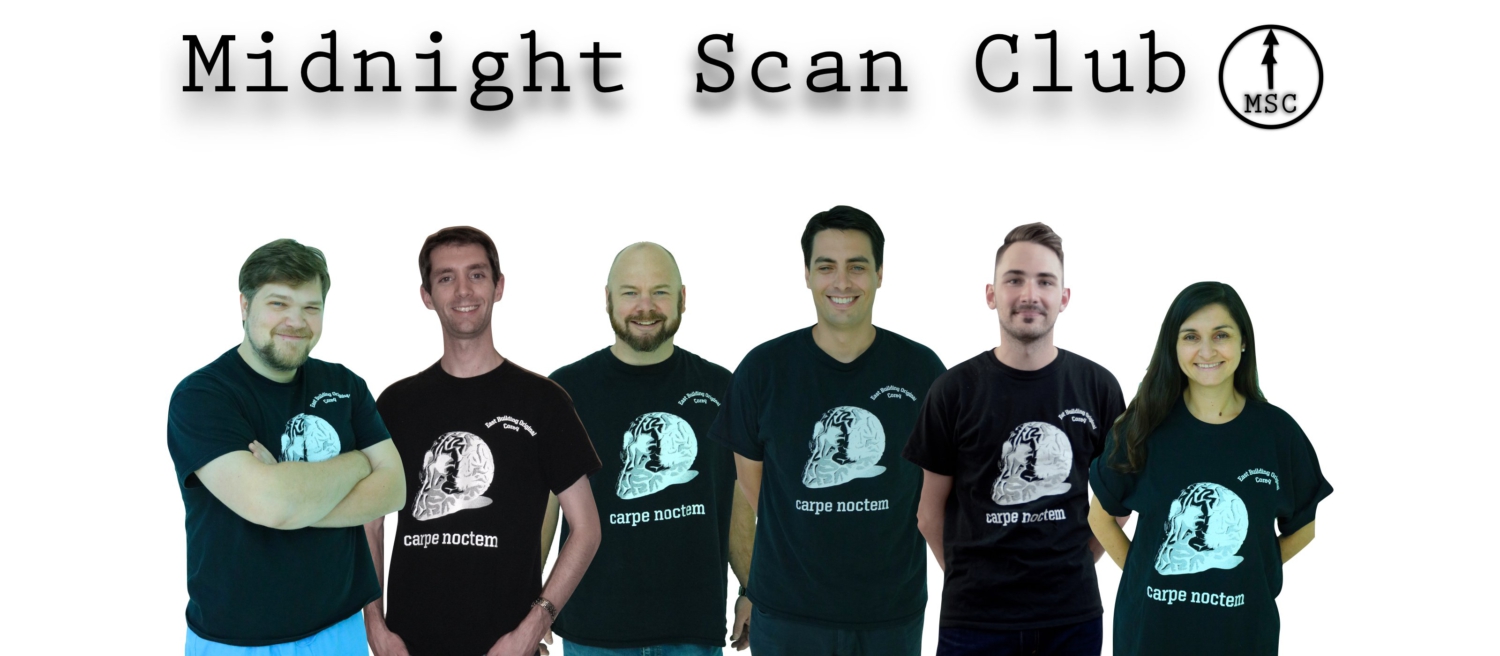
The Midnight Scan Club founding members and their logo
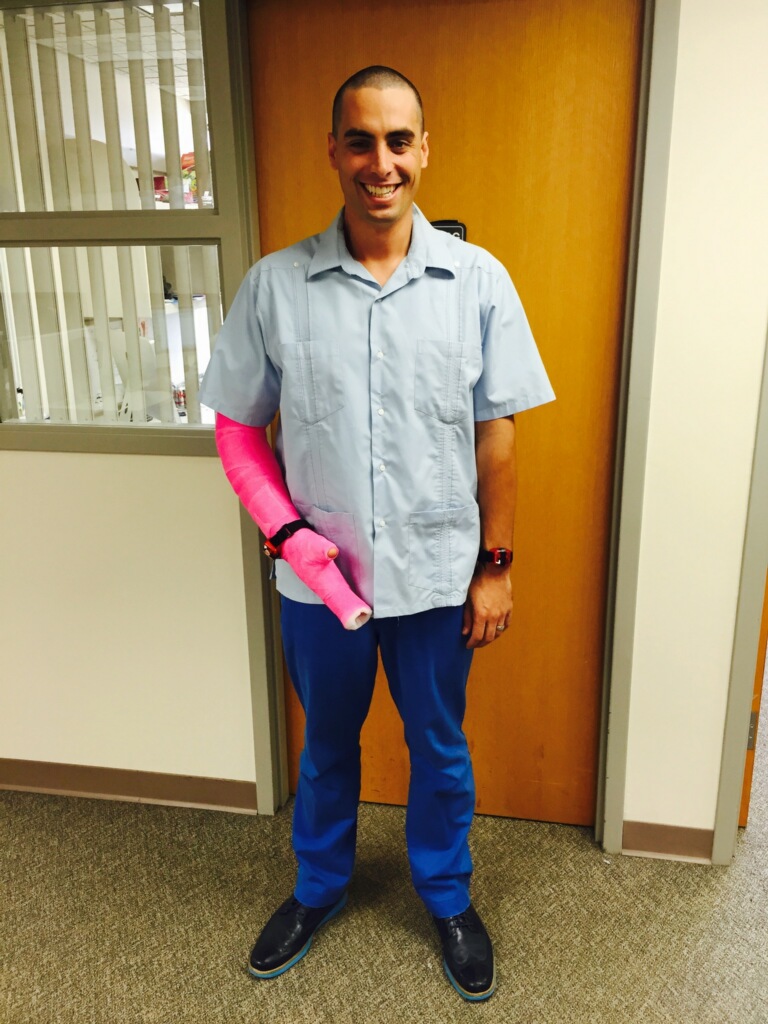
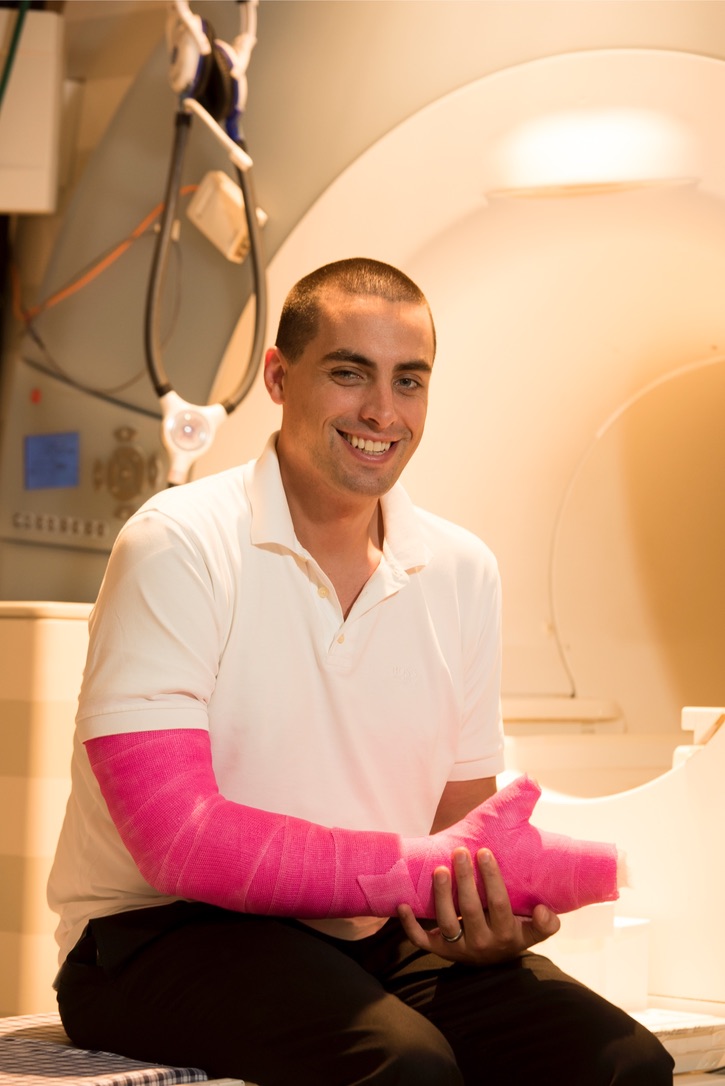
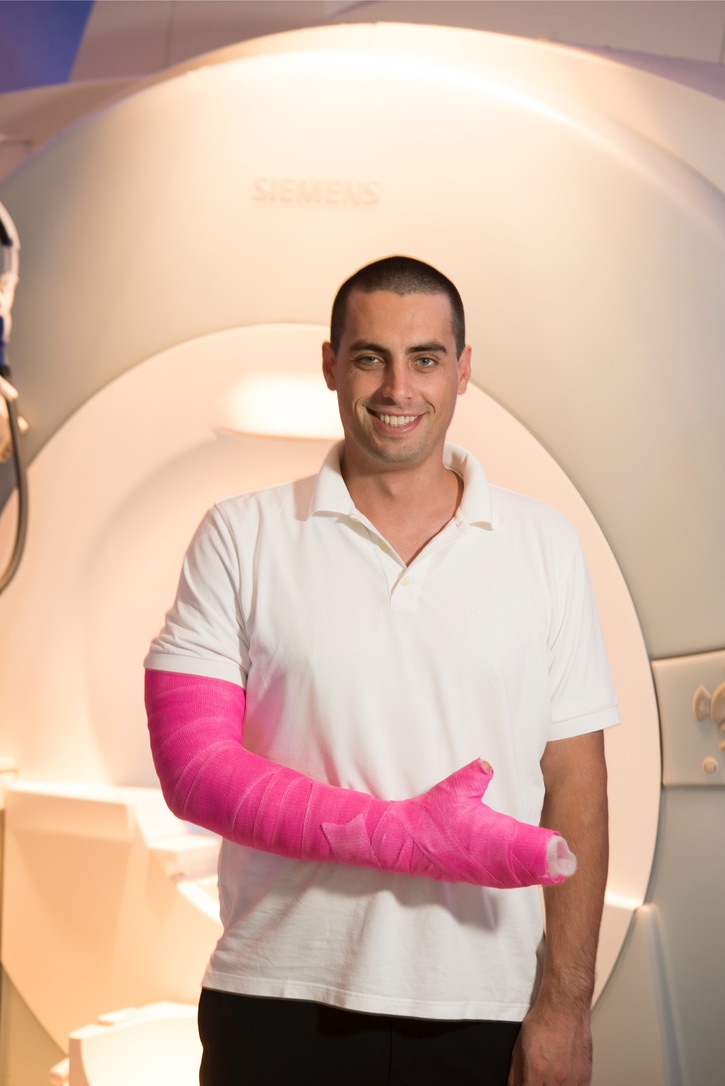
In his famous Pink Cast Study, Nico immobilized his dominant arm by wearing a pink cast. This stemmed from a curiousity to understand the plasticity of the adult brain. In this episode, Nico shares with us momments that led to this decision and his experiences throughout this two-week long study.
Intriguingly, Nico’s PhD graduation cake already had a homunculus on it. In this photo, Nico also pointed to us Dr. Alexander Cohen, a physician-scientist and now Assistant Professor at Harvard Medical School (and Andy’s colleague within the Center for Brain Circuit Therapeutics).