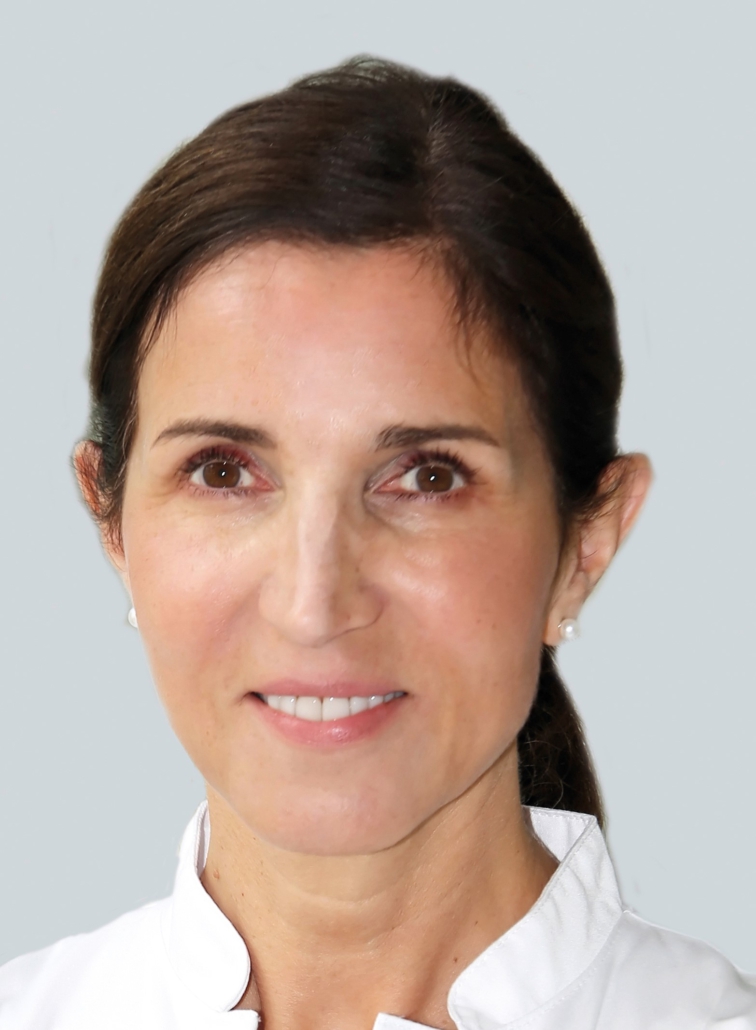
Veerle Visser-Vandewalle is the Head of the Department of Stereotactic and Functional Neurosurgery at University Hospital of Cologne
#31: Veerle Visser-Vandewalle – Operating on the first neuropsychiatric DBS case in the modern era
It was my great pleasure to talk with Veerle Visser-Vandewalle, who is the Head of the Department of Stereotactic and Functional Neurosurgery at University Hospital of Cologne. As a unique setup, she chairs the stereotactic department with access to their own operating theaters in which they have carried out a wide variety of surgeries, including DBS for Parkinson’s, Tremor, Dystonia, OCD, Alzheimer’s Disease and Pain; as well as spinal chord stimulation and even brachytherapy as one of the few centers in Germany. At age 34, Veerle published the first neuropsychiatric DBS case in the Lancet, 1999, operating on a 42-year old man with Gilles de la Tourette’s Syndrome and self-injurious behavior. It was a good year for DBS: Soon after Veerle, Bart Nuttin published the first case series of OCD-DBS (also in the Lancet) and in the same year, Joachim Krauss published the first three Dystonia DBS cases (also in the Lancet). We discuss how DBS for Tourette’s has evolved since the first case and what are next steps to come. Currently, Veerle focuses on fornix-DBS in Alzheimer’s Disease, taking part as a key center in the ADvance II trial and was able to report some interesting insights. Finally, we talk about the crisis of access to DBS in diseases with low numbers, such as OCD (based on her recent Nature Medicine commentary), her being a knight of Leopold the II and the book she wrote for her son’s 18th birthday, “Plato & Cola or the secret of your brain”, that unfortunately, so far, he didn’t read (we are sure that one day, he will!)
Veerle Visser-Vandewalle 00:00Was your case really the first neuropsychiatric case ever in DBS? I have to say, I think so, and to the best of my knowledge. But what reassures me is that Marwan Hariz, the eminence of Greece in our field, has thoroughly investigated that. He's a working encyclopedia, and he said, actually, this is the first case. So when I planned the first case, and I looked at the hotspot where Lozano described the hotspot, my goodness, it's exactly where Barton and Tablet said it's from. So I think that it's more about simulation of the bad nucleus of the striatum inalis as a phornix simulation. You know that the lead is implanted just anterior to the phornix, so you rather simulate the bad nucleus than the phornix itself. Welcome to Stimulating Brains.
Andreas Horn 01:18It was my great pleasure to speak with Professor Veerle Visser-Vandervalle, who is the head of the department. of stereotactic and functional neurosurgery at University Hospital of Cologne. At age 34, Veerle published the first neuropsychiatric DBS case in the modern era, a patient with Gilles de la Tourette syndrome, who also suffered from self-injurious behavior. Now, Veerle leads the department of one of the key centers in Germany at University of Cologne, where she has operated on patients with many indications, such as Parkinson's disease, dystonia, tremor, OCD, Alzheimer's disease and pain. We talk about her earlier and present work, Segmented Electrode, the crisis of access to DBS in OCD, 02:03her being a knight of Leopold II, and about a book that she published in 2020. Thank you so much for tuning in and enjoy Stimulating Brains. Okay, so thank you so much, Veerle. Thank you. Thank you so much Veerle for taking part in this. It's a great honor to talk to you about the brain stimulation. It's my honor. Thank you, Andy, for this invitation. Thank you. And to break the ice, as I think you know, we often, I often ask about hobbies, so, or things you do beyond medicine and science. So what do you do when you're not in the OR or in the clinic? Well, I try to take a little bit care of my body. So I used to do horse riding. I still have a horse, but that, yeah, that costs a lot of time. So what I do apart from that is running, jogging. 03:03And I started two weeks ago with yoga. I always thought that yoga was a little bit boring, but I found out that it's very good for the muscles and very relaxing. So I started just started with a new hobby, yoga. Very cool. So then, you know, I'm very excited about the work that you do. And, you know, going into your career more broadly, who were key mentors that were important for you or also turning points that were important to get where you are now? Yeah. So a very important mentor for me was Jacques Camart. He was the head of the department, the neurosurgery department at the University of Ghent in Belgium. And when I was a student, I started working and walking around there, spending time at the
Veerle Visser-Vandewalle University of Ghent. And I was very excited to be part of the department of neurosurgery. And he told me about the bull of Delgado at the time. 04:04So the bull of Delgado is a story of 1960, 65. And Delgado was a Spanish neurophysiologist who wanted to prove that you can change any unwanted behavior by means of the brain stimulation. You know, the experiment.
Andreas Horn Yeah.
Veerle Visser-Vandewalle We even have an episode on that. Ah, okay. Great. And then.
Andreas Horn Yeah.
Veerle Visser-Vandewalle And then I knew, I just knew, okay, later I want to do the brain stimulation. It was like a hit on my head. Then I knew. And then I went at that time, he was not yet a head of department. That was Luc Cariot.
Andreas Horn And I went to Professor Cariot and I said, could you please advise me?
Veerle Visser-Vandewalle I want to do an internship somewhere to learn more about psychosurgery. I don't know what you said. And I said, my girl, that doesn't exist. You could go to Alfred Hitchcock. He said at the time, but even he only has about five cases a year. 05:02It doesn't exist. So, okay. And then I focused on training on general nose surgery, but I never left that idea. I always wanted to do the brain stimulation.
Andreas Horn And he said it doesn't exist in Belgium. You mean, or what? What? Yeah. Yeah.
Veerle Visser-Vandewalle He wants to say that not one surgeon in the world has so many cases that you can see, okay, I go for a few months to London or wherever, or in the States. And I see many, many cases in the realm of psychosurgery.
Andreas Horn Yeah.
Veerle Visser-Vandewalle So, and then, so from, from Ghent, next stop was, I think Maastricht.
Andreas Horn Is that correct or? Yeah, but perhaps.
Veerle Visser-Vandewalle So I started my training in, I started my training in Bruges and that was really focused on general 06:04nose surgery. I did a lot of spine surgery there and tumor surgery. It was a very good training, but there was no time for DBS. And then my last year I had to go back to Ghent. And then, so I finished my training in the beginning of 96. And then we started with DBS. In Ghent. And at the time started in 96 with the brain stimulation and Parkinson's disease. Then of course with the neurologist, Christopher van den Linden. And I was very lucky to be able to assist them as a trainee. And then after I finished my training, I stayed there at University Hospital in Ghent. And then in later in that same year or the beginning of the 97, 07:01Christopher van den Linden sent me then a patient with Tourette's syndrome.
Andreas Horn Okay. And would you like to continue or later? I mean, that, that will be one, one, one key topic, but it's exactly the next one.
Veerle Visser-Vandewalle So, so I think at that time you were 34, right? Roughly. I am. At least when you, when you had the paper out, so probably you were a bit younger.
Andreas Horn Yeah.
Veerle Visser-Vandewalle When the paper came out.
Andreas Horn Yeah. Yeah.
Veerle Visser-Vandewalle When the, when the paper came out. Roughly.
Andreas Horn Yeah.
Veerle Visser-Vandewalle And that was the, the paper in the Lancet after the world's first successful operation on one patient with Tourette's syndrome. That was probably that patient you were just mentioning. So I I'd love to hear a bit more about that, you know, where, how the idea emerged and you know, what the process was, how it, how it felt at the time.
Andreas Horn Yeah.
Veerle Visser-Vandewalle DBS program was Chris van der Linden. So at the time we did many Parkinson's and trauma patients.
Andreas Horn 08:03And then at a certain moment in time, he sent me a patient with Threat Syndrome. And he asked, do you have any idea? Could you help him with the brain stimulation? And I found it, of course, very interesting. And the patient was really suffering and had a very low quality
Veerle Visser-Vandewalle of life. He also had severe self-injurious behavior, but he had a young son and that son also started to show tics. And that was a motivation for the patient to seek help
Andreas Horn and to go to the university hospital and to say, okay, do anything what you want with me, do any experiment on me. I would like to find you a solution for Threat Syndrome. So I asked him, do you have any idea? And he said, no, I don't. And I said, okay,
Veerle Visser-Vandewalle when my son gets older, that he can have the treatment. So then I dove into the literature and of course, no DBS was at the time performed in Threat 09:01Syndrome. But then I found the paper of Hassler and Diekmann, where they described their results with thalamotomies. But the problem was that Hassler had made more than 10 coagulations each side. So I was not sure if I could do it. And I was like, okay, I'm going to do it. And I was like, okay, I'm going to do it. And I was like, okay, I'm going to do it. And I was like, the trick was to find one strategic point. And I defined that we know at the end through medial border of the central medial nucleus and along the ventral lateral nucleus or the VOI, because it plays an important role in facial tics. And okay, so I planned surgery in that case. And I remember when I went to the OR, Jacques Camart joined me and then I went, to the right side to the OR and he had to turn to the left side, he had to see patients on the intensive care unit, he wasn't involved in the surgery. And at that time, I had to work on a PhD. 10:02And I said, Okay, if this succeeds, then you have proven a lot more to me than writing a PhD. And well, luckily, the result was good. And then we published that case, it was in 1990. It was not a big article, it was only one site. But of course, the significant impact of the PhD was that it was a very good research. And it was a very good research. And it was a very good research. And it was a very good research. And it was a very good research. And it was a very good research. And it was a very good research. And it was a very good research. The significance was that or the importance I know now is that it was the first case with a psychiatric disorder. Because at that time, we did the surgery, mainly with the goal or with as a primary endpoint to reduce the tics and so we could easily get the permission, so to say to, to do surgery on this case. But that opened up the door for me to do surgery on this case. But that opened the door, I think to other psychiatric indications to be treated with the DBS because soon thereafter, Barton de Tain published his cases with OCD, his OCD cases, 11:02treated with simulation of the entire capsule. Soon thereafter in October, 99. So my case was published in February and his, his cases with OCD in October of the same year. So not about him, so to Belgium. That is such a cool story. I have to emphasize it because also I think there was a third first in that year and all three were published in the Lancet. I think Joachim Kraus always mentions that in his talks because the third one was the dystonia cases that he published. So that was a, you know, huge year for DBS. And as you said, to Belgium, and also, like, was your case really the
Andreas Horn first neuropsychiatric case ever in DBS? Yeah, it was. Yeah, it was. Yeah, it was. Yeah, it was. Yeah, it was. Yeah, it was. Yeah, it was. Yeah, it was. Yeah, it was. Yeah, it was. Yeah, it was. Yeah, it was. Yeah, it was. Yeah, it was. Yeah, it was. Yeah, it was. Yeah, it was. Yeah, it was. Yeah, it was. Yeah, it was. Yeah, it was. Yeah, it was. Yeah, it was. Yeah, it was. Yeah, it was. Yeah, it was. Yeah, it was. Yeah, it was. Yeah, it was. Yeah, it was. Yeah, it was. Yeah, it was. Yeah, it was. Yeah, it was. Yeah, it was. Yeah, it was. Yeah, it was. Yeah, it was. Yeah, it was. Yeah, it was.
Veerle Visser-Vandewalle after Heath and so on, but in the modern DBS area, that was the first case. I have to say, I think so, 12:02and to the best of my knowledge, but what reassures me is that Marwan Hariz, the eminent of Greece in our field, has thoroughly investigated that. He's a working encyclopedia, and he said, actually, this is the first case. Great. That's a good, yeah. And I mean, talking again about these three Lancet papers, all in 1999, Joachim Kraus, your case, yours was first, then Bart Newton. I don't know when Kraus came out in that same year,
Andreas Horn but they were all in the same year, so were they connected at all? Was there a lot of exchange, or was it just the time was ripe to try new things with DBS? What do you think?
Veerle Visser-Vandewalle Not at all. They were not connected at all, and for sure, the one of Kraus, not because it was in the realm of movement disorders. Sure. 13:00And the fact that Bastetena published it in the same year was actually, I would say, a coincidence. I think, like you said, the time was ripe for that.
Andreas Horn Yeah.
Veerle Visser-Vandewalle I mean, this was how many years after the, like, maybe eight years after the first STN or VAM cases,
Andreas Horn right, roughly?
Veerle Visser-Vandewalle Or 10 years, maybe, roughly. Because probably you all heard about these before the papers came out and conferences and so on. So this was probably enough time to, you know, try something new now. Yes, absolutely. As a follow-up, your team as well had a double-blind clinical trial published in Brain 2004. I think that was another landmark paper, first authored by Linda Ackermans.
Andreas Horn What did you find there? Can you broadly summarize that?
Veerle Visser-Vandewalle Well, when I think of that study, I get a little bit of public pain. 14:00It was so difficult to recruit patients. We had a study group with experts from the Netherlands and from Belgium. And so we really had the experts, but it was so difficult to recruit patients. And then, so we had, in total, we had eight, but then we had two dropouts. One patient, so it was a double-blind study with a three-month crossover phase. That was the plan. And then one patient was sure that he was in the off phase and he went to another neurologist who was not involved in the study and he had the stimulation switched on. So there were two similar dropouts. So we only had six patients.
Andreas Horn Okay. And the result was, was it good?
Veerle Visser-Vandewalle So after three months, there was an effect of about 40, 43% tick reduction. That was far less than we had in the initial pilot study. 15:00But that, of course, was due to the fact that the patients were evaluated in a double-blind phase manner. And then after one year, the result was better. Then we had a reduction of about 50%. Great. So the first case, it was a 42-year-old man. So that was the number one. It was the 1999 Lancet patient who had apparently 38 ticks per minute before surgery. And then after surgery, you really said the ticks disappeared completely. And you're also right that the patient's character had become more kind-hearted.
Andreas Horn Absolutely.
Veerle Visser-Vandewalle Yeah, I remember that very well. So he used to call me Wehler. That was a little bit what we say in German, Distanzlos. So normally, Belgian people say, Hello, doctor. But he said, Wehler. At a certain moment in time, he came in, in the clinic. He entered my room and said, God damn it, Wehler. 16:01And then I knew that that stimulation was out. I was almost sure. And it was out. There was a clear difference. There was a clear difference between the two. He was a lot more aggressive, I mean, verbally aggressive when the stimulation was switched off. I think it was off due to, the end of life of his battery or so. He didn't know that it was switched off. And then when it was on, he was a lot kinder and softer. I've also seen that in other patients.
Andreas Horn Yeah. Did he mention that himself as well? Or did he notice himself? Do you remember? Yeah, he knew that.
Veerle Visser-Vandewalle And he was happy about it, I could imagine. Yes, yes, yes, yes.
Andreas Horn Yeah, yeah, yeah.
Veerle Visser-Vandewalle The second patient had something similar. But he said that, so when the stimulation was switched on, he was calmer. And when it was off, he had a lot more energy. And he used to run in the woods. And then he switched his stimulation off 17:01because then he had a lot more energy. Oh, exciting. He had more activity than the care because he was alone in the woods. It makes them more calm, more introvert. One patient said to me that if he's on the street, and he meets strangers, or for example, he wants to draw money out of the wall, and there are other people waiting, that before surgery, he used to start talking with everybody. And after surgery, with stimulation, he was a lot more reserved and didn't talk so easily with strangers. So there is a difference. There is a change in personality and in the way that you talk.
Andreas Horn Yeah.
Veerle Visser-Vandewalle And I think that's what's interesting about many patients.
Andreas Horn Yes.
Veerle Visser-Vandewalle Which is abnormal for us. They're calmer. But for them, it's a difference that counts. Sure, sure. And you could imagine, like with the one that's running in the woods,
Andreas Horn that you sometimes want both, right?
Veerle Visser-Vandewalle 18:01It really is dependent. Calmer is probably usually better,
Andreas Horn but not always, right? It is interesting. Yeah. Absolutely.
Veerle Visser-Vandewalle And that underlines again, the need for a reversible treatment. So that the patient can change it and go back to the initial condition when he wants. That's a great point.
Andreas Horn I guess we're referring to DBS versus lesioning, right?
Veerle Visser-Vandewalle So, yeah. So, based on, you based your decision back on, based on the Hasler and Diekmann paper and their reports. And I think by doing that, you targeted the intersection between three thalamic nuclei, at the time at least. I think now you slightly reversed it. So the central median, the boy, and then the substantia periventricularis. And I just interviewed Marie Kruger. I don't know if you know her. She was together with Chris Honeyhead. A similar target in the thalams, also intersecting three nuclei. And what they did is, 19:00I think was DBS for dental pain. And they then used,
Andreas Horn found it quite interesting.
Veerle Visser-Vandewalle They used segmented electrodes to try to find out which of these three nuclei would make most sense. And of course, when you did it back in the day, there was no segmented lead,
Andreas Horn but did you ever think about doing that with Tourette and trying to titrate a bit better? Which of these three nuclei is the one or the key one, or do you think it is really the intersection that we need? Or what's your opinion on, which nucleus really matters or is it the combination of the three?
Veerle Visser-Vandewalle Well, at that time I thought, okay, what the CM and SPV, or I thought that with those three nuclei, we would be able to influence different circuits, the motor circuits as well as the limbic circuits. Then when I discussed this, 20:00I was in Paris.
Andreas Horn Yeah.
Veerle Visser-Vandewalle And an atomist, she said, SPV, it doesn't exist. It's nothing. So, okay. I left SPV out in the name of the nuclei. I said, okay, I'm going to do this. But it doesn't exist.
Andreas Horn Okay.
Veerle Visser-Vandewalle And the DOI has efforts towards the cortex and the CM projects it back towards the striatum. And I thought that it was at that time smart to simulate those simultaneously. And now it depends on the individual case. So sometimes we stimulate only the, the DOI after surgery. I always implant the electrode at the same spot, but sometimes the patient has the best result with the more, with the more dorsal contacts. Sometimes with the deepest contact, I, my experience is that with the deepest contact contacts, 21:00they tend to have this reduced energy more.
Andreas Horn Interesting.
Veerle Visser-Vandewalle And then I know that it will have an effect on ticks. And if the reduced energy, is felt to be unpleasant, then we change the frequency. When you lower the frequency, then it's often better. So then we can keep the effect on the ticks without this reduced energy. But I don't think we really, really need directional leads for an optimal result. But of course we are interested in using them to know actually what is the most optimal target. But apart from the directional leads, we focus, of course, together with you on the tracts, on tractography. And with the limited experience that we have, there is no, nobody in the world has a really large threat database. Sure. We have found that it looks like the tracts towards SMA and pre-SMA are the important ones. 22:02But at that time we did not, we didn't have directional leads, we didn't have tractography.
Andreas Horn Yeah, yeah.
Veerle Visser-Vandewalle No, no, no. I mean, and I totally agree. You probably don't need it clinically, but since we have them, you know, it could be a nice research tool to try to find out a bit more. Yes, absolutely.
Andreas Horn Yeah.
Veerle Visser-Vandewalle So you mentioned the deeper context as well. And I have a guest question actually from a postdoc of mine, Clemens Neudorfer, who was actually in Cologne as a young neurosurgeon, I think before your time.
Andreas Horn Yeah.
Veerle Visser-Vandewalle He's currently doing a postdoctoral with Mean Boston, was with Lozano before. And he asks what you would think about, what you would think about the forel field or fasciculus thalamicus as a target for Tourette's with the idea that essentially going deeper, a bit like in VIM, you would go deeper to the, you know,
Andreas Horn where the fibers from the DRT come in. Would it, could it make sense to go deeper into the like thalamic, ventral thalamic area where the fibers come in? 23:01Or do you think that is in this case a different, yeah, what's your experience with that or opinion on that?
Veerle Visser-Vandewalle I think then you, you target more motor fibers than limbic fibers. I see.
Andreas Horn Okay.
Veerle Visser-Vandewalle And it could make sense. You know that there is a large Tourette's database. Michael Oakman took the initiative to start with a database, which is absolutely great.
Andreas Horn Yeah.
Veerle Visser-Vandewalle And the results have shown that the results of all targets together are great.
Andreas Horn Yeah.
Veerle Visser-Vandewalle So the thalamic one as the GPI one, the anterior GPI, as well as the posterior motor GPI. So I could imagine that simulation of the Feralt field would also have an effect, but I could tell it was thalamic stimulation. Sometimes this question, I hear this question, okay,
Andreas Horn which is the best target?
Veerle Visser-Vandewalle I would say one important issue is that if you are really well experienced with one specific target and result is good,
Andreas Horn 24:05why would you change then? Yeah.
Veerle Visser-Vandewalle That's a good point. With which target do you have most,
Andreas Horn are you most experienced?
Veerle Visser-Vandewalle As a whole center, probably even,
Andreas Horn right?
Veerle Visser-Vandewalle So, so not only the surgeon, but also probably the people that program it.
Andreas Horn Absolutely.
Veerle Visser-Vandewalle So I think Jochen Kraus had one, one series of patients with four electrodes in both targets, GPI and, and thalamus. Could that be an option to, to do,
Andreas Horn or would you say in most cases two electrodes is enough and, and you know, you're satisfied with the results?
Veerle Visser-Vandewalle I have to say in principle, I am against, um, um, implanting four electrodes and a patient's brain or, um, using two targets simultaneously. I'm not against implanting four leads, uh, in a brain, but I have, my opinion is that you should focus on one target and see then what the results are.
Andreas Horn Yeah.
Veerle Visser-Vandewalle And if they're not enough, 25:00then you can add more targets, uh, more, uh, more, more. So in principle, I'm against, uh, implanting four leads at a time and to see, okay, which is the best one. It's, it sounds a little bit too experimental to my ears.
Andreas Horn Yeah. That makes sense.
Veerle Visser-Vandewalle That makes a lot of sense. So, so the intralamina nuclei of thalamus, um, that you target also with your target are the only ones that project to the striatum. And I think they also protect diffusely to almost the entire neocortex.
Andreas Horn Do you, do you like, what's your, do you have a path of, pathophysiological understanding of does that play a role? Is that why you think these nuclei are important that they project to the striatum or what's the loose idea? Yeah.
Veerle Visser-Vandewalle That's the hypothesis, uh, a little bit that it closes the gate a little bit because, um, so the idea is that in, uh, toy patients, um, uh, in the, in the, in the, in the, in the, in the, in the, in the, in the, in the, in the, in the, in the, in the, in the, in the, in the, in the, 26:00in the, in the, in the, in the, in the, in the, in the, in the, in the, in the, in the, in the, in the, in the, in the, in the, in the, in the, in the, in the, in the, in the, in the, in the,
Andreas Horn Yeah, that's the idea. Yeah, yeah, yeah.
Veerle Visser-Vandewalle I mean, it's often... You could be wrong, but...
Andreas Horn Yeah, yeah, that is often the case,
Veerle Visser-Vandewalle but that's good to know. So, okay, let's make a big jump. You have not only worked in Tourette, you've worked on a lot of things. So 20 years later, I think currently a key research target, if I'm correct, is Alzheimer's disease that you're quite interested in. You are part of the advanced trial too. And by doing so, target the Fornix region. And I think you told me at some point that you think the bed nucleus of striatum in Nardis, which is very close by, might be the actual key target. 27:03Any general thoughts about Fornix, DBS,
Andreas Horn and Alzheimer's disease? What are your experiences or targets? Yeah.
Veerle Visser-Vandewalle So first of all, I see it as my duty, and I think it's actually due to the DBS community to maximally exploit the potential of deep brain stimulation for Alzheimer's disease, because Alzheimer's disease, you know, is a huge problem for society. The prevalence is very high, and it will only increase. It will be doubled by 2030, it's estimated. So I was very, very enthusiastic about this Alzheimer's, the advanced trial. And we started just before the first corona lockdown. And Andres Lozano promised to be there for the first cases, but he couldn't make it due to corona. So I had to do this on my own. 28:02And he has explained to me beforehand, how he does this targeting. And then based on the first results in the first trials, he said that the hotspot was at the level of the anterior commissure. And then when I did the first planning, I thought, my goodness,
Andreas Horn that is exactly where Bache-Nutin places its electrodes,
Veerle Visser-Vandewalle because... Long time ago, I followed an ECMT course of Medtronic in Leuven. D.H. Bache-Nutin makes his planning for where his target is for OCD.
Andreas Horn And that's exactly in this triangle
Veerle Visser-Vandewalle between the anterior commissure and the fornix. So when I planned the first case, and I looked at the hotspot, where Lozano described the hotspot, my goodness,
Andreas Horn it's exactly where Bache-Nutin places its electrodes.
Veerle Visser-Vandewalle So I think that it's more about stimulation 29:03of the bat nucleus of the striatum mineralis as a fornix stimulation. You know that the lead is implanted just anterior to the fornix. So you rather stimulate the bat nucleus than the fornix itself.
Andreas Horn Interesting.
Veerle Visser-Vandewalle And how are you, first, if you can talk about that, your first experiences with Alzheimer's,
Andreas Horn did you see effects or any conclusions so far already? Yeah.
Veerle Visser-Vandewalle So we've implanted nine Alzheimer patients right now. And the surgery is not that difficult. One thing that we should pay attention to is the fact that the risk of lead deviation is a little bit more high, which is a risk of the third ventricle. So the risk of the third ventricle is a little bit higher due to the fact that you go through the ventricle, 30:00just a lateral, just middle from the caudate nucleus. And that's all fine when you implant the lead. It seems that you don't have the energy. Oh, sure. That's my watch. So you implant the lead through a cannula, a round cannula that goes up until a target. But when you retract the cannula, the lead might deviate a little bit. And I had it once that it ended up in the third ventricle. That's a risk of this. That's a surgery. But apart from that, the surgery is not that difficult. And of course, I do not know if those nine patients... well, eight, because the ninth will be randomized next week. I don't know if they're in the on or off phase, but two patients are doing so incredibly better after surgery that I would put my hands and...
Andreas Horn Yeah, that they're on...
Veerle Visser-Vandewalle the on... Yeah... Yeah... face i hope so of course um yeah so one uh patient was um a woman of 70 something 31:02and she hadn't cooked for several years because she doesn't she didn't know how to handle um all the instruments and then soon after surgery she started cooking again wow it's that fascinating yeah so let's hope she's in the unarmed and i mean i i guess that that is sometimes um you know i wonder sometimes uh randomized clinical trials or group level trials even the best um way to look at deep brain stimulation for new targets because i sometimes wonder if you you know operated on 10 of these patients and only one had a great impact might still be worth it and and and and it proves i mean if it's worth it or not that's a big ethical discussion but it would prove that there can be an effect right so you could also always base that conclusion that okay you know what is different in that one patient where it worked and then you know um refine it so um but the opposite happened for 32:03example in depression i think there's a new trial coming so good news but but um but but in depression you know these two failed trials essentially shut it down for a while and so we're always looking at group level effects and of course yeah i i wonder sometimes you know what is the could there be a better way of of doing this instead of um because variance in placement will matter variance in patient selection will matter do you have any thoughts on on that well first of all i have to say that i'm really surprised that so many patients so easily consent to participate in such double plan trials i have to say honestly to you and i hope no alzheimer patients hear this i would never say okay i will be so patient that i will wait for one year if i'm in the um oh it's a full year yeah yeah yeah but actually after six months and the interim analysis will be performed but it could be that yeah so i'm very surprised for many patients 33:04consent not only uh what this trial is concerned but also what other double-minded trials is concerned yeah interesting so so you you your center before doing the phonics trials i think you also did um basalis minor dbs for alzheimer's disease is that correct so and you might be one of the only centers now that have done both or maybe the only center so or doesn't really matter but but do you have any like do you already know which one is better so did you what were your experiences in the basalis minor yeah so it was my predecessor uh volker strom who did um simulation of nucleus basalis minor in alzheimer patients in total he did eight patients so first the trial was six patients and he found that he was not able to do the same thing as the basalis minor in the alzheimer's disease and he found that the age and the level of function before surgery were the two most most important factors he had bad results in the young cases and then he added two other cases he planned 34:07to take younger cases but one case was 65 so but anyway the results were also good in those two cases okay um we wanted to continue with um this surgery but i found it important to do the same that we would first get more insight in the mechanism and the possibilities with animal experiments. So we're continuing now with animal research with nucleus basalis Meynert stimulation. Apart from that, we know from the ADvance I trial that we can only expect a good effect of fornix stimulation in older patients, because the younger patients, and this means younger than 65, were doing worse with stimulation in the first double-blind trial. So now for this advanced 2 study, an important selection criterion is age. 35:02Only patients older than 65 are included. So then, of course, we need a solution for the patients younger than 65. And then I think of the nucleus basalate-minus simulation. And you know probably that Dave Blake in the US had found that the effect of nucleus basalate-minus stimulation is better if you do not stimulate continuously but intermittently. And we've done that in a transgenic RET model. And we found that indeed the results are better with intermittent stimulation than continuous stimulation.
Andreas Horn Interesting.
Veerle Visser-Vandewalle So we will continue with that target, but then with the idea to treat younger Alzheimer's patients.
Andreas Horn Very interesting.
Veerle Visser-Vandewalle That's so cool. So great. So I keep being excited by the breadth of your work in Cologne. And we'll get into that as well at some point. 36:01But a month ago, to shift topics again, a month ago, you first authored an international perspective article in Nature Medicine calling for action to make deep brain stimulation for obsessive-compulsive disorder more available. You talked about a crisis of excess together, I think, with Michael Okun and Elizabeth.
Andreas Horn So I'm sure you have a lot of international colleagues. Can you summarize what the crisis is about or what the article was about? Yeah.
Veerle Visser-Vandewalle So my motivation to start writing this paper is that I'm so angry at the, actually at the DBS, the manufacturers, because their influence is so huge. And if they decide, we're not interested in this or this indication because the prevalence is too low, even though the result might be good to know the prevalence is too low. So. For economic reasons, we're not that interested. I cannot accept that. So DBS for OCD had a CE mark, a conditional CE mark. 37:06And in the States, this was a humanitarian device exemption that meant that, OK, there was an DBS for OCD was allowed, was reimbursed. But with the condition that long term follow up data would be collected. And then due to the new laws, the CE mark needs to be extended this year. OK. But since the company is not that interested, they decided not to go for it because, of course, it's a huge hassle to go for a CE lengthening. And so. So. So. So. So. So. So.
Andreas Horn That's the reason why the insurance companies don't reimburse DBS for OCD.
Veerle Visser-Vandewalle I mean, what this initial target is concerned, the anti-ecapitality comments.
Andreas Horn 38:05Yeah.
Veerle Visser-Vandewalle And of course, we're not the only ones with that bad experience. It's also. Well, colleagues in the US and Australia and New Zealand have the same experience.
Andreas Horn That's why we united forces and we wrote this paper. Interesting.
Veerle Visser-Vandewalle thing i did not know that so so you're saying that essentially from this year on ocd dbs is not
Andreas Horn proved anymore in germany or in europe exactly okay because it was not extended it wasn't extended
Veerle Visser-Vandewalle indeed okay that changes a lot right so so taking back a step um there so so that's great that you i think there was a similar article in australia as you say um author by the mosleys also calling for you know i think it's not even approved in australia it's more always um study i'm not sure
Andreas Horn but but the same the same idea was that it should be more approved care um and i mean yeah interesting
Veerle Visser-Vandewalle 39:02do you have any did you get any feedback or from decision makers or from you know the companies no no and i'm really really disappointed because i had many meetings with metronic beforehand to what are the possibilities so that i can continue with the surgery so i had expected that after publication publication of this paper they would contact me and or and get their reaction or their reply or nothing nothing and it really makes me a little bit angry and disappointed that this influence of the companies interesting and i think back in the day when we collaborated on one one project roughly i'm i realized you mentioned that you would love to also use the boston scientific long electrodes for um for alec but that was also not possible because of similar reasons that it's only approved for medtronic but we said correct or
Andreas Horn 40:00okay yeah absolutely yeah interesting so you're not certificates as a ce certificate is linked
Veerle Visser-Vandewalle to a specific company and linked to a specific target which is crazy we discussed this in the international um work group for um surgery for psychiatric diseases it's crazy it's like if you if a knife a surgical knife would have a ce mark to be used only in the abdomen it's crazy we say okay is this knife safe or not and then the surgeon decides okay what this knife i'm going to do surgery and thorax or in the abdomen or whatever yeah i mean you
Andreas Horn could you could argue that you know i always find it interesting that the ablational surgery
Veerle Visser-Vandewalle is for a bit more like that where you say you know the the device is is um ce mark but not where
Andreas Horn exactly you would make the lesion while in dbs it's more about the specific target where you put it
Veerle Visser-Vandewalle and you could i think you could in theory argue both ways that you know if it's not 41:05it's completely unrestricted surgeons could in theory burn holes everywhere they want to right
Andreas Horn and of course they need a good reasoning for it but um i i don't know it's it's a it's an interesting topic why it is so different in ablation versus yeah absolutely ds surgery in in general yeah yeah and why is it linked to a specific company that's also crazy that is like you said the long
Veerle Visser-Vandewalle octopolar leads of uh boss would make more sense if you focus on the internal capsule then you could nicely investigate which uh tracks you need but um yeah i don't know only linked to the metronica devices and even then only the three three nine one electrode which is absolutely crazy oh really i didn't know that yeah yeah yeah okay huh so so similar question going the
Andreas Horn same direction why is dbs for tourette not approved yet because the prevalence is far too low that's
Veerle Visser-Vandewalle 42:02so you're just you're just lacking the numbers of getting a bigger trial running is that is that the yeah um or is it the monetary yeah absolutely it's for for economical reasons the company is not interested this in contrast to alzheimer's dementia it's very attractive for uh the
Andreas Horn manufacturers because the prevalence is so high and also that is yeah that's interesting yeah i think there needs to be a solution for that right and that's exactly what your paper is about where
Veerle Visser-Vandewalle you know diseases should not be you know have a disadvantage because they're not so prevalent right that okay okay switching to a more um positive topic i think one key thing to note about your center in cologne is how broad um your functional surgery unit is placed you are one of the few ones in germany to operate on most if not all dbs indications you know you you have um psychiatric cases and of course all the movement 43:05disorder cases alzheimer's as well and um you you also offer a spinal cord stimulation which is i think quite rare in germany for pain and even brachytherapy i think as one of the few centers in germany and um my question is for historical reasons i think only cologne and freiburg in germany are the ones that have a share of stereotaxy right in all other german cities um it would be a subdomain of neurosurgery so there's no specific chair for that so essentially consultants are the functional um in neurosurgeons and doing their work under the hood of a um you know professor then in neurosurgery so do you think this place of role for this unique service that you can offer that you are you know full professor that has a kind of independent center from i'm sure it's not completely independent from neurosurgery in general but is is that is that one one reason or is it more the historical 44:04reason that in cologne you know there was always this big history or is it just that
Andreas Horn you work harder than everybody else how is that um you know why why are you able to offer so much
Veerle Visser-Vandewalle um well for sure it has to do with the fact that we are an autonomous department so completely autonomous this means completely separate from the department of general neurosurgery we also have our own or our theaters we're responsible i didn't know that that that's cool completely independent but on the other hand we have a very nice cooperation with the department of uh general surgery but um it has huge advantages and i also explain it sometimes to the patients so in maastricht where i used to work for 13 years that was not the case it was 45:01only one department of neurosurgery and then it happened that we planned a dvs on on a tuesday and long beforehand of course because i have to do your tests for selection and live auto paterson's one and so on and then on monday a child with a brain tumor came in and then of course the child needs to be operated quickly and the parkinson patients who was trembling for 10 years could wait yeah sure we never have this
Andreas Horn in our department because we are independent so and that's the reason why we can do two to three
Veerle Visser-Vandewalle tests a week great we also have um a team of i mean we have very close uh cooperation with the department of neurology uh there's also a very dedicated uh team uh which is of great advantage 46:05it's an absolute not only a plus it's it's a conditional cynic canon uh without cooperation with the neurologist you can forget about it so we're very also very lucky with that um and uh i'm stepping in the footsteps of my predecessor uh he started uh the departments uh and i'm continuous and i'm i feel privileged with the actual situation and also with a good teamwork with other departments sounds great yeah so so um i think you know that i totally agree with you it um because i've seen in other places in germany obviously that that the same thing as you've just described happens all the time and there's also always this debate on surgery time i could imagine that if it's more about just um economic reasons then probably the tumor cases are better and you know they're faster you can you can do more more of them in a day and dbs blocks 47:00the or for a longer time and so on so there's always this you know um discussion and of course the boss often is not a functional neurosurgeon so their personal preference is um of course different so that's really cool so speaking about rarer indications as well. And I think this again builds on older cases from Volker Sturm, but you just published a study on connectivity from DBS sites in patients with self-injurious behavior. And that was a resident in your department was first author, Petra Heiden, and she also presented in the DBS Think Tank. I found it super interesting that you also make good use of the old cases. That should exactly be done, learning from these, I think. And I also remember, and you mentioned it, that your first TS patient, Tourette's patient also had self-injurious behavior so do you think there might now become future for these 48:00indications more broadly with DBS? Yeah I think the patients with aggression that have been operated in my department before my time did the so-called I found forgotten cases operated on with different targets and okay which is the best targets so yeah I really appreciate that Peter Haydn and also Pablo Andrade they focused on these patients and they looked for tractography which tracks were relevant we have done a case now almost two years ago one and a half year ago with severe aggression Peter Haydn also presented this case I think I'm not sure usually to both injuries she was very thin so we could do a DBS in her because if there was not an effect immediately after surgery she would she would hurt herself so we did the lesion with the hypothalamus and the effect the first year was so good that I think okay we have to continue with this 49:06so we would like to draw the attention to this indication it's also very important because the quality of life of those patients and also their family members is really devastating so yeah yeah it's it's I think it's a very important indication yeah absolutely yeah great so yeah maybe maybe one last question before we move to different topics this is one other indication where I personally always think this is you know should be done more it's you know so devastating quality of life like is pain yeah do you think do you do anything in that direction yeah yeah also DBS so I used to do it in Belgium also long time ago so I was in Belgium until 1999 and there we did about a little bit more than 10 cases 12 cases for thalamic stimulation 50:01vpm vpl okay and had a very good result in half of the patients and then the other half we did not have a good effect but those were all cases who were completely intractable so it was worth while yeah offering DBS and then we switched to motor cortex stimulation in Kelowna did three cases but the results are a little bit are in a way disappointing because due to plasticity often you have after a few years that result is not good anymore so I returned back to DBS Pablo in our department Pablo is now focusing on this indication too and with the three cases and results
Andreas Horn three are good and that's vps above motor cortex stimulation for pain what what was the target
Veerle Visser-Vandewalle again vpl and vl vpm so um nucleus ventral posterior medial and panther postulato so vpm for
Andreas Horn 51:04the face and um arm and then vpl for the leg great okay very interesting is that already published or
Veerle Visser-Vandewalle are you yes working on these we're collecting more patients and then the world publishes you very very cool okay so shifting topics and gears um in 2020 you published uh you wrote a book um in dutch entitled um in english plateau and cola or the secret of your brain and the description I could not read it it's a dutch but but the description in english would read um that it is a witty book about how our brains work about the limitations of our thinking and especially how to out of it and then about the evolution of our brains which are compared to a bottle of coke but also about colors god greek philosophers creativity and positive thinking can you can you summarize so how did you come up with the book and um you know what is it about 52:05it's very funny that you found an english description I didn't know that I translated it okay so um the idea is that you can have a happier life and reach your goals if you know how to use a brain it's all a matter of getting the right idea and getting the right inspiration and I don't think I should um tell people how to use their brain but I can tell my son how he can use his brain because Adam Dewa I put him on this planet and then I know a little bit more about the brain than the average person so I thought okay it's important that I show him how his brain works
Andreas Horn that's why I wrote the book, it was for his 18th
Veerle Visser-Vandewalle birthday and 53:02indeed it's about, the title is Plato and Cola, Plato because what you see, the reality that you see is not there as the way you see it it's actually kind of an illusion made by your brain that's one, that's what Plato also described the reality as you see it is not the real reality it's a reflection of something else, that's one and then Cola based on how our professor of anatomy at the time used to explain brain evolution over the hundreds and millions of years and he explained this to us to a bottle of Coca Cola so which to which you shake and then you put you open it and then foam comes out first you have a little bit of foam 54:00and then other foam comes on top of this and then more foam on top of these two layers and that's how we explained the uh three and brain uh described by mclean so first reptilian brain a reptile does not have any choice if he's hungry and he sees food he goes after it yes or no and then you have the um paleomarmadian brain for example an elephant if he's hungry but his friend just died and it's his food he can decide not to take the food so he has so more choices and then you have the neomarmadian brain then i the example of a businessman um his wife died but he or a friend died and then he decides not to uh be too sad but focus on his work so he has even more choices choices so the idea is that during evolution we always have more and more and more 55:05chose choices um to say no to our primary instincts for example and then another aspect of the book or another team is the default Network which I am crazy about the default Network because that's the network which um gives us inspiration and then I explain to my son how important it is to relax um and let your thoughts go and then you will find the right solution or the best idea to your problem and then of course you might think oh so we should do nothing anymore and just relax no of course not we should focus on a problem you have a problem and you need a solution to solve the problem and then let it go to something else go for a walk or or take a nap or something and then often you found the best to default Network kicks in and and solves it for you 56:02to our default Network yeah and and um so so I I also heard that so um your son Casper's 18th birthday that was the present did he did you say like did he read it did you like it no after i had many interviews by journalists and say oh what did casper think of it i said well he didn't read it he said that when he started reading the book actually it's our kind of letters to him and i said i hear you speaking to me but it's so weird that everybody can listen to us then
Andreas Horn so it's it's a little bit emotional for him makes sense do you have more children would
Veerle Visser-Vandewalle will there be second books or is this is that the well i only have one child um but i wasn't finished writing yet but the editor wanted to publish it so it was unpublished and then i continue writing and then i was the second book it's about the self-conscious brain but i think 57:02it's funny that we can we can think uh of our own brains
Andreas Horn and then those are letters to my niece oh interesting also in dutch though or yeah yeah
Veerle Visser-Vandewalle yeah okay how's the writing for you how do you find the time how do you um structure that process well i wrote both in the uh covid time i see okay then uh for a longer period you couldn't do any surgery we couldn't go to congresses so in the weekend i wrote those books well sounds great okay i think you you were also quoted in the advertisement that again i translated but um you said something like we can perform a mini dbs on ourselves every day because you really can change the framework in which you think if you so choose and knowing where to find the inspiration for a personal model of thinking is what it comes down to so how how can we do the mini dbs is that is that what you just said with the relaxing or with the going for a walk or or are there yeah things you talk about that's one thing and the other thing 58:06is that you can't pay attention to what you focus upon or it's it sounds a little bit um i want to say um religious or whatever but there's a saying count your blessings and it's so absolutely true what you focus upon becomes bigger in your experience if you always focus on bad luck and so on you will have more bad luck and if you focus on positive things and what you can do you will have more opportunities that's great i take that home yeah so i wanted to briefly mention in 2019 you became a knight of the order of leopold ii for your exceptional achievements in your field um that's so great um could you tell us a bit more about who who live at second was and what this means yeah it was the consequence of the fact that there was on television okay um there is 59:06a program uh on television which is uh very popular it's called top doctors and there they follow a doctor in his field during a few months and then they show the the human part of the doctor so to say okay people can have a look into a doctor's private life and they followed me in cologne that was in the story a while ago and um since then i'm more well known in belgium i have to say and um well the result is also that i got this uh title because i think i don't know how many people each year get this title but then the king decided that um i would be a good candidate sounds great love it so to wrap up thank you so 01:00:00i have to be mindful of your time but um i have some just more general questions um before we conclude um any other questions or questions that you have um i would love to hear from you um i would love to hear from you um i would love to hear from you um i would love to hear from you um any eureka moments that you had in your career where you thought and now i understood it or this was greater something like that um well i have to say after the first threat case when it was good facts i really had kind of an uh a very happy aha moment aha okay we can continue with that um then i have actually i have to think uh of that or just like happy successful moments it doesn't need to be eureka but um you know just things that you if you look back at your career i'm sure the threat case is certainly one but were there similar experience where you thought oh this was really great you know or this was a great paper or a great you know case or so i'm sure there were many but it's really hard to think of them spontaneously um yeah there's several cases for me um i think 01:01:06for example one um boy uh with uh the one this tonya um i operated on him when he was um nine years old i think for seven years old and for two years he was in a wheelchair he couldn't walk anymore and then i operated on him and the effect was spectacular as you know in this one and then he gave me a plate which he had um a painted um on it he had painted a heart and then in german so thank you very much that i can run again so i have had in my career several um gifts from patients but this is this is worth gold to me yeah it's amazing the the opposite of that is you know failed things um or you know just waste of 01:02:04your time or you know you invested in something and then you found out how it didn't work or any it's always healthy to talk about these things as well i think if not people only hear the success stories do you have examples of failures yeah as a waste of time i i never had the feeling this was a waste of time never but uh failures or complications oh yes uh i remember in maastricht i implanted electrodes for seg and then at level of the temporal bone i implanted the screw i in in the skull to so that the electrode could be passed through it but i continued screwing and yeah i'm not very proud of it but it ended up just before the brainstem the patient had no any symptom and then of course i found it very very important to discuss all your 01:03:02complications openly so then in the morning uh session the images were shown with all the colleagues i said oh my goodness how is this possible and then we discussed shall we leave it in place or remove it we decided to just let it in a place as a patient had no symptoms yeah every time i think that oh my goodness oh my goodness how was that possible you know and i'm sure if if they are honest every surgeon would have um absolutely right so that is probably one of the thing i remember in first semester in medicine they um the surgeons gave these sometimes these talks were called bonbon talks you know they were we were not clinical yet but it was to inspire and so on it was the i think it was a lot of fun for the professors as well and they said something like one surgeon said it was a general search and visceral surgeon said something like you you know in surgery have big successes but sometimes also 01:04:00you know you could cut a nerve very easily or you know you have these very easy um failures as well so so and probably in internal medicine it's not like that where you have more subtle you know of course you can also have you know great successes and so on but it's less direct right probably in your profession it is very direct of um yeah yeah yeah i say sometimes uh neurosurgery is a great big metal with two sides very very nice sides but also if you have a failure that's that's good feel feel and you know you have to have a very strong ! very bad. Makes sense. So any advice for young researchers or clinical, you know, medicine MDs entering neuroscience, neurosurgery, and academic medicine? Shoot for the moon. Even if you miss it, you will end up with the stars. Love it. Any advice for women in the field? Yeah, follow your dreams also for them. 01:05:04I never had bad experiences being a woman. On the contrary. Great. That's good. And because I think we need more women, female leaders. So I always had, you know, I often had the privilege of having female bosses and it was great actually. So I think there's certainly need for female, also surgeons coming in.
Andreas Horn Or role models perhaps. Role models as well, exactly. So what do you think, does the future of the field look like? So, you know, where will we stand in 10 years with DBS, five years or so?
Veerle Visser-Vandewalle I think the field will have exploded due to other indications, like for example, Alzheimer's dementia. I think, and I hope, I hope and I think. What I'm a little bit worried about is the possibilities of enhancement. 01:06:03So at the INS in Barcelona, I heard a talk by Itzhak Fried, who showed that in rats, a memory, a specific memory could be instilled.
Andreas Horn That's scary, isn't it?
Veerle Visser-Vandewalle So during sleep, so when the rat woke up, he thought that he really had experienced this situation, although it was not true. And I can imagine that if we succeed in having good effects in Alzheimer patients, that other patients, people who have a lot of money, might be interested in having the surgery to have their memory improved or enhanced. And I'm fully, of course, fully against that. And I'm a little bit worried about that evolution.
Andreas Horn I just had one episode in this podcast
Veerle Visser-Vandewalle with Mike Oken and Kelly Foote. And Kelly Foote talked about that as well. And I think what he said is that, you know, not only, it will happen probably
Andreas Horn because, you know, we have plastic surgery as well, right?
Veerle Visser-Vandewalle 01:07:02It starts. It started as a therapeutic field, but it has become quite big in, you know, enhancing your body. So sooner or later, there will be, as you say, people with a lot of money that could do it
Andreas Horn on oil platforms or whatever, right?
Veerle Visser-Vandewalle If they really wanted to, they can probably just do it. And I worry about that a bit as well. I mean, what I think, you know, as a remedy to that, you know, I always think we, with DBS, we can, we can fix what is broken, even in, you know, in Alzheimer's. I think of the, personally, as how DBS for Alzheimer's will work is that there must be some sort of noise
Andreas Horn in the network and we can tune down that noise, right?
Veerle Visser-Vandewalle So something is very simple terms. Something is broken. There's a noise oscillation, a bit like the Beecher power and Parkinson's that we understand better. And we can tune that down and then maybe the network can function again. That's how I see it. 01:08:00In very brief and simple terms, that would mean that, you know, we cannot automatically enhance memory if we wanted to.
Andreas Horn But I don't know. Do you have thoughts on that?
Veerle Visser-Vandewalle Like, do we fix what's broken with DBS or do we, are we even able to, especially with lesioning, it's more clear, you know, can be lesioned
Andreas Horn somewhere to enhance brain function?
Veerle Visser-Vandewalle Or even DBS because the very first case of Lozano has shown that. So in 2008, he performed, he planned to do hypothalamic DBS in a patient with obesity. And during test simulation, the patient started to recall flashbacks. So the patient had no memory deficits. And then afterwards, did extensive neuropsychological tests and his memory was improved with this hypothalamic, which was then a pharynx stimulation. 01:09:02So I do think enhancement, enhancement of normal functions is possible. It's possible with DBS.
Andreas Horn Yes.
Veerle Visser-Vandewalle I mean, but the way that will work must be that, you know, then the memory network gets more time to compute,
Andreas Horn right? Or more.
Veerle Visser-Vandewalle I sometimes think that, you know, these, these big networks, like your default mode network, they intrinsically suppress the other big networks because if not, you have chaos in the brain,
Andreas Horn right? So if the default mode network is active,
Veerle Visser-Vandewalle has positive, you know, network goes down, so that means if we can shift the balance, you know, towards that, say more of the memory network,
Andreas Horn maybe what we do is we buy the network more time, but we would suppress or like have the other networks have less time. Right? So,
Veerle Visser-Vandewalle so, so do you think there will then be a balance, you know, we enhance memory, but there's some other function that we might not be aware of that we suppress in the same time. 01:10:00What do you think it's really, you know, that's okay. I don't think that what you said about when networks becomes more active and the other one goes down, it's where the default network has. So, so the default network is active in our brains and when we think then it goes down a little bit, but the energy consumption, when we actively think, it's such a very small part of the activity of the activity in rest that I think it would be possible to increase the performance of the default network or memory function, which is in a way related, not on the cost of other functions. I think.
Andreas Horn Yeah,
Veerle Visser-Vandewalle we both think so. So,
Andreas Horn so it's super interesting.
Veerle Visser-Vandewalle I'm sure we will find, 01:11:00I hope we will find out more about that. Going forward. So last, last question we spoke about future of the field.
Andreas Horn Are there missed opportunities?
Veerle Visser-Vandewalle So things we should be doing at the moment as a field in neuromodulation that we are not doing enough or should be doing more.
Andreas Horn Yeah,
Veerle Visser-Vandewalle I think we should have us more heard. We as neurosurgeons. And then I think specifically of the problems with the CE marks. And so on. Actually, we're very well, we, we, we so easily accept the actual situation. So that's where we, where there is a missed chance, I think. And I hope that's what this paper, something will change that we unite forces.
Andreas Horn Yeah.
Veerle Visser-Vandewalle What the benefit of the patient.
Andreas Horn Yeah.
Veerle Visser-Vandewalle I love that.
Andreas Horn So, so the idea to speak up more or do essentially become more political, right?
Veerle Visser-Vandewalle Because you care about it.
Andreas Horn 01:12:00Yeah. Yeah.
Veerle Visser-Vandewalle Great.
Andreas Horn Thank you so much.
Veerle Visser-Vandewalle Do you have another, you know,
Andreas Horn something I did not cover that you wanted to talk about or any other thoughts?
Veerle Visser-Vandewalle No, no, I really enjoyed this interview very much. Thank you.
Click any highlighted text passage to jump the Spotify player to that point. The transcript text is present directly in the page HTML for search engines and accessibility.