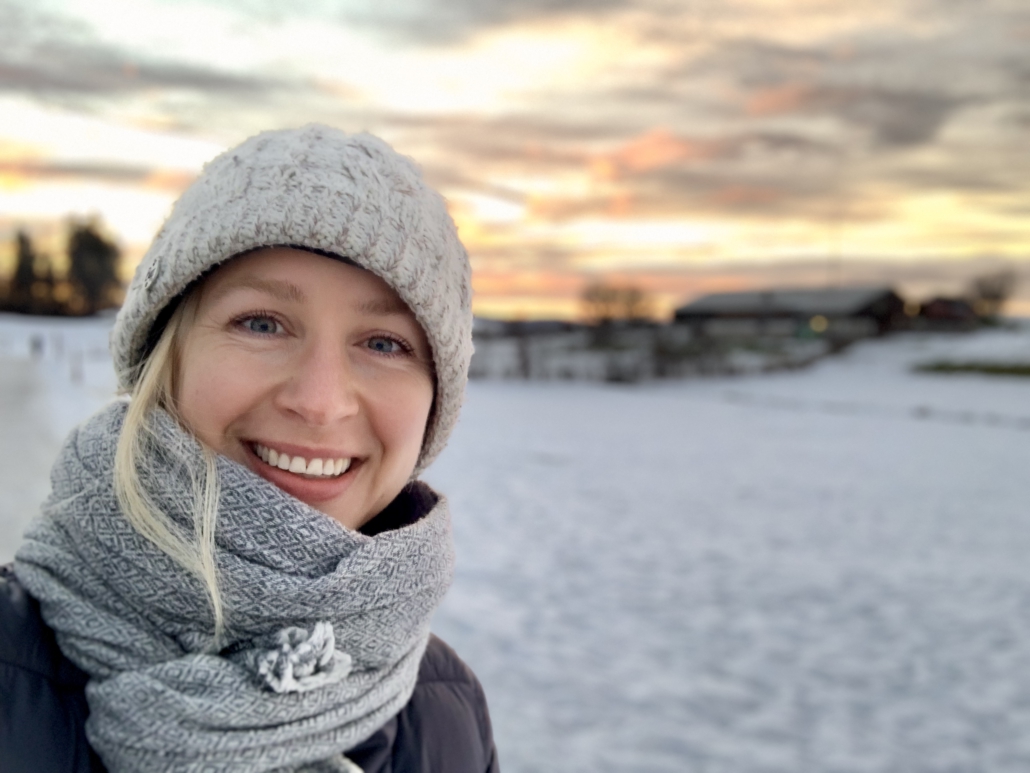
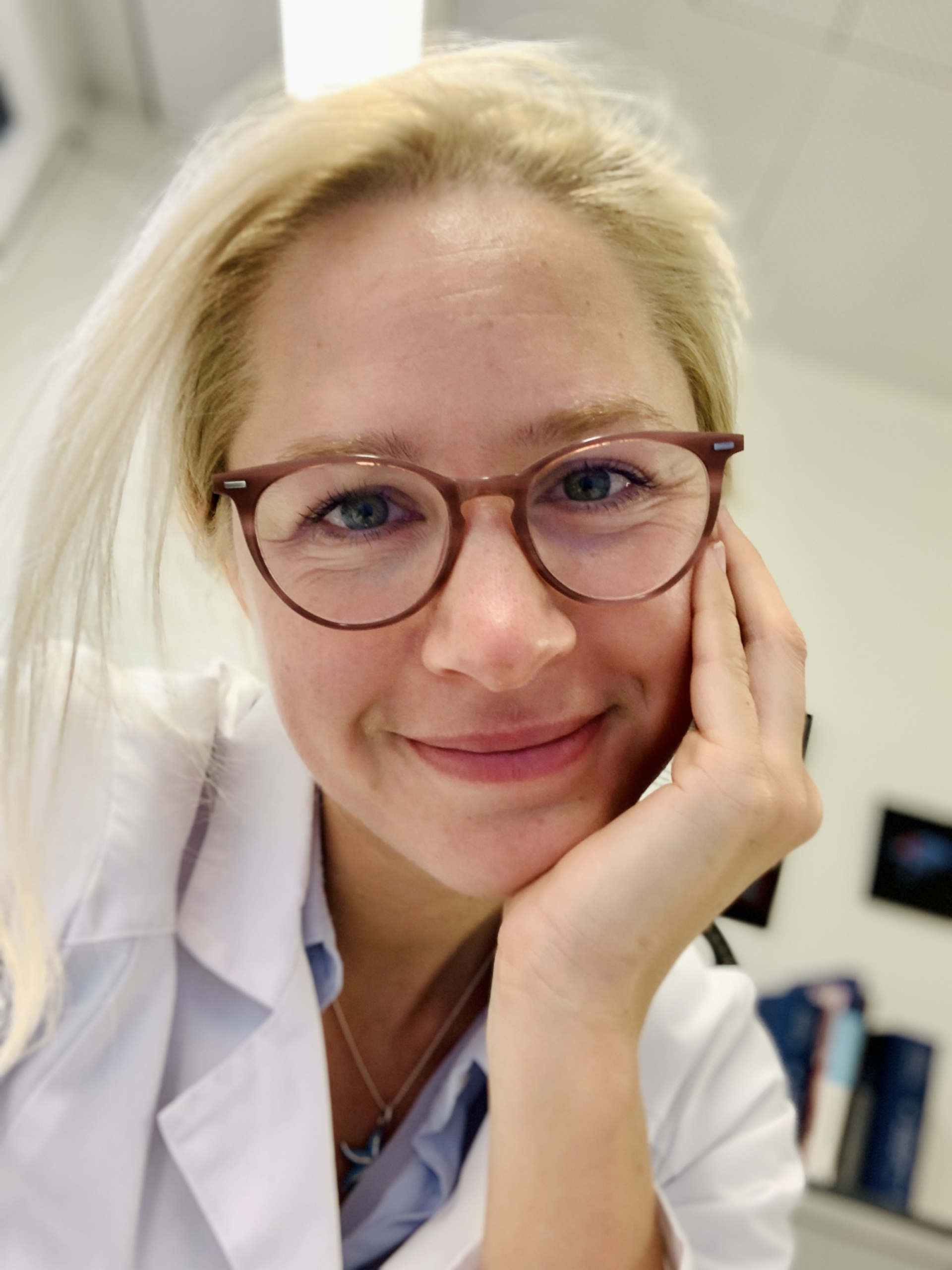
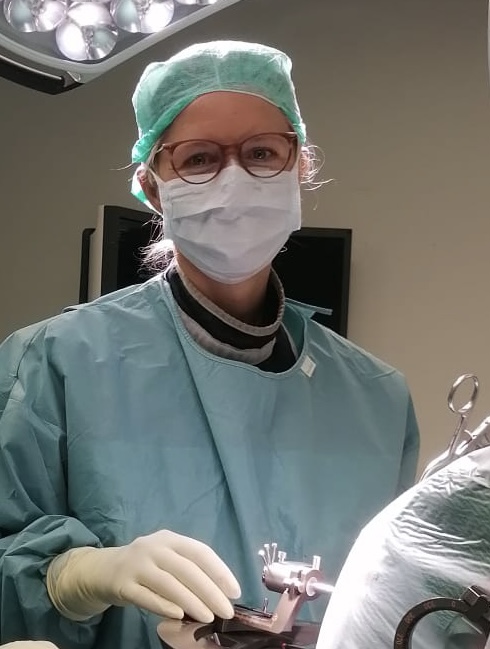
Marie Krüger is a functional neurosurgeon at St. Gallen, on her way to join the team in London
#28: Marie Krüger – Segmented Contacts & DBS for Dental Pain
It was my great pleasure to talk with Marie Krüger, who is currently leading the stereotactic surgery unit in St. Gallen but is on her move to join the team at UCL / Queensquare London. Marie trained in Freiburg, Germany, with Volker Coenen and Peter Reinacher, where she ran multiple studies about segmented electrodes and how to localize their directionality. After that, she carried out a fellowship with Chris Honey in Vancouver, where she developed a protocol of DBS for dental pain and was involved in studies about DBS for spasmodic dysphonia. Her concept of treating dental pain was creative: Since it was not exactly known, which nucleus would result in the best benefit, she implanted segmented leads into the triangle border between three adjacent thalamic nuclei. That way, she could probe exactly which one would deliver best therapeutic benefit. In London, she will work on establishing the new MRgFUS device to treat patients without the need for incisions or anaesthesia.
Marie Krüger 00:00These two patients, the ones that work, the only pain patients that worked, they have the same kind of pain. And that lady who's coming in now, she has the same thing. So he asked her in and she told him about, you know, the pain. And then he just looked at me and then he looked at her and said, you know what, we will have a treatment for you. It's called deep brain stimulation. Welcome to Stimulating Brains. So hello and welcome back to Stimulating Brains episode number 27. It was my great pleasure in this episode to talk with Marie Kruger, who is the director of the Stereotaxy Institute. And she's going to be talking about the Stimulating Brains. So let's get started. 01:00Marie is a member of the Stereotaxy Institute unit in St. Gallen, Switzerland. So she's leading the deep brain stimulation and stereotactic surgery program there. But Marie's also on her
Andreas Horn way to London. She's going to join the team there at UCL in Queen Square as a functional neurosurgeon. Marie trained in Freiburg, Germany under Wolke Köhnen and Peter Reinacher. And she was instrumental in helping to create algorithms to detect segmented electrodes together with Peter Reinacher. And then also use these segmented electrodes in multiple research projects when these electrodes were still new, but also now in very creative ways. For example, one of her key projects currently is to use these segmented electrodes to target three intersecting thalamic nuclei, and then to use the steering modality to find out which of the nuclei is best to treat intractable dental pain. When Marie did her fellowship with Chris Honey in Vancouver, she also worked in spasmodic dysphonia. And she's going to be talking about the Stereotaxy Institute unit in St. Gallen, and I think it's really impressive how much experience she has already gathered in 02:03actually quite little time. So thanks again for tuning in. Marie Kruger, Stimulating Brains. Marie, it's a great honor and pleasure to interview you. Thank you so much for taking the time to take part in this. I will have more formally introduced you already by now, so we can directly start. And as you probably know, I always start with an icebreaker question about non-scientific things, and I know you will have great answers. So any hobbies or things you do when not doing surgery? I don't know if I have a great answer to that, but I have a very straightforward answer. I think I love everything outdoors and being active outdoors. So hiking, biking, swimming, snowboarding, cross-country. Skiing in wintertime. Anything that gets my body moving and maybe also to get my mind at rest a little bit. 03:07So it really helps me to clear my thoughts. And I have this interesting passion for swimming in freezing cold lakes in wintertime. So I've been doing that quite a bit here in Switzerland now, and it always gives me a special thrill. So I enjoy doing stuff like that. Yeah. It's that real like ice, which you even go, you know. Make a hole in the ice. Did you do that? Um, sometimes you kind of have to crack it open a little bit, but then I really just, just go in and hang on to something and then climb out. But usually it's a, I usually go to a little bit like a bigger lake where that doesn't freeze. And then you just go in and swim a little bit and go out and yeah. So that's maybe an uncommon hobby. Yeah.
Marie Krüger So, so meaning mountains and outdoors. I know you. Snowboarded a lot in Vancouver.
Andreas Horn 04:00Is that still a passion? Yeah. Yeah.
Marie Krüger Especially the funny thing about Switzerland in lockdown was that everything was closed, but all the ski areas were open. So I did that a lot during lockdown. So you would be in a gondola with 80 people during lockdown, but they were fine with that. You can't take away the right to ski in Switzerland. So that was funny. Great.
Andreas Horn Yeah.
Marie Krüger Love that.
Andreas Horn Okay. So, so talking about the science and also medicine, who were key mentors in your career or turning points, you know, to get where you are now?
Marie Krüger So I think I did have a quite a few mentors and I always underestimated the, the, the importance of mentors just until now, actually. And I think I had mentors that were very different mentors. at very different stages in my career. And I would really like to quote a little quote from one of my favorite books, The 1% Rule by Tommy Baker. And because when I read that, I thought, well, that really, really fits so well. And it goes something like: mentors come in all shapes and sizes. 05:28Some last for a day, some last for a lifetime. What matters is not the duration, but the impact. And that was very true for me and some of the mentors I had. And so one of the mentors is certainly Peter Reinacher. He's one of these lifetime mentors, I think. He inspired me to do research. He was the first, I think, surgeon I met who really was passionate about what he was doing and passionate about research. He just made it fun. 06:00But at the same time, it was very meaningful. Then Volker Körnen, he was one of these door openers. He opened the door for me, I think, to go to Vancouver to do the fellowship. But at the same time, he also encouraged me to go through. And he kind of gave me that feeling that he believed that I could do it when I wasn't so sure. So I think that was a very important.
Andreas Horn Yeah.
Marie Krüger It was one of these turning points in my life as well.
Andreas Horn And then, of course, Chris Honey in Vancouver, where I did the fellowship, who just taught me everything about DBS that I know and research and all that.
Marie Krüger So, yeah, I think it's so important to have mentors.
Andreas Horn And, yeah, I don't think I would be anywhere close to where I am now without these people. And there are so many more.
Marie Krüger But I think these were the key people.
Andreas Horn 07:01Did you have one that just lasted one day? Like from the book?
Marie Krüger One day. No, not necessarily just one day, but maybe someone who did one move. You know, like my English teacher who enabled me to go to Australia, who gave me an address. And then I went to Australia. And then did, you know, a few months there, which was a big step. And I think it started or a lot of things started from there.
Andreas Horn Yeah. Yeah.
Marie Krüger So not just one day. That's a great example, though.
Andreas Horn Yeah. But so I get the point, right?
Marie Krüger So a single incident that made a big difference. So I'm sure that happens a lot, maybe more than we even realize.
Andreas Horn Exactly. Yeah.
Marie Krüger Great.
Andreas Horn So you did complete your neurosurgery residency.
Marie Krüger You mentioned Peter Reinacher and Volker Köhnen, the two, I think, neurosurgeons there.
Andreas Horn 08:04Are there more? Like you were there, but was there any, is there anybody else doing functional only in Freiburg currently?
Marie Krüger So there are now four neurosurgeons.
Andreas Horn Yeah.
Marie Krüger Bastian Zions and Nadia Yacht. So four neurosurgeons and a neurologist.
Andreas Horn Yeah.
Marie Krüger Great. And then we both studied in Freiburg. So I thought to mention that. That's how we met first time. Indeed, in med school. And I don't think many people would know this, but for historical reasons, Freiburg and then also Cologne are the only two universities in Germany or university hospitals that have a dedicated chair of stereotaxy. So functional neurosurgery, which is more or less than independent from the general neurosurgery department. Of course, not completely independent, but, you know, it's a full chair professorship and the actual, we'd say, German.
Andreas Horn So. Did this history that Freiburg had, you know, a chair for stereotaxy play a role in your choice to become a functional neurosurgeon or not?
Marie Krüger 09:08So I think when I was there, I wasn't really aware of that special situation, but maybe indirectly it did have an impact because it's one of these places or one of the few places where you actually get to see functional neurosurgery. Like, like all of it.
Andreas Horn And it definitely helped me to realize that this is what I want to do to have this amount of impact and see its full potential.
Marie Krüger So indirectly, I think it did make a play a role.
Andreas Horn But when, while I was there, I actually wasn't aware of that. So any other reasons why you chose functional neurosurgery and not say vascular or even neurosurgery in general?
Marie Krüger So. So neurosurgery in general, that would take a long time to explain, I think, or then maybe, maybe not. 10:04I just, when I was a little, like a young girl, I had an injury on my foot. I couldn't walk anymore when I was 15. And that was such a, had such an impact on my life to realize how important health is. So I knew I wanted to become a doctor. I actually didn't think I was smart enough to do, to go into internal medicine. Or do anything like that. So, and I was always, I love doing stuff with my hand. So I kind of knew I would have to become a surgeon. And then I, I wasn't good at school at all. I only played soccer my whole childhood. So I just had to improve my marks. So I had to sit down and I started reading about the brain and how it works to, to improve my marks. And I did that and I got really fascinated by the brain. And so. So it kind of all came together. 11:00Surgery, brain and all that. So I chose it as a, as a clinical subject in the first year of med school. So that's basically how I got into neurosurgery. But then when I really liked neurosurgery, but then we had to do this rotation into the functional department. And we had to, I didn't really want to.
Andreas Horn But as soon as I, yeah, as soon as I was there.
Marie Krüger I just fell in love with it. And I can pinpoint it down to one aspect, but I think it's functional is a nice combination of neuroanatomy science and very delicate surgery.
Andreas Horn Yeah.
Marie Krüger I also have to admit, I like this lower pace because general neurosurgery is all about emergencies and everything has to happen at the same time. Whereas functional, you, you need to take the time to think about the patient and to. Plan the surgery very well. 12:00It's not just, you should, but you have to.
Andreas Horn And research, I love research and it's, it's basically part of it, right?
Marie Krüger You can't, I think you can't do functional without research and then it's, it's just. Just, it's just so rewarding to be in the OR. For example, you're in the OR with a tremor patient. That's my favorite indication still. And then you do the surgery and then the tremor just stops.
Andreas Horn Yeah. Yeah. Yeah.
Marie Krüger I don't think I'll ever get tired of that. That's such a fascinating thing.
Andreas Horn And you know that you, you actually did that and you did it big. And the fact that it was so hard to get there and to learn everything and the fact that you had to go through so much makes it even more rewarding and, you know, going home and, you know, you just change someone's life for the better. I mean, what, what better job in the world is there?
Marie Krüger Right. I can totally dig that. I would, I would say the same that I never get tired of, of seeing tremors stop with BDS, but I would never be the person to have done it. 13:05So I could totally see why, you know, that's the extra bit. And I think in, in fact, Ludwig once mentioned to me, Ludwig Zunzl from London mentioned to me that, you know, he got goosebumps in the first OCD patient he did where that's maybe even, I don't know, changing the psyche or, you know, couldn't, but yeah, so, so I totally understand. And then also what you said that it took a long time to get there and then actually being able to do this. That's cool.
Andreas Horn So, so I guess a few people would also say that, let's say vascular or tumor surgery or so would always, you know, you do these elaborate things, but then it only lasts a few months. Would that also play a role that you can actually in functional do, you know? Yeah, in a way it does.
Marie Krüger In a way it does.
Andreas Horn Yes. Yes.
Marie Krüger It's very demotivating. I think personally to operate on a patient with a tumor and then you find out that he 14:03died a few months later, whereas the movement disorder patients, you see them, you know, a lot and every, and they come back and not all of them, of course, but the majority is every time they see you, they're just help, thankful and happy. And again, the other day I had a tremor patient who showed me one of his paintings that he can do again now.
Andreas Horn Yeah.
Marie Krüger These things. So it's, it's nice. It's not, we're not, you're not saving lives, but you're, you're, you're, you're improving quality of life.
Andreas Horn Yeah.
Marie Krüger And, and that in itself is just such a rewarding job. I just love it. It's. And yeah. These are all the reasons. Enough. Definitely. So if a few years back, you completed a fellowship with Chris honey in Vancouver. Um.
Andreas Horn What?
Marie Krüger key highlights there. Sorry, before we go into that, I think I missed the question. So maybe
Andreas Horn 15:04let's talk a bit more about your time in Freiburg. So what were the key points there? What did you learn from Peter and Volker? And can you talk a bit about that time of your career
Marie Krüger first? Yeah, like I mentioned before, I think Peter really got me into the research aspect of neurosurgery. And I think one of the greatest projects we did was we tried to figure out the depiction of the directional electrodes so we could find out how they're rotated. And Peter had started to do a lot of work. And then I happened to rotate into the department. And then we continued working on that together a little bit. And we came up with this plaster skull that we filled with gel. And I remember the two of us being in his office filling up this plaster thing with green jelly and 16:06then putting it into the CT scanner and the MRI and into the fluoroscopy until we finally figured out or I mean, it was definitely it was Peter who figured out how to read it and how to do it. And just being part of that was a lot of fun. And it's still, it's still important. And it still has an impact. And it had such a big impact on my time in Vancouver. So I learned a lot about directional electrodes there because they were new and they did a lot of research on them. And also from Volker Kernan. And when I went to Vancouver, Canada had just, they just got the directional electrodes because they were released later than in Europe. So they didn't have any experience. So that was a big, like, that was great for me. And knowing how to, I came in, well, that was the 17:03only thing I knew really. But we did a few studies and we wouldn't have been able to do the studies if we hadn't established a rotational fluoroscopy in Vancouver then. So that was, so it was like something I learned in Freiburg that I took to Vancouver and then we were able to do a few studies. And I think that was the thing that had the most impact, the directionality. And
Andreas Horn depicting it and, yeah, seeing how also how Peter approached, you know, these questions. And,
Marie Krüger yeah, I think that was... I remember a talk from Peter, I don't know where it was, but where he showed these videos of the, you know, the rotational fluoroscopy rotating around the electrode. And you, I think what I took home is that, you know, it might seem as an easy problem if you rotate around the electrode to see it, but... Since it's always just coplanar, it is a much harder problem. So it sometimes looks as if they
Andreas Horn 18:02were rotated that way, but it's not that easy, right? So can you talk a bit? Yeah, it's not so easy. Well, you have the marker and you have the iron sights,
Marie Krüger but it takes a while to understand how to read the fluoroscopies. And now, I mean, now the CT method, I think that has taken over, but it's based on the same principle. I think it was Peter who... Who coined the term iron sight and who kind of, I think, motivated or inspired the CT, the people who were working on the CT project to use the iron sights as well and put it into their algorithm. So that was kind of the base that helped to get everything running then. And yeah. One other thing that's special about Thribert that I always envied also, you know, similar sensors like Cologne that you have. So, yeah.
Andreas Horn Yeah.
Marie Krüger 19:02and you had you know depression ocd then of course also the um you know the classical indication so was that also formative to be experienced or exposed to these projects with the media for brain bundle or similar oh yeah yeah i mean it was great to be um in a center where they were so involved in in the depression um dbs for depression and also um speak to um thomas schlepfer the
Andreas Horn psychiatrist and it was interesting to see how important it is to have both specialties you know
Marie Krüger a a neurosurgeon was really interested in this project or in the in the indication and the psychiatrist and i think that's a that's a problem or that's that's what lacking in many other places um and uh yeah it was great to see they have they do everything there and um that was certainly very inspiring as well it was a 20:00lot of impact yeah great point with the psychiatrist because i think people like thomas schlepfer or jens kuhn and cologne who left already are so rare right in not only in germany but everywhere i think remember marwan haris gave a talk where he even showed indirect evidence at some point where the psychiatrist that would engage into functional neurosurgery would be shunned by their peers you know not only in germany but everywhere so that there's even some sort of push you know against that so and i think that's a big problem um there's just a test out i think in nature nature medicine paper now to promote more the ocd um research and so on so so any thoughts about you know how or for example i think um marwan would also say that psychiatrists would not go to the surgical conferences and but neurologists sometimes do i mean they also don't go enough i guess but do you have any thoughts about how could we you know 21:00foster more or bring these three specialties especially psychiatry closer together oh good good good question um so what i what i did here in switzerland we tried to you know encourage um psychiatrists to start collaborating on a project and and i found it so hard um i think we have to go out there and tell them you know here are the options and and i encourage them to think about it i think one thing that might be maybe maybe a key turning point is the high focus ultrasound so you go to psychiatrists and you give a talk on dbs for depression and they're like okay that's nice and but you can see in their eyes they don't like these wires they don't like to know they don't like the idea of adjusting the stimulation and 22:00where they don't have any clue about. But then at the end I always show, you know, a potential future would be the high focus ultrasound, and that really gets them interested because the idea that they can just send a patient to something that still kind of looks like a non-invasive... Yeah, it looks like it. At least it looks like it. I mean, we all know it's not, but the patients think it's not and it's not surgery. Yeah, it's, and then you send the patient there they get a treatment and then you're not stuck with adjusting stimulation and all that I think that might actually help everyone just just to get them interested and and I remember I think it was Andres Lozano who said that since they started with the high focus ultrasound in Toronto they also have more patients for DBS because it attracts the patients to come to the surgeon and and talk about you know is there something we can do about my about my 23:06condition and then and then I think if you know when they talk about it and you explain the options and also DBS and you show them and maybe you you give them the number of a patient and they meet and it they they realize you know oh wow I mean it is brain surgery but but it it has such a big impact so I think maybe that will do the trick yeah that's a good idea so the same here I think at the Brigham that that cases certainly didn't go down DBS that the overall case went up by you know by far yeah and I'm just giving people choice you know it makes it more attractive they can then you know choose so so um one sorry sorry that I dwell so much on this topic
Andreas Horn but I find it really interesting and I just interviewed Nolan Williams who is more in the
Marie Krüger TMS realm but what he he also did a lot in DBS before scientifically and and he mentioned that you know a thing that needs to happen could even be that we get a new residency as a brain 24:05stimulation doctor you know that could potentially even treat across neurology and psychiatry I mean certainly not you know surgeons do that anyways you would you would um you wouldn't really care much probably what you know where what what disease that the patient has but um but no no sorry I shouldn't have said it that way but you would you would um obviously you would care but but it's um the technique is similar it's what I'm what I wanted to say you know it's not a completely different type of surgery or so that's right what I wanted to say and I guess um mirroring that on a on a you know having a brain simulation on neuromodulation
Andreas Horn specialty I at least found it a really interesting concept to think about um because he said that
Marie Krüger probably with neurology and he did both residencies so he has you know neurology and psychiatry um and he kind of said that usually you're not fit to treat either of them really well you know 25:05even as a neurologist maybe you're not in perfect DBS doctor already or so yeah any thoughts about that yeah it sounds it sounds like a good idea for sure um but uh because you I know you're going to ask about the fellowship in Vancouver uh next and you mentioned that um that we don't care about the the disease or the indication that much so we didn't have because we didn't have neurologists in Vancouver so we really had to care about everything and we had to um we had to um we were the ones to set the indication and um and that was a great for me as a surgeon to you know learn how to think like a neurologist and the same with the with the programming so we did all the programming ourselves. Oh, wow. And that was a very... I'm only realizing now that this was a very very special situation yeah and um and helped me very 26:07much to think a little bit more like a neurologist and and and be just as meticulous about um indication as we are about surgery because I mean you can be the greatest surgeon on
Andreas Horn the planet if the indication isn't right yeah it won't work we all know that so that's so interesting
Marie Krüger so so let's talk a bit more about Vancouver now so you went to work with Chris honey I think about a year a bit more probably um to learn with him and it was a real Fellowship just for functional can you talk a bit more about the general setup but also if you want to elaborate on that made
Andreas Horn it you know why were they no neurologists neurologists and um I agree this is a great
Marie Krüger learning opportunity to broaden um yeah so so the general idea of the Fellowship was um basically that there's only only one fellow who does everything but at the same time of course you learn everything so I 27:05like to call it the toughest and the best year of my life it was certainly challenging it was um because from one day to the next so you're overlapping with the the previous fellow for a month but then you're on your own and and so you I started in um July and we were overlapping and in August Chris Honey goes on holidays for a month and you're in charge for everything so you'll get all the phone calls and they are looking after 1,500 DBS patients because they're the only center in all of British Columbia so that's quite a lot and and I have to say I yeah that was quite challenging we didn't do surgeries that month but you had to be there and answer questions but in general the idea was that the fellow would really learn everything his his idea is that he would train a fellow who could then go back to his own country and run a service there and and not 28:04just do the surgery and you know get the electrode down there but be able to set the indication be able to do the surgery have a look look localize the leads make sure they're in the right spot program the patients follow them up manage every everything every emergency and it's just everything so it was only functional and a little bit of what we had to do on calls but that was it general neurosurgical on calls and then we did a so you know MVDs radiofrequency ablation chordotomies so so so it was movement disorders and pain and these different techniques but the main focus was certainly on on DBS so it was a very very steep and and and learning curve and I was heavily involved in research we we worked on I think I probably we 29:05published 10 papers together out of one year which I think is a is great and yeah so I think I got a lot out of it but like I said it was it was the toughest year of my life and I think it was the toughest year of my life and I think it was the toughest year of my life and I think it was the toughest year of my life as well it was also really tough yeah see see I I love the interdisciplinarity of the field but I could still see how this is you know the perfect place for especially a young neurosurgeon maybe to learn things because because you you essentially close
Andreas Horn the loop right if you stimulate exactly like program the patients later I guess often the
Marie Krüger typical canonical criticism maybe of a neurologist could be I'm not saying it is but could be to the neurosurgeon that you know they put the electrode down and they're like oh my god I'm not going to go down there and then they close up and they're done with the case right right which is also often not true I know but but that could be the criticism and then you know you kind of never get the real 30:00feedback like long-term feedback yeah you know did you do a good job even right so if the neurologist is not transparent or it's just not it's not all from one hand but it seems like there in in Vancouver you had that opportunity to do the programming and so on so so you also took care of one thousand five hundred patients really did the programming there um as well so they have three DBS nurses and now they're getting a fourth one because it's just getting bigger and bigger yeah um and um I and so I could sit in with them and uh and learn how to do the programming and I did a lot of programming with the directional electrodes for the study patients as well so for me yeah it was it was great um to have this closed loop yeah and and and when I came to to St. Gallen, I actually said, you know, I, I, I insisted on having this closed loop because I ran the functional program there and I'm, I wasn't the only functional surgeon. 31:03So I thought I had to make sure that what I'm doing is right. So I, I wanted to see every patient before we were, we still always discuss every patient in our meeting. And only if everyone agrees, you know, this is what we want to do. We go for it. I plan my surgery. I look at the post-op fusion and then I insist on seeing every patient at least once, if not twice to see what, what is the result. And I have a little book where I write down, you know, special things. Oh, this was a little, you know, this electrode was a little bit more lateral. Let's see if that worked. And, and I think that really helped me to, to, to get better and better.
Andreas Horn And also, yeah,
Marie Krüger to make sure that, you know, what I'm doing is, is right. And I personally think that's the way you should do it. I, but I know there are centers where the surgeon is only there to do the 32:01surgery. I guess it works, but I mean, we've, we, we spoke about, about it before that it's really, I think the best situation is when you have a passionate neurosurgeon who understands the neurological side. And when you have a neurologist, who's also interested in, you know, where is the lead where, you know, and, and also wants to see the result of the surgery and is not just programming in the dark. So
Andreas Horn yeah, it goes both ways.
Marie Krüger I totally agree. And I did sit in all the plannings in Berlin at the time there myself, just out of interest. And I think over time, you know, they, they, they became a bit more interested in my opinion as well. So, you know, it, it, it just became a multidisciplinary thing, obviously the search, and had the last couple of years.
Andreas Horn Yeah. Yeah.
Marie Krüger You would then go ahead and do the surgery, but I think that is truly the way to go. But of course, it's often a resource question, right? It's additional time that you're... You're right. Yeah, you're right. But I'm like in the perfect world, I think that's how it should be. Yeah, yeah, that's good. Okay, so speaking a bit about science, so together with the team in Vancouver, you work on a prospective randomized double blind crossover trial on thalamic deep brain stimulation for spasmodic dysphonia. 33:18It's not your own big story, which we'll come to, but I think it's the big story of Chris Honey a bit, or at least one of his stories.
Andreas Horn So could you tell us a bit about what spasmodic dysphonia even is and a bit about the findings of the study? Yeah, so spasmodic dysphonia is a neurological disorder that affects the speech and the voice of patient.
Marie Krüger It's also called laryngeal dystonia, and it causes the vocal folds to contract involuntarily.
Andreas Horn So patients would speak like this, right?
Marie Krüger So the vocal folds always shut, although they don't want that, and it's really hard for them to speak properly.
Andreas Horn 34:04And so, yeah, it was Chris Honey who found that VIM-DBS is a treatment for spasmodic dysphonia.
Marie Krüger You mentioned it. I think the most hilarious thing about it is the story on how he found out about it.
Andreas Horn I mean, do you know how?
Marie Krüger I don't know. Okay, so I have to tell it because it's, and I love hearing it from him because it's nice to hear it from him. You'll have to hear it from me now. So he said, you know, they operated on patients with tremor who also have SD. So about 5% of tremor patients have SD as well. And they just. Did their VIM-DBS for the tremor.
Andreas Horn And then the patients came back and they would go, oh, yeah, so my tremor has improved so much.
Marie Krüger And also my SD is gone. I didn't know that was part of the deal, but great.
Andreas Horn Thank you so much.
Marie Krüger And he would go and he said, so, oh, you know, I didn't know it was part of the deal either. And I didn't even know what SD was. 35:02So he kind of realized that by treating the tremor with the VIM stimulation, you could treat something called spasmodic dysphonia. So he kind of read. Up on it then. And then I think he made a very well, the right thing. Right. He made the right thing. He took a spasmodic dysphonia patient and without without tremor.
Andreas Horn Yeah.
Marie Krüger And and the big question and you look at the literature. So there were very, very few case reports on it, but no one actually went the next or did the next step. So the question is, you know, it's it's a dystonia in a way. So you would you would think the target is the GPI. Right. And not necessarily the VIM. So they they took a patient and they implanted an electrode coming from very anterior, having one contact in the VOA, which has palatal input.
Andreas Horn Yeah.
Marie Krüger And then one one contact in the VIM with with cerebellar input. 36:00And they they just, again, found that the VIM is the better target.
Andreas Horn Interesting.
Marie Krüger And then they then then he said, you know what, we need we need to do a little trial. And so they did this trial. A crossover randomized blinded on six patients with purely ST and did a unilateral VIM left left VIM for right handed patients, because he also found that it looks like the speech dominant brain hemisphere and right handed patients gives patient the most benefit for their for their ST.
Andreas Horn And then, yeah, the patients really improve.
Marie Krüger And the quality of life improved. And now they're working on the next bigger trial. So very exciting. Very cool.
Andreas Horn Yeah. So so I would have that's what I would have thought, you know, the VOA, you know, maybe it was just you checked for that or he checked for that. So that's really interesting. 37:00Any other mechanistic thoughts about why cerebellar input? Do you know what the thoughts are?
Marie Krüger Or is it currently just. I so it's just work.
Andreas Horn Yeah.
Marie Krüger It's just working. I haven't put. I know Chris. Chris. He has thought about it a lot. So I'm sure he has some answers to that. But for me, it's it's just working. I actually operated on three patients in Switzerland.
Andreas Horn And yeah, it works in German, too.
Marie Krüger So.
Andreas Horn Yeah.
Marie Krüger Cool. It works in German, too.
Andreas Horn Yeah.
Marie Krüger You also in one study compared bilateral and unilateral stimulation in two patients. So that I think you already alluded to that. Yep. Yep. So. So. So. So. So. So. So. So. So. So. So. So. So. So. to study. And. But there were. So there were a few patients with both tremor and SD who had bilateral VIM stimulation. And then we did a little trial on on those two patients. Actually was were to one was right handed. And the left VIM stimulation gave that lady the most benefit. 38:02And the other guy was left handed. And the right VIM gave that patient the most benefit. And ultimately both sides were. You know. actually the best but it was very subtle that additional benefit so um yeah i'm still also not quite sure whether we should go bilateral or unilateral um but um yeah so but they're doing a lot of research on on all these things right i guess a bit more your your own story or one of your key stories is also as we already talked about directional electrodes it seems just looking over your publications you worked a lot with that i'm starting with peter reinach but then also um you know in in in your work on pain that will come to um i i think you you did also um compare tremor and quality of life in patients with essential tremor before and after replacing their standard dbs so the um omnidirectional system with the directional electrode system 39:02that is quite rare right that you would pull out the electrode and put a new one in so i guess you use these patients as an opportunity to study that right if i'm yeah
Andreas Horn exactly yeah so that was a study um that i ran when i was in in vancouver so the basic idea again
Marie Krüger was was from chris honey but then he he let me do it because he realized i knew a lot about the the the uh directional electrodes uh but the the basic idea is was or was um we had a subset or we all have them you know the tremor patients that do great initially with the ring mode and then after two or three years the tremor progresses and you just can't get the tremor under control anymore um so we were looking for a solution for those patients and by that time the first papers on directional electrodes had already come out and they all showed theoretical benefits like you know a wider therapeutic window um no superiority in terms of clinical benefits but these were all 40:01newly implanted patients so we we thought you know if if you have the possibility to steer away from a side effect um and you have a advanced patient maybe it'll make a difference in those patients so we we chose these six patients um and yeah literally took out the electrodes the old ones and slided down the new electrodes down the same path um and then we um yeah compared to tremor before and after and found a significant improvement with the directionality um it was it was 20 percent in the end but it did make an impact for for most of them like uh especially in their quality of life and would you say it was because you could essentially you know ramp up the voltage more without side effects yeah so in yeah yeah it was basically what we did is we put most of them on very funky bipolar settings that 41:00we like to call them and we um and we steered into the ventral part of the limb away from the capsule which would get you a side effect and then below the ventral part of the limb you could get a side effect and then below the ventral part of the limb you could get a side effect and then below the vim in the psa or zona insert or whatever you want to call it but you can shape the field you can make like an s shape and steer away from what we think is the rd ataxia fibers um and because that's the biggest problem that they get ataxic and then you we ramp them up up to six seven milliamps uh on bipolar settings and and that did the trick it took us a while to figure that out um but we tried everything with with them and i think we in our basically we did a lot of work on the vim and we did a lot of work on the vim and we did a lot of work on the vim and we did a lot of work on the vim and we did a lot of work on the vim and we did a lot work on the vim and we did a lot of work on the vim and we did a lot of work on these image on how long it took us to program these patients. And I think the first patient was like 16 hours or something. So we spend a lot of time with these patients. The problem was we didn't.
Andreas Horn It could be the confounder, right?
Marie Krüger That you probably didn't take as much time before. 42:00Well, they had tried to get them better over years and years. And then there's only so much you can do with these standard electrodes. And that's the problem of the directional electrodes that you have so many options now. And we didn't have imaging back then. We didn't have and we were not allowed to use any images, which made it so difficult for us. And which I think was, yeah, wasn't easy. We learned. So, you know, we gave Boston Scientific our settings once we had finished the trial. And then they came up with these weirdly shaped VTAs. And then we were like, oh, wow, OK. We weren't aware of what we were doing there. But, you know, we found out. And we were able to do it clinically. And but now I actually when we have challenge and tremor patients, it takes me 10 minutes to get them really good because I know I want to create that shape and plug them to these funky directional settings. And it really works. 43:00So it's really cool. That's amazing. So that should certainly be if it's published, if you show that straight thing somewhere, that should be a good read for people.
Andreas Horn Yeah. Yeah, true.
Marie Krüger True. We should definitely do that.
Andreas Horn Yeah. So so it brings me to the next topic that, you know, you also looked a lot into imaging and one key if you have these directional electrodes and then, you know, they, of course, make it much more complex to stimulate. And that's why reconstructing them is much more important. So the technique that Peter came up and also the CT based methods is so important. What's similarly important and you looked at would be like, let's say, let's say you do the fluorography. You know how they are shaped, but would they still turn afterwards?
Marie Krüger But they could be some tension probably in the wire. And then maybe over some months they would still turn by, let's say, 30 degrees. And I think you had a study that looked into that.
Andreas Horn Yeah, exactly.
Marie Krüger Because that was the big question that came up once we had figured out how to depict the orientation. 44:05A lot of surgeons had the feeling, you know, that they would continue to rotate. And we looked into that in our study here in St. Gallen. And we looked at the CT scan, where I think we looked at 32 electrodes where we compared the intraoperative X-ray, where we tried to hit the iron side and the marker anterior. So we knew that these were really anteriorly facing electrodes. And then we had a look at the CT scan immediately after the surgery. And in some we had longer follow ups as well. And we actually found that they did not turn. So. But it really depends on the surgical technique. So if you give them a lot of twist, they might actually turn. And we just use the standard locking mechanism from Boston Scientific. And I'm sure the Medtronic one will work just as good. But there are some centers that use cement and a plate. 45:00And so I don't know if that is as stable as using the locking devices. But ultimately, and that's what all the other studies found as well. So there are quite a few publications on that now. So it's not quite sure what happens within the first 24 hours. That really depends on the amount of twist you give and the surgical technique.
Andreas Horn But after 24 hours, nothing really happens anymore.
Marie Krüger And I think that was an important finding for us because we needed to know if you can trust the orientation when you do a study.
Andreas Horn So perhaps the scientific concept that you currently stand most for. Could be your work on DBS for dental pain. Where again, you use directional electrodes in a very creative way in the thalamus. Could you walk us a bit through that concept? Yes.
Marie Krüger So I actually, I think I have to start with or to tell you how we came up with this whole idea. 46:03And that was again in Vancouver. So Chris Honey did surgery on patients with pain. But when I went there and I asked him about it, he actually said he doesn't really believe in it. But I encountered two patients where it had actually worked. And one patient was a patient who got a battery infection, unfortunately. And so we needed to leave her off her stimulation for six months. And I got to know her very well because she was with us for quite a while. And she had all and I only knew that she had facial pain. You know, that's that's the thing. That's that's what they labeled her as facial pain. And then Chris Honey always told me or always he told me a story about one patient that he could never forget. And that was a lady. Again, he said she had some sort of facial pain. He did a VIM. Sorry. He did a VPN DBS on her and it helped a lot. 47:02But then at some point the electrode broke and he wanted to take out the system. The pain had come back and he pulled out the electrode. And he caused the bleed. And she woke up with a hemiparesis. But the first thing she said was my pain is gone. And she so she got her her motor functions back after like a day or two. But the pain stayed away. And she ever since then is 100 percent pain free.
Andreas Horn So I thought that's really interesting.
Marie Krüger So I thought I was I was starting to get curious about the kind of facial pain they had. So I looked into that. I looked into their charts. And then I realized that they both had the same kind of pain. And it was neuropathic dental pain. They both have the same story with going to the dentist who did some sort of root canal treatment. And then after a few weeks, they got this constant burning pain and so on. And the funny thing is, so I remember that moment. I was like, oh, wow, they had the same kind of pain. 48:01But the funny thing is, it was it was on a clinic day. So that day we had.
Andreas Horn We had a patient walk through the door who had exactly the same story.
Marie Krüger And I went before she came in. I went to Chris and honey and said, you know, these two patients, the ones that work, the only pain patients that worked, they have the same kind of pain. And that lady was coming in now. She has the same thing. So he asked her in and she told him about, you know, the pain. And then he just looked at me and then he looked at her and said, you know, you're not going to get any pain. You're not going to get any pain. You're not going to get any pain. You're not going to get any pain.
Andreas Horn And then he looked at her and said, you know what we have?
Marie Krüger We will have a treatment for you. It's called deep brain stimulation.
Andreas Horn And so that was the beginning of it. But then when she had left, we were like, OK, but now where do we put the electrode?
Marie Krüger Right. So I asked the previous fellow, Jose, who was really very good with imaging to localize the lead and the lesion. 49:00And it wasn't easy. One patient only had a CT. The other images were very old.
Andreas Horn So we looked at her. So we found that it was somewhere in one of the three nuclei, the anterior pulvinar, the VPM. So the sensory thalamic nucleus or the central medium, the CM. And so we thought and they just look like like triangles next to each other. So I looked at them and I thought, should we put three electrodes in?
Marie Krüger Or I kind of recognized them. I recognized that pattern.
Andreas Horn And I thought, oh, well, that looks like, you know, why don't we just put a directional electrode in and then just steer into each one of them?
Marie Krüger And so I drew everything and went to Chris Honey and said, look, that's I think we should do that.
Andreas Horn And he just looked at me and said, yeah, OK, let's do it.
Marie Krüger OK. You know, that sounds like a great idea.
Andreas Horn 50:00Yeah.
Marie Krüger And so we did. And we did a blind study.
Andreas Horn Yeah.
Marie Krüger And we did a blind study on her. We put her on each of the settings for two weeks. And it was so that we saw the best effect with this stimulation in the VPM with some co-stimulation, the CM. But the moment I started to believe was when we put her on the off setting and she called the next day to tell us, you know what, I don't like that setting. My pain is back. OK. So we realized, you know, OK, that it really works and it's reproducible. And so that's when I got really excited about it. I still am excited thinking about it. So we operated on another patient and it also works on her. And then we thought we should come up with a prospective trial. And we've actually we almost started it. But now that I'm going to London, we're going to do it in London now. So it's a little bit on hold.
Andreas Horn 51:00Yeah.
Marie Krüger So we've already.
Andreas Horn Yeah.
Marie Krüger Well, we've already spoken about that. This is going to be one of the first project that I'm going to tackle there. So very excited about it. Really cool.
Andreas Horn And you still you still think it is kind of specific to dental pain or to that specific subform of facial pain? Or would you say we don't know yet?
Marie Krüger So we don't know yet on the one hand. On the other hand, I think it kind of makes sense that it's the so the CM and the VPM in the literature. Although the nuclei that are the ones that have been targeted with pain the most, you know, so we did a whole literature search and all that. And there is quite, quite a lot of evidence that CM or VPM stimulation works. Now in the thalamus, you have like this homunculus and the the oral part is the most medial part. And so it happens to be very close to the CM. And I think this is kind of the probably the magic thing about it or the good thing about it.
Andreas Horn The reason why it's working so well, because you have this this sensory input from probably from the teeth and the mouth in that corner where you can co-stimulate the CM, which also seems to be a good target. 52:13So maybe that is that is why it's working so well.
Marie Krüger And if you the further out you go, the further lateral you have to place your electrode and the further away you get from the CM and you will probably also cause, you know, other sensory problems. Right. And so on. So I'm I thought about this a lot, but I think this could be one of the key reasons why why it's working so well, because, you know, they have different inputs. The CM is almost affecting is like more the emotional pathway than than the sensory one. So I think the combination is probably very good.
Andreas Horn But that's exactly what we want to study now and need to study.
Marie Krüger I think we need to make the next step now.
Andreas Horn And I guess, you know, that's the thing. that if the story is, or the reason is, it's really in this sweet spot between the three nuclei. I mean, again, I find it so creative and brilliant to use that opportunity of the triangles with directional electrodes, you know, it makes so much sense. But one question probably, you know, in my eyes I would have is you need to find that intersection point, right? So if you, let's say, if by accident you'd be in the CM, then you can steer all the way. 53:28So how did you do that? Yeah.
Marie Krüger So again, I used Josue and his knowledge about tractography. And so we got really very high density, like very good MRIs with DTI data. And then Josue ran all these calculations and he was able to depict the nuclei based on tractography. I think he used lead DBS as well. 54:01And every, you know, all these tricks that you do, I don't know much about it. I just have to trust him. But he obviously hit it right. And so he segmented the nuclei based on tractography and then send us the images. So he was in, I don't know, New York at that time. So he sent it over and then we based our planning on this localization. But you're absolutely right. That's the next point. So I'm so excited. As you know, I'm going to London. And I'll have Harith Akram there as well. Similar hero.
Andreas Horn Yeah.
Marie Krüger Super.
Andreas Horn Yeah.
Marie Krüger So it's, and Josue is still, we're still collaborating on stuff. So I think that's a key point to make sure that you can localize these nuclei as good as you can.
Andreas Horn Yeah.
Marie Krüger That's great. I think, yeah.
Andreas Horn So speaking again about this creative way of, you know, targeting three nuclei in the thalamus, do you think there could be other? Indications where this could play a role? 55:00What comes to mind, obviously is Tourette's with, you know, CMPF, why intersection that was described, you know, would that make sense as well?
Marie Krüger Or do you see other indications where we could use the same concept to. I think I haven't really, I don't have a specific idea where I would, you know, whether I'm about to do it. But I think, you know, the companies are working on these 16 contact electrodes. And I think that's a key point.
Andreas Horn Yeah.
Marie Krüger So the longer electrodes, the ones where you have directionality in the lowest and the most upper contact as well. And I think that I would love to use one of those in tremor. And go even deeper into the sonan surge. Or further up in the VIM. You could probably do a dual targeting of VOA and VIM. And all these areas for the stonic tremor. Well, you know. it has all been done with the standard leads but i think the the direct electrodes do give us more 56:03opportunities there um i would really have to think about that a little longer but i'm sure there there will be other um indications or other areas in the brain where they will become very useful and since you mentioned since you mentioned voa and and then you know you could even think about parkinson's potentially targeting voa for the predicate like the hypokinetic symptoms and then tremor and the vim um because you don't get them so close side by side uh probably anywhere else i mean i should think about this more before yeah yeah so but it's certainly a very you know exciting concept and then um i guess again segues into the next big thing that i think you're really interested in um uh is imaging you know using like image guided dbs and um you mentioned um abecillas chazan i hope i pronounced the name correctly but i'm a big fan of his work as well 57:02he's um as you say one of the maybe um makes probably the most beautiful tractography images in the field or you know one of them at least um don't want to hurt anybody else but but i think he's you know he's using i think amartrix has these very high you know um resolution um pictures there so so and did a lot of cool work so i did i did not even get that he was the fellow with chris honey but i know he was you know all over the place and um been in contact with him a bit as well so uh i think there was also together with him um i remember there was a study in jns this year where you looked at optimal sweet spots and tracks for essential tremor as well going into that same you know direction but with imaging what did you find there yeah so these were actually our tremor patients from the study where we had exchanged the electrodes so um we so we found that we were able to give give them better tremor control but now we wanted to 58:02to see what are we actually stimulating what makes the difference so we um or he had to say he simulated the vtas of the standard electrodes and the vtas of these funky directional setting electrodes um and um then we we basically found that they were both stimulating the cerebellothalamic tract but that the directional settings um all of the electrodes were um all of the electrodes were also stimulated the palatophugal pathways um which is a bit which is not what you would have thought right or not what you would have thought of at first at least um also um we were able to stimulate deeper so um and and i think that that also makes a difference and and with the directionality i think you can steer away from ataxia a little bit or definitely better than without directionality so um yeah so we we stimulated an additional pathway with them and um i think that's a nice explanation on on
Andreas Horn 59:02why we um achieved what we achieved in those patients very interesting and i did not realize
Marie Krüger that because you said you would not have thought that but i guess rick helmick would have thought it right with the dimmer switch model with um the idea there is if i'm correct that that you know um basal ganglia input essentially switches to tremor on or off and then the cerebellar input um it's more for the intensity of the tremor i might confuse the two i'm not 100 sure but right so there it would make a lot of sense that and you have tremor response in the gpi right yeah absolutely yeah i'm not even surprised but it's great that you that you showed that and um i didn't realize it so very cool yeah yeah i thought that was very interesting um yeah i i did interrupt you though so did you um no no i think i think that was that was all i wanted to say about that following up on the image guided um story 01:00:03you also worked with companies to look into like evaluated segmentations of filament nucleus that are made by by software such as brain lab and others or probably brain that mainly um would you think uh would you conclude that currently the currently available software let's not speak about a single manufacturer but you know what is on there is is you know helpful as a neurosurge
Andreas Horn or helpful post-op for programming or not helpful at all?
Marie Krüger No, I think it is definitely helpful, but you really have to be careful. You need to understand its limits. And so the first thing, the segmentation, I think, no matter what software we're using, you need to be aware it's not 100%. And when you do the targeting, we're targeting on a below one millimeter level. So I always do my planning without the colorful images. 01:01:04But I like to switch them on. And then it sometimes gets me to think. So the best example is always the tremor. I do coordinate-based tremor targeting. And I don't have images. This is where I really see the VIM. There are some now. I'm eager to use them, but at the moment I'm not. And then sometimes the software would show me very asymmetrical VIM localization. And then if you zoom out and you look a little bit closer at the anatomy,
Andreas Horn you realize, oh, yeah, that patient has a very asymmetrical anatomy.
Marie Krüger And then you look at the red nucleus and it's really two millimeters off. And now I just... My simulation was actually published on that case, one of the cases. It was the first one where it made such a big difference. And now I adjust my planning based on that. 01:02:01I mean, you can see it without the colorful images, but it's much easier to see. And so it always makes me think. Also in SCN, if I'm completely somewhere else, I have another look. But I always trust my raw data planning. And the one thing you have to keep in mind is that it can only be as good as the images that you feed it. You know, if you put in crappy images, you can't expect anything good. And then I think it's really great for programming. It's, you know, you can see the anatomy. You can see the relation of the nuclei and the fiber tracks and everything. So I like to look at these images with the neurologist when they have a challenging patient. And then I look at the images. And I'm like, oh, my God, this is so bad. This is so bad. This is so bad. This is so bad. We sit down together. We look at the anatomy. Or I do programs, some patients, myself, when there's a specific question, like, you know, capsule side effect. 01:03:01You look at the image. You localize the electrode. You know the orientation. It literally takes you five seconds to program that patient or reprogram that patient, which would have taken you ages if you had to do it. Black box, trial and error, clinical testing.
Andreas Horn So that I really love it for that. And it doesn't matter. You know, if the electrode is one millimeter or if the SDN is segmented a little bit wrong, all you need to know is in relation to the SDN or to the electrode, where is the capsule? What contact is facing the capsule? What is steering away from it? So which one do I have to use?
Marie Krüger And also the depth of the whole thing. So I always like to adjust the software. I like to adjust the segmentation based on what we found intraoperatively. So that is a bit time demanding, I have to admit. But I really like it. 01:04:00And I think it's worth putting in the effort. And it really helps with it. That's one key point that you said, that, you know, even if these models are not 100% accurate, maybe a millimeter here or there off.
Andreas Horn Millimeter can be a lot, right?
Marie Krüger Still.
Andreas Horn Yeah, yeah, yeah.
Marie Krüger Still, they might be really helpful if it's just. I mean, I think it's about, you know, making it easier to create a 3D image in our head, you know, about the scene. So I totally agree with that. We just published a software for intraoperative visualization where the microelectrodes are, where, you know, you have the microelectrode recordings and then the anatomy.
Andreas Horn And I said the same thing all the time, like as somebody that did microelectrode recordings in the OR, it can just be helpful to, you know, roughly know, am I still in this triatom or, you know, is this the gap? Or, you know, am I?
Marie Krüger You know, already in the palatum and having that additional, even if it were not 100% accurate, it would help me to get, you know, but.
Andreas Horn 01:05:01You know, we published on that with, we did exactly publish on something like that with the team in Freiburg with Peter.
Marie Krüger It was Peter's idea. Great. To do it, you know, to have the images on the screen while we're going down. Great point. And we did cite that. I'm sure. Oh, okay.
Andreas Horn Yeah. Absolutely.
Marie Krüger I didn't make the connection now, but yeah. And we, and we, what we found was essentially, I mean, if for the experienced members of the team, and I wasn't experienced at that time, they thought it, it was nice, but it wasn't really helpful because they still went, did what they always did. But for me as a young resident, it was so helpful for the neurologists. I think it was so helpful and it was really great because we could really discuss about what was happening.
Andreas Horn And what was going on.
Marie Krüger So I think it's a great teaching tool and it helps to put everyone on the same page.
Andreas Horn And yeah, so I guess the only issue was it was really, it took a lot of time to set up, but I'm sure they have, there might be quicker mechanisms now, and then it's a really great, great addition into DR.
Marie Krüger 01:06:08So if we spin this further, so, you know, you have BrainLab now that gives you the segmentations, but I've just spoken two days ago with a young neurosurgeon at BU Medical Center here in Boston. And he's a professor at the University of Michigan, and he's a professor of ! But would you? I wouldn't trust it until I've studied it. I mean, you cannot trust these kind of things. But I think what would be great if you could feed your own data into it, and if you have your own sweet spot to feed it into the planning. But I know I think they're working on stuff like that. Yeah. Yeah, it's coming. It's very exciting, but I would never trust something like that, but I would love 01:07:19to prove that it's, it's correct. And then,
Andreas Horn and then you can use it and feed it into everything. Yeah, for sure.
Marie Krüger Great. Marie, we just met in Boston where I learned that you also are about to leave St. Gallen where you currently had the stereotactic taxi program. And you're, as you mentioned, you're about to move to London. And that's really exciting. And you also already mentioned that you'll work on our guided focused ultrasound that, that I think one reason you were in Boston was to also look at the setup by Reese, Reese Cosgrove here at the center at the Brigham. And I'm sure you have great plans. I mean, you know, such London is such a, 01:08:02you know, it's a cradle of stereotaxy maybe in Europe.
Andreas Horn So it must be very exciting. Can you tell us a bit more about, you know, what, what you plan, you know, what are the next things?
Marie Krüger A few things you already mentioned, but beyond that. Yeah. Yeah. I'm also very, I'm very excited. I mean I'm so much looking forward to working with the great team there with Ludwig and Harris and, and I mean, Patricia Lim is, it will be next door. It's just, it's just amazing.
Andreas Horn And yeah, so we went to Boston because London has just they just got the high
Marie Krüger focused ultrasound installed and we wanted to, to see how someone with a lot of experience like Reese Cosgrove does it. And now we're, we're going to start with the tremor test. tremor patients in London, obviously. But of course we have other plans as well and they're really not very concrete yet. But like I mentioned before, we are all hoping that the high focus ultrasound might be a good way to treat patients like psychiatric patients and might actually make it a little bit more, or easier, to get these patients interested in 01:09:17having surgery or not surgery or whatever you want to call it. And I personally, I can't wait until I found the sweet spot for dental pain and can make a lesion because I really think lesions and pain go very well. So, and then the nice thing about the high focus ultrasound is that you can do these randomized studies where you, or these sham control studies where you put them into the machine, but you don't turn it on. And then next time you turn it on or the other way around. And so it's because the biggest problem with pain obviously is the placebo effects and, and also the lesion effect when you put in an electrode and all that. So, so I think it gives 01:10:00us new opportunities to work on, on other indications outside of tremor, which obviously is a very good indication for, for, for ultrasound. Great. Exciting times. Sorry. Yeah. No, no.
Andreas Horn Yeah.
Marie Krüger We have a whole bunch of other things that we're going to work on with DBS, of course, but we don't have, I don't think we have the time to go into all of that. Watch this place. Yeah. We, we, we see. So, so let's maybe briefly hear your executive summary about lesions versus, versus DBS. What, what will MR guide focus ultrasound bring or, you know, in general lesions versus the brain simulation? So for me, I think it's more like a complimentary therapy rather than you have to choose one over the other. I don't think it's competitive. It'll, it'll allow us to tailor the, the, the therapy a little bit more down to the patient. 01:11:00Both, obviously both therapies have their pros and cons, the pros and cons. And I think it's, it's the responsibility of the surgeon to know about, about them and, and present them to the patient so they can choose whatever they feel is best for them. And of course, to maybe give recommendations about what you would, what you think. So I would
Andreas Horn always, I mean, if a bilateral or yeah, tremor, very strong on both sides, young patient, I would
Marie Krüger still, you know, go for DBS, but older patients, very unilateral. I think a high focused ultrasound is a, is a great therapy. And, and, you know, it brings me back to the same, to what we said before, you have patients coming in now and asking for high focus ultrasound, because they heard that there's this non-invasive method of treating their tremor and they would have never dared to come in to ask for DBS, 01:12:02but there, there are patients and, and, and, you know, if they want a focused ultrasound, we're happy to, to send them to Zurich to have it. But a lot of them are actually,
Andreas Horn make, change their mind and say, oh yeah, but DBS,
Marie Krüger that does sound like it has some advantages. And obviously the biggest advantage is that you're not making a, burning a hole in the brain and you're not, you, everything is reversible, you know, I think the amount of side effects that you get with focused ultrasound is still quite high. And bilateral lesions are not really, or we're not quite sure if we should do that or the data isn't too, we don't have the data.
Andreas Horn Yeah.
Marie Krüger We don't have enough data on it yet. So I think, yeah, there's, there are reasons to go for DBS and there are reasons to go for focused ultrasound, but it gives us, it's just another nice tool to have, but I mean, if we're, if we're honest, it's nothing, but it's just a radio frequency 01:13:03ablation, but it just sounds so much better. And I mean, I guess that's, that was also the question you had to answer that, you know, it is even the classical lesions, you know, the DBS is more forgiving, I guess. You can adjust more, you can get more reversible, and lesions are more permanent. But then I guess Marwan Hariz always says the DBS gives you the umbilical cord. You're tied to, you know, neurologists afterwards, right? And the lesions would be one and done thing. So, so I like how you see it, you know, another tool, and that's great. So, more choices, I guess, are always good. Yeah, yeah, and there are a lot of patients who just don't want to have wires in their brain and who don't want to be controlled by a machine or by a neurologist. So I totally understand that some patients would want to prefer to have to have the lesion. Yeah. So let's wrap up with some rapid fire questions. I know we have taken 01:14:04a lot of your time already. But so you can, if you want to answer as brief as you can,
Andreas Horn can you tell us about some eureka moments that you may have had in your career?
Marie Krüger I think I mentioned one already, I think it was that moment when I realized these two
Andreas Horn pain patients had exactly the same kind of pain. And when I saw the pattern and that we could put
Marie Krüger a directional electrode in and and then the next one when this lady called and she said, on her offsetting, my pain is back. And I was like, Oh, my God, I think this is actually this is actually a very good question. And I think it's a very good question. And I think it's a really working awesome. So that's just, I think, I'm sure there were a few more. But that's the one that really got stuck in my head. Did you ever think this was a complete waste of my time? Actually, I don't think I ever thought that. I think I'm always I was always able to get to see something good in everything. And I always try to, to live that way, you know, 01:15:04to always see the sunny side and everything. So no, I don't think I've ever. Maybe a movie. I just thought, okay, let's just leave. I've actually left the cinema. But yeah. But since we talked about like, like academic success, did you have ever like failures or
Andreas Horn things where you said, Oh, we did not. Yeah, absolutely. Absolutely. But but you know what,
Marie Krüger I think my failures were the failures are the things that you learn most of. And I, I wouldn't say I embrace it. I embrace it. I embrace it. I embrace it. I embrace it. I embrace it. I embrace it. I embrace it. I embrace it. I embrace it. I embrace it. I embrace it. I embrace it. I embrace it. failures it's not like I'm working towards having a failure but I've really learned to be really okay with with having a failure and and you need failures to move forward yeah you just need to draw the right conclusion that's and and it's always hard if something didn't work and you've you've put so much time and effort in it but but I I think if you sit down and you think about it 01:16:04and you draw the right conclusions I could actually I think we can spend a whole episode talking about my failures that have then turned out to become success really so no I think um I don't think I would ever look at the failure as something that wasn't was a waste of time it was important yeah what do you think about the general feel a future of the field of neuromodulation what will happen what will come what are the next big things oh wow I think it's very bright and I I can't wait to see what's going to come um I think the next things will be closed loop and sensing I can't wait to see you know what we can do with all that um I'm I'm also excited to see the next models of directional electrodes um can't wait to see what we do with the focused ultrasound imaging what's coming from that end all the software they're they're 01:17:00improving the softwares and everything so I I'm I'm very excited to see what's coming but I I have no idea it's just so much is happening but it's great it's an it's an exciting field at the time I think I agree do you see missed opportunities or things we should be taking as a field but are not I think that's that's something we've already um talked about like we should collaborate more with other specialties like psychiatrists pain specialists uh because you know the most challenging thing and the reason why I think maybe the the DBS or the therapy isn't working that well is that it's they're really difficult patients and um you know we've learned who of the Parkinson population are the 10 percent that you can help with a DBS but who of the pain patients are the 10 percent who of the psychiatric patients are the 10 percent and we can't do that without you know the specialists in that field who are dedicated to try to phenotype them and and I think 01:18:04I think we haven't done enough there and also I think we need more prospective studies and I I wish it wasn't that expensive and and tedious and so much hard work and would take so long to you know all the bureaucratic hurdles that you have to take um but I I do think especially again for pain we need to prove in studies that what we think is working is actually working yeah yeah any advice for young researchers entering neuromodulation as a field of surgery I think I think if you chose that if you chose neuromodulation you're in the right spot if it's something you really want to do I mean within neurosurgery at least I think um functional is is the the very or has a bright future and a lot is happening it's very exciting um I think also as a woman um it's it's very elective so um if someone if you've made it 01:19:01that far and to know that this is what you want to do it's very exciting I think it's very exciting um I think it's very exciting um I think it's very exciting um I think it's very exciting if you want go you know go ahead do it it's just getting there that's the problem that's the problem maybe do you have advice especially for women entering neurosurgery or science yeah um I I so I think you need to be aware that it's it's the residency is very tough um and um that you really have to be sure if you really want to do it and um so for me it was I had to learn who I am first and what I really want in life um and then then I think when I kind of got a good idea of of what that is um I realized that functional neurosurgery was what I want to do um and then everything is easy after that um I I don't think I don't want to disencourage anyone to do neurosurgery 01:20:00but you really have to want it and you really have to be ready to suffer and kind of have to enjoy suffering a little bit uh or not just a little bit um and and you have to be aware that you know you have to ask yourself do you want to have a family or not um and then but there are ways to make it happen and it's it is possible in within neurosurgery it's just not maybe the most obvious um way but I think I truly believe if you if you really want to do it if that's what you want you need to do it you will not be happy and then the opportunities will come and and the way will present itself and and I kind of feel like this is what happened in my life um I always listened to my gut um when it came to the big decisions and although I wanted to do neurosurgery and I couldn't see a way of doing neurosurgery because I definitely also want to have a family um I never saw it but I always followed my 01:21:04heart and and listened to my gut feeling and now it I think I have found a way where ultimately I can have both in functional neurosurgery and be very happy um you know in my daily life yeah the job um so but but you have to I think you have to be very honest to yourself and and and if if you feel like you know if you do it because your parents think you should become a doctor stop right here stop turn around do something else if you do it because you think you can make good money I mean go go into uh computer stuff and other things um but if you feel if your heart tells you that this is what you want to do do it and and life will find a way for you great words love that so um is there something you would love for somebody to work on but you 01:22:01yourself like the time so something you think this should be done I I think it was really it would be great if if we could find not just symptomatic control but like disease modifying um you know if you could go into more disease modifying um therapies so gene therapy and all these kind of things so this is something that I just I just don't have the knowledge and I don't have the education or you just want early retirement to get you out of your job I'm sure I've never thought about that okay I I take it back let's let's no no no don't worry it won't happen no no you are young no it would be there will be other diseases and yeah no I would happily retire if if someone found uh found the cure for for all these diseases you know no no but I think this is something I would really love to see happening and at least that we get a little bit like some idea and that we can treat treat the cause right so I think it's a good idea to 01:23:04rather than just the symptoms. And I hope that there are clever people out there who are working on that. I'm sure there are. But this is something I think is super interesting, but it's just nothing that I think I can never do. So yeah. Great. Anything else you would like to talk about, what have we left to cover? I know we covered a lot, but anything else before we could stop? No, I think, I think we really covered a lot. It was a great honor
Andreas Horn to be part of this and a great pleasure the honor is mine thank you thank you so much once more this
Marie Krüger was really amazing um thank you for sharing your wisdom and taking the time 01:24:04you
Click any highlighted text passage to jump the Spotify player to that point. The transcript text is present directly in the page HTML for search engines and accessibility.