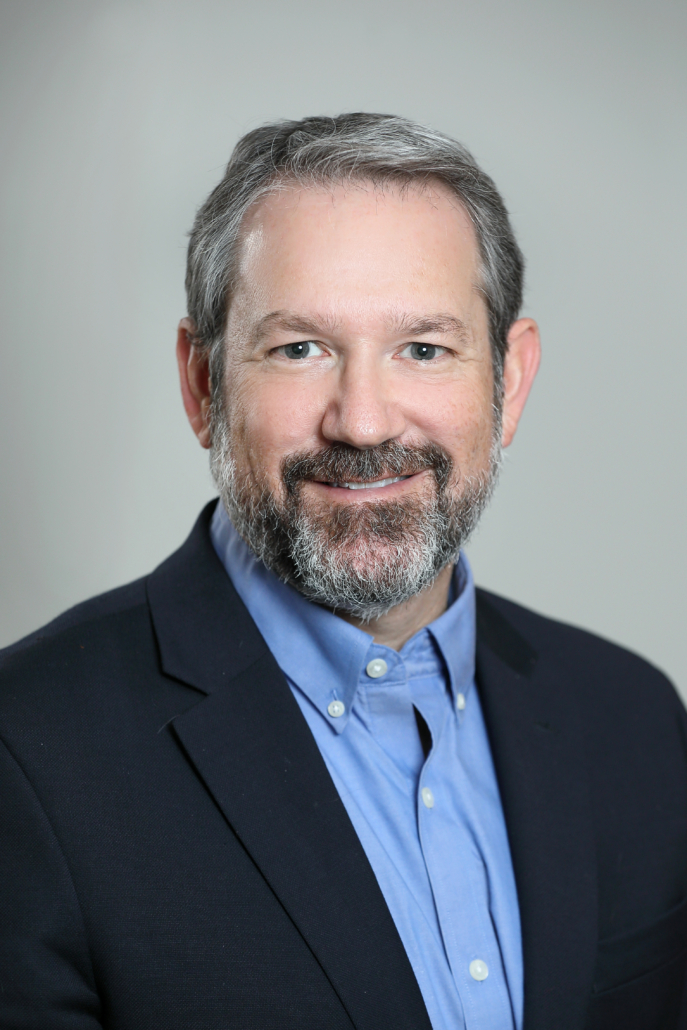
Joshua Gordon is the Director of the National Institute of Mental Health (NIMH)
#27: Joshua Gordon – Neuromodulation from genes to cells to circuits to behavior
One of five adults in the United States suffers from a diagnosable mental illness at any one point in time. The burden of psychiatric diseases is massive on both personal and economic levels. It was a great honor to talk to Dr. Joshua Gordon, director of the National Institute of Mental Health. We covered finding a balance between i) running this entity with a budget of 1.6 billion USD and 3000 grants at any one time and ii) pursuing his own research using optogenetic methods to dynamically modulate circuits in the brain. We talked about key strategies of the NIMH, such as the Research Domain Criteria Framework (RDoC) and it’s evolution over the last decade up to the present day, the importance to balance between predictive and normativ/generative models, the importance of studying dynamics and to map symptoms to circuits in the brain. There are few if not any critically useful biomarkers we have in the field of psychiatry – we discussed why that is the case. Also, we dived into basic science vs. serendipitous discoveries and the power of either one (or the combination of the two) to move our field forward. Covering Dr. Gordon’s own scientific agenda, we discussed the work of his lab on the dynamics between the prefrontal cortex and hippocampus, as well as the significance of this work for models of anxiety and schizophrenia.
Joshua Gordon 00:00With tremendous specificity and tremendous degree of control, we can modulate the activity of specific brain circuits and have very, very specific and detailed control over behavior by doing that. And that allows us to, better than ever before, map these behavioral functions we've been talking about onto neural circuits. That is tremendous. And so, yes, we may still not know where depression is, but we really do know where anhedonia is. We really do know where reward-related function is. We really do know where avoidance is. Welcome to Stimulating Brains. Isn't it interesting that in psychiatry, we have nearly no single biomarker that's actually useful in clinical practice?
Andreas Horn 01:09It's my greatest honor to share this conversation I had with Dr. Joshua Gordon, who is the director of the NIMH, the National Institute of Mental Health in the U.S. So he directs and oversees a lot of the funding mechanisms that go into mental health research in the United States. And we talk about exactly these bigger decisions that need to happen that the NIMH is shaping. For example, the Research Domain Criteria concept, the RDoC concept, that was initiated 10 years ago by his predecessor, Tom Insell, and has now been reworded into what he called RDoC 2.0. So going a bit more into details on how we want to study the brain in mental health and disease. We talk about the importance of dynamics when modeling. The brain and understanding the brain in health. And also when using neuromodulation to retune these circuits in disease models of the brain. 02:05A second thing that's dear to Dr. Gordon is the differentiation between predictive and normative or mechanistic models that are sometimes useful in different situations. So going to the pros and cons and what is wanted in a short term and long term in research of mental health. Finally, we also go into the concepts between basic science and serendipity. Following the 10th deep brain stimulation Think Tank in Orlando, where this was discussed based on a great review paper by Marwan Hares, who was also on this show in episode number three. As Marwan and his colleagues could show, quite a few discoveries in neuromodulation have relied on serendipity. And others have relied on animal models. So I wanted to hear what Joshua Gordon thinks about that and whether we could capitalize a bit more on serendipity and the natural variations. That occur such as stroke or tumors in the brain or also the variations in interventions such as in deep brain stimulation. 03:03We also talk about Dr. Gordon's own research, which is a very fascinating story that maps from genetics over circuits over dynamics and then back to phenotypes. But you could show that specific connections and dynamics between the prefrontal cortex and the hippocampus can be important and can also be differentially modulated, which play a role in models for anxiety and schizophrenia. So I'm going to go into the main topic of this talk. So I hope you enjoy the conversation I had with Dr. Gordon. Thanks for tuning in. Thank you so much, Dr. Gordon, for taking part in this. I will have more formally introduced you by now so we can directly start. But I often start with an icebreaker question just to get to know you for the listeners. Any hobbies or things you do in your free time that you might want to share?
Joshua Gordon I really enjoy bicycling. I like to go on long distance bicycle trips. 04:02I've biked across the country and it helps me. It gives me time to think and really enjoy that. That's great.
Andreas Horn What's the furthest you've gone?
Joshua Gordon The furthest I've gone is from San Francisco, California to Rehoboth Beach, Delaware is about 4,000 miles. That's amazing. Super cool.
Andreas Horn Okay. So going into this. Are there key turning points in your career or mentors that stuck out that brought you where you are now? Anything that might be interesting? Yeah, a number of them. I have to start really with my thesis advisor, Mike Stryker, who was just a fantastic mentor and continues to be a fantastic mentor.
Joshua Gordon But, you know, early on during the graduate work itself, Mike had that wonderful combination of letting you be and being hands off, but being there when you needed to talk something over or work something out or have him do something to help you out. And I learned a lot just from that experience about how to mentor others. 05:26One of the things that he said to me that affected me most of all, and it really affects my mentoring style as well, because it helps me realize, you know, my own self-interest. He said, no matter how good a mentor is, no matter how much they care about your career, they care more about their own.
Andreas Horn Okay. Makes sense. Yeah, of course it does.
Joshua Gordon We, of course, are self-interested.
Andreas Horn So even the most generative or generous mentor, you know, is doing it partly because that's a part of their career that they value, that they want to express. 06:03But that realization helps in my own relationships with my mentees, right?
Joshua Gordon Because I recognize that what I think is best for them isn't necessarily what's best for them. I have to put myself in their shoes and take myself out of that moment where I'm thinking about my own career. And think really about what works for them. And so that's helped me, especially when a trainee has said, you know, Josh, I don't think I'm cut out for being a scientist, you know, in an academician and getting grants and that and the like. And it helps me try to figure out what's leading them to ask that question, to say that, to make that statement. And to help them through that discovery process to figure out whether it is or it isn't. And sometimes they've chosen to leave science. Sometimes they've chosen to stay in science. But it's been really helpful. 07:00That's great. That's great advice. And I think your PhD, MD-PhD, you did at UCSF in psychiatry and neuroscience. And then you also then went to Columbia to do residency in psychiatry, where you then also became faculty in 2004. And I think then you did start your own lab.
Andreas Horn And when listening to your talk at OptoDBS conference recently in Geneva, I was intrigued very much at your current state, which is both the science part, but also, of course, as NIMH director, you have to do a lot of administrative work and also think about the bigger picture above and beyond your own lab. So maybe before we can dive into your own science a bit, can we cover a bit on the NIMH? So how much do you devote for either or? Like how much time is, are you a real scientist and how much do you run the NIMH these days?
Joshua Gordon 08:01Well, I like to think I'm always a scientist, but.
Andreas Horn Yeah, I didn't mean it that way.
Joshua Gordon But that part of my life that is devoted to thinking about science more broadly and to running the National Institute of Mental Health, which is a, you know, thousand plus person organization with a $2 billion budget.
Andreas Horn Yeah, that eats up most of my time.
Joshua Gordon So I grab those delightful bits of my own science in between other responsibilities. And I have a wonderful staff scientist, Dave Kupferschmidt, who runs the lab day to day and mentors the students and the postdocs day to day. And I come in every now and then for the bigger picture. I go to lab meetings and I have my journal club with the trainees.
Andreas Horn And. And sit down when there's a thorny issue or some planning to be done, but mostly it's Dave day to day. So probably 80, 90% of my work is being NIMH director. 09:01The reason why I say I like to think it's science is because, you know, the parts of that job that I love most are the parts we're really trying to figure out where does the field need to go? How do we express those priorities?
Joshua Gordon And those are essentially scientific questions, even though if the role is administering science.
Andreas Horn Absolutely. Absolutely. Absolutely. Absolutely. Absolutely. Absolutely. Absolutely. Absolutely. Absolutely. Absolutely. So how did you get into maybe to frame it differently? How does one become director of the NIMH?
Joshua Gordon I.
Andreas Horn Yeah.
Joshua Gordon I still don't know the answer to that question. I wouldn't know how to do it if I set out to do it. And I think that's probably true. One doesn't become the director of one of the institutes of health, one of the U.S. National Institutes of Health, because one wants to become one. Right. It's more like. You develop as a scientist. and then for me you know you recognize that you have interests that go beyond what you can do in an individual lab and for me that really started uh in in meetings and conversations and in through 10:05through interactions with trainees and through helping run a training program where i recognized that i had a broader scientific interests than just my own work and that i really enjoyed thinking about these broader scientific interests but for me the the way that i actually became an imh director goes back to that mentor that you asked me about that changed my life and it goes back to mike striker we were um at the society for neuroscience conference in 2015 i was back when we had society for neuroscience conferences hopefully we'll have them again this this fall um and he came up to me and said josh um you know the the position of nmh director is open and i think you'd be really good at it you know and and he had his mentor hat on he he he was he was saying i think you'd be really good at 11:00it because i know that you like broad areas of science and i know you really care about service which is also something that's true about me and so that got me thinking about it and i applied and i got the job but but it's that quality i think of really being interested in broad swaths of areas that number one makes one sort of attractive to the people who are looking to fill those types of positions um and number two it it gives you what you need to do need to be able to um to be able to do this job sounds ah yeah makes a lot of sense so so so you did mention and and that was
Andreas Horn exactly the next question so as an imh director you get of course to direct the structure and the
Joshua Gordon overall mission of where science on mental health in the u.s. areas of areas of areas of areas of will be heading or is heading. One, I think key example could be to mention your predecessor, Tom Insell, who famously introduced the RDoC concept, which might have revolutionized the field of psychiatry, to some degree, and I think there was a 12:02roughly 10 years ago. And you also just had a paper out where your co author on, you know, the update after 10 years of looking back on the seven pillars of the RDoC. Could you could you maybe
Andreas Horn briefly mentioned what RDoC is, in simple terms for us? Sure. RDoC is an attempt, first of all, well, first, why RDoC? And then what RDoC? RDoC came about because of frustration in
Joshua Gordon trying to do neurobiologic studies or based on diagnoses. And the idea is that maybe diagnoses aren't actually representing fundamental things that are going wrong in the brain. And in order to represent fundamental things that are going wrong in the brain, we need to get closer to the brain than diagnosis. And one step closer from a diagnosis, which is a collection of many different behavioral traits, is breaking down those different behavioral traits into component parts. And so that was 13:00the initial idea, let's, let's not study depression, but let's study emotion regulation, and cognitive skills that gets disrupted in depression, and this and that and the other, and link those to brain function. So that was that was RDoC 1.0. And what we're trying to do is, we're trying to do now after 10 years of actually relative success, where we have learned a lot about the biology of these fundamentally challenging and complex behavioral traits that relate to mental illness. But we want to get deeper, we want to be more fundamental. Let's not just define these traits by what we think they ought to be. But let's actually computationally define these traits. Let's figure out mathematically, actually, how do we divide up behavior into its component
Andreas Horn parts and map that onto the brain? And then we're going to
Joshua Gordon map that onto the brain structures. And so that's what we're trying to do. We're trying to introduce now, more theory and computation into the process of RDoC, so that we can make even more progress. 14:00That's, that's fascinating. So so so I think to rephrase the big problem, and I think we see a similar development actually in cognitive neuroscience as well, where I think people like Yori Burjaki, also Paul Cisek would have said that, you know, some of the older terms like cognition, decision making, or, you know, memory come come, some of them come even from the ancient Greeks, right, that were defined widely, separately from the brain. Now, people have now studied the brain and want to link those terms onto the brain.
Andreas Horn And obviously, it doesn't fit, right? Because it's no surprise
Joshua Gordon because they were developed independently from each other. And I think in psychiatry, as far as I understand, the issue was similar that of course, we have clinical terms like depression, schizophrenia, so that
Andreas Horn makes sense practically in the clinical routine, but not
Joshua Gordon necessarily mean one thing in the brain or could be a mixture of underlying latent variables or states.
Andreas Horn Exactly. That's that you summed it up quite nicely. And if we
Joshua Gordon 15:04think about this process about trying to break down behavior
Andreas Horn into its component parts, it is not a new process either, right?
Joshua Gordon I mean, I think, take memory, for example, which you mentioned, right, a long time ago, we started dividing memory into declarative memory and non declarative memory. And then lots of other subsections of those two rough areas of memory. And, and, and we've made a lot of headway into what parts of the brain are important for these different kinds of memory. And, and we continue to make headway, we'd like to try to do that across the broad spectrum of functions that are disrupted and mental illness. And we think we might be able to do that better. By studying those functions independently. And, and in terms of how they map then on to mental illness. Sounds great. And I think you had in these like, roughly 10 years, I heard that in one of your talks, no, in the paper 17 16:00RDoC centric grant calls, and I think 1000 papers that came out of this. And you mentioned there has been some, you know,
Andreas Horn progress and success in this. So is there a good way? So you're saying now RDoC 2.0 is essentially in the works? Or what what have we learned? Is it even possible to summarize that? And you meant?
Joshua Gordon Right. So I think we've learned a few things. And some of them have really, you know, validated the RDoC concept, then some others have rendered challenging. One thing that we learned is that if you do take a bunch of people with mental illnesses, different mental illnesses, but common symptoms, and then you try to use neurobiology to carve them up into different different groups of people, you learn that the mental illnesses themselves describe less of the variants than the way that you 17:00might carve them up a pre with with the neurobiological facts, right. And we've done that now with a couple of different types of patients. So we've done it with individuals with psychosis, regardless of the cause. And we've done it with individuals with various depressive symptoms, regardless of the cause. And so that's a fascinating demonstration that diagnoses while incredibly useful from a clinical perspective, and also reasonably useful in terms of predicting what's going to help a person, they aren't necessarily useful in terms of dividing people up, according to who might have similar neurobiological underpinnings to what's going on. So that's one thing we've learned. Another thing we've learned is, and this is, you know, an incomplete story so far, but is that if you tackle if you try to tackle one of these domains of RDoC, rather than trying to tackle all of depression, you can make headway in terms of novel targets that will be that could be helpful for humans. And the
Andreas Horn 18:03reason why I throw that could is we don't yet have an FDA approved
Joshua Gordon drug that does this. But we now have a few examples, the most prominent of which is anhedonia, which is the lack of ability to enjoy things that we see in depression. And we've seen that in the drug industry, where you can pinpoint a neurobiologic mechanism, and, and show that a drug can be targeted to that neurobiologic mechanism, and then change that quality anhedonia. Right. And the idea is that that's going to open up more ways of testing novel treatments. And in fact, here, right now, we know that there are drug companies that have taken this neurobiologic mechanism underlying anhedonia and are currently in trials with those medications to see if they will help people with depression get better in maybe in a better way, maybe in a different way, maybe faster than traditional antidepressants, but certainly 19:01with new neurobiologic mechanisms. So that's really promising. I would say we've learned that we can use this mechanism to approach to identify potential targets and we need maybe a few more years before the drugs that hit those targets, and it's not only drugs, we can use other mechanisms, but the drugs that hit those targets might be actually useful in the clinic. Of course, you could even use the same, and you probably are using that in the clinical trials, right, to not study the effect
Andreas Horn on depression, but study the effect on anhedonia specifically. Yeah, Andreas, that's a great point. You can use the measurement of anhedonia and ask, does this drug change people's anhedonia?
Joshua Gordon But of course, for a patient, right, knowing that their anhedonia gets better is not necessarily going to change their life for the better, because maybe, yes, if they do go to a movie, they might enjoy it more, but they're still not motivated enough to go out to the movies. 20:01So you have to do not just test that one narrow biological function, that one narrow behavioral function. You also have to ask,
Andreas Horn in some way, shape, or form with those patients, whether their lives are better, right? So maybe,
Joshua Gordon right, so it's not just about measuring that one function. You also need to measure some degree to which the patients, what we call a patient-centered outcome, something that will actually improve their lives. Sounds great. So I'm sure you have similar agendas, so beyond maybe developing RDAG further, to put your spin into the works of the NIMH, and in your talk, you emphasized, or in your talks, you do a neural circuit approach to mental
Andreas Horn illnesses. And I also remember that you find it really interesting to study, or important to study dynamics in the brain. Yes. Yeah. Yeah, those are two important areas that we've definitely
Joshua Gordon 21:02been expanding over the last several years at NIMH. And they're related to each other,
Andreas Horn right? Because it's dynamics. And by dynamics, what we mean is time-varying
Joshua Gordon activity. And so, you know, I think that's a really good point. And I think that's a really
Andreas Horn good point. It's not just about activity, right? It's the dynamics within a neural circuit that,
Joshua Gordon to me, determine the function of that circuit or carry out the function of that circuit. So in terms of neural circuits, you know, as you well know, Andreas, and many of your listeners will know, there's really been a revolution in basic neuroscience over the last decade. And I was privileged to be a beneficiary of this technical revolution and to play a small role in utilizing those techniques to advance neuroscience. But the revolution is that we can now, with tremendous specificity and tremendous degree of control, we can modulate the activity of specific brain circuits and have very, very specific and detailed control over behavior by 22:06doing that. And that allows us to, better than ever before, map these behavioral functions we've been talking about. And that's a really good point. And I think that's a really good point. And I think that's a really good point. And I think that's a really good point. And I think that's a really good point. And I think that's a really good point. And I think that's a really good point. about onto neural circuits. That is tremendous. And so, yes, we may still not know where depression is, but we really do know where anhedonia is. We really do know where reward-related function is. We really do know where avoidance is. We know where all these different things are. And it's more than just where. We're beginning to understand the individual neural elements, the neurons, the astrocytes, the projections from here to there, the different interneuronal subtypes that are crucial for these behaviors in those brain regions. And we know how to increase or decrease the behaviors because of it. And so, that gives us tremendous potential. And now we can say we can cure anxiety in a mouse. 23:00Still find a mouse, yeah.
Andreas Horn And so, that's what we need to focus on. So, that's happening by itself, right?
Joshua Gordon There's nothing I need to do as an image director to push that. We need to push that revolution forward. But what we do need to do at NIMH is make sure that we're making strides to take what we know how to do in a mouse and move that into human beings. And so, we've been focused on trying to understand what will it take to get the scientific community to be able to translate findings from neural circuit work in mice into humans, whether that means technically translating it by developing the tools we need to get the same level of specificity and control. And so, that's what we need to do. And so, that's what we need to do. In other words, do a better job of targeting the targets that we know already how to manipulate. 24:00So, both of those avenues are avenues that we're interested in exploring at NIMH. Sounds great. So, understand it in the mouse as precisely as we can and then find sometimes creative ways of replicating it. Right. And then replicating the same in the human. Right. Another thing that I heard only by hearsay that you have an opinion on is that, and I think that's a very fascinating question in general, there are predictive models and there are mechanistic
Andreas Horn models, right? Predictive models can potentially build on something that's spurious, just correlates,
Joshua Gordon but it's helpful. It does, you know, robustly predict. Sometimes people, like just the biomarker that we don't know how to do, but it's helpful. And I think that's a very fascinating question. Right. Right. Right. And I think that's a very fascinating question. I don't even understand what the biomarker is. We see that. And then, you know, always,
Andreas Horn if we see that, this happens, right? But we don't understand things. Now, some people say that these
Joshua Gordon predictive models are often even better at predicting because they can take shortcuts here and there,
Andreas Horn right? While then the mechanistic models, they have to be accurate. They really, you know,
Joshua Gordon 25:02we understand way more what happens, but potentially since they have more degrees of freedom, they might maybe not predict as much. And of course,
Andreas Horn the optimal model would be both, right? To be perfectly predictive, perfectly mechanistic, but sometimes you don't get both. So do you have thoughts on that? Which one is more helpful?
Joshua Gordon Yeah. So now you move from, you know, from neural circuits into my other, into another area of priority for me, which is computation is the one we were talking about that with regard to how we can use it to improve our doc. And now you're, you're pointing out that, you know, there's these different kinds of computational models. And certainly one dichotomy that you could describe is this. So I think the one that I would say is predictive versus, you know, theoretical or mechanistic. I think normative is a model that is a name that the modelers use for this model, right? So we have normative models, mechanistic models. And then on the other hand, the predictive ones from, from my perspective, they're both incredibly important for psychiatry. One is more short-term
Andreas Horn 26:04and one is more long-term, right? So in the short term, we can imagine, in fact, we're hard at work
Joshua Gordon trying to support and translate these predictive models. And so I think that's a good way to do it. So I think that's a good way to do it. And so I think that's a good way to do it. And so I think that's a good way to do it.
Andreas Horn models into the clinic as quickly as possible, right? Whether it be the ability to predict when
Joshua Gordon someone is likely to die by suicide based upon their electronic health records and demographics, which we can do fairly well right now, not, not individual level predictions, but group level predictions. So that's, that's an example where we don't have to know the mechanism. We just have to find the right thing so that we can take the individuals most at risk and refer them to treatment, right? And that's, that's a good way to do it. And so I think that's a good way to do it. done in healthcare systems in the US right now. And we have to, our main research task is trying
Andreas Horn to understand whether it works, right? So that's, that's one kind of prediction model. Another kind
Joshua Gordon of predictive model that we think could impact clinical care in the in the near future, is our, 27:00like you said, biomarkers. So we can imagine, you know, getting a brain scan from an individual, maybe coupling that with some other measures, and then making a prediction about what they're doing. And then we can also think about whether they're likely to respond to psychotherapy or medication for their depression. And we don't care what the mechanism is, as long as it gives information to the clinician that a clinician can use to make a better decision to help the patient make a better decision about what's going to work for them. So those models are, we don't have to know anything about mechanism. But if we want to take those models, then, and actually design a better drug for depression, or design a better psychotherapy for depression based upon the underlying neurobiology, those models are not likely to be very helpful, as you said, because they don't, they don't require the information that tells us be mechanistically relevant. So that's where you need the mechanistic stuff. But that's longer term, we need to understand 28:00the neural circuits of the brain that regulate anhedonia, that regulate sleep, that regulate appetite, and then figure out how to target those neural circuits, with the treatments. And that's a more challenging longer term phenomenon. But if we want to do better than our current treatments, yes, we might get a little bit better by figuring out who gets which one. But ultimately, we want to treat the people who don't respond to anything right now. Or if we want to get things that work faster, or that work with fewer side effects, we need that mechanistic understanding. So I see roles for both the predictive and mechanistic or normative models, depending upon what you're trying to do. And then as you say, right, what you really like to do is have models that use normative data to make predictions. And we think that that's the holy grail in the end, but that's maybe also a little longer time.
Andreas Horn Makes sense. Makes a lot of sense. So at the we just had the 10th DBS think tank in Orlando, which
Joshua Gordon 29:03was is the maybe most important small conference for the deep brain stimulation field, and it was three days ago. And there a discussion arose on serendipity. In clinical care versus basic science in neuromodulation. And the idea came from a recent paper by Marwan Hariz, who's a surgeon in, in Umeå now in Sweden, but was in London before, which reviewed the literature just looking back at and showed surprisingly how many examples that we now have in neuromodulation were actually based on, you know, serendipity in humans, so not so much in like basic science. So one example is the ! James Parkinson even had six patients, one of them had a stroke and the tremor stopped, right. And that led to Boosie case and Clemmer to carry out resections of motor and premotor cortices. And then I think, you know, other other surgeons refined it. And so a lot of things he came or they came to that conclusion, 30:02there's a lot of serendipity going on, we have case reports that can tell us a lot. But we might and that might even be what drives the few quite a bit. But we don't have a lot of evidence that we can use to prove that. So I think that's a really good point. So I think that's a really good point. And I think that's a really good point. And to you could say that at least in neuromodulation, surprisingly little comes from currently from basic science, not saying that that's not useful,
Andreas Horn definitely useful exactly for the reasons you mentioned with the basic understanding in the model and so on. But what's your take on that?
Joshua Gordon Like, should we do that more or more systematically to, you know, variations in clinical care, you know, see who gets better,
Andreas Horn who doesn't get better and then use that to build models or are we doing that already? What's your take on that?
Joshua Gordon 31:03Gosh, you know, I think one way to answer this question is to talk about the discovery of
Andreas Horn penicillin. Everyone says, Oh, penicillin was an accident, right?
Joshua Gordon Some bread mold got on a plate with bacteria, the bacteria didn't grow. And we discovered penicillin and it was all serendipity. Well, who the hell invented the auger that the thing sat in or the process, the process of growing bacteria on plates or who had the wherewithal to say, Oh, what's going on there. And then have no enough about experimental design to replicate the experiment and then to figure out the biochemistry because it was biochemistry that purified penicillin from the bread mold. So even for things that we think of as exquisitely serendipitous, there is tremendous basic science behind it. These guys who stimulate the brain wouldn't know that you could stimulate the 32:04brain unless we did basic science that said, Oh, the brain is an electrical organ.
Andreas Horn Oh, if I stick an electrode in here, something happens. Oh, well, what happens?
Joshua Gordon Well, if I stick it here, it's something else, all this basic science that backed it up. So first things first, you have to recognize it for every serendipitous discovery. There's a whole lot of basic science behind it.
Andreas Horn The second thing I'd say is serendipity is a fantastic, fantastic way to exploit what happens and learn from it and, and develop novel approaches. It's very, very creative, but from the perspective of someone who's trying to plan fully think, how do we make the next discovery happen? I can't just say, we'll try everything. Yeah. Yeah.
Joshua Gordon So you're a hundred percent right. And this, so to be clear, this is not a discussion of either or, not at all. So, so I, I'm a hundred percent in agreement. 33:04And I think everybody at that conference was as well. It's more like, as you say, we can't plan for it, but maybe could we, right. If, if there was a database, for example, that, or, or better ways of databasing or, because I think one thing Marwan Hari has also mentioned is that serendipity has to fall on the prepared mind, right. There's sometimes serendipitous things that, that are ignored and nothing happens. But if we had a better,
Andreas Horn a way of, yeah, it's just a thought. Yeah.
Joshua Gordon So I think there's two, two there's first of all, yes, you're right. And if you're not set up to harness what happens naturally, you're going to lose things. And to a certain extent, the move to big data, the move to EHR based approaches, et cetera, could facilitate this kind of serendipitous serendipitous finding a lot of the early work, not much of which panned out, but a little bit did, to try to figure out better ways to approach. COVID-19 was based on the, 34:01on aggregating data from lots and lots of people and discovering that, wait a second, people who happen to be on fluoxetine seem to be doing a little bit better. I don't think that actually panned out when you then test fluoxetine, but if you have systems like that, it allows you to at least discover the serendipitous findings in a, in a comprehensive way. And so imagining doing that in lots of different approaches is, is a good idea. I would say that from a say neuroanatomical perspective, we've done that,
Andreas Horn right?
Joshua Gordon There's people, you know,
Andreas Horn who are the folks from Iowa?
Joshua Gordon I always lose those Damasios,
Andreas Horn right?
Joshua Gordon The Damasios were collecting in a very, very uniform way, all the different, you know, stroke patients, varying lesions, this and that and the other. And they were purposefully looking for signs for where emotional disruption might be. And they did find a little something in the left dorsolateral prefrontal cortex. And,
Andreas Horn and you could argue that maybe that's why TMS works.
Joshua Gordon 35:02I'm not so convinced, but nonetheless, you know, so there have been attempts a little bit to do this, to mine these accidents in a, in a, in a rigorous way that, that have come to some conclusions. I don't know that we,
Andreas Horn I don't know exactly which areas we need that in right now,
Joshua Gordon but it's a good point. Great. That, that, that sounds good. So, so, so I think before, before we go into your science, last, last question related to all what we talked about is this. I think you mentioned that in one of your talks, there's not a single valid biomarker in psychiatry at the moment. You said that maybe,
Andreas Horn maybe that that was a talk from 2017. So maybe by now we have one, but there's not many. Why is that? Yeah. Yeah.
Joshua Gordon It's a great question.
Andreas Horn The why is a great question.
Joshua Gordon Let me just amend it. I, I, I was saying that in back in 2017 and, and some people corrected me to a certain degree. We can argue now that the first in practice biomarker exists in psychiatry 36:05and it's genotyping for individuals for, for, for infants and toddlers with autism in the sense that it's not guiding treatment yet, which is an important, but not the only important reason for biomarkers, but it is explaining in a subset of individuals with autism, maybe 20%, maybe 25%,
Andreas Horn why that child has autism.
Joshua Gordon If they happen to have one of these large effect size mutations, but still not all that clinically useful just yet, except in terms of understanding. So let's talk about why I think there's a few reasons why number one, the brain is a really hard organ to get at. And a lot of the attempts to do biomarkers had been not really brain based. And when you're talking about diseases of the brain, right. And I don't care what you're talking about in psychiatry, it's manifest in the brain.
Andreas Horn Yes.
Joshua Gordon It could be more psychological from a conceptual perspective than, 37:04than purely biological or genetic, but it's instantiated in the brain. If you're not doing your biomarker in the brain or in some function of the brain, like behavior, you're going to miss the mark. The second is we've only had really diagnoses to guide us. And as we were just talking about, the diagnoses aren't that reflective of what's going on in the brain and, and they're heterogeneous and overlapping. And so what we end up with is trying to map a biomarker onto something that isn't really purely a biological concept. And so the biomarkers are going to be muddier. And then I think also the culture of psychiatry is not one where, you know, talking about serendipity where we tend to order tests, you know, I think we have to work really hard to get psychiatrists to do the right thing and order lab tests and a brain scan when their patient shows up with a first episode of psychosis, even though it's clear that you have to do that because there are, there are treatable, 38:00you know, reasons why, but if you're not getting those basic studies done, you're, it's going to be hard pressed to discover biomarkers. And so I think it, the combination of all those three things make it really difficult. The culture of psychiatry, which isn't necessarily test-based the fact that the brain is a complex organ. And the fact that many of our attempts to map biomarkers have not been even focused on the brain. That would be my take. Makes a lot of sense. I think one thing that, that related really surprised me when,
Andreas Horn when you showed it in your talk was the degree of overlap. You mentioned that, right?
Joshua Gordon That a lot of patients seem to have. So, so first of all, I was also surprised that you showed roughly adults in the U S 20%. So one in five has one diagnosable psychiatric disease at any given time. It's a prevalence. And then, then also I think a lot have multiple things,
Andreas Horn right?
Joshua Gordon So, so I think you took from that and that pivots to your science also that, that might be more, more, I think you said it, that, 39:00that it might be more likely that one thing is broken or, or, you know, not working properly in the brain that produces different manifestations rather than if there's so much overlap rather than having different things functioning at the same time.
Andreas Horn Yeah.
Joshua Gordon And, and I think, I think you, you did study dynamics and networks using optogenetics mainly, but, or related techniques in mice. And, and, and, and, and, and, and, and, and, and, and, and, and, and, and, and, and, and, and, and, and, and, and, and, and, and, and, and, and, and, and, and, and, and, and, and, and, and, and, and, and, and, and, and, Q11 microdeletion syndrome, which in humans shows a high risk for developing schizophrenia. And you looked at directionality between the connectivity from prefrontal cortex to hippocampus using lags between spikes of individual neurons and the theta rhythm in the hippocampus.
Andreas Horn Is that correct so far? Yeah, more or less.
Joshua Gordon I would just make one slight correction here, which is, of course, that the mice don't have
Andreas Horn 40:0222 Q11 deletion syndrome, right?
Joshua Gordon They have a microdeletion, which maps onto the human 22 Q on chromosome 16.
Andreas Horn But otherwise, yeah, you got it perfectly right.
Joshua Gordon That makes a lot of sense.
Andreas Horn Yes.
Joshua Gordon And I remember the 16.
Andreas Horn Yeah, you're right. Okay. So you mentioned dynamics matter in this context, and I agree, but could you illustrate why? Yeah.
Joshua Gordon So, oh, there's a lot of different ways. So I'll start with one. If you don't like it, we'll move on to another one.
Andreas Horn So what we know about... What we know about the brain is that it produces rhythms, right?
Joshua Gordon So neural activity isn't constant, and it's also not purely random. So the neural activity turns on and off, and it turns on and off, or not quite turns off. It goes up and down. That's a better way of saying it. It goes up and down with different rhythms in different parts of the brain at different times. 41:00So, for example, in the hippocampus, which is an important center, for working memory, but it's also important for... Sorry, not for... For memory in general, but it's also important for emotion. It's also important for spatial navigation. Anyway, the hippocampus is an important part of the brain. It has activity patterns that go up and down and up and down and up and down eight times per second in a rodent, and something close to that in human beings as well. And we call that rhythm the theta rhythm. With nested within the theta rhythm are faster and slower... Slower rhythms. So every time the theta rhythm goes up and down at particular phases of that cycle, there are faster rhythms, the gamma oscillation. And then when the theta rhythm isn't around, there's a slower rhythm called the delta rhythm. Whatever we call these things, the important point is that there are these rhythms in brain activity. And it turns out that these rhythms, they're propagated from one brain region to another 42:03when... Those brain regions are talking to each other.
Andreas Horn So it sort of makes sense, right?
Joshua Gordon If one region is saying, you know, activate, activate, activate, is doing it eight times a second, and it's talking to another downstream region with like the prefrontal cortex, these are the two brain regions we've studied most, then the prefrontal cortex, when it's listening, is going to hear that activate, activate, activate eight times per second, and it's going to be activated eight times per second. And so you will see a dynamical synchrony between those two structures. Now, we know this happens, and we've shown that the connection between those two structures is really important for one particular cognitive function in a rodent's spatial working memory. And what a lot of our work is focused on is, okay, we know that the synchrony in this eight hertz time zone happens.
Andreas Horn Is it the thing that is actually mediating the cooperation in those two regions? 43:01Is the dynamics important, or is it just... Is it the same thing that happens in the same region?
Joshua Gordon And so we've designed lots of experiments, as have others, to try to figure that out. And it's a really thorny thing to figure out. But in shorter, what we've done is we can show that if you eliminate that synchrony in a very rough and gross way, you absolutely disrupt connectivity. But then also, if you mimic that synchrony, and we're trying to do it in finer and finer, finer ways, so that we're really just mimicking the synchrony and not doing other things to these two brain regions, we're not quite there yet. But if you mimic the synchrony, you also enhance that information flow. And so I would say the proponent's evidence would suggest that that particular rhythm actually is part and parcel... It's a mechanism by which information is transferred between these two brain regions. And there's other evidence from other brain regions in other experiments, in rodents, 44:02in humans, et cetera, that that might be happening. And what that does for you, especially in terms of mental illness, is it opens up a new realm of trying to understand our patients. And that is that if it's not just where in the brain that matters, and it's not just the connections between the brain, but the timing, the dynamics of the activity patterns within those connections, then you know that you have to look for that.
Andreas Horn And maybe the reason why we haven't found what goes wrong in individuals schizophrenic in their
Joshua Gordon brains is because you don't know what's going on in their brains.
Andreas Horn Yeah, the brain regions are intact and the connections are intact, but it's the dynamics
Joshua Gordon of their communication that is disrupted, in which case you want to try to use a dynamical approach to restoring it. And certainly we're not the only ones thinking this way, and schizophrenia is not the only disease. And of course, you mentioned Parkinson's disease and DBS, and a lot of the work in Parkinson's disease over time has shown that it's the dynamics of activity within the circuits that 45:01control movement that is really crucial. And that's the kind of thing we're talking about here. Super. And the dynamical part, so I think we can probably just cover the gist without any graphics here,
Andreas Horn but is the eight hertz.
Joshua Gordon And I think you did, especially the closed loop experiment, right?
Andreas Horn So modulating dynamically to some degree means closed or adaptive stimulation, right?
Joshua Gordon You have to send somewhere, you have to intermodulate somewhere. Or in the same region. And you were able, if I understood correctly, to modulate the behavior in both ways by tuning.
Andreas Horn Yeah, so those data are not yet fully established, but that's the idea.
Joshua Gordon The idea is if you can. So what we're doing is we're taking the rhythm from the hippocampus and we're trying to help the prefrontal cortex listen to that rhythm better. 46:02Or. And we're trying to repair the ability of the prefrontal cortex to listen to that rhythm and not other rhythms, other rhythms we want to try to keep intact. And so we've developed this technique that others have pioneered called closed loop stimulation. We've changed a little bit so that we're reading activity and we're feeding that activity back into the system at a different point. But this closed loop stimulation is our hope. And it seems from our data that we can manipulate the dynamics of the system in two directions, up or down.
Andreas Horn Yeah.
Joshua Gordon And. And then the early behavior data would suggest that that actually modulates behavior in two different directions. And that would be a little bit stronger proof, I think, than just disrupting it or just enhancing it. The fact that you dynamically modulate it if we're successful in the end in showing that. And that would map from, I think, genes over cells, over networks and dynamics to the behavior. 47:00Right.
Andreas Horn Yeah. Yeah.
Joshua Gordon And I think that's that dynamical piece. That's the one that's, you know, that's that's the remaining empty piece. We know in our mice, again, we don't know in humans yet. We'd love to be able to move in that direction. And there's some data that's supported being happening in humans with the microdeletion. But that's that's for someone else to tell. But we know that in the mice, they have an anatomical deficit in this projection. And then we know that the as a result of that anatomical projection, or at least we were pretty sure this is a result of that anatomical connection that that the. Information isn't flowing and that the dynamics are disrupted. And now what we're trying to do is restore the dynamics and see if that makes up for the lack of anatomical connectivity. And if we can do that, that would be the a good target for treatment. Right. So because we imagine if this is all happening, human beings, you know, the anatomy is established early in life. We know that from the mouse. 48:00We know that from data in the human. The connections are established. Early in life. And so we don't think we can do much in a human being to restore connections that are disrupted early in development when they're adults, when they're when they're showing up as adults or even if it in the as teens or something like that. Right. We think we'd have to get it early, early, early, maybe even prenatally. And so what we want to be able to do is rescue a brain that's already got the problems in its anatomical connections. So we hope to be able to use dynamics to be able to rescue. Something that is anatomically disrupted and restore function. Cool. Very, very nice.
Andreas Horn How did you come up to study these two regions in the brain? It probably makes sense because of the two to Q11 syndrome. But or was it the established rhythm or what drove you into PFC and hippocampus?
Joshua Gordon And well, we talked about serendipity. I would say a little serendipity, but mostly theory. 49:00Right.
Andreas Horn Yeah.
Joshua Gordon working on a different mouse model that had a behavioral pattern that looked like high anxiety. It literally was avoidance of fear-invoking parts of the world. And we could measure that experimentally using some mazes and things like that. And there were a few papers out at the time that suggested that it was a connection, that the hippocampus and the prefrontal cortex might be involved in this. And from other work, we knew that those two structures worked together in a dynamical way, not in anxiety, but actually in working memory. And so we started studying those two structures in this anxiety model, and that turned out to be a quite fruitful avenue of experiments that my mentees had long since taken over and brought 50:06into their own labs. And around the same time that we were starting to look at the hippocampus, we knew that the hippocampus was a connection to the up the lab though i started up this collaboration with joseph gogos who had been studying the 22q 11 syndrome and had engineered a mouse model that mimicked aspects of it and they had demonstrated a working memory phenotype in these mice and said well i know from my reading that the hippocampus and the prefrontal cortex are important for working memory that's actually what it's more known for than for anxiety and here i am with this great experimental setup to record from these two brain regions that was the serendipitous part that like that this schizophrenia model suggested an anatomy that was familiar to what we had already been working on and i had been wanting to move into uh in into schizophrenia and into studying you know cognition relevant for 51:00schizophrenia so it was it was a matter of uh of ease to be able to adapt what we had done to study anxiety related behavior but to study working memory and in this mouse model so that's how we started and it was really you know based upon these two brain structures being sort of known to play a role in a function that these mice were deficient in and then serendipity again we actually found a phenotype right because it could have been that these mice had deficits in working memory for 18 other reasons and the hippocampal prefrontal system would be perfectly intact we thought we might see deficits in activity in the brain regions we thought maybe neural representations would be disrupted and it turns out they were in prefrontal cortex in very very subtle ways it took us years to find out but the thing that jumped out at us really from those very initial recordings wasn't the activity differences it was that the this dynamical connection that seemed to be disrupted very cool so so i want to be 52:01mindful of your time i have a few rapid fire questions to wrap up um okay to get to the end just very general questions like um one would be do you have any advice for young people entering the field of science because that's not rapid fire general questions then i'll try to give you a rapid fire answer advice for people entering the field i mean the first thing i say is you got to do what you love because if you're going into science it's hard work and a lot of it and um there are many times along the way where you have setbacks and frustrations and if you um are gonna stick with it enough to succeed and if you do stick with it you will it's it's hard work but it's it's uh it's it's a learning process um you gotta love it and so i would say do what you love that's the first piece of advice and then the second piece of advice that i give is learn more math than you think you need to know okay love it yeah that that certainly um i i could sign off of that as well and programming these days i 53:04think is awesome and then um the the next one is did you ever have like or what were true eureka moments in your career um where you you know maybe thought oh this was amazing or now i understood this or so um any of these or wins or successes yeah i mean i think one of them we were just talking about essentially is when we looked at that data from the 22q mice that from the 16p mice from the the mice that we were studying with joseph and and saw these deficits in connectivity i still remember the moment torfy cigarettes in the postdoc that i was working with who's now a faculty position at frankfurt when torfy showed me that data i was just blown away i'm like no way that's amazing and um that was definitely eureka moment you know another eureka moment was um uh this this grad student that i had 54:01tim spellman who is uh now in the faculty position university of connecticut um he uh he was studying optogenetically the same circuit and he was trying to break the circuit he was just trying to inhibit the hippocampal inputs of the prefrontal cortex and he had done so and and shown a big effect on behavior and we couldn't find anything wrong with the neurons in the prefrontal cortex we didn't see anything right away and this was not a rapid eureka moment but this was an aha moment that really changed the course of my career you know i i would i would i would i would i would i would i would i would i would i would i would i would i would i we were struggling to find anything and we ended up sitting down with a colleague dan salzman and his folks and they had been doing studies in neural coding in monkeys and they talked us through a way of um of of analyzing the data and when we did that we saw big effects on on the 55:00ability of the neurons to encode information and when we saw that i was you know okay that's what That also made me realize that I need to learn more math than I thought I did. So that was another year. Then failures, the opposite or waste of your time, you know, things that didn't work as planned. Oh, too many to count. Too many to count. Now, you know, one of the biggest was when I learned that I shouldn't be working in the lab anymore. I spent a long time early on the lab. We had another collaboration that was really fun, but never really amounted to a whole lot scientifically where we were trying to do some reward related behaviors. And I was just slogging away in the lab, slogging away in the lab, and it never went anywhere. And the lesson that I got from it was that, you know, I didn't have this was I was faculty ready. I had a lab of four or five people. And I was the principal doing these experiments. And I realized, you know, you need someone to be in charge who's got full time ability to run. 56:02And I was like, I'm not going to do that project. And yet, you want to stay engaged and involved in experiments, you can, but you need someone who's who's seen these projects through in order for me anyway, in order for them to work. That was one one failure. There are many others, but thinking of science or the whole field, even medicine, any missed opportunities, things we should be doing, but I'm not doing as a field. I mean, you get to direct, but but, you know, think anything you can come up with. Missed opportunities. I think all over medicine, especially in the United States, but elsewhere, we don't do what we know works. Or if we do it, we don't know, we don't do it often enough. So I think those are missed opportunities. That's more from a medicine perspective, from a science perspective, though, I think there's a lot more opportunities for us to work together, for us to not duplicate, and for us to coordinate and really thoroughly examine things. And I think a lot of the problems with rigor and reproducibility that you read about are really, really important. 57:00And I think a lot of the problems with rigor and reproducibility that you read about are really, really important. People try one off things too often. And so when they work, you publish it. When they don't work, you don't, or you publish negative results. And you don't get a comprehensive picture of a whole whole systems. And that's one of the things we try to do at the NIH in general, and I mean, in particular, is try to build systems that will where we'll get a more comprehensive view of what's going on. I think that's the inside. One thing that just came to mind that I always find so frustrating is really the first and last of the system to give credit.
Andreas Horn Because I mean, it makes sense, but you know, we all want collaborations, even the scientists wanted, but to, for example, especially two PIs going all in really without, you know, it's hard because of the stupid. Yeah, you know, that's, that's something that Joseph and I dealt with in our collaboration.
Joshua Gordon And I won't pretend that there weren't negotiations, but we worked it out over time, where basically, we would alternate last author and, and also make it clear every time we talked about our work.
Andreas Horn 58:00Yeah.
Joshua Gordon That was a collaboration where both of us were working hard on on on it. And so that worked out, I think, really quite nicely. And that's one way to do it. But I think the other way to do it is, you know, and this is a challenge. It's a real challenge for a lot of us, whether we're trying to evaluate a grant application or evaluate an application for tenure or for appointment or for promotion or for recruiting. But it's to not look at the author lists and say, oh. You know, this person did all the work and this person didn't do any of the work, but really try to evaluate and understand what the contributions of the different authors were. And I do like things like some of the journals now that require you to, to write at the end, what were the contributions of all the authors. And, you know, it proves us to be honest about that. Well, you know, we did figure three. Right.
Andreas Horn Yeah.
Joshua Gordon And then, and then for evaluation, when you're evaluating someone to recognize that, well, 59:00figure three is a significant contribution. It was a fair amount of work and it's important work. So, yeah. Sounds good.
Andreas Horn So last question. How will science in 10 years look like? What is about to change? Like, is there anything that will change on the macroscopic level, how we do science? Yeah.
Joshua Gordon I mean, I think, you know, I think we'll see more. We're already seeing it. We'll see more and more of these large scale collaborations. Right. The brain.
Andreas Horn What do they call it?
Joshua Gordon Not the brain observatory that, but the group that's, that's doing, you know, the same experiment in many, many labs and, and, and I know Enigma is that Enigma is kind of like that. Enigma is like that in neuroimaging, but there's one for neurophysiology as well. But anyway, we'll, we'll see more and more of this. We're seeing it in the brain initiative where we're especially around the, the, the cell Atlas. But, you know, it's, I think that's one way to answer. 01:00:00The rigor and reproducibility challenges that the field is being, I don't think it's as big as a promise that other people, but that the field is experiencing is larger and larger collaborations and really systematically looking at things. I think that's one way to go. The other thing, which you're already seeing is a, is a real transformation in transparency and data sharing. And, you know, us old fogies, we, we, some of us still have problems with sharing data, but the young people coming up are putting their data. They're sharing it as fast as they get it. They're sharing with everybody and they're not afraid of being scooped. They're not afraid of the competition. They are into the notion that we need to be sharing our data, sharing our resources, et cetera. And I think that's great for the field. We're going to see a lot more openness in the coming 10 years than we saw in the previous. Amazing.
Andreas Horn Great ending, but is there anything else you wanted to mention before we stop?
Joshua Gordon I would just say, thank you very much for having me on this, this panel. I'm really interested in what you've done.
Andreas Horn 01:01:00this podcast and it's been really fun hour.
Click any highlighted text passage to jump the Spotify player to that point. The transcript text is present directly in the page HTML for search engines and accessibility.