#7: Patricia Limousin – Subthalamic Nucleus Stimulation: From Parkinson’s Disease to Obsessive Compulsive Disorder
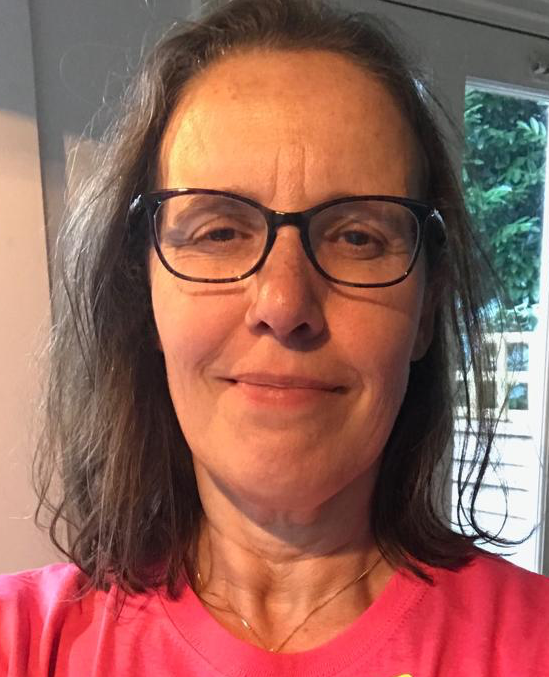
In this episode, we talk with Patricia Limousin about the early days of DBS in the modern era to the current day and about what the future may hold. Building up on episode #4 with Pierre Pollak, we find out how Patricia experienced programming the first bilateral STN-DBS patient, and what has changed over the last 30 years. Professor Limousin has worked at the UCL Institute of Neurology and the National Hospital for Neurology & Neurosurgery since 1997, where she is currently a Professor of Clinical Neurology and Consultant Neurologist. We follow her journey from a PhD with the topic of subthalamic nucleus DBS in Grenoble/Lyon to her move to London, where she helped build one of the leading DBS centers, worldwide.
Patricia Limousin 00:00We knew those patients inside out, for sure. We spent so much time with them. They were also part of the team to make this development because you also need the patients to be able to trust us to go into this pioneering surgery and spend so much time with us. It was like a miracle, you know. Left, right, and march. So, yes, I was so shocked and so amazed that I ran to get Pierre Pollak, who couldn't believe he was just a stimulation. He thought I'd given the patient medications. So it was quite an extraordinary moment, yes. Welcome to Stimulating Brains. Stimulating Brains Hello and welcome back, everybody, to Stimulating Brains, episode number 7.
Andreas Horn 01:13I'm really excited to talk with Professor Patricia Limousin today. Patricia is a consultant at the National Hospital for Neurology and Neurosurgery in London. She was the person to switch... on the first bilateral STN-DBS patient that we already heard about with Pierre Pollak in Grenoble. So she was really there when it all started. Patricia is one of the true giants of our field and has had tremendous impact on the history of DBS and continues to shape our field today. So I'm looking forward to an exciting episode with Patricia today. So Patricia, thank you so much for taking part in this. 02:00And to break the ice, first question would be, what do you do if you don't care for the patients and aren't involved in science? So what do you do in your free time? What do I do in my free time? Do you have free time at all? Well, I try to have some free time. I mean, I like outdoor activities. You know, I like... going to the park for walks. So I do horse riding as well. Oh, wow. When I have more time, like holidays, I like traveling. I mean, I've got two daughters. So for a long time that they occupied a lot of my time. And they are now at university. So I still enjoy spending time with them, but less time pressure. Makes sense. Do you have a horse? Like for real? No, I don't. I don't have mine. I have my own horse, but I go to a small stable where I pretty much 03:01have always the same one. So it nearly feels like I have one. Sounds good. Great. So let's dive into deep brain stimulation and neurology. So maybe weird question. What's your favorite brain stimulation target? Well, it's got to be the subthalamic nucleus, really. I mean, not only because a lot of my work has been focused on the brain, but also because of the brain stimulation. So I have a lot of work. I have a lot of work. It's also because it's the most interesting in the sense that it's the one that brings improvement in a broader range of symptoms. But it's also the one that's more challenging because there's more possible side effects and there's quite a lot of complexity with all the different connections
Patricia Limousin and there's still a lot to understand there. So Marwan Hariz said, in the STNs, things happen.
Andreas Horn So why do you guys hate the GPi so much?
Patricia Limousin 04:03Well, it's not that I don't like GPi. I know, I know. Because it's used. But it's a bit more boring as a target, you know, because, you know, you turn it on and not much happens and then maybe a little bit builds up. It doesn't have the same acute effect. So, I mean, as I say, it does have its use, but it's a less challenging, less exciting target. What I personally really like about the STN is that it seems to receive input from more or less the whole frontal cortex.
Andreas Horn And that, you know, makes it so interesting
Patricia Limousin also from a neuroscience perspective that it is somehow maybe a miniature of the cortex because everything projects to the STN somehow. A lot of regions at least do. So I agree with you. That's really exciting.
Andreas Horn 05:01So maybe speaking a bit more about your career and, you know, the work in research, who were maybe defining role models and why? Did someone truly stick out? Who influenced and shaped the way you think about neurology and the brain?
Patricia Limousin Well, it's, yes, it's definitely Pierre Pollak. You know, I went into neurology with him even as a medical student and then as a registrar. And we worked very closely many years. And he's the one who taught me both the, how to conduct rigorous assessments of patients, how to try and keep up with research and how to try and, you know, how to try and, you know, how to try and, you know, how to try and, you know, how to try and, you know, how to try and, you know, how to try and integrate all those things, keeping always the patient at the center of the care, 06:02but trying to make science progress. So, I mean, there has been many people, but he's certainly the main one, I would say. Would you have a story of, I mean, I'm sure you have a lot of stories of academic success,
Andreas Horn but maybe one that you want to share?
Patricia Limousin I mean, I suppose it was still a surprise when we observed the impact of STN stimulation in patients because we were used to the effect of thalamic stimulation, which is, you know, quite striking on the tremor, but it's only the tremor. But when we realized in the early patients with STN stimulation 07:00that in some patients it could nearly have as much effect as levodopa, that was certainly a very striking moment that went above our expectations. So, Pierre Pollak, as you maybe know, was on the podcast before, and he told us that story when you turned on the first bilateral, STN-DBS patient, and he later said that maybe his whole career could be summarized by this event somehow, or, you know, it really is a summary or a great anecdote to describe what he did in his academic life. And I think it would be, you know, amazing to hear it one more time from you because, you know, you were there as well, obviously. So, what led to this event when, you know, the first bilateral STN-DBS patient was turned on,
Andreas Horn and then what happened? Yeah.
Patricia Limousin Like I just mentioned before, it's because of the major impact it had. 08:00So, you know, when a patient had a unilateral stimulation, you know, you could see some unilateral effect, but there was no major effect on their axial function. But this patient who was very akinetic, rigid, and without medication, very, very limited ability to walk, could suddenly, you know, stand up and walk. So, yes, he was such a... And immediately, you know, that's another nice thing about STN stimulation. You can see most of the effect immediately. So, you know, it was like a miracle, you know. Lève-toi et marche. So, yes, I was so shocked and so amazed that I ran to get Pierre Pollak, who couldn't believe it was just a stimulation. He thought I'd given the patient medications to... So, it was quite an extraordinary moment, yes. 09:03And it was completely off medication, and then, you know, the patient could walk. Yes, that was just one of those, you know, marked effects. Do you think the most contribution to this general success back in the Grenoble time,
Andreas Horn and we'll come to that again, of course, anyways, but do you think the most contribution was on the surgical side or on the neurologist side? So, Benabid or Pollak or both? Or how... Looking back, what do you think?
Patricia Limousin Well, it's really a teamwork. It's really a teamwork that also had inspiration within the basic scientist work, you know, all the work done in the subthalamic, the nucleus with Bergman and Tipu Aziz, et cetera. But then, you know, it was a combination 10:03of the surgeon daring to put electrodes there and the neurologist seeing the opportunity and then doing all the work of programming. And so, it's really a team. It's really a teamwork. Great. I once talked to Paul Krack about this, you know, about these years as well. And he once said that you could still somehow write books about these very first patients because the relationship with them was so intense. And also, Pierre Pollak said that he spent, you know, days with them testing different parameters and so on. And then, you know, in preparation, I asked just now Julian Neumann whether he also has... There's another question for you that I might ask.
Andreas Horn And he asked, do you still remember your first DBS patient?
Patricia Limousin But I think probably the answer is yes, right? 11:01That you still remember these. Yes, yes. No, I mean, in particular, the first, at least five or six. Really, yes, it was very, it was very an intense, intense work. And yes, we knew those patients, we knew those patients inside out for sure. We spent so much time with them. You know, they were also part of the team to make this development because, you know, you also need the patients to be able to trust us to go into this pioneering surgery and spend so much time with us to try and make it work better. So they are also part of... They were part of the team. They were part of the team. I love that. That's great.
Andreas Horn How did you get into neurology in the first place? 12:00And then maybe, how did you get into DBS? Yes.
Patricia Limousin Well, I wasn't expecting at all to go into neurology when I went into medicine. I'm from quite a rural part of France and nobody in my family had ever been a doctor. I mean, nobody had even gone to university. And because in that rural... rural area, there were not that many jobs if you're quite academic or, you know, if you're quite good at school. So I decided that I would do medicine to be the GP of my little village.
Andreas Horn Exactly.
Patricia Limousin But during the medical study, you do rotation in the different departments. And when I did the rotation in neurology, I fell in love with neurology. I did find that so fascinating, you know, in particular, the clinical examination and the link with the physiology 13:03and the anatomy. And it was the early days of the brain stimulation in the thalamus. So I very early got involved into that. And that's what happened, really. The rest is history.
Andreas Horn Okay. Okay.
Patricia Limousin And we have... We have talked about... Oh, I asked you the question about academic success or surprise.
Andreas Horn And maybe as a counter question, is there also, you know, a story where things went wrong or they just didn't work out as planned or, you know, a story where afterwards you said, this was a complete waste of my time?
Patricia Limousin I don't know. I mean, obviously there has been... There has been things that... Didn't necessarily lead to...
Andreas Horn To a very interesting discovery or to papers or...
Patricia Limousin 14:02But I think you learn from... You learn from all what you do. And I don't think there's anything I would say that was a waste of my time. And I shouldn't have done that, to be honest. Great. Super.
Andreas Horn Okay.
Patricia Limousin So maybe diving a bit deeper, into these early days in preparation for this, I read your paper in The Lancet, 1995. And there you reported about the three first bilateral STN-DBS patients. And of course, needless to say, that was a big success. And we all know that, you know, a lot followed. But reading it from a modern perspective now, one patient was confused for two weeks after surgery. Another developed neuropsychologically,
Andreas Horn and then a physical impairment due to thalamic infarction, which then improved over three months. And one in whom stimulation could induce ballism. 15:04So how did caring for these very initial patients feel like?
Patricia Limousin Yes, well, those patients did spend a lot of time in hospital. And they spent a lot of time with us to try and, you know, adjust the parameters and all those things. And, you know, surgery at the time were very, very long. Sure. Surgery would last easily more than 12 hours with a patient awake. And there were, you know, this several trajectory on each side. So, of course, a number of patients were confused afterwards. Fortunately, many of them, I mean, most of them did recover. But they were certainly... You know, there were certainly a number of problems on the way. It wasn't always all straightforward. 16:02But, you know, we had a good team working closely together and helping each other. And we had also patients who were very motivated and who could see the broader picture in some ways.
Andreas Horn Yeah.
Patricia Limousin One of the three patients developed stimulation-induced ballism. And you have to correct me if I'm wrong, but based on my own limited clinical experience, this doesn't seem to happen that often anymore. At least, you know, not very frequently.
Andreas Horn Yes. But we know that, of course, surgeons shied away from targeting the STN exactly because of that, right?
Patricia Limousin With lesioning already back way before that, out of fear of hemiballism. And as far as I understood, only with the... The Bergman paper in 1990 in Science that showed promising effects in non-human primates 17:00with MPTP-induced Parkinsonism. Only then we began carefully targeting the STN.
Andreas Horn And to me, there's somehow a little bit of disconnect. And I wanted to pick your brain. Why does DBS not more frequently induce ballism? And maybe why did it do so in this one patient back in 1995? Was there something different back then? Different electrodes? Okay.
Patricia Limousin Well, I think a lot of the difference is the way you program the stimulation.
Andreas Horn Okay.
Patricia Limousin You know, we have learned that you can induce ballism. And actually, you can quite easily induce this ballism. At the time, we didn't know that you had to reduce medication. We didn't know that you had to increase the stimulation rapidly. So that particular patient, actually, which is also quite a slightly funny anecdote. 18:02So the other two patients didn't have very much levodopa-induced dyskinesia. So I think those were less sensitive to the ballism effect. But for that particular patient, I had increased the amplitude. The day I turned on the stimulation, I had increased the amplitude to something like three volts, you know. And I left the patient in a room to go and get something. And when I came back, the patient was on the floor with ballism, you know. I felt like he was having a seizure. And at the same time, he was laughing terribly. So we learned from that that, you know, there is a possibility of ballism, in particular, if you increase the amplitude quickly and if you don't reduce medication. I mean, sometimes. Some patients are more sensitive than others. But I think if you really go to high amplitude, it's not so uncommon.
Andreas Horn 19:00But the interesting thing is later on, we realized as well that this patient,
Patricia Limousin who's been published at some of the more psychological effect of the stimulation, he was actually laughing because of the stimulation. He wasn't just laughing because he was on the floor wiggling around. So, you know, there was so much to discuss. And I think that's something that we need to discover at the time. Of course.
Andreas Horn Yeah. But just to follow up, would that mean if we rapidly stimulate, so increase the voltage, then we can still, you know, often induce ballism? And is frequency, does that also play a role, do you think? Because back then, the 130 hertz weren't established, right? So do you remember? Yes.
Patricia Limousin I don't know. I don't think anybody has really studied. I don't know. I don't think anybody has really studied. So I think that's a good question. the effect of the frequency in inducing dyskinesia or ballism. So there's probably a role of the frequency because, you know, with different frequency, we influence pathways differently, but I don't think it's been studied in very much depth yet. Makes sense. Okay, fast forward to the 20:23year 2020, the terrible COVID year, imagine you get to know an STN-DBS patient out of your, like, out of your professional context maybe privately as the husband of you know a remote friend or something do you sometimes stand in awe of you know how much you together with the team in Grenoble have changed the world for the better, seeing DBS for Parkinson's that had a tremendous impact on, I think, around 200,000 patients, and that's the official numbers. I think it's much more in reality, and you played a major part in making that happen. How does it feel like 21:03I don't know. I don't really think about it like that, you know. I feel like I was just a little brick in a in a big building where lots of people have lots of people have have contributed um and, you know, things don't just appear. They get transformed, you know. They are they are different things that get together to gradually um evolve uh but it's you know it's it's certainly been a therapy that has benefited many patients and even in 2020 we don't have any surgical therapy superior to that you know even gene therapy or cell therapy nothing has been as reliable and as effective In fact, I also was briefly in contact with Christian Moll just today and 22:03asked him, do you have another question for Patricia, Patricia Limousin, and what he said um was do you think the results got even better at all over the last 30 years so going in line with what you just said, we have nothing that compares to STN-DBS um do you think it got better at all i don't know honestly i don't know i don't know i think um probably the there's a bit less morbidity you know, surgery is shorter, they tend to be less struck, so patients might be a bit less commonly confused etc uh there's still a variability in outcome you know they are still patient who do a lot of things and they are still patient who do a lot of things and they are still patient who do less well, and, you know, there has been some progress, like, you know, we do have directional 23:02electrodes, we do a bigger range of parameters. I'm not sure it's made a huge difference, to be honest.
Andreas Horn Do you think closed-loop DBS will make a big difference? Could that, could, could, I don't know.
Patricia Limousin i don't know i don't think the technology we have at the moment is necessarily going to make a huge difference. I mean, if it works, it's already something. I mean, if it works as well, it's already something, but I think for it to really go to the next level, we might need much more complex systems in terms of analysis of the signal and and and the of the stimulation. I think the current closed-loop systems are still quite basic if you compare to the
Andreas Horn to the function of the circuitry. Makes sense. There was, I don't know if you attended, but
Patricia Limousin 24:03there was this DBS conference today, and it's also tomorrow, organized by the team in Düsseldorf, I think, and they had these battle talks, and one was closed-loop, are we ready yet, with Mike Okun saying yes, we are, and Sergiu Groppa was the contra hand defending that not-yet option, so you would also think and I think the question was ready for clinical routine so hearing from what you just said you probably also would think you know it's it might work but it's probably not going to supersede continuous DBS, but there might be promising results in the future, or what's your position on that? Yes, I think it's an interesting area of research. We still have to demonstrate that it's at least as good 25:01with longer follow-ups. Yeah, but then to be better, really, I think it's it's still a good idea to do that I think it's a good idea to do that I think it's a good idea it's still too simple at the moment. Yeah. Okay, there was a second, maybe since we added, there was a second battle between asleep versus awake DBS, and asleep was, I think, the talk
Andreas Horn was held by Patric Blomstedt and awake was by Christian Moll. What's your opinion on that?
Patricia Limousin Well, we do asleep in London. I've done awake for many years, both in Grenoble and for a number of years in London we were doing awake as well. I mean, I think asleep is obviously a lot more comfortable for the patients and for the majority of patients the the outcome is is not that different um 26:07at this point in time. So I think if a surgeon is used to doing asleep, is used to doing it this way and does all the good means of localization, it is a very valuable method. Yeah. But, you know, I think different surgeons have different experience, use different methods, so I think it's important to be able to analyze the outcome and see and be able to do that. So I think it's important to to assess its own methods. I don't think everybody's got to do the same thing.
Andreas Horn That's a good take. Yeah, and maybe the last battle talk they had was for OCD-DBS. The question
Patricia Limousin was STN versus ALIC, and you're probably biased because of the STN already, but even more so because 27:04Paul Krack gave the STN lecture and Damiaan Denys the ALIC lecture. So any thoughts about
Andreas Horn STN?
Patricia Limousin In our center, we did a small trial where we implanted two systems. We implanted the subthalamic nucleus and the anterior limb of the internal capsule. And patients were randomized, one target, the other target, or both targets. It was only six patients. It was a small trial. And it was quite heterogeneous. You know, some patients had really very good effect with the anterior limb of the internal capsule. And some patients had good effect with the subthalamic nucleus. I'm not sure I would be ready to say which target is better. 28:03I mean, the anterior limb of the internal capsule needed a lot of electricity, which is a downside. But some patients had quite remarkable results. Some patients had quite remarkable effect. And I would say after the first patient with bilateral STN stimulation I mentioned earlier, the second amazement of my career is one OCD patient. Because as the neurologist, we were programming the stimulator and the psychiatrists were doing the assessment. And there was this young lady who had been... She had been living in institution for years because OCD was so severe. And she would normally take several hours in the morning to get ready. And I had turned her stimulator on one afternoon and I went to see her the following morning. And she was already dressed and ready. 29:02Overnight, she had improved tremendously. So that was also quite... Quite impressive. Amazing.
Andreas Horn Was that in the STN as well?
Patricia Limousin No, that was in the anterior limb. In the anterior limb.
Andreas Horn Okay.
Patricia Limousin Would have been funny to have the same... And for her, actually, the STN didn't do that much. But we had other patients who did well with the STN. So I don't know. My experience is too limited to choose between the two. But it can certainly have also a very dramatic effect. But in general...
Andreas Horn So that sounds like you're convinced OCD-DBS makes sense. Yes. Yeah. And why do you think that at least sometimes the same target, such as the STN, works for both diseases? And it seems to also work for dystonia. And there are even people using it for Tourette's disease. 30:02Why do you think that is? How can we use the same target to treat so many diseases?
Patricia Limousin Well, as you know... All those diseases involve the basal ganglia circuitry and the STN is quite one of the centerpieces of the basal ganglia circuitry.
Andreas Horn So that probably explains it, although of course we still need a lot more understanding of which circuit we really influence.
Patricia Limousin So you moved from Grenoble to London in 1997 and then I think you defended your PhD with the topic STN-DBS for Parkinson's disease 1998 in Lyon still.
Andreas Horn Why London? Why England even?
Patricia Limousin Yes, yes. 31:02Well, I actually first came to London in 1995 for a year to do research.
Andreas Horn To do a fellowship where I worked with John Rothwell in what was Human Movement and Balance Unit and also David Marsden was around there. So I spent a year in London and came back to Grenoble for a while and then I finally came back mostly for personal reasons at the time. Was DBS already established back then? Back then in London and who was the team?
Patricia Limousin Yes, not very much in London. Tipu Aziz was one of, and Steve Gill were the two main surgeons at the time, one in Bristol, one was in Charing Cross and then moved to Oxford. 32:01At the National Hospital for Neurology, there was little brain stimulation activity. There was a surgeon. There was a surgeon, David Thomas, who did a few, but his interest was more in another area of neurosurgery and then he was close to retirement age. So we did have quite a difficult phase over a few years, not having very much surgery, and then we managed to recruit Marwan Hariz and we were very fortunate to develop. To develop our team, which has been a great team to work with, where we've managed to integrate even more closely in neurology, neurosurgery, specialist nurse, speech therapist. So that's... So you basically built that up. I think Marwan joined in 2002, if I remember correctly. 33:03Yes, that's correct.
Andreas Horn And did Ludvic Zrinzo come much later, right?
Patricia Limousin Yes, I mean, he was still quite young then.
Andreas Horn So he came first as a registrar and then eventually was able to join us as consultant. But yes, he grew up with the team like many people. Yeah, great. And if I understand correctly, you co-lead movement disorders with Tom Foltynie, is that correct currently?
Patricia Limousin Well, Tom... Well, I wouldn't say we lead the whole movement disorders. I mean, Tom Foltynie and I are the two neurologists in the deep brain stimulation team. So what we call the unit of functional neurosurgery.
Andreas Horn Yeah.
Patricia Limousin But we do have, you know, we do have also other colleagues, specialists in movement disorder who refer patients but are not directly involved with... 34:09with our program.
Andreas Horn Makes sense.
Patricia Limousin Great.
Andreas Horn So maybe let's talk a bit now about the present and later a bit about the future. So what are you currently involved in?
Patricia Limousin I, of course, looked a bit at your publications and there were so many alone in 2020.
Andreas Horn And you've been so productive throughout your whole career. Is there something that you like currently, you know, that fascinates you most in terms of a research question or clinical question? Or is it very diverse these days? Yes.
Patricia Limousin I mean, it's still quite diverse, you know. I mean, there are still questions to be answered in, you know, in terms of, as I mentioned earlier, there's still some heterogeneity of outcome. 35:00We are both in Parkinson's and in dystonia as well. We are currently looking at our large series of... dystonia to try also to understand a bit better what are the factors influencing their outcome. We are also preparing a new trial for DBS for Tourette's because we did one a few years ago, but it's not approved in UK. So patients with Tourette's cannot routinely have the brain stimulation. Great. So we are looking at the 36:03And the NHS has asked for more evidence before deciding on commissioning. So...
Andreas Horn Okay. Which target?
Patricia Limousin With the pallidum. With the pallidum. Since 30 years.
Andreas Horn Any ideas?
Patricia Limousin I mean, as we... As we discussed earlier, I think... I think for... Closed-loop systems to... To really... Have... An important impact, I think... We would need... A lot of progress with the technology, you know... Ideally, we would need... we would need multiple small wires in different places that record the signal and having computers able to interpret all these signals and generate, trying to reproduce more physiological activity in all those circuitry and then possibly address those 37:04that are refractory to the current technique. As you know, the main problem in Parkinson's is the problems that are not responsive to levodopa, falls, cognitive problems. So, whether we will be able to do that or not, or whether there will be progress in disease modifying medication, which will mean that those techniques become unnecessary. We will see.
Andreas Horn How about MR-guided focused ultrasound? If you were a patient or if your close relative would be a patient, what would you prefer, DBS or focused ultrasound?
Patricia Limousin Well, we do not have access to focused ultrasound in the UK. So, 38:02I have to say I haven't really got any personal experience of it.
Andreas Horn But you do lesioning, right?
Patricia Limousin We do thermocoagulation. Yeah. We, in particular in the thalamus, we don't really do in other target, we do in the thalamus. I don't know, I would probably be more inclined towards the stimulation. But I haven't got much experience at all with focused ultrasound. Maybe one follow-up question about the lesioning versus DBS in tremor. How do you decide usually which one you would do,
Andreas Horn patient age or like what are the factors whether to put a lesion or DBS?
Patricia Limousin 39:00The consideration is only in the thalamus, so it's only patients who are candidates for a thalamic
Andreas Horn procedure. You mean VIM right? For tremor. Yeah.
Patricia Limousin I mean sometimes it's I think for VIM in particular if it's predominant on one side we often discuss both options with the patients. So sometimes it's the patient who is the most likely to have a lesion and then the patient who is the most likely to have a lesion. So that's the reference. We've had a few patients who escaped the effect of VIM-DBS for which we then suggested a lesion. I mean it's still a relatively small number. We've probably done about 20 thalamotomies in the last 20 years. 40:00So it's a little bit more complicated. So you're saying that the patient who has a lesion fails or not failed but maybe afterwards the patient escapes the effect due to maybe plasticity
Andreas Horn and then pull the lead out make a lesion and now it works again. Is it even more disrupting information flow there or what's your do you have an explanation for that?
Patricia Limousin Probably in the sense that you know I think I mean there's still a lot of debate around those patients who escape the control of the lesion. It's very likely that some pathways develop an abnormal activity and lesions sometimes no activity is better than bad activity.
Andreas Horn Yeah yeah true. But that subsequent lesion would not be done via the DBS lead right? Probably you
Patricia Limousin pull it out. 41:00So we yes the problem I mean it has been done in some centers. The problem of using the DBS lead is that you cannot control the temperature.
Andreas Horn Okay. Makes sense yeah. So it might be bigger than intended and of course that we don't know. Yes exactly.
Patricia Limousin Okay. Is there something you think is important for our field but that is often neglected or
Andreas Horn forgotten? You know maybe something that you thought about back in the time when you were in the hospital. Yeah.
Patricia Limousin I don't know. I mean, one thing we were looking at at the beginning, you know, with thalamic stimulation, we would ask patients to switch off the stimulation at night to try and limit this tolerance phenomenon in the long term. So at the beginning of the STN stimulation, we tried to switch it off at night, similarly thinking that it might work less well with time. 42:07But clearly, that was quite difficult because they had this marked rebound of symptoms when they would stop the stimulation. So then we tried to program cyclic modes, but that didn't really work either because however short was the off, the symptoms gradually came back for that brief period of time. But for quite many years now, STN stimulation has been used continuously. We've never really, although I suppose one could argue that the closed-loop might allow to not have continuous stimulation, which maybe would have some potential advantage. And the frequency domain. So Pierre Pollak, when I asked him a similar question, he basically said that, you know, especially for new indications such as, I don't know, depression or OCD. 43:06It seems like people. Just adopt the 130 hertz without even thinking about it.
Andreas Horn But back then, you know, he went through all or not he, but you all went through all these frequencies and tested and in the Lancet 1991 paper, we see this beautiful graph of the, you know, tremor effect, depending on frequency. Do you think there's a missed opportunity, for example, in OCD to test different frequencies?
Patricia Limousin Yes, it's, it's possible. It's possible. Nevertheless, it's not as straightforward because, I mean, the effect in OCD takes a little bit more time than the effect on tremor or bradykinesia, which means that for the motor symptoms of Parkinson, you can test several frequencies during the same half day.
Andreas Horn 44:02Yeah.
Patricia Limousin Um, but for. For some conditions such as OCD, um, it's not, it's, it's not so straightforward. Um, I think that would probably happen as, as there are more patients and then you can do some longer period of time with, with different, with different parameters. Great. And then similar question, but, um, directed at the young and wild listeners of this show.
Andreas Horn Yeah.
Patricia Limousin Great. And then similar question, but, um, directed at the young and wild listeners of this show. Um, is there any advice that you would like to pass on to the, you know, next generation, um, advice to survive in academia or just, you know, thoughts about what we should think
Andreas Horn about when we pursue research? Yes.
Patricia Limousin I mean, uh, academia, uh, in particular, clinical research. Um, clinical academia is, is certainly, is certainly challenging. 45:03And I think it's also becoming more challenging because they are, um, more and more, um, bureaucracy on the research, I would say, you know, there's a lot of things we, we were doing 20 years ago that now would take us several months of paperwork to be able to, to be able to do. Um, so, and getting grants and, um, you know, I think papers as well, it's getting more,
Andreas Horn more difficult to, to have interesting original ideas.
Patricia Limousin Um, so the, I mean, the, the academic field is certainly, is certainly, is certainly challenging. And one, there, there are a lot of competing, um, interest as well.
Andreas Horn Yeah.
Patricia Limousin interests as well into it. So what might be more beneficial to the patient is not necessarily what is going to give you 46:05a good grant and a paper in Nature. So I think one shouldn't forget why the research is done and clinical research should aim at improving patients' outcome or improving science for the long term. And I think it's a bit sad sometimes to see research just for the sake of writing papers or getting grants losing a bit what should be the ultimate aim.
Andreas Horn Any advice for women in academia?
Patricia Limousin Well, that's... 47:01That's putting an extra obstacle, but...
Andreas Horn Yeah, of course. Yes.
Patricia Limousin Well, I think it's certainly important to have women in academia. I think there are more as time goes. I think in this field you need to try and be organized. Organized and set times for different priorities and maybe not expect to be perfect at everything. Is there something that you think we missed that you would have liked to talk about now,
Andreas Horn talking about the old times, but the present and the future? Something that you wished I would have asked?
Patricia Limousin No. 48:01I don't know. You have covered so many activities and made me think of aspects of the past I hadn't thought for a long time. I can imagine. One gets caught up in the daily routine, I guess, especially in London, maybe, very easily,
Andreas Horn right?
Patricia Limousin I could imagine. I've once met you very briefly when I visited Vladimir Litvak, and I remembered that you had a very... It seemed like you had a very busy schedule, so with patients, and I can imagine that thinking about Grenoble 1995 is not on your daily routine. No, but it's an enjoyable memory.
Andreas Horn Yeah. Okay.
Patricia Limousin Great.
Andreas Horn So thank you so much, Patricia.
Patricia Limousin This was amazing. It's always, especially for us young people, I think, but I think for everybody, really enlightening. 49:00I just hear someone talk who was at the forefront when it all started, at least for movement disorders.
Andreas Horn And yeah, so thank you so much for taking the time. And yeah, have a great day.
Patricia Limousin Thank you. Thank you for asking and for the memory trip. And to Adam to Adam to Adam to Adam to Adam to Adam to Adam to Adam to Adam to Adam to Adam to Adam to Adam to Adam to Adam to Adam to Adam to Adam to Adam to Adam to Adam to Adam to Adam to Adam to Adam to Adam to Adam to Adam to Adam to Adam to Adam to Adam to Adam to Adam to Adam to Adam to Adam to Adam to Adam to Adam to Adam to Adam to Adam to Adam to Adam to Adam to Adam to Adam to Adam to Adam to Adam to Adam to Adam to Adam to Adam to Adam to Adam to Adam to Adam to Adam to Adam to Adam to Adam to Adam to Adam to Adam to Adam to Adam to Adam to Adam to Adam to Adam to Adam to Adam to Adam to Adam to Adam to Adam to Adam to Adam to Adam to Adam to Adam to Adam to Adam to Adam to Adam to
Click any highlighted text passage to jump the Spotify player to that point. The transcript text is present directly in the page HTML for search engines and accessibility.
Colleagues mentioned in the episode include
- Pierre Pollak (Neurologist in Grenoble / Bern) – see episode #4 with Pierre
- Alim Louis Benabid (Neurosurgeon in Grenoble)
- Paul Krack (Neurologist in Grenoble / Geneva)
- Marwan Hariz (Neurosurgeon in Umeå, Sweden) – see episode #3 with Marwan
- Michael Okun (Neurologist in Gainesville)
- Sergiu Groppa (Neurologist in Mainz)
- Patric Blomstedt (Neurosurgeon in Umeå)
- Christian Moll (Neurologist / Neurophysiologist in Hamburg) – see episode #1 with Christian
- Damiaan Denys (Psychiatrist in Amsterdam)
- Wolf-Julian Neumann (Neuroradiologist in Berlin)
- Hagai Bergman (Neurophysiologist in Jerusalem)
- Tipu Aziz (Neurosurgeon in Oxford)
- Steven Gill (Neurosurgeon in London)
- John Rothwell (Neurophysiologist in London)
- David Marsden (Neurologist in London)
- David Thomas (Neurosurgeon in London)
- Ludvic Zrinzo (Neurosurgeon in London)
- Tom Foltynie (Neurologist in London)
- Vladimir Litvak (Neuroscientist in London)