#8: Mojgan Hodaie – Connectivity aided targeting in neuromodulation for neuropathic pain
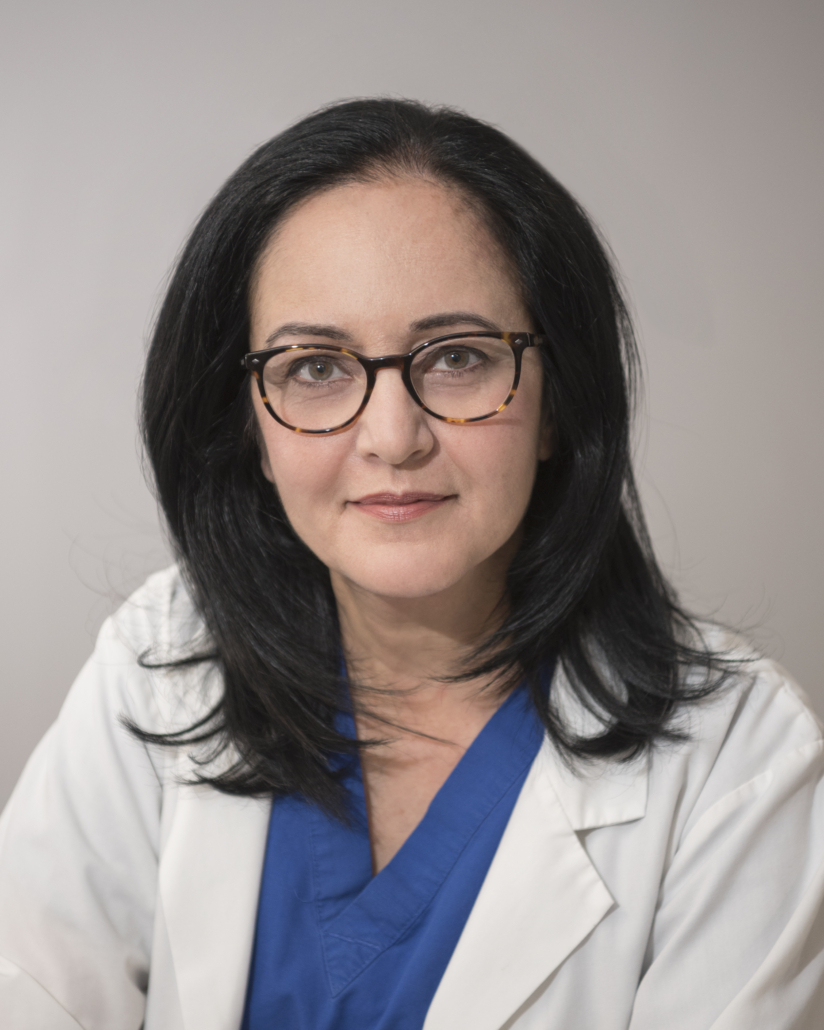
In this guest episode, Luka Milosevic talks with Mojgan Hodaie about the neuromodulation for neuropathic pain, how serendipity may lead to a whole novel research field, how our teachers shape the way we think about the brain and how we may learn from each single patient we get in contact with. Prof. Hodaie is a world-wide expert in stereotactic surgery with a special focus on (imaging guided targeting of) neuropathic pain.
The Hodaie lab published the seminal article demonstrating the feasibility of detailed imaging of the course of the cranial nerves in the posterior fossa and a method in which these relate to tumours that arise there, particularly acoustic neuromas.
Prof. Hodaie is a member of the executive board of the Foundation for International Education in Neurological Surgery (FIENS) and the founder of the NEURON project (www.neuronproject.org).
Mojgan Hodaie 00:00I said, let me just place the region of interest somewhere else, a little bit off to the side, and let's see if I can get the fibers that I want. And I did that, and then I looked at the results like, oh, that looks like the trigeminal nerve. And sure enough, the whole field of diffusion tensor imaging in trigeminal neuralgia really developed out of that. So then these two circles just fed each other. The more patients I looked after, the more I became involved in research in trigeminal neuralgia and imaging of trigeminal neuralgia. And that now has really overtaken a sizable chunk of my practice. And as of a year ago, I completed 1,000 procedures for trigeminal neuralgia. Welcome to Stimulating Brains. Hello, and welcome back to Stimulating Brains, episode number eight already.
Andreas Horn 01:11This episode is special because it is a guest episode hosted by Luka Milosevic in Toronto. Luka is an assistant professor at the University of Toronto Institute of Biomedical Engineering, has done stellar work on neural recordings in the basal ganglia, within the context of deep brain stimulation surgery over the last few years. And Luka has just moved back to Toronto from Tübingen in Germany to found his own lab. And I'm sure he's going to put out stellar work there. And today, Luka is interviewing Professor Mojgan Hodaie, who is a worldwide expert on brain stimulation for neuropathic pain. Luka will formally introduce Dr. Hodaie more properly in the following, but I'm really excited about this episode. Dr. Hodaie is going to talk about neuropathic pain, 02:01the application of diffusion tensor imaging-based tractography to treat trigeminal neuralgia, connectivity-aided targeting, neuromodulation for pain in general, and then very exciting cases that they talk about. Dr. Hodaie has also been involved a lot in teaching, including a worldwide spanning neuron project that you can find under neuronproject.org, which is a Moodle-based teaching program, and I think a wonderful initiative. to spread teaching in the field of neurosurgery across the globe. So I'm sure you're going to have fun listening to this exciting conversation between Drs. Milosevic and Hodaie. It's my great pleasure to introduce Dr. Mojgan Hodaie. Dr. Hodaie is a staff neurosurgeon at the Toronto Western Hospital with subspecialty training in stereotactic functional neurosurgery. She's the surgical co-director of the Gamma Knife Centre at the Toronto Western Hospital, 03:02and she has expertise in all forms of neuromodulation, including deep brain stimulation, spinal cord stimulation, baclofen pumps, and I'm sure I'm missing some other indications. Her primary research focus these days is on structural MRI imaging and functional neurosurgery, with a special focus on neuropathic pain. Dr. Hodaie is also a full professor in the Department of Surgery at the University of Toronto, and has contributed immensely to teaching neurosurgery and neuroanatomy, not only here in Toronto, but on a global scale. Dr. Hodaie, I've had the privilege of working with you in your DBS surgical theatres over the years, and I can easily say that you're responsible for at least 80% of what I know about human neuroanatomy from my days as a student in your class. But I've also come to realize that the ways that our lives have overlapped over the years
Mojgan Hodaie is probably just a small fraction of what you do on a day-to-day basis. I'm very much looking forward to learning more about you and your accomplished career. 04:02Luka, it's a pleasure to speak with you, and I think it's a great opportunity for us to just sit down and have a chat.
Andreas Horn Dr. Hodaie, can you walk myself and some of the listeners of this podcast through,
Mojgan Hodaie as much as you feel comfortable sharing, basically some notable life events that led you to the moment,
Andreas Horn where you first thought to yourself, I want to become a neurosurgeon?
Mojgan Hodaie Sure. Luka, I have to start by saying that this is probably one of the toughest questions that I get asked, and I have never found a very good answer for it. And I suppose that's probably because, you know, the way we make decisions is based on so many factors, and, you know, there's fluidity to it. So sometimes I think one factor is more important than another. But regardless, I mean, I was born in Iran, and I left that country as a child. 05:04I grew up in Spain. And, you know, there's not really too many doctors in my family, just one of my sisters and myself. And this was not a path that I envisioned for myself as a child, as a young adult. I was always attracted to science. There was no doubt of that. And I was attracted to medicine as well. And one of my great passions has always been organic chemistry, of all things. Life in neurosurgery was not really what I had thought of. I mean, you know, we can go and analyze that, and perhaps some of it is the opportunities that were available, particularly to women. Nonetheless, what really drew me to that field was my father, because he had a hemifacial spasm. Upon searching for solutions for him, I met who was, who ended up being eventually my father's neurosurgeon, even though he actually never elected to have surgery for it. 06:05And then I became connected with Dr. Andrew Talala, who was a neurosurgeon that we saw. And he was an amazing man, and he truly became my mentor. At the time, I had already started some interest in neuroscience. And then just... that grows exponentially. And I had the opportunity to attend clinics and really become immersed in the life of a neurosurgeon. Dr. Talala at the time was effectively retiring, so he had cut down his surgeries and so on. And he really was, I think, the opportunity of him being involved in a different type of teaching of someone who I wasn't even in medical school at the time, was something that was appealing to him. And he was an amazing teacher. So I think that totally revamped my life. And as I went into medical school, you know, as much as I truly enjoyed medical school, every aspect of it, there was something very special about the brain, about the neurosciences, about neurosurgery. 07:08So that's really, I think, you know, a major, major factor, even though not the only one. I think altogether, you know, the life of neurosurgery with respect to the intensity of it, the aspects of how much we're able to intervene and change someone who effectively everybody else almost gives up on.
Andreas Horn And we bring them back to health. And the fact that we take a very complex problem and we dissect it into smaller, simpler bits and connect all the dots to come up with a solution. I found those incredibly interesting. So where did you meet Dr. Talala? Was that in Spain or...?
Mojgan Hodaie No, no. He was... We were living at the time just outside of Toronto about an hour and a bit. And Dr. Talala was working at McMaster where I was as well for my undergraduate. 08:03So that's where I met him. And he's now passed away. But I remained connected with him really until the very end. So he's been a huge influence in my career. And his picture is up on my wall. That's... So he's... Of course, he's not the only mentor that I've had. It started there. And I think as much as education is important, I think the role of mentors is also very crucial. And how they allow you not so much to learn differently, but shape your learning. And how they allow you to drive that sense of curiosity that every learner has, the way you think about problems. The way you deal with problems when, you know, you're not having a good day or something doesn't make sense. And the way you structure your thought as you approach your career and your patients and so on is... 09:03I find that incredibly important. Mm-hmm.
Andreas Horn So I guess once this seed was planted in your mind that this is something you wanted to do as a career, where did you go from there?
Mojgan Hodaie I think you mentioned that you did your undergraduate studies in... your undergraduate studies at McMaster University, which is in Hamilton. It's about a 45-minute drive outside of Toronto.
Andreas Horn What led you from the moment where you knew this is what you wanted to do to the position that you have here in Toronto today? Yeah, so I did my medical school at Queen's, which is about two hours away.
Mojgan Hodaie And I have... Then I came to Toronto for my residency training. Mm-hmm. Residency training in neurosurgery, particularly in Toronto, particularly the time that I did it, although it continues, it's fairly rigorous. Mm-hmm. And obviously, you know, you have to get accustomed in looking after patients that have all sorts of disorders. 10:08So there's... I generally say that there's quite a lot of persistence required. Persistence to get into neurosurgery and persistence to remind yourself that, you know, you should stay in neurosurgery. Mm-hmm. Because it can get pretty hairy and intense. Nonetheless, this is what we do, and this is what we love to do day in, day out. Mm-hmm. So from there, obviously, you know, the years of general training of neurosurgery were there. And then in the middle of that, I took some time to do research in functional neurosurgery. And I did that with Andres Lozano, working on deep brain stimulation for epilepsy.
Andreas Horn Okay.
Mojgan Hodaie And... This is before your fellowship here. This is before my fellowship. So I did an infolded, essentially, research fellowship within my residency. 11:01And then at the end of my fellowship, I did six months of surgical fellowship in functional neurosurgery here. I also should say that I did my residency at a key time. And that was in the early 2000s. And that was the very, very end of Dr. Tasker's clinical and surgical time. So I had a very short but very valuable window of working with him. And I have to say, I clearly remember when, I believe it was the year 2000, when we had one of our professorships. And Dr. Tasker was, even though he was from Toronto, he was our visiting professor, in honor of him essentially leaving the university. Mm-hmm. Leaving his surgical practice.
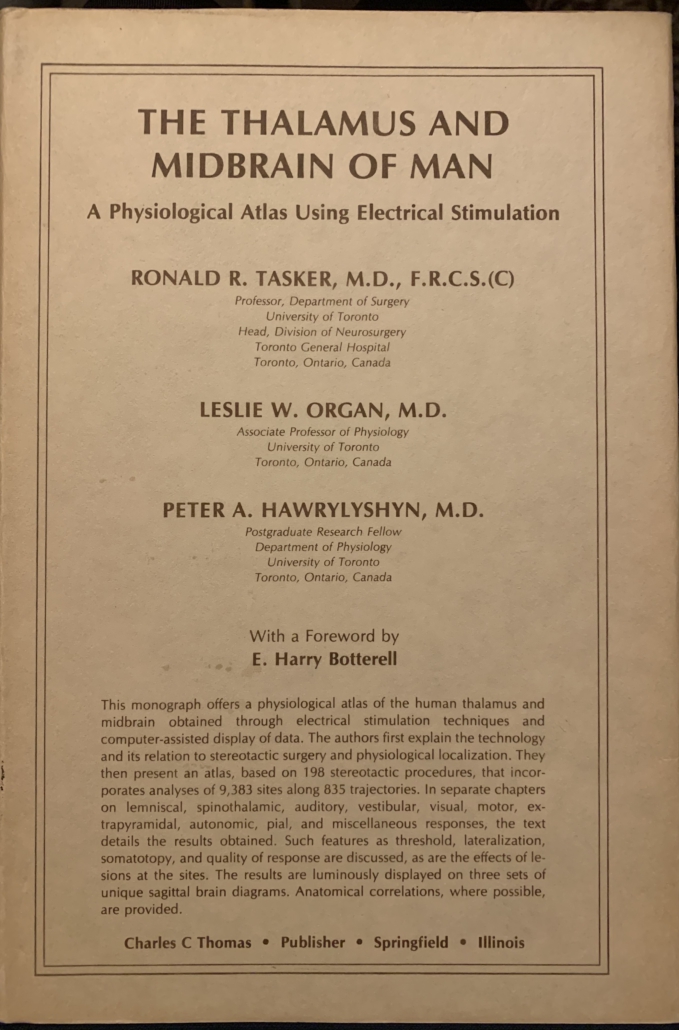
Andreas Horn And as you know, he had done a tremendous amount of advances in our understanding of the thalamus and working with chronic pain patients. And he's published one of the most singular books that I have a copy of in my library called The Thalamus and Midbrain of Man, where there are over 5,000 recordings of the human thalamus. 12:12And findings in the motor and sensory parts of the thalamus and so on. And a question that I had for Ron Tasker is, when did he feel that we would come to an objective understanding of pain?
Mojgan Hodaie And as he was answering that question, somehow between his question and my mind, things sort of flew off. And that level of curiosity, I think, has still stayed with me. And it has shaped quite a lot of my research career. I think it has shaped my research career. I must note as well the great influence of Jonathan Dostrovsky, who is essentially the father of the physiology that we do here. And of course, Karen Davis. So all of these are key figures that shaped the later part of my clinical and research training as well as my research career. 13:10Mm-hmm. Excellent. So this is, you're probably a very excellent resource to ask about sort of the history of stereotactic functional neurosurgery in Toronto. I think many of the people who have been on Andy's podcast have been from Europe. But I think everybody knows in some way or another that Toronto is a very special place and holds a very special place in history in stereotactic functional neurosurgery. So you just mentioned some of the key figures, Dr. Tasker, Dostrovsky. Karen Davis. Of course, Dr. Lozano.
Andreas Horn Do you want to expand a little bit about sort of give people a background about the history, the rich history that we have here? And at what point in that timeline did you acquire your staff position? And sort of what was the state of the art at the time of you acquiring a position? 14:01Yeah. Yeah. Yeah.
Mojgan Hodaie So functional, the formal aspect of stereotactic functional neurosurgery really starts with Ron Tasker here in Toronto. And I should say that Toronto is the oldest neurosurgical program in the country, dating back to 1923. So when Ron Tasker started as a staff neurosurgeon and took on these very challenging cases that really other neurosurgeons did not look after, he really took it on with a perfectly matched hat of surgeon and scientist. Every case was also a research opportunity for him. That is a legacy that we've continued as well, as you know. I remember when I was in my first year of residency and I walked into the OR. I frankly can't remember what case he was doing. I know that Andres Lozano was there as well. And I really did feel that I was living part of history. So every case was also a research opportunity for him. That is a legacy that we've continued as well, as you know. I remember when I was in my first year of residency and I walked into the OR. I frankly can't remember what case he was doing. I know that Andres Lozano was there as well. 15:01And what, you know, I really did feel that I was living part of history. And I should say that as a medical student, I did an elective elsewhere outside of Toronto. And the functional neurosurgeon there was doing a procedure approaching the thalamus. And he called for the tasker kit. So when he did that, I realized, I see. So now I know where this is, you know, where this is coming from. So the guy that actually put that kit together is, you know, in Toronto. So that was very meaningful. To me, obviously, it spoke of the impact that that tasker had in many other institutions as well.
Andreas Horn When, you know, they use his kit to perform the procedures. What would be in that kit?
Mojgan Hodaie So typically a lesioning electrode, a two millimeter tip lesioning electrode. And, you know, all the bells and whistles that go with it. But that was the tasker kit.
Andreas Horn 16:00Yeah.
Mojgan Hodaie It's maybe a little sideways thing to say that. I have been very impressed by how much serendipity influences one's life. And as much as, you know, people used to tell me that in terms of research and so on, that serendipity has so much.
Andreas Horn And it's like, yeah, I wouldn't believe that. I'm like, yeah, sure.
Mojgan Hodaie I mean, but now that I look at my own life, I realize so much of what has happened to me has happened in a serendipitous manner. And it's really valuable for us to sort of keep, at least I try to keep my eyes open because serendipity just means that. You know, that you observe things at the right time, frankly.
Andreas Horn Yeah. And as it happens, in fact, one of the interesting things in the field of functional neurosurgery were the developments by Cooper, Irving Cooper, the neurosurgeon from New York who developed the sort of cryothalamotomies.
Mojgan Hodaie 17:08And Dr. Talala was actually very interested in those procedures and he performed quite a few functional procedures. Somehow I've been able to, you know, circle myself around this field and eventually, I guess, meet myself at the very beginning again.
Andreas Horn But yeah, I mean, the influence of Ron Tasker and, of course, Andres Lozano, who came as Tasker was wrapping up, and Jonathan Dostrovsky. Yeah.
Mojgan Hodaie Bill Hutchinson, Karen Davis, and this key collection of individuals who are each thinkers and scientists and really go well beyond the, you know, isolated transactional approach of a patient has a problem.
Andreas Horn I'm going to do this to fix them to thinking, why does a patient have a problem? 18:04And how can I understand this so that I can treat them?
Mojgan Hodaie I can understand the patient better. I can understand the brain better. I can understand the circuitry and the connections in a different light. And that has been such a huge motivating force for all of us working here in this field.
Andreas Horn And in terms of, you know, where we started, there's a fantastic paper published by Ron Tasker in which he says, in which he describes his, the many decades that he spent doing this work.
Mojgan Hodaie And what the lay of the land has been and what he developed. But from then till now, there has, there have been so many advances in treatment of disease, neuromodulation, looking at many different targets, understanding of the brain circuitry, developments in the hardware that we use for neuromodulation. 19:03And then many other things. So, for instance, when I was doing my fellowship, effectively. We were primarily doing deep brain stimulation, very few other procedures. Now, when our fellows come, they really have the depth and breadth of functional neurosurgery at their hands. So the heavy amount of neuromodulation of all kinds, brain, spinal cord, peripheral field stimulation and so on. A huge practice in trigeminal neuralgia that I've developed. Gamma knife radiosurgery, focused ultrasound. Laser. Laser interstitial therapy. And this doesn't even approach the many aspects that we have for either resection or stimulation of patients with epilepsy. So the field is very, very broad. And I think all functional neurosurgeons recognize that the field is not defined by neuromodulation alone. 20:01It's much bigger than that. And we have to do it justice, obviously, because it's a pervasive problem within our society. Whether you look at pain, at movement disorders, at psychiatric surgery. And we need to come up with good approaches to help our patients.
Andreas Horn Yeah, of course.
Mojgan Hodaie So in terms of your own sort of career trajectory, when you came in here for your fellowship, you mentioned it was heavy on the DBS side. Probably lots of movement disorder cases.
Andreas Horn You mentioned the epilepsy cases that were being done at the time. How do you... Do you want to just chat a little bit about sort of how... Maybe the rise and fall of certain indications in DBS? What was sort of the state of the art at the time, specifically related to DBS?
Mojgan Hodaie I know you have a subspecialty, of course, in neuropathic pain. And we'll certainly talk about that. But just in terms of DBS, I know there was a lot of cases for pain here. There was epilepsy cases.
Andreas Horn 21:01And where are we today? And sort of what's been the evolution in these sort of indications?
Mojgan Hodaie That aren't as conventional these days.
Andreas Horn Yeah.
Mojgan Hodaie So some conventional indications have remained. For instance, the specific indications of GPI DBS or even thalamic DBS for essential tremor, for instance. But as experience has increased in some other areas, we have seen a rise and fall in certain things. Certainly, there's been the initial rise of STN DBS that has definitely persisted. But other targets, for instance, the pedunculopontine nucleus has sort of fizzled a little bit. Huge interest initially in motor cortex stimulation. That although perhaps it remains in some parts of the world. And I know it's not DBS, but still part of the conversation, I suppose. Although it remains in some parts of the world. 22:01I have been really not very impressed with the results we have, chiefly. Because I think we do not have... We don't have the correct hardware to stimulate the motor cortex. We use, you know, electrodes that are meant for the spinal cord. And we think that putting it on the motor cortex would work the same way. I don't think it does. And yes, pain is a big field. The more procedures we have done in the field of deep brain stimulation for pain, the more we've realized that its long-term outcome is tenuous at best and quite unpredictable. So... Again, we need to understand the science of it a lot better before we are able to offer solutions for, you know, predictable solutions at least that we can rely on and give good prognosis to patients.
Andreas Horn Yeah.
Mojgan Hodaie You were mentioning to me earlier that you're doing more and more and more trigeminal neuralgia cases.
Andreas Horn 23:04When did that begin?
Mojgan Hodaie You know, there's... I'm privy to your operating schedule, so I know that you do microvascular decompression surgeries, gamma knife, radiofrequency rhizotomy.
Andreas Horn What's the timeline of all these different therapies? How do you match a particular therapy with a particular patient? How do you make the... What's the decision process here in terms of one trigeminal neuralgia patient and then this plethora of techniques you can use to treat them? Yeah.
Mojgan Hodaie So when I first started...
Andreas Horn Yeah.
Mojgan Hodaie I was a staff at the Toronto Western in 2004. Obviously, my subspecialty has been from the get-go in the field of functional neurosurgery, and there were perhaps a few referrals of patients that had trigeminal neuralgia. In 2005, so very shortly thereafter, we started with our gamma knife program, 24:01which attracted, of course, a good number of patients with trigeminal neuralgia for treatment. So out of the interest in that field and to be able to help as many patients as possible, I was and I became involved in gamma knife radio surgery, and then slowly the patients grew. I should say that around that time, I became very interested in... I was very interested in exploring the advanced imaging techniques such as diffusion tensor imaging. My initial goal was to study the fibers of the brainstem as they would help us with better targeting in deep brain stimulation.
Andreas Horn And I'll go back to serendipity again because I was actually preparing a talk and I was trying to figure out, you know, 25:02how can I just find a nice view of these crossing fibers and explore those?
Mojgan Hodaie And I was working with DTI for this talk and I tried and I tried and it just wasn't coming to me. And I said, you know, maybe it's a technical issue with this specific software drawing these, you know, taking DTI information. And I said, let me just place the region of interest somewhere else, a little bit off to the side, and let's see if I can get the fibers that I want. And I did that. And then I looked at the results like, oh, that looks like the trigeminal nerve. And sure enough, the whole field of diffusion tensor imaging, in trigeminal neuralgia really developed out of that. So then these two circles just fed each other. The more patients I looked after, the more I became involved in research in trigeminal neuralgia and imaging of trigeminal neuralgia. And that now has really overtaken a sizable chunk of my practice. 26:00And as of December of 2019, so a year ago, I completed a thousand procedures. So I'm very proud of that. And I'm very proud of the work that I've done for trigeminal neuralgia with,
Andreas Horn you know, very large and also very interesting research in, in this area.
Mojgan Hodaie So again, sometimes things just happen. You have to be ready for, for the opportunity and be curious enough to, to pursue those, those leads that life gives you.
Andreas Horn So how do you, going back to the question of various techniques that you have to offer, how do you decide which patient gets which type of procedure?
Mojgan Hodaie Yeah. So we rely on obviously the type of symptoms that they present, their age and medical status and whether they've had prior procedures before. If they are reasonably healthy and they have not had a prior procedure before, microvascular decompression still remains the best treatment that we have to offer 27:03based on the likelihood of them being pain free after the procedure. Having said that, there's a sizeable number of patients who are younger, they're quite healthy, but they also have busy lives. They might have young children, their own business, et cetera, and they don't really care for downtime of a surgical procedure. And therefore in those patients, gamma knife radiosurgery is becoming a very popular route as well. So I would say that these two procedures, microvascular decompression and gamma knife, are fairly high up in both numbers and, you know, options that patients seek. I typically use rhizotomies, whether they're radiofrequency or glycerol or whatever type, as second line procedures. They tend to be more injurious to the nerve, and I always have a hesitation of possibly them resulting in deafferentation-type pain. 28:01Also, patients are not quite so keen on having dense numbness of the face. So obviously they can be avoided. That's that's preferable. So to keep those as a second line. And then beyond that, I see a sizable number of patients that have had multiple recurrences or they might have, for instance, multiple sclerosis which really takes them away from the typically from the option of microvascular decompression. And we explore a number of peripheral procedures Atypical trigeminal neuralgia is not uncommon at all. Again, in those patients I really favor the possibility of neuromodulation particularly peripheral field stimulation. After having seen so many patients we recently actually were able to identify a very unique syndrome a syndrome that is depicted by a very unusual type 29:03of a single lesion within the pons which is just within the brainstem fibers of the trigeminal nerve. This is important because these patients effectively they're non-responders to surgical treatment conventional surgical treatment and by that I mean you know we see them oftentimes they've had many many procedures they've either come to me or they've come referred to me from other neurosurgeons and routinely these patients they might have a good response they might have a good response but it lasts a very short duration of time and then their pain comes back. So in those patients I've been much more keen in moving to neuromodulation right away and not put them through the risk of conventional surgery. What's the sort of long-term efficacy of the
Andreas Horn neuromodulation approach? So it's a procedure that we've just started a few years ago. I don't have a
Mojgan Hodaie 30:00very long experience with these in terms of how they last. I do have a patient who's had, who had, this was my first patient that had a peripheral field stimulator put in, I would say nearly 10 years ago. She had very bad post-herpetic neuralgia. She wasn't completely insensate in the face; she had some sensation, so therefore we tried this, and even though she still has some pain, the pain is at least manageable for her. So that is the longest effect that I've had so far. But of course we know that neuromodulation provides the advantage of fine-tuning the stimulator and allowing us to be versatile with how we treat patients. So as patients explore this journey of having a stimulator and managing their face, we learn more and more and we hope to also research this in a different area so that we 31:01have a better understanding of the networks that are involved and how we might be able to you know before surgery have some level of accurate prediction of what the likelihood of response might be. Great. I wanted to ask you because you mentioned some sort of let's say special indications um for pain.
Andreas Horn are there any particularly memorable individual cases that stick out to you whether it be
Mojgan Hodaie deep brain stimulation cases or trigeminal neuralgia cases or maybe one of each that stick out in your memory um where perhaps you learned something from from the procedure itself or from that patient? Yeah, there's many, Luka. I think, you know, we need to learn from every single uh patient that we see whether we operate on them or not and uh i think we are uniquely blessed in that way to have that 32:01opportunity to contact patients and uh understand what they're going through so uh memorable moments could refer to potentially uh you know issues that pertain to the experience of the patient and there have been many and also issues that pertain to the science that is related to that specific case um there's no doubt there uh you know the the richness of thalamic surgery is incredible uh so particularly sensory thalamus when we get you know, right deep into VC as we do VIM surgery and we see that, you know, we detect uh cells that are uh responsive to what type of sensation and some i mean it's just fascinating it's such beautiful electrophysiology um you know the observation something that we're taking you know we might we see we see enough of 33:04it so potentially we get used to it but to be able to arrest a patient's tremor uh and to appreciate the impact that this has on on their life uh is is quite a sight to behold and uh we
Andreas Horn should not take that for granted perhaps one of the most interesting cases i've done and we published
Mojgan Hodaie this in the last couple of years was a patient that saw me for intractable hiccups okay and she had been hiccuping continuously, you know, several times a minute for the past time when she saw me, maybe upwards of four years and she was totally at her at her wits end understandably so i mean spending a bit of time with that patient in clinic was for us exhausting because we could appreciate the patient's discomfort. So through a set of investigations which included EMGs of her diaphragm bilaterally as well as a block of her vagus nerve under ultrasound in the operating room, 34:03which involved anesthesia putting a needle in her carotid sheath in between the carotid artery and the jugular vein. We gave her a Horner's syndrome for 48 hours and we got rid of her hiccups completely for those 48 hours Wow. So knowing that this works, we put in a left vagal nerve stimulator which she's had for, I think, we put it in 2009 so we're coming to almost 11 years and uh she is a ton better she remains uh well um she still has hiccups but to a much much lower frequency they're totally manageable and uh i get a call for her every few years when the battery needs replacing and then her hiccups are bad yeah and then we go back all the way to square one so i mean these are obviously very unique cases um which um come once in a while uh but honestly i think um it is uh it's a matter of really trying 35:11to understand and appreciate uh every bit of science and every bit of clinical interaction that we have with patients it really is a blessing um i appreciate that you you mentioned the important role of electrophysiology and stereotactic functional surgery, of course personally. um of course your your research work with dti um has also impacted upon how you how you perform your cases so i think one sort of semi-controversial thing in the field nowadays is to do asleep versus awake surgeries um i know that you're partial to awake surgery because i'm fortunate enough to be in the or um but can you speak about sort of the the implications of how research impacts upon clinical practice, for example, and how 36:02how you've personally seen things sort of come to fruition from yeah in the in that order research-driven advancements to neurosurgical procedures. Well, in my view, um the key advances in uh science and medicine have been driven by research i don't think anyone can argue that now does that mean that everyone should do it that way i think that that depends on uh you know the site uh and the individual and the conditions uh the clinical conditions that that allow for such a thing and if we all could do it that would be wonderful but i do acknowledge that this is not possible everywhere Having said that, certainly those who have a setup that allows for research to be integrated in surgical practice, we really need to take as much advantage of that as 37:01possible for for the sake of you know the science and all the information that will come out of it i'll also acknowledge that time has allowed me to understand that things can be done well in different ways and uh therefore uh there have been instances in which uh by way of I would say our routine practice, we have done or we've tried to do DBS in a patient that's awake, and it really hasn't worked the patient is uncomfortable they're not cooperative and you know in certain uh cases we have to take that into account and uh do the surgery while they are asleep, and the wealth of the understanding and experience that we draw from uh our field really helps us in those cases as well in other places things are done a bit differently and this is an eternal conversation awake versus asleep, electrophysiology versus no electrophysiology. There's been heated debates about this, some of which I have been moderating and some of which I have been in the audience, and some of which have been a little bit too controversial. Nonetheless, honestly, I think things can be done well in different ways. They just need to be studied and they need to be done for the sake of the best care 38:25for the patient and not just as a routine because that's the way we do things yeah absolutely um i want to um i want to touch on sort of your your involvement in teaching um but before i go there i just want to rewind all the way to almost the beginning of our conversation where you mentioned opportunities for women in neurosurgery and actually um the way in which this interview between myself and you today sparked was because andy tweeted about looking for he mentioned that
Andreas Horn 39:04it was why is it so difficult to find a female neurosurgeon to interview for this podcast
Mojgan Hodaie and he asked for recommendations and of course immediately i thought of you um and you mentioned as well opportunities available to women at the time in neurosurgery just a very quick google search um i found a statistic that's frightening that canada has approximately 333 practicing neurosurgeons only 36 of which of whom are women that's 11 percent and of course you're you're one of them here um we know that the university the chair of neurosurgery for the University of Toronto is a colleague of yours and mine, Gelareh Zadeh, so that's that's wonderful but of course you know seeing these things on twitter and whatnot is does not reflect these statistics so what what are some of these challenges that prevent women from from engaging 40:01and in this career how can we improve this this rather scary number yeah well i could talk about this for a while. We've persistently been one of the surgical specialties where representation of women is the lowest, if not the specialty where it is the lowest. So we've been riding about 10% for a very, very long time. I think there are several aspects. It is obviously, I'm not going to whitewash it, a very intense specialty, and in its intensity, both physically, emotionally, intellectually, every aspect, I think a number of people, men and women, decide that, you know, maybe I'll do something that's a bit more life-friendly. I struggled with this for a very long time.
Andreas Horn 41:01I said, you know, why is it that if anybody, myself or anyone else wants to do neurosurgery, we have to go through so much?
Mojgan Hodaie I don't know that I have a very good answer to it. Short of saying that, you know, the tool that we have to play with, which is the brain, comes with a responsibility and a consequence. And I don't think that we can minimize that. I think with respect to women, though, I have to say when I was expressing my interest in neurosurgery and in medical school, out of very good intentions, essentially everyone that I spoke with tried to change my mind.
Andreas Horn Okay.
Mojgan Hodaie At a rate of maybe a thousand to one. There were only literally two, maybe two and a half people. That said, you know, if you really want it, go for it. And that, you know, they backed me up. One of them was, of course, Dr. Talala. One of them was a very dear friend to me, who's an ophthalmologist, Dr. 42:03David Smith that I spoke with. And they both encouraged me to do this. And I chose to listen to the two of them. I could have listened to the other thousand. Nothing that the 1,000 people told me was incorrect. And in fact, they were very correct and more, because when you start residency, you realize, holy smokes, this is not, you know, this is intense. But now, in retrospect, I wonder whether they tried to turn many men away from the specialty as well. I don't know. I wasn't in those shoes to say.
Andreas Horn Yeah. So there are many, many factors, right?
Mojgan Hodaie And there are factors that are individual. There are factors that are societal, how we project as a specialty, how we project ourselves in medical schools, and whether, you know, we project ourselves as a field that only very few can come to and so on, and a bit of a very special attitude, or whether we project it as this amazing opportunity that you have of integrating science and surgical skills to really drive our understanding in this area.
Andreas Horn So, yeah,
Mojgan Hodaie I think at the end we'll have to take a multifaceted approach to allow for change. Within this 11% that you mentioned, or altogether within neurosurgery, to have a career that involves surgical treatment of these conditions as well as science is even a smaller number. But I think beyond that, at some point in time, then perhaps numbers only mean so much. And again, you have to have enough persistence to just push through and open the doors for those coming after you.
Andreas Horn 43:00Yeah, absolutely.
Mojgan Hodaie So let me ask you another then difficult question. You mentioned the people who supported you and who really pushed you to do this, and a thousand others who, you know, maybe told you to reconsider. But if a young woman, let's say, walked into your office and, you know, said that they, you know, you're a role model for them and you had to give some advice for them, But I think beyond that, at some point in time, 44:00then perhaps numbers only mean so much. And again, you have to have enough persistence to just push through and open the doors for those coming after you.
Andreas Horn Yeah, absolutely.
Mojgan Hodaie So let me ask you another then difficult question. You mentioned the... You know, two people who supported you and who really pushed you to do this, and a thousand others who, you know, maybe told you to reconsider. But if a young woman, let's say, walked into your office and, you know, said that they, you know, you're a role model for them
Andreas Horn and you had to give some advice for them, would you be part of that 1,000? Would you be part of those two? And what advice would you give that person?
Mojgan Hodaie Well, I think whatever words come out of my mouth, they need to be perceived in context of the person that's listening to them. The same way that I listened to those 1,000 and I chose to ignore it. I think I would try to project a balanced view 45:03and really do explain the details of my life in neurosurgery. But I hope that no one gets dissuaded by the intensity of this. I think that's the specialty. We're not the only intense type of work in society. There is many other aspects of either medicine or other specialties that are very, very intense. And I don't think we should shy away from anything. If you want to do it, if you think that you're qualified for it, and if you want to dedicate yourself, not to a job, but to a career, then do what you think is the right thing to do for you. Right. Wonderful. Let's say, let's segue to, you know, speaking of giving advice and let's segue sort of towards mentorship and teaching. What sparked your, actually, first let me recap sort of your involvement. Maybe you can fill in some of the holes. 46:03As far as I'm aware, you're still giving a course, Advanced Neuroanatomy in the Institute of Medical Science at the University of Toronto.
Andreas Horn Do you do any teaching locally besides that? Yes.
Mojgan Hodaie I taught that course. Advanced Neuroanatomy, of which you were one of the star students, Luka, since I believe if I go back 2009, there's a pause now for 2021, given, you know, pandemic and so on.
Andreas Horn So yeah, that's been one area of involvement.
Mojgan Hodaie Obviously, my graduate students and so on have been a huge source of my educational involvement, and I'm extremely proud of them. And I'm currently the site director for our neurosurgery residency program at the Western
Andreas Horn and on the education leadership committee. Looks like you work in a hospital, huh?
Mojgan Hodaie It sounds like it, yeah. 47:00So I have a number of educational hats, I suppose, which are involved and they're absolutely amazing. There's also, besides sort of the local involvement you have at the University of Toronto and here at the, the hospital. I was reading a little bit about the Neuron Project. So you're, you're, you're the founder of the Neuron Project, which stands for Neurosurgical Education with universal reach.
Andreas Horn Can you tell me more about this program?
Mojgan Hodaie Sort of what is
Andreas Horn your involvement in it? What is it? How do people gain access to it? Yeah.
Mojgan Hodaie So I developed this in the context of my other passion, which is global neurosurgery. Right.
Andreas Horn And the fact that if we look at the world as one entity, which I truly believe that it is, and it is one of my own core beliefs, then why is it that in some places such as here, 48:03we are so comfortable with the health care that we have?
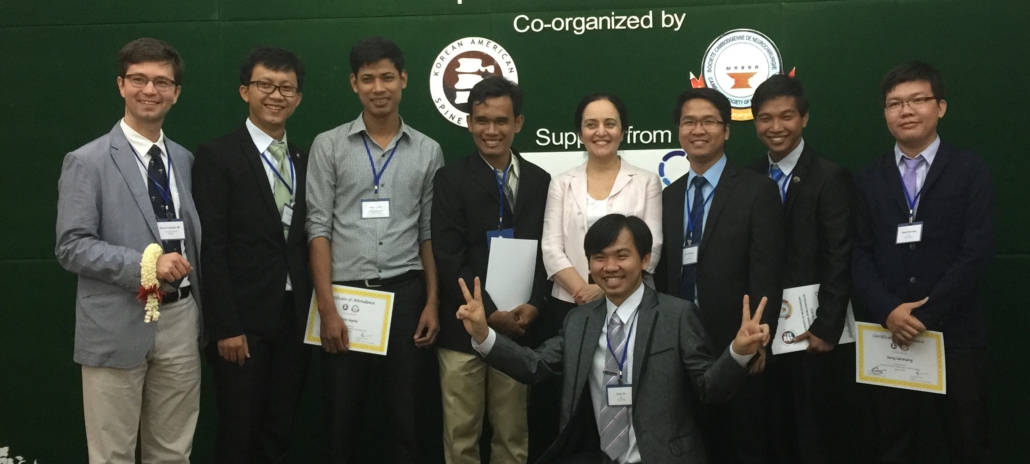
Mojgan Hodaie And in some places it is such a struggle. And if we think about it in those terms, in fact, we see that the burden, the burden of neurosurgical cases in places such as, you know, low income countries is huge. When you look at trauma, the sheer density of cars in the population, the poor, at times poor social infrastructure that results in motor vehicle accidents and so on, all of them really hit the young in society. And the, the programs need to be obviously very, very strong, to deal with that. And oftentimes they're not. So, in, as part of the opportunity that I've had to travel in, to different programs in different hospitals and so on, 49:01I developed this entity called the Neuron Project, which effectively tries to provide a structured online curriculum, didactic curriculum for surgical training. So, typically we think of surgery as being one that involves, you know, excellent surgical skills, technical skills. What, typically others are not aware of so much that are not surgeons is that a ton goes into surgical decision making. And of course the knowledge base that you need to have to be a good surgeon. So, it's that aspect, the surgical decision making and all the knowledge required anatomy, surgical anatomy, neuroradiology, neuropathology, and so on. That really needs intensifying and fortifying for many of these low income countries, because they just don't have the right setup. They're excellent surgeons. They learn to operate really well under their own circumstances, but that part, if it becomes intensified and structured, 50:01then their learning will become so much more effective. And, you know, it's a way of effectively strengthening their programs without them having to leave the country. So this program has been, tried and deployed in different places, including Cambodia, including Vietnam. There were a number of courses that I had initially in Africa, in Ghana. And, through a series of circumstances, the past year, it's sort of, it's flattened a little bit, but it will resurface very strongly in the year to come. And there have been, of course, key partners to this. Surgeons, worldwide that are interested in global neurosurgery that I've worked with them in the US and Japan and different places.
Andreas Horn And yeah,
Mojgan Hodaie we form an amazing crew that really is interested in driving and 51:01strengthening residency programs throughout the world. That's exciting. Perhaps this is a good plug for the program then, and if there are any interested listeners, maybe they should, they should contact you about such an opportunity. So the last thing I want to, I want to chat about, I've, I've attended several sort of World Stereotactic Functional Neurosurgical conferences over the years. I know that you're always very involved. You're on the board. I think you're the treasurer or? Yes, I was a treasurer, now the vice secretary. Okay, perfect. So what, what, can you sort of define a role for these, for organized societies for the advancement of, of neuromodulation, DBS,
Andreas Horn stereotactic functional neurosurgery? Do you feel that this is sort of something sort of that's very important to contributing to the field? And how, how does it impact you?
Mojgan Hodaie I think so. Look, I think it's actually very, 52:01very valuable to have a form of conversation and a form of global conversation. It's,
Andreas Horn it's a fantastic opportunity.
Mojgan Hodaie First of all, it's a very historical society as it developed initially, for a society for the study of, of encephalography. And then it became the World Society for Stereotactic and Functional Neurosurgery. So it goes back to the times of Spiegel and Wycis that effectively started the field for us. But really any opportunity that we have at a conversation, whether it's a face to face meeting at a conference, whether it's a webinar, whether it's a symposium online, you know, it allows different, uh, thoughts and different, uh, styles, uh, of, uh, surgical approach to come together. And it all eventually distills into what we decided to do in, uh, in terms of, uh, surgical approach and, 53:00uh, um, understanding of where the research is going, an incredible opportunity for young surgeons, uh, residents, fellows, researchers to come and meet others and form, um, partnerships, uh, cooperations. So, um, I think these, these societies have a very, very unique role and value. I've had the, the, great fortune of, uh, uh, chairing the scientific program for two of our meetings. And, uh,
Andreas Horn it's been absolutely fantastic.
Mojgan Hodaie And, you know, then you also get to have friends all around the world, which is awesome.
Andreas Horn Yeah,
Mojgan Hodaie of course. Um, all right, Dr. Hodaie, that was excellent opportunity to chat with you, learn a little bit more about yourself. Your career, um, to appease Andy Horn, I'll, I'll leave you with one final question,
Andreas Horn which is what is your favorite brain region and why?
Mojgan Hodaie Uh, my very favorite brain region is the insula. 54:01The insula. The insula is a very small, and as you know, hidden under the opercula of the brain, but boy, for a small region, it sure does quite a lot. And it's such, it's such a fascinating, uh, structure that, uh, you know, you read papers about all kinds of stuff and the insula keeps popping in again and again. So it, uh, it has consumed my curiosity for very long time. And, uh, I must say I have been very interested. I've talked to a number of people about the opportunity of stimulating the insula for certain, certain conditions. It's a difficult, difficult region to get to. And, and, you know, parking an electrode there has its own challenges as well.
Andreas Horn But yeah,
Mojgan Hodaie I didn't have to think about that too hard. Okay, wonderful. It's an intriguing option for sure. Well, thank you again for your time. I think I have to run down to the OR. 55:00I'm sure your schedule is keeping you busy as well. But it was a pleasure speaking with you. And I look forward to seeing you in the next few days, probably. Thank you, Luka. Thanks for the opportunity. And it was a wonderful conversation. Thank you.
Click any highlighted text passage to jump the Spotify player to that point. The transcript text is present directly in the page HTML for search engines and accessibility.