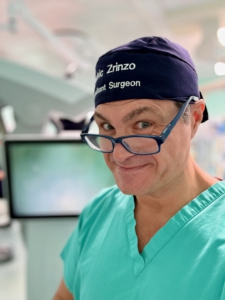
Prof. Ludvic Zrinzo is head of the functional neurosurgery unit at UCL London
#74: Ludvic Zrinzo – DBS vs. Lesioning – and how to know you’re right
In this episode of Stimulating Brains, we sit down with Dr. Ludvic Zrinzo, Professor of Functional Neurosurgery at University College London and Head of the Functional Neurosurgery Unit at Queen Square.
Drawing on decades of experience at the forefront of deep brain stimulation, Dr. Zrinzo reflects on the evolution of DBS from awake procedures to image-guided surgery under general anesthesia, emphasizing why precision, verification, and closing the loop are essential for improving patient outcomes.
We discuss how his experience shaped a rigorous, data-driven approach to targeting, why imaging quality remains a very critical factor in DBS accuracy, and how systematic post-operative verification transformed clinical practice. Beyond technique, Dr. Zrinzo shares deeply insightful perspectives on patient selection, mentorship, leadership, and the responsibility of building sustainable teams in academic neurosurgery.
The conversation also ventures into neuropsychiatric DBS, including OCD, where we examine how stimulation in different targets may have differential effects on behavior, illuminating the brain’s underlying circuitry. Finally, we look into the future of adaptive and closed-loop stimulation, emerging electrode technologies, and the future balance between innovation, scalability, and patient-centered care.
Tune in for a thoughtful and wide-ranging conversation on precision, evidence, and humanity in brain stimulation — and on how functional neurosurgery continues to teach us how the brain truly works.
Ludvic Zrinzo 00:00competence without compassion is meaningless. And when I looked at the data, there was clearly an increased error in targeting accuracy. So we said, well, which target is better? So each patient actually had four of these electrodes put in. And perhaps one of the things that blew me away, not just about the patients, but about the science behind it, is that that particular trial, the question that was outstanding for us when we came to this... Welcome to Stimulating Brains. Hello and welcome to Stimulating Brains. 01:05My guest today is Ludwig Srinzow, professor of functional neurosurgery at UCL
Andreas Horn and head of the functional neurosurgery unit at Queen Square in London. Ludwig is a neurosurgeon who has shaped how we think about precision and evidence in functional neurosurgery, from deep brain stimulation for movement disorders and psychiatric disease to lesioning approaches and emerging adaptive DBS paradigms. Ludwig is also a professor at UCL and at UCS. Hi, Ludwig. Hi, Ludwig. well known for many things, but maybe also for his work on target selection and comparative trials in OCD, including a rare randomized within-patient comparison of ventral capsule ventral striatum versus subthalamic stimulation, and his broad contribution may also be in asking what works for whom and why. Today I'm looking forward to discussing his career path, his view on DBS versus lesioning, adaptive stimulation, and where functional neurosurgery is heading next. I personally had two separate moments with Ludwig Schrinzer early in my career 02:01when he said two simple statements which both transformed how I thought about DBS going forward. So I'm pretty sure there's something in this conversation not only for the seasoned and experienced DBS researcher or clinician, but maybe also for people starting off into the field, because the clarity of how Ludwig thinks about these concepts that we all deal with is actually very important. Truly outstanding. I hope you had a great start into 2026, and thank you for tuning in to Stimulating Brains. So Ludwig, thank you so much for doing this. It's really a big honor to have you on the show. You have been the first speaker in our talk series as well, which was a fantastic journey. Thank you. Thank you for having me. It's always a pleasure to talk. Unfortunately, it wasn't recorded, but I really enjoyed that, and it's a big pleasure. We've known each other for a while now. It's always really fantastic to 03:04pick your brain. You've said so many wise things in the past that I've really profited from, even though you might not be aware of that. And it's a big pleasure to talk to you. So thank you for coming on the show. Andy, thank you for having me. As I say, it's always a pleasure to chat with you, and it's been a while since we caught up in person properly like this. So thank you. Thank you. That is true. So yeah, you know, I think, or you might know that the first question is always about hobbies, to just break the ice. So if you're not operating, not in the theater, as you guys say, or not doing research, what do you do for fun these days? Well, I must admit, I've become quite an aficionado for exercise, for physical exercise.
Ludvic Zrinzo So I don't know if you've heard of Peloton, which is this app and training app that you can use to exercise. So I've been doing a lot of exercise, and I've been doing a lot of exercise, and I've been doing a lot of physical exercise, and I've been doing a lot of around about COVID time. For once in my career, I had a little bit of time that I didn't know what 04:03to do with. And I decided to look after myself a little bit. And I started exercising. And it became a really important part of who I am now. And maybe I came to this idea quite late in life, which is just surprising, since the time of the Greeks and the Romans, you know, Mensana, corpora sana they say um but i didn't take that on board um until quite late and i this is my time you know when i exercise that's my time that's my time to um work through things that are in my mind subconsciously sometimes consciously uh my time to get some natural endorphins going my time to distance myself from from what's going on in the world of work if you like or in other spheres um and i i don't i won't say that i'm very good at it which is perhaps the important thing 05:00the fact that i'm not out there to be the best there is i'm out there just for me um so that's one thing that's really important for me and then outside of work my family so spending time with my wife spending time with my my children my daughters um spending time with the wider family as well and with and with friends um i'd like to have even more time of that but i think life work balance is a problem for every doctor on this planet yeah yeah i'm sure especially neurosurgeons maybe but yeah um okay so you grew up in malta uh which in itself is
Andreas Horn interesting right um uh different than i would say many countries it's an island it's smaller
Ludvic Zrinzo than many countries and i remember also your doc your father was a famous doctor there um maybe even local hero or something if i remember correctly and um if i if i remember correctly and um if i if i remember correctly um if i if i remember correctly um if i recall correctly you once said that growing up you didn't want to become a doctor but then there was some happening that changed that is that is that correct could you maybe talk about that so and i 06:05think you could probably tell the story yourself but i was actually born in the uk because but both my parents are doctors um and my father wanted to become a neurosurgeon there was no neurosurgeon in in malta um but unfortunately there was no neurologist either so he had to take the long route and first trained in general medicine and then he was able to become a neurosurgeon and then he was able to become a neurosurgeon and then he was able to become a neurosurgeon then trained in neurology and then changed in general surgery because that's what you have to and then trained in neurosurgery so you can imagine the breadth and width of knowledge of of the old guard if you like of the neurosurgeons that came before us and my mother um wanted to be an orthopedic surgeon but when i was born realized that two surgeons in the family just wasn't going to cut it um so she started she did radiology um and then when ct was introduced and mri was introduced because that's how long ago we're talking and then we were able to do the other radiology um and then ct was introduced because that's how long ago we're talking and then we were able to do the other they realized that actually going back to malta without a radiologist who could um help was going to be tough um and so she trained into a neuroradiology so they went back as a as a 07:04neurosurgeon neuroradiologist couple at that time doing myelograms and then later on mris so my father was the first neurosurgeon in malta um and he was the only neurosurgeon in malta for over a decade um so i went i went to malta when i was 10 because the family went back And as you say, Malta is a tiny country, but I loved it. I loved growing up there. The weather was always good. I could get on my bike and go around the whole country, jump in the sea whenever you wanted to. It wasn't so built and busy as it is now. So growing up was wonderful. I admit to being a bit of a nerd. I really enjoyed my physics and my maths. And I hated my father's job because I never saw him. There was no way he would convince me to be a doctor, let alone a neurosurgeon. There was absolutely no plans for me to go down the same sort of route 08:03until there was an epiphany, if you like. I think I was probably 14 at the time. Went on my way to doing engineering or maths and physics or astrophysics. I hadn't decided how I wanted to use my maths. But there was a hijack and PLO terrorist at the time, hijacked. This Air Egypt plane and forced it onto the tarmac in Malta. Malta had no army to speak of. And it was a huge international tragedy at the time, not only because of the terrorist situation, but because there were American citizens on that plane. There were Jewish people on that plane. Of course, Arabs on that plane. In an Air Egypt plane on Maltese soil. And because of the international problems with law, they ended up getting Egyptian commandos to storm the plane. But before they did that, the terrorists were shooting hostages in the head every hour 09:03and took them out of the plane. My father disappeared, as did all the country's doctors for a few days into the hospital. He came back a few days later with a beard, having operated on three of these patients and saved their lives. And I thought, maybe even now as an adult, that's pretty impressive, but definitely as a 14-year-old kid being shot in the head and doing something to help them survive. And there was another thing to it. I think when I was that age, again, it was a long time ago, Andy. There was no 24-hour news. The internet was just starting. And for me, this sort of inhumanity of one person to another, how you could kill somebody in cold blood, somebody you never met before today, just because you were a child. And I thought, well, that's pretty impressive. And I thought, well, that's pretty impressive. Because of this religious or political ideology that you held, I thought that belonged in the Middle Ages. I didn't think that people were still that awful to each other. 10:04And more than the scientific marvel of being able to save someone's life after being shot in the head, I think it was the humanity of actually dedicating your whole life to being able to be in a position to help someone when they're at perhaps the lowest ebb, they possibly can be. And later on, far later on, I think, I'm not sure if you know of Albert Roton. Albert Roton was a famous American neurosurgeon who drove micro neurosurgery. And perhaps the most important part of his neurosurgical book was in the foreword. And in the foreword, he actually says, competence without compassion is meaningless. Of course, compassion without competence, is useless.
Andreas Horn Yes. Right?
Ludvic Zrinzo So you have to have both. And I think it's a real measure of maybe the pinnacle of humanity 11:00that we have evolved a society that allows people like you and I to study for decades, to put us in the position to help those when they're at the lowest ebb of their lives. And I think that is a very sobering thought. And needless to say, at that age, I probably didn't think through it in such a fashion.
Andreas Horn Yeah.
Ludvic Zrinzo It made me change my mind. And much to my father's disappointment, because he was really quite keen that I could do mathematics. Oh, yeah. That's rare. Normally, people would want their children to follow the footsteps. They would be honored. But yeah. I think there is a part of him that was pleased. But there was the other part of him where I think when you're working, when you're the only neurosurgeon, and you call every single moment, at some point you start saying,
Andreas Horn do I want to inflict? Do I want to inflict this on my children?
Ludvic Zrinzo Of course.
Andreas Horn Yeah.
Ludvic Zrinzo Clearly he hasn't because things have evolved. And I'm very fortunate to be one of 30 neurosurgeons at Queen Square in London. 12:03So I'm not on call every day, far from it. Although I was on call yesterday.
Andreas Horn But yeah, that's the story of my growing up in Malta.
Ludvic Zrinzo A bit of a jump here, but you have also started operating in Malta.
Andreas Horn Yeah.
Ludvic Zrinzo Maybe even recently, a few years ago or a decade ago, maybe or so. It's actually been quite a while actually now. Since when I became a consultant in the UK. Malta is, for those listeners who don't know, Malta is a tiny little country in the middle of the Mediterranean. It's only 21 miles by 14. Yet it's very densely populated. There's the 600,000 people at the last count. And the population is increasing rapidly because of immigration. And because it's so small, it's very difficult to sub-specialise within neurosurgery. So at the moment, there are three neurosurgeons now, which is luxury compared to when I was growing up there. 13:02But you can't really sub-specialise. So when the beautiful thing, I'm very proud of Malta. I mean, I'm genetically Maltese and they are still a very left-wing country in the sense that healthcare is completely free. Going to university is completely free. They support the youth. And rather than put them in debt, as many modern countries do. And when the techniques aren't available in Malta, they send people abroad, they send patients abroad. So when I became a consultant almost 20 years ago, the Maltese government said,
Andreas Horn oh, can we start sending patients to you in the UK?
Ludvic Zrinzo And I said, yes, sure. So I started operating on Maltese patients in London, which again is a privilege. But the numbers started to increase and increase and increase. And at one point when I went back to Malta, the Prime Minister at the time called me and said,
Andreas Horn would you mind operating in Malta?
Ludvic Zrinzo And I said, well, this is enough to have the equipment and we train the staff, of course. 14:02So it started from maybe 15 years ago. There was a young girl with dystonia, which was a genetic type of dystonia. She was very extremely disabled. And rather than transport her to London, I went and operated on her in Malta. And again, it's a nice store of humanity. We hear so much bad news,
Andreas Horn but I approached Elekta who made the stereotactic frame and said, would you mind sending us a frame that we can use? And, you know, can you donate this and we'll pay for shipping?
Ludvic Zrinzo And Elekta said, absolutely, but we're going to pay for shipping, which was lovely of them. And the only DBS company at the time was Medtronic. And I said, it's possible to give up the leads at cost price because the government isn't paying for it yet. And they said, absolutely not. We're going to give you a set and they donated the hardware. And it was just so lovely to see different companies in different countries coming together. 15:02And this young lady who I operate on, she was three, is now in her early twenties. She's still disabled, but she's managed to go to university. She's managed to get a degree. Without when the DBS is off, she can't communicate because she's a communicator for this and she can't move her wheelchair. And she can. So it's just a lovely story of humanity pulling together to help. Help.
Andreas Horn Yeah.
Ludvic Zrinzo Wow. That's great.
Andreas Horn Yeah, it's become a little bit too successful because I'm in Malta
Ludvic Zrinzo almost every other month now. Okay, missing on patients, but it's good. We get to see the local team, which is nice. And they can feel a bit isolated when you're in a small country. So I think coming in and looking at things from a different angle is really nice. And I feel also again, I did medical school in Malta. I didn't have to pay. I wasn't saddled with student loans. So I feel quite indebted to society over there. And this is my little way of giving something back as well. 16:01It's not a little way, but it's a lovely story. I mean, it also helps you, of course, connect to back home. But I would assume you already have a very busy job in at UCL alone. So doing this on top is I'm sure not. It's a commitment.
Andreas Horn That's fantastic. Yeah.
Ludvic Zrinzo So how you did. I mean, you went to med school in Malta, but then also built your career at Queen Square, UCL.
Andreas Horn What was the key moment when you decided functional neurosurgery is for me?
Ludvic Zrinzo Well, again, being a young neurosurgeon in training and having come from the story that
Andreas Horn I told you, of course, you want to do the big guy stuff, right?
Ludvic Zrinzo And the big guy stuff is clipping aneurysms. That's what you should be doing. You know, high skit, high stakes, high adrenaline, all of that. In your youth. That's what drives you. However, when I came to Queen, I first came to Queen Square, the head started coiling aneurysms. 17:01And I was fortunate to see patients who had had coiling and who had got clipping and clearly coiling was much less traumatic. Clearly, you know, if you can avoid opening the head or disturbing the brain, then that makes a lot of sense. And as a doctor, you know, when you're young, you think about yourself. When you're a doctor, you think about your patients. And clearly the writing was on the wall for clipping. So vascular became less of an interest for me. And I put my heart funnily enough into pediatric neurosurgery. I was really keen on pediatric neurosurgery. Until I found out that it was emotionally such a huge roller coaster. It was so... I'm sure it wouldn't be for me.
Andreas Horn Yeah. Yeah.
Ludvic Zrinzo And it was long hours. I loved it when everything went well. And of course, things don't always go well. And it was a huge... I'm very... In Maltese, we have a lot of people who are very emotional. And I'm very emotional. I'm very emotional. In Maltese, we have a saying, albedo yunglena, which means your heart is like a sesame seed. You cry easily. And it was emotionally very difficult for me. Hats off to the pediatric neurosurgeons who are good friends. 18:02But I think the tipping point, as in many people, was meeting the right people. And it was Marwan Hariz and Patricia Limazan, who just were an amazing neurology and neurosurgery team that were totally focused about the patients, and totally committed to safety and to good outcomes, as well as using that opportunity to explore the human brain, which is this amazing lump of mush that we have between our ears. Now, of course, functional neurosurgery drives our understanding of the brain forward in small degrees. But it does mean you have to think about it. With most of neurosurgery, you know, it's about avoiding the eloquent areas, avoiding damaging. Functional neurosurgery is slightly different. You have to try and understand what the brain actually does, and how pathology affects it, and how you can medically or surgically modulate that abnormal activity. 19:06So I think that, I think the academic aspect, combined with the humane or humanity aspect of it, in such a multidisciplinary, it wasn't lip service, this was a true multidisciplinary team, co-locating neurologists, neurosurgeons, speech and language therapists. It was just specialist nurses, you know, the whole approach really spoke volumes to me. And when I started doing clinical research, starting with just simple audits, and then applying the results to clinical practice, and seeing a change, seeing an improvement, that for me was very rewarding. It wasn't just treating individual patients. It was about changing the way we treat a whole group of patients.
Andreas Horn Fantastic.
Ludvic Zrinzo And you mentioned Ma Wan already. You know, next question would be on mentors. And I did in preparation email him whether he, whether there was a question he always wanted to ask Ludwig, 20:03and didn't dare to. And of course, he said, he asked you millions of questions, and he dared to ask everything out of his mind. So there is no question from Ma Wan, but he of course praised your work and your, you know, colleagueship and so on. I'm sure he was a, I'm sure, you know, very important mentor for you.
Andreas Horn Are there others? And do you want to speak a bit about?
Ludvic Zrinzo Well, I won't go on to others before I've nodded my head to Ma Wan. I mean, Ma Wan, as we all know, is just one of those amazing people who knows your papers in more detail than you know them. He reads absolutely everything and reads critically. And, he wasn't, although he was clearly the, you know, my mentor, he wasn't too full of himself to change the way he sees things. He was always open to new ideas, 21:00whether it was about small things like shaving patients head, which he did and then changed, or whether it's about big things about moving from awake surgery to a sleep surgery, or moving from, you know, again, my life is littered with examples. And when things didn't go well, as sometimes they don't, he was so keen on examining every single angle of what went wrong to make sure it doesn't happen again,
Andreas Horn to try and understand why we can improve things.
Ludvic Zrinzo And I think that dedication was great. And I'll move on to Patricia. I mean, Patricia is just so such a privilege to be able to work with her to this day. You know, the first person to ever switch on STNVS,
Andreas Horn right?
Ludvic Zrinzo This is what more could a functional neurosurgeon wants to, than to work with a slice of history,
Andreas Horn right?
Ludvic Zrinzo And once again, she's so patient-centered. And I think that's the crux of what I think I love about both of those two great mentors in my life. 22:03I've had a number of other mentors along the way, not just in functional neurosurgery. Sometimes you learn things from people and you say, I don't want to imitate that. I don't want to do that. Those people will go nameless. But then the others then, so Neil Kitchen, as a neurosurgeon, who is not a functional neurosurgeon, but he's a great mentor in surgical technique, teaching me that actually the important thing is to do less. You know, neurosurgery, nature actually does a pretty good job and we're just nudging it in the right direction. And sometimes a smaller operation or a smaller approach, focusing on just nudging things in the right direction can be much more effective and most importantly, less, more, less risky than going, you know, doing the big thing that looks impressive on imaging, but isn't necessarily the best thing for the patient in practice.
Andreas Horn 23:00So yeah,
Ludvic Zrinzo I think I mean, I could go on and on and on. I've only just come back from a month sabbatical in Shanghai where I shadowed neurosurgeons over there. I have a particular interest in microvascular decompression and I was there with a gentleman called Dr. Lee, who's published extensively on this. And it was just a joy, even at this stage in my career to share knowledge with people like that. So, and of course, at the end of the day, I think the ultimate mentors are our patients,
Andreas Horn right?
Ludvic Zrinzo You learn so much from each and every patient, particularly when things don't go the way you'd like them to.
Andreas Horn Yeah,
Ludvic Zrinzo well said,
Andreas Horn fantastic.
Ludvic Zrinzo You became head of the UCL, function and neurosurgery unit when Marvin left, what now, three,
Andreas Horn four years ago?
Ludvic Zrinzo Time passes quickly. Around 2018 already. Oh, even so, time flies. 24:00Okay, seven years ago. And what changed in your day to day thinking once you maybe now were the patient person ultimately responsible for outcomes, but also strategy training, you know, the new generation, all these things. So again, I think, I'm going to have to start with another quality that Marvin has as mentor, which was not to hang on to everything as a leader. He was so generous at giving not just knowledge, but also responsibility. So for me, it wasn't a cliff edge. It wasn't like now everything's on your lap. Bye bye. It wasn't like that at all. And over the years, he sort of given me that. Okay, audit is kind of your, you're clearly good in this lead on it,
Andreas Horn right?
Ludvic Zrinzo Working with management at hospital. You're clearly good at that lead on that. So it was a very seamless transition, really. And again, I don't, although you call me the head of, you know, function, neurosurgery, I don't feel very hierarchical. 25:01I think I'm just really fortunate that we've organically grown as a unit.
Andreas Horn And I've got some like, how can I say that I'm the let that the head of Patricia limousine?
Ludvic Zrinzo Of course, I'm not, you know, we work together towards that. You may know Tom Fultini, who's another world renowned neurologist, who isn't just known the world of functional, but also in terms of disease, modifying therapies and large trials to try and understand the pathophysiology and the, and the pharmacology of medications in the evolution of Parkinson's disease. The other surgeons I work with, Harith Akram, Johnny Hyman, of course, now Marie Kruger, again, that it feels so much like a team that it's not difficult. To lead the group because we, we all push and pull the group in the direction that we wanted to go.
Andreas Horn So yeah,
Ludvic Zrinzo I didn't feel like it was a cliff edge at all because we're such a cohesive unit. 26:01And I remember, I think even earlier than that, around 2017, we, we invited you to Boston. We had a small meeting there and you already very vividly fought for also having Harry Akram, join this. And you, you, you wrote something like he's the future. And I also asked the younger generation now for, you know, insights and questions. And I think one that came up was indeed that you already think about succession,
Andreas Horn right?
Ludvic Zrinzo That is an ingrained thing might have come from your own mentor a bit,
Andreas Horn right?
Ludvic Zrinzo But do you, because not everybody does that,
Andreas Horn right?
Ludvic Zrinzo And so what's the secret in already building into, you know, your career also thinking about succession, making sure the next generation of leaders comes, give some words on that. Well, I think, I think it's silly not to,
Andreas Horn I mean, why would you want to, why would you want to hold on to everything?
Ludvic Zrinzo And then when you're, when you retire, you've lost everything. 27:01I think if you want, if you want a legacy, if that's even a word, the right thing to do is to, to grow, grow the people around you because you, you, you, you, you, you, you, you, you, you, you grow more by comparison. Um, and you're, you're quite right. Uh, Marwan was an, an amazing, amazing at promoting his junior, his junior staff. We used to go to international meetings when I was a young registrar. And he's, he introduced me to Andres Lozano as his teacher. Marwan said Ludwig is my teacher. I'm like, come on, but, but like, you're quite right.
Andreas Horn How many people promote their, their students in that way?
Ludvic Zrinzo And it makes you feel very proud of course. But, but it also makes you confident. And I think, I think lack of confidence sometimes comes through in people who aren't ready to promote people around them. Uh, and let's face it, the, the, the professor of physics, um, I think in Cambridge, 28:00uh, resigned at one point, um, to give his chair to Isaac Newton saying, this guy is much brighter guy than I will ever be. Um, and, and, you know, I think that's, that's, uh, everybody praises Isaac Newton and the name of this professor, who resigned his chair escapes me, unfortunately. Um, but clearly there is some greatness in that. I think that being able to recognize the talent and to work with the talent around you is, is exceedingly important. Um,
Andreas Horn yeah.
Ludvic Zrinzo And, and not just in your own institution again, and you are, you are the master at bringing people together in collaborative. Thanks for saying that. Um,
Andreas Horn yeah,
Ludvic Zrinzo I mean, I, for me, that is what makes the whole thing so much fun. As well, right. The interaction with others. And, and I, I, I mean, I'm, I'm still, you know, my first generation of scientists that went through the lab just left the nest. So I'm not, I can't speak to it, but I, I still, you know, I've talked to people along the years and I, I felt, um,
Andreas Horn 29:00many people said that this exactly the seeing other people grow that may have,
Ludvic Zrinzo you know, started with you is such a rewarding thing,
Andreas Horn isn't it?
Ludvic Zrinzo I mean,
Andreas Horn yeah. Okay.
Ludvic Zrinzo So, uh, looking back, you know, the other direction, what early career, a mistake may you have made, uh, that maybe now made you a better functional neurosurgeon. That's a really good question. Well, I've got a few and it's difficult to choose. Um, but I'll start with yet another example. I mean, back, back in the day, uh, we didn't have all the fancy software to, to plan your surgery and plan your targeting, et cetera. Um, and we used to use axiom and coronal images. And I remember Marwan having this backlit, display, and we would print out the images and put them down and measure with, with a little pin and mark the X mark, the stereotactic scans. And then when we came to the trajectory planning, uh, he get a coronal scan and make sure we avoid the ventricles. 30:00But of course, that's not the angle that you, that you actually taking because you're, you've got a double of leak. It's not through a criminal. Um, and at one point he trusted me enough to do this on my own. Um, and clearly I plotted, uh, wrongly, uh, and I ended up putting my birth hole a little bit too medially. And we went through the ventricle in this gentleman. Um, and when we got a post-operative stereotactic MR, uh, our lead was three and a half millimeters off, which was way more than ever. Uh, w we had an error in. So we ended up taking the patient back to theater, readjusting the electric, the, the burr hole and the electrode got it spot on. Um, but I remained quite haunted by this. Um, and I was looking through the literature and there's absolutely no, um, no record of whether the ventricle was useful. You should avoid it or not avoid it. And when I went to the next ESFN meeting, Marwan told me you have to come to this meeting or the big people there. I actually went up to the, 31:01uh, to the big names and the groups and said, oh,
Andreas Horn do you mind going through the ventricle or not?
Ludvic Zrinzo And some of them said, oh, it doesn't matter if you go through the ventricle, it's all fine. And some people said, we never go through the ventricle, but two people stood out. Um, uh, and one of them was, uh, Antonio de Salas, who was at that time, professor of neurosurgery at UCLA. And he started, we go through the ventricle, no problem.
Andreas Horn And I said, but do you, do you have the stereotactic coordinates of where you want it to be?
Ludvic Zrinzo And the images post-op. And he said,
Andreas Horn yeah,
Ludvic Zrinzo we have them. I said, if he actually looked at them to see what the accuracy was like, and he said, no, no. I said,
Andreas Horn can I come and visit?
Ludvic Zrinzo And he said,
Andreas Horn yeah,
Ludvic Zrinzo come and do a fellowship at UCLA. And then the other person was Mikio Stahl, who unfortunately is now passed, um, in, in the Netherlands. And, and he said, oh, we do, we go through the ventricle all the time. We have all that data. Uh, and these two very senior, very well respected neurosurgeons allowed me to gather their data, look at their data. And when I looked at the data, there was clearly an increase error in targeting accuracy when you, 32:03when you went through the ventricle, compared to when you didn't. So, um, and that ended up being a publication, uh, one of my earlier publications. Um, but again, I think it's, it, it, it laid the example. It's a very good example of how, when things go wrong in clinical practice and things didn't go hugely wrong in the sense that the patient didn't come to harm, but it established the fact that we try not to go through the ventricle if we can. Now, of course, sometimes when you're doing anterior nucleus of the family, DBS, it's,
Andreas Horn yeah,
Ludvic Zrinzo but, um, and I think the angle of approach is different. Um, when you go through the anterior nucleus, you're going quite orthogonally. Um, and, and, and, and, and, and, and, and, and, and, and, and, and, and, and, and, and, and, and, and, and, and, and, and, and, and, and, and, and, and, and, and, and, and, and, and, and, and, and, and, and, and, and, and, and, and, and, 33:00and, and, and, and, and, and, and, and, and, and, and, and, years after this this was when i was a trainee and and it really taught me uh about the importance of thinking about the patient rather than the pathology um and both and the patient's more important than the pathology right but as a young as a young doctor sometimes you don't think those ways little did i know that later on i'd be able to help her by by helping her with getting rid of
Andreas Horn the tremor yeah oh interesting yeah i wouldn't even function neurosurgery this was a long time
Ludvic Zrinzo in the future and and i also learned how amazing human beings can be that this lady actually trusted me to try and help her after i'd caused her harm you know a decade before but there you go really really uh great examples thank you for sharing these um your work it's hard to not to talk to you and not talk about you know um mri guidance and 34:00maybe also sleep dbs um your work repeatedly emphasizes this accuracy safety and image verification um i think the london center had been really pioneering this um with marwan and you um leading you know the the shift from as you mentioned also awake dbs to sleep dbs what do you think actually moves the needle in real world targeting accuracy today so um you know better imaging i think sometimes i'm surprised how bad this the quality is of pre-op imaging in some centers um and then better planning better frames um sort of like 35:00as you rightly say, sometimes the quality of the imaging is so poor. And I just think we really need to engage with our radiology colleagues, with our MR physics colleagues, because they are an integral part of the team. You know, we talk about functional neurosurgery being the multidisciplinary team,
Andreas Horn but how can we improve the first pass that we make?
Ludvic Zrinzo And then none of the other things that you talk about can improve the accuracy. If the imaging isn't good, if you can't see your target,
Andreas Horn how on earth, with the most accurate tool in the universe,
Ludvic Zrinzo your first pass isn't going to be on target if you can't see it. So I think imaging is totally key. And it's not just about field strength. You know, I think even with a 1.5 Tesla magnet, you can get really good images that allow you to see the common targets that we use. Of course, 3D is even better, you know, and it's lovely to have a 3D machine.
Andreas Horn But, you know, at the moment in multi-user 1.5T and get really good results. 36:06You know what? When we got the 3D at Charity, the imaging got worse by far. And then we had to adjust it again, right?
Ludvic Zrinzo But it was such good. The 1.5 images were super good, actually.
Andreas Horn Yeah, yeah, yeah.
Ludvic Zrinzo They were great. It's not about field strength, just about field strength. It's a lot about the sequences that you use and the coils that you use. And, yeah, so I think the answer to that is, of course, everything is important. Every step in the stereotactic procedure is important. But it starts with imaging and it ends with imaging. Because at the end of the day, you can plan till the cows come home. I always give this example to visitors. If you're an Olympic archer and you're trying to get better and you want to win the tournament, you don't practice and then walk away from the target board. You go and see where your arrows ended up. If there's an error, you try and correct it. And that's been marred. That was Marwan's philosophy from the beginning. 37:00And all I really did was systemize it. So I looked at this in a very, I audited it in great, great detail and great accuracy. And again, we came from a point of clinical practice where there were some patients who just could not have surgery awake. The bottom line was the traditional way to do this was awake surgery. Some patients who you took them off their medication, they couldn't breathe. Or they had so much chronic pain that there was no way they were going to, you know, sit through this operation. And when I looked at the clinical outcome of these patients who had had surgery asleep, where we relied just on the imaging, the outcome was better, significantly. Wow.
Andreas Horn Okay.
Ludvic Zrinzo Both in terms of clinical outcome, both in terms of length of stay and in terms of complications. And when we took this data to Marwan, we looked at this in our research meeting.
Andreas Horn He said, yeah, you're right.
Ludvic Zrinzo You know, sometimes we were actually fooled when we were doing awake surgery. We had a really good result. We had a really good result on the table. 38:00But then we imaged the patient and the electrodes weren't, you know, they were a bit medial to the STN. And this is 25 years ago. I'm talking about 20 years. And we accepted that because the results on the table were good. We had good LFPs, but the patient was much better. But then one year later, the speech wasn't good and we weren't getting the expected UPRS. And then we relocated the leads under general anesthetic. And this patient was doing brilliantly. So we were actually fooled by testing on the local anesthesia. So we had to leave poorly anatomically placed leads. And then we dispensed with the local anesthesia completely. And as a result, now when we do deep brain stimulation, we do them under general anesthesia. The result is we don't have to take patients off medication, which patients love.
Andreas Horn Yeah, it is quite difficult for patients undergoing the local sometimes,
Ludvic Zrinzo especially when they've got advanced PD off meds. The surgery is much shorter. You know, we tend to operate in pairs. We've got a lot of patients.
Andreas Horn Yeah. Yeah.
Ludvic Zrinzo I think that's really good because human error is there. 39:01So we always check the frame with each other and whatnot. While I'm operating with Marie, we do this routinely in under an hour, you know, both sides and the battery. So infection has become really rare because the length of surgery does correlate with the infection rate. Everything is better. We can operate on more patients. You know, sometimes quite rightly in the world of function neurosurgery, we obsess about getting a 65% improvement in UPRS. We can't do it like we were doing it like So I think you've hit the nail on the head, Andy. 40:01The first is that when patients are asleep, they have positive pressure ventilation. So you get less CSF loss. You get no brain shift. So you're more accurate in terms of your targeting. But there is also the fact that some patients slip through the net when we did local anesthetic because we didn't change a suboptimally placed lead because we got good clinical benefits. So maybe it would be worth it to even briefly summarize your procedure because you didn't just do image guidance but also image verification as a really critical new thing.
Andreas Horn So you do post-op MRI with the frame on. Is that correct?
Ludvic Zrinzo So back then when we made the shift, we did a post-op MRI with the frame on in every single patient. And that was purely Marwan's insistence that I want to know where I am. I want to know where I am compared to where I wanted to be,
Andreas Horn which is a very reasonable thing.
Ludvic Zrinzo I remember having pitched battles with MR at the time, right? 41:01And back then, again, his justification was that, you know, doing a post-op CT, you couldn't see the lead. You couldn't see the anatomy. You could see the lead, but you couldn't see the anatomy. And when you have brain shift, which was not rare at the time, your anatomy has changed. So you might be right stereotactic. You might be wrong stereotactic coordinates, but in the wrong anatomical target. So he insisted on MR because he could see the lead and the anatomy. We have changed over the years. So now actually we do a post-op stereotactic CT. And the main driver for that has been that we don't have any interoperative air anymore. So there is no shift. So the main reason for doing an MR has changed. And of course, with directional leads, you're going to do a post-op CT anyway, because you want to see where the directionality is. Of course, it's quicker. And it helps. It helps us drive workflow.
Andreas Horn So there's a number of reasons why we've moved to a post-operative stereotactic CT.
Ludvic Zrinzo But the bottom line is in my practice, 42:02you haven't finished the procedure until you've documented where the leads are. And I think that's just a really important principle. If you've clipped an aneurysm, you put dye through the vessel to make sure that the aneurysm doesn't fill and that the distal vessels fill. You want to check that you've done the right thing, before you finish the operation. I think it's a fundamental principle. And I'm sure you're aware there was a paper a few years ago, from the States, looking at revision DBS procedures. And almost half of the revision DBS procedures were because the leads were in the wrong place. Which, you know, if you bothered to get stereotactic imaging during the first procedure, that wouldn't happen.
Andreas Horn Yeah.
Ludvic Zrinzo And you said before that you, while you were, when you were doing a wake, you would sometimes accept pulling,
Andreas Horn but you didn't really place leads on the imaging because you knew the effect was there. Is that correct?
Ludvic Zrinzo Again, this isn't the beginning of DBS. 43:00This is 25 years ago. We're talking,
Andreas Horn we'd put the leads in and we had a fantastic result in terms of DRS improvement,
Ludvic Zrinzo in terms of stiffness and tremor and whatnot, no side effects. And then we'd noticed that the lead was too medial. It was medial to the STN, you know, not terribly placed, and some of the top contacts were within the STN, but not perfect. Right.
Andreas Horn Yeah. But we didn't know that at the time, right?
Ludvic Zrinzo We only know that now because we've gathered prospective data and now we all talk about these sweet spots and sour spots. And this is what we've built. This is how we built to the sweet and sour spot. So of course, every procedure has its time. And I'm very glad we went through this learning curve because I wouldn't know where to place the leads. I didn't know how to sort of sort 44:21say oh the patient's doing well you say well my lead is one is 1.8 millimeters away from where i wanted it to be yeah and i can make it better yeah yeah and because your lead is there you now have an internal fiducial marker so all you have to do is say okay wherever my wherever i aimed if i'm two millimeters medial and 0.5 millimeters anterior well i'm going to put two millimeters more lateral and we put the second lead in before we take the first lead oh cool yeah yeah and and
Andreas Horn the second lead is always bang on target then of course fantastic really cool okay um and what are
Ludvic Zrinzo 45:03the most common hidden failure modes in dbs surgery that maybe don't show up in paper so what i often as a non not a surgeon you know where i wonder about is frame accuracy or are there other things oh and maybe relatedly at some point you guys told me or told that you have a new technique that eliminates brain shift somehow is that worth talking about or that that you don't seem to have much brain shift anymore um okay so just try and get to the bottom of the question i think the commonest failure of dbs is wrong patient selection at the end of the day right i think the problem is and and we're still learning sometimes it's wrong patient selection because we're not doing it right so i think that's a big problem i think that's a big problem
Andreas Horn because we don't understand what was wrong about that particular patient yeah it's really important
Ludvic Zrinzo to continue emphasizing you know it's all very nice when everything goes goes right and it's important to look at those patients but it's really important to look at what happens when things go wrong or don't go the way you'd like them to go and you know i'd be the first one to 46:03say there are some patients where the electrode is spot on it's bang on the anatomical target like i couldn't draw it in a better position and yet the patient isn't doing as well as i would like them to yeah yeah and and the right thing to do there is to question to speak with the patient to talk about how else you can improve things so just out of the top of my head there are some patients perfectly placed
Andreas Horn stn leads fantastic result on all their symptoms but you just can't get on top of their tremor
Ludvic Zrinzo you just can't and you try the high frequency and you try all the tricks and you try and go on the top content just to go and you know what i've urged my neurologist to do is i bring these people back to clinic let's have a look at them and i have a few patients where we've actually
Andreas Horn done a thalamotomy on top of the stn dbs and they're very happy why does this happen
Ludvic Zrinzo i don't know yeah sure another strategy to sometimes put a second pair of dbs leads in so again another patient that comes to mind a young lady with stn dbs perfectly placed leads just not 47:07doing the way we would like we added another two stn dbs leads more anteriorly within the stn and her leads are within the stn dbs and she's got a lot of stn dbs leads and she's got a lot of stn dbs leads and she's got a lot of stn dbs leads and she's got a lot of stn dbs leads and she's got a lot of anterior third of the visible stn we normally talk about being in the posterior half we switch the old ones off and she's doing brilliantly with the anterior ones switched on
Andreas Horn why i don't know i really don't know but the important thing is not to give up on them
Ludvic Zrinzo because these sweet spots are theoretical sweet spots in terms of hidden coming back to your brain shift thing um i think we always forget that at the end of the day what we what we care about Unresolved audio passage omitted from transcript. 48:11! ! board and most of your arrows are to the right well sometimes you just got to be pragmatic and don't aim at the center aim slightly to the left yes and this is what we end up doing in DBS so what we what we've noticed is that if we aim for a target when we look at where the leads are they're always slightly posterior and medial to where we want them to be now I think one of the things that contributes to this is that the brain is not a piece of wood the brain is gelatinous so as we pass through the brain with our probe we're actually pushing the brain slightly as we go through the book even if there's no CSF leak there's no air inside so if you imagine your target being down here wait by the time you've reached that because you've pushed brain down yeah you end up 49:00because you're coming from that slightly posterior and medial and Andy if you speak to people who do micro recording very often they use three trajectories and they tend to choose a central track an anterior track and the lateral track and I think this is why so people who do micro recording are trying to correct for the error but we do it in a slightly different way rather than do three tracks we predict that we're going to be slightly posterior meeting we have a an algorithm based on the thousands of patients that we've operated on before and we make micro adjustments of 0.5 or 1 millimeter in all of the three dimensions and now our accuracy is trending at about 0.8 plus or minus 0.3 minimuses so the standard deviation is about 1.4 which means 95% of our electrodes are within 1.4 millimeters of where we want them to be with a single pass now that means that in 5% of patients they're more than 1.4 and again we don't just look at distance 50:01we look at we look at direction so if you're 1.4 millimeters straight towards the capsule and the capsule is a little bit more than 1.4 millimeters then you're going to have to do a little bit more of a ! Unresolved audio passage omitted from transcript. Unresolved audio passage omitted from transcript. Unresolved audio passage omitted from transcript. Unresolved audio passage omitted from transcript. Unresolved audio passage omitted from transcript. 51:06You know, we don't have micro-links. True. We don't have clinical testing. All we have are our neurologists to keep us honest and our nurses to keep us honest and the imaging. You know, the closing the loop via the neurologist
Andreas Horn and the nurses is absolutely important, but will not be that case-specific maybe, right?
Ludvic Zrinzo It's not as immediate. It would be more this, you know, general. Of course, so I always, you know, I love how you're doing it. It's all I want to say. I must make a plug for Marie here, because Marie's really brought a beautiful thing to us. You're saying closing the loop via the neurologist and the nurses. Marie actually does a complex clinic with one of our neurologists and one of our nurses where they bring patients who aren't doing that well, and together with Marie, 52:00who does the image-guided programming, they go through every... with that patient to try and optimize imaging. And for me, this is a really important service that they do, because the old adage is 20% of your patients
Andreas Horn take 80% of your time, right?
Ludvic Zrinzo Because 80% are really easy.
Andreas Horn You turn off, you go bye-bye, you never see them again, right?
Ludvic Zrinzo Or they're doing really well. But those 20% of patients keep coming back and they want to tweak them and you tweak them, they're doing well, they go away and then they come back again. So at this complex clinic, those 20% of patients actually have a whole morning, sometimes even a whole day, to optimize the stimulation. And we know that at this point, we either get it right, or we say, look, no more optimizing, come back to the surgical clinic and let's talk about whether further surgery will help, or whether we need to think about other things like advanced therapies, I don't know, Duodopa or Produid or whatever it is, rather than these patients just coming back to our nurses and neurologists time after time, 53:01actually never getting anywhere. Sometimes you need that closure. So I think that's really important for us to understand this isn't a perfect therapy, but we shouldn't give up on those patients. We shouldn't ignore them. We should really pay attention to how can we, okay, we might not be able to help you that much, but maybe we can help you this much with something else.
Andreas Horn Fantastic.
Ludvic Zrinzo And I remember Marie, who also was on the show before, she used to do all the programming
Andreas Horn or a lot of the programming in Switzerland. Yeah, absolutely. Do you also sometimes program or have you in the past?
Ludvic Zrinzo No.
Andreas Horn So, yeah, so when the service was smaller,
Ludvic Zrinzo it was really important and I ended up doing the program. For me, that was a really important part of my training as a functional nurse to understand the side effects and the effects during the surgery. And I'm doing a lot of radiofrequency ablation these days. And those programming days were really important for me interpreting the interoperative. Unfortunately, our neurologists don't come to theatre, I say unfortunately, 54:01but we are our own neurologists during theatre. And we're very pleased that they trust us with that. So, and I think it can be difficult because the throughput, you know, when I started operating with Marwan, we were doing 20 or 30 DBS procedures a year, which gave me the time to look at each patient in huge detail. We're now doing, you know, 100, 120 DBS a year. Oh, wow, that's a lot. Frequency ablation plus the focus d'ultra-sans, plus I have other hats on like my MVD practice, etc. So it is not possible for me to practice. Of course.
Andreas Horn We have a small army of fantastic specialist nurses
Ludvic Zrinzo who look after the thousands of patients who are out there in the community. But I still think it's really important, even when you're changing a battery, to understand the settings and the stimulation settings.
Andreas Horn And when I go to Malta, the neurologists there are fantastic,
Ludvic Zrinzo but they don't have as much experience as my neurologist here. So being able and being aware of all these programming strategies 55:00is really important when it comes to, being part of that team. So I don't do it routinely, but I always urge my trainees to say, listen, okay, now you know how to do the surgery, you know how to do the planning. Now go away and spend two weeks with the nurses troubleshooting the programming of patients because you won't be a good function in your decision unless you understand how what you're doing in theatre is translating to the therapy itself. Because the therapy is not the surgery,
Andreas Horn the therapy is the electricity, right? Yeah, the combination of both, right? Yeah, the electricity.
Ludvic Zrinzo Not without surgery, but switch it off and it's useless.
Andreas Horn Yeah, yeah. Okay, fantastic. And then do you think, like switching gears a bit, do you think closed-loop DBS is the future?
Ludvic Zrinzo So I think it's clearly going to play an important role in the future, whether it is the future is another matter. I still think we haven't cracked it quite yet. Our neurologists are very excited about it and they're very positive about it. 56:02I think one of the issues is, is actually measuring what we're actually giving these patients. And I mean, if you look at the paper on adaptive closed-loop DBS, the numbers are a little bit soft, if you ask me.
Andreas Horn But life is soft and soft things are important in life too. And the question is, how can we use the scientific method to explore this? And it makes sense in the sense that, you know,
Ludvic Zrinzo you don't need to have stimulation at the same setting all the time because the medication is oscillating. So there's... There's clearly a rationale behind this.
Andreas Horn But then the flip side is, is the signal really everything that... Does it encompass the whole of the pathology of Parkinson's disease?
Ludvic Zrinzo And I'm not sure that it does. And how good is the pathological signals that we're picking up from other diseases, whether that's dystonia or OCD or whatever it is. 57:00Clearly very exciting,
Andreas Horn clearly academically very interesting.
Ludvic Zrinzo But, you know, we still use a mixture of closed-loop systems that don't have closed-loop and legacy patients that don't have closed-loop. I don't see huge differences. I think there can be important differences in individual patients. But like I say, again, I think it's important to push the boundaries of what we're doing, but also to... I would like to see much more of a push of how we can streamline the process and bring this therapy to more patients. I think that's even more important than trying to refine, you know, something that's actually pretty good already.
Andreas Horn Yes.
Ludvic Zrinzo It's the law of diminishing returns. Now we've got this. We've got adaptive closed-loop. I think it's really nice that we're doing it. I think there's a huge amount of publications and scientific interest in that. Maybe the hardware needs to evolve a little bit more. 58:00And I don't know. I don't want to make this more complex at all. But just to speak about a different approach to this, there's... We've been using platinum-iridium electrodes for many, many, many years. There's a product called Graphean, where you have much less impedance with the neural interface. When you have that less impedance, now you can have better temporal discrimination. You have better spatial discrimination. And maybe this is what we need to improve our recording of abnormal pathology. So we can improve our recording of biological signals in different disease states and improve our delivery of electricity. So maybe that's the next evolution. I don't know. But clearly adaptive closed-loop DBS is here to stay. Whether it's going to kill closed-loop DBS, or sorry, open-loop DBS is another matter.
Andreas Horn Fantastic.
Ludvic Zrinzo So I had Patricia Limousin, who you mentioned on the show. And she told me, she encountered this episode where she switched on for the first time 59:03the bilateral STN DBS patient back in the day in Grenoble. And all of a sudden, the patient stood up and walked. And that was very hard to believe. And we had Pierre Pollack also on the show, telling the same story from his perspective. He was in a different room and then was rushed in by her to see the miracle. Both episodes really worth a listen, maybe for the listeners as well. But she also then mentioned as kind of a second biggest eureka moment in her career, was actually a patient that you guys did in London together with ALEC DBS, with OCD, who apparently typically took long hours in the morning to get ready and get even out of bed, if I remember correctly. But the day after surgery, she came in and the patient was already dressed and the hair was made or whatever. Right. So the big shift in personality or in behavior, at least, not personality, but that was apparently very impressive for her. And I think we also once said, 01:00:01while you were doing this trial, once said together somewhere, I might have been in Berlin together with Andrea Kuhn, where you also told us that, you know, fixing tremor is one thing, but maybe changing this behavior of a patient in a good way, that really gives you goosebumps. I hope I'm quoting you correctly. It's been a long time. But maybe you can talk a bit about your experience in general with OCD DBS and that trial as well, if you want. And, you know, I think that's a really good point.
Andreas Horn And yeah,
Ludvic Zrinzo anything you want to talk about in that realm.
Andreas Horn Yeah.
Ludvic Zrinzo I mean, let's face it again, the brain is a fascinating thing. And when, when things go wrong, they can have fascinating pathology as a result. And whether it's tremor and you talk about goosebumps, you know, I still operate on people with tremor and after 20 years, I still get goosebumps. It's just an amazing, amazing feelings and amazing, you know, it is hugely emotional. And patients, you know, I remember a chap who was crying on the operating table, 01:01:02remembering this was his second side that we did a thalamus meal. And he was saying, you know, it was so nice. I wrote a love letter to my wife after my first side. And I told him, well, now you're gonna have to do it with your left hand as well. And you see this construction worker, big, massive tattoos all over, just reduced to tears and looking at his hand in wonder because the tremors gone. It's an amazing privilege. It's an amazing privilege to be able to be, to do that. But as you rightly said, you know, OCD is just a fascinating disease, you know, and so abasitizing and, and how this disorder, which is not a degenerative disorder. That's the other exciting thing about it,
Andreas Horn right?
Ludvic Zrinzo How this can, can totally take an individual and a family and destroy their lives is just so deploying to watch,
Andreas Horn right?
Ludvic Zrinzo We have OCD in the family. So I've seen this close, 01:02:00close hands,
Andreas Horn right?
Ludvic Zrinzo And, and as, as Patricia rightly says, you know, to be able to block that obsessive thoughts, to be able to reduce the anxiety, to be able to reduce that something that is blocking. You talked about the personality, but this disease is blocking the personality of the person from showing it. It's true. It's, it's truly, it's, it's almost like you have somebody who was buried for years or for decades, and you've, you've let them out of their coffin,
Andreas Horn right?
Ludvic Zrinzo Because they haven't self imposed. It is an amazing moment. It's, it's an amazing moment. And to be able to, to, to help people in that way is, is phenomenal. Now, I think we've only just scratched the surface when it comes to OCD. And I have a particular interest in, in mental health, just because there is this, there is this division of psychiatry versus neurology and psychiatry is just neurology with the higher functions of the brain,
Andreas Horn 01:03:01right? Yeah.
Ludvic Zrinzo And, and, and I'm just fascinated by the, the biological aspect of psychiatric disease, the social aspect of, of psychiatric disease and, and how the two interact. And that clearly is a neurosurgeon. I'm more driven by the biological aspect. I can't change the social aspect. I wish I could. But, but, but teasing that out is very important. So this is where patient selection comes in. So, yes, I think movement disorders is a very rewarding place to work in. But mental health is, is also extremely rewarding. And I think an eye opener. So to come back to the, to the study again, it was a collaboration between neurologists and neurosurgeons and neurophysiologists. and, neurophysiologists and psychiatrists and mental health nurses across the whole country. 01:04:01And I love that aspect of collaboration. And perhaps one of the things that blew me away, not just about the patients, but about the science behind it, is that that particular trial, the question that was outstanding for us when we came to this and said, what are the questions, was we had the STN being pushed by the French group. We had the ventral capsule being sort of the more traditional target coming from capsulotomy
Andreas Horn and lots of other groups. So we said, well, which target is better?
Ludvic Zrinzo So each patient actually had four of these electrodes put in. And in a blinded fashion, we tested the different electrodes. And lo and behold, there was no difference in terms of the improvement in OCD symptoms. But when we were stimulating the capsule, the mood improved significantly, but didn't improve when we stimulated the STN.
Andreas Horn And the flip side was that cognitive rigidity, which is perhaps one of the defining things of OCD, 01:05:00where you change your mind with different evidence, right?
Ludvic Zrinzo That is high in patients with OCD. And that's improved with the STN DBS, but not with the VC DBS. So with just six patients, and these were big differences. We're not talking about small differences.
Andreas Horn Yeah, yeah, yeah.
Ludvic Zrinzo So we're talking about a lot of differences in every single patient. So in this one trial, we've kind of already changed how we think about the circuitry of the brain, because now we have a circuit that's driving OCD, where the STN and the ventral capsule are on that circuit and nodes on that circuit. But then we have another circuit that regulates our mood where the ventral capsule is on it, but the STN doesn't appear to be on it, at least in these OCD patients. Whereas another one where the STN appears to be on this, and the ventral capsule is on that circuit, that allows us to assess evidence and change our mind about something, but the ventral capsule isn't on that. And when you look at the anatomy, and we've done lots of imaging studies, when you look at the connectivity of the various cortical areas,
Andreas Horn 01:06:01it kind of makes sense why this should happen. Yeah, yeah, yeah.
Ludvic Zrinzo It's just amazing that we were able in such a small study really to tease that out. I mean, the other take home message is that despite a huge improvement in OCD symptoms, a number of patients have been able to get out of the hospital.
Andreas Horn Yeah.
Ludvic Zrinzo And one of the patients whose quality of life improved long term wasn't that great. So maybe two or three patients have really benefited in terms of quality of life, and they were learning things from that too. And I'm looking forward to the long-term outcome of these patients being published at some point. But one of them is the fact that they had OCD for decades.
Andreas Horn Yes.
Ludvic Zrinzo And once you've, you can improve those symptoms, but once you've lost life's opportunity of education, of family, of family building, well, sometimes you've lost it.
Andreas Horn Yeah, yeah.
Ludvic Zrinzo Now, not all those patients, some of those patients took that improvement and actually ran with it. So bizarrely, one of the patients whose improvement was still very significant, 01:07:03but not the greatest, had actually the best quality of life because she took that opportunity, and she's made the most of her life, and she traveled around the world and sends postcards from the back and beyond. And it's delightful to see her. This is a lady who could see it. She couldn't leave her room for six years prior to the trial. But I think there's a lot for us to learn about this. We shouldn't be thinking about surgery as a last resort when patients' lives have completely fallen apart. And I often tell my psychiatry colleagues whenever I speak about neurosurgery for psychiatry, it's not about the surgery. It's about you have to think as a psychiatrist, right, in the next two years, I've got to make sure that I throw the book at this, because I don't want to be a person from a non-surgical point of view.
Andreas Horn So if they're refractory, you can think about doing surgery, which has a 60% chance of improvement. But if you leave it 10 years before you think about neurosurgery, 01:08:01well, even if neurosurgery works, then what's the point from a personal point of view? Dr. Thomas Hazelson Yeah, it's a really good point you're making there.
Ludvic Zrinzo I want to quote Helen Mayberg, who was actually episode two on the podcast, so one of the very first ones. And she said, you know, she often tells patients, I can fix your depression, but I can't fix your life.
Andreas Horn That's the same thing with depression, right? If they had 20 years of suffering, their life has so much revolved around this disorder, right? And has been incapacitated by it. So that's a really powerful thought you just brought up that you essentially have to move quickly in a way as well, right? Like, at least in terms of years.
Ludvic Zrinzo Yeah. And, you know, again, mental health services are dreadful in the UK at the moment, because they're often lacking resources, the worst. So, you know, people don't come to surgery, because people don't even think about it. But even if they think about it, very often, they haven't received the right therapy or comprehensive therapy. So if we can use neurosurgery to focus the mind, David Christmas and Keith Matthews, were psychiatrists that we 01:09:06work with in Dundee. And very often, I'd say, you know, if we have 10 patients referred to surgery, actually, we can sort eight of them out by non-surgical means, just because, we are so focused on making sure that they've tried everything before they do the neurosurgery. So having a neurosurgical service isn't all about the numbers coming through neurosurgery, it's the number of patients who are referred for neurosurgery, where we think really carefully. We're going ahead. Despite the strong evidence supporting its use in the large numbers of individuals with, you know, severe refractory OCD, you still receive very few referrals. This is a part of quote from you from
Andreas Horn an email, right?
Ludvic Zrinzo For consideration of neurosurgery. I think that's a global phenomenon, same in, you know, Germany. And so, for example, I could, you know, count the psychiatrists on one hand in Germany, 01:10:01I would say. So this is a huge problem. I think we probably both agree. Why is that? And do you
Andreas Horn have any ideas what could be done here? And then also, maybe you can talk a bit about how many cases do you roughly do after this trial now? Is this still active? Yeah. Yeah. Yeah.
Ludvic Zrinzo So let's start from the first question is that you say, why is this? I think it's multifactorial, right? I think number one, psychiatrists don't tend to work in the same place as neurosurgeons. So we don't talk. It's a bit like neurosurgeons and neurologists, we're in the same place. So you can talk and you can see how you can help each other. So the physical co-location is an important thing, which should be better with the technology that we're using at the moment, but isn't really the same thing. And you know that having a beer and, you know, you know, you're drinking a beer, and having a chat and chatting is really important. There's the legacy of neurosurgery, you know, there's this problem with old lobotomy literature. Again, it's not something that should be 01:11:00insurmountable. Something that I didn't think of until a recent meeting where one of the psychiatrists from UMEA made a really good point. And she was saying, you know, neurosurgery for psychiatry is a footnote in our textbooks. It's a footnote in our lives. And I think it's sort of like sort of like sort of like sort of like sort of like sort of like sort of like sort of like sort of like sort of like sort sort of like sort trying to do at queen square is we have a professor of psychiatry who's interested in this and we're trying to carve out one day a month for him to review patients who have failed ect because we think that's a good sort of throughput of depression let's talk about depression but you 01:12:00know one day a month isn't much you know he's got to spend a long time with these patients and the chances are he'll see maybe two patients if he's lucky in that one day right because it takes a long time to go through the notes and all of that and maybe both of them haven't tried the third high dose tricyclic or whatever it might be so they never end up going to the neurosurgeon anyway so the time that psychiatrists have is very very difficult and then a little bugbear of mine is is that dbs is really difficult in patients with mental health condition much more difficult than movement disorders and i would put it to you andy i mean you you've had neurology training when you're dealing with patients it's not the movement disorder of movement disorder patients that creates the problem the psychological issues now when the primary problem is the mental health aspect even when they do well if you have dbs life is life life is difficult for these 01:13:01patients and they expect the dbs to source it out for them and they will keep coming back for tweaks rather than actually taking their lives into their own hands and trying to make the best i'm not saying they all do that but it's a temptation so i i am very vociferous about the unsuitability of dbs for mental health and the fact that we should be thinking about lesioning for mental health for the simple reason that it makes follow-up much easier the reason that the outcomes of lesioning versus dbs and trials are very similar in fact sometimes lesioning is is safe and more effective um uh but again we have to overcome that barrier of psychiatrists not thinking that this is a lobotomy right um which it isn't um and there is sometimes a discrimination we talk about not not discriminating against people with mental health but we're very happy to whip out somebody's temporal lobe for epilepsy 01:14:00but we're not having to do a tiny capsulotomy um for for severe refractory ocd and so for me that's what i'm saying so again what's the solution i i think education education is the solution to everything in this world isn't it so again i'm i'm really i'm really fortunate that i share an office with a psychiatrist who specializes in ocd very really lucky that i work with a psychiatrist who leads the psychiatry department in malta and is very open to this in fact we're preparing a paper for publication on our experience of neurosurgery for ocd in Malta, having introduced the service there. And I go to conferences. So I'm going to, rather than just going to neurosurgery conferences and preaching to the converted, because every new function neurosurgeon wants to do mental health, I'm going to psychiatry conferences and talking to them and trying reaching out. That's great. You asked about the numbers. Fingers of one hand, if that, in terms of throughput in a year. 01:15:04And it may not be me who sees the revolution. It may be, as we're talking about, the legacy of people, of neurosurgeons that come after me. All I can do is try and push the field forward. And maybe with a new generation of psychiatrists who are neuropsychiatrists rather than just psychiatrists, they will understand that we need more collaboration.
Andreas Horn Yeah. Yeah.
Ludvic Zrinzo I mean, my own theory sometimes is also that, you know, when we all go to med school, there's a certain fraction of us that will go into psychiatry.
Andreas Horn And that's a selection bias, right?
Ludvic Zrinzo They might sometimes be, on average, more selected to not be as somatically minded. You know, maybe the brain is not automatically their key interest. But then, of course, there are these more biological psychiatrists
Andreas Horn that go for it exactly for that reason.
Ludvic Zrinzo I would have loved to go into psychiatry, actually, but from a neuroscience kind of perspective. But that might be the minority of psychiatrists. 01:16:02And so I wonder sometimes whether, you know, that is... just a selection bias of people that might not be interested in DBS. But then I think against that speaks the TMS successes they have, right? Where they do neuromodulation and quite, you know, brain stimulation a lot. So it's a complex topic. We probably can't solve it, as you say. I think it's changing. You know, I think more and more younger people are going into psychiatry because they're interested in the brain. But the truth of the matter is, and we'll come back to this, you know, society is quite cruel. I think it's sort of like and going hungry and not knowing if they're going to be able to afford the roof over their head. I mean, we all have breaking points. And I think that we need to be a little bit 01:17:01more humane towards each other. And I think, yeah, this is the vast majority of what psychiatrists
Andreas Horn have to deal with. And that's why they're more, they're less interested in the brain and more
Ludvic Zrinzo interested in the social aspects or the behavioral modification, because that is the driving force behind most of mental health issues in today's world. You have mentioned lesioning just now,
Andreas Horn that might be a better avenue for psychiatric disorders, maybe exactly for the reason that,
Ludvic Zrinzo you know, it's a one and done deal. There's no indwelling hardware, there's, you know,
Andreas Horn not as many tweaks that need to be done, can be done. Can you talk about that? But then also,
Ludvic Zrinzo if you want to talk about DBS versus lesioning more generally, I know you have an MR guided focus ultrasound system now.
Andreas Horn Since a few years, and how was the experience? How do you think of the two approaches in psych and movement disorders? So, so Andy, I'll take it back to you. Why do we do DBS in movement disorders? And the only reason 01:18:02we do DBS for movement disorders is not efficacy. It's side effects, right? If you go back to why
Ludvic Zrinzo the DBS was done, it was done contralateral to a thalamotomy, because they were worried about
Andreas Horn doing a lesion on the contralateral side, right? Yeah. Why? Why? Why? Why? Why do we do STN DBS? It's because they were worried about causing hemibalismus,
Ludvic Zrinzo because we knew that subthalamus, a stroke in the subthalamic region could cause hemibalismus. Even if you look at the only trial comparing DBS versus lesioning, where Rick Sherman was a junior author on that, this was a ventriculography based paper. If you look at the long term outcome published from that, the lesioning group were doing better than the DBS group. But the side effects were greater in the lesioning group. That's clear. If you're not in the right target and you lesion the wrong target, well, you can't switch it off. So the lesions are going to have a higher risk factor even on the unilateral. 01:19:03So I think the beauty of MR guided focused ultrasound is that it's made us think about lesion again. It's made it acceptable. Of course, it's sexy. You put two great technologies we like this we're we're grown men but we're boys with toys right and if you've got a two million pound machine to play around with and having one it's spectacular you know the fact you can do what we talked about doing without having to get your hands dirty without having to drill a hole in somebody's head it is a it is truly a miracle of scientific science and technology to wed these two technologies together and to be able to make a lesion in the brain that that improves symptoms it's wonderful absolutely wonderful um but again hats off to marwin who thankfully was young enough to do dbs and old enough to have done radiofrequency ablation and i think that the 01:20:02lessons that we've learned in terms of improving imaging quality in terms of improving targeting accuracy in terms of understanding the radiological anatomy um are really well uh placed for successful mr you ! ! 01:21:18! ! ! ! ! ! 01:22:07! ! ! ! ! this because it's not just about the uk or germany but this is something that in africa would be amazing you're not going to do dbs in a country that can't afford it or that can't look after the whether it's india whether it's china not because they're not affluent but because of the distances that you may have to travel between one dbs center and where the patient lives um so yeah i think it's not a competition it's a it's an extra tool and we should we should embrace everything we have including the focus doctors on yeah let's talk to gunter yesterday on the phone and he uh as you may 01:23:02know you know planning a big trial um with fast and right so there's there's a he i admire him being so active and then also always open to new technology i think he
Andreas Horn used to be you know when mr came and all these things and so so he's a fantastic figure
Ludvic Zrinzo and so i'm glad you uh yeah had a good experience there together and um would love to see the book that you got um that i'm laughing it's in my office otherwise i'd bring it to you great and then the um yeah i i you know we've we've been talking a long time i want to be mindful of your uh time um uh this must be you know tiring as well so i want to close a bit with rapid fire questions but one of the first of them isn't maybe not as rapid fire um but i you know just love to hear you say how does dbs work oh goodness okay so how does it 01:24:01work clearly we're disrupting information flow through a circuit if we're disrupting information flow then that information flow must be uh detrimental right for the brain to do better with
Andreas Horn it um if it's detrimental why is the brain producing detrimental information right and it all
Ludvic Zrinzo theory which is not just mine is that the brain is an organ of prediction and
Andreas Horn that's why it works well and there are some pathologies that make the brain
Ludvic Zrinzo produce very strong but wrong prediction the example I always give is if you're climbing the stairs in the middle of the night and you think there's an extra step and there isn't well you can stumble and fall if you climb the stairs in the middle of night I tell you you don't know how many stairs there are right you're still going up gingerly now not normally because it's dark right but you're not you're not going to stumble and fall so having no prediction or having a hazy prediction is better than having a strong prediction that's 01:25:00wrong and I think that's what we're doing whether we're making a lesion whether we're disrupting abnormal synchronization and again synchronization is the key here I mean how this brain works more and more when we know that it's how distant areas of the brain are from the brain and how the brain synchronize in terms of firing patterns this is how the brain
Andreas Horn does what it does and that's why it falls into abnormal synchronization
Ludvic Zrinzo circuits when there's pathology that disrupts these synchronizations so yeah rapid fire I'm not sure it's it you know it's a very global philosophical
Andreas Horn argument if you like but that is why I'm less more skeptical about things like
Ludvic Zrinzo DBS or lesion helping in Alzheimer's disease or dementia because I don't see dementia as a disorder prediction I see it's a disorder of failing to produce memories which then don't allow you to make accurate predictions because if you don't know what you've just done how can you predict what's going to happen so I don't see that as happening but OCD fits that very nicely my hands are dirty 01:26:03right if I if I don't clean them something terrible is going to happen so I wash them I still make another abnormal prediction my hands are dirty right same with movement same with dystonia everything that has class one evidence that functional neurosurgery whether it's lesional or DBS works you can couch in terms of this being an abnormal prediction model that we're disrupting I'm so happy you just said all of that because you had said it before to a very young Andy Horn and it really changed my way of thinking fundamentally right so this is these both things that the prediction part and then the even just the simple fact that we're disrupting information flow it might not be obvious to people that enter the field and the misnomer of stimulation might be a fault of that right so if you're a young PhD student you wouldn't think like that you would think oh we stimulate the brain right and I think it's so important we should repeat it 01:27:01to especially the young people that enter the field that this is probably more true and it's very important it shapes the thinking so thank you for saying that also maybe for younger listeners that um may listen to this okay so now uh more rapid fire if you want um how does the field of neuromodulation or more more specifically functional neurosurgery of the future look like um that's a very good theater look like um well I think we're going to see more and more um I think movement disorder will still will still dominate the field I'd like to think we're doing more more mental health disorders because I think we have the opportunity there um I think it will look like the fact that we are using multiple tools I'd like to think that we you know we do have access to all of these things and we should be using all of them I really don't want to see I I hope I don't see centers that just have a focused ultrasound or sensors that do 01:28:03deep brain stimulation and won't think of lesioning right and I and I think that's that that would be it'd be rather sad um I I think in terms of the throughput we do need to treat more patients we don't we don't treat even even half of the patients that would benefit from DBS for example so I I think having an interoperative CT scanner is probably really quite useful and to that and doing more surgery asleep I would say that but you know I've I've seen the improvements in our own practice of doing a sleep deep brain stimulation I do awake lesioning right yeah okay whether I have the guts to do a sleep the um but I still I'm still I think I would do in a sleep if the patient insisted on it lesioning 01:29:00because we've got our targeting down to a to a fine T but still I don't see the need um I think doing it awake is fine but I think getting more patients through the door for me is a priority but that's perhaps because of where I am within the NHS with such limited access to theaters time and space you mentioned uh movement disorders will still dominate so I want to inject the small additional question here I just talked to Casey Halpern a few days ago and he said that he thinks maybe depression will become much bigger and he essentially said it's 500 million people affected by it in the States and more like maybe five million or or so that or even one million of people that would profit for Parkinson's disease do you do you agree with that right could depression become much bigger again I I I think depression is a societal issue in the vast majority of things and so of course there is biological depression of 01:30:01course there is and I think biological depression is something that may need surgical intervention but a lot of people who have depression are usually in such terrible circumstances that they've broken because of those circumstances it reminds me of a little bit of research in the States where they're trying to do DBS for post-traumatic stress disorder for 18 year olds that they've sent to battle I mean don't send them to war zones and then they won't have post-traumatic stress disorder I mean I think that's the answer to that I don't think we should be fixing something that society is causing so I I tend to agree that we're not doing enough definitely I think there are loads of people with biological depression out there and I think that's why the the the ECT clinics are perhaps a really good way of of looking at people because the response to ECT is 50 to 60 percent thousands of people still undergo ECT and despite the controversy in the in the lay
Andreas Horn 01:31:00press it's a really good treatment for for the fantastic or treatment for depression we don't
Ludvic Zrinzo know how it works but we often don't know how things work or we have hypotheses that are then to be wrong so I think I'll go halfway house on that with you with Casey in the sense that yes there's a huge number of people out there with depression but I don't think all of them are going to be amenable or should be subjected to neurosurgical intervention but I think enough of them are out there to make me not want to do deep brain stimulation and perhaps try and find an ablative procedure instead got it what were big Eureka moments in your life scientific we've talked about the biggest Eureka was my 01:32:16a side of me that might not have developed if I was buried in my equations for decades at a time. So I think that was a big eureka moment. I'm not sure that I've had that many. I mean, I've described the little turning points of, you know, individual patients that don't do well, and then you change tack. I've already told you about how I've changed tack from vascular neurosurgery to pediatric, and then the eureka moment for my pediatrics was coming home after a weekend on call, and for the first time in my life, not wanting to go to work the next day
Andreas Horn 01:33:00because I was so depressed about a kid that had died. And that, for me, was, yeah, maybe I'm not built for this. Yeah, yeah, yeah. Yeah, other than that, I'm really fortunate that I
Ludvic Zrinzo have a it this i i have i don't have any to so far i don't have any regrets which is a really nice position to be in life any any time where you thought this was a waste of my time or this didn't go so well i mean we we've covered a few and i think it's always you know especially for the young people good to talk about also the failures and you've shared plenty of things any other things you want to say there i i would say that i would never consider anything a waste of time sometimes it takes
Andreas Horn you longer than you think it should have you look back and you say why didn't i realize that
Ludvic Zrinzo three years ago or five years ago or whatever whatever time it was ago um and and sometimes 01:34:00you just need that time you need that time to readjust and sometimes it is times of of crisis sometimes it is times um
Andreas Horn of you know where you question yourself oh my goodness why am i doing this or what has happened
Ludvic Zrinzo here that that really make you reassess your position make you take big decisions um but i never look back on it as a waste of time that's just what had to happen in order to me to change course and you know um plug plug with it uh and make the time i think you talk about the younger thing make the time to be with yourself every week at least give you give yourself some time go for a walk have a long bath disconnect and ask yourself is this really what i want to be doing and if it isn't make a change any more general advice for people young folks that want to enter let's say academic neurosurgery um i think you have to be a good neurosurgeon before 01:35:04you're a good academic neurosurgeon and i think sometimes people do research early on in their career thinking this is what they want to be and then they end up doing the neurosurgery and either not enjoying it or being so stressed by the surgical procedure so i think it's really nice to have an academic mind whatever it is but before you start doing academic neurosurgery first please become a good neurosurgeon and then take the opportunities on on the way to develop academic interests um but you know very often you end up doing an md phd and then doing neurosurgery um and that's not a bad way forward at all but sometimes if you don't like the neurosurgical part just admit it to yourself your phd even if it wasn't a neurosurgical topic isn't going to be wasted yes do something else to do with it i had a very good friend who was a really good 01:36:04neurosurgical registrar we were a young lady and she was a really good neurosurgeon and she was a very good neurosurgeon and she was a very good neurosurgeon and she was a very good neurosurgeon registrars together but he hated operating he got so stressed by it he was a very good surgeon and i think he he just he agonized so much uh over what the implications of what he was doing he ended up doing interventional neuroradiology um and he's a really good interventional neuroradiologist now so i think you know it's good to have a goal but i think you shouldn't yourself to the opportunities that present along the way and certainly the functional neurosurgery is becoming less and less and less invasive um so you know you you might end up doing something which isn't neurosurgical but still helping patients to a huge degree or learning about the human brain in a much greater degree don't be as if as a thank you as a field are there any missed opportunities things we should be doing but are not doing enough 01:37:04gosh that's a big one i mean you mentioned the nhs right so there's i'm sure probably a lot to talk about but uk specific but but also maybe yeah anything you you may think of well as a species we clearly don't we we spend far too much money on fighting each other and not collaborating with each other and spending far too much money on you know instead of pumping money into scientific research we should have we should have already got cold fusion right going and this energy supply and 01:38:03And these career politicians don't ever live a normal life. Very few of them actually have a scientific background and can think critically. And we've put a lot of money and a lot of power in the hands of very few people who clearly don't have the best interests of humanity at heart. And it all comes down to education. If we don't invest in our future and the education of our children, whether that's a primary school level, secondary school level or university, I'll come back to saying how proud I am of that little rock in the middle of the Mediterranean that I'm genetically from, that they actually pay their students to improve themselves and to go to university. We're investing, our country's investing in its future. And how dreadful it is that we have a left-wing government and we put our students into hundreds of thousands of debt in the UK. 01:39:01And... And that the America, which is, you know, one of the richest countries in the world, puts its students into thousands, hundreds of thousands of pounds of debt and makes their career about killing that debt rather than thinking about something other than money.
Andreas Horn I mean, we've put money at the center of our society for far too long. And here's me becoming all philosophical. Love it. Yeah, no, no. I mean, a hundred percent agree with everything you said. And the military... The military budgets, the war of the scientific budgets, right? So, yeah, by far. Yeah. Is there any topic you would have loved to discuss that I missed?
Ludvic Zrinzo Oh, gosh, Andy, I could sit here and talk forever about anything with you. I've covered a lot and took a lot of your time, so... No, no, we've covered a lot and I've enjoyed the time I've spent with you very much. I don't think there's anything that springs to mind, to be honest.
Andreas Horn 01:40:01But maybe we should do this in person at some point. We'd love that. With a beer? Yeah.
Ludvic Zrinzo So, as I mentioned, I did reach out to your colleagues, Harith, Marwan, Marie, but also Himanshu, Tiagi, and, you know, questions I should ask. And I just want to share the main sentiment they all kind of shared was that you might be much better than you think you are, or like greater than for the world, than you think you are. And I really agree.
Andreas Horn You're a fantastic colleague, very insightful, you know, speaker, scientist.
Ludvic Zrinzo And I'm sure you're also a great surgeon. I cannot really judge that, of course. But it's really a big honor. It's been a big honor to talk to you. And thank you for taking so much time out of your busy day. And the pleasure is all mine, Andy.
Andreas Horn Thank you so much for the feedback.
Ludvic Zrinzo And I'll say this again. I think I just am so fortunate to work with such a fantastic group of people. 01:41:00And to... To fraternize with international colleagues such as yourself. So Andy, until we meet again, I look forward to the next meeting.
Andreas Horn Thanks so much.
Ludvic Zrinzo Take care, buddy. Thank you.
Click any highlighted text passage to jump the Spotify player to that point. The transcript text is present directly in the page HTML for search engines and accessibility.