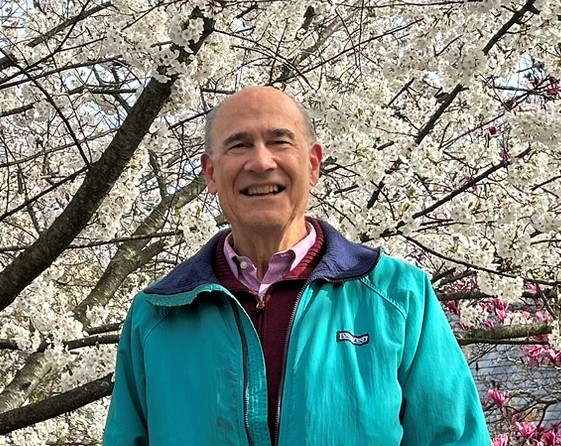
Dr. Hallett is an NIH Distinguished Investigator and the Chief of the Human Motor Control Section, National Institute of Neurological Disorders and Stroke, NIH, Bethesda.
#53: Mark Hallett – Putting Transcranial Magnetic Stimulation on the map.
Dr. Mark Hallett is arguably the person that put transcranial magnetic stimulation (TMS) on the map. Besides that, he is an authority in the field of movement disorders and motor control, with specific focus – spread throughout the years – on Parkinson’s Disease, dystonia and functional movement disorders. In our conversation, Dr. Hallett shares anecdotes from the early time of the TMS field, his large number of mentors and even larger number of mentees, how he was able to treat the pianist Leon Fleisher with botolinum toxin, the enigmatic pathomechanism of dystonia, the mysterious cases of the Havanna syndrome, and his work with functional neurological disorders. We include guest questions by none less than Drs. Mark S. George, Mike D. Fox, Christos Ganos, Robert Chen, Joseph Claßen, Shan Siddiqi and Joseph Taylor.
Dr. Hallett is an NIH Distinguished Investigator and the Chief of the Human Motor Control Section, National Institute of Neurological Disorders and Stroke, NIH, Bethesda. He trained at Harvard Medical School, NIH, Massachusetts General Hospital and the Institute of Psychiatry in London. He is past President of the International Federation of Clinical Neurophysiology and the President of the newly founded Functional Neurological Disorder Society. Dr. Hallett is also remote past President of the Movement Disorder Society and past Editor-in-Chief of Clinical Neurophysiology. He has won many awards including, in October 2019, the World Federation of Neurology Medal for Contributions to Neuroscience. His work mainly deals with principles of motor control and the pathophysiology of movement disorders. He authored >1,200 scientific papers with more than 160,000 citations and has an H-index of 212. According to research.com, Dr. Hallett is the 75th most cited researcher in the US, and 104th in the world.
Mark Hallett 00:00That one or the other of them would always be in the hospital to help us if we needed help, and that was true. Ray Adams came very early in the morning and was always there. TMS was a similar type thing, I think. I wasn't the only person that was intellectually stimulated by the fact that you could see it actually. He showed me that when blind people read Braille, they do increase the activity of the sensory motor cortex more than you would expect. But the interesting finding was that... But this is another example in our work where we were demonstrating this very interesting phenomenon and showing that this interesting phenomenon was actually functional. Welcome to Stimulating Brains.
Andreas Horn 01:16Hello and welcome back to Stimulating Brains. As many episodes, this episode is truly special. And I had the big honor to talk to Dr. Mark Hallett from the University of New York. There are so many things to say about Mark, and I don't know where to begin, but I'll read a little bit about his short bio. So Dr. Hallett is an NIH distinguished investigator and the chief of the human motor control section at the National Institute of Neurological Disorders and Stroke in Bethsa. He trained at Harvard Medical School, NIH Mass General Hospital, and the Institute of Psychiatry in London. From 1976 to 1984, Dr. Hallett was the chief of the Institute of Psychiatry in London. Dr. Hallett was the chief of the Institute of Psychiatry in London. Dr. Hallett was the chief of the Institute of Psychiatry in London. Dr. Hallett was the chief of the Clinical Neurophysiology Laboratory at the Brigham and Women's Hospital and Roast Associate Professor of Neurology at Harvard Medical School. 02:03From 1984 on, he has been at the NIH, where he also served as Clinical Director of NINDS until July 2000. He's past president of the International Federation of Clinical Neurophysiology and current president of the newly founded Functional Neurological Disorder Society. Dr. Hallett is also remote past president of the Movement Disorder Society and past editor of the New York Times. Dr. Hallett was also remote past president of the National Journal of Medicine, National Journal of Medicine, National Journal of Medicine, National Journal of Medicine, National Journal of Medicine, National Journal of Medicine, National Journal of Medicine, National Journal of Medicine, National Journal of Medicine, National Journal of Medicine, National Journal of Medicine, National Journal of Medicine, National Journal of Medicine, National Journal of Medicine, National Journal of Medicine, National Journal of Medicine, National Journal of Medicine, National Journal of Medicine, National Journal of Medicine, National Journal of Medicine, National Journal of Medicine, National Journal of Medicine, National Journal of Medicine, National Journal of Medicine, National Journal of Medicine, National Journal of Medicine, National Journal of Medicine, National Journal of Medicine, National Journal of Medicine, National Journal of Medicine, National Journal of Medicine, National Journal of Medicine, National Journal of Medicine, National Journal of Medicine, National Journal of Medicine, National Journal of Medicine, National Journal of Medicine, National Journal of Medicine, National Journal of Medicine, National Journal of Medicine, National Journal of Medicine, National Journal of Medicine, 75th most cited researcher in the US and 104th in the world. 03:01Now beyond this more formal introduction of Dr. Hallett, I think what makes him truly remarkable is also his legacy of mentorship. There are so many famous people that trained under Mark and rose to giants in the field of TMS and movement disorders. As you will hear, two of the most influential TMS researchers such as Mark George and Alvaro Pascualione have trained under Mark and you can pinpoint their scientific beginnings to Mark. And as I'm German, I knew that two of the academic neurology chairs in Germany trained under Mark, but I learned after talking to him that it's actually four that trained with Mark and that's four out of maybe 15 counting the bigger university hospitals in the country. Speak of legacy. In our conversation, we talk about the origins of TMS and how Mark potentially single-handedly put TMS on the map together with maybe John Rothwell and some other folks that were
Mark Hallett investing investigating TMS early on. And we also then talk about his involvement in movement disorders 04:02such as Parkinson's disease, dystonia, athertosis and more recently functional neurological disorders. So I'm pretty sure you're gonna enjoy this conversation as much as I did. Thanks for tuning in Stimulating Brains with Dr. Mark Hallett.
Andreas Horn So, Dr. Hallett, Mark, it's fantastic that you could join us. So thank you very much for your time. You just told me how busy you are right now, despite retirement. And so I really honor that, and it's fantastic that you could take the time. As you may know, I often start with the first question about hobbies, and I will have already introduced you more formally by now, so we can jump right in. So before we get into science, what do you do when not
Mark Hallett involved in
Andreas Horn work or science or so? Right. So I do try to get a little bit of exercise. I do try to read for
Mark Hallett 05:03pleasure in the sort of small moments. I enjoy vacations, actually, and particularly vacations in warm places and particularly in the winter. Nice. So my wife and I have usually in the last few years and now more recently done more time in warm places in the winter like Hawaii and the Caribbean. I also like traveling to other places as well. I like traveling really all over the world. All the places are fun, and when I get there, one of my favorite hobbies is photography. So I like to take pictures of the
Andreas Horn different things that I find interesting. Great. So and I suppose that I should
Mark Hallett 06:00also note that I really enjoy being with our family. This is one thing that my wife and I are particularly lucky we get along very well with our children and grandchildren and we enjoy visiting them and even also traveling with them.
Andreas Horn Fantastic. What has been your favorite travel destination of all times?
Mark Hallett Ah you know that's always always difficult. People ask me that often and it's hard to say. I guess one of the ones that I really enjoyed a lot was a family trip that we took to the Galapagos Islands. Wow. And I must say that I really enjoyed it. I think it was a really good experience. I must say that that was so good from so many points of view that it's and it clearly makes it a very top-ranked vacation. Yeah. Yeah. We first of all went 07:04with the family so it was a lot of very nice together time but they are very
Andreas Horn interesting places to visit. You can see where Darwin was. You can get Yes.
Mark Hallett a view that he got of the different animals and the different types of locations. So there's history there. There's a lot of nice outdoor activities of various kinds with different animals, plants, geology. Great. So it it really is a terrific vacation and I guess when people ask me about vacations I often do
Andreas Horn recommend that one. Sounds good. And the photographer? And the photography is is any of that publicly visible? Any of your pictures or is that all private? Well it's largely private. If you ever come and visit my
Mark Hallett office the NIH you'll find my pictures all over there. Great. And actually you 08:04know now that you asked that question and I hadn't thought about this in a long time but there was a period of time maybe about a bit about fifteen years. 20 years ago where for a couple of years, I think it was largely through the American Academy of Neurology and maybe in the American Association of Electrodiagnostic Medicine. They tried to raise money with auctions. And I'm not sure that I don't think they're going on anymore, but there were these auctions. And I actually donated some of my photographs to those auctions. Oh, wow. And people actually bought them. I'm sure. I would buy one.
Andreas Horn Yeah.
Mark Hallett So there are some of them around. I don't think you'll find them in any museum, but you may find them occasionally in other people's offices or homes or something like that. 09:08I'll follow up later.
Andreas Horn You don't have to answer now, but maybe you want to send us one for the website for this podcast so we can maybe… Yeah.
Mark Hallett …exhibit one of your favorite pictures if that could be an option.
Andreas Horn Anyways, moving on, who were your key mentors in your career and then also turning points that led to your fantastic career?
Mark Hallett Yes. Well, thank you for that question. I have actually been thinking a lot about it in recent years for two reasons. One, I have retired recently. And I spent… I spent my retirement talking about my mentors.
Andreas Horn And also about a year ago or so, I was asked by the movement disorder group in the Commonwealth of Virginia to give a lecture on the last 50 years of my career and what was happening in neurology.
Mark Hallett 10:12And I thought about my mentors during that period as well. So, there's really a very large number of them. As far as I'm concerned, I was very lucky in my mentors over the years. I had a lot of very important influences. And I think that that certainly helped to move my career along. Let me just… I don't know. I've just mentioned a few of them. In this regard. I suppose the most obvious one is David Marsden.
Andreas Horn Yeah.
Mark Hallett Who was, I guess, my last mentor. And I took a fellowship with him after I finished my neurology residency and before I took my first job. 11:05And I think as everyone knows, he was a very important figure in the history of movement disorders along with Stan Bond. Who I also got to know very well. They were really the founders of the modern field of movement disorders. And he was a very good thinker and inspired me in really very many ways. Both in the physiology of movement and in understanding clinical movement disorders. So, he was a very good thinker.
Andreas Horn Yeah.
Mark Hallett He was really an important person. My mentors during neurology residency, of course, are also important to anybody who is a neurologist. And I was lucky to be at the Massachusetts General Hospital in the last days of Raymond Adams and C. Miller Fisher. 12:07And it's hard to imagine a combination of neurology mentors better than they were.
Andreas Horn Yeah.
Mark Hallett They are, everyone knows them as very important founders of the field. Again, with large emphasis on clinical neuropathological correlation. And I learned a lot from them. As Ray Adams told us at the beginning of our residency, that one or the other of them would always be in the hospital to help us if we needed help. And that was true. Ray Adams came very early in the morning and was always there. And C. Miller Fisher arrived a little bit later but stayed there very late at night. And so, if we ever needed them for anything, we could just, you know, give them a call and get some help from them. 13:07And very important guidance. There are many other people. I suppose just in terms of directing me to the field of movement disorders, another important person in that regard would have been Malin DeLong.
Andreas Horn Yeah.
Mark Hallett And Ed Everts.
Andreas Horn Yeah.
Mark Hallett When I was a fellow at NIH, I was actually doing membrane biophysics. But there was a very nice weekly motor control meeting that Ed Everts organized.
Andreas Horn Yeah.
Mark Hallett Malin was a fellow at that time. And we also had a seminar or a journal club for anybody who was interested in neuroscience. And Malin was part of that journal club. 14:00And Everts and Malin and perhaps some other people which I could mention if I went into more details influenced me to get interested in the motor system. And then what I did was I went to the University of Michigan. And then when I was in my residency and had an opportunity to start some research, I decided to work in the motor system. And it was because of that background influence that we had in the journal clubs. Even though I was working in membrane biophysics, I still was learning about the motor system.
Andreas Horn Fantastic.
Mark Hallett Thank you.
Andreas Horn exactly know what membrane biophysics means.
Mark Hallett Yes, so I was actually studying the biophysics of action potential production. Okay, so membranes of neurons. Yes, and we were working with the squid giant axon.
Andreas Horn 15:05You know, looking back on that time, it was very interesting because a lot of our
Mark Hallett observations then have been converted into other types of things. For example, we were using voltage-sensitive dyes in order to study the biophysics of the membrane. Well, that was helpful at the time, but of course membrane-sensitive dyes have now been used as markers of action of cells that have been used in multi-arrays to understand the way that neurons are functioning.
Andreas Horn Okay. Okay.
Mark Hallett And interact with each other. We also identified that some of those dyes that were able to be polarized lined up in the direction of axons. And some of that information has been used as a basis of the biophysics of DTI and MRI.
Andreas Horn 16:03Yeah, great.
Mark Hallett So, you know, a number of these very basic types of observations. And then actually another observation that we made at that time, it had been speculated that very strong speculation, of course, that calcium entered an axon during an action potential, but it had never been demonstrated. Oh, wow.
Andreas Horn Okay.
Mark Hallett And so we were the first ones to demonstrate that. Oh, wow. I did not know that. So there were a lot of things that I did in those years doing membrane biophysics that I haven't gone back to.
Andreas Horn Yeah.
Mark Hallett I mean, I think it's a little bit, but they were actually tough.
Andreas Horn Fantastic. Fantastic.
Mark Hallett So, I have to ask, small jump, but since I am sitting in the Brigham and Women's Hospital in Boston, you from 76 to 84, you were the chief of the clinical neurophysiology laboratory here at the Brigham and Women's and Rose's associate professor of neurology at Harvard 17:05Medical School. Before that, you graduated from Harvard with an MD. And trained at the then so-called Peterbend Brigham and, as you mentioned, Mass General Hospitals.
Andreas Horn So can you summarize a bit what Boston meant to you and how your days were even as a student and then going up to associate professor?
Mark Hallett You spent a long time here in the city.
Andreas Horn Any memories from Boston?
Mark Hallett I'm sure of it.
Andreas Horn Yeah. What are the salient ones?
Mark Hallett Well, it's hard not to have memories. Cliff Saper once introduced me as Preparation H. Since I had gone to Harvard College and Harvard Medical School and did my training at Harvard and then started on the Harvard faculty, I had been there for really much of my career. So that was Preparation H. So I certainly had, when I got to medical school, of course, the Brigham was one of 18:05the important hospitals. And I went in. I was in and out of the Brigham all through medical school. And then I was happy to do my internship there. At the time, H. Richard Tyler was the head of neurology there. And then fast forward a number of years to when I was looking for my first job. And then I was sort of sort of sort of sort and Tyler had an opening and I was very pleased to accept the opportunity to come back and work there. My job was to run the clinical neurophysiology operation which I did pretty much on my own. At that time, it's hard to believe given the size of neurology departments now, but neurology at that time was just 19:06a subsection of medicine. It wasn't a department. And we just had four
Andreas Horn neurologists. Four? Okay, four plus residents I assume. Right, well we also had residents.
Mark Hallett There were just four of us faculty and though the neurophysiology lab was entirely my area and so I spent at least a I guess probably 60-70 percent of my time doing clinical neurophysiology, 30 percent doing clinical and another 50 percent in my spare time doing
Andreas Horn research. Makes sense, okay. Yeah, I can imagine. Yeah, wow, that's really little
Mark Hallett for a big hospital like the Brigham. It's hard to imagine now.
Andreas Horn You're totally right. Interesting. And so, can I ask you a question? 20:05Can I ask where did you live in Boston? What do you like in private life? What do you miss of Boston maybe? Right, so well, I guess most relevant is when I was in
Mark Hallett medical school and I had actually married after my first year in medical school. My wife and I lived in Brookline during my residency. We lived at Charles River Park, which everybody knows there are the same apartment buildings next to the Massachusetts General Hospital, and then when I came back on the staff, I lived back in Brookline again. Brookline was advantageous, I could walk to work, and I really enjoyed that part of it. I have, of course, a huge number of memories about Boston after having been there for, you know, 20 years altogether, but I wasn't that unhappy to leave. 21:04Sure. Sure. Sure. Sure. 20:53Sure. 21:05I had also spent two years in Washington as a fellowship between internship and residency. That was during the Vietnam War, and that's another whole story about how people were moved around during the Vietnam War. But it worked out well for me, having been at the NIH as a fellow during that time. But I enjoyed Washington, so I was pleased to go back to the NIH. After having been at the Brigham for about eight years or so, and happy enough that I spent the rest of my career there.
Andreas Horn Yeah, yeah, of course. I live in Brooklyn, by the way, had to say it.
Mark Hallett And I think Mike Fox just became the Raymond Adams Chair of Neurology now.
Andreas Horn And of course, Miller Fisher rings a bell. And so it's fantastic to see, you know, the big, many big names at the time. 22:04And so, yeah, I can also walk to work, so I can relate to that. It's fantastic.
Mark Hallett So I think from 1984, when I was born, you were at the National Institute of Neurological Disorders and Strokes, or the NINDS,
Andreas Horn where you also served as clinical director of NINDS until July 2000. What were your roles at NIH? And can I also ask you about your career? I'll ask, did you continue to see clinical patients there at that time?
Mark Hallett Sure.
Andreas Horn So, first of all, it is interesting that names changed a lot from time to time.
Mark Hallett When I went down there, it actually wasn't NINDS, it was NINCDS. It was the National Institute of Neurological and Communicative Disorders and Stroke.
Andreas Horn 23:00And at some point, I've forgotten exactly when it was.
Mark Hallett Communicative Disorders and Strokes. And then the NINDS split off because the otolaryngologists wanted their own institute. So then it became NINDS at that time. So when I went down there, I had two jobs. One was my research position, which was the head, which I set up my own section called the human motor control section. And the second one was clinical director, as you pointed out, that only lasted 17 years. A long time. That was an administrative position in which I had responsibility for running the clinical program and dealing with all of the clinical issues, the nursing staff, clinical facilities, clinical procedures. 24:00And I was also responsible for the medical facilities, clinical neurological consults to the rest of the NIH hospital and so on. And then in my research side, I set up a group interested in motor physiology. But as with most of the groups on the clinical side of the intramural program, we also did clinical training of fellows. So I always had clinical neurology. I had clinical neurologists who were training as well as doing research. So we had an active clinical program from the very beginning. And that I continued even when I stopped being clinical. But just to give you one anecdote from my job as being clinical director. There are many, of course. But I'll just give you one fun fact. One fun one. 25:00I guess it wasn't that much fun.
Andreas Horn But it's one interesting anecdote.
Mark Hallett So as I mentioned, it was NINCDS. And therefore the institute was responsible for neurology, neurosurgery, and otolaryngology. That was our responsibility. NINDS has always had neurologists in the program. And they were very, very good. They were very good doctors and neurosurgeons. But when I arrived there, we had no otolaryngologists. Even though we were responsible for otolaryngology. So one Sunday night I got a telephone call late on Sunday night from the NIH. From one of the doctors there who said that they had a patient who had a severe posterior nose bleed. And would I help them with that problem. Now, physicians will immediately identify the fact that posterior nose bleeds are extremely important. 26:08Because people can easily bleed out and they're very hard to control.
Andreas Horn Which is why I got that call.
Mark Hallett But so as the clinical director, I was responsible. But we had no otolaryngologists. So that's what I said. And so I told the person who called. I said, well, you know, I understand that I'm responsible. And this is an important problem. But I can't really help. I don't know how to deal with a posterior nose bleed myself.
Andreas Horn Why don't you just call the general surgeons and see if they can help you.
Mark Hallett And the guy said, well, I am the general surgeon.
Andreas Horn Okay.
Mark Hallett So I said, well, just do your best. And I heard the doctor. And I hung up. So I told Joe Martin that story. 27:04Joe at that time was the chair of neurology at the Mass General. And he said, well, at least you had a good department of transfusion medicine at the NIH.
Andreas Horn Yeah. Interesting.
Mark Hallett So that gives you an idea about my clinical responsibilities that I have.
Andreas Horn Yeah. Very interesting. So because, you know, I'm also, I live in the U.S. now. But I'm just two years in. So for many like me, the NIH is a funding agency. But, of course, there's also a lot of research going on on site. And, you know, also there's clinical service. So it's very interesting to hear a bit how the intramural science works. And then also, you know, is it a regular hospital or is it more a research hospital? Do people come there from the Washington and Bethesda area to seek help, like medically? 28:00Is it a normal hospital? Can you talk a bit about that?
Mark Hallett And maybe the same for research. Funding is different.
Andreas Horn Yeah.
Mark Hallett That is an important question. Many people don't understand it. It is a 100% research hospital.
Andreas Horn Okay.
Mark Hallett Patients can come there only by invitation.
Andreas Horn Makes sense.
Mark Hallett And every patient is on a research protocol. And the hospital doesn't necessarily have all specialists, as you just heard.
Andreas Horn Yes.
Mark Hallett So in subsequent years, I think things improved. And we made sure that we had adequate coverage in all areas. And at the time I got there, we did have a failure in otolaryngology. But if you run a clinical trial, you can get a good result. But if you run a hospital, you do need expertise in all the different areas. And there are... So given that that is the case, the nature of the patients in the hospital are highly varied. 29:04Some are in the hospital just because it is convenient to do the research. And some of them are in the hospital because they are very sick.
Andreas Horn Okay.
Mark Hallett So there is a mixture of cases. But whatever, they are all... They are all different. They are all on research. And it is probably the largest research hospital in the world.
Andreas Horn Yeah.
Mark Hallett I can imagine. Yeah. Because of that. It is a very large operation.
Andreas Horn And it is 100% research. Got it. Interesting.
Mark Hallett And then research as an NIH researcher, I think one difference is it is typically hard funding.
Andreas Horn Is that correct? Or do you guys also apply to NIH grants within the system? Yes.
Mark Hallett So, yes, we do have sort of very good baseline funding. 30:00And one of the sources... But we can supplement it with other grants. But the grants cannot come from NIH.
Andreas Horn Makes sense. Okay.
Mark Hallett So that we can't mix intramural money and extramural money. Got it. So we could get a grant from a patient foundation or from some other group. But we couldn't get a grant from extramural NIH.
Andreas Horn Okay. Thanks so much for this more basic walkthrough.
Mark Hallett But let's focus more on your personal research. You are famous for many things. I know. But for me, I think two main big factors stick out. One is that while you may not have invented TMS, transcranial magnetic stimulation, you have essentially put it on the map, I think, single-handedly with your team and your mentees and so on.
Andreas Horn 31:00And the other could be that you're a one-of-a-kind expert in movement disorders. And maybe if I interpret correctly, mainly for dystonia, but I'm sure also other rare movement disorders. So your research has always focused on principles of motor control and the pathophysiology.
Mark Hallett And I think TMS has been a tool for you to investigate that.
Andreas Horn Is that a good summary of the big picture?
Mark Hallett Yes, I would say that that's right. My interest has always been in fundamental principles of movement, both how we make movement and how we learn movement. And then how that falls apart in different types of disorders. And I think that's a very important point. And I think that's a very important point. In terms of the disorders, that has varied over the years. In fact, when I first went to NIH in 1984, the field of movement disorders really wasn't very well developed yet. 32:00It was just sort of beginning. And my interest really was in motor control. So I called my research unit the Human Motor Control Section. If I had a question like, Founded it maybe five years later. It probably would have been the movement disorder section
Andreas Horn You got it. Yeah, but at that time was motor control and actually our main project
Mark Hallett Started out was in a stroke recovery Got it
Andreas Horn Because I thought that that was a very interesting issue in motor control How how people recovered from from stroke? Yeah, but I also was interested in
Mark Hallett Parkinson's disease ataxia many different things and I suppose the earliest work that we did There in addition to scope was on ataxia and Parkinson's disease 33:01and then diseases have varied over the years that I've focused on so for a Long time as I say we did Ataxia and then that sort of faded off we got interested in essential tremor and that Went to some extent Tourette's syndrome Parkinson's disease has always been in the background. There's been sort of a steady level of Parkinson's disease research And then we got interested in dystonia. I suppose because of the botulinum toxin business When and botulinum toxin came along and then we got interested in that and then we got interested in the And that sort of spurred my interest in that field which is true was a clear area of emphasis for many years and Then in the last 15 20 years I've moved my main emphasis to functional neurologically
Andreas Horn 34:02Yeah, so I've
Mark Hallett Been through the whole the whole gamut of different movement disorders and ! different movement disorders and different movement disorders and disorders over the years and but The general principles of motor control of course are similar. So that's been sort of the basic
Andreas Horn foundation and yeah, actually I'd like to say that the different movement disorders help us get different insights into
Mark Hallett to the normal principles if your basic interest as mine is is in motor control and how the brain works to make movement and the more types of lesions you have Or the more types of pathology you have better insights you can get into the way that things work or don't work And of course as a clinical neurologist when we got interested in the disease We also got interested in its therapy and all different other aspects of that 35:06so it These things tended to sort of spread out Now in relation to TMS I would say that It was just in a sense. What are the tools that came along that That I thought could be useful in our studies I mean now that you could say that also is true pet and and MRI and all these different tools As they came along and we thought that they could be useful We began to employ them in our work 36:09in fact I was just talking to somebody about this the other day we had been doing all of our functional studies with neuroimaging using blood flow PET and then functional MRI came along. Well we did a number of studies trying to see the relationship between blood flow PET and fMRI
Andreas Horn makes sense sure. Just sort of basic studies
Mark Hallett trying to understand there's general principles about how you could use it and that was in a way similar with TMS so in a way you could say I have always liked to use different fun tools as they come along 37:03and TMS was not necessarily unique it was a one of the ones that I certainly thought was going to be useful and as soon as it came along we actually used it and in fact it it goes back in terms of brain stimulation goes back one step further than TMS and that was because of the high intensity transcranial electrical stimulation that's where we actually began and in terms of the history there you and your listeners may well remember that it was this paper by Merton and Morton that first demonstrated that you could stimulate the motor cortex through the intact scalp and that was with a high intensity electrical stimulation. Now there's an interesting story about that actually which I think is worth 38:04knowing and that is that I'm not going to go into much detail about it but I think it is a very interesting story Merton was actually studying muscle and at the time and he wanted Morton who is a very good engineer to create a stimulator that would activate muscle fibers directly as opposed to stimulating the intramuscular nerves which you can stimulate at a lower threshold so they wanted a high intensity stimulator. So Morton built it for him and then ! The the the the the the the the the the the the the the the the the the the the the the the the the Merton tried it on the muscle and it worked just as he wanted. And then he said, gee, maybe it will be strong enough to activate the brain. So he put it on his head and it worked. And he published that in Nature. I was not aware of that. Wow. Okay. So that excited everybody interested in brain physiology. 39:02And that began to be used for various things. And John Rothwell particularly picked up the method. Yes, Merton and Morton and Marsden had worked together. And so there was a very close collaboration there. And John Rothwell was working as the principal physiologist in Marsden's lab at the time. He picked that technique up and began to use it. And I was very jealous. I wanted to do that too.
Andreas Horn And this is an interesting story.
Mark Hallett John was coming over to visit us at NIH at one point. And I asked him to bring over a stimulator. Great. Now, of course, it was not FDA approved. Taking one of these stimulators across the ocean wasn't necessarily a good idea. And had there been a heightened security of various kinds, he might not have made it. 40:04But in any event, he actually brought the stimulator. And he brought the stimulator over. And we tried it in the lab on ourselves. And I thought it was a great tool. So we actually kept it. And then we ordered it from the company subsequently. And the company sent us an empty box. Because we already had it.
Andreas Horn And sorry, that was electrical or magnetic? Yes. Okay. Yes.
Mark Hallett It was a high intensity electrical.
Andreas Horn And since that is not used anymore, at least I'm not aware, is that painful? Yes.
Mark Hallett It was very painful.
Andreas Horn Okay.
Mark Hallett It was very painful. And fortunately, within a very short period of time, Barker first was able to work out the engineering to do transcranial magnetic. 41:03And that rapidly took over. But again, you know, just for a number of years, it was of interest to compare electrical and magnetic.
Andreas Horn They don't actually stimulate the brain exactly the same way.
Mark Hallett Sure.
Andreas Horn And it was very interesting to figure out why they stimulated the brain in a different way. And could you learn things from electric that you couldn't learn from magnetic and vice versa? Yes.
Mark Hallett So there was a lot of work that went on in that regard. But the studies with the transcranial electric were always much harder to do because it was very painful. I'm sure. But I suppose there's not very much going on with high intensity transcranial electric anymore. But of course, low intensity electric is really very popular now. Of course. TDCS.
Andreas Horn Yeah, yeah.
Mark Hallett 42:00I think the high intensity has been switched to low intensity.
Andreas Horn But I would say that there are still potential experiments where transcranial electric could be advantageous. But it's hard to get cooperation from patients in that regard. And to get the story right, so you trained with Marsden. That was in England, right?
Mark Hallett Correct. And Rothwell was also in England. And so. So. So the way you started with TMS, that was you were already at the NIH. So it was a collaboration or you visited or. Oh, yeah. Oh, yeah. Right.
Andreas Horn Okay.
Mark Hallett Right. Right. Long time later. So Marsden's lab, when I came there, I came there in 1975 for a year. There was a PhD student in the lab along with me. And the PhD students were PhD students that were. Were sent to David Marsden from Pat Merton in Cambridge. 43:05And the student there was Jane Adam. And she was finishing her PhD. So she finished her PhD in July 76, when I finished my fellowship and we both left. And Pat Merton sent John Rothwell to Marsden's lab as the next PhD student after Jane Adam. So John came to the lab in replacement of Jane Adam and I had that I was also leaving at that time. So we didn't really overlap.
Andreas Horn Yeah.
Mark Hallett At that point. But then it was many years later that was the beginning of TES and TMS. Got it.
Andreas Horn Okay.
Mark Hallett Super.
Andreas Horn So. Can we talk about TMS a bit? So how was your first, how did you first come into contact with it?
Mark Hallett 44:04Were you visiting in London or in the UK or was it, you know, communications you had
Andreas Horn or how did you see it and then say we have to play with that?
Mark Hallett Right. So I guess I first saw it demonstrated at a meeting of the International Federation of Clinical Neurophysiology. The International Federation of Clinical Neurophysiology was always, always had very good meetings. They were held nearly every other year, but they had slightly different names. I won't go into all that at that time. And they often had demonstrations of new technologies. And actually, many of those demonstrations were, you know, they were, you know, they were very important demonstrations. And one of them was the, at least the first time I saw a transcranial magnetic stimulation 45:04demonstrated. And I, as I mentioned, we already were using TES. Sure. And we'd heard about TMS being much less painful. And when I saw TMS, I said, gee, we really need that.
Andreas Horn Yeah.
Mark Hallett We're using TES. But again, while we're just talking about anecdotes of various kinds and the sort of importance of the International Federation of Clinical Neurophysiology demonstrations, another one that comes to my mind is, was a very important demonstration of the value of single fiber EMG. Mm-hmm. There was... There were various techniques to identify myasthenia gravis that had been suggested. Repetitive stimulation was the sort of standard, and it still is used much of the time. 46:05Sure. John Desmet had come up with a very complicated method to use repetitive stimulation to make it more sensitive. And Eric Stahlberg had invented single fiber EMG. And was using that to identify patients with myasthenia in a sensitive fashion. And at one of these demonstrations, there was a comparison of the Desmet technique and the Stahlberg technique on a patient who had the possibility of subtle myasthenia.
Andreas Horn Yeah.
Mark Hallett John Desmet spent a half an hour studying his patient and failed to show any abnormality. Eric put his single fiber needle in. And in about 10 seconds had identified a motor unit pair with increased jitter indicative of myasthenia. Well, that convinced me and many other people that there was value in single fiber EMG. 47:01Sure. And I think that that was an important demonstration. And TMS was a similar type thing, I think. I wasn't the only person that was intellectually stimulated by the fact that single fiber EMG was a very important thing.
Andreas Horn Yeah.
Mark Hallett And I think that the other thing that was really interesting was the fact that you
Andreas Horn could see it actually demonstrated in person at that meeting. And at the time, could you then just, like, was there a company already? Could you just buy a device? Or was it always custom?
Mark Hallett No, no. No, that was much more difficult. It was, you know, difficult to get them. They were being made in England, but it was hard to get a hold of one. Then there was a U.S. company that came along, and that was the Cadwell company. And the Cadwell company had really a very good machine for doing TMS. 48:03And actually, they had a variation that could do repetitive TMS. And we got a Cadwell machine first. And then Alvaro Pasqualioni came as a fellow. And he had been using repetitive TMS during his neurology residency in Minnesota. And he had a relationship with the Cadwell company. And with his relationship and our relationship with Cadwell, we got one of the first, or probably the second or third, repetitive TMS. And we had two repetitive TMS devices from Cadwell. And then we began using it in a very intensive way. And in the beginning, as I'm going back to things we were talking about before, while 49:02our intention was to use it for studies of motor control, in the beginning, we just had to see what it did. Sure. Of course.
Andreas Horn Yeah, yeah, yeah. Yeah.
Mark Hallett So a lot of our studies in the beginning were just very basic studies.
Andreas Horn Yeah. Yeah. studies trying to understand what TMS did, how it activated the brain, what was the effect
Mark Hallett of repetitive stimulation. And one of the things, of course, that was a significant issue, and I suppose this is worth at least a couple minutes of discussion, is safety. Safety of TMS.
Andreas Horn We didn't really have any idea of what was safe with repetitive TMS and what wasn't.
Mark Hallett But the IRB allowed us to move ahead cautiously with different things. And at one point, we had a seizure in a normal volunteer. 50:05And that was very frightening. To a certain extent. To a certain extent. To a certain extent. To us, of course, as well as a volunteer. And the IRB wasn't happy with that either. And they shut us down for a very short period of time. We told them, oh, this appears to be rare. And, you know, we'll keep our eye on the situation. And we, you know, we gave them parameters which we'd use and so on. They said, all right, go back into business again. We went back into business. And then within a short time, we had another normalization. We were like, oh, we were like, oh, we were like, oh, we were like, oh, we were like, oh, we were like, oh, we were like, oh, we were like, oh, we were like, oh, we were like, oh, we were like, oh, we were like, oh, we were like, oh, we were like, oh, we were like, oh, we were like, oh, we were like, oh, we were like, oh, we were like, oh, we were like, oh, we were like, oh, we were like, oh, we were like, oh, we were like, oh, we were like, oh, we were like, oh, we were like, oh, we were like, oh, we were like, oh, we were like, oh, we were like, oh, we were like, oh, we were like, oh, we were like, oh, we were like, oh, we were like, oh, we were like, oh 51:09people to discuss the safety of TMS and in particular our TMS and see if we can come up with standards that will be safe and then we can come back to you and maybe we can go back in operation. So the IRB agreed to that and then we set up a safety study, a safety meeting that we held in Bethesda, Maryland and that went on for several days and one of the issues, the biggest issue of concern, there were a lot of issues of concern, but the biggest issue of concern was seizures. And not only seizures but the possibility of kindling. That is, if you create a seizure in a normal individual, could that seizure then lead to 52:05a later event of a seizure developing either there or at that spot or somewhere else in
Andreas Horn the brain?
Mark Hallett So we had probably a full day was devoted to epileptogenicity and kindling and things of that sort.
Andreas Horn Very interesting types of studies, you know, everyone, people didn't know that much about
Mark Hallett it. Of course, it's very important, it's early days.
Andreas Horn Yeah, makes sense.
Mark Hallett And so we finally came up with a consensus. We built a table of what we thought would probably be safe intensities. We built that up on the basis of our own experience at NIH, studies that Alvaro had done, studies that Robert Chen had done, Leo Cohen, Eric Wasserman, a lot of people had been involved 53:04with studies. And we had at that time, and we pulled all that together, what appeared to be safe and then what appeared to be problematic, particularly our two seizures. And we developed a safety table that was published. Eric Wasserman took the lead in publishing that first safety paper. We brought the information to the IRB and they let us go ahead with studies again. That's great. Thank you. Thank you. However, within a short period of time, we had another seizure. Oh, no. For you. So what it turned out is that we had identified TMS intensity, TMS frequency, and the length of a train of our TMS as being relevant. 54:00What we hadn't identified as being potentially relevant was a...
Andreas Horn Yeah.
Mark Hallett ...an interval between trains.
Andreas Horn Okay.
Mark Hallett And one of our investigators at that time, specifically Jordan Grafman, had done a study in which the intervals were very short. And that's what did it. A very short interval between trains. So it was a parameter that we hadn't identified as being potentially relevant, so that led to another paper in which we had a...
Andreas Horn Yeah.
Mark Hallett ...another paper in which we had a... ...another paper in which we wrote dealing with the issue of interval between trains.
Andreas Horn Yeah.
Mark Hallett ...as being a fourth parameter of our TMS that would be relevant back to the IRB, the IRB agreed, they allowed us to go back to work again.
Andreas Horn Okay.
Mark Hallett And from that point forward, we've had no more seizures in normal volunteers.
Andreas Horn Okay. 55:00Okay. Okay.
Mark Hallett So the TMS that we developed now the order of 30 years ago has been reconfirmed at the second safety meeting that we organized and the third safety meeting that we organized in roughly 10 years.
Andreas Horn Yeah.
Mark Hallett So that has been the guidance for safe delivery of our TMS ever since.
Andreas Horn Yeah.
Mark Hallett So it's...
Andreas Horn Yeah. ...the whole story is an interesting story how this all... Yeah.
Mark Hallett 56:00really big names. Alvaro Pascual Leone is one. Mark George, I think, had a different supervisor but did TMS in your lab as well. In fact, I asked a few people for guest questions and Mark George replied and has a guest question for you. He asks, do you regret letting psychiatrists, particularly Dr. George, do TMS in the NIH labs
Andreas Horn in the early days?
Mark Hallett Well, I mean, it's the exact opposite, of course. And Mark knows that very well. I have always liked collaboration. So that has been something that I've done all my career. I remember, so at the time, we had the only TMS lab, of course, at NIH. They weren't that common anyway around. But Mark had the excellent idea that maybe you could treat depression using artificial intelligence. So he had the TMS. He had been doing studies in neuroimaging using PET 57:06and had identified that there was hypometabolism of the left dorsolateral prefrontal cortex in patients who were depressed and came to me with the idea that if we could indeed change the excitability of the brain using this new technique, we could do it. Whether if we directed it to that hypometabolism, we could increase the metabolism and we could help depression. Well, gee, that sounded like a good hypothesis to me. And I said, sure, let's go ahead. Go ahead. You're welcome to use it as you wish. And Eric Wasserman particularly got interested in helping Mark with those studies. And they proved to be one of the most successful things that he had ever done. And they proved to be one of the most successful things that we did.
Andreas Horn Yeah.
Mark Hallett So I certainly don't regret getting involved 58:05with psychiatrists in this regard. I have always enjoyed my interaction with psychiatrists and actually with my current interest now in functional neurological disorders, I'm still very much involved with psychiatrists at all levels. Great. Other famous mentees, include two of the neurology chairs in Germany, university hospital chairs. I think we only have around 36 hospitals and larger ones, maybe only 15. And two of the bosses of university hospitals are your trainees. Josef Klassen is one in Leipzig and Christian Gerloff in Hamburg. And there's a guest question by Josef Klassen as well that I'm going to play to you. It's an audio file. So let's try that. Hi, Mark. This is Josef. 59:00It's good to talk to you, even if only via an audio file. It's been a long time since I spent my days in your lab. And I remember it was a great time. It seems funny, though, that that time is considered part of the early days, because even then I felt that the TMS field had matured quite a bit by the mid-'90s.
Andreas Horn So here's my question for you. What was your primary driver to get into TMS research? As a tool to study physiology or as a technique that promised to open up new therapeutic venues? And has TMS delivered on that promise?
Mark Hallett Take care. Very good. Well, yes. I thank Josef for that question. And perhaps just make one more point. There's one more professor that spent time in my group, and that's old Simon. 01:00:04Oh, I did not know that. So he's also chair. So you have three of 15.
Andreas Horn Fantastic.
Mark Hallett Wow. I wasn't aware. Sorry.
Andreas Horn Yeah.
Mark Hallett And I guess if you want to go further in that regard, Gunther Deutschel spent a year sabbatical with us. He wasn't a fellow. Wow. But he was with us also.
Andreas Horn Yeah.
Mark Hallett So he's, of course, the author.
Andreas Horn Yeah. Okay. Yeah. Fantastic.
Mark Hallett So actually four of the professors had spent time in our group. Well, I think that, yeah, my interest really was of the choice of diagnostic or therapeutic. My interest certainly was in diagnostic in the beginning. But not necessarily diagnostic. It was really a physiological tool. Again, my interest was in motor control, and the use in pathological situations was sort of secondary. 01:01:05But that was really the principal interest. But we quickly got interested in therapy after Mark George had shown that it was useful in depression. Then the issue came up. Well, gee, maybe it can be useful in other situations as well.
Andreas Horn But there isn't any doubt that my first interest related to questions of brain physiology, the motor system particularly, and how it might be problematic in different pathological conditions. After depression, what do you think would be the second next lowest hanging fruit for treatment? Which disorder? Yes.
Mark Hallett Well, that's a good question. I've generally thought that Parkinson's disease would be something that could be useful, at least in some regard. 01:02:03It always has seemed to be a low-hanging fruit in some way, but we haven't quite gotten there yet. But maybe it would be useful for some aspect of Parkinson's disease along the way. At the moment, we are doing a study. We're doing a study. We're doing a study. We're doing a study. We're doing a therapeutic study in functional neurological disorders at the NIH. Great. And when I say we, it's really Dr. Sophie Cho because I'm now retired, so I can't actually be involved myself, according to the NIH rules. But we had published a pilot study of this, and then Sophie Cho has taken it now to a double-blind study. So one of the observations that we've made in functional neurological disorders is that there appears to be an over excitability of the amygdala. And for that reason, then 01:03:05we would like to be able to dampen that hyper excitability. Now, TMS as a tool can't quite get to the amygdala very well, correctly. So we are using a method that was developed for stimulation of the hippocampus, that is to choose a spot on the cortical surface that connects to the amygdala and then try to influence the amygdala indirectly. So we have a very well done a study choosing, using FMRI, a spot in the dorsolateral, the left dorsolateral prefrontal cortex that directly, that is directly connected to the amygdala and we're trying 01:04:00to influence the amygdala that way and hopefully dampen down the amygdala and improve functional disorders. We did publish a pilot study of five patients. That study was done by Dr. John He was led by Vera Spagnolo who is one of your colleagues at the Brigham, if you don't know her.
Andreas Horn I don't, I'm sorry. Yeah, okay.
Mark Hallett Now, she is in the psychiatry department. She is one of the psychiatrists there. But she was the leader of that study, leader of that pilot study and now we are, or should I say Sophie is conducting a double blind study. So that one I have high hopes for. Just like in Mark George's study, it has a very strong, I think, pathophysiological rationale. Should we be able to actually dampen down the amygdala, I think it has a good chance of being useful. So, any event, low hanging fruit, I don't 01:05:06know, but in any event, that's the fruit I'm going for at the moment.
Andreas Horn Great. All right. I have two questions. One is, what is the best way to improve the amygdala?
Mark Hallett I think the best way to improve the amygdala is to use a lot of the amygdala. I think the best way to improve the amygdala is to use a lot of the amygdala.
Andreas Horn Okay.
Mark Hallett So, I have two additional guest questions that would fit in here. They are by your academic grandson, so Joe Taylor, who trained with Mark George and is now a dear colleague here also in the psychiatry department at the Brigham. First, he asks, please tell us one of your favorite aha moments from the early days of TMS. Was there a particular day or experimental result that stands out in your memory as one that convinced you that the field had substance
Andreas Horn or potential? Okay. Okay.
Mark Hallett Right, so I guess the one that comes to me is this, it did have an a-ha part of it, but it was a little, let me describe it.
Andreas Horn 01:06:02So one of the most interesting things that we identified during my career at NIH was
Mark Hallett transmodal plasticity. We had been studying the way that blind people read braille. And these were studies that Alvaro Pasqualioni first developed. Because when blind people read braille, they read a lot of it, they use their hand a lot.
Andreas Horn So the question was what happens in the motor system if you use your hand a lot?
Mark Hallett So we were doing studies of motor plasticity and hand use and so on that Alvaro had led. And they were highly productive studies. And then a fellow colleague of mine, Dr. David S. 01:07:00!
Andreas Horn S?! S? S? S? S? S? S? S? S? S? S? S? S? S? S? S? S? S? S? S? S? S? S? S? S? A fellow came in the imaging area, Norihiro Sadato. He was a neuroimager and wanted to do some studies. I said, well, why don't you study this particular technique? Rather than using TMS, let's use, at that time, it was blood flow PET. Because this was earlier than our functional MRI. We were just in sort of transition at that time.
Mark Hallett So he did, and the incredible aha is when he came, when Sedato came running into my lab and said, look what I found. And he showed me that when blind people read Braille, they do increase the activity of the sensory motor cortex more than you would expect if they do that.
Andreas Horn But the interesting finding was they also activated the visual cortex.
Mark Hallett 01:08:00Oh, okay. And that was an incredible observation that since vision wasn't going to the occipital cortex, now somatosensory information was. So then we wanted to know, so we had a correlation, but we didn't know that it was actually functional.
Andreas Horn Yeah.
Mark Hallett And so Leo. Cohen had been out of Leo Cohen had been in the group. He went away for four years to do his clinical training in the United States, and he just came was coming back to the lab at that time.
Andreas Horn And I said, why don't you take this on as a project?
Mark Hallett Use TMS to interfere with the visual cortex as people are reading Braille and see if you can show that the function of reading. 01:09:01Is not as good because you're interfering with the visual cortex. You're not interfering with the central cortex, but you're interfering with the visual cortex. And Leo did that experiment and it worked. Well, we were able to show that you could interfere with the ability of blind people to read Braille if you interfered in the visual cortex. Now, that was a extremely valuable experiment. And showing that that that this part of cortex was actually functional in this regard. And I think that that to me was a very important observation. And other people had showed that this type of stuff worked for that reason.
Andreas Horn But this is another example in our work where we were demonstrating this very interesting phenomenon.
Mark Hallett 01:10:00And showing that.
Andreas Horn This interesting phenomenon was actually functional. Yeah, it's beautiful. Yeah.
Mark Hallett No, it.
Andreas Horn Yeah.
Mark Hallett So these were these turned out to be back to back papers in nature. And and I think that this is these were two of my favorite papers. And it is sort of an aha. In a way.
Andreas Horn Yeah.
Mark Hallett Also, the whole thing is an aha. Score. Three.
Andreas Horn Very nice.
Mark Hallett His second question. Also, Joe Taylor. It would be great to learn about the scientific culture of the early days.
Andreas Horn How did groups with differing viewpoints or priorities navigate each other? How should newly trained brain stimulators build a sense of community that supports differing perspectives without creating fractions of actions? Yeah, that's a that is a good question.
Mark Hallett 01:11:00I guess. In the early days. Maybe because there was so much low hanging fruit to use your face from before. That there was plenty of work to be done. And you could work on a whole variety of areas and you wouldn't be interfering with other people. There were new things to learn that everybody was excited by the findings that everybody else was making. And there was a lot of collaboration. That. Was. Going on at that time. We were in our group always in discussion with John Rothwell's group at London. We were in a lot of active collaboration with Roger Krakow's group in New York City. At that time, we actually published some things together with them. So I think that it was. A. 01:12:00A. A. A. A. Easy. You know, everybody knew everybody else. And people were very friendly and friendly and cooperative. And I suppose, again, it might have been the International Federation of Clinical Neurophysiology that was having meetings, getting international people together on topics like that. That was important. Least in the United States. One of the things.
Andreas Horn It was interesting in terms of clinical neurophysiology.
Mark Hallett Clinical neurophysiology developed in the United States as a EMG specialist group and an EEG specialist. And when TMS came along, neither group was that excited about.
Andreas Horn Okay.
Mark Hallett But the International Federation, where there were a large number of Europeans, where clinical neurophysiology was a unified field. 01:13:00When TMS came along, it was more strongly embraced. The TMS was a very popular subject in the international meeting, so we all held together in these international things much more than any national meeting. So I think that was helpful too in getting people together to collaborate. I suppose these days things
Andreas Horn tend to be, yeah, and also I guess it was easier to get
Mark Hallett academic jobs. There wasn't as much competition as there is now in that regard. Academic positions I think were probably easier to get. There weren't that many neurologists. As I mentioned, we only had four at the Brigham when I started. So I think now things are a bit more competitive 01:14:02in many ways. But I think that the more that people can collaborate on stuff, the better in terms of getting things done. I think that this is now being demonstrated in the genetics area a lot. There had been a lot of, and that's started, there was an enormous competition. I guess there still is to some extent. But a lot of the progress in genetics has come from collaboration. People putting stuff together, getting larger numbers and getting more useful data. And I think that that's very helpful. How to get people collaborating more, I guess, is having the international meetings, having people go and hopefully interact. And I think it's also about 01:15:00connecting in a favorable way.
Andreas Horn Yeah.
Mark Hallett Helping each other move along in this. Great. So I'm sure the early days were full of anecdotes and we've heard a few.
Andreas Horn Do you have maybe some more technical anecdotes of how the coils maybe malfunctioned or how clunky they were?
Mark Hallett Just to paint a picture of, you know, now we buy a device and it works. It's been approved and everything. But at the time, you know, you have to find a way to get it done. That's a big question. and everything, but at the time, I'm sure things were more complicated.
Andreas Horn Yeah, there was a lot of complicated stuff. So, yeah, I'll tell you one of the funny things that happened.
Mark Hallett So in the early days, we were trying to figure out how these different coils stimulated the brain. And we were having a little bit of trouble figuring that out. We needed help from physicists to tell us about what magnetic fields look like
Andreas Horn 01:16:03and how they were likely to stimulate the brain and whatnot. And there were a number of coils that came out with different shapes and different sorts of designs. And in order to understand them, we wanted to know what the windings in the coil were like. How would the coils make?
Mark Hallett Well, none of the companies... None of the companies would tell us. They all were keeping it a trade secret.
Andreas Horn IP, yeah, okay.
Mark Hallett As to what they were, they didn't want to describe what the situation was. We were working with a physicist who said, oh, that's no problem. We'll just X-ray them. So we X-rayed all the coils, and we could see the windings very well on all the coils. Great. And... Then, once they saw the windings, they could then calculate the electric field based on the windings. 01:17:03And so we wound up publishing a paper, which I think was a relatively famous illustration of a side-by-side X-rays of the coils and their calculated electric fields. Great. So you published the trade secrets, in a way. So we published all that. That's one of the stories. Oh, there's another one that just comes to mind at the moment.
Andreas Horn That is that we weren't exactly sure of the direction...
Mark Hallett Another thing we weren't sure of.
Andreas Horn What was the direction of the current flow in the coil? Was it going left? Was it going clockwise? Was it going counterclockwise?
Mark Hallett counterclockwise which direction it was going. 01:18:00And at some point the companies put a dot on it or something to tell us which way was which. But apparently for the coil that John Rothwell was using the company had mislabeled it. And at one point John realized that what he was saying was the current direction was actually the opposite. So he wound up having to publish a paper saying, you know those last five papers that we published, the coil current was actually in the other direction.
Andreas Horn Interesting. It's not my fault.
Mark Hallett Going in the other direction for what we were told.
Andreas Horn There was a lot of interesting stuff going on when we didn't really
Mark Hallett know completely. About all the stuff that was happening.
Andreas Horn Yeah, absolutely. So the field of TMS has since
Mark Hallett 01:19:00exploded. Since, I say it again, you put it on a map. I really think that's accurate. Speaking of huge impact
Andreas Horn maybe there could also have been some doubtful moments where you think oh is this going into the right direction? And here's a guest question now
Mark Hallett from an academic great grandson, Shan Siddiqui who trained with Mike Fox, who trained with Alvaro Pascualeone on the topic. So Shan asks, sometimes when I do something stupid, my father feels personal responsibility even when it's obviously not his fault. As arguably the father of the entire TMS field, do you sometimes
Andreas Horn get that feeling when people misuse it? Particularly when the misuse appears to be motivated by personal profit? Or has the baby grown old enough such that you can let it free?
Mark Hallett Well, I guess first of all I would argue with the premise there that I'm the father of the field. I would deny that. I think that there are a number of people who 01:20:01were more fathering than I was or at least at the same sort of general level. John Rothwell certainly was or has been an extremely important person in this area. And then a number of other people. And then there are people who are more fathering than I was as well. So I don't want your listeners to think that I accept the notion that I'm the father of the field. But to the listeners, he still is the father of TMS. One of the people in that regard.
Andreas Horn Yeah. So, yeah, I never really had a doubtful moment about the utility of the device.
Mark Hallett Hmm. Both for diagnosis and for the use of the device. Hmm. Both for diagnosis and for the use of the device. Hmm. Both for diagnosis and treatment. I mean, we certainly had some downtime when we were concerned about safety. Sure. That I talked about. 01:21:01But I don't think I ever had a moment where I thought, gee, this is a device that's going to not be useful in the long run. I thought the utility was going to be getting more and more. And I was happy to see it spread around in different ways.
Andreas Horn Interestingly, just as a comparison, I've been in this field all along enough that one of the developments that was early in my clinical neurophysiology career was the use of evoked potentials.
Mark Hallett Hmm. Particularly for the diagnosis of multiple sclerosis.
Andreas Horn Yeah.
Mark Hallett Now, that's a different thing. Now, that was an extremely hot topic. People were doing all sorts of evoked potentials for the diagnosis of multiple sclerosis. And I was doing that, too, as a clinical neurophysiologist. 01:22:03But I must say that from relatively early on, I thought it was going to be a technology that would be bypassed. Hmm. I thought that for the purposes of at least the medical field, I thought it was going to be a technology that would be bypassed. But I thought that for the purposes of at least diagnosing multiple sclerosis, that it was not going to be the final answer.
Andreas Horn Yeah.
Mark Hallett That we would be doing it in a different way. And I think that that turned out to be true. People still use evoked potentials. They're useful for certain things. But the main use, by far, was in making the diagnosis of multiple sclerosis. And I was generally doubtful about that. Hmm. Not from the beginning. In the beginning, it was very exciting, of course. When you have a new technology, it is very exciting. But as we moved along, I got the sense that we would be able to do better with other approaches to that question other than evoked potentials. 01:23:05And I think that that turned out to be right.
Andreas Horn Yeah.
Mark Hallett A few more guest questions. One is from Mike Fox. And I think we partly covered it.
Andreas Horn But we can rephrase it. So he asked, as you developed TMS, what clinical application did you have in mind? Was it depression or something else?
Mark Hallett And I think we did cover it a bit. You were more into the movement motor control.
Andreas Horn And then Mark George came along. But can you maybe talk a bit about that impact that Mark had and potentially also then the work that Alvaro did on making the depression story become real? Yeah. How did that take shape? Yes. Yes.
Mark Hallett Well, that was certainly the earliest story in the therapeutic area. And, of course, the way that it started, I guess people may not remember the full details of this. 01:24:05The way that it started was, as you do in many studies with a new therapeutic, you look at normal subjects. So the first studies that we did, or should I say Mark did, were looking at left dorsolateral preformal cortex stimulation in normal subjects to see if they might be happier.
Andreas Horn Okay.
Mark Hallett That's a hard thing to do. But it didn't seem like there was some signal there. Then moved into depression. And the first studies, of course, were just single shots. Mm-hmm. And as we know now, you really need a large number of stimulations before you can actually get a good benefit. But again, with the single shots, there appeared to be, well, there may be something happening. It looks like it's still going to be promising. 01:25:01And that then led to more and more studies where one, whereas we got bolder, I guess.
Andreas Horn Yeah. And we made it longer and more intense and more frequently. And in the beginning, it was a lot of confusion, of course, because there's so many parameters. Where do you stimulate? How much? How long is the train?
Mark Hallett All those issues would come up. And it took many years to really fully mature the technique. And once it got started, a number of people got onto the bandwagon. And the bandwagon to also continue to do that work and to be able to learn more and more about what could be a really good benefit. And I suppose I should note that one of the other early things that I got involved with was with Uli Zangen, Abraham Zangen. 01:26:11He was a fellow in NIDA.
Andreas Horn And he had an idea, along with his colleagues from Israel, in terms of developing a different coil system that would potentially go deeper. And his scientific director introduced Bumi to me. And with the question of, well, what's the best way to do this?
Mark Hallett And he said, well, we have a very good idea of whether we could help him develop this coil system. Which we did. And we showed that potentially, that we showed actually that the field strength fell off more slowly than the coils that we had otherwise been using. 01:27:00And that technology was eventually purchased by Brainsway.
Andreas Horn Yeah.
Mark Hallett Although that was several years down the line from that development. But that coil was developed from the very beginning as a therapeutic coil. Got it. Okay.
Andreas Horn And so the idea from the very beginning with that was, can we do better in therapy?
Mark Hallett And so the notion of using TMS for therapy began to be more important. And I suppose that that really illustrates that. I suppose that I should indicate that I do have a conflict of interest in that regard.
Andreas Horn Yeah.
Mark Hallett Because I got involved with Zangen with that. NIH holds the patent for this coil, which was eventually called the H-coil. And NIH shares the patent licensing fee with the inventors.
Andreas Horn 01:28:06Yeah.
Mark Hallett So we get a small portion of that. So, but I, in my studies and publications and everything, I point out that conflict of interest. So it's particularly important to mention it here when we're talking about this topic. But of course it was something that we got very much involved with because of our basic understanding. And groups' interest in the way that different coil shapes stimulate the brain and how you actually investigate.
Andreas Horn Yeah. It's very interesting to hear.
Mark Hallett And I, you know, did not think about it before that you said single shots was the beginning.
Andreas Horn And it makes sense.
Mark Hallett Obviously, new technology, you simulate just once. But from modern views, that seems like a, you know, ludicrous small amount of dosage. 01:29:05And then, you know, ever since then, it has become ever more, you know, condensed. And I would say that the culmination of this is probably the same protocol by Nolan Williams, who I also had on the podcast. That is, you know, really trying to condense a lot of treatment in a single day and then single week.
Andreas Horn What do you think of that?
Mark Hallett Also, maybe because you mentioned before the Jordan Grafman's trial with, you know, safety.
Andreas Horn Is any of that of concern now? Putting so many pulses in? What do you think about this development of, yeah, dosage increase? Yeah.
Mark Hallett Well, I think when you're dealing with dosage, you do have to go slow in the beginning and gradually ramp up. And I suppose the story is relevant also in relation to levodopa and Parkinson's.
Andreas Horn Yeah.
Mark Hallett Levodopa failed for years in clinical trials. 01:30:02Because the dosage was so low.
Andreas Horn Yeah.
Mark Hallett The dosage wasn't adequate.
Andreas Horn Yeah.
Mark Hallett And the first study that demonstrated its use was not because it was a novel therapy, but because more of it was given. Got it. Yeah. At that time. So this is a, you know, a common situation, but it's the way that you have to do it. And you start low and slow and you gradually build up and see what's safe. And, you know, it's a good thing. You work your way up. People in the pharmacology business talk about that as the maximum tolerated dose. You just sort of work your way up and you see what you can tolerate and what sort of benefit you can get in this type of situation. But in the beginning, that means you can't start out with a massive amount of stimulation. You have to start out. I mean, it wasn't with a single pulse. 01:31:01It was a single transplant. It was a single train of RTMS.
Andreas Horn Okay. Okay. That makes sense. Yeah.
Mark Hallett Right. I mean, we wouldn't have gotten very far with just a single pulse.
Andreas Horn Okay.
Mark Hallett Thanks for clarifying that.
Andreas Horn Yeah.
Mark Hallett So it was a single train, but even that is pretty small, you know, in terms of therapeutic events.
Andreas Horn Absolutely. Yeah.
Mark Hallett So thank you for setting that into relation. So I have another final question. It's a guest question for the TMS part or the NeuroMod part.
Andreas Horn And it's another mentee of yours that you mentioned before, Robert Chen, who is now in Toronto, also very influential.
Mark Hallett And I think from the question, you already know where he wants to direct the talk to.
Andreas Horn And he asked about future of the field. His question is, what do you see as the most promising novel noninvasive brain stimulation technique?
Mark Hallett Ah, yes. 01:32:00Well, Robert has gone on now to be very cleverly using low intensity ultrasound. And I think that that is a very nice advance. And I think that it has both diagnostic and therapeutic implications, just like TMS has had. It has the advantage of being able to go deep. And it has the advantage of being able to do stimulation in depth without stimulation more on the surface, which is one of the problems that TMS has, that you always have to stimulate more on the surface than you can in depth. I must say that, again, in the early days, we tried to convince the physicists that we could do that. And the physicists kept coming back to us and saying, look, you cannot get around this. You cannot get around the rules of physics. So we had to settle for it. 01:33:05I mean, we didn't in the beginning. We didn't believe physics, I guess, in the beginning. But we really should have. In any event, I think that that is a technique which I think is a good one. I think what will probably catch on more is the idea that we have to do more of the same. I think what will be done more, though, is, at least for now, as something, and it's already doing it, is transcranial electrical stimulation of various kinds, either DC or tax. I think that that is so easy to use, so safe, so cheap. efficacy has been demonstrating for it that it has the possibility of much more widespread use 01:34:05than transcranial ultrasound which I which can be used in the clinic but how much is going to be used yet I don't know but it you know it certainly has promise
Andreas Horn but the transcranial electrical stuff which is interesting given that stories I was having
Mark Hallett at the beginning about how the intensity electric was one of the early things that began this whole field again I think that has a lot of problems in terms of yes there are there are many other techniques that are being employed which I think are interesting the interfering electric fields is of some interest, static magnets have some interest, there's a whole variety of things that are potentially out there but I 01:35:00think in terms of getting into common use I would think it would be the low intensity electrical stimulation which is cheap and easy and very safe. It's probably going to be used more and more in terms of therapeutic applications. Sounds great. So moving to movement disorders finally, I'm sorry that I take so much of your time but in 1964 the famous pianist Leon Fleischer lost the use of his right hand due to musicians dystonia and based on Wikipedia you pioneered experimental Botox injections to treat his dystonia. At the time,
Andreas Horn was this a normal thing to do and if not how did you come up with the idea of Botox injections and how did you come to meet Fleischer?
Mark Hallett So as I say I like to do things and I got interested in botulinum toxin as a 01:36:04therapy for dystonia following the pioneering observations of Alan Scott. Alan Scott was the one who came up with the idea of botulinum toxin and he was a very good person. He was the one who first thought that you could use botulinum toxin therapeutically and he was studying strabismus and then he studied blepharospasm and then a number of other investigators got involved with looking at blepharospasm and looking at cervical dystonia and my studies have largely been in the hand because the hand is a good thing to look at for motor control. So we were seeing some patients with focal hand dystonia so I wondered whether that would be a good treatment. One of my colleagues at that time was Fred Hochberg who was at the Mass General. He was running a music clinic and had seen a lot of patients with focal hand dystonia. 01:37:03We were seeing some at NIH. I ran into Fred. I won't go into the details of where I ran into him. We had known each other for residency days and I said that I was interested in the possibility of using botulinum toxin. He said he was interested so we started a protocol at NIH for that purpose and started seeing those patients and published... I'm not sure it was the... it was the first series of patients with focal hand dystonia. It wasn't the first patient. I think one or two patients had published earlier but we published the first series of patients using the botulinum toxin. We were using botulinum toxin for focal hand dystonia. So in the beginning we got a flood of referrals from all over the United States. As usual at NIH there's a propensity for the local people to refer more of them. Leon Fleischer was a professor of piano at Peabody School 01:38:11in Baltimore. He was a professor of piano at Peabody School in Baltimore. He knew Dan Drachmuk, who was a neurologist at Johns Hopkins, and they knew each other through music circles. Dan had interaction with music as well, and he knew Fleischer, and so Dan referred Fleischer to us. At the time Fleischer's dystonia was extremely bad, but Fleischer was ! were were and his hand was severely flexed almost in a fist and he couldn't get his fingers out and he couldn't even wash his hand very well so he still gave concerts with the left hand only is
Andreas Horn 01:39:01that is that true i heard that he was he was still doing concerts with he was doing concerts with the
Mark Hallett left hand correct at that time but his his right hand was problematic i mean he couldn't even wash it so i i got a call from dan saying would would would we accept him as a patient that first goal would be to release the muscle spasm enough that he could open the hand because that was really the only goal it wasn't the goal to get him to play it was to get him to play it was to get him to play it was to get him to play it was to get him to play open the hand and I said sure we would be happy to see him at NIH so we uh so we saw him at NIH he came down um and we gave him some toxin uh he was uh it worked very well for him it opened his hand wide and uh he was able to manipulate his fingers and we went through several cycles and 01:40:05he said at one point uh gee you know my hand is open now and I even played the piano a little bit oh great I with my right hand and um uh it's really a long story but uh he then lost interest in botulinum toxin for a few years uh tried some other therapies but he eventually came back to botulinum toxin eventually that uh together with practice uh and perhaps some other things got him well enough that he could play with his right hand and uh then he began performing with both hands um then he became a poster boy for uh botulinum toxin and a poster boy for uh the identification of dystonia in general and uh supported the dystonia medical research foundation um played concerts at a movement 01:41:03disorder found movement disorder center in the United States and uh he was a very good player in the movement disorder meeting uh came to NIH and gave a grateful concert uh well so uh so I think he he was a it was a great success for botulinum toxin uh but the idea had come from
Andreas Horn uh Dan Drachman now interestingly uh Dan Drachman these these stories are always very interesting uh Dan didn't come to botulinum toxin uh in a naive way
Mark Hallett um Dan was interested in the neuromuscular Junction he had done a lot of work in myasthenia Gravis particularly he was he was well known in that regard and he had known about botulinum toxin as a blocker of the acetylcholine release at the neuromuscular Junction 01:42:05he had suggested to Vernon Brooks a physiologist in Canada that Brooks might want to study this too and Brooks studied that as a way of interfering with neuromuscular induction and Alan Scott learned about it from Vernon Brooks basically so actually Dan was very involved in the chain of being able to identify toxin in the first place as being a potential therapeutic and through Vernon Brooks it eventually got on Alan Scott's radar and he then developed so then not only referred us Leon Fleischer but he was a very important person actually in the history 01:43:03of the development
Andreas Horn Fantastic yeah what a story so um dystonia sort Leone Fleischer had this hand dystonia
Mark Hallett musicians dystonia um dystonia in itself it like is a very enigmatic disorder I think pathophysiologically and has remained so I I think um Christos ganos has a guest has two guest questions one is about that and I'm going to play that for you as well um hello Mark it's so great that you and Andy meet for this episode of Stimulating Brains. And thank you for sharing with all of us your pearls of wisdom. And these are many. So thank you for this. And this is Chris from Toronto. So I have two questions that I would really value your input on. And if you could provide your insights over the vast experience you have through all the years that you have contributed and monitored research across the globe. 01:44:03So the first one is related to the role of cortical neurophysiology in dystonias and how you believe it has really aided us in understanding the pathophysiology. Thinking also from cortical inhibitory protocol, CK, Leaky, etc., to surround inhibition that you have worked a lot. And also then behavioral and cortical neurophysiological studies. Thinking of the many studies for a period. Of temporal discrimination thresholds, etc. So I wonder if you could give us your wisdom, share with us your wisdom on this topic. Whether you believe some protocols have really enhanced our understanding. Whether they are robust enough. And whether they really help us gain insights into the different dystonic phenotypes. Including lumping and splitting. 01:45:00I know it's a big question. Yes, it is a big question. In order to answer it, it would take maybe two or three hours to get all the nuances in. Because I've lectured on different aspects of that over the years. And let me just try to give some short answers on this so we don't go completely over time. So I think one of the issues... And again, it goes back to my fundamental concern about normal motor control and pathological motor control. One of the things that I was always interested in was the ability to move individual fingers. And this is a problem for patients that have dystonia. They have difficulty with isolated finger movements. 01:46:02And they have difficulty with moving their fingers. And they have difficulty with moving their fingers. And they have difficulty with moving their fingers. And they have difficulty with moving their fingers. And they have difficulty with moving their fingers. And they have difficulty with moving their fingers. And they have difficulty with moving their fingers. process of overflow that goes into the other fingers so it's difficult for them to be able to make isolated finger movements. So this became one of the major interests in our
Andreas Horn group trying to understand what was the what is the normal ability or how can
Mark Hallett people make individuated finger movements and then what goes wrong in dystonia and we approached that using techniques largely of clinical neurophysiology using TMS over many years and we explored the cortical processes that are that are relevant to the production of individuated finger movements and how that 01:47:02might be problematic in patients who have dystonia. This led us to the idea that there is a process of surrounding inhibition in the motor system that allows us to make individuated finger movements and this idea had been pushed by a number of people in the past it actually perhaps started with Denny Brown but the first ideas of it John Mink did some important theoretical work in that area. But we thought that this was a very important process and began to investigate it as a critical function. I'll just take one step back to note that when I was in medical school, I spent a summer working with Hugh LeWiesel, who got the Nobel Prize for part of their work at surround inhibition in sensory systems. 01:48:04So I was primed. I was a primed person for trying to say that, look, you have surround inhibition in the sensory system. The motor system should have surround inhibition too. And we could see it with transverse. Transverse cranial magnetic stimulation studies. And we investigated it in all sorts of different ways. I must say that the neurophysiology community and the dystonia community, well, and we also showed that this fell apart in dystonia.
Andreas Horn So it was exactly what we had suspected.
Mark Hallett We had a hard time convincing people that any of this was true. We had all sorts of arguments. I must say. I guess I was guided by belief to a certain extent for a long period of time 01:49:00that the nervous system has common principles in surround inhibition. And I just couldn't be shaken from that role. And I think that people have now largely accepted it. But much of the data that we had related to studies, physiological studies, using TMS in all its variations, looking particularly at. Inhibitory mechanisms because there was the failure of this inhibitory. Because there was the failure of inhibitory mechanisms that we could see in patients who had dystonia. So I think that was one of the sort of driving factors there. We then subsequently became interested in another phenomenon in dystonia, which is the test specificity. And I tried to understand. where task specificity comes from. And we did some studies that were based with MRI that actually showed that task specificity 01:50:04was also a cortical phenomenon that was related to the connections between parietal and prefrontal areas. And then we began to explore that further using TMS methods. So I think that we spent a lot of time studying all these things. And I think that to go back to Christos' question, there is variability in a lot of these measurements. And I think that that has the nature of the variability. And I think that variability has not been understood completely, but it has made it very difficult to get hard, statistically significant results. And that also means that it might, at least so far, difficult to use any of these techniques 01:51:05on a single patient basis. It would be nice to be able to do that on a single patient basis because then you could use it diagnostically. But I think at the moment... Sure. Because of the noise and the variability, we can do this only in groups. Cool, Ben. By the way, there was a recent large meeting just on the variability of TMS measurements that we had. I think that's published now. But it shows all the huge variety of factors that come into play. And I think that's a good point. Thank you. Sure. Sure. Sure. 01:52:03Sure. present, and these processes are important not only for understanding the way that the brain works to make the ability for isolated movements, but how the brain works in order to deal with individual tasks and how that falls apart in patients that have dystonia. Much of that is cortical, but I think it's supported by basal ganglia circuits. The basal ganglia aren't irrelevant in this regard, but they don't have the same subtlety that the cortical circuits have. At least that would be the way that I would do that.
Andreas Horn Makes sense.
Mark Hallett Thank you. Starting in 2016 and through to 2021, several hundred US intelligence and military officials at the U.S. Department of Defense and the U.S. Department of Defense have been working
Andreas Horn 01:53:29Havana syndrome is a very interesting disorder and one that is highly political in many ways.
Mark Hallett And because of its political nature, those of us at NIH are constrained in how much we can actually talk about it. Of course. So I can describe what we have published, but I can't go too much further, I'm afraid, in terms of the details because of the sensitive nature of the disorder and the highly political aspect. 01:54:10Of course. Yeah. So, yes, I have been involved in that study. I have seen many of the patients and all of the results that we've had. from that patient investigation are published very recently in the Journal of the American Medical Association. And we did make the diagnosis, as you have already intimated, of a functional neurological disorder in about a quarter of those patients.
Andreas Horn Okay.
Mark Hallett And the actual specific functional neurological disorder that was common in that... group was a disorder called persistent perceptual postural dizziness or 3P or PPPD or 3PD. 01:55:08And so that was what we have identified in those cases. And one can read more details, I suppose, about it in that article. And... more information will be coming out about this whole story in the long run, but I can't go into too much more detail at the moment just because...
Andreas Horn Makes sense.
Mark Hallett ...because of the nature of this particular topic.
Andreas Horn Yeah.
Mark Hallett I just... I assumed as much, but I had to ask because I read about it, so I had to bring it up. I have another... I have another second final question. Final guest question. Final guest question by Chris Luskanos. His second question that goes into the FND territory, so I'll play that now. 01:56:02The second question relates to... And I know this is one of your main interests as well, functional movement disorders within the umbrella of functional neurological disorders. And this question addresses your views on how much evidence we have actually on active inference and... And I know this is one of your main interests as well, functional movement disorders within the umbrella of functional neurological disorders. And this question addresses your views on how much evidence we have actually on active inference and... ...predictive processing and... ...which are used as the... ...which are used as the main frameworks to explain functional neurological symptoms now.
Andreas Horn And of course, they are so overarching and all-encompassing that they are in many ways fail-safe. But how much evidence do we actually have for that? And what do you think are the ways forward there?
Mark Hallett Thank you. And I'm very happy always to hear you. And thank you for everything you're doing. Well, yes. Thank you. Thank you, Christos, for that question. So I think that that question is sort of based on the notion that the brain works in a way of predictive processing in a Bayesian sense. 01:57:18That the brain develops hypotheses about the way that... ...the way that the world works and is constantly checking on the sort of correctness of that view. So that notion works very well with... ...and pretty obviously with perceptions that when you see something... ...your preconceived... ...conceived notion about the nature of objects has a strong influence on how you actually see it. 01:58:01And if you find out that you're incorrect in that regard, you can modify your pre-existing belief to be able to recognize that more easily in the future. So your... ...your... ...your pre-existing notion of the nature of the world... ...needs to be modified as you learn more about the world. Basically, that's on the... ...on the perceptual side. Now, if there's a mismatch between the way that you see the world... ...and the way the world turns out to be... ...there's actually a second thing that can potentially, or at least theoretically, occur. And that's what you asked about. Active inference. And... ...and... ...and... ...active inference is that as opposed to changing your belief, you can actively change the world.
Andreas Horn 01:59:00Yeah.
Mark Hallett So you can, in theory, drive a motor event that will change the world that will then bring your preconceived notions and the results of the world into congruence. So you can change the world in one of two ways. You can change your belief... ...or you can have active inference... ...or you can have a belief that will change the world for you.
Andreas Horn Yeah. Yeah.
Mark Hallett Now, the notion of functional movement disorders in this scheme arise from active inference. Hmm. And... ...where I have always thought that it... ...that I could understand the process of changing belief, I have never understood completely... ...honestly... ...how we could instantiate active inference in brain mechanisms. Hmm.
Andreas Horn 02:00:00Okay.
Mark Hallett Now, the person that has pushed the idea of this in the beginning is Mark Edwards. And Mark and I have discussed this many times. And I have asked him that same question that you're just asking now many times at meetings. And we have... There is no clear answer that Mark has for this. And there's no clear answer that I have. Neither. But let me tell you what I use as a possible rationale. And it goes to your favorite neurological disorder, Tourette's syndrome. So a number of years ago, we did studies in Tourette's syndrome trying to see what in the brain drove tics. And we found that there is activation... ...in the anterior insula and the anterior cingulate that occur just before tic. 02:01:00Hmm. And we know that those areas also become active with urge. Hmm. So that urge precedes tic. And so when people develop urges, those areas develop and those areas precede tic, which is a motor action.
Andreas Horn Yeah.
Mark Hallett Now, it turns out that if you try to identify... ...what... ...where belief is in the nervous system, and I've read many papers trying to understand even this, which is true. Hmm. One of the areas that keeps coming up in relation to belief is, in fact, the anterior insula.
Andreas Horn Okay.
Mark Hallett So if belief is, in fact, at least partially instantiated in the brain in the anterior insula, we know that the anterior insula can at least precede tics. Hmm. Now, tics aren't the same as functional movements. They are clearly different. But nevertheless, it shows how the anterior insula can potentially drive movement. 02:02:03And I think that this is as close as I've been able to get to how you might have a function like active inference. But I would say that I actually don't have a clear answer to that question. And I would think that that's something that really needs to be studied at the moment. And techniques like we could have with functional imaging and brain stimulation can well be tools that we can use that will illuminate this in the long run. We will figure it out. It has to have...if it's occurring, it has to have a physiology that we can study. And hopefully we can figure it out what it is. But since I'm retired, I can't do those experiments anymore. Christos, you have to do it now. I love it. I'm just realizing we should have probably briefly defined what a functional neurological 02:03:04disorder is in the first place.
Andreas Horn And can you maybe also comment on do you think there are some that we currently diagnose as functional that we will potentially in the future diagnose more somatic or otherwise?
Mark Hallett So, functional neurological disorders are involuntary disorders that can mimic any neurological symptom. And I believe that my own view of it is that they arise, as I mentioned earlier on in our discussion, because of hyperactivity of the limbic system. Hmm. That somehow drives...
Andreas Horn Yeah.
Mark Hallett ...abnormal belief, active inference, depending upon the nature of the situation, into developing these movements, which turn out to be...which appear to superimpose themselves on a nervous 02:04:07system which is actually capable of normal function. Hmm. So there's nothing...so that individuals with functional neurological disorder are able to function normally. Even if they don't. And the don't comes from this abnormality of the limbic system and perhaps a subsequent development of that moment. I think that that's sort of it. I have a much longer definition that I won't... Of course. ...sort of trouble you with at the moment. But that's a sort of idea in it. There was a second part to that question that I...
Andreas Horn So do you think we will relabel some disorders that we currently call functional if we understand them better? Yeah.
Mark Hallett So I think that the work that we've done in recent years shows that there are abnormalities 02:05:03in the brain in these patients. Even though their brains are capable of normal function, as I said earlier, they're not completely normal. There is hyperactivity of the limbic system. You can find structural abnormalities in size of the amygdala, nature of white matter tracts, such as the uncinated scoliosis. So there are abnormalities that are present there. And I think that the...so that I don't really see a fundamental difference in a way between functional disorders and other disorders. There are...
Andreas Horn Makes sense.
Mark Hallett ...there is brain pathology and brain mechanisms in all of them. And we will probably refine our understanding of all of them going forward. Every year we learn more about every individual disorder. 02:06:02They're all brain diseases. And I think...
Andreas Horn Yeah.
Mark Hallett ...we have to think of them in a family that way.
Andreas Horn Yeah.
Mark Hallett you will like to do it more and you will have a greater chance of success. If you don't like what you're doing, it's not a good idea. You should try something else. Sounds good.
Andreas Horn And then maybe as a field in neuroscience, are there any missed opportunities? 02:07:00So things that you think we should be doing but are not doing well enough. You mean in the field of what?
Mark Hallett As the academic fields of neuroscience. Things we should investigate differently or do differently. Yeah, well, I think there's a lot of progress to be made in many different aspects of neurology,
Andreas Horn of movement disorders and different ways of investigating these different interesting phenomena
Mark Hallett that we have been talking about. I have been... interested as we've been talking about in functional neurological disorders. And I think that that area has had a lot of low-hanging fruit because no one has been investigating it for 50, 60 years. So there was a lot of room for a new study. And I think there still is right at the moment. But there's more people getting interested, which is good. 02:08:02And we'll be learning more about that at the moment. The big problem... of course, that has escaped all of us, and I don't know if we'll ever solve it, but we'd be good to, is the nature of consciousness. That's the... that's the final goal, I think, to understand how the brain works.
Andreas Horn How does it generate awareness?
Mark Hallett Hmm. And... I don't think we have even much good idea about it. Uh... The... There will probably need to be, my guess is, new tools, new insights... Hmm. ...that will get us there. And I think that we're beginning to understand things like... I didn't get into it, but the nature of volition, 02:09:01the nature of voluntary movements, the nature of free will in some ways. Uh... But... But how the brain converts a... the processing of sensory stimuli into perceptions, how people develop thought, all those things are... They're not low-hanging fruit, they're high-hanging fruit.
Andreas Horn Yeah.
Mark Hallett But... But... And I mean, there is the book by Dan Dennett that's called Consciousness Explained, who unfortunately just passed, so if we could just read that book, it explains it. Uh... Uh... No, but... Well... I totally agree.
Andreas Horn Yeah.
Mark Hallett Still lots of...
Andreas Horn Yeah, yeah, right.
Mark Hallett We haven't gotten there quite yet.
Andreas Horn Yeah. Yeah.
Mark Hallett Sounds good.
Andreas Horn Okay. Any question that I should have asked?
Mark Hallett So any topic that, you know... I know I asked a lot, but anything you would have loved to talk about more... Uh...
Andreas Horn Before we stop?
Mark Hallett Well, I have hundreds of anecdotes about various things, but I think we have probably covered quite enough. 02:10:02Okay, great.
Andreas Horn Yeah.
Mark Hallett And I mean, I would love to... keep talking for hours, but I have to be mindful. We are already over time. Sorry for that. And thank you one more time so much for agreeing to join us here. This was a big, big honor and very enlightening and very insightful. Thank you. Happy to do it. Thank you for the opportunity. Thank you.
Click any highlighted text passage to jump the Spotify player to that point. The transcript text is present directly in the page HTML for search engines and accessibility.
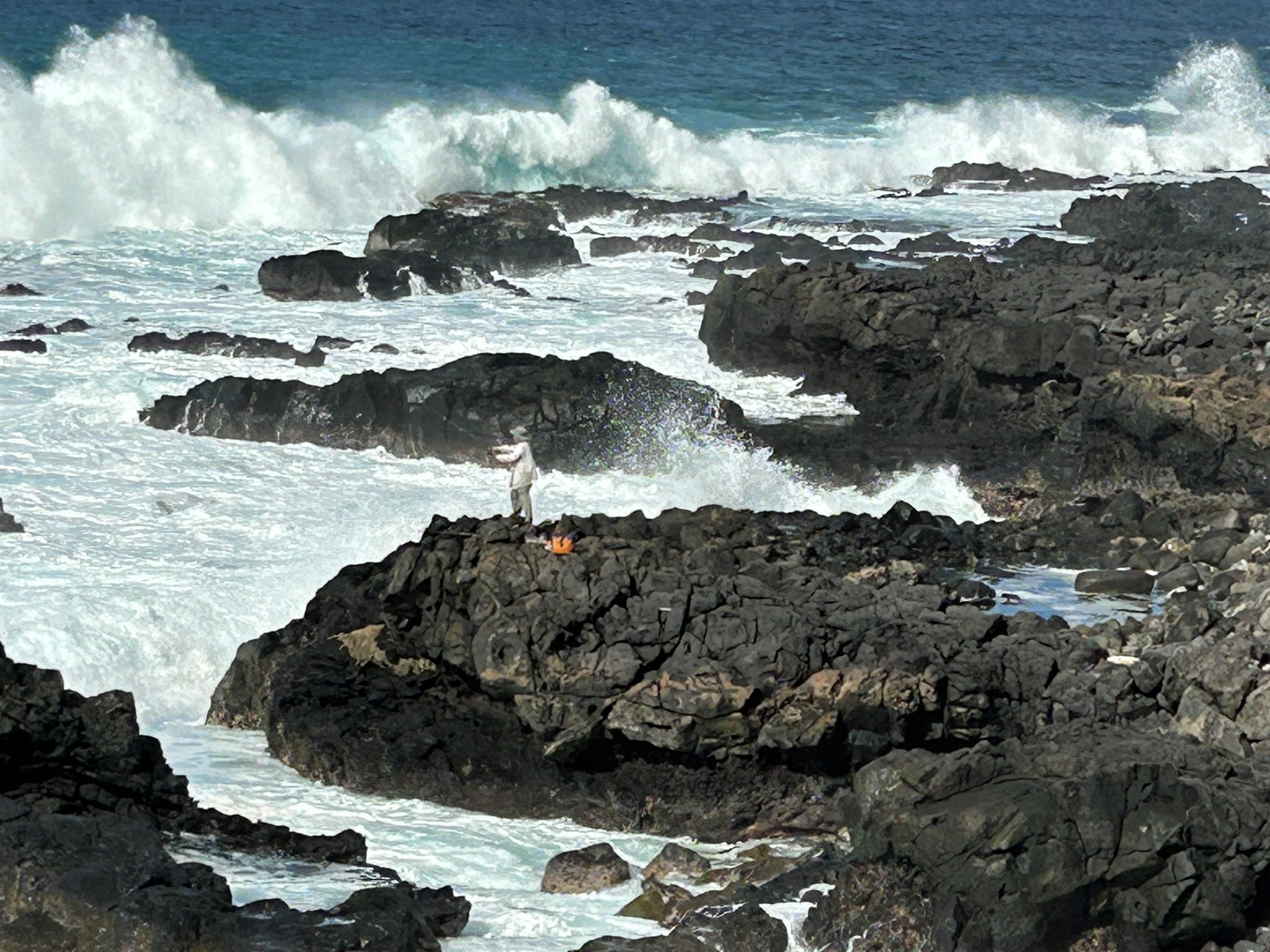
As a hobby, Dr. Hallett enjoys traveling to warm places, and then taking photographs there. He shared one of his pictures with us, entitled “Fisherman in Oahu”.