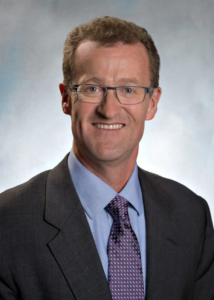
Dr. Charles Jennings is the Executive Director of the BWH Program for Interdisciplinary Neuroscience and the Ann Romney Center for Neurologic Diseases. Before, he served as the founding editor of Nature Neuroscience, and an editor at Nature.
#34: Charles Jennings – From Graduate School to Founding Editor of Nature Neuroscience and Beyond
We had the privilege of interviewing Dr. Charles Jennings, an accomplished scientist and leader in the field of neuroscience. As the Executive Director of the Program for Interdisciplinary Neuroscience at the Ann Romney Center for Neurologic Disease, Dr. Jennings oversees a vast network of researchers and clinicians who are dedicated to advancing our understanding of the brain and developing new treatments for neurological disorders.
Dr. Jennings’ work is especially noteworthy for its collaborative approach. As a “connectome” here in Boston, he bridges the gap between different research teams, fostering interdisciplinary dialogue and cooperation. He oversees the “Neurotechnology Studios” which is a prime example of this collaborative approach, providing state-of-the-art equipment and technical support to researchers across a wide range of fields.
During this episode, Dr. Jennings shared fascinating insights into his career path and the challenges he has faced along the way. He spoke about the importance of mentorship and the role that his own mentors played in shaping his scientific outlook. He also discussed his experiences as the founding editor-in-chief of Nature Neuroscience and offered his thoughts on what makes a successful journal.
In addition, we discussed some of the trends and issues that are currently shaping the field of scientific publishing, including the rise of sub-journals, the impact of open access, and the challenges posed by excessive article processing charges. Dr. Jennings provided a thoughtful and nuanced perspective on these topics, drawing on his extensive experience in the field to offer valuable insights and suggestions for the future.
Finally, in a rapid-fire round towards the end of the interview, Dr. Jennings offered some valuable advice for young researchers who are just starting out in the field. He also shared his thoughts on the future of neuroscience and the challenges and opportunities that lie ahead. Overall, our conversation with Dr. Jennings was a fascinating and informative glimpse into the world of neuroscience and scientific publishing.
Charles Jennings 00:00In retrospect, it was a very ill-judged decision to put nature onto CD-ROM rather than creating a website. And I remember one of my colleagues at another competing publisher laughing at us. I haven't followed it close enough to have a very informed opinion on that. But, you know, the one thing that will cause change at places like Elsevier is... Yeah, so I think, you know, one broad problem with translational neurosciences... I can remember it quite vividly. It was the Slumimto Shostakovich's Fifth Symphony. And I remember just sort of, you know, in rehearsal, I just suddenly decided, OK, I'm going to go to Harvard. You could see it. 01:02Welcome to Stimulating Brains.
Andreas Horn Hello and welcome to Stimulating Brains. It's Ala again. For this episode, we had the pleasure of talking to Dr. Charles Jennings, who is the Executive Director of the Program for Interdisciplinary Neuroscience and the Anne Romney Center for Neurologic Disease at Brigham and Women's Hospital. Dr. Jennings received his PhD in Neurobiology from University College London, followed by postdoctoral fellowship. He also received a PhD in Neurobiology from the University of Oxford, where he studied the molecular and cellular mechanisms underlying embryonic development and the formation of neuromuscular synapses. 02:03In 1993, Dr. Jennings joined Nature as an editor. Shortly after, he was appointed as the founding chief editor for the newly announced at the time Nature Neuroscience. So today's episode, as you have deduced by now, is going to be quite different from what we've previously hosted on Stimulating Brains. However, Dr. Jennings' role right now, serving sort of as a connectome in Boston, is quite interesting and highly multidisciplinary. So we thought it would be great to hear his perspective on scientific publishing and to have him tell us a bit more about what it's like to have been an editor at Nature. So with that, I'll pass it over to Andy, who'll take over for the rest of the episode. And as always, I hope that you enjoy it as much as I did. Take care. As you may know, to break the ice, I often ask about hobbies or things you might do beyond 03:09science. Yeah. Anything in your free time? Yeah. Well, I like to run marathons, so I'm training for a marathon right now. I ran the Boston Marathon last year. I managed to qualify at my 10th attempt. Oh, great. And so now I'm running another marathon to try to re-qualify for next year. So that's a fairly significant commitment. Great. What does it take to qualify? It depends on your age. So without disclosing my age, my qualifying time would now be three hours and 50 minutes. I think I can probably do that. If I don't get injured between now and next month, I should be able to do it.
Charles Jennings So that's one activity. I like to climb mountains as well.
Andreas Horn So I try to do a mountain trip every year when I can. Is it hiking or is it actually rock climbing?
Charles Jennings 04:01Certainly. I'm not a technical rock climber, but I like scrambling. We did, European listeners may know, the Italian Alta Via 4 across the Dolomites. So I did that last May. In fact, I did it before the huts were open. And so my friend and I were completely self-supported. So it was about a week. Wow. It was a week of backpacking with no reprovisioning. So we were carrying a lot of weight over these wonderful mountain passes.
Andreas Horn It was absolutely fantastic. That sounds fantastic. Yeah.
Charles Jennings I would love to see your pictures. Oh yeah. Well, I'd be glad to share.
Andreas Horn Yeah.
Charles Jennings Great.
Andreas Horn Yeah.
Charles Jennings Amazing. So, and then when we talk more about the professional life, so you have a slightly different career than most that I interview. But back when you were still involved in climbing.
Andreas Horn Yeah. And practical science, who were key mentors in the career or turning points for you along the way?
Charles Jennings 05:00Well, certainly my thesis mentor, Martin Raff at University College London. That's where I did my PhD. He was really an inspirational figure for me. He is well known as author of molecular biology of the cell, as a co-author of that very well-known textbook.
Andreas Horn Yeah.
Charles Jennings And so he was an absolute encyclopedia of knowledge.
Andreas Horn Yeah. Yeah.
Charles Jennings And he was also very well connected internationally. And so we had a small lab at University College London, but he would bring in top scientists from the United States to meet with us and give seminars.
Andreas Horn So it was really a fantastic environment.
Charles Jennings It was international. It was my first exposure to international research. Great. And that stimulated my ambition to come to the United States as a postdoc. So that was really...
Andreas Horn Yeah.
Charles Jennings ...really an important influence.
Andreas Horn And you stayed ever since, right? In the States?
Charles Jennings I did.
Andreas Horn Yeah.
Charles Jennings 06:00So I came initially expecting that I would do a couple of years of postdoc and then go back to an academic career in the United Kingdom. But I ended up doing six years of postdoc, first at Harvard and then later at MIT. And I liked it and ended up staying. So...
Andreas Horn Yeah. Yeah. Where are you from in the UK, I can tell?
Charles Jennings So originally from Northampton.
Andreas Horn Okay.
Charles Jennings So I was born in the UK. I was born in the UK. And I was known also as the birthplace of Francis Crick, so discoverer of the double helix.
Andreas Horn Yeah, yeah, of course. Yeah, yeah. Yeah. So amazing. They just named an institute in London after him, right?
Charles Jennings That's right. That's right.
Andreas Horn Yeah.
Charles Jennings I had no idea. Growing up in Northampton, I had no idea that Crick was from Northampton. It was just not known in the town at the time. It is now. And there's a big... I went back quite recently. And there's a big golden double helix in the main street. And the main street in the center of town. But there was nothing like that when I was a kid.
Andreas Horn That's why I didn't discover it until long after I left Northampton. Yeah. 07:00Okay.
Charles Jennings So, and then for your PhD, I think the Jennings et al. PNAS paper was in 1993. And we will only cover it briefly because it's a bit off topic here, but it described the muscle. And I also don't know too much about it. That's the other point.
Andreas Horn Yeah.
Charles Jennings But it described the muscle specific TRK related receptor for the first time.
Andreas Horn Yeah. Is that correct? Can you briefly summarize what it does or why is that the receptor?
Charles Jennings So this was postdoctoral work at MIT in the lab of Steve Burton. We were interested in neuromuscular synapse formation. And as you know, the motor nerve grows out from the spinal cord and it makes contact with the muscle and induces the postsynaptic specializations that form a neuromuscular junction. And so we were looking, we were trying to identify the signaling pathways that were involved in setting up the synapse. And we thought that maybe a receptor tyrosine kinase will be a likely candidate and new techniques had just emerged for finding novel members of gene families such as tyrosine 08:04kinases. And so I was able to find this one, which we now know is a co-receptor for agrin, which is a key signaling molecule in neuromuscular synapses.
Andreas Horn And interestingly, it turned out long after I left the field that this molecule turns out to be a new receptor.
Charles Jennings And so we were looking for a way to find out the relationship between the two. And we found that the molecule turns out to be an important target for autoimmune attack in some cases of myasthenia gravis. So the best, the most common cases, the target is the acetylcoma receptor, but in, I think, about 10 or 15% of cases, it is this molecule, musk. I mean, it was later.
Andreas Horn Yeah, I know, of course, the clinical fact is now that you mentioned the musk receptor
Charles Jennings testing as well.
Andreas Horn Yeah.
Charles Jennings So antibody testing.
Andreas Horn Yeah. Yeah.
Charles Jennings I was just looking for a mig-yarth.
Andreas Horn Yeah.
Charles Jennings So apparently, so there is now a clinical trial underway with a CAR-T therapy targeted specifically to the B cells that are producing those antibodies. 09:02Amy Payne at University of Pennsylvania will actually be speaking at Brigham in a few weeks' time. So we'll get to hear the latest on that work. But I found it amazing that it was something that was originally discovered back in 1993. It's 30 years on that a clinical trial is underway. We don't yet know, of course, whether it will work, but optimistic. It looks very promising, apparently, for mouse models.
Andreas Horn But it's interesting how long it takes to get from a basic discovery to a clinical application. Nonetheless, isn't that a prime example why we should do these basic science experiments?
Charles Jennings Because you never know when... I think another good example is optogenetics, where the original proteins were discovered a long time ago.
Andreas Horn Yes.
Charles Jennings Without any thought about using them later. That's right.
Andreas Horn And so, yeah, it's a good another example to show that if you hadn't discovered it,
Charles Jennings we wouldn't do this trial now. 10:01That's right. I mean, if I hadn't discovered it, somebody else would have discovered it. And if I...
Andreas Horn Yeah, but he also did discover it in parallel with us.
Charles Jennings We could publish first, but Regeneron also discovered the same molecule. And they collaborated with Steve, my postdoc mentor, after I had left the lab and were able to prove it. And it's a function in neuromuscular development. So really, really nice set of papers, which I would have loved to have written myself, but that was the follow-on work from what I started. And then if nobody did basic science research, then nobody would have discovered them. So if we wouldn't have enough funding for these types of...
Andreas Horn Yeah.
Charles Jennings Basic science is the engine for absolutely clinical research.
Andreas Horn Yeah.
Charles Jennings And then I think in that same year, 1993, you joined the scientific journal Nature. And I think you were the editor of Nature.
Andreas Horn Yeah.
Charles Jennings And I think you were the editor of Nature as an editor.
Andreas Horn And while it has been a while, and I know you're not able, of course, to speak for the current editorial board at Nature, it's still so interesting to hear a bit back in the day, 11:00what did the typical day look like as a Nature editor?
Charles Jennings Yes, it was a really, really fun job. I mean, I started as a junior editor at Nature itself, and I was given manuscripts in almost every area of biology.
Andreas Horn Okay. Yeah.
Charles Jennings And I was forced to become generalists. I mean, there was a lot of help from other more experienced editors, but I was thrown in the deep end and learned a lot about a very wide range of topics very quickly. And you're not expected, you couldn't possibly become a deep expert in all of these fields, but you get a sense of... You get a really excellent overview of a broad field of research. You get to know who are the experts in that field. You get to meet them. You get to interact with them as referees and authors. And it's really a very stimulating, very enjoyable job. It was hard work. I mean, sometimes, you know, you see a journal like Nature gets an enormous number of submissions. 12:03Great majority of them are rejected without review. And part of the editor's job is to read through all these manuscripts and determine which ones are sufficiently promising that they should be sent out for external review. And so we would read.
Andreas Horn But very interesting.
Charles Jennings And we would read large numbers of papers really quite quickly to make those determinations. I think you mentioned recently that you had an hourly rate. How quick did you get at...
Andreas Horn Yeah.
Charles Jennings When I was on a roll, I could do about an average of one every 20 minutes. Now some of them you can look at and in just a few minutes, it's obvious either that this is not Nature material or it alternatively sometime more rarely, but it's obvious that this is a very important...
Andreas Horn Yeah.
Charles Jennings ...important paper that everybody is waiting for and you can't not send that one for review. So there's a wide range, but the average will be 20 minutes. That's under pressure. I mean, nobody likes... 13:00Sure. ...that fast. Usually if we could, we would spend more time on them. But when a big pile had accumulated after a trip, you could grind through them. Got it. And that would often really be reading the whole entire PDF or...
Andreas Horn Yeah.
Charles Jennings ...the whole PDF.
Andreas Horn Yeah.
Charles Jennings I mean, I don't know if you read the whole PDF or paper at the time.
Andreas Horn Yeah.
Charles Jennings Well, back in those days, they came in FedEx envelopes on paper. So it's a skim reading. And one of the skills that you develop is to figure out how deeply you need to read in order to get a gist of it. And some of them it's immediately obvious. Some of them you really need to read it over and over again to get the point.
Andreas Horn Am I missing something? Is this... What is the author trying to say here?
Charles Jennings I think it's a little bit more complicated than I thought. But yeah. It sounds great. And so the other point is I saw you did write editorials sometimes as well. There was one, The Death of a Synapse, if I remember correctly, that you wrote. Oh, that was in News and Views. News and Views.
Andreas Horn 14:00Yes.
Charles Jennings That was for a paper by Rita Police Gordon and Jeff Lichtman that was published. So it... It was before your time at Nature or... No. No. I was an editor at Nature.
Andreas Horn Yeah.
Charles Jennings And I was...
Andreas Horn 13:47Yeah.
Charles Jennings 14:13I was an editor at Nature.
Andreas Horn Yeah.
Charles Jennings And I was written by PI's, experts in the field. But since it was... I'd just done a postdoc in muscular development, the senior editors asked me if I'd like to write this editorial, this News and Views. So I did. And that was a fun assignment. We came up with a very nice diagram, which Jeff Lichtman himself seemed very appreciative of this. And he used it quite often in his talks. And he was kind enough to write it.
Andreas Horn Yeah.
Charles Jennings And he was kind enough to acknowledge me as the author of this. Oh, great. So... I briefly looked at it, but the gist of it is you write about how the motor neurons would select and then also, I think in the beginning, many neurons would map to the same muscle 15:04or fiber, but then some... That's right. So you get activity-dependent competition and elimination of polyneuronal innovations. So as you say, initially, one muscle fiber is innovated by many motor neurons, but they compete through an activity-dependent process that was just starting to be understood at that time. And signals from the neuron that gains strength then suppress the strength of the synapses that are losing out until you end up with just one motor neuron to each muscle. So you still didn't have that.
Andreas Horn Yeah.
Charles Jennings And so your motor system will get very confused. Of course.
Andreas Horn Yeah. So, yeah. Makes sense. Do you still keep up with that literature?
Charles Jennings I try, but I have so many other things to do. Nice.
Andreas Horn Yeah.
Charles Jennings And one of the things you have to do as a nature editor is move away from your original 16:00area of specialization. Maybe not completely, but you have to develop some objectivity. I think somebody who is just too deeply and narrowly attached to one...
Andreas Horn Yeah.
Charles Jennings ...initialization in which they did their own research is probably not... That's not the right mindset for an editor. Great. So a new trend of many publishers that I perceive is to add numerous new titles. For instance, I think Nature just recently launched a subjournal, Nature Mental Health. But I think it's a trend that we see everywhere else. You just created a journal entitled deep brain stimulation, while there's already a brain simulation journal, which is another subjournal there. So... And Frontiers might be the strongest proponent of research.
Andreas Horn Yeah. So you're probably slicing up new journals with ever more focused niche targets. What do you think of this development? Is it a good thing or detrimental or any thoughts on that? Yeah.
Charles Jennings So the Nature stable has expanded enormously since I was there. 17:00And obviously, as you say, this is a broad trend in the field. I mean, partly it's just an inevitable result that the number of papers overall is increasing. I don't know what the current statistics are. But it used to be expanding at a rate of about 15% per year. I'm not sure if that's still true. But it's an enormous number of papers that need some... They need some home. So then you can either have more journals with fewer papers, or you can have mega journals that just cover everything. I'm not sure that one is... It's not either or. I mean, you have both. And I'm hard-pressed. I'm not sure. I'm not sure. I'm not pressed to say which is better or whether it's good or bad. I mean, the publishers obviously have a commercial motive. And it's probably easier for them to charge more if they can slice it up into more and smaller journals.
Andreas Horn 18:00Yeah.
Charles Jennings But I think perhaps the identity of the journal in which something is published is not quite as important now as it was back when I was an editor. I mean, the way we consumed journals back then, certainly when I was a postdoc, I mean, we would go every week to the mailbox and pull out the latest issue of Nature or Science or Cell, and we would browse through it in the tearoom, go through the index on a printed product. Now, almost entirely driven by web-based searches.
Andreas Horn Yeah. Yeah.
Charles Jennings And then you probably look at the journals. The identity of the journal is a stamp of approval. So if it's published in a more prestigious journal, it's on average likely to be more significant, perhaps.
Andreas Horn Yeah.
Charles Jennings But that's not a terribly reliable predictor, as you all know. And you're probably going to search for papers in topics you're interested in, probably by authors that you follow, authors that you trust. 19:03And the journal in which it's published is less important.
Andreas Horn Yeah.
Charles Jennings That's a good point.
Andreas Horn Yeah.
Charles Jennings Because in 1989, you were appointed then as the founding editor-in-chief of, back then, a new title, which was Nature Neuroscience.
Andreas Horn Yeah. Reading that is interesting to me because in my life it always existed, right? Yeah.
Charles Jennings I'm right. I'm younger, scientifically younger, academically younger than Nature Neuroscience.
Andreas Horn So at the time, Nature didn't seem to have so many subjournals. Did it?
Charles Jennings No, it did not. No, it did not. It was the first. It was the first. So the first was Nature Genetics, and then Nature Medicine, and Nature Structural Biology. I think we were the fourth to be launched.
Andreas Horn Okay.
Charles Jennings So it was still relatively new. Others have been successful. I mean, Nature Genetics, the first, was impressively successful. And I think it just caught this wave of the rise of genomics, and the Human Genome Project was getting underway. 20:02And so neuroscience was seen as a potential next growth area.
Andreas Horn Okay.
Charles Jennings I think the concept of neuroscience as a field, it was not that old. I mean, it had historically been in the departments of physiology, departments of anatomy. So it was a subset of those areas. And it had become newly exciting, I think, as a result of the intersection of molecular biology and traditional neuroscience. And so the field had emerged, and I think there was an appetite for a new journal. I think in particular, there was a need for a journal that would integrate all of neuroscience.
Andreas Horn So somewhere where people could read the most interesting papers in everything from the
Charles Jennings biophysics of ion channels, all the way through to human cognitive neuroscience and functional imaging. And so that was a big step. And I think that's what we're doing.
Andreas Horn Okay.
Charles Jennings 21:00And having a single forum where all of those different fields, they all could acknowledge that for all the technical differences, they're all focused on this same fundamental question,
Andreas Horn how does the brain work? Yeah.
Charles Jennings And there wasn't any journal that really catered for that. And so we wanted to be that journal. I think we succeeded, and we made a very specific point of publishing papers in our first issues. And in fact, throughout my time in the journal, I've been writing papers about the brain. And in fact, throughout my time as editor, I think they probably still do this, we would organize the papers in a sort of sequence, if you like, a spectrum from small to large. So starting with biophysics and single-cell physiology, upward to cell biology and systems neuroscience, and then ending with cognitive neuroscience and psychophysics. So that was quite a deliberate strategy. We wanted to send the message that this is a unified discipline, and nature neuroscience is a place where you can do anything. You can learn about the most exciting advances in any area of neuro. 22:05That sounds great.
Andreas Horn Yeah.
Charles Jennings I mean, now that, as you say, people don't really have the book in print anymore that often, probably they don't even appreciate that. But back in the day, you'd read through the mailroom and see it.
Andreas Horn Yeah. Yeah. So how was the role, except that when establishing a new journal, like what was...
Charles Jennings You probably didn't handle so much.
Andreas Horn Yeah.
Charles Jennings You didn't handle so much of the problems yourself, but you would rather build it up
Andreas Horn and build a team. How was that? Yeah.
Charles Jennings So in the early days, it was all hands on deck, and I did my share of reading the papers themselves, but it was a much more managerial job. So nature was a weekly journal, and there was a weekly rhythm of reading the papers, and then a few weeks later, the successful ones would be published. And with nature neuroscience, we were building something from scratch. 23:04It was sort of analogous to the transition from postdoc to PI. You're no longer just running your own research project. You're now in charge of building something over the long term, recruiting a team, training and mentoring people, building a reputation, building public visibility, building a network of connections and collaborators. So it was very analogous to that, I think.
Andreas Horn Yeah.
Charles Jennings And I was very lucky. We had a great team of editors, some very talented applicants who were excited about the mission and agreed to join us. So I was very lucky to work with.
Andreas Horn Yeah. Yeah.
Charles Jennings And it was highly successful. I think you did it five years, and it established the journal.
Andreas Horn So what do you think makes such a successful journal? You mentioned good people as editors. Is there any recipe or what is needed to do that?
Charles Jennings 24:01Well, I think part of it was recognizing a gap in the market, is recognizing community demand. So in fact, we did a big survey. I was asked to organize this before Nature Publishing made the commitment to launch this
Andreas Horn journal and to know, is the scientific community going to be supportive?
Charles Jennings And so I was given the job of answering that question and developing a survey and sending it out to... I think we sent it to several hundred prominent neuroscientists. Of course, I knew them by that time because I'd been an editor at Nature itself. And the response came back overwhelmingly positive. So it was very clear that there would be enthusiasm, there would be support for the journal. So I think getting that right was key. I think credit to the other Nature journals that have preceded us, so Nature Genetics, Nature Medicine. They've already established themselves. And so we had a model that we could emulate and we had the publishing infrastructure there. 25:06Obviously, the Nature name is tremendously helpful. It sends a signal that this is going to be a competitive and prestigious journal. And then having the sustained support of the community. And I think having good editors who get to know authors and reviewers and gain their support just over time was absolutely critical.
Andreas Horn Was that important?
Charles Jennings Like the personal ties to authors or the personal, I don't know, relationships with bigger...
Andreas Horn Yeah, it is.
Charles Jennings I mean, people are not going to send you their best work unless they trust you to do a good job, to give it a fair review. And similarly, reviewers are not going to agree to review. It's a lot of work to review a paper. They're not going to agree unless they feel that their effort is worthwhile.
Andreas Horn Yeah.
Charles Jennings ! 26:26judgments about how much work an author should be required to do to address the referee's comments. I mean, one frequent source of frustration from authors is that the competition for publication takes the form of just having to jump through more and more hoops. There's always one more experiment that you could ask for, and sure, it will probably make the paper better, but perhaps only incrementally better. And there's a cost to delay, and there's a value to getting what's already been achieved, getting that out as quickly as possible. And so I think one of the skills of 27:03an editor is to know when to bring things to a halt and make a decision one way or the other. Don't just sort of turn it into a war of attrition between the author and the reviewers.
Andreas Horn It's very interesting. Yeah, it makes a lot of sense. Because you often hear it can take another
Charles Jennings year once, at nature. I do. If you have, like, a major revision. Yeah. We tried very hard not to do that unless there was a strong reason.
Andreas Horn I mean, sometimes there is a good reason, right? Sometimes the authors are onto something really
Charles Jennings exciting, but the evidence is not yet conclusive. They have the ability to do it, but it's going to take some time. It's probably worth waiting. Yeah. I mean, one of the worst things you can do is contaminate the literature with results that are inconclusive. And so now, after the event, they take it. Yeah.
Andreas Horn And it turns out to be statistical artifact based on inadequate sample size or whatever. Of course, although I would say a lot of that is published, right? Just not at nature. 28:00Yeah, absolutely. And I couldn't honestly claim that nature never published papers that- Yeah. Of course. Yeah, yeah, yeah. Yeah. Makes sense.
Charles Jennings Yeah. I mean, the literature is just full of underpowered studies that it's very difficult
Andreas Horn to know what to believe. Yeah, yeah, yeah. That's-
Charles Jennings Makes a lot of sense. Yeah. Great. Yeah. So what do you think in general about the open access movement,
Andreas Horn the journals? Probably a good thing, but any thoughts on that?
Charles Jennings Yeah. I do think it's a good thing. I moved from nature to Harvard and then to MIT, and I always had access. They have great libraries, so I had full access to the literature. But I did a year as an independent consultant in between Harvard and MIT. And at that point I no longer had... As a private individual I didn't have access to the... And you suddenly realize that unless you're one of these wealthy institutions 29:03that has a lot of institutional subscriptions. The average person, including researchers at less wealthy institutions. They don't have this stuff. Even though it should be public information. A lot of it was paid for with taxpayer money. Of course. of course. So I was very sympathetic to the idea of open access. I was very sympathetic to the idea of PubMed Central, which I think has been real. I think that's a really good thing. Publishers, of course, they were very resistant originally and eventually they realized it was unstoppable. I think the public interest argument was overwhelming and they didn't want to be on the wrong side of history or the wrong side of Congress or anything more to the point. So I think that's been very beneficial. You know, as we know, some publishers have very large profit margins, and that's been widely discussed and debated. But I think open access is great. Yeah. Maybe to go a little bit into the prices, and I know you can't say so much about this because you've been an editor a long time ago, but I think the open access charges that some of the Nature journals, 30:17including also NATO Neuroscience now, rank at around $12,000. And I think you have a choice, right? You don't have to make it be open access to it.
Andreas Horn But I'm sure this was different at the time, or it didn't even have that. But any thoughts on that development? Yeah, well, the prices have gone up.
Charles Jennings I mean, I had not actually realized until you mentioned it earlier that they had risen so high. And that really is very, very expensive. I mean, the publishers will say, and they will be right, that it has to be paid for somehow. There is a cost. There's a cost to filtering. Editors have to be paid, copy editors, maintaining a website. It all costs money. 31:02And if a subscription model no longer works, I mean, I'm guessing that they get very little money these days from private individual subscriptions.
Andreas Horn Yeah.
Charles Jennings 급 for these nature journals is that actually there are people that are hired, paying taxes, professional editors. So that sometimes I see as a real difference because they're full-time professionals there,
Andreas Horn which is not the same in all of them. Well, in academia, I mean, somebody is paying their salaries, right? 32:02Yeah.
Charles Jennings I mean, that's true. Nobody is working pro bono. They're being employed by universities or medical schools. They're being paid, you know, maybe through indirect costs or whatever mechanism. But the money doesn't come out of nowhere. Sure.
Andreas Horn No, but it doesn't have to be paid for by the publisher, right?
Charles Jennings If in many of the Elsevier journals, the editors might be scientists that do it near for free or, you know, some do it for free.
Andreas Horn Yeah.
Charles Jennings On a lower editorial level, I think it's completely free often. So then they don't have to at least, you know, pay their salaries.
Andreas Horn Yeah.
Charles Jennings No, my only point is there is still a societal cost because, you know, Of course. These people are drawing salaries and somebody is paying that salary. That is true.
Andreas Horn Yeah.
Charles Jennings Good point.
Andreas Horn Yeah.
Charles Jennings And then I think I just wanted to mention it because a few days ago, the entire editorial team of the Elsevier journal Neuroimage resigned over exceedingly high article processing charges 33:00of around 3.5 thousand US dollars. And I just thought to bring it up because it was a few days ago. And when the editors, I think, threatened before to resign toward Elsevier, the publisher declined to reduce. So they really then did resign and now found a new journal with MIT Press called Imaging Neuroscience. And to me, this, you know, also this in your image moment received a lot of applause from the scientific community at Twitter. But it was also, I think, a testament that Elsevier did not want to, even when threatened, you know, change anything in their policy.
Andreas Horn Yeah. Do you see chances of change when, you know, to reduce the APCs, the article processing charges? Yeah. things or do you think it's a futile struggle? Yeah, that's an interesting question. I mean,
Charles Jennings I would say I haven't followed it close enough to have a very informed opinion on that. But the one thing that will cause change at places like Elsevier is large-scale reaction, 34:03such as what you're describing. And Elsevier, from what I understand, has a higher profit margin than probably any other major science publisher. I believe it's higher than Springer Nature. And any industry, I think. So I don't know, but I wouldn't be surprised to write up what is
Andreas Horn somewhere around 40% probably, right? It's very high. So this will be fought out in the market
Charles Jennings planes. And if MIT Press can serve that community in a more cost-effective way than Nature, you know, I'm... If that's capitalism, I'm all for it.
Andreas Horn Yeah, yeah. Makes sense. Yeah. Great. So as mentioned, you held the position of
Charles Jennings Nature Neuroscience Editor-in-Chief for five years, and that led to it being one of the preeminent journals in the field. And then, you know, what made you to leave 35:02that sector and go back into academia? I think in... Sorry, in 2003, you found out that you were the first to become... Let's briefly talk about that. Executive editor for all the Nature Monthly Research Journals, responsible for managing the editorial department, and then looking at long-term editorial and publishing strategies for the Nature Publishing Group. Can you briefly talk about that
Andreas Horn a little bit? Yeah. So as the Nature family, the Nature Research Journal family had expanded,
Charles Jennings you know, it needed more coordination. And we wanted to make sure that there were uniform editorial policies and a uniform... Sort of public image, and there was a need for coordination. And so I became the executive editor. So I had editorial oversight of all of the journals. So at one point, I was managing the editorial department of almost 60 people. So it was a fairly big managerial job. I enjoyed it a 36:00lot. I was, you know, became much more involved in the business strategy of the company and thinking strategically about...
Andreas Horn Yeah.
Charles Jennings ...the scientific landscape and about where new publishing opportunities might arise. I was very much involved in the launch of the websites in the transition to online publishing. So when I... Just before Nature Neuroscience was launched, Nature made, or in retrospect, was very ill-judged decision to put Nature onto CD-ROM rather than creating a website. And I remember
Andreas Horn Yeah.
Charles Jennings ...one of the...
Andreas Horn Yeah.
Charles Jennings ...one of the...
Andreas Horn Yeah.
Charles Jennings ...one of the...
Andreas Horn Yeah.
Charles Jennings ...one of the...
Andreas Horn Yeah.
Charles Jennings ...one of the... ...one of the... My colleagues had another competing publisher laughing at us for having done something so stupid. And in retrospect, they were correct. The CD-ROM was a complete failure. And by the time Nature Neuroscience launched, we knew that we needed a full online presence. So I was very much 37:00involved in designing that website. We introduced what we called a advanced online publication, which, of course, is just very... very standard these days, the idea that you would publish individual articles once they're ready before having to wait for the next monthly print issue. And so we developed all the workflows and criteria for that and the public communication about what that's all about. So that was really fun. But I liked the scientific aspect. I liked the hands-on editing and the decisions about editorial content of journal. And I like being close to the science and to the researchers. So I didn't really want a career on the business and financial side of publishing. And that would have been the next step up. The corporate ladder would have taken me further away from the research. So in 2004, I think I moved to Harvard, did a career change, become an academic administrator 38:03of the Harvard Stem Cell Institute.
Andreas Horn Yeah.
Charles Jennings So that turned out... That was describing a sort of baptism by fire in academic administration, because Harvard, as you know, is a very complicated place. There's the university, there's the medical school and the affiliated hospitals. And I really didn't understand anything about the political relationships between them. We were involved in stem cell research, which was at that point, extremely visible public controversy.
Andreas Horn Yeah. Yeah.
Charles Jennings It was just at the time I joined Harvard, just at the time of the Bush-Kerry presidential election, in which human stem cell research became one of these sort of cultural wedge issues in the election. And so we were very much in the spotlight. At Harvard, of course, we wanted to do obviously human embryonic stem cell research. My boss, the co-director Doug Melton, is a very prominent stem cell researcher. His kids... I mean, I had done a postdoc with Doug 39:05back at Harvard at a time when he was a pure developmental biologist. He was studying the early developmental, the control of development in frog embryos. That's what I worked on. But then his kids were born and developed type 1 diabetes, and he switched his entire research program to understanding the development of the pancreas with the goal of being able to regenerate or to grow neurons for pancreatic transplantation. And he became the national advocate for stem cell research. So anyway, I was thrown into that environment. And also at the same time, Larry Summers, the president of Harvard, was forced to resign over his controversial remarks over women in science. So it was an exciting...
Andreas Horn Yeah.
Charles Jennings Exciting 18 months, but it ultimately wasn't the right fit. And so I left after 18 months.
Andreas Horn 40:08To MIT, right? And well, I did a stint as a private consultant and then moved to MIT. So I was recruited. That was at the McGovern Institute?
Charles Jennings That was at the McGovern Institute.
Andreas Horn You were a technology professor?
Charles Jennings Directed by Bob Desimone, who I...
Andreas Horn Yeah.
Charles Jennings !
Andreas Horn So, I was recruited. That was at the McGovern Institute?
Charles Jennings That was at the McGovern Institute, directed by Bob Desimone, who I guess has been another very significant figure in my career. He's really a brilliant neuroscientist and a great science administrator as well, a really great leader. And so, I was known as a frequent author and reviewer at Nature, and he invited me to lunch and said that he was looking for somebody for the newly launched McGovern Institute and might I be interested. But I was ready to come back to institutional life.
Andreas Horn 41:03It seemed like a fantastic opportunity.
Charles Jennings I ended up staying there for almost 11 years. Oh, okay. Great. So... I love the building.
Andreas Horn The wide building, right? Yes.
Charles Jennings That's right. It's my, I would say, favorite employee, employer in the world.
Andreas Horn Yeah.
Charles Jennings It's been for a while. So, it's such a nice building there at MIT.
Andreas Horn Yeah. So, you had a good time?
Charles Jennings I had a great time.
Andreas Horn I mean, MIT is just a fantastic place. Yes.
Charles Jennings It's a wonderful environment, really talented colleagues. And again, learned a great deal.
Andreas Horn Yeah.
Charles Jennings I had... You mentioned optogenetics earlier. So, I had a ringside view there.
Andreas Horn Yeah.
Charles Jennings I got to know Ed Boyden. 급 42:08for a little later, 2008 maybe.
Andreas Horn Yeah. Yeah.
Charles Jennings And let's like jumping 11 years ahead. Now you are the executive director of the Anne Romney Center for Neurologic Diseases here in the hospital and also the program for interdisciplinary neuroscience here at Brigham and Women's. Before we maybe talk about your role here,
Andreas Horn can you tell us a bit more about what the Anne Romney Center does or what it stands for?
Charles Jennings Put that in the main.
Andreas Horn Yeah.
Charles Jennings So the Romney Center is focused on understanding brain disorders and specifically neurodegenerative diseases as the primary theme. Anne Romney, of course, is the wife of Mitt Romney, a prominent political figure. And Anne is a patient. She's treated here for multiple sclerosis. 43:02She's very public about that and is an advocate for brain research as a result. And she's a patient of Howard Weiner, who's the co-director. So the Romney Center was established many years ago by Dennis Selko and Howard Weiner. Dennis is a leading figure in Alzheimer's disease research. Howard is a leading expert on multiple sclerosis. They've been working together for many years and the Romney Center has grown into what's now a large community of researchers, really united by a focus on, as they say, primarily neurodegenerative disease, so Alzheimer's, Parkinson's, multiple sclerosis and other autoimmune and inflammatory diseases, but also brain tumors, so pleoblastoma, and then gradually expanding to other fields as well. 44:00Parkinson's. Sorry, I should have mentioned Parkinson's disease. I've said Parkinson's, other synucleinopathies. I mean, so Dennis, Dennis is primarily known for his work in Alzheimer's disease. He's been in that field for a long, long time. He's one of the most prominent figures in Alzheimer's. He also has a longstanding interest in Parkinson's disease and that's become a major focus over the last few years. I'd say one important research, there have been many important pieces of work, but... Dennis, working with Tim Bartels, who's now at University College London, they were the first to look at the tetramerization of alpha-synuclein and to realize that the configuration of alpha-synuclein, its association or dissociation from the membrane, was an important contributor to the disease process. 45:02And so now that's led to a whole field of work, looking at the lipid composition of membranes and that those are potentially druggable targets. And so Dennis and many other people here are working to pursue that and to try to develop drugs based on that concept. Great.
Andreas Horn And in Alzheimer's, what is the main leading theme these days?
Charles Jennings So there's, as we all know, I mean, amyloid hypothesis has been a central, central feature of the study. It's been a central feature of the Alzheimer's world for quite a few decades. Dennis certainly has been a leading contributor to that and has been, I think, very much identified with the controversies around it. So the primary reason for the controversy, of course, is that many clinical trials have been attempted and an enormous amount of money has been spent and they've been largely unsuccessful. 46:02The biological evidence, I think, is overall, is overwhelming. The genetic evidence for that A beta amyloid peptide plays a causal role. I mean, there's very, very strong genetic evidence for that. And Dennis has contributed data to that and to the cell biology and biochemistry of understanding the mechanisms behind those mutations. I think it's, we've had, as I'm sure you know, I'm sure your listeners know, there's been this recent trial, that's led to the approval of the first anti-amyloid antibody, licanumab.
Andreas Horn Yeah.
Charles Jennings And I think that's, you know, that's really a vindication of the work that Dennis and many, many other groups have been doing now for a very long period. I mean, nobody's going to claim that licanumab is the cure to Alzheimer's, but from what I understand from experts in the field, 47:00the trial was very well conducted and the results were clear cut.
Andreas Horn Yeah.
Charles Jennings And there is improvement on the endpoints that seems incontrovertible. So that's, you know, that's the ultimate test of a mechanistic hypothesis is,
Andreas Horn can you show that it works in the patients?
Charles Jennings And finally we have a clear cut answer, it does work. And I mean, we sit in the, we can maybe mention that, sit in the Hale Building for transformative medicine. And I think one idea of this building is that we have, you know, everything from, say, cell research, mouse research, animal research, but also see patients here in the building.
Andreas Horn Yeah.
Charles Jennings Right. It has been designed with that concept in mind. It was, yes. I mean, I came here soon after this building had been opened.
Andreas Horn Yeah.
Charles Jennings And it's pretty, it's quite a unique environment. I mean, we have three floors of clinics down below and MRI down in the basement. 17. And we have, including the 70, yes. 48:00And then we have research, wet lab research, including three floors of the hospital. Almost three floors worth of neurology research on the upper floors. So it's a really unique environment. I think what that means in practice is, A, you know, anytime we go down to the cafeteria or we, you know, come and go from work every day, we see patients and we see the people who are looking after the patients, the clinician, the clinical staff, and everybody else who makes the place tick. And it just reminds you every day.
Andreas Horn Yeah.
Charles Jennings You know.
Andreas Horn This is about what are the stakes? Why are we doing this in a way that doesn't happen in a pure university environment? It also means many of the faculty here have joint activities. I mean, Dennis himself has said both Dennis and Howard, they see patients and they run research labs. That's true of many people here.
Charles Jennings And it's difficult, I think, to run an intensive high-level research lab and see a lot of patients. 49:06But many people seem to do one day a week in clinic and that will keep them engaged, keep their skills sharp. And then they run their often very successful research labs in the other 80% time. I mean, I can only imagine. I can only imagine how people do that. I don't have to run a lab and I don't have to treat patients and, you know, press by people.
Andreas Horn Yeah, me too.
Charles Jennings Me too.
Andreas Horn Absolutely. And is it possible to summarize Howard Weiner's activities in a few sentences?
Charles Jennings Probably not.
Andreas Horn But, you know, what does he stand for? Yeah.
Charles Jennings So Howard is, I mean, he's been a pioneering figure in the field of multiple sclerosis. I couldn't do justice to everything he's done. But he's really one of the leading figures in the demonstration that MS is an autoimmune disease and is amenable to treatment by drugs that target the immune system. 50:12And as I'm sure you know, I mean, many multiple sclerosis patients now do pretty well on some of those drugs. And that's not true yet for Alzheimer's. True.
Andreas Horn So, you know, it's a very interesting comparison. Yeah.
Charles Jennings 급 you know, lighter thing than 20 years ago.
Andreas Horn Yeah, than 20 years ago. 51:01Yeah.
Charles Jennings So that is really remarkable. Cool.
Andreas Horn So what is your role in the center as an executive director? What do you do? Yeah, I do a whole variety of different things.
Charles Jennings So I oversee a large core facility. We call it the Neurotechnology Studios. It's a fancy name for a collection of high-end instruments and expert staff who will help researchers to make the full use of those instruments. So it includes microscopy. It includes genomics, high-end optical imaging. We have a two-photon rig that's optimized for optogenetics and uncaging of, for instance, we're studying synaptic coding. We have a lot of synaptic interactions. So we raise philanthropic money to support that, and then we decide what kinds of equipment we want 52:02and what kind of support we need to help people make the best use of it. I help. I do quite a lot of mentoring of junior researchers. So people will often come to me for advice on either manuscripts or grant proposals. So I read a lot of proposals. And give advice. I go to a lot of talks. I tend to prioritize talks given by local people because I want to know what's happening within this community, not just within Brigham, but here within the Harvard Medical School environment. And within a half-mile radius of here is probably the world's largest community, one of the world's largest communities of biomedical researchers. Nobody can know everything that's going on. And most people, you know, especially if they have to run a lab and treat patients, they just don't have time to meet everybody and know everything. So I see part of my role is to know who does what, 53:01what's happening around this community, and help make connections, spot collaborative opportunities. Somebody, you know, will ask me, you know, who can I, you know, I need some advice on, you know, MR-compatible audio stimulation.
Andreas Horn Who should we ask?
Charles Jennings Or, you know, I need to know who's going to be in the room. I want to get cerebral spinal fluid from a mouse brain.
Andreas Horn Who do I ask?
Charles Jennings And I know the answers to those questions. That's great. Math. And many more besides. So part of my role is to help make those connections. I also get involved in big grant proposals, so proposals for new equipment, anything that requires coordination across, you know, across departments or across, you know, multiple departments. Well, stakeholders, maybe no one person is going to be, going to be willing to take the lead on behalf of a large group. So I can step in and help to coordinate that. So for example, we just raised, 54:01raised funds from state funding agency for a new brain scanner. This is a new three Tesla scanner with very high gradient performance. So it will be like a connectome scanner.
Andreas Horn Yeah.
Charles Jennings It's developed by GE. It's a head here, Magnus. It's a head only, it's a research only instrument at this point. And that's coming, that's coming to Brigham in September. It'll be one of just a handful worldwide. And, and one of the first, one of the first scanners with, you know, with this kind of capability that will be in a clinically oriented environment where we can really, you know, it'll be in a environment that is also used for clinical scans. This, this magnet will not be used for clinical scans, but it'll be in a bay adjacent to others. So we have all of the infrastructure to, to do research studies on patients in a way. That doesn't, you know, can't happen in a university, typical university environment. So, so I think that's a real opportunity. I've been very much involved in, in that I'm actually meeting with the team from 55:00GE that's visiting on Monday.
Andreas Horn Okay.
Charles Jennings Great. And yeah. So the scanner is, is arriving probably in September, should be in September. So. Great.
Andreas Horn Where will this be?
Charles Jennings It'll be 221 Longwood. So the imaging center just opposite alphabetical school quad. And. And then more recently I've been involved in another, another proposal, which has just been funded for a new mass spectrometry imaging system. And so the idea here is to be able to localize within sections of tissue, localize metabolites with, with high spatial precision. So for example, you could take one, one, one application will be resected tumors in a patients who. Maybe being treated by chemotherapy. And then if they then need a resection, you can then look within the tumor and see where the drug is distributed and correlate that with the metabolic responses of the tissue to the drug. 56:03So, you know, we imagine that drugs sort of uniformly bathe the brain or the body, because that's not true. And there's who are distribution is much more complex than that.
Andreas Horn And it's often, you know, critical to understanding why it worked or didn't work.
Charles Jennings So. So there's a lot of companies are very interested. And map it, you know, where do their drugs go to the cellular or subcellular resolution. And we will be able to do that as the first system is type in the United States. So it's amazing. Congratulations for getting both of these bigger.
Andreas Horn Yeah.
Charles Jennings I mean, it's a team effort, but of course, you know, I, I, I'm, you know, instrumental in, in, in pulling these things together. So for the mass spec, I worked with Natalie Agar, who's a leading expert on mass spec here at Brigham and Department of Neurosurgery. So, so she's very excited. I'm excited to get this thing next year. Congratulations. Really great.
Andreas Horn Yeah.
Charles Jennings So, yeah, this sounds, sounds like, I think the funnest part of your job description to be the connectome here in Boston to, to know.
Andreas Horn 57:07Yeah. It's such a, I mean, when I arrived here, it was, I re I re I was overwhelmed how big it is, right?
Charles Jennings How many people there are just within Brigham, but then if you go to MDH, Martino Center, MIT, even, you know, it's such a vast. City of research. And I think Helen Myberg once said that she usually went to visit visits people at Harvard. She tells them what other people at Harvard do. So they might, they might not. I can believe that.
Andreas Horn Yeah. So yeah, it's, it's very interesting.
Charles Jennings So I want to be mindful of your time and want to wrap up with some maybe rapid fire questions. Did you have any eureka moments in your scientific career or also more editing or. Administrative career. Oh, geez. Eureka moments.
Andreas Horn Or just positive events, anything counts.
Charles Jennings Well, I remember, I remember how, how did I decide to go to Harvard? 58:03And I'd been, so I was a graduate student in London and I had a postdoc offers both from, from UC Berkeley and from Harvard. And I was just trying to, and you know, they both sounded great. I was weighing them both up in my mind. And I, I was playing in the. The university orchestra at the time. And I, you know, sitting in there playing the violin. And I remember we were sort of sitting in this, I think I can remember it quite vividly. It was the Slumimto Shostakovich's Fifth Symphony. And I remember just sort of, you know, in rehearsal, I thought, and I just suddenly decided, okay, I'm going to go to Harvard.
Andreas Horn And that was sort of interesting neuroscientifically because you know, what happens in your brain? Yeah.
Charles Jennings We got that life changing decision. In a context that was completely irrelevant and there's nothing to connect Shostakovich to Harvard more than Berkeley. At least nothing that, that. There must be something that. 59:00Human involvement. The show. Massive, massive. Just the idea that, you know, your life decisions are, you know, stochastic events with the ion channels.
Andreas Horn I mean, who knows? Yeah, sure. Yeah. But. And, and maybe on the, on the, on the flip side, did you ever think this was a complete waste of my time?
Charles Jennings I just didn't help. Well, I mean, every, every job has things that has components that, that are a waste of time. Carefully reading a paper that was later retracted. That would be an example of a waste of time. Sure. I've done that a few times. I won't mention names, but, you know, I go, I go to a lot of, I try not to waste time. I'm sure. I mean, I do waste time. Everybody does. But. I, I go to a lot of talks and I take careful notes. And that, that takes extra time. You know, I take, I take notes on the computer during the talk and then I will often go back and read them and sort of clean them up a bit afterwards just to make sure I can still understand them if I come back a few months later. 01:00:11But, you know, because I mean, I see a lot of people will go to talk so they don't take any notes at all. And either they have astonishingly good memories and remember everything. They ever hear or it's not a very efficient use of time because a lot of end, I find if I don't take notes, most of it is gone. Most of it is gone a month later and I have, you know, a vague recollection that I was at a talk and it maybe sounds, the name is familiar or some claim sounds dimly familiar, but I'm not going to remember it.
Andreas Horn Yeah, that's a good point. I mean, the other question would be how often do you actually look at your notes?
Charles Jennings Because that's sometimes what I realize. I often take pictures or, you know, yes, I take notes. But then I rarely read. I don't revisit them. I do, but that's become much easier now that you can search text.
Andreas Horn Yeah.
Charles Jennings You know, I keep them on my computer. I mean, when I took handwritten notes back in the day, I often didn't go back to them, but I do it much more now because it's so easy. 01:01:06Consistent.
Andreas Horn Yeah.
Charles Jennings And, you know, again, coming back to what we were saying earlier, I mean, if somebody asked me for advice on something or they're looking for a collaborator, you know, I will remember roughly. I may remember the name.
Andreas Horn Yeah.
Charles Jennings I can find the talk and then search and just search the text on my notes for this particular point and then give what's hopefully accurate information.
Andreas Horn Yeah.
Charles Jennings That's great to see.
Andreas Horn What does the future of neuroscience look like in your opinion?
Charles Jennings Oh, well.
Andreas Horn Are we there yet?
Charles Jennings Predictions are always difficult, especially when about the future.
Andreas Horn Yeah. Who said that?
Charles Jennings Probably Yogi Berra. But I think that's a good question.
Andreas Horn Yeah. Yeah.
Charles Jennings I think that's a good question.
Andreas Horn Yeah.
Charles Jennings Well, it's what they say. I think that Sidney Brenner said it's new ideas, new results, new technologies in that order. 01:02:03Right. I think.
Andreas Horn Okay.
Charles Jennings So, yeah. Technology development is really key.
Andreas Horn Yeah.
Charles Jennings I'm probably getting the quote slightly wrong. But new technologies are an absolute driving force.
Andreas Horn Yeah.
Charles Jennings I mean, I was listening to a talk today over at Harvard Medical School talking about single-cell RNA-seq and other methods being used to catalyze the diversity of neurons. And they've just released a full atlas of the mouse brain. They now have what they think is very close to a full description of the cell.
Andreas Horn Yeah. Yeah.
Charles Jennings And it's just out on bioRxiv. It's not peer-reviewed yet. This is Evan McCusker's group.
Andreas Horn Okay.
Charles Jennings The Broad Institute. It's just remarkable.
Andreas Horn Yes.
Charles Jennings It's just been inconceivable when I was a graduate student. And the technology has evolved so rapidly that things can now be done.
Andreas Horn Yeah.
Charles Jennings It's just a full parts list or something very close to a full parts list. So, the next step is to get the data out.
Andreas Horn Yeah.
Charles Jennings 01:03:15It's quite급 급 the human, non-invasive edging of the human brain, you know, next technical advance and that will be huge. I don't know what it will be. Somebody smarter than me will have to answer that one. 01:04:01You know, understanding, you know, complex diseases, particularly psychiatric diseases, where we don't have monogenic causes, there's still not a clear pathology in the way that there is for something like Alzheimer's.
Andreas Horn I mean, Alzheimer's, you know, is a great example, right?
Charles Jennings We've known about the risk genes for, you know, the highly penetrant risk genes like, you know, APP and the presenilins. We've known about those for several decades. We have very clear histopathology and yet, you know, getting from one to the other and then from that to the cognitive decline is very, very challenging. Psychiatric disease is going to be even more difficult, right, because we don't have the highly penetrant mutations.
Andreas Horn And we don't have yet a clear common pathological endpoint. So understanding what goes wrong and, you know, most importantly, you know, what could we do about it once we understand it, should we intervene?
Charles Jennings I mean, that's not to be, you know, that's not a trivial thing. 01:05:02So that's going to keep the next generation busy, you know what I'm saying.
Andreas Horn That makes sense.
Charles Jennings I like that.
Andreas Horn Yeah. And then do you have any advice for young researchers entering the field, neuroscience or academia in general?
Charles Jennings On this and so on and so on. Study computation.
Andreas Horn Okay.
Charles Jennings So that's something that I wish I'd learned more about. If I could rewind the clock, I would have learned more math. I would have learned more computer science and would have recognized the importance of statistics and quantitative evidence at a earlier point in my career. I mean, tender. I didn't really need it. I'm not a big fan of it for what I've done, but if you're going to do research, you could never...
Andreas Horn Yeah.
Charles Jennings For a marathon, you can never have too much training. For a career in research, you can never know too much about analysis. So that would be one thing. 01:06:02Changing fields, you know, not getting stuck in one narrow field, I think is really valuable because whatever you're doing, I mean, this is an advice to somebody who's just starting out. If you're doing now and studying now and interested in now, you will probably be 10, 20, 30 years from now, if you're going to continue in research, you will be doing something different. So just develop the breadth of perspective and the habit of mind, the confidence to change fields and learn something new. I think that's a good intellectual habit to develop early in your career, if you will, later on. Don't get stuck on one narrow path. That's a good intellectual habit to develop early in your career. If you will, later on. Don't get stuck on one narrow path. Take your time. Take your time. Take your time. Take your time. Take your time. Take your time. Take your time. Take your time. Take your time. Take your time. Take your time. Take your time. Take your time. Take your time. Take your time. Take your time. Take your time. 01:07:00Take your time. Take your time. Take your time. Take your time. Take your time. Take your time. Take your time. Take your time. Take your time. Take your time. Take your time. Take your time. Take your time. One broad problem with translational neuroscience is the overemphasis on mouse models. I mean, it's sort of hugely tempting to work with genetically homogeneous, well-behaved mice, but they're not a great model for the messiness and the complexity of human disease. To understand human disease, and particularly if we want to apply these new molecular tools, we need human brain tissue. Some of it can be done using stem cell models, but there's a lot that is not captured and will never be captured. In a stem cell model, you have to study the human brain, and that's going to mean either post-mortem material or new non-invasive ways. We can imagine taking... 01:08:00And this is one thing that I think may be promising for the future, is the ability to... As a clinician, you can judge the plausibility of this. But the possibility...
Andreas Horn Yeah.
Charles Jennings Take very small biopsies from the brain that are so close to non-invasive as to be completely harmless. There may be opportunities during surgery to do this. We can now get an enormous amount. With modern molecular techniques, you get an enormous amount of information from tiny quantities of tissues. You don't need to take cubic centimeters of brain. You don't have to grind it up and analyze. You do it with thousand-fold less or even less than that.
Andreas Horn Yeah.
Charles Jennings 급 So, I think that's going to present new opportunities.
Andreas Horn It's interesting with the idea in the field currently that during the brain
Charles Jennings simulation surgery, you insert microelectrodes sometimes and then pull them out again and put the actual electrodes in. While pulling them out, you will have cells to the sample tissue that can be analyzed.
Andreas Horn 01:09:03Yeah.
Charles Jennings So, we need to bring... So, the people who do that, we need to bring them together with the people who have the molecular techniques and they're not just molecular but spatial. I mean, this is one of the new waves of biology at the moment is the ability to combine very highly multiplex molecular methods with spatial imaging.
Andreas Horn So we can say not only which thousand genes are expressed here, but exactly where the
Charles Jennings cellular and subcellular are. And that I think is a really powerful combination and we're just starting to see the fruits of that.
Andreas Horn Yeah. Yeah. Yeah. It's interesting to hear that from you because especially what I'm thinking of, of course,
Charles Jennings basic animal research is very important, no doubt about it, but they're also in many fields,
Andreas Horn especially in the brain, there haven't been so many wins yet, right?
Charles Jennings Where it led to actual translation in new therapies. So I really very much agree that human research is very important, but it's of course very 01:10:05challenging, especially if it's wet science. But yeah.
Andreas Horn Yeah.
Charles Jennings I think there's another way to get to tissue and these things.
Andreas Horn Yeah.
Charles Jennings It'd be great to think more about how we could...
Andreas Horn If Brigham can't do it, who can? Yeah.
Charles Jennings We should be well positioned to this high answer.
Andreas Horn Absolutely.
Charles Jennings We find our brain strings. Great.
Andreas Horn Is there anything that we didn't cover that I know I've taken a long time of you, but any question you would have loved to have covered?
Charles Jennings No. No, I didn't think of any. I mean, I think we've covered a lot of ground here.
Andreas Horn Yeah.
Charles Jennings So yeah. And thank you again, Charles.
Andreas Horn Yeah.
Charles Jennings No, it's a pleasure. So I hope this will come out well. I look forward to hearing it. 01:11:08Thank you.
Click any highlighted text passage to jump the Spotify player to that point. The transcript text is present directly in the page HTML for search engines and accessibility.
References and Links:
We ask Dr. Jennings’ so summarize his landmark paper about the muscular trk receptor (attached below), published back in 1993.
pnas01466-0348News and Views Nature Piece that Dr. Jennings wrote as an assistant editor:
Jennings, C. Death of a synapse. Nature 372, 498–499 (1994). https://doi.org/10.1038/372498a0
A story at the Kings Canyon National Park that Dr. Jennings shared with us after the meeting:
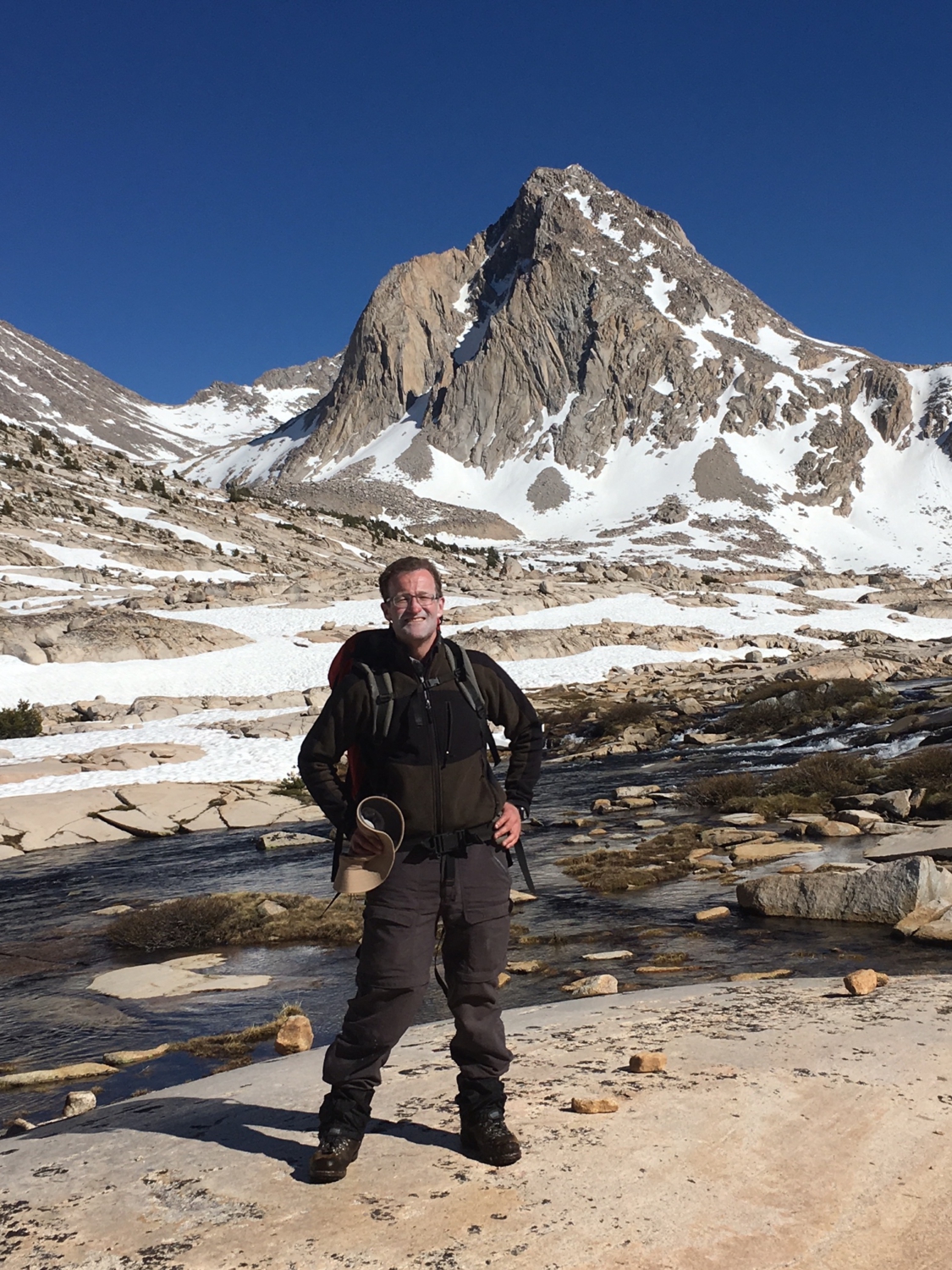
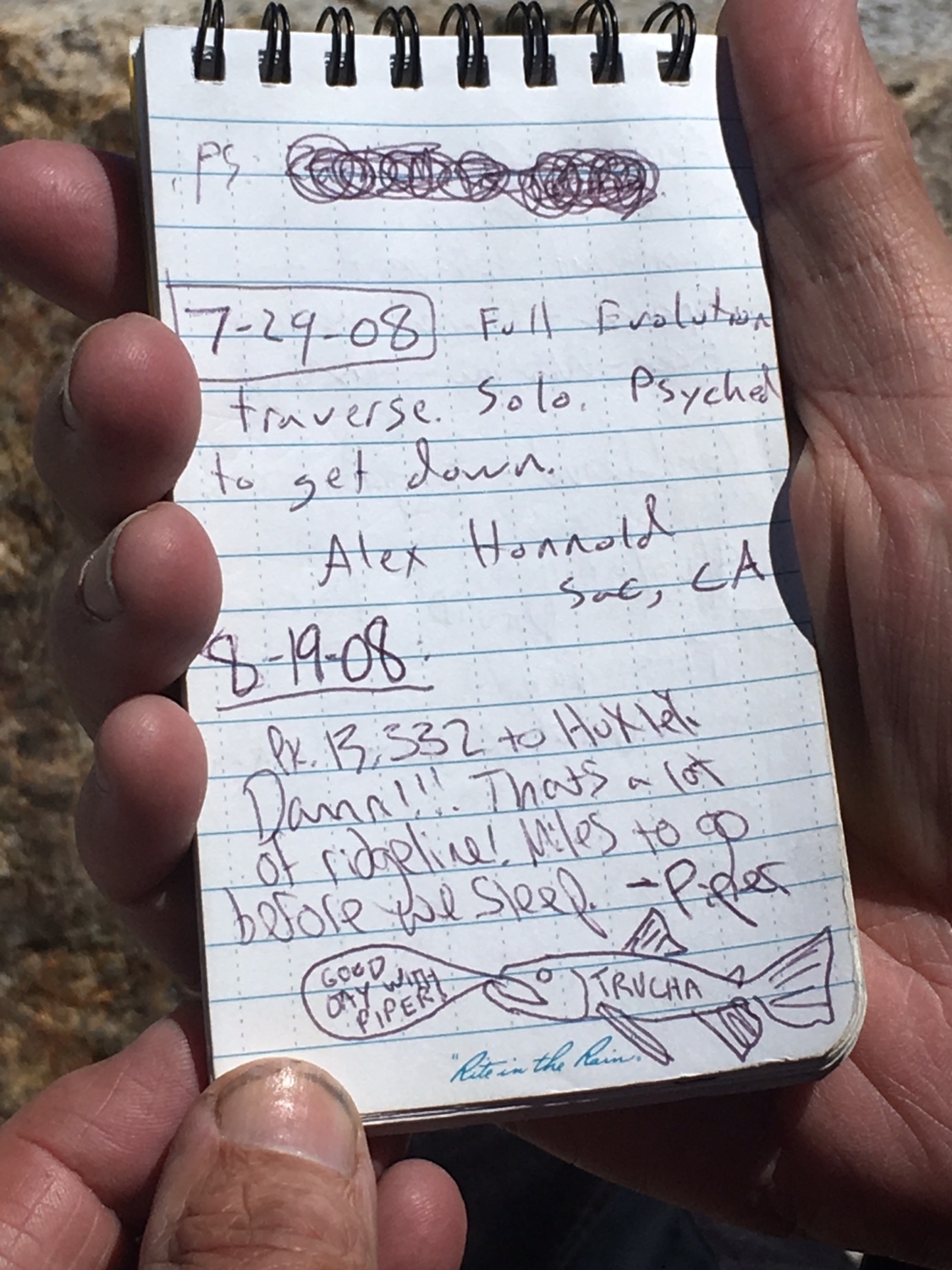
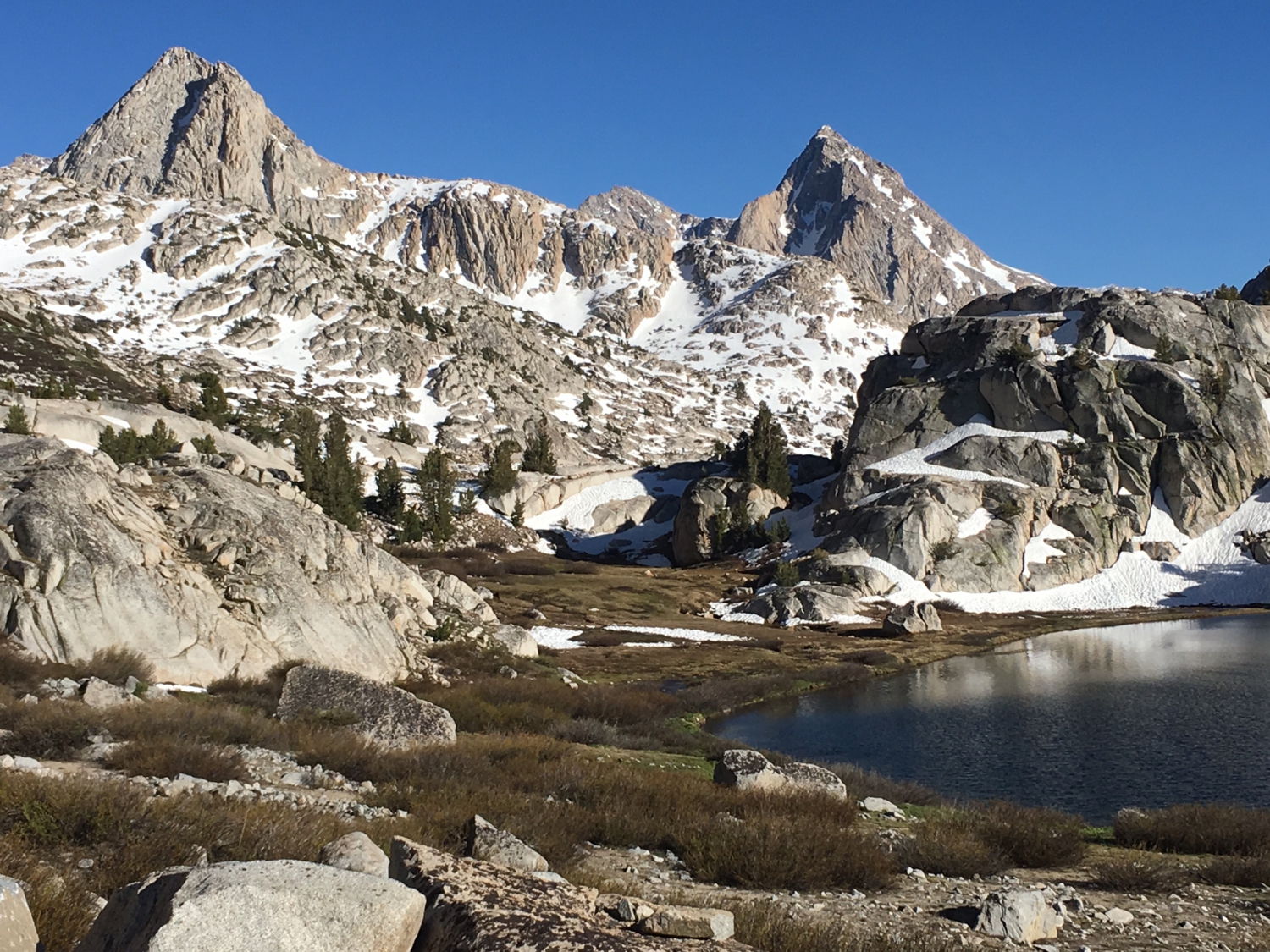
“In 2016 I did a backpacking trip in Kings Canyon National Park in California with my friend Simon, and since we are both scientists we decided to visit the Evolution Valley, where the peaks are named after famous evolutionary biologists. The highest is of course Mt Darwin, but it looked a bit daunting, so instead we climbed some of the lesser summits, including Mt Spencer, Mt Lamarck and Mt Huxley. The last of these was quite a challenge for us, involving ice axes, crampons, and an exposed scramble to the summit. When we finally reached the top we found the summit log (a notebook in a weatherproof canister, in which climbers record their names), with an entry by Alex Honnold, dated July 2008. Honnold is now a world-famous climber but back then he would have been an unknown 22-yr old. He recorded that he had just finished a solo traverse of the entire Evolution Range and was ‘psyched to get down’. We could see the ridge that he had traversed, and it looked unbelievably difficult. And we realized the route that we had struggled to climb was his easy final descent at the end of an epic day.”
Q/A session with past Chief Editors of Nature Neuroscience including Dr. Jennings.
Wiseman, S. Reflections from the former Chief Editors of Nature Neuroscience. Nat Neurosci 26, 712–714 (2023). https://doi.org/10.1038/s41593-023-01319-2
NeuroImage editor debacle which was very briefly discussed in this episode.
All NeuroImage and NeuroImage:Reports editors have resigned over the high publication fee, and are starting a new non-profit journalhttps://t.co/DmnwDKVCK7
This comes with great regret, and a huge amount of thought and discussion- please read announcement to get more details. pic.twitter.com/evEuWO7b4E
— Imaging Neuroscience EiC (@ImagingNeurosci) April 17, 2023