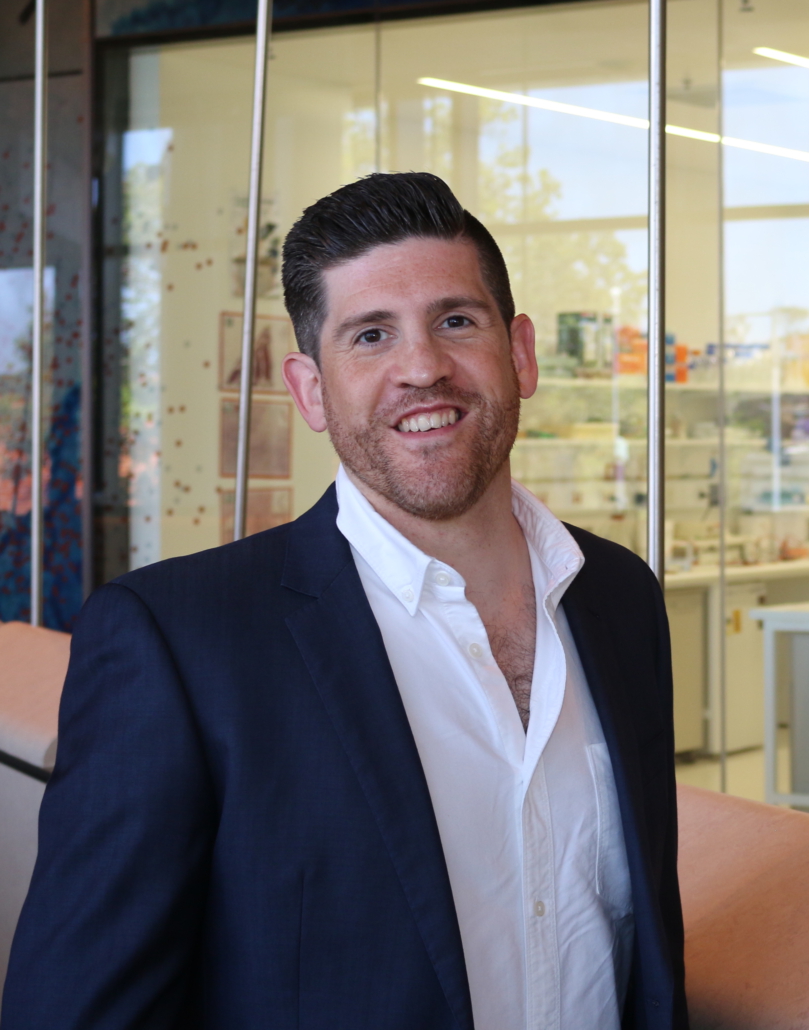
Philip Mosley is an Advance Queensland early career researcher in Brisbane, Australia
#32: Philip Mosley – Neuropsychiatric network effects of DBS in Parkinson’s and OCD
It was my great pleasure to talk with Philip Mosley, who is one of the most experienced neuropsychiatrists working with DBS and published seminal work on non-motor, neuropsychiatric side-effects of subthalamic DBS in Parkinson’s Disease as well as DBS for obsessive compulsive disorder when targeting the bed nucleus of the stria terminalis. Our conversation spans many areas from public health, remarkable individual case examples, the role of caregivers in DBS surgery, whether DBS could alter your personality, to boxing, raising three kids and a fast car. Phil has published certainly among the best network DBS papers on neuropsychiatric adverse events in notable journals, involving a virtual casino paradigm and investigating what differentiated patients that struggled with impulsivity and other side-effects after surgery from the ones that don’t. After carrying out one of the few randomized clinical trials on DBS for OCD with the DBS team in Brisbane, Phil realized how critical access to this treatment option will be for some patients, so he has become active in pursuing the goal to broaden access to this treatment in Australia and beyond. After listening to the side of neurosurgeons, neurologists and psychiatrists on this podcast, I believe it is a very insightful change of perspective to hear from a neuropsychiatrist that has treated a large number of patients that underwent DBS – so I hope you enjoy this episode as much as I did the conversation with Phil!
Philip Mosley 00:00That was really motivated by me thinking, am I a terrible psychiatrist? Because I was seeing all these patients and I couldn't predict who would develop this cluster of neuropsychiatric symptoms post-operatively. And so then we built this statistical model which allowed us to examine the effect of pre-operative behavior and pre-operative structural connectivity on post-operative outcomes. And we found that neither really, well neither had any influence whatsoever. It was all about where the DBS was, where the electrode was, what networks the volume of activated tissue was impacting upon. That was the key factor in determining the neuropsychiatric outcomes of these people in our cohort at least. Did it change practice in your clinic? Oh definitely. So it's definitely changed our practice at our center. Previously I don't think we were so obsessed with where the electrodes ended up. But now in every case we do. 01:01So we're very obsessional now about localizing our electrodes and titrating our stimulation with these potential risks in mind.
Andreas Horn And my sense is that we've really reduced the incidence of these post-operative neuropsychiatric complications. So I was down in Sydney doing a talk at the College of Psychiatrists Annual Congress. And Dennis Velikoulis comes up to me. And he's, you know, the senior Australian neuropsychiatrist. He's a great guy. And he said, Phil, I've had this call from Professor Vine, who's the chief medical officer. She says all of these people with OCD have been writing to her about DBS and how they need it and how it's not available in Australia. And I said, oh, isn't that interesting, Dennis? I wonder, I wonder, who told them to do that? Welcome to Stimulating Brains. Welcome to Stimulating Brains. 02:02Welcome to Stimulating Brains. Dr. Philip Mosley studied at the University of Oxford and obtained a master's degree in physiological sciences and a degree in medicine. As my mother would say, you wouldn't want to cross paths with him alone in the dark because back in Oxford, He was also captain of the university boxing team and was awarded two full blues. As you'll hear, his boxing career is very active and Phil manages to train six days a week, next to having three kids and a full appointment as a clinician scientist. Phil also likes fast cars, similar to Cameron McIntyre, who we've heard from in episode number 10. So maybe we're beginning to see a pattern here between interest in deep brain stimulation and fast cars. And as Phil tweeted after this interview, he would have loved to talk a bit more about his brain car. 03:06So I should have probably asked a few more questions in that direction. Please follow up with Phil on his interest in fast cars going forward. Back to science, though, Phil completed his PhD in neuroscience in 2019 under the supervision of Nannik. But now what brings him to our podcast? Well, he is one of the most experienced psychiatrists in the world with regards to the practice of deep brain stimulation and has been embedded as a psychiatrist in the DBS service in Brisbane since 2013. With over 1,200 devices implanted, the center is the largest in Australia and one of the largest worldwide. Furthermore, Dr. Mosley identified brain networks responsible for changes in mood
Philip Mosley after deep brain stimulation and used mathematical modeling of human behavior to discriminate those at risk of postoperative psychiatric complications. 04:00His work translates clinically to more accurate and effective use of neuromodulation based on targeted recruitment of key neuronal pathways. Applying these methods to treatment-resistant obsessive-compulsive disorder, Dr. Mosley characterized a brain connectivity fingerprint associated with clinically significant response to DBS. This was a landmark double-blinded randomized trial, while further establishing DBS as a viable treatment option for OCD patients with intractable symptoms. So we'll of course also cover a little bit the excess crisis in OCD DBS.
Andreas Horn I would like to thank you so much for tuning in.
Philip Mosley This is Stimulating Brains episode number 32.
Andreas Horn So thank you so much, Phil, for taking part in this.
Philip Mosley It's really a great honor, especially for me. It's a pleasure. And especially even more so since you just got farther for the third time. I think you said mostly 3.0 arrived in your email. 05:00Yes, that's right. It's going really well. Thanks, Andy. Yep, it's the third time lucky. I think we've got a sleeper this time. So it's going really well. That's great. That's great to hear.
Andreas Horn Yeah. And as you know, to break the ice, I often ask about non-scientific, you know, things. So hobbies or what do you do when not? Seeing patients not involved in science beyond family?
Philip Mosley I try and spend as much time as I can with my family. But my main interest outside of work is boxing, actually. So I've been boxing since I was a teenager. I boxed for my university at Oxford and still training with a boxing club. Try and get there six days a week early in the mornings before I get to work. Still try and get a bit of cheeky spotting. I've been doing a bit of sparring in once or twice a week with with with the fighters.
Andreas Horn And it's a it's a fantastic sport.
Philip Mosley 06:01And the other thing I am mildly obsessed with is cars. And so I think what I am when you have Cameron McIntyre on and and he was talking about his hobby of racing motor vehicles. And I said, well, he's a neuroscientist that races cars. And I would like to be.
Andreas Horn Yeah. Yeah. Yeah.
Philip Mosley I would like to be a neuroscientist one day or at least be thought of as a neuroscientist. And I own a reasonably fast car. So that's that's a source of interest to me as well. That sounds great.
Andreas Horn And really, you box six days a week. Did I hear that right? Every morning?
Philip Mosley Yep. Yep. Wow. That is that is really, really cool.
Andreas Horn And do you ever fear getting Parkinson's because of that? Is there something to it?
Philip Mosley I wouldn't even know.
Andreas Horn Is that is that a myth?
Philip Mosley I think, you know, getting repeatedly punched in the head is is is not really good for your brain health. But the thing about most amateur boxers and most decent boxing clubs is that it's it's 07:07a lot more control than you would anticipate. It's not too it's not two blokes going at each other hammer and tongs. It's about skill and craft and speed and defense. It's like any martial art, really. Professional boxing is a is a is a different is a different different sport altogether. And I think, yes, there's a there's some long term neuropsychiatric sequelae of professional boxing that may be of concern.
Andreas Horn But look like any like any activity in life, you know, you you you weigh the risks against the rewards, right? Yes.
Philip Mosley And of course, yeah. Moving moving to your scientific career. I think your most important part, your most important work was on bodybuilding.
Andreas Horn 08:05Is that right?
Philip Mosley That's my most cited work.
Andreas Horn Oh, really? Is it?
Philip Mosley I didn't know that. I was surprised when when digging back into the past. I think that's what you started with. Right. Your first.
Andreas Horn Yeah.
Philip Mosley No, no. It was just. I was always interested in neurology and psychiatry and and we had to do what I as part of medical school, you do little projects. And so I wrote this paper and was encouraged to publish it. Eventually got it published. And that was in 2000 and was in the early to mid 2000s and actually got published in 2009. I was working as a doctor. I was a doctor at that stage.
Andreas Horn And yeah, it's just a little it's just a little what we call phenomenological analysis of something called muscle dysmorphia, which is or which is also known as bigorexia.
Philip Mosley 09:05So usually men who are obsessed with their the size and muscularity of their bodies.
Andreas Horn And yeah, it was a fun project to do.
Philip Mosley And it's been cited like, I don't know, less than 500 times. But yeah. A few hundred times it's been cited. So it's super good. So then, of course, you did move into the deep brain stimulation field, which is what we're going to talk about today. And maybe first of all, to ask what's back to your interest, how did it come about that you were excited in neuromodulation? Phineas Gage and his the change in personality that he was reported to undergo after the tamping rod went through his frontal lobes and also was always interested in in the brain and how that 10:09the mechanistic operations of that in in supporting personality and behavior and choice and I remember at university in Oxford having a lecture from Tipu Aziz who was then doing some of the first cases in the UK of deep brain stimulation for Parkinson's disease and thinking oh this is yeah this is pretty cool and then I moved to Australia and was training in psychiatry and this opportunity came up to work with Peter Silburn and Terry Coyne in in Brisbane and that the rest is the rest is history really working with for about 10 years now great and and that already brings to me to the next question so so who were key mentors in your career or also turning points you mentioned Tipu Aziz I'm sure Michael Brakespear was important but but you know who were the key people or that influenced you 11:04yeah so I've been really lucky my career such as it is has been very serendipitous so that I've had lots of psychiatrists and scientists who've been real exemplars of high quality clinical practice and scientific work Michael Brakespear supervised my PhD in in neuroscience and QR Mark Berkoffer medical research institute and he's a hopefully he won't listen to this because normally I just bag him out all the time but he's actually really really inspirational really inspirational guy. And look, that list is really too long to mention. Yeah, it makes sense. So, but after studying in Oxford, you went to Australia, as I mentioned, and I think if I remember correctly when we met in Australia, I asked why you moved to Australia, and I think the reason you gave me was the sun and the good weather. Is that true? 12:15a year as a junior doctor and it's just cold and wet and also the other thing is I don't really fit in as as an Englishman because I don't like soccer I think it's the most boring sport ever and in the UK you just can't exist if you don't like I had to had to get out gotcha that's a good reason and and how was the move for you like do you ever miss England because I've just moved across the pond but your move was was much further further down so how is that going for you don't miss it at all I think of myself as an Australian now um been an Australian citizen for many years even I go for the Australians and you know I've gone for the Australian teams in the Olympics and the um the rugby and cricket and all that kind of stuff so I'm definitely a fully 13:03fledged Australian these days that sounds great switching to the main topics and much of your work has been I would say on the non-motor effects of super dynamic DBS and then also you know psychiatric DBS but let's start with the Parkinson's disease study first of story first so I think um if I remember correctly there was a case report but then the the first real like biggest study you published was in your image clinical and and then later there was also a brain paper on this topic and another neuro image paper but um But so we could maybe talk about the first one, the neuro-image one first. so so so so we we could maybe talk about the first one um the newer image one first um I so so we we could maybe talk about the first one um the newer image one first um I remember that there you defined a likelihood of being a case what did you mean with that you know being a case there yeah so I'll just give a little bit of background to um we were doing so one of being a case there yeah so I'll just give a little bit of background to um we were doing so one of the good things about working with Peter Silburn and Terry Coyne is that they're very busy. 14:02So we were doing lots and lots of cases of STN-DBS. We're doing about 100 cases a year. and we were seeing, you can measure it with the international literature, about 10% of our cases were developing these changes in behaviour, decision-making, personality in inverted commas that appeared to arise in the immediate aftermath of the surgery and were correlated with adjustments to the stimulation field. So I think we do things a little bit differently in Australia to some other centres in the world. We put all the kit in at once and we turn the DBS on immediately so there's no lag between the surgical implantation of the DBS device and initiation of stimulation. So we're seeing in the first three months a small subset of people but a non-insignificant number that people were really running into some difficulties. 15:01Obviously there were some milder cases and some more severe cases and we wrote about one of the more severe cases who had DBS. So we're seeing significant legal and family difficulties. And at that stage there wasn't really much in the literature
Andreas Horn about why this was happening.
Philip Mosley There was a sort of seminal case series by Schupach in the mid-2000s. I think the title of the paper was A Distressed Mind in a Repaired Body and he described 10 or so people who had undertaken SDN DBS in France and had developed some changes in moods similar to what we were seeing.
Andreas Horn And there was an open question, is this an electrical effect or is this part of the psychosocial adjustment to the relief of disability?
Philip Mosley In the epilepsy field, epilepsy surgery field, there's a concept called the burden of normality. So if in some people who have resections for temporal lobe epilepsy 16:02and become seizure-free, paradoxically they're not necessarily happy. They're not necessarily happy after they have their surgery because they have to get on with the boring, mundane aspects of normal life. And so there was sort of an open question about whether this was actually a psychological phenomenon or a biological phenomenon. And we looked at Susan Harper's primate work and what she'd showed about the connectivity of the SDN in the brain. And we thought, well, probably this is a biological phenomenon, really. And so what we did was we, in a reasonably large consecutive sample, we mapped the location and the distribution of stimulation in the SDN and tracked these people over six months to see, did they become more impulsive on various neuropsychological tests 17:02of impulsivity, but also did they develop this syndrome
Andreas Horn of impulsivity?
Philip Mosley And so we did a lot of research on this. And we did a lot of research on the ! And so to these people to these people to these people to these people to these people to these people to these people to these people to these people to these people to these people to these people to these people to these people to these people to these people to these people to these people to these people to these people to these people to these people to these people to these people to these people to these people to these people to these people to these people to these people to these people to these people to these people to these people to these people to these people to these people to these people to these people to these people initiated bipolar stimulation to reduce the size of the stimulation field very cool do you have any like illustrative or instructive specific case in mind that you could recount you know patient that
Andreas Horn you know whatever happened um to them or is that is that is it what was it more
Philip Mosley 18:01subtle effects that um you only see statistically it's also so are they you know no no there's so many because we did you know i mean look i always have to say at this point i i don't ever want to come across as a as someone who is um negative about stm dbs i work in a team i think we see the life-changing effects of this surgery every day this is a minority of patients and what my role in the team is i think is trying to make sure that everyone gets that benefit that stm dbs can offer but certainly in the 10 years or so I've been working with the team, I've seen some very florid cases and I can tell you about some of them. So there was, for example, there was a gentleman with no significant premorbid history. But that's the thing. A lot of these people don't have premorbid history of mental illness. So it comes completely out of the blue for 19:09them. So it's very difficult for people pre-surgically to kind of conceive of what might happen to them because they haven't seen a psychiatrist before they haven't had mental illness a lot of them haven't had the impulse control disorders that we see with the dopaminergic therapies um so for example that the guy that we wrote up in the um in the journal of um neurology
Andreas Horn clinical neuroscience he he he was really interesting because we turned him on and he he said i feel amazing i feel just feel really really fantastic
Philip Mosley he had a history of chronic depression that was managed in primary care so he's never seen a psychiatrist before but he as we see with many people with parkinson's he'd just been kind of miserable for the whole 10 years that he'd had parkinson's prior to st and dbs and we turned him on and he was he was just oh yeah this life's great i'm really happy and his family were really 20:03happy as well they were they were saying oh this is this great this you know you've you've really you've really helped our dad and he's really jolly and funny and life's really good and then six months down the track he began to develop some rebound so return of his motor symptoms so let's i don't want to give any identifying information but let's just say the tremor came back in one of his limbs so we activated a second contact um to produce a wider stimulation field in the in the in the in in the right s he was actually in the right stn so it was his left um his left limb and he then just became very very um outlandish in his behavior gambling where he'd never previously been interested in gambling very irritable um he lived in a remote country town in australia and in that country town he would drive around looking for the local policeman and then when he'd find 21:06the local policeman he'd get out and abuse the local policeman and he'd get out and abuse the local policeman um which didn't go down too well and he was eventually arrested for doing this repeatedly and thankfully he um they were astute realized this gentleman's not not psychiatrically well and he was transferred to a um mental health unit and required a period of mental health treatment with his device turned off and then we've been able to gradually reinstate his stimulation after that so you know for that gentleman really really not a good outcome of course yeah in the short term in the long term we've been able to optimize his stimulation control his motor symptoms but there's a lot of trauma and grief associated with his arrest his detention in a mental health unit of course yeah so we really 22:06don't want to see that happen so we're going to have to wait and see what happens next so we're going to have to wait and see what happens next so we're going to have to wait and see what happens next to anybody um there was a case series you i don't you've probably not read it because it's in a very small journal called neuroethics but there's a i i wrote um a case series of these patients called um woe betides anybody who turns me down um which was a direct quote from one of our patients who was hypomanic at the time and said do not do not adjust my stimulator because i feel so good and so that describes some of the some of the problems that we've seen with hypersexuality and impulsive and reckless behavior poor relationship decisions and some of the family fallout from from that i i actually did did um did read it and and and i think you also even published uh on the ethics of dbs since 2014 at least there was another article in that um maybe direction and i wanted to ask you 23:04but we can start with that question so so i think
Andreas Horn your case series is super interesting it's illustrative and has examples and and would
Philip Mosley um you know i think so you you interviewed both the patients and then also the spousal caregivers yeah that's right and then and then um i think one one key question as far as i understood was also would dbs alter personality right if is it even you know can we even answer that question because of course it changes the motor symptoms but you know um do you have a short
Andreas Horn answer to that does it sometimes probably no no it doesn't change personality and what was really interesting about this study was that even people who were the spouses or partners or children of
Philip Mosley patients who had had very severe neuropsychiatric symptoms didn't believe that the dbs had changed their partner's personality they felt that it had accentuated negative aspects of that person's 24:03personality but they were still the same person um so i think there's there's quite a lot of i don't want to sound like being a bit harsh but there's quite a lot of waffle and in the in the in the ethical literature about um dbs changing someone's identity um and uh it's it's all a bit overblown really i think when you talk to the actual people that have been through this they say well no i'm still the same still the same person it was still me doing that uh i just my that my barriers more my my inhibitions were
Andreas Horn were were modulated were reduced by what was happening electrically in my brain and i did
Philip Mosley things that i now regret but it was still me that did them and i'm still the same person longitudinally chronologically through that period i think even i think there was one quote if i remember correctly that sometimes they felt like a younger younger copy of themselves yeah that's right yeah yeah yeah interesting so so so very very cool stuff i think 25:06you know just the focus you had on the body and the body and the body and the body and the body and and the many cases you've seen also clinically, it must be so enriching in your experience. So I think the next, or at least one other great paper you had in your image in 2020 was where you looked at changes in initiation, inhibition and strategy use, again, following STN-DBS, probably on the same or similar sample, but you also looped in connectivity between the DBS electrodes and specific cortical regions. And I think you observed changes in these non-motor domains of each patient correlated that with structural connectivity. I think the study is super rich,
Andreas Horn but is it even possible to summarize it to some degree? Did you find some key insights there?
Philip Mosley Yeah, I think probably the... 26:02I mean, I think it was a natural extension of the work we'd done, looking at the distribution of stimulation, the STN. So in that paper, we looked at where the stimulation was in the nucleus. In these papers, and there was one in brain as well, we looked at the frontostratal connectivity, structural connectivity using high-resolution diffusion imaging and the connectivity of networks that are implicated in, and we looked at the the stimulation field within these networks. And what we found was that, yes, indeed, the connectivity of the subthalamic volume of activated tissue, 27:05or at least the one we simulated based on your...
Andreas Horn Yeah.
Philip Mosley ...software algorithm was statistically associated with changes in decision-making and behavior, executive functioning after DBS. Totally agree. And I think... So even in the abstract of that brain paper, and we can go into that in more detail in a second, you... You wrote what really spoke from my heart, that you, I think, you found nearly no significant effect on the group level, just looking at pre and post DBS, but it was important to incorporate where the stimulation actually was in each patient. And so, meaning that you could correlate the placement of the STN with many of the outcomes, but not... 28:00There was rarely this overall effect that, let's say, people got more impulsive overall in STN-DBS. And I often wonder, should we... The same could apply to clinical studies,
Andreas Horn especially in psychiatric diseases, right?
Philip Mosley Where I sometimes think if a study fails, it could be the same thing. We just don't see a group level effect, but individual patients could very well profit. So it really should... The question is, should we incorporate individual stimulation sites
Andreas Horn into these studies as well?
Philip Mosley Oh, definitely. I think so.
Andreas Horn Yeah.
Philip Mosley I think that's a good question.
Andreas Horn Yeah.
Philip Mosley I think just a little bit of background to that paper, that brain paper, that was really motivated by me thinking,
Andreas Horn am I a terrible psychiatrist?
Philip Mosley Because I was seeing all these patients and I couldn't predict who would develop this cluster of neuropsychiatric symptoms postoperatively. And there's been quite a lot of opinions in the literature, 29:05quite a few opinions in the literature about things you should look for, red flags, risk factors. The whole question of if they have a preoperative impulse control behavior on dopaminergic therapies,
Andreas Horn is that a greater risk of postoperative problems? Does it matter?
Philip Mosley There are some people with preoperative impulse control disorders who have no problems postoperatively from a neuropsychiatric perspective. And there are plenty of people who have no preexisting neuropsychiatric impulse control problems. There are people who have problems before DBS,
Andreas Horn who then go on to get problems with impulsivity and disinhibition postoperatively. And I was just thinking, is this just me being a crap doctor? Am I just not seeing this? So you mean you couldn't predict it just based on preop scores, right? Exactly.
Philip Mosley 30:00So, yeah. And so every patient that has DBS at our center is seen by me. And we have a preoperative evaluation. And full psychiatric history, cognitive testing. And even in this study, in the study, we're doing a whole battery of neuropsychiatric and neuropsychological instruments, looking at baseline impulsivity in various domains, such as impatience, tendency to respond without thinking.
Andreas Horn And none of this seemed to map onto what was happening.
Philip Mosley Postoperatively.
Andreas Horn And then I thought, well, maybe we can be really clever. And is it something about their brains?
Philip Mosley Do they have some kind of baseline abnormality or baseline difference in the connectivity of these key networks implicated in choice behavior,
Andreas Horn inhibition, that somehow the DBS is exploiting or acting in a negative way upon?
Philip Mosley 31:04Because we know that Parkinson's, of course, is a very important part of the brain. And we know that the patterns of neurodegeneration differ between individuals. And some people have a more mesolimbic or mesocortical pattern of neurodegeneration. And so then we built this statistical model, which allowed us to examine the effect of preoperative behavior and preoperative structural connectivity on postoperative outcomes. And we found that neither really, well, neither had any influence whatsoever. It was all about where the DBS was. Where the electrode was. Where the DBS was. Where the electrode was. What networks the volume of activated tissue was impacting upon. That was the key factor in determining the neuropsychiatric outcomes of these people in our cohort, at least.
Andreas Horn Yeah, that's super exciting.
Philip Mosley And in that study, let's maybe dive into that study a little bit more. 32:02I remember you used a virtual, because you had a lot of neurodegenerative studies. You used neuropsychiatric scores, I think, pre and post. And then you also had this virtual casino. And I think in collaboration with Klaas and Stefan, could you maybe outline how that, I think it was blinking and it was really a vivid simulation of a casino.
Andreas Horn Yeah.
Philip Mosley So the idea is to use, or was to use, a naturalistic paradigm, as well as these pen and paper tests, which, although they're very well established, at least lack some ecological validity. So basically the idea was to simulate an environment that would encourage people to behave in an impulsive manner, to make double or nothing gambles, to switch slot machines if their machine wasn't winning, to bet unlimited amounts in the service of getting a big reward.
Andreas Horn 33:02So, yeah, it was a, it was a,
Philip Mosley it was a fairly fun little online casino with music and flashing lights that was built by, say, Pallywell, who was a doctoral student with Stefan in Zurich. And Michael Brakespeare put me in touch with Klaas and we collaborated on a few papers involving that casino.
Andreas Horn And it was, yeah, it was really cool.
Philip Mosley It was really cool. And I think that's, I think that this idea of using a naturalistic paradigm in psychiatry, you know, is pretty important because it kind of engages participants more and perhaps gives you more realistic insights into some of the behaviors under question. Sounds great. And I think if there's one key summary finding that you found is that modulating connections between, 34:03you know, the ventromedial subthalamic nucleus and the orbital frontal cortex seem to associate with even clinically significant and harmful changes in mood and behavior.
Andreas Horn Is that, is that the key finding? Yeah. Yeah.
Philip Mosley So we, we, we, again, we use some of the tools in Lead DBS and the normative connectome, normative connectomes embedded within that software pipeline to look at differential patterns of connectivity within the brain. And we found that there was a lot of connectivity with the stimulation field and individuals who became these neuropsychiatric cases. So these people who were, had developed clinically significant changes in mood and decision making that was responsive to stimulation manipulation. And we found that those people, these, the subthalamic VAT was, or the volume activated tissue was connected most strongly with the right orbital frontal cortex. Whereas in people who didn't, who didn't develop these symptoms, there was no, no significant connection. 35:00Great. Really cool. So, so, so I think together, all these, all these studies really make you the world expert on, you know, what, where not to stimulate, or at least for, from a non-motor aspect.
Andreas Horn Did it, did it change practice in, in your clinic?
Philip Mosley Oh, definitely. So it's definitely changed our practice at our center here. So I can't speak for any other centers in the, in the world, but I think in, previously, I don't think we were so obsessed with where the electrodes, ended up. So there was a sense that the neurosurgeon, well, he put the electrodes in the STN and so they were there, that's where they were. And we've checked them on the CT and they're in the right general area. So that's, that's great. They're in the STN. And perhaps we'd use some of the proprietary software from Medtronic or Boston or, but we wouldn't, we wouldn't really look at that too closely. But now in every, every case we do, we, obsessively, obsessively track where the electrode has ended up, what, with the directional stimulation, how rotated it is, 36:09what is the best contact to use. If the electrode is too anterior, we might consider replacing it or moving it. So we, we're very obsessional now about localizing our electrodes and, and titrating our stimulation with these, these, these potential risks in mind. And, and, and my sense is that we've really reduced the incidence of these post-operative neuropsychiatric complications. So we can actually, you know, in the last couple of years, we haven't really had any significant cases that to, to, to, to write home about. And the, the incidence has fallen from, you know, one in 10, which is kind of consistent with what the literature says. I think probably the, what happens on a minor degree, maybe in one in 20 cases these days. 37:02At our centre.
Andreas Horn Yeah. Did you ever see a left-right hemispheric difference on any of these?
Philip Mosley Oh, definitely, definitely right hemispheric.
Andreas Horn So in our, in our, in our experience, it's all, yeah, it's, yes, you can see it in the left hemisphere, but a lot of our findings were right lateralized.
Philip Mosley And that is the impulsivity.
Andreas Horn Yes.
Philip Mosley Construct.
Andreas Horn Okay.
Philip Mosley So this, this, this, networks that we looked at in our studies, we termed them the response inhibition network and the reward evaluation network, and these were based upon existing networks that have already been delineated. So the reward evaluation network was the sort of mesocorticolimbic network delineated by Suzanne Haber and colleagues, and the response inhibition network has also been well defined as a sort of stopping network that and that involves the SDN-IFG 38:01and an anterior cingulate cortex. And that's well known to be right lateral. Well, previous studies have found that that's generally a right lateralized network. That's great. Do you think the balance between, you know, the same, let's say the same network with its homologue on the other hemisphere, I mean, it's probably very hard to answer this question, but would play a role, you know, meaning that, let's say, if there's an asymmetric electrode placement, could that, you know, it's sort of like a push-pull effect. But sometimes the reason I ask is, so we did find on like more depressive symptoms originating really more from an anterior left hemispheric stimulation in a few cases. And it felt sometimes that even, you know, anterior... anterior right hemispheric could potentially, if at all, rather be due to something like mania 39:01or, you know, the opposite effect or so. But this is really anecdotical. So, you know, but since you're the expert, just wanted to hear your opinion. I don't know that. I just am.
Andreas Horn Okay. But is like this any like push-pull effect that you ever thought about in left and right hemispheric networks? Or not really?
Philip Mosley No, that's too clever for me. Sorry. I'm done. No, no, no. It's kind of a second order. It's kind of a second order effect. That. No. I'm not smart enough for that. First order.
Andreas Horn Yeah, that's okay. Yeah.
Philip Mosley Sorry. With the, you know, with the mania, we've often seen that to be a right hemisphere mediate effect.
Andreas Horn Yeah. Interesting.
Philip Mosley Great. So, really glad that, you know, also had some clinical translational effect. That's really amazing. And I think you, I must really applaud the effort of gathering this, this vast and so, you know, deep phenotype data set. I think you mentioned that you yourself had some, some OCD of course, in quotation marks
Andreas Horn 40:03and in trying to get a really good data set.
Philip Mosley And, you know, I think you took all these scores yourself single-handedly.
Andreas Horn Is that correct? Yes. Yes.
Philip Mosley Really cool. So, so amazing. Speaking about OCD in 2021, you published a randomized double-blind sham control trial of the brain simulation for obsessive-compulsive disorder.
Andreas Horn And you, you did target the bed nucleus of the stria terminatus. Can you tell us a bit more about the backgrounds of the story of the, of the study? Why this target? And maybe what does the bed nucleus do?
Philip Mosley You know, cause I don't.
Andreas Horn Okay.
Philip Mosley I might not be, look, I'm just a, I'm just a humble psychiatrist. You know, I don't think I can tell you what the bed nucleus does. I can tell you what I've read that it does.
Andreas Horn Yeah.
Philip Mosley You know, mediator sustains state of apprehension. 41:00It's part of the extended amygdala.
Andreas Horn And we really, we really chose, I guess there were two reasons why we put the electrodes
Philip Mosley there. And obviously this, you know, say that this was, you know, Professor Silbert and Peter Silbert and Professor Terry Coyne, not Phil Mosley, the psychiatrist deciding where the, where the electrodes were going. Which you meant the team.
Andreas Horn Yeah.
Philip Mosley The team.
Andreas Horn Yeah. Yeah.
Philip Mosley Good.
Andreas Horn Yeah.
Philip Mosley So I think we've, you know, we looked at Bart Nutten's work and we really put the electrodes in a similar spot to where he's been. He's been putting them in also based on our own experience, actually in Tourette syndrome with comorbid OCD, we'd had some previous experience of putting the electrodes in the bed nucleus.
Andreas Horn Yeah.
Philip Mosley And we've looked at the results for Tourette's with OCD and found that it had a quite a powerful anti-OCD effect.
Andreas Horn 42:00So that's why we decided to go there.
Philip Mosley So we weren't the first, we weren't the first group in Australia to do DBS for OCD. And there's a, there's a group in Melbourne led by Dr. Sarah Ferrand and Dr. Dennis Velikoulis, who had already published a case series of DBS for OCD in the Australian Journal of Psychiatry. But we wanted to do it. But we wanted to do a sham control double blind trial because we really think that's important to solidify the evidence base for this procedure. Whereas the previous work that had been published by the Melbourne group had been open label. So we recruited nine people with very severe lifelong OCD who had exhausted all pharmacological and psychological treatments. And. Showed that DBS was statistically superior to sham stimulation. 43:00And after 12 months of stimulation, there was a significant clinically significant response in seven out of our nine participants.
Andreas Horn Is there an anecdote or anecdotes that you could report when, you know, working with these patients that you saw before? Yeah. Yeah.
Philip Mosley So we've, so we, you know, we've got several superstars from this trial. Who it's been absolutely transformative. So there was there's a young man who was in his early thirties. He had OCD since early adolescence. He had intrusive thoughts that he was going to punch someone or be violent in some other way to someone intrusive thoughts of a sexual nature that were very distressing to him. He had been a very talented surfer in his youth. And could have been a very talented surfer. So probably made it as a pro, but was crippled by his OCD living with his mom and dad dumped up on Valium. 44:00Most of the time worked in a surf shop as a volunteer for a couple of hours a week, but really not doing anything with his life. Had had trials of every antidepressant under the sun, antipsychotics, electroconvulsive therapy, no benefit. He had DBS. He took about six months to respond. And the first. Thing that he noted was that the. Intrusive thoughts were less severe, less prominent. And it seemed to have less of a sting to them. And gradually as his device was optimized, the thoughts became not that bothersome to him at all. He was able to just let them pass through his head. And he's now married. He's got two kids. He's running his own business, working five days a week, paying tax, contributing to society, and he's now married. He's got two kids. He's happy. Amazing.
Andreas Horn Yeah.
Philip Mosley Life's amazing for him. And got another gentleman, for example, very smart gentleman in his fifties chemistry degree, 45:07but he had an obsessional slowness and obsessional doubt and would have to repeat all of his basic, you know, all of his activities again and again to make sure they were done correctly to the extent that he couldn't look after himself. Because he couldn't wash, cook, couldn't clean. So he was actually in a nursing home, living in a nursing home because he needed someone to do all of these basic tasks for him. So he imagine being a smart gentleman in your fifties living in a nursing home surrounded by elderly people. So he's obviously really, really miserable.
Andreas Horn Yeah.
Philip Mosley So he had the DBS. He perhaps wasn't as good a responder as the other gentleman I was talking about. So he was a little bit more of a He was a little bit more of a He was a little bit more of a So he went from extreme level of symptoms to low-moderate level of symptoms. So he's still got problems, 46:00but he's able now to live independently. So he's out of the nursing home, which is, of course, a big, big change. um very nice since you mentioned the first patient was a surfer do you know does he serve again like is that possible yes yes he does yes again yeah yeah wow very cool yeah so um you you then recently um also co-authored a paper entitled the brain simulation for treatment refractory obsessive compulsive disorder should be an accepted therapy in australia so calling for this to become more standard and and um then also prominently co-authored the recent nature medicine article i think with the same message message um with veer libis of underwaller and mike open that we also heard about um in episodes 25 and 31 yeah so so can you talk a bit about your experience with with dbs for ocd and then also this crisis of excess that um 47:00people are calling out yeah so in the aftermath of the publication of um our australian trial we were approached by many many people with severe ocd in australia saying i'm on my life i'm like these people that you've talked about in the trial my life is miserable i've tried everything um can you help and we we couldn't because we had to the trial we used up our trial budget and we had applied to get more funding to do more cases but unfortunately it's very difficult to get funding in australia for um for science and we've been unsuccessful and we or i felt that um there was now really an emerging evidence base for um dbs for treatment refractory ocd there have been a number of 48:00high-quality CIVO-controlled trials conducted worldwide, and ours was just the latest in the list. And so I wanted to try and use my small influence in Australia to convince the federal government to fund this. So the health system in Australia is probably a little bit different. We do have private insurers, but in order to get a therapy approved for reimbursement, it's the federal government that makes the decision about whether or not an item is fundable. So, for example, in Parkinson's disease, there are item numbers for DBS for Parkinson's disease that are approved, so the insertion of the DBS device, shooting of the DBS device. And so we suggested that DBS for OCD should be added to that item number. And it was really a case of that article, though, it was really more of a political move to try and stimulate the quality. And so we asked the College of Psychiatrists in Australia 49:00to help us. At that time, the College of Psychiatrists in Australia still regarded DBS for OCD as an experimental treatment, and there was a clinical memorandum that was published by them saying that DBS for OCD should never be undertaken unless it's in a clinical trial. And what we were able to convince them to do was to, in a clinical trial, revise their guidelines, and I helped to contribute to that to say that actually there is now an expanding evidence base for DBS for OCD, and it may be appropriate to deliver this outside of a clinical trial if the person has met several criteria, such as trying all available psychological and medical treatments. And that was a fairly long process to accomplish, and we relied a lot on the support of the community, and the support of the people who were involved with OCD. 50:02So the people that wrote to me with their OCD, I said, look, hey, I'm just one guy.
Andreas Horn Can you write to the president of the College of Psychiatrists, here's his email address? Can you write to the chief medical consultant for mental health in the federal government, here's her email address?
Philip Mosley And it was pretty funny, actually. I think that might be called trolling, but I was down in Sydney, doing a talk at the...
Andreas Horn Yeah.
Philip Mosley College of Psychiatrists Annual Congress, and Dennis Velikoulis comes up to me. He's, you know, the senior Australian neuropsychiatrist. He's a great guy. And he said, Phil, Phil, I've had this call from Professor Vine, who's the chief medical officer. She says all of these people with OCD have been writing to her about DBS
Andreas Horn and how they need it and how it's not available in Australia. And I said, oh, isn't that interesting, Dennis?
Philip Mosley I wonder who told them to do that. And so we were able to get some real government interest. And in actually, you know, making this therapy available. 51:05And so we've got an application. And at the moment now, we were invited to submit an application to the federal government. We've got one in to try and prove DBS for OCD for federal funding. It's a long process, so it's not going to happen in the next, any time in the next month or so. But, you know, the wheels are turning slowly. Great.
Andreas Horn Yeah.
Philip Mosley I mean, if you... Tell about these individual cases, you know, it's so obvious this has to be done for some patients. Of course, it's always the question, you know, who is eligible.
Andreas Horn And then, of course, not everybody's like these two superstars that you talked about. But yeah, it makes so much sense to potentially fund this. So the study you did was probably industry funded then, right?
Philip Mosley So the main cost of it is that the device itself and the surgery or what else is the...
Andreas Horn Yeah. Yeah. Okay. 52:00Yeah.
Philip Mosley So the study was funded by the University of Queensland and Medtronic supplied the devices.
Andreas Horn Yeah. Okay.
Philip Mosley And do you, for the listeners, you probably know more than myself, you know, the situation worldwide. I think there's similar crisis of excess in Europe and the US. I know that the European device exemption has run out now. So starting essentially this year. We can't even, it's not, you know, approved anymore and paid by insurance at the moment. And I've heard from fairly in the last podcast that, you know, industry just doesn't find
Andreas Horn it interesting enough because the cases are so low to fund another trial, you know, to
Philip Mosley get this approved.
Andreas Horn Can you, if you know, can you summarize how the situation is in other places? Yeah.
Philip Mosley So all I can say is that that's the same that I've heard and what I've heard from the other
Andreas Horn Yeah. Yeah.
Philip Mosley I've heard from what I've seen on Twitter from people like Samir Sheth, who I know has been a big 53:05advocate for DBS for OCD and his colleagues. Yeah, I think it's certainly our experience in Australia is that the device companies are just not interested in psychiatric DBS here. They're, you know, they're quite happy to talk to us. But when. But when push comes to shove, nothing is, nothing is forthcoming. There's been some, I heard, I heard there's some big, big announcement in the US about Abbott having FDA approval for DBS for depression. People getting quite excited about that.
Andreas Horn But yeah, things are moving in that direction.
Philip Mosley So, so certainly that that's, that's probably good news.
Andreas Horn Yeah.
Philip Mosley Hmm. Not good news.
Andreas Horn 54:00What do you think?
Philip Mosley Oh, look, no, I'll believe it. Believe it when I see it.
Andreas Horn Yeah. Yes.
Philip Mosley It's a real, it's a real shame because yes, I agree that DBS, let's say talk about DBS for OCD. It's never going to be a huge market for these, these companies, the number of people with the severe treatment, refractoriness and severity of OCD that to, to, to think about deep brain stimulation, it's always going to be, it's always going to be low. And.
Andreas Horn Yeah.
Philip Mosley And, and it's never going to be a huge money spinner for these, for these companies.
Andreas Horn And, and yeah, look, I don't know. Yeah.
Philip Mosley But it's still a shame that this plays a role, right. That, that the market at all is a consideration for this happening or not happening. Right. So, I mean, that's, that's the key issue. I think that, you know, the, yeah, the monetary incentive plays a role here. It shouldn't, right. I think we both agree it shouldn't, but yeah.
Andreas Horn 55:01Yeah.
Philip Mosley Well, anyways, so, so, so maybe let's talk a bit more about your trial. So, so it was one of five randomized trials that happened so far, I think with a total of 62 patients, at least according to the table from that review you wrote. And of course prominent study was the one by Malik et al in 2008 in New England Journal that was STN DBS. Then there was one each by Bayer. Then there was one each by Bayer. Then there was one each by Bayer. And then there was one each by Damien Denise and Wayne Goodman in 2010 with the ALIC anterior limb of the internal capsule. And then the first one that you mentioned from Bartnerton. So first authored by Laura Lutjen in 2016, which was also in the bed nucleus. Can you, can you, and then yours of course, right. Also in the bed nucleus. So, so, so can you, can you talk a bit maybe about the overall results in these studies or differences in the trials or, you know, just the executive summary and how, where we stand. And then yours of course, right. Also in the bed nucleus. And then yours of course, right. Also in the bed nucleus. And then yours of course, right. Also in the bed nucleus. 56:00And then yours of course, right. Adam Adam Adam All of these studies have shown statistically significant differences between active and placebo stimulation. I think in our trial was slightly different in that we used the delayed onset design rather than a crossover design. So most of the studies have optimized stimulation and open label phase and then in a counterbalance fashion either turned the device off and then back on again or left it on and turned it off again and looked at the difference between active and sham stimulation in that crossover phase. We actually went over to meet with Damian Denise and his group in the Netherlands in 2014 when we were setting up 57:00a new trial. Our trial and we spoke to him and his group about their experience of the crossover design and they said to us, well, the participants, they found it really, really stressful. And when you turn the device off, suddenly you can get a rebound of symptoms. And so we decided instead to do this delayed onset design where for three months, half the... Half the participants were turned off and half were turned on in a staggered fashion. And I guess the drawbacks of that were that it reduces the power to detect an effect because you're titrating from baseline and you don't have that nice, long, open phase where you can accrue all the benefits. So it was still cool that we were able to find a statistically different, 58:00significant difference. What the pros are that it really, it's, I think it's, allows for better blinding because the participants who are off, they've never had the device on at all. So they have no idea what it will feel like and there's no side effects that they've, or that they've discerned that they can guess whether they're on or off. And, you know, I think that's a really good thing. So I think that's a really good thing. So I think that's a really good thing. It's, they don't have that rebound effect when you turn them off, which is really good. So all of these trials have shown a statistically significant difference in one way or another. They've all shown that they're acceptable. And, of course, there are some safety concerns relating to surgery, namely infection. So we had one participant in our trial who had to have her device explanted because of infected IPG. So that, you know, there are, this is, 59:00this is, this is a very serious surgery, you know,
Andreas Horn so there are some safety factors to take into account. And Phil, this was one of the non-responders, right? So when you mentioned seven, seven had a good response. So one was, you know, essentially excluded, right?
Philip Mosley So you even have seven out of eight, if I remember correctly.
Andreas Horn Yeah. Yeah, that's right. Yeah. Yeah.
Philip Mosley And, and although the numbers are small in terms of total numbers, I mean, that's, I've heard people criticise it. I've heard people criticise the DBS literature, psychiatric literature before saying, well, you know, you're talking about less than a hundred people who've been in, been in these trials. Well, look, actually, I think if you look at the history of psychosurgery, I think it's, it's incumbent upon us to be cautious and methodical. I think it would be more of a concern if we had implanted 3000 participants, right?
Andreas Horn Absolutely. Absolutely. Yeah. Yeah. Yeah.
Philip Mosley That's a good point. Do you think the, the rebound effect in these crossover trials,
Andreas Horn Yeah. 01:00:00Yeah.
Philip Mosley Plays a role in, you know, it could help the trial, but because then patients of course, get worse in that phase when it's switched off compared to the baseline.
Andreas Horn Do you think that plays an effect?
Philip Mosley I think, I mean, I've not been, I couldn't comment too much because I haven't been in, I wasn't one of the members of the trial in those trials that employed those methods and I didn't see it for myself, but certainly we, in our trial, we were using a prototype of the, um, um, the, the, the, the, the new Medtronic device that can record electrophysiological, Percept.
Andreas Horn Yeah. Yeah.
Philip Mosley Percept, um, electrophysiological signals. And we were trying to, as part of the trial, as part of a sort of another arm of it, turn the device off and record at various points during the trial. Um, and we actually stopped turning the device off because whenever we turn the device off, people would have a panic attack. They would say things like, Oh, I feel like I'm going to die. I've never felt such fear like this before. 01:01:03And so we said, Oh, no, we're not, we're not going to do this. We're just going to leave it on record with the device on.
Andreas Horn That's very interesting.
Philip Mosley I was about to ask, you know, because I've never heard about, you know, bad nucleus rebound. I think Carl Spalderman told me that in the ALIC, they also, as, as Damien Dennis told you that they have these, um, sometimes very grave, um, rebound effects also just if the battery depletes or so.
Andreas Horn And, um, apparently the, the Grenoble team mentioned, and I've just heard that that from Carlos, that, that that's not so much the case in the STN. Do you know any about that? Have you heard similar things? That would be interesting if it's different in the STN. Not sure it's, it's here safe, but, but yeah, um, could, could be interesting, um, because, because he found it quite concerning, right.
Philip Mosley That, um, you know, as long as the DBS is on it, it's all good, but it could, um, need to, um, be, um, you know, it's not going to be a good idea. Um, but, um, I think that's a good idea. I think it's a good idea. I think it's a good idea. 01:02:00Even emergencies if, if, um, the battery stops or so.
Andreas Horn Yeah, of course. Yeah.
Philip Mosley And, and, um, and what if someone breaks a lead or you have a hard with a malfunction and, and especially if, you know, my biggest fear, I think is that if, you know, the device companies aren't really interested in supporting these, this cohort of patients and we don't have federal funding, um, to do this, to do this at a government level.
Andreas Horn Yeah. Yes. So I just fear that something like that will happen and we won't be able to help them. Interesting. So is this rechargeable batteries?
Philip Mosley 01:03:01Yes, so all the participants have now got rechargeable batteries. Yep, yep, yep. That's good. Okay, cool.
Andreas Horn Very interesting stuff, Phil.
Philip Mosley So maybe to wrap up, I want to be mindful of your time, especially with a young kid at home,
Andreas Horn but maybe some more general rapid-fire questions. Was there anything where you thought this was a waste of my time or this was, you know, real failure or so that you might be able to share?
Philip Mosley No, no, not really. Look, I think my approach has always been to just slowly chug on and gradually accrue things. I don't think I've ever been someone who is smart enough to have a eureka moment or, you know, have a dream about how to solve a problem or wake up one day with a vision of how to do stuff differently. I'm a very slow, methodical thinker. 01:04:05I think I'll tell you a little anecdote. So there's a game called Rugby League and there's a saying in Rugby League, sometimes you've got to just stay in the grind. And what that means is, and that's a kind of a kind of phrase I sort of apply to my life. So Rugby League is a game where you pick up a ball and you run at the opposition and they knock you down and then they pick up the ball and they run at you and they knock you down. And then you pick up the ball, you run at them, they knock you down. And it goes on and on and on and on and on and on and on until eventually someone scores a try. It's actually a great game. I love it. It sounds terrible. It sounds a bit like soccer, though. Like with. With. With. Few goals.
Andreas Horn Is it? And you don't like.
Philip Mosley Yeah. Oh, it's much better. It's much better. So. And there's this saying, stay in the ground, which just means keep going. Just keep picking up the ball, keep running it back, take the hit, 01:05:03set yourself and do it again and again and again and again. And sometimes I think like, think like that when I'm going into the clinic and I've got a full day of patients and I've got, you know, I'm like halfway through at the moment, I'm halfway through collecting a data set on people with melancholic depression. And I want to get I want to get over over 100. You know, I want to get into triple digits with with the with the number of participants.
Andreas Horn And I'm about halfway through and it sometimes feels like, oh, am I ever going to get there?
Philip Mosley You know, because you spend a whole day with these people, which is great. I love it.
Andreas Horn Yeah, I love meeting these people, but it takes a long time to get data.
Philip Mosley And you just got to just keep going. And, you know, you look back in six months and then you've actually done a whole lot of stuff, but you've just done it incrementally. And that's that's the way I work. It's the way it sounds. Sounds good. Yeah. And I totally agree with you. So so often the things, you know, from afar look like great successes, but then there's a lot of work behind it. 01:06:03And, you know, just looking at other people's, you know, things that that went well is, you know, it seems easy, but then usually it's been a lot of staying in the grind. Yeah. Yeah. Okay. Yes.
Andreas Horn And maybe a quick other question, because you mentioned depression or metabolic depression.
Philip Mosley So I think in Australia, you told me once that you believe that SDN DVS could potentially work in depression.
Andreas Horn And I have the same feeling, like very interior, very limbic. Do you still think that's true or? Yeah, I'd like to try it.
Philip Mosley So I have lots of ideas. I think I've been very interested in the idea of how we could, you know, we could we could help people with treatment of fractal depression with with DVS. Unfortunately, I've not been able to be funded to explore any of those ideas as yet. But I look, I think what's happening in in the centers in the U.S. 01:07:04with these with these very high dimensional electrophysiological investigations of treatment, refractory depression, and I think that's very interesting.
Andreas Horn And why that's the people doing that are super inspirational.
Philip Mosley I'm just really I really like to see them replicate what they've done. You know, because we're talking about two cases, really. I really see more cases come out of those centers so we can get an idea about whether this is actually a viable strategy. Very cool. Yeah. So I think this is this is some of the coolest things, at least scientifically, that's happened. And then you're totally right. It could again be hype cycle. You know, you just saw two cases that we have to see if it replicates.
Andreas Horn So any advice for young researchers entering neuroscience, medicine or academia?
Philip Mosley 01:08:02Do I think if I could say anything would be do what interests you. Just keep keep following what what you find exciting, because then you'll always be that then you'll always always be able to get out of bed and keep going and enjoy what you do. Then you wouldn't regret the single day.
Andreas Horn Would you give that advice to your children? You know, if they thought, hey, that should I go to med school? Is that a good idea? Yeah, of course. Yeah. Sounds good. Yeah, of course.
Philip Mosley Yeah. At the moment, my five year old wants to be a rock star. So, OK. That's that's a stated career goal.
Andreas Horn So we you know, we've got a bit of we've got a bit of work to do that.
Philip Mosley I think makes sense.
Andreas Horn Which instrument does she play or does she sing? Yeah, she runs around a lot and she sings. Yeah, sounds good. What do you think the future of the field will look like? Thinking broadly, you know, psychiatry or potentially neuromodulation or, you know, noninvasive modulation? 01:09:06What are the maybe in 10 or 20 years? What are the things that you think? Maybe in 10 or 20 years, if you could extrapolate, where are we going to develop to?
Philip Mosley Oh, look, I don't know if I'm smart enough to know the answer to that question. Nobody does. That's the fun in it, I think. I'll tell you what we're doing. So really in Australia, because we, I think, are seen as a bit of a backwater by the device companies and they're not really interested in doing anything cool with us. What we have, what I have kind of pivoted towards is low intensity focused ultrasound as a neuromodulation strategy. So in collaboration with a group at the University of Queensland, we have developed or they have developed a low intensity focused ultrasound device. 01:10:06And that's what we're doing. And we are going to implement that technology to modulate some of the circuits that we've seen underpinning refractory obsessive and depressive symptoms. Early in the day, we're going to kick off our clinical trial. So that's what we're doing. I would love to be doing more DBS research, but at the moment it's just not happening in terms of grant success. But, you know, I'll just keep chugging away.
Andreas Horn But that's why I'm collecting these cohorts of highly phenotype people with depression and OCD and exposing them to more of these ecologically valid paradigms like watching movies in the scanner to really try and nut out what are these circuits that are involved in depressive constructs like anhedonia.
Philip Mosley 01:11:03So that's what we're doing. And we're going to kick off our clinical trial. So that we can try and modulate these noninvasively. Super cool.
Andreas Horn Is that, if I may ask, is that a single transducer or would you try to pair two together?
Philip Mosley No, it's a single transducer that this team have built, but you can get quite decent penetration and focal accuracy with it because of the way that they've built it. Oh, wow. And you'd scan patients and you'd have, you know, a good idea of what they're doing.
Andreas Horn Yeah.
Philip Mosley And you'd have a good idea of which circuits to modulate and then you would kind of neuro navigate into.
Andreas Horn Exactly. Exactly.
Philip Mosley Super cool. Very, very exciting.
Andreas Horn So I'm excited to hear more about that one day. Can I ask you a question? What we need to know in the DBS field is we need people like you to tell us, should we be targeting tracts when we put the electrodes in?
Philip Mosley 01:12:01And if we do target them, what we...
Andreas Horn Yeah. What's the mechanism that we should be, you know, what's the, how should we be defining those tracts? Should they be normative tracts from a normative connect term? Should they be individualized tracts from individual diffusion MRI? Should we do it at all or should we just keep putting it in the, you know, in the nucleus like we've been doing all along?
Philip Mosley Oh, good question. You're talking about DBS, not... Yes, DBS, DBS.
Andreas Horn Okay. Yeah.
Philip Mosley Good question. So, so, so, so I have a lot to say in that. And so I think a lot of people might, might, might think I, I'm, you know, all pro normative connect terms and wouldn't see the value in individualized. And that is far from the truth. So I a hundred percent think that the ultimate future would be in, of course, you know, finding the optimal patient specific circuit. 01:13:00And of course we would use imaging in that. I still think that, that a lot of the individual differences that people show or have shown in studies with DTI, with tractography, you know, comparing say to, to patients or to even just brain subjects and, you know, showing that maybe they're aqua-plastic or slightly more left or, you know, more stronger, more curved, whatever is, is, is often, you know, part of that could be attributed to noise. So, so there's rare. So there's rarely this test retest where, you know, the same brain was scanned twice and you really show that registering, let's say a normative tract into these brains would give you a significantly inferior, you know, comparison to one of these scans versus scans to each other. Right. So the test retest of how different are these tracts really. And I think it really boils down to bigger tracts versus smaller tracts as well. Right.
Andreas Horn 01:14:00Yeah.
Philip Mosley So I don't think that these very massive tracts, like let's say the forceps major or, you know, single bundle or so that the ones everybody has them. Right. And of course everybody has a differently shaped brain and you can with tractography sometimes see that let's say one person's left cingulum is, is, is, you know, less strong, but, but I think if you talk to the, any diffusion experts out there, the methods will be much stronger.
Andreas Horn Yeah.
Philip Mosley brain with FSL and saying that's where we put the electrode. So as you know, I think my lab 01:15:05we focused on really trying to make such a registration as accurate as possible, you know, with manually refinements where we really zoom in and would, you know, manually fit the exact structure together with, you know, not just applying, let's say FSL to it. So there's also
Andreas Horn a big difference in how you would apply normative resources to the brain, right? And I find it
Philip Mosley sometimes a bit funny that the field is totally fine with the concept of, let's say, warping a structure like the STN into the patient or a sweet spot, but as soon as it's a tract, they think it's
Andreas Horn very different across brains, right? So my two cents is that we can probably get to 80%
Philip Mosley with a ! 01:16:05So, you know, I think super interesting question, there should be more good science in that direction, but I think many of the studies that really show individual differences have, you know, just shown it once and, you know, another test, retest and essentially take for granted what they saw for real anatomy, which often is just, you know, MR data.
Andreas Horn Yeah. It doesn't answer your question, right?
Philip Mosley So what we need, what we, what us sort of more simple souls clinicians need is, clinicians, scientists need is, is, is I think we need like you and people like Frank Yeh to have a kind of I don't know, maybe you should write a paper or something saying what that best practice should be in your opinion. Yeah, but I don't know, we are scientists, we should follow the data. So the opinion doesn't really matter so much, right? I would still think that with the OCD example, if we've even published together in the review with this specific tract we found, 01:17:26I think one key evidence that could show that it's not useless is that it has been replicatively, you know, predicted outcomes in unseen data. Now we've recently even done a blinded fashion where Samir Sheth sent us 10 imaging data sets from 10 OCD patients. And we just, you know, we were able to predict their outcomes without, you know, just seeing the imaging data and the simulation. And that's not published yet, but we sent it back and there was a, you know, scary email to send back to Texas because it was really, you know, 01:18:01we had to put our nickel down. We couldn't, you know, fiddle with the data or whatever, because we really didn't know the outcomes and we sent it back to him and they could then test it and it did correlate so significantly. So even a 0.75 or so R value showing that, you know, in my opinion, that's the best test we can have, at least with retroglyphs. So we can test it with prospective data. And then of course we have to prospectively test these things and whether, you know, there's an added additional value of re-identifying the same tract in based on the patient's individual DTI. I honestly don't know. The question though would be if you sit down and try to do it,
Andreas Horn how would you even do it, right? Would you take the end points of the normative tract and find what's in between with tractography? Then essentially you'd get the same thing, right?
Philip Mosley Because it's just going to be, you know, the line or the curved line between the two things,
Andreas Horn or would you rather take the cortical side? 01:19:00So let's say that the ACC has a start point and the STN, but then how do you define those, right? Because they differ between patients as well, right?
Philip Mosley So you then need to scan them with fMRI. So sitting down, you realize it's not even so easy to use, let's say the patient specific data to find the individualized version of the normative tract. So, and so I think there are some methodological questions to be solved. But just using that as an intermediate step for now, I would have a good feeling by now, but since it's been replicated so often to try this, and I'd have a good feeling because it wouldn't really change, you know, it wouldn't change the target. It would just refine it, would just, you know, give a millimeter up or down where you would simulate and not so much qualitatively put the electrode in a completely different place. So,
Andreas Horn but yeah,
Philip Mosley so far, no, no team is doing that. So I have to try to find a surgeon or a team 01:20:00willing to, to run a prospective trial in that direction.
Andreas Horn Yeah.
Philip Mosley Cool. So, so last question as a general question, any missed opportunities that, that, you know, you think the field should be taking what we're not taking. And I know about the first, the, when you were talking about the, the, the, the, the, the, the, the, the, the, the, the, the, the, the, the, the, the, the, the, the, the, the, the, the, the, the, the, the, the, I know about the first, what we've talked about with the device industry and OCD and so on, but maybe more generally scientifically, do you have anything where you think, oh, somebody should do this, but you know, I don't have the time or, you know,
Andreas Horn or are we seeing things wrong, anything like that?
Philip Mosley Oh, that's a good question, Andy. I don't know. I don't think I have a good answer for that question at the moment.
Andreas Horn I mean, that's also a good answer, right?
Philip Mosley 01:21:00So you're saying essentially the neuromodulation field is in good shape in, you know, at least, of course it will all take time and so on, but you don't have the urgent feeling that we're running the wrong direction, something or, you know, missing something. No, no, not in my extremely humble opinion, no. Sounds good. Okay, great. So, Phil, anything I did not cover about your many cool things that you would have wanted to talk about or concepts,
Andreas Horn or do you think we covered everything?
Philip Mosley I think we've covered everything, Andy. Thank you for inviting me on.
Andreas Horn Feel very humbled to be on this podcast
Philip Mosley alongside the greats that you've already interviewed.
Andreas Horn No, thank you so much.
Philip Mosley It's really my honor and pleasure. I think you've, you've, you've seen so many things in that domain, you know, speaking with somebody with that experience
Andreas Horn is really interesting to me, of course,
Philip Mosley and also I hope the listeners.
Andreas Horn 01:22:00So thank you so much for taking the time,
Philip Mosley especially in this period of your life. And now I leave you to family and, or, or, or job. Okay, thanks, Andy.
Andreas Horn Thank you so much.
Philip Mosley Thank you. Cheers.
Click any highlighted text passage to jump the Spotify player to that point. The transcript text is present directly in the page HTML for search engines and accessibility.
Selected references we talked about
- The Randomized trial for OCD DBS: Mosley PE, Windels F, Morris J, Coyne T, Marsh R, Giorni A, Mohan A, Sachdev P, O’Leary E, Boschen M, Sah P, Silburn PA. A randomised, double-blind, sham-controlled trial of deep brain stimulation of the bed nucleus of the stria terminalis for treatment-resistant obsessive-compulsive disorder. Transl Psychiatry. 2021;11(1):1-17. doi:10.1038/s41398-021-01307-9
- The “Brain article” involving the virtual casino: Mosley PE, Paliwal S, Robinson K, Coyne T, Silburn P, Tittgemeyer M, Stephan KE, Perry A, Breakspear M. The structural connectivity of subthalamic deep brain stimulation correlates with impulsivity in Parkinson’s. Brain. 2020;35:5083-20. doi:10.1093/brain/awaa148
- The article investigating “cases” of neuropsychiatric side-effects following STN-DBS in Parkinson’s Disease: Mosley PE, Smith D, Coyne T, Silburn P, Breakspear M, Perry A. The site of stimulation moderates neuropsychiatric symptoms after subthalamic deep brain stimulation for Parkinson's disease. Neuroimage Clin. Published online March 2018. doi:10.1016/j.nicl.2018.03.009
- One of Phil’s attempts to make OCD-DBS more broadly available: Mosley PE, Velakoulis D, Farrand S, Marsh R, Mohan A, Castle D, Sachdev PS. Deep brain stimulation for treatment-refractory obsessive-compulsive disorder should be an accepted therapy in Australia. Aust N Z J Psychiatry. Published online July 15, 2021:00048674211031482. doi:10.1177/00048674211031482
- The report about experience from patient and caregiver perspectives: Mosley PE, Robinson K, Coyne T, Silburn P, Breakspear M, Carter A. ‘Woe Betides Anybody Who Tries to Turn me Down.’ A Qualitative Analysis of Neuropsychiatric Symptoms Following Subthalamic Deep Brain Stimulation for Parkinson’s Disease. Neuroethics. 2021;14(S1):47-63. doi:10.1007/s12152-019-09410-x
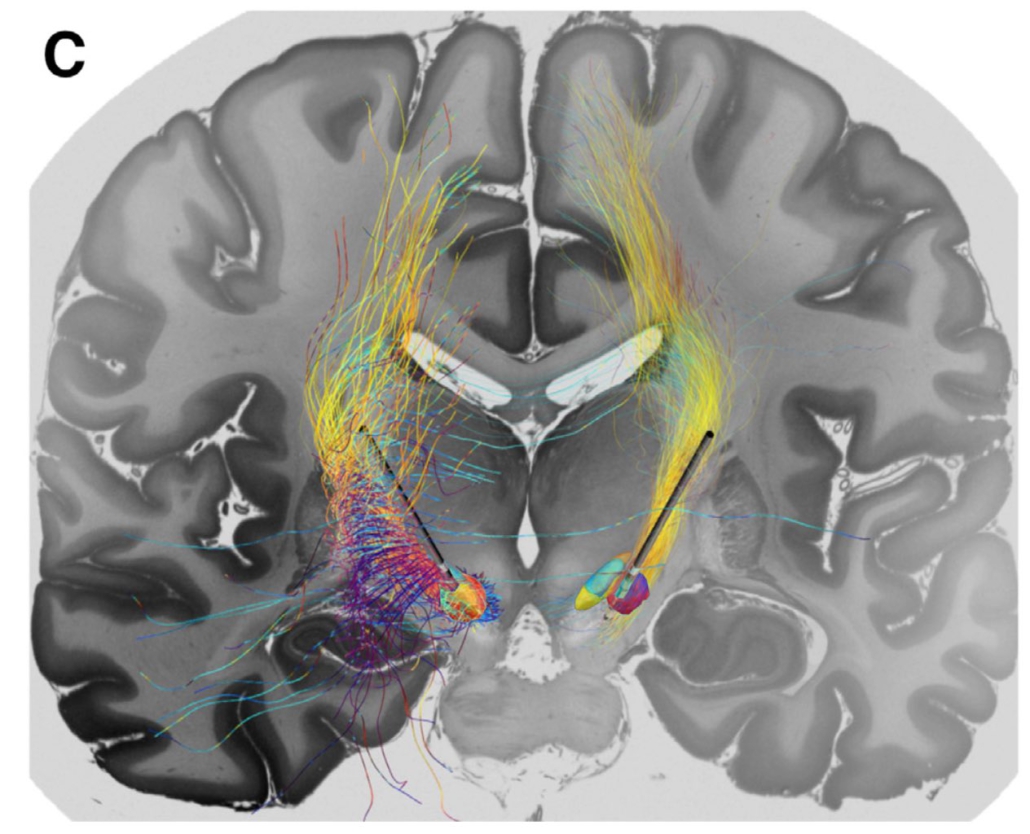
Phil’s research focuses on studying network effects of DBS in various brain disorders.

Phils car in Brisbane – among being a full-time physician scientist and dad of three, Phil likes fast cars and boxing.