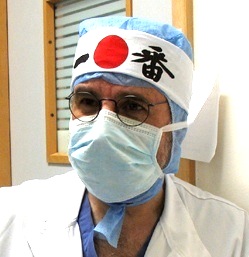
#3: Marwan Hariz – a strong role for imaging and being critical in the field of DBS
In this episode, Marwan Hariz shares insight about why imaging is both the past and the future for deep brain stimulation, how its role of being the “court jester” or “stereotaxy police” emerged and why critical discussions are important for our field.
Marwan Hariz 00:00In the STN, things happen. In the pallidum, nothing happens except the dyskinesia is gone and part of the tremor, etc. In the VIM, the most boring target. Very boring. Nothing happens. So, STN, things happen. And this, you know, I think there's a bias. Welcome to Stimulating Brains. Hello and welcome back to Stimulating Brains. This episode is a conversation I had with Marwan Hariz, who is a legend in our field, who served for 16 years as the head of the stereotactic surgery team at UCL in London. In our field, Marwan is known for his way of critical thinking, of holding critical discourses, and for not shying away. 01:00He is also known for his way of pointing to flaws in studies. He is also known for using imaging and propagating the role of imaging in deep brain stimulation.
Andreas Horn And I really believe Marwan is someone who truly has something to tell. I listed most, if not all, papers Marwan refers to on the website. And there are also some nice pictures of Marwan taken by Harith Akram, who is also a surgeon at UCL, but also a surgeon at the University of London. And he is a talented photographer. So check the website for these additional information. But now let's go. So Marwan, thank you so much for doing this. And I'll briefly basically read from your paper, My 25 Stimulating Years with DBS and Parkinson's Disease, to introduce you a little bit. So you received your baccalaureate in Beirut, in Lebanon. And then you went to university in London. You studied medicine in Reims, in France, and in Umea in Sweden. 02:03And you trained in neurosurgery in Umeå with Lauri Laitinen as main mentor. And then you received your PhD in 1990 in stereotactic neurosurgery. You had a great time, I think, in the field. And then you were recruited in 2002 as professor to the United Kingdom's first chair of functional neurosurgery at the National Hospital for Neurology and Neurosurgery. And then you were recruited in 2002 as professor to the United Kingdom's first chair of functional neurosurgery at the National Hospital for Neurology and Neurosurgery. And the University College of London Institute of Neurology, Queen's Square. And there is basically, I think, where your legacy happened. So the field knows you. You've been a big figure, a leading figure in this field. And I'm really honoured to be able to interview you in this podcast. So but as mentioned, I would like to start with a non scientific question. So could you share some light on the things you did when you did not practice medicine or science maybe in London in your free 03:05time if there was any and what then you retired from UCL in 2018 and moved back to Sweden where you now so how how did your life and maybe work-life balance change after that in in London I was recruited in 2002 I started in October 2002 and I was fortunate to have Patricia Limousin as my main neurologist and then the unit expanded and more and more people but it was extremely important for me that it was the neurologist who wanted me to come there and the neurosurgeon in general were against the issue is because they felt threatened because they were not
Marwan Hariz was no DBS or any functional neurosurgery at Queen Square because they were killing patients and they probably I'm not joking I told them that I'm here because you are killing patients here 04:02or you were and the whole DBS and pallidotomy was stopped two years before I came and actually my first British patients were referred to Sweden so the first British patient I operated in Sweden and one of them referred by David Marsden okay so so it was quite tough to work against the neurosurgeon and I was denied to do any other than functional neurosurgery I couldn't be on call I couldn't do tumors I couldn't operate trauma which I did in Sweden I haven't done only DBS or pallidotomy I was general neurosurgeon also okay anyway so it happened that my free time if I had free time in London I went back to Sweden to my family because my family was with the exception of six months they were in Umeå and I was like 05:03what you call it Germany a gas arbeiter I see means I rented a very small flat and I only worked so if I had to stay a weekend I stayed in my office because it's better internet etc and worked there and I was on call for my patients so whatever happened with my patients I was the one who took care of them sure beginning until Ludvic Zrinzo and others came so basically I did I think in my 16 years in London I went to musicals for example three times oh wow okay I went on like two days three days vacation with my wife two times okay so I was only working in London and when I was not working in London when I had free time I went to Sweden I see I didn't know that you that you that your life
Andreas Horn 06:01or like your family was in Sweden the whole time I just said gas arbeiter yes makes sense so how
Marwan Hariz is your life now that you're back in Sweden how is it going do you enjoy it more do you still practice clinically well I was fortunate because when I came back I was in Sweden and I was in Sweden
Andreas Horn back I was already 65 that's why I retired I had to retire from Queen Square yeah but my old fellow
Marwan Hariz my previous fellow Patrick Blomstedt who you heard of him sure he asked me if I would like to work with him or for him or with him and he employed me part-time which means I work full-time but I'm half-time and I don't complain because I have very free work my work is mainly academic writing paper reviewing mentoring PhD students occasionally seeing patients troubleshooting patients operating now and then not as much 07:01as before of course yeah and now with the pandemic almost only battery changes or you know emergencies sure and I go to work one or two days a week now because I am a little ill or sick but before I went to work maybe one two weeks every three weeks or something like that so I have much better life I'm with my family I do what I want and very funny normally a old student don't want to employ his mentor yeah you know you know it's understandable yeah yeah Patrick was so nice and
Andreas Horn so self-confident and he said why don't you come
Marwan Hariz and help me here so he's my boss so my boss is my boss and we get along quite well so I have a nice life not so much free time but so amazing a lot of work in a life in work and dedication 08:04to medicine I love that and maybe then we we can go into that directly and so so so in 2017 modern day deep brain stimulation celebrated it's 30th anniversary and like you have been in the field almost all the way through as can can be read in in this great great paper My 25 Stimulating Years with DBS and Parkinson's disease and during that time you've experienced I would say quite a bit so could you shed some light on the beginnings of your career who were the mentors that stuck out what were the crucial turning points what were the experiences that you would say changed your career or made your career or that I started with this in this field with Lauri Laitinen and I was there with him assisting him as his student for the 09:01first pallidotomy done in the modern era yeah and as you know during the 90s the pallidotomy was very much published very much recognized even by or mainly by neurologists then DBS came in 1987, a paper from Grenoble on VIM DBS. By that time, I was used to do thalamotomy for tremor, unilateral thalamotomy. What appealed with DBS is the possibility to do it bilateral in the thalamus. But it would only treat tremor, not this kind of, not on-off, not all these things that pallidotomy could treat. So, I had some experience in DBS before 87 because I did DBS for pain. You know, deafferentation pain, phantom pain. I did a few DBS in the VPM, ventroposteromedial, ventroposterolateral, 10:05centromedial. So I knew how to do DBS. But it was for pain. So after Benabid published in 87, of course, it was very much, it was dramatic because you could see video on and off. And some of the video, and I pointed out to some colleagues, I won't mention them here, that this patient has rebound because he showed the patient like this. After turning it off. And the patient was not like this before. This was a rebound. But it was not, they didn't say that during the meeting. Sure. And one of the first, the first publication on DBS that I have was about tolerance and rebound following VIM DBS. That was the first thing because I have operated several patients in the VIM. And after a few months, a couple of years, so that when you switch off, 11:03some people could not switch off during night because they were shaking so much. And we introduced stimulation vacation, you know, a period without. We even had to use in some patients Leponex, Clozapine.
Andreas Horn Yeah.
Marwan Hariz In order to calm down the rebound and also the tolerance that you have to increase and increase. Sure. Then STN DBS came. And my first patient of STN DBS is actually published. And it is a very much quoted case report, which is not usual to quote. It was a patient who the neurologist told me don't do pallidotomy because he's borderline in his, in his, uh, cognition.
Andreas Horn Yeah.
Marwan Hariz Let's do DBS. It's more safe. It's more, uh, you know,
Andreas Horn okay.
Marwan Hariz I did STN DBS. The patient had excellent motor response. We have video. 12:00We followed him, but then his cognition went down without recovering, not in reversible. So the patient's wife could tell me one year later that before I could leave him and go to work and then come back after a few hours. Now, I don't dare to leave him because he opened the door, he go out and then we have to ask the police to bring him back because he doesn't sure. So his mobility was excellent, but he was demented. And we published this in a, in terms of,
Andreas Horn is it, did we improve the quality of life of this patient? Yeah.
Marwan Hariz So, and then I went to visit Benabid and by that time, Patricia Limousin had published a PhD thesis on STN DBS, which she mentioned in one sentence, if you have read it, just one sentence, one of our patients with the borderline cognition became demented after surgery. And I said to Patricia,
Andreas Horn this is exactly my patient,
Marwan Hariz but it was mentioned only en passant, 13:01you know, so I visited Benabid who I consider my mentor. And at that time he used the ventriculography, several x-rays, micro recording. And, uh, the first side was finished at midnight and Pierre Pollack was there at midnight. And I said to him, I've never seen a professor of neurology in the operating room at midnight.
Andreas Horn Yeah.
Marwan Hariz That was for the first site. That was the excitement in these times,
Andreas Horn right?
Marwan Hariz I would guess.
Andreas Horn Yeah.
Marwan Hariz Oh, Benabid is, uh, so to speak my mentor, although I don't use Ben gun and Mac recording, but the, the, the, the, the, the courage he had to you, to you, to, to, to, to target the subthalamic nucleus, which was, remember, uh, no man's land in stereotactic surgery. Because of the hemibalism fear,
Andreas Horn right?
Marwan Hariz Which eventually has been, uh, uh, put into doubt by OBS. So I'm really in a paper that, uh, maybe the Parkinson's patient don't get him in buddies.
Andreas Horn 14:02Yeah.
Marwan Hariz Anyway, so that was my, my, uh, and then we would jump to STN DBS and, uh, I did a lot. And the first paper showing that if the battery fails, the patient gets a rebound of symptoms that will not respond to L-DOPA. That was the first paper on STN DBS that I published. And I reminded the professor Deuschl when he wrote his paper about, uh, the same thing that he should have mentioned, because that was the first time I noticed that we, with STN DBS have transformed a slowly progressive disease into an emergency condition in some patients. As you know,
Andreas Horn yeah,
Marwan Hariz I have changed battery at midnight in London, either for dystonic storm rebound or for STN DBS. Uh, so, but still it is so far, despite all the gene therapy and cell therapy and all these therapy, 15:03the best therapy, surgical therapy or treatment of the symptoms of Parkinson's disease. The problem with DBS of the STN is that, you have a much, much narrow, inclusion criteria.
Andreas Horn Yeah.
Marwan Hariz While in thalamotomy or pallidotomy, you didn't care so much about age or, or, or, you know, depression or, or, but now the ideal patient for STN DBS is some, somebody who basically does not exist.
Andreas Horn Yeah.
Marwan Hariz With no cognitive, no cognitive side effects, no psychiatric side effects and so on and so forth. Right. Young age, good support, young, good brain, good, no, too short disease duration, good L-DOPA response. Sure.
Andreas Horn How many patients exist? 16:00Yeah. Yeah.
Marwan Hariz So, by the way, by the way, that is one of the things that have triggered interest in other things around Parkinson's. When some patients, in the beginning, they published, they get crazy, or they get this, inhibited or hypersexual or psychotic or this or that. There are a lot of publications and this triggered in a way, uh, interest of psychiatrists and other scientists into this STN and, uh, it's limbic part and associative part and, and, and, you know, and we're still looking for the so-called sweet spot that you, with your work, try to, to, we try.
Andreas Horn Yeah. Yeah.
Marwan Hariz As,
Andreas Horn yeah,
Marwan Hariz as many,
Andreas Horn yeah.
Marwan Hariz I'm still saying, and my experience show me that some patient, you have the electrode extremely well placed.
Andreas Horn Yeah.
Marwan Hariz Anatomically extremely, but it's not working or the patient get crazy. And I used to say to, to Lozano and others that there are no firewalls in the STN between associative and limbic, 17:02et cetera. And I challenge any neurologist to show me a single patient who is a little bit crazy, a little bit behavioral, uh, you know, changed, but who is not at the same time, very good motor wise. Hmm.
Andreas Horn Yeah,
Marwan Hariz true. That's a good point. Show me an apathetic patients or do cannot move and, and still, uh, you know, speed, speed, speed it up.
Andreas Horn You understand what I mean? Yeah.
Marwan Hariz So how come my patient will get little bit strange are very, you know, moving and running and, and, uh, very good motor. So, so you're saying it cannot be just a like limbic network effect, but there is a motor effect. So we see that. And then these patients sometimes in addition also get, and only some of them get cognitive or psychiatric side effects. That's what, that's what you're saying,
Andreas Horn right? Yeah.
Marwan Hariz I'm saying that patients will have very good motor effect, but we'll have apathy or depression or this or that, or a high poor dopaminergic, 18:01uh, behavior like Paul crack, uh, we'll say so, so going in the same, but I have never seen a patient who is becomes between quotes crazy, you know, in his behavior. Who is not also very good.
Andreas Horn Yeah. Yeah.
Marwan Hariz So going the same direction you mentioned once, I think via email that a hundred, uh, STN DBS is a hundred percent psychosurgery.
Andreas Horn I'm wondering why is that?
Marwan Hariz I would guess because it's like connected to the whole prefrontal cortex, the smallest,
Andreas Horn right?
Marwan Hariz The small structures really receiving input from the whole prefrontal cortex.
Andreas Horn Do you think that is the reason why?
Marwan Hariz I think so. I think so. This, this, this, this nucleus is, is a very, very connected to many parts. And you have shown that in your, I mean, come on, you are, you know, better than me, you know, I'll tell you if you read the literature, the first two cases of OCD getting better with STN DBS, were from La Salpêtrière in France with Luc Mallet,
Andreas Horn 19:00where are these electrodes?
Marwan Hariz They are anterior. By the way, I told the surgeon at that time, how come you ended up there with five micro recording to pinpoint the sensory motor part and your electrodes are, you know, half a centimeter,
Andreas Horn right?
Marwan Hariz I know what you're hinting at.
Andreas Horn Yeah.
Marwan Hariz So, so, so this was the, and then the third case was from Denise Fontaine in Nice with the same thing. And then everybody moved to do, including me to do STN DBS for OCD.
Andreas Horn Yeah.
Marwan Hariz And I think there are no firewalls. Number one, number two, I think that this also, this, this nucleus with its, with its projection everywhere, especially to the front that has, has triggered the interest of scientists, psychologists, psychiatrists, neurologists, et cetera, in this nucleus. Nobody cared about tremor and the vein. Nobody cared almost about the pallidum. But the STN is now, 20:00if you go on PubMed, most of the publication are about STN DBS.
Andreas Horn And we still don't know exactly what this thing does. And we still don't know exactly where to put the electrode.
Marwan Hariz Despite, all the tractography and Harith and you and all this. I agree. And it will generate, it will continue to generate a lot of papers, a lot of research. But I must say one thing that, that is important to say. The first multi-center study published in September, 2001.
Andreas Horn Yeah.
Marwan Hariz On the basis of which FDA approved STN and GPi DBS.
Andreas Horn It was the New England Journal paper, right?
Marwan Hariz A scandal, a scandal. Because in the table number three in that paper showed that you have one dysarthria in 102 bilateral STN DBS.
Andreas Horn Yeah, it's unrealistic.
Marwan Hariz I agree. And you have zero dysarthria in 42 bilateral pallidum DBS. 21:01So I wrote a letter to the New England Journal.
Andreas Horn Yeah.
Marwan Hariz That's my only publication with all my name first in the New England Journal. I have no other publication.
Andreas Horn Saying, what, what is this? How come why only one dysarthria?
Marwan Hariz Remember that was 2001.
Andreas Horn Yeah.
Marwan Hariz What we know today and since 10 and 15 years is that dysarthria is the main side effect of bilateral DBS. So how come a bunch of neurologists with Olanow and Obeso and other, and you can quote me because I told them, this is fraud. Not only that, I forced Medtronic to give me the database, the database on which, and I can send it to you by email later if you want to show it.
Andreas Horn Yeah.
Marwan Hariz The database of, on which the paper is based, show at least 18% dysarthria. And not only dysarthria, the whole table of side effect of the New England Journal paper from 2001 had almost no side effect. And in the database, you have much more hemorrhage and, 22:00and strokes and infection and everything. So it was a fraud. That is amazing.
Andreas Horn Yeah. Absolutely.
Marwan Hariz I can send you the database of the paper and you can see yourself. It's called, it's named confidential database. It's no longer confidential because I threatened Medtronic. Medtronic said, we have nothing to do with that. We just put the figures there and gave it to the neurologist to write the paper, but they neglected that. And then when Steve, what's his name, Chris Goetz, you know, Goetz from Chicago, was the head of the movement in society. He wrote a paper that the neurosurgeon neglect side effect, the neurosurgeon were not, didn't care about side effect. So I sent him an email with that paper among others. The neglect side effect are not the neurosurgeon. It's the neurologist for their agenda. And I have the email. I can send you this email also to him. 23:02And I said, please be careful what you write. We neurosurgeon, we are scared of side effect.
Andreas Horn Yeah, sure. Yeah.
Marwan Hariz You, some neurologists don't care about side effects and, and, and, and it's a fraud. This paper is fraud. I really honestly don't know what to say to this. I, you know, it's very important to, to, because this is what everything is based on,
Andreas Horn right?
Marwan Hariz This is what the FDA approval is based on. I, if I'm not mistaken and the CE mark probably. So,
Andreas Horn yeah,
Marwan Hariz that, that should be, I mean,
Andreas Horn yeah,
Marwan Hariz it's, it's probably too late to have a consequence. Now, but, um, it's good to uncover that.
Andreas Horn Yeah.
Marwan Hariz Well, the main author became the editor of movement is all the journal. Sure. It's politics. Before we go into the more modern time, I would love to pick your brain a little bit about, you know, especially that era a bit before that, when, you know, DBS was still so hot and new. 24:02I mean, it's still an amazing technique, but, um, you once mentioned that you were headhunted to queen square, which is the Mecca of neurology. And, um, by the neurologist, as you just said, and, um, then you introduced also DBS in New York city when you were visiting professor at the Cornell, apparently twice. And then, um, also to other university hospitals like Cape town and Northern Norway and so on. So I, you know, we, as young people, we always talk about how these times must've been. Like, I still feel that also the quality and data acquisition and everything was better because people were so dedicated to make this work and to work together and to, um, you know, even the imaging was sometimes better as, as you have shown me as well. And, um, because people had something to lose, I guess, uh, and also because it, you know, there was so much excitement.
Andreas Horn So how did that feel like, or how was your experience?
Marwan Hariz I think at the beginning people visited each other much more.
Andreas Horn 25:03Okay.
Marwan Hariz It was not many people who did that. So I visited Benabid, although I have done DBS, as I said, I've done many pallidotomies and, uh, you know, if you can do a legion, you can put an electrode too, but I visited Benabid to really learn his, his, the thinking and I spent two days there and, uh, and, uh, and then I had colleagues who called me at that time. We were not so many. Uh, one of them was one of the first colleagues who visited me, uh, in Umeå, uh, now I'm talking before Queen Square in Umeå, was a famous neurologist from Holland, Johannes Speelman.
Andreas Horn Have you heard of him? Hans Speelman?
Marwan Hariz I have not. Well, Hans Speelman wrote a thesis. His mentor was Jan van Manen. Jan van Manen is the father of Dutch functional neurosurgery.
Andreas Horn Okay.
Marwan Hariz He was a neurologist who trained to do stereotactic surgery, 26:01who did his own frame. He can have his own stereotactic frame. He's still alive, by the way, you can Google him on PubMed. And his pupil was neurologist Hans Speelman, who helped Andries Bosch and Rick Schuurman, you know, in Amsterdam, and he was in the operating room. Now, Hans Speelman, who I didn't know, wrote to me and came up to Umeå. And I was very happy, of course, if somebody big like you,
Andreas Horn why do you come to see me? Why didn't you go see Laitinen, who was working at that time in a private hospital doing pallidotomies?
Marwan Hariz And he said, if I go to Laitinen, I see the glamour. If I come to you, I will see the reality. So Hans Speelman, Andy, Hans Speelman, by the way, has a thesis on thalamotomy.
Andreas Horn Okay.
Marwan Hariz With a mean follow up of 19 years. Amazing. Show me a paper today with 19 years follow up of STN or whatever. 27:00Now Hans Speelman is, Google him too, has published a lot about. So the first who visited me was a neurologist. And then other colleagues visited from Japan, from UCLA, from other places. And the funny thing is that in the United States, this became something that the hospital could make money. So there is a guy who visited me. I didn't know him. And when he started, came to the operating room and started to operate at that time, I was using the Laitinen frame and I asked him,
Andreas Horn what frame do you have?
Marwan Hariz He said, I don't have a frame. I said, okay, wait a minute.
Andreas Horn Are you coming to learn pallidotomy and DBS and you don't have a frame?
Marwan Hariz He said, no, I am a, I am spinal surgeon, but my hospital wants to make money on this. So they send me to somewhere to learn. Wow. Can you imagine that's United States. I can imagine that.
Andreas Horn Yeah.
Marwan Hariz Oh, instead of saying two weeks in Northern Sweden, 28:01he stayed one week and then the second week he rented a car and did a tour in the country. And then he wanted to have a, uh, paper that, uh, has been trained by me for two. And then I was invited as a visiting professor at Cornell. It happened at the time when the FDA had just, no, the New York state had just approved DBS for VIM. And, uh, the hospital, uh, affiliated with Cornell wanted to be first. And I knew the surgeon, he knew how to do thalamotomy and pallidotomy, but, uh, he wanted to have his doctor on DBS and I cannot touch the patient. I don't have license. So I was only, uh, you know, the screws at the frame. No, no, no, no, no, the frame was the, he did the frame everything, but I was testing the patient during surgery with the external stimulator. Ah,
Andreas Horn okay. Yeah.
Marwan Hariz Well, you test with external stimulator.
Andreas Horn 29:00Yeah.
Marwan Hariz That's what I do usually. Yes,
Andreas Horn exactly.
Marwan Hariz So, so, uh, he did, he operated two patients and it was, uh, published in the newsletter, et cetera. So that wasn't, and then, then it was, uh, South Africa, uh, Norway, uh, and study in Holland, uh, other places where I was a very happy to go because I knew these surgeon, I knew there were people I knew, uh, friends and, uh, and, um, I stayed in the home of, uh, and I never, I never had money for that. I mean, I didn't ask and whatnot. They paid my trip and my hotel. Or I stay in the, in the home of the surgeon, but it was very nice because I could see other, uh, other places, how they do and, uh, exchange idea. So at that time we were not so many. So it was very much personal and it was not, Andy, it was not for research. It's not that you go to MIT and you, you do research. It was just for two or three days in a hospital for a clinical work. 30:04And I, what I did then in all this, uh, visits, I started to, uh, evaluate imaging of the STN in all these places. And I published that paper with Paul crack and the guy from South Africa and other places where I went to all these places and publish this paper about, uh, quick, uh, pre and post operative, uh, MRI, you know, from 2002, I think, and all these places I've been, I, we tested our sequence and on Philips, on the general electric, on the Siemens machines and, and, uh, and could come up with the paper and each patient did immediate post operative, uh, MRI before Medtronic had its, uh, guidelines. So that's amazing that it started so early to do MRI afterwards directly.
Andreas Horn Yeah.
Marwan Hariz And you saw, I think you saw that paper with many names there.
Andreas Horn 31:00Yeah.
Marwan Hariz Oops. Allah, uh, key, uh, South Africa, uh, Trondheim in Norway, Nara in Japan, uh, et cetera. And, uh, that's it. Uh, because I, my, uh, my philosophy, and this is very important as a old neurosurgeon like me, because when I trained, it was just the CT scan and in functional neurosurgery, when I started there, it was ventricleography.
Andreas Horn Yeah,
Marwan Hariz sure. And Lauri Laitinen said, now we have an MRI that came that you can use as much as possible. It's several sequences with, uh, not only axial, coronal and oblique and try to see what you want to see. And so I was very much concentrated on structural imaging. There was no FMRI at that time, no, no structural imaging to see what you want to see and to see after, like you go to a pub in London and you use dart,
Andreas Horn right?
Marwan Hariz You know,
Andreas Horn yeah.
Marwan Hariz You don't throw the dart and go home. 32:01And you go and see if you have, you have in the middle of the, of course.
Andreas Horn Yeah. Yeah.
Marwan Hariz That, that is something, you know, to close the loop again as a surgeon, I think that's really important. If not, you have no potential to improve,
Andreas Horn right?
Marwan Hariz If you don't, if you don't see that, I mean, despite MRI, despite micro recording, I Jerry Vitek, a good friend, you know, Jerry Vitek, he just published a paper now about the Boston Scientific. So Jerry said to me, I know where I am because I have the micro recording. I said, no, Jerry, you know where your micro recording electrode is. But then you pull it out and then you put, it doesn't tell you where your DBS will end up. Agreed. And I have many examples of that in the literature. Sure.
Andreas Horn Yeah.
Marwan Hariz Of this place. So despite micro recording,
Andreas Horn you have to do an MRI exactly like the previous one with thin slices,
Marwan Hariz with the, in the sense to see where, where you hit it. That leads me to, to my next point that I think, you know, we, we, we should not, 33:00or we cannot avoid somehow. And we should not avoid because that is really what you stand for. There are a lot of things you stand for, but for example, I think you were really an expert about also the historical developments of field and so on. But I guess one thing that is the most particular that you stand for is really the strength of imaging and functional surgery. And you've pioneered this, like, as we just talked about in very early time on one point or one Tesla MRI, you were able to, as you showed me, see the lamina interna of the pallidum and so on. So, that is amazing. And also you stand for not liking micro electrode recordings. There is a misunderstanding here. People perceive me admitting that I am against micro recording. I am not against micro recording. I swear. I went to Benabid to see micro recording. I went to other places, to Schuurman, to many places to learn micro recording. Problem is the following. 34:01My philosophy, and I have a family who has Parkinson's disease and operative disease, I have a cousin who had juvenile Parkinson's operated in Lebanon.
Andreas Horn I prefer a patient going out from the operation room exactly like he went in.
Marwan Hariz Sorry, we could not help. You go back to your medication. No harm done. But I cannot support,
Andreas Horn I cannot stand a situation where the patient goes out from the operating room with well placed pallidotomy electrode with fantastic,
Marwan Hariz but a big hemorrhage somewhere. Sure. So, my, I tell all my patients, I tell, if we can help, that's good. If we cannot help, you go back like you were before. And in my career so far of over thousands of all kinds of capsulotomy, cingulotomy, pallidotomy, everything. Zero mortality. I touch food now.
Andreas Horn Yeah.
Marwan Hariz Zero paralysis. 35:01Zero. But I have stopped surgery. During surgery in few patients where I couldn't find the target or there was something or too much air or something. I tell the patient, sorry, I don't continue. I remove the electrode. I close the wound and go to a duodopa or apomorphine or anything else. And these were usually in patients who were old with too much atrophy where we will try to operate anyway. So for me, micro recording, if you ask anybody, even Lozano has published that with several micro recording tracks, you have 5% of five times more risk of complication than without micro recording.
Andreas Horn Yeah. Okay.
Marwan Hariz A publication from Harvard on 81 pallidotomy, zero hemorrhage and the same surgeon two years later, DBS with 2.5% hemorrhage.
Andreas Horn What's changed?
Marwan Hariz Paludotomy, a lesion, 36:00zero hemorrhage and DBS 2.5%. He was using micro recording. So for me, and Laitinen too told me micro recording is a very important research tool. You have to consent the patient that you want to study. I don't know how the neuron reacts to whatever. We'll do it on a limited number of patients and you have your conclusion the same way as you do your tractography on a limited number of patients. And then you do your, and not only that, I praised, and I have published that. Some of the most beautiful paper that I have seen, well using micro recording to showing something. I'll tell you one by Lozano and his team where they gave apomorphine during surgery to the patient without the patient knowing. So they were recording the neuron.
Andreas Horn Yeah.
Marwan Hariz For the activity, the hyperactivity and the pattern. And then the patient got apomorphine during surgery. 37:00And before the patient started to turn dyskinetic, there was a complete decrease of the pathological activity in the, in the, this is beautiful. This is sure. I can't do this.
Andreas Horn This is fantastic. Right? Yeah.
Marwan Hariz So this is a paper on two patients showing the behavior of the neuron in off situation. And when the patient gets apomorphine, I have nothing against that, but what I have against is the dilettante, the fundamentalist, the, the, the, the, the Al-Qaeda of micro recording, who say, if you can't do micro recording, you cannot operate. Sure.
Andreas Horn You understand?
Marwan Hariz And not only that, when, when, when, when focus ultrasound came, when focus ultrasound arrived, those who were most enthusiastic on focus ultrasound, where people who said you cannot do any surgery on the beta ganglia without micro recording.
Andreas Horn Yes.
Marwan Hariz I question in public to Lozano at the MDS meeting in Berlin, in, in four years ago, you remember there were MDS, 38:00and Lozano was talking and there were hundreds of people.
Andreas Horn Yeah.
Marwan Hariz !
Andreas Horn was talking and there were hundreds of people and there were questions. So I went to the microphone and I said, now you showed your fantastic focused ultrasound on the television. What did the micro recording show?
Marwan Hariz That's funny.
Andreas Horn Yeah, yeah, yeah. I mean
Marwan Hariz that I would actually would have asked because I guess MR guided focused ultrasound will lead us to more imaging because people are already in the scanner so we can use all these potentially use all these fancy techniques and individualized targets maybe in the distant future and then use that and so imaging will become stronger. I perceive it is already, has already become stronger.
Andreas Horn So yeah,
Marwan Hariz I agree with you that imaging is definitely a future avenue for our field and has always been. Sorry to finish about micro recordings. 39:00I'm not against micro recordings. I'm against the fundamentalist in micro recording and I like and love me and read a lot of micro recording papers where you learn something from the behavior of a neuron, whether it is in the anterior cingulum or STN or pallidum or whatever. Yeah. So this is a scientific tool. But as you know, in the United States, there is a company called micro recording are us like toys are us. Yeah. Okay. They go to some hospital and the surgeon doesn't know what he's doing. And the neurologist had no idea. And they say, ah, this is the target. And then they go, they charge the hospital. And another thing that they, it's in the U S it's question of money. Sure. It's much more micro recording. I didn't know that. Yeah. Okay. So they, they outsource that as a service. Yeah. Okay. Because neither neuron is non neurosurgeon understand the micro recording. And speaking of imaging, the, the main thing that I think is important is that the main 40:01advance in neurosurgery over the last century is imaging is the ability to see into the brain of a living person. Yeah. Before the old literature about thalamotomy, you had to have autopsy, you know, people like, uh, Trogot Richard, Mundinger, Hassler, they have books about pathology. I mean, you know, autopsy of patients to see what the lesion are. And, and, and, and, to see to see to see to see to see to see to see to see
Andreas Horn you have done. You directly see it, you don't have to wait 20 years for that, right? So you can
Marwan Hariz have an infinity of sequences today in the MRI where you can try. I tell my physicists I want to see the white matter in the pallidum, the lamina. Find me something. That's how it started. Two weeks later come, I found something and it was the proton density that we published in 2001
Andreas Horn 41:03on one Tesla. You remember that? Yeah, yeah, yeah. The same with the STN, the same with the
Marwan Hariz funny thing with focus ultrasound is that they chose the only target that you cannot see.
Andreas Horn The thalamus, yeah, interesting. Yeah, the target that the one you cannot see and now Jose Obeso,
Marwan Hariz Jose Obeso is a nice guy. Yeah. He published about focus ultrasound of the STN that you can see. Yeah, sure. So imaging I think is the future, especially now with people like you and Harith and the functional imaging people who are, I mean, I'm no longer following so much. I don't understand these things anymore. So I could not agree more with you as I just mentioned, but just to play the devil's advocate for a little bit, I sometimes think that such as TV killed the radio star, I sometimes think that 42:01MRI killed the anatomy. Yeah. So, you know, of course MRI is great and it's in the living brain. That's amazing. But if you compare it to histology, we see not so much. So sometimes I even feel that our field loses the anatomical details because anatomy was not on the rise for a while. And the need for more precision or to really, of course with advanced imaging, we are slowly getting to better resolution.
Andreas Horn But what's your thoughts about us becoming a bit more ignorant, maybe, because we don't see all these small structures anymore?
Marwan Hariz Oh, it's not only that, Andy. The problem is that people look, but they don't know what they see, what they look at. They don't know what they see, even in structural imaging. I can send you a paper from Beth Israel Harvard.
Andreas Horn Yeah.
Marwan Hariz Harvard.
Andreas Horn Yes.
Marwan Hariz The substantia nigra compacta at the level of the third ventricle. 43:04This paper, they say electrodes in the substantia nigra pars compacta. And the image they show is at the level of the ventricle.
Andreas Horn Okay.
Marwan Hariz Axial image at the level of the ventricle. I can see it. And I said to myself, the nigra compacta is one kilometer below the ventricle, you know, in stereotactic space.
Andreas Horn Yeah.
Marwan Hariz You know, it's... You have the reticulata and you have the compacta even more medial and inferior. And these radiologists from Harvard say this is the electrode in the substantia nigra pars compacta. There is another example where continuing medical education. I will send you that too. Continuing medical education from Mount Sinai Hospital in New York. I paid $50 to learn that the GPe and GPi are separated by the internal capsule. And I'm going to show you the results. And I'm going to show you the results.
Andreas Horn 44:00Okay. And I'm going to show you the results. And I'm going to show you the results. Have you seen it?
Marwan Hariz I haven't seen that one. But in fact, I have seen the other, the reverse case very often that people say something is the STN, while it's probably the nigra. Because it's the archa, it's more easy to see. So a lot of mislabelings happen also in that direction. I agree.
Andreas Horn Yeah.
Marwan Hariz This can be difficult to differentiate both, of course, at some level.
Andreas Horn Yeah.
Marwan Hariz But the head of functional... In fact, I was in a pyrotechnic surgery at Mount Sinai in New York, giving a course where you pay $50, saying the GPe and GPi are separated by the internal capsule. This is still online. This is still on... You can go online and still see that. So people are dilettantes. Parvenus.
Andreas Horn You know what?
Marwan Hariz Parvenus and dilettantes. And they are sometimes in high position, especially in the United States. I'm sorry to say. As you know. I mean, I've talked with... Christian Mollen, I really think in these early days 45:00that you just mentioned with Hassler and Mundinger and so on, we came to the conclusion that, you know, you had to collaborate with an anatomist to make this work at these times. And now maybe everybody can do it because we think we see the structures on the MRI.
Andreas Horn But that really, in my view as well, is also a danger because... You know what?
Marwan Hariz They haven't studied the atlas of Schaltenbrand in detail. They haven't studied radiology in detail.
Andreas Horn Yeah.
Marwan Hariz They haven't...
Andreas Horn That's why I told you once that the basis of all the imaging is structural imaging.
Marwan Hariz You have to have the structural imaging to have a seed somewhere to see your tractography, whether deterministic or probabilistic. It's another story. I have seen fMRI papers where they put, for example, something in the PPN and it's in the cerebellum. You know, published. So I think that...
Andreas Horn Yeah.
Marwan Hariz The basis is anatomy, which you can see on structural imaging of MRI and in the books also, 46:05and in the laboratory on autopsy. But the other thing also is that this multidisciplinarity of anatomy, etc. I mean, everybody say today you have to be multidisciplinary. I say, wait a minute. The whole field started by multidisciplinarity. Sure. But Ernest Spiegel, neurologist, and Henry Wycis, neurosurgeon, and then you have on the first paper, Mark was a physicist. You know, the first paper of Spiegel was. Multidisciplinarity was from the very beginning. And the two neurosurgeons who were cowboy, they were cowboy because you have neurologists who are cowboy too. You know, and in some cases, it was difficult to get a certain piece, to get the neurologist in the operating room because the neurologist didn't want to hear about operation. You know, it's... It's a little bit like psychosurgery, 47:00where they say the old neurosurgeon was doing lobotomy. Wrong. Those who were promoting lobotomy at some time were psychiatrists. If you look at the list of...
Andreas Horn Hey, what's his name?
Marwan Hariz Walter Freeman was a neuropsychiatrist, the founder of the American Neuropsychiatry Association. He was a neurologist or neuropsychiatrist who learned in Italy how to do...
Andreas Horn Yeah.
Marwan Hariz The sub... The transorbital, you know...
Andreas Horn Yeah.
Marwan Hariz And he learned that from another psychiatrist in Italy called Fiamberti.
Andreas Horn Okay.
Marwan Hariz I have a whole lecture about that. So, most of the people who did lobotomy or promoted lobotomy were psychiatrists.
Andreas Horn Okay.
Marwan Hariz So, don't blame neurosurgeon for neglecting side effects, not being multidisciplinary, doing lobotomy and...
Andreas Horn Yeah, yeah, yeah.
Marwan Hariz I mean, go... Point is well taken.
Andreas Horn So, going back to exactly that,
Marwan Hariz 48:02in 2019, you received the highest award of the World Society for Stereotactic and Functional Neurosurgery,
Andreas Horn which is the Spiegel and Wycis Award, right?
Marwan Hariz Named after these pioneers. Ernest Spiegel and Henry Wycis, as you just mentioned, and they introduced stereotactic surgery in a landmark paper in science in 1947, and they worked in Philadelphia. So, we already, as mentioned, learned from... from Christian Moll in the first episode here that they also published the first stereotactic atlas for surgeries in humans, and they further described basically a Horsley-Clarke apparatus, which is a stereotactic frame that relied on internal cerebral landmarks, which made it accurate enough to be used in humans. And that time, the fields in human neurophysiology were really... pneumoencephalography, radiology, and so on. 49:01They had it advanced enough to provide the first time the required technology.
Andreas Horn But as you mentioned, maybe you had to be a cowboy at that time. And I have two questions. So, first, how does technology shape our fields like back then? And then, what can we still learn from these times? Or do you still... Would you say it's good to look back and to learn from these pioneers?
Marwan Hariz You know, if you read the literature, the best papers were published in the 50s and 60s.
Andreas Horn Okay.
Marwan Hariz Long paper, you know, detailed. There are conferences also. I can send you a conference where it was published verbatim, you know. You make a talk, I'm in the public, I say something, it's published.
Andreas Horn This debate was fantastic. And to read this detailed paper was fantastic.
Marwan Hariz Now, when it comes to technology, I mean, the X, Y, Z before CT scan were different. 50:02Remember, there was X like this, Y and Z was the lateral.
Andreas Horn Okay.
Marwan Hariz When CT scan came, before it was side view and frontal view, you know, vertical view. Then came something which is axial.
Andreas Horn Okay.
Marwan Hariz It changed the whole. The whole coordinates were changed. So, X was like this, Y is anthropos, and Z. And we started to look at the brain in a different manner. Then we looked before when you had only ventriculography. And everybody had to reshape their frame. So they are CT compatible. The frames, if you look at the first Mundinger, right, Riechert-Mundinger frame, and now it's the Zamorano-Dujovny, the old Laitinen, the new Laitinen, and the old Leksell, the new Leksell, the BRW, CRW, even Sugita in Japan had the ventric... I mean, technology. The technology. The technology. The imaging forced people to name a few new coordinates another way, to do frames another way, so it is compatible.
Andreas Horn 51:07Yeah.
Marwan Hariz Then came MRI. Same thing. I mean, the impact of imaging, Andy, is much, much more than you think. I can imagine that, yeah. MRI compatible frames. You have completely new design, new alloy, and new way of targeting the coordinates, you know, or... or calculating the coordinates. So technology, it's like Karl Marx say, it's a dialectic. Dialectic between what the surgeon and neurologist want and the technology, and they influence each other, and this is what brings the field forward. Then micro recording, it was, first it was semi micro recording, and I'll tell you a story that you don't know. Sure. Denise Albe-Fessard was the mother of micro recording. Semi micro recording. She worked in fish and then in monkeys, and then she worked with Gérard Guiot in Hôpital Foch in Paris. 52:07And she is the mother of micro recording. Her first publication was in 1961 or 62.
Andreas Horn Okay.
Marwan Hariz About micro recording of the VIM. And at that time, the Guiot frame was from posterior to anterior. You enter the occipital lobe, and you go, so you traverse the pulvinar, the sensory talimers.
Andreas Horn Really?
Marwan Hariz Yes, yes, yes. I'll send you, I'll send you. I'll make a note here. Here you go. Thank you.
Andreas Horn So you go from, you see me? Yeah, I do.
Marwan Hariz So when you go from here, he could do a thalamopallidotomy, because you go with your electrode, you go to the pulvinar, you know, and then the sensory thalamus, and then the motor thalamus, and you exit the capsule and turn, internal capsule, and you continue, you are in the palidotomy. You go through the thalamus from like base.
Andreas Horn So basically the occipital lobe through the thalamus to the palidotomy? Okay.
Marwan Hariz 53:00She did micro recording of all these things, and she could delineate the VIM. The VIM is her discovery, not Hassler. Hassler didn't talk about VIM. So Denise Albe-Fessard was working with Guiot for many years, until one day, Guiot told her, please, we cannot work together anymore. And this is a story I got from somebody who was there, whose name is Fardou, who was a neurologist there. And he's now in the hospital. He's now 80 years old in Paris.
Andreas Horn And he told me, no, they divorced. You know, they, they, I said, why?
Marwan Hariz Said, you know, because at some point, Guiot told her, Madame, le cerveau n'est pas une passoire. Madame, the brain is not a sieve. Sieve, sieve, sieve. Ah, a sieve.
Andreas Horn Yeah, yeah, okay. Yeah, yeah, yeah.
Marwan Hariz So it's not to be punctured by electron.
Andreas Horn Okay.
Marwan Hariz The neurosurgeon told the physiologist, the brain is not a sieve.
Andreas Horn How do you say in German? Sieve, right? 54:00Yeah, sieve in German. Yeah.
Marwan Hariz So, yeah. Wow. That was a story that is not published.
Andreas Horn And that's why they finished.
Marwan Hariz So to go back, it is imaging and the technology, especially imaging is driving. I mean, today, Lozano does DBS for endocrine.
Andreas Horn Yeah.
Marwan Hariz Lozano go and look at the MRI where the hell are the electrodes they are at the fornix yeah right yeah sure yeah i know the story yeah oh maybe and lozano discover a new target thanks to pet which is also imaging and fmri yeah imaging yeah yeah yeah yeah yeah first paper was in pet the first paper was yeah uh uh i know the literature and the indies i know i know that i i just think it the the multimodality was was kind of cool in that story but i of course helen 55:05helen started with pet so um yeah and what helen didn't say and didn't nobody said is that that target was used by Lauri Laitinen to do cingulotomy oh was it and we have published a patient with cingulotomy in Finland 40 years ago we found a patient who was still alive and
Andreas Horn we did the mri of that patient to show that that was his target and the lesion is exactly
Marwan Hariz the neighbor area i'll send you the paper great that would be amazing i can put a list on the website yeah i can send you the paper because later had published two papers about his rostral inferior subgenual cingulotomy but that was ventriculography nobody knows where the region was so i told my colleague in finland recently just two three years ago can you find a patient who had a singular to me in the 60s or 70s who is still alive they found one refused to do mri and the second did mri and they had an interview and the checker
Andreas Horn 56:06and her lesion is exactly where maybe and that was for depression or for psychiatric
Marwan Hariz okay i'll send you the paper amazing that's very very exciting yeah so so i mean this this again every everything you say always leads me to the next question that i wanted to ask um so in our field you're you're also known as the arbiter of truth and um i think uh you you you don't easily let go if people publish false false results and uh you sometimes i think have given entire talks about published pearls or mistakes in studies and um i've also authored countless response letters to studies together with others and you've mentioned Andres Lozano and apparently he used to call you the stereotaxy police once and uh this was an honor to you you mentioned and another time he called you the 57:02court jester which um you you told me was also horrific since um the court jester was the only one who could speak the truth at the court of the king without being hanged by the king so you you you um you once mentioned to me that one maybe the only thing or something that you really don't like is sloppiness and arrogance and um personally i really think we need such a person in our field so we need the court jester and we need uh the stereotaxy police to detect false concepts and we should do that more so also others and um even if it's just to get discussion started because critics aren't always right of course but um i i really think your real role will be dearly missed and i think most people think so um in case you ever retire entirely so uh would you like to share some thoughts about
Andreas Horn about this what how what was it for you okay for me it's actually if you you we are doctors right
Marwan Hariz 58:04you are a doctor i mean you are real scientists also but at the end of the day you owe to your patients the truth right so if your patient has seen a paper on on pub on not pubmed on
Andreas Horn on google and come and tell you look what happened and why why i'm like this
Marwan Hariz patient this is a fraud paper and this happened to me my first patient who got severe dysarthria and dementia eventually that i told you my neurologist at umu came to me and say manuan how come we have so much dysarthria because it was the first patient and then another patient not all the patients but yeah look at this paper from the new england journal they have only one dysarthria and 102 patients yeah yeah my neurologist is telling me that i have more dysarthria than 102 patients uh who had only one dysarthria i i told i told him folky his name was folky 59:03at the time which is okay do you believe in father christmas and that's how it started so at the end of the day i have patients sometimes in clinic in london or
Andreas Horn even here but mostly in london who come with the prints from from google about fantastic things
Marwan Hariz i said number one what you see is a patient who has dysarthria and then the next day he's on the what you see on the internet is the glamour yeah uh you don't see the reality it's not like this it's not true but this is from a good center in america so what i mean so and then you start to read the literature and to scrutinize what is published and you see very good papers you see very honest papers and you see a lot of rubbish and a lot of ignorance and a lot of bias and the publication bias is is something in our field that is very important to understand 01:00:02how many papers have you seen showing bad results of yes for example there are a few yeah of course why don't you have bad patients i remember when when when my wife was doing her phd she's occupational therapist and she did a phd on on patients some of them were not even my patients and she had a lot of patients who were not even my patients and she had a lot of patients who were not even my patients and she had a lot of patients who were not even my patients and she had always the UPDRS mean and standard deviation and range well if you look at the range there must be a patient who has 100 post-op what 80 before so a group of patients some of them have got worse worse yeah don't see them you don't see them if if you look at the only the the mean and the standard deviation sure so you have 50 patients before 50 patients after of course 50 are better than the other 50 but among these 50 there these 50 there must be patients who become worse in the UPDRS and this and you see in the old 01:01:01literature in the old Leksell or Laitinen, you know, other similar literature you didn't have UPDRS, you had good or very good, good, moderate, or worse. You have worse. So in the Leksell paper on pallidotomy, 81 patient you see that the last five on on that's his figure was worth okay more or rigidity or whatever but this you don't see anymore today my patient doesn't want to know what is the group he doesn't want to know what chances i have to get rid of the tremor 80 the echinacea maybe 50 you know this you don't find in the literature today but you found it in the old literature if you read 50 60 years what do you think has led to that change is it publication stress or is it stress and so-called so-called established, what you call it, scales. 01:02:02And the scales, especially the motor scale, is still the gold standard, you know. But take the ADL scale, and it's not my work, it's my wife's work again, when she did her PhD. She studied the ADL scale of the UPDRS ADL part.
Andreas Horn And she told me, who the hell has done that?
Marwan Hariz The ADL part of the UPDRS, you have salivation, freezing, falling, tremor, and you have dressing,
Andreas Horn and eating, and cutting food, et cetera. And she told me, freezing, is it the activity of daily living?
Marwan Hariz Salivation is the activity of daily living. Falling is an activity of daily living. These are symptoms, these are impairment. These are not ADL. But still, a bunch of neurologists in a hotel room in the United States, with Stanley Farn and Marston, et cetera, have decided that this is the ADL scale. Half the items of this are not ADL. 01:03:02And this is from a docent in occupational therapy who told me that, who happened to be my wife, but she opened my eyes. You know, this is not ADL. What, they're not people that- No, I agree, yeah. Look at it, I mean, go and look at the scale. Will do, will do. I'll post a link to the website as well, so. You know, the part two of the ADL is, half of it is not ADL. You don't salivate every day.
Andreas Horn Yeah, so hopefully not, yeah.
Marwan Hariz So we were talking about the stereotaxy police and how that was for you and yeah.
Andreas Horn Yeah, well, in a way, coming from Lozano,
Marwan Hariz it was, I took it very well because he's an all good friend. Although we don't agree on many things, but we are honest with each other. And I think that when he said that, it was in the context of a meeting where I was criticizing some of the publication, among others, the GPi divided by the internal capsule. It was in New Orleans, it was in Philadelphia at the American meeting. 01:04:02And then later on the court jester, which is also a very good thing, because for me, the court jester is somebody who was,
Andreas Horn as you said, telling the truth without being- He has the liberty to speak, yeah, yeah.
Marwan Hariz And I think that we need more of court jester.
Andreas Horn How shall I put it?
Marwan Hariz I would love if, and this is what I tell my students, you have to be critical. You know, a face that does not doubt is a face that is dead. That's how fundamentalists exist. That's how you have ISIS and, you know, all these fundamentalists of all kinds. They don't doubt what they read.
Andreas Horn And in science, what is science?
Marwan Hariz Science is curiosity, is to doubt, is to seek, you know, to put into question. Sure.
Andreas Horn Is this anti-thesis synthesis? Yeah. Right?
Marwan Hariz That's what science is. And if you look at the publication, you scrutinize. And the funny thing is that the more big shots, 01:05:02the more big shots authors, more rubbish. Okay. Yeah. People sometimes say that about nature papers as well.
Andreas Horn Right?
Marwan Hariz Most of the retraction, most of the retraction are from nature science, New England journal and also- Because- Could also be biased by these- These papers being more criticized
Andreas Horn or more recognized, right?
Marwan Hariz In theory. But yeah. Yes. And also published or perish, et cetera.
Andreas Horn Yeah. Yeah.
Marwan Hariz There is a very nice German paper by Donatus. No. The name is Mental Side Effects of Deep Brain Stimulation for Movement Disorder. The Futility of Denial by Donatus Cyron. Okay. From- Saarbrücken. Karlsruhe. Karlsruhe. Yeah. That's close to where I'm from.
Andreas Horn Have you seen that paper? Donatus Cyron. Yeah, I have it.
Marwan Hariz 01:06:00Yeah. Okay.
Andreas Horn Fantastic paper.
Marwan Hariz Okay. That's a good recommendation. So, you mean us, especially if there are too many big shots, it's hard to criticize or- It's hard to criticize and then you can get problem if you criticize because then they are editor or they are reviewer and- Sure.
Andreas Horn This is by the way also one reason why we in Europe
Marwan Hariz criticize each other much more than they do in the United States. And I have been there maybe 20 times in different places and they tell me if you have to be careful because they can stop your grant, they can stop your research, they can have connection. So, American colleagues very rarely criticize each other.
Andreas Horn Okay.
Marwan Hariz Very rarely. It's not, in Europe we can criticize, but we're still friends. Okay. We still criticize each other. Okay. We can talk, we still can.
Andreas Horn Yeah.
Marwan Hariz I mean, the only one who was upset when I criticized him was not you actually, it was Volker Coenen. But you know, Volker is special also. 01:07:00His baby is the medial fulbrane bundle- Sure.
Andreas Horn Which has been described by no less than- Robert Heath you mentioned, right?
Marwan Hariz Robert Heath already in the 50s.
Andreas Horn Yeah. True. I mean, there is also the rat literature of the MFB, right? Yeah.
Marwan Hariz Human. I mean, it wasn't human. He's what you're working on. So, I think it's healthy to have these controversies. You know, it's healthy to have controversies. It's healthy to discuss. I remember a controversy of pallidotomy versus STN DBS, which was, you know, quite healthy with Mahlon DeLong arguing for pallidotomy and Benabid arguing for STN DBS. And this was published in the newsletter of the Movement Disorder Society. Yeah. Well, very nice, nice discussion. I totally agree. And that's what I admire so much about that, about the role of a court jester. Because I think the easier way would always be to agree with everything and be friends with everybody. But it takes courage and strength to step forward, say something, put your head in the, you know. So, so, so I really admire that and I agree with you. 01:08:19you that that's what i meant when you know if you ever retire completely we will i think miss you dearly and uh so so so let's talk a bit maybe about more about your work or your own work um would you have any stories of academic or also clinical success or surprise that you would like to share you know something where you really think this was a surprising turn of events or this was a eureka moment um where you finally understood something or some anecdote of your long my my main thing i mean there are two things that i have published recently about is uh 01:09:00is the ethics of DBS especially in in undeveloped countries that and this I had discussion with jens volkmann about it and etc there are two things one is is what do we do with the brain or the patient when we treat for uh dystonia with DBS or STN DBS for partisan these are the main two yeah what are the risk of the rebound what does it mean in terms of being prepared to take care of that patient of transforming chronic disease into emergency condition where you have to go to hospital on sunday evening to take care of a patient like i have published in one of my patients others have been at midnight etc and this has to be clear to patients in the developing world sure in germany or sweden or england don't care but somebody was paid a lot of money and this has been published by the way by in india where patient is admitted with severe parkinsonian crisis you know fever 01:10:02almost rhabdomyolysis etc etc and medication is not working the receptor are not cooking but and it is said in that paper in movement disorder journal the patient had no money to go to the hospital and the patient was not able to go to the hospital and the patient was not able to go to the hospital and the patient was not able to go to the hospital to pay for a new stimulator oh not to mention apomorphine and duodopa which is the outside so when we uh consent patients when I consent patient I tell them this is the you know this Once DBS Always DBS especially and I have published a paper with that title, Once STN DBS, Always STN DBS i have yet to find the patient who even if they have a very little uh benefit they want a new battery even if they have a stroke they want a new battery for the other side it happened to one of our patients in london yeah so this for you in germany and me in sweden is not a problem sure but for somebody in india or lebanon or or some other places it can be a problem sure this combined with the fact that Medtronic has decreased the 01:11:02capacity of the PC compared to the Kinetra and this is published by seven centers two of them in germany grenoble israel seoul in korea about one-third of the patients who have been admitted to the hospital are in the hospital
Andreas Horn one-third to one-half of the battery capacity. The Kinetra could... Oh, it's that much? Yes. I didn't know that. Yeah, the Kinetra could last seven, six, seven, eight years. The PC is three, four years why is that i mean it's a bit smaller but uh you you're saying this is probably um deliberate
Marwan Hariz there are eight publications from different big centers berlin has published that uh tel aviv grenoble and this is regardless of having interleaving or not interleaving or or this or that the battery capacity is less and this is something that is if not criminal at least uh very bad sure 01:12:00on the company and i have published two editorials about this issue one with zelmakish from the calgary in canada that the patient should be informed about this actually in calgary german kiss wanted to inform the regulatory authorities that means the government yeah body and not everybody can have a rechargeable as you know sure yeah oh so this is an issue that is very important ethically when you consent a patient number one once the base already passed number two you need a new battery every if you don't have a rechargeable and even rechargeable suddenly it was
Andreas Horn 15 years. Yesterday it was 9 years. Sure, yeah, I agree. The rechargeable,
Marwan Hariz that you know that from every laptop that the battery at some point won't
Andreas Horn last that long anymore, right? And I really remember vividly your talk you gave in Würzburg
Marwan Hariz about, I think, emergencies in stereotactic surgery. That was a great talk. So, I can only imagine that if you fly to Europe to get a DBS surgery, then are back in your home country and 01:13:05something happens. It can really go wrong. It can go wrong and I know of patients, it's never published. I know one patient and I have heard from a very good neurologist in Germany who told me about a patient who was operated from Slovenia or Croatia who suicided rather than ask the neighbors and the family to give him more money for a new battery. And this, I cannot tell you who the neurologist is, but it is a German, very well-known German neurologist who told me. Sure. I have other examples and it's also published now of people who cannot afford to have this.
Andreas Horn Yeah.
Marwan Hariz So, you make the patient in a way more or less addicted to DBS, especially at the end, yes. And for the dystonia, the other thing is that people have died, including in Germany and other places, France, of, and Iran is published from Iran, dystonic storm, 01:14:04which can be, you cannot give dopa, you cannot give anything. Dystonic storm and the patient dies. You can do surgery right now. Yeah. I have had a unilateral pallidotomy that saved their life and this is also published. And I have two patients myself who did pallidotomy because the patient had septicemia, could not have, you know, they cannot put a new DBS, they're infected. Sure. Okay. The whole patient is infected. But you do a pallidotomy and you reverse, you block this this, uh, uh, dystonic storm with unilateral pallidotomy. And since then it's published from several places. And I asked one colleague in Iran who published this case report,
Andreas Horn one of the cases, why didn't you do pallidotomy? Said, we don't know how to do it.
Marwan Hariz Ah, okay.
Andreas Horn And it's dying. You know how to do DBS. Why don't you do a pallidotomy where your DBS was?
Marwan Hariz Mm-hmm. And since then there have been several cases from Italy and other places where a unilateral 01:15:03pallidotomy could reverse the, uh, dystonia. Mm-hmm.
Andreas Horn Yeah.
Marwan Hariz Uh, dystonic or even Parkinsonian, uh, storm.
Andreas Horn Yeah.
Marwan Hariz And this is something that also ethically has become a problematic where new people, young people, young neurosurgeons don't know how to do a pallidotomy.
Andreas Horn Sure. Makes sense. Yeah.
Marwan Hariz So this is, this is my, my thing that I remember. So number one is that we transform a chronic disease into an emergency disease.
Andreas Horn Yeah.
Marwan Hariz And we need to have a standby team. Like it's an aneurysm, you know, subarachnoid hemorrhage or, or something that rush to the hospital and take care of the patient.
Andreas Horn Yeah. And number two is that you hook patient to a device that costs a lot of money and that sometimes in some countries they cannot afford to pay. Sure. So would you, would you think lesions would be the alternative then or better suited?
Marwan Hariz Yeah. Lesions still have a place, uh, unilateral better than nothing. Uh, number two, uh, in 01:16:02patients where DBS has failed. Uh, DBS has failed. Uh, DBS has failed. Uh, DBS has failed.
Andreas Horn Yeah. Or, or you cannot do DBS. And now what, why lesions are coming back is because of the
Marwan Hariz hysterical push of, uh, of a focus ultrasound that you don't open the brain. In the beginning, they called it non-invasive and I told the company because the way, no, don't say non-invasive, you are burning the brain.
Andreas Horn Sure. Yeah, yeah, yeah. Yeah.
Marwan Hariz Like when, when you were a child, you were burning with a magnifier...
Andreas Horn I did that. Yeah, yeah, of course. Yeah. Yeah. Yeah.
Marwan Hariz they call it incisionless incisionless yeah more true but well it's okay but i mean how many what's the problem with a regular electrode that goes with the you know how many people have died of a regular electrode provided you don't use a c a cb you know i say c yeah yeah sure sure yeah so i mean i mean i could imagine at least for some patients you know that that if you're old and you cannot um take a long surgery and you it even myself you know if i if i had the choice between 01:17:05dbs and and focused ultrasound of an experienced team it's a one fit procedure you go home the day the same day you don't carry electrodes or electronics in your body the whole life and so on so i would probably choose dbs of course but you know it wouldn't be a very easy decision to be honest so i if you have if you it depends on the symptoms if you have bilateral symptoms if you have on off and the whole thing I personally would choose bilateral STN DBS by a good team that can do that of course sure but I would not choose bilateral STN DBS if I have a unilateral you know this and have a disturbing unilateral uh tremor yeah I wouldn't use bilateral STN DBS no yeah sure I think i wrote a paper a long time ago called um individual uh no not individual uh 01:18:04symptomatic treatment or surgical treatment so you are treating symptoms not the disease sure the patient's problem is mainly dyskinesia the whole day okay I do a pallidal surgery yeah not my own pallidal DBS uh tremor mainly okay VIM or zona incerta and i think this is we have to keep in mind that there is the interest the science the nucleus that
Andreas Horn is very interesting things happen in the STN things happen yeah the two good good words in the pallidum
Marwan Hariz nothing happened except the dyskinesia are gone and part of the tremor etc in the VIM the most boring target very boring nothing happened so STN things happen yeah and this you know i think there's a bias here sure so so so we've we've talked about successes but just 01:19:03out of curiosity is there something where you think this was you know a waste of my time or you know this this did not work at all or this was a failure even or you know something that you because that's something good to hear from successful people like you that you know the things where things sometimes went wrong do you have any story to share in that of course i i uh I regret to have operated some patients in the beginning because I was too enthusiastic and reading the fantastic literature, etc. And I told you one of them is published. Yeah. I can send you that paper too. And it was really eye-opening. And I really, I'm against very early stim. And I wrote, I think, in the Lancet a commentary to the early Earlystim study. Earlystim done in Kiel 01:20:01and in Saint-Petrier maybe. But Earlystim done in Beirut I think it's completely different. Steam is when the patient needs the steam. When the patient has problem it's not the duration of disease. It's an example a guy working in the bank office who cannot sign the papers with the duration of disease of three years and too much L-DOPA he gets a little crazy. So of course we do DBS for that. We don't care about three years duration or not. At the same time 20 years of disease and the patient doing well with medication and slightly dyskinesia that bother only his wife. I tell the wife don't look at him. He's not bothered by dyskinesia. I agree. He looks like somebody who wants to pee. When you want to pee you're a little bit
Andreas Horn Yeah, I know that.
Marwan Hariz I even know the wife thing. Agreed. I've seen that. 01:21:01I'm not operating for the wife. I'm operating the patient's symptom that agreed imprints on his quality of life. Or her quality of life. So it's a symptomatic treatment and I have great respect for the brain. Ultra early DBS like this crazy guy from Vanderbilt University who operates 6 months of disease.
Andreas Horn How do you know it's a disease?
Marwan Hariz It's published and I published a letter to the editor. There's the police again.
Andreas Horn Yeah, that's great.
Marwan Hariz I agree. They had 15 patients. One of them got a big infection and had to take it out. The other had an infarct in the basal ganglia. Somebody who didn't need an operation in the first place had an infarct in the basal ganglia. It's one out of 15 patients. I said this is criminal. And this is a neurologist, by the way, who is promoting that. His name is Hans. He was in Grenoble a long time ago. 01:22:00I mean, you know, the only... I was just wondering myself, again, if I were a patient,
Andreas Horn would I want to get the operation with 60 or with 80 or 75?
Marwan Hariz Then just based on my general status and cardiopulmonary reserve and so on, getting it earlier since it's a long procedure could also be beneficial despite all the other discussions.
Andreas Horn What do you think about that?
Marwan Hariz I mean, it depends. Hey, it's not only age. Of course, it's the general condition. It's your heart, it's the atrophy in the brain, et cetera. What I'm saying is that Earlystim in general, you have to be something that is purposeful for the patient. Tell somebody who is 60, you can wait, we can follow you. We can see you once every half year and follow you. You can do an MRI once a year, and we will operate on you before you get this thing. 01:23:01But to operate now, for me, DBS is not prophylactic. Sure. I agree, yeah. So if you're doing well with medication, because often what they tell you is that,
Andreas Horn yeah, my neighbor has been operating, he's doing fine. Fantastic. Yeah.
Marwan Hariz Well, how...
Andreas Horn When was your operation?
Marwan Hariz My neighbor operated one year ago. Wait five years. If he has freezing of gait, you know, this is one of the problems. You see how speech, freezing of gait, all these things that we know today that STN DBS can induce.
Andreas Horn Can induce and also cannot cure or cannot ameliorate, right?
Marwan Hariz So we cannot do much about freezing. So these are things that we have to do. We have to take into consideration. I usually see patients several times before deciding on surgery. And they said that... 01:24:01And several of my patients have had pallidotomy before, in Sweden at least.
Andreas Horn Okay.
Marwan Hariz And then went on to DBS. Well, because they had new symptoms, they had gait problems, they had the other side, they had new things. And I don't want to do bilateral pallidotomy, so I do DBS. It's the reason I wanted to ask that earlier, that you don't want to do bilateral...
Andreas Horn Would that be because of side effects, right?
Marwan Hariz Because it's...
Andreas Horn Or why do you... Why do people scare away from bilateral lesions?
Marwan Hariz The main issue with bilateral lesion in the basal ganglia and thalamus is speech. Speech, okay. So even with DBS, you have speech problem.
Andreas Horn Yeah.
Marwan Hariz You have speech problem bilateral in the vim, you have speech problem bilateral in the... So if you do a lesion... I have done bilateral pallidotomy, but at least half a year between, between the two, and provided the patient has no side effect at all after the first pallidotomy. Sure, okay. I have done the second. And the second usually is less efficient because it's usually... 01:25:00I make it smaller.
Andreas Horn Yeah.
Marwan Hariz Not to infringe on... I've never had a sort of bulbar problem.
Andreas Horn Yeah.
Marwan Hariz Swallowing, you know, dangerous things. But I noticed that there is a side effect in dysarthria, which can be reversible if you manipulate the current in DBS, but which is... It's not reversible when you do pallidotomy.
Andreas Horn Yeah.
Marwan Hariz So I think that I have a patient operated four times. Thalamic, thalamotomy one side, then thalamic DBS on the other side, then pallidotomy on one side, then pallidal DBS on the other side.
Andreas Horn Yeah.
Marwan Hariz Between the age of 70, if I remember well, and 78.
Andreas Horn Okay.
Marwan Hariz Four operations. Wow. Go after the symptom. That was long time ago before STN DBS.
Andreas Horn Yeah, yeah.
Marwan Hariz Tremor, okay, there's tremor here.
Andreas Horn Okay, dyskinesia or dyskinesia?
Marwan Hariz It sounds a bit like hunting, you know, each time. Okay, we put another patch on that and so on. It seems automatic.
Andreas Horn Sure, yeah, yeah.
Marwan Hariz So last final two questions. 01:26:02So when you retired from being the Edmund G. Safra chair in functional neurosurgery at the Institute of Neurology at UCL in 2012, I know that you have trained and inspired at least two functional neurosurgeons.
Andreas Horn So what are the two of your most important and most important neurosurgeons directly in London that are well known in the field themselves?
Marwan Hariz That's of course Ludvic Zrinzo and Harith Akram,
Andreas Horn which I both like a lot. So do you think the two will be able to run things there alone? Or is there anything you would like to share about your relationship with them or being a mentor? Did mentoring give something back? Yeah.
Marwan Hariz This is my best legacy. These two people. We have trained many, many people, but me personally, I think I'm the one who is the most successful mentor because I was and is extremely competent surgeon
Andreas Horn and very driven and works too much and too hard and published. 01:27:00And I'm afraid for his health. That's saying you who only worked in London in the 16 years, right?
Marwan Hariz So that's the typical mentoring thing.
Andreas Horn It's fantastic.
Marwan Hariz I am very happy that it's Ludwig. And then came Harith. He's a bright guy. He is, yeah. I have learned a lot of him. Have you seen his thesis about...
Andreas Horn I did, yeah, yeah, I did. It has a beautiful cover and great content as well.
Marwan Hariz I have to read it several times and I have to tell him that, you know, every time I read it, I understand one more word. He knows radiology, he knows imaging, he knows stratigraphy, he knows the basics and I have learned very much from him.
Andreas Horn He has built a computer himself, a GPU cluster in his office apparently, Gilgamesh, right?
Marwan Hariz So he built that himself. So he's amazing, I agree.
Andreas Horn Harith is fantastic. Harith is very research-driven and he is also in the field, he is at the right time, at the right place, which you are also in.
Marwan Hariz 01:28:07And I know that you... Actually, he told me about the first time I met you, that was in Wurzburg. And he told me you have to meet Andreas Horn. Oh, that's... So nice. Oh, I'm honored. And then we had a brief chat. That was in Wurzburg, I remember that. And he keeps talking about your work and his work and the many things. And I think this is the... Bringing, again, imaging the next step.
Andreas Horn Yeah.
Marwan Hariz One day when you can fuse a nice structural imaging, where you see, let's say, the STN, with a tract going from there to the motor cortex and then, say, put your electronics,
Andreas Horn exactly there, in stereotactic space. Yeah. You know what I mean? With the frame on.
Marwan Hariz Sure. Sure.
Andreas Horn That would be fantastic.
Marwan Hariz I think that's the goal, yeah. And verify then that it is right into that tract.
Andreas Horn 01:29:00Yeah.
Marwan Hariz Then evaluate the patient motor-wise and cognition-wise and see if you can have a pure motor effect without anything else.
Andreas Horn You mean to... Yeah, you could even picture, in theory, having side effect tract. And then avoiding them, right?
Marwan Hariz I think that's our, at least, our main... I hope so. And your work about group, at group level, your latest paper that you published a few days ago, you know, the paper that comes...
Andreas Horn Yeah, in NeuroImage, yeah.
Marwan Hariz NeuroImage, at group level.
Andreas Horn Yeah.
Marwan Hariz That's good for analysis in group level. I agree. It's useless for the individual patient.
Andreas Horn Exactly.
Marwan Hariz You say the limitation in the paper, you write about the limitation that the fusion error, and also for the individual patient. Sure. And our philosophy has been individual patients to analyze it. And I had critique to Harith sometime using the MNI. 01:30:01The MNI brain is a healthy young brain. True. It's not a patient brain. There is, to be honest, there is an MNI brain of Parkinson's disease patients that was specifically built for... For surgery by the MNI. I think it hasn't been used that much, but yeah. An MNI brain of a secondary dystonia patient, MNI brain of a DYT1.
Andreas Horn Exactly. Exactly.
Marwan Hariz I agree. That is, it makes it less transferable.
Andreas Horn Yeah, that is a wide topic. And I agree there are a lot of limitations, as you mentioned. Why not instead do a template of the patients themselves?
Marwan Hariz Put their brains together and make a template of them and forget the MNI brain. So if you want to ask me, so I totally agree that that is something people do in the fMRI literature to create an average brain of your cohort of say 20 patients.
Andreas Horn And that has been shown to be more precise.
Marwan Hariz 01:31:00I think the only downside would be that it's a bit less transferable worldwide, right? If other people want to compare it, that is what I see as a big strength of the MNI, even with these limitations. It's a bit like the Schaltenbrand, everybody has a copy, everybody could say, this is where, you know, the London group put their things, but I totally see the limitations.
Andreas Horn And I agree. What is the laterality of the VIM, the average VIM in Europe?
Marwan Hariz You think it's different than, of course, it's different than in Asia also. In Europe, it's 13 to 15 millimeter. In Japan, it's 18, 19 millimeter.
Andreas Horn Okay.
Marwan Hariz You know, the Japanese head is... You're right. You're right. The coordinates, I agree with you. Coordinates are also useless in the individual patient. It's more about what I really see, it's a bit of a very well characterized space that everybody has access to.
Andreas Horn 01:32:01But again, I see the limitations and we try to also show individual patients, of course. So last question, are there topics that you think are important that we did not cover so far? What other things would you like to pass to a younger generation?
Marwan Hariz Because I guess most of our listeners will be, you know, the younger my age, maybe.
Andreas Horn What should they hear?
Marwan Hariz I think younger generation should do like Leksell said many, many years ago, read more, publish less, and publish more about the important issues, and read critically, and read also literature older than three or four years.
Andreas Horn Okay. Yeah.
Marwan Hariz I agree. From my point of view, it's tough, right?
Andreas Horn To read, to get a good overview quickly, or even if you have time, right?
Marwan Hariz To dive into it if you haven't lived through these years.
Andreas Horn 01:33:00In fact, this podcast is my attempt to try, you know, to pick brains of people that lived
Marwan Hariz through these years that could help us, you know, sharpen our minds or give us some insight about that. And it's really tough if you haven't been there to then read about it and learn it all from yourself. So...
Andreas Horn Well, the main thing, if you compare with the old literature, which was fantastic.
Marwan Hariz I mean, I have read the books of Mundinger and Richard, you know, these autopsy books and other books, and paper and Spiegel and Wycis and all these things.
Andreas Horn And I will send you also the journal of neurosurgery reference where you have this fantastic debate
Marwan Hariz that you can read. Mm-hmm. And if you compare to what we're doing today and what is happening today, basically, it's very little new. Very little new. Many things have been described. Even the CG25, I told you, was described and the lesion was there. 01:34:03The main new things that has happened, the main advancement in neurosurgery, including functional neurosurgery, is not micro recording. It's not...
Andreas Horn Yeah.
Marwan Hariz I did dorsomedial thalamotomy in the first psychosurgery patient.
Andreas Horn It was even described by the folks in the 1920s, right? Yeah, who had the brain of Lenin.
Marwan Hariz It's true, true. So, okay. The main advance in neurosurgery, including functional neurosurgery, is imaging. Imaging, imaging, imaging. MRI, structural, functional, now tractography. You guys, your work is the main advance bringing the field forward. Micro recording happened before. 01:35:00DBS happened before. The first DBS was psychiatry in the 50s.
Andreas Horn Yeah.
Marwan Hariz You know, DBS was done before Benabid.
Andreas Horn Of course, yeah, with the Heath era. Yeah, I agree.
Marwan Hariz The main advance today that makes me happy as a neurosurgeon
Andreas Horn is I can see into that brain, and I can see what I have done there. Isn't that amazing?
Marwan Hariz I agree.
Andreas Horn Yeah.
Marwan Hariz So, imaging, to ask a neurosurgeon, you can see before you operate a tumor or whatever, a bleeding,
Andreas Horn you see exactly what it is you see,
Marwan Hariz and you can take away the tumor and do an MRI. Oh, there is still tumor there. Or, oh, it's no more tumor in the brain. You know, it's imaging. You see. Agreed. And to finish, to finish, I will tell you, we have 12 cranial nerves. True.
Andreas Horn Right?
Marwan Hariz 12 pairs.
Andreas Horn Yeah. How many go to the eye?
Marwan Hariz Seven. Seven. Seven go to the eye. Look at them. You know, including the, the, including the, the, including the, and the last thing I want 01:36:04to say, which cranial nerve occupies in the brain, the biggest area. I have the optic nerve, the chiasm, the optic tract, the right, the ICU, all the way in the temporal lobe and back to the.
Andreas Horn Yeah.
Marwan Hariz Calcarena.
Andreas Horn Yeah.
Marwan Hariz Now.
Andreas Horn Yeah.
Marwan Hariz This cranial nerve, people don't use it. They don't look. I got you.
Andreas Horn Okay.
Marwan Hariz Nerve of the cranial nerve is the optic nerve in the brain. And seven out of 12 cranial nerve go to the eye. Sure. And it's muscle and it's, uh, you know, you're making the point that people don't look and that, uh, you, you had a great story to that. So I get that now.
Andreas Horn Okay.
Marwan Hariz Imaging is what, what is imaging is looking.
Andreas Horn Yeah.
Marwan Hariz Sure. You look putting light into.
Andreas Horn You do your, you do your, and you look, where does it go?
Marwan Hariz Sure. So my, my legacy or my legacy, my, my, uh, my message to younger people is read more, 01:37:06write less, be critical and look and understand what you look at.
Andreas Horn Marwan, thank you so much.
Marwan Hariz This was really amazing. Um, great last words, uh, for, for the interview.
Andreas Horn So, so thank you so much for being a part of this and, um. Yeah.
Marwan Hariz Thank you for taking the time. Thank you for having me. I am very honored to have been chosen by you to, to, to be on this. Not at all. No, no, no. I would love to look at the other people who, you know, at the, the, the, the results, so to speak in the future. Great.
Andreas Horn Yeah.
Marwan Hariz I hope there will be many more. Let's see how it goes and how people react to it.
Andreas Horn Yeah. Thank you so much for that.
Marwan Hariz Thank you. Thank you for listening to Stimulating Brains.
Click any highlighted text passage to jump the Spotify player to that point. The transcript text is present directly in the page HTML for search engines and accessibility.
References we talked about in the episode
- Hariz, M., 2017. My 25 Stimulating Years with DBS in Parkinson’s Disease. J Parkinsons Dis 7, S33–S41.
- Marwan mentions the German word “Sieb” which means sieve in English – referring to microelectrodes unnecessarily puncturing the brain
- Cyron, D., 2016. Mental Side Effects of Deep Brain Stimulation (DBS) for Movement Disorders: The Futility of Denial. Front Integr Neurosci 10, 1722.
Transforming a chronic disease to a disease of emergency medicine
Cg25 lesion in the Laitinen time
Impulse generator battery discussion
- Hariz, M., 2019. Battery obsolescence, industry profit and deep brain stimulation. Acta Neurochir (Wien) 161, 2047–2048.
- Kiss, Z.H.T., Hariz, M., 2019. “New and improved” DBS batteries? Brain Stimul 12, 833–834.
- Poster MDS Nice: Karl Marx, Rosa Luxemburg, and Deep Brain Stimulation: is there a connection?
Earlystim discussion
Ethical considerations & Pearls in the Literature
- Presentation: Some Pearls from the literature
- Presentation: Some Pearls – Seven cranial nerves go to the eye
- Presentation: More Pearls – Separating Hope from Hype
Colleagues mentioned in the episode include
- Lauri Laitinen (Marwan’s mentor, Neurosurgeon in Umeå)
- Patric Blomstedt (Neurosurgeon in Umeå)
- Alim-Louis Benabid (Neurosurgeon in Grenoble)
- Pierre Pollak (Neurologist in Grenoble)
- Patricia Limousin (Neurologist in London)
- Günther Deuschl (Neurologist in Kiel)
- Andres Lozano (Neurosurgeon in Toronto)
- Helen Mayberg (Neurologist in NYC)
- Paul Krack (Neurologist in Bern)
-
Hans Speelman (Neurologist in Amsterdam)
-
Jan van Manen (Neurologist in Groningen)
-
Rick Schuurman (Neurosurgeon in Amsterdam)
-
Mahlon DeLong (Neurologist in Atlanta)
- Ernest A. Spiegel (Neurologist in Philadelphia)
- Henry T. Wycis (Neurosurgeon in Philadelphia)
- Jerrold Vitek (Neurosurgeon in Minneapolis)
- Donatus Cyron (Neurosurgeon in Karlsruhe)
- José Obeso (Neurologist in Pamplona)
- Kenichiro Sugita (Neurosurgeon in Matsumoto)
- Denise Albe-Fessard (Electrohysiologist in Paris)
- Gerard Guiot (Neurosurgeon in Paris)
- Ludvic Zrinzo (Neurosurgeon in London)
- Harith Akram (Neurosurgeon in London)