#1: Christian Moll – from Wernicke to Functional Neurosurgery and Back
Christian Moll 00:00Your tremor can be stopped at the push of the button. Isn't that wonderful? I mean, to me, it's still, after all these years in the field and during surgery, it's this magical moment, and you wish we had at least symptom relief for other diseases at the push of the button. Welcome to Stimulating Brains. Stimulating Brains Hello, everybody. Welcome to the first episode of Stimulating Brains. So far, this is an experiment. I don't know how many episodes we'll do, but the plan is to interview inspiring colleagues and researchers in the field of neuromodulation. 01:00And to start off, I thought to begin with history, the history of stereotactic surgery with a focus on Europe and even Germany.
Andreas Horn And to the best of my knowledge, I could convince the best person able to serve as an interview partner here. So please join me in welcoming the person who knows every cell by name, the person who knows every corner and angle of the thalamus by heart. Please join me in welcoming Christian Moll from the University Clinic, in Hamburg. Christian, as you know, this is an experiment. So the whole podcast is an experiment. Are you comfortable to be part of an experiment? No, certainly. I mean, I do experiments all the time. We did some experiments today in the operating room. So I would say I'm well prepared. I'm happy to join you. And I'm glad, both glad. And honored to be part of this experiment. 02:02For the few of you who might not know Christian, he, so what I, my picture of Christian is actually that he's at least in Germany, the capacity of like electrophysiology, he's really done a lot of micro electrode recordings in the OR for the brain stimulation surgeries. But as maybe a little bit less known, I think Christian is also really knowledgeable about anatomy of the brain, especially of course, anatomy that concerns functional neurosurgery. And maybe even a bit more obscure is that Christian is also very knowledgeable about history of functional neurosurgery. And especially I would say, I would guess the European or German even side. So weirdly, we will choose to focus a little bit on that topic today. And I still wanted to start off with some, some general questions. And there's one funny question to break the ice, 03:03which is what's your favorite brain region, Christian? My favorite brain region. Oh, that's a very tough one. I, well, yeah, my favorite brain region, we are sticking around quite a lot in the subthalamic nucleus and everyone, everyone seems to like it. And it seems to be the preferred brain region for functional, uh, neurosurgeons these days. But my, my favorite, that's a tough question. Actually, it's also one you couldn't prepare for. So, so, so, so maybe just say it, what's your favorite brain region now? And that's absolutely clear to me. No doubt. It's the claustrum. It's the seat of consciousness. Absolutely. There's no doubt.
Christian Moll The claustrum is the most underappreciated structure in the brain. It's also so, so, so large. It's large,
Andreas Horn right?
Christian Moll It's very thin. I know. But it's very large. 04:00It's wonderful. It's beautiful. And it's appreciated and not understood. And I'd like to see it as the seat of consciousness. And I'd like to attribute it with many more functions. Great. Okay, great. So then, then also just to break the ice some more.
Andreas Horn So our listeners can get a picture of you as a person. What do you do? Maybe before we start, maybe before we start with the scientific part, what do you do if you don't work on scientific projects?
Christian Moll I know that's a tough question for many of us,
Andreas Horn but what do you like to do in your free time?
Christian Moll Well, in my free time, I love spending the free time that I have. I spent with my family, with my wife and my four lovely kids and having four entropy machines at home, you know, keeps you busy. And actually then the question is answered. So I love spending time, playing football with the boys, 05:01enjoying the family life.
Andreas Horn Yeah.
Christian Moll That's basically it these days. Right.
Andreas Horn Yeah.
Christian Moll Sounds good. Sounds good. All right. Lovely. So, so then let's, let's dive into maybe the more academic professional life.
Andreas Horn So I would be really curious about your academic career and like who were defining role models in your career and, and why that, why that was so important to you. And then also, did someone truly stick out who influenced and shaped the way you think about neurology and the brain?
Christian Moll Well, it's actually, I think I would go back to my student days when I was a medical student at Freiburg University in the nineties. And I was strongly influenced by two eminent teachers in the preclinical faculty there. The one was the physiologist, Reiner Greger. And the other was, you know, was a neuroanatomist, Michael Frotscher, 06:00who many of you may know. And these were two, I would say still up to date, highly influential and perhaps without having known them personally, they certainly did not know that perhaps their, their teaching was kind of also so influential to me that I found my way into, to the field of functional neuroanatomy. So I'm working in. So both had outstanding teaching skills and they had impressive deductive capabilities. So in these days, you have to imagine PowerPoint was available, but both of them, Reiner Greger and Michael Frotscher, they just had pieces of chalk. They had a blackboard and they had their audience and it was just fascinating to see their teachings. And they stood out with their intellectual honesty and also at the same time with their personal integrity. 07:04And both of them through their teachings, both the content they provided and Michael Frotscher, the neuroanatomist, he provided us with a wonderful entrance card into the world of neuroanatomy, neurology. And later he also became the editor of the textbook of dues, which the German medical students perhaps may know. It's then it's an outstanding textbook on the essence of functional neuroanatomy.
Andreas Horn Yeah. Interesting.
Christian Moll And finally, I was also taught by Michael Frotscher in fact with the Frotscher's Farbenlehre. I still remember that. So he always used the same colors for.
Andreas Horn Exactly.
Christian Moll So, and that I still have my lecture notes. And once in a while, I just go back to the, go back to them and see how much I can learn the way they did their teaching, 08:00their sincerity.
Andreas Horn And yeah,
Christian Moll that actually had a long lasting influence, which is still vivid today. Great. That's really nice to hear. All right. So, so maybe just let's dive into the main topic of today. So many, as I mentioned, know you as a physiologist, a physiologist in the OR and an expert in microelectrode recordings of the sort. Not as many would know that in my opinion, you have a vast knowledge in anatomy as well, but on conversations that we had before one keen interest of yours is also the history of medicine, particularly the one of the brain stimulation.
Andreas Horn And I wanted to start with a placative story that you told me. So you mentioned that psychosurgery, which started in Germany much later than in the U.S. for a particular reason. 09:00And do you consider psychosurgery in the U.S. as the beginnings of ablative surgery that paved the way to deep brain stimulation? And can you maybe share some insights on these very beginnings?
Christian Moll The eminent figures in the field of psychosurgery at that time in the U.S. were Walter Freeman and James Watts, Walter Freeman, neurologist, and James Watts, the neurosurgeon. And they had done work following pioneering work that had been done by the Portuguese neurologist and psychiatrist, Egas Moniz. And they knew about this work and they were in contact with John Fulton, an eminent physiologist who was very influential for the whole of frontal lobe surgery. Who basically with his work on monkeys had a lasting influence on Egas Moniz so that he did carry out the first frontal lobe surgeries in Portugal. 10:05But the work of Freeman and Watts in the United States and Washington University, that was most influential on a larger scale. And it was so deeply founded in, in theory. And they, they wrote a book on their work and they summarized their findings of the early years of frontal lobe. And this book called Psychosurgery was highly influential. It was a, in the best sense, a comprehensive neuroscience book on the function and on the anatomy, the function, the pathology of the frontal lobe. So, and it's still worth reading today. I would say. And this book also included kind of a, a recipe for a psychosurgery and to perform frontal lobe surgery. 11:02And so I think one day James Watts phrased it such like,
Andreas Horn yeah,
Christian Moll you would read this book and then you could do the surgery and then you could perform the surgery. And so they were, and this, this book was really influential and it, it was, it was shipped throughout the world. It went to South America in, in, in the, during World War II. But the ship that was sent to, to Europe was destroyed by a German submarine boat. So it never arrived on the continent. And this is one major reason the frontal lobe surgery, um, um, disseminated over continental Europe and Great Britain, uh, later and in particular arrived in Germany right after the end of the Second World War.
Andreas Horn This is certainly one important reason why psychosurgery in Germany started late.
Christian Moll 12:03Plus, of course, in addition, the, uh, experiences the psychiatrists, um, uh, had, um, done or, or had during the Nazi era. So the euthanasia and with, uh, the crime and so on and so forth. So the psychiatric community in Germany, the ones who were then, um, back in the field right after the end of World War II, many of them were really resistant and, and, um, against the ideas to perform, uh, psychosurgery. And, and, and, and, and, and, and, and, and, and, and, and, and, and, and, and who were the [inaudible] [inaudible] 13:02[inaudible] [inaudible] [inaudible]
Andreas Horn main proponents who started with it?
Christian Moll Well, yeah. It's a question also about the beginnings of neurosurgery. I mean, neurosurgery in these days did not really exist as an academic discipline. So it was still a very young discipline. And there were few people involved in the fields and the community of neurosurgery in Germany was rather small. And the most influential school was the school of Wilhelm Tönnis, who was also trained in Stockholm with Olivecrona, for instance. 14:03And he worked in Würzburg. And after the Second World War, he started in Germany. He started and he expanded in Bochum and later in Cologne. And he is traditionally seen as the most influential and founding father of German neurosurgery. And his scholars were also involved or at least partly involved in psychosurgical attempts in Germany. For instance, one of his scholars was Traugott Riechert, who later became one of the leading stereotactic neurosurgeons at Freiburg University.
Andreas Horn So Freiburg was a big center in the early days for stereotactic surgery, right?
Christian Moll And even in Europe, and you could even say in the world. So Freiburg with this unique combination of the neurosurgeon Traugott Riechert together 15:04with the neurologist Richard Jung and Rolf Hassler, the eminent neuropathologist and neuroanatomist.
Andreas Horn This unique combination really was the prerequisite to become what was later known as one of the
Christian Moll leading centers of stereotaxis around the world. And many, many well-known researchers and neurosurgeons just, you know, traveled to Freiburg to learn and went to learn from Riechert and later from Fritz Mundinger.
Andreas Horn And yeah, so it was...
Christian Moll [inaudible] So you mentioned Hassler and Mundinger. And from Mundinger, we still know the frame. From Hassler, we still know a lot of things, but also the nomenclature of the thalamus, which is used in the Schaltenbrand-Wahren atlas that most people still know. 16:01And that leads me to the next question. In one of your presentations, I've seen you drew up an adage.
Andreas Horn Yeah. Yeah.
Christian Moll [inaudible] [inaudible] [inaudible] [inaudible] [inaudible] [inaudible] clear to us, but I think in those times findings from like Broca and Dax, Fritsch and Hitzig and so on stood opposed to concepts by others like Flourens who propagated that the cortex was a unitary structure, and then Wernicke's finding added to that, showing not only that the cortex is localized to some degree but also maybe that it's more complicated because he could 17:00show that it's not only Broca's area that is important for language but there's a different area. So it seems to be more complex, and I think as you mentioned as well in your talks, the anatomical development did influence, of course, functional neurosurgery quite much. So my question
Andreas Horn is how important is anatomy in what we do and also in what Hassler and Mundinger did in
Christian Moll Freiburg? Yeah, I mean, it's a very good question, and I think the whole field of functional neurosurgery would not exist without you know the
Andreas Horn very idea of localization, right?
Christian Moll [inaudible] [inaudible] [inaudible] [inaudible] [inaudible] [inaudible] And this also means during the first phase in the last quarter of the 19th century, the work of the neuroanatomist. So it was basically the anatomical period of neurology. I would also say the pathological period where most was learned, like Broca, for instance, or Wernicke, by the correlation of post-mortem pathological specimen findings with the clinical phenotype that was seen before. 18:06And this correlation was highly important these days. And it also paved the way for people like Kleist and Ottfried Förster, who then were highly influential to shape the field of functional neurosurgery. Ottfried Förster is one of the most important figures here in Germany. He was at Breslau. He was a pupil of Wernicke directly. And Wernicke... Wernicke is also the author of one of the very first atlases of the human brain. And first, Otfrid Foerster, a neurologist who later, more or less by accident, started to operate on the brain himself and became a surgical neurologist. Otfrid Foerster is also an author of one of these volumes of the brain atlas of Wernicke.
Andreas Horn 19:03Sorry to interrupt you, but what time are we at? Maybe just... Can you add, like, when was that? What year are we talking about currently? Yeah, it was roughly at the turn of the 19th century.
Christian Moll And Wernicke, I'll just say that he died in his early years. He was relatively young when he died. But Förster in Breslau, he was influenced. So his experiences... And also during the First World War, the World Wars, not only the Second, but also the First World War, with the terrible wounds that, in very tragic ways, the neurologists and the surgeons out in the fields would learn a lot in a condensed period of time by all the different fractures and bullet wounds. 20:06And the... And the... And the... And that would occur in every region of the brain and so on. So this also was very influential to the development of this view to the brain.
Andreas Horn Yeah.
Christian Moll You mentioned that Förster started to operate by accident.
Andreas Horn Yeah, well, so it was like...
Christian Moll That was during the First World War.
Andreas Horn And he was a neurologist, right?
Christian Moll He was at Breslau and his surgeon, he had diagnosed... I don't know. A tumor or whatever, hydrocephalus. He would refer that to his surgeon Mikulic. But he was serving in the army. So it was just... He was desperate to have a surgeon. And so he decided to do it himself. And that was the starting point for Förster's career as a surgical neurologist. And I don't know, like something 1917 or so. 21:01I know one book by Otrid Förster, which is a lot of text and a lot of like... About movement disorders and so on.
Andreas Horn But there is one drawing that is basically a reproduction of a drawing from the Vogts of the striatal pathway. So it's from 1920, if I'm correct. So these pathways between the cortex, the striatum and the basal ganglia and so on were so meticulously known already back then.
Christian Moll And I think that the work of the Vogts was really influential in that regard.
Andreas Horn Is that correct?
Christian Moll So there were, of course, highly influential. And both of them, they and Cecil Fogh in particular, they came up with brain circuits and with their dedication to anatomy. And they improved and pushed the technology, the anatomical technology of staining, smiling, staining and so on and so forth to a higher level. 22:00And the sectionings of the brain and part of their collection. And still lives on in Düsseldorf in the Vogt Institute. So, yeah. And these were the days when the Vogts and also Foerster and Wilson and other people, they together formed what became then known as the dichotomy between the pyramidal and the extrapyramidal motor systems.
Andreas Horn Very nice.
Christian Moll So you would say anatomy does shape. I mean, it's a no brainer. And it was, of course, a rhetorical question that anatomy is important for what we do. There's this saying of a famous German anatomist who worked at the turn of the 19th century in Heidelberg, Tiedemann. And he said, a physician with anatomy is like a mower. So he's working in the complete dark. And this is certainly true for the whole of the field, for our field. 23:03It can't be more. More true than that. That's for sure.
Andreas Horn So did the Vogts and other anatomists directly shape the stereotactic field?
Christian Moll If I remember correctly, you mentioned that they were in direct contact or even like the mentors of Hassler.
Andreas Horn Is that correct? Yeah, that's correct.
Christian Moll So Hassler is the offspring of the Vogts. So Hassler, together with the Vogts already at the Kaiser Wilhelm Institute of Brain Research. That the Vogts had. The Vogts had founded basically. And later after Oskar Vogt was forced to retire. And you know, having studied in Freiburg, you know Neustadt am Tittisee.
Andreas Horn Yes.
Christian Moll And there is this research institute. The building still exists today. And Hassler did his work on the thalamus under supervision and in close collaboration with the Vogts. 24:01And so his work on the substantia nigra. Which is very important. And it's well known. Which basically is the core of our modern neuro anatomical understanding of the substantia nigra in the late 30s. And then his work on the thalamus. And he used the collection of the Vogts. So he had wonderful brain specimen and slices of healthy and diseased brains with wonderful staining and with the clearest pictures. So it was a. A. A combination of exceptional material and the brilliant neuroscientist.
Andreas Horn Do you know whether he ever was a lab colleague of Brodmann then?
Christian Moll No, no, no. Brodmann is much earlier. Brodmann died shortly after the first war. It's a tragic story with Brodmann. But that was what Brodmann is one of the earliest collaborators of the Vogts when they founded their private. 25:04Neuroanatomical research station in Berlin. But Korbinian Brodmann never really rose in German academia until his last years. So that was really a tragic story. I mean, he had come up with this masterpiece of cytoarchitectonic parcellation of the cortex in different species. And he was certainly the master scholar of the Vogts. And. The fact that he wouldn't make it to German academia also shed some light on the. The position that the Vogts themselves had. So and the. The friction and the tension that was the neuroscience field in Germany in these days. 26:02Maybe going back to Hassler.
Andreas Horn Yeah. How did. He shape the field in Freiburg then?
Christian Moll So how not only him, but also the others in the early Freiburg days. Well, yeah. So Rolf Hassler, he joined the Department of Neurology first under Behringer, who died shortly after the Second World War. But Behringer was also responsible that the neurosurgeon Riechert came to Freiburg. And also Richard Jung then took over the Department of Neurology. So they were then left. Hassler, the neuroanatomist, neuropathologist, but also clinician, neurologist and psychiatrist. Riechert, the neurosurgeon and Richard Jung, the neurologist. And these three people, it was a unique combination of masterminds. And they together gave lectures on neurosurgical patients, patients from the ward of Traugott Riechert. 27:02And they were then. And elaborating all facets of neuroanatomy and physiology and so clinical neurophysiology and neurology.
Andreas Horn And yeah, Hassler was the mastermind.
Christian Moll He knew the thalamus. Riechert was a skilled neurosurgeon and he had done some work on arteriography before. And he was also interested in adapting. New techniques. So he saw the necessity to change from open, non-targeted psychosurgery to more targeted, more precise interventions. And so he saw that the psychosurgical interventions that carried out the frontal leukotomies, they resulted in non-reproducible outcomes. 28:01And also judging from the pathological. pathological materials they could see that they were far too unspecific and one time you would have a larger lesion in a certain region of the frontal lobe and no patient was alike and the same and this was of course notoriously difficult to interpret and so yeah and they and Riechert then created this this first preliminary version of his frame which later became known as the Riechert- Mundinger frame, but before Fritz joined his team in the mid 50s or in the early 50s he teamed up with Wolf he created the first targeting device under the influence of Hassler's ideas and where to his small circumscribed lesions in the adenophthalmic tract, he then started this more what he called 29:06so it was a targeted and more circumscribed leukotomy in the vicinity of the thalamus
Andreas Horn and the fiber fields that run through the frontal cortex very nice what I also found very interesting
Christian Moll if you now speak about inventors right these these physicians had to be inventors somehow what you showed me in in your slides before was that they sometimes had electrodes with a side electrode so it was an ablative electrode for for lesioning and then from that you could extend a side electrode to have a lateral lesion to that and I think you mentioned that it could even be that they sometimes targeted the STN while doing the thalamus in the same time that's for sure I mean, this is one of the examples where the new surgical target was again discovered by more or less coincidence or trial and error. So in the early days, and I'm speaking now of the stereotactic method, it was firstly applied in 1947 by Spiegel and Wycis in Philadelphia in the United States. And so when I'm 30:28referring, say, to the first decade or so of stereotactic surgery. And it was the golden era. It was the golden age of stereotactic surgery. And so one of the challenges was to produce reproducible, so lesions that were not only placed in the same spot of the brain of the patient, but that also to create a reproducible size and extension volume of tissue 31:01that could then be made responsible for the clinical effect. And this was notoriously difficult in the early days. Many, many different methods had been tested. There are many ways to skin a cat and there are many ways to burn and destroy brain tissue. And most of them have been tested. And this first decade of stereotactic neurosurgery. And sometimes the neurosurgeons would place a lesion in the ventral and the oral part of the thalamus. And they would assume that the lesion volume would just cover parts of the thalamus. But if they had, through tragic circumstances, the opportunity to look at a mortem specimen, they would see that sometimes, and not too infrequent, the lesion would extend to the subthalamic region. 32:00And this is the traditional correlation method that basically is at the core of the founding fathers of neurology in the 19th century. So you have lesions in the brain and you just correlate it with the clinical course.
Andreas Horn And this is exactly what the stereotactic and functional neurosurgeons then did in the early days.
Christian Moll And they found out that by expanding, by expanding lesions to the subthalamic region, this would have beneficial clinical effects on rigidity alleviation in particular. And so therefore they then decided to deliberately place lesions somewhat deeper and more precise. It's also one of the prototypic stories that tells you how progress in our field was achieved. So it was trial and error.
Andreas Horn Yeah.
Christian Moll It was by trial and error. And so it was meticulous observation and correlation of lesions with the clinical course.
Andreas Horn Makes sense.
Christian Moll 33:00So if we, if we transport these concepts to the modern day stereotactic surgery, we already had, you know, anatomists, we had maybe even anatomists that were very good at what they did. Then we had surgeons and we had inventors among them and they had stereotactic frames. They also had, they also had side electrodes to steer the current.
Andreas Horn What challenges were the same back then and now, and are there others that we have somehow overcome if you compare? Yeah, overcome,
Christian Moll I don't know, perhaps.
Andreas Horn I mean, what can we learn from these days?
Christian Moll I mean, if you look, I think the one thing you can learn from the early days of stereotactic surgeries, every center that really had long lasting influence and great success in what they were doing, it was an interdisciplinary, interdisciplinary, team. It was a corporation of people governing different fields of neuroscience. So every surgeon had to team up with an anatomist or at least with a pathologist and with someone who had sections of the brain, 34:09because you have to imagine the first stereotactic atlas came only in 1952 by Spiegel and Wycis. But it was kind of hard to handle. They had an unusual, a reference point and so on. But then it took a few more years until a valid and a solid stereotactic Atlas, the first edition of the Schaltenbrand-Bailey at that time was available to the field. And up to then, at least up to then, but even further, neurosurgeons had to team up with an anatomist. At that time, it was readily recognized the difficulty, concerning the inter individual differences and the variability between the brain,
Andreas Horn which is still a challenge today, 35:01right?
Christian Moll Even in our days, even in these days, they did meticulous studies on the variability on the target region of interest. They had to,
Andreas Horn right?
Christian Moll They had to know how variable are these structures from each other.
Andreas Horn Exactly.
Christian Moll But it's still, I mean, we, we could, we could think that even with the best anatomical methods that we have today, we, we don't have to go back to these studies anymore, or we, we, because we see the structures in an optimal world. You see, you do direct targeting and you see, and what you see is what you get and what you get is what you stimulate or so. But even then you may see some fiber tracks with DTI and so on, but it may still, it may still not represent the true picture, which is responsible for also inter individual differences in the outcomes that we see, 36:01even if we place DBS electrodes by help of these wonderful techniques that we have at hand in the very same position today, you cannot be sure that the clinical effect is the very same for every patient. And there's still some inter individual differences. So, there is some inter individual difference, for instance, in the fiber courses, which is highly important to the outcome in the context of electrical stimulation, as we all know, and still too little is known. And today's methods have their limitations. And it's important, I would say also to acknowledge this limitation, which may also be a drive for us, you know, Definitely. to improve things,
Andreas Horn right? Would you, would you say we should still team up with anatomists if we're doing this?
Christian Moll Oh, yes, definitely. I'm absolutely convinced that this after a long time where, 37:03you know, interdisciplinary cooperation and certainly that was highly important for the success of deep brain stimulation. If you, for instance, look back to where it all started, the modern era of DBS in Grenoble, it was the neurosurgeon, Ali Mluis, Alim-Louis Benabid and the neurologist Pierre Pollak. anatomists in particular these days will be one of the keys to success and further
Andreas Horn development to our field. That applies to the more novel targets even more so, right? I mean,
Christian Moll 38:04probably we more or less know what we do with the STN in Parkinson's disease. Even that can probably be improved, but you know, the newer targets for psychiatric indications and so on, or also the thalamus, I would say, my feeling is the same that having an anatomist, maybe not in
Andreas Horn the OR, but you know, with these cases in collaboration is a great idea. Yeah, I agree.
Christian Moll In an optimal world, I think we can learn many, many, many more things by looking at many more of these specimens if they are available. In conjunction with all of the wonderful modern methods, we can learn a lot more about the STN.
Andreas Horn methods that the whole field of neuroscience and neuroimaging provides to us, right? Maybe to wrap this up a bit, in your view, what are the biggest struggles that remain for the future? I mean, we have covered some, right? Key to success being anatomy and meticulous study of 39:03what we have. But what are the struggles? So where are we not yet where we should be in our field?
Christian Moll Well, if you look into the history of functional and in particular, stereotactic neurosurgery, you see that it always goes in waves of psychosurgery coming up and peaking right after the Second World War. And then with the neuroleptics and potent pharmacological means,
Andreas Horn it, yeah, the
Christian Moll psychosurgery came to a halt. And then you see the wave of how stereotactic neurosurgery and functional neurosurgery for movement disorder just explodes and it ramps up in the 1950. And then 40:01with the introduction of levodopa in the late 1960s. Again, this important method also comes in. 39:52And then we have to look at the 40:13more or less to an abrupt halt, and only two decades later, with a new technology, with brain stimulation and less destructive surgeries together with CT and MRIs and so on and so forth, you would see that our field then rises. And now we are just riding the wave, and we're kind of, you know, we have gathered so much knowledge over the course of the last 30 years. The modern era of DBS now lasts for 30 years. So it's standing on the shoulders of giants if you look back. So many of them and certainly important is to look back to learn from the past. Some of the mistakes that had been done
Andreas Horn 41:02in the history, who should we treat? So there's also this inherent questions or philosophical
Christian Moll question also that is important here. There are other factors important, I think, for the future, like ethics questions and so on and so forth. It's not only about expanding the limits of our technology and to be... It's certainly good for our field and the challenge should be to make the technology as smart, but at the same time, also, to be as physiological as possible and to do as little harm as possible. So in an optimal world, you would come up with deep brain stimulation without the necessity to open the skull. I mean, there are some attempts for that, so like focused ultrasound, but still, then you're 42:02back to lesioning the brain, which is also suboptimal if you look back into history. I mean, we have done lesions for so long. I sometimes picture that.
Andreas Horn Yeah. In an optimal world, we would want to make our technology invisible as well, right? Exactly. But still, what the wonderful thing about DBS is, it's at the push of the button, your tremor can be stopped at the push of the button. Isn't that wonderful? I mean,
Christian Moll to me, it's still, after all these years in the field, it's during surgery, it's this magical moment and you wish we had at least symptom relief for other diseases.
Andreas Horn I mean, for the COVID crisis or for diabetes or whatever, wouldn't it be wonderful? You push a button and your symptoms are gone and that's just so fascinating. One question that you raised when we talked before was like a very big question, whether with DBS, especially for psychiatry or with neuromodulation in general, do we alter the person, right?
Christian Moll 43:09I think that that's what you mentioned recently.
Andreas Horn And that is one of the big questions, especially as technology gets smarter, right? With closed loop and so on.
Christian Moll Yeah. I mean, but we have to see, I think one has to be sincere and honest in this case. I mean, by stopping a tremor or by stopping the Parkinsonian, the motor symptoms, we already change.
Andreas Horn Like, yeah, like, yeah.
Christian Moll The person, I mean, I know you're talking of different things always. So that in regards to the anxiety of many patients or many patients that fear to be completely altered and that they are not the same after surgery. And this is certainly highly important to learn even more about that and to look into the details in as how far we can go.
Andreas Horn 44:11Yeah.
Christian Moll So, I think that the question is, how far we are really interfering, not only with the motor circuits, I mean, and we could, I mean, it would be accepted by everyone, you know, the part of personality change that accompanies the tremors alleviation or rigidity alleviation. No doubt that everyone accepts that. But the question is where, so as to how far we interfere with other circuits.
Andreas Horn Yeah.
Christian Moll [inaudible] [inaudible] [inaudible] [inaudible] [inaudible] [inaudible] [inaudible] [inaudible] [inaudible] [inaudible] [inaudible] [inaudible] [inaudible] [inaudible] [inaudible] [inaudible] [inaudible] [inaudible] [inaudible] [inaudible] [inaudible] [inaudible] [inaudible] [inaudible] [inaudible] [inaudible] [inaudible] [inaudible] [inaudible] [inaudible] [inaudible] [inaudible] [inaudible] [inaudible] [inaudible] [inaudible] [inaudible] [inaudible] 45:05[inaudible] [inaudible] [inaudible] [inaudible]
Andreas Horn Even a visit in the outpatient clinic or so, sure, I mean, we know that, yeah, we know the motor system
Christian Moll the motor loop is intertwined with limbic and associative loops on like cortical-striatal
Andreas Horn and corticostriatal and so on levels. So are you suggesting we already alter more than we
Christian Moll think? Is that what you're just referring to with, for example, STN DBS? Yes, I mean, I think, yeah, with STN DBS, I'm quite convinced that this is the case. Someone said STN surgery is psychosurgery. I mean, it must not necessarily be associated with deterioration or with the most dramatic changes you
Andreas Horn know that every one of us would fear, that you end up being a Frankenstein, a zombie. Sure, yeah, that's
Christian Moll 46:01not what I'm talking about. I'm talking about the subtleties that may be visible at home to the spouse or to the children and so on and so forth. And then again, it's so hard to disentangle this then from the natural disease curve. And a lot, of course, about Parkinson's disease in this context where this really matters, and still we have not reached the end of insights into that. I think I have the impression that we understand very much what is possible with DBS in terms of alleviation of motor symptoms, but at this point I think we are still lacking tremendous insights and our instruments, you know, like the UPDRS, the motor score, these scales, it's just very difficult to apply to these changes that we are discussing 47:00here right yeah i think this is apart from technical challenges, this is certainly an important field also for the future. Makes sense. So I think both of us need to go to clinics tomorrow, so we will wrap up with two last questions. One is just about like any topics that we did not cover that you would have liked to talk about. Is there something you think that should have been said here? Well, I think we touched upon the importance of the working environment, so that I'm convinced, and that's that the interdisciplinarity and the cooperation is at the core of our field and that functional neurosurgery by nature involves 48:04more than just one discipline and yeah, I think that's one of the most important things. And so you have to be part of the team. You even said that you learned from maybe the mistakes of Rolf Hassler, that
Andreas Horn the communication form in the OR is very important, right? So to keep up the good spirit with the neurosurgeon. Yeah, it's very important to keep up the good spirit being a physiologist.
Christian Moll You know, the neurologist tells to your left ear, but the neurosurgeon, I can't stand anymore on your other ear. He wishes not only the patient would be under general anesthesia, in an optimal but the neurologist as well and so on so yeah and you're standing in between and do you think you have the best idea how and where to operate but sometimes it's just good to be you know like 49:02this cement in between the disciplines to put it all together to push everyone to the limits, to the best possible, and also to stand back how to perform surgery. You have to know your limits. And the bigger picture is the success of this surgery, because what matters most, of course, is the patient's outcome then. And this can also only be achieved if all work together. Great, when we, when we We Skyped during the day. I saw your office at the university clinic in Hamburg, and it was filled with books, with a lot of books, and most of them were old books. So you really have proof, physical proof, that you are really interested in these things. And so I want to start a small tradition to ask,
Andreas Horn 50:02as maybe the last question to every participant of this podcast,
Christian Moll to ask the following question.
Andreas Horn So imagine you were cast off to a desert island and can only take one scientific book with you. Which one do you take? So in other words, which book would you recommend to read for our listeners that maybe has truly changed the way you think about the brain?
Christian Moll There's only one. I know there are a lot probably, but you can only pick one. I can only pick one. You really have to pick to Christian here with a lot of books behind him. And now he has to go to the desert island and can only take one.
Andreas Horn Okay. Which one do you choose? It should be a scientific book, right?
Christian Moll So otherwise for non-scientific, 51:01certainly I would take the biography of Paul Karl Feyerabend with me, but that didn't influence my way, the way that I think about the brain. And his autobiography is called Waste of Time. And this just shapes the way that I look both onto science and life in general and so on. I think that's fair. I think you could take that one.
Andreas Horn Yeah.
Christian Moll Sounds good. Great, Christian.
Andreas Horn Thank you so much for taking part. I'm really honored and glad that you took the time and yeah, thank you so much for participating and let's talk soon. Yeah, let's talk soon.
Christian Moll It was my pleasure and honor being part of this. Andy, thank you. Thanks a lot. 52:05Thank you for listening to Stimulating Brains. Stimulating Brains.
Click any highlighted text passage to jump the Spotify player to that point. The transcript text is present directly in the page HTML for search engines and accessibility.
The German submarine sunk a ship that was carrying Freeman and Watts’ handbook to Europe, leading to a delayed start of psychosurgery in Germany. Influence of anatomists like Carl Wernicke or Cecile & Oskar Vogt on the field was strong, with eminent figures like Rolf Hassler paving the was to precision in functional neurosurgery.
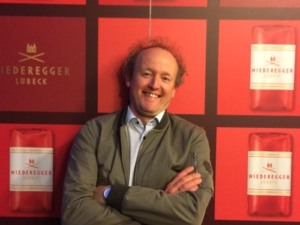
Christian Moll may be the most experienced electrophysiologist in the DBS field in Germany with a vast knowledge in anatomy. Less known, he is also highly interested in the history of stereotactic surgery. Who would be better to interview for the first episode of “Stimulating Brains”, which starts off with the history of our field.