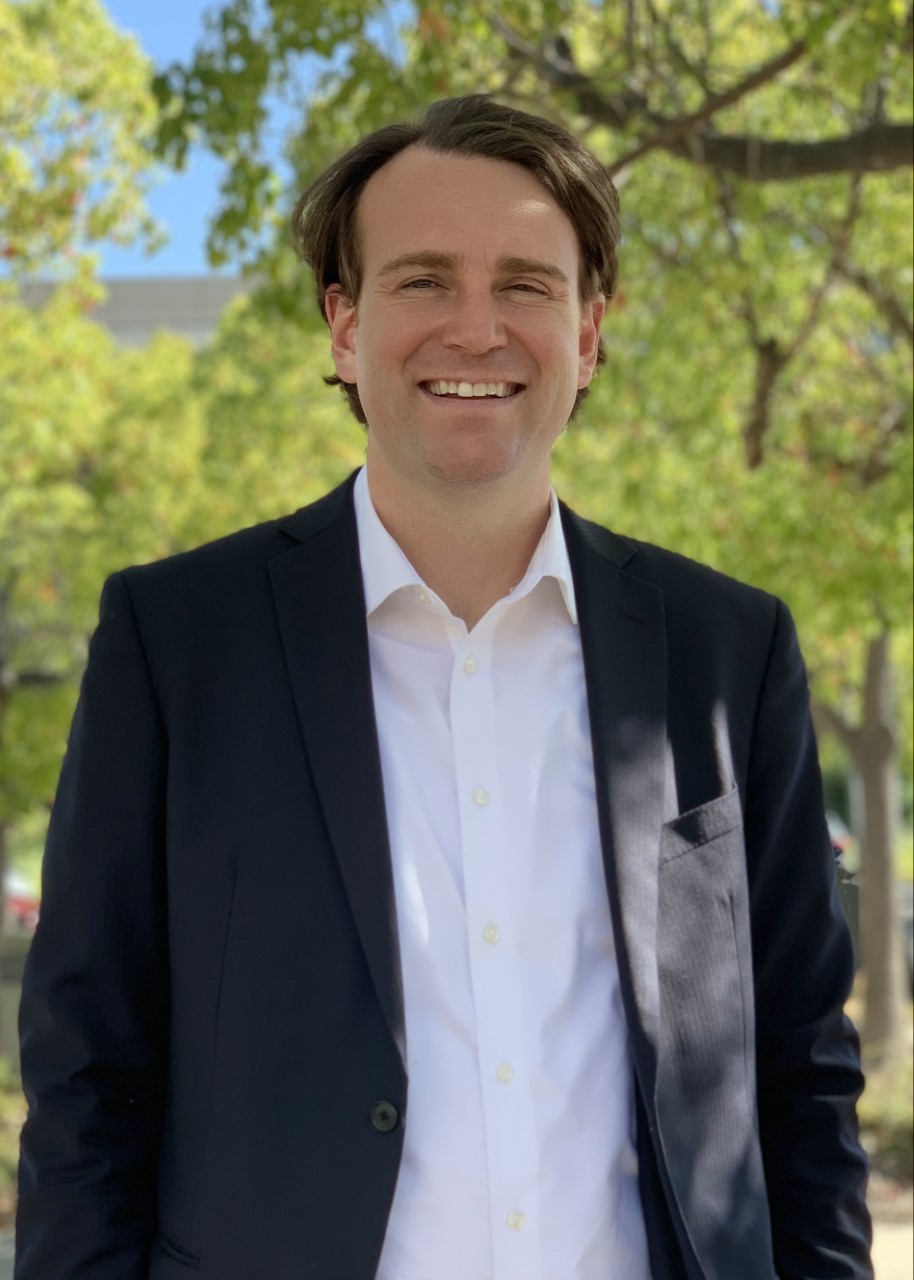
Nolan Williams is Assistant Professor within the Department of Psychiatry and Behavioral Sciences and the Director of the Stanford Brain Stimulation Lab
#26: Nolan Williams – A Noninvasive Neuromodulation Revolution?
It was my great pleasure to talk with Nolan Williams, who is the mind behind the Stanford Accelerated Intelligent Neuromodulation Therapy (SAINT) protocol for treatment of depression. In this drastically intensified protocol, Fifty sessions of 1,800 pulses are delivered as 10 daily sessions over just 5 days – condensing what usually takes months to a single week. After making hands-on experience with deep brain stimulation, Nolan wanted to first work with this invasive technique in depression. His mentors told him that it wasn’t a good time for DBS in depression, given two randomized trials had just failed, so he turned to noninvasive stim and realized, that – in comparison to DBS – we were heavily understimulating the brain, i.e., by far not delivering as many pulses in a given time interval. He also realized that the optimal targeting could not be determined by electrophysiology, but gladly Mike Fox had worked out a good method using resting-state fMRI. This way, the SAINT protocol was born, leapfrog-jumping the way we apply TMS to treat depression. After undergoing SAINT, 19 of 21 patients (90.5%) met remission criteria after a single week of TMS.
Nolan Williams 00:00like we know this is a scenario where we actually know the event that's going to cause the addiction yeah and we can we kind of stop that that that risk from happening and you want to personalize the spot um within the the region of interest that you want to stimulate so i said okay how do we do that we're not going to do electro you know invasive electrophysiology these people obviously you know and then got really turned on to mike fox's work with with resting state so i felt like that was the best candidate for the for the where at the time right um and um seems like it was a good you know good work on mike's uh part a good guess on our part and then the second one is how do we um how do we rearrange the pulses in in time right to more even more reflective of mammalian biology um ! Welcome to stimulating brains Hello and welcome back to stimulating brains episode number 26. It was my great pleasure to talk with
Andreas Horn 01:19Nolan Williams today who is an assistant professor of psychiatry and behavioral sciences in Stanford and he's going to be talking about how to stimulate brain cells in a very specific way. But Nolan is triple board certified in general neurology, psychiatry and also behavioral neurology and neuropsychiatry. Currently Nolan might be most famous for the SAINT protocol and his studies using transcranial magnetic stimulation for depression where he came up with a heavily accelerated protocol to stimulate the left dorsolateral prefrontal cortex. So in the SAINT protocol 50 iTBS sessions so 1800 pulses per session in 50 minutes. So in the SAINT protocol 50 iTBS sessions so 1800 pulses per session in 50 minutes. In 50-minute intersession intervals are being delivered as 10 daily sessions over 5 consecutive days and in the most important study to date this led to a 90.5% remission rate which is very impressive and could really move the needle in TMS for depression or even in treating depression in general. It was really exciting for me to hear that Nolan's idea to over stimulate or not understimulate, as he says, so to deliver many more pulses than 02:25normally over time came actually from his experience with invasive brain stimulation, namely deep brain stimulation. Because Nolan had worked in the OR, had also worked with DBS patients, then wanted to work on deep brain stimulation for depression, at the time not a great topic with two failed trials, so then switched to TMS but came to the conclusion that we are currently under-stimulating in TMS. So if these results remain true, and this is further confirmed in future studies, then he was probably right in his conclusion, and also in the notion that the brain can tolerate many, many more pulses per time than usually given in TMS. We have a few guest 03:07questions by both Mike Fox and Shan Siddiqi, who closely work together with Nolan and are also, of course, working with transcranial magnetic stimulation for depression. So we really have a very exciting episode here in front of us. I thank you for tuning in, and please, enjoy the rest of the show. Nolan Williams. So Nolan, thank you so much for taking the time to do this. I will have more formally introduced you by now, so we can start with the content. And in fact, I have a few guest questions that other people can submit it for you. Let's start with one by Mike Fox, actually, just to break the ice. The question is, where's your favorite place to kite surf? That's a great question. Yeah,
Nolan Williams that's a hard one. I think Cape Town, South Africa. But, you know, I'm a big fan of Maui 04:04and have been down to Pacas Mayo in Peru. It's also very good. You know, I have this kind of niche, niche kind of wave kite surfing thing. So I'm looking for a place that has good surfing waves
Andreas Horn and, and wind. And so basically trying to use the kite as a way of pulling you into the wave, and then you're just surfing, right? It's kind of kind of funny, I got into brain stimulation
Nolan Williams around the same time as, as kite surfing. And I don't know if my friends thought one was weirder than the other, but both were were pretty off the beaten path back in 2004, or three or whatever, when I started thinking about this stuff. So kind of, kind of funny. So it is a big hobby, then, because usually I start off with the general hobby question. Do you have any other things
Andreas Horn beyond science that you want to share that you love to do? Or medicine? 05:03Yeah, I mean, it's certainly, I mean,
Nolan Williams hobby would be, I guess it's a hobby now, you know, with a couple of kids and all that. It was more of an obsession, I think, probably a decade ago. I mean, I just really loved it. That's all I wanted to do. And
Andreas Horn Yeah, try to go as much as I can still now going to Hawaii in a month. But yeah, I used to kite a lot more. Yeah, it's it's one of these
Nolan Williams things where I've never met anyone that's gotten to a point where they can, they've done enough, you know, gone out enough to be able to do it and kind of go back and forth and all that. And they didn't get hooked. So it's super fun. Cool. So talking about science and medicine, so who are your key mentors and or turning
Andreas Horn points? Yeah, so I'm a science and medicine, so who are your key mentors and or turning points?
Nolan Williams Yeah. So I, you know, I, my parents both didn't go to college and, you know, I didn't really 06:04have a good, good sense of, you know, of what the path should be. And then, you know, volunteered to do neuropsychopharmacology research with Howard Becker, you know, mouse, mouse research back in college. And, you know, I was, you know, I was, you know, I was, you know, I was, you know, I was, you know, I was, you know, I was, you know, I was, you know, I was, you know, I was, you know, I was, you know, that was critical, because that was my first interface with with neuroscience with, with science in general. And, you know, and spent every summer all day long, you know, in the lab, doing, you know, doing the same, you know, essentially, continuation of that same set of experiments for four years. And, you know, really, really liked it, got to medical school. Then they kind of got confused, I thought that, you know, gosh, maybe I should have gone to graduate school, so much memorization and all that and had this kind of another moment where I where I kind of 07:04got pretty stressed out about my career path, and then started researching what to do and, you know, and kind of stumbled upon Mark George's website, and, and kind of interface with him and, you know, and Zia Nahas, who was, who was the guy at the time, working with Mark doing all the invasive neurostim actually doing, you know, he'd, he'd been involved in all the, all of the VCVS, OCD implants at the time that first didn't kind of gotten the HDE from the FDA. And he was doing this epidural cortical stim work, you know, and so I got to see that as a medical student. And,
Andreas Horn and it was interesting, because I actually chose to do brain stimulation first, as a medical student,
Nolan Williams and then decided, my going to, you know, psychiatry, or neurology, neurosurgery, and was 08:02approaching the decision from the, from the, from the point of deciding already that I was going to do brain stimulation, which is, you know, back then, as you know, it was not a very common thing to be thinking about doing. And, you know, and so it felt, it felt very, a lot of people told me this was a bad idea, and all that, luckily, I don't, I kind of don't listen to that kind of stuff. And it's amazing to me back, you know, back then, it was amazing that I had to, you know, I was able to feel confident
Andreas Horn enough to say, now, this is what I'm going to do. And this makes sense. And, you know, that was
Nolan Williams really, I think, the most crucial point of my trajectory was kind of locking in and deciding deciding to do that. I had a couple of really good interactions back then, with with critical folks, and then and then decided to do this double psychiatry, neurology residency, and really, like, 09:03had negotiated all of this stuff that I wanted to do while I was doing my residencies. So before as a medical student, so I want to do like a year of DBS programming and Parkinson's, I did that, and basically, and worked with with Gonzalo Vuelta, who was trailing trained by mail and along. And so he was, you know, he was somebody who, you know, was in the operating room doing micro electric recording, all that stuff, spent, like two years with him longitudinally, you know, a day a week, my last two years of residency, you know, requested to do all the epilepsy, kind of mapping, stimulation, mapping procedures, did a lot of took on all of Ziad went and took a chair job took on all of his psychiatry implant patients did some TMS work. So I really, you know, spent that whole time, you know, kind of getting that background, and then was fortunate enough to meet Alan Schatzberg in at this psychiatry CDI, that he he runs Career Development Institute. And, you know, he expressed there was an interest in 10:19in, at Stanford and trying to do some, some psychiatry work, I'm sorry, some brain stimulation work, and, and, you know, kind of took off from there, to
Andreas Horn all of that wasn't Charleston, correct? Yeah, everything was in Charleston, up until the point of meeting Alan, and then left to go to, to Stanford right after I finished my residency. So I was fortunate enough to be offered a, an instructor position at that point.
Nolan Williams And I was able to come straight to Stanford. And so, you know, another big job, you know, I'd lived in Charleston my whole life, and, you know, kind of went from there to California. No research, not a dollar in my, you know, professional account as far as research funding goes. It had, you know, kind of got to Stanford having to go 11:19Stanford, having negotiated some sort of one-year coverage for my loan repayment program, and then I had to kind of figure it out.
Andreas Horn So it was, yeah, I guess that was another turning point.
Nolan Williams That was a tough first and second year just trying to figure out how to make it work at Stanford, which is very different than Charleston. Of course. And you are triple board certified in general neurology, general psychiatry, and then also, I think, behavioral neurology and neuropsychiatry.
Andreas Horn Which one of the three do you prefer the most, or specifically neurology versus psychiatry? Yeah, that's an interesting question.
Nolan Williams I mean, I've gotten to this place where I just don't, I kind of just don't, the stuff that we do, 12:11I just don't.
Andreas Horn I just don't see it like that as much anymore, you know, and I don't, you know, I can tell you that my, I always tell people my job, and I'm sure your job too, right?
Nolan Williams Our jobs are, particularly psychiatry, but I think both at a level, very little of what I do day to day. I was trained in either specialty to do, and, you know, in the kind of, I mean, the requisite knowledge to do it. I was trained in either specialty to do it. I was trained in either specialty to do it. I was trained in either specialty to do it. Of course, but the actual current content, it's not on the board exam.
Andreas Horn So we're out, we're kind of out in this, you know, in this other space, and it'll be interesting.
Nolan Williams You know, I, I've kind of gone back and forth about this over time. Like, I think there are, you know, there are three or four possibilities of where, you know, brain stimulation psychiatry goes, you know, over, you know, over the next couple of years. 13:06One is, you know, it, it stays in psychiatry too. And a lot of people have. You know, historically felt like this because of epilepsy and other things. Tourette, it goes into neurology. The third one is the neurology and psychiatry, you know, have this, you know, fantasize merger that some people talk about sometime in the future. And the fourth, which I'm increasingly believing is probably what ends up happening is that there's a new subspecialty, even potentially specialty. If you look at radiation oncology and now what's going on with interventional body radiology, where, where you've got a whole department and new specialty that, that, you know, brain stimulation kind of goes into because we're not really trained in a real way to do this in either specialty. 14:00And so I think that's kind of my, I know that's not the most direct answer that, you know, that you're, you're asking, but I don't, because. I guess you're saying that it's all the brain, right. And having a brain simulation residency program could be a great idea. I haven't thought about it before, but it makes a lot of sense. So especially in DBS where it's really hard to find, let's say psychiatrists interested in doing it. Right. But then neurologists can't take care of the patients. Well, and then the surgeons will always do it if there's the right, you know, person referring. So there's often that gap there. It's more invasive. So it's a really cool thought. So, but we'll talk about non-invasive stimulation here as a change to most of the episodes were about DBS, but we had also a few non-invasive things. So transcranial magnetic stimulation is now, I guess, your main thing is a technique to noninvasively modulate the brain. 15:02And then in the U.S. it is FDA approved for treatment of depression. Can you maybe, before we go into like. The same protocol is on a bit more about the more general, even the classical before I TBS protocol of what had been carried out in most centers.
Andreas Horn Yeah, absolutely.
Nolan Williams How the responses were.
Andreas Horn Yeah, absolutely. So yeah, it's interesting.
Nolan Williams You know, as, as you know, you know, TMS as a modality and DBS and all of that emerged around the same time in mid to late eighties and you know, the first TMS publication.
Andreas Horn Yeah.
Nolan Williams Was 1980. And then the second one was in 1985 and the Lancet was a case Tony Barker published where they stimulated with an electromagnet human motor cortex. Right. And so this idea of pulsing using Faraday's law, pulsing a magnet generated current underneath the magnet and electrically conducting substances. 16:00And then folks at, at, and I intramural NIH in the mid nineties said, okay. We've been able to now do repetitive. Magnetic stimulation with repetitive meaning, you know, multiple stimulations in a pattern. We've been able to do that and kind of move around this this surrogate of, of cortical excitability, the motor evoke potential. Can we, can we move around other brain circuits of interest and, you know, for all the obvious reasons, depression was the, you know, a good candidate to do one. Um, it's a.
Andreas Horn One, it's a condition that when it resolves, in a lot of cases, most cases people go back to totally normal from the standpoint of cognitively, neurologically, psychiatrically, from the standpoint of cognition, all that. So it's an episodic illness that has a kind of a recovery versus something like schizophrenia, where once you get that, obviously you can't really, there aren't periods of total normalcy there, and so using TMS and something like depression
Nolan Williams 17:09like depression make sense back then, you know, ECT works,
Andreas Horn but it has a lot of issues around it. And so the thought was, could you do something, you know, could you use TMS in a non-invasive way?
Nolan Williams And so those first experiments were based off of parametric experiments in motor physiology and based off of, you know, mid-1990s kind of systems neuroscience understanding of things. And, you know, some initial positive results in open label trials, and then there was a decade and a half of work after that, that ultimately resulted in FDA approval of what we now refer to as conventional RTMS. And so conventional RTMS is this stimulation approach that is, you know, 18:03based off of these parametric, parametric experiments and some just general kind of evolution of the stimulation approach where they're giving a session per day, five days a week for six weeks. And, and doing that, you know, in a, in a named brain region, but with, with skull based measurements, as far as, you know, kind of paper ruler measurements. And, and for the, for folks, you know, you have a lot of, folks, folks tuning into the show that are, that are, you know, that are focused on DBS and focused on using microelectric recording or whatever it is now MRI based targeting to, to put in the lead in the STN or GPI or whatever it is. This is a very, very kind of foreign concept of using a paper ruler, you know, and, and remarkably it's still, it's still works in a subset of, 19:00of the population that receives this. But it's, you know, not everyone and it's, it's really slow, right. It's, it's, it takes time. So it's, you know, it's an outpatient procedure in and of itself. And so that's, that's kind of, I grew up with that sort of way of thinking about it and, you know, was in the lab prior to FDA approval with Mark and, you know, in the lab after FDA approval. So I was able to see that whole process play out over time. And then after that point, then everybody in the world started saying, you know, in an open label sense, you get about a third of remit, a third of patients remit.
Andreas Horn So then you get into this question of, well, why only a third, right.
Nolan Williams And then there are, there are a million questions that can kind of spring out of that,
Andreas Horn you know, why only a third.
Nolan Williams And so everybody kind of took one of those questions and kind of ran with, with that. So, So then I guess the next step or big step was intermittent theta burst stimulation, iTBS that that was also recently approved by the FDA.
Andreas Horn 20:03What's the difference in that? Yeah.
Nolan Williams So intermittent theta burst is an attempt, it kind of a group level, but an attempt to, you know, to emulate hippocampal rhythms, you know, kind of use those same frequencies and stimulate through a TMS coil.
Andreas Horn And what's interesting about it.
Nolan Williams So there's a big non-inferiority study performed out of, out of Canada, out of two sites in Toronto, and then, and then Vancouver and, and they in 400 subjects showed really striking non-inferiority with this stimulation approach and depression, you know, applying it once a day, five days a week for six weeks. And basically it, it, it emulates this kind of pattern within a pattern that the hippocampus uses, which is high frequency gamma bursts, 21:02you know, 50 Hertz every fifth of a second theta,
Andreas Horn right?
Nolan Williams So it's this, you know, burst of gamma, three pulses every fifth of a second. And then if you keep doing that without a break, then it's deep potentiating or, or what they would call inhibitory and motor on the motor evoke potential. If you, if you do it and you wait about two seconds and then you, and then you give an eight second inner, inner, train interval and you do it again, then that's excited to where you're potentiating. Right. And so that was the, the idea there. And so the, in the case of this non-inferiority trial for depression, it was potentiating or intermittent theta burst. Right. And so what's cool about that is because you are, you are attempting to utilize a more, a type of stimulation. 22:01That's more reflective of, of mammalian neurobiology and not some parametric stimulation approach that
Andreas Horn was derived out of the kind of mid nineties understanding what was going on.
Nolan Williams But instead you're using a more, this was about a decade later when we had a little more of a sense of, of, you know, these sorts of rhythms it's much more efficient. Right. So instead of, I call it pulse potency. This is like a term I made up, but essentially like the kind of pulse for pulse potency, if I TBS is five X, that of conventional RTMS, both in both on motor physiology and in this non-inferiority study. So I think it's probably right where, you know, pulse for pulse, you get, you know, five X, the amount of effect from a theta burst pulse. And you do from a 10 Hertz pulse, right.
Andreas Horn It's kind of interesting in the,
Nolan Williams the efficiency. So I TBS is 12.4 times more efficient minute for minute than conventional RTMS. 23:01We're conventional RTMS took about 50 minutes to get done or I'm sorry, 40 minutes to get done. The the ITBS takes about three minutes to get done. And so for patient and for physician, you essentially save time,
Andreas Horn right? Yeah.
Nolan Williams You essentially save time. So there's two ways of looking at it.
Andreas Horn The first way of looking at it is exactly what you're saying from the STEM.
Nolan Williams And that was the Canadian way of looking at it. Those guys were saying, look, we've got a finite number of chairs and a finite number of resources, and we want to treat as many, as many Canadians as we can.
Andreas Horn So how do we do that?
Nolan Williams We do that by by trying to make the stimulation approach more efficient. So that's one way of looking at another way of looking at it is, well, gosh, you know, and this is the way I was thinking about it back in 2013, 2014, we, we give about 500,000 pulses a day of, of DBS pulses in, in, in, you know, for folks getting DBS, you're giving 3000 pulses of conventional RTMS. 24:00We're giving, in this case, 600 pulses of ITBS, you know, are there ways if now you've got this really efficient stimulation approach, rearranging the entire course in time, because then you, then you've got a really efficient way of doing stimulation, you know, quite a bit in a day instead of just once a day. And that was, that was more heretical, but then, then the,
Andreas Horn can we speed this up to get more patients in the chair?
Nolan Williams But it's, it kind of, you know, making it more efficient does both of those things, you know, it can allow for you to use conventional protocols more efficiently for P for doctors,
Andreas Horn for patients and allow you to do interesting new things.
Nolan Williams And of course, if, if patients get, get better sooner, that's also a benefit in itself,
Andreas Horn right? If you,
Nolan Williams if you don't have to wait six months, right, that, that, that could also be a benefit. So, so, I mean, I guess the, the culmination of that so far is, is what you then invented recently with your team, just called the same protocol. So the Stanford accelerated, 25:01intelligent neuromodulation therapy for depression treatment, resistant depression.
Andreas Horn Can you talk about that a bit? Yeah,
Nolan Williams definitely. I, I gave you a little bit of that DBS background earlier because I came out of my residency in 2014 and the BROADEN trial had paused and, and VCVS had, had just not, you know, worked out for that Medtronic trial. And I, and I was kind of going down that road and then I went and called all of the, you know, DBS mentors and they said, Oh, you know, this is kind of a bad time. I'm trying to do new approaches for, for DBS. And so I, I was like,
Andreas Horn what am I going to do with my life?
Nolan Williams You know, I can't, I've been, I spent all this time doing this. And then now I'm in this place where either, you know, I have to go, go down, you know, road of doing approved DBS approaches or go down this road of, of trying to think about kind of reconceptualize what I'm doing. And so I, I asked the question at that time, 26:00I wasn't thinking, you know, gosh, you know, we're going to make this better or whatever, any of that sort of thing. I was trying to think in terms of how do I,
Andreas Horn how do I non-invasively emulate invasive device environment?
Nolan Williams How can we essentially in, in terms of the, you know, kind of try to emulate spinal cord stimulation, how do we do test stimulation that, or a, you know, a temporary stimulator, like what we do with spinal cord stimulation for pain, you know, for, for, for, for, for, for, for, pain,
Andreas Horn right? Can we do that non-invasively with TMS and learn something about the system?
Nolan Williams And so you're in that kind of frame of thinking. I went and said, well, what did I learn from spending all this time doing DBS work and, you know, and moving disorders with, with Gonzalo, with the, with the psycha, you know, the psychiatric patients. Well, you want to, with every patient you want to personalize. I spent a lot of time doing MER. So do you want to personalize the spot 27:00um within the the region of interest that you want to stimulate so i said okay how do we do that we're not going to do electro you know invasive electrophysiology these people obviously you know and then got really turned on to mike fox's work with with resting state so i felt like that was the best candidate for the for the where at the time right um and um seems like it was a good you know good work on mike's uh part a good guess on our part and then the second one is how do we um how do we rearrange the pulses in in time right to more to even more reflect the mammalian biology at the time and THREE-D was very far from being published at the point which we were thinking about this so there was a a paper that was published in brain in um i think 20 2014 uh 2012 or something where they um where they had had the only um you know positive randomized control trial of theta burst at the time so we looked at that and said okay you know is there a way to kind 28:04of utilize multiple sessions a day um based off of of some sort of you know learning theory looked into it so there's something called space learning theory that um that tells you that and they've done this in in hippocampal slice where you can stimulate with theta burst and if you wait about an hour and stimulate again you can get um you know some dendritic spine enlargement you can get some more you know some dendritic spine enlargement you can get some more kind of incrementally that you don't get if you stimulate mass and then the third thing was around dose and this idea that i was convinced that that we were totally under stimulating uh with tms because i just spent all this time where people were getting you know all day constant stimulation right yeah and i was like gosh you know this is this is um you know not this is probably not particularly potent if you if you know if i were to ask you or any of the movement disorder neurologists if i could just say that you know this is this is um you know this is this is this is a very rich thing and i thought well what if i gave 600 pulses a day of DBS stim to 29:02the subthalamic nucleus for parkinson's would that make much of a difference for that person's parkinsonism i don't think too many people would agree with that right yeah you're right sure yeah you know what i mean and so it was this idea of huh like maybe maybe we are in fact under stimulating folks and if you think about it right like when when when you turn the dbs on for pd when when you start kind of plateau the improvement the symptoms it's about an hour two hours in or when
Andreas Horn or whatever, you start to see, you know, you get an immediate improvement, but then you kind of plateau, you know, so that's about, you know, 20,000 pulses or something, right? And so I started to think, interesting, like, maybe that's part of why TMS takes so long, right? It's because it's
Nolan Williams taking so long to get all those pulses in. And so that was where the same thing was actually born. It was born out of this desire to emulate the invasive device environment. And, you know, 30:00and to have in the, you know, the value of being able to do that and scale it, you know, across a large number of people without having to pay for expensive, you know, invasive trials. So then I started thinking, well, if you can do that, then you could essentially test them, everybody, and then if you wanted to make an invasive device, then you just need to, it's just an engineering problem at that point. Yeah. It's not a neuroscience problem anymore. Use TMS to probe
Andreas Horn whether the circuit responds, and then if it does, put the DBS in. Yeah, put a paddle in or whatever,
Nolan Williams if it's a cortical stim. Yeah. We've been looking, you know, we've been looking into doing that now and working on that, which is its own kind of hurdles, because none of the IPGs will put out, you know, will put out this sort of stimulation, this level of timing. So you have to have the
Andreas Horn firmware rebuilt. But basically, yeah, that's been the thinking, right? And so, you know, so we, 31:07yeah. Can you summarize how, what the protocol is, how often, how many pulses and how long? Yeah, definitely. So what we said was, okay, we want to take an entire TMS course
Nolan Williams and compress it into five days. And at that time, that was 90,000 pulses for six weeks of conventional 10 hearts RTMS. And so I kind of worked backwards in my, like, you know, the kind of math on this and said, okay, 90,000 pulses to do that. And the other kind of unit, if you will, was at the time, the only trial that was positive was this 1800 pulse per session trial that had come out of Taiwan. And so I said, okay, we've, here are the results. So we're going to take a little bit of time to do that. And so we're going to 90,000 pulses and we need to do it at 1800 pulse increments. And so then you divide that. What's
Andreas Horn 32:00interesting about that math is when you divide that 1800 pulses and 90,000 pulses, five days, that math actually works, right? So you can do, you know, and what I figured out later after THREE-D was published was they did six weeks at 18,000 pulses, right? Which is 18,000 pulses times five is 90,000 pulses of the conventional course, right? So we're just, you know, and that's a lot of,
Nolan Williams a lot of numbers, but I say all that to say, we're giving one six week course of ITBS each day. And so we're giving the equivalent of seven and a half months worth of ITBS in five days, or we're giving the equivalent of one six week course of 90,000 pulses of conventional RTMS. And what's cool about Thetaverse is, this experiment never could have been done with conventional RTMS because if you, if you believe the THREE-D study and you, you were just to take conventional RTMS and do the equivalent number 33:04of pulses per day, it's 20 hours end to end without breaks, which you couldn't do with this spacing that you need to do. And, and when you look at that, it's like, oh, wow, that looks a whole lot like an invasive stimulation approach.
Andreas Horn Right. You're stimulating basically all day long, right? Do the coils get hot? I guess. I mean, they do. No,
Nolan Williams no, we use MagVenture coils. So they're all liquid cooled. That's important. You know, that's where we went with those guys is because they have active liquid cooling. So you can cool these things down. I mean, we burned through coils faster than anybody on the planet. I think maybe, you know, maybe some folks are doing this now are too, but, but, you know, normally you get a seven year lifespan on these things and we burn through them in a year.
Andreas Horn Yeah.
Nolan Williams Because it's so many pulses, so many more pulses than anybody's ever given. It's the most, by far the most TMS pulses that anybody had ever given, you know, at the point where we were doing 34:05this. And I had a lot of people come up to me and tell me this was totally insane. And how could I
Andreas Horn ask where you're scared about that? Like, you know, in long-term things or did you think, yeah, you know, I'd had, I mean, so I had these,
Nolan Williams I had these experiences, right. I had these very different set of experiences than all the, all of the TMS researchers. Cause I was coming out of this invasive world. Right. So I had just completed a five-year follow-up for Zod's epidural cortical stimulator, DLP of C folks, and done cognitive testing on them. So they were getting about 20,000 pulses a day, every day for five years. Right. And they were doing really well. And, you know, and so I, I was like 20,000 pulses a day. In a pattern, no problem. Right. But, you know, as you know, very few people have those experiences. Most people are having the TMS experience where this is, this was kind of a crazy thing to do. 35:03So I had people actually really, you know, give me a hard time about this. And I, you know, and so the first group of people that we went after were folks who met Helen Mayberg's DBS criteria. So this is a paper that, that is, doesn't get as much press. It was published in 2018 in Brain. So it was folks who had, you know, a lot of people who had, you know, a lot of people who had, you know, a lot of people who had, you know, a lot of people who had, you know, a lot of people who had, you know, and she doesn't require this, but I required this additional piece failed conventional RTMS failed all the meds and everything to, to be in, you know, to be an invasive depression trial. And we treated those guys. And the first person that I treated, you know, I'll never forget it. He was a patient who, who we, you know, he had been in broad and he, he was on the wait list to get DBS. The trial closed at the, at the futility analysis.
Andreas Horn He'd failed ECT 18, you know, bilateral ECT sessions, right? So as many as you're going to
Nolan Williams 36:03get bilateral, he'd gotten VNS. He'd failed that totally. He went to Carlos Cerati at NIH and gotten six ketamine infusions, failed that completely. He'd failed 40 meds in a 30 year, depressive episodes, psychotherapy. He said the only time he felt well, which is kind of
Andreas Horn interesting because we didn't know this back then, but he'd gotten nitrous for a dental procedure and
Nolan Williams felt not depressed for like an hour or something like this. We know now it's apparently nitrous
Andreas Horn oxide is antidepressant. But back then I was like, well, that's interesting. I don't know
Nolan Williams what that really means, but that was like a moment where he'd felt better and otherwise just like continuous, very severe depressive episode. And, um, you know, I, I told all these early guys, you know, these, you know, DBS level depression patients, Hey, I don't think this is going to work for you, but this is kind of like the 37:00ethical, you know, at that time, right. I was like able to say to myself and everybody else, look, these people are going to otherwise go get a brain implant. You know, they could have a bleed. So if, um, if, if they're going to, you know, if they're going to do this and there's a risk of seizure or something like that, this is justifiable. And so, um, we, you know, we went in and, um, and did this and lo and behold, they didn't have a seizure. And, um, and by day four, he looked better by day five, he rolled in totally remitted.
Andreas Horn Wow. And I, how long has it, how long, how long did it last for him? Do you know? Yeah, not very long. Right. So for those guys, it lasts about two weeks and then it, and then they, they lose it. Right. Really an interesting phenomenon.
Nolan Williams Um, for this, um, is that it's the, the durability that the, whether or not you remit or not, doesn't seem to have much to do with how treatment resistant you are, where you remit on the week does. So the further out in the week you, you know, the more treatment 38:07resistant you are, the further out in the week you remit and the durability seems to really matter, you know, um, get affected by the level of treatment resistance. So folks who are, um, who are, uh, really treatment resistant, they'll lose the effect on average in two weeks. These ECT failing folks, the folks that, um, that are, um, you know, three med failures in, you can get a year, sometimes two years, or first RCT patient. I got four years and still going, I think, um, you know, from one five day treatment. So it's really, it's really different depending. And that's why, you know, we're very focused obviously on also doing this invasive version of this, trying to emulate it because we can treat those people who are at the really, you know, treatment
Andreas Horn resistant, severe treatment resistant side of things, you know? And so we, um, so we did that,
Nolan Williams 39:02you know, we were able to justify that. And then, uh, and then nobody sees, which was good. I was, that was the one thing I kind of was worried about, but nobody had a seizure. Um, and then, um, and then we went into a less, you know, still very treatment resistant, but less than that treatment resistant population. Um, so that's, and did a bigger study. And that's where I think some of the press started happening back in 2020. Yeah. And then in the latest, like full clinical trial, how, how many people remitted,
Andreas Horn how can you talk a bit about the success rate of this? Yeah. So yeah. Thank you. Yeah. So it's interesting. So, you know, all of these are incremental steps, you know, towards, I mean,
Nolan Williams they're, they're clinical trials and they, you know, in the conventional sense, they're also kind of engineering experiments to figure out what you, what you have to do next. And so, um, you know, as you know, right. And so there, you know, the, the last trial was, um, 29 people in the, in the analysis, the, they were all, um, on average about nine years in the current 40:04episode. So these are not trivially depressed people who are depressed for six months. These are nine year, you know, episode, they fail five meds lifetime or so that about, you know, 23 to 30 years, uh, lifetime amount of depression. And then they ended up, um, they ended up having, you know, about 79% of folks experienced remission, um, level symptoms at some point in the four week followup, the timeline and everybody's a little different, which is part of what we've got to kind of figure out. So some people, you know, the majority of people remitted early and then they held it through the whole time period. And then we had this subgroup of people who remitted early and then they relapsed pretty quickly. They were all of those folks were under a lot of life stress, weirdly, and I, I started worrying about our advertisements after the fourth patient told me this, but we had a lot of patients who were actually in the middle of a divorce, like disproportionately. So in this 41:01trial, like four patients out of 29 were in the middle of a divorce. I don't know if we were advertising this in a certain way, but you know, all of those people relapsed really quickly. They were very, um, they were very, um, you know, high psychosocial stress that seems to affect the kind of speed of the relapse. So, um, so, um, so, um, so, um, so, um, so, um, so, um, so, um, so, um, so, um, so, um, so, um, so, um, so, um, so, um, so, um, so, um, so, um, so, um, so, um, so, um, so, um, so, um, so, um, so, but, and then a few people who actually had this kind of slow gradual remission where one particular patient actually hit remission at the one month mark. But if you, if you look at across that time period, 79% of people crossed at some point through the remission threshold versus the sham, it was like 13% by, um, you know, if you look at time point by time point in the more conventional ways of looking at this, you know, 50 to 60% remission, depending upon what time point you look at versus, um, 13 to 0% remission of the sham group. So, uh, you know, effect sizes that broke one every time or about 1.3 to 1.9 is a very strong effects, you know, generally, and for depression kind of 42:04unheard of level of effect sizes compared to like conventional RTMS, what about 0.5 and
Andreas Horn an oral antidepressants for about 0.3, you know? And so, um, you know, in that sense,
Nolan Williams we feel pretty strongly that we have a good, a good probe of the system, you know, and thinking about it from a probing standpoint, like, and then the question ends up being like this whole
Andreas Horn question of is, you know, is the DLPFC, the STN for depression, right? Are we, have we found a spot that works for, for the majority of people? Um, you know, and, and it's an open question and
Nolan Williams we have a lot to do there. Um, but, but I, I think that, I'm convinced it's more likely that it's the DLPFC than any of the other, uh, potential areas, um, you know, um, but it's, so let's talk a bit about that. So we have talked about, 43:02let's say time and how, you know, how you, um, deliver the pulse. We've covered how, how successful it is. So the idea that the DLPFC system could be related to anticorrelations to the subgenual cortex was likely first raised by Mike Fox in 2012 in his Biological Psychiatry,
Andreas Horn um, article. Um, and then even before that, the DLPFC was a TMS target, right? So, so maybe we can
Nolan Williams talk about the two things. So first of all, I think Mike's concept was a bit, you know, motivated by
Andreas Horn the DBS side, right? That an anticorrelation to the site where Helen Mayberg puts the electrodes,
Nolan Williams um, could make sense. And then, um, can you also, because it's really hard for me to find out historically how people even thought about starting with the left DLPFC.
Andreas Horn Maybe you can talk about the two things, the more modern subgenual anticorrelation story, but even before that, why DLPFC in the first place? Yeah, absolutely. Yeah. So that, you know, there was,
Nolan Williams 44:03there was a paper published, I think in the eighties, um, seventies or eighties, stroke strokes causing depression, um, you know, stroke lesions causing depression that subsequently was debunked, but you know, we're always, uh, we're always in retrospect, we always see that stuff, but at the time you're basing, as you know, right, you're basing all these decisions based off of the literature of the day. Right. So you're looking at it from that kind of time horizon. So, you know, at that point when Mark and, and, and Oliver and all these people at NIH were looking at this, right, there was this, you know, this article, um, you know, this manuscript where they had seen, uh, strokes causing depression, uh, affecting DLPFC. So they had that in the first place, but then they had, um, you know, Mark was working with Bob post at, um, at NIMH and they saw hypometabolism in the left DLPFC, um, you know, in depression in the patients on, 45:01on PET and SPECT and these patients that, um, you know, were, were depressed, um, you know, getting, you know, getting scans, the NIMH at the time. And so they had that data, they had the stroke data, and I think they made a really good guess. And then it was like, as you know, right, DLPFC is two Brodmann areas. It's a huge span of, you know, PFC. And so it's, um,
Andreas Horn it's not all likely one thing. I mean, it's, it's interesting. We haven't fully
Nolan Williams proved this out, but you know, there's, there's a set of assumptions where it's not like all of DLPFC is homogeneously doing the same functions. We assume that given sub regions of DLPFC with different connectivity or doing different functions, and I think Mike, you know, to, to, to speak for him, hopefully this is accurate. Mike made an assumption that, um, that not all that, that assumption, not all of DLPFC, is doing the same thing. And if not all of DLPFC is doing the same thing, 46:02then targeting a part of DLPFC that's specifically involved in mood regulation over other functions of DLPFC would make sense. And so then, you know, so then he, he did this, um, this great work, published as you said biological psychiatry 2012 looking at it at dlpfc subgenual connections based off of the dbs work based off of of work that he had published with lozano um you know around i think they did they had a paper in pnas around dlpfc subgenual connections for depression but all these different resting state connections with the dbs and tms targets um and um and so you know that work had come out when we first started doing this and um you know and we we kind of went down the road of making that um that our target not really having more of the modern kind of verification studies that have come out saying yeah in fact if you look 47:02at this retrospectively you know proximity to that spot um improves your depression outcome luckily that was a good you know it was an educated guess for us it was the best guess at the time um and um and it and the stories kind of played out over time is it the end target probably not you know i think i think a lot of people mike would say that a lot of people would say that it's not it's likely not the um you know the the most optimized spot and we're going to learn a lot more about it but um it seems to be you know the best you know the most well-studied spot at this point for stimulating within the dlpfc kind of getting back to that idea that we have to at a per you know at a personalized medicine level have to kind of find the right spot for everybody um ahead of time when we do these sort of stimulation approaches and that's that's really the perspective that we took cool really really 48:02nice that that's really helpful and then i think in the same protocol you use um patient-specific um scans we scan a patient you look at the connectivity from exceeding from such annual and then look at where's the strongest antipyretic relation in the dlpc region what what are your thoughts on using normative connectivity instead um like mike has shown but also like in australia um some people have shown first that it works and then i think in the newer newer um newer story they kind of also um opted for individualized connectivity so questions how how important is that part to make it specific to the patient do you think yeah i think robin cash had a paper where they looked at um they looked at that normal spot and then it didn't predict but then their individual targets did it's you know it's a good question i mean i think at the time um there were pressures so nimh released kind of a wish list or a must-do list depending on how you read 49:02that for for getting grants and so we we took the the strategy of saying okay we are going to in fact do this at an individualized level um and so all the all the all of grandma's spaghetti sauce and how it's made is kind of baked in you know together and so it's very hard for me to say you know was saying you know what part of it is is the the kind of necessary components to seeing what we've observed but i can say that um you know in each participant the position is quite different you know and um and so the idea that um you know you would have to kind of make some assumptions that um kind of go back to that old school way of thinking that that there isn't specialized function in the dlpfc or or the other way of thinking about it which has been a kind of a bit of a controversy is around the the size of 50:03the e-field right and how how much um you know with a given tms coil you know how much brain are you actually having you know full-on depolarization um you know i think that's a and that's that's that's the tricky part of 2022 and probably all the way out to 2025 is we don't have a good handle on that i'm not even sure if tms is the right technology to sort that out maybe ultrasound is but this idea of like you know how how focal and um and you know what can you get away with as far as the diameter of the affected tissue and so this is this is really you know and it gets back you know it gets back to But, you know, a lot of that work with Cam McIntyre and some of the DBS work on the same sort of idea. The problem with TMS is because it's non-invasive, we don't have great measurements. The E-field models and the, you know, the macaque primate data don't align at all. 51:02There was a paper published in Nature Communications recently where, you know, they put a bunch of electrodes into macaque brain and, you know, kind of looked at the amount, the diameter of the depolarized neurons. It's a lot smaller. It was a tenth of what the E-field models would have predicted. I see.
Andreas Horn Okay. So it's actually debunking a lot of the FEM-based modeling in TMS?
Nolan Williams I mean, that was the... That was their conclusion, and that wasn't...
Andreas Horn They were trying to validate it, right?
Nolan Williams If you talk to them, they were trying to validate it.
Andreas Horn Yeah.
Nolan Williams You know, and it's not to say there isn't an effect, but there doesn't seem to be a full-on depolarization. So you get into this complicated issue of, you know, because we haven't done kind of a sophisticated invasive mapping of DLPFC, we don't really know that much about DLPFC, you know, as it relates to kind of...
Andreas Horn 52:02Yeah.
Nolan Williams You know, specialization of functions in certain parts of it. And then we don't even know how wide our tool is.
Andreas Horn Yeah.
Nolan Williams So it gets into this whole complex...
Andreas Horn And that's why I don't think the field is going to easily be able to solve it out.
Nolan Williams You know, we hope to try to help with that with the invasive moves we're going to make with it, kind of what we're calling iSaint.
Andreas Horn But this idea of being able to do, you know, direct electrical stim with the same pattern and the same target... And we can move some of that around, right? So we can try to perturb this stuff and understand it a little bit more. But I don't think TMS is that tool. And I don't think iSaint is our TMS approach.
Nolan Williams I think about iSaint as a neurostimulation platform, you know, where we could try to do this across a bunch of different stimulation approaches for the purpose of mapping, right? For the purpose of kind of perturbing and understanding the system. 53:01And that's really kind of the... You know, to me, the game plan going forward is not just doing our TMS to try to solve this out. But that's the problem. I don't think we'll totally know that with our TMS alone, how focal or broad, you know, how functionally specialized or not. Another way of doing it... And so I sat in on... I was at Clinical TMS Society this year and sat in on some of this. And there's this very controversial topic of the e-field modeling. And, you know, Nick... Nick Trapp at Iowa has stereo EEG grant for epilepsy patients, but looking at the stimulation parameters.
Andreas Horn And I said, hey, you've got to do this with stereo EEG patients, right?
Nolan Williams To measure the effect of the electric field.
Andreas Horn Yeah. Yeah.
Nolan Williams With TMS. Because they can do it. They've got IRB approval to do our TMS with stereo EEG electrodes in place. 54:02Gotcha. And, you know, single pulse and short runs and stuff like that. They've been able to demonstrate that's safe. And they, you know, they could solve this out and really do this in humans and try to replicate that primate study. And I think if it says the same thing, then our tool's more focal than our e-field models are telling us, you know. And so that's kind of the tricky part right now. It's a key point.
Andreas Horn I mean, I'm an outsider here. But I always... You know, it never meshed with me that, you know, if you just look for a finger twitch in the motor cortex and you move the TMS point, even by a little bit, it's gone sometimes, right?
Nolan Williams So that already kind of speaks towards it being more focal, as you see in the pictures, at least. But again, I'm outside the take here. Let's ask you some more questions first from Mike Fox. So you just pivoted to that exact thing he was about to ask. 55:00So science and especially science. So the example of science funding is usually slow and incremental. But with SANE you have changed many things simultaneously with the goal of faster progress and larger effects. You kind of accept by doing that. Mike asks that we won't know which parts of the recipe matter most.
Andreas Horn So do you think this is a good model for translational medicine in general? Yeah.
Nolan Williams I mean, I feel like that's what we've done with all of the neurostimulation approaches that have been FDA approved. If you think about the No. No. No. No. No. No. No. No. No. No. No. No. No. No. No. No. No. No. think about it right we were doing microelectrode recording and we were we were putting in you know dbs leads and we were doing some parametric testing around the stimulation approach figure over 100 hertz was going to work you know that that whole exercise for dbs was the same sort of engineering exercise rtms and its first conception you know was was an engineering exercise we picked the DLPFC we picked you know excitatory stim it wasn't just one 56:03you know i think that the problem um the problem that i think happens when you when you have something established in one way is that then the feeling is you have to do you kind of incremental science from there forward yeah instead of saying okay you know let's just throw that out and say let's just start over and do the same thing that it was done in the mid 90s with rtms that was done in the mid to late 80s with dbs and just do it again right like let's just do this engineering exercise again accepting certain things that in the mid 90s they were very afraid of having seizures because of ect so they didn't want to do aggressive stimulation approaches even if they wanted to do them the tms devices would blow up regularly like i was told that one of the things that was happening was that you know you're not legit in tms research back in the day 57:00if you didn't blow your machine up you know which is not something that ever happens now right they had to dunk the coil in ice baths there was just this whole this whole different thing that was going on back then that that kind of some of the dogma back then got carried forward and the technological limitations still weren't weren't weren't still there right they were that had all been solved out and and you really without knowing i think the tms companies were building better and better rtms devices that could do this sort of accelerated saint like stimulation just to make the devices better and then we looked at it we said look we've got a liquid cooled system that can do all this stuff yeah and so um you know can we um can we um do something that's a bit more aggressive and so i think um you know would if if there was a if there was science funding that said hey here's you know here's an idea
Andreas Horn 58:01you know can you do multiple steps of this uh you know um you know it's it's kind of single
Nolan Williams experiments and then put it together uh would i have done that probably you know um at the time looking back i don't know if i would have because it would have is micah saying it would take it would have taken quite a long time you know and so it gets into this whole thing of like and and what would have been the effect sizes of each component and all that you know so you get into this whole thing of like you know are we are we doing science we're doing you know is this ultimately an engineering process that results in a subsequent set of scientific experiments to prove it out how risky are those things luckily stanford and i think i think harvard too and other you know other places that that are invested in this sort of work you know they there's a bit of philanthropy and we we were fortunate enough to receive you know all the saint work 59:03um up until the last study was was philanthropy funded um we had what we had NARSAD funded it for a piece of it but that's all philanthropy funded to the NARSAD thing so it's you know in some sense completely grassroots funded you know versus you know any federal funding until the point in which we had you know real data which you know there's not a criticism of of of the of the federal funding process but it is it is kind of a representative of the amount of kind of high risk high reward sorts of moves right and so it's some in some ways you have to kind of do these sorts of grassroots approaches where people are really much more focused on that solution you know and so getting into the you know so we wanted to emulate the dbs environment and that was kind of one that was kind of the scientific goal and then the the kind of clinical goal right is that in in psychiatry of this very weird phenomenon that's different than 01:00:02the rest of medicine where in the rest of medicine and neurology and cardiology as you as you increase the acuity you increase the number of tests and treatments right if i'm having a stroke right now and i'm in my neurologist outpatient office i have a certain amount of you know you're going to give me you give me an aspirin or something you do a neurological exam you're going to send me to the er i'm going to get you know ct i'm going to get my tpa you're going to send me to the you know to the cath lab and i'm going to get a um you know an endovascular procedure or whatever right like that in in cardiology it's that same thing in psychiatry as you increase the acuity you lose treatments and there are no tests right right so what we what do we do we we we increase the acuity and we we put people in in kind of locked spaces and how does that work out well if you look at the statistics the highest risk of completing 01:01:01suicide is in the three-month period after your first inpatient hospitalization for depression okay right so if you think about that it's not those are not good statistics right so and so you know and and on average in the united states it's different i think in europe and in the united states there's a big push to get people out very quickly so there's about a seven-day hospitalization hospitalization time frame right and um average on average yeah that's much shorter than in europe yeah yeah people are getting ect it's longer yeah you know but only about one-tenth of U.S. psychiatric hospitals have ECT and and only one-seventh of people elect to get it so it's about a 1.5 percent of patients that meet medicare medicaid criteria to get ect get it and then you have to get it back and then you have to get it You know, there's a wide range of opinions about ECT, you know, within psychiatry, within medicine in general, within neurology, you know, regardless of what you think about ECT, it's not really available, right? And, you know, it's plateaued for the last 30 years and so, you know, there's a whole thing where I don't think that ECT is going to solve this problem, whether or not you're an ECT advocate wanting it to solve the problem or you're not an ECT advocate and 01:02:26you don't want it to solve the problem. It's not going to solve the problem because it hasn't scaled. And that's like, that is me is like a completely, you know, I'm not biased in that way. Like I just, it would be great if ECT was not causing cognitive issues and scalable, but it doesn't look like that's the, that's really realistic.
Andreas Horn And so, so then what do you do?
Nolan Williams Well, you need,
Andreas Horn what are the characteristics of what you need in order to do, to make moves in that space?
Nolan Williams You need something that works in five days. You need person comes in for a seven day stay in day one, 01:03:03you start talking to him about it. Day two, they do it. They're start talking about it, get their MRI. Day two, they do it. Day six, they're better. And day seven, they're discharged. Right. And that was our clinical pragmatic goal. To move the needle. So, so I love that. And I guess that, you know, you could, you could summarize what you did. You kind of leap jump to the finish line. And then now you could still go back and maybe investigate the, you know, the incremental science. And if you wanted to, right, you could now, you can also say it works.
Andreas Horn So why, why, why should we, but you could also now do,
Nolan Williams you know, with imaging, without imaging or, you know, with imaging plus whatever. So I think there's a motivation. There would be a motivation to do that now because we have made this, we have made this move and, and because, you know, it looks like it works. And so you have the incentive definitely to, to better understand things.
Andreas Horn So, so Mike, Mike, Mike indeed follows up. 01:04:01So if the above answers, yes, which it was, what other area of neuroscience could benefit most from this leapfrog jumping approach? Yeah, it's a great question. Yeah.
Nolan Williams I have to think about that. I mean, I think, you know, I think there's a, in psychiatry there's, well, so, you know, sane as a platform I think is, is not just for depression. Right. I think, I think it's really any psychiatric or neurological condition that has, you know, a circuit where there's an accessible cortical component to it. Right. So, you know, certainly you could imagine motor cortex is obviously accessible. We've done some of that with implanted motor, motor cortical stimulators, but I'd argue that we haven't fully explored that in movement disorders. And so, you know, you could, you could argue that you could go after a whole lot of neurological things, other psychiatric conditions with the RTMS form of saying, you know, 01:05:01trying to go after folks who, you know, who get into, you know, have a benefit, say pain patients where RTMS clearly seems to have a benefit, but you lose it as soon as the stimulation is off. Could you, could you do an implant there with the same sort of parameter set cortical implant and kind of revive, you know, the sort of motor cortex stimulation approaches that were around 20 years ago, but with this new novel stimulation approach. And so I think I, you know, I'd kind of say that's one step of like, this is a tool that, that isn't just doesn't just have a home in psychiatry from my vantage point. And so I think that's, that's one place where it's not even at this point in a leapfrog, it would just be kind of a horizontal expansion outward.
Andreas Horn Yeah.
Nolan Williams You know, within psychiatry, there's been, you know, there's, there's kind of, there's a lot of there's a lot of concern about this. 01:06:01So I don't say this as an advocate. I say, this is a, is a open skeptic, but you know, the psychedelic story and psychiatry has blown up considerably. And in some ways we don't really know how those drugs work at all or very little, you know, and, and we're, we're doing this sort of, you know, potentially a cart before the horse sort of move as far as, you know, not understanding it totally, but, but really kind of in a wide scale, pushing it out. And I, and I think that's, that's another place in psychiatry. It's probably the other kind of hot area besides neurostimulation. You know, advocates of this would say that people of indigenous people have been using these sorts of things for a long time and all of that. And so you kind of got to weigh those, those two, but modern medicine, this is a new phenomenon. But as far as like other, other engineering approaches, 01:07:00you know, I think that's happening with ultrasound right now. You know, I think, you know, this, you know, try in some ways, folks have been trying to emulate our TMS approaches with ultrasound, but, but in some situations they're just really jumping forward and saying, okay, we generally know the stimulation approach probably is inhibitory. Let's just put it in the, you know, in the comments, put it in the amygdala and just kind of go for it. And I think, you know, I think that'll play out over time to see how that, that works out. You know, I think ultrasound is super exciting and it, it gets around a lot of the limitations of all of our other stimulation approaches, being able to be deep and focal and non-invasive. But but it's, there's a lot of unknowns there. And I think that's certainly another area where, where, you know, you can go. I mean, I think the, the, the, the, the, the, the, the rule of thumb for me is, you know, and we felt like this, you've got an approach that you think is, you know, 01:08:01probably a minimal risk, you know, low risk sort of an approach, you know, and, and you're gonna, you're gonna kind of from that place, try to do multiple concurrent steps. I think it's reasonable and probably ethically justifiable to do that sort of a move to, to go after doing something like this, uh, in a higher risk sort of scenario starts to get tricky. And I'm involved in some stereo EG experiments, um, you know, with, with obsessive compulsive disorder, kind of part of that same, you know, uh, consortium or whatever. And it's, you know, it's, it starts to get, it starts to get a little trickier, you know, and I think you, um, you know, I think it's justified in that most severe DBS level group, but it, it starts to get a little trickier. I think when you start, you know, making, making some of those sorts of jumps in, in the invasive space. Um, and, and I think we have to think very hard about what we're doing and work with FDA 01:09:00around that. But, but I think that, you know, that ultimately is another area, right. Um, and I think where we're really doing a lot of, you know, the field is doing a lot of work around trying to now use stereo EG in psychiatry and trying to understand not only just try to, you know, do sort of stimulation behavior, you know, stimulation response or behavior evaluation sorts of experiments, but also trying to try to get physiology on these conditions and try to understand the underlying, um, you know, abnormal, um, physiology. And so that, that's the, um, you know, that, that I would say is another big jump that's going on in the field,
Andreas Horn but yeah,
Nolan Williams it's, it's, uh, um,
Andreas Horn it's an interesting time in that way.
Nolan Williams It's, it's definitely, I think, I think that science and, and, you know, the NIH at a level universities would have to embrace an even more high risk, high reward sort of framework to really be able to encourage this outside of 01:10:02places where philanthropy can cover this. I mean, if I was, I can tell you with a, with a hundred percent certainty, I would not have been able to do this back in Charleston with the philanthropic environment there. It's just different than the Bay area, you know, and so it's, you know, it's one of those sorts of things. So, so you can already see a, a, play you a guest question. I'll wait to see the key. So Hey, Nolan, thanks for taking questions. And, uh, you always know that you've made it in your career when Andy Horne wants to interview you, uh, but a couple of questions. So one is, uh, one of the challenges that we've had with TMS is that some disorders go into full remission and they stay in full remission, like major depression. There are other things that get better, but they don't stay better. Uh, and we can't keep the patients better, uh, such as pain and a variety of other things. Um, what do you think is going to be, or do you think some of these newer approaches may, might help us address that through either probing the circuit with TMS, 01:11:01and then perhaps implanting DBS to the same circuit or just potentially giving maintenance TMS now that, uh, we got achieve a much higher effect size in a smaller time period.
Andreas Horn Yeah.
Nolan Williams So I, I touched on this a little bit earlier as you know, and, um,
Andreas Horn yeah,
Nolan Williams you know, I think, I think there's a, there is a spectrum, um, of technology approaches that not just, you know, I think for depression too, for, for the reason that I was talking about earlier, are these super, you know, treatment resistant folks, but there's probably some, you know, the, the college student who's failed three meds and comes in every year to get their week. They're not going to want to sign up for maintenance program. Um, the folks that, you know, relapse every couple of months are going to, but they're not going to want an implanted cortical stimulator or DBS or whatever. It is the people that relapse every two weeks.
Andreas Horn Maybe they start to want to do that. And the healthcare economics support doing that, you know?
Nolan Williams And so I think, you know, where the lines are, 01:12:01it's unclear to me, but this, this kind of continuity of stimulation approaches is really clear to me,
Andreas Horn right?
Nolan Williams Where, you know, if you can get everybody from failed one oral antidepressant all the way to the worst of the worst, then, um, then that's a very powerful kind of platform if it ends up working out to that's right. And, and, you know, I think healthcare economics and insurance companies and doctors and all of that will, will shape where those kind of pivot points are, where you go from acute course to needing chronic RTMS sort of maintenance style treatment to needing, um, you know, a more, um, a more invasive approach. And, um, you know, if we can, you know, if we can kind of put, put the technologies out there and let the, the world kind of sort that out, you know, and in pain, maybe it is straight. You just use TMS just to probe the system. And then maybe it is straight to, 01:13:01uh, an implant after that, um, you know, maybe tinnitus and other things like that, you know, those sorts of seemingly TMS responsive, but more transient sorts of, you know, conditions, you know, we may, we may move the, move the calculation over, um, to, to more aggressive stimulation approaches sooner. As Shan's pointing out, I think it's, it's nice to be able to let that get sorted out though, if, if that's true, if that really all can work out. I'll play the rest of the next question. Last question. Then, uh, my, uh, my second question is, uh, uh,
Andreas Horn what do you think is the most interesting behavior that you're potentially trying to modulate now,
Nolan Williams again, that we can see much larger effect sizes. Thank you. Um, behavior.
Andreas Horn Yeah.
Nolan Williams I mean, I think, you know, I, I think, you know, cognition, it's definitely, um, 01:14:00it's definitely suicidal ideation. I, I, when we had open label trials, I love to go in every day, every like Monday or Tuesday when we first started treating people. And what we found was that folks were losing their ideation, their suicidal ideation way before their mood would change. Right. So there's still just, just depressed. And, um, and then if you look at just suicidal ideation, so I, I walk in, I'd see the patient. The first thing that I would ask is, Hey, when's the last time you've thought about, you know, harming yourself and your life, all of that. And every single time you get the same reaction, which was confusion. Oh, wow. They would look and they think, and they just be so confused. And the confusion was, you know, these folks, you know, as you know, right. They're like, they're chronically thinking about wanting to kill themselves for, for years, right. Every day, all day long. And then you remove it, 01:15:00but removing it actually, um, people don't typically don't realize that it's gone,
Andreas Horn which is really interesting.
Nolan Williams And because it's a removal, like if you, you've talked to Helen about her experiences with the, with the DBS work, she'd say it's a removal of things. It's not, it's not an addition of things. Right. And so since this, you know, removal of ideation, then they just look confused because they hadn't had it, it was gone. And then they start in their mind, like,
Andreas Horn when is the last time I had it?
Nolan Williams And they, they kind of, they, they kind of get very, you know, introspective about that. And then they're like totally blown away by that. Right. And that was,
Andreas Horn yeah.
Nolan Williams And every time we'd see that they were going to remit three days later, two days later, they'd be like, Oh,
Andreas Horn really?
Nolan Williams Yep. Yep. And so that's a, that's like in, in almost every circumstance, that was like a very positive prognostic indicator. 01:16:01You were going to get this, you know, you were going to get this remission later. The other thing that would happen, you know, to Shan's point is we, we, not in everyone, about a third of people, you know, you see them gradually getting better and then all of a sudden they have a worsening or what you think is a worsening. And what it is is that they're like gradually getting better. And then all of a sudden they're uncontrollably crying. And the first time I saw this, I was like, Oh my God, I say, like what's going on all of this. And when you get into the nuts and bolts of what's going on, it's this emotionally cathartic phenomenon,
Andreas Horn right?
Nolan Williams Where the person is crying and controllably or whatever. And they'll tell you the same thing. I felt so numb and I wasn't feeling anything. And now I'm feeling like I'm going to die. And I'm like, I'm like, I'm not even feeling anything. And now I'm feeling everything. And then the next day, every time they walk in remitted, not only have we seen this, but now multiple groups have now seen the same phenomenon doing our 01:17:00stimulation approach, where that cathartic thing is also a very positive prognostic indicator. It doesn't happen in everybody. And it seems to really happen in the depressed patients that experience a lot of emotional numbing, but it's, it's definitely one of these things where it was really, you know, it's really dramatic.
Andreas Horn And interesting.
Nolan Williams And kind of, we had a lot of curiosities about what that is, you know, is that, I mean, I don't really see it as an AE anymore. I see it as like a kind of part of the process of emotion again, almost as kind of a positive thing, but it is a little distressing for people at the time. So,
Andreas Horn yeah,
Nolan Williams I think, I think those are the things that, that I think are most interesting about the stimulation approach, you know, as we do it,
Andreas Horn are these kind of interesting,
Nolan Williams positive indicators of later improvement. But, but yeah. Cool. I mean, one thing, since you mentioned Helen, my work, I interviewed her actually episode number two of the podcast, she was among the first to graciously spend time on this. 01:18:02So, and one thing she said, you also mentioned that you had a lot of patients that some of them had depression for 40 years,
Andreas Horn right?
Nolan Williams So then you kind of take that away from them, but their whole life kind of matures. And, and, and, and, and, might have been built on that, right? So they might still struggle, you know, might not have a job or, you know, didn't, did not enjoy all these 40 years. So do you, do you have thoughts about that, like, or with your patients, you know, you take away the negative, as she would say, but then you don't fix their life. That's not your job. You can't do that. That was a great question. Yeah, we, you know, so the, the interesting thing about our stimulation process I was talking about earlier is we stimulate and then we give this 50-minute interval in between that's that space learning theory based interval where there's a block of time right so it's not continuous stimulation all day long it's 10 hours but it's really 90 minutes of stimulation spread out by 51 minutes of um of uh um rest or break right um and so nine 01:19:10minutes 51 minutes nine minutes 51 minutes and that 51 minutes you've got a period of time where once you know we're not doing this now but once you prove all this out and really get an FDA proven all of a sudden you've got a model where you can do psychotherapy occupational health you know um social workers reconfiguring this person's life while they're kind of in this space getting their stimulation right and so you can kind of do this sort of stimulation life reformat boot camp if you will right all in a week you mean yeah in a week right and so you can you can get in there and say okay what do we need to do now now that you're potentially going to feel better at the end of the week you're feeling better um you know how do we get your finances sorted out you know how do we get this how do 01:20:01we get that and get people connected you're not going to solve any of that in a week for sure that part of it that part's been as you're saying and helen says that part's been a problem for 30 years for some people but you would be able to resource the person and make plans for the person and individualize plans for that person going out right so now they're feeling better now they've got a social worker that's dealing with this they've got an occupational therapist that's dealing with that you've got this whole crew of of people that are involved with it you know getting the person the rest of the person's life back on track you've got family therapists sitting in because now the dynamic's going to be different the spouse was a you know was a um caregiver now and they're going to be able to do that and they're going to be able to do that and now the spouse is not a caregiver you know maybe even you know the kind of in the dynamics of that you know people's sex lives get different they're kind of of course yeah with their kids gets different that whole thing and then they pop out of this and and you know it's kind of jarring for 01:21:04the family you know whereas they're well now and they want their life to be back to where it was 20 years ago but you've got this whole life that's been born around this i i think more is it more I think more is a more general statement. I think we can't let this, the field can't let this happen anymore, right? And I think to let it happen so long. Yeah, yeah, yeah. And I think that whether we're talking about, you know, there's kind of a movement. It's really kind of interesting and it's kind of spearheaded by some very prominent figures around, around like we have the treatments are fine. It's just about access to those treatments and everything's fine and we don't need high tech solutions for things solutions for things. We just need to get people more treatments. And, you know, that is true at a
Andreas Horn level, right? There are people that don't have access to treatments that they just got treated
Nolan Williams and they do better. But then, you know, there's a whole crew of people who have the resources or 01:22:05connected that get these treatments and they don't work and they spend 30 years and access to treatment was never their problem. And ignoring those people and just saying like, we're going to
Andreas Horn think at the population level, you know, I don't know, right? I don't know if that's the kind of
Nolan Williams in totality, that's the message you want to send out, right? I think what you want to do is you want to say, okay, we need to do both. We need to get everybody access and it's a social issue, but then very quickly, you know, Prozac isn't working, you know, fluoxetine isn't working. You know, you're not getting the treatment that you want to get. This person, whatever, sertraline isn't working for this person. This is also a kind of a life crisis, you know, we need to really get in there and change things pretty quickly, you know, and
Andreas Horn this idea that, you know, and you know, this in neurology, right? We used to, you know, one of my neurology mentors used to say, you know, our job used to be diagnosed and adios, right? You know,
Nolan Williams 01:23:04all the stroke patients would go on the medicine floor and sit there because we didn't have anything to do. And now we have something to do. And I'd say, we're in the middle of a pandemic,
Andreas Horn right? And we're in that same sort of moment, right? Where, where like, it's not diagnosed in
Nolan Williams adios, it's not diagnosed, give, you know, fluoxetine and adios. It is really aggressively try to get this person's life back on track. And if, you know, if one oral antidepressant doesn't work, we need to really start thinking about neurostimulation for the reasons that you and
Andreas Horn Helen are talking about, right? You can't let the life get all out of whack like that because then
Nolan Williams it becomes this, social problem. Yeah. Yeah. Yeah. Of course. And whether it be with this and whether it be with, with whatever this, this kind of the psychedelic kind of officiato and that, that whole scene of, of trying to do rapid acting treatments and ketamine and all that, I think, I think this, whether you agree with one or the other, whatever the spirit of it is the same and kind of psychiatry 3.0 is some people are calling it 01:24:05is the same of, we've got to get these at a circuit level. We've got to get these folks rehabbed and out of these conditions very quickly. And we've got to stop thinking about these as chronic conditions that we have to just accept. And we have to start thinking in terms of, we're not going to, you know, we're kind of not going to accept that. And we're going to kind of really push these people back to wellness as quickly as we can with these new technologies. And so that's been my kind of guiding light about, you know,
Andreas Horn Last question from Mike Fox. What's the next killer app for accelerated theta burst?
Nolan Williams And I think you have some data on OCD, right? But you know, what, what are the next things?
Andreas Horn Yeah, we, you know, we're looking at OCD, you know, bipolar depression is something that we're
Nolan Williams going after now. You know, as Mike knows, we try to do this with mania. So mania is not something that's likely going to be a great candidate because a manic patient does not in many, 01:25:02at least in the severe forms in many circumstances want to sit still for very long. So we'll have to figure out some other strategy. There, but I think, you know, I think, I think pain is a big one, you know, think about the things that are high cost, high impacts of pain, I think is a great one. And Mike and I talked about that quite a bit a month ago or so. And then, and then also, you know, I think, I think anxiety generally generalized anxiety is a huge one. We've got a, you know, a big, a big benzodiazepine problem, at least in the United States, probably in Europe at a level two, right. Of trying to treat people with, with benzodiazepines.
Andreas Horn Yeah.
Nolan Williams And that's not really a great move. It has a lot of long-term cognitive risks, as you know, right. And so that's, that's not really, you know, so anxiety. And then, and then I think, I think addiction, and I'm very interested in, in particularly in addiction prevention. I mean, we wrote this big grant tonight that I didn't end up wanting to fund, but it was too, it was like 01:26:01too radical or something where people with depression before they, if folks have depression before they get a total knee. Replacement. They have, they use three times the amount of opiates. This is somebody that's, you know, a match control. That's not depressed, but the same level of pain, you know, for osteoarthritis for a knee, knee replacement. So if you take two people with osteoarthritis needing a knee replacement and the one that's depressed, the one that's not depressed, the depressed patient will take three X, the amount of opiates. And so I had this idea. Do you think, I think it's true, which is that at least part of the opiate crisis, untreated depression. You know, we've done all this work with, you know, blocking ketamine's effects, antidepressant effects with naltrexone and opiate blocker, you know, it's this idea that opiate agonism may be at least acutely antidepressant. It doesn't appear to be chronically antidepressant for classic opioids, but as we said, okay, maybe that's what's going 01:27:02on. Maybe part of the opiate crisis is depression and treating depression before knee surgery
Andreas Horn may reduce the subsequent development of opiate use disorder, right? And so this was also, I mean,
Nolan Williams I kind of hated that we didn't get funded, but I also loved how blasphemous this was for the reviewers for this NIDA grant, which is, wait, you want to prevent the development of an addiction
Andreas Horn before it even happens? We're not sure if we want to fund that, basically, is the story I got back. And I was like, oh man, like, why? Like, that's such a, like, we know, this is a scenario where we actually know the event that's going to cause the addiction. Can we kind of stop that risk from happening? And
Nolan Williams they didn't like it, but I think if we could really be creative, you know, could we do this
Andreas Horn 01:28:02accelerated approach? You know, another thing I tried to do also kind of failed at this, but it
Nolan Williams was, you know, it was kind of understaffed, so we may try to do it again. You know, 50, I think it's like 50% of people that are in motor vehicle accidents get PTSD, you know, receive a diagnosis of PTSD at like two or three months. So we're in the, we're in the, the ICU, the, the ICU or like the step-down unit or whatever for the, for the orthosurgeons trying to do SAINT in recently, patients that have recently gotten surgery for like a bone break for an orthosurgeon. Now it was impossible to do. And there's all this anesthesia and we have to really rethink how we would try to do this, but this kind of general idea of, could you get in and prevent the development of PTSD by stimulating right, right at the point in which, you know, the trauma happens before they even could meet criteria for PTSD. And so I've got some really kind of out there ideas about trying to integrate 01:29:02now that we've got this very, you know, quick thing, you know, quick stimulation approach, that's pretty safe. And, you know,
Andreas Horn you could do anywhere in the hospital, you know, could we do that? You know, another one is just
Nolan Williams treating simple one, right. Just treating medical patients with depression, right. How many patients have, I see, did you see our medicine rotations where we, you know, they, they were hyperglycemic,
Andreas Horn but they were really just depressed and stopped using their insulin. You know what I mean? And so,
Nolan Williams you know, is there, is there a place where we could actually just start treating medical patients with,
Andreas Horn with, you know, psychiatric comorbidities and standard medical settings? So, so yeah, those are,
Nolan Williams those are the ideas.
Andreas Horn Great. So I want to be mindful of your time, but I have to talk, do you have a few more minutes?
Nolan Williams Yeah, I've got, I've got until 11. I think you booked, I got booked out till 11. So. Super. So, so, so a few questions I have to ask about the company you founded. So you founded a 01:30:04company on the same framework, which debuted with $25 million.
Andreas Horn And you were the first in seed funding around fall 2021, Magnus Medical. So what, what were the reasons to found the company? What are the benefits? What are the challenges? What's your maybe first experience on, on doing this as an academic? Yeah, that's a great, great question. Yeah. So, you know, five, five, 10 patients into the,
Nolan Williams the first studies, I treated a couple of venture capitalists who, who were depressed and, and people that were connected with venture capitalists.
Andreas Horn Yeah.
Nolan Williams Venture capitalists and that sort of thing. And, and, you know, and folks that had some relationship with patents. I mean, just, and all of a sudden, like the person's well, they're like, you need to patent this or, or you need to found a company on this. You need to do something. You know, it was that whole thing. And I was like, wait, I don't want to do any of that. I just, 01:31:00I didn't, I resisted the heck out of this for the first several years where I was like, okay, we're going to, um, we're not going to, you know, we're going to just try to license this one of the TMS companies or whatever we got, we're able to get patents for this. We filed the patents. It was unclear if they would issue them, uh, at points and how they'd issue them. And kind of wildly, we, um, we were able to, to get the stimulation approach on its own patent, the targeting stuff, invasive stuff, all on patents. And then, um, then I went around to every single TMS company and I said, Hey, please license this and develop it. And they said, we don't have the, you know, cause all the TMS companies aren't, you know, super profitable.
Andreas Horn Right. I guess that's the way to say it. So, so then it was like, yeah, we, we, we were interested
Nolan Williams in this and we'll take your patents, but we can't guarantee you're going to really put any money
Andreas Horn behind them, you know? And so, and so then it was like, after talking to literally all of them,
Nolan Williams you know, it got into this thing of, okay, that's not going to be a process forward. And then it 01:32:05about a year out, a year and a half out after when we were like in the middle of, of the reviews for the paper and all of that had some folks reach out from the venture world and they're, and they, they want
Andreas Horn it. It's interesting, actually, if you think your paper reviews are, um, in depth, they want
Nolan Williams single subject data and they reanalyze everything. Yeah. They, they like, they, you know, reanalyze all the data, make sure that there's no holes in anything that you're saying to them. And then they
Andreas Horn come back and then they're like, they're like, wow, yeah, we want to do this or whatever. And so
Nolan Williams Brett, um, Wingeier had been at Neuropace and, uh, wrote the firmware for Neuropace. Um, and, uh, and he, he then was at Halo doing TDCS work. Um, and he, he came on to be CEO, one of, um, one of 01:33:00the research track residents, friends of mine been working with for a long time in Charleston, Brandon Bensley went to be chief scientific. Officer. And, um, and they kind of kicked, kicked off this process. Um, and, um, you know, we're able to get in a Series A, like, you know, skip the whole seed round. The whole thing goes straight to Series A and $25 million into a company called Magnus Medical. Um, who's, who's now taken the ball on, on commercializing the whole process. And, um, you know, uh, some seemingly good from what I can tell, good momentum there where, where there's, um, you know, there's a lot of good interactions with FDA. There's a big team that's built out, you know, medical grade software, the whole thing to really get the ball rolling. And, um, you know,
Andreas Horn it was an interesting, totally interesting process for me to see. And it's one that
Nolan Williams 01:34:00I'm completely convinced that the venture capital kind of community and that whole, um, that whole kind of part of how the U S economy works is really important. You know, it really, it really kind of fuels this innovation that they're not afraid to fail. They're not afraid for higher risk things. You know, um, if you can prove to them that you've got something that seems to, to really work and, and, and there's a lot of, you know, creative thinking around how to get it to work and all that sort of thing. And so, and so, you know, I, I suspect there will be more funding for Magnus medical. In the coming year or so. And, um, and hopefully better, you know, some more news around what's going on with St. As far as, you know, ultimate FDA sorts of things. And, um, you know, the, you know, if that all, if that all kind of the trajectory and all that pans out, then there's this, an expectation that there'll be kind of a development of other, you know, 01:35:01other areas of other kind of psychiatric neuropsychiatric, maybe eventually neurological care, but, um, you know, I think that's super, um, it's super exciting and, and I hope, um, you know, I hope to, to be able to, to be a part of something like this again. Um, I, I didn't at the beginning wanna, I kind of got drug kicking and screaming to, to, to do, you know, to, to do this sort of company formation stuff, um, by these agencies that were, you know, that were, that had done well with this, but now I kind of, like I said, see it differently. And I think it. Really is a useful avenue to getting things, um, getting things out and getting things into the world. So I think it's pretty, I mean, one thing you mentioned to me, I think in Charleston was, was that, you know, with that amount of money, you wouldn't, you wouldn't get a similar amount easily
Andreas Horn with grants, right? So you can leapfrog again, right?
Nolan Williams You can probably do a lot of things you couldn't do in science. So even just if you were, let's say if you were not at all interested in money, but just interested 01:36:04in science, you probably still can profit from, you know, more possibilities.
Andreas Horn Yeah. So, so, yeah, it's great.
Nolan Williams I mean, you know, the, the thing about it is, is that, um, you know, they, they hired a bunch of people from HeartFlow, which if you look at it, um, and the kind of micro you're like HeartFlow,
Andreas Horn why would we be, you know, why would anybody hire, you know, heart focused people for a brain-based
Nolan Williams company, but you know, nobody in neuroscience has done what, what HeartFlow has done, which is to, to take, um, you know, static cardiac images, make a, um, make a, um, like a, you know, at the same grade as a, as a heart cath kind of reconstruction of the heart flow and then cardiac kind of blood flow, and then, you know, create an entire commercial, um, product with that. And there are kind of a billion dollar company taking static brain images and turning that into, 01:37:04uh, turning that into a clinically usable replacement. For cardiac catheterization. Right. And so they've been able to kind of go from, you know, software and a lab all the way through to, to something that, you know, as a billion dollar company, that's likely going to be, um, you know, likely gonna, you know, seemingly gonna replace the need for invasive heart casts. And so that entire business team, software team that, you know, it's like, I think half of Magnus right now is HeartFlow employees. They've just kept bringing along. all the good ones you know over there and it's it's because they've done this they can take software written written in the in academia and turn it into medical grade software on a cloud and make it accessible to the world and put the computing power behind it to process those images quickly and um and it's pretty cool i mean i think you you may be interested to chat with them a little bit actually you know uh for a lot of the work you've been doing but um but it's it's really 01:38:04cool because it it um you know it's it's a it's a it's a lucky kind of thing but those guys you know we're really excited about a project like this and doing it in the brain and so it'll be the first to my knowledge the first um you know example of this in neuroscience and that's and that's a big part of the the company is just getting that sorted out the other part is around you know around pieces of the hardware clinical team commercialization all that lucky enough to people in those parts of the company but you know all in all it looks you know look the the team has has impressed me um you know looks really good and um and i think um they've got a good good chance of success you know nothing's for sure sure well speaking of next steps for the company so you mentioned the invasive paddle stim as well so i have some thoughts about that where i always see it you know maybe coming from parkinson's you know the basic ganglia being 01:39:04like a funnel compressing the information so in the cortex it might be uncompressed and then you go to a striatum and you know it goes smaller smaller smaller GPi STN then you go to the
Andreas Horn thalamus and back up and expand it again right so so that was always the reason why i thought this
Nolan Williams diffuse them and the cortex would work better because you would you know if you if you modulate the stn you essentially modulate a big network then maybe if you want to do that cortically you
Andreas Horn do the same that's why i always kind of thought that's maybe why the
Nolan Williams diffuse tms coil does work so if you now replace that with a grid do you see the danger of you know having maybe multiple electrodes that have holes and then don't cover the whole swatch of um cortex or how does the paddle look like if you can talk about that or you know yeah so the company the company's licensed the the ip on the on the invasive but the the um you know the you know the the kind of strategy around how to do that 01:40:04you know within stanford we've been talking a lot about this you know there's obviously there's these motor cortex paddles that the neurosurgeons whisper about that don't exist anymore that medtronic used to make and they apparently won't make again but it's this idea of um you know is there a um is there a paddle like a paddle design that is uh different than you know the kind of standard spinal cord stimulator strip right can you have a circular design that you know if you think about it right you get this big cortex but if you have a paddle you know and the paddle's covering a third of the cortex it's probably proportional to the amount of coverage you get with an stn lead within the bigger volume of the stn so i'm thinking in like proportions you know so the e-field from a uh three three eight nine lead or whatever single contact and the and the stn is around the same uh probably the 01:41:04same as some sort of like circular you know paddle that gets about a third of of of the dlpfc and if you had that engineering solution that could emulate the tms coil then i think that that
Andreas Horn would probably that would probably kind of do what you needed to do and that's why i said at
Nolan Williams the beginning of the discussion like it's an engineering problem as you're pointing out not a neuroscience problem anymore for me right it's like if we can do if we can have a the same sort of coverage however big it is with tms with the paddle or have some sort of circular paddle that has you know a range of um of potential kind of field sizes then you would you would be able to um to kind of work that out um i think if you um if you try my suspicion is and people have you know one of the people on the board andy furlick for for magnus is actually the 01:42:04former ceo of north star remember north star i don't north star was the company the only company that's ever spun out of um to do invasive stim so they did a stroke study they actually did a depression study um it was a two contact paddle you know um and and then and then the work that we did with the epidural cortical stim is a four contact old spinal cord stimulator stimulation um and then the work that we did with the epidural cortical stim is a four contact paddle you know and so they there's been some success even with that really old technology even with probably a different kind of spread of the stimulation approach and so i don't think it's impossible to do but i do think a kind of a paddle redesign would most from an engineering standpoint would most effectively emulate the tms approach and i think if if you know if this is real if it looks 01:43:04like it's a real thing you know there's probably an in you know a financial and engineering and neuroscience set of reasons to try to invest in doing something like that you know so yeah let's wrap up with two rapid fire questions um and then i thank you for giving me so much time so maybe just um eureka moments or things where you thought this was a waste of my time in your career any any particular things events that stuck out yeah um eureka i mean certainly that moment that i described earlier with the patient that um that had uh the the remission um on the fifth day that had failed ECT and all that stuff i i like immediately called mark george and i was like can you i don't know how to think about this like what do you think kind of thing i mean it was like i i had i was i was very much in the middle of a eureka moment for about half that day just trying to sort out how this guy could have gotten better 01:44:04you know we we had that um we had that uh opiate uh mechanism ketamine work that i was talking about earlier and we unblinded that data that was kind of one of these other moments where it was just i mean the effect size and l-trexone on ketamine was 2.3 and knocking out the ketamine effect so that for us was was pretty huge um so yeah i think i think that you know and that was all around the same time around 2017 or something so it was it was really um those were kind of really good points i mean i think really early on in medical school memorizing all these things that we all had to memorize and and uh and having like this um you know this kind of point where i i just felt like i had made i'd made the wrong decision to go to med school maybe i should have gone to grad school or done you know some other track and you know i didn't 01:45:01have a lot of guidance back then to kind of figure any of that out but i think that's kind of the um you know and that was that was probably a hard time you know and i think we you know i i got to that point and i met you know i met mark and ziad and that was kind of another eureka moment in the sense that it was but but totally driven by this kind of feeling that i had kind of gone the wrong the wrong direction another one was at that point where as i was talking about earlier you know i actually had a call with Helen you know after BROADEN um closed out and everything was looking not that great she had to go to med school and i was like oh my god i'm gonna have to go to med school the guidance around you know maybe you should think about pivoting into other things maybe look at icds and parkinson's or something like that because you know the dbs story for for psychiatry had you know in retrospect as we know kind of temporarily you know kind of dried up that was only for a couple of years but but it was um but it was that moment when i was making these critical decisions where i felt like i had done all of this stuff and then then i had to really 01:46:01strongly pivot but you know i think all of that was kind of like a kind of like a kind of like a all of those moments ended up being critical points for the pivot into the the thing that ended up being a good pivot for me so then any advice for young researchers entering the field of neuromodulation yeah you know there are a lot of naysayers out there and um you know you you probably have been through this andy i've been through this where where people uh feel it important to tell you why you are wrong about things and i think that i've done in my career professionally and even personally with kite surfing um it was somebody telling me that i shouldn't do that thing and that i'm wrong and then i i kind of i i don't really accept that sort of thing uh very very easily and and very well and then i kind of said no that person's wrong and drove forward and and i think i think that's there you know there are times 01:47:00particularly in safety issues around patients where you have to listen to mentors and i think i'm not saying don't listen to your mentor or anything like that but you know there's there's a number of quotes out there where like you know um the the senior scientist is you know you know you're a senior scientist when you're telling a junior person that to not do something and they think about it wrong and they disprove you whatever you know that sort of thing i mean i'm hoping to push that that time frame back as much as possible and stay open-minded but i think i think you also have to be your own person at the end of the day you're making your career decisions for you and if you really believe something i think you have to go after it you have to pursue it and you have to you know um you have to be true to yourself and uh and i i would be in a very different place career-wise if i didn't take that perspective and if i and if i ended up listening to some of the naysayers and so i think you have to you have to be strong in your own convictions and and don't 01:48:04kind of um don't settle for for things that are seemingly safer in science because sometimes those are actually the high risk things because you and everybody else is doing that and then all of a sudden you don't you kind of don't make it um as far as you want to because you took that safe safe step and um you know great to be in in your company andy because obviously you push the envelope in huge ways with DBS targeting, with DTI and kind of understanding that and really rethinking how we're thinking about dbs and mike and sean and everybody in your group of all really had that as i see it that same you know push the boundaries and question um question dogma sort of frames so thanks for saying that so so and also thanks again very much for taking part i grilled you nearly two hours now anything you wanted to say that we didn't cover probably you're exhausted but uh no i mean i think you know i think it was 01:49:04good i mean i i think we covered covered everything yeah it's uh yeah we covered everything so thanks again once more so much um thanks yeah i appreciate it
Click any highlighted text passage to jump the Spotify player to that point. The transcript text is present directly in the page HTML for search engines and accessibility.