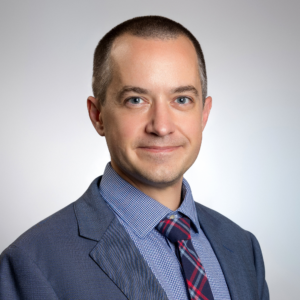
Dr. John Rolston is an Associate Professor of Neurosurgery at Harvard Medical School and Director of Epilepsy Surgery at Brigham and Women’s Hospital.
#72: John Rolston — Closed-Loop Stimulation, Seizure Dynamics, and the New Frontiers of Epilepsy Treatment
Today, we had the privilege of speaking with Dr. John Rolston, a leading voice at the intersection of neurosurgery, epilepsy, and brain stimulation.
Dr. Rolston is an Associate Professor of Neurosurgery at Harvard Medical School and the Director of Epilepsy Surgery at Brigham and Women’s Hospital. His pioneering work bridges clinical neurosurgery and computational neuroscience, focusing on how electrical stimulation can modulate dysfunctional brain networks to treat epilepsy, movement disorders, and disorders of consciousness.
In this episode, we explored the complexities of neuromodulation—what makes stimulation effective, why patient-specific targeting matters, and how brain states influence therapeutic outcomes. Dr. Rolston also shared his lab’s work on traveling waves in the brain and how these insights are transforming seizure localization and surgical decision-making. From closed-loop stimulation to stem cell therapy for Parkinson’s disease, Dr. Rolston walks us through the evolving landscape of functional neurosurgery and its future.
John Rolston 00:00And that was the genesis of the NeuroPace device, which had a good success in its randomized control trial. We see these changes in the circadian patterns of alpha power, for instance, in the thalamus. The kind of big burst of activity during the seizure. They were able to show that they traveled across the Utah Rays. The next area for, or a lot of the area for epilepsy, I think, is going to be incorporating genetics into another layer of our analysis. Welcome to Stimulating Brains. Hello, and welcome back to Stimulating Brains.
Andreas Horn 01:14In this episode, we delve into the cutting edge world of epilepsy research and neuromodulation with Dr. John Rolste, Associate Professor of Neurosurgery at Harvard Medical School and director of Epilepsy Surgery at Reed School of Medicine. Reed School of Medicine, Reed School of Medicine, Reed School of Medicine, Reed School of Medicine, Reed School of Medicine, Reed School of Medicine, Reed School of Medicine, Reed School of Medicine, Reed School of Medicine, Reed School of Medicine, Reed School of Medicine, Reed School of Medicine, of epilepsy surgery at Brigham and Women's Hospital. John's pioneering work bridges clinical practice and computational neuroscience, focusing on how electrical stimulation can modulate brain networks to treat epilepsy, movement disorders, and disorders of consciousness. His research has shed light on the significance of patient-specific targeting in neuromodulation and the role of brain states in therapeutic outcomes. We'll also explore his findings on traveling waves in the brain, their implications for seizure localization, and how this knowledge is transforming surgical approaches and neuromodulation strategies. 02:01Thank you so much for tuning in. John, thanks so much for joining in this. I know how busy you are and carving out two hours is a lot for a neurosurgeon, but for most people these days. As you know, I will have already introduced you by now. We can dive in right away. And I always ask an icebreaker question. What do you do when not in the OR or not doing science? Yeah, so when not operating and not doing lab-related stuff, mostly with my family. I have two young kids, so they are all consuming. Whenever I'm home, I love to spend time with them and play games or go to the park or do anything we can. And then after they go to bed, then I can read or I still have some friends from residency 03:01who I play video games with online occasionally. What do you play? Right now we're playing the new Monster Hunter. But we play all sorts of stuff and just a way to kind of do something while we're chatting and catching up. Fantastic. Yeah. Okay. I heard that neurosurgeons are probably better if they're good gamers. Maybe. I heard there are studies about this. That's my justification for spending so much time on it. Yeah. But I don't know if it's causal relationship though. It might be quite potential. Okay. So you were on our talk series before, which my lab organizes. It has the same name, but it's different, like separate from here. And we often talk to senior speakers to spend a few minutes on the person behind the science. And you said that when you were using the lab, you were
John Rolston young, you moved around a lot, which led to your love in books and also into computers. I think you got a
Andreas Horn Commodore and basic back in the day. Can you talk a bit about that early?
John Rolston Yeah. So my 04:02dad was in the army, so we moved around every couple of years all across the country. And when I think I was maybe five or six when we got our first Commodore 64. And those days there weren't a lot of... There were some pre-made games, but they were pretty limited. And it came with a book about how to program basic on it. And to do a lot of functions, you had to be somewhat proficient on it. So we started... My sister started programming some of the sample programs in there and I wanted to do the same thing. So I started doing it. And then that kind of sort of created this interest in computers and just the ability to create something that was so different than like drawing or sculpting. Kind of creating more with mathematics and the precision of the computer. And then we got the idea of the numbers you could use. And so eventually we got Intel 486 and started doing more stuff on that using like Quick Basic at first, 05:02QBasic and then going on to C and C++. And I was really lucky that where I was in high school they actually had a magnet school for kids to go to for more advanced type of classes. And they actually had some programming courses there. So in high school I was able to go and take actual science type classes. And it was that coupled with all the cool stuff you could do with computers and the internet was coming really to fruition at that point. So it was just really an exciting time to be into that sort of
Andreas Horn field. Do you still get to code now yourself? Yeah, not as much. So in the...
John Rolston During my PhD I coded a ton. And that was the last time I was really like coding seriously every day in real languages. And then from that point on, I was able to do a lot of things. So I think my main focus on Python has mostly been just like Matlab or Python type stuff for analysis. Occasionally I would in the past like five years write a 06:02next file for Matlab to go for a little faster. But the real coding I haven't been able to do. Although I've missed that, the flow stage you can get into with a good coding session where you can just be lost to the world, put on music and just kind of deal with everything. And I mean, I would include Matlab in this as well. But I think it's really
Andreas Horn interesting to see how much of a
John Rolston benefit I've had so much time to get into it.
Andreas Horn But that's fantastic.
John Rolston It's also nice because there's kind of a rapid turnaround. So you can do something and you get feedback very quickly about whether it compiles or works. Whereas a lot of the stuff we do in biology, we don't. So you might do an experiment with a rodent, for instance, and you have to wait like a month to see what the results are. So having that really slow feedback loop is harder for an impatient person like me to deal with compared to code where I can just immediately break something and see how it is working. 07:00And then Danny Carey, the drummer of the band Tool, is very high on my list of most accomplished drummers. And I don't even know
Andreas Horn Tool that much, but I've seen him live and it's fantastic
John Rolston drum playing. And you were a drummer in a Tool cover band. That's right. So starting in, I think, middle school, I got my first drum set. I saved up my money and I started to work on it. Along with one of my good friends from that time, he had a guitar. And so we started our own band and I taught myself how to drum and was really inspired by Danny Carey from Tool, as well as actually people like Carter Beauford from the Dave Matthews Band, who is another exceptional drummer. And so kind of trying to emulate them and learn. Back then, we didn't have YouTube videos back then, which would have been a great way to learn how to drum. So you had to watch MTV and tape something on a videocassette and then rewind it and watch it again and again and again, or go to live shows and see people. Or when you're playing as a member of a band, you can see other 08:00people playing and talk to them after their sets. But drumming is just really fun. And it also can be pretty mathematical, especially the way that Danny plays with a lot of polyrhythms. It's a real pleasure. And another way you can kind of just get into a flow state and just let the music and the rhythms kind of go. And I think that's really cool. I think that's a really cool way to
Andreas Horn do everything for you. Did you ever own two bass drums?
John Rolston I had a double bass pedal, but the two bass drums, I couldn't afford that. Okay. And then I think at some point, also in your youth, you lived close
Andreas Horn to a NASA center for a while. What was that about?
John Rolston Yeah. So when my dad retired from the military, he worked, we lived in Virginia, Southeast Virginia, near Langley, which is an Air Force base, which has a NASA center on it. And so we would be able to go on there for like after school activities and talk to some of the scientists. And they had like an astronomy club there so we could go and use some telescopes and look at the heavens. 09:01And it was pretty nice. It was pretty sort of an unexpected benefit of living in that small area was the proximity to that. Really cool.
Andreas Horn Great. How did you meet your wife?
John Rolston Yeah. So we met at a bookstore. So it was the season finale of the first season of Survivor, which was like a huge show at that time, and neither myself nor my wife watched it. So we were both at the bookstore just browsing books instead, and everyone else in the country was at home watching this thing. And so we started talking at the bookstore, and then she invited me to a party, and that was kind of that. And so we've been together ever since. So I aimed to get to Gödel-Asherbach, but I think it's not directly related.
Andreas Horn Yeah, well, it's same bookstore, same bookstore. Yeah, same bookstore, same bookstore. Yeah, same bookstore, same bookstore.
John Rolston bookstore that before I went to, there was, during my senior year, we had this opportunity to go as the same magnet school, to go to Russia as part of a kind of exchange program to present 10:02science research we were doing. And I was doing some very like low level research on the Oppenheimer Volkoff equation for stimulating black holes. So programming stuff and trying to do this simple mathematical model that was way beyond me, but I had a good mentor at Hampton University in Southeast Virginia, Kin Mong. And so we did this project and a few of us were able to go to Russia to present it at a conference, the Sakharov Conference. I'm not sure if it still exists anymore, but it was a really good opportunity to be abroad. But before I went, I went to the bookstore to get a book and was in the just browsing randomly books. And I saw this, the cover, this icon. cover of Gertl Escher Bach, which has the optical illusion of the G, the E and the B. And I was just really enamored with that and bought the book. And, you know, also liked the fact that it was combining like computer science type terminology and physics and study of the mind, which is another 11:01something that I also really care passionately about and music. So that was just like the, like written, like, you know, perfectly for me, someone who cares about math and science and music
Andreas Horn and the brain. And that, that book,
John Rolston was just really kind of set me off to the career I have now, I think.
Andreas Horn Wow, that's a big statement. And then in Russia, where were you?
John Rolston St. Petersburg. So it was St. Petersburg, and it was just for a few days, but really, really cool experience. Really cool. I've asked a lot of background questions now. You did go on to study computer science at Yale, Columbia, Columbia, yeah.
Andreas Horn Yeah, Columbia, yeah. Yeah, Columbia, yeah. Yeah, Columbia, yeah. Yeah, Columbia, yeah. Yeah, Columbia, yeah. Yeah, Columbia, yeah. Yeah, Columbia, yeah.
John Rolston Columbia, of course, yes. I think you applied to Yale. That's right, yes. I applied to astrophysics at Yale and computer science at Columbia because I couldn't decide which one I wanted to do.
Andreas Horn And then I did not get accepted to Yale, so now I'm a computer scientist. Fantastic. So you did really learn programming and logic back then, too. 12:04Yeah, yeah. Why med school? Yeah, so when I was in undergrad, I wanted to do computer science, but I had this desire to also understand the brain.
John Rolston And computer science was one way I thought to learn about artificial intelligence and how the brain works by studying computation. And at that point, I thought that if we could understand how information is processed, we would know more about how the mind works. But at that time, like the late 90s, early 2000s, I didn't know how to do that. In the early 2000s, artificial intelligence wasn't talked about at all in computer science curricula. And if you wanted to study neural networks, it was anathema. The only neural networks class we had in the university was in the psychology department.
Andreas Horn Interesting.
John Rolston And so things like deep learning were looked down upon. So it really was, I think it was a decade ahead of my time. If I had gone to school a decade later, I would have been probably still a computer scientist doing deep learning type stuff.
Andreas Horn 13:03Interesting. Yeah. Would you prefer? Would you prefer that lifestyle? Yeah, I don't.
John Rolston Some days when you're dealing with insurance companies, fighting with them, it might be better to not have to do that. Got it.
Andreas Horn Okay.
John Rolston Fast forward. Big jump. You are now the director of epilepsy surgery at Brigham and Women's Hospital and have trained across institutions like UCSF and Utah, University of Utah.
Andreas Horn Can you tell us a bit about the key mentors and turning points in that career that shaped your path? Yeah.
John Rolston So the first one was probably... Even before I got to medical school, there was a professor at the NIH when I was working there in the summers, Adrian Donick, who is from Germany. He was there with Jordan Grafman doing some research with fMRI. And so I was there working with him, kind of just helping out as like a low-level assistant at the time. But he was the first example I saw of someone who was doing... 14:05Kind of fundamental cognitive neuroscience research and a doctor. And so he would see patients. His specialty was neuroacanthocytosis. And so he would see these patients and study them, but also be studying how like audiovisual synchrony works in the brain. And I just was really blown away that you could have a career like that, that you could see people and help them on a one-to-one basis, but also work on these bigger questions. And that kind of set me off to think that maybe I could do an MD-PhD. I didn't know that was an option before. So he was really influential. And then Jason Kerr, who's now... He was from New Zealand, was working at the NIH with Dietmar Plenz, and then went to Germany to work with Frischhoff-Helmchen. And now he's there in Tübingen. And also just a genius, like really exceptional neuroscientist. And he taught me a lot about being... 15:05Having a quality of scientific output that is very measured, very well studied. And I just had a great time working with him. He kind of like helped me see like a model of like a good, solid scientist. And then fast forward to my PhD at Emory. That was with Steve Potter in biomedical engineering at Georgia Tech. As well as a co-advisor, Bob Gross, who was at Emory. At the time, he was a neurosurgeon. And I think that's... Although I never thought I would do neurosurgery and had no interest in it starting medical school, constantly being exposed to that, I think eventually might have turned me. And when I finished medical school, I think I still thought I would do... Or as I was finishing medical school, still thought I would do neurology or anesthesiology or something. But when I started doing those rotations, compared to the immediacy of neurosurgery, 16:05it was really clear to me that neurosurgery was a better fit for me as an engineer. The same reason I like computers, because you can quickly get an answer to how... You can do something and then see results very fast. You can do that with neurosurgery too. So you can actually like be in the operating room and do something immediately to try to help somebody. Versus something that's a little more slow, like prescribing a medicine and seeing how it works over weeks or months. I remember my first medicine. I was in the nursing school. There was a surgeon giving these more overview talks about things. And they talked about immediacy too, but in both positive and negative ways. You can also damage much quicker.
Andreas Horn So yeah, that is...
John Rolston It's much more direct.
Andreas Horn Yeah.
John Rolston And that is the part that I don't think I have... Probably still not very good at coping with is when you do have a complication, it is just so soul crushing to deal with that. 17:02To know that you didn't do well enough. In your job. And it's really hard. And it's something that I spend a lot of time talking with my wife and friends about.
Andreas Horn Yeah, makes sense. Yeah, it's hard. Okay. So and then in neurosurgery, what was key mentors or people? Yeah.
John Rolston So Bob Gross. He's a functional neurosurgeon at Emory. Now he's at Rutgers.
Andreas Horn Did you train with him?
John Rolston Not clinically. It was more just the research side of things. And then Eddie Chang at UCSF was a... He was a big mentor. So clinically and research. He is a great surgeon. Really calm and deliberate in what he does in the operating room.
Andreas Horn And then also a fantastic scientist. Yeah.
John Rolston And just incredible intellect and passion and the ability to transform things and motivate people to get really big tasks done. Like now his speech prosthesis work, which was based upon really fundamental contributions to the understanding of the brain. 18:02And then he's now taking that to the next translational level. That's just a huge accomplishment for one person to do. And then other mentors there. So Paul Larson, functional neurosurgeon, was at UCSF and is now at Tucson.
Andreas Horn He is just another fantastic person.
John Rolston Great surgeon. Great with patients at the bedside. Very excellent sense of humor that I adore. And I learned a lot from him about how to, you know, make a difference in the world. And I think that's really important.
Andreas Horn Yeah.
John Rolston So, you know, be a good functional neurosurgeon. Then Phil Starr, of course. He's another just like top notch physician scientist who is really just his like excitement that he feels for doing these cases, even after he's done like hundreds and hundreds. He's just so infectious when you go to his OR. Like you can just tell how excited he is to hear the neurons and perform the DBS cases and the research that goes along with it. And he's really just so focused on helping these people.
Andreas Horn Yeah.
John Rolston 19:00It's just really, I was a great role model for that.
Andreas Horn Fantastic. Yeah.
John Rolston Great. So your current work bridges surgery, of course, engineering, also computational neuroscience. You talked a little bit about the meninges. You talked about the background.
Andreas Horn But maybe what drew you to combine these quite elaborate electrophysiological things together with your surgical practice? And or where do you see the strength of it? Or, you know, what were the synergies? What were the synergies of maybe having that background to enable what you're currently doing? Yeah.
John Rolston So I think from the computational side, knowing the mathematics behind signal processing and filtering and things like control theory gives you a leg up for electrophysiology. Probably nowadays, I think the image processing is very similar. I guess benefit of having that computational background, you can apply to that. 20:02But being able to think about these signals quantitatively just made all the understanding and thinking about the electrophysiology you get in DBS or in epilepsy easier. And the opportunity to do that, the benefit that you get by being a surgeon and having that background is that you can, I think, really, really improve your ability to do that.
Andreas Horn Yeah.
John Rolston And I think really understand like what these signals are, what you're deriving from the brain and really get down to like what physically are we recording?
Andreas Horn What are we sensing? And when we stimulate, what are we affecting?
John Rolston And that more grounded understanding of that, I think, will hopefully pay dividends in how we're designing the next generation of neuromodulation in the future. We'll see if that's at all true.
Andreas Horn Yeah.
John Rolston That's my hope. Great. Thank you, Andy. Thank you, Andy. Sure. Sure. 21:00Sure. Sure. Sure. Sure. Sure. Sure. Sure. Sure. Sure. Sure. Sure. Sure. Sure. Sure. Sure. Sure. Sure. Sure. Sure. Sure. Sure. Sure. Sure. And these could then be either open loop, always active with DBS, but probably more common adaptively with RNS and the key player, at least until recently, was or is Neuropace, the device. To do that, the original concept that was introduced, I think, was to detect the seizure using electrophysiology and then to stop it. Now, this turned out not to be true. And I think people found out pretty soon after approval.
Andreas Horn But then it did work, right?
John Rolston It does work. And then how it does work seems to be very complex. And I think you might be the world expert, at least, of getting a hunch of how it seems to work. 22:03I understood from your talks best so far what the current status is.
Andreas Horn Is that possible to summarize?
John Rolston Sure. So with epilepsy, you're absolutely right that if you can find the seizure focus and resect it, that typically is your best shot of making someone seizure free. And it's not perfect, which is one struggle we have as surgeons, is that the long-term seizure freedom rates for something like a temporal lobectomy, like 10 years out, are only about 50%, which is not great. We prefer to be far higher than that. It's hard to talk to a patient and say that we have a 50-50 shot of giving you long-term durable seizure freedom with this. So it's good. There are side effects. There can be issues with the surgery. So we're working on ways to make that safer and make that more effective. 23:00Neuromodulation is a good alternative if you can't do a resection for people that have bitemporal epilepsy because you don't want to make a patient HM, for instance, or for people who have generalized epilepsy where there is no place to resect. So neuromodulation can be helpful in those cases. It's still not good enough because it can reduce seizures for a lot of people. But don't worry. It doesn't work for everybody. In my hands, when we looked at our data, about a quarter of people just don't respond. So might as well never have done surgery. And that's kind of true with the national averages, too. I think your rate is better than the national average, to mention this for the listeners. But still, it'd be better if it was 100% of people that responded. So we're still not as good as we need to be. And then the amount of seizure reduction is not as good as we want it to be. So what patients want or people want with epilepsy when you talk to them is they want to be seizure-free. Because then you can drive and you can go to school and not worry about working. 24:03And it just makes your life so much richer. But when you're still having seizures, even if you're having half the number of seizures, it still makes a lot of that hard. So it's better. It can reduce the risk of sudden unexpected death and epilepsy when you reduce seizures. It makes life better. But it's not as good as that seizure freedom. So we're still chasing that and trying to find ways. To make neuromodulation perform that way. For the closed-loop neuromodulation, like you're talking about, when that was developed, it was first thought of that you would find the seizure focus, this discrete patch of brain. You would slap an electrode on it.
Andreas Horn And then when that electrode detects a seizure, it would then go into basically a defibrillator mode to try to shock it out of the seizure. And that was based upon a lot of intraoperative recordings people had done, where you're doing electrocorticography during a surgery. And if you sense the seizure, you can actually deliver a big jolt of stimulation to stop that seizure. 25:01So that works in the OR?
John Rolston So that works in the OR. So if you see a lot of after discharges, you can stimulate to stop them or suppress them. If you see a seizure, you can sometimes do that. So that was a phenomenon people had observed. So they wanted to kind of bottle that and put it into a ready-made device that could just do that autonomously. And that was the genesis of the NeuroPace device, which, you know, had a good success in its randomized control trial. The post-approval study will be out soon, if it's not already, which is also showing that it's working very well in the wild, outside of the context of a clinical trial.
Andreas Horn But it seems to be working in a really different way than we expected. So a few of the things that don't quite add up to that original picture of like the seizure stopper is that you don't necessarily have to be on the seizure focus as much as we thought. And that's a good thing. And that's a good thing. So that's one kind of question, like, where do you have to stimulate? And another one is that we're stimulating way more than we're detecting seizures. 26:01So most people are getting a thousand or two thousand trains of stimuli per day. And that's how many detections are triggering stimulation. But they're not having a thousand seizures per day. So why is all this? Is that extra stimulation necessary? Is that what's doing some of the work here?
John Rolston And then we see a lot of examples where seizures just become more rare. To begin with. And it's not that they're being stopped every time. It's that they're just kind of not occurring. So there's some sort of plasticity. And you also see that in the long term outcomes for neuromodulation, where initially in the first few months, it's okay. But over years, it gets better and better. And that's again, not a that wouldn't be the case if there were a pure seizure stopper. That would be kind of on off type thing.
Andreas Horn So a lot of stuff is making us question about how this this really functions. And probably because of that long term effect, maybe plasticity is doing a lot of the work for us. And so our lab and a lot of others are trying to understand what that plasticity is and how we could use that for other diseases or to make the neuromodulation work better or faster for people. 27:06And then if I understood the work you did with Daria Anderson,
John Rolston I think you analyzed retrospectively whether simulations during states that were more fragile or more, how did you call them? Low risk and high risk states. Low risk and high risk states. So if you stimulated more in low risk states, that led to bettering of like reductions of seizure. If you stimulate more in high risk states, it led to worsening.
Andreas Horn Is that? Yeah.
John Rolston So this was inspired by Vikram Rao's work and Sharon Chang at UCSF. And so they had started looking at these different risk states by looking at the frequency and clustering of interictal epileptiform activity. So the kind of bursts of seizure like activity, the kind of bursts of seizure like activity between seizures. And they were able to categorize the ongoing activity of the brain into these states that seem to be lower risk of generating a seizure versus higher risk of generating a seizure. 28:05And then they started finding that stimulation behave differently in those two states. That changes in parameters in one state might have a deleterious effect and then another state have a beneficial effect, the same changes.
Andreas Horn And so that inspired Daria, who is also just a fantastic scientist.
John Rolston And now at the University of San Francisco. Sydney to look at this in our patients. We had a nice cohort at the time. So she did the same sort of stratification of risk states and then started looking at when the stimulation was happening and long term, how that drove people's outcomes. And so it looks from from that analysis like stimulation in those low risk states when it was more preferentially clustered there, those patients tended to do a lot better. And I think the the most striking figures of all the ones in her papers, there's a polar plot that shows kind of a polar histogram of when the stimulation is happening. And you can really see that it's on this transition from these low risk to these high risk states that you see all the responders have most of their stimulation clustered. 29:05And whether that's a product of like how the detection is working or where the detection is being occurred from, it seems to be some evidence that maybe stimulation in these states is is better. We're trying to replicate that in a larger group now with our one that we have. And we don't know for sure what the answer is or how to use this yet. But it's really it's very compelling preliminary data to put us on hopefully on a fruitful path of investigation. Great. Really cool.
Andreas Horn So what is your take on OpenLoop?
John Rolston We talked about RNS and then like OpenLoop DBS.
Andreas Horn Maybe still newer kid on the block, block at least by numbers. And they're typically would implant or many people would implant in the thalamus, sometimes also other targets. What's your take on that? 30:00Which targets you prefer, maybe for which disorder?
John Rolston Although I know that's hard to answer in a few.
Andreas Horn Yeah, sure. So yeah, so yeah, OpenLoop DBS seems to work really well, too.
John Rolston And when you look at the the randomized control trials like Sante, which was anterior nucleus DBS versus the pivotal trapezoid, or neuro pace, the outcomes are pretty similar between the two groups with the the more registry, which is the Medtronic registry. Looks like there are some differences in which patients are most appropriate for anti stimulation in terms of where their seizures are occurring. But the I think the the data is interesting in that maybe the right to play devil's advocate. We've never really shown that responsive neurostimulation needs that responsive. Mm hmm. So no one's ever done the clinical trial where they they purposefully trigger stimulation off of things that aren't seizure like activity or change that mode of the device into a continuous mode to see how that would affect the outcomes. 31:05If Darius work is right, then one of the reasons that DBS could work is that you are doing a lot of stimulation during these low risk states versus the higher risk ones, which may get you to the same spot, whether or not it's being being triggered by anything.
Andreas Horn Yes. So I it's it's really interesting to think about what's going on in the brain for these different paradigms of stimulation and what exactly is happening on a neuroplasticity standpoint versus virtual lesion standpoint, which may be happening with a lot of stimulation.
John Rolston Mm hmm. Um, so I don't know ultimately where we'll end up, like what will be the most useful one. Um, but the fact that we have more opportunities, more tools is good for us to have. And then remind me in our and as we you, I think people are doing thalamic leads. But that hasn't been from the beginning or hasn't been like isn't always the case. But with DBS, it's mainly thalamus.
Andreas Horn Yeah. Yeah.
John Rolston So so the the DBS one, the clinical trial, like the class one evidence we have is anterior nucleus of the thalamus. 32:04So that one's FDA approved. That's the main one for the RNS. All the the clinical trial data was for non thalamic targets, although people started implanting for several years now, thalamic targets with RNS. With good results. With good results.
Andreas Horn Yeah.
John Rolston And so particularly. With the targets like the central median nucleus, which is the subject of two clinical trials right now, one with Mark Richardson doing a lot of the work on it with the novelist trial.
Andreas Horn Um, and so that's um, it was interesting because we didn't know or many of us didn't know if we would be able to detect seizures in the thalamus to start with.
John Rolston Um, although the older data suggests people that have done depth recordings could see that. Um, so we shouldn't have been so worried, but you can you can see the things you can detect it. And then you can have this neuromodulatory. Effect from thalamic stimulation, even when it's in these short trains like you get with RNS versus the continuous stimulation you get with DBS.
Andreas Horn And now we're in this, um, uh, like kind of new frontier of where is the best place in the thalamus to stimulate? 33:05Um, how personalized is that going to have to be from patient to patient?
John Rolston Um, and there's really like really beautiful work from Yosef Parvizi at Stanford, where they've investigated many nuclei in the thalamus and showed a preferential involvement of some nuclei at the exclusion of others. And. Some. Are earlier and some are later. And using that as a, is a, might be a way to help guide you to find the perfect spot in the thalamus for this person.
Andreas Horn Cause it's, it's interesting.
John Rolston It's like right now, it seems there are so many open questions that the, the winter simulate, and even the, where to stimulate seem to be very nebulous. And it might even, you know, I think. I don't remember who it was. One surgical. Uh, colleague wants to, it seems like no matter where you stimulate or when you stimulate.
Andreas Horn It helps, right?
John Rolston Because the effects are there clearly. Right. Um, and that's probably not true. Um, there, there, there are sweet spots as well. I'm sure. But, um, it's, it's going to be, it takes some work to find out these things. 34:02Even STN DBS is being tried sometimes in epilepsy sometimes with great results. I think. Right. So, yeah.
Andreas Horn And it's, um, it's a really, uh, interesting phenomenon that, that you see stimulation almost anywhere having some beneficial effect and it seems to. Yeah.
John Rolston On average be roughly the same across all these different methodologies of doing the stimulation. And even VNS isn't too far off from what you see with DBS and RNS. So maybe there's, um, you know, what it could be that some of this is driven by more of a, um, just generalized response of the brain to any sort of barrage of input.
Andreas Horn Yeah.
John Rolston Um, and I think like even John Hughlings Jackson described a patient where he would. Um, do some sort of sensory stimulation for the patient to try to suppress a seizure.
Andreas Horn Interesting.
John Rolston Um, and that's kind of like, uh, endogenous, um, neuro excitation because you're getting a sensory input to trigger neurons to fire. 35:03Um, but you can imagine that because everything's so well connected, if you do, if you drive something really strongly, almost no matter where it is that that can start to propagate and this activity does tend to propagate and awake people to large swaths of the brain.
Andreas Horn Yes.
John Rolston Maybe that's enough to just.
Andreas Horn Yeah.
John Rolston A seizure out of its, whatever it was doing. And then, you know, maybe the, a lot of the heterogeneity we've seen response is gets down to like, you know, how close you are to the actual seizure network or how well connected you are to it. If you're more strongly connected, maybe that, that effect you're having is just stronger and better able to suppress the seizure. Um, uh, or it could be as you know, more about the time you like, maybe just had to be earlier into it than later.
Andreas Horn Um, so, so really a lot of interesting questions, but, um, Which frequency is VNS normally for accuracy?
John Rolston Um, VNS. You can customize it. And like they'd actually do with DBS now, they tend to do cycling, so they'll be on for a minute, then off for five minutes or so.
Andreas Horn When they're on, is it high frequency?
John Rolston 36:01Not as high as DBS.
Andreas Horn Yeah, DBS is the highest one.
John Rolston And even for RNS, it's still an open question of whether low frequency or high frequency is the best one to do for that. Great. And then Medtronic just got FDA approval for closed-loop DBS in Parkinson's disease.
Andreas Horn But if I'm informed correctly, they were smart and also covered the use in epilepsy in theory under it. Do you think this may change things or potentially become a new way of, like RNS, do DBS with Medtronic systems?
John Rolston Maybe. It'll take a lot of work to show that it's beneficial before people start adopting that. But we are surprisingly finding a lot of the same kind of changes in beta and alpha frequencies in the thalamus for epilepsy, as we're seeing for movement disorders. And so triggering or tying stimulation to those frequencies might be beneficial, but I think it's really early to know for sure.
Andreas Horn Makes sense.
John Rolston But cool that we have the option to do it.
Andreas Horn Yeah, absolutely.
John Rolston 37:00So your lab's main focus is epilepsy, but it's also, I think, methodologically, electrophysiology. You're really wizards in that, but you do a lot of imaging too, and you did for a long time. You did investigate patient-specific connectivity versus normative connectivity, and maybe also, generally, the use of connectivity in epilepsy surgery.
Andreas Horn Do you want to talk a bit about that? Yeah, sure.
John Rolston And so this is a lot done with Chris Butson, who was the mentor on my K23, another great mentor after I started my first job. And we still talk routinely, mostly about politics now. But he is an imaging guru with connectivity. And one of his PhD students, Chantal Charlebois, really spearheaded that for the RNS patients. And she was the one who was the first one to do a lot of research on the RNS clinical trial patients to look at how informative that structural connectivity would be. And it was her, she's the one that kind of discovered this phenomenon that where we put the electrodes just anatomically 38:01wasn't explanatory in how well patients were responding, whether they responded or not, which had been shown before in the main RNS clinical trial patients where they found no real difference in people that were well-targeted in hippocampus versus not. And then she looked at normative structural connectivity, and didn't see much there when she started doing more cross-foundation. Connectivity from the electrode to...
Andreas Horn Yeah, just to see it generally.
John Rolston And then she tried it with patient-specific connectivity with DTI and was more successful with that. And so, again, we're trying to build that out to a larger data set to see how robust that finding is. And maybe with better connectomes, it could be something you could do with normative. But there's a lot of evidence that the structural connectivity, the structural connectome of patients with epilepsy is different than a person that doesn't have seizures. And so there's kind of like two possibilities that we're exploring now. 39:00One is that there are... That is the electrode location within these networks that's going to drive someone to be a responder or not, and we just have to be better at targeting. The other possibility is that because there's so many changes in the connectome preoperatively, that there are going to be people that are just going to respond to RNS because of their connections.
Andreas Horn Yeah, yeah, yeah.
John Rolston Kind of, again, no matter where you put it. It's more like a brain type.
Andreas Horn Yeah, yeah.
John Rolston So maybe... And we see that with resections, that there may be people that, based on the preoperative connectome, are more prone to do well postoperatively than others. And it could be a mix of both. And maybe there's people that are fated to do well with RNS based upon their connectivity and people that are fated to do poorly. And maybe that's just a way that we're not phenotyping them correctly right now.
Andreas Horn Yeah.
John Rolston Based upon their seizure semiology. If we had that structural connectome as an ingredient, we could do a lot better and say, oh, this person has this subtype of temporal epilepsy where there's no hope of RNS, they need to do DBS or they need to do laser ablation somewhere. 40:00So we're still trying to grapple with that right now. But the improving tractography we're getting, the improving resting state connectivity you can get nowadays, all that's going to be, I think, really helpful in taking our epilepsy surgery to the next stage. And that's going to be a really important step for us to be able to get to that level.
Andreas Horn Did it already make it into clinics in your practice somehow?
John Rolston Not a ton. I mean, we're getting better about localizing the electrodes and more thoughtfully trying to target them routinely. Where it has been really useful is thalamic targeting, which we're doing a lot more for epilepsy, particularly in the central median nucleus, which even in the past decade has gone from people mostly using indirect coordinates to now seeing this intermediate nucleus and now trying to replicate a hot spot found in the literature. That because it's more homogeneous, I think it's much more ready for prime time than the RNS in the temporal lobe, which is still hard to do. ! 41:16! Yeah, and this is all inspired by Maxine Baud and Vikram Rao at UCSF. So Max would sit near me in Eddie Chang's lab and he had this beautiful Nature Communications paper where they started looking at rhythms in the RNS data, not just circadian ones but multidien rhythms, so ones that were every two weeks or every month. And they showed that all these patients would have these longer term rhythms that made their seizures more or less likely. And when you talk to the people with seizures, they'll tell you this too. And it's just a really beautiful way to kind of chronotype the different seizures we see. So we've been following this and looking as well. We have done it with DBS patients and RNS patients. We see these changes 42:05in the circadian patterns of alpha power, for instance, in the thalamus, as well as the aperiodic exponent. So looking at the slope of the power spectrum, and that tends to vary from day to night too. And that's been really robust in pretty much every patient we've looked at in most of the thalamus and the cortex too. And it's not too surprising based upon prior EEG work showing like sleep-wake differences in the power spectrum.
Andreas Horn Yeah.
John Rolston But we are... Our finding, and across a few different patient groups now, is that people that tend to have a more conserved circadian variation in these parameters tend to have the better outcomes or better seizure control. And the people where it gets kind of spread out or less variable, those tend to be people that are suffering more. And so what we don't know now is whether that's 43:02because the sleep is so much more likely to be a cause of the disease or the cause of the disease.
Andreas Horn Yeah.
John Rolston And so we're looking at the results of the study that we're seeing that sleep is so much better in patients that have good seizure control, or whether they're getting better sleep and it's related to that, or some other phenomenon that we're catching in a different way. People have shown a lot of connections between sleep and epilepsy already. So there is that scientific underpinning of it, especially when involving the thalamus.
Andreas Horn So it kind of makes sense as a story, but we just need more data and more understanding of the mechanisms to know what to do with that.
John Rolston But in the best case, it could be a really cool biomarker to follow.
Andreas Horn Yeah. Yeah.
John Rolston So that's a really good data set to look at and kind of stratify people. Not yet clinically there.
Andreas Horn Yeah.
John Rolston But now that if we have more patients with DBS and we're capturing this with the percept device, that would be a really good data set to look at and kind of stratify people.
Andreas Horn Very nice.
John Rolston In your recent and also upcoming work, you've explored traveling waves in the brain using, I think, both uter arrays in the past, uter array recordings in humans in the past. And then now you also look at cortical potentials and are interested in similar questions.
Andreas Horn Yeah.
John Rolston So I think that's a really good data set to look at and kind of stratify people.
Andreas Horn Yeah. 44:01So you have a lot of people who are interested in these two potentials and are interested in similar questions. What are these findings about? What's a traveling wave? Yeah.
John Rolston So the traveling wave is, and this is Elliot Smith, who is now a professor at the University of Utah, another genius who is working first with Samir Shaikh and Kathy Chauvin at Columbia. And then we were lucky to recruit him back to the University of Utah. And so he had this insight from looking at seizures. That when you look at the uter array, you can see these two different patterns. when you look at these ictal discharges, so the kind of big burst of activity during a seizure, they were able to show that they traveled across the Utah Array. So if you look at multi-unit firing, so single action potentials, you can see this rippling across the array in time. And then if you look at local field potentials, you can see a similar phenomenon. So it's present at both the single unit as well as the multi-unit as well as the LFP level. So a pretty robust finding of these barrages of activity that are shooting across the Utah Array. 45:02And Elliot's big insight was to start looking at interictal discharges, which are similar to ictal discharges, same kind of time constant for them, but happen sporadically between seizures, maybe a couple of times per minute, maybe once in a while. This is much more rare. And they tend to be isolated, like one spike, sometimes a couple of spikes. So he started looking at these on the Utah Arrays too. And you get, you know, thousands and thousands of these interictal discharges. And then he mapped out
Andreas Horn which direction they were traveling. And you can plot this out. And, you know, really interesting
John Rolston findings. One is that, first of all, they're traveling waves. So the interictal discharges were in fact, both at the multi-unit activity as well as LFP level, traveling across the Utah Array. Didn't have to be that way. They could have all just popped up all at the same time, especially if they were driven by Thalamic or something else, they just all popped there. But they're all traveling. The vast majority are traveling. And then the other thing that didn't have to be this way is 46:00that they traveled in a consistent direction. So that they, when you see them and you plot out the vector, it seems to be the same way every time. And so that also, they could have been randomly oriented, but they weren't. And then what he, what he's finding is that they tend to be in the same direction. And sometimes they'll be in the exact opposite, like 180 direction, which is really
Andreas Horn interesting too. But when you look at the direction that they're traveling and you get, you know, thousands of these things, they're all in the same direction. And so that's a really interesting
John Rolston thing to see. And then the other thing that I think is really interesting is that they're all traveling the same way. They tended to all be pointing toward the seizure onset zone in these integral discharge zones, which was really cool and unexpected. Jin Yu, who was at Cornell with Elliot, they had a
Andreas Horn computational model of this that explained perhaps what was going on, which is that during seizures,
John Rolston you create these large barrages of neural activity, which induce kind of persistent plasticity that kind of trains the brain in how to get the right amount of energy to the right amount of energy to this activity from one part to the other. So that when you have any sort of like snowballing amount 47:01of activity later, it can just follow that, that pathway that's been trod by the seizure before. And so you get these, these, these consistent bursts that tend to go back toward the seizure focus. And then occasionally the, the opposite direction too, because that's also potentiated from the seizures. So our, our thought was to, to kind of use this to our advantage and then have a better way to map out the seizure onset zone because integral discharge has happened so often you wouldn't have to wait, you know, three days or a week to see seizures. You could just watch for an hour and see a hundred integral discharge and then say, okay, I have a large sample size all pointing to this one spot. That's where I'm going to go. And it might even help you if you had multiple either Utah rays or things like them triangulate the seizure onset zone better. So even if you were undersampled, as long as you have like three plus electrodes, you could then find where things are coming from. So we were really excited about this. The NIH has been really good at this. So we're, we're still don't have any more money to look at it, but we 48:00then went on with one of the residents here to look at it with integral discharges at SEG level, and he was able to show traveling waves there. And then one of the MD PhD students at the University of Utah showed it with cortical-cortical evoked potentials, which are kind of in a sense, like triggered integral discharges, which also show this traveling wave phenomenon. So you, you, you simulate in one side and then the recording side you would see.
Andreas Horn Yeah, it's in the kind of propagating.
John Rolston So, so this is somewhat prevalent, prevalent finding that we, we have, which is probably useful. And then also really cool is Josh Diamond at the NIH with Karim Zaghul found something similar using grids and larger scale recordings, but also saw traveling waves of integral discharges. Although their directionality was a little different. That might be because of how far they are from the seizure focus or so. But multiple labs are finding this and it seems really cool and really useful. And something that someone's going to crack eventually, but it was just a really amazing finding. And the videos that Leigh Hochberg recorded were just so breathtaking. When you see the neurons do what they're doing, this is really nice. Do we know whether traveling waves could be physiologic too? Is there evidence from maybe animal labs that that could be a normal thing? Yeah, so there's a lot of evidence that traveling waves are prevalent in the normal functioning cortex as well as hippocampus, and people have recorded them in humans as well as 49:25animal models and they tend to be involved in normal cognitive processing like memory, vision. And so that sort of ability to transmit these traveling waves is present, but being co-opted probably by the seizures and being sort of taken advantage of. It's probably much easier to record them with seizure activity than non-seizure.
Andreas Horn Yeah, because they're huge.
John Rolston Huge, yeah.
Andreas Horn Okay.
John Rolston Huge and they involve many more cells.
Andreas Horn Yeah.
John Rolston All right. So then, you've done a lot of work around thalamic stimulation, also targeting the central 50:01median nucleus, and you've talked briefly about it, but we had talked about the ANT a bit more. For generalized epilepsy, I think the CM is at least canonically thought to be the better target.
Andreas Horn What are a few of the key lessons from your efforts in targeting that?
John Rolston What are the...
Andreas Horn Yeah. insights you want to share? Yeah, so the centromedian nucleus is really fascinating.
John Rolston It's one of the intralaminar thalamic nuclei. It seems to be one of these areas that's kind of used for everything. So it's being used for epilepsy, for disorders of consciousness, like mentally conscious state, for Tourette's syndrome. So it's just kind of this idea that it can solve many of the problems of the brain. And so we should treat it with a high dose of
Andreas Horn skepticism. But the same is true with STNRG. Exactly, yeah. Yeah, because it's probably
John Rolston because these subcortical areas are just so well connected that they can drive a lot of activity. 51:03So the CM, because we study so much epilepsy, we were involved in a clinical trial with Neuropace for Lennox-Costeaux syndrome. And I was really lucky to have Aaron Warren join the lab as part of this, and then to stay on and be a huge researcher. And so he's a really great resource for us and just a tremendous asset to the entire university here, because he's a genius. But he was involved in the DBS for Lennox-Costeaux syndrome trial in Australia, Estelle. And he did two really important things. One is that he helped devise a way to visualize where the CM was using an MP2 rage structural sequence, which is very similar to a white matter null or F-gator. And he did a lot of work on that. And he did a lot of work on the ! 52:23We started looking at historically indirect targeting of the central median nucleus. So just using ACPC coordinates and then where those electrodes would be versus where the CM actually is on MRIs. And it turns out that if you use that indirect targeting, you end up usually lateral to the CM and maybe a little anterior sometimes with the trajectory. So it might be that people were in the wrong spot, like not really hitting the CM well, but still getting good results because they were hitting this hotspot in the VL valumas that Aaron has identified. So it's just really a nice story about how we sometimes will put electrodes where we think is a good spot ends up being just right by 53:04accident. Kind of like STN, like maybe it's the hyper direct pathway. Maybe it's not actually the STN or the VIM. Maybe it's actually the DRT and not really the VIM.
Andreas Horn I mean, in this case, better imaging could hurt us, right? Yeah, exactly.
John Rolston Because if you give it back to the CM, that's the danger there.
Andreas Horn Yeah, totally. So we'll see. But we still need more data to find out exactly. So we'll see. But we still need more data to find out exactly.
John Rolston how everything is connected. Of course.
Andreas Horn Yeah.
John Rolston But it's a really intriguing area of the thalamus. We see great recordings of seizures within it. But maybe the sweet spot for getting the benefit might be outside of it. And people are doing stimulation of VL, which is also the VIM basically, and seeing good results for epilepsy when they're deliberately stimulating that too. And then in ANTBS, I loosely remember that Fred Schaper has a paper from his time in Netherlands where he showed it might be MMT, so mymyelothalamic trachea.
Andreas Horn Yeah, exactly. Yeah, exactly. Yeah, yeah. Do you have thoughts on the sweet spot there?
John Rolston Yeah. So that's people like Bob Gross and other people have studied with the ANTBS, 54:01where the best active contacts were, and they tend to be really close to the MTT. And so whether that means it's like that anterior inferior quadrant of the anterior nucleus, which is right next to the MTT or the MTT itself, we don't know yet. But it's really highly plausible that it's just that pathway, that tract that we need to be stimulating to have the MTT.
Andreas Horn Yeah. And it also makes sense anatomically, like if you were to disconnect that tract by high
John Rolston frequency stimulation and lesion it virtually, that could prevent that sort of propagation of that voluptiform activity.
Andreas Horn Interesting. So it makes sense plausibly.
John Rolston Anyway, so we'll see. We'll see.
Andreas Horn Exactly.
John Rolston When I entered the room for the interview today, you were just looking at a new paper on stem cells. Oh, yeah. And told me that you're also involved in a trial of stem cells. So you're also involved in a trial of stem cell therapy. We had Todd Harrington on the show who already maybe gave a good introduction for this for the listeners that are not into the topic.
Andreas Horn 55:00But can you briefly summarize maybe what your trial is about or what the roughly the new one is or whatever you want to?
John Rolston So there's always been a lot of hope for stem cells and gene therapy for Parkinson's. And with that hope, a lot of failed clinical trials. But now we're in an era where we have better genes. We have better genes. better tools and a better shot at actually making a more sustained difference, we think. The trial that I'm doing is with Ole Isaacson and Penny Hallett, also Jim Schumacher from McLean, built upon work they've been doing for decades now to use midbrain dopaminergic neurons to treat the symptoms of Parkinson's. In this trial, it's induced pluripotent stem cells, so from the patient's own cells, they can turn them into stem cells with the Yamanaka factors and then regrow them to be midbrain dopaminergic neurons. And then I implant them into the 56:01post-conventional butamine, and then over time, they miraculously wire up to the correct spots, and then that provides dopamine to the motor part of the basal ganglia and can help alleviate a lot
Andreas Horn of the symptoms. And so the results are just fantastic.
John Rolston I haven't done many patients yet, but the results are great, and you can see it on DAT scans, you can see it in the UPDRS scores. So it's really promising. With the IPSC version, you don't need immunosuppression because it's the patient's own cells. There's no ethical quandary because it's not embryonic stem cells. So there's a lot of advantages to it. We were discussing earlier, to your point, it's still not connected in a way that can provide computational power.
Andreas Horn Yeah, it's still not connected to the brain. So the normal midbrain dopaminergic neurons are part of an
John Rolston exquisite circuit that is involved in all sorts of reinforcement learning and everything, or not getting that kind of coding we think.
Andreas Horn And they're not in the striatum, they're in the nigra, right?
John Rolston 57:01In those ones, yeah. The original ones. Yeah. And actually, when they were developing this, they implanted both spots, and eventually they
Andreas Horn would find their way back to the... Oh, they would?
John Rolston Yeah. But it just takes a lot longer. So if you just put them right where they need to be innervating, it's faster, of course. Because that could... It could, yeah. I guess if the presynaptic cells would know how to re-engage, then it could. But I think that would be the eventual dream would be to be able to replace the cells that have died off and then have them connected to their presynaptic cells the same way they were before. We still don't have the tools to do that, but if we can at least provide a really consistent dopaminergic tone that maybe has some sort of intrinsic variability from whatever's connecting to it, that could be a good thing. Yeah. It could go a long way to resolve a lot of the symptoms patients have. Absolutely. Yeah. And it'd be a one-time thing. It wouldn't be a continuing battery changes or program. You just kind of do it and it'd be done. Totally agree. Yeah. And it's probably way too early to speculate about disease modification. 58:02But one thing that Jens Voigtman once said when I had him on the show was to, if you have a few more, or if the remaining biological ones are not as... Overtaxed. If we could just give them a break, essentially.
Andreas Horn Yeah. By having additional ones that could potentially also have such an effect, right? Yeah. That's really provocative. And yeah, really interesting. We'll have to see how protective it
John Rolston is. Of course. And with this, we also have the advantage of being able to do animal models that are really reliable. And so you could test a lot of that there. That is true. But it's a really nice trial and a really nice therapy that I would never have... When I became a neurosurgeon, it was DBS. that was, you know, DBS and electrodes and electrophysiology, and then to have all these new amazing tools that just open a new way to treat people. Yeah, a new way to explore the brain is really, really nice. And we're seeing the same thing in epilepsy too. There's gene therapy and cell therapy for epilepsy that are coming online. We're learning more about the genes that are involved in it and seeing things like post-mitotic mutations in the brain. So like, you know, heterozygosity of a gene in the epileptic areas versus non-epileptic areas. 59:17All that's just like a whole other degree of another axis that we can analyze people on, which is really cool. It's a good time to be in neurosurgery, I guess. And speaking of new tools, I haven't asked you anything about focused ultrasound surgery. I just talked to Rhys, too. Not released yet, but your dear colleague here who does a lot of that. He also did FAS in Utah already, I think.
Andreas Horn And then coming here, of course, as well, what are your general thoughts of that, maybe the future of it? Yeah, so it's a really interesting tool
John Rolston that in some ways is inferior to DBS, many ways inferior to DBS, but in critical ways, much better. 01:00:00So the critical way is that there's no incisions. And patients really are hungry for that. And so when we started doing it in the University of Utah, we got the machine. We had been doing maybe a handful of essential tremor DBS. DBS cases every year, mostly at Parkinson's. And we got this new focused ultrasound machine. And then we had referrals through the roof for people that wanted focused ultrasound. We would see them, and we would talk about DBS. And some of them would switch over to DBS. But it was really clear that there's just desire for that disease for a less invasive way to treat it that does not translate to being OK with DBS, even though we sometimes think of DBS as being minimally invasive to a patient, to a person with essential tremor, still drilling holes in your head and putting this device there. And that's just a nonstarter for a lot of people. So the focused ultrasound really could capture that population of people. 01:01:01We've gotten a lot better at it over time, controlling the side effects and refining our targeting. Reese has led the way in that by doing so many and with such good outcomes. I think the next lead in that is really focused ultrasound. So we're really focused on the DBS and the DBS. And we're really focused on the DBS. And we're really focused on the DBS. And we're really focused on the DBS. And we're really focused on the DBS. And we're really focused on the DBS. And we're really focused on the DBS. And we're really focused on the DBS. And we're really focused on the DBS. And we're really focused on the DBS. I think the next level will be to find ways to make minimally sized lesions to get the benefits and reduce the amount of side effects we see to the extent possible. What Reese and I don't know is how small you can make that lesion to have an enduring benefit. Whether you need a really big one to make it last forever, in which case the side effects are just part of disconnecting the cerebellum and that's just the price you're gonna pay. Or whether you could be really hyper-focused and just get the, you know, maybe the DRTT right where it enters somewhere and then that's enough. But with more patience, more time, we'll figure a lot of that out, I think.
Andreas Horn Is it typically if you have smaller lesions that you do get an effect but it's not as enduring? Yeah, that's what we seem to see.
John Rolston And that's our kind of experience of it. 01:02:04Whenever we take a person back for a recurrence it's because we think we're too small. When we make it bigger, the stay is gone. But maybe it's because we were in the slightly wrong spot to begin with.
Andreas Horn Yeah, yeah.
John Rolston We certainly, there are some patients where I do a lesion that just gets to like, you know, 49 degrees centigrade and their tremor's almost already gone before we do a bigger one. But there are other people where I don't see a great response until you get to like, you know, 54. And so maybe that's again, targeting's a little off in those patients. The other thing that I wonder is that it could be that there are two, that the, whatever the target is might be, more diffuse in some patients than others. So it could be that if it is a tract like the DRTT, for instance, and some people that might be really tight and you can hit it with a small, a couple of millimeter lesion. Other people might be kind of fanned out to the point where it takes a big lesion to get enough of it to have a good effect. So there's so much more to learn. And essential tremor hasn't been studied nearly as well 01:03:01as Parkinson's or any of these other diseases as far as the underlying like physiology of it.
Andreas Horn That makes sense. Yeah. Yeah, same for, Tony is very unknown. Oh yeah, totally. Yeah, yeah. Yeah, yeah. Yeah, yeah. Yeah, yeah. Yeah, yeah. Yeah, yeah.
John Rolston Totally.
Andreas Horn Yeah. Yeah, and Rhys is really optimistic
John Rolston that focused ultrasound can do a lot of good for dystonia too.
Andreas Horn And he's done a few patients which look really good afterward. So really a lot of unknowns, but a lot of cool science that can happen. And then I guess for the, like the wild and big future of this general fast fields, right?
John Rolston There's blood brain barrier opening in both ways. I think also as a biopsy, like of course to apply drugs, there's non-invasive forms.
Andreas Horn Yeah.
John Rolston So this exciting potential idea with addiction maybe. Any thoughts on what your bet is on what
Andreas Horn would be the next big thing or what are you most excited about in this?
John Rolston Yeah, I think we're at the hype or one of the hype phases right now where people are starting to apply it to everything. 01:04:01What troubles me a little bit is a lot of these therapies seem to be like that you do low intensity focused ultrasound to an area and that will somehow magically cure whatever disease is associated with that area without much more thought into like what's actually happening with the physiology. I think those are probably destined to fail. It'd be too good to be true if you could just like kind of shake part of the brain and cure a disease. But there might be more things with particular like, you know, BBB opening, like you said, or using it as an excitatory way to evoke activity in certain spots and use that as like a really deep neuromodulatory tool to complement something like TMS. I think those might be more fruitful in the future. Like I'm sure we can excite cells with focused ultrasound, which they've been doing since like, you know, the earliest experiments in the 60s. But how useful that's going to be, I think, still up in the air. 01:05:00I think we're going to see a lot of small trials like we did with DBS for like five patients that are going to be cured or perhaps even more.
Andreas Horn Yeah.
John Rolston That's going to be sort of whatever. And then we're going to try bigger ones and not work. So we'll see a lot of that. But once we get through all that noise, we'll see what the actual use is.
Andreas Horn Yeah.
John Rolston Exciting. OK. So I want to be mindful of your time. But I can close with rapid fire questions. Sure. You can also speak as long as you want, of course.
Andreas Horn But how does the field of neuromodulation and functional neurosurgery of the future look like? Yeah.
John Rolston I think for neuromodulation, I think the next big change we need to make to make is from this kind of like really big, non-specific stimulation fields. By big, I mean like, you know, a few millimeters like we do with DBS to something that is much more precise and patterned. So being able to control smaller groups of cells in a pattern that's more physiologically appropriate would be like the way to drive our control to the next level. 01:06:01With DBS, I think we're kind of going for things that can be either fixed with something that's like a lesion almost, like, you know, the STN or GPI, where you can just shut it off with a bunch of stimulation. That might not work for all diseases. There might be some that is not just shutting off an overactive part that can cure it. You might need to replace that missing activity or aberrant activity with something that's more expected by the brain. And that would require something that's not just... like a blast and hope like DBS, but something that can really control smaller groups of population and get them to a more normal activity pattern. So I think that would be like the next level for neuromodulation. And what... So you're saying not yet speaking the real language, but doing something more fancy than before.
Andreas Horn Yeah. Yeah.
John Rolston So some intermediate. So like with, I think even with like a Utah array, you're not going to be able to speak the neural code because it's... even those electrodes are indiscriminately exciting, like, you know, inhibitory cells, excitatory cells, glia. 01:07:00Um, but if you could... if you could get to something that was more, uh, better than that, like optogenetic type control with, um, they have these Utah arrays that are basically, um, coupled with fiber optics, so you can deliver light really locally.
Andreas Horn Yeah.
John Rolston That kind of stuff might be the next way to restore like sensation or vision or other things in a way that's more naturalistic. And that might be the only way to treat some diseases. Um, uh, some of the, uh, psychiatric or neurological ones. Um, maybe not. And I think like Mike Fox believes that it might just be lesions all the way, which would be great. It would be a lot easier for us, um, than having to do that these days. In Mike's defense, I think he, we just had a discussion about this, but for the listeners, I think he, he thinks lesions bring us a long way, right? They do. You probably wouldn't say it's all we need to do.
Andreas Horn But yeah, that's, you're right. So that's a little character, but yeah, if, if we, um, whatever we can get with lesions
John Rolston is going to be really easy to do because we have that technology right now and it's only getting better with focused ultrasound and other things. So we should try to maximize that, but there still might be some that need like this next level of, you know,
Andreas Horn 01:08:00Yeah.
John Rolston now, how does your operation theater look like? Yeah, I think it'll probably diverge in two ways. One is that we'll have, with these much more precise placements of electrodes, it's going to be more automated. We already use robotics, we use advanced imaging, real-time guidance. I think in the future, a lot of these things are going to be inserted by some automated device too. So you'll kind of like a LASIK surgery, like have everything prepped out and then the device will just implant whatever it needs to implant. And they're already doing things like automated trajectory planning right now. So I think all of that is, it's all physically possible. It's just a matter of like, you know, developing the devices to do it and then proving that you need to have that degree 01:09:03of control. And certainly if we get to the point where we need to implant a lot of patients, doing it the way we do now is not sustainable for large populations. It would take too much resources and effort. So we need to find a way to make it a lot faster. The other thing that could probably be a big problem is that we don't have a lot of people who are able to do it. So we need to find a way to do it. So we need to find a way to do it. So we need to find a way to put, push us along those directions. There might be ways to do stimulation that's just as good with less invasive ways like, you know, implanted subgalial electrodes that can create fields that are useful, like TMS type stimulators that can be implanted that don't have to be as precise as a DBS electrode. You can just kind of put it, you know, right above the dura or above the bone. That might take a lot of the pressure off being precise and you can get by with more. The other thing that I think is really important is that we don't have a lot of people who are The other way I think that functional neurosurgery will go is more of the gene therapy and cell therapy treatments. I mean, they're doing so many trials right now for like frontal temporal dementia and Huntington's and Alzheimer's. And if any one of those hits, then that's going to be a 01:10:04whole new patient population that we have not been treating historically that we would start treating with functional neurosurgery. And so that there's a lot to be thought that we need intraparenchymal delivery of these rather than systemic or intrathecal. So that would make us a lot busier developing new tools. And then once we get really good at this, finding new indications for it, that might be a really exciting growth area too. Great. And I guess I once heard Casey Halpern's talk. He was also on the show and that Kai Miller, I think he's a good friend of his, kind of helped him set up his OR as the lab with lots of equipment, like e-phys equipment. And I assume that Kai's is very similar with lots of rigs and everything. I sometimes think that that's a bit of the future OR as well with lots of electrophysiology
Andreas Horn equipment. Do you think that will still be the case in the future or maybe not so much?
John Rolston 01:11:00I'm kind of planning for it not to be. So what I'm taking advantage or would like to be taking advantage of is the opportunities we have in like long-term chronic recordings we get from the percept or from the neuropase device. I think that is a really exciting area to explore. So you do your surgery, but then you have a lot of things that you can do in the future. And I think that's really exciting. And I think that's really exciting. And I think that's really exciting. And I think that's really exciting. And I think that's really exciting. And I think that's really exciting. And I think that's really exciting. And I think that's really exciting. And I think that's really exciting. And I think that's treasure trove of information about intracranial electrophysiology that's consistent or persistent over time when a patient is driving their car or doing whatever they're going to do
Andreas Horn that we can start doing really interesting science with within the collaboration with
John Rolston the people that have these devices. I think that's another way to kind of have a different source of information that doesn't depend on having awake patients in the OR or things. And then the other source is imaging, which again is, you know, We use it clinically, but it's getting so good that you can learn so much about how the brain is wired and connected.
Andreas Horn And that can be really another huge source of information for us going forward. 01:12:00Can you share some of your Eureka moments? Yeah.
John Rolston I think I've been listening to your podcast forever, and I always hear these. I'm always so excited about them. But I think mine was when I was doing my PhD, I was developing basically a NeuroPace for rodents because NeuroPace didn't exist at that time. But we wanted to make a closed-loop multichannel stimulator. So I was soldering stuff and making my own circuit boards. Some of the thing that really sticks out with me about that is... One is the... The first time I got a single unit with my own device that I created, to hear that was this amazing feeling. And it was kind of like the lights just came on. Because this will go to the other part, which is probably the next question, which is that bad... 01:13:00Waste of time. Waste of time. So when I started my PhD, we were going to use a model of epilepsy that was epilepsy at partiality. And it was called Continua. So there's this paper that had been published where people had injected tetanus toxin into the neocortex of rodents based kind of replicator extending what people had done a long time ago, which is putting tetanus toxin in the hippocampus. Tetanus toxin in the hippocampus makes a beautiful model of epilepsy. It's worked forever.
Andreas Horn The neocortical was interesting because we could get electrodes like Utah rays there.
John Rolston So we wanted to do that. So I tried to replicate this model and, you know, did some research. You know, did so many rodents and recordings and just could not get any seizures no matter what I did. And I also couldn't get really any single units in the neocortex, which is harder for the multi electrode arrays, especially if you're just like building yourself. So one day we just, you know, that was a huge waste of time. I think ultimately it probably was the animal model was not real. 01:14:02I don't think it actually could be replicated. But we had this like, we're OK. We're just going to switch to the old standard of tetanus.
Andreas Horn And I'll record the hippocampus. And I did like that first rodent and had like rip roin seizures. And so that was like, oh, this is this is what it's supposed to be like all the time. And then I put the electrodes in there. And as I was like, you know, dialing my electrodes down like micron by hundred microns by hundred microns. And I'm always you see these like little blips of noise and you're like, well, is that an actual potential?
John Rolston I don't know. And then you get into like CA1 and you have this just huge like, you know, 20 times bigger spike and you're like, oh, this this is what it was. And I'm like, oh, this is what it was. And you're like, oh, this this is what it was supposed to be like the whole time. And then so that was so reaffirming that like, you know, you can get these beautiful signals, you can do these animal models and. And your hardware worked. And my hardware worked. Yeah. So my software worked, my hardware worked and it was the electrical engineering actually paid off. That was really that was nice. I love this. I think you might have been the first one ever on the show to combine the wastes of time with, you know, it's probably the best Eureka moment if it follows a waste of time period.
Andreas Horn 01:15:07Yeah, that makes sense.
John Rolston General future of the field, maybe more of neuroscience.
Andreas Horn What are the big things that are coming? Which disorders are we maybe looking into next?
John Rolston Yeah, I think we're still the next area for a lot of the area for epilepsy, I think, is going to be incorporating genetics into our as another layer of our analysis and phenotyping of people with epilepsy. And a way to better. Tailor our treatments to them, including like medication treatments. Sitar Kashku is here is developed or looked at a lot of different post mitotic mutations and found like certain cancer drugs that can be applicable for epilepsy because they have the same mutations. So I think that adding that layer into the functional neurosurgical thinking will be really helpful. And we already see it in oncology for neurosurgery. 01:16:03That's a huge part of it.
Andreas Horn Yeah.
John Rolston And they're actually starting to use more functional neurosurgical thinking.
Andreas Horn Yeah.
John Rolston And they're actually starting to use more functional neurosurgery methods by looking at the electrophysiology of tumors in the peritumoral areas and how that's helping spread the tumor or influencing how it operates. And but we could be using the same. We could be learning from them to as far as the genetic sequence of the gene sequencing. So I think that'll that'll be really transformative. And then all the again, like all the new gene therapy and cell therapy stuff that's like, I think, really we're like on the verge of like really cracking it.
Andreas Horn Yeah, we have the first FDA approved one, which was just.
John Rolston Either just done or just about to be done in Boston Children's for ADC deficiency for a patient. So that's a huge milestone that we've gotten this far. And if we can just follow that to other diseases that will open unlock these other populations that we haven't been able to help like frontotemporal dementia or Alzheimer's really. So I think it's really exciting time. And then again, as a field missed opportunities. 01:17:01So things we should be doing collectively but are not.
Andreas Horn Yeah.
John Rolston That's much. That's much.
Andreas Horn Yeah.
John Rolston So I think a lot of what we've we're getting better. I think people have recognized the lacunae of what we're looking at for a long time. But things like taking into account the patient's preferences and desires and what they want for their quality of life very seriously is starting to happen. And like on NIH panels right now, we almost require for some of these. mechanisms to have like a focus group with patients to see their thoughts about whatever device you're developing. I think that hasn't always been the case. And I think doing that is so nice and such a breath of fresh air. And it really changes how you may design some of the future therapies we do based upon really what people with that lived experience want and desire. So I think that's a great shift in the field. And for epilepsy, it's great for the caregivers, 01:18:08like including them in what they're hoping to get out of devices. Some of them are surprising, like the sleep disruption and epilepsy is a huge problem for a lot of caregivers. And that's one of their top two or three things they care about. And we haven't been doing a good job of thinking about that at all when we do neurosurgical. I don't know anything about the role of the neuro-surgical in the field, but I think it's a great shift in the functional neurosurgery procedure where we actually care about the outcomes on sleep afterward. So finding ways to investigate this, spend time on it, and then understand how we're affecting these other parts of the human experience with our surgeries will be really nice. Great. And then is there any topic you would have loved to talk about,
Andreas Horn even though we already covered a lot that I missed? Yeah, I guess the last one is the disorders of consciousness that Aaron has been working on.
John Rolston I even had that on here. I must have missed it in my list. Let's talk about that. Yeah. So this is, another just sort of like a lucky break that we had is that we were at the WSSFN meeting in 01:19:08South Korea in 2022. And I met Darko Hudi from Croatia, who's probably the largest experience with central median stimulation for disorders of consciousness. And Aaron just joined the lab. And we were thinking about CM stimulation and connectivity and how to discriminate responders from non-responders. And I think that's a really good point. And I think that's a really good point. And I think that's a really good point. And I think that's a really good point. And so Darko and I talked about that. And then we started working together to look at his patients and basically use a lot of the same methods Aaron had been using. And then also with your help, we're able to look at these patients and find what we think is pretty cool stuff about where there may be a way to differentiate the responders from non-responders in this patient population. Again, it kind of goes back to the open questions we have for all of our stimulation, which is how much is there a patient who's just
Andreas Horn going to do this? And how much is there a patient who's just going to do this? And how much is there a patient who's just going to do this? And how much is there a patient who's just going to do this? And
John Rolston is destined to respond by how their brain is wired versus how much we can influence that by 01:20:04putting the electrode in the right spot. And so we're finding evidence of both for this patient cohort. And then with Sam Snyder here, who's a neurointensivist, we're actually given some funding to do a couple of patients deliberately targeting the area that Aaron found to be most efficacious for CM stimulation, as well as the central lateral thalamus, which has also been shown by Nico Schiff. And so we're able to do a couple of patients that are more efficacious for CM stimulation, as well as the central lateral thalamus, which has also been shown by Nico Schiff. And a handful of patients to be useful. So being able, in the same patient, kind of look and compare perhaps the two targets. So I think it's a cool project, and kind of helps get back to
Andreas Horn my like initial interest, which is consciousness, which is like why I care about the brain first place. Yeah, good, good, good, good,
John Rolston closing the loop. So it was not by design to have this as the last question, but it fit pretty well with your story. I mean, I think that study 01:21:01that the preprint is out, Aaron Warren's study on Darko's data with his last author on it
Andreas Horn is fantastic
John Rolston because I think you had a clear result on the more general level of how much atrophy and how many lesions that would, of course, influence response rate. So that's more the a priori kind of cuts that were dealt. But then there is also a pretty reproducible
Andreas Horn and robust finding of the sweet spot, right? Yeah, yeah.
John Rolston So like cross validations and so on. So, you know, that could indeed play a major role of making this a bit more deliberate.
Andreas Horn Yeah, yeah, yeah.
John Rolston Very much looking forward to the trial.
Andreas Horn Yeah.
John Rolston It takes a long time
Andreas Horn to get this done, I guess, right?
John Rolston But congratulations on the funding.
Andreas Horn Yeah, yeah. Fantastic.
John Rolston Looking forward to watch this space for the future. Great.
Andreas Horn John, thank you so much
John Rolston for participating. It's a big honor to talk to you here in your office. 01:22:00Beautiful office. Thank you.
Andreas Horn Thank you so much
John Rolston for the opportunity. It's been a great pleasure having you as a colleague here and a continued colleague after you move. Thank you. ! Thank you.
Click any highlighted text passage to jump the Spotify player to that point. The transcript text is present directly in the page HTML for search engines and accessibility.