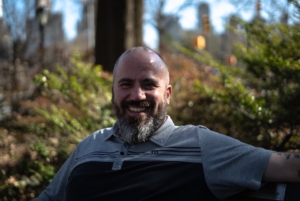
Jon Nelson is part of a clinical trial to treat severe depression with DBS. In this episode, Jon talks about his experiences with depression, and how DBS impacted his disease.
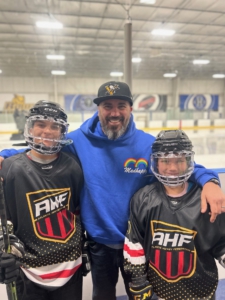
Jon and his kids during hockey
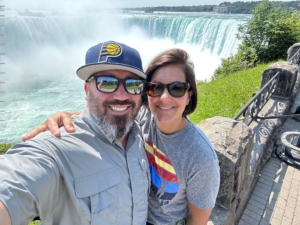
Jon and his partner at Niagara Falls
#37: Jon Nelson – DBS for Depression saved my life: Defying Stigma in Mental Health
In this compelling episode we delve into the inspiring story of Jon Nelson, a remarkable individual who has braved the depths of mental illness and emerged as a beacon of resilience and hope. In a heartfelt conversation with Jon, he shares his lived experience with DBS device as a transformative treatment for mental illness.
Against the backdrop of prevailing stigma surrounding mental health, Jon’s journey unfolds as he not only navigates the challenges of his condition but also becomes an ardent advocate for change. Through Jon’s experiences and storytelling, we hope to provide a perspective on the power of DBS in addressing mental health issues and breaking down societal barriers.
Tune in as we explore Jon’s commitment to dispelling stigma, his unwavering determination to share his insights, and his profound impact on raising awareness about the potential of DBS in treating mental health disorders. This episode challenges preconceptions, celebrates triumphs, and sheds light on the extraordinary synergy between personal experiences and scientific advancements.
Jon Nelson 00:00I didn't ask for this. I did not ask for constant suicidal ideation. I didn't ask for every single day for my body to feel like poison was running through it and I was going to die. I am now, fortunately, the disease-free. Are you okay if I talk about that for a little bit? Yeah, sure. Yeah. So here's the neat part about the disease-free for me is, and we can get more in depth, but I did, you know, participated in this deep brain stimulation trial and it literally cured me. But here's the maniacal part about the disease. I'm cured. I'm literally in remission from depression and we can get more into this. But, and, you know, people say to me all the time when they find out that I had major depression, and I say had, and we'll talk about that, when I had it, that they would say, you faked it so well, you masked it so well. And I wouldn't say I take offense to that, but I will say that when you're suffering and people do something that helps you or people around you, it makes 01:06you feel better. Right. And I keep all the time saying, what can I do for you? What can I do?
Andreas Horn I don't know what to do. I don't know what to do is the question I get. And the simplest answer is, physically what happens when it's turned on Parkinson's. So it's like, oh my God, like that's why. You don't see depression, right? You don't see it. There's no understanding of it. And so it's not as impactful. And same thing with cancer. You have chemo, your hair is gone. You're physically debilitated and you're back. Right. And so to me, I actually liked the fact that I got my shaved head, my shave, my head shaved from my surgery. Right. That's my chemo. You know, I haven't brought it back purely because my, my, my wife, my wife likes it like this. I don't know why, but she does. Right. So it's like, but it's, it's, it's so fantastic to see what this procedure has been able to do and cure so many, 02:04not cure all of them, but be able to assist in so many different diseases. And I'm fortunate that it's, they figured out the right spot with MDD. Welcome to Stimulating Brains. Hello and welcome to episode number 37 already of Stimulating Brains. I think this episode is a really interesting one and a special one. It is the recording of a conversation I had with John Nelson a bit more than a year ago. John, I'm sure you've heard of him. He's a great guy. He's a great person. He 03:19! ! since ! ! ! the entire story that led to the point of putting electrodes in one's brain. Because in clinics, we might be in routine mode. We see case after case, patient after patient. But understanding and stopping and pausing to really appreciate the entire story and often life story of a patient that makes the brave decision to undergo surgery can be truly revealing. And I think we often don't pause enough to do so. And then also, of course, deep brain stimulation for depression is very interesting.
Jon Nelson It is an investigational process. It's not like in Parkinson's where we have 20 years worth of data. 04:02Knowing it often helps. And there's really good evidence about quality of life improvements and motor improvements and all that. But in depression, it's all but clear. And the jury is still out. And the big trials for now have failed. So we can learn a lot from individual cases. Now, I must highlight. That is very amazing for Mr. Nelson to share his story so openly. I did approach him only because I saw he was already acting as a patient advocate. And he had put his story out there already in multiple videos and also other podcast shows on the internet. So I think talking with him a bit more in depth, going into the details of the surgical process and so on
Andreas Horn could be quite interesting for this podcast.
Jon Nelson So this time, I'm actually pretty sure that you're going to enjoy. This conversation that I had with John Nelson, I very much want to thank him one more time for being so open and transparent, for acting as a patient advocate, 05:00for educating us and the public about deep brain stimulation, but also in the battle against stigma and psychiatric diseases.
Andreas Horn Thank you so much for tuning in.
Jon Nelson Stimulating Brains with John Nelson.
Andreas Horn John, thank you so much for taking time, one more time to do this.
Jon Nelson It's really a big honor to be able to talk to you,
Andreas Horn and especially on 4th of July. So thank you so much for making time for this. Maybe to start off, people have called you the mayor of your town, and you are a people person. And to break the ice, I usually talk exactly about that, about your free time, right?
Jon Nelson I often interview. I talk to doctors, and I would then ask,
Andreas Horn what do they do when they don't do medicine? So what does your free time look like, let's say, even before it all started? 06:02Yeah, for sure. Well, first off, thank you so much for having me.
Jon Nelson I very much appreciate it. It's great to be here. I would say my core identity is all brought back to Pittsburgh, PA. I was born and raised there until I was 16. And I bleed black and gold. I'm all Steelers. I'm all Penguins. It's a great city. They call it a kind of big town. So that's followed me throughout my life. Been a big, big passionate sports fan. My father's actually an academic physician. So he used to work at University of Pittsburgh. He was in neurosurgery, and then he took the chairman of neurosurgery at Indiana University. So when I was 16, we made the big move out there. And I've really kind of moved around. I've moved around all since. And I've just enjoyed thoroughly travel. I've enjoyed doing new things. Moving to Indianapolis at 16 was tough. But it made me realize that newness is good and change is good. 07:03And I've just kind of always done the most unique and wild thing that I could do since then. So New York City, San Francisco, been all around. And it's been a good life. And so in a video that I think is online, you also... You are shown teaching your... Kids sports.
Andreas Horn So you like that as well, right?
Jon Nelson Mentoring. I do, yeah. With my kids, I just thoroughly enjoy spending time with them. Coaching is a big passion of mine. I coach ice hockey for my boys. I coach softball for my daughter. Obviously, spend a lot of time with my wife too. And life is with three kids, 10, 12, and 14, it's completely chaotic, hectic. You want to punch them 10 times a day, you want to hug them 10 times a day. That's a... That's a good thing.
Andreas Horn Yes.
Jon Nelson That's great. And you were or still are to some degree in marketing. So you mentioned yourself, you're a marketing guy. And you... 08:00I have to mention this because you mentioned in your email that you spent a ton of time in Germany as well.
Andreas Horn So what did you do there? Yeah, so I grew up in my...
Jon Nelson After I left Indiana University, I was a Hoosier. I moved to New York City and I started in healthcare advertising. So back when Viagra was doing the big kind of coming out advertising, I was a big... I was a big... I was a big... I was a big... I was a big... I was a big... I was a big... I was a big... I was a big... I was a big... I worked for that agency. So it was kind of the cream of the crop at the time. My favorite account that I had was I managed all of the Amgen business in Europe. So I was based out of New York City and was traveling over there all the time. I spent so much time in Germany. Got to love that country a lot in Switzerland. But it's funny the stuff you take for granted in your 20s. I just thought it was normal. You know, going over there all the time, having a lot of fun. And, you know, it was a great industry for me. I learned so much. You know, it's a PhD. It's a PhD in business, working in advertising. It's nonstop. It's chaotic. It's hectic. You know, I was in New York City. And, you know, it was great. It was a great way to do my 20s. And I ended up luckily getting in kind of senior leadership positions. 09:02I ended up running an agency about five years ago. So I got the kind of the cream of the crop for the business side of it. And right now I'm out doing my own thing. I have started an LLC. I'm just doing a lot of consultancy with kind of marketing shops and some pharmaceutical companies that I partner with. And, you know, I really am fortunate. It's a lot of free time. A lot of not free time. It's a lot of independent time.
Andreas Horn Yeah.
Jon Nelson Flexibility.
Andreas Horn Yeah. Yeah.
Jon Nelson Being able to pick and choose what I want to do. I'm a middle child. So I feel like I'm helping. I don't feel like I'm working. And that works very well for my psyche. Amazing. Amazing. So with all that happiness and outgoing nature on the outside, it is obviously surprising to most and many that you suffered from depression. So I think your words were it. Your insight was crumbling.
Andreas Horn Can you talk a bit about that? Yeah.
Jon Nelson You know, I've always been who I am right here. You know, I'm a people person.
Andreas Horn I love, you know, why I thoroughly enjoyed my job is I love leadership.
Jon Nelson 10:03I like making decisions. I like making people feel comfortable. You know, my business kind of rule of culture was I don't want people to have the Sunday blues. I want them to be excited on Sunday that, hey, you know, we're going to work tomorrow. It's all good. Right. And so, you know, that's that's the thing.
Andreas Horn Yeah.
Jon Nelson That's that's who I am. Making people feel comfortable is huge. And, you know, people say to me all the time when they find out that I had major depression, I say had and we'll talk about that when I had it, that they would say you faked it so well, you masked it so well. And I wouldn't say I take offense to that, but I will say that I didn't. You know, I had my external presence was who I am. Right. My internal presence was poison, was hell, was torture. And so. For me, I think the way that I look at it is I knew that who I was on the outside was someplace that I got joy. Right. I succeeded well professionally. 11:00I succeeded well socially. I have a wonderful wife, wonderful kids. Right. Like I have what people would consider to be what what would be an ideal situation. And I and I and I valued that. But at the same time, I couldn't I couldn't correlate the two inside. You know, towards the end of my illness. If I had a big presentation to do, I knew I could do it. But I also knew that that adrenaline that I would have to do to get ready for it, for that travel, for that presentation would just completely pummel me on the back end. So I'd come home sleep for three straight days. You know, it's like I thought like that. So I learned how to manage it. But the biggest thing for me was, you know, my life was crumbling. But I had to you know, it was as bad as it could be disease wise. Right. Right. But I was still able to provide for my family. So the I personify the disease. The disease is trying to literally completely crush your self-esteem. It's trying to make you feel as miserable of a human being that you can feel so that you take your own life. That's the goal of the disease. 12:01And so for me, I had that one piece of hope still hanging on as at least I could still support my family. And I got that. And I got that. And I got that. And I got that. And I got that. And I got that. And I got that. And I got that. And I got that. And I got that. And I got that. And I got that. And I got that. And I got that. And I got that. And I got that. And I got that. And I got that. And I got that. And I got that. And I got that. And I got that. And I got that. And I got that. And I got that. And I got that. And I got that. And I got that. And I got that. And I got that. And I got that. And I got that. And I got that. And I got that. And I got that. And I got that. And I got that. And I got that. And I got that. this disease is. First off, you're questioning it the whole time. You're being judged by society, which is completely absurd. You're not being judged for having cancer, but I'm being judged for my major depression. You're not being judged for chemotherapy. I'm sure as hell being judged
Andreas Horn 13:00for ECT. It's infuriating, right? And so to tell you how maniacal the disease is, is the only
Jon Nelson reason I'm here and I'm not dead is purely because of my children. And I'm not better than people who have taken their life. In its most severe form, it's a terminal disease. Absolutely. 100%. I was just very fortunate. I had one tiny piece that kept me here. And that was, I could not imagine the hell my kids would have to go through at school the day after my funeral.
Andreas Horn People walking behind their back, people saying, can you believe the dad killed themselves? That's what kept me around. That's it. So here's the thing that kept me around, right?
Jon Nelson But at the same time- At the same time, the disease makes you so irritable that you're not fun to be around,
Andreas Horn right? So I'm here for my kids, but at the same time, I'm being a great dad because I am a great dad, but I'm also a really irritable, cranky dad, right? So it's just a mind F the whole time that
Jon Nelson 14:02you're dealing with. And it's a real constant battle and constant struggle. Can I ask how old you are and when it started? I think 10 years ago or so? Yeah. So I'm 46 years old. I live now in Eastern Pennsylvania, Newtown, Pennsylvania. And it started for me. I had one bout when I did move from Pittsburgh to Indianapolis. I think it was more of being 16 years old and kind of the blues of trying to figure out life and so forth. But I had kind of a situational depression there. That was right when Prozac came out. I did Prozac for three or four months, but I quickly got over that. And about 10 years ago is I started having the
Andreas Horn depressive bunks. I just thought they were... I just didn't have my mojo, right? I was being a
Jon Nelson little bit reclusive, wasn't being totally extroverted like I normally was. And five years ago, literally July 2nd was the true decline or decline for me. And that started on... I literally 15:05just sent text messages to my friends that I met at Sierra Tucson, which is a rehab facility. And I just crumbled. I couldn't... I couldn't function. I couldn't... I needed to save my life. And I was a president of an ad agency at that time. I couldn't leave my house. I told my family I couldn't go with them to the beach because I had to work. I didn't have to work. I just needed to be home and be alone. And I deteriorated very quickly. And I called a friend, asked them for help, and flew out the next day to a rehab facility for mood disorders. And that was the start of my very big journey to try to stay alive. And I was like, I'm going to die. I'm going to die. I'm going to die. I'm going to die. After that, I've had three different stays and partial hospitalization plans, intensive outpatient programs. I did transcranial magnetic stimulation.
Andreas Horn We'll get to that in a second. So thanks for being so open about it. So five years 16:02that essentially were constant or were it ups and downs? Do you remember? The last five years? Yeah.
Jon Nelson Oh, it's been horrendous the entire five years.
Andreas Horn Okay.
Jon Nelson So to know, to explain how horrendous, I came back from 30 days at Sierra Tucson. And I kind of look at my rehab facilities because I had two as my hospitalizations. I just was fortunate to have insurance to kind of get me away. But that was the start of my demise because my kids at the time are four, six, and eight. They're so young that they just think dad's traveling in Los Angeles for a whole month to cover for an agency. They were two years old. I understand. So you have, you're hiding, I'm hiding that. My wife is completely crumbling. I came back from that, did the partial hospitalization, did the intensive outpatient program, went back to work. I lasted two weeks. I couldn't serve a cup of coffee at a Starbucks. 17:02That's how sick I was. I thought it was okay. But the moment that I got one single twinge of responsibility, I just declined and went right back away to PHP and IOP. And that started my kind of fake journey of just trying to stay alive and trying to work. When I say fake journey, I mean, fake journey of fake working. My job at an ad agency, I went back to another one that was going to be a lot easier. It still provide me income, but my work level went down to about 10%. And that was my journey. And I went from, you know, I started completely regressing from, events with family, with events from friends, work performance drastically decreased. A couple of years in of doing that, I had to go back to another treatment program. So it's been complete chaos for five years and such chaos that even going on vacation 18:03was up in the air until the day before. I didn't, I could do it. And it's seeing that stress and awkwardness. The whole thing. And, you know, that burden that it also put on my wife and seeing her deteriorate because I'm deteriorating, of course, it just was horrendous. And, uh, and once again, you know, I call it, it's a non-castral disease. You know, you have that adds to it, you know, that when you have cancer with the support and love that you get from cancer should be ace for every disease. Everybody has cancer deserves that. I can tell you on,
Andreas Horn on one hand in five years, the amount of casseroles that have been brought to my house, right?
Jon Nelson Then you get the support of taking stuff off my wife's plate, grabbing my kids, helping them out. That doesn't happen.
Andreas Horn And so you have all of these additional burdens on top of watching your mind deteriorate. 19:01And it's, um, I can't begin to explain to you the hell that it does to a person. You mentioned the silence adds to it, right?
Jon Nelson So not talking. About it makes the disease grow. That's a hundred percent.
Andreas Horn Yeah. Yeah.
Jon Nelson I mean, that's, that's, that's the number one thing that I say to people is this, the disease, once again, its entire goal is to try to keep you silent so it can ravage hell within your body and your mind so that you take your own life. It's such a horrific disease that once you do, it still laughs at you in death because once you're dead, there's the disease gets to ostracize. Your family, it gets to ostracize every aspect of you because you were selfish and took your life. It's the worst disease in my opinion, other than a straight up terminal ALS that you can have. Right. And so silence wins for the disease. So when you personify it, like I said, screw that man, I I'm a competitive guy. 20:04I'm not going to let you win. I'm going to, I'm going to talk about it. I'm going to open up about it. I'm a, I'm a middle-aged dude, a successful professional guy.
Andreas Horn Yeah. Yeah.
Jon Nelson I'm a guy that wants to talk about it for the rest of my life for that exact purpose of, I want people to know that you're only going to get sicker. The more you keep it inside, it's people don't fully understand it, but that's okay.
Andreas Horn That's why I'm going to do this so that people understand that this is a disease that not a single person has person asked for.
Jon Nelson And with some fortunate medical interventions, it can be changed and it can be safe. And I think, I think one problem is the, I think Helen Myberg. Um, mentioned this, the small D and the big D and I should say at this point, I wanted to mention it in the beginning. I'm quoting a lot from the excellent podcast. So you, you, you did with her and the out of patients. Um, podcast with Matt Zachary. So I can really recommend that. Um, if, if, if this conversation is interesting to us, look into that, but so, so Helen, Helen Myberg mentioned in that episode, there's a big D and small D, um, being, uh, I think referring to the real depression as a disease and then our maybe more common language.
Andreas Horn 21:12Yeah. Yeah. Yeah.
Jon Nelson I think that's a very common language term of being depressed, right? Big difference.
Andreas Horn Couldn't be bigger in my opinion, but, um, that may add to it, right?
Jon Nelson That, that muddling it, you know, everybody feels depressed and every now and then, and so on. That's probably what you hear, but, um, that's very different of the normal experience. For sure.
Andreas Horn Yeah.
Jon Nelson You know, I, I, the, the, the greatest way to say it, there's, there's different ways to explain it. Some like the little D big D like Dr. Myberg and, and it's a very simple analogy and I like that. If you have the little D of depression and conventional therapy may help and that's great. Right. There's nothing better.
Andreas Horn I mean, there's different stages of cancer, right?
Jon Nelson One through four, you know, it's, it's, uh, and there's different levels of depression.
Andreas Horn And for me, what I learned, that's been very helpful for me to explain to people. 22:02And I go back to being a marketing guy, right?
Jon Nelson That's a naming aspect. You know, we all have different human emotions, happiness, sadness, anger, feeling depressed.
Andreas Horn Yeah.
Jon Nelson Everybody has felt that right.
Andreas Horn And guess what?
Jon Nelson Most people who don't suffer from the disease, they get over it, that they get over it in regards to it comes and it leaves your body. Right. The, the disease of depression. And in my stance, my case, major depressive disorder, treatment resistant, one star do not recommend horrific experience. Right. My, my depression was at a 9.9 out of 10.1 away from dying all the time for the last five years.
Andreas Horn Yeah. Yeah. Yeah.
Jon Nelson So if you're dealing with a person who's been suffering from depression for five years, never leaves your body. That's the way that I explain the disease. And that's the most unique part about it is I didn't ask for this. I did not ask for constant suicidal ideation. I didn't ask for every single day for my body to feel like poison was running through it 23:00and I was gonna die. I am now, fortunately the disease free.
Andreas Horn Are you okay if I talk about that for a little bit? Yeah, sure. Yeah.
Jon Nelson So here's the neat part about the disease. Free from me. And we can get more in depth, but I, I did, you know, participated in this deep brain stimulation trial and, and it literally cured me. And, but here's the maniacal part about the disease. I'm cured. I'm I'm literally in remission from depression and we can get more into this, but I'm reminded daily of the disease daily.
Andreas Horn And here's why Ted Lasso, amazing show.
Jon Nelson Everybody likes it. I loved it. Wonderful.
Andreas Horn Yeah. Yeah.
Jon Nelson I love it. I love it. I love it. I love it. I love it. I love it. I love it. I love it. I love it. I love it. I love it. I love it. I love it. I love it. I love it. I love it. I love it. I love it. I love it. 24:00I love it. I love it. I love it. I love it. I love it. I love it. I love it. I love it. I love it. I love it.
Andreas Horn And so I wanted to not, I didn't have the intent, but I couldn't stop thinking about dying. And my entire goal was if I can die in an accident, guess what happens? My family gets life insurance. My kids don't have to deal with the judgment of their dad taking his own life and I don't have to suffer. Right. And that was my goal. That was my euphoria. And so I still can't get away from that. I can't get away from the fact that I see this. I'm okay with that because guess what? It makes me realize how far I have come and that we've been able to conquer this, but it's a daily grind and a daily memory of the horrific disease of depression. Yeah. When it started five years ago, was there any outside event or anything? 25:05You would be able to point to that may have triggered it or stress at work or long chronic stress at work or anything of that?
Jon Nelson You know, we moved back from San Francisco at the time to Newtown, Pennsylvania. I had my wife, super Italian, born and bred in Queens, New York. We had our two kids out in San Francisco and I always said her need for home and getting close to the family came out hard.
Andreas Horn And so she's like, we got to get back. And so I had an agency in Princeton, New Jersey. So I said, great, let's get back there. I'm basing in Newtown. And we had our third kid. Those were big events, right? Those are big life events to big move across the country. New kid, you know, advertising is insane. I'm going to pun intended. It's nonstop. It's constant craziness. And so I just was living my life. Right. And I don't know if there was a single event that pushed me over the edge.
Jon Nelson 26:04But clearly there was a lot going on in my life. And I just remember extensively. I remember it like it's yesterday. I wouldn't want to get photographed. You know, little things like that. We'd have a family picture. I remember for Christmas about 10 years ago, I took three naps one day and my in-laws were like, why are you napping again? Right. So your behave, my behavior just started to decline and my self-esteem just started getting pulverized. And that was the start.
Andreas Horn I can tell you I have I don't have a photographic memory. I have an emotional memory where I can look at every picture over the last decade. And when I see that picture, I can remember exactly how I felt. And so look at that picture. And I'm like, oh, my God, like I felt horrific. I felt as awful as you could feel. I felt like I was a thousand pounds. I felt like I was just a horrible person. 27:01And I look at it and I'm like, oh, my God, I look pretty good. You know, like I look good. Like I look, you know, I mean, like how I thought of myself from the disease versus who I was. It's just still surreal for me to be able to feel that, see that and be live that daily. And you mentioned then also you weren't able to walk your dog, right? Simple things like that. That sounds simple. They were at the end not doable anymore.
Jon Nelson Right.
Andreas Horn And barbecuing with friends. You really like to do that, but you hadn't done it for a long time. Can you talk about maybe the day to day of the things that were difficult and maybe why why they felt so difficult?
Jon Nelson You know, once again, going back to the the disease trying to win at every angle that it could is I knew what I should do. Right. I knew in order to get better, I should walk, exercise. I should meditate. I should do the yoga. My wife's a yoga meditation teacher. Right. 28:01Right. You couldn't have a simpler situation set up for me. She does that along with, she's a board certified behavioral analyst. She's got a lot of stuff. She actually did that job, went back to school, got another master's in order for her to support our family in case I couldn't work. That's the things that I'm seeing going on at all times. And so as this is happening, I can't do any of it. I can't. And so while I can't do it, what does that do to me? Continues to pulverize my insides. I remember sitting upstairs like I did at any moment that I possibly could, sneak upstairs to my bedroom. My bedroom was a Caribbean vacation. My bedroom with the lights off, with the fan on full blast, with nobody bothering me was heaven.
Andreas Horn That's what I wanted. And I'll never forget my wife, I'm going up one day, sneaking up and she's like, fine, why don't you just meditate? And I just looked at her, I was like, I can't. 29:02So I know through all of these PHPs, IOPs, residential treatment facilities, constant therapy, what to do. And I had never heard anybody say this term to me. And I literally hugged Dr. Mayberg the morning of my surgery. And this is another thing. I literally go to, I post this on major depressive disorder boards. Because it makes you feel better as a person who's suffering. I've never heard of the term abolition. And that morning before my surgery, 6am, she comes in, she does this pumped up speech. And I just said like, doc, you know, I just, I can't figure it out. Like, I can't walk my dog around the block. I can't do it. And she's like, well, there's a medical reason for that. And she explained to me that medical reason. And she explained to me abolition. And I literally looked at her and I said, can you, can you please tell my wife that? Like, please, like, tell her. Yeah. So that she can see that there is a reason why I couldn't. Right. And so my reason for stating that and telling people who are suffering at the most severe level possible is that's the disease trying to F with you even more and make you feel worse about yourself. And so, yes, that is just one other degree of, of why you're a horrible person is I can't take my dog literally and walk it from my driveway to my stop sign and back. 30:20Can't do it. And it just crushes your soul.
Jon Nelson And, and how, how is that feeling? Like, does it, is it weight? Are you, can you describe it? Is it just like you, you cannot get up the chair or you, it would be super helpful to, I think, to understand for, for listeners how it feels like in, in normal terms. And I know it's not a normal situation, but is there any way to describe that metaphorically?
Andreas Horn Yeah.
Jon Nelson Um, I would say that the simplest way to think about it is.
Andreas Horn Yeah.
Jon Nelson And you have to move. And each step is like you're in quicksand is excruciating. It's exhausting. It's a mentally fatiguing. Um, every single movement is something you need to think about. That's what it's like. And so the simplest thing to do is the throw those cold comforter over your body and go back to sleep.
Andreas Horn 31:19Yeah.
Jon Nelson I, at the end of this journey of my disease, I'd get to the point where I'd have my children go to school at nine would be the last time I'd drop off. I'd sleep from 9.05 to 3.30, 3.25 with my alarm set so that my daughter, when she got home at 3.30, didn't see me sleeping. That's what it's like.
Andreas Horn And that was the only thing that I could do was to sleep, to not have to feel.
Jon Nelson And yes, is that an escape mechanism?
Andreas Horn Absolutely.
Jon Nelson But it's an escape mechanism that kept me alive and I didn't feel like dying for that time that I was sleeping. 32:02But I literally could sleep 20 hours a day easily if I had to. That's physically exhausting the diseases. And people don't talk about that with depression, major depressive disorder. I would say the physical effects of the disease. Are as miserable as your mind getting worked in every aspect of it. My speaking mannerisms different. My voice is different when I'm sick. My face droops. Like I said, I feel it. When you get the chills when you are sick, you have a fever, you get that kind of aches and aches, which everybody knows that feeling. That physical sensation where you just are like, oh my God, I can't do it. I can't do anything. Imagine that. But feeling death running through your body. I felt it in my fingertips. I felt it in blood circulating through my body at all the time. 33:03And so while that's going on, you just want to do nothing and you want to escape and escape looks like overeating or sleeping, you know, lying to get out of things. So you can go, go upstairs and hide. Um, for me drinking, I didn't. Unfortunately have an addiction, but you know, up until that point, five years ago, um, I stopped drinking because I just said, I can't do this anymore. I can't add a depressant to my body. Um, but you know, I went, I went from that to consuming cannabis to try to at least stop my feeling in my body.
Andreas Horn Um, that was, that was something I was prescribed, but you know, that was a, that was a, a kind of doctor approved escape, right?
Jon Nelson I did intranasal ketamine, nasal ketamine. Um, that's something that was great. for euphoria, the euphoria was wonderful because once again, it's prescribed euphoria. So would I
Andreas Horn like to be very euphoric and not feel like dying for an hour? Absolutely. I'll take that. Yeah,
Jon Nelson 34:03I did. And it was, you know, I did an off-label version of Spravato compound pharmacy sent to my
Andreas Horn house once a quarter, but guess what? You know, watching Netflix in your bed on ketamine is
Jon Nelson extremely easy to abuse because, you know, there's a tolerance to it. So your eight sprays
Andreas Horn doesn't feel like eight sprays the next month, right? So then I'm taking 10 sprays. I shouldn't do 10, but I'm taking 10. So that messes with your mind, right? And so it's just another, I mean, I had, I probably had four or five bad trips on ketamine and people hear bad trip, right? And they just think that's the worst thing in the world. Yeah, it sucked while I was going through it, but guess what? It, I thought,
Jon Nelson Oh, it's dying or I thought I was dead. And that's, that was, that's okay. Cause you want to die,
Andreas Horn right? So in a sense, it wasn't like it totally messed me up, but that's, that's my normal life.
Jon Nelson Like that was normal life and normal living. And it, you mentioned two options as well,
Andreas Horn 35:04right? Like one is suffering through the other one is taking your own life. And you talked about
Jon Nelson it and you know, that was a constant image in, in, in across the entire five years in your mind,
Andreas Horn and I'm very sorry to hear that, right? Also to just express briefly the compassion here. And,
Jon Nelson and I think maybe we can talk about the, you know, the, the various things you, you tried and then throughout the, the, the, these had to try even to some degree. So, so I think there were partial hospitalization programs. You mentioned that inpatient and then in intensive outpatient plans as well. You already said, you said, they, they worked a little bit, but then, you know, two weeks after you were often back to the same state, then there was also TMS. We can talk about these two things. So that was, that's a great way to put it is, you know, they were interventions. So at the time, 36:03they, they were wonderful, you know, being away for 30 days at Sierra Tucson to start this intensive journey of, of trying to get, you know, more and more things to work. You know, it was great.
Andreas Horn It was great to be away from everything for 30 days with people who were also suffering. I didn't want them to suffer, obviously, but to be with people and you felt like a human being, you felt like, oh my God, I'm not in this by myself. And this is something others are struggling with. And it was therapeutic, right? You come home and I'm excited to be home. Partial hospitalization plan, nine to three, Princeton behavioral health, you know, 40 minutes from my house, but I got to go do that. Once again, it's kind of a step down version. Yeah. Yeah. Nine to 12 of the intensive outpatient program. And all of this is happening, and it's a good process, right? Very intensive. Two to six hours a day, it's a three hours a day, but as soon as I got out of that environment, just plummet. And I would say I tried over 15 different medications within my 10-year period. As everybody, most people are aware, it's a cocktail, right? It's not one-size-fits-all. It's not 37:16Yeah.
Jon Nelson it is to do all of this while trying to manage insurance companies. And mental health care illness is just horrific coverage as is. I mean, if somebody has a therapist, then it's covered by insurance. That's winning the lottery. You're $100 plus, $150 to $500, depending on where you're on the rig in the United States, 38:01out of pocket to cover a lot of therapeutic options. But I had applied for transcranial magnetic simulations probably five times, denied every time. Oh, wow. Every single time I get-
Andreas Horn And that is crazy just to mention this is an FDA approved treatment, right?
Jon Nelson So this is different than DBS. We know this is approved. And so it's outrageous that it's denied. Outrageous. And I've already been to residential treatment. I've been to two PHPs by then, two IOPs. Multiple medication failures. And I'm still fighting to stay alive. And so every single time I'm submitting for this TMS, it's like running a marathon. And then you get that letter and that letter says it's not medically necessary for you. And I can't tell you how infuriating it is to read a letter from an insurance company that's basically telling you you should die. That's what it's telling every single time. 39:00And so I finally get it approved. And I had to drive myself 30 times down to Aroga Behavioral Health in Princeton. I did 30 different sessions of transcranial magnetic stimulation. It's basically 45 minutes. You're there. You're in a chair. They position this device at your head. I still remember it. It goes for like seven seconds. And then it's off for 30. And I drove down in the morning before work. Got there around 730. Drove back to work. Got to work around 930, 10. So talk about even doing that was as intensive. Getting down and make it happen didn't work. Of course. No relief whatsoever other than a major inconvenience and also a major out-of-pocket. Insurance didn't cover it all. So you have a major out-of-pocket that you're doing there too. And so at that point, I was just relegated to the fact of I have ECT left to try. 40:02But clearly, I'm... I'm treatment resistant for this disease. And you mentioned it. And I had two options. And at that point, my options are purely, you're going to live the rest of your life in utter misery or you're going to die. And those were all... That's all I had. And before I got to ECT, I had to go away again to a treatment facility in Tennessee, Ranch, Tennessee. I made my first call for D.C. DBS at that point. And so the unique part about this was just doing that research, finding that there was one more potential option. And that was out of Mount Sinai with Dr. Mayberg, as you said. And Dr. Fagee plays a big role also, psychiatry. And I had the intake for that.
Andreas Horn And I still remember exactly where I was.
Jon Nelson I felt so lucky to be on this phone call with these folks, the woman doing the intake.
Andreas Horn 41:03And ultimately, she said, yeah, you've had a horrific journey, but you haven't done ECT.
Jon Nelson And that's one of the exclusion criterias. And that was great. I was okay with that. I wasn't mad. It wouldn't take me. That was just like, oh, awesome. So what you're telling me is that if I can do ECT and I fail that, I could be considered as a candidate for your study.
Andreas Horn And she said, yeah, we totally would take a call from you again and do this intake.
Jon Nelson And I was so motivated. So having... Having this horrifically stigmatized disease and then a horrifically stigmatized treatment, it was just too much. And I knew going into it that most likely the chances of me suffering major side effects were there, having no relief were there. And I did 14 sessions.
Andreas Horn And it was exactly that.
Jon Nelson You know, the hardest...
Andreas Horn It was ECT, right? So to pause for a second, maybe jumping a little bit back to TMS. 42:03Failing after that major effort and out of pocket, that didn't help either, right?
Jon Nelson Also with your family, probably there was a lot of hope. You know, now John's doing this.
Andreas Horn And then the failure, did you feel blame on yourself or like from the outside or from yourself that, you know, even with EMS, it didn't work? So that's something I wonder, you know, that treatment after treatment, failing is not helping either, right?
Jon Nelson It's continuing to add to... The misery and the low self-esteem and the financial burden. So we're, I don't know if the right word is blessed, but we're in a decent financial situation. We're not in an amazing financial situation, but we're in a decent financial situation. But, you know, money is stressful, especially when I don't know if I can work. And I'm spending thousands of dollars in out of pockets for TMS, even with something that's approved. 43:00I had to spend $8,000 to go to CR2. So I had to spend $8,000 to go to CR2. So I had to spend $8,000 to go to CR2. I mean, insurance covered a lot of it. I had to save the same thing for Tennessee Ranch. And so every purchase is a major purchase. You get better and work. And so, yes, it is frustrating. It is completely crushes your soul and your self-esteem. But at the same time, here's the cool thing is I was still seen as a fighter to myself. I was seen as a fighter to my family.
Andreas Horn Yeah.
Jon Nelson And that was cool because I knew I was trying to stick around. And so that was something that was beneficial to me. But at the same time, you know, it's deflating. I mean, it's so deflating. And, you know, I'm trying to move forward. I'm trying to function. And every breath is just difficult. You know, my wife said to me once, she's like, it's just it's like you wake up. 44:04And try to get through a marathon just to go back to bed. It's like you're there. You're surviving to get through the day. Totally the way to put it.
Andreas Horn And yeah, I mean, that's the simple way I would put it is just another failure.
Jon Nelson But at that point, you know, my positive outlook hits declining. But I know I got to keep trying because my reality of that time was just tell.
Andreas Horn Yeah, makes sense. Okay. Okay. Okay. Okay. Okay. So most listeners will have, of course, heard of TMS in this podcast, but it's transcranial
Jon Nelson magnetic simulation. So it's a non-invasive form. You received treatment for 30 days in a row. There is good evidence that that will help for some patients, but not for everybody. And especially in very severe cases, it often does not help. So after that, you mentioned in a way there was the condition of getting into DBS to have 45:02tried ECT. And you mentioned ECT and failed ECT in the past as well. ECT is electroconvulsive therapy. So that's a current applied to the brain to essentially induce seizures, which have a antidepressant effect. That's at least a very simple summary of that treatment. Now, I think in that, again, in the podcast, the Out of Patients podcast, Helen Mayberg mentioned, and I think that's important to mention here as well, that. And, you know, this might seem a bit cruel. You have to have failed that to get into DBS. That's even like, you know, making it harder for patients even more. But I think it's very important to mention that, of course, DBS is not approved. It's an experiment. That's her words. And we kind of have to, before we try something like that, we have to have tried everything where we know from, you know, best medical practice that it could work. That's a leasing basis. 46:00So that's the main reason to make it so difficult to get into this DBS trials, not, you know, bad will or anything. So I think that is very important to mention that at this point for the listeners. But then you said, okay, I'll take that. You know, I'll take ECT. I'll try that. And that involved being driven and anesthesia. It motivated me tremendously after that call and back to TMS for a second.
Andreas Horn So little D, big D, right?
Jon Nelson TMS is middle D. So TMS is not. You're not getting there with commensal therapy.
Andreas Horn Let's try it, right?
Jon Nelson So now I'm going up into the true big Ds with ECT. And it motivated me to do it, to want to do it. And, you know, back to the stigmatized condition, you add in a stigmatized therapy. Everybody thinks of one flew over the cuckoo's nest.
Andreas Horn Everybody was crazy, right?
Jon Nelson And so you're dealing with doing this. You're taking your mental illness chemotherapy.
Andreas Horn And not. 47:00You're not telling anybody, right?
Jon Nelson You're wanting, oh my God, I can't.
Andreas Horn I, you're doing shock therapy, right?
Jon Nelson Like, like you add them.
Andreas Horn Really? Yeah.
Jon Nelson You add that level of, of, um, scrutiny by society and it's just makes it worse. You know, the, the amount of times I had the courage to talk to somebody and say that I'm suffering from mental illness, or I'm suffering from major depressive disorder. They would just stare at me. They wouldn't. They wouldn't say anything. They didn't know what to do. Right.
Andreas Horn Once again, if you tell somebody that you have liver cancer, are they just going to stare at you?
Jon Nelson No, of course not. Right. It just adds to the hell.
Andreas Horn Okay.
Jon Nelson And so, so the ECT, it was very difficult for me. Once again, back to my middle child syndrome. I just like to do everything myself. I don't want to burden anybody. I think I liked being on the service side of business, taking care of clients because I could take care of them. I didn't, I don't like getting gifts. 48:00I don't like getting taken care of.
Andreas Horn Okay.
Jon Nelson I don't like getting taken care of. Right. And so I had to rely on people and I had to rely on people because they give you anesthesia. I believe it's Twilight for ECT. I'm not, I'm so sorry. Once again, my, my brain's wrecked a little bit, but you're under anesthesia. So I need to be driven down there and driven back. Um, and I did 14 cycles of it. And that's just so hard. You know, I can't add anything else onto my wife's plate. Um, I'm asking neighbors that I don't really know that well, I mean, well,
Andreas Horn enough for them to be like, can you please take me down for this?
Jon Nelson You know, and, and, you know, I have, I have multiple people that had to take me down. I don't remember. I don't remember who took me down. And, you know, when you think about what does this disease look like in 2022, I calculated this in my mind the other day. I was under anesthesia in 2022, um, roughly 18 times, 18 times, you know, I became an expert in getting it. 49:00And, and, and I made it a game. I made it a game from when they were giving it to me to be like, all right, you're going to peace out where I would just try to stay up for that extra half a second. Be like, oh, maybe I can get to a half second. Right. I mean, like, I mean, you just get so used to it, but you know, it's hard not to feel like you're an, a mental institution. And then one flew over the cuckoo's nest, getting wheelchaired out after having your brain shocked and getting into a car. I mean, talk about feeling low, you know, you're in that car in the past.
Andreas Horn Yes. He driven, driven home being like, how is this my life? Like, how did it come to this? Yeah.
Jon Nelson Every single time. Um, it was miserable. My side effects were awful. You know, I, I got so dizzy that I'd be at home and I just would fall over. I'd be in the bed and it would feel like I'm rolling. Like it would literally feel like I'm having a rolling sensation. My dizziness was out of control. Um, I, uh. 50:00I lost severe memory. I have such significant memory loss from kind of the six months prior. Um, so much so that even this past Christmas time, you know, we're at the big Italian, uh, Christmas Eve, Christmas Eve for, for my in-laws and, and a lot of the fun Italian New York, New York area. It's the seven fishes. It's the biggest holiday of the year. It's such a celebration. And I'm sitting down next to my wife's cousin, a really good person, Cheyenne 30. And I just, you know, bust her chops. I'm fine. Like, Hey, you dating like 10 guys right now.
Andreas Horn Like what's going on?
Jon Nelson Give me the scoop.
Andreas Horn And she looks at me with horror and she's like, what do you mean?
Jon Nelson And she's like, I haven't dated anybody since Nick. And I forgot that her fiance died of a pulmonary embolism in her arms. Right. Or my ECT. Right. So at this Christmas, I'm disease free, but you're telling me I don't feel like a complete utter idiot. I don't have any memory of that. Right. Stuff like that. You still.
Andreas Horn 51:00You still are constantly reminded, but it was the greatest thing ever because guess what?
Jon Nelson I failed it miserably. And I got to call them back in May. I went into, um, I went into Mount Sinai West. Um, so call back, sorry, the DBS team, right. In New York.
Andreas Horn Yeah.
Jon Nelson I called back the DBS team in New York and I very quickly was, um, kind of, uh, brought to Dr. Martin Figi, uh, Figi, who is just incredible psychiatrist. He's kind of my main touch point throughout this process. Um, and I started the kind of more intensive questionings and backgrounds and how to put together my medication list that they had, you know, kind of the documentation of things that I've taken. And, you know, after about 10 visits, um, dealing with, with him, multiple other psychologists, getting independent folks to look at us to make sure that I was the right person meeting Dr. Mayberg doing a ton of tests. I got the thumbs up and. And it was surreal. 52:00And the, the, the best part about getting that thumbs up. And it was probably in June at the time was you're going to be the seventh patient in this trial. And, you know, we're going to do it on August 22nd. And I had two months to prepare for it in my mind. And I just had a little extra load off my shoulders. You know, I was, I was so excited and I didn't care that I was getting breakouts. I didn't care if I had brain surgery, couldn't care less. I mean, it was like, I was just you telling me, John, you gotta get your teeth clean tomorrow. I didn't care. It was not, that was nothing. I mean, yes. Like I said, if my father does the neurosurgery and I did ask one point, I'm like, what's,
Andreas Horn what is this? You know, is this a big deal?
Jon Nelson He's like, nah, this is, this is, this is simplistic neurosurgical procedure. So, you know, I didn't, I had no qualms, but I also didn't care if I died. Right. Like if I died all good.
Andreas Horn You know what I mean?
Jon Nelson I know there's.
Andreas Horn Yeah.
Jon Nelson Almost a 0% chance. And that procedure. You know, clearly you're thinking about your head being cut open. 53:00Worst case scenario that happens. I didn't care. Right. That solves all my problems.
Andreas Horn And it was a wild summer, you know, just getting prepared for it. And that was last year, right?
Jon Nelson August 22nd, 2022. And mostly it was just, who's going to watch our kids. Right. It was kind of the admin tasks and you know, the day before I go into the city. We go out and had a nice meal in New York city. I woke up at five in the morning. My, my father and my wife came up with me. There's still some COVID restrictions. So it was, it was my, couldn't get my dad back into the prep room, but he was in the main waiting room. You know, and to talk about the humanity real quick of, of, of a, of an organization, you know, I was in this clinical trial, DBS Mount Sinai. With, and I, and I understand that I am extremely lucky to be under the care of Dr. Mayberg, 54:03Dr. Faget, Dr. O'Neill.
Andreas Horn I understand that I'm extremely lucky and I felt like a VIP, you know?
Jon Nelson So you go from getting constant denial letters from insurance companies to, you know, essentially flying to London and being in the British airways business class lounge, as opposed to being waiting right next to the gate. Right. And I was in the same lounge for, for, for eight months. I had multiple, multiple appointments at that facility for CAT scans, for MRIs beforehand, for PET scans where they'd be at one o'clock. I'd be in and out before one o'clock.
Andreas Horn I mean, it was just an incredible, incredible experience with, yeah, well, they were extremely
Jon Nelson intelligent, kind, smart, and I was just in good hands. And I, and I'll tell you, like, I felt like I was as important to them as they were to me. I was like, okay, I'll be like, okay, I'll be like, okay, I'll be like, okay, I'll be like, okay, I'll be like, okay, I'll be like, okay, I'll be like, okay, I'll be like, okay, I'll be like, okay, I'll be like, okay, I'll be like, okay, I'll be like, okay, I'll be 55:00like, okay, I'll be like, okay, I'll be like, okay, I'll be like, okay, I'll be like, okay, I'll be like, okay, I'll be like, okay, I'll be like, okay, I'll be like, okay, I'll be like, okay, I'll be like, okay, I'll be like, okay, I'll be like, okay, I'll be like, okay,
Andreas Horn You know, the day of the surgery, I was told I'd get a pumped up speech from Dr. Mayberg. And this is where I say the humanity of it is I couldn't get my dad back and he wanted to meet Dr. Mayberg. And she talked to me, gave me my pumped up speech, told me to be present. And then I asked her, I said, hey, my dad's in the outside waiting room. Would you go speak with him? And she took 30 minutes out of her day of the surgery to do that. Right. So things like that. The reason I say that is when you're suffering and people do something that helps you or people around you, it makes you feel better. Right. And I keep all the time saying, what can I do for you? What can I do? I don't know what to do. I don't know what to do is the question I get. And the simplest answer is, is take something off their caregiver's plate or take something off their plate. Right. Give them a damn hug. You know, just tell them you love them. And that was something that was very comforting for me. Right. Like, oh, you're going to talk to my dad. That's so kind. Thank you for doing it. Or, you know, a friend coming over and taking over the kids for the night and letting my wife go out and do something. And I segue that to say, you know, that was just something that meant a lot for me that day. So the surgery occurs, you know, once again, anesthesia. Now what's going on? 56:22Yes. So quickly before that, like, you already mentioned it was a no-brainer for you because even if you were to die, you had no fear of it. But I think that is still, for many maybe fellow patients and even patients that undergo DBS for Parkinson's disease or other things, you know, this idea of getting brain surgery, what did that do to you? I think there was this episode where your kid looked up and asked, yeah, what did you get? And it's a big question.
Jon Nelson So the procedure, no stress, could care less. Like I said, it was actually, if anything, it was a positive because the worst case scenario was I died and that was a positive. Right. So it was, it was just like, it is what it is. I clearly had known what it was like to be under anesthesia, you know, so there's just zero stress. And, you know, the, you know, having at the time, 10, 12, 14 year old, you know, my 10 year old, the one struggles with anxiety, you would not even think it. He's like your standard third kid. He's completely nuts. 57:22He's integrated.
Andreas Horn Right. He's the, he's the one who I can do anything you can do. And, and, uh, you know, go, go, go super athletic. And, you know, when we dropped them off in the city that day, um, the day before the surgery with my in-laws, you know, he looked up at me and said, you know, dad, am I going to see you again? And that was the first time in a very, very long time that I wanted to live, you know, it was like, oh man, like this is, this is real. Like I'm going into this tomorrow. I don't know exactly what it's going to look like on the way back. And so, you know, if anything, that was when I only had my slight angst of like, what will, like, you know, what am I actually doing? And, um, you know, I, I, I would say that was definitely something that was unique and, you know, going, but I'll, I'll still, you know, never forget it.
Jon Nelson 58:10You know, I, I, as a patient, the, the physician associated came in with me, his name was Brandon, wonderful gentleman. And he introduced himself, says, I'll be with you all day. And he's just awesome. He was, I think he was.
Andreas Horn He was from the Bronx. He had the accent, you know, as you can clearly tell, I, I like people and talking to people. And I said to him, I was like, you know, Brandon, I was like, how many of these have you done? You know, just like, just questioning him. And he just laughed at me. He's like probably 3000. And so from a clinical trial standpoint, the procedure wasn't, you know, investigative. So you clearly knew it was a, a very common thing at that point. I just laughed. I was like, oh my God, I thought he'd say like 10. Right.
Jon Nelson Right.
Andreas Horn 59:02Sorry for keeping on interrupting the last question before we go into the surgical procedure. How did your family feel? Did everybody think it was such a good idea to do this? Your wife? Were they scared?
Jon Nelson At that point, you know, here's the thing that I will tell you that I'm very proud of the development of people and their understanding of the disease and how the stigma can change and how education helps. And five years ago, a little bit before five years ago, when this started really going downhill and I started opening up to my extended family, my father was probably the most standard stigmatized person of all, right? Right. 01:00:15I mean, they were like, they had seen the struggle. They had seen the suffering. They had seen the misery. And so it was purely a benefit for me. And so, you know, hugging my wife, getting out of that room. She was just like, can't wait to see this. This is only something that can help. And, you know, the same thing for my dad. My dad was there for me and he was also there for my wife. You know, they were out trying the new chicken place during lunch that day. And, you know, they were kind of their support system together. And if anything, it was mostly just excitement that I had this opportunity. Going into surgery, you mentioned they wake you up. That's what I wanted to ask. So before you go into it, you know, you're dealing with this whole clinical team prior to the surgery. And I had taken this scientific video game that they had created. 01:01:03Once again, another wonderful person, part of the team, Matt. And I did this game. I don't know. I don't even know what I was doing. I didn't know if I was doing it right or doing it wrong, but there were two different versions. Research question they answered. Research, yeah. You know, remote control that I was doing. And they woke me up in the surgery and I had to play the game. So they pulled the television kind of right in front of my face. I do the game. And then they kind of paused for a little bit. And once again, they had me do the game again. I wasn't aware at the time, but they actually turned the device on during one of those different sessions. So I assume obviously they're looking clinically at some aspect of that device while I'm, while they had the kind of the baseline of me taking this way before the surgery, they had me taking it during the surgery. And then when the device was on, I did hear Dr. Capel and I've not spoken about him. He was the neurosurgeon, phenomenal physician and another great person to be a part of this. 01:02:03But I mean, you're so awake that I was literally cracking jokes with Dr. Mayberg. I was, I was hearing Dr. Capel talk about. The placements and moving around different aspects of the electrodes. Um, I literally said to Brandon, that physician associate, this is one of the things I keep laughing at. I was like, you know, doc, I'm going to have to, I was like, I said, Brandon, I was like, Brandon, I need to go to the bathroom.
Andreas Horn You know?
Jon Nelson And he's like, oh, you have a catheter set up. You're good. You can just go. And I'm doing these video games and the entire time I'm doing the video games, I'm just thinking like, I can't go to the bathroom and laying down. Like I can't actually do this. Like that's how aware you are. Right.
Andreas Horn Yeah. And so I'll be honest. And I'm also laughing. Cause I said to him, like, can I stand up and try to do this?
Jon Nelson So they just knocked me right out right away and obviously empty my bladder, but like, that's how, that's how with it you are. And, um, you know, next thing I know, um, they do a CT scan in the room. I obviously wasn't awake for that, but I did wake up outside in the hallway and kind of your, your normal wake up area. 01:03:03They took me up, did an x-ray, put me into my room and, um, you know, essentially got into my room around seven o'clock.
Andreas Horn Yeah.
Jon Nelson That night, six o'clock I was in the surgery, seven, seven 30 in the morning. And I just was by myself until the next morning. Um, the biggest thing that I remember about the post-op was, I mean, they must've filled me with fluids cause I had to use the restroom like 30 times that night. It was, it was common. Um, but I, I do remember I woke up in the morning after a very difficult night of sleep and I just felt like I had a hangover. That was it. I felt like I had a hangover. The biggest things that hurt were.
Andreas Horn Yeah.
Jon Nelson The points where they, uh, screwed you to screw in for the head brace. That was the thing that hurt. Um, they do a pacemaker above your, right below your collarbone. They actually stick it in there. I never felt that at all. Um, so the, the only thing I had truly for recovery was these, you know, points where they screwed into your head. And felt like I had a, um, um, felt like I had a headache, have hangover. 01:04:04Um, but at seven in the morning, I'll never forget. I I'm always intrigued in, in regards to what, what, what's going to happen that. I don't expect.
Andreas Horn And 7am, uh, Medtronic rep runs in the head, runs in the room. She's like, Hey, what's going on?
Jon Nelson Introduce yourself. And I have no idea what even Medtronic is at this point. And she pulls out this battery charger and is like, here's what you're going to do. Here's how you charge your pacemaker.
Andreas Horn And I'm, I'm just out of it. You know, I'm like, what are you talking about?
Jon Nelson And so I'm learning at 7am the next morning how to charge my pacemaker, which I have to do every two days. But that was just the perfect example of like, you know, what's going on. And, um, I got. I got up and walked around the hallways and I told Dr. Mayberg that they discharged me at 10am. I went right up to the 10th floor where they were going to literally turn the device on.
Andreas Horn And that was one of the first questions she asked me is how was your night?
Jon Nelson And I said, that was good. And I was like, I got up this morning and I walked the hallway. 01:05:01She was shocked.
Andreas Horn She's like, what do you mean?
Jon Nelson I was like, I just got up and walk. She's like, you were motivated to walk. I was like, I guess I was, you know, I don't know if it was just like the excitement. You know, the fact that I was like, I don't know. I don't know. I don't know. I don't know. The fact that I was getting into this.
Andreas Horn Um, but then I went up to the 10th floor and do you want me to speak to this process? Absolutely.
Jon Nelson And so this, this was, well, this was a very neat is, you know, there, you know, when I think of my business meetings, you know, we, we go anywhere in the U S and 20 people would roll in and, you know, you have your meeting and, you know, it was neat to see what that
Andreas Horn was like for this trial, because I did ask Brandon the next day, I was like, Hey, how many people were there?
Jon Nelson And he said, well, Andy copied me, copied me, copied me, copied me, copied me, copied me, copied me, copied me, copied me copied me copied me copied me copied me copied me copied me copied me copied me copied me copied me copied me copied me copied me copied me copied me copied me copied me copied me copied me copied me copied me copied me copied me copied me copied me copied me copied me copied me copied me copied me copied me copied me copied me copied me copied me copied me copied me copied me copied me copied me copied me copied me copied me copied me copied me copied me copied me copied me copied me copied me copied me copied me copied me copied me copied me copied me copied me copied me copied me copied me copied me copied me copied me copied me copied me copied me copied me copied me copied me copied me copied me copied me 01:06:06copied me copied me copied me copied me copied me copied me copied me copied me copied me flow room where they had us on zoom and my mom, my wife and my father were able to be in there. And it was a very intriguing day because, you know, I hadn't slept well, as you know, everybody's obviously they're interested to see this experience. And Dr. Mayberg just asked me one simple question and they turned on one electrode at a time. And after they turned on
Andreas Horn each electrode, she would just ask me, do you feel like you can walk your dog now?
Jon Nelson And, you know, it's, I'm thinking about that and I'm seeing if there's a difference or a change. And, you know, it was in, and she would do that and then ask me and then wait about five minutes. And then the same thing, she would do that. This probably lasted two hours and it was,
Andreas Horn yeah, it was difficult. And the reason it was difficult is I was very tired.
Jon Nelson And sometimes in that like five minute period, like I would literally dissolve, 01:07:00like I would not, I would just go off and then I'd get back up and I'd be good to go. And,
Andreas Horn and you're being watched, right? So you feel like you gotta be on, on your game. And,
Jon Nelson you know, so if, and my head's all bandaged up and, you know, it's, there was this awkward,
Andreas Horn you know, it's one of those moments, but, um, you know, it was just so fantastic because as
Jon Nelson soon as it's done, they literally huddle, like they huddled, like it was a sports game and they turned around and looked at me and they just said, you're good to go. And I was like,
Andreas Horn what do you mean? They're like,
Jon Nelson we got it set to where we think it's going to be the most effective for you. And that was it.
Andreas Horn I was on and I, do I feel it? I don't feel it. Uh, I don't feel the charge or the, you know,
Jon Nelson charges going through the electrical pulses, um, through additional brain scans that I had, um, with Dr. Waters and other amazing part plant part of this team. You know, they're, they're trying to figure out, you know, different pulses that they can do of this, that would minimize the use of the battery, for instance, 01:08:02so it's more research stuff that could still provide the same therapeutic benefit. And one of the things that she said to me that I'll never forget is she was like, oh, it's 130 electrical pulses per second. And I was like, and so I just said, I just sat there and I was like, and she didn't tell me if it was to one side or two sides, because the electrodes go down to two sides of my brain. And so I went back with my daughter and I told her that my 14 year old, I was like, it's one 30 per second. So we brought out the calculator and we started adding it up. And then when I went back, I was like, oh, it's 130 pulses per second. And so I was like, oh, I went back from an X brain scan. I said, is that one 30 per second times two, you know, times each side. And so, you know, what that means is it's a hundred, it's 22 and a half million electrical pulses per day to my brain. And it's overnight saved my life. I got up the next morning, we got home, driving home. I should have been in depression because it was leaving at rush hour out of Manhattan to Pennsylvania with my wife driving and my dad and I telling 01:09:00her the wrong directions. It was not, not a good scenario for the situation, but, but we got home and, um, I woke up the next day and I was just lighter, everything. You know, I, I asked my wife and my son to go on a walk with my dog. Um, I'm all bandaged up. I look goofy as hell. Uh, you know, we do a, we do a 10 minute walk. I enjoyed the walk. I enjoyed the conversation. You know, we got back and I had coffee outside of my back porch for the first time in years.
Andreas Horn I had friends over, um, you know, the two things that I always kept saying is why can't I walk my dog? Why can't I have a fire in my fire pit? You know, I had this amazing fire pit built after we
Jon Nelson moved from San Francisco. That's all you did out there was have fire pits with your friends. It's
Andreas Horn 50 degrees every night. It was amazing. I haven't had a fire for two years, you know? And so now,
Jon Nelson you know, I'm having fires with my friends. I'm 01:10:00calling people to go. I'm calling people to go. I'm calling people to go. I'm calling people to go. I'm calling people to go. I'm calling people to go. I'm calling people to go. I'm calling people to go. I mean, these are things that people do that just think are normal, quote unquote normal. I mean, I just, I hadn't been able to do those things for so long and the impact was immediate. So when I
Andreas Horn say those are behaviors, right? That I just immediately saw the difference, but the disease
Jon Nelson inside of me, the poison that I felt every second of every day gone immediately. The suicide, the suicide, the suicide, the suicide, the suicide, the suicide, the suicide, the suicide, ideation was as common to me as breathing gone i haven't had a single suicidal thought since august 23rd 2022 immediately gone and i could be wrong with this but i i i did see some um some some description of the voltage but basically what i heard or what i saw was the you know electrical pulse that's about 20 of the the output of like a triple a battery and so that constant electrical 01:11:04pulse to my brain immediately secured me and that is another thing that just blows my mind about the stigma of this disease is i have a physical basic i physically have something wrong with my brain i have a brain with an electrical current that needs to be supercharged a little bit and i'm fixed yeah
Andreas Horn And the fact that I'm judged by that is just wild, right?
Jon Nelson It's like I have the alternator in my car was broke and it needed to be fixed. And now the car runs perfectly overnight. And, you know, I will tell you some amazing differences pre and post because that was something they wanted to learn was pre and post. I got a tattoo to kind of commemorate my wildness of my disease. And just this is part of my identity. And I did this during ECT. It took five days. I did a big tree on my arm and, you know, trees. 01:12:01And when you're out in nature, you know, it relieves the symptoms of depression. So I kind of symbolically did this. And I don't feel it. You know, I sat there. I got the tattoo. I mean, it wasn't uncomfortable. It wasn't comfortable.
Andreas Horn It just was what it was, right?
Jon Nelson And I went back after the surgery without the disease ravaging my body to get some parts of it touched up. And I had to have. I never stopped. Multiple times. I was biting my lip. The pain was was unreal to me to feel to actually feel. I did a discussion with a friend on a podcast before the surgery and one after. My voice is totally different. Multiple friends line. Listen to it. They're like, you sound so different. It's just wild to see. And, you know, another measurement of how well this has worked. Is part of the clinical trial is they turn it off after six months for a week.
Andreas Horn 01:13:00Yeah.
Jon Nelson I was stressed. And so, you know, I clearly go from feeling like hell to feeling quote unquote normal. And you don't want to go back to feeling like that. Of course.
Andreas Horn Yeah.
Jon Nelson And so, you know, I meet with the clinical team, the psychiatrist, the psychologist every Monday for 30 minutes each for six months. The level of healing. And help that they had for me as a patient was surreal. And, you know, majority of pets. I was talking to them about this is going to suck when this thing gets turned off. Because I just think it's going to immediately go south. Right. Because it turned on. It works so quickly. And, you know, I'm not supposed to know when it gets turned off. But it's very simple to know. Because one of the things is you charge your pacemaker and it goes down about 30, 40 percent every day. And it wasn't going down. Right. Because it's not working.
Andreas Horn Okay.
Jon Nelson I remember Dr. Fagee, he said, you know, if you feel anything at all, you may not feel anything different. 01:14:02Or it'll happen after four or five days. And I had a business meeting with somebody the day it got turned off. And I had a meeting with that person a week later. He was shook up. He literally wanted to stop the meeting early. He was like, I don't feel comfortable right now. In regards to the health. Physically. Physically bad. I looked how different voice was again. My droopiness, my slowness. He was shook up in regards to the difference in me. I immediately was sleeping four or five days in. As Dr. Fagee said, I started sleeping tremendously. I started some escapism behavior over eating and so forth. I didn't have my mind ruined, but I had my body physically ravaged. And once they turned it back on, it took me about three weeks to get back to baseline. And once again, you know, a minor electrical charge, you know, does. These are weak pulses, right? So you don't feel them, maybe just to clarify that. And, you know, the wire going down the side of my head, I mean, you have, you know, that I have these two bumps on the top of my head. I mean, there's manipulations to my body, literal body augmentation, but I don't care. You know, I'm not diseased, then I kind of wear, I wear this tattoo, which is weird that I even have one
Andreas Horn 01:15:24but I wear it with pride. I wear these two, two, you know, dots on the top of my head with pride. And I'm, it's all good. And what it taught me was this, and I talked about this briefly, but you know, the entire time, once this starts working, you know, it's too good to be true, right? Like this doesn't make any sense. And so you're wondering when is this going to stop working, right? It's just too sure. My wife was like two months in and still was like pretty
Jon Nelson reserved. Um, she just couldn't process how this was happening. Right. And I'll never forget, 01:16:04you know, seven, eight weeks in, I woke up one morning and I didn't feel good. I had some sadness and I plummeted hard. You know, as I was saying about the typical behavior, eating too much, sleeping too much. Um, I can remember it vividly. My wife said, Hey, we have a meeting for Hugo at school at 10. And I just said, it can't make it. Sorry. I got something going on. I didn't, but I meant immediately back into that escapism behavior of, I just want to be alone. I just need to be home alone. And I sent a note to Dr. Figue and I
Andreas Horn said, did you guys turn this off? Like, cause they can actually remotely remote, um, remote control
Jon Nelson it. You know, it's a remote control.
Andreas Horn Remotely, I guess I should say. And I was like, is this part of the study that I'm unaware of? Like, did you guys turn this device off? I literally have the email still. And he wrote
Jon Nelson back very quickly and he just said, nope, you're good. He's like, we'll talk to you about it at 01:17:03our next appointment. And it was a major learning for me because that's when I got the understanding of the emotion. And they told me when that did, when I was, when I left the hospital, they said, you need to rehab your brain. Dr. Mayberg said it very well. You've been at the bottom of a well for a decade. You're now outside of that well looking at the world. And I, you know, when they told me that I was rehabbing my brain, I was like, you know, I literally inside was like, okay, you
Andreas Horn know, whatever I got this, I'm not sick. You know? And as soon as that happened to me, I realized,
Jon Nelson oh man, like I'm, I have, I have trauma from this feeling and I have trauma from what they told me was called distress tolerance. You are feeling an emotion. That emotion will come into you. That emotion will leave you. That's when I said, ah, I get it. That's the, that's the, you know, a lot of people do the little D big D I do the emotion versus the disease. The emotion is, 01:18:00is a three out of 10 and it comes and it goes, the disease is a seven to a 10. And, you know, depending on where you are on the continuum and it does not leave your body. That's the difference. And man, was I, was I set up for being at a, I mean, luckily that 9.9, um, I kept me around and, you know, to me, the message is simple. Um, the folks that are treatment resistant, you have a potential option in the future. You know, this is hopefully, you know, let's think a year or two, two years. If things go well, we get this FDA approved. There's hope, you know, there is hope and there's never been hope before for treatment resistant folks. They'll still be the exact continuum. That there was that I was on of multiple medications, TMS, ECT, then DBS, but it's something that will make you be able to survive. And that in itself will save lives. Um, knowing 01:19:03that there is a potential option rather than having to end your life and ending your life is, it's not, it's, it's actually, I would say it's the opposite of something that's scary. It's something at that point, when you're suffering to the level that you're suffering, that's just something you have to do. There's no reason to continue like this getting horrible. And so to, to at least be able to hang
Andreas Horn on a little bit to know that there is some type of potential relief is just fantastic. I mean,
Jon Nelson I haven't two weeks before the surgery, I had to stop cannabis and ketamine. I had to stay on consistent medication two weeks before till six. I had to stop taking the medication. I had to do it like six months and two weeks after I'm not changing anything. I'm not starting cannabis again. I obviously certainly have no need for ketamine. I am not going to drink alcohol. I'm 01:20:00not changing my Le I'm not doing anything. I don't want to, I'm scared to change anything. And my clinical team's great with that too, you know, and, and, and it's, it's funny, this is another, you're ready for another, uh, mental illness thing versus any other, Sure. so the amount of time so let me let me ask you this if you took a medication after trying multiple multiple multiple medications for migraines and you found one that worked would anybody say to you when are you going to get off that medication everybody would say that's amazing that you have something that works right of course the majority of people when you talk to them about antidepressants about any drug for mental illness is is what where are you going to get off it soon when are you going to be off i still get that where are you gonna are you off the depressants yet and it's amazing to me and it's just like these little tiny things that just are emphasizing the stigma 01:21:02right like that could just make sense and um you know so so that's where i am you know i mean is it is it did it change me my personality did it augment me am i a cyborg none of that the only thing that this has done for me is eliminate and eviscerate my disease it's gone i'm still the same um same dude i've always been personality wise um you know the the poison on my scale has gone from a 10 to a 1 the suicidalation 10 to a 1 at 1 is the lowest you can grade it my irritability has actually stayed pretty high but i i kind of joke and laugh about it like i'm like i'm like i'm like i'm like i'm like i'm like i'm like i'm like i'm like i'm like like i'm like i'm like i'm like i'm like i'm like i'm like i'm like i'm like i'm like i'm like i'm like i'm like i'm like i'm like i'm like i'm like i'm like i'm like i'm like i'm like i'm like i'm like i'm like i'm like i'm like i'm like i'm like i'm like i'm like i'm like i'm like i'm like like i'm like i'm like i'm like i'm like i'm like i'm like i'm like i'm like i'm like i'm like 01:22:01like i'm like i'm like i'm like i'm like i'm like i'm like i'm like i'm like i'm like i'm like owner or she had the metaphor as well to release the parking brake and then get out of the way, right? So for you to drive. And I think that's one question I have for you that could be
Andreas Horn interesting to many fellow patients that had suffered for such a long time. When I interviewed Helen Myberg in episode two of this podcast as well, she essentially said she can fix the
Jon Nelson depression, but she cannot fix your life. And it seems maybe for you, five years of suffering, I'm sure has a toll. Others might even have 20 years and then might not be in the same financial situation and all that. But do you have any thoughts of your own life, but also more general
Andreas Horn of how can, once the depression is fixed, how can you get your life fixed and how was that for you?
Jon Nelson You know, it's a constant battle in my mind.
Andreas Horn 01:23:00Because your mind is in a circle during this disease and constantly going, right? And there's certain things that I still do behaviorally that I question, well, is that because I've had 10 years of constant behaving like that or is that the disease? And an example of that is napping, right? I used to nap all the time because of this disease. Now when I nap now, is it a negative or is it a positive? Is it a negative? Is it a negative? Is it a positive? It's a positive, right? It's like, so you're still kind of stuck in yourself. And that's something that I see in same thing with irritability, right? Like I just said, crying at your old dude, or was that disease or was it just a part of both? Definitely it's gone down a little bit. But the answer is, I needed after my six months of constant twice a week therapy with the team, I needed a little bit of a break, which it's all on myself now. It's all on my own, right?
Jon Nelson 01:24:00It's through the, they're there for me at any time that they need, but my clinical care is on my kind of my core team after them. I took a couple months off just because I needed a little bit of a break and a reset. And to me, I need to, for the rest of my life, have continual therapy. I need to have my quarterly conversation and meetings with my psychiatrist. I need to stay on top of my behavior. I was thinking on August 22nd, 2022, I was going to have my first hoppy IPA, West coast IPA beer. And I was reading one night that, you know, micro brews, craft brews now have a great non-alcoholic scene of IPAs. And
Andreas Horn I ordered some on Amazon and they're amazing, right? So now I'm not putting alcohol in my
Jon Nelson system. So I'm still trying to make the right decisions. I'm not trying to do anything that's too excitement driven. I don't want to get my mood too high. I'm not trying to do anything that's 01:25:00too high. I don't want to get my mood too low. So I'm in preventative world for the rest of my life. But then we'll kick and I want to make logical ish decisions in order to be, be neutral ish so that I feel like that will help, you know, keep my, keep my mood and hopefully keep my disease away. But I, you know, I, at the same time you know, I, I've always had a horrific view of myself, self-esteem wise. You know, I've,
Andreas Horn I've always felt twice the size that I am, you know, those things aren't fixed, right? That's
Jon Nelson not depression based, but I'm not happy with my physical appearance. I'm not happy with, you know, the, the food that I intake, you know, I, I want to get physically healthier. And that's been something I've been battling my whole life. And, and I'm hoping now that the disease is gone, that I can't begin to tell you if I feel good about myself, if I'm disease free and I feel good about my physical self, like I don't need to, 01:26:00be a beach bod guy, but if I can wake up and not have my first feeling, be something of, you know, grossness about my physical appearance, my, I can't even begin to tell you how good I feel. Right. It's like, that's what I'm trying to do right now is how can I help myself therapeutically manage my depression, but also try to therapy, get it therapeutically, get into the behavior of being able to make some positive decisions to able to eat better, be able to, you know, do some consistent exercise to not, feel so physically bad. But once again, that's a little bit of dysmorphic aspects of my thinking that I'm working on. So those aspects that still are not depression are still there. And, you know, it's, it's nice. Cause I feel like I have a chance now to overcome a lot of those. And I should say you, you look, you look great. So, I think there's not, not, not, not anything you should, you should feel you have to change. 01:27:00If I can say so. Maybe one important thing to talk about, you know, your case, if we just look at the DBS part of it was an amazing success. Right. And I know you suffered through hell before that. But, but, but, you know, we should probably also mention realistically
Andreas Horn that unfortunately not everybody will have exactly this, you know, rapid outcome. And,
Jon Nelson you know, there's of course, you know, other, other people, you know, who are, who are, who are, you know, patients might go into this with similar hope and then might have, you know, less optimal outcomes, especially also with, when it comes to timing. I think,
Andreas Horn maybe to ask you how, how did they prep you in terms of what to expect and, before going into surgery and then, yeah, how did that?
Jon Nelson There were positive, but I asked that question as a great one was, you know, other than one, there were positive, positive outcomes for, for, 01:28:00majority of patients have positive outcomes. And, you know, I, I had heard as, as, you know, quickly as a couple of weeks through, you know, months as this goes along I was overnight. And so I, I fortunately ended up being the quickest and I will tell you that you are right. You know,
Andreas Horn expectations have to be managed in regards to where does this hit everybody? You know, I,
Jon Nelson right now, if I look at that kind of basic feedback I got from them, it seems to be better
Andreas Horn than ECT, right? I mean,
Jon Nelson ECT is a lot of people that just have the negative side effects and something positive. So, you know, I, I, I think the outcomes have been, have been, you know, great. And hopefully this will be something in the future that can hit, but I, I will also tell you that, you know, I very kindly sent a note to the team and I, I suggested, I said, you know, if you could pass my information on to a patient, you know, and they were, they would be interested in connecting, let me know. And I got, I got contacted by another patient and we, we had our first meeting two weeks ago, 01:29:09a zoom and I keep using the word surreal and I don't know what else to say. It was, um, a hundred percent surreal. You know, it was like, I was talking to myself and, you know, her line to me after in the email, just a following up of me just saying like, what a special, moment that was. And, and she just said, I thank you for making me feel human. You know, you, you feel like something is so incredibly wrong with you. And, you know, in the, in the business that I'm in, we do stuff with rare diseases and you have these people that connect in rare diseases and they're like, this is just, this is, this doesn't make any sense. There's somebody I can talk to. It's so hard to find anybody. And that's how I feel with this. And, you know, being able to see how this has impacted her, it's a different scenario. She's by herself. Um, she's an artist. She lives in New York city. I have a family, three kids, 01:30:06you know, we have a professional business job, you know, running, you know, it's a different planet, but to see that it's taken the disease away from both of us. And we have a version of our life back and to know that that suicidality is not there. Um, you know, people say to me all the time, I love it. I love it. When, I came back a week after surgery and I had a friend who was very supportive with me along my whole journey. He'd come and we'd do a walks together in the morning when I could do it. Right.
Andreas Horn He'd check in on me. And he said to me, how was the surgery? How's it been? And I said, it's,
Jon Nelson it's been incredible. I said, I haven't had a suicidal thought in a week. And he said, you've, and he literally looked at me and said, you've had a suicidal thought before. And it was such an eyeopening experience to me because I'm like, this is somebody who's compassionate. Sympathetic been along for the whole journey. People just don't get it. They don't understand 01:31:03the disease. Once again, I don't understand what cancer is. 99% of people don't, but it doesn't matter. There's empathy, understanding that it sucks right to have, um, for, for depression, you need to explain it. And that's, that's been something for me, you know, just, just living in, and I'll hear people, if I talk about it very raw, you know, I love it when people say to me, well, this is, this is very, this is very deep. Like this is all men. This is dumb. This is tough to hear this. Um, it's very, you know, you know, whatever that line is, I'm listening in line, but like, it's very hard to listen to this. This is emotionally challenging for me. And I just look at him and I smile and I said, totally sucks. I mean, imagine, imagine feeling how you feel like right now, 24 hours a day, seven days a week while being judged by society. Mm-hmm.
Andreas Horn Didn't blow. That's what it's like, right? 01:32:01Yeah.
Jon Nelson So to have that gone and it's just, it's a, it's just like, I feel like I have my, I feel like I have my life back. Right. I, um, Amazing. Yeah. I mean, my, another before and after I still laugh, like my dad growing up,
Andreas Horn his thing's golf, right? So what do you do? You do what your dad does, you know, dad works on cars,
Jon Nelson you end up figuring out how to work on cars. And another before and after I had my, my first round of golf, uh, I hadn't golfed in years because of this disease. And I golfed maybe four months after the surgery, best round I ever had. Best, best score I've ever had. Right. So there's even some, some, some programming there from the computer games that helps you with the golf. I'm joking. Of course. It's amazing. I still laugh. I'm like, oh my gosh, like all these new things, but, but it's in the, the comical aspect of this is my wife's version of this is she's like, oh my God, you're, you're back.
Andreas Horn Yeah. Yeah. She's like, can you have them turn it down a little bit? So you're not so,
Jon Nelson 01:33:01you're not so extroverted.
Andreas Horn But that is something we hear even in Parkinson's disease quite a bit, right?
Jon Nelson Sometimes years of suffering where also the significant other takes care and has a role in that. And then all of a sudden the disease is gone for a while in Parkinson's and, or much, much better. Um, that, that sometimes can lead to change in the whole power dynamic of, you know, relationship as well. Right. And then, um, so you bring up Parkinson's and I had us at a conversation with a gentleman in the lobby at Mount Sinai. And it was just, it was a really deep conversation about DBS. I have a colleague of mine, uh, her mom got it. And she said to me, her, she's basically gone back 10 years in her life.
Andreas Horn Yeah.
Jon Nelson Right. And you see, and this is a, this is a difference again. So people see. Physically what happens when it's turned on Parkinson's.
Andreas Horn 01:34:01So it was like, oh my God, like that's wild. You don't see depression, right?
Jon Nelson You don't see it. There's no understanding of it. And so it's not as impactful. And same thing with cancer. You have chemo, your hair is gone. You're physically debilitated. Then you're back. Right. And so to me, I actually liked the fact that I got my shaved head, my shave, my head shaved from my surgery. Right. That's my chemo. You know, I haven't brought it back. purely because my wife likes it like this. I don't know why, but she does, right? So it's like these moments, but it's so fantastic to see what this procedure has been able to do and not cure all of them, but be able to assist in so many different diseases. And I'm fortunate that they figured out the right spot with MDD. Amazing. You went into patient advocacy and doing this Podcast is, of course, also one example of doing that.
Andreas Horn 01:35:01And so thank you for that. And we talked a lot about stigma, but is there more that you wanted to talk about, like the reasons of why you thought?
Jon Nelson I should be dead, and I'm not. And I have seen so many unmet needs in this space for people that are suffering. And the main messages that I try to give to people are this is a disease, like any other disease that people didn't ask for. You cannot snap out of it. You cannot quickly cure this. This is something that is a disease, that is a journey, that is needed. For people that know somebody who is suffering, support them like you would with any of them. Give them the hug. Try to take something off their plate. Be there. Be supportive. And all of that makes their life easier. 01:36:00You hear all the time, anybody dies. And when a celebrity dies, Anthony Bourdain, Twitch from The Ellen Show, it's always the exact same reaction. Oh, my God, I can't believe it. And it's such a simple thing for me. You have every single person in society can play a role. You have every single person in society can play a direct role in saving lives.
Andreas Horn Yeah.
Jon Nelson Purely not judging somebody with this disease by understanding that it is not something they asked for, as I mentioned.
Andreas Horn And if that becomes commonplace in society, people who are struggling will feel comfortable to open up, to get care cured, rather than remaining in silence with that hell swirling in their head with the only option being to peace out. Right? 01:37:0130 years ago, I still remember exactly where I was when Magic Johnson press conference came out about him having HIV. Pretty damn stigmatized condition back then. Yeah. Now, right. So the positive is, is that there are changes is possible changes imperative with mental illness and because it will save lives. If you want to, you want to make a difference, educate yourself, understand exactly what it is and, and make sure that people can feel comfortable to get the care that they need so that they can remain on this plan. That's the most important part.
Jon Nelson What's your biggest. Desire for the future, both privately, but also maybe about this disease, two questions.
Andreas Horn 01:38:10Yeah. Is this going to take us down? Right. Like, like, oh my gosh, like, how is this happening? Right. I want to have, I want to have kind of that, that non-financial, I want to have, be of like relief. Right. I just want to have like family financial relief. And I want to be there to support my kids as they, they, they grow up and become adults. You know, like I want them to, I want them all to leave my house being independent and being confident.
Jon Nelson If those are like, they can fit both of those.
Andreas Horn Yeah.
Jon Nelson And I can play a role in making them be a part of that and, and being able to go out and be their own person and society.
Andreas Horn Yeah.
Jon Nelson Um, then I feel like I've done a good job and I, I feel that now without this disease, I can do a better job at that and, and, and helping them. Um, I want to smile a lot. I want to laugh a lot. I want to, you know, continue to find these great podcasts that captivate me and, and help me and make me learn.
Andreas Horn 01:39:09Yeah.
Jon Nelson And I want a vacation, you know, like I, I, I haven't, I haven't wanted a vacation, right. And travel with my family and we're going to go to Alaska next, uh, next year.
Andreas Horn Yeah.
Jon Nelson And, you know, being able to look forward to things like that. And then work wise for me, um, you know, now that I've had this LLC started, just being able to make it a success, you know, come, come February next year will be one year. You know, this is all a learning point for me till that point, uh, till next February.
Andreas Horn Yeah. And, you know, being able to have that kind of independence and, and, you know, my wife now has a W2. So we have insurance through her, um, which is just, this is something else that happened because of this disease. And so I have the flexibility to be able to do this and, and, and being able to succeed in that will help me feel good. 01:40:00And then the last thing I would say is, is being able to become physically healthier. If I can become physically healthier, it will help every single other aspect. In regards to the disease. Um, I want to put myself front and center for the rest of my life about it. I want to be educating people. I want to, you know, I had a meeting, uh, uh, an interview with a journalist and she asked me, are you okay with being on the record?
Jon Nelson And my response was, I want you to put my name in. bold. And I want to be a massive picture on the front of a middle-aged dude who's talking about this a hundred percent. I want to do everything I absolutely can to make people whose lives are suffering, suffer a little bit less. I want to make sure that I can play a role in educating 01:41:02people to save lives. And I'll do it forever. I'll do it forever. And any opportunity I can to talk about it, like yours on this great platform, I want to do it. And I know it's making a difference. I know it's making change. I've had a lot of great time. Thank you for that. Yeah. Thank you. And it motivates me more. Every time I find a new stigma, I just say, let's go. I'm in. Let's go. I'm going to go even harder. Or anytime I do talk, somebody who says, I did go out and seek some help. I did do this different. I talked to my company. It just makes me more passionate about this. And I would say to all the clinicians that are out there and everybody that you're speaking to, you guys are doing a tremendous job in making an impact. And everything you do, specifically in the future, is going to help all the people 01:42:02those patients suffering. And the fact that they're even coming to your office and talking to you is a win. I can't tell you how many people don't even do that. The majority just act like it's not happening until it gets worse and worse and worse. So they're trying. And so being a part of that journey and trying to help people get better, it's something that I literally half hug and say thank you to every single person that supports from a clinician standpoint, mental. Thank you so much for saying that. And I think it's a good opportunity to get the impact Helen Meyberg has had with her team, of course. But she's been seeing patients with depression for 30 years and really built this, of course, with many colleagues. But she was the driving force to get this far. And I know her team and her center is amazing and they do a tremendous job there. And so you also mentioned that. I would say that right now, unfortunately, 01:43:01her center is not doing very well. And I think that's a good opportunity to get the impact. I think that's a good opportunity to get the impact. And I think that's a good opportunity to get among the only ones, a few worldwide that could maybe provide similar things. And so that has to change, I think. So once the therapy gets more established, more safer, FDA approved. Also, I think right now, there's even the saying that it works if she does it. And they don't mean it in a bad way, not in a placebo way. But there's this experience that they amassed in New York that I think makes it a really unique place at the moment. And I think our hope as a field and also
Andreas Horn her hope long term would, of course, be to make this available in other places too. And so, yeah,
Jon Nelson maybe also from my side to tip my hat to Helen and her team. I'm very fortunate to be under the care of some extremely stubborn folks who will not give up and trying to figure out a way to cure the 01:44:00disease. I know I'm lucky and it's a professional group. I'm blown away by what you guys do as urologists, the partnership with the psychologists, the psychiatrists, the neurosurgery folks. And it's been, I don't know what else to say other than I'm the most fortunate, unfortunate person ever. Pretty simple way to put it. You had a lion's share of bad luck in life as well. So don't ever,
Andreas Horn you know, feel too lucky. I mean, exactly. Yeah.
Jon Nelson Unfortunate situation, but very fortunate to get cured.
Andreas Horn Makes sense. Any tips for fellow patients that might consider DBS or also might consider other options? Any ideas or tips that you can give? Yes.
Jon Nelson You know, every patient is different, but yeah. Fellow patients, keep trying, keep fighting. Something will hopefully be able to provide you some type of relief prior to having to get to the end of the line. 01:45:00But knowing that the end of the line treatments are going to continue to develop and evolve and there is a cure, hopefully that will be available to everybody soon. And that never existed before. Wasn't an option. You know, clearly that won't work for everybody, but the fact to know that there is a light at the end of the tunnel when nothing existed before is enough reason to stay alive and keep fighting and keep going. And, you know, I will, I will tell you that, you know, those that are trying to give that guidance, once again, the biggest line I
Andreas Horn heard is what can I do? I don't know what to do. Take something off that person's plate, say
Jon Nelson something off that caregiver's plate. And you had talked about what do I want to do with this
Andreas Horn advocacy stuff moving forward? There is nothing that exists for caregivers. Nothing. There's no
Jon Nelson support system for caregivers. There's programs for caregivers. I always thought a caregiver,
Andreas Horn 01:46:00when you took your 90 year old mom or dad to the doctor's office or got their medicine form, right?
Jon Nelson That's not what a caregiver is with mental illness. I care. My wife went from being a wife to a husband, me to a father, to a literally working to the getting an additional degree to go back to work to, to every single household duty on her. It was hell. And to know that the, the only person, this disease,
Andreas Horn was worse for than me was her. It was horrific. And I have to watch this. That's part of the disease, right? And so I am going to do everything I can to also provide and promote and create
Jon Nelson opportunities for caregivers. And that is, that's, that's the simplest answer for folks out there who know somebody suffering, help the person that's helping them because that will make them feel better. And anytime that you can feel, 01:47:00any little bit of weight off of you, it's, it's a win. That's amazing. That's great advice. Yeah. John, I want to thank you for your time. Last question, anything, anything we did not cover that you would have loved to cover in this
Andreas Horn long conversation? You know, I, I, I just feel very fortunate to be here and, you know, you,
Jon Nelson you started on a personal question. So I'll, I'll ask you my, my personal question to you as a, as a, an awesome, um,
Andreas Horn I would assume an awesome soccer fan, German soccer fan. So why, what is it? What's the problem with us Yanks? Like why do Yanks not get into soccer? Like we're so passionate about all these sports, but yeah, it's a great question. So why is that?
Jon Nelson So, so first of all, I must disappoint you that I might be, be one exception of not being a soccer fan being German, but I would say, um, that the one thing I think of, you know, soccer being, 01:48:00um, different than, than many of sport, like for example, basketball is that, you know, in soccer, a single goal can change the whole match, right? Often it's just one. And so I think that is what fascinates me about this. I do, do love to, to watch, um, you know, world championships and so on. And so I think you have that in, in baseball too, with home runs and so on that can sometimes really change the entire match. Um, so, and I think some people even hate that of soccer,
Andreas Horn right? That nothing happens. And then there's this one goal. So, so I get both sides, but,
Jon Nelson but basketball being more incremental and so on for me, that sometimes, you know, the single, the single throw is not that important anymore. So that's something I love about soccer. And I, I'm, you know, kind of, I, I think everybody knows that if the U S would invest even half of what they invest to, to any of the biggest sports here, they would probably always be world champions. So,
Andreas Horn um, you know, it, it could be interesting to see that. And if for, for female soccer,
Jon Nelson you guys are right. So for, for women's soccer, that's, 01:49:00that's a big thing here. So that shows how, how strong the U S could be. And I'm, you know, even kind of hedging my bets and hoping that with the, you know, world championship being in the U S next time that might bring some enthusiasm to it. Yeah. It's, it's funny that the, my, my analysis of, of us is the fact that we don't, we aren't huge formula one fans and we aren't huge soccer fans. Like, I feel like there's something dysfunctional about us because everybody else in the world goes the opposite.
Andreas Horn Yeah. Well, I don't know. It is interesting because it is really the world sport. One other cool thing about soccer is that, that, um, you can play it with just the ball, right? Everywhere
Jon Nelson in Africa, you know, in any way everybody can play it. So that's another like really neat, neat feat of that board. So, yeah. Well, I can't tell you how much again, I appreciate you having me on. It means, uh, it means a lot. And, uh, thank you. Thank you. Thank you for giving me this platform. No, thanks. Thanks. It's all mine. So this was amazing. Thank 01:50:00you. Thank you for so much time. And then I know you're going to the golf court next, so have fun there and, uh, enjoy the 4th of July. Yeah. Have a great day. Thank you. Bye John. Bye. Bye. Bye.
Click any highlighted text passage to jump the Spotify player to that point. The transcript text is present directly in the page HTML for search engines and accessibility.
Some more photos that Jon shared with us after the interview:
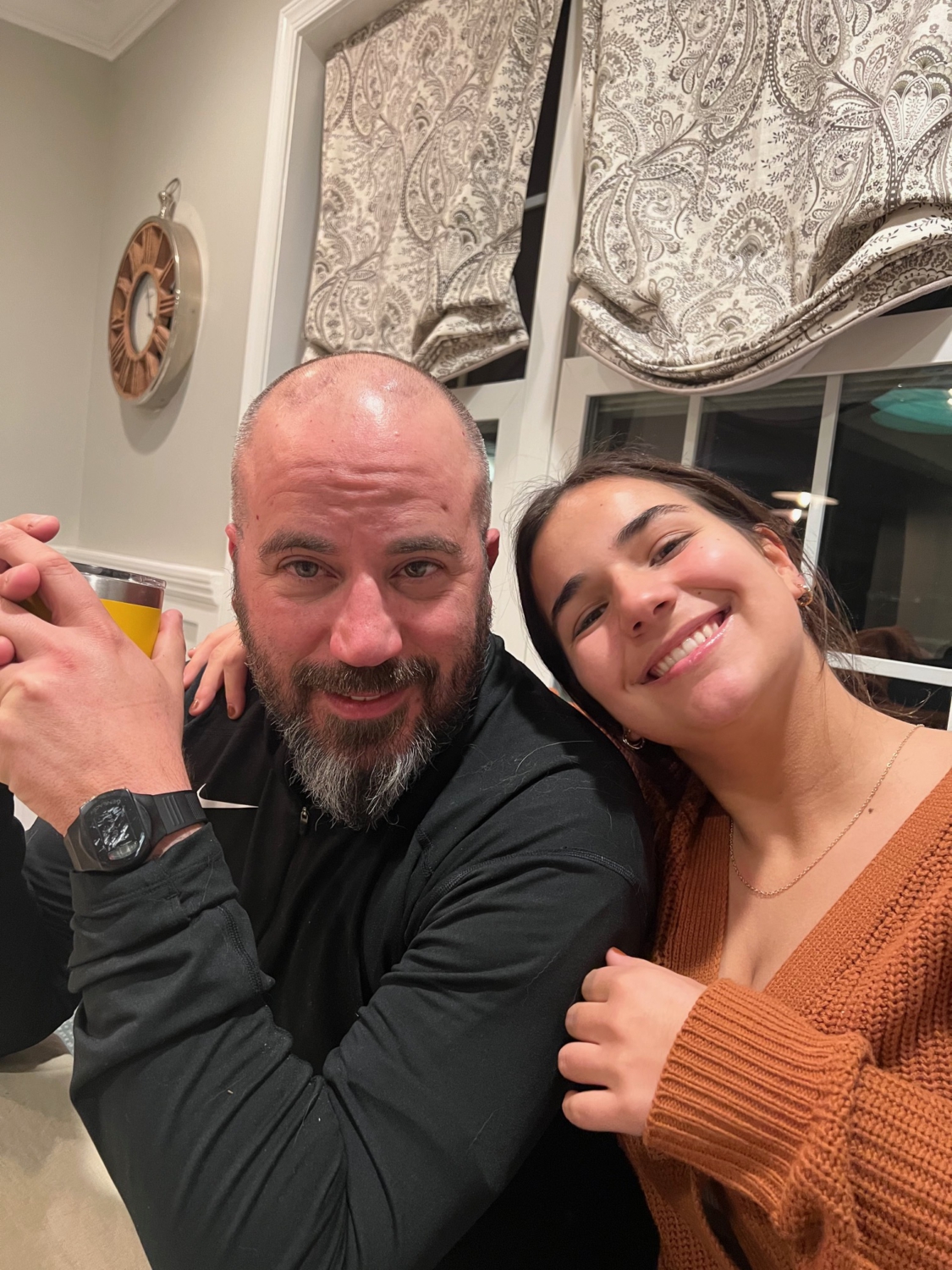
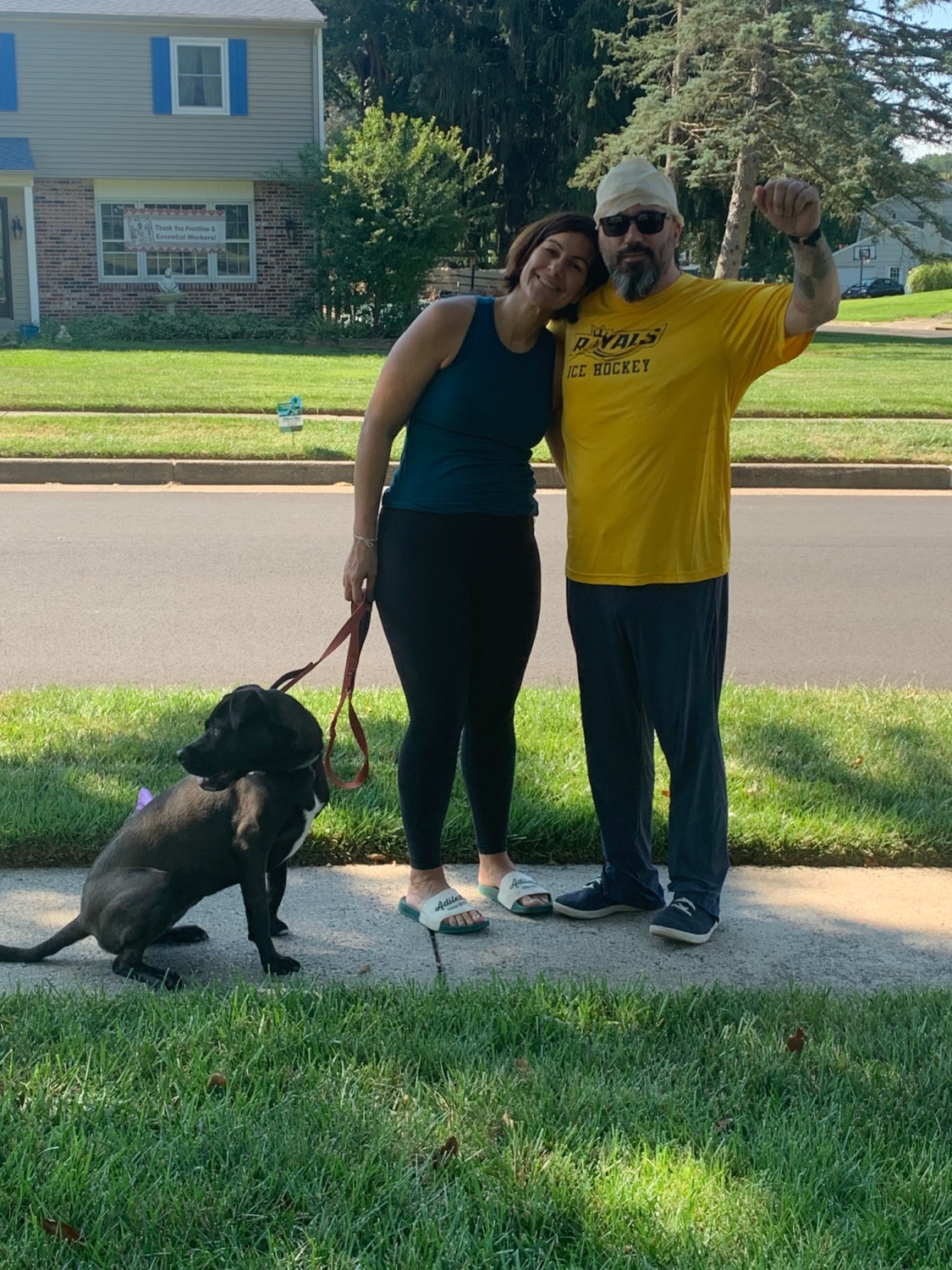
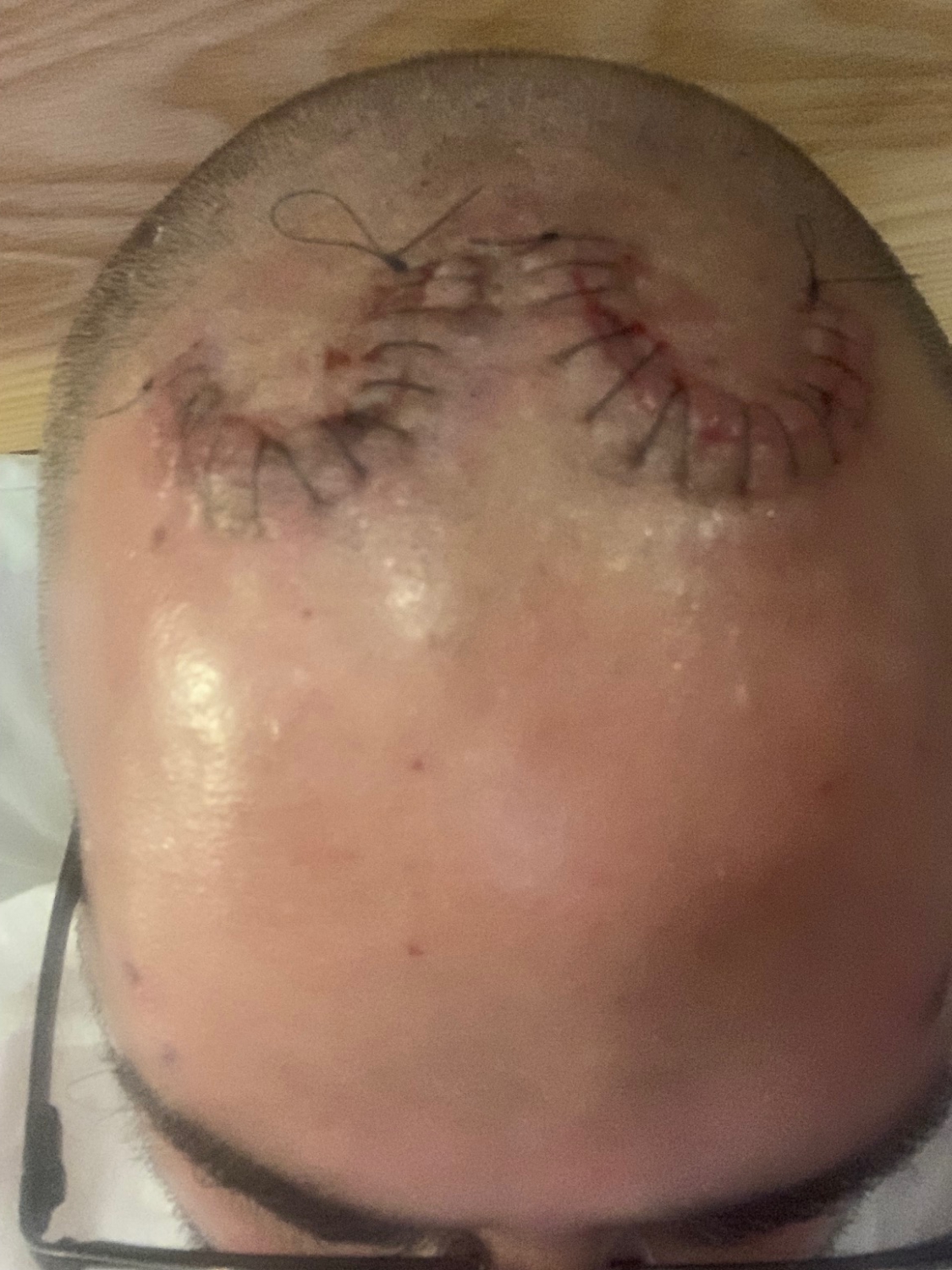
Dr. Helen Mayberg’s inspiring thread about DBS and depression:
Each patient has their own story. This is Amanda’s, a New York artist and Mount Sinai patient highlighted in the Part 2 of Laura Saunders’ “Electricity Saved my Brain” series. Find the link below to follow alonghttps://t.co/DmIKWf9lxe
— Helen Mayberg, MD (@HelenMaybergMD) June 26, 2023